| There is nothing more powerful than writing or reading a redemption story in sport. Redemption stories teach us resilience, accountability, and survival, lessons that extend far beyond competition. Everyone deserves a chance at redemption.
But today, we ask a difficult question. One we will not answer directly. Instead, we present all sides of the debate and leave it to you to decide:
SHOULD A DOPING BAN END AN ATHLETE’S RIGHT TO COACH?
Doping is a menace that continues to corrode sport at every level. Yet, the reality is complex. There are many forms of doping, some deliberate, some accidental, and some cases where athletes are misled or tricked. Deciding intent is not our role today. What we are trying to understand is what comes after and how long punishment should truly last.
One of the biggest global examples that offers multiple perspectives is Dennis Mitchell.
A former American sprinter, Mitchell was part of the U.S. 4×100 m relay team that won Olympic gold in 1992. In 1998, he tested positive for elevated testosterone. He famously offered an unusual defence, claiming the result was caused by drinking beer and repeatedly having sex with his wife the night before the test. This explanation was rejected by the IAAF, leading to a two-year ban.
Later, during the BALCO investigations, Mitchell testified under oath that his then-coach, Trevor Graham, had injected him with HGH.
Despite this, Mitchell went on to become a high-profile sprint coach, leading Star Athletics in Florida and mentoring some of the world’s top sprinters, including Sha’Carri Richardson, Melissa Jefferson-Wooden, Kenny Bednarek, Justin Gatlin, Aaron Brown, Javianne Oliver, and Twanisha Terry, among others.
His most recent success story was Melissa Jefferson-Wooden, who stunned the world at the 2025 World Athletics Championships, dominating the sprints by winning gold in the 100m, 200m, and 4×100m relay.
However, controversy followed. Bracy-Williams received a 45-month USADA ban for multiple anti-doping rule violations, including anabolic steroids and whereabouts failures. Bracy-Williams was training within Mitchell’s programme at the time of his positive test.
GABBY THOMAS CALLS FOR LIFETIME BANS ON COACHES
Paris Olympics 200m champion Gabby Thomas used her Instagram stories and social media posts to issue a strong message.
She wrote:
“Doping coaches should be banned for life from coaching in the sport. Whether you were banned while competing as an athlete or caught distributing as a coach (for some, both).
Idc idc idc.
If you train under a coach who is known for doping (once, twice, or even three times for some), you are complicit. That’s my stance.”
INDIA’S PERSPECTIVE
India, unfortunately, has made global headlines less for podium finishes and more for doping numbers.
As per WADA’s 2024 testing figures, India recorded 260 adverse analytical findings from 7,113 samples, a positivity rate of 3.6%, the highest among major countries conducting more than 5,000 tests.
One of the most significant coaching-related cases emerged in 2022 involving Mickey Menezes. The athletics coach was handed a four-year ban by NADA after a minor athlete training under him tested positive for drostanolone, an anabolic steroid. The athlete was also initially banned for four years.
However, the athlete’s ban was later reduced to two years on appeal after she testified that Menezes had administered injections and supplements that led to the positive test.
During the appeal, she stated that another athlete had also been given similar substances.
More recently, Sandeep Maan was suspended by NADA after his 19-year-old athlete, Sanjana, tested positive for multiple prohibited substances.
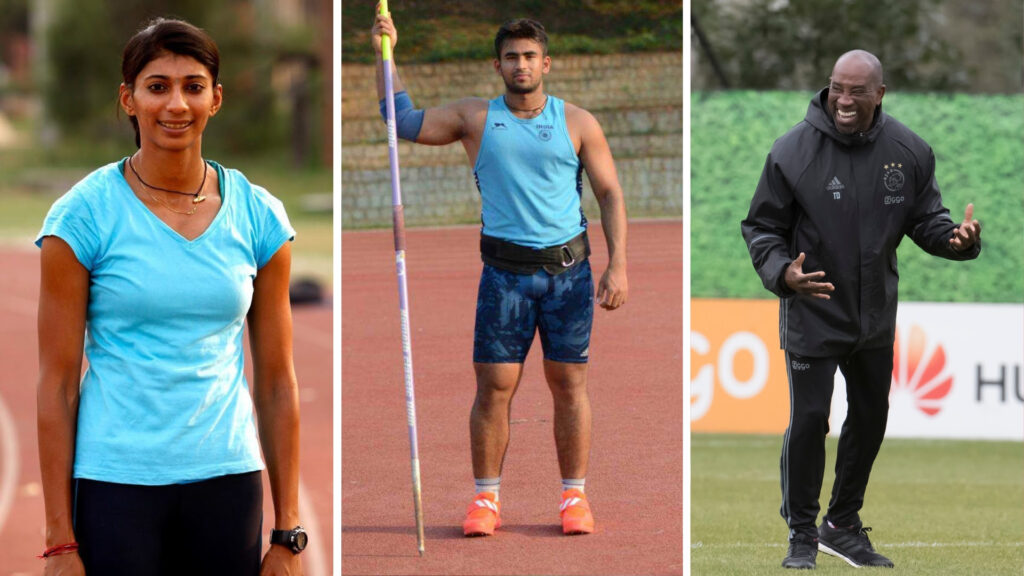
Another high-profile appointment reignited the debate when JSW Sports hired Troy Douglas, a former World Championships medallist who tested positive for nandrolone in 1999, as Head Coach of the Athletics Programme at the Inspire Institute of Sports in Bellary.
Unlike national federations, private organisations operate in a grey zone, accountable to results, not public policy.
Douglas’s hiring raised a critical question:
Should private sports bodies follow the same ethical standards as public institutions?
Or does performance justify second chances?
GOVERNMENT FACILITIES AND DOUBLE STANDARDS?
At government-run facilities, Ashwini Akkunji, once banned for anabolic steroids, is currently a coach with the Sports Authority of India.
Akkunji, one of India’s most successful quarter-milers, tested positive for methandienone in 2011 during the Asian Athletics Championships in Kobe, Japan, where she was part of India’s gold-medal-winning 4×400 m relay team.
NNIS Sports has also learned through multiple sources that 2019 Asian Athletics Championships silver medallist javelin thrower Shivpal Singh is currently pursuing the NIS coaching course in Kolkata, despite being under a doping suspension.
What makes Shivpal’s case even more complex is that this is his second doping offence.
First offence (2021–2023): Handed a four-year ban for testing positive for methandienone, later reduced to one year after he successfully argued contaminated supplements.
Second offence (2025): Suspended again after returning an out-of-competition positive test in May 2025 and may face a ban of up to eight years.
Despite this, he has been enrolled in the 63rd batch of the Diploma Course in Sports Coaching (2025–26) at NIS Kolkata.
In July 2020, the Sports Authority of India announced a revised admission policy for NSNIS’s Diploma in Sports Coaching. Indian Olympians, World Championship participants, and Asian or Commonwealth Games medallists would receive direct entry without an entrance exam, subject to medical and eligibility conditions.
However, the 2025–26 NSNIS prospectus clearly states:
“Candidates suspended under doping offences are not eligible to apply during their suspension period.”
If the rule exists, how did this happen?
And if it did happen, for whom do the rules actually exist?
NNIS Sports spoke to NIS in charge Kamal Ali, who clarified:
“If an athlete has been officially banned, they are not admitted to the NIS course. Clearance from NADA or WADA is mandatory. Without written clearance, entry is not permitted. These rules apply to everyone.”
ATHLETES SPEAK
World U20 medallist Rupal Chaudhary was firm:
“I won’t be able to train under such a coach. It creates trust issues.”
Asian Games medallist Tajinderpal Singh Toor disagreed:
“I will take responsibility for the coaching. Many times, athletes get trapped because of supplements. Not everyone takes them knowingly.”
Young javelin thrower Dipanshu Sharma took a balanced view:
“If you’ve been banned once, it’s understandable. If it has happened twice, it becomes a risk.”
Asian Games medallist Ram Baboo was brutally honest:
“I want results. But yes, labels stick to athletes as much as to coaches.”
We’ve laid out every perspective.
Now it’s up to you to decide:
Should a doping ban end an athlete’s right to coach? |


 Emergingsports
February 12, 2026
Emergingsports
February 12, 2026