
|
||
What began as one of the most emotional moments of the Federation Cup Athletics Championships in Ranchi has now turned into one of its biggest controversies.
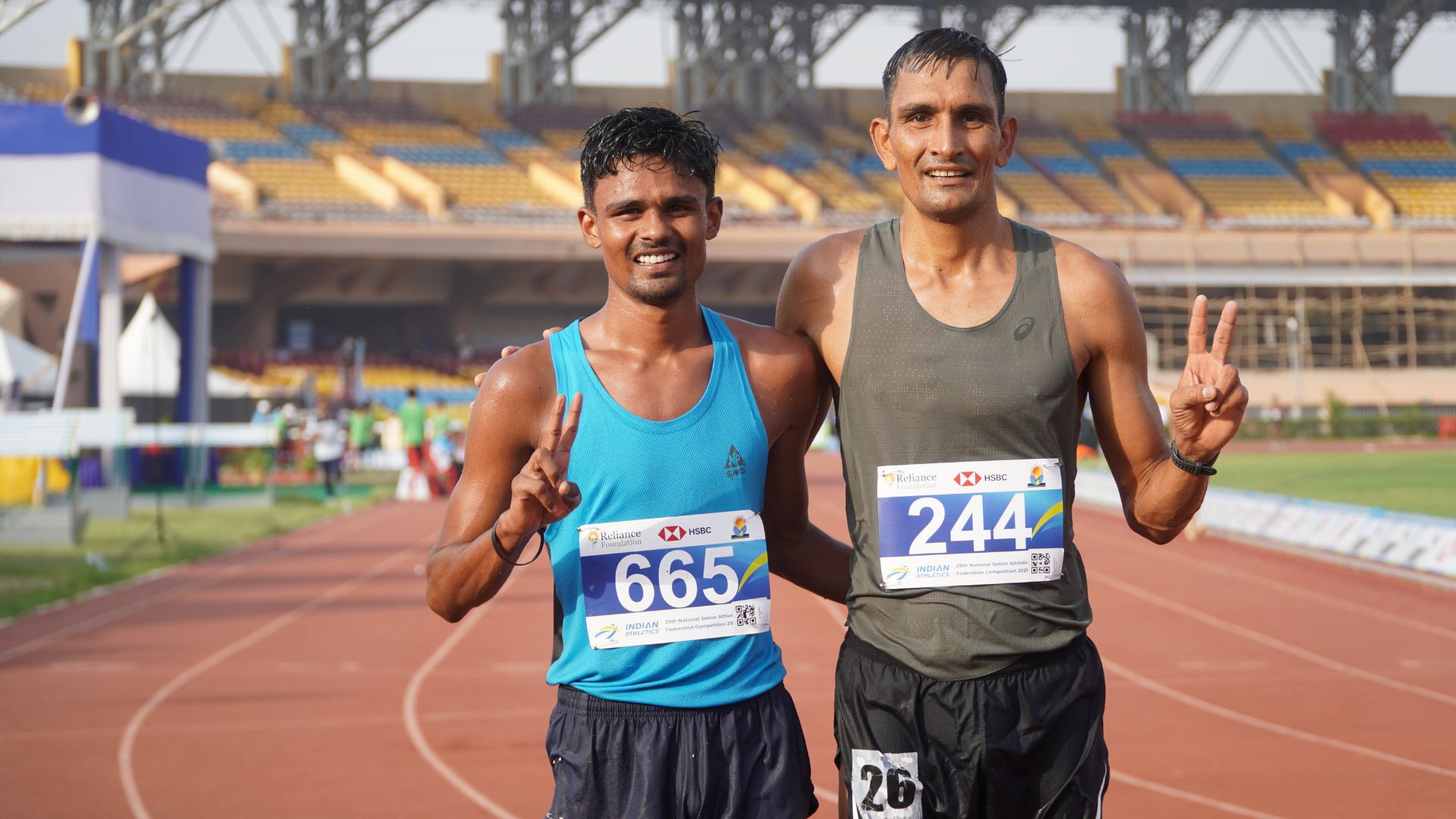
Eighteen-year-old Nitin Gupta appeared to script a breakthrough performance in the men’s 10km race walk, defeating India’s 40-year-old national record holder and double Olympian Sandeep Kumar in a gripping contest.
The youngster clocked a lifetime best of 39:38.62 to finish ahead of Sandeep, who took second place in 39:51.95. The performance immediately drew attention because Nitin had not only beaten one of India’s most experienced race walkers, but had done so in a high-pressure national meet while narrowly missing the Commonwealth Games qualification standard by around 32 seconds.
The scenes after the finish added another emotional layer to the story.
Nitin, visibly overwhelmed after the race, broke down in tears. Moments later, Sandeep himself walked up to the teenager for a picture. In a gesture that quickly caught attention around the stadium, Nitin bowed down before the veteran as a mark of respect.
For a brief moment, it looked like a symbolic passing of the torch in Indian race walking.
But the atmosphere changed quickly.
Officials later confirmed that a protest had been lodged against Nitin by Sandeep’s camp, and the complaint was accepted for review by the jury.
The allegation centres around claims that Nitin received water from team members at multiple points outside the designated hydration zones during the race — a possible violation of race walking competition rules.
As a result, the official outcome of the event has now been placed on hold pending a final decision from the jury, which is expected later in the evening.
The development has added an unexpected layer of intrigue to what had initially seemed like a straightforward breakthrough victory.
For now, Indian athletics waits anxiously between two possibilities — either the emergence of a sensational new teenage talent, or a result that could be overturned through technical regulations and protest proceedings.
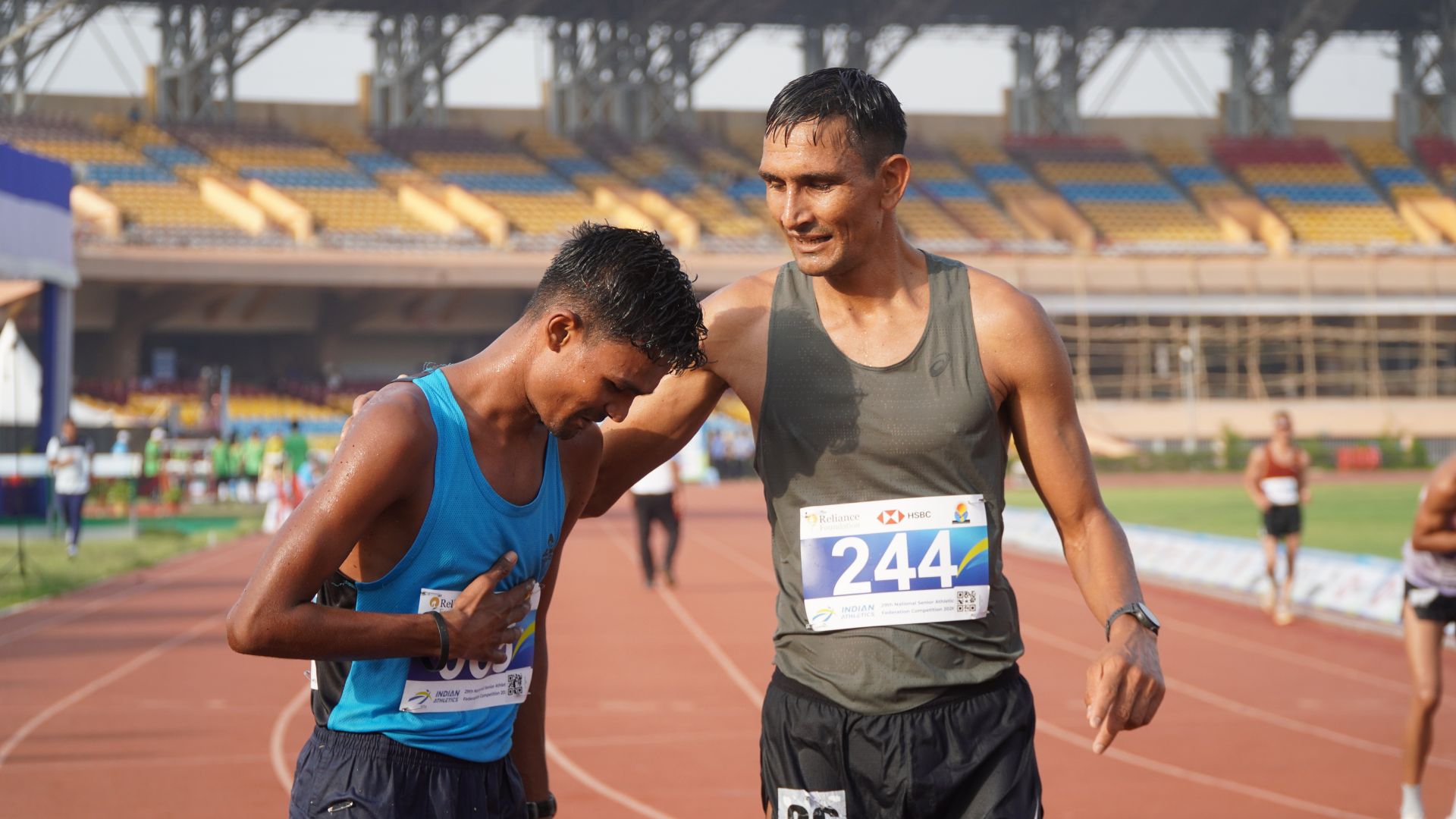
18-year-old Nitin Gupta stunned national record holder Sandeep in the men’s final, clocking a lifetime best 39:38.62 to win an emotional battle. The youngster broke down in tears after the finish, while 40-year-old Sandeep crossed second in 39:51.95.
Then came the moment everyone noticed — Sandeep walked up for a picture, and Nitin bowed down to him in respect.
Sport at its purest.
But the drama isn’t over yet. The result is currently on hold after an official protest was accepted. Final decision awaited.
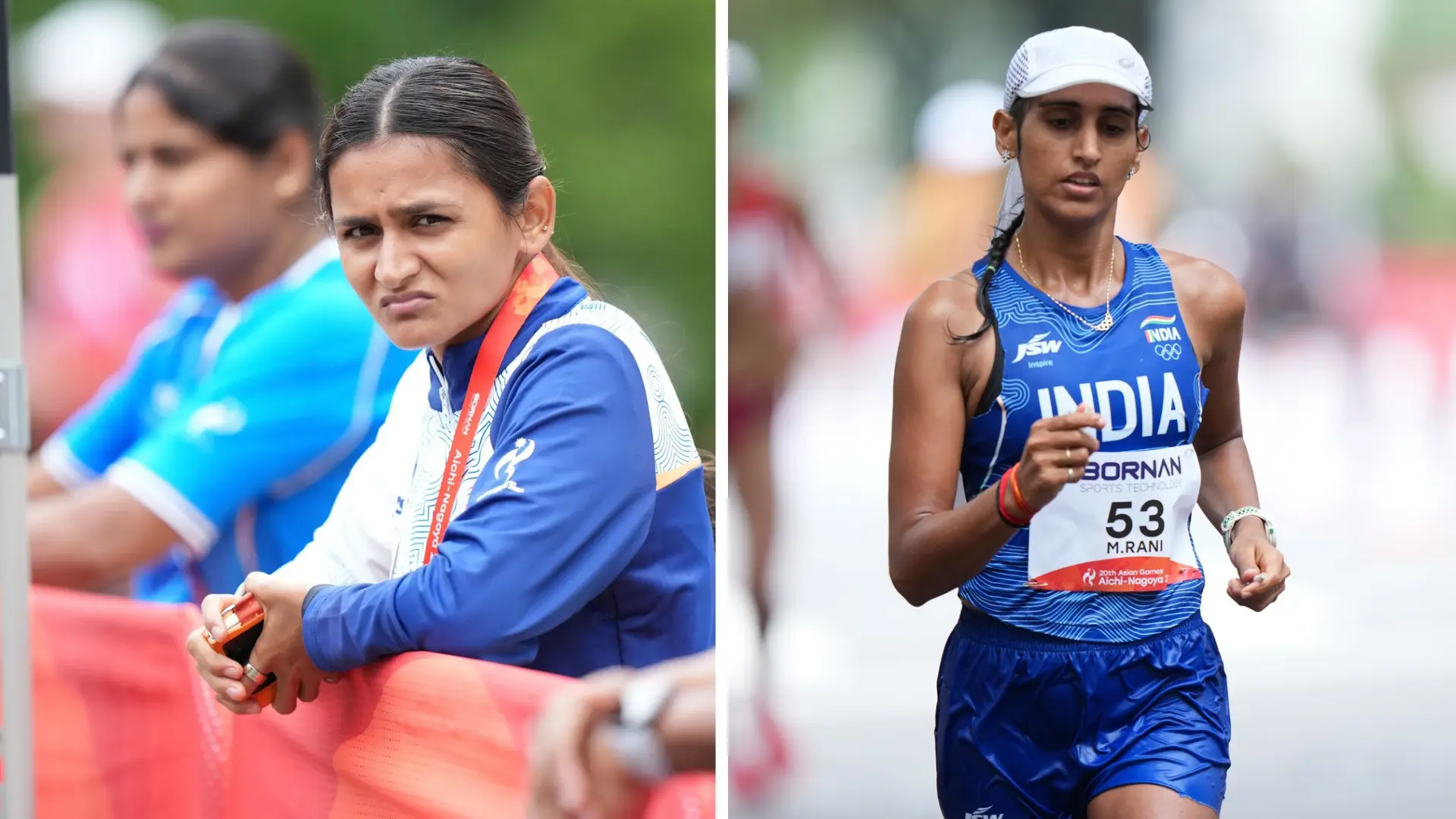
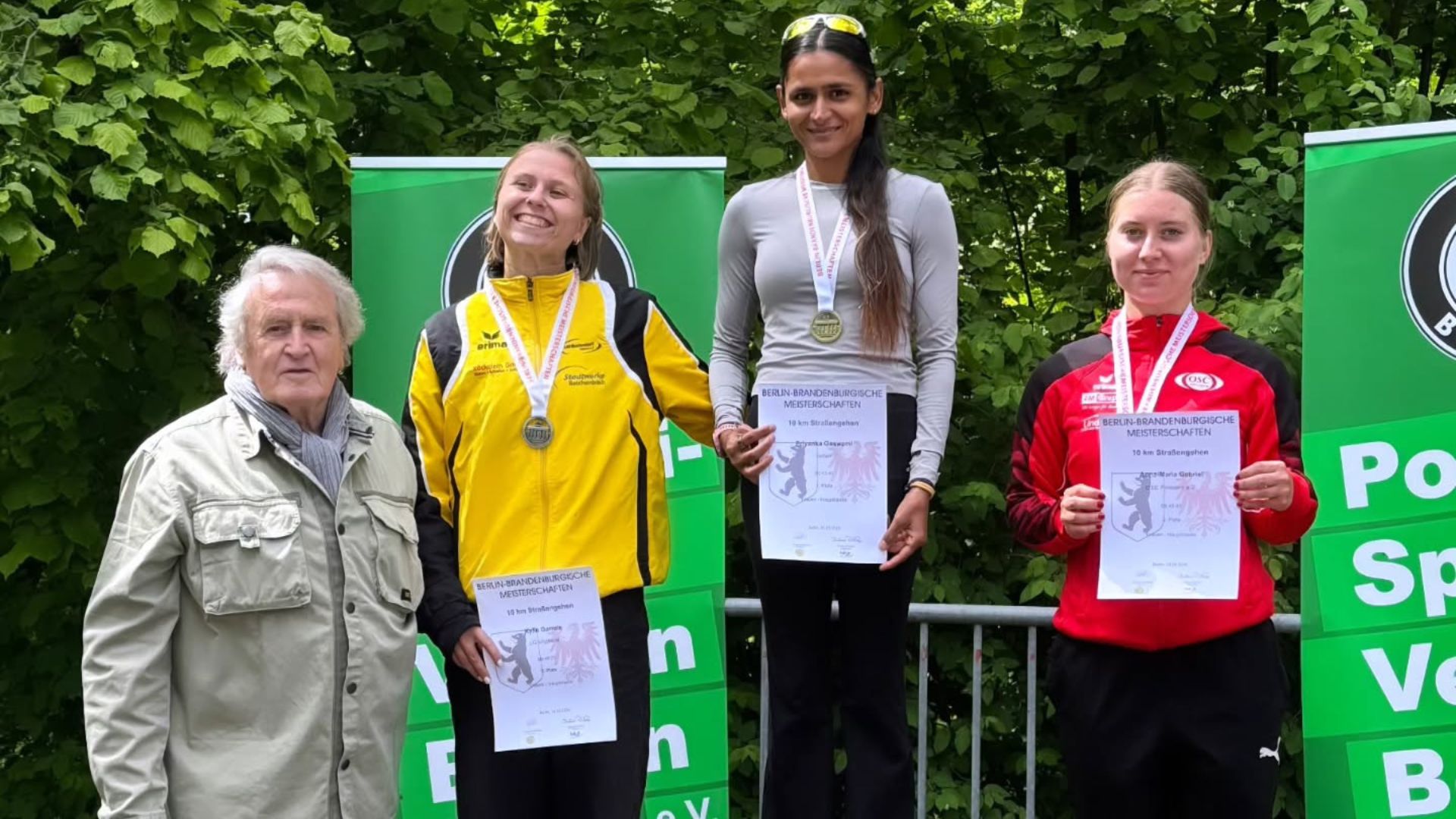
Priyanka Goswami won gold in the women’s 10,000m race walk at the Berlin-Brandenburg Race Walking Championships, registering India’s all-time 2nd fastest time of 43:49s.
The timing was very close to her personal best of 43:38.83, which also stands as India’s national record in the women’s 10,000m race walk.
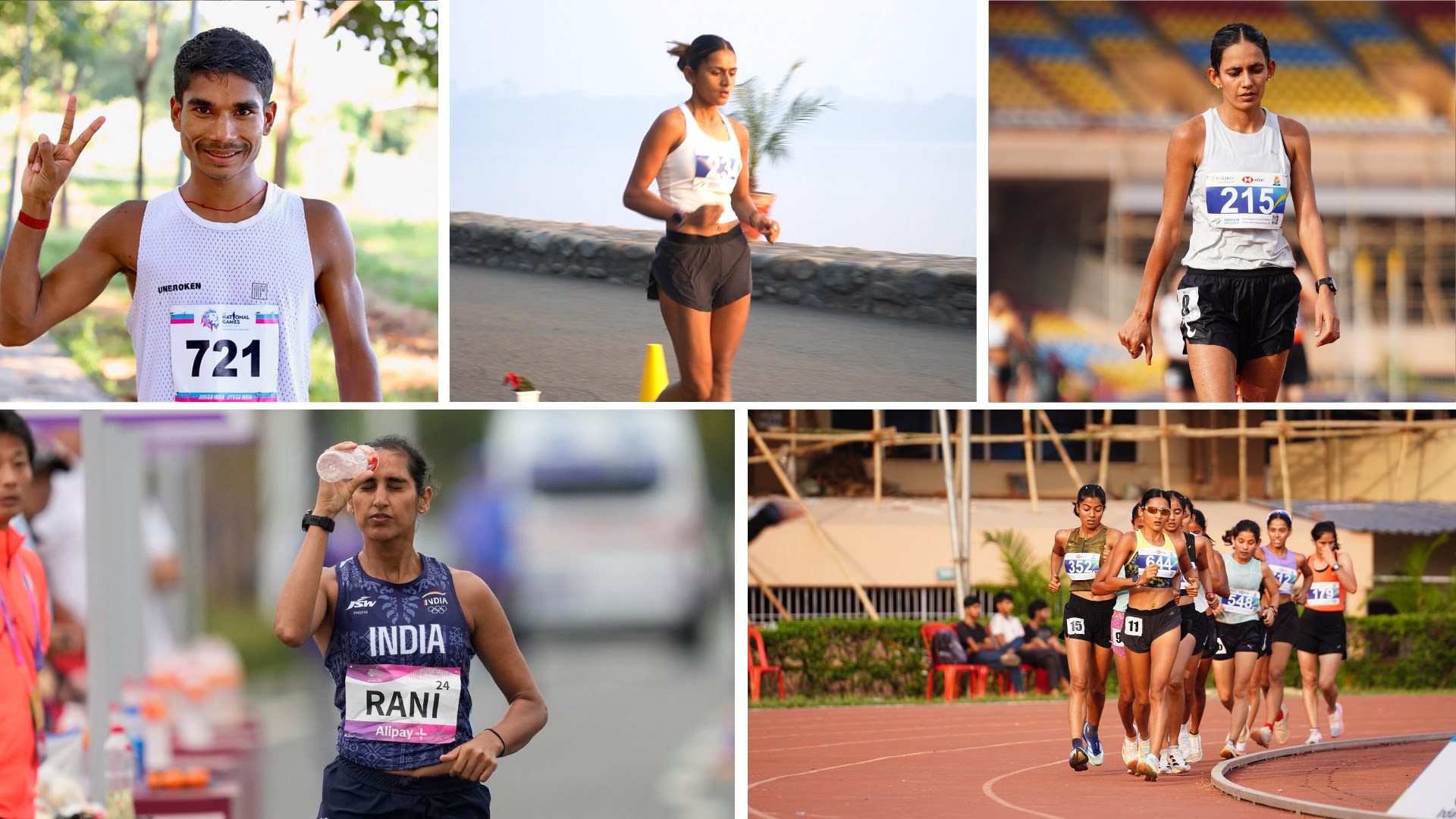
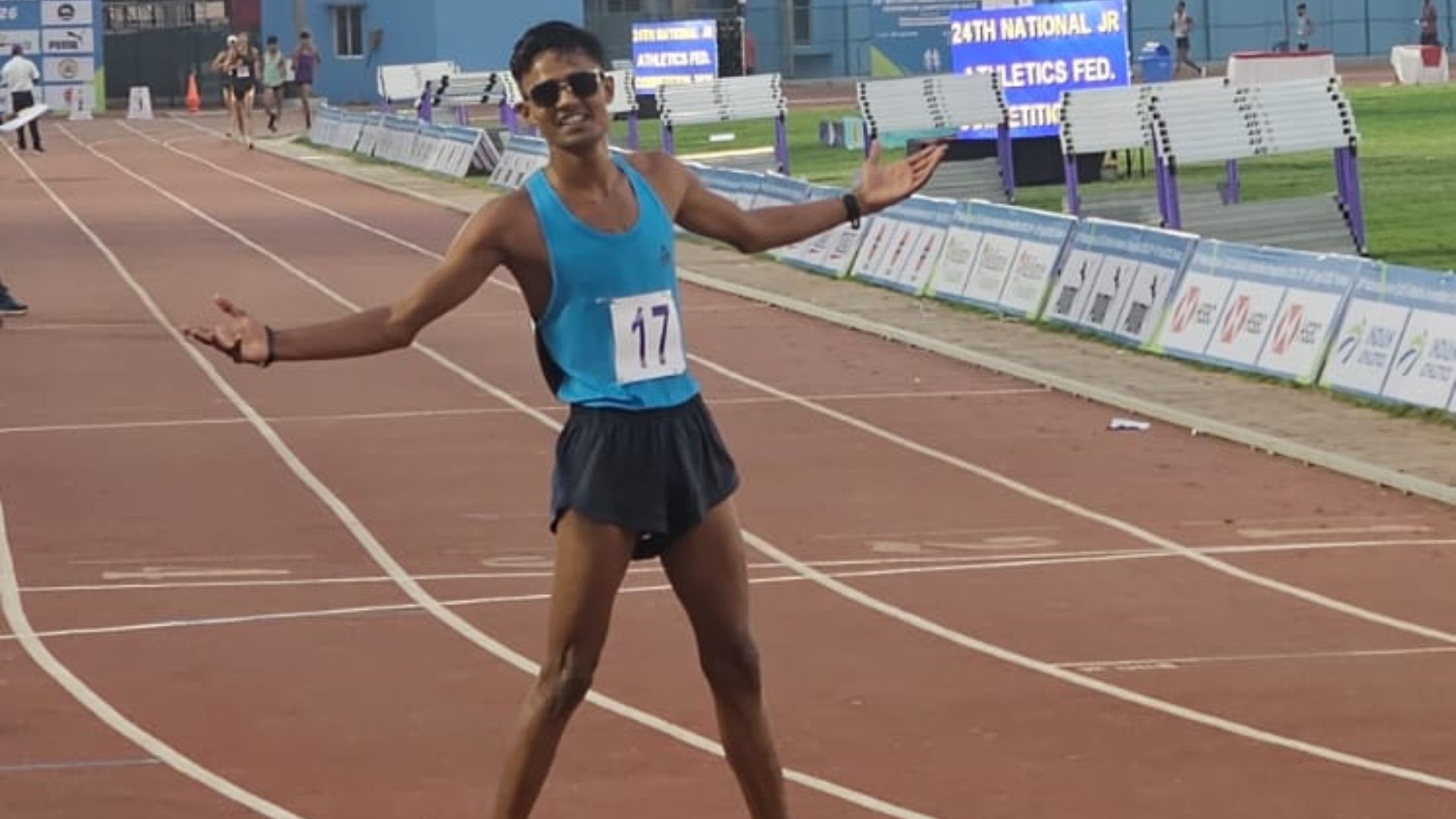
At the U-20 Federation Cup in Tumkur, Karnataka, Nitin Gupta delivered a performance that will be remembered for years. Clocking 18:54.37 in the U-20 5km race walk, the youngster from Uttar Pradesh not only won gold but also made history—becoming the first Asian ever to break the 19-minute barrier in the event. In the process, he set a new Asian record while improving his own national mark.
Speaking to NNIS Sports after the race, Nitin revealed that his preparation had been far from ideal. Just a day before the event, he was struggling with leg pain and uncertainty.
“I was worried the pain might return during the race,” he said.
Despite that, he stepped onto the track with a clear plan—to take control early and push for qualification. As the race unfolded, his body held up, and his confidence grew. By the final kilometre, the focus had shifted.
“I needed to push my pace from 3:45 to 3:40. Because even hearing ‘18’ sounds good,” he said, summing up the mindset of an athlete chasing something bigger than just a win.
Earlier this year, Nitin clocked 41:44 in the 10km race walk in Chandigarh, continuing his steady rise. In 2025, he had already announced himself by breaking the 40-minute barrier in the 10km event (39:46.78), setting a national record that underlined his potential.
At the Asian U-18 Championships, he missed out on gold by just 0.01 seconds—a loss that still lingers.
“For me, the biggest moment is hearing the national anthem,” he said. “0.01 second pain still drives me. I want to achieve at the Asian U-20 Championships what I missed there.”
With his latest performance, Nitin has qualified for both the Asian U-20 Championships and the World U-20 Championships. But for him, qualification is not the goal—it’s just the starting point.
“Performing like this only in domestic competitions is not enough,” he said. “I want to do it at the international level with good technique.”
That ambition may be the most telling part of his journey.
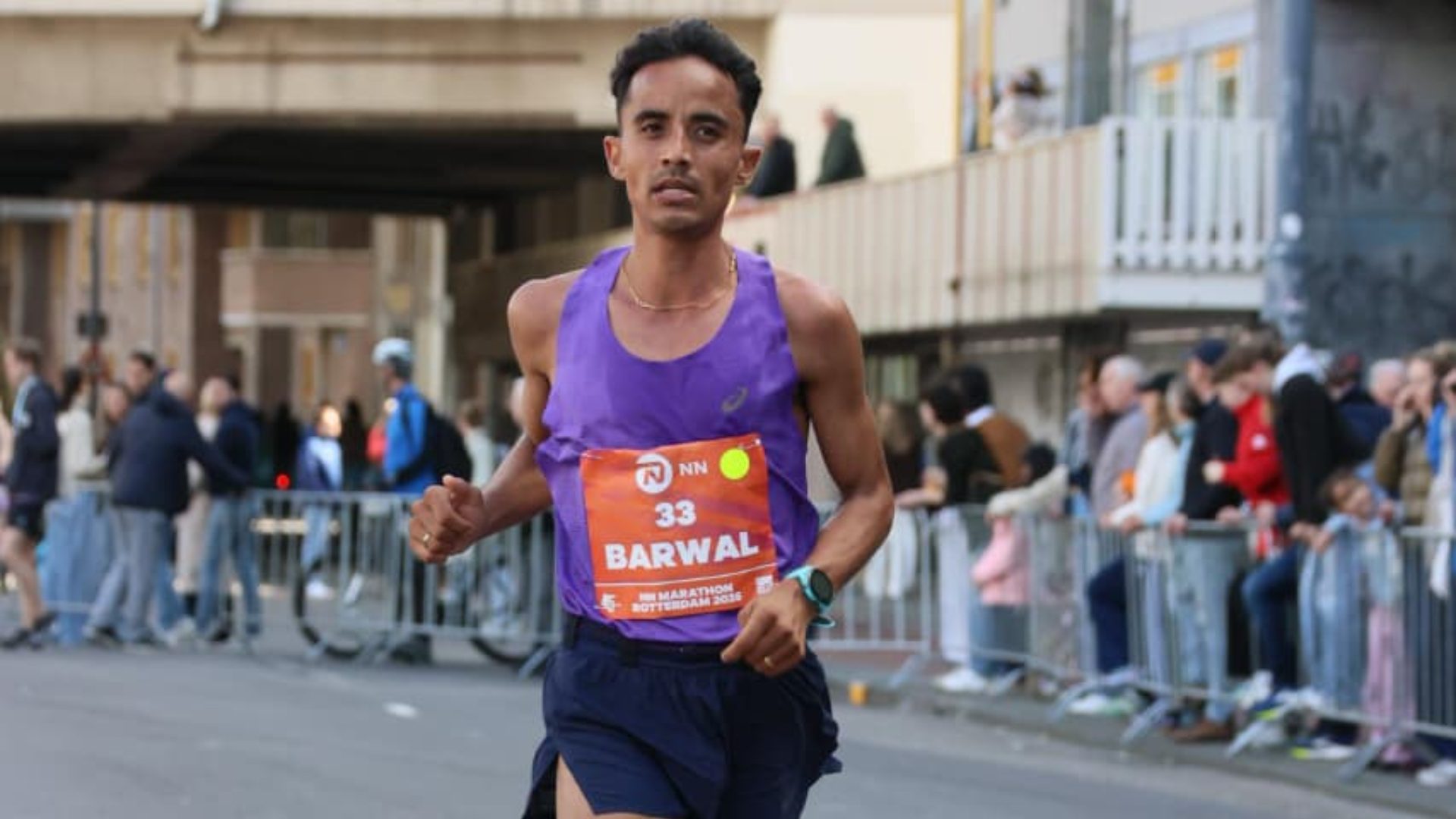
Sawan Barwal has just rewritten Indian athletics history, breaking a 48-year-old national record set by Shivnath Singh. But in a rare and revealing moment, the long-distance runner says the achievement brought him little joy.
In this exclusive interview, Barwal opens up about expectations, disappointment, and why the record wasn’t the real goal.
Q: You’ve just broken a long-standing national record. What does it mean to you?
Sawan Barwal:
“We had planned to run around 2:08–2:10. The national record wasn’t the target — it was expected if we hit that time. The focus was always on performance.”
Q: What was going through your mind at the finish line?
Sawan Barwal:
“There was no happiness — only disappointment. We had a target, and I felt we missed it. Even though the record was broken, it didn’t feel like an achievement at that moment.”
Q: Why such a strong feeling of disappointment despite the record?
Sawan Barwal:
“Our goal was the time, not the record. In the last 2 km, things didn’t go as planned. That’s why I wasn’t satisfied.”
Q: Has life changed after this performance?
Sawan Barwal:
“Not really. I haven’t paid much attention to social media or anything outside.”
Q: This was your first marathon. How was the experience?
Sawan Barwal:
“It’s both physically and mentally demanding. Toward the end, it becomes a mental battle. Transitioning from track events like 10,000m to the marathon was a challenge, but preparation helped. I was confident of running around 2:08–2:09.”
Q: You narrowly missed a medal at the Asian Championships. Does that stay with you?
Sawan Barwal:
“Yes. Finishing fourth is tough. It doesn’t stay on my mind every day, but it’s always there.”
Q: How do you reflect on your last season overall?
Sawan Barwal:
“It was good. I set personal bests and performed well across events. The only disappointment was the Asian Championships, but I learned a lot from that.”
Q: Did breaking Shivnath Singh’s record carry emotional weight for you?
Sawan Barwal:
“I knew about the record, but I didn’t focus on it. I believed if I ran my target time, the record would come naturally. My focus was always on timing, not the record itself.”
Q: What are your main targets now?
Sawan Barwal:
“The Asian Games. I want to prepare properly and aim for a medal.”
Q: Finally, how did you process the moment after the race?
Sawan Barwal:
“I felt mentally light, but still disappointed. Later, my coach told me to relax and enjoy it. I’ll aim to do better next time.”
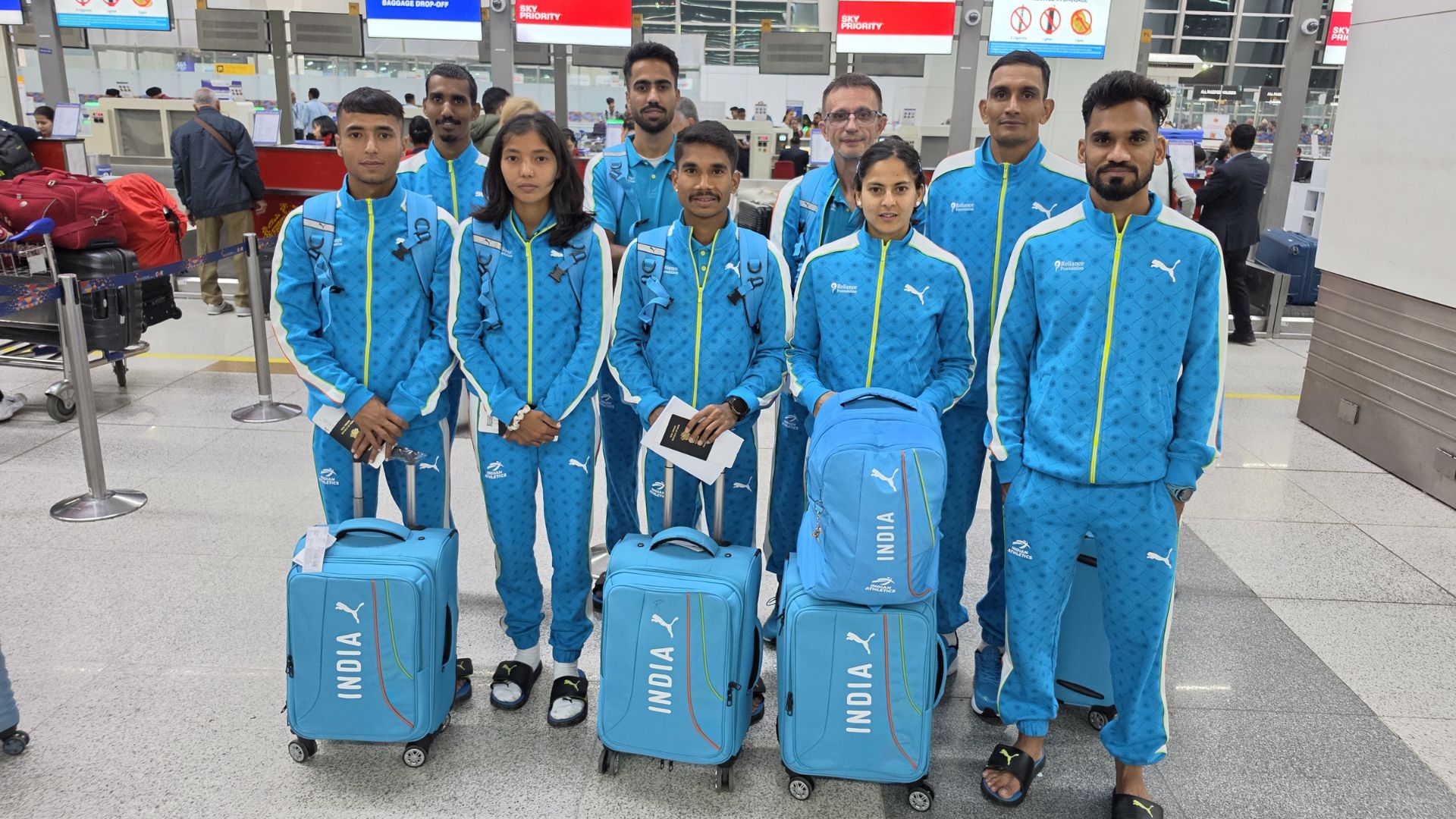
After days of uncertainty, the Indian race walking contingent is finally on its way to Brazil for the World Athletics Race Walking Team Championships on April 12. The team had been held up due to visa delays, with 12 athletes waiting as travel timelines slipped.
The delay stemmed from late and incomplete visa applications. The Brazil Embassy in India clarified that the applications were submitted only on April 8 and lacked required documents. “We have requested the missing documents and will proceed as soon as they are received,” the embassy said.
The squad had been finalised earlier this year after the selection trials at the 13th Indian Open Race-Walking Competition in Chandigarh. Passports were reportedly submitted on March 21, with an initial departure planned for April 4 following a high-altitude training block in Ooty. That schedule, however, was disrupted due to the visa issues.
With the situation now resolved, the team has departed, bringing relief ahead of a key international event.
Men’s Team
Marathon: Ram Baboo, Sandeep Kumar
Half Marathon: Sahil, Servin Sebastian, Hardeep, Akshdeep Singh
Women’s Team
Marathon: Manju Rani, Priyanka Goswami, Payal
Half Marathon: Ravina, Munita Prajapati, Mansi Negi
India will now look to regroup quickly and focus on performance on the global stage.