
India narrowly missed a podium finish in the women’s 4x100m relay at the Asian Games 2026 in Nagoya, finishing fourth in a Season’s Best (SB) time of 43.57 seconds.
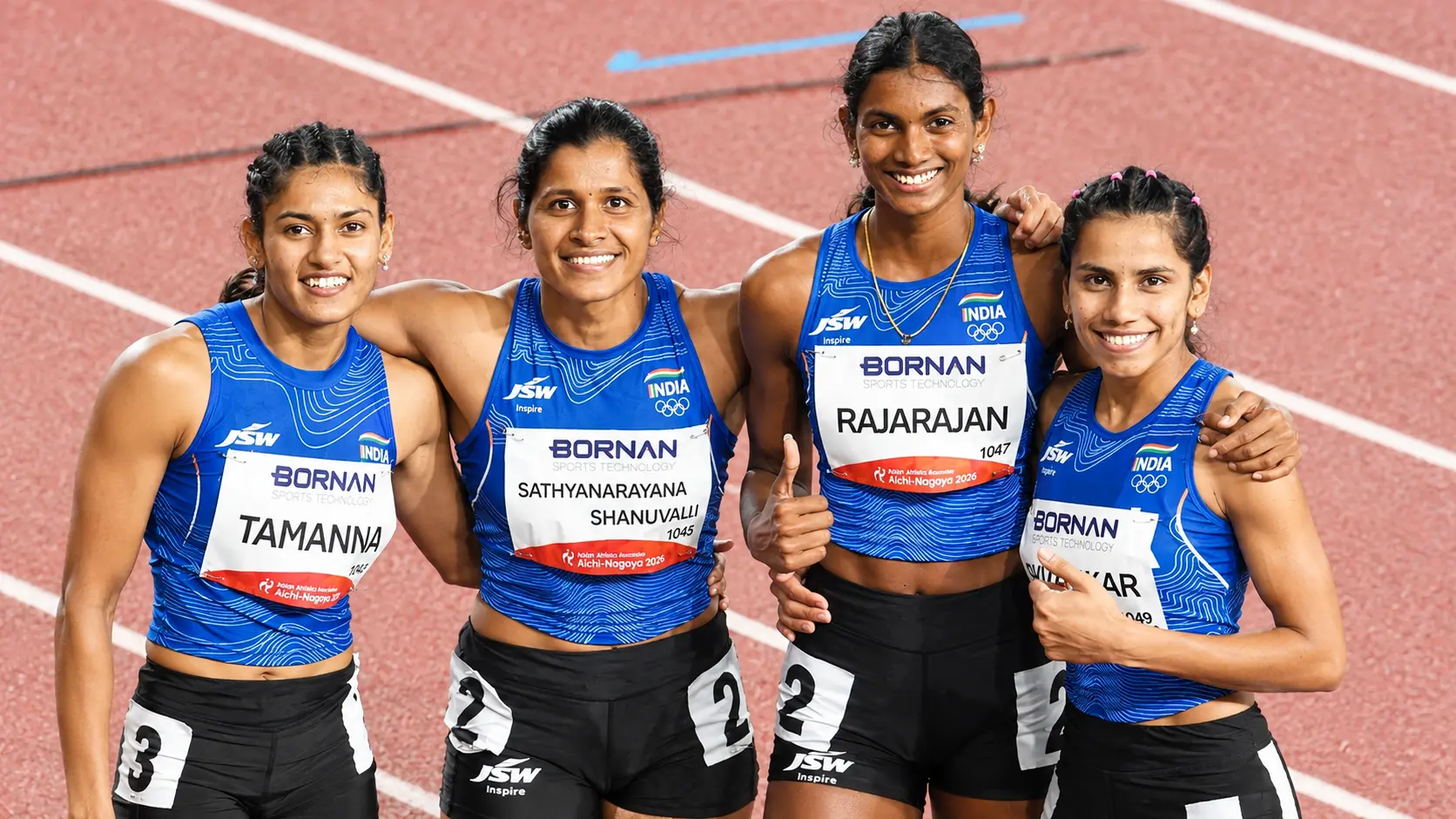
The Indian quartet of Abinaya Rajarajan, Sneha Shanuvali Sathyanarayana, Sudeshna Hanmant Shivankar and Tamanna delivered a strong performance in the final.
They improved on their heat-winning time of 43.65 seconds. However, India finished just 0.05 seconds behind Japan, which secured the bronze medal.
China won gold in 42.96 seconds, while Thailand claimed silver in 43.51 seconds. Japan finished third in 43.52 seconds, followed by India in 43.57 seconds.
India Misses Bronze by Just 0.05 Seconds
The final was decided by extremely narrow margins.
Just 0.09 seconds separated the teams finishing second through fifth, with every hundredth of a second proving crucial over the 400-metre race.
India remained in contention for a medal before crossing the finish line in fourth place.
Women’s 4x100m Relay Final Results
|
Position |
Country |
Time |
|---|---|---|
|
Gold |
China |
42.96s |
|
Silver |
Thailand |
43.51s |
|
Bronze |
Japan |
43.52s |
|
4th |
India |
43.57s (SB) |
Abinaya Rajarajan Leads India’s Sprint Relay Campaign
Abinaya Rajarajan was part of the Indian quartet that made a strong impression in the qualifying round.
India won its heat in 43.65 seconds, securing a place in the final.
Rajarajan has been an important part of India’s sprint relay setup. She had also featured in the mixed 4x100m relay earlier in the competition.
Her experience across both relay formats made her an important member of the Indian team.
Sneha Shanuvali Sathyanarayana Contributes to India’s Season’s Best
Sneha Shanuvali Sathyanarayana was another key member of India’s sprint group in Nagoya.
She was part of the quartet that produced the team’s Season’s Best in the final.
Relay success depends on individual speed and the execution of baton exchanges. India remained competitive throughout the race and stayed within striking distance of the medal positions.
Sudeshna Hanmant Shivankar Adds Experience
Sudeshna Hanmant Shivankar brought further experience to the Indian lineup.
She has been part of India’s sprint relay programme and featured in the quartet that improved its time from the heats.
With the final decided by such narrow margins, every phase of the race was crucial, from the starts and baton exchanges to the final straight.
Tamanna Completes the Indian Quartet
Tamanna completed the Indian quartet and was responsible for the final leg of the relay.
India crossed the finish line in 43.57 seconds, improving on its heat-winning performance.
The improvement showed that the team raised its performance in the final, although the time was not enough to secure a medal.
India Finishes Just Outside the Podium
India’s fourth-place finish came just five hundredths of a second behind Japan.
China’s winning time of 42.96 seconds was comfortably ahead of the rest of the field. However, the battle for the remaining medals was extremely close.
The Indian quartet improved from 43.65 seconds in the heats to 43.57 seconds in the final, producing its fastest performance of the season.
Although the medal remained out of reach, the team finished its Asian Games campaign with a Season’s Best and a competitive performance.
Abinaya Rajarajan, Sneha Shanuvali Sathyanarayana, Sudeshna Hanmant Shivankar and Tamanna finished fourth in 43.57 seconds, just 0.05 seconds away from the podium.
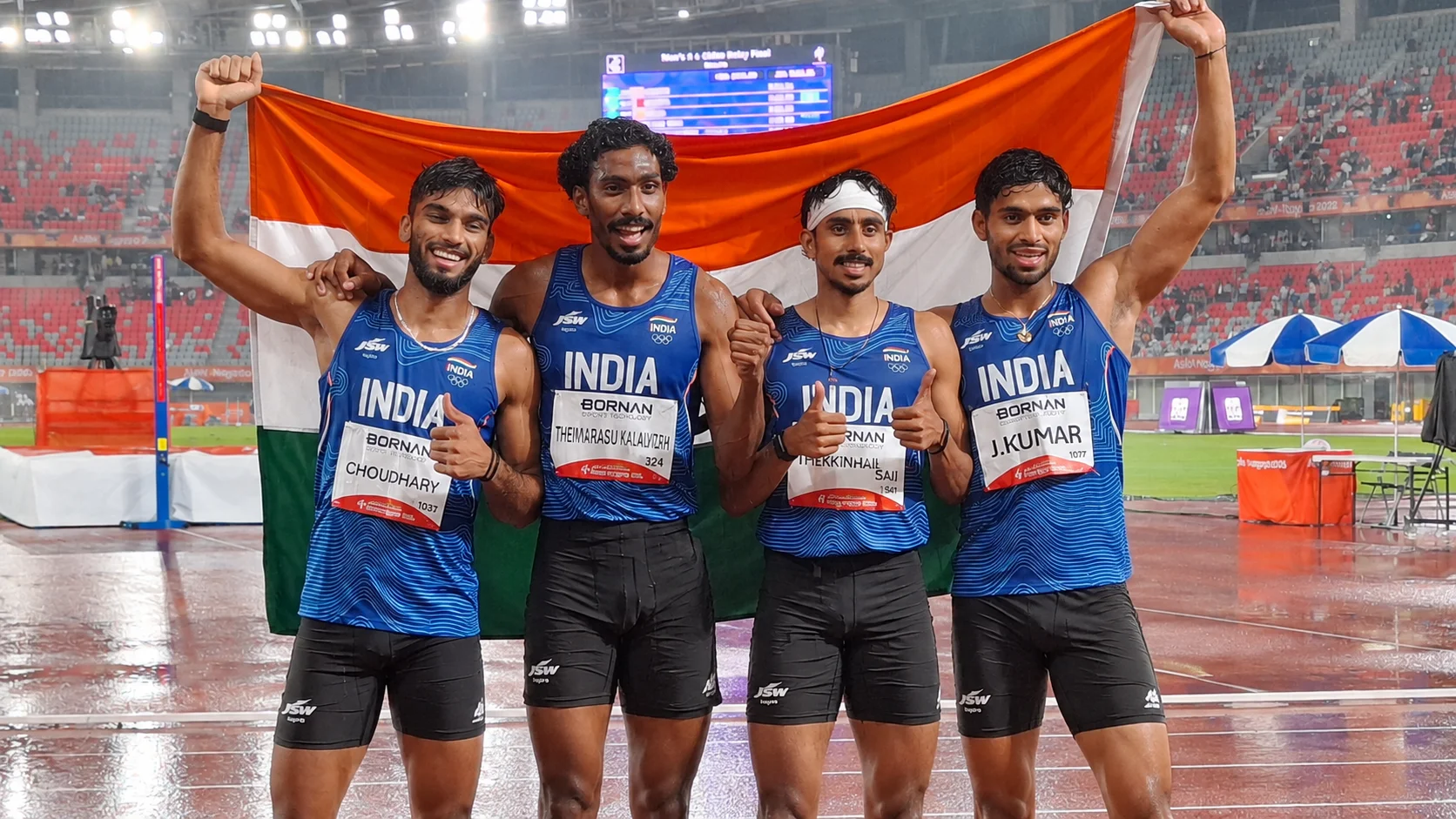
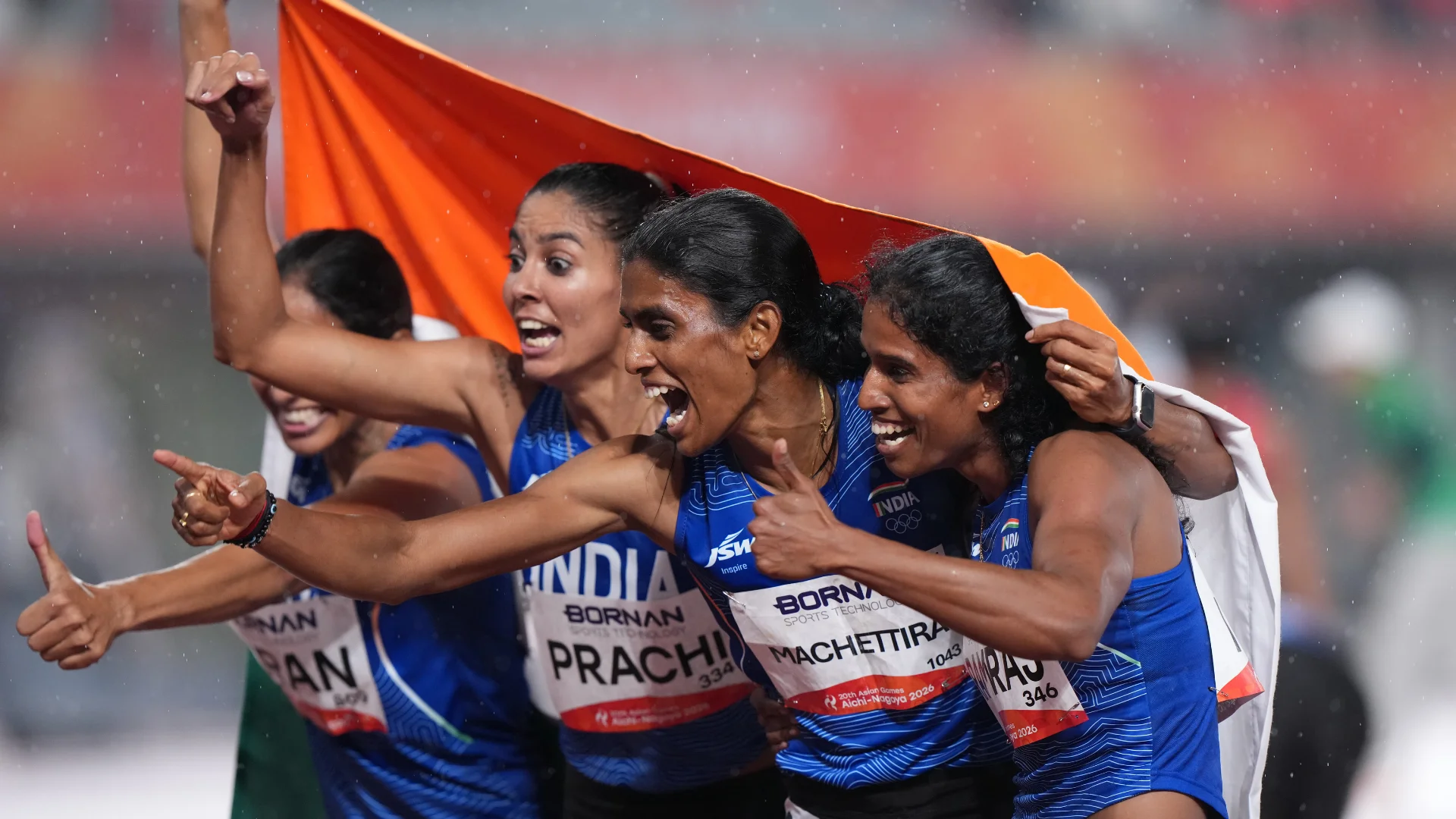
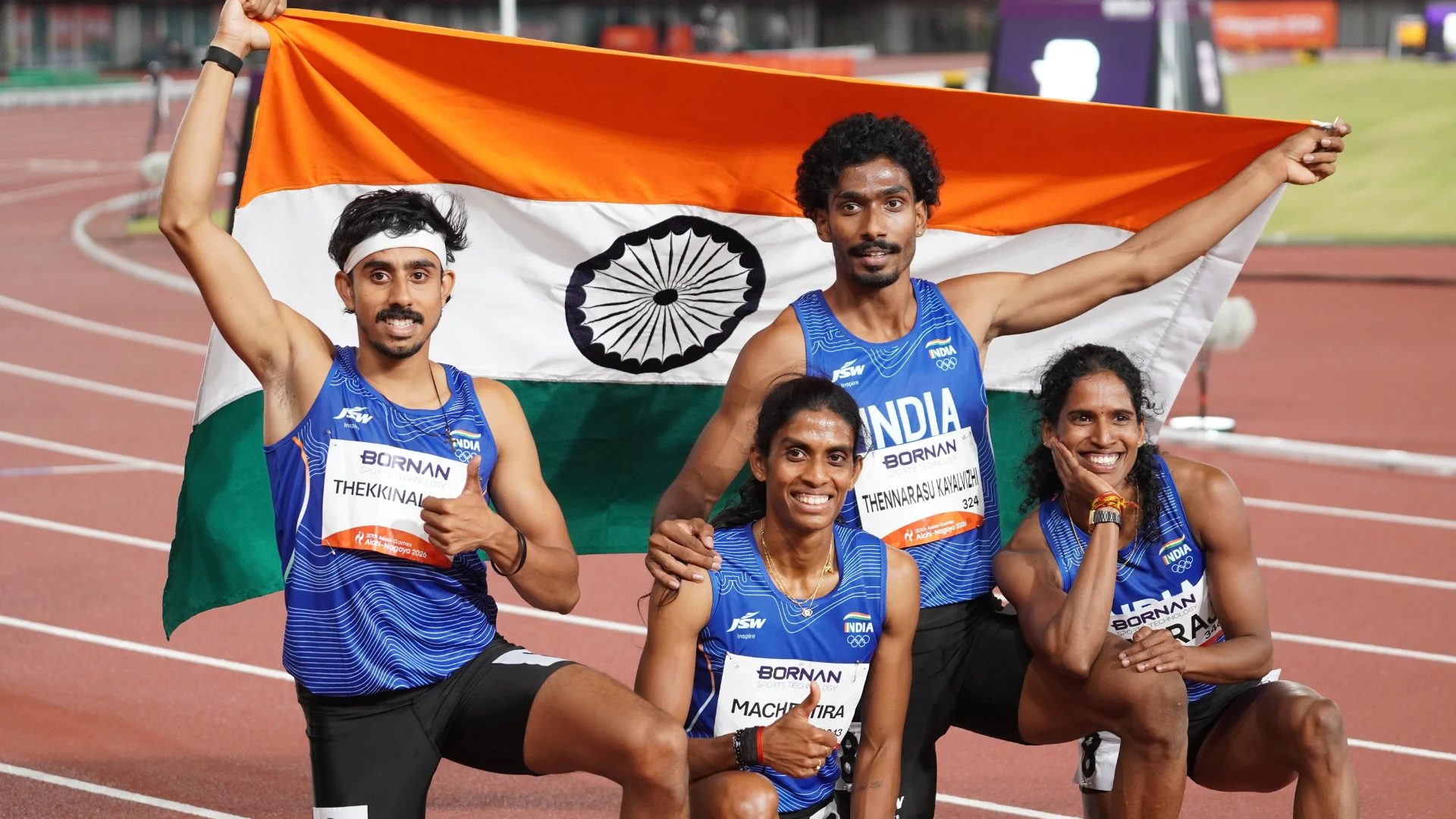
Relay success on the international stage demands far more than raw quarter-mile speed; it requires millisecond precision in exchange zone geometry, sharp break-line navigation, and supreme lactate tolerance under high-speed traffic. In the Mixed 4x400m Relay final at the 2026 Asian Games, the Indian quartet delivered a masterclass in relay execution, clocking a high-velocity 3:14.46 to capture the silver medal. Every single leg served a specific tactical purpose, combining raw individual speed with seamless baton handoffs.
Manu TS set the tone for Team India out of the starting blocks on leg one. Tasked with navigating the full-stagger opening lap, Manu drove aggressively over the first 200 meters to establish forward momentum before settling into a smooth stride frequency through the top turn. Clocking a solid 46.10s split, he brought the baton into the first exchange zone in clean air, giving India an immediate front-running position without wasting metabolic energy in mid-pack traffic.
Taking the first baton handoff, veteran campaigner MR Poovamma demonstrated why tactical experience is invaluable in mixed relay events. Operating on the second leg where athletes break for the inside rail, Poovamma absorbed aggressive mid-leg surges from rival runners representing Bahrain and China. By holding a firm, tight line along the inside rail during the backstretch, she forced opposing runners to cover extra distance on the outside of the curve. Poovamma delivered a 52.16s split, maintaining a relaxed torso and low arm carriage to manage lactate buildup into the second transition.
The defining surge of the race came on the third leg via Vishal TK. Unleashing a blistering flying split of 45.22s—the fastest overall split of the Indian quartet—Vishal obliterated the gap to the front. He tracked his targets through the backstretch, eating up track distance with massive stride length and smooth transition mechanics. His explosive lap ensured that India entered the final exchange in firm contention for the top podium spots.
Anchoring the performance was Vithya Ramraj, who produced a clutch performance when the pressure was highest. Taking the baton for the final 400 meters, Vithya launched into a brilliant sub-51s split (50.98s). Despite intense pressure from chasing athletes down the home stretch, Vithya maintained erect vertical posture, avoiding upper-body sway and shoulder tension over the agonizing final 50 meters. Her 50.98s anchor leg sealed the silver medal comfortably in 3:14.46. With flawless baton transfers inside the 30-meter exchange zones, India proved that technical precision amplifies pure sprinting power.
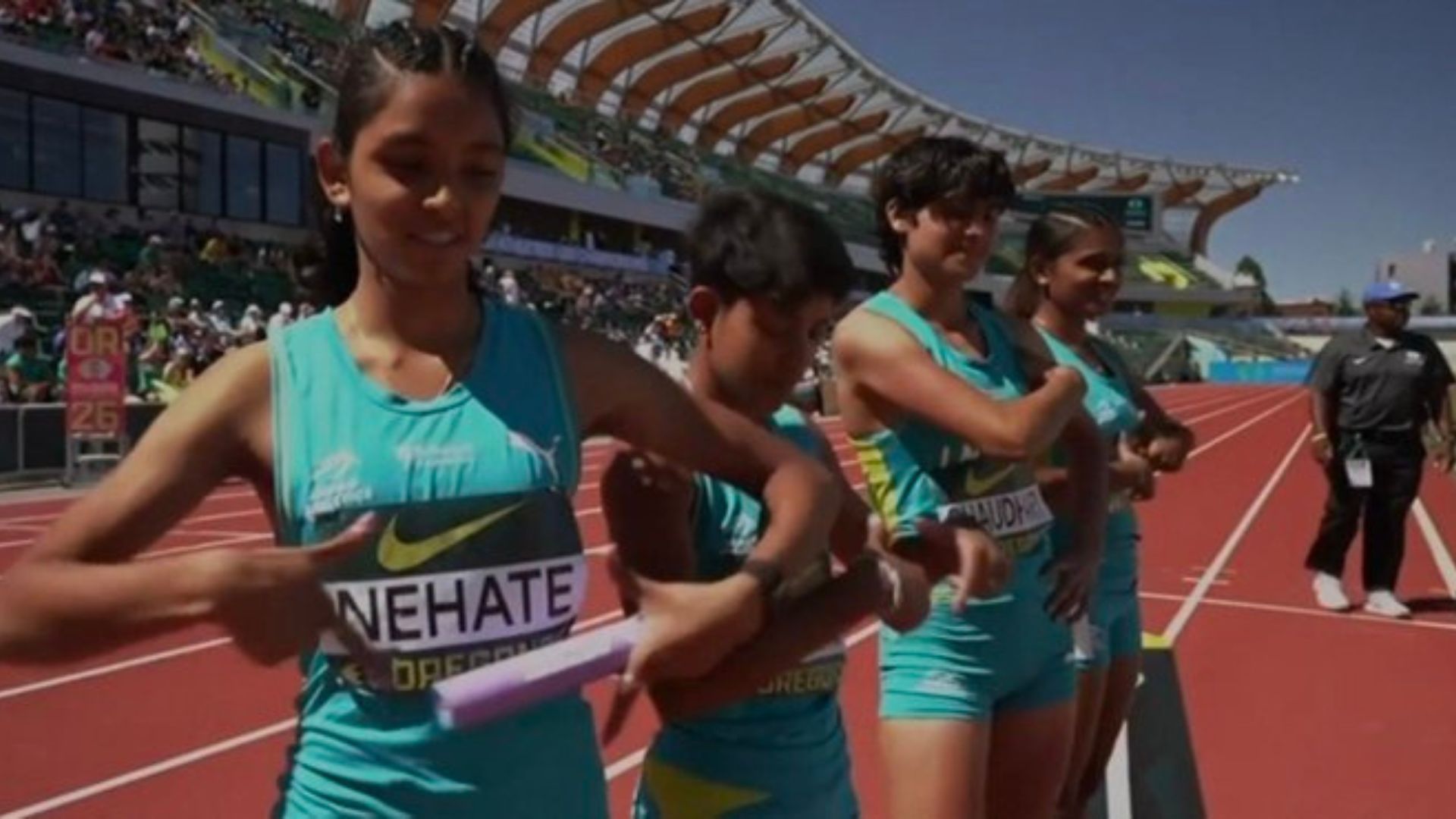
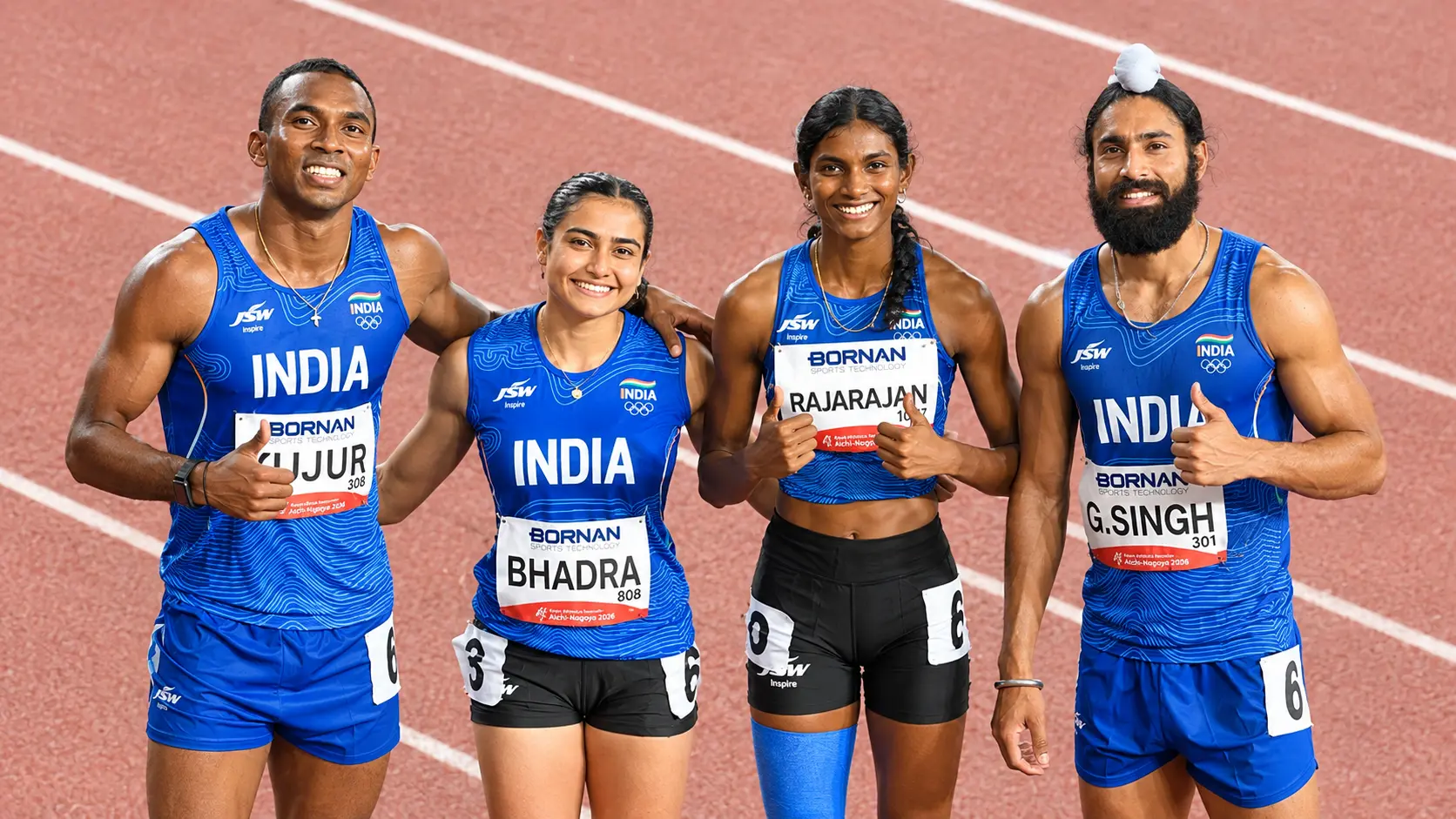
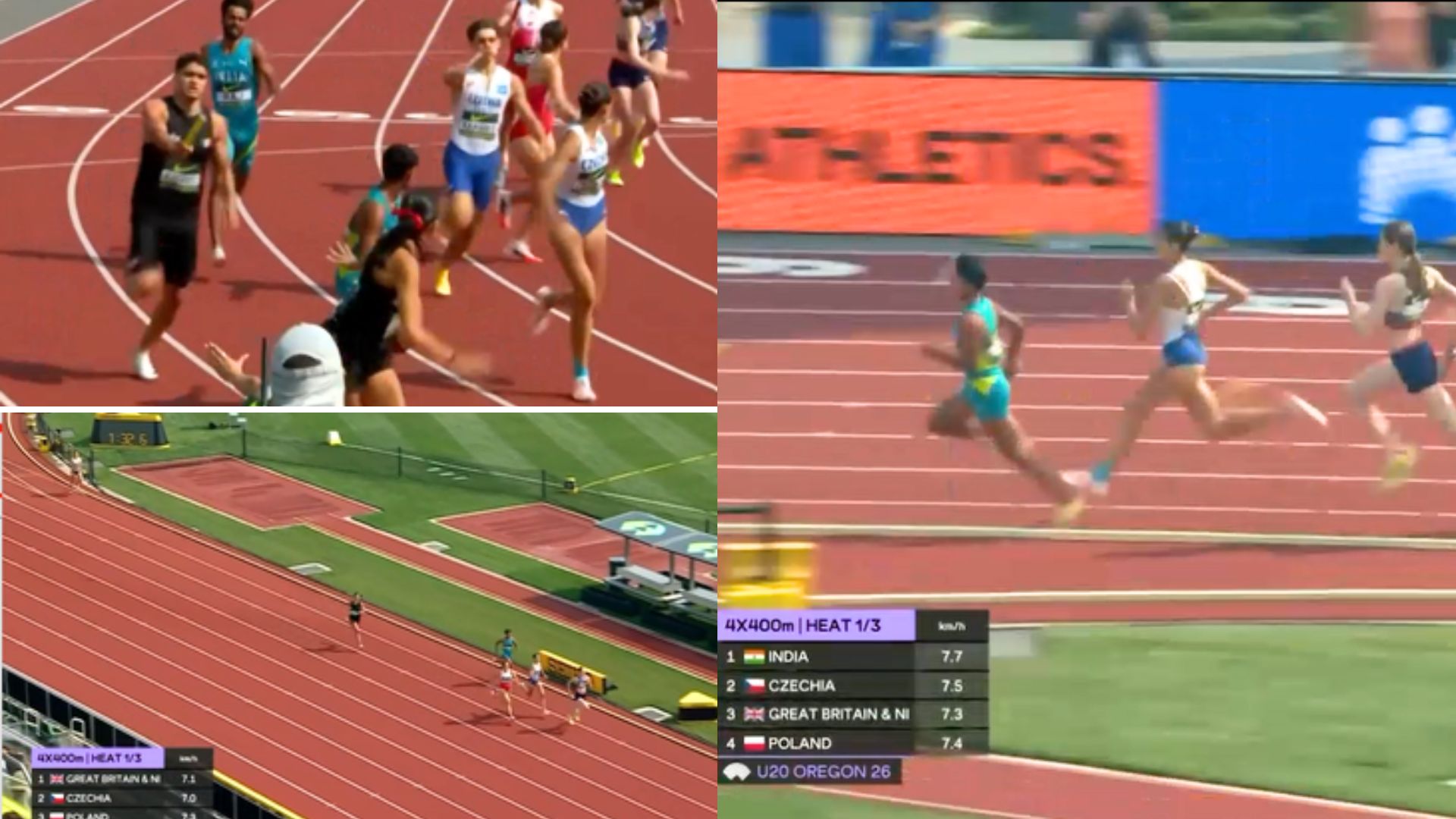
India’s 4×400m mixed relay team missed out on a place in the final at the World Athletics U20 Championships 2026 after finishing fourth in its heat with a time of 3:22.85.
One pattern stood out during India’s race.
The quartet of Piyush Raj, Tahura Khatun, Syed Sabeer, and Thiya Arumugam appeared to go out very aggressively over the first half of their respective laps before fading significantly in the closing stages.
The World Athletics speed graphic highlighted this clearly. Around the 170–180m mark, Tahura’s speed peaked at approximately 7.9 m/s, while several athletes from other teams appeared to distribute their effort more evenly. In the closing metres, her speed dropped to around 6.6 m/s, one of the biggest declines in the field.
Managing pace over a one-lap relay is crucial, and a more controlled opening could help the Indian quartet finish stronger in future races.
With the men’s and women’s 4×400m relays still to come, India will hope to learn from this performance and deliver improved race execution.
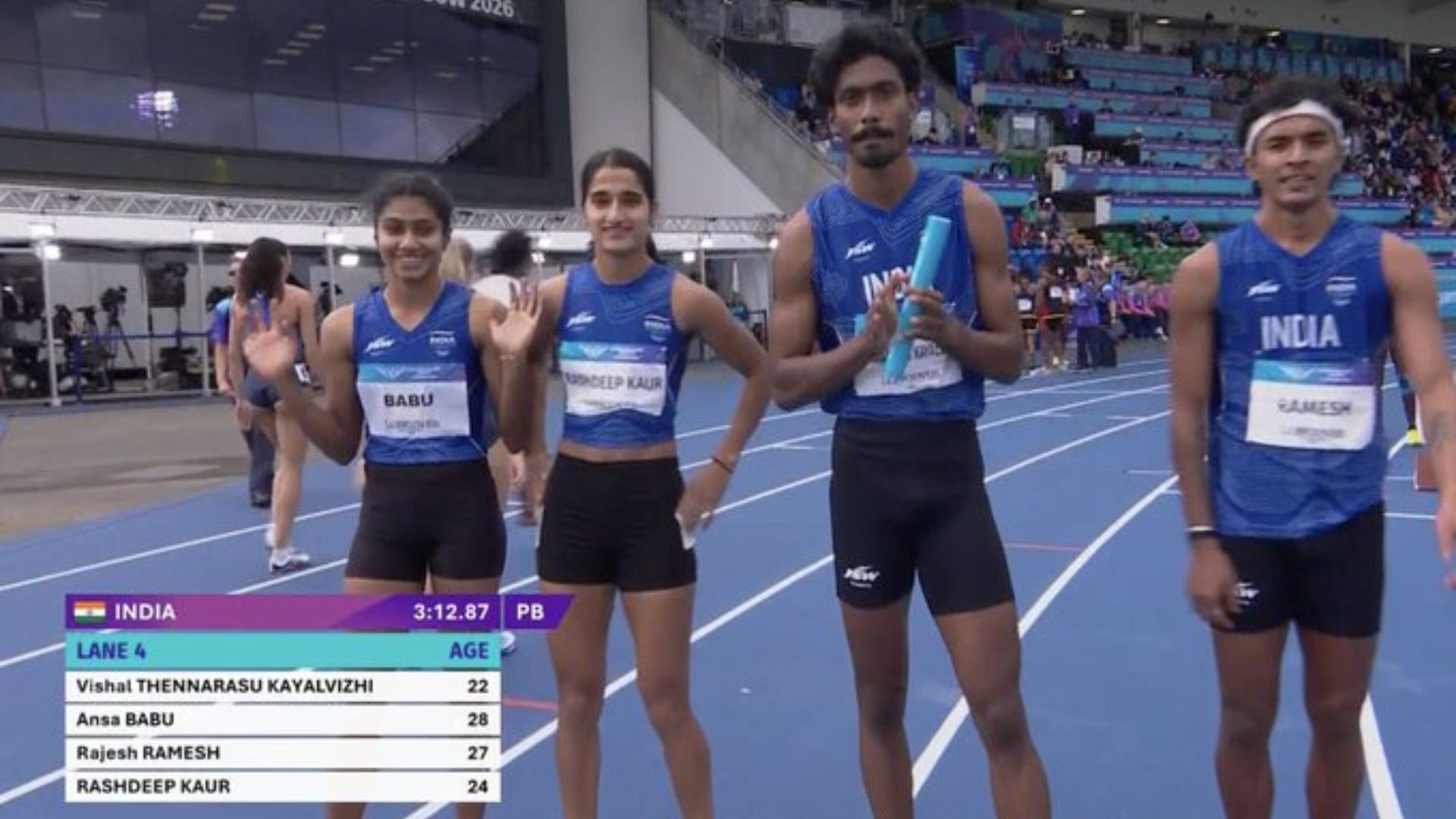
India booked its place in the 4×400m mixed relay final at the Commonwealth Games 2026, advancing as one of the fastest losers after clocking 3:20.98 in the heats.
The Indian quartet finished fourth in their heat, but their time was good enough to secure qualification as the seventh-fastest team overall, keeping their medal hopes alive heading into the final.
Strong Start from Vishal TK
India got off to an encouraging start through Vishal TK, who delivered a composed opening leg.
The national record holder produced a 46.10-second split, handing India an early advantage and placing the team in a strong position after the first exchange.
Momentum Slips Away
The race began to unravel on the second leg as Ansa Babu went out aggressively over the opening 200 metres but struggled to maintain the pace over the final stretch.
She clocked a 53.90-second split, allowing rival teams to move ahead and costing India the advantage built by Vishal.
The final two legs, run by Rajesh Ramesh and Rashdeep Kaur, were unable to recover the lost ground.
Rajesh returned a 47.00-second split, while Rashdeep clocked 53.98 seconds, as India crossed the finish line in fourth place.
Through to the Final
Despite missing out on an automatic qualifying position, India’s 3:20.98 was sufficient to progress on time, earning the team the seventh-fastest qualifying spot for the final.
The performance, however, highlighted areas that will need improvement if India is to challenge the stronger relay nations for a podium finish. While the men’s legs were competitive, the team lost valuable ground during the middle stages of the race.
India also has Neeru Pathak available as the reserve athlete for the mixed relay squad, giving the team management an additional selection option ahead of the final.
With qualification secured, the focus now shifts to producing a cleaner, more balanced performance when the medals are decided.
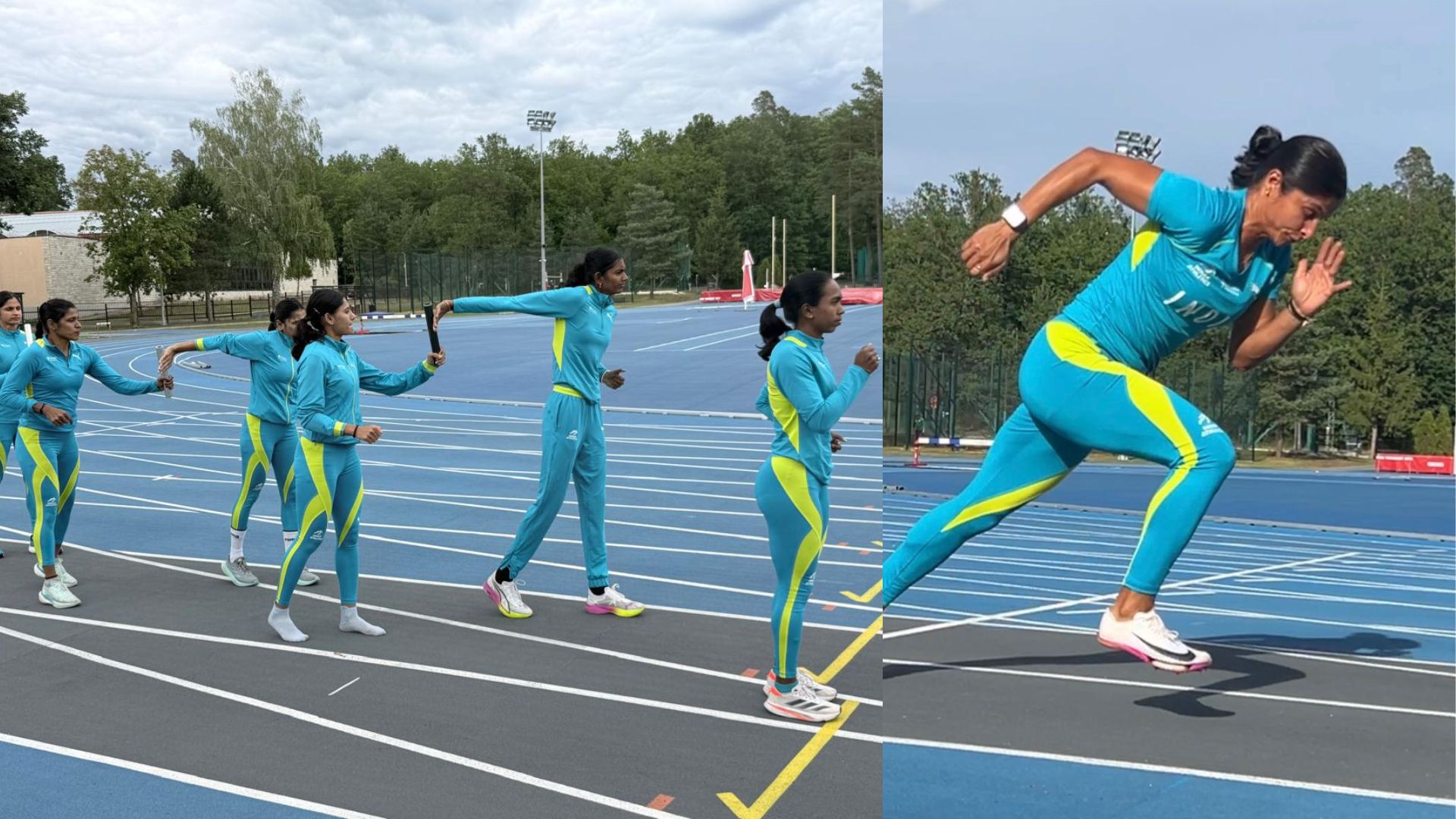
India’s women’s 4x100m relay team has begun preparations at the renowned Olympic Preparation Centre in Spała, Poland, as part of the Athletics Federation of India (AFI)-organised and Sports Authority of India (SAI)-supported overseas training camp ahead of the Asian Games 2026.
The training camp is designed to provide India’s top relay athletes with world-class facilities and an ideal environment as they fine-tune their preparations for one of the biggest competitions of the year.
The squad training in Spała comprises Nithya Gandhe, S.S. Sneha, Srabani Nanda, Tamanna, Sudheshna, and Abinaya. The athletes are working under the guidance of Seenivasan, who serves as the Women’s Relay Coach, with a strong emphasis on baton exchanges, speed endurance, race execution, and overall relay coordination.
The Indian women’s sprint relay team heads into the camp after an outstanding season on the international circuit. Earlier this year, the quartet delivered a memorable performance to win the gold medal at the Asian Relay Championships, clocking an impressive 43.85s. The victory reaffirmed India’s growing strength in the sprint relay and established the team as one of the leading contenders in Asia.
The overseas training camp in Spała is expected to play a crucial role in helping the athletes build on that success. The facility has long been a preferred destination for elite athletes from around the world, offering high-quality infrastructure and a focused training environment ahead of major championships.
With the Asian Games 2026 approaching, the Indian women’s relay squad will be aiming to carry its excellent form into the continental competition. Backed by a successful season and comprehensive preparations in Poland, the team will look to further improve its performances and strengthen its position among Asia’s leading sprint relay nations.
India’s women’s 4x100m relay team enters the final phase of preparation with confidence, momentum, and the ambition to build on its Asian Relay Championships triumph when it takes to the track at the Asian Games.
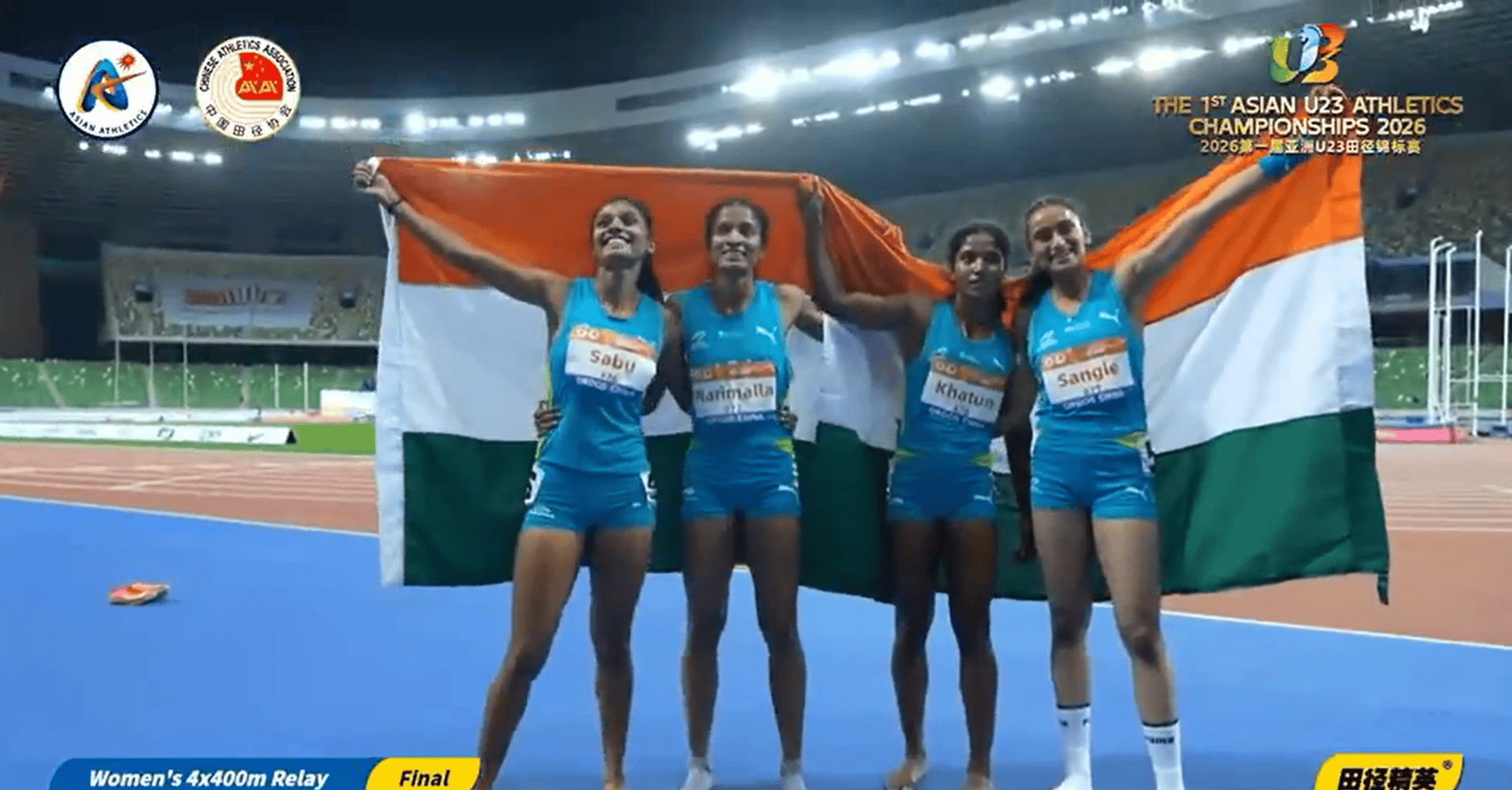
India’s women’s 4x400m relay team produced a commanding performance to win the gold medal at the 2026 Asian U23 Athletics Championships, clocking an impressive 3:33.62.
The Indian quartet of Shravani Sangle, Sandra Mol Sabu, Pravallika, and Nofisa combined brilliantly to finish ahead of China (3:35.14) and Kazakhstan (3:37.65), securing the continental U23 title.
Shravani Sangle provided India with a solid start before Sandra Mol Sabu delivered a decisive second leg, pulling clear of the Chinese runner over the final 100 metres to hand India a comfortable lead. Pravallika and Nofisa then ran composed final two legs, maintaining the advantage and ensuring India crossed the finish line first.
The winning time of 3:33.62 also underlined the team’s quality, finishing just 0.81 seconds behind the Indian senior team’s season-best mark of 3:32.81, highlighting the immense potential of the country’s next generation of quarter-milers.