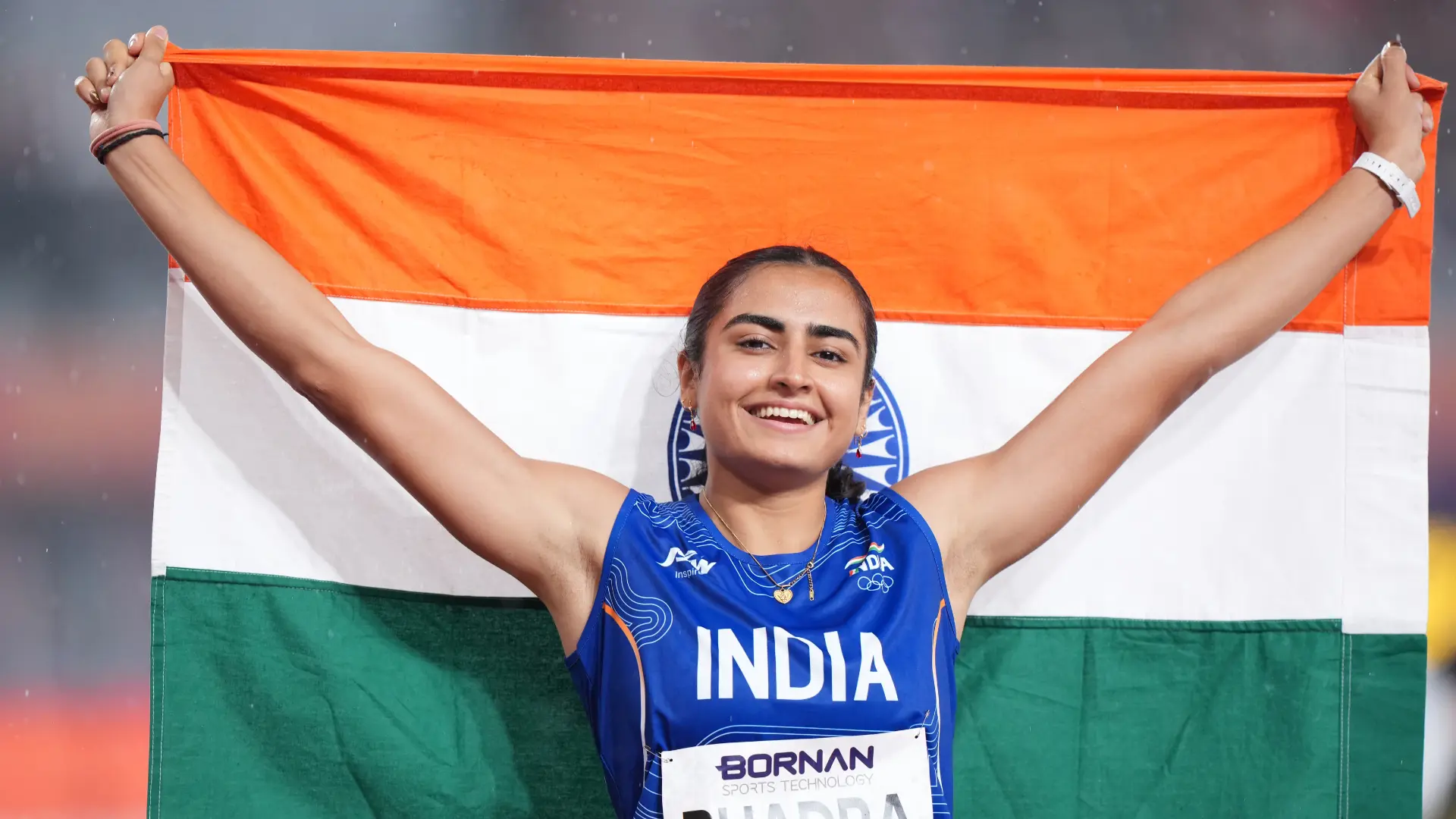
India’s sprint sensation Harita Bhadra won a bronze medal in the women’s 200m final at the 2026 Asian Games in Aichi-Nagoya.
Bhadra clocked 23.20 seconds in a dramatic race that went down to a photo finish. She secured third place by just 0.01 seconds, edging out Japan’s Abigeirufuka Ido.
Harita Bhadra Wins Bronze in Nail-Biting Photo Finish
Bhadra faced a strong international field in the women’s 200m final. She held her nerve in the closing stages to secure a place on the podium.
The Indian sprinter finished in 23.20 seconds, while Ido crossed the line in 23.21 seconds.
Singapore’s Shanti Pereira won gold with a season-best time of 22.78 seconds. China’s Chen Yujie claimed silver in 22.93 seconds.
The bronze medal marked a significant achievement for Bhadra in her maiden Asian Games appearance. Her podium finish also added to India’s athletics medal tally.
Harita Bhadra’s Breakthrough Season
Bhadra’s bronze medal capped a strong season on the track. She entered the Asian Games after delivering several impressive performances.
Earlier in the season, she won the women’s 60m national indoor title in 7.32 seconds.
Her form continued at the National Inter-State Senior Athletics Championships in Bhubaneswar in June. There, she clocked a personal best of 23.14 seconds in the 200m.
The performance was also India’s fastest 200m time in three years. It helped her secure qualification for the Asian Games.
Bhadra also impressed in the 100m at the Indian Athletics Series final. She clocked 11.22 seconds, establishing herself among the fastest women in Indian athletics history.
Harita Bhadra Makes Her Mark on the Asian Stage
Bhadra has now translated her domestic performances into an international medal. Her bronze medal highlights her progress and potential in Indian sprinting.
With her 200m podium finish, she has established herself among Asia’s leading sprinters.
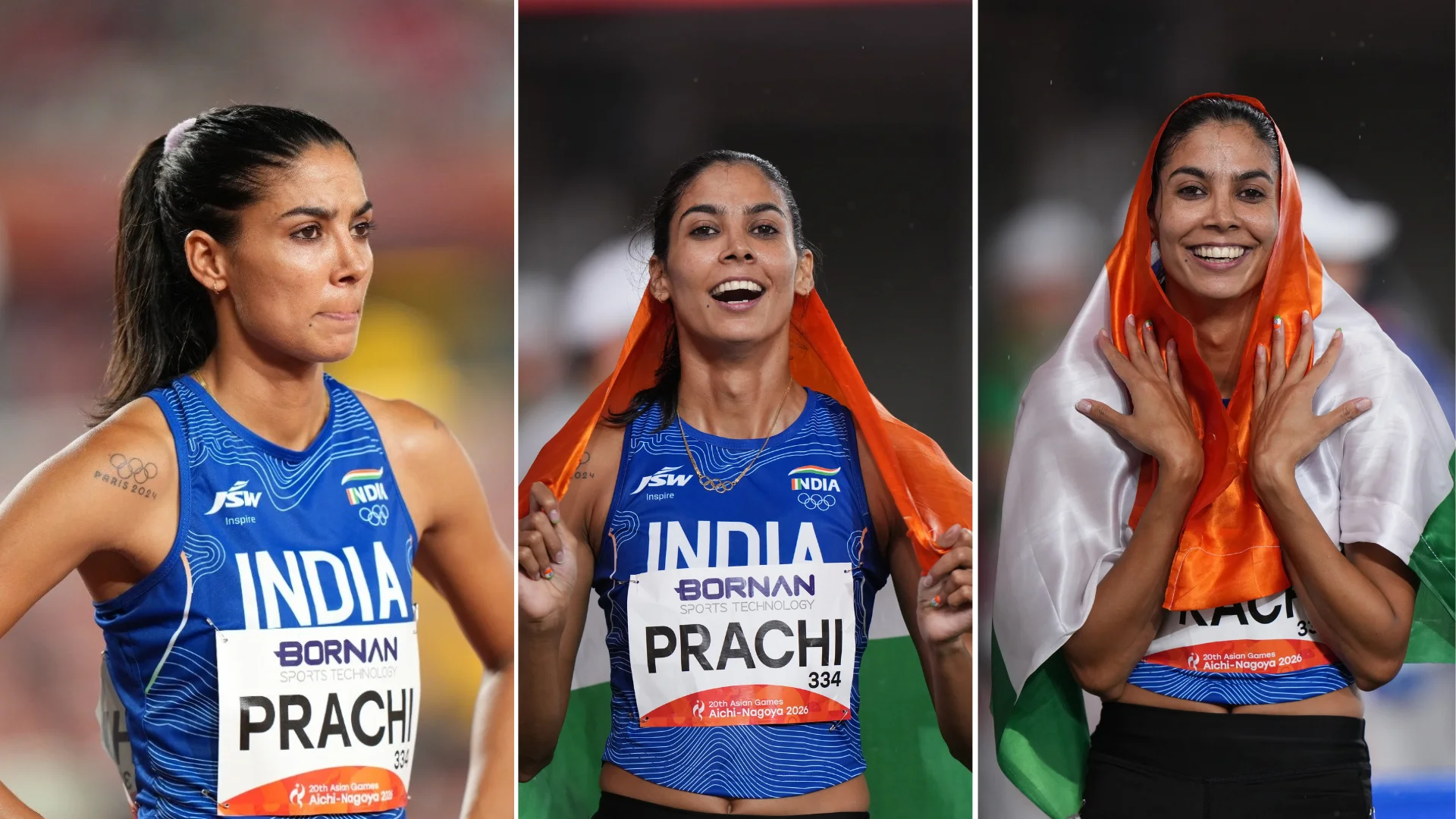
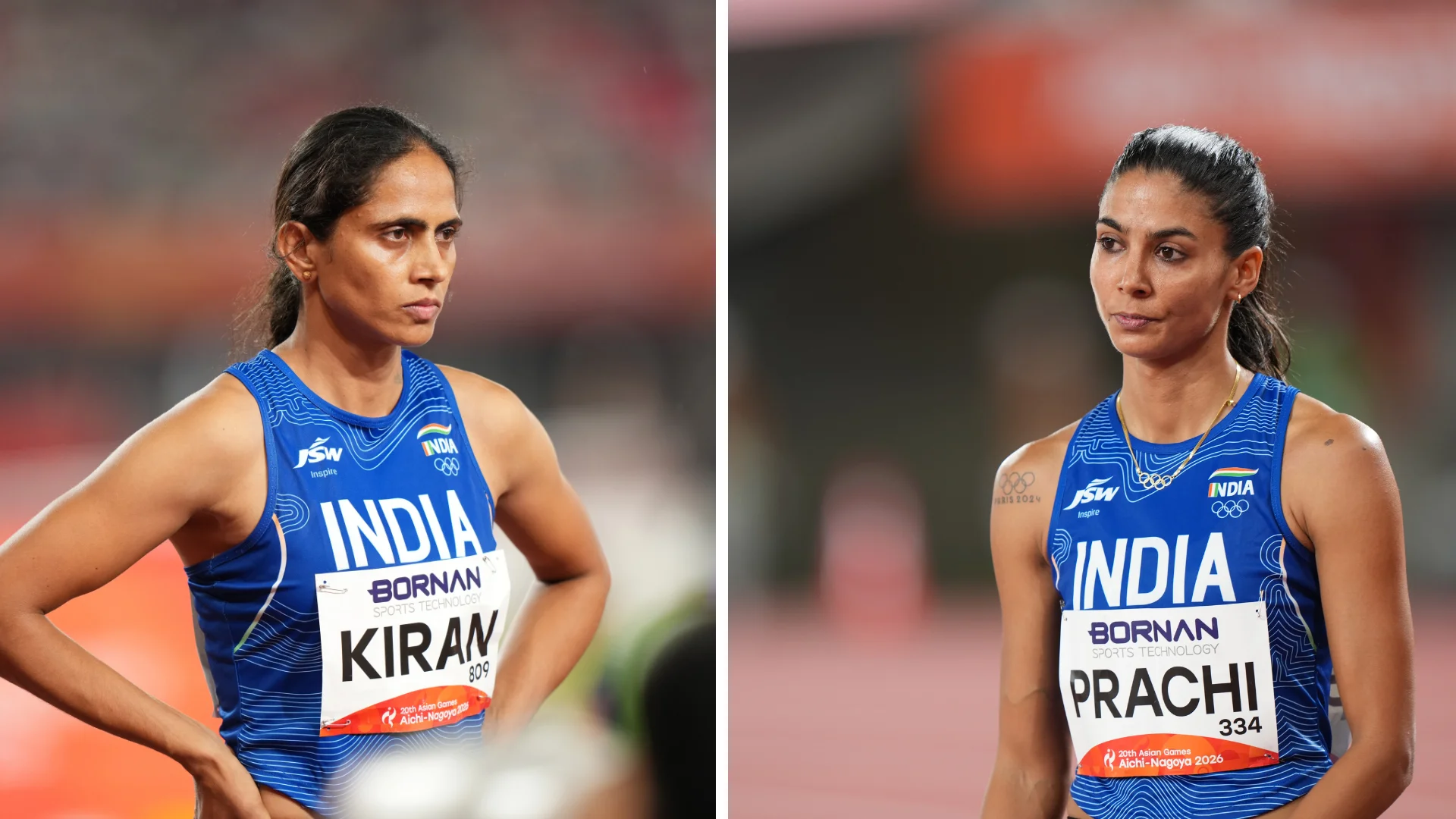
In the high-stakes pressure cooker of continental track and field, execution is rarely about matching an opponent’s strength stride for stride. More often, it is about respecting your own physiological limits while managing extreme external pace. In the Women’s 400m Final at the 2026 Asian Games in Aichi-Nagoya, India’s Prachi Choudhary delivered a textbook lesson in race distribution, securing a bronze medal with a calculated performance of 53.21 seconds.
The race was defined from the gun by Bahrain’s global superstar and former world champion, Salwa Eid Naser. Naser put on a masterclass of front-running velocity, storming to gold in a historic 49.20 seconds—a new Games Record and the first sub-50-second clocking in Asian Games history. Naser’s blistering early tempo created a massive 4.01-second buffer ahead of the rest of the field.
For the remaining seven sprinters in the field, Naser’s aggressive pace presented a dangerous trap. Chasing an athlete running at sub-50 pace over the opening 200 meters forces the human body into catastrophic early lactate accumulation. When a sprinter spikes their metabolic system too early in a 400m event, the final 80 meters inevitable result in severe muscular stiffness, biomechanical breakdown, and rapid deceleration.
Recognizing the margin at the front, Prachi refused to panic. Operating out of her assigned lane, she executed a controlled drive phase over the first 50 meters, establishing a clean stride cadence down the backstretch without over-committing to Naser’s runaway speed. While Naser pulled the entire field into a high-velocity environment, Prachi focused entirely on smooth turnover and efficient oxygen management through the 200-meter mark.
As the field swung into the top turn (200m–300m), the tactical discipline began to pay off. Iran’s Zahra Zarei Manoujan mounted a strong move to position herself for silver, crossing the line in 52.38 seconds. Prachi, meanwhile, held a tight, relaxed line through the bend. By conserving her anaerobic reserves rather than over-extending on the backstretch, she maintained proper vertical posture and upper-body relaxation through the transition phase.
Entering the final 100-meter straightaway, the race transformed into a brutal test of lactate tolerance. With Naser far ahead, a fierce battle erupted for the remaining podium spot. Prachi called on her late-stage power, finding the extra gear required in the final 50 meters. Her ability to minimize deceleration down the home stretch proved decisive, as she held off her chasing rivals—including fellow Indian finalist
Kiran Pahal, who finished fifth in 53.41 seconds—to cross the line in 53.21 seconds for the bronze.
Prachi’s performance highlighted the essence of quarter-mile execution: when an opponent sets an unmatchable pace, tactical discipline is your greatest asset. By executing a measured race plan, Prachi turned high-speed chaos into continental bronze.

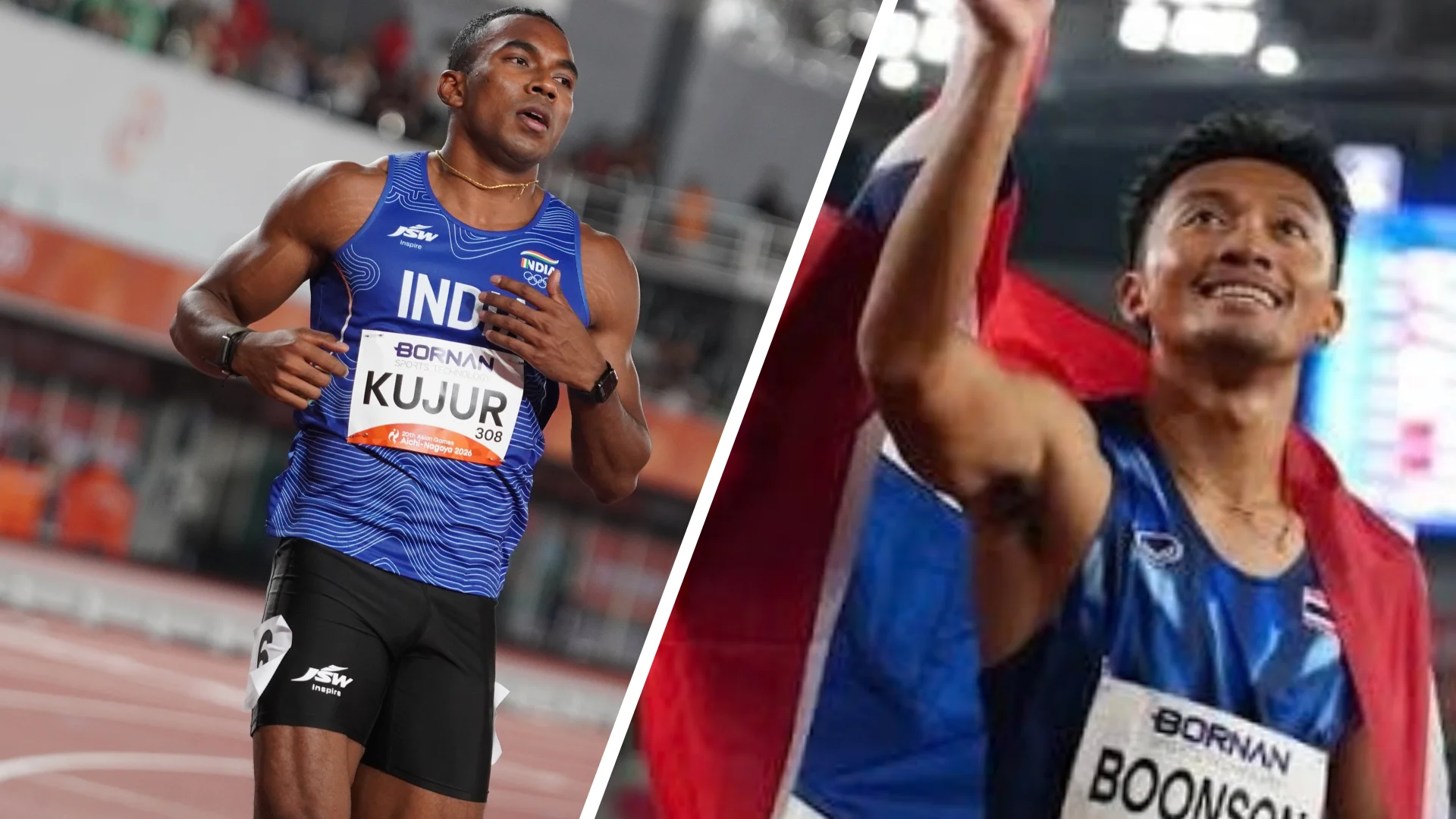
India’s sprinting star Animesh Kujur qualified for the men’s 200m final at the 2026 Asian Games. He finished second in his heat with a time of 20.81 seconds.
Kujur delivered a composed performance to secure automatic qualification. His result keeps India’s hopes alive for a medal in the event.
Animesh Kujur Secures Automatic Qualification
Kujur entered the race with a clear objective: secure a place in the final without wasting unnecessary energy.
He maintained his composure through the bend and accelerated down the home straight. His time of 20.81 seconds earned him second place and an automatic qualification spot.
Ali Haji finished closely behind in 20.91 seconds. However, Kujur held his position and secured his place in the medal showdown.
The Indian national record holder will now prepare for the final. He will look to build on his performance and challenge the leading sprinters.
Puripol Boonson Sets Games Record
Thailand’s Puripol Boonson emerged as the standout performer in the heats. The Thai sprinter delivered a remarkable run to win his race in 20.10 seconds.
His performance also established a new Asian Games record in the men’s 200m. Boonson raised the standard for the upcoming final with his explosive acceleration and top-end speed.
The record-breaking run placed him among the leading contenders for the title. His performance has added another layer of anticipation to the final.
Men’s 200m Final: A High-Stakes Showdown
With the heats complete, attention now turns to the men’s 200m final. Kujur has secured his place, while Boonson has set a new benchmark.
Kujur will need another strong performance to challenge the leading sprinters. Meanwhile, Boonson will look to carry his record-breaking form into the final.
The final promises a competitive contest as the athletes battle for the Asian Games podium.
The anticipation surrounding India’s premier quarter-miler,
Vishal TK, heading into the men’s
400m final at the
2026 Asian Games was immense. Having rewritten history earlier in the year as the first Indian to ever break the elusive 45-second barrier with a national record of
44.98 seconds in Ranchi, the young Tamil Nadu sprinter carried the heavy hopes of a continent-watching nation on his shoulders.
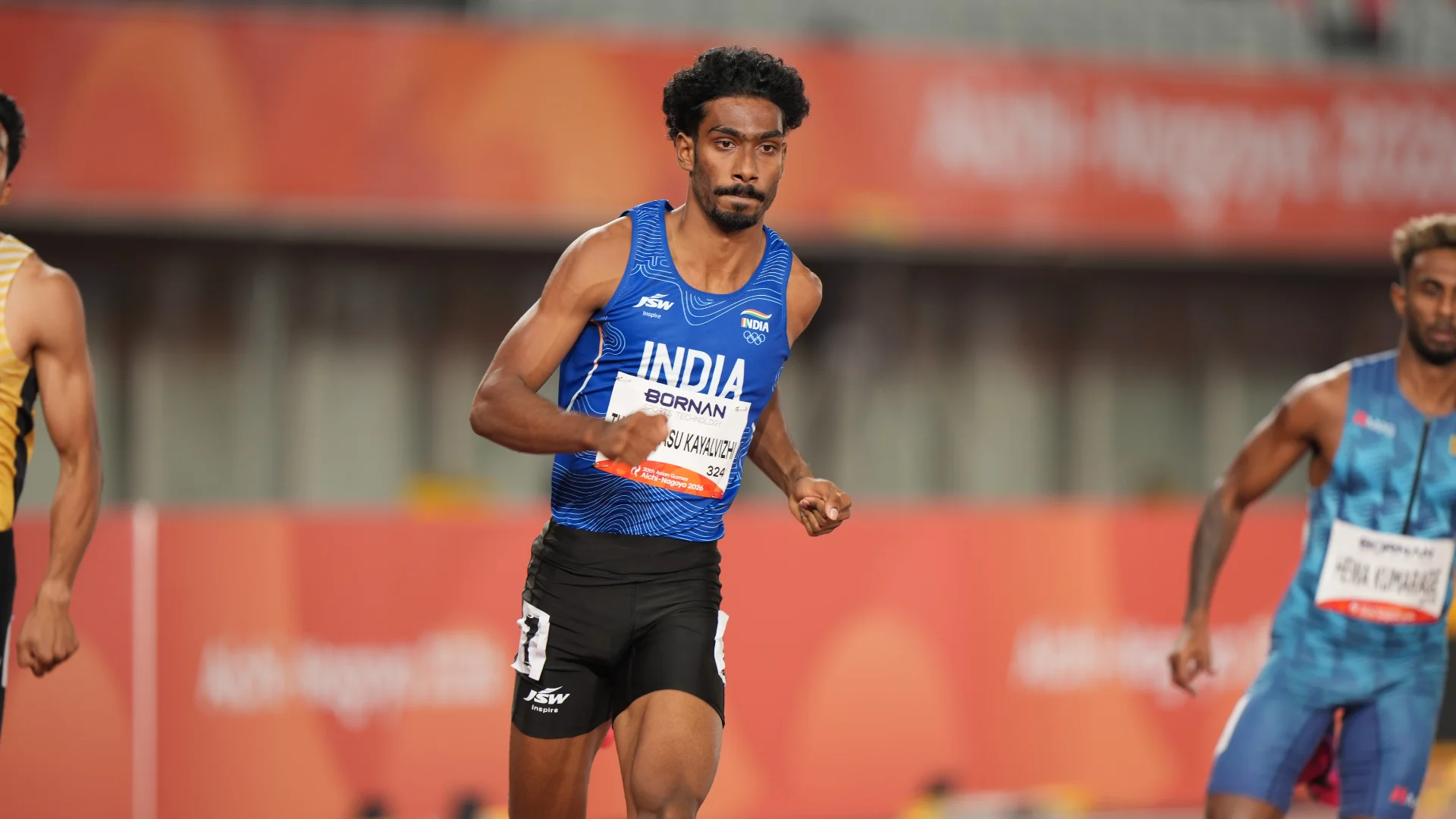
However, track and field can be unforgiving. On a night when expectations soared high, Vishal simply could not find his usual explosive rhythm out of the blocks. Struggling to accelerate and match the blistering pace set by the continent’s elite, he crossed the finish line in 5th place with a time of 45.48 seconds. While respectable by international standards, it fell short of the podium heroics many had envisioned for India’s new sprinting icon.
A Star-Studded and Tactical Affair
The race itself proved to be a fierce battle of endurance and speed, in which pre-race favourites were also tested. Thailand’s Joshua Atkinson delivered a masterclass performance, blazing to the gold medal with a phenomenal time of 44.90 seconds. Close behind him, the United Arab Emirates’ Suleiman Abdulrahman dug deep to clinch a well-deserved silver with a time of 44.99 seconds.
Much like Vishal, other high-profile contenders in the stacked field struggled to fully deliver their absolute peak forms under the intense pressure of the global-stage final, making it a night where tactical positioning and momentary lapses dictated the podium places.
Bouncing Back for India
For Vishal TK, born in Jolarpettai and nurtured at the Inspire Institute of Sport under coach Jason Dawson, this fifth-place finish marks a crucial learning curve. Having already established himself as an Asian champion and a proven relay medalist, the young star’s career trajectory has been defined by rapid meteoric growth.
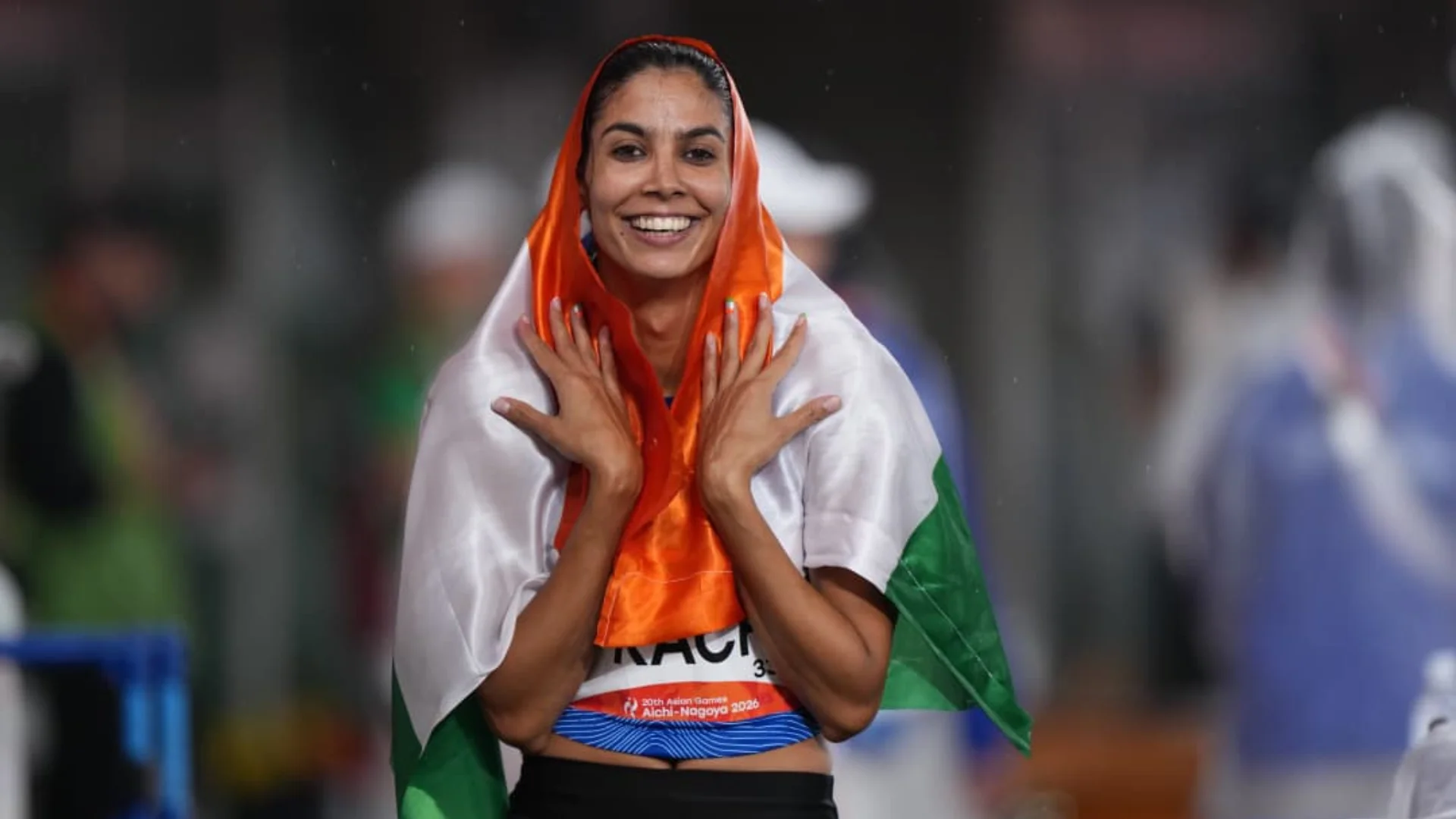
India’s athletics contingent added another glittering chapter to their campaign in Japan, with Prachi delivering a breathtaking performance to claim the bronze medal in the women’s 400m final at the 2026 Asian Games.
A Stunning Turnaround on the Big Stage
Prachi’s journey to the podium was a masterclass in resilience and peak timing. Having scraped into the final as one of the fastest losers from the preliminary rounds, she faced immense pressure from a stacked field of Asia’s elite sprinters. Rather than feeling overawed, Prachi elevated her game when it mattered most.
Under the dazzling lights of the stadium, she slashed her previous time significantly, improving from her preliminary form to clock a sharp 53.21 seconds. That blistering improvement made all the difference in a nail-biting finish, allowing her to fiercely hold off a late charge from South Korea’s Kim Seoyoon, who finished just behind at 53.38 seconds to settle for fourth place.
A High-Calibre Podium and Solid Team Effort
The final was dominated by Bahrain’s powerhouse Salwa Eid Naser, who blazed to a phenomenal 49.20 seconds to set a new Games Record. Iran’s Zahra Zarei secured the silver medal with a time of 52.38 seconds, while Prachi proudly rounded out the top three to capture the bronze for India.
There was further reason for encouragement for the Indian camp as Kiran put up a commendable fight in the same race. Kiran finished a close fifth with an impressive time of 53.41 seconds, missing out on the bronze medal podium by a razor-thin margin of just 0.20 seconds.
A Proud Moment for Indian Athletics
Prachi’s remarkable podium finish underscores the depth and fighting spirit of #TeamIndia at Nagoya 2026. Overcoming the odds to transform a narrow qualification into a medal-winning triumph, she has cemented her name among the continent’s finest quarter-milers. As the celebrations begin for this hard-fought bronze, Indian athletics fans can take immense pride in a night where determination met destiny on the track.
What are your thoughts on Prachi’s incredible tactical improvement from the heats to the final?
Aichi-Nagoya: India will have two representatives in the women’s 400m final at the Asian Games. Kiran Pahal and Prachi qualified after strong performances in their respective semifinals on Friday.
Pahal finished second in Heat 2 with a time of 53.44 seconds. Meanwhile, Prachi clocked 53.46 seconds to finish third in Heat 3.
Prachi secured her place in the final as one of the fastest non-automatic qualifiers. As a result, both Indians will compete in Saturday’s medal race.
Kiran Pahal Secures Automatic Qualification
Pahal’s individual 400m campaign follows an important contribution to India’s mixed 4x400m relay team.
She ran in the crucial qualifying heat that helped India secure a place in the mixed relay final. This added another demanding race to her Asian Games schedule.
The Haryana international has been one of India’s established 400m runners in recent seasons.
Earlier this week, she won the women’s 400m at the Indian Athletics Series meet in Surat. She clocked 53.49 seconds to claim the victory.
The 25-year-old had also recorded a season best of 52.89 seconds at the Ludhiana leg of the Indian Athletics Series.
Her personal best stands at 50.92 seconds. She also represented India at the 2024 Paris Olympic Games.
At the Asian Games, her 53.44-second performance secured automatic qualification from her semifinal. Consequently, she will now compete for a place on the podium.
Prachi Qualifies Through Fastest Non-Automatic Spots
Prachi took a different route into the final.
She clocked 53.46 seconds to finish third in Heat 3. Although she did not secure automatic qualification, her time was fast enough to earn one of the available non-automatic places.
Her performance means India will have two runners in Saturday’s final.
Both athletes will now have an opportunity to challenge the continent’s leading quarter-milers.
Kiran Pahal Brings Major Championship Experience
For Pahal, the final will come after an already busy Asian Games campaign.
Her schedule has included duties in the mixed 4x400m relay. She has also competed in the individual 400m.
Her experience at major championships, including the Paris Olympics, will be valuable as she returns to the track for the medal race.
Meanwhile, Prachi will also have an opportunity to compete for a medal after securing her place through her semifinal time.
Asian Games Women’s 400m Final: Date and Time
The women’s 400m final is scheduled for September 26 at 6:15 PM IST.
India’s two finalists now have one race remaining in their pursuit of an Asian Games medal.
-
Kiran Pahal: 53.44 seconds — Second in Heat 2.
-
Prachi: 53.46 seconds — Third in Heat 3, qualified as a non-automatic qualifier.
Both are through to the final. Now, the focus shifts to the Asian Games women’s 400m medal race.
Nagoya: Vishal T.K. continued his impressive Asian Games campaign on Friday. He won his men’s 400m heat in 45.27 seconds to qualify for the final.
The Indian national record holder had already helped India win silver in the mixed 4x400m relay on Thursday. Now, he has secured a place in Saturday’s individual final.
Vishal held off Qatar’s Ammar Ibrahim in the home straight. As a result, he won his heat and advanced to the next round.
For the 22-year-old, it is another strong performance at the Games. His campaign has already brought a major medal and another important milestone in his career.
Vishal Helps India Win Mixed 4x400m Relay Silver
On Thursday, Vishal was part of India’s mixed 4x400m relay team that won silver.
He ran the third leg alongside M.R. Poovamma, Vithya Ramraj and Manu T.S. Together, the quartet clocked 3:14.46 to finish second behind Bahrain.
India also edged Vietnam by 0.08 seconds to secure the silver medal.
Vishal took over the third leg with India still in medal contention. He produced a strong run to keep the team in the race.
His effort put the team in a good position for Vithya Ramraj’s decisive anchor leg. The following day, he returned to the track for his individual event.
Wins 400m Heat in 45.27 Seconds
Vishal clocked 45.27 seconds to win his heat and qualify directly for the men’s 400m final.
He held off Qatar’s Ammar Ibrahim in the final stretch. Consequently, he secured his place in Saturday’s race.
Although the time was slower than his season’s best, it was enough to achieve his immediate goal.
With a relay silver already secured, Vishal now has another opportunity to compete for a medal at the Asian Games.
National Record Holder After Historic 44.98-Second Run
Vishal’s performances in Nagoya come during a breakthrough season for the Tamil Nadu athlete.
Born in Jolarpettai, Tirupattur district, he initially competed in the 100m and 200m. However, he switched to the 400m in 2024.
That change quickly transformed his career.
Earlier this year, Vishal clocked 44.98 seconds, marking the biggest breakthrough of his career. He became the first Indian man to break the 45-second barrier in the 400m.
The performance also established a new national record. It marked a major milestone for Indian men’s 400m running.
His rapid rise is particularly notable because he had only recently moved up to the quarter-mile event.
From Short Sprints to the National Record
Vishal was introduced to athletics as a child in Jolarpettai. He later moved into the sports hostel system.
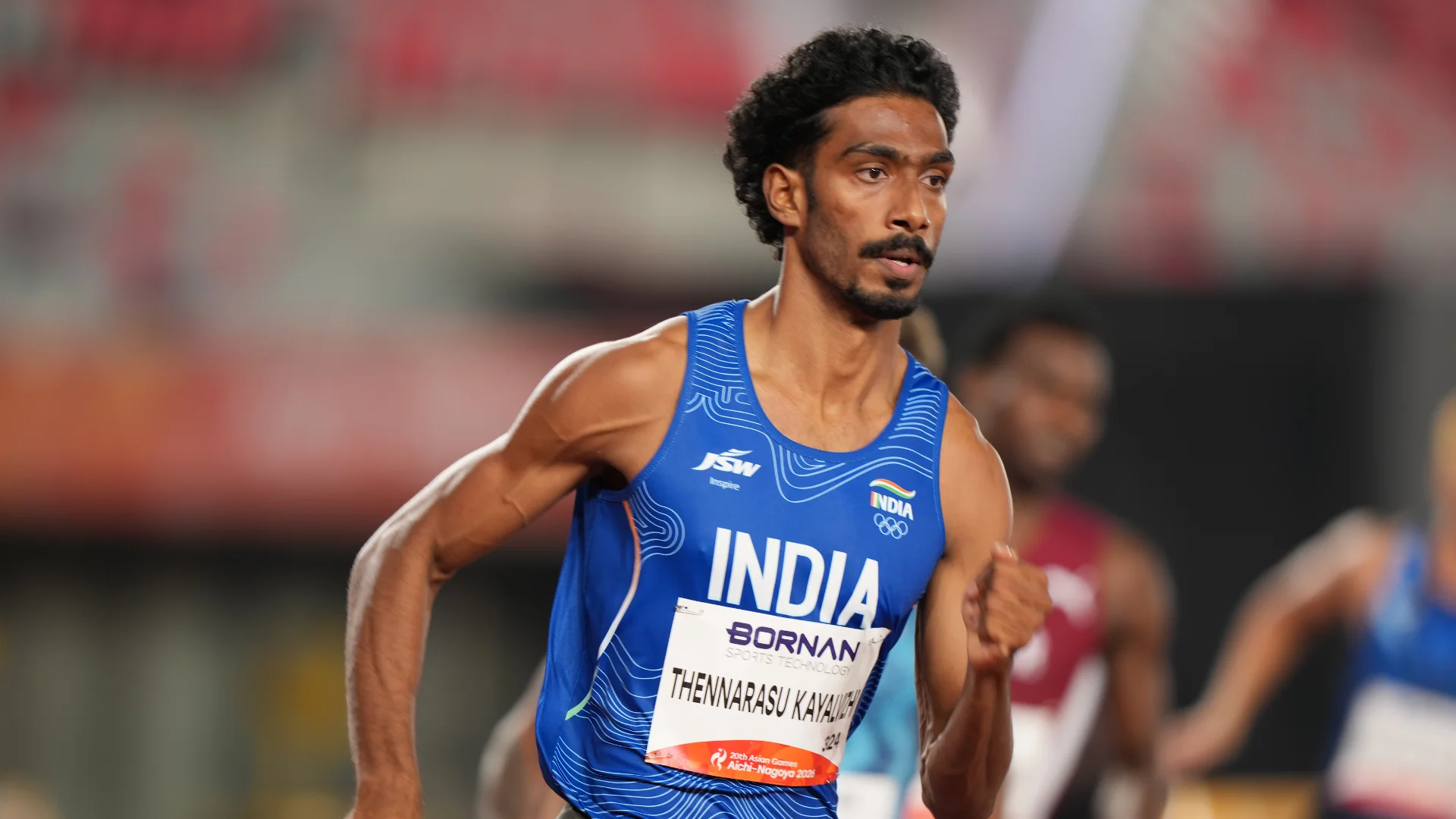
His father, Thennarasu, had played football. He also supported his son’s sporting ambitions from an early age.
Vishal began his athletics career in shorter sprints before switching to the 400m. Within a relatively short period, he progressed to become India’s fastest man over the distance.
His national-record run of 44.98 seconds established him as the first Indian to go under 45 seconds. This remains a significant benchmark in Indian men’s 400m running.
Previous Success at the Asian Athletics Championships
Vishal has already enjoyed success at the continental level.
At the 2025 Asian Athletics Championships, he helped India win gold in the mixed 4x400m relay. He also helped the country secure silver in the men’s 4x400m relay.
His performances at the 2026 Asian Games have added another relay medal to his growing list of international achievements.
Now, he has an individual Asian Games final to look forward to.
Vishal T.K. Eyes Individual Medal in 400m Final
Vishal’s 45.27-second performance in Nagoya was not his fastest run of the season. Nevertheless, it was enough to secure his place in the final.
After contributing to India’s relay silver, he will return to the track with an individual Asian Games medal within reach.
The final will test his ability to recover quickly after a demanding schedule. However, his performances so far have given him another opportunity to compete for a podium finish.
On Thursday, he helped India win relay silver.
On Friday, he won his 400m heat.
On Saturday, Vishal T.K. will line up in the Asian Games men’s 400m final, looking to add an individual medal to an already memorable campaign.
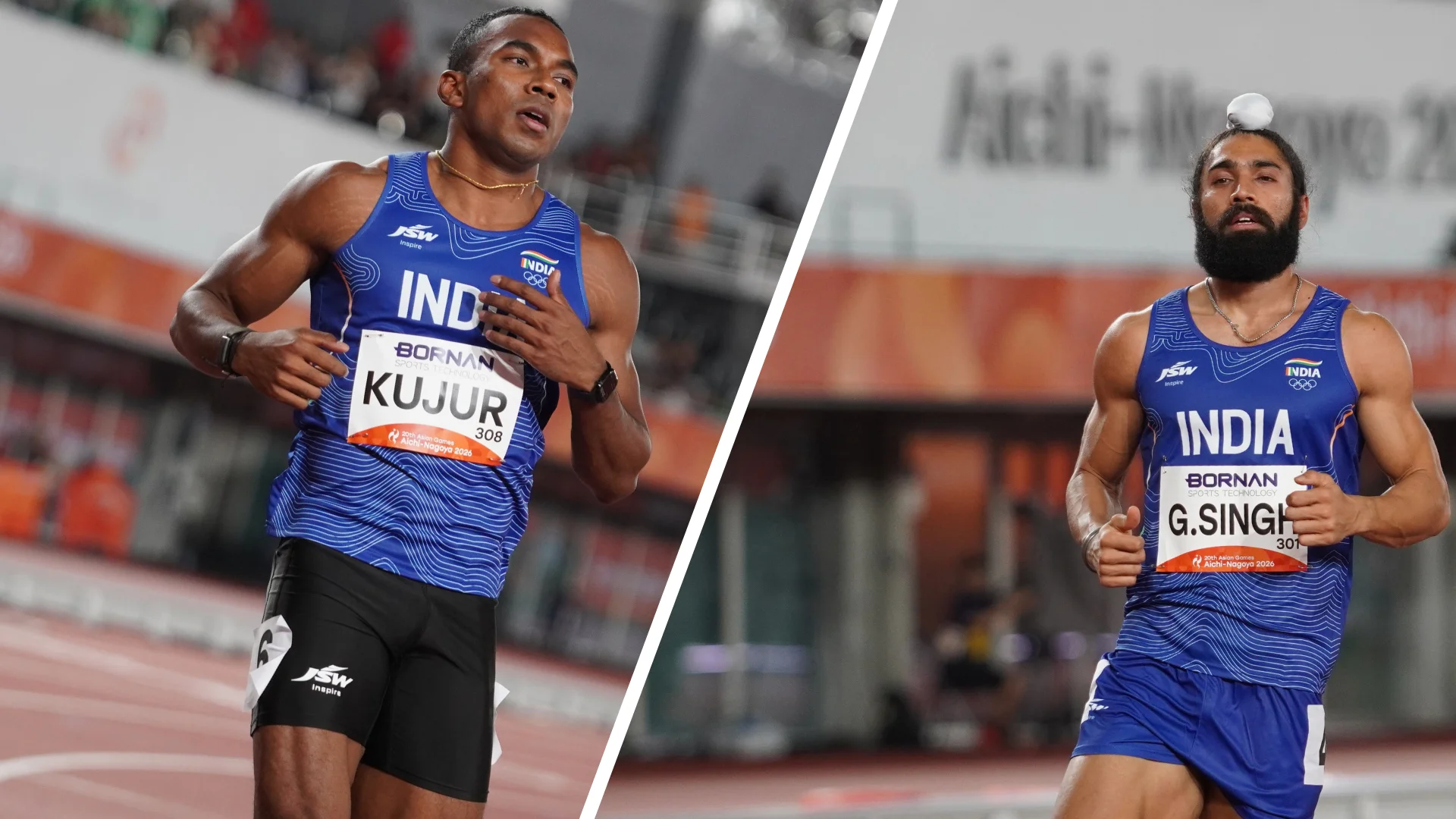
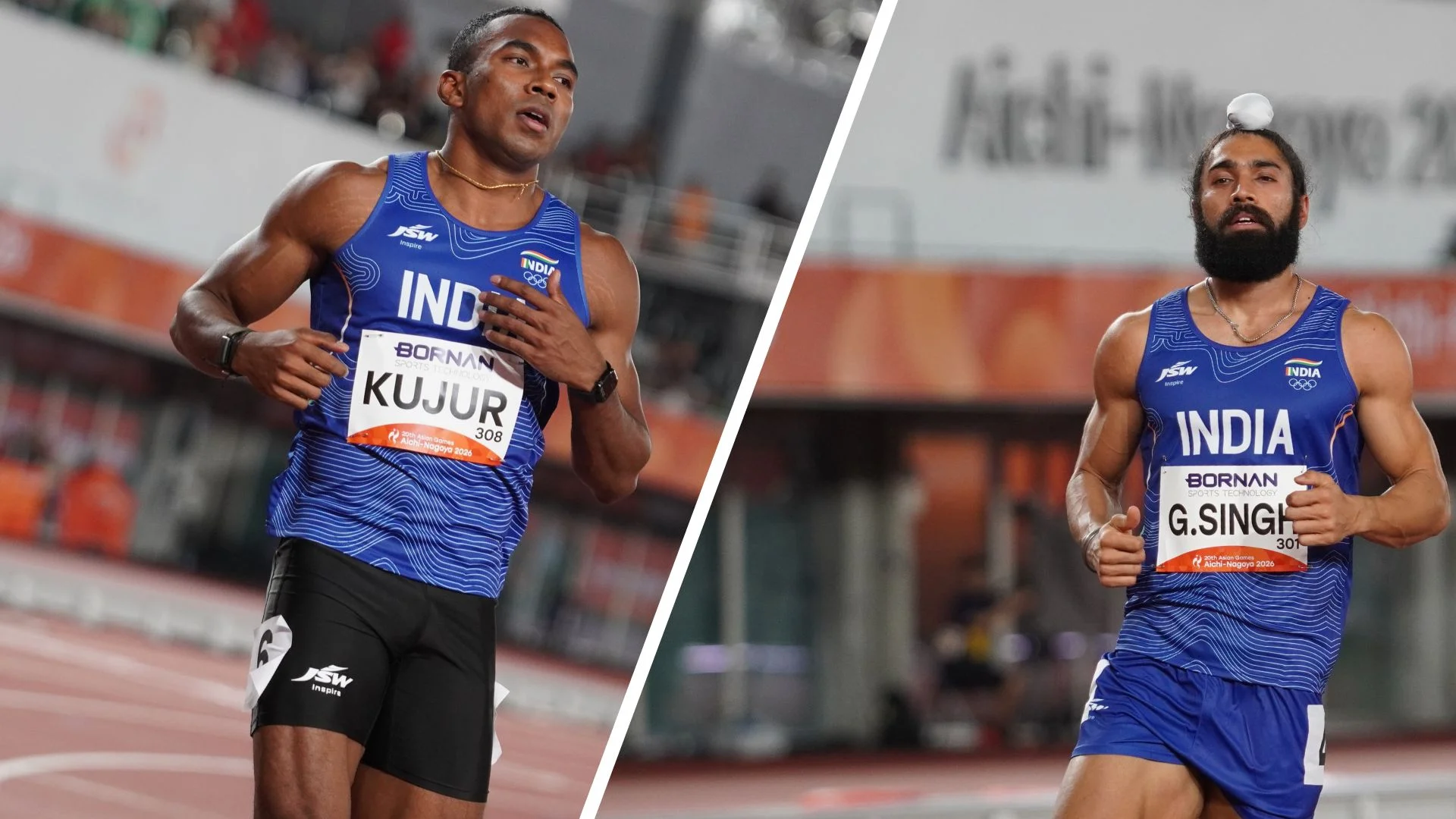
Aichi-Nagoya: India’s much-anticipated men’s 100m campaign ended in disappointment on Friday as Gurindervir Singh and Animesh Kujur crashed out in the semifinals, failing to match the performances that had raised expectations earlier this season.
Gurindervir, India’s national record holder and the country’s fastest-ever man over 100m, finished fifth in his semifinal with a time of 10.32 seconds. Animesh Kujur, the second-fastest Indian in history, finished seventh in his race in 10.38 seconds.
Neither sprinter could reproduce the form that had made them two of the most closely watched Indian athletes heading into the Asian Games.
Gurindervir Singh Finishes Fifth in 10.32 Seconds
Gurindervir finished fifth in his semifinal, missing out on a place in the final.
Oman’s Ali Al Balushi won the race in 10.01 seconds, followed by China’s Xie Zhenye in 10.18 seconds and Daniel Biwesa in 10.22 seconds.
Gurindervir’s 10.32-second finish was not enough to secure qualification for the final.
Animesh Kujur Finishes Seventh in His Semifinal
Kujur also failed to advance, finishing seventh in his semifinal with a time of 10.38 seconds.
South Korea’s Joeljin Nwamadi won the race in 10.17 seconds, while Malaysia’s Mohd Muhammad clocked 10.25 seconds and Japan’s Yuki Koike finished in 10.31 seconds.
Kujur’s performance ended his hopes of reaching the final.
A Disappointing End to a Remarkable Season
The semifinal exits were particularly disappointing given the performances both sprinters had delivered earlier this season.
Gurindervir arrived in Aichi-Nagoya as the national record holder with a personal best of 10.09 seconds. He became the first Indian to break the 10.10-second barrier when he clocked that time in Ranchi in May.
His record-breaking performance had raised expectations for the Asian Games, with the sprinter openly targeting a breakthrough on the continental stage.
Kujur, meanwhile, had established himself as one of the biggest stories in Indian sprinting. The 200m national record holder clocked 10.14 seconds, setting the fastest 100m time by an Indian on foreign soil and the second-fastest mark by an Indian overall, behind Gurindervir’s 10.09 seconds.
Gurindervir-Kujur Rivalry Raised Expectations
The rivalry between the two sprinters had been one of the most intriguing developments in Indian athletics this year.
In May, the national record changed hands twice within minutes. Gurindervir first clocked 10.17 seconds before Kujur lowered the mark to 10.15 seconds.
Gurindervir reclaimed the record the following day with his historic 10.09-second performance.
That remarkable sequence made Friday’s semifinal results particularly difficult to digest.
Both Sprinters Had Advanced Safely Through the Heats
Gurindervir and Kujur had progressed to the semifinals after successfully negotiating their heats on Thursday.
Kujur finished third in 10.36 seconds, while Gurindervir placed second in 10.38 seconds. Both secured automatic qualification for the next round.
Their performances in the heats had raised hopes for a strong showing in the semifinals.
Gurindervir had said he would run faster in the later rounds, while Kujur, speaking exclusively to NNIS Sports, described his heat as an easy race and set himself a target of 10.01 seconds for the semifinal.
However, neither sprinter managed to improve on his heat performance.
Both Indians Fall Short of Their Personal Bests
Gurindervir finished 0.23 seconds slower than his national-record time of 10.09 seconds, while Kujur was 0.24 seconds outside his personal best of 10.14 seconds.
At the semifinal stage of a 100m race at this level, those margins can make a significant difference.
India had entered the Games with two sprinters capable of competing at the sharp end of the Asian field. Neither could reproduce that level when a place in the final was at stake.
For Gurindervir, the fifth-place finish marks a missed opportunity after a season in which his 10.09-second performance had changed perceptions of Indian sprinting.
For Kujur, seventh place is equally frustrating after a year in which his rivalry with Gurindervir had repeatedly pushed both athletes to new heights.
No Indian in the Men’s 100m Final
There will be no Indian representation in the men’s 100m final at Aichi-Nagoya.
The Asian Games had offered Gurindervir and Kujur an opportunity to turn a remarkable domestic season into a major international breakthrough. Instead, both sprinters saw their campaigns end in the semifinals.
Their talent and performances earlier in the season had raised expectations, but neither could deliver the same level on the biggest day of the competition.
On Friday, both fell short of the performance needed to reach the final.
India’s sprint campaign at the Aichi-Nagoya Asian Games got off to a strong start on Thursday as
Animesh Kujur and Gurindervir Singh both booked their places in the men’s 100m semifinals.
Kujur clocked 10.36 seconds to finish third in Heat 1, while Gurindervir stopped the clock at 10.38 seconds to finish second in Heat 4. Both advanced to the semifinals, keeping India’s hopes alive in one of the most eagerly anticipated athletics events of the Games.
For Kujur, the heat was less about chasing a spectacular time and more about getting the job done.
Speaking exclusively to NNIS Sports, the 200m national record holder described the qualifying race as easy and immediately shifted his focus to the next round.
His target is clear: 10.01 seconds in the semifinal.
That ambition reflects the confidence Kujur has carried through a season in which he has repeatedly established himself among India’s fastest sprinters. He clocked 10.14 seconds earlier this year, the fastest 100m time by an Indian on foreign soil, while also continuing to hold the national record in the 200m.
The semifinal, however, will demand considerably more. Thailand’s Puripol Boonson produced a stunning 9.95 seconds to win Kujur’s heat, with China’s Zeng Keli finishing second in 10.22.
Kujur has repeatedly spoken about enjoying the increased competition in the 100m this season, particularly his battles with Gurindervir. After winning both the 100m and 200m at the Indian Athletics Final Series in New Delhi earlier this month, he said the repeated competition had made him enjoy the 100m even more.
Gurindervir, meanwhile, looked equally comfortable in his opening-round assignment.
The Punjab sprinter finished second in Heat 4 in 10.38 seconds, behind Oman’s Malham Al Balushi, who ran 10.29.
For Gurindervir, the opening round was an opportunity to settle into the atmosphere of his first Asian Games 100m campaign after a demanding season.
“I was enjoying myself,” Gurindervir said after qualifying, making it clear that he was embracing the occasion rather than allowing the pressure of the Asian Games to overwhelm him.
The national record holder has been preparing for this moment for a long time. Earlier this year, he became the first Indian to break 10.10 seconds in the 100m, clocking a national-record 10.09 seconds at the Federation Cup in Ranchi.
That mark has placed him firmly among Asia’s leading sprinters, but the Asian Games field is loaded with quality. Japan’s Yuki Koike has a 9.98-second personal best, Shuhei Tada has run 10.01, while Thailand’s Boonson has already gone below 10 seconds this season.
Gurindervir, however, has insisted that the Indian pair belong in the conversation.
The focus now shifts to the semifinals, where the intensity will rise sharply and every hundredth of a second could matter.
For Kujur, the target is already set: 10.01.
For Gurindervir, it is about enjoying the moment while finally showing what months of preparation can produce on the biggest Asian stage.
Two Indians. One semifinal. And a serious shot at making the 100m final.
The men’s 100m is set for a fiercely contested Round 1 at the Asian Games in Aichi-Nagoya, with India’s Animesh Kujur facing a strong field in Heat 1.
Kujur enters the opening round with a 10.14-second season best, placing him second-fastest in his heat behind Thailand’s Puripol Boonson, who owns a 9.99-second best.
With the top three from each heat qualifying automatically for the next round, along with six fastest non-automatic qualifiers, every hundredth of a second could prove important.
Asian Games 2026 Men’s 100m: Heat 1 Line-up
| Athlete |
Country/Territory |
Personal/Season Best |
| Puripol Boonson |
Thailand |
9.99s |
| Animesh Kujur |
India |
10.14s |
| Keli Zeng |
China |
10.18s |
| Mouzinho Belo |
Timor-Leste |
10.44s |
| Muhammad Subri |
Malaysia |
10.44s |
| Kum Ryom Jo |
North Korea |
10.44s |
| Ibadulla Adam |
Maldives |
11.12s |
Puripol Boonson Leads the Field
Thailand’s Puripol Boonson is the standout name in Heat 1 after breaking the 10-second barrier with a 9.99-second personal best.
That mark gives Boonson a clear advantage on paper and puts him among the leading contenders in the Asian Games 100m.
For the remaining automatic qualifying places, attention will turn to the battle between Kujur and China’s Keli Zeng, who has a 10.18-second personal best.
Kujur Faces Key Battle With Keli Zeng
Kujur’s 10.14s makes him the second-fastest athlete in the heat on the listed marks.
However, the gap to Zeng is only 0.04 seconds, leaving little room for error in the opening round.
Behind them, Mouzinho Belo, Muhammad Subri and Kum Ryom Jo all arrive with 10.44-second marks. The trio will be looking to take advantage of any mistakes from the athletes ahead of them.
In a 100m race, a slow start can quickly change the qualifying picture. Kujur will therefore need a clean start and a strong finish to secure one of the automatic qualifying positions.
India’s Sprint Challenge
Kujur’s appearance adds another important chapter to India’s growing presence in the men’s 100m at the continental level.
India will also have national record holder Gurindervir Singh competing in another heat, giving the country two strong entries in the blue-riband sprint.
For Kujur, the immediate target is straightforward: finish inside the top three and avoid relying on one of the six fastest-loser places.
With Boonson, Zeng and a tightly packed chasing group all in the same heat, Heat 1 promises an intense start to the Asian Games men’s 100m competition.