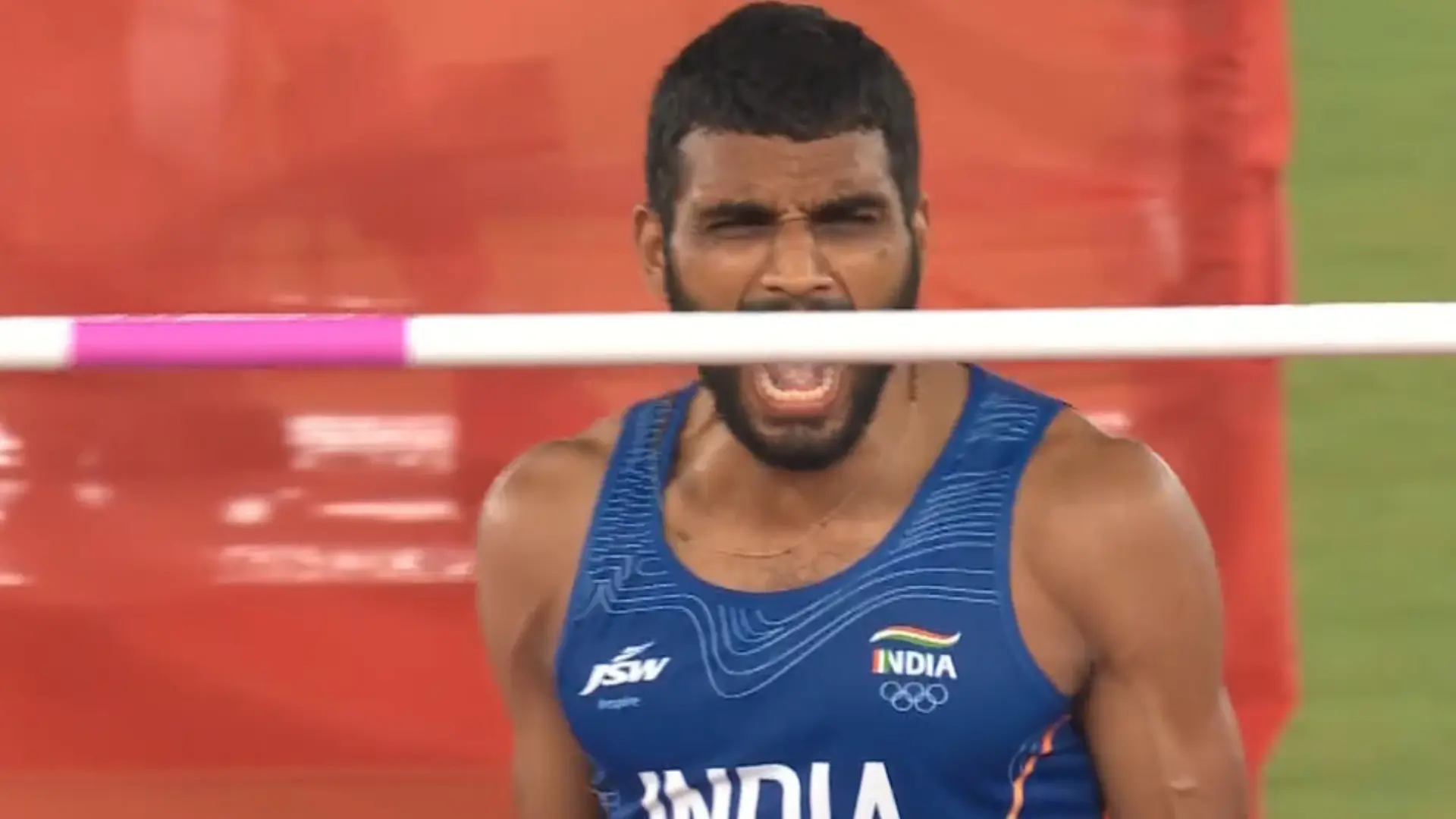
India’s Dev Kumar Meena set a new national record of 5.50m in the men’s pole vault final at the Asian Games 2026 in Nagoya. However, his performance was not enough to secure a medal, as he finished seventh in a highly competitive field.

Dev produced one of the standout individual performances of the event. His clearance of 5.50m was the highest ever achieved by an Indian pole vaulter at an Asian Games.

Despite the national record, India’s pole vault campaign ended without a medal.

Dev Kumar Meena Sets National Record of 5.50m

Dev began his competition by passing 5.05m before clearing 5.20m on his second attempt.

He then cleared 5.35m on his first attempt, putting himself in a strong position to challenge higher heights.

The Indian successfully cleared 5.50m on his second attempt, setting a new national record.

The clearance improved his previous personal best and national record of 5.46m by four centimetres.

It was a significant milestone for the young vaulter and another sign of his progress in the event.

Dev Misses Out at 5.60m

After clearing 5.50m, Dev attempted to go higher.

However, he was unable to clear 5.60m after three attempts, bringing his competition to an end.

His final clearance of 5.50m secured seventh place in the men’s final.

Although the national record marked a major personal achievement, it did not translate into an Asian Games medal.

Kuldeep Kumar Also Misses the Podium

India had two athletes competing in the men’s pole vault final, with Kuldeep Kumar joining Dev in the competition.

Kuldeep could not secure a podium finish either, leaving India without a medal despite having two representatives in the final.

The result highlighted the high standard of competition in Nagoya. Dev’s 5.50m clearance was a significant performance, but the medal battle required even higher clearances.

National Record but No Asian Games Medal

For India, the headline from the men’s pole vault final was a national record without a medal.

Dev’s clearance of 5.50m showed that he continues to push the boundaries of Indian pole vaulting.

However, the result also highlighted the challenge of converting record-breaking performances into podium finishes at major championships.

India had two athletes in the final, and Dev established a new national record. Yet the medal remained out of reach.

Dev Kumar Meena leaves Nagoya with a national record of 5.50m and a seventh-place finish in the men’s pole vault final.
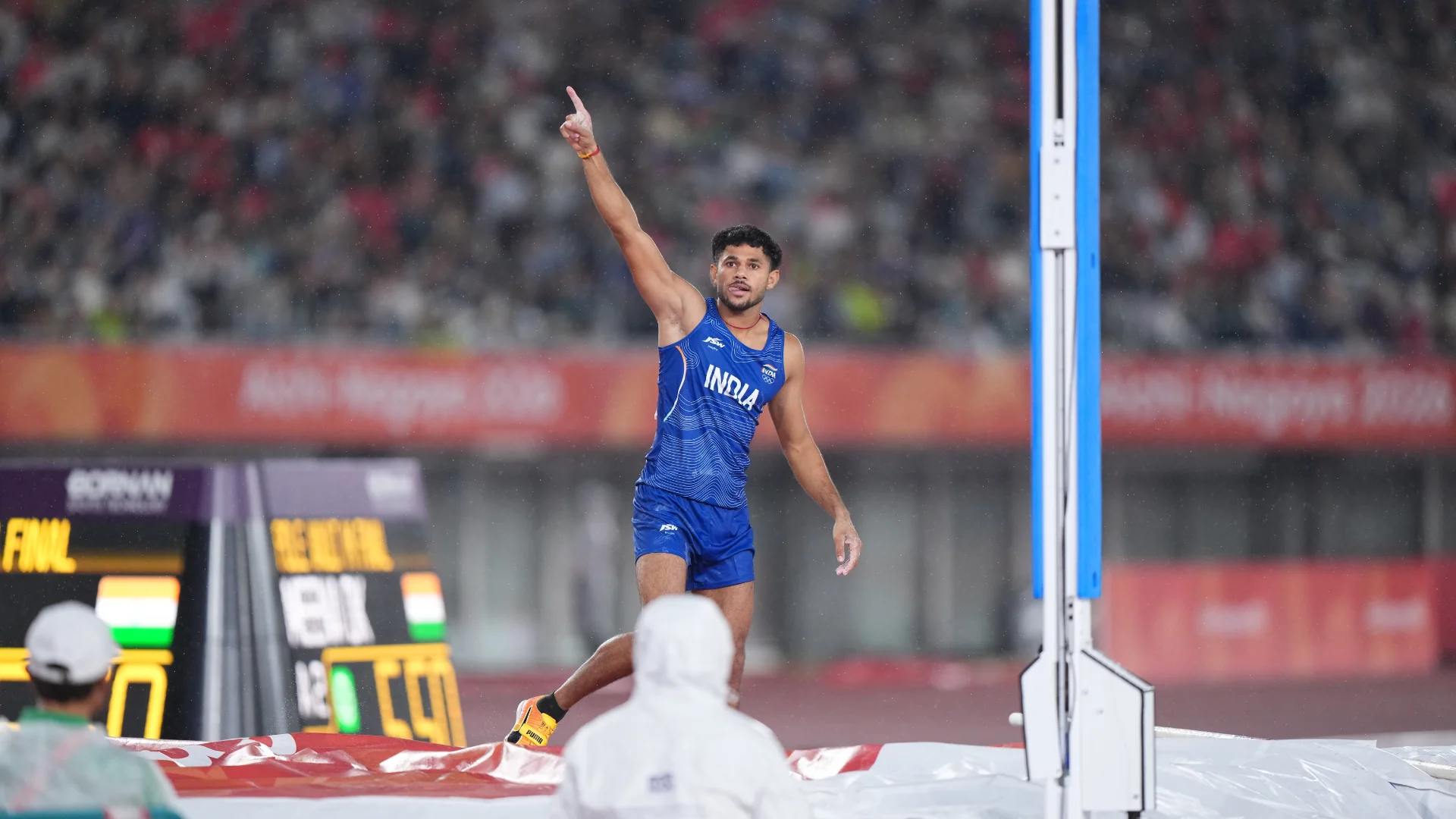
Dev Kumar Meena sets a 5.50m national record in the men's pole vault at Asian Games 2026

India’s Murali Sreeshankar won silver in the men’s long jump at the 2026 Asian Games in Nagoya. He recorded a best jump of 8.07 metres, finishing just 10 centimetres behind gold medallist Shi Yuhao of China, who jumped 8.17m.

The medal marked another major achievement in Sreeshankar’s career. It also capped a remarkable comeback after a serious knee injury kept him away from competition for almost two years.

Murali Sreeshankar Wins Silver in a Closely Contested Final

Sreeshankar entered the final as a genuine medal contender. He had qualified comfortably with a jump of 7.84m, finishing second overall in the qualification round.

His breakthrough in the final came in the third round. He produced a jump of 8.07m to move into second place.

The standings were tight at that stage:

  • Shi Yuhao (China): 8.17m

  • Murali Sreeshankar (India): 8.07m

  • Anvarov (Uzbekistan): 8.03m

Sreeshankar was just 10 centimetres behind gold and four centimetres ahead of third place.

Rain and a Dramatic Fall Complicate the Final

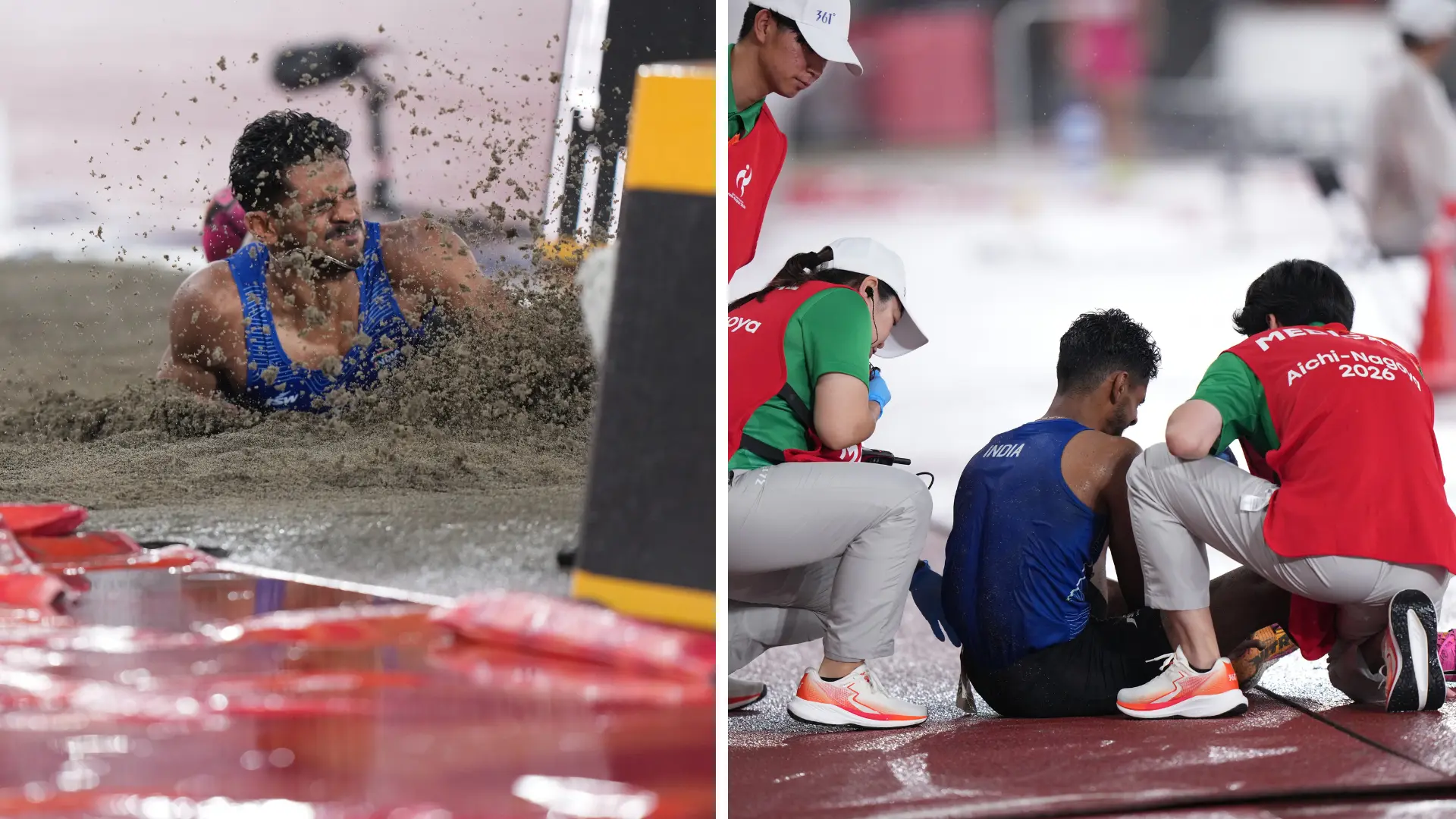
Rain made conditions difficult during the competition. The wet runway complicated the athletes’ approaches and take-offs.

Sreeshankar has previously spoken about the importance of runway conditions in long jump. Consistent speed and a controlled take-off are crucial for producing a strong jump.

The difficult conditions also contributed to a dramatic moment later in the final. Sreeshankar suffered a heavy fall during one of his attempts.

The fall brought an abrupt end to his strong medal challenge. It was particularly concerning given the serious knee injury he had overcome.

However, his 8.07m effort remained enough to secure silver.

China’s Shi Yuhao retained the lead with 8.17m. Uzbekistan’s Anvarov finished third with 8.03m.

A Second Consecutive Asian Games Silver

The Nagoya medal was Sreeshankar’s second consecutive Asian Games silver. He had also finished second at the 2023 Asian Games in Hangzhou.

His latest result once again placed him among Asia’s leading long jumpers. However, the gap between gold and silver was just 10 centimetres, while the difference between silver and bronze was only four centimetres.

Murali Sreeshankar’s Comeback From a Serious Knee Injury

Sreeshankar’s journey to the podium makes the medal even more significant.

In April 2024, he suffered a complete rupture of his left patellar tendon during a training session in Palakkad. The injury required surgery and extensive rehabilitation.

He missed the Paris Olympics and spent almost two years away from competition. During that period, there were serious doubts about whether he could return to elite long jumping.

His comeback in 2026, however, was emphatic.

At the National Inter-State Senior Athletics Championships in Bhubaneswar in June, Sreeshankar produced a massive 8.38m jump.

He then won silver at the Glasgow Commonwealth Games with a jump of 8.09m, finishing behind Jamaica’s Tajay Gayle.

The medal was his second consecutive Commonwealth Games silver, following his runner-up finish in Birmingham in 2022.

Sreeshankar’s Personal Best and National Record

Sreeshankar’s personal best remains 8.41m, achieved in 2023. India’s national record in the men’s long jump stands at 8.42m.

Although his 8.07m jump in Nagoya was below those marks, its significance extended beyond the distance.

It secured another Asian Games silver after a career-threatening injury. It also placed him within 10 centimetres of gold in a final affected by rain and difficult conditions.

Murali Sreeshankar’s Asian Games 2026 Result

Position

Athlete

Country

Distance

Gold

Shi Yuhao

China

8.17m

Silver

Murali Sreeshankar

India

8.07m

Bronze

Anvarov

Uzbekistan

8.03m

Sreeshankar’s return to the podium marks another milestone in his recovery. After nearly two years away from competition, he is once again among Asia’s leading long jumpers.

The gold medal escaped him in Nagoya, but Murali Sreeshankar leaves Japan with another Asian Games silver and a remarkable comeback behind him.

Murali Sreeshankar wins silver in the men's long jump at the Asian Games 2026 with an 8.07m jump.

India’s Sarvesh Anil Kushare won the silver medal in the men’s high jump at the 2026 Asian Games in Nagoya.

Kushare cleared 2.25 metres to secure a place on the podium. He missed out on gold after a countback in a closely contested competition.

Sarvesh Kushare Delivers Consistent Performance

Kushare produced a consistent performance throughout the final. He cleared every height up to 2.22m on his first attempt.

He then cleared 2.25m on his second attempt. However, the countback decided the final medal positions, leaving him with silver.

The result adds another major continental medal to Kushare’s growing collection of achievements.

From Humble Beginnings to Commonwealth History

Kushare’s latest podium finish builds on a remarkable period in his career. Earlier in the season, he made history at the Commonwealth Games.

He became the first Indian to win silver in the men’s high jump at the Commonwealth Games, clearing 2.25m in a closely contested final.

Sarvesh Kushare’s Journey From Devargaon to the International Stage

The 31-year-old athlete hails from Devargaon in Maharashtra’s Nashik district. He grew up in a farming family, with his father working as an onion farmer.

Kushare began training without access to professional sports infrastructure. In his early years, he had no landing mats for high jump practice.

His schoolteacher and father improvised a landing pit using corn husks, agricultural waste and discarded cotton. This helped him continue training despite limited resources.

Indian Army Support and International Success

Kushare joined the Indian Army in 2016. The move provided him with structured support and access to professional training.

He later broke national records and cleared the 2.30m barrier. He also competed at major international events, including the World Championships and Diamond League.

His Asian Games silver adds another milestone to his career. It also highlights his journey from a village in Maharashtra to the international athletics stage.

Sarvesh Anil Kushare competing in the men's high jump at the Asian Games

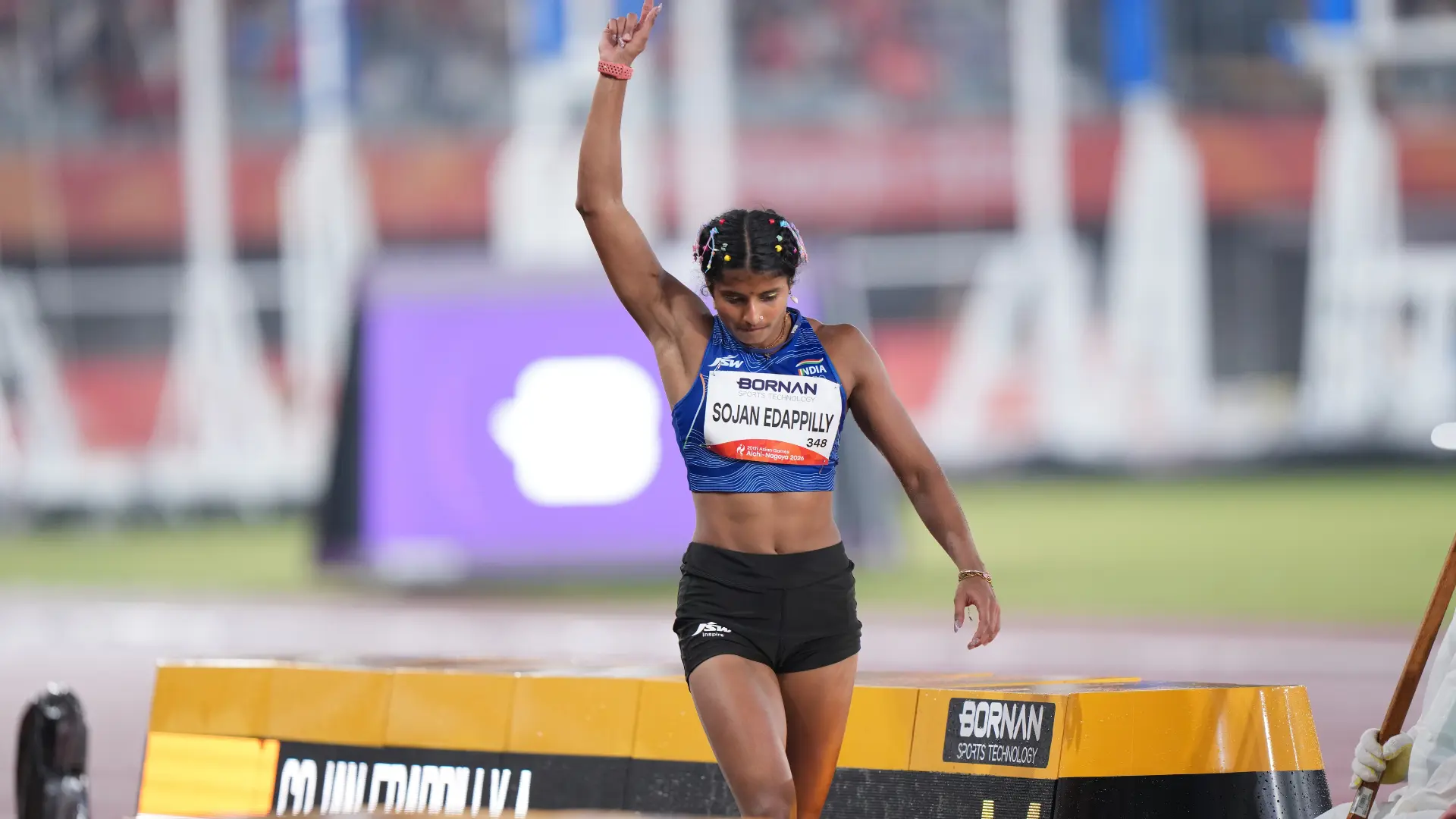
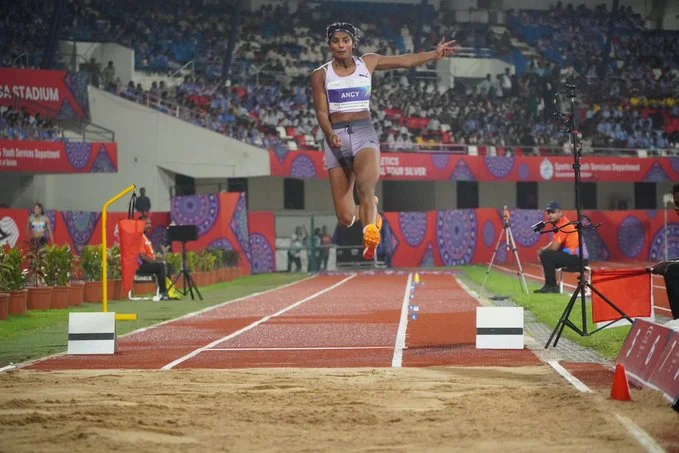
India enjoyed a memorable evening in the women’s long jump final at the 2026 Asian Games in Nagoya. Ancy Sojan Edappilly won the silver medal, while compatriot Shaili Singh narrowly missed the podium.

Ancy delivered a strong performance throughout the competition. Meanwhile, Shaili fought hard for a medal but finished fourth after a tense battle in the closing rounds.

Ancy Sojan Wins Silver After Late Gold Medal Heartbreak

Ancy Sojan Edappilly added another Asian Games silver medal to her collection. She had also won silver in the previous edition of the Games.

The Indian long jumper took the lead in the opening round and maintained her position at the top for much of the competition.

She later produced a brilliant jump of 6.53 metres to extend her lead. For much of the final, Ancy appeared on course to win gold.

However, China’s Huang Yingying produced a decisive effort in her final attempt. She jumped 6.55 metres to snatch the gold medal by just 2 centimetres.

Ancy finished with silver at 6.53 metres. China’s Tan Mengyi secured bronze with a jump of 6.46 metres.

Despite narrowly missing gold, Ancy once again demonstrated her consistency at the continental level.

Shaili Singh Finishes Fourth After Late Medal Battle

Shaili Singh also delivered a determined performance in the women’s long jump final. She fought her way into medal contention during the middle rounds.

After a challenging start, Shaili produced a jump of 6.41 metres in Round 4. She then improved her mark to 6.42 metres in Round 5.

Her performance briefly placed her in the medal positions. With one round remaining, she was firmly in contention for a podium finish.

However, a late surge from her rivals pushed Shaili down to fourth place. She finished with a best jump of 6.42 metres, narrowly missing out on a medal.

Although the result brought disappointment, her performance highlighted her ability to compete against Asia’s leading long jumpers.

Ancy Sojan and Shaili Singh Deliver for Indian Athletics

The women’s long jump final brought both celebration and disappointment for India.

Ancy Sojan secured a silver medal and continued her impressive record at the Asian Games. Meanwhile, Shaili Singh came close to joining her on the podium.

Their performances highlighted India’s strength in the women’s long jump and added another memorable chapter to the country’s athletics campaign.

Ancy Sojan wins silver in the women's long jump at the 2026 Asian Games

Aichi-Nagoya: Baranica Elangovan made history for Indian athletics by winning bronze in the women’s pole vault at the Asian Games, becoming the first Indian athlete, male or female, to win an Asian Games medal in pole vault.

Elangovan cleared 4.15m to secure her place on the podium in Aichi-Nagoya. She and Polina Ivanova both cleared the same height, but neither could clear the next bar at 4.25m. As a result, the two athletes shared the bronze medal.

The result marks a historic moment for Indian pole vault, an event in which no Indian athlete had previously won an Asian Games medal.

Baranica Elangovan Wins India’s First Asian Games Pole Vault Medal

Elangovan’s bronze medal adds another major milestone to a breakthrough year in her career.

Her achievement is particularly significant because India had never previously won an Asian Games medal in pole vault, in either the men’s or women’s event.

By clearing 4.15m, Elangovan secured a place on the podium alongside Ivanova. Both athletes attempted 4.25m but were unable to clear the height, leaving them tied for bronze.

The medal marks a landmark moment for Indian pole vault and establishes Elangovan as the first Indian athlete to reach the Asian Games podium in the discipline.

Elangovan Broke the National Record Earlier This Year

The Asian Games medal comes just months after Elangovan set a new Indian national record.

In March, at the National Indoor Athletics Championships in Bhubaneswar, she cleared 4.22m, improving on the previous national record of 4.21m held by P. Rosy Meena.

The jump marked another important step in the development of Indian women’s pole vault, with Elangovan establishing herself as the country’s leading performer in the event.

Breaking the national record had been a major target, but her season was about more than changing the mark in the record books. Her performances throughout the year built the momentum that eventually carried her to the Asian Games podium.

A Landmark Performance in Aichi-Nagoya

The pressure at the Asian Games was different from that of a national record attempt.

An Asian Games final requires athletes to produce the necessary height when the opportunity arises, and Elangovan cleared 4.15m to remain in medal contention alongside Ivanova.

Both athletes then attempted 4.25m but failed to clear it. With neither able to improve on 4.15m, they finished level and shared the bronze medal.

The result gave India its first-ever Asian Games medal in pole vault.

A Major Milestone for Indian Women’s Pole Vault

Elangovan’s rise has been rapid, with her national-record clearance of 4.22m in March already placing her among the significant performers in the history of Indian women’s pole vault.

Breaking Rosy Meena’s 4.21m record demonstrated her progress and gave her a new benchmark to pursue.

Now, she has added an Asian Games medal to her national record.

The significance of the result extends beyond the medal itself. Pole vault requires years of technical development, speed, strength and consistency. Elangovan’s progression has helped bring greater attention to an event that has traditionally received less focus within Indian athletics.

Her bronze in Aichi-Nagoya gives the discipline another major achievement and marks a first for India at the Asian Games.

From National Record Holder to Asian Games Medallist

For Elangovan, the progression from national-record holder to Asian Games medallist has happened within the same season.

She entered 2026 looking to establish herself at the highest level of Indian pole vault. She now leaves the Asian Games with a historic achievement.

Baranica Elangovan is the first Indian pole vaulter to win an Asian Games medal.

Her clearance of 4.15m secured bronze and marked a new chapter in the history of Indian athletics.

Baranica Elangovan wins bronze in the women's pole vault at the Asian Games 2026


India’s Ancy Sojan Edappilly continued her impressive run at Kalinga Stadium, winning the women’s long jump title at the World Athletics Continental Tour Silver meet in Bhubaneswar with a best effort of 6.71m.

The Indian national record holder produced a consistent series, with her winning mark coming on her third attempt. She opened with 6.51m and 6.58m before landing 6.71m, followed by a foul, 6.65m and 6.56m.

Women’s Long Jump — Final

🥇 Ancy Sojan 🇮🇳 — 6.71m
🥈 Shaili Singh 🇮🇳 — 6.56m
🥉 Mubassina Mohammed 🇮🇳 — 6.31m
4️⃣ Kusuma Ravanada 🇮🇳 — 6.29m
5️⃣ Bhagavathi Bhavani 🇮🇳 — 6.25m
6️⃣ Danielle Nolte 🇿🇦 — 6.05m

Ancy’s victory comes just weeks after she produced a spectacular 6.88m at the same stadium to break the Indian women’s long jump national record.

Although she could not replicate that record-breaking distance this time, her 6.71m was comfortably enough to secure the gold medal and once again underline her dominance in the Indian event.

India also completed a clean sweep of the podium, with Shaili Singh taking silver at 6.56m and Mubassina Mohammed winning bronze with 6.31m.

The result makes the women’s long jump one of the highlights of India’s campaign at its first-ever World Athletics Continental Tour Silver-level meet, with the country’s leading jumpers delivering a memorable home performance at Kalinga Stadium.

For Ancy, the gold adds another strong result to what has already been a breakthrough season, following her record-breaking leap of 6.88m at the same venue.
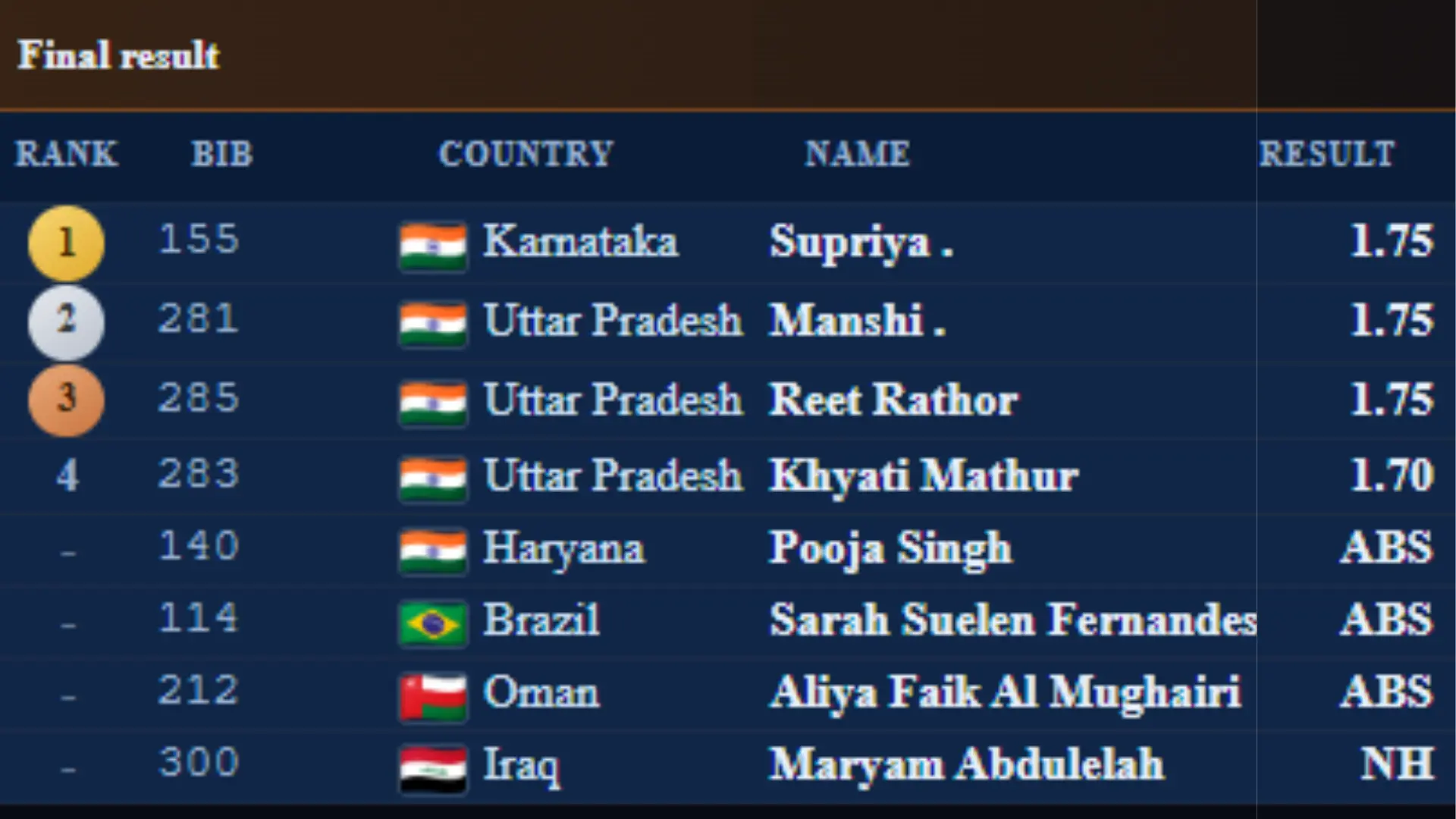
 

The women’s high jump final turned into an exclusive domestic battle after a sweep of non-starters stripped the field of its international flavour.
With foreign entrants failing to set a mark—Brazil’s Sarah Suelen Fernandes Freitas and Oman’s Aliya Faik Al Mughairi recorded as absent (ABS), while Iraq’s Maryam Abdulelah registered No Height (NH)—the podium was decided entirely among the Indian roster.
​Karnataka’s Supriya captured the gold medal, prevailing on countback after three athletes topped out at identical heights of 1.75m. Uttar Pradesh displayed remarkable strength in depth, sweeping the remaining medals through Manshi (silver) and Reet Rathor (bronze), who both cleared 1.75m as well.
Their state teammate Khyati Mathur rounded out the top four, finishing just off the podium with a best clearance of 1.70m.
​The main talking point, however, was the absence of national record holder Pooja Singh (Haryana). Marked as ABS on the final sheet, her non-appearance was disappointing for the local fans.
For an athlete of her calibre, it does raise questions around her fitness and tournament readiness.
​Official Results
​1st Place: Supriya (Karnataka) — 1.75m
​2nd Place: Manshi (Uttar Pradesh) — 1.75m
​3rd Place: Reet Rathor (Uttar Pradesh) — 1.75m
​4th Place: Khyati Mathur (Uttar Pradesh) — 1.70m
​Did Not Start / Unranked: Pooja Singh (Haryana) — ABS; Sarah Suelen Fernandes Freitas (Brazil) — ABS; Aliya Faik Al Mughairi (Oman) — ABS; Maryam Abdulelah (Iraq) — NH

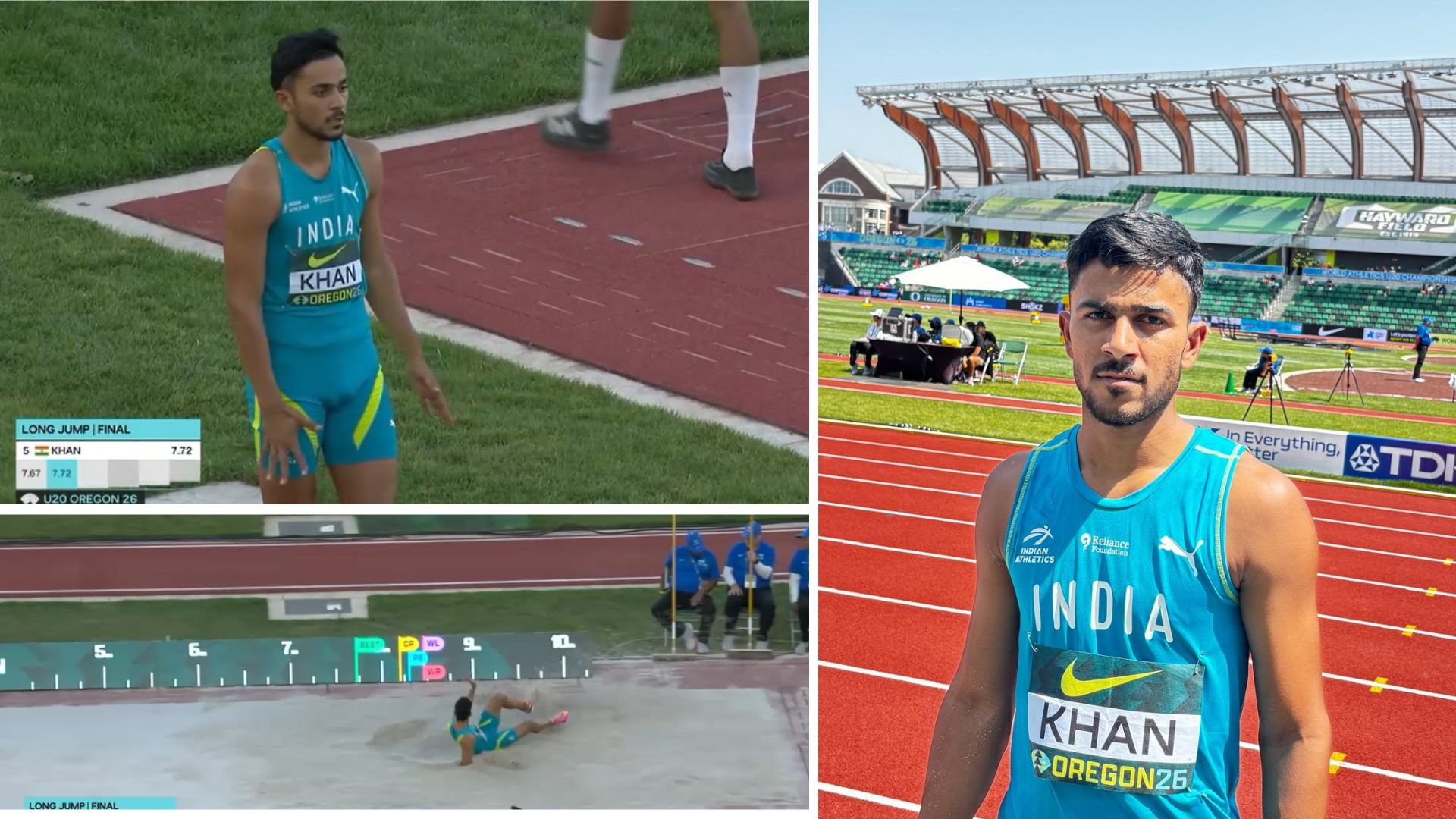
On the face of it, a bronze medal is merely a step on the podium. But intrinsically, Shahnavaz Khan’s recent podium finish at the World Athletics U20 Championships in Eugene, USA, is a powerful catalyst designed to jump-start the next generation of Indian long jumpers. In a sport where the country has traditionally excelled on the continent and made waves at the Commonwealth Games, anchored memorably by Murali Sreeshankar’s consecutive CWG silver medals, Khan’s feat represents a watershed moment.

While many believe Khan could have easily clinched gold had he matched his personal best, high-pressure global meets are notorious for breaking down athletes. Surviving the intensity and securing a medal at this elite world stage is Khan’s single greatest achievement.

The 18-year-old from Madhaipur village in Pratapgarh district, Uttar Pradesh, became the first Indian male long jumper to win a medal at the World Athletics U20 Championships, soaring to 7.84m. While the distance was well shy of his personal best of 8.30m recorded earlier this year, physical setbacks played spoiler.

“Normally, more the pressure, the better I do in a competition. But in Eugene, after the third jump, I started getting cramps. Then I couldn’t do it. It was cramp on muscles. This is the first time happening. I don’t understand anything,” Shahnavaz told PTI. “There was a little pain in the heel, so both the heel (pain) and cramp.”

Looking past the minor hiccup, he confirmed he will feature in the upcoming invitational Indian Athletics Final Series on September 10 in New Delhi, ahead of the Aichi-Nagoya Asian Games. “My aim is to better my PB of 8.30m and win a medal,” he stated to PTI regarding his targets in Japan.

History shows that the path from junior world podiums to senior Olympic and World Championship success is a proven breeding ground for global athletics legends. International icons like Cuba’s Iván Pedroso, who won world junior gold in 1990 before claiming Olympic gold and four world titles and South Africa’s Luvo Manyonga, who transitioned from a 2009 World Junior silver to Olympic silver and world gold, underline how foundational these junior events are.

On the home front, Khan’s journey mirrors the surging depth of Indian long jumping, transforming from isolated excellence into a sustained pipeline. Mentored by senior trailblazer Murali Sreeshankar, who shares training spaces with him, Khan joins an elite domestic vanguard alongside national record holder Jeswin Aldrin (8.42m) and women’s junior trailblazer Shaili Singh. Sitting comfortably third in the all-time Indian senior list with his 8.30m personal best and having already breached the Asian Games qualification mark, Khan’s journey from Pratapgarh to world junior history proves that India’s long jump revolution is a sustained movement.
By Sushant Singh


Many sports fans were disappointed after India’s senior women’s high jump national record holder and teen sensation Pooja finished 7th in the women’s high jump final at the World Athletics U20 Championships 2026.

Pooja successfully cleared 1.75m, 1.80m, and 1.84m during the final. The 19-year-old was unable to clear 1.87m and ended her campaign with a best clearance of 1.84m.

But why did India’s Pooja, one of the country’s biggest medal hopes, fail to deliver on the world’s biggest stage?

To understand that, we first have to understand why she was considered one of India’s strongest medal hopes at the World U20 Championships.

Pooja has been one of India’s most consistent athletes over the years. Since 2022, when her personal best was 1.71m, she has improved it to 1.93m.

Since 2023, she has competed in 29 high jump competitions and has cleared 1.80m or higher around 21 times. During this period, she continuously improved her personal bests to 1.82m, 1.85m, 1.89m, and finally 1.93m.

What is even more interesting is that she has often produced her personal best performances at the biggest competitions of her career.

 – 1.82m — her first-ever clearance above 1.80m, achieved while winning silver at the Asian U20 Championships, which was the biggest competition of her life at that time.

 – 1.83m — at the 2024 World Athletics U20 Championships.

 – 1.85m — at the 2024 Junior Nationals in the heptathlon, an event she was competing in for the first time in her life.

The biggest performance of her career came at the Asian Athletics Championships 2025, where she was the youngest member of the Indian contingent yet stunned everyone by winning gold and becoming Asian champion with a clearance of 1.89m.

Later, at the Asian U20 Championships, she cleared 1.93m, shattering the Indian national record and becoming the first Indian woman ever to clear that height.

During the 2024 South Asian Games, in an interview with NNIS Sports, Pooja and her former coach Balwan Parta said:

“She is a big-game player. She never posts her PBs during practice, but always does it in competition.”

So what really happened at the biggest competition of her life, the World Athletics U20 Championships 2026?

Pooja had been saying since the beginning of this year that World U20 was her top priority for the season, and she had been training specifically for it.

She started the season early, competing at the Asian Indoor Championships, where she won silver with 1.87m — then the second-best clearance of her career, achieved in her first competition of the season.

Just one competition later, she improved her personal best to 1.90m. Then, at the Asian U20 Championships at Indira Gandhi Stadium on 29 May 2026, she again produced a major performance. Interestingly, almost exactly a year earlier, on 30 May 2025, she had cleared 1.89m to become Asian champion.

The peaking of the body in athletics, especially in jumps, works very differently. Coaches and support staff often have to plan the entire competition calendar before the season even begins — deciding which competitions to target, which to skip, and when the athlete should reach peak condition.

This year has been challenging for many athletes, not just Pooja, with the Asian Games and Commonwealth Games falling in the same year. For Pooja, the challenge was even greater, as she had to manage three major competitions, including the World U20 Championships.

Pooja had not originally included the Commonwealth Games 2026 in her competition calendar, but after achieving the qualification standard, she competed in Glasgow and finished 8th. Less than nine days later, she was competing again at the World U20 Championships.

Another interesting point is that the top five athletes in the world U20 season rankings before the championship were:

Remarkably, four of those five athletes finished in the top four at the World Championships, taking gold, silver, bronze, and fourth place. Only Pooja finished outside the top five.

NNIS Sports has also learned that a few days before leaving for the Commonwealth Games, Pooja spent some time in Delhi for visa appointments. She had been planning to join an international training camp in Poland, but due to visa delays she remained in Delhi for several days and even trained at the Jawaharlal Nehru Stadium instead of staying at her regular training base, the Anju Bobby George Academy in Bengaluru.

She later returned to Bengaluru after continued visa delays and eventually planned to travel directly to Glasgow for the Commonwealth Games. This may have affected her preparation

Although she is only 19 years old, expectations around her have risen because she has performed at such a high level and made people believe that she could be India’s next big thing in the jumps.

This disappointing campaign will surely give her valuable experience. The expectation now is that she will learn from this setback and bounce back strongly, with the Asian Games 2026 likely to be her next major target, where she is expected to represent India in the women’s high jump.
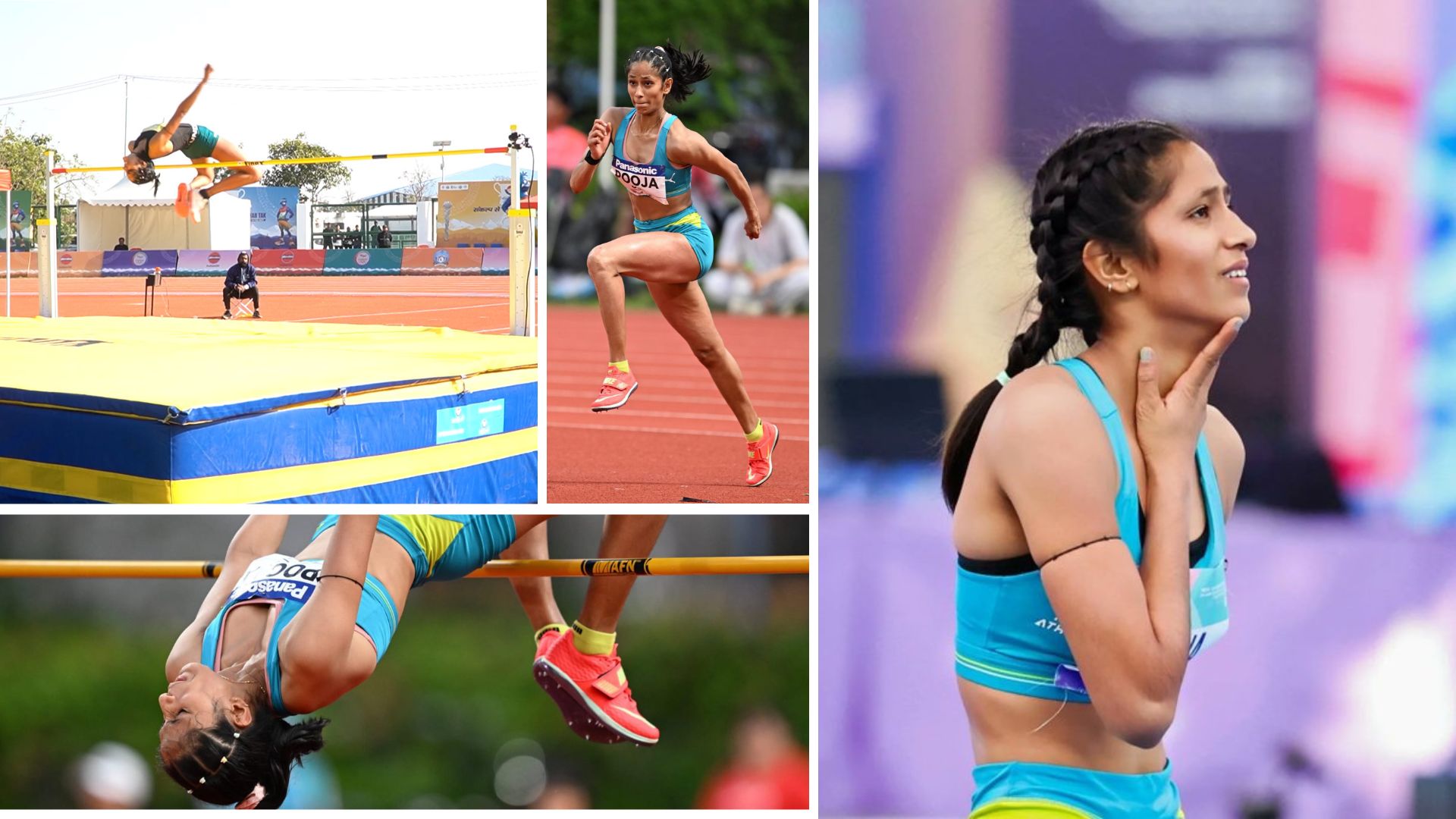
India’s Pooja finished seventh in the women’s high jump final at the World Athletics U20 Championships 2026, bringing her campaign to an end after a best clearance of 1.84m.

The 19-year-old entered the competition as one of India’s biggest medal hopes and produced a composed performance through the early stages of the final. She successfully cleared 1.75m, followed by 1.80m and 1.84m, progressing through each height before facing the next challenge at 1.87m.

However, Pooja was unable to clear 1.87m, ending her competition with a best mark of 1.84m and securing seventh place overall.

Pooja’s Final Series

The result comes after a breakthrough season for the young Indian high jumper. Pooja has established herself as one of the country’s leading emerging athletes in the event, producing significant performances at both domestic and international competitions.

While she was unable to challenge for the podium in Eugene, reaching the World U20 final itself provided Pooja with valuable experience at a major global championship. The final brought together the leading junior high jumpers from around the world, providing a demanding test for the 19-year-old.

Her clearance of 1.84m was enough to place her seventh in the final standings. Although the outcome fell short of the medal that India would have hoped for from one of its leading medal prospects, Pooja now has the experience of competing in a global championship final to build on in the next stage of her career.

With her World U20 campaign now complete, Pooja will look to carry the lessons from Eugene into future international competitions as she continues her development among India’s promising young athletics talents.