| At first glance, the numbers raise eyebrows.
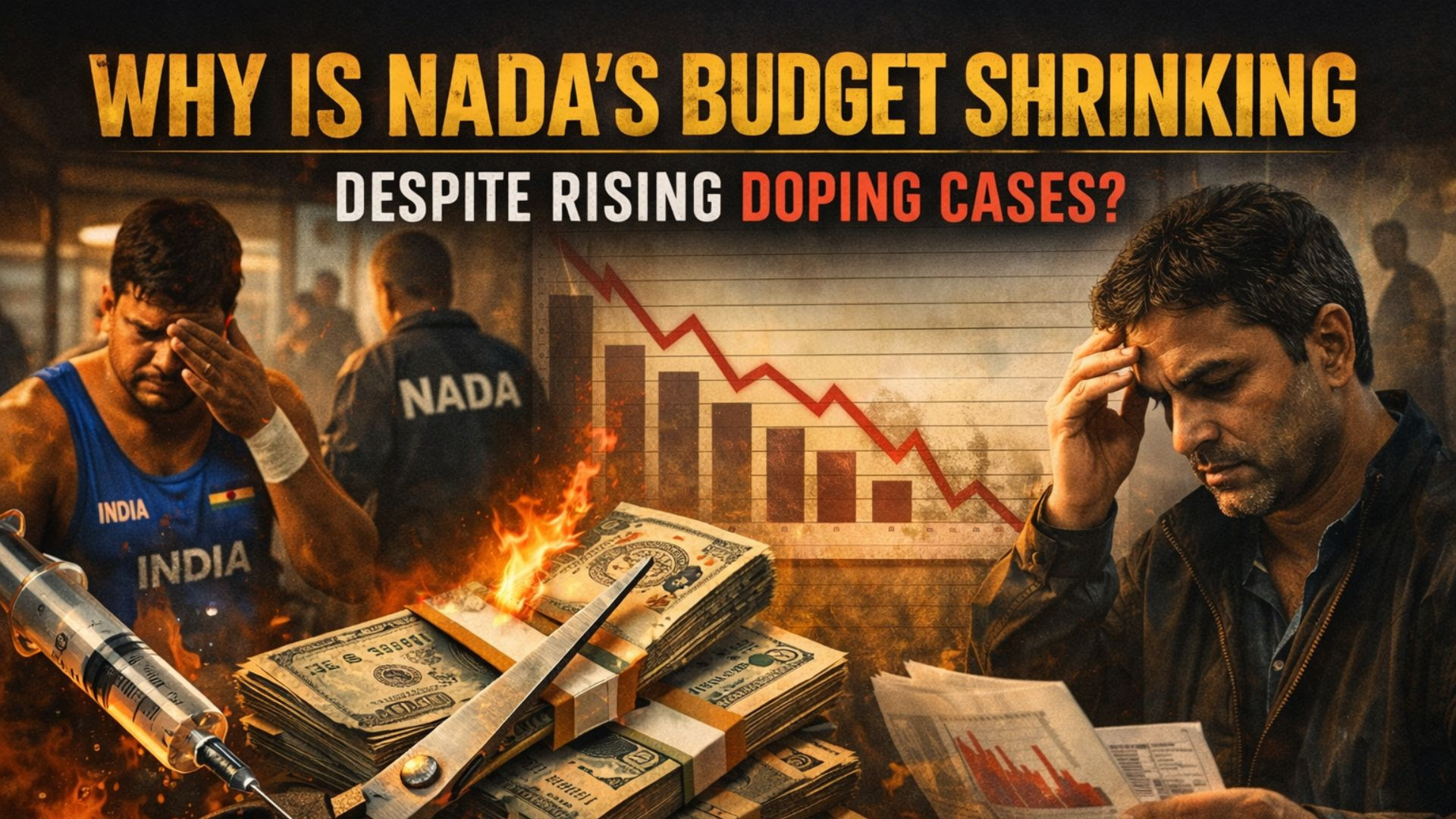
The National Anti-Doping Agency (NADA) conducted roughly 300 tests in January 2026 — its lowest monthly figure in eight months. The previous low was 255 tests in April 2025. Yet the agency had ended 2025 on a very different note, testing over 900 athletes in December alone, suggesting capacity exists when required.
This comes at a crucial time. With the Asian Games and Commonwealth Games approaching, anti-doping vigilance should ideally be tightening, not flattening.
The Budget Question
For 2026-27, NADA has been allocated ₹20.30 crore, down from ₹24.30 crore last year — a reduction of about ₹4 crore.
A look at recent years shows fluctuating support:
2023-24: ₹21.73 crore allocated
2024-25: ₹22.30 crore → revised to ₹20.30 crore → ₹19.57 crore spent
2025-26: ₹24.30 crore allocated (spending not yet public)
2026-27: ₹20.30 crore allocated
Meanwhile, the National Dope Testing Laboratory (NDTL) has seen mixed utilisation:
2022-23: ₹16.20 crore spent
2023-24: ₹19.50 crore allocated → ₹17.85 crore spent
2024-25: ₹22.00 crore → revised to ₹18.70 crore → ₹16.70 crore spent
2025-26: revised upward to ₹28 crore
Government data shows testing volume rising steadily.
5,794 tests (2023-24)
7,474 (2024-25)
7,751 (2025-26) — a 34% jump in two years.
But Positives Are Rising Too
According to global testing figures, India recorded 260 positive cases out of 7,113 samples in 2024, a positivity rate of 3.6% — the highest among nations conducting more than 5,000 tests. India was also the only country with triple-digit positives, ahead of far larger testing systems.
So while testing has increased, violations have increased alongside it.
NADA’s Response
A senior NADA official dismissed fears that lower allocation means weaker policing:
“This is not a budget cut — only an allocation. If needed, we can request more funds in the revised budget. It does not mean testing will reduce.”
The official added that preparations are already underway for the major multi-sport year:
“It’s a big year and we have big plans. Our number of tests is increasing year by year.”
The Real Issue: Utilisation
Data suggests funding isn’t always fully used.
In 2023-24, NADA utilised its entire budget, while NDTL used about 91%.
In 2024-25, NADA used 96.4% of its revised allocation; NDTL used 89.3%.
Lower utilisation may partly explain why allocations fluctuate.
The Bigger Picture
India’s anti-doping system is expanding, but unevenly. Testing numbers are rising, yet positives remain high. Budgets are being adjusted, yet not always exhausted.
The official message is clear: don’t read the allocation as a slowdown.
The practical challenge, however, remains — translating funds into wider testing coverage, especially across state competitions and school-level events, where the next generation of athletes is coming through. |