
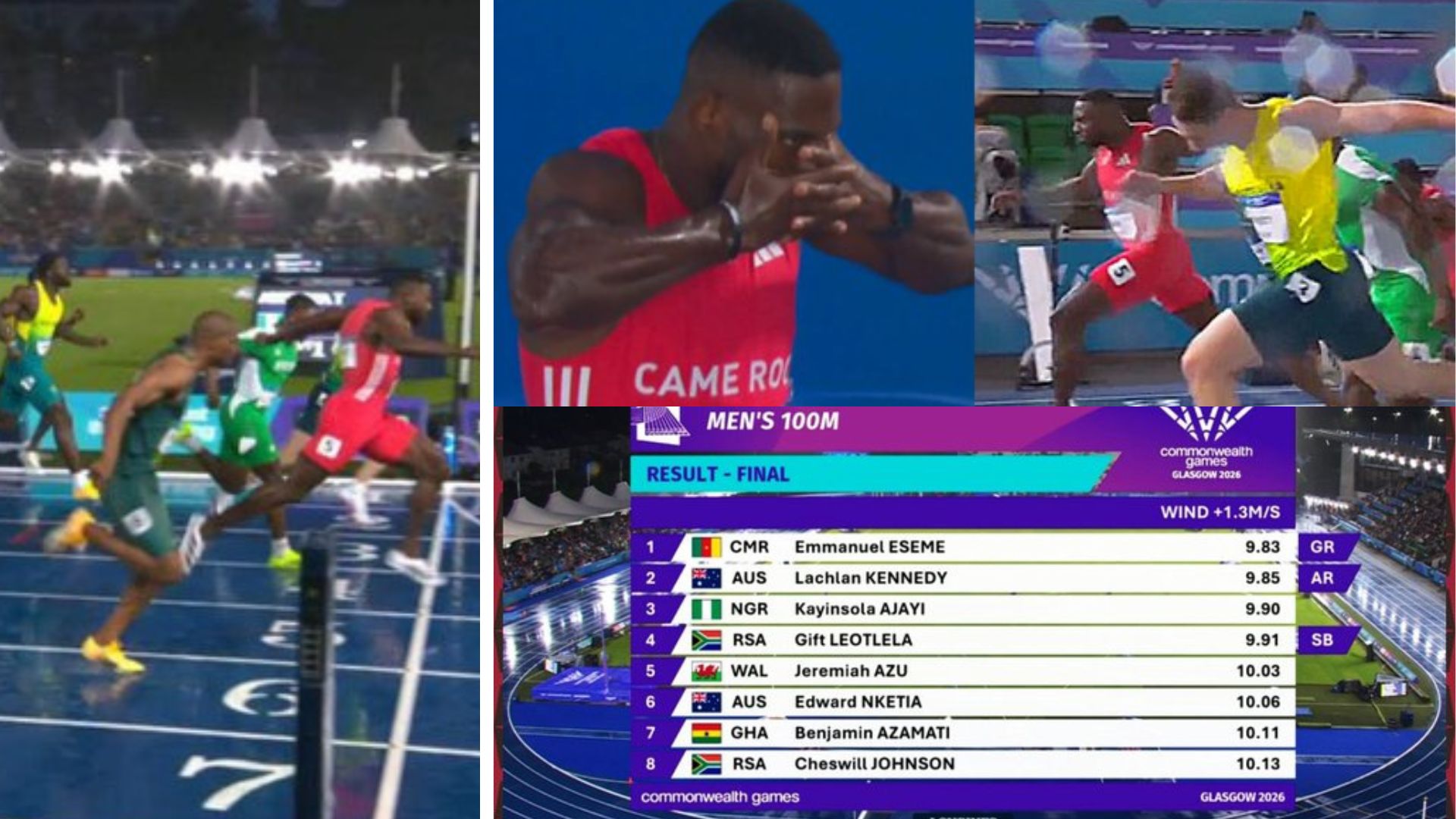
Cameroon’s Emmanuel Eseme delivered the performance of his life to win the men’s 100m title at the Commonwealth Games 2026, storming to a Games record and national record of 9.83 seconds in a rain-soaked Glasgow.
The 32-year-old, who only took up athletics at the age of 24, produced a sensational run into a legal +1.3 m/s wind to become Commonwealth champion and cement his place among Africa’s greatest sprinters.
Australia’s Lachlan Kennedy pushed Eseme all the way, clocking 9.85 seconds to take silver while breaking Australia’s 23-year-old national record. Nigeria’s Kayinsola Ajayi, just 21 years old, claimed bronze in 9.90 seconds, securing Nigeria’s first Commonwealth Games medal in the men’s 100m in two decades.
Men’s 100m Final
 Emmanuel Eseme (Cameroon) – 9.83 (Games Record & Cameroon National Record)
- Lachlan Kennedy (Australia) – 9.85 (Australian Record)
- Kayinsola Ajayi (Nigeria) – 9.90
In one of the fastest Commonwealth Games finals ever, four athletes broke the 10-second barrier despite heavy rain, highlighting the exceptional quality of the race.
A Remarkable Journey
Eseme’s triumph is the culmination of an extraordinary journey.
Unlike most elite sprinters, the Cameroonian only began athletics at 24 years of age, making his rise to the top of the Commonwealth podium all the more remarkable. His winning time of 9.83 seconds not only shattered the Games record but also improved his own standing among the continent’s sprint greats, moving him to third on the African all-time list.
The victory also ended a long wait for Cameroon, delivering the country’s first Commonwealth Games track gold medal in two decades.
Kennedy Rewrites Australian Record Books
Silver medallist Lachlan Kennedy also produced a career-defining performance.
His 9.85-second run eclipsed Australia’s long-standing national record, which had stood for 23 years, underlining the emergence of a new force in Australian sprinting.
Historic Bronze for Nigeria
For Kayinsola Ajayi, the bronze medal represented more than a place on the podium.
The 21-year-old became the first Nigerian man to win a Commonwealth Games medal in the 100m since Olusoji Fasuba claimed silver at the 2006 Melbourne Games, ending a 20-year wait for one of Africa’s traditional sprinting powerhouses.
With records falling, national milestones achieved and one of the deepest sprint finals in Commonwealth Games history, the Glasgow men’s 100m final will be remembered as a race that showcased a new generation of global sprinting talent while crowning an unlikely champion whose journey began later than almost anyone could have imagined.
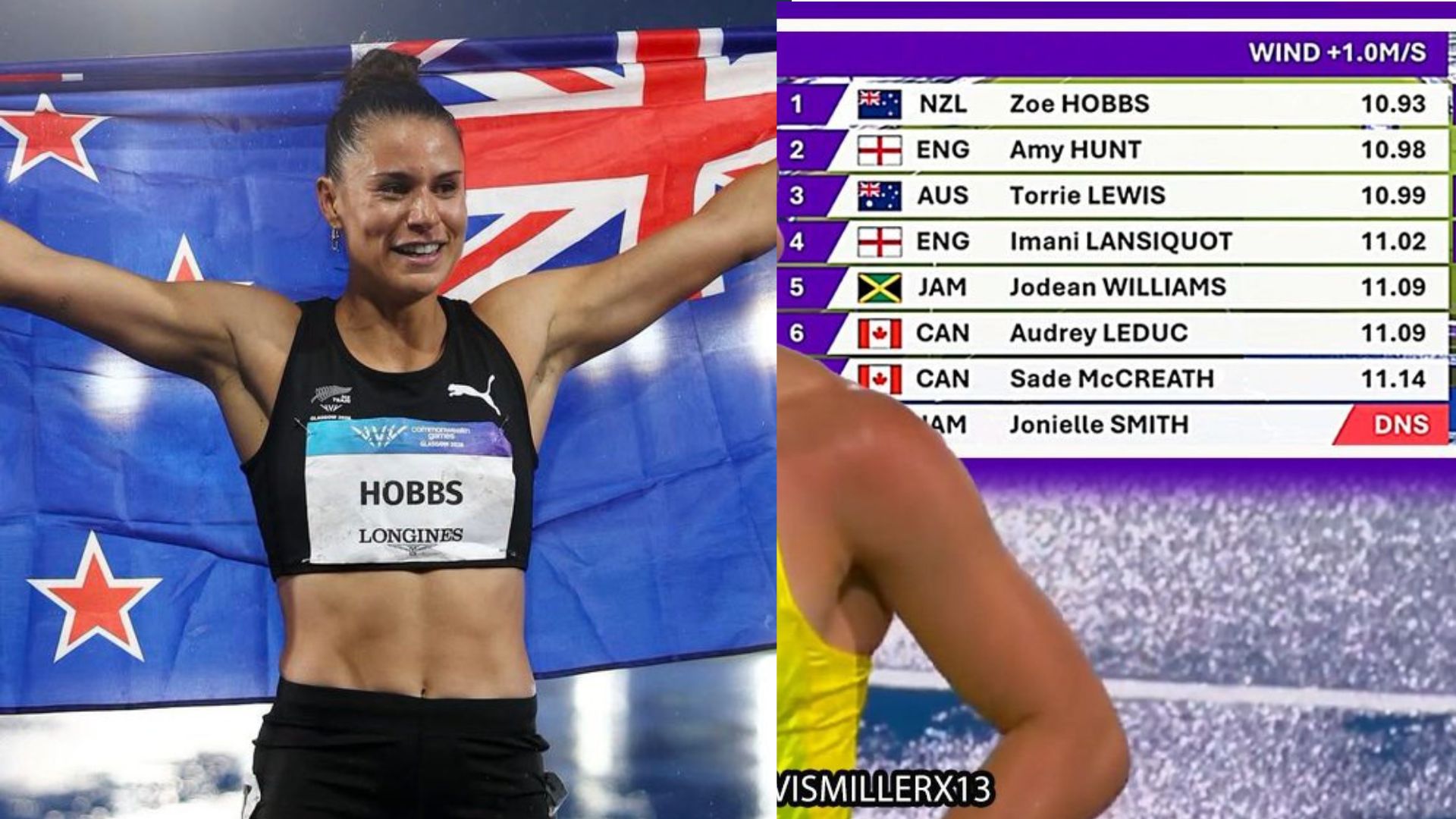
New Zealand’s Zoe Hobbs produced the sprint performance of her career to win the women’s 100m title at the Commonwealth Games 2026, storming to gold in a sensational 10.93 seconds and rewriting the Oceania record books in Glasgow.
The 28-year-old Auckland sprinter clocked 10.93 (+1.0 m/s) to break her own New Zealand and Oceania records, pulling clear in the closing metres to defeat England’s Amy Hunt, who claimed silver in 10.98, while Australia’s Torrie Lewis took bronze in a national record 10.99.
Remarkably, all three medallists dipped below the 11-second barrier, making it the first time in Commonwealth Games history that every athlete on the women’s 100m podium has broken 11 seconds.
The race was decided by the finest of margins, with just 0.06 seconds separating gold from bronze.
Women’s 100m Final
- Zoe Hobbs (New Zealand) – 10.93 (Oceania & New Zealand Record)
- Amy Hunt (England) – 10.98
- Torrie Lewis (Australia) – 10.99 (Australian Record)
Despite wet conditions that made the Glasgow track slick underfoot, the trio delivered one of the fastest and deepest women’s 100m finals in Commonwealth Games history.
For Hobbs, the victory marked the crowning moment of an outstanding championship. Draped in the New Zealand flag after crossing the finish line, she celebrated not only a Commonwealth title but also another improvement to the Oceania record she already owned.
Hunt Continues Her Rise
England’s Amy Hunt enjoyed a memorable Commonwealth Games debut, finishing just five hundredths of a second behind Hobbs.
Her 10.98-second performance was the second-fastest 100m of her career, underlining her continued rise among the world’s elite sprinters. The silver medal also rewarded her consistency throughout the championship after progressing confidently through the earlier rounds.
Lewis Breaks Australian Record
Australia’s Torrie Lewis capped a remarkable championship by lowering the Australian national record to 10.99 seconds to secure bronze.
Lewis had already announced her form in the semifinals with an 11.00-second national record before finding another hundredth of a second in the final to become the first Australian woman to break the 11-second barrier at the Commonwealth Games.
The Glasgow final will be remembered as one of the greatest women’s sprints in Commonwealth Games history—a race where records tumbled, history was made, and three athletes simultaneously broke one of sprinting’s most iconic barriers
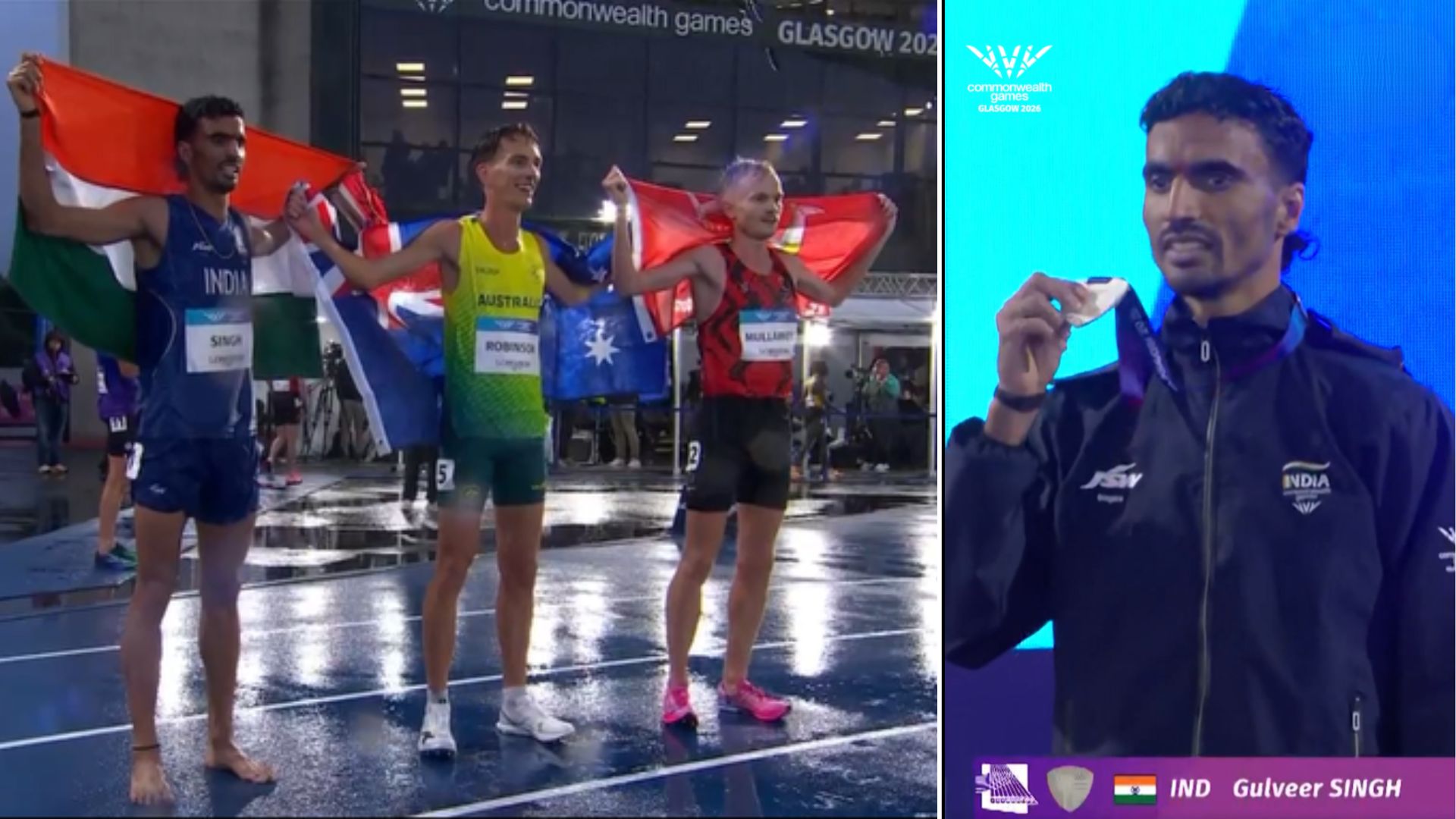
India woke up to a landmark moment in athletics as Gulveer Singh produced the performance of his career to win a historic silver medal in the men’s 10,000m at the Commonwealth Games 2026 in Glasgow.
Clocking 27:49.78 on a rain-soaked track, the 28-year-old became the first Indian ever to win a medal in the men’s 10,000m at the Commonwealth Games, breaking new ground for Indian distance running.
The race was decided by the finest of margins. Australia’s Ky Robinson claimed gold in 27:48.93, just 0.85 seconds ahead of Gulveer, while England’s David Mullarkey secured bronze in 27:50.28.
Men’s 10,000m Results
- Ky Robinson (Australia) – 27:48.93
- Gulveer Singh (India) – 27:49.78
- David Mullarkey (England) – 27:50.28
Speaking after the race exclusively to nnissports, Gulveer summed up his approach simply:
“My only strategy was to win a medal for the country today.”
Despite relentless rain and difficult conditions, Gulveer executed a near-perfect tactical race. He stayed tucked into the lead group for much of the contest, conserving energy before unleashing a powerful finish over the closing laps.
His splits tell the story of a race that accelerated dramatically in the second half.
Gulveer Singh’s Splits
- First 5,000m: 14:16.10
- Second 5,000m: 13:33.68
- Final 1,000m: 2:29.28
- Last lap: 56.4 seconds
- Last 100m: 13.9 seconds
The numbers underline just how strong Gulveer was when the race came alive. After an opening half run at a controlled pace, he covered the second 5,000m over 42 seconds faster, producing one of the quickest closing sequences of the field to secure the silver medal.
More Than Just India’s First Medal
Gulveer’s achievement carries significance beyond becoming India’s first Commonwealth Games medallist in the men’s 10,000m.
For the first time in recent Commonwealth Games history, no African athlete finished on the podium in the men’s 10,000m. East African runners have long dominated distance events at the Games, making Gulveer’s breakthrough even more remarkable. His medal not only rewrites India’s record books but also breaks a long-standing psychological barrier in one of athletics’ toughest disciplines.
The result is another milestone in Gulveer’s rapid rise as India’s leading distance runner and reinforces the growing strength of Indian endurance running on the global stage.
Gulveer’s Commonwealth Games journey is far from over.
The Indian star will return to the track later in the Games for the men’s 5,000m, where he will look to build on his historic success and chase another medal for India.
After ending India’s long wait for a medal in the men’s 10,000m, confidence will be high that Glasgow could have another memorable chapter left to write.
If you’d like this in a more analytical style (with race tactics, pacing, and historical context) suitable for a sports website like The Hindu or Sportstar, I can also rewrite it in that format.
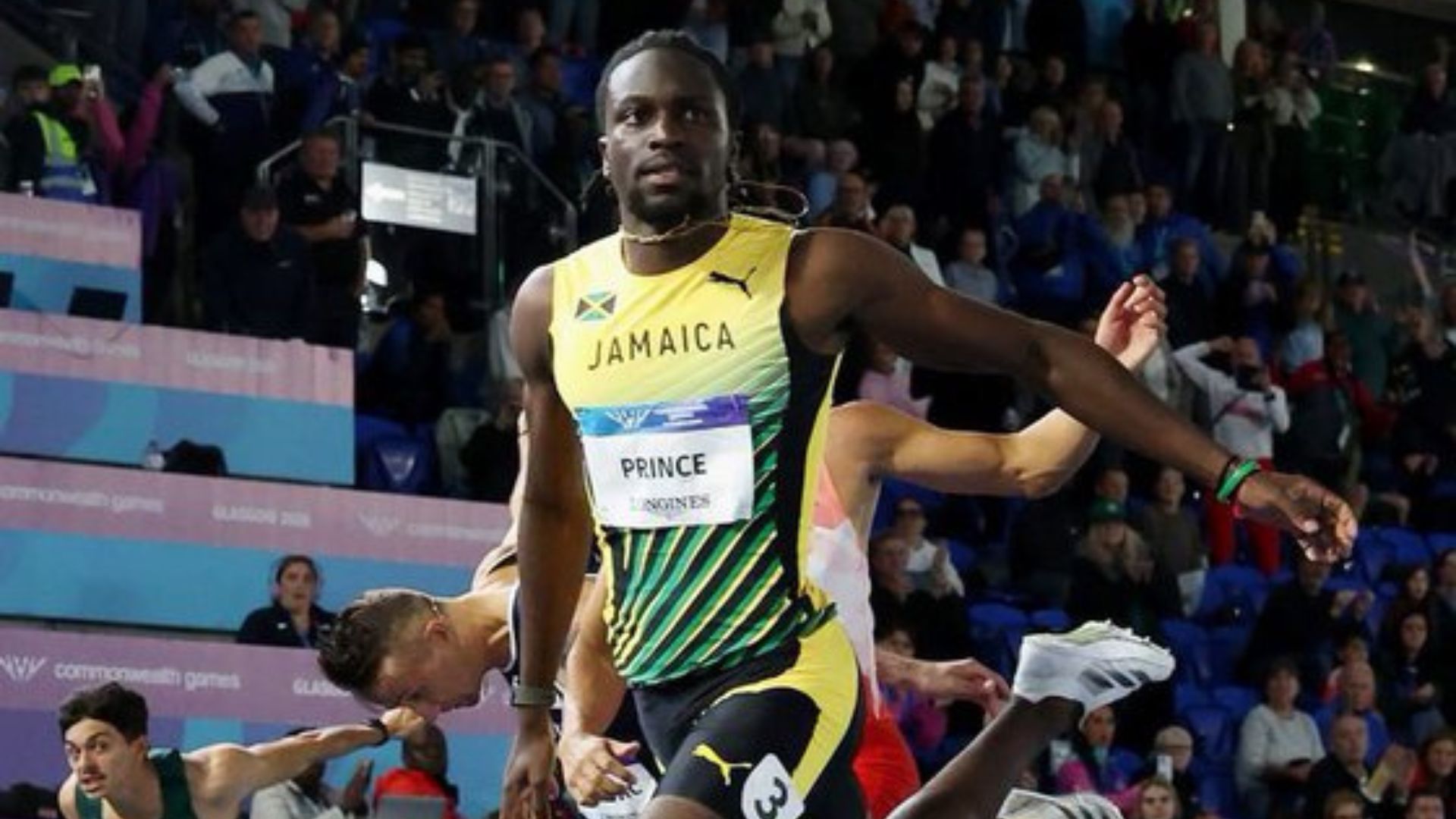
Jamaica’s dominance in the men’s 110m hurdles shows no signs of slowing down.
At the Glasgow 2026 Commonwealth Games, Demario Prince delivered the race of his career, sprinting to gold in 13.17 seconds and extending Jamaica’s remarkable hold over the event.
The victory marked Jamaica’s fourth consecutive Commonwealth Games title in the men’s sprint hurdles, with the Caribbean nation now unbeaten since 2010. Over the last four editions, the event has become one of Jamaica’s most reliable sources of athletics gold.
Prince’s triumph was particularly impressive considering he entered the Games with only the third-fastest season’s best among the finalists. On the biggest stage, however, rankings counted for little as the Jamaican produced a flawless race, attacking every hurdle with precision before powering clear over the closing metres.
Behind him, England’s Samuel Bennett produced one of the performances of the evening, clocking a personal best of 13.30 seconds to claim the silver medal.
The bronze went to Cyprus’ Milan Trajkovic, the experienced European finalist once again proving his consistency on the international stage.
Final Results
 Demario Prince (Jamaica) – 13.17s
 Samuel Bennett (England) – 13.30s (Personal Best)
 Milan Trajkovic (Cyprus)
For Jamaica, Prince’s victory is another chapter in a rich sprinting legacy. While the nation is synonymous with the flat sprints, it has quietly built an equally formidable tradition in the sprint hurdles, producing champion after champion at major championships.
Prince now joins that lineage, delivering when it mattered most and ensuring the Commonwealth title remains in Jamaican hands for another four years.
For the rest of the field, Glasgow served as another reminder: if you want to win the Commonwealth 110m hurdles title, you still have to beat Jamaica—and once again, nobody could.
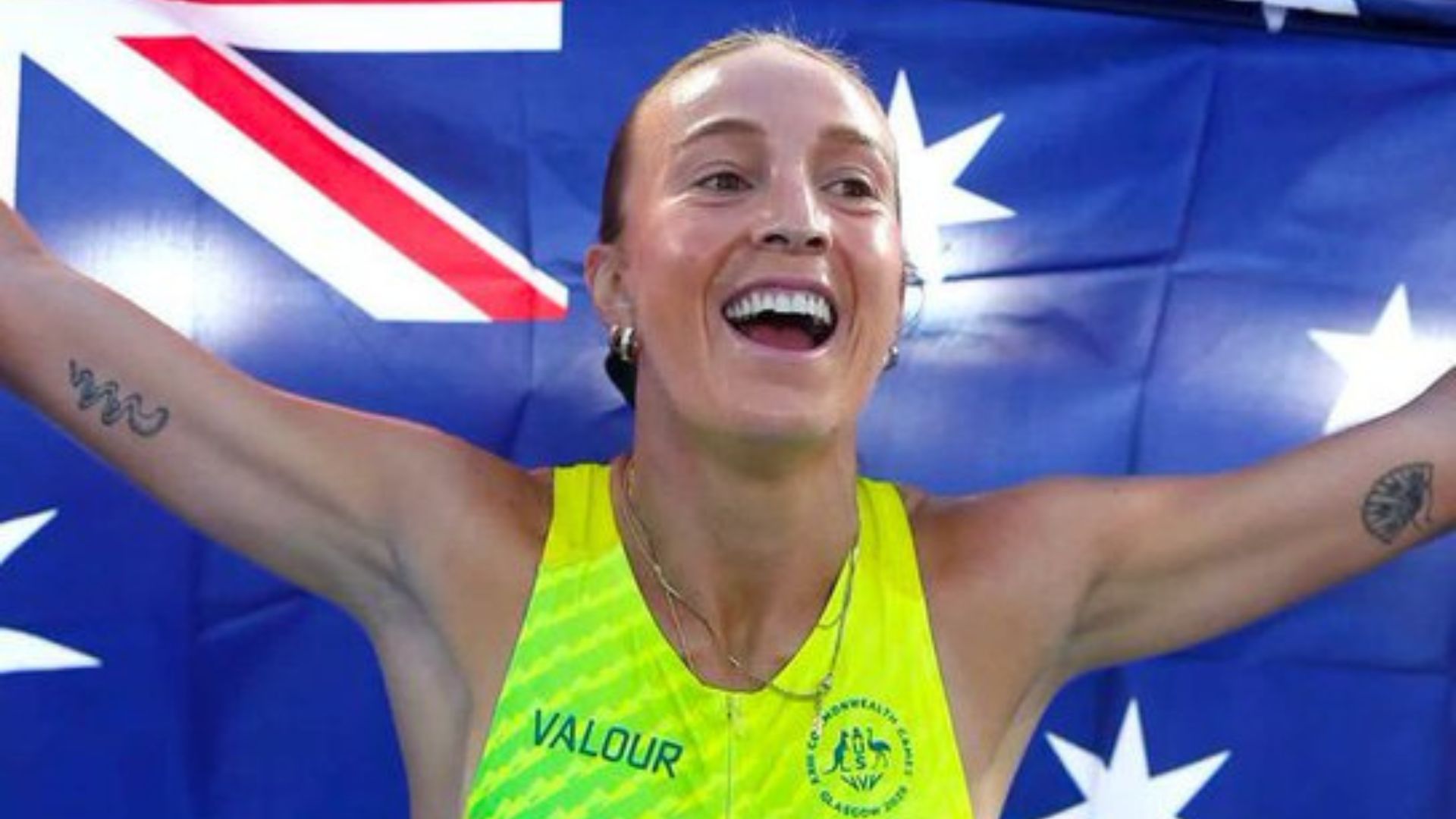
There are races won by leading from the front. Then there are races won by knowing exactly when to strike.
Australia’s Rose Davies delivered a tactical masterclass to claim the women’s 10,000 metres gold medal at the Glasgow 2026 Commonwealth Games, surging away in the closing laps to stop the clock at a season’s best 31:39.32.
More importantly, the victory made history.
Davies became the first Australian woman ever to win the Commonwealth Games 10,000m title, ending a long wait for Australia in one of track and field’s most demanding events.
The race unfolded cautiously, with the lead pack content to settle into a measured rhythm through the early kilometres. There were no frantic surges or attempts to break the field apart. Instead, it evolved into a contest of patience, positioning and timing.
Davies judged it to perfection.
As the pace quickened in the latter stages, the Australian produced a decisive change of gear, breaking clear when it mattered most and leaving the chasing pack unable to respond. Her powerful finish secured Australia’s first athletics gold medal at Scotstoun Stadium and drew admiration from commentators, who hailed it as a “stunning performance” and praised the breathtaking final laps.
Behind her, Kenya’s Diana Wanza claimed the silver medal in 31:50.13, while Florence Niyonkuru of Rwanda finished third in 31:55.47.
For Niyonkuru, the bronze carried significance beyond the podium—it marked Rwanda’s first-ever medal at the Commonwealth Games, a landmark moment in the nation’s sporting history.
Final Results
Rose Davies (Australia) – 31:39.32 (Season’s Best)
Diana Wanza (Kenya) – 31:50.13
Florence Niyonkuru (Rwanda) – 31:55.47
In an era where championship distance races are often decided not by the fastest athlete on paper but by the smartest competitor on the day, Davies demonstrated both qualities. She resisted the temptation to force the pace early, conserved her energy and unleashed it only when victory was within reach.
The result was not just a Commonwealth title, but a place in Australian athletics history.
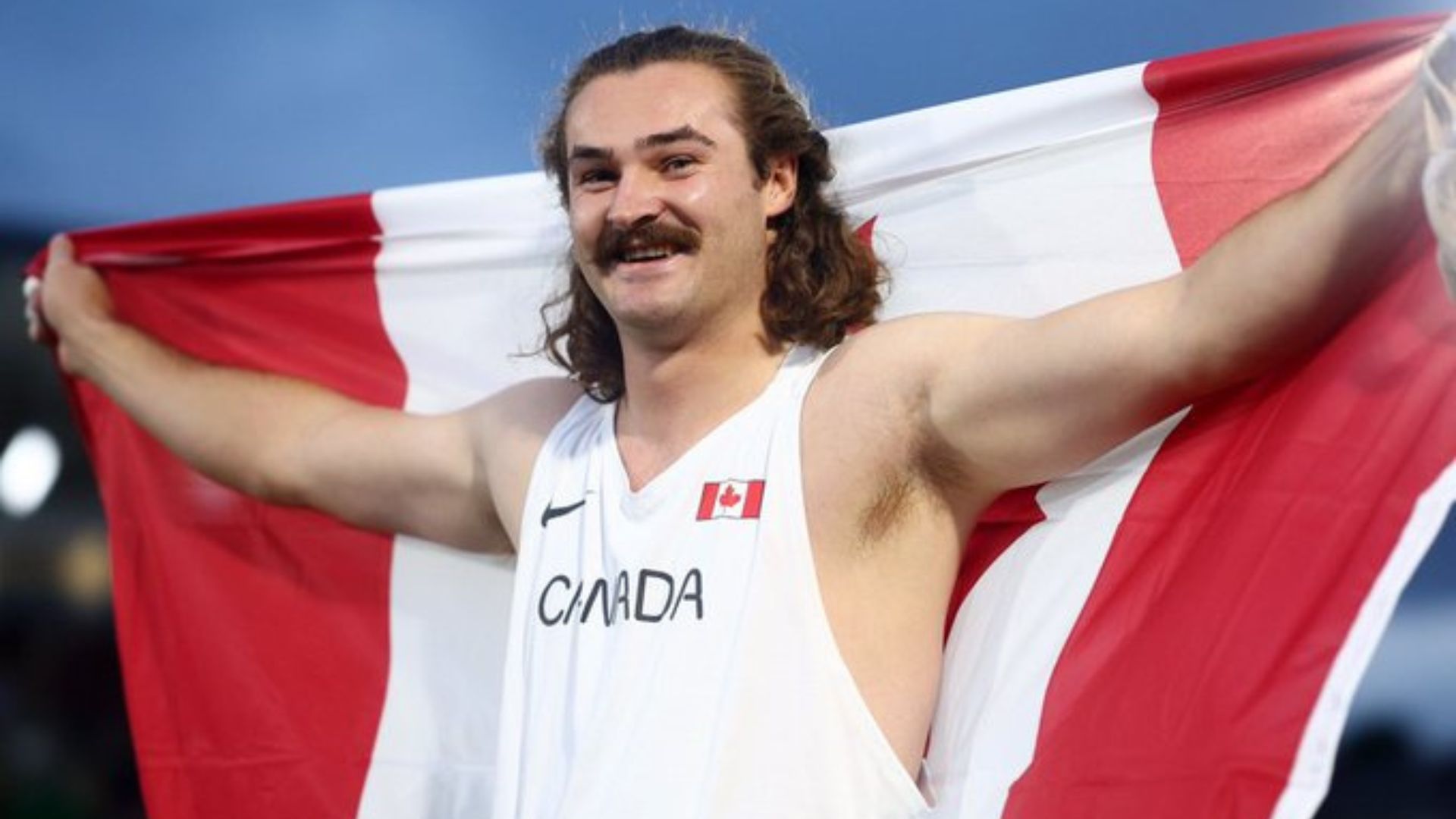
There was no suspense. Just a statement.
Canada’s Ethan Katzberg needed only one throw to settle the men’s hammer throw competition at the Glasgow 2026 Commonwealth Games, launching the hammer 80.97m on his opening attempt to shatter the Commonwealth Games record and secure the gold medal.
Not a single athlete came within four metres of the towering Canadian.
Final Standings
- Ethan Katzberg (Canada) – 80.97m (Games Record)
- Iosif Kesidis (Cyprus) – 76.97m
- Rowan Hamilton (Canada) – 75.36m
The winning margin of 4.00 metres underlined Katzberg’s supremacy in an event he has come to dominate over the past three years.
A Champion in His Prime
At just 24, Katzberg has rapidly established himself as the world’s premier hammer thrower.
His breakthrough came in 2023, when he stunned the field to win the World Athletics Championships in Budapest with a throw of 81.25m, becoming Canada’s first-ever men’s world champion in the hammer throw.
He backed that up in 2024 by capturing the Olympic gold medal, confirming that his world title was no one-off performance but the beginning of a new era in the event.
Now, with Commonwealth gold added to his collection, Katzberg has completed the sport’s major championship treble:
- Olympic Champion
- World Champion
- Commonwealth Champion
 Olympic Champion
The Glasgow victory also adds another milestone to his growing résumé, as his 80.97m opener erased the previous Commonwealth Games record and effectively ended the contest before it had truly begun.
A New Standard
What makes Katzberg particularly formidable is his ability to produce world-class performances immediately. While many throwers build through a competition, the Canadian often delivers his biggest mark early, forcing the rest of the field to chase.
That was exactly how the final unfolded in Glasgow. His opening throw proved untouchable, while the battle behind him was for silver and bronze.
With the World Championships and the Los Angeles 2028 Olympics on the horizon, Katzberg has firmly established himself as the athlete to beat. Still in the early years of his career, he appears poised to dominate the men’s hammer throw for years to come.
For everyone else in Glasgow, the competition began with hope.
For Ethan Katzberg, it ended with one throw.
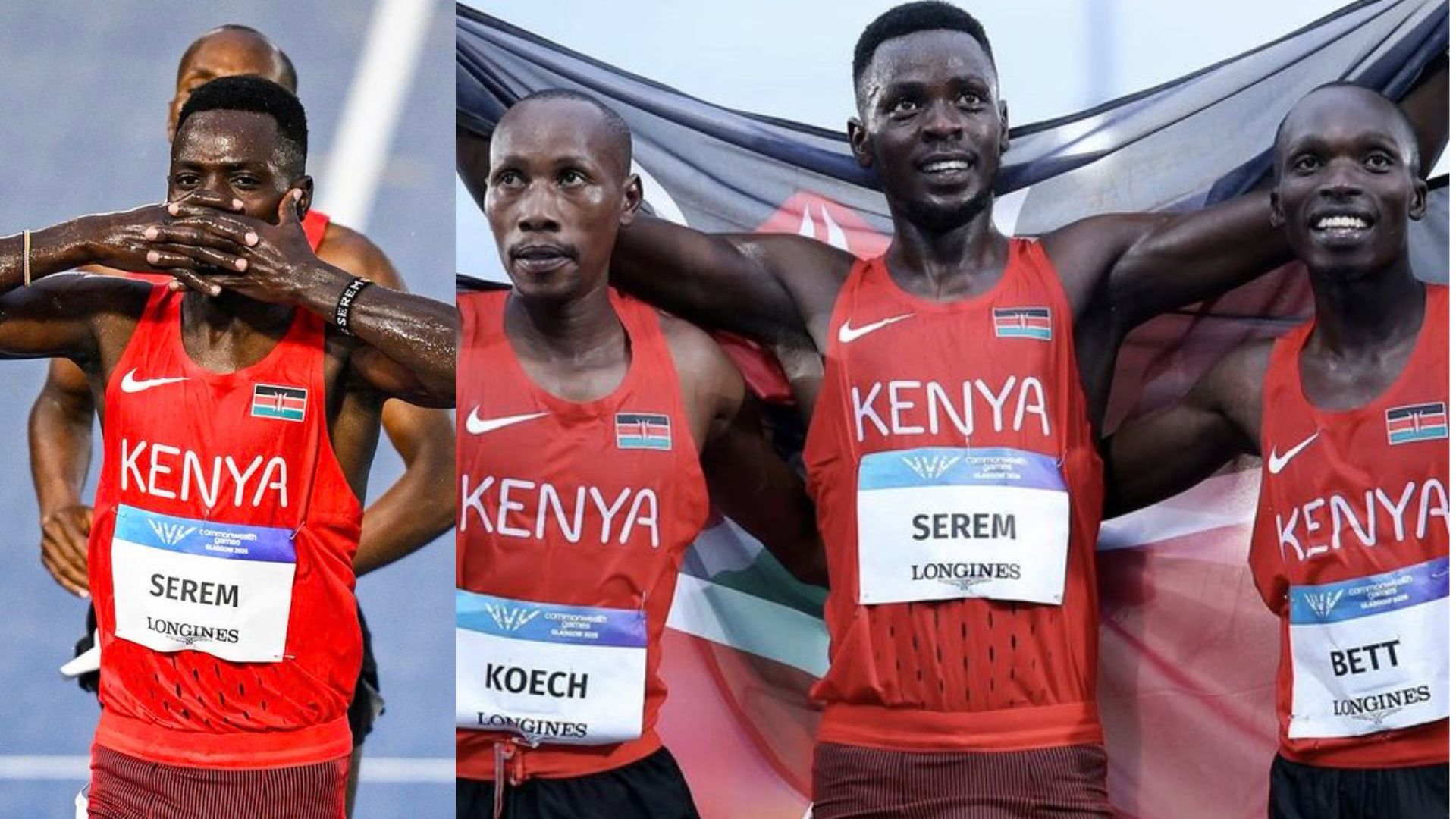
The image that will travel around the world is Edmund Serem standing on the track wearing Viktor Gyökeres’ now-iconic mask celebration.
But by the time he pulled it on, the race had already been won—not just by him, but by an entire nation.
Because Kenya didn’t just win the men’s 3000m steeplechase at the Glasgow 2026 Commonwealth Games.
They owned it.
Edmund Serem – 8:18.23
Simon Kiprop Koech – 8:18.59
Leonard Kipkemoi Bett – 8:21.63
A clean sweep.
Three Kenyans.
Three medals.
One event they’ve turned into their own personal playground.
If you were scrolling through social media, you might joke that they drank some kind of special potion before the race.
The truth is far less mysterious—and far more impressive.
That “potion” is four decades of relentless excellence.
With the Glasgow sweep, Kenya extended its unbeaten run in the Commonwealth Games men’s steeplechase to 10 consecutive editions, stretching all the way back to 1986. Generation after generation, names have changed, but the script has remained remarkably familiar: when the gun goes off in the steeplechase, Kenya takes control.
For Serem, the victory carried extra significance. The reigning World Under-20 champion was making his Commonwealth Games debut, and could hardly have asked for a better introduction.
“This is my first Commonwealth Games, and we swept the podium,” he said after the race.
There was never a dramatic last-lap upset or a surprise challenger breaking the Kenyan stranglehold. Instead, Glasgow witnessed another chapter in one of athletics’ greatest dynasties.
For countries chasing Kenya’s standard—including India, where the steeplechase continues to produce promising talent—the race offered an important reminder.
Dominance isn’t built in one season.
It isn’t created by one exceptional athlete.
It is built over decades through systems, coaching, competition and a culture where every generation pushes the next.
The Gyökeres mask may have been the celebration everyone remembers.
But the real story was written long before Serem crossed the finish line. It was written over 40 years of Kenyan excellence in one of track and field’s toughest events.
India began its athletics campaign at the Glasgow 2026 Commonwealth Games with a mixed bag of results in the morning session, as three athletes booked places in their respective finals, while the country’s biggest sprint hope suffered an unexpected early exit.
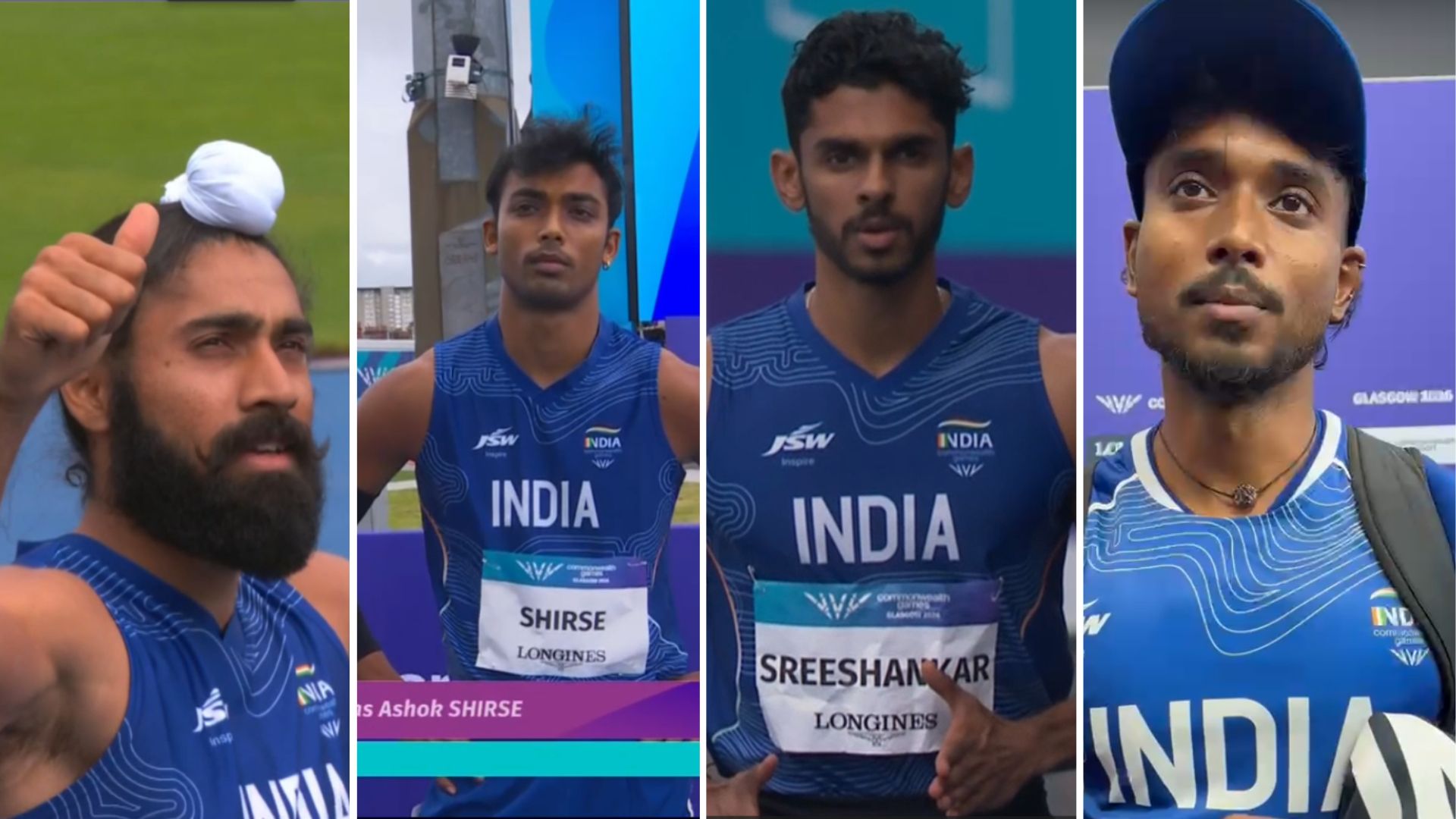
The standout performance came from Murali Sreeshankar, who comfortably progressed to the men’s long jump final with a leap of 8.01m. The Commonwealth silver medallist crossed the automatic qualification mark and finished third overall in the qualifying round, underlining his credentials as one of the favourites for a medal.
Joining him in the final will be compatriot Lokesh Sathyanathan, who also produced a composed performance. His best effort of 7.77m earned him seventh place overall, comfortably inside the top 12 qualifiers for the final. India will now have two representatives in the medal round of the men’s long jump.
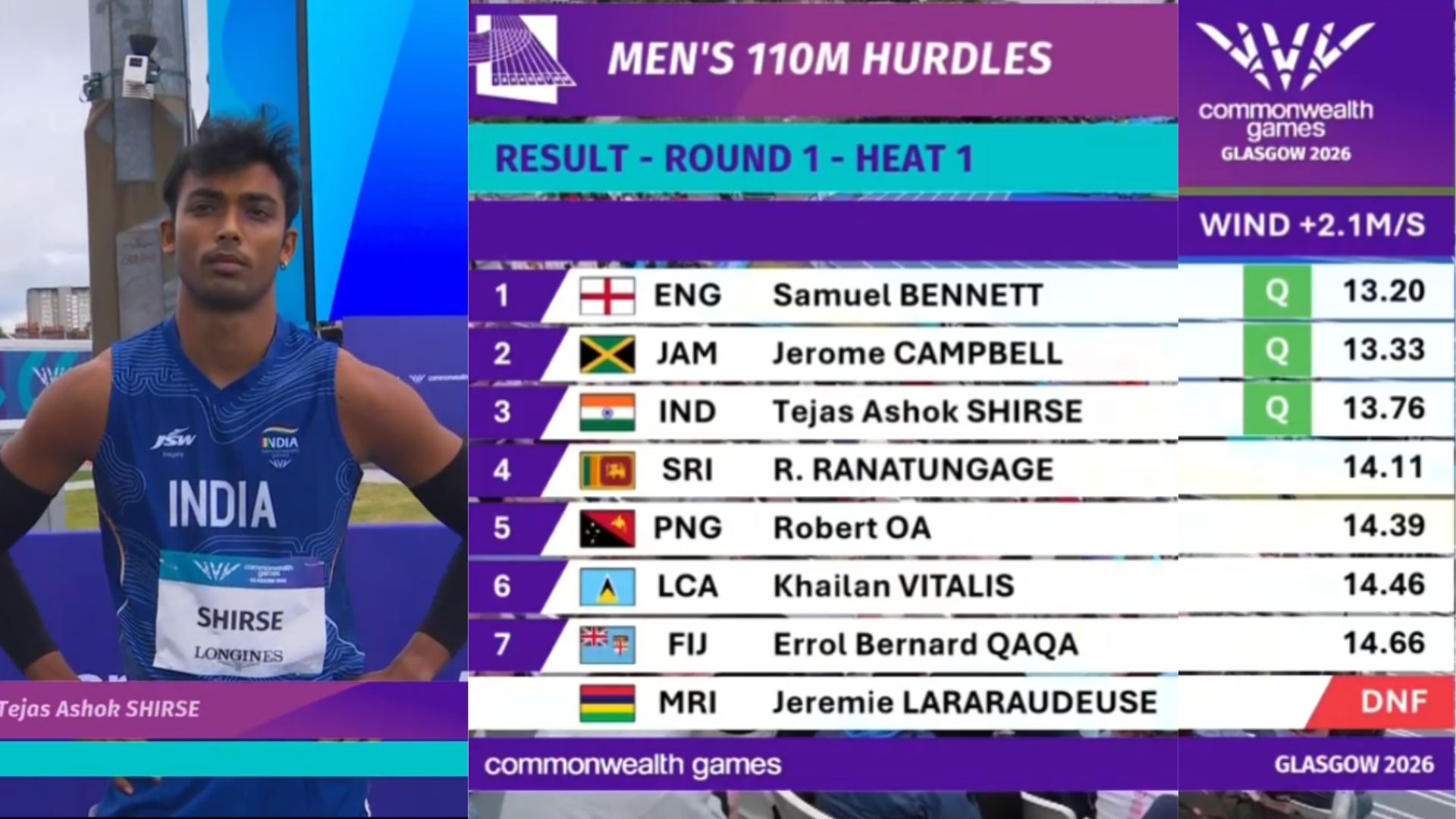
There was more good news on the track as Tejas Ashok Shirse advanced to the men’s 110m hurdles final. Shirse clocked 13.76 seconds to finish third in his heat, securing an automatic qualification spot. The Indian had entered the competition with the fastest season’s best in his heat and successfully negotiated the opening round despite running slower than his season’s best of 13.27 seconds.
The 110m hurdles final is scheduled for 2:15 AM IST.
The biggest disappointment of the session came in the men’s 100 metres, where national record holder Gurindervir Singh failed to progress beyond the opening round.
Competing in Heat 4, Gurindervir clocked 10.39 seconds to finish second behind Jamaica’s Rohan Watson. However, with only the 17 fastest athletes across all 11 heats advancing to the semifinals, the Indian ended up 28th overall, bringing his campaign to an abrupt end.
Having recently set the national record of 10.09 seconds, Gurindervir was expected to comfortably reach the next round, making his early elimination one of the biggest surprises of the opening session.
With three finalists already confirmed, India will now look to convert qualification into medals as the athletics competition gathers pace in Glasgow.
For more visit Commonwealth Games 2026
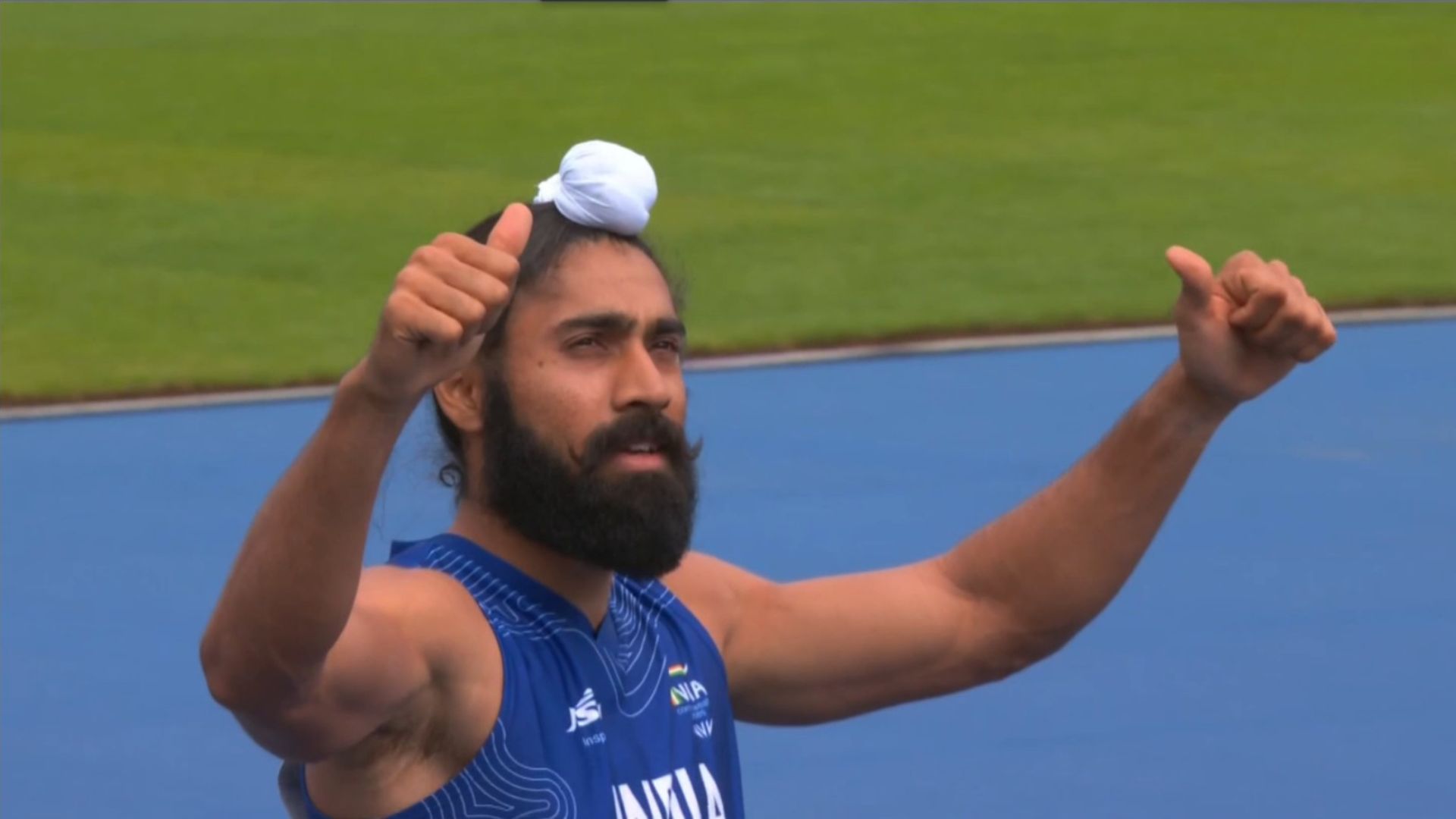
India’s hopes of a deep run in the men’s 100 metres at the Glasgow 2026 Commonwealth Games came to a disappointing end on the very first day after national record holder Gurindervir Singh failed to qualify for the semifinals—not because he lacked the speed, but because of a costly lapse in race execution.
Competing in Heat 4, Gurindervir finished second behind Jamaica’s Rohan Watson, who won the race in 10.13 seconds. The Indian crossed the line in 10.39 seconds, a performance that ultimately left him around 20th overall, with only the 17 fastest athletes across the 11 heats progressing to the semifinals.
The final qualifying spot went to Kuron Griffith of Barbados, who advanced with 10.24 seconds, leaving Gurindervir 0.15 seconds outside the cutoff.
The margin, however, tells only part of the story.
Having run strongly through the first two-thirds of the race, Gurindervir appeared to believe qualification was assured. In the closing metres, he visibly eased off his effort before the finish line and was even seen giving a thumbs-up towards his support staff before crossing the tape.
That premature celebration proved decisive.
In sprinting, athletes are taught to run through the finish line, not to it. Every hundredth of a second can determine qualification, especially in championship formats where athletes from different heats advance on time. By easing up over the final 20 metres, Gurindervir surrendered valuable time that could have comfortably secured his passage into the next round.
The result was particularly painful given his pedigree. Just weeks ago, the Punjab sprinter had rewritten the Indian record with a blistering 10.09 seconds, establishing himself as the fastest Indian in history. On paper, he possessed more than enough speed to qualify safely.
Instead, a race that appeared comfortably under control turned into one of the most frustrating exits of India’s athletics campaign.
Rather than being beaten by faster opponents, Gurindervir’s Commonwealth Games ended because of a misjudgment at the finish—a rare but costly lesson in championship sprinting, where athletes race the clock as much as those in the lanes beside them.
For more visit Commonwealth Games 2026
Indian hurdler Tejas Ashok Shirse booked his place in the men’s 110m hurdles final at the Glasgow 2026 Commonwealth Games, finishing third in Heat 1 with a time of 13.76 seconds.
Shirse came into the competition as one of the favourites in his heat, having entered the Games with a season’s best and personal best of 13.27 seconds, the fastest mark among all eight athletes in his race.
Drawn in Lane 7, the Indian lined up against a competitive field featuring Jeremie Lararaudeuse of Mauritius (SB 13.43/PB 13.31), Jerome Campbell of Jamaica (SB 13.33/PB 13.23), Samuel Bennett of England (SB/PB 13.41), Roshan Dhammika Ranatunge of Sri Lanka (13.73), Khalilan Vitalis of Saint Lucia (13.59), Robert Oa of Papua New Guinea (14.40) and Errol Bernard Qaqa of Fiji (PB 14.79).
Under the qualification rules, the top three finishers from each of the two heats earned automatic qualification for the final, with the next two fastest athletes overall also advancing on time. Shirse ensured there was no need to rely on the time qualifiers, securing one of the three automatic qualifying spots by finishing third.
Although well outside his season’s best of 13.27 seconds, the primary objective was qualification, and the Indian hurdler successfully progressed to the medal race.
Shirse will now look to improve on his semifinal performance and challenge for a podium finish when the Commonwealth Games men’s 110m hurdles final takes place later in Glasgow.
For more visit Commonwealth Games 2026