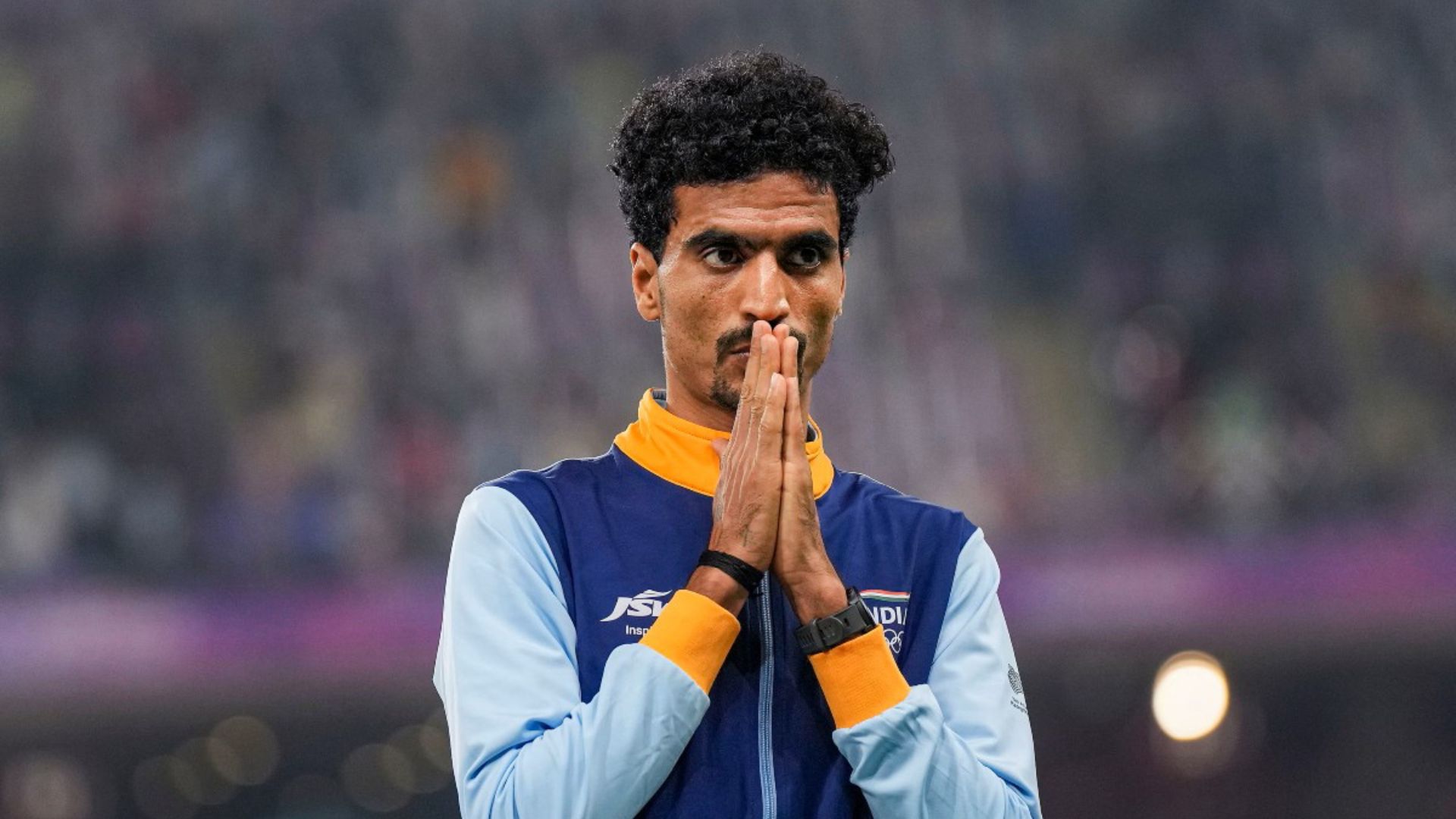

India’s athletics campaign at the Commonwealth Games 2026 gets underway on 27 July, with a 32-member squad set to begin its quest for medals in Glasgow. Athletics also boasts the largest contingent among all Indian sporting disciplines at the Games, reflecting the country’s growing strength across track and field.
A total of seven Indian athletes will be in action on the opening day, competing across four events in both the morning and evening sessions.
The day’s action begins with Gurindervir Singh, who will compete in Round 1 of the men’s 100m. The Indian sprinter will aim to progress through the heats and keep his hopes of advancing alive.
India’s challenge in the men’s long jump will feature two medal hopefuls. Murali Sreeshankar, one of the leading contenders in the event, will compete in Qualification Group A, while Lokesh Sathyanathan will take to the runway in Qualification Group B. Both athletes will be looking to secure their places in the final with strong qualifying performances.
In the men’s 110m hurdles, Tejas Ashok Shirse will begin his campaign in the opening round. A successful run in the heats would see him return later in the championships for the final, subject to qualification.
The evening session will feature India’s strongest medal prospects of the day in the men’s high jump final. Sarvesh Anil Kushare, Aadarsh Ram J, and Tejaswin Shankar will represent India in what promises to be one of the most competitive field events of the opening day. With three athletes in the final, India will be aiming to make a strong start to its medal campaign.
Should he progress from the heats, Tejas Ashok Shirse will also return for the men’s 110m hurdles final, scheduled later in the night.
With a packed opening-day schedule and several leading contenders in action, India’s athletics campaign promises an exciting start. Fans can look forward to an action-filled day as the country’s athletes begin their pursuit of success at the Commonwealth Games 2026.
For more visit Commonwealth Games 2026

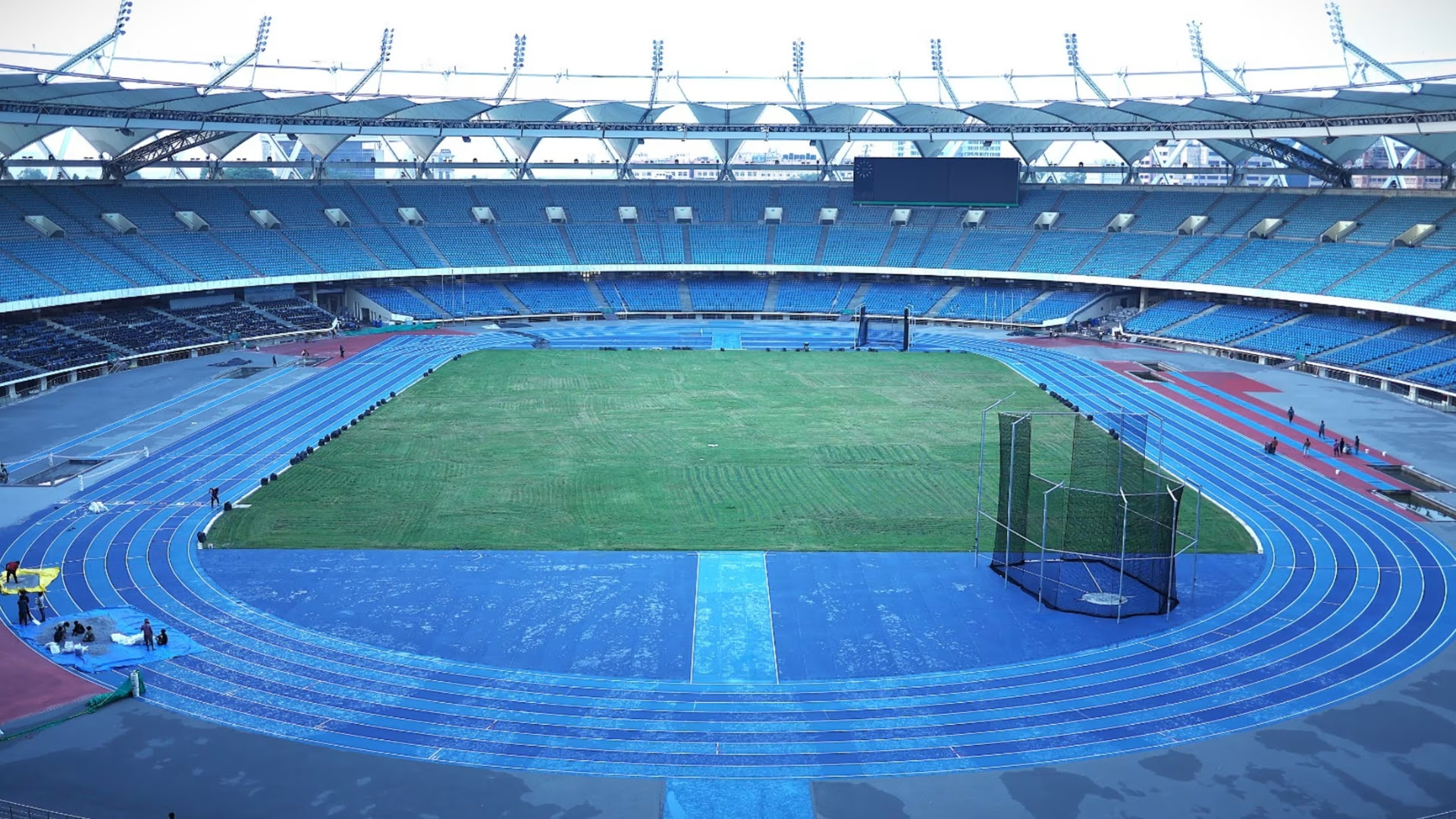
For the first time in many years, Indian athletes competing on the domestic circuit will have a significant financial incentive to compete for. In a move that could reshape the country’s athletics ecosystem, the Athletics Federation of India (AFI) has decided to introduce prize money for the winners of the inaugural Indian Athletics Series Final, scheduled for September 10 at the Jawaharlal Nehru Stadium in New Delhi.
The decision marks one of the most significant changes to India’s domestic athletics calendar in recent years. While the amounts may be modest by international standards, rewarding athletes for performances at the national level is an important step towards making domestic competition more meaningful and professionally rewarding.
The Indian Athletics Series Final will be an invitational meet. Only athletes who qualify through the national ranking list—based on their performances during the 2026 season up to the Inter-State Championships—will be eligible to compete. All events will be conducted as direct finals, with no heats or qualifying rounds.
Prize money will be awarded to the top six finishers in every event:
1st: ₹1,00,000
2nd: ₹50,000
3rd: ₹25,000
4th: ₹20,000
5th: ₹15,000
6th: ₹10,000
The Indian Athletics Series was introduced this year as a revamped version of the Indian Grand Prix. Unlike its predecessor, the new circuit has been designed around regional competitions, allowing athletes to compete more frequently without travelling extensively across the country.
Although the AFI is yet to make an official announcement regarding the Indian Athletics Series Final, NNIS Sports has learned from multiple sources that the meet will feature 30 events—15 for men and 15 for women.
The events are:
100m, 200m, 400m, 800m, 1500m, 3000m Steeplechase, 110m Hurdles, 400m Hurdles, High Jump, Pole Vault, Long Jump, Triple Jump, Shot Put, Hammer Throw and Javelin Throw.
Eight athletes have qualified in each event, while the 1500m and 3000m Steeplechase will each feature 12 athletes. Four reserve athletes have also been selected for every event except the 1500m, which has two reserves, taking the total number of selected athletes—including reserves—to 372.
If a qualified athlete declines participation, the highest-ranked reserve will receive the invitation, subject to confirmation.
The decision also revives a practice that has largely disappeared from Indian domestic athletics.
During the 1990s, sponsor-backed National Circuit Meets regularly offered cash rewards. In 2009, the Athletics Federation of India announced prize money of around ₹15,000 for winners of the Indian Grand Prix meets held in Kochi, Coimbatore and Chennai.
Leading athletics nations have long recognised the importance of rewarding domestic excellence. Countries such as the United States, Great Britain, Japan and Kenya offer prize money at several national competitions. At the 2026 USATF Indoor Championships, for example, the top five finishers received:
1st: $6,000
2nd: $4,000
3rd: $2,500
4th: $1,500
5th: $1,000
While the financial rewards introduced by the AFI are modest compared with established athletics nations, the significance lies in the message. For perhaps the first time in over a decade, India’s domestic athletics circuit is once again recognising performance with meaningful financial rewards.
Here is the list of Athletes selected for Indian Series Final:
The Athletics Federation of India, backed by private money and actual long-term planning, finally woke up. Foreign coaches were hired, not as tourists, but as planners, architects. Sports science, biomechanics, and video analysis replaced outdated guesswork. Kids were running and being engineered to win.
Then came Neeraj Chopra. When that farm boy from Khandra threw his javelin into the Tokyo sky and pulled down Olympic Gold, he didn’t just win a contest, he stirred a nation, demolishing a psychological complex.
Neeraj proved that an Indian could take on the world’s best in a technical field event and dominate them. He made throwing a spear cool. Overnight, India didn’t just get obsessed with javelin, but it started watching speed, release angles, and runway velocity.
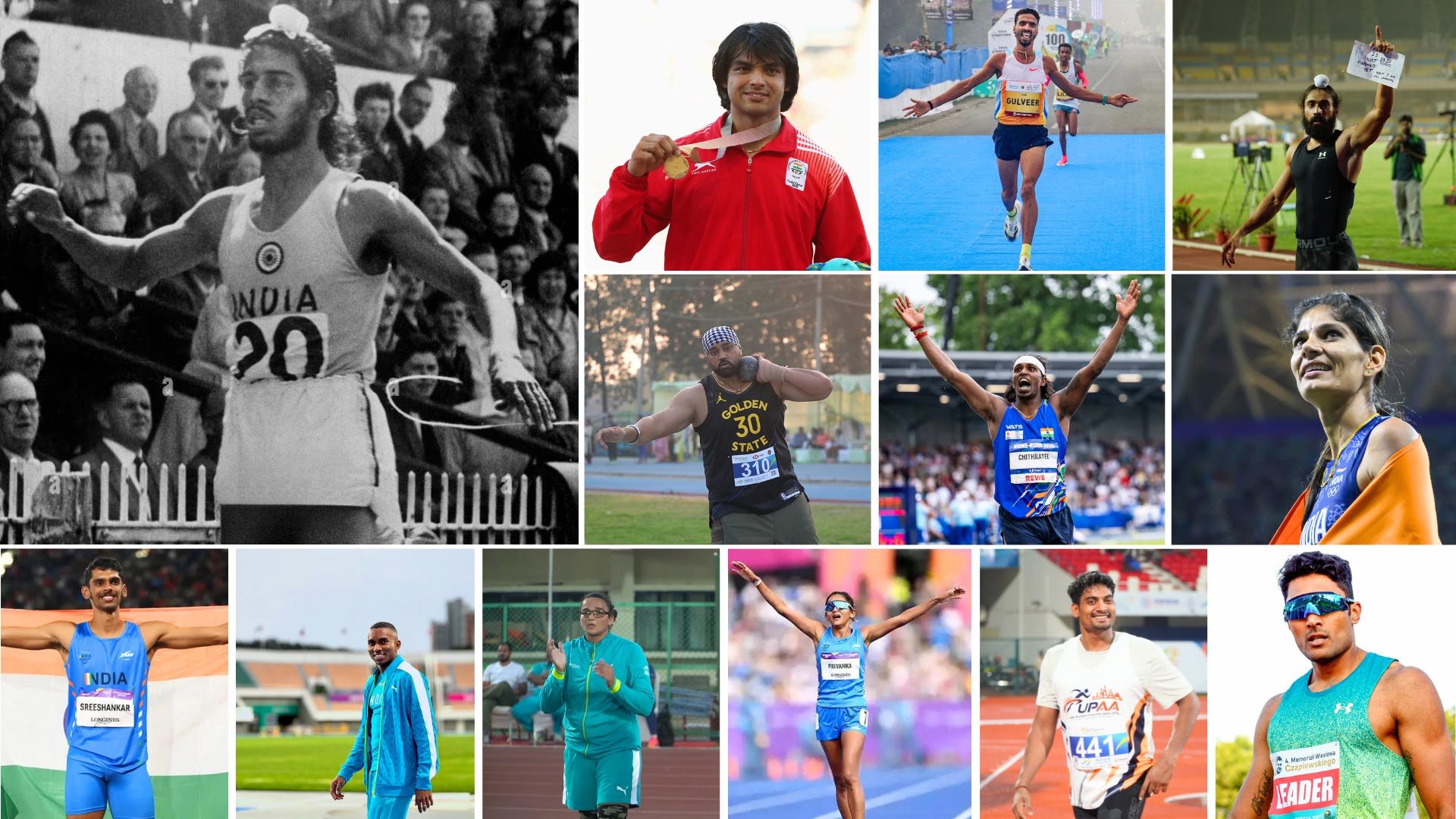
In Glasgow, India isn’t relying on a lone star to carry the flag. This squad has muscle across the board.
On a damp, overcast summer afternoon in 1958, deep inside Wales at the Cardiff Arms Park, Milkha Singh slowly crouched into his blocks. He wore a threadbare white vest, the tricolour hand-stitched over his chest.
When the gun went off, Milkha’s first step in so many ways defined India’s place in the world. It wasn’t just a simple one-lap race; Milkha ran for a young, wounded nation trying to find its place in the world. After 46.6sec, he crossed the line a hair’s breadth ahead of South Africa’s Malcolm Spence.
In that frantic, finish-line blur, India had its first Commonwealth Games athletics gold.
For nearly half a century, that solitary medal stood like a lighthouse. It was a glorious triumph, yes, but it constantly also reminded us of our sporting barrenness. For decades, Indian track and field remained a tragic romance -a series of heart-wrenching, heroic failures against overwhelming odds. We had got used to moral victories and fourth-place finishes.
Fast forward sixty-eight years. The circus moves back to Scotland for the 2026 Glasgow Commonwealth Games. But the story has changed.
The days of sending a handful of hopefuls armed with little more than jugaad, desi ghee, and blind faith are dead. India hasn’t just arrived in Glasgow; it walks through the front door with a confident 32-member athletics squad, filling every single slot in its quota across 18 events.
This isn’t just a story about collecting hardware. It’s the story of how an entire nation stopped praying for miracles and started owning excellence.
To truly understand what is happening today, you have to remember where we came from. For generations, Indian athletics was a heartbreak industry.
Milkha’s agonizing fourth-place finish at the 1960 Rome Olympics set a cruel, invisible ceiling. Twenty-four years later, PT Usha lost an Olympic bronze in Los Angeles by one-hundredth of a second, a fraction of a second that for years was a raw wound, a national trauma.
Every now and then, a titan would emerge: Gurbachan Singh Randhawa, Sriram Singh, TC Yohannan. They were kings in Asia, but unable to crack the podium open.
We lived in the shadow of ‘what if.’ We had world-class talent, but we were stuck in a bullock-cart system. Every medal was a triumph of sheer personal stubbornness.
Our athletes trained on mud tracks, ate haphazard diets, and used antiquated equipment. Field events like the javelin, triple jump, and shot put were treated like novelty acts. We were spectators masquerading as participants.
Then the tide turned. Not by accident but because of two shifts that happened.
What was once our weakest link is now our weapon. In the Men’s javelin, Neeraj Chopra leads a pack that includes Rohit Yadav and Yash Vir Singh. Having three guys from the same country consistently throwing past the 80-meter mark isn’t luck; it’s an assembly line. In shot put, veteran Tajinderpal Singh Toor provides the raw power and big-game experience.
If you told someone twenty years ago that India would be throwing down sub-10.20s times in short sprints, they would have laughed you out of the stadium. Today, sprinters like Gurindervir Singh and Animesh Kujur are running with explosive, world-class mechanics. More than hope, there is a genuine belief.
In the distance events, Indian runners aren’t playing it safe anymore.
Gulveer Singh is taking on the gruelling 5,000m–10,000m double.
Parul Chaudhary is tackling both the 5,000m and 3,000m steeplechase.
Avinash Sable, the man who broke Kenya’s decades-long iron grip on the steeplechase in Birmingham, returns with more tactical acumen.
Praveen Chithravel and Selva Prabhu lead the triple jump campaign after India had taken the top two spots at Birmingham 2022. Young vaulters like Dev Meena are clearing heights and, with a bit of experience, are expected to soar higher. Meanwhile, the 4x400m relay teams are no longer just happy to make the final; they want the podium.
Perhaps the most beautiful part of this shift is where these athletes are coming from.
There was a time when you could guess an athlete’s discipline by their address: Haryana gave us wrestlers, Punjab gave us throwers, Kerala gave us jumpers and middle-distance queens.
Look at the Glasgow roster now. It is a decentralized, sprawling map of India. Kids from the dustbowls of Uttar Pradesh, the coastal tracks of Odisha, Tamil Nadu, Karnataka, and Rajasthan are standing side by side with the boys from Punjab and Haryana.
Scouting networks and modern academies have reached the deepest corners of the country. If you have talent, ability, speed and fire, the system will find you.
When Milkha Singh won in 1958, India celebrated a miracle. It was a beautiful, lonely moment that stood like a time-capsule for half a century.
In Glasgow, if an Indian stands on top of the podium, no one will call it a miracle. It will be the start of business hour.
From a solitary runner in Wales to a 32-strong army in Scotland, Indian athletics has finally grown up. The romance of the near misses is over. India wants to begin its quest for the medals.
The Athletics Federation of India (AFI) has announced a 36-member squad for the World Athletics U20 Championships 2026, scheduled to be held in Eugene, USA, from 5–9 August.
The Indian contingent comprises 23 men and 13 women, who will compete across 18 events at the prestigious global junior championships. The squad features several of the country’s most promising young athletes, many of whom have enjoyed breakthrough performances during the 2026 season and will now have the opportunity to test themselves against the world’s best U20 talent.
The men’s team includes competitors in a wide range of track and field events, including the 400m, 800m, 5000m, high jump, long jump, triple jump, discus throw, javelin throw, and relay events. Several athletes have earned selection following impressive performances on the domestic circuit, while India’s relay squads will also be aiming to make a strong impression on the international stage.
The women’s squad will compete in events including the 400m, high jump, shot put, discus throw, javelin throw, along with the 4×100m relay and mixed 4×400m relay. The team blends established junior performers with emerging talents who have progressed steadily through the national age-group system.
The World Athletics U20 Championships are regarded as one of the most important competitions in global junior athletics, providing young athletes with the opportunity to gain valuable international experience and compete against the best emerging talent from around the world. Many of today’s senior world and Olympic champions began their international careers at this championship.
India has consistently produced promising performances at the U20 level in recent years, and the 2026 squad will be looking to continue that progress in Eugene. With representation across a broad range of disciplines and several athletes arriving in strong form, the Indian contingent will aim to deliver competitive performances and showcase the country’s growing depth in junior athletics on the world stage.
The championships will take place from 5 to 9 August 2026, with India’s 36-member team set to compete for national pride against the world’s finest young athletes.

India will be represented by 125 athletes at the 2026 Commonwealth Games in Glasgow, which begin on July 23. The squad includes 77 men and 48 women competing across 13 sports disciplines, including para sports.
Athletics has the largest representation with 32 athletes (22 men and 10 women), followed by boxing (14), judo (14), and weightlifting (12).
At the 2022 Commonwealth Games in Birmingham, India sent 210 athletes and won 61 medals. However, that edition also featured sports such as cricket, badminton, hockey, squash, table tennis, and wrestling, which together contributed 30 medals to India’s tally.
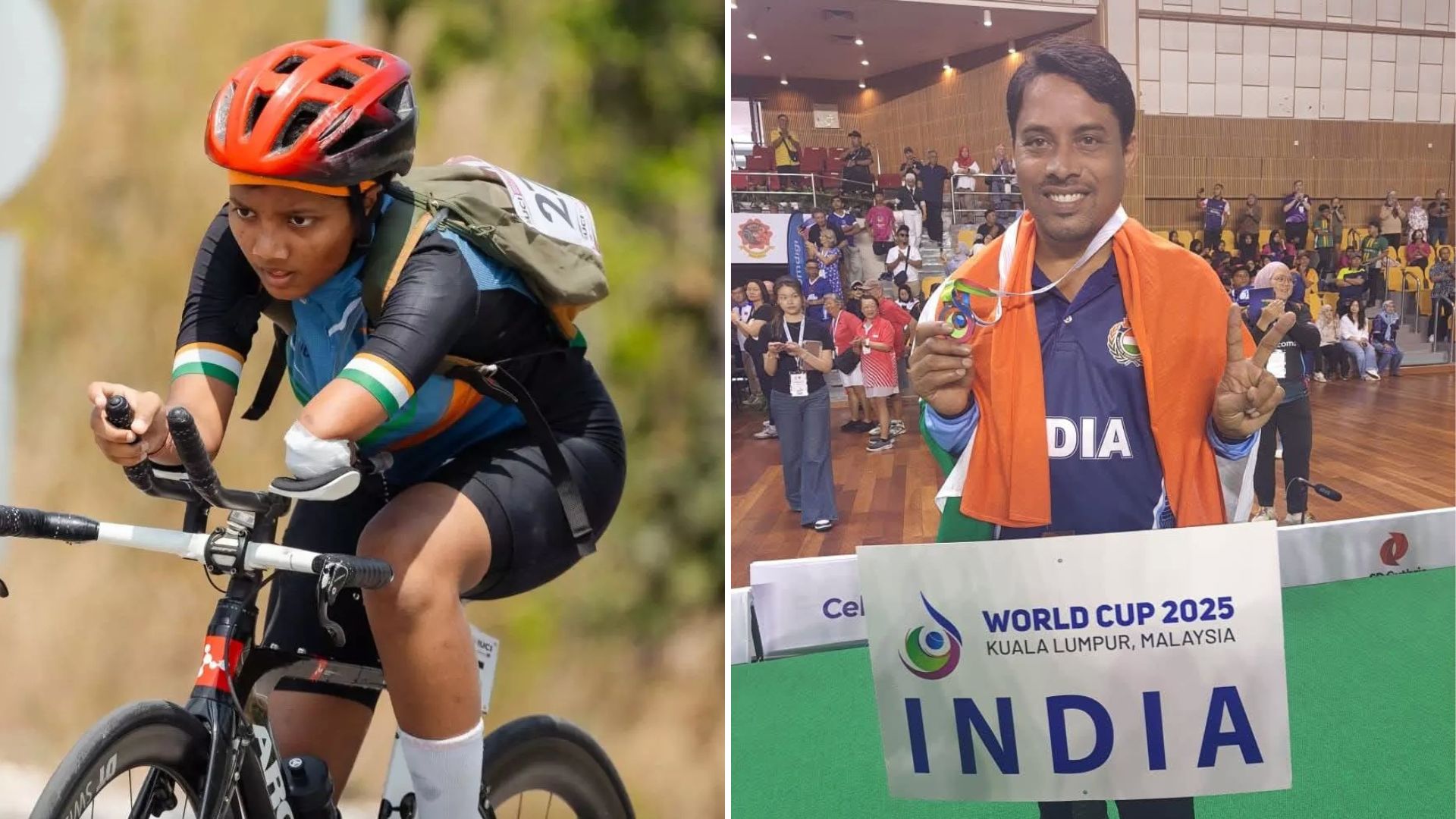
Among the 125-member contingent, Dinesh Kumar Singh, at 49 years of age, will be the oldest Indian athlete at the Games. He will compete in the men’s lawn bowls pairs event. At the other end of the spectrum, Lisha Das, aged just 16, will be the youngest member of the Indian contingent.
Dinesh Kumar Singh is one of India’s most accomplished lawn bowlers and a pioneer in the sport’s rise in the country. Hailing from Ranchi, Jharkhand, he has been at the forefront of Indian lawn bowls for more than a decade.
Dinesh achieved the biggest milestone of his career at the 2022 Commonwealth Games in Birmingham. Teaming up with Sunil Bahadur, Navneet Singh, and Chandan Kumar Singh in the men’s fours event, India reached the final before settling for the silver medal after losing to Northern Ireland.
Lisha Das became Assam’s first para-cyclist to qualify for the Commonwealth Games. A Class 11 student at Jawahar Navodaya Vidyalaya, Biswanath, Lisha is the daughter of Nirmal Das and Rukmini Bhumij Das of Tezpur, Assam.
She won the gold medal at the 2025 National Para Road Cycling Championship. She followed it up with two gold medals at the Lanna Cup, a bronze medal at the Korat Cup, and an impressive haul of two silver and three bronze medals at the 2026 Asian Para Track Championships.
By Johanna Worley
For nearly three decades, the men’s mile world record seemed untouchable.
Not impossible. Just untouchable.
Every generation produced athletes who looked capable. Every few years came another bold prediction that modern training, lighter spikes, faster tracks or superior pacing would finally bring down Hicham El Guerrouj’s astonishing 3:43.13, set in Rome in July 1999. Yet the record endured through the careers of Bernard Lagat, Asbel Kiprop, Matthew Centrowitz, Jakob Ingebrigtsen and Yared Nuguse.
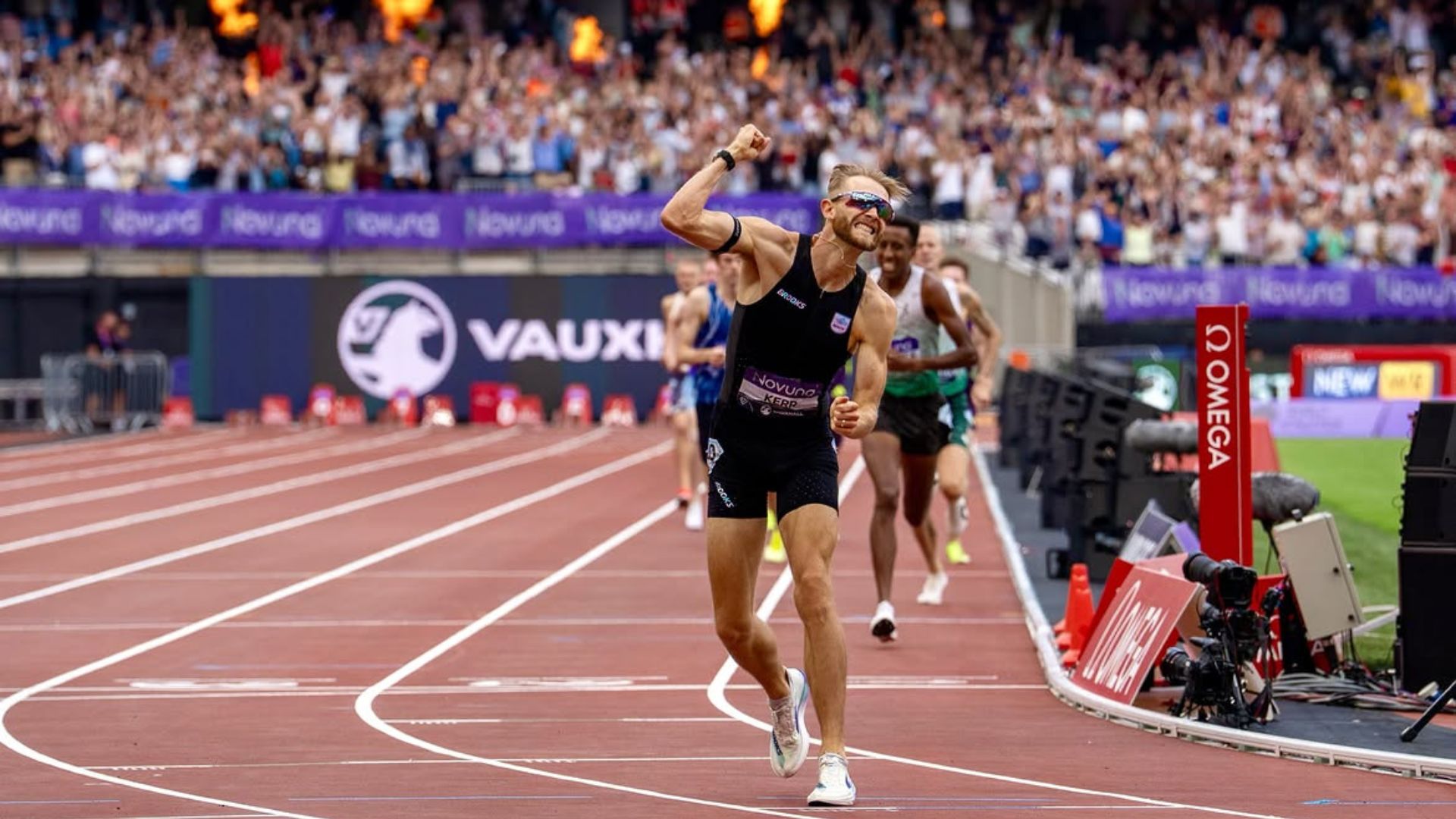
Then, on Saturday in London, Josh Kerr finally did it.
The Scot ran 3:42.66, becoming the first man in history to cover the mile in under 3 minutes 43 seconds and shaving 0.47 seconds off one of athletics’ most revered records. It wasn’t just another world record. It was the end of a 27-year wait.
That deserves far more attention than it has received.
The mile occupies a unique place in sporting history. Unlike the Olympic distances, it has always carried an almost mythical status. Roger Bannister’s first sub-four-minute mile in 1954 remains one of the defining moments in modern sport. Even after athletics officially embraced metric racing, the mile retained its romance.
Its world record has often represented the very frontier of human endurance and speed.
From the mid-1970s to the mid-1980s, that frontier kept moving.
Between 1975 and 1985, the world record was broken eight times by five different athletes in what remains perhaps the greatest era in middle-distance running.
Filbert Bayi of Tanzania opened the sequence with 3:51.0 in 1975.
John Walker of New Zealand responded the same year, becoming the first man under 3:50 with 3:49.4.
Then came the unforgettable British rivalry.
Sebastian Coe lowered the mark to 3:48.95 in 1979 before Steve Ovett reclaimed it with 3:48.40 in 1980. Just 48 days later, Coe answered with 3:47.33. Steve Cram then carried the record to 3:46.32 in 1985, completing a decade in which Britain dominated the event and the record changed hands with remarkable frequency.
After Cram’s mark, the progression slowed dramatically.
Nearly eight years passed before Algeria’s Noureddine Morceli produced 3:44.39 in Zurich in 1993. Six years later came what many considered the perfect mile.
On a warm evening in Rome, Hicham El Guerrouj ran 3:43.13. Remarkably, Kenya’s Noah Ngeny also finished inside the previous world record with 3:43.40, highlighting just how extraordinary that race was.
What followed was unprecedented stagnation.
The event evolved. Shoes became lighter. Tracks became faster. Sports science transformed training. Pacing lights, advanced physiology and precision race planning became standard. Yet the record refused to budge.
That wasn’t because nobody came close.
Jakob Ingebrigtsen ran 3:43.73. Yared Nuguse clocked 3:43.97. Both performances suggested El Guerrouj’s record was vulnerable, but neither quite found the final fraction of a second.
Josh Kerr believed he could.
Earlier this year he publicly announced “Project 222″—222 seconds, or exactly 3:42.99. It was an unusually bold declaration in an era when athletes often avoid discussing records until after they happen.
On Saturday, 18th July 2026, he delivered.
With perfectly judged pacemaking through 1200 metres, Kerr took over for the final lap before an extraordinary closing circuit carried him into history. His official time of 3:42.66 also included a 1500m split of 3:27.62—faster than his own British record over that distance.
The significance goes beyond one athlete.
World records usually fall in clusters. Once a psychological barrier disappears, others often follow. Bannister’s sub-four-minute mile is the classic example. El Guerrouj himself broke the previous world record by more than a second.
Could Kerr’s performance have the same effect?
It feels possible.
Nuguse remains capable of threatening the mark. Ingebrigtsen, when healthy, is still one of the greatest middle-distance talents of the era. And Kerr himself has already shifted his attention towards El Guerrouj’s equally legendary 1500m world record of 3:26.00.
Perhaps what is most surprising is how quietly this achievement has been received outside athletics circles.
Breaking a world record that survived for 27 years should have been front-page news. It should have dominated sporting conversations. Instead, it barely rippled beyond track and field’s dedicated followers.
History, however, has a way of correcting these oversights.
Years from now, when people trace the evolution of the mile—from Bannister to Coe, Ovett and Cram, from Morceli to El Guerrouj—they will find another name.
Josh Kerr.
By Sundeep Misra
Josh Kerr has left me with mixed emotions.
As an athlete, he is not only world-class but possesses that rare skill set which makes an enduring legend of multiple record-breaking performances, Olympic medals, and World titles. So, when he crossed the line at the London Diamond League in 3:42.66, erasing Hicham El Guerrouj’s 27-year-old mile world record, the 60,000 inside the stadium, and the millions watching across the globe, were understandably ecstatic. Delirious, even.
Records do that to your senses. Especially when one has endured for nearly three decades, held by an athlete widely considered an all-time great.
As a kid reading about track and field, I was fascinated by Saïd Aouita, the 1984 Los Angeles 5,000m gold medallist and 1987 Rome World Champion. In Seoul ’88, while the world was consumed by the fallout of Ben Johnson’s 100m scandal, Aouita quietly picked up an 800m bronze.
Following Hicham El Guerrouj was a natural evolution. The Moroccan won four consecutive 1,500m World titles from 1997 to 2003. By the time he arrived in Sydney for the 2000 Olympics, his victory was considered a mere formality, all he had to do was show up on the track. Instead, in a shock result, Hicham finished second to Noah Ngeny, the talented Kenyan who, ironically, had been his pacemaker when El Guerrouj set the 1,500m world record in Rome two years earlier.
Still chasing Olympic gold, Hicham flew into Athens four years later. Just twenty days before the Olympic final, Bernard Lagat beat him at the Zürich meet. But on August 24, 2004, when another campaign threatened to end in heartbreak, Hicham fought back. He led down the home straight, lost the lead to Lagat, and then, a few agonizing strides from the finish, reclaimed it to finally seize his gold.
It remains one of those rare sporting moments that brought me to tears. I was covering a different event at those Games and had sprinted into the media centre barely ten minutes before the gun. Days later, Hicham won the 5,000m in 13:14.39, becoming the first man in 80 years since Paavo Nurmi in 1924 to complete the distance double.
Twenty-seven years ago, on July 7, 1999, El Guerrouj set his historic mile mark of 3:43.13 at Rome’s Stadio Olimpico. Understanding what Hicham represents to the soul of track and field is necessary to explain why Kerr’s heavily publicized record leaves such a lingering, complicated aftertaste.
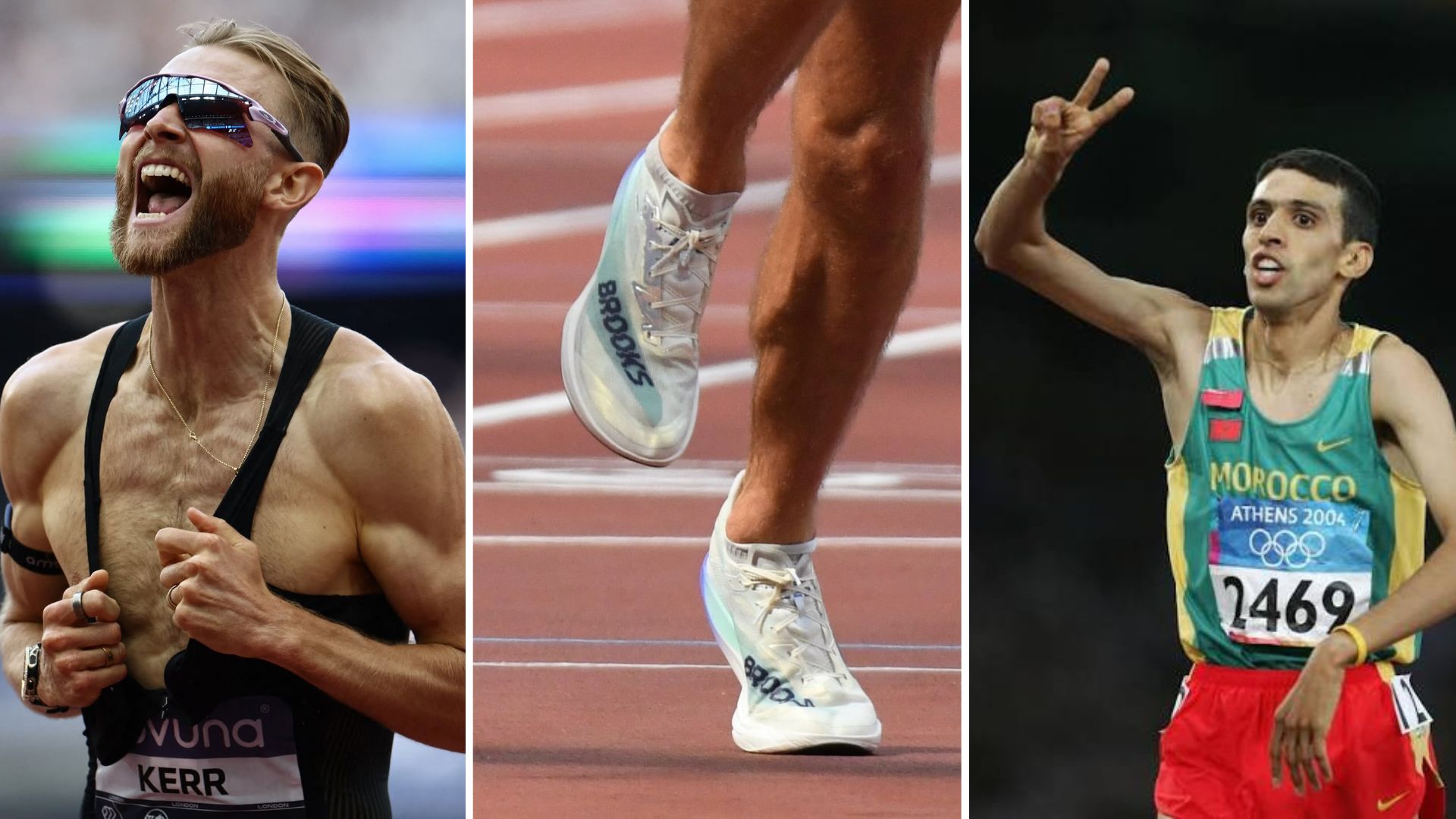
There is no doubting the success of Project 222. Anyone who understands modern athletics knew Brooks would pull out all the stops, relying on Kerr to push his physical limits. Yet, it leaves you feeling that this wasn’t purely a triumph of lungs, heart, and grit that singular currency that drives runners across the line. It was also a victory of bespoke sports engineering.
This is no slight on Kerr – an Olympic medallist, a World Champion, and one of the fiercest competitors alive. No shoe breathes for an athlete. No speed-suit absorbs the lactic acid of a 55-second lap. Yet, to analyse this mark without examining the machinery beneath his feet is to tell only half the story.
For decades, the track was an ascetic sanctuary. The sole currency was endurance, tactical intellect, and raw talent. In India, stories of running barefoot on cinder or grass were legion. Later, all you needed was a pair of standard-issue spikes to feel ready to take on the world. Equipment was never the differentiator, at least not in our minds.
Project 222 questions that innocence.
Brooks didn’t pull a top-tier spike off a retail shelf in London for Kerr. The Hyperion 222 is a one-off prototype modelled on eight years of Kerr’s personal stride data, 3D foot scans, and a carbon plate customized to his heavy, high-force strike.
As Runner’s World put it: His Custom Shoes Were Designed to Be a ‘Weapon’.
Danny Orr, Brooks’ senior director of product development, openly admitted to Popular Science: “The notion of running slowly, or changing gears, is going to feel awful in this shoe. It’s not designed for that. It really is a weapon for him to run four laps at a sustained high speed and cadence.”
For an emerging Indian talent like Yoonus Shah, a shoe like the Hyperion 222 is useless, unless one is engineered specifically for him.
World Athletics regulations mandate that shoes worn in major championships must be widely available on the retail market. Yet, prototypes like Kerr’s exploit the “Development Shoe” loophole, which allows unreleased shoes a 12-month window in one-day international meets like the Diamond League. While the times are officially ratified, the reality is equipment asymmetry.
When El Guerrouj ran 3:43.13 in 1999, he wore standard EVA foam and thin metal spikes. He had no energy-return carbon plates, no custom uppers, no personalized aerodynamic suits. Neither did Steve Cram when he ran 3:46.32 in 1985.
In Formula 1, we never evaluate Lewis Hamilton’s lap times against Juan Manuel Fangio’s without discussing the car. Why do we insist on doing so in track and field?
Track is moving toward its own Constructors’ Championship. Brooks didn’t just sponsor Kerr; they won alongside him. The global media blitz that followed – worth an estimated $20M to $30M in direct advertising -instantly shattered Nike and Adidas’s monopoly on the “elite speed” narrative.
Kerr told the New York Times: “The mantra was that we’re not chasing world records, we’re creating the conditions where world records become inevitable.”
And there lies the dilemma.
Kerr’s 3:42.66 is an astounding physical achievement, built on brutal 70-mile training weeks and excruciating 4x800m workouts. But the fear among purists isn’t that technology is advancing – it is that technological capability will eventually eclipse human parity.
When records are engineered in a lab as much as they are forged on the track, we are no longer just watching a race. We are watching the future arrive. Whether that future still belongs entirely to the runner remains the open question.
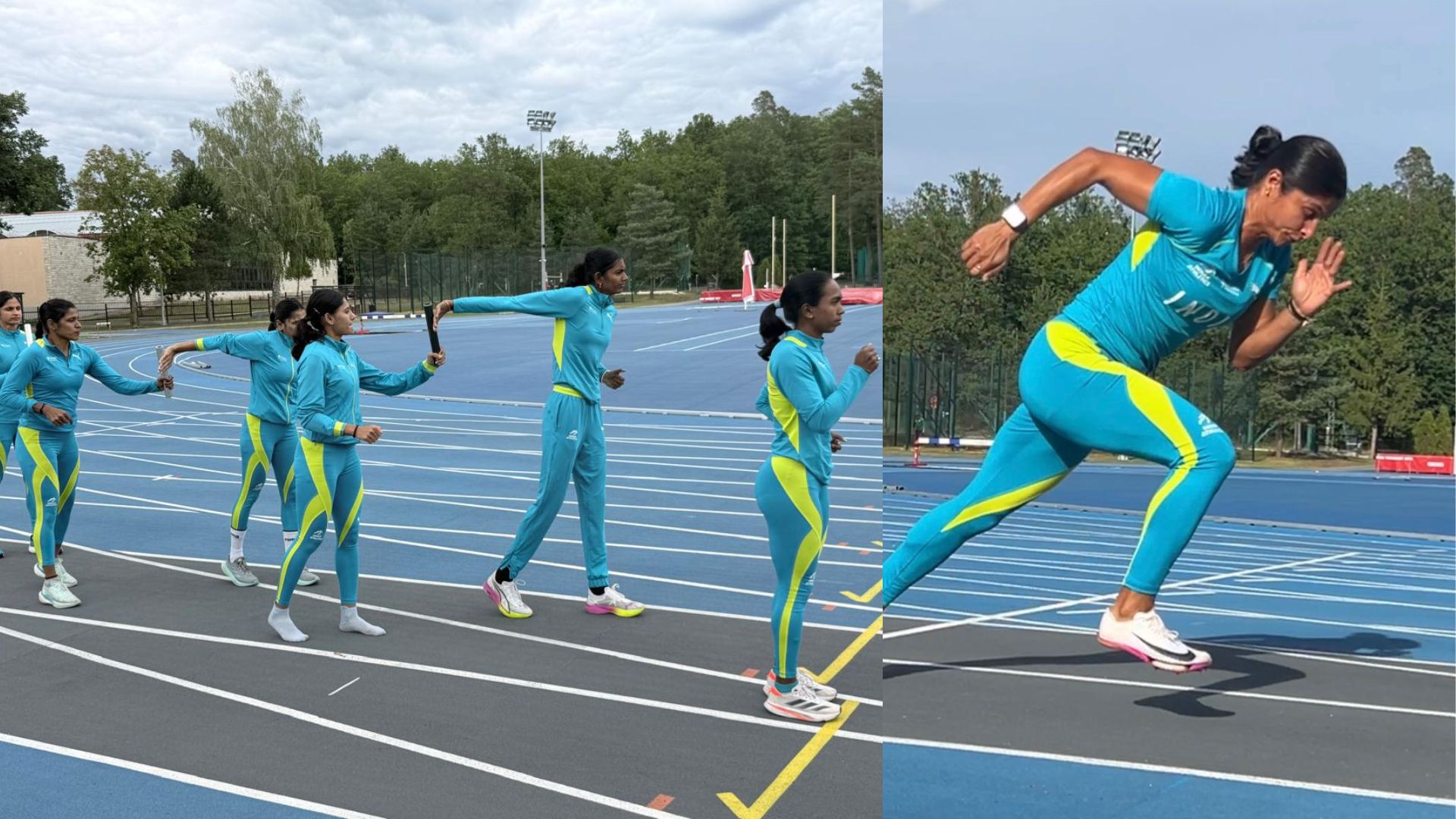
India’s women’s 4x100m relay team has begun preparations at the renowned Olympic Preparation Centre in Spała, Poland, as part of the Athletics Federation of India (AFI)-organised and Sports Authority of India (SAI)-supported overseas training camp ahead of the Asian Games 2026.
The training camp is designed to provide India’s top relay athletes with world-class facilities and an ideal environment as they fine-tune their preparations for one of the biggest competitions of the year.
The squad training in Spała comprises Nithya Gandhe, S.S. Sneha, Srabani Nanda, Tamanna, Sudheshna, and Abinaya. The athletes are working under the guidance of Seenivasan, who serves as the Women’s Relay Coach, with a strong emphasis on baton exchanges, speed endurance, race execution, and overall relay coordination.
The Indian women’s sprint relay team heads into the camp after an outstanding season on the international circuit. Earlier this year, the quartet delivered a memorable performance to win the gold medal at the Asian Relay Championships, clocking an impressive 43.85s. The victory reaffirmed India’s growing strength in the sprint relay and established the team as one of the leading contenders in Asia.
The overseas training camp in Spała is expected to play a crucial role in helping the athletes build on that success. The facility has long been a preferred destination for elite athletes from around the world, offering high-quality infrastructure and a focused training environment ahead of major championships.
With the Asian Games 2026 approaching, the Indian women’s relay squad will be aiming to carry its excellent form into the continental competition. Backed by a successful season and comprehensive preparations in Poland, the team will look to further improve its performances and strengthen its position among Asia’s leading sprint relay nations.
India’s women’s 4x100m relay team enters the final phase of preparation with confidence, momentum, and the ambition to build on its Asian Relay Championships triumph when it takes to the track at the Asian Games.
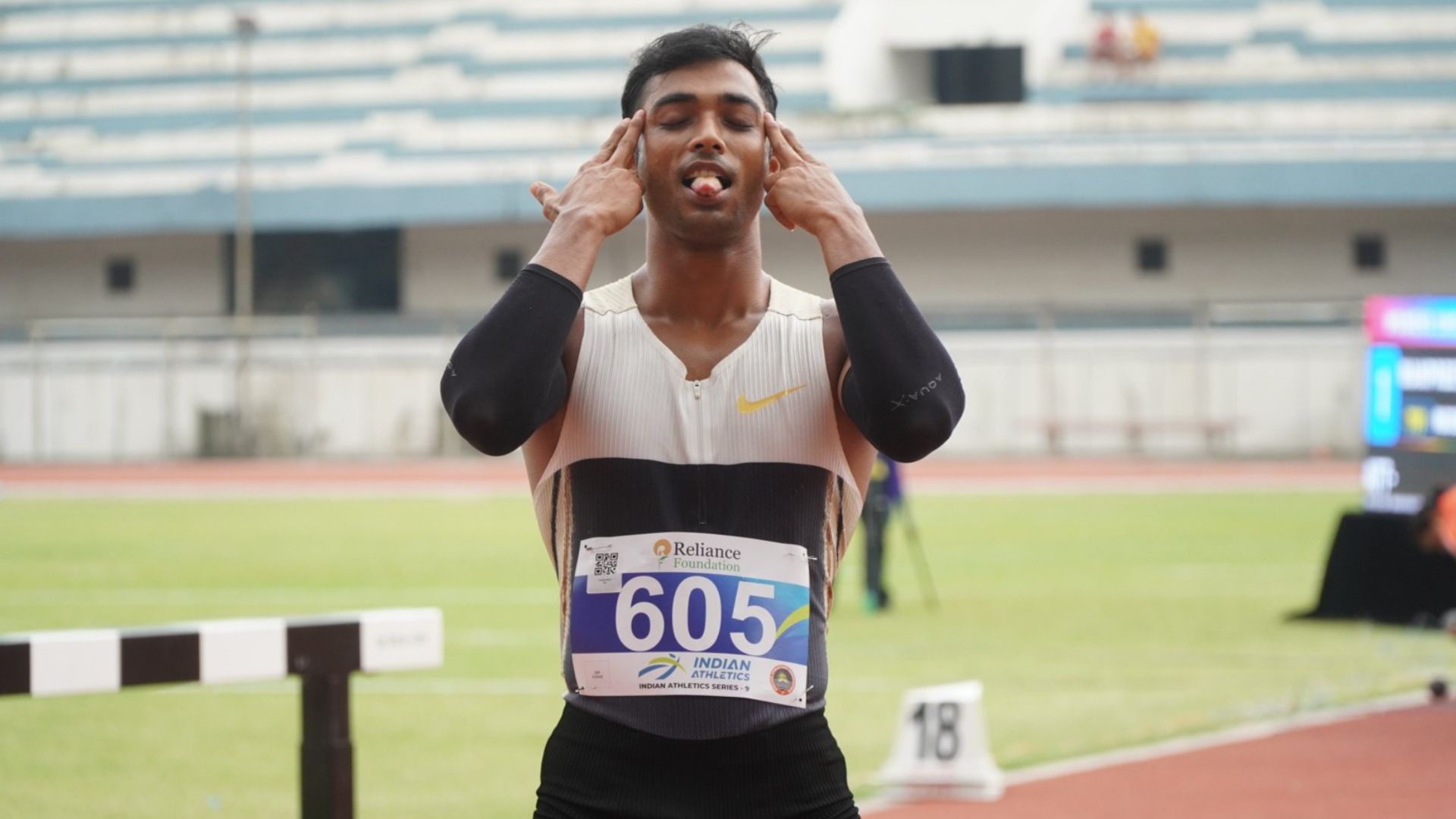
Indian sprint hurdler Tejas Ashok Shirse heads into the Commonwealth Games 2026 in outstanding form after shattering the Indian men’s 110m hurdles national record.
Shirse has enjoyed a breakthrough season, rewriting the Indian record with a stunning 13.27 seconds, becoming the fastest Indian ever in the event. The performance has also established him as one of the leading hurdlers in the Commonwealth this year.
Among athletes selected for the Commonwealth Games, Shirse’s 13.27s is the second-fastest performance of the 2026 season, trailing only Jamaica’s Demario Prince (13.01s). South Africa’s Jerome Campbell (13.33s), Great Britain’s Tade Ojora (13.36s), Sam Bennett (13.41s), Mauritius’ Jérémie Lararaudeuse (13.43s), and Cyprus’ Milan Trajković (13.43s) are also among the leading contenders.
Shirse has made a remarkable comeback from injury and will be looking to make the most of his opportunity at CWG 2026. But the biggest question is: can he better his personal best on the biggest stage of his career? And if he does, can he become the first Indian ever to win a Commonwealth Games medal in the men’s 110m hurdles?
110m Hurdles Medal Timings at the Last Four Commonwealth Games
2022 Commonwealth Games – Birmingham
• Gold: Rasheed Broadbell (Jamaica) – 13.08s
• Silver: Shane Brathwaite (Barbados) – 13.30s
• Bronze: Andrew Pozzi (England) – 13.37s
2018 Commonwealth Games – Gold Coast, Australia
• Gold: Ronald Levy (Jamaica) – 13.19s
• Silver: Hansle Parchment (Jamaica) – 13.22s
• Bronze: Nicholas Hough (Australia) – 13.38s
2014 Commonwealth Games – Glasgow, Scotland
• Gold: Andrew Riley (Jamaica) – 13.32s
• Silver: William Sharman (England) – 13.36s
• Bronze: Shane Brathwaite (Barbados) – 13.49s
2010 Commonwealth Games – New Delhi, India
• Gold: Andy Turner (England) – 13.38s
• Silver: William Sharman (England) – 13.50s
• Bronze: Lawrence Clarke (England) – 13.70s
By Sundeep Misra
Gulveer Singh is a mix of potential and talent wrapped up in a nation’s expectation. Expectation itself is a common theme borne across life, extending far beyond sport or, in the Indian athletic context, to Gulveer alone. Virtually everything is an extension of everyone’s expectation, it’s only the quotient that alters, less or more. In Gulveer’s case, it is always on the higher side. Especially if you look at the last two seasons.
To expect Gulveer to produce something extraordinary in Glasgow is to ask him to conquer territory where no Indian has ever set foot, the podium in the 5,000m and 10,000m. It defies logic at times as to why we have been unable to produce quality long-distance runners consistently every decade; we have always thrown up a few, but those few have been sporadic.
Glasgow is a beast that Gulveer will not only have to mount but also control and steer his way. In an event that, after the Anglo-Saxons, has been heavily dominated by East Africans – specifically Ugandan and Kenyan runners – for Gulveer to move past them and hit the podium will require not just extraordinary ability, but a different form of resilience: the grit to stay in the lead pack consistently.
The tactical awareness required at the Commonwealth Games operates on another level. Opponents force you into thinking differently than whatever pre-race tactics you might have prepared. Gulveer’s sub-13 national record of 12:59.77 in the 5k puts him firmly in the elite lead pack. His 10,000m national record of 27:00.22 borders on world-class but converting that into a medal requires a lethal final 400-meter kick.
Kenenisa Bekele, who won three golds and a silver across the 5k and 10k at the 2004 and 2008 Olympic Games, once noted: “At 400 meters to go, pure instinct takes over. The pace goes from a tempo rhythm to an all-out sprint. It is very hard, but when you are at the front, you just drive yourself.”
The evolution in Gulveer’s running style, transitioning to a more open-chested posture and shifting from a regional star to a global threat, has been masterminded by his coach, Scott Simmons. Training under Simmons in Colorado Springs involves a high-mileage, scientifically backed regimen. The fruits of that labour were visible early this year when Gulveer clocked a blistering sub-60 minute at the NYC Half Marathon.
Former 10,000m national record holder, Beijing Olympian, and Gulveer’s former coach, Surendra Singh, believes Glasgow offers a genuine shot at a podium finish. “At the CWG level, everybody has trained to come there looking for a medal,” he says. “Gulveer is in the top six, so it’s mental strength that will stand out. In the last 200 meters, if four to six runners are in a pack with Gulveer among them, it becomes a case of calmness over anxiety. And I do believe that he has trained for it.”
On the track in such high-stakes situations, success hinges on moulding that final kick, whether it comes in a fast-paced time trial or a slow, tactical affair. Many coaches call it the default macro-move: a card up your sleeve pulled out only when the tactical match is done and you need that extra gear to clear the decks. In international meets, including the Olympics and World Championships, the best runners always anticipate what the top guys will do rather than merely responding to it.
In India and elsewhere, the words ‘potential’ and ‘talent’ are sexy. For years, you can carry them in your backpack without creating a ripple on the world stage, the one stage that really matters. For decades, even now, national records are celebrated as the pinnacle of achievement. In reality, a national record is only a marker; it just means you stand out among a local bunch. Potential and talent do not automatically yield a podium. There are hundreds of microscopic wires that must intertwine perfectly to create an Olympic, World Championship, or CWG medallist. Ask Avinash Sable, 3000m steeplechase bronze medallist at the last CWG!
A striking blueprint of this was seen at the 2025 Tokyo World Championships. It is often the lone wolf that dismantles the pack. What France’s Jimmy Gressier and Sweden’s Andreas Almgren achieved in that agonizingly slow Tokyo 10,000m final is something Gulveer has already witnessed from the outside. The script is ready for him.
Surrounded by Olympic champions and the royalty of East African distance running, Gressier and Almgren shocked the field. With an open-mouthed look of disbelief at the finish line, the Frenchman took gold, while Almgren secured a historic bronze for Sweden.
The lessons for Gulveer are deeply embedded in that Tokyo race. It is easy to simplify it and say that Gressier merely sat back in the belly of the pack for a majority of the race while the favourites carried the burden of dictating the flock. But the real lesson was the total absence of panic from Almgren and Gressier, even when the pace dropped to a crawl. Yes, things could have gone differently, but they didn’t. Instead of letting anxiety take over, Gressier waited for the absolute final centimetres of the race to explode from sixth place to first, capitalizing brilliantly on the front-runners’ hesitation. When they moved, they broke the psychological grip of the lead pack. As Gressier later proclaimed: “Today, I beat East Africa… The field is levelling.”
When Gulveer stands on the starting line at the Commonwealth Games, he will likely be the lone blue jersey in a sea of red, black, and green. It will feel intensely lonely. The heart will thud. The roar of the stadium will envelope him just before the sudden, heavy hush.
But he can take heart from Tokyo: in the longer distances, the landscape is shifting. His sub-13 in the 5,000m and his 59-minute half-marathon strength mean he has no reason to fear a fast race or a slow one.
Gulveer needs to embrace the isolation; most distance runners eventually get used to it. The great ones see being a lone outsider not as a disadvantage, but as a form of supreme tactical freedom. Let the big guns dictate the pace and fight it out in the initial laps. When the group finally starts to splinter, and the mind takes over the race from the legs, Gulveer needs to be hanging right in there ready to become the one element they never saw coming.