
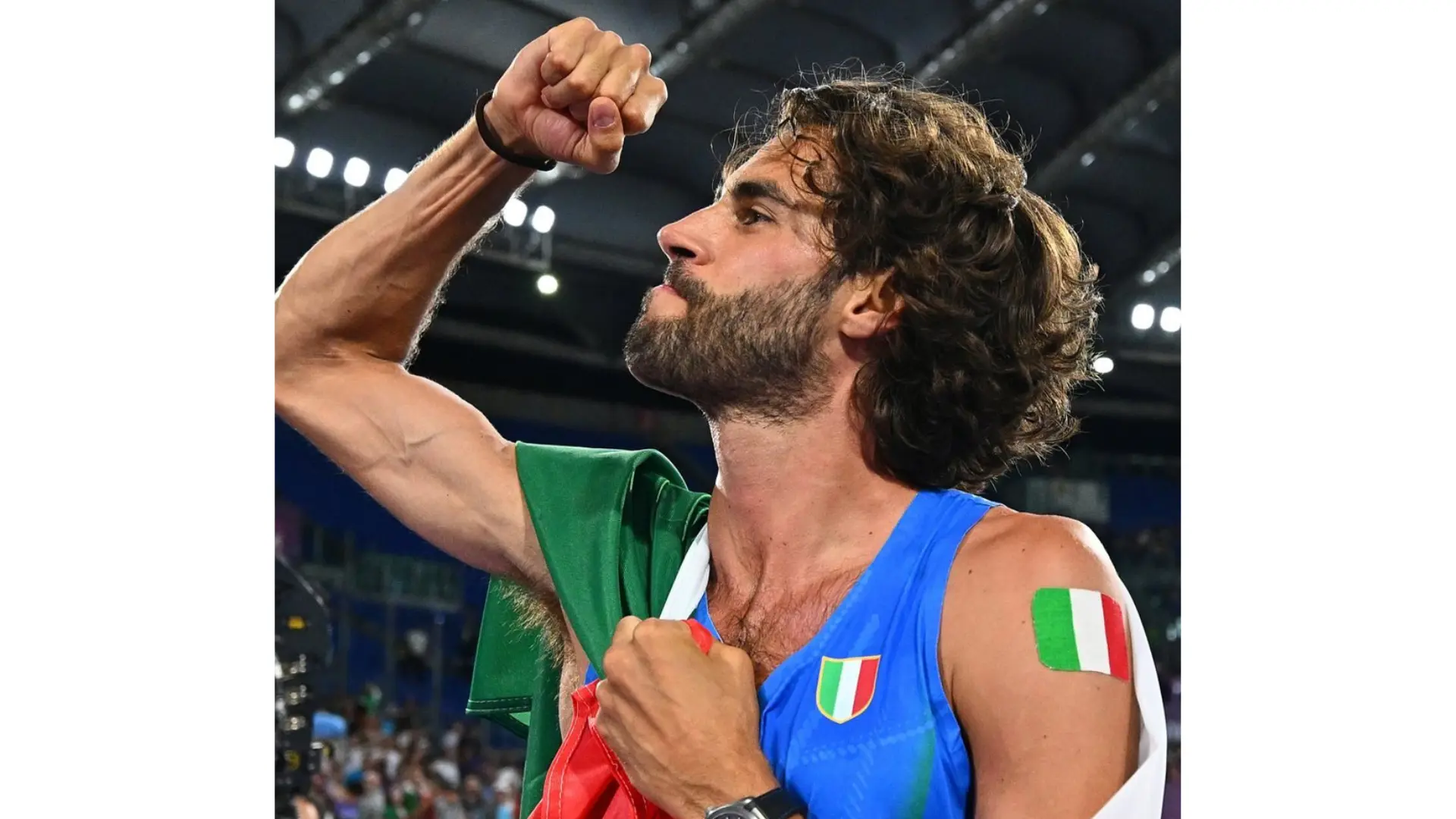
When the spotlight switches on, Gianmarco Tamberi steps effortlessly into the centre. A man created entirely for the big day, the eccentric and mercurial Italian refuses to yield, even when battered by the physical toll of recent seasons. Plagued by injuries that might have broken a lesser competitor, Tamberi proved once again that he is built for the grandest stage.
The competition was a tightrope walk of high drama. Shaking off an early scare with a miss at his opening height of 2.18m and another at 2.30m, the Olympic and world champion summoned a trademark performance when the air grew thinnest.
Up against Ukraine’s flawless European indoor champion, Oleh Doroshchuk, Tamberi delivered the decisive moment with a brilliant second-attempt clearance at 2.32m. The psychological weight of the jump proved insurmountable for Doroshchuk, who faltered three times at the height, leaving the Italian legend once again alone on top of the European podium.
His compatriot Matteo Sioli completed a phenomenal night for Italy, claiming bronze with a leap of 2.27m before bowing out gracefully. Great Britain’s Kirani Jack rounded out the top tier in fourth, clearing 2.24m.
“I used my mind, my power to try to do my best when it really mattered. I really needed everyone’s support tonight. I can tell you, it was not easy to come and fight, when you are not ready to fight.”: Gianmarco Tamberi
With the gold secured, the competitor gave way to the proud father. Friday wasn’t just the night he reclaimed his continental crown; it was also the first birthday of his daughter, Camilla.
Transforming the packed stadium into a personal birthday venue, Tamberi led the roaring crowd in a heartfelt rendition of “Happy Birthday” for his one-year-old. For an athlete whose career is defined by unforgettable theatrical flair, this victory ended with the most touching finale imaginable: another European gold for dad, delivered on Camilla’s very special day.

At 34, Gianmarco Tamberi remains high jump royalty, carrying the swagger of an Olympic and world champion into Birmingham. Two years ago in Rome, he put on a masterclass, soaring over 2.37m to set a championship record and defend his European title. But injury has since disrupted his rhythm, and the mercurial Italian arrives on the runway with minimal recent competition to rely on. He still possesses that rare big-stage temperament to conjure magic when medals are on the line, but this time, the throne looks far more vulnerable.
A hungry young brigade is lining up to ensure a changing of the guard. Leading the charge is Ukraine’s 25-year-old Oleh Doroshchuk, who has quietly turned himself into Europe’s premiere technician. The reigning world and European indoor champion tops the continental leaderboards with a world-class 2.33m clearance this season.
Pushing him closely is Czechia’s Jan Štefela, who proved his breakout 2025 campaign was no fluke. After bagging European indoor silver, world bronze, and a 2.33m personal best last year, he has backed it up by floating over 2.32m this season. Then there is Great Britain’s Kimani Jack, the breakout star of 2026 and the home crowd’s ultimate wildcard. Jack has raised his personal best by an astounding ten centimetres to 2.31m this year, setting up a thrilling home-turf moment at Alexander Stadium. Even Poland’s 24-year-old Mateusz Kołodziejski, now clearing 2.30m, adds depth to a field that refuses to defer to the old champion.
Will Tamberi’s legendary competitive theatre be enough to hold off the consistent Doroshchuk, the explosive elasticity of Štefela, or the electric home momentum behind Jack? Experience Vs pure fearlessness above the bar tonight, and it promises to be a gravity-less affair.
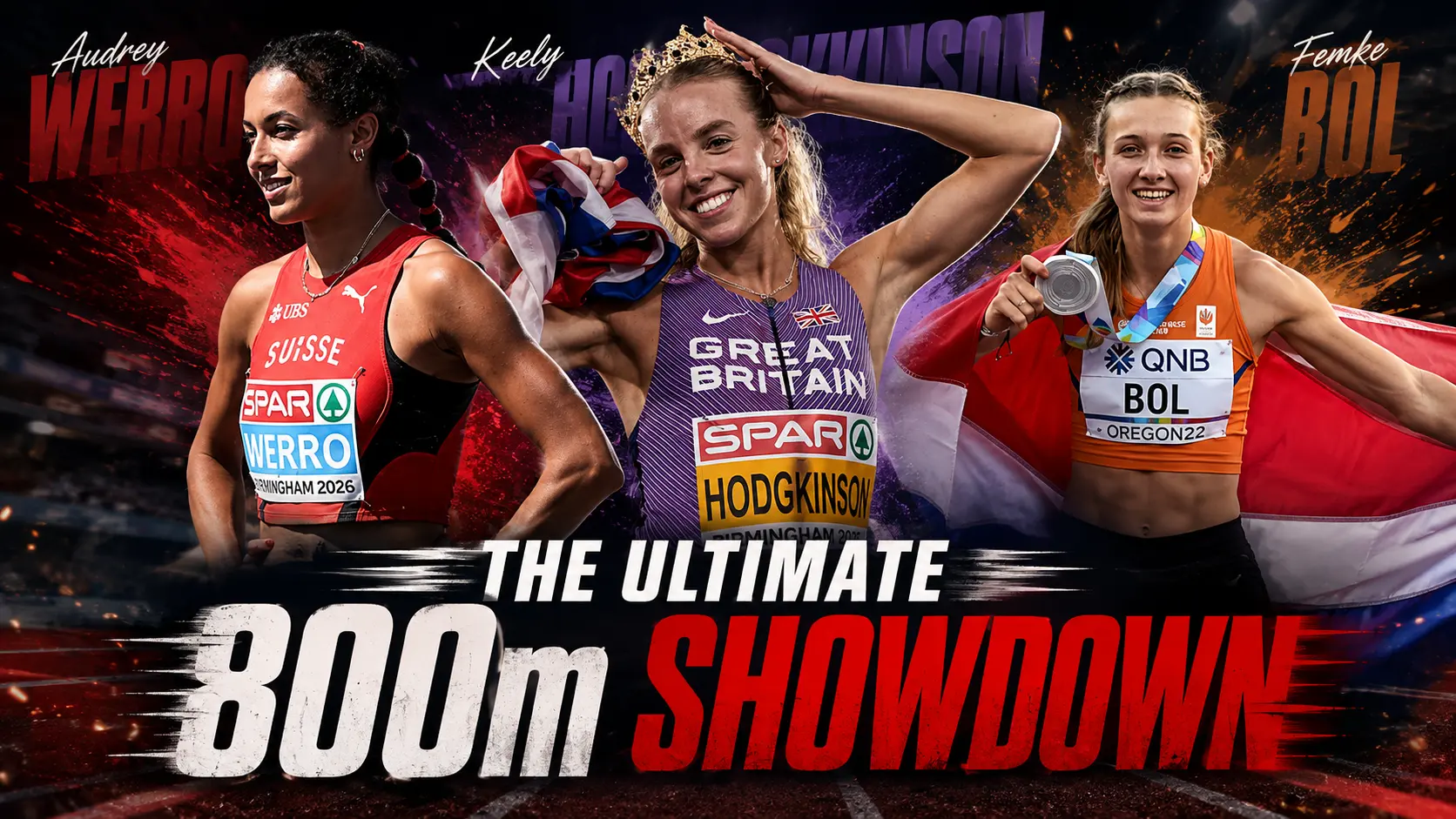
For those who love a power-packed 800m, three of the world’s best competitors – each bringing a unique quality to the lap-race – tonight is the night to stay awake and watch what could easily be one of the best 800m races at the European Championships in Birmingham.
If the men’s middle-distance events at the Commonwealth Games set a high bar earlier, Friday night’s 800-meter final at the European Championships in Birmingham is poised to match it on the women’s side.
Getting to this starting line required navigating a gruelling qualifying round. During the preliminary rounds, twenty-one athletes dipped under the two-minute barrier, eleven cleared 1:59, and four broke 1:58. Then came the drama in the semifinals, when a mid-race collision on the final turn saw Switzerland’s Audrey Werro and Lithuania’s Gabija Galvydyte hit the deck in a tangle of limbs. Both were subsequently advanced by race officials, setting the stage for an unusual and tightly packed ten-runner final at Alexander Stadium.
Beyond the preliminary chaos, the subtext of the race hinges on a striking trait shared by its headliners: an unshakable composure.
Consider the transition of Dutch superstar Femke Bol. Better known for her glittering dominance in the 400m hurdles, Bol is stepping into her first-ever major championship 800m final. To watch her run is to observe a calibrated engine. She moves with a constant, rhythmic cadence that mimics a treadmill, entirely devoid of visible strain or any panicked acceleration. Even at the tape, her finish lacks any theatrics.
Great Britain’s Keely Hodgkinson approaches her craft with a similarly clinical mindset. Racing for gold on home turf during the United Kingdom’s maiden hosting of the European Championships, the Olympic champion will feel right at home. She radiates cold focus, shouldering massive home-crowd expectations with amazing efficiency over two gruelling laps.
Then comes Audrey Werro. At just 22, the Swiss runner sent shockwaves through the sport earlier this season by cracking the 1:54 barrier, a feat unseen in forty-three years, while defeating Hodgkinson along the way. She now faces the ultimate test of resilience, needing to shake off the physical and mental residue of her semifinal tumble to capture her first major senior gold.
The three may project an aura of icy detachment, but this collision of talent will light up the track in Birmingham.
For audiences tuning in from India, the race gets underway at 2:16 AM IST on Saturday morning (late Friday night).
By Sushant Singh
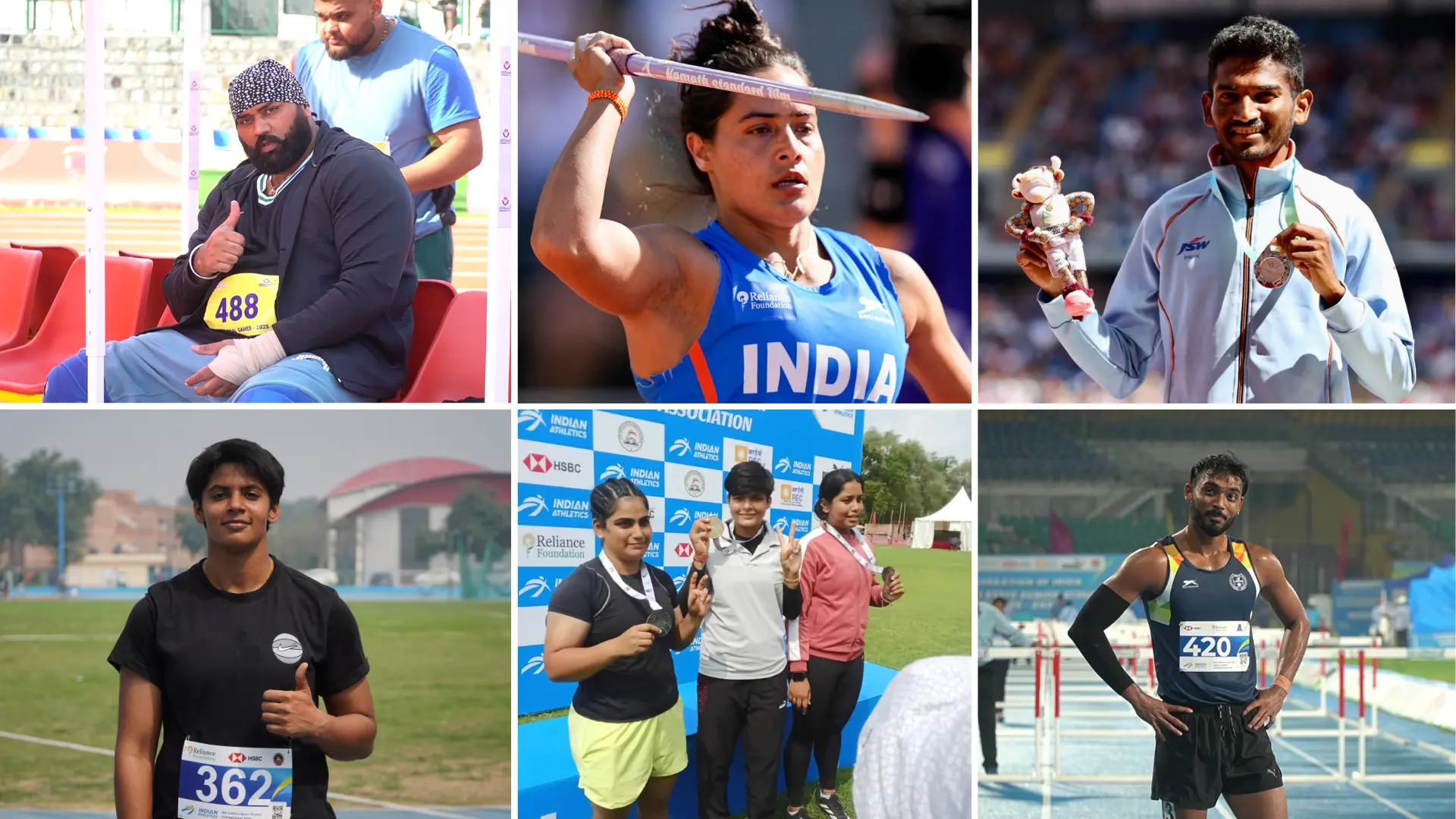
The provisional squad for India’s Athletics Team for the Asian Games 2026 is out, with around 70 athletes included in the camp list.
It should be noted that this is not the final squad, but it does give a clear indication of what the final team could look like.
Here is our analysis of the provisional squad:
AFI’s selection guidelines had clearly stated that the Interstate Championships would act as the final trials for all athletes, and the federation had already announced the qualification standards for the Asian Games 2026.
Keeping that in mind, some athletes have been included despite not having achieved the qualification standard or not having finished in the top two of the qualification process.
NNIS Sports has learned that these athletes were included after the federation requested SAI to consider their names, with the hope that they will achieve the qualification standard in upcoming competitions before the Asian Games.
In the relay events, the Men’s 4x400m, Women’s 4x400m and Mixed 4x400m relays have been included. In the 4x100m relays, only the Women’s and Mixed relays have been included, leaving out the Men’s 4x100m Relay. NNIS Sports had earlier broken the news that the federation had decided to skip the Men’s 4x100m Relay at the Asian Games due to multiple injuries in the squad.
India’s Men’s 4x400m Relay Squad
- Vishal TK – 400m / 4x400m Relay
- Rajesh Ramesh – 400m / 4x400m Relay
- Manu TS – 4x400m Relay
- Dharamveer Chaudhary – 4x400m Relay
- Jay Kumar – 4x400m Relay
- Mohammed Ashfaq – 4x400m Relay
Based on their season performances, this appears to be the strongest possible squad the federation could have fielded for the Men’s 4x400m Relay. India’s U20 National Record holder Mohammed Ashfaq has also been included in the squad.
For the Mixed 4x100m Relay, India’s two fastest men of all time, Gurindervir Singh and Animesh Kujur, have been selected. Gurindervir has also been named for the 100m individual event, while Animesh Kujur has been included in both the 100m and 200m individual events. Along with them, Harita Bhadra and Unnathi Bollanda have been named for the Mixed 4x100m Relay, while also being included in the 200m individual event.
The biggest surprise came with the inclusion of Tajinderpal Singh Toor instead of Samardeep, who had finished second at the final trials during the Interstate Championships 2026, ahead of Toor. Despite that performance, Samardeep failed to make the provisional list.
Annu Rani has also been included in the squad despite failing to achieve the qualification standard at the Interstate Championships. The reigning Asian Games champion has endured a difficult season and is yet to cross the 60m mark, with her season best being 56.74m, achieved at the Interstate Championships in Kalinga Stadium. The qualification standard was 57.62m. Her inclusion appears to have been influenced by her reputation as the defending Asian Games champion and the federation’s expectation that she could regain form before the Games.
Avinash Sable has been included after being out for a long period due to injury.
No male race walkers or male marathoners have been included, while Priyanka and Manju Rani have been selected in the women’s race walk / marathon category.
Tanya Chaudhary, who missed the qualification standard by just 2cm at the Interstate Championships, has been given an opportunity, along with Anushka Yadav, who shattered the Indian Women’s Hammer Throw National Record with a throw of 67.02m.
Tejas Shirse has also been named in the squad, although he is reportedly injured and may miss the Games. Apart from him, no other athlete has been selected in the event, including Manav R, who narrowly missed the qualification standard at the Interstate Championships by just 0.03 seconds.
By Sushant Singh
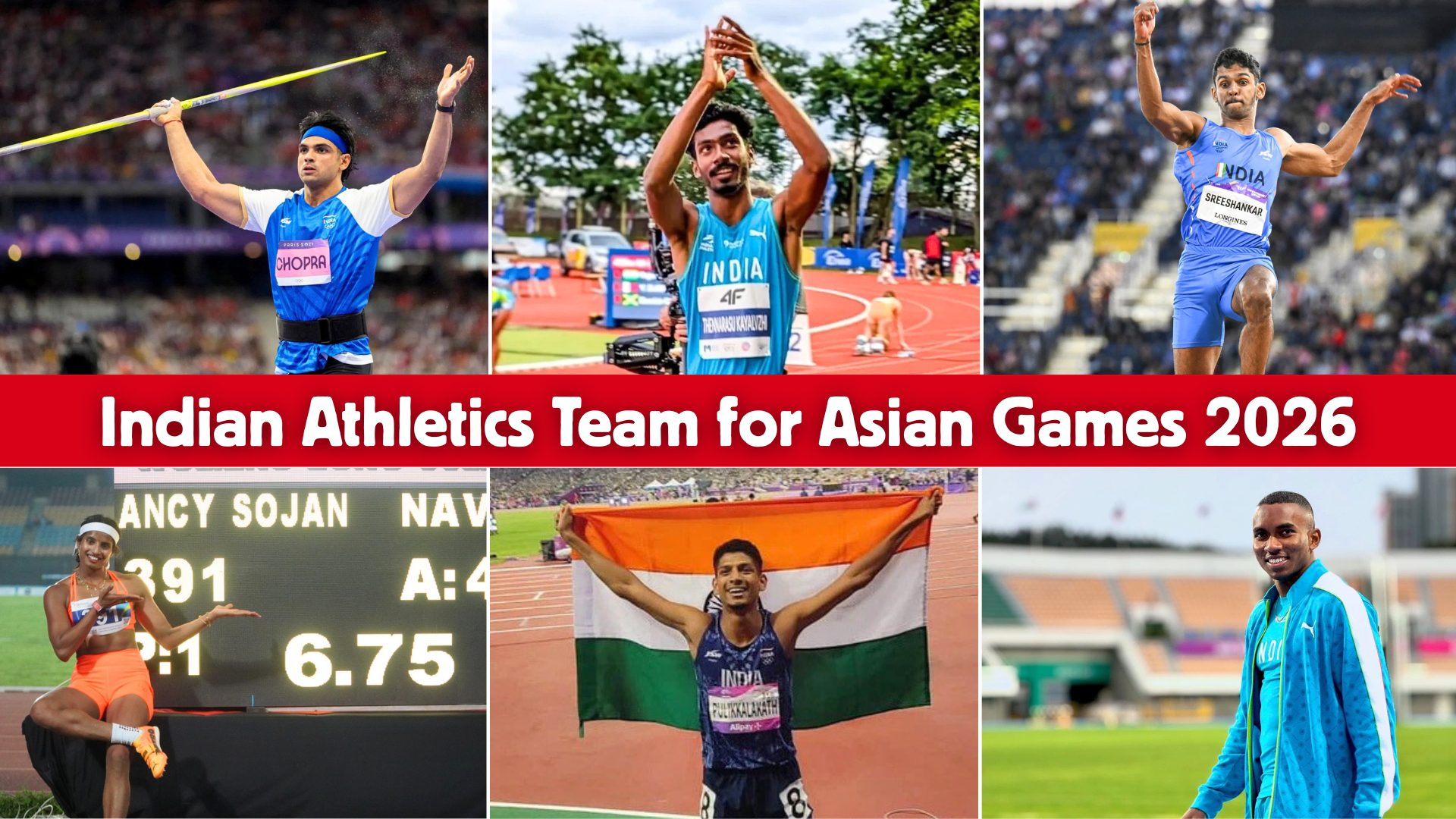
A 72-member athletics squad has been finalized to represent India at the upcoming Asian Games 2026.
Although this is the final squad, some athletes have been included based on their performances despite not having achieved the qualification standard or having finished third in the qualification process.
The federation has requested the inclusion of their names with the hope that they will achieve the qualification standard in upcoming competitions before the Asian Games.
Here is India’s 72-member Athletics squad for the Asian Games 2026:
Throws
- Karanveer – Shot Put
- Tajinderpal Singh Toor – Shot Put
- Manpreet Kaur – Shot Put
- Krishna Jayashankar – Shot Put
- Rohit Yadav – Javelin
- Neeraj Chopra – javelin
- Annu Rani – Javelin
- Damneet Singh – Hammer Throw
- Parveen Kumar – Hammer Throw
- Anushka Yadav – Hammer Throw
- Tanya Choudhary – Hammer Throw
- Seema – Discus Throw
- Sanya Yadav – Discus Throw
Middle & Long Distance
- Mohd. Afsal – 800m
- Krishan Kumar – 800m
- Gowthami Jayaraman – 800m
- Parul Chaudhary – 1500/3000m SC/5000m
- Gulveer Singh – 5000/10,000m
- Avinash Sable – 3000m SC
Jumps
- Sarvesh Kushare – High Jump
- Aadarsh Ram – High Jump
- Pooja – High Jump
- Supriya B – High Jump
- Murali Sreeshankar – Long Jump
- Shahnavaz Khan – Long Jump
- Ancy Sojan – Long Jump
- Shaili Singh – Long Jump
- Praveen Chithravel – Triple Jump
- Kartik Unnikrishnan – Triple Jump
- I.Asha Ilango – Triple Jump
- Niharika Vashist – Triple Jump
- Dev Meena – Pole Vault
- Kuldeep Yadav – Pole Vault
- Sindhushree G – Pole Vault
- Baranica Elangovan – Pole Vault
Hurdles
- Tejas Shirse – 110m Hurdles
- Jyothi Yarraji – 100m Hurdles
- Nandhini K – 100m Hurdles
- Yashas P – 400m H
- Santhosh T – 400m H
- Vithya Ramraj – 400m H/4x400m Relay
- Anu R – 400m H
Race Walk
- Manju Rani – Racewalk Marathon
- Priyanka Goswami – Racewalk Marathon
Combined Events
- Thowfeeq N – Decathlon
- Tejaswin Shankar – Decathlon
- Pooja – Heptathlon
- Anamika K – Heptathlon
Sprints & Relays
- Gurindervir Singh – 100/4x100m Mixed Relay
- Animesh Kujur – 100/200/4x100m Mixed Relay
- Harita Bhadra – 200m/4x100m Mixed
- Unnathi Bollanda – 200m/4x100m Mixed
Men’s 400m / 4x400m Relay
- Vishal TK – 400m/4x400m Relay
- Rajesh Ramesh – 400m/4x400m Relay
- Manu TS – 4x400m Relay/4x400m Mixed Relay
- Dharamveer Chaudhary – 4x400m Relay
- Jay Kumar – 4x400m Relay/4x400m Mixed Relay
- Mohammed Ashfaq – 4x400m Relay
Women’s 400m / 4x400m Relay
- Prachi – 400m/4x400m Relay
- Kiran Pahal – 400m/4x400m Relay
- Neeru Pathak – 4x400m Relay
- Rashdeep Kaur – 4x400m Relay/ Mixed 4x400m Relay
- Ansa babu – 4x400m Relay/Mixed 4x400m Relay
- Poovamma – 4x400m Relay
- Saloni Nagar – 4x400m Relay
4x100m Relay / Mixed 4x100m Relay
- Pranav Gurav – 4x100m Mixed
- Sneha SS – 4x100m Relay/ Mixed 4x100m Relay
- Tamanna – 4x100m Relay/ Mixed 4x100m Relay
- Sudeshna Shivankar – 4x100m Relay
- Nithya Gandhe – 4x100m Relay
- Srabani Nanda – 4x100m Relay
- Abinaya Rajarajan – 4x100m Relay
Please note that this is not the final list; additional names are expected to be added later.
The current athletics squad is expected to be expanded further, with two marathon runners likely to be added to the contingent:
Kartik Karkera
The following middle-distance runners are also expected to be included, among others:
Ankita Dhyani – 3000m Steeplechase
Pooja – 800m
Yoonus Shah – 1500m
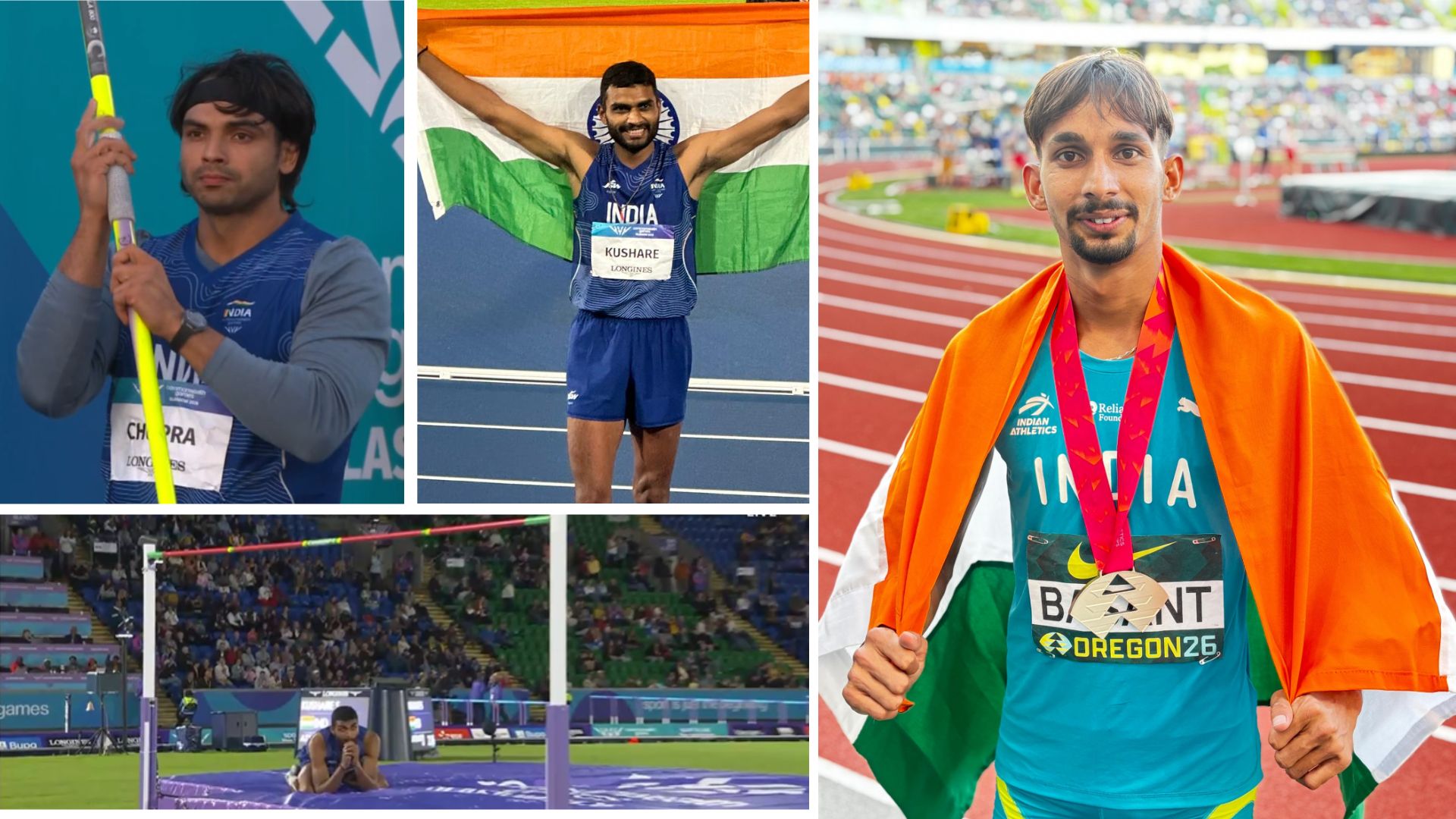
Nothing succeeds quite like success. For decades, Indian track and field operated in a vacuum of near misses, where global medals were treated as rare anomalies rather than achievable targets. But around the world, sports operates on visual evidence. When Neeraj Chopra launched a javelin into the Tokyo sky, and when Sarvesh Kushare began consistently hitting elite heights on the world stage, it transcended medals, headlines, or top six finishes—they fundamentally altered how we view and feel sport.
Javelin and high jump have suddenly emerged as India’s unexpected dual engines on the international circuit. Success at the top creates a blueprint; major medals provide a concrete reason for a younger generation to seek out glory. When elder torchbearers carve out a path, the downstream effect naturally manifests in the junior ranks.
That inspiration was fully on display at the World Athletics U-20 Championships in Eugene, Oregon. While the nation’s sporting conversation often remains fixated on the glitz, cash rewards, and grand felicitations flowing toward major senior medallists, India’s track and field teenagers quietly matched their best-ever tally at the marquee junior event, capturing three medals under the radar.
Leading that charge was 19-year-old Basant Kumar Meghwal, who secured India’s first-ever high jump silver at the World U-20 level. The reigning Asian U-20 champion came agonizingly close to gold, clearing a personal-best 2.21 metres—the exact height achieved by Algeria’s Younes Ayachi. Basant missed out on the top step of the podium strictly via countback, having taken one additional attempt during the competition; a heartbreak reminiscent of Sarvesh Kushare’s experiences.
“It’s a bittersweet feeling,” Basant reflected from Eugene. “Equalling my personal best and becoming the first Indian high jumper to land a World U-20 medal is deeply special. But losing gold strictly on a countback—knowing it came down to just one extra attempt—definitely stings.”
Basant’s journey underscores the changing reality of Indian athletics. Hailing from 12B (yes, that is his actual village name), a remote agricultural settlement situated near the India-Pakistan border in Rajasthan, his initiation into the sport was entirely rudimentary. He first observed high jump as a primary school student watching seniors leap over an improvised pit.
“I was fascinated by the idea of jumping over a bar,” Basant recalled. “I asked our physical education teacher if I could try. We had no real infrastructure then—just bamboo sticks for a crossbar and bare dirt for landing.”
Driven by a growing obsession, Basant turned to YouTube to teach himself the mechanics of the sport, graduating from the rudimentary scissor technique to the Fosbury Flop. Realizing the danger of landing head-first without high-density polyurethane crash mats, he improvised by stacking household bed mattresses to cushion his falls.
His self-taught era ended after consistent age-group success earned him a spot at the Sports Authority of India (SAI) centre in Bengaluru under former national record holder Sahana Kumari.
“He possessed the ideal raw physical framework—tall, lean, and naturally aggressive at the bar,” Sahana noted. “However, because he lacked formal coaching in his early years, we had to systematically rebuild his training methodology.”
The structured regimen yielded rapid gains, culminating in a breakout 2.21m leap at the National U-20 Championships in Tumakuru, which secured his international qualification.
Of course, Basant’s journey began well before Kushare’s recent senior breakthroughs. Yet, seeing senior athletes contend at the highest level provides the vital push required to deliver when standing on the World U-20 stage.
“I know there is a long way to go,” Basant admitted. “Competing against top seniors like Sarvesh bhaiya will only force me to elevate my game.”
Kenya has officially submitted a bid to host the 2029 World Athletics Championships, taking a major step toward making history as the first African nation to stage track and field’s flagship event.
Nairobi faces competition from heavyweight European candidate cities, including London, Rome, and Munich. World Athletics is expected to announce the winning host city next month.
Government Backing and Infrastructure
Athletics Kenya emphasized that its “robust” proposal carries full government guarantees.
“The government has committed its full support to the bid, ensuring the necessary organizational framework, security measures, and modern infrastructure required to host a world-class global showpiece,” Athletics Kenya stated in an official release.
The 48,000-capacity Kasarani Stadium in Nairobi is slating to serve as the centerpiece venue for the competition.
A Global Powerhouse Seeking Home Advantage
Kenya’s pedigree on the global track is unquestioned. The East African nation boasts an extraordinary record in middle- and long-distance running, holding 72 World Championship gold medals and 38 Olympic gold medals. Kenyan distance runners currently hold 17 world records across track and road events, including both the men’s and women’s marathons.
At the 2025 World Athletics Championships in Tokyo, Kenya reinforced its elite status by placing second overall in the medal table, capturing 11 total podium finishes, including seven gold medals.
Expanding Africa’s Hosting Footprint
While Kenya previously missed out on hosting rights for the 2025 World Championships, the nation has steadily built a strong resume for international sporting events:
- 2007: Hosted the World Cross Country Championships in Mombasa.
- 2010: Staged the African Athletics Championships at Nyayo National Stadium.
- 2017 & 2021: Successfully hosted the World U18 and World U20 Athletics Championships in Nairobi.
A successful bid for 2029 would cap a transformative decade for East African sports diplomacy. Kenya is already gearing up to co-host the 2027 Africa Cup of Nations (AFCON) alongside neighboring Tanzania and Uganda. Meanwhile, momentum across the continent continues to build, following Botswana’s historic staging of the World Athletics Relays in Gaborone earlier this year.
World Athletics’ upcoming decision will determine whether the sport’s marquee event finally lands on African soil for the first time in its 46-year history.

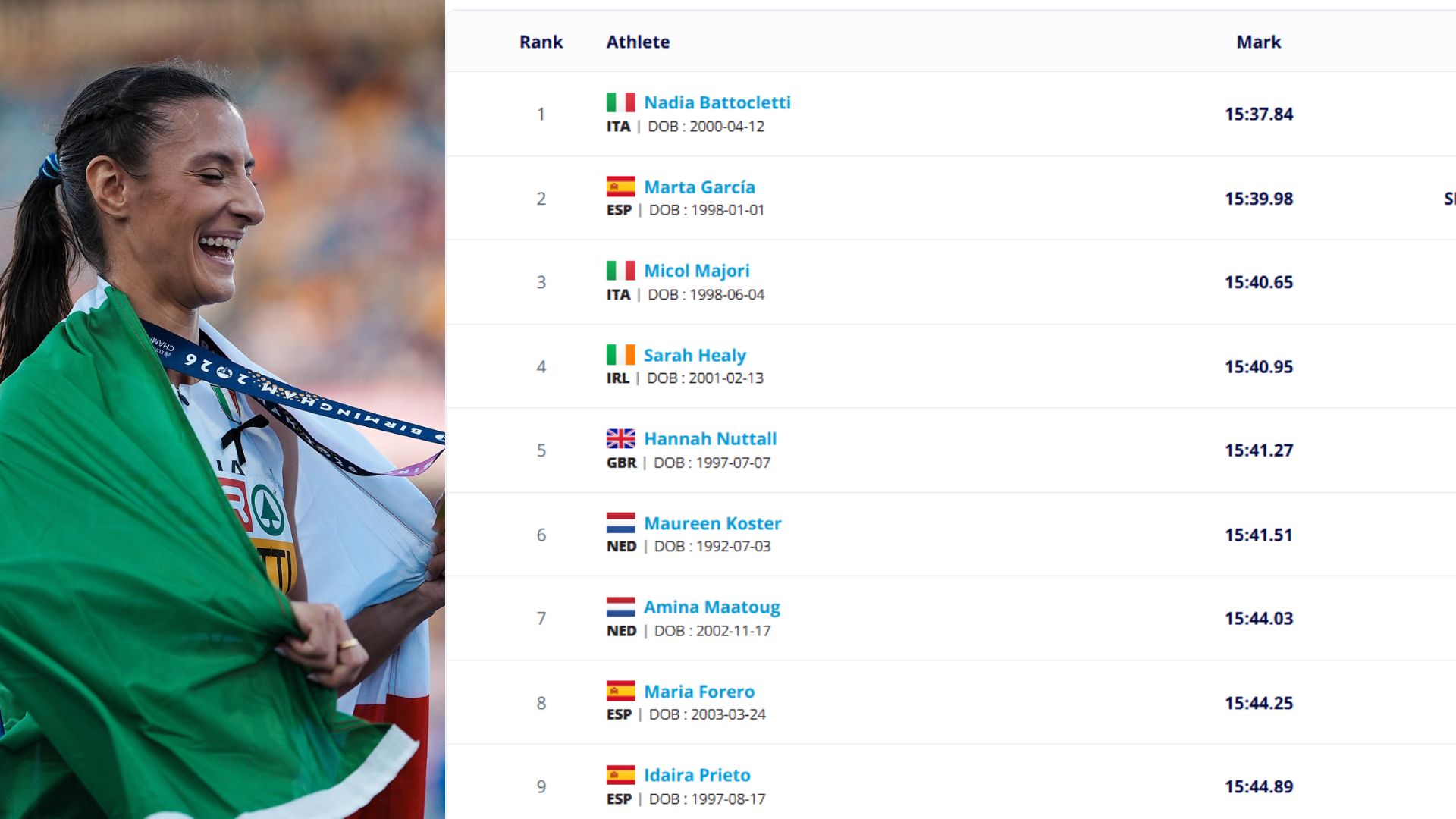
Nadia Battocletti reclaimed the European women’s 5000m title in dominant fashion, winning gold at the European Championships in Birmingham with a time of 15:37.84.
The Italian distance star returned to the top of the European podium in her specialist event, delivering a controlled performance to secure the continental crown.
Battocletti was joined on the podium by compatriot Micol Majori, who produced an impressive run to claim the bronze medal in 15:40.65.
Spain’s Marta García split the two Italians, taking the silver medal with a season’s best of 15:39.98.
Women’s 5000m Final Results
Nadia Battocletti 🇮🇹 – 15:37.84
Marta García 🇪🇸 – 15:39.98 (SB)
Micol Majori 🇮🇹 – 15:40.65
Sarah Healy 🇮🇪 – 15:40.95
Hannah Nuttall 🇬🇧 – 15:41.27
The result produced a memorable 1-3 finish for Italy, with Battocletti taking gold and Majori completing the podium.
Battocletti’s victory adds another major European title to her growing collection and confirms her status as one of the continent’s leading distance runners.
For Italian athletics, the performance was even more special as two athletes finished inside the top three, delivering a spectacular double podium in Birmingham.
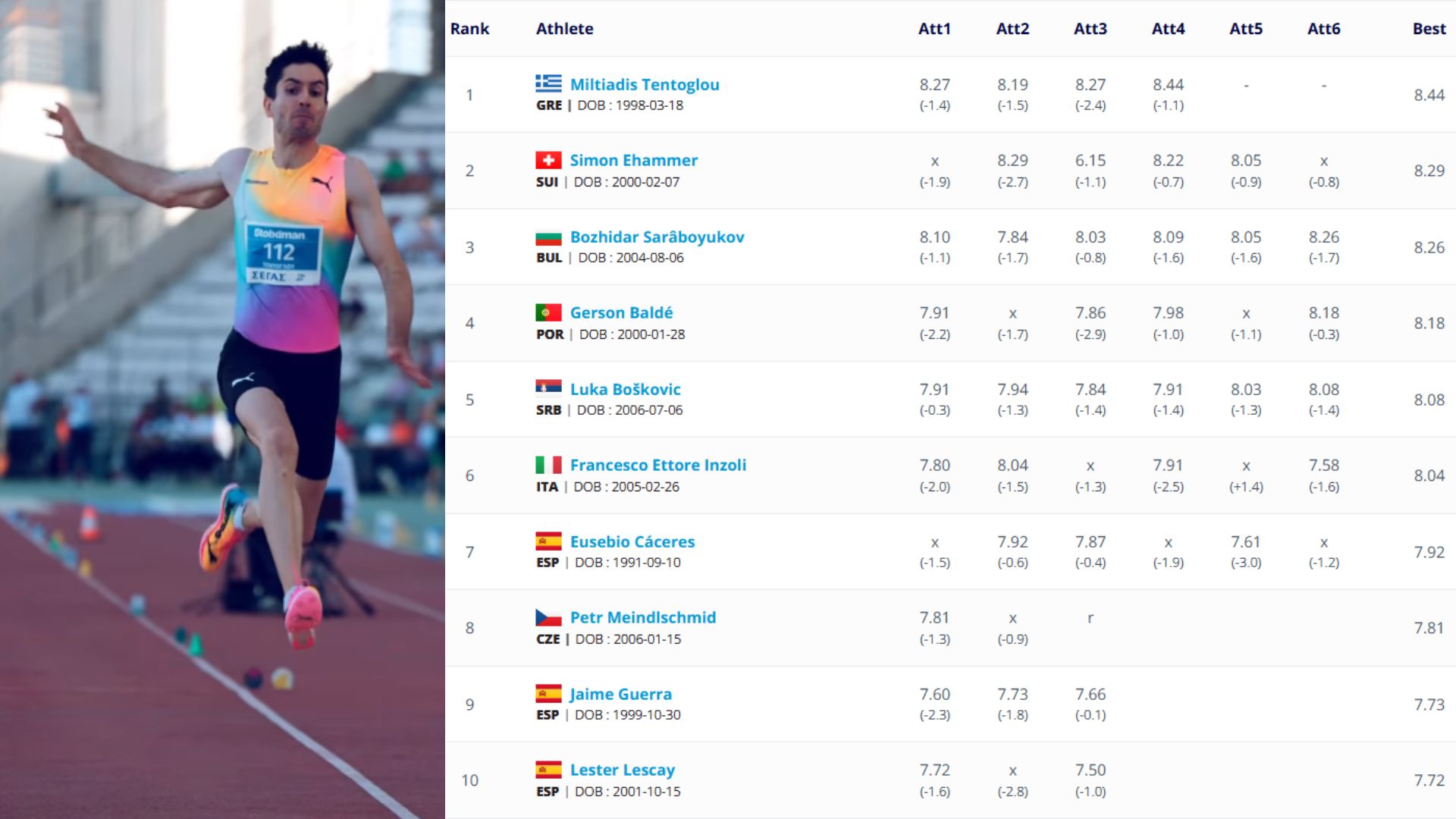
Miltiadis Tentoglou has once again been crowned European champion in the men’s long jump, winning gold at the European Championships in Birmingham with a best effort of 8.44m (-1.1m/s).
The Greek star produced the winning jump in the fourth round, securing his fourth consecutive European Championships gold medal in the event.
Men’s Long Jump Final Results
🥇 Miltiadis Tentoglou 🇬🇷 – 8.44m
🥈 Simon Ehammer 🇨🇭 – 8.29m
🥉 Bozhidar Saraboyukov 🇧🇬 – 8.26m
Tentoglou opened with 8.27m before matching the mark in the third round. He then produced his decisive 8.44m effort in the fourth round to move clear at the top of the standings.
Switzerland’s Simon Ehammer finished second with 8.29m, while Bulgaria’s Bozhidar Saraboyukov completed the podium with 8.26m.
Despite battling a headwind throughout the competition, Tentoglou once again delivered when it mattered most to extend his remarkable European championship winning streak.
With four consecutive European titles now secured, Tentoglou continues to establish himself as one of the most dominant long jumpers of his generation.
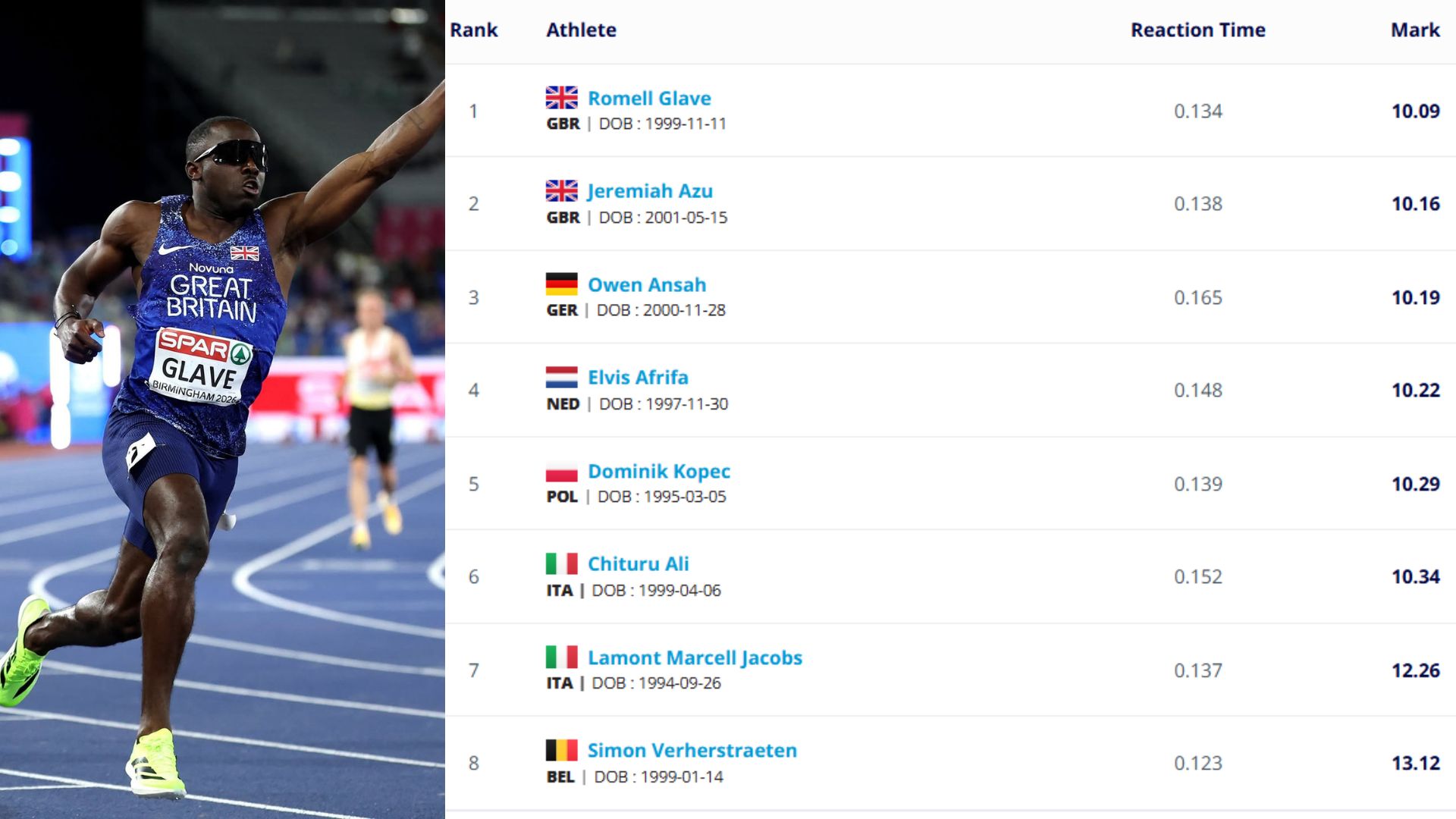
Romell Glave was crowned European men’s 100m champion after winning gold in front of a home crowd in Birmingham, clocking 10.09s into a -0.4m/s headwind.
The British sprinter produced a composed performance to take the title and lead a British 1-2 in the final.
Jeremiah Azu claimed the silver medal in 10.16s, while Germany’s Owen Ansah completed the podium with 10.19s to take bronze.
European 100m Final Results
Romell Glave – 10.09s
Jeremiah Azu – 10.16s
Owen Ansah – 10.19s
Glave’s victory was particularly significant with the championship taking place on British soil, as he delivered the biggest performance of his European campaign when it mattered most.
Defending champion Lamont Marcell Jacobs was unable to defend his title after pulling up with an injury during the final. He was listed seventh in the results after recording 12.26s.
The result gives Britain a memorable gold-and-silver finish in the men’s 100m, with Glave securing the European crown ahead of compatriot Azu.