
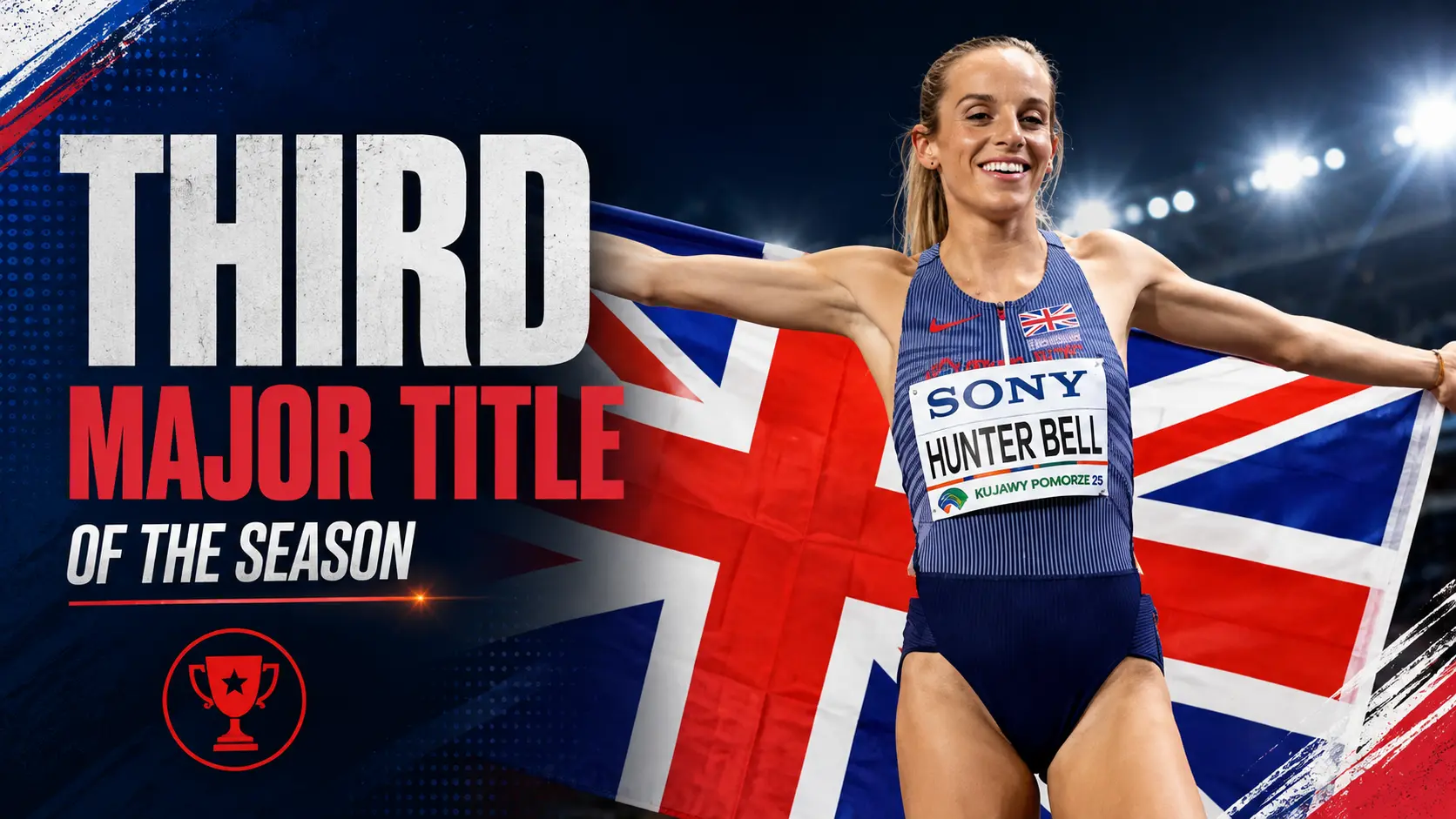
British middle-distance star Georgia Hunter Bell cemented her stellar season with an unforgettable tactical middle-distance running, capturing the 1500m gold at the 2026 European Athletics Championships in Birmingham. Upgrading from the silver she claimed in Rome two years ago, the 33-year-old delivered an electric final lap of 58.44 under the lights of the Alexander Stadium to secure her third major victory of the year, following triumphs at the World Indoor Championships in Torun and the Commonwealth Games in Glasgow.
Controlling the race from the front, Hunter Bell expertly warded off challenges from Poland’s Klaudia Kazimierska, who took silver in 4:08.80 and France’s Agathe Guillemot, while Portugal’s Patricia Silva clinched the bronze.
Reflecting on her tactical triumph, Hunter Bell noted: “Just getting myself in a good position throughout was always the plan. I thought, if it comes down to a kick, I’ve got it, so I didn’t want it to go too quick. I thought it might be a 600m burn-up, which it was – and that was perfect for me.”
With an incredible season already under her belt, the late-blooming champion is already setting her sights on an even grander horizon. Looking ahead, she shared her ambitious next target:
“I think I need a little break to start even thinking about the fourth gold at Budapest, but that is certainly the goal. Can I get four major golds in a year? I really hope so, it’s the next big challenge.”
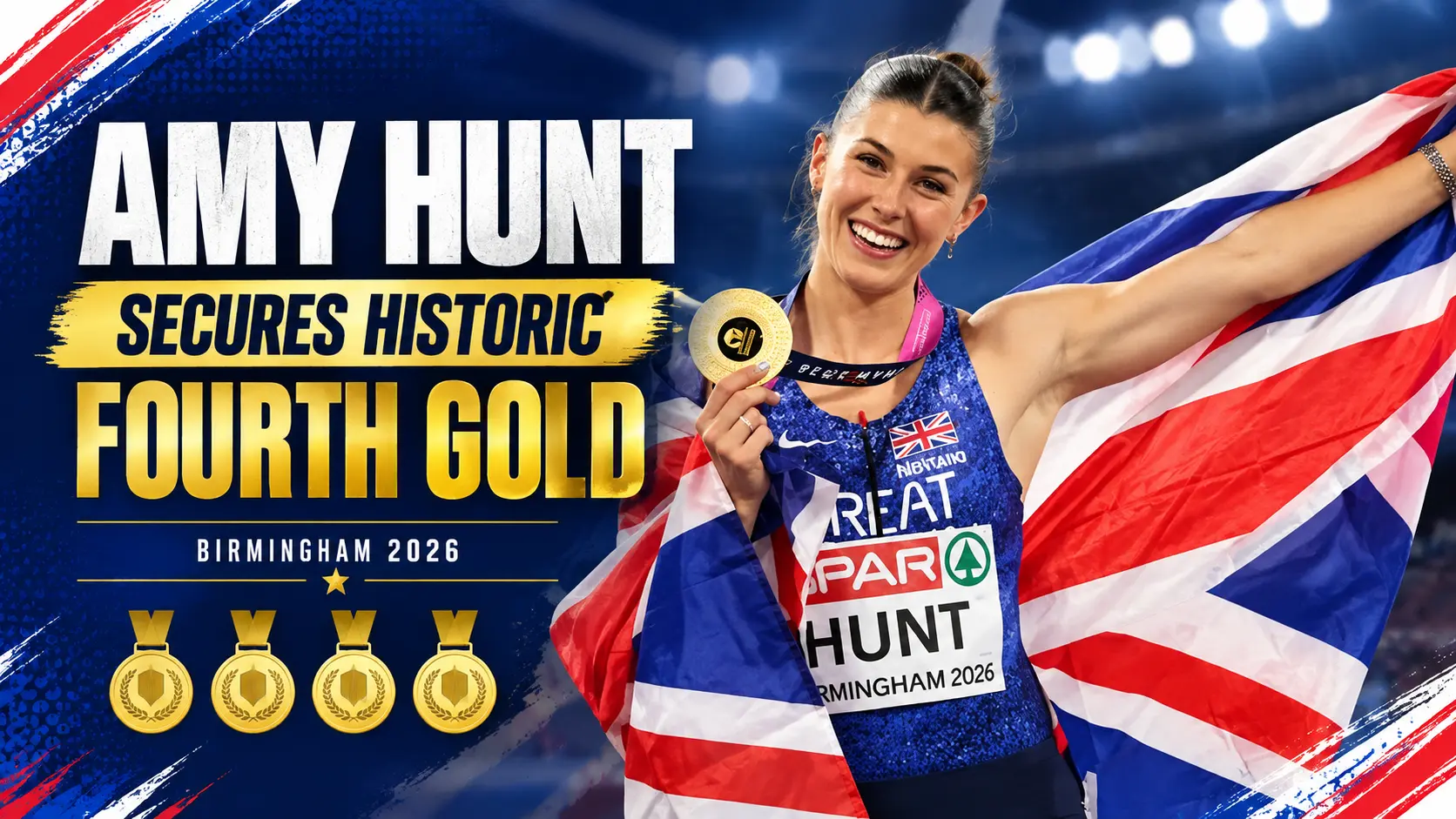
Great Britain and Northern Ireland delivered a sensational finale at Birmingham 2026 on Sunday, capturing gold in the inaugural mixed relay 4x100m with a blistering European record time of 39.97 seconds. The star-studded lineup – featuring men’s 100m silver medallist Jeremiah Azu, women’s 200m bronze medallist Dina Asher-Smith, men’s 200m silver medallist Zharnel Hughes, and multi-gold champion Amy Hunt became the first European quartet in history to break the 40-second barrier, placing them second only to Jamaica on the world all-time list.
Germany pushed the British squad to the limit, drawing level when Gina Lückenkemper collected the baton for the final leg. However, facing the irresistible closing speed of anchor Amy Hunt, Germany settled for silver in 40.11, while Spain claimed bronze in 40.42.
The victory was packed with historic milestones. Amy Hunt clinched a remarkable fourth gold medal of the championships becoming the first athlete ever to achieve the feat at a single European Athletics Championships. Meanwhile, Dina Asher-Smith secured her eleventh career European medal (eighth gold), cementing her status as the most decorated athlete in European Athletics Championships history. Reflecting on the triumph, Hunt likened the experience to a thrilling roller coaster ride, while Azu praised the team’s sprint domination and the honour of running alongside such inspiring teammates.
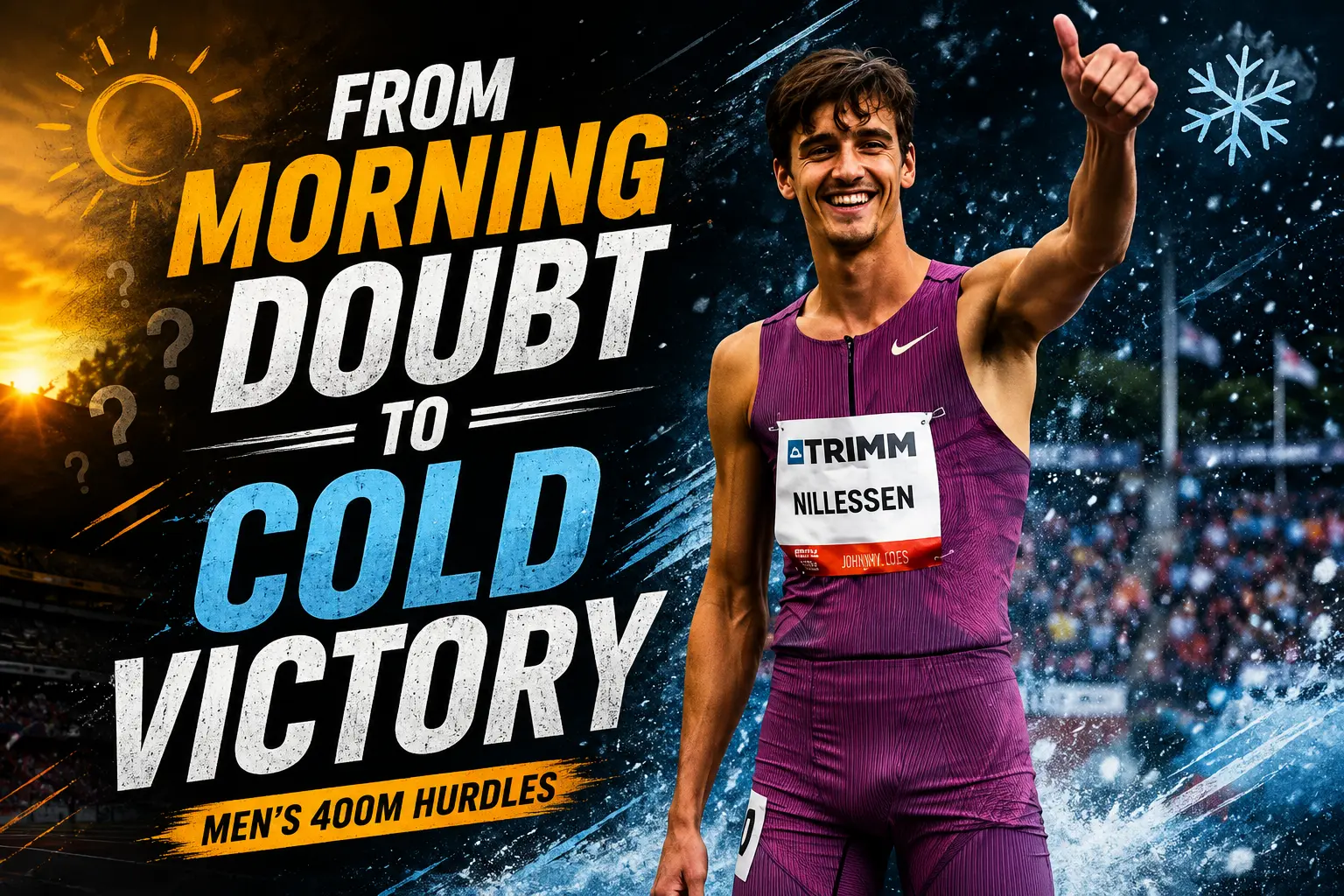
When Stefan Nillessen got out of bed on Saturday morning, winning a gold medal was the furthest thing from his mind; hoping for a sneaky silver or bronze was about as ambitious as his thoughts dared to go. Yet, as the Dutch athlete proved at the Birmingham 2026 European Athletics Championships, what you sometimes feel while getting out of bed can turn the complete opposite by nightfall, delivering the biggest title of his career in the men’s 1500m.
For much of the race, Nillessen kept a close watch on proceedings while sitting largely in the middle of the pack, alongside world champion Isaac Nader and former world champion Jake Wightman, as Norway’s Narve Gilje Nordås led the early pace. With every athlete still in contention as the bell sounded, Britain’s Jake Heyward and Wightman seized the initiative down the back straight. It looked all set for a British one-two as Wightman rounded Heyward into the finishing straight, but the chasing pack had other plans. Nillessen timed his move to perfection, sweeping through to take control before Ireland’s Andrew Coscoran followed him past the fading British pair, only for Sweden’s Samuel Pihlström to surge from the back of the field with a breathtaking late burst. Nillessen crossed the line in 3:35.70 to claim gold, with Pihlström snatching surprise silver in 3:36.16 and Coscoran taking bronze in 3:36.24.
Reflecting on his fairytale triumph, an ecstatic Nillessen admitted that this smile won’t go off his face for a long time, noting that he even surprised himself with that sprint finish. Meanwhile, Pihlström confessed he was completely overwhelmed after coming from almost dead last with a lap to go to secure second, and Coscoran celebrated a brilliant tactical race that played right into his hands to deliver a historic moment for Ireland
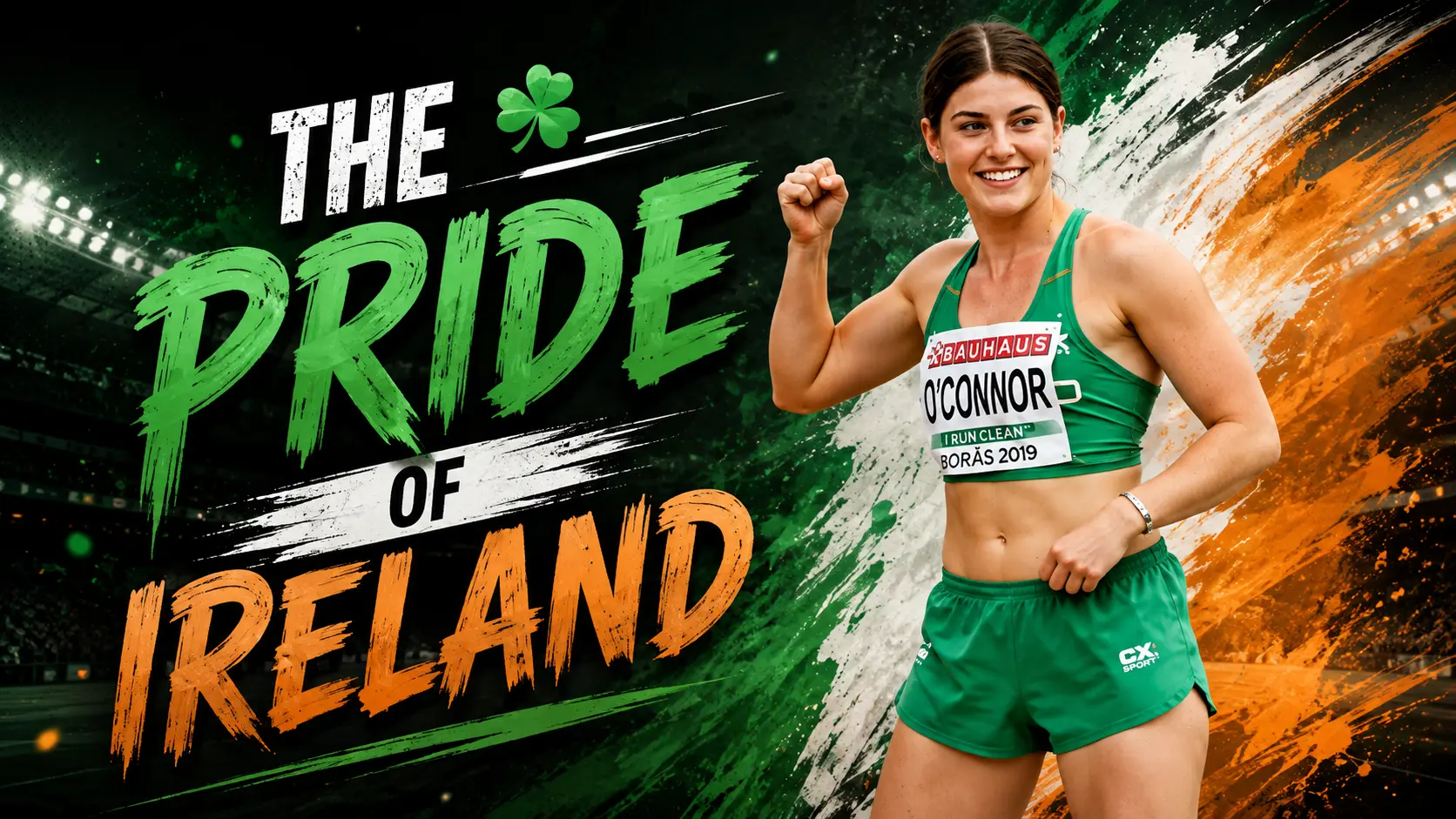
The 2026 European Athletics Championships in Birmingham played host to a heptathlon event that felt less like a traditional track and field and more like a high-stakes poker game. With the overall lead constantly switching hands among the world’s elite multi-eventers like players at a table, the competition kept everyone on the edge of their seats until the very last lap of the 800m. In front of a massive, roaring contingent of Irish fans draped in tricolours at the Alexander Stadium – making it feel entirely like a home championship – Kate O’Connor proved why she has become an absolute medal-winning machine.
O’Connor navigated two gruelling days of fierce competition, keeping herself firmly in title contention with a stellar lifetime best of 6.55m in the long jump. But the defining moment arrived in her powerhouse event: the javelin. Despite facing a stubborn headwind, O’Connor uncorked a massive 50.16m throw to surge into the overall lead for the first time with 5,812 points. When Dutch star Emma Oosterwegel fired back with a 51.49m throw to jump into second place, the pressure mounted to a fever pitch. In a nerve-wracking 800m finale, Oosterwegel needed to gain a significant gap, but O’Connor shadowed her every stride, crossing the line in 2:10.87 to secure her historic victory.
O’Connor claimed the gold medal with a stunning national record score of 6,751 points, eclipsing her previous record by 37 points. She was joined on the podium by Emma Oosterwegel, who took silver with 6,713 points, and world indoor champion Sofie Dokter, who secured bronze with 6,664 points, with all three medallists setting lifetime bests.
This triumph marks O’Connor’s seventh successive medal from a major championship, a phenomenal run dating back to her pentathlon bronze at the 2025 European Indoor Championships in Apeldoorn. Achieving her most significant title yet in front of a sea of Irish pride, Kate O’Connor is officially rewriting the record books and cementing her status as the pride of Ireland and a future Olympic and world champion.
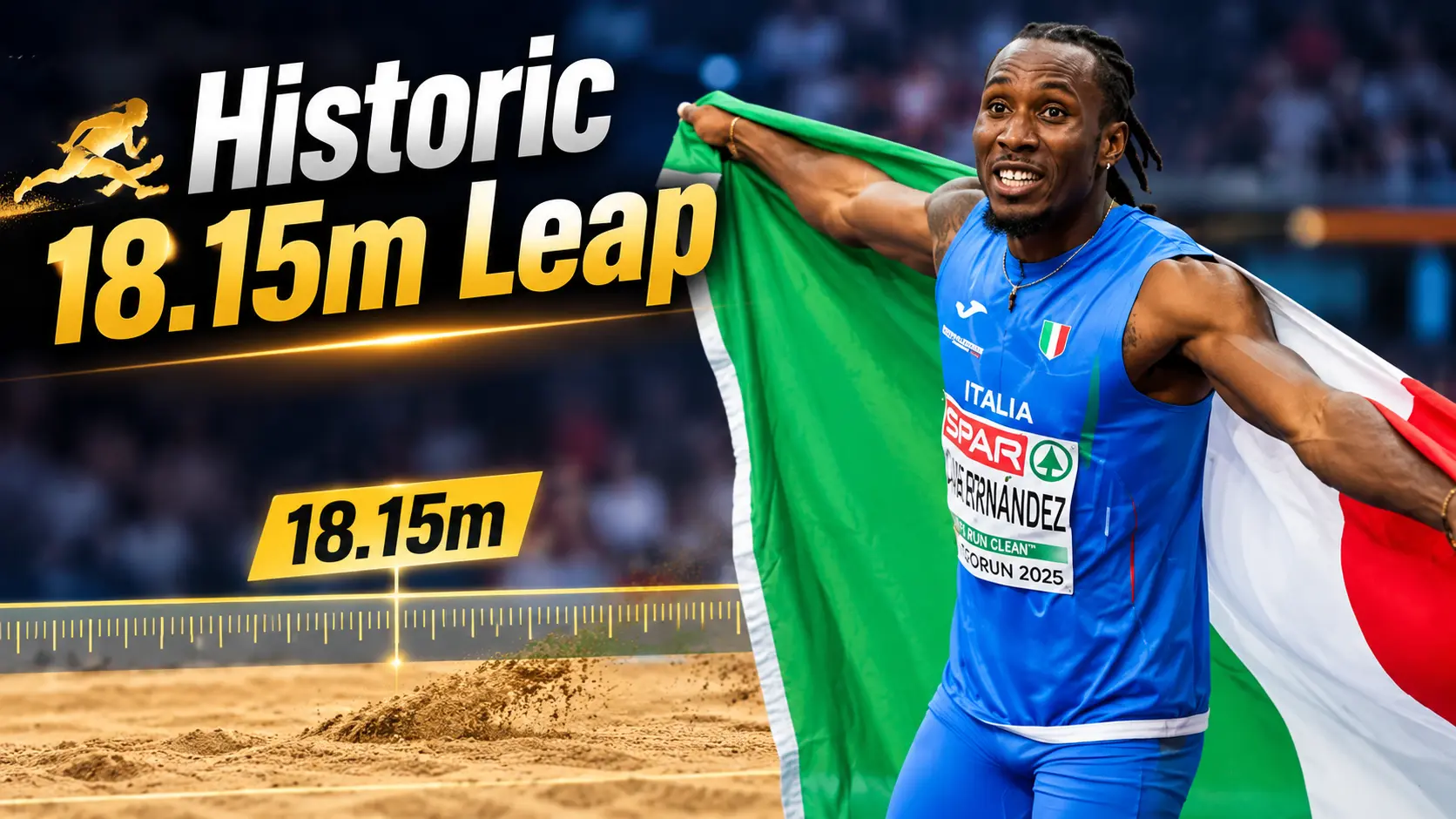
Andy Diaz Hernandez delivered a sensational performance on Saturday at the Birmingham 2026 European Athletics Championships, soaring to a remarkable 18.15m in the second round to claim the men’s triple jump title and secure his first major outdoor crown.
Representing Italy, Diaz Hernandez unleashed a world lead, a national record, and the fourth-longest jump in history – placing him just behind legendary marks set by Jonathan Edwards (18.29m), Christian Taylor (18.21m), and Jordan A. Díaz Fortun (18.18m). After bouncing back from a narrow foul on his opening attempt, the reigning world and European indoor champion sealed his dominance with a 17.78m effort in the third round.
The podium was rounded out by stellar performances from his rivals. Pedro Pichardo claimed silver with a season’s best of 17.76m, marking his second consecutive European Championship podium finish. Andrea Dallavalle captured bronze with an impressive 17.37m opening-round jump, completing a brilliant double-medal podium finish for Italy
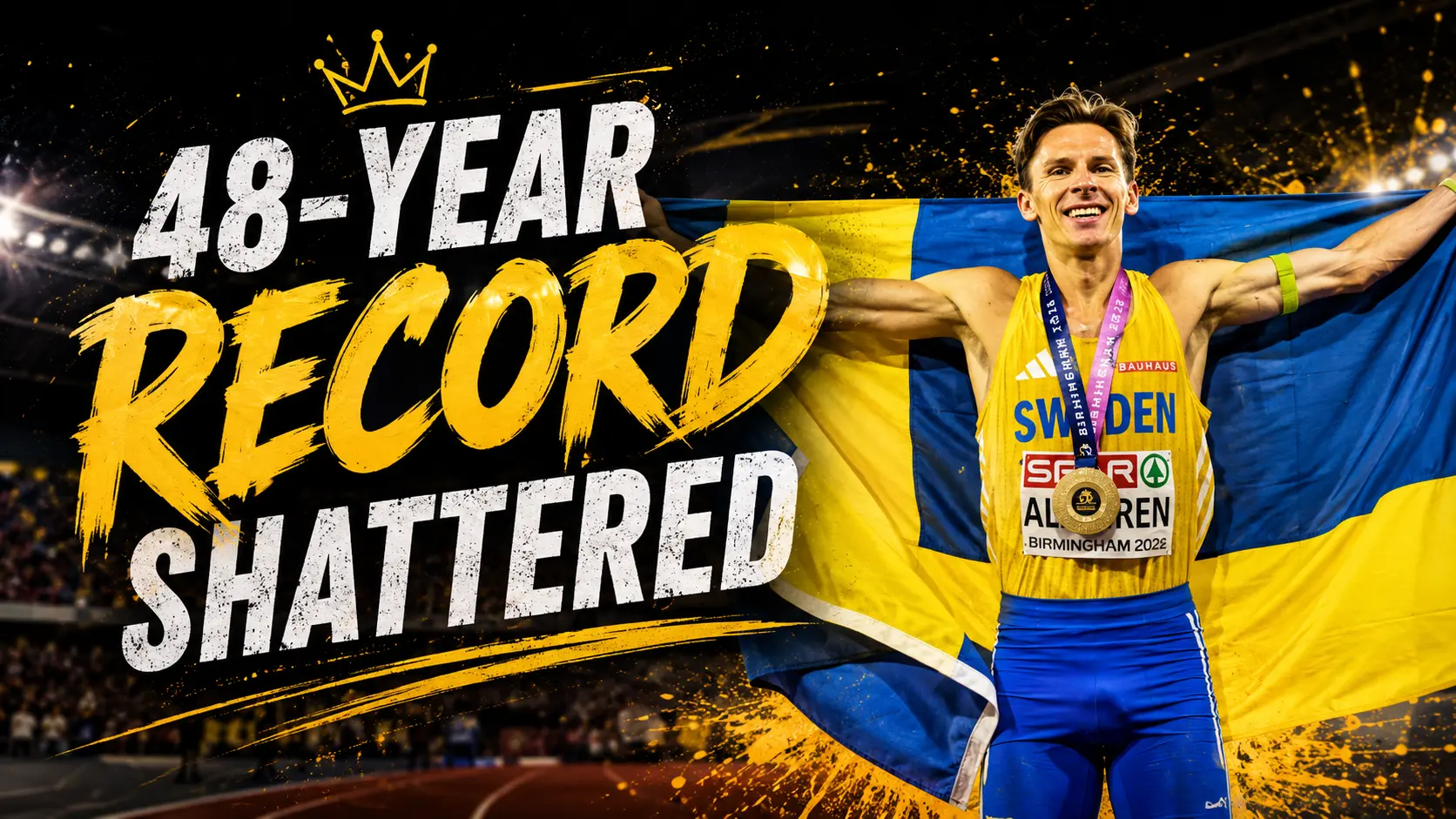
What began as a tactical Sunday jog transformed into a demolition at the Alexander Stadium. Sweden’s Andreas Almgren delivered one of the most defining 10,000m races in championship history, executing a master-level long-distance strategy that left the rest of the elite field completely dismantled. By grinding down his rivals through sustained, punishing splits and ultimately lapping almost the entire 25-man field, leaving only six runners unlapped, Almgren captured the European title in 27:23.44 and erased Martti Vainio’s legendary 1978 record – the longest-standing championship record on the books – after 48 years.
Long-distance running is rarely just about raw speed; it is an exercise in psychological and physical attrition, and Almgren understood pacing tactics better than anyone else on the track. The race opened at a deceptively pedestrian pace, featuring a dawdling opening kilometre of 3:16.93 and slow initial laps of 83.23, 75.56, and 78.12. For a brief moment, Vainio’s old Prague mark of 27:30.99 appeared safe for another two years. But Almgren sensed hesitation in the pack of 25 and seized the initiative on the fourth lap with a sharp 65.25.
What followed was a brutal exhibition of front-running. For the next 14 laps, Almgren locked into a relentless, metronomic rhythm of 63 to 64 seconds. Only a credentialed trio – reigning world 10,000m champion Jimmy Gressier and the last two European champions, Dominic Lobalu and Yemaneberhan Crippa – dared to follow. Yet even this elite trio was reduced to single-file survival mode. Almgren turned the screw further with successive laps of 63.07, 62.18, and 61.22, effectively snapping the elastic and breaking his challengers.
Covering the second 5000m in a blistering 13:17.74, Almgren surged past runners in waves, evoking memories of Paula Radcliffe’s iconic 2002 Munich victory. Even as he battled sheer exhaustion over the closing stages, his tactical dominance was absolute.
Reflecting on the gruelling effort, Andreas Almgren shared: “It was quite amazing, I really wanted to go for it today. There was such a good atmosphere around this whole stadium, so I thought I might as well go for it, for that record. I really needed that support, as during the last five laps, I felt like I was dying.”
As Almgren slowed slightly toward the end – briefly acting as an unofficial pacemaker for the sizeable group contending for minor places – he still crossed the line nearly 20 seconds ahead of the rest, already draped in a Swedish flag.
Behind him, the battle for the remaining podium spots played out in fierce isolation. Swiss Dominic Lobalu ran the final two kilometres in total solitude to secure a hard-earned silver medal in 27:42.67, noting afterward: “I obviously wanted to defend my title, but Almgren was too strong. I couldn’t hold that pace any longer. I am very happy for him; he always fights a lot and makes the races hard. The faster pace suited me. I wasn’t sure how fast it would be, but I was less confident of doing well if it was a slower race.”
Meanwhile, the Frenchman Jimmy Gressier utilized his trademark closing speed, burning off Crippa with a thunderous 25.6-second final 200m, to claim his maiden European medal in 28:07.90, some 250 metres behind the champion. Gressier reflected on his performance and tactical redemption:
“I am very happy for my first European medal today. To win I would need stronger legs. Andreas is just too strong and he had good tactics, so I am very happy with this medal. I guess he went from the front because he knew many of us were tired from the 5000m. So, it was very tactical from him. This result is good redemption for Munich and Rome – I finished fourth in Munich and Rome – so now it is my first medal, and I think it is a reason to celebrate it.”
Just behind on the line was Italian Yemaneberhan Crippa, who took an unlucky fourth place in 28:08.56 after a fierce cat-and-mouse battle over the closing laps. As Almgren celebrated his historic victory, Finnish legend Lasse Viren looked on from the stands of the Alexander Stadium, witnessing another glorious chapter added to Nordic distance running history.
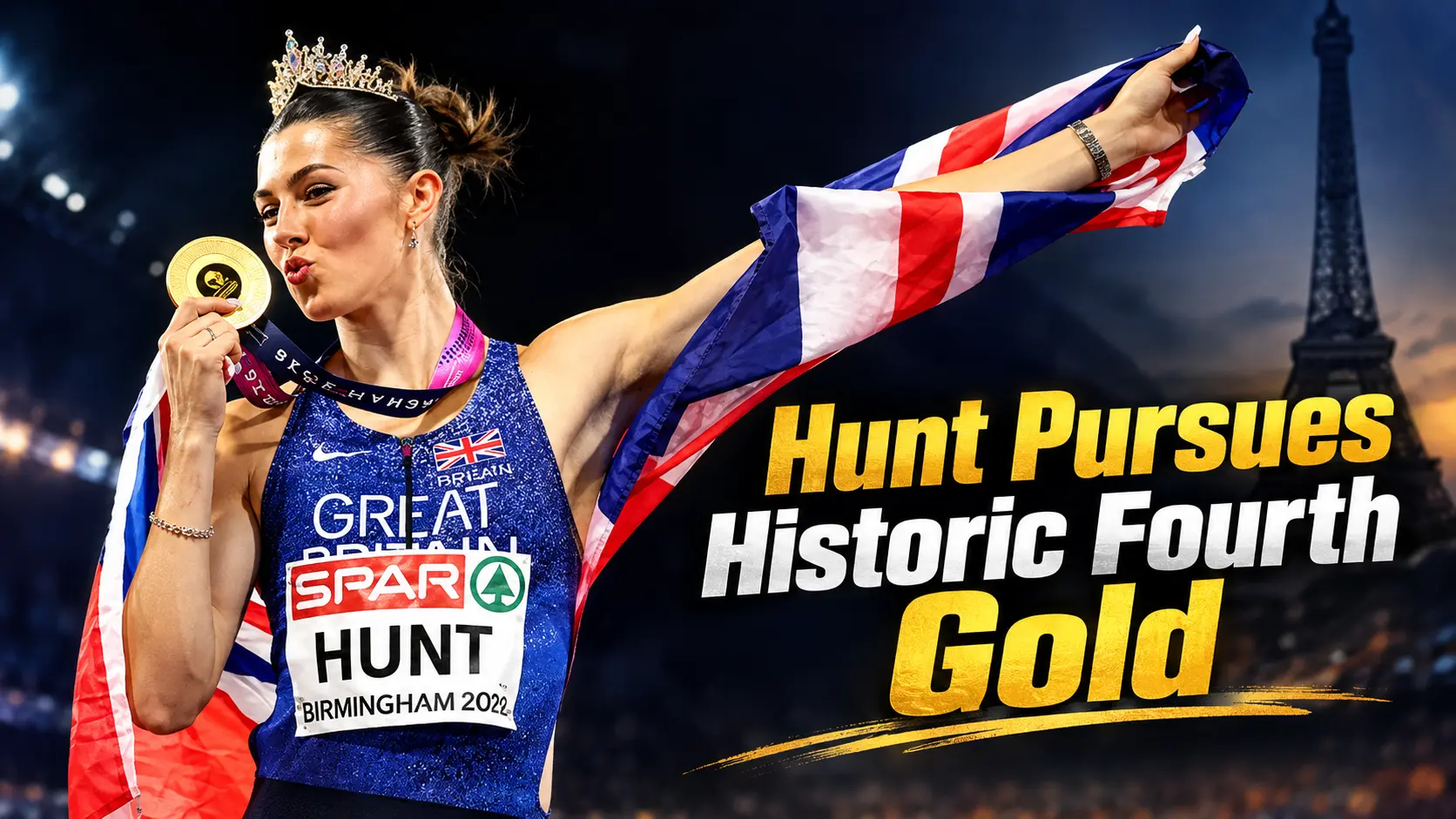
Great Britain’s women’s sprint squad delivered a superlative performance at the European Championships in Birmingham, highlighted by Amy Hunt securing her third gold medal of the week and Dina Asher-Smith etching her name further into athletics history.
The British quartet, comprising Success Eduan, Imani-Lara Lansiquot, Asher-Smith, and anchor Hunt, dominated the 4x100m final, crossing the finish line in a blistering 42.05 seconds. They finished comfortably ahead of Switzerland (43.12) and Poland (43.15). Hunt, fresh off individual triumphs in both the 100m and 200m, now stands on the brink of an unprecedented quadruple. With the mixed 4x100m relay on Sunday, the 24-year-old has the chance to become the first athlete in the 92-year history of the championships to claim four gold medals at a single event.
Praising her teammates, Hunt told broadcasters: “I am stood next to the real-life GOAT. She is the most decorated European athlete in history.”
She added with admiration for her diverse and accomplished colleagues:
“This girl (Eduan) is a midwife, she brings babies into the world. This girl (Lansiquot) wrote a play. We’re all amazing. That was stunning to come together. I had the time of my life.”
For Asher-Smith, the victory marked her seventh career gold at the European championships, exactly ten years after her first. This milestone places the 30-year-old alongside Norway’s Jakob Ingebrigtsen and Croatian discus thrower Sandra Elkasevic in the record books. Furthermore, having secured bronze in the 200m earlier in the week, Asher-Smith matched Polish legend Irena Szewinska’s all-time record tally of 10 medals at the continental showcase. With 22 senior international medals already to her name since her 2013 debut, Asher-Smith remains a towering figure in British sprinting.
The baton exchange between Asher-Smith and Hunt felt symbolic – a literal passing of the baton from a veteran trailblazer to a rising generational talent. While Asher-Smith established her continental dominance years ago, culminating in a 2018 sprint treble and a global title, Hunt is rapidly carving out her own legacy. Following an injury-slowed start to her senior career, the Cambridge University graduate claimed a breakthrough global silver in Tokyo last year and is now looking to translate continental success onto the world stage.
Reflecting on the collective strength of the relay squad, Hunt noted: “It’s such a privilege to be able to step on the track with these ladies and the individual superpowers that we bring. It’s no joke. We were all superwomen together out there, and it was so much fun.”
With three golds safely secured, Hunt’s remarkable campaign in Birmingham is not yet finished as she chases an iconic fourth title.
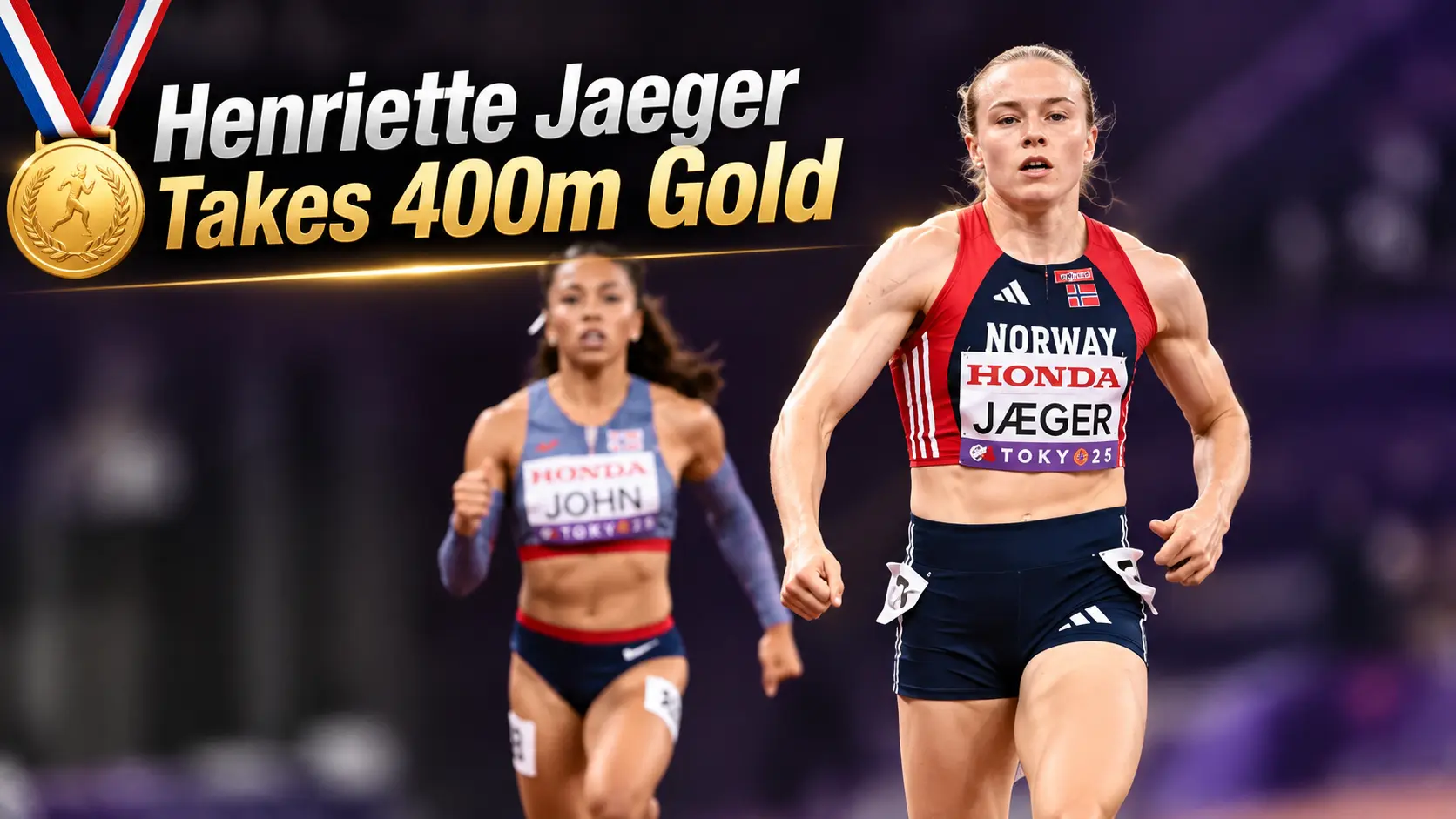
Henriette Jaeger put on a masterclass at the Birmingham 2026 European Athletics Championships on Saturday, blowing apart a top-class field to win the women’s 400m final in a sensational Norwegian record of 49.04 seconds. Running from lane eight, the 21-year-old star captured her second gold medal of the championships, adding to the mixed 4x400m relay title she secured earlier in the week. Defending champion Natalia Bukowiecka of Poland fought through tough conditions to claim silver in 50.04, narrowly holding off the Netherlands’ European indoor champion Lieke Klaver, who took bronze in 50.15.
The race unfolded with high drama right from the starting blocks. Czechia’s world indoor champion Lurdes Gloria Manuel went out hard from lane seven, with Jaeger tracking her closely on the inside. As the athletes powered around the final bend and entered the home straight, Manuel began to tie up and fade under the fierce early pace, eventually crossing the line in fourth with 50.86. Meanwhile, Jaeger unleashed a devastating surge of acceleration, leaving the rest of the pack in her wake. Behind her, Bukowiecka and Klaver engaged in a gripping duel for the remaining podium spots, with the Polish veteran edging ahead in the closing meters to secure second place, finishing a full second behind the triumphant Norwegian. Great Britain’s Charlotte Heinrich, who stepped in at the eleventh hour after Amber Anning withdrew due to a warm-up injury, delivered a creditable performance to place sixth in 51.29.
Reflecting on her historic victory, an ecstatic Henriette Jaeger said, “It’s so crazy to be here with my second gold of the championships. After getting fourth in Rome in the 200m – it’s insane to be here as champion. The race was good. I definitely left it all on the track. I’m just filled with so much excitement and shock right now.”
For silver medallist Natalia Bukowiecka, the race presented distinct atmospheric challenges. “The conditions were very hard throughout the race. It was too windy for me. It’s very important to bring this medal home. My whole family is here tonight so I really felt the support – even more now that I’ve got my third European medal. It’s important to believe in yourself because I know every girl here is fast. I try to stay positive in every training session and race,” she noted.
Meanwhile, bronze medallist Lieke Klaver expressed mixed emotions about her performance on the windy track. “The time was bad. My race was really not perfect, but I have a medal and for now I am happy. This was not my race. I wanted to run a perfect race but there was a lot of wind. Normally I don’t have a problem with that. This time I couldn’t feel my face, I couldn’t feel my body. I am a very experienced runner, but I ran like a novice athlete who is not so experienced. I am a bit frustrated,” Klaver shared.
The javelin throwing world received a resounding reminder that Julian Weber is never to be written off. In a dramatic climax at the European Athletics Championships in Birmingham, the German star uncorked a monstrous final-round throw of 90.40m to not only seize the gold medal but obliterate Steve Backley’s 28-year-old championship record of 89.72m.
For much of the evening, it looked as though history was repeating itself. Two years after being overtaken in the dying stages of a competition, Weber found himself playing second fiddle when 22-year-old compatriot Nick Thumm launched an 83.76m personal best in the fifth round.
Reflecting on his turbulent start, Weber admitted:
“I was struggling a lot at the beginning of the competition. I had a problem with my run-up. I wasn’t getting into my rhythm so I couldn’t throw far. I knew I just had to be calm, be ready and it would come.”
With the pressure mounting and memories of his silver medal in Rome lingering, Weber faced a defining moment of clutch execution – reminiscent of Ryan Crouser’s legendary championship-winning displays in the shot put. Standing at the head of the runway, he whipped the Birmingham crowd into a frenzy before unleashing a throw that instantly silenced the stadium.
“I shocked myself with that last throw. I couldn’t believe it,” Weber said. “I knew I could throw that far; I knew if I could push really hard into it, I could do that. It is such a great feeling to get my title back.”
As the scoreboard flashed a distance starting with nine, Weber became the first man in the history of the European Championships to cross the 90-meter barrier, issuing a definitive challenge to anyone who thought they could count him out.
Meanwhile, the battle for the remaining podium spots proved intensely dramatic, with a mere nine centimetres separating third through fifth place. Latvia’s Patriks Gailums secured the bronze with an 82.97m effort in the third round, delivering his country’s first medal at the championships since 2016.
A visibly overwhelmed Gailums shared: “I do not even know how to wear the flag. This was a big competition. I am still somewhere in the field; my head cannot believe this. Did I believe I could medal? Yes and no… Julian Weber has done a great job. He was challenged and it made him throw further.”
Poland’s Dawid Wegner suffered heartbreak, missing the podium by a single centimetre with an 82.96m season’s best, while reigning champion Jakub Vadlejch finished fifth with 82.88m.
With Nick Thumm completing a stunning German one-two in silver, Germany’s javelin dominance looks secured for years to come and with Weber performing at this calibre, the throwing world has been officially put on notice.

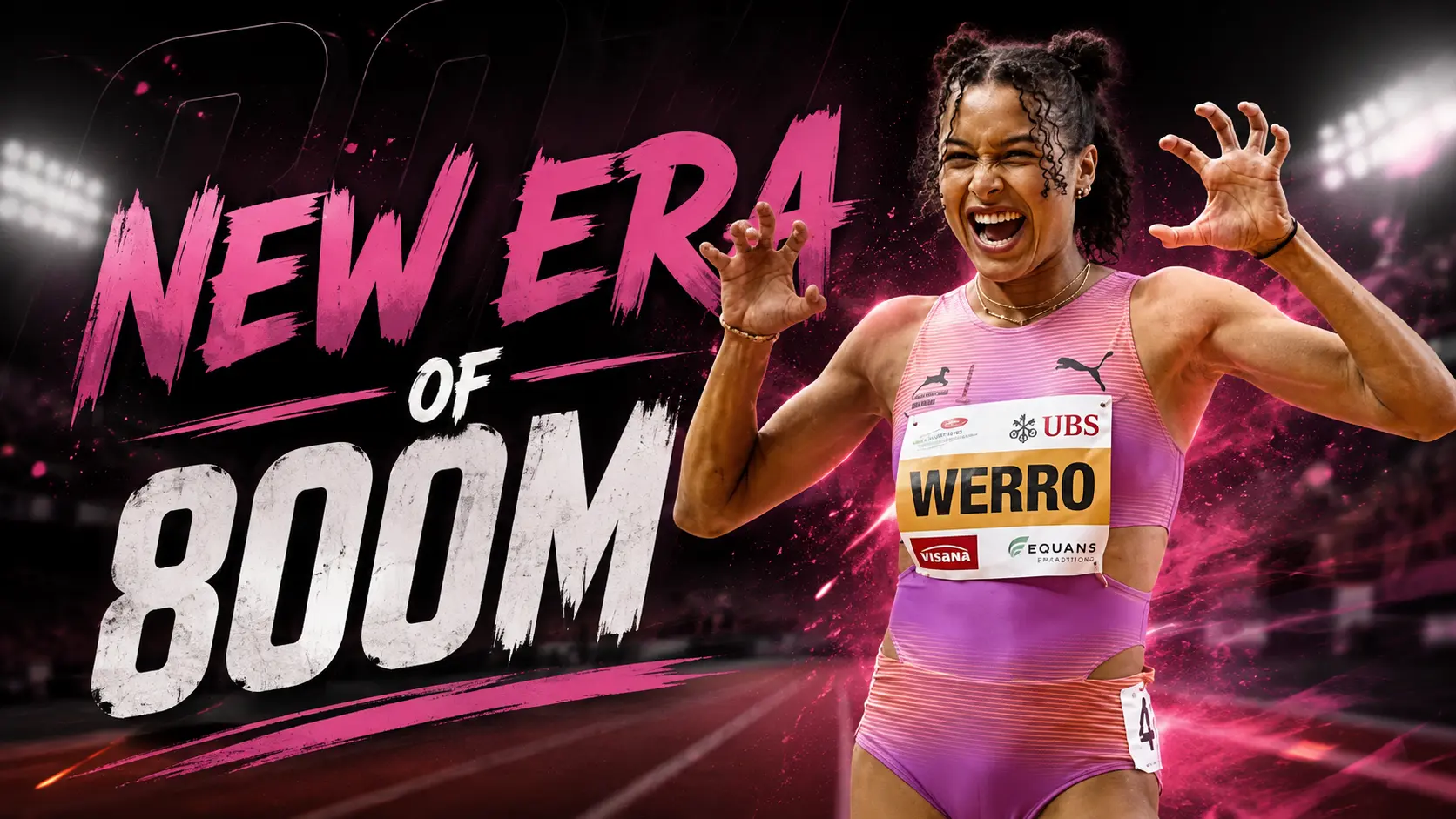
The Alexander Stadium in Birmingham played host to an electric, star-studded showdown, but it was Switzerland’s Audrey Werro who stole the show. In a masterclass of middle-distance running, the 22-year-old Swiss sensation denied Olympic champion Keely Hodgkinson a historic third consecutive European 800m title, halting the Briton’s bid to become the first woman from her nation to capture a continental treble in the same event.
The race lived up to every ounce of its immense billing. Before a captivated sellout crowd of 23,000, the final crystallized into a blistering three-way battle for supremacy featuring Hodgkinson, Werro, and multi-talented Dutch star Femke Broeders-Bol.
Werro, who produced a sensational championship record of 1:54.81 – the fastest run since a 43-year-old world record – proved uncatchable. Her victory was all the more remarkable given her harrowing semi-final spill just 24 hours earlier, after clipping heels with France’s Anais Bourgoin. Reinstated after a frantic recovery, the Swiss star showed nerves of steel.
Hodgkinson executed her classic tactical blueprint, letting Werro dictate the opening lap before launching her signature attack on the final bend. It was a mirror image of their clash in Stockholm earlier this summer, but Werro refused to relent, holding off the charging Briton to cross the line first. Hodgkinson claimed a hard-earned silver in 1:55.01 – her 12th major senior medal – while Broeders-Bol secured bronze in 1:55.54, capping off a remarkable transition from the 400m hurdles this season.
“I knew it was going to come down to the wire, but I really thought I was going to win today,” a gracious Hodgkinson admitted to the BBC after capturing her silver.
While the night belonged to Switzerland’s new middle-distance queen, the gripping 800-meter final ultimately signalled something much larger for global track and field: the dawn of an elite, generational rivalry. With Hodgkinson’s fierce competitive drive, Werro’s blistering record-breaking speed, and Broeders-Bol’s meteoric rise on the track, these three extraordinary athletes have firmly established a new “big three.”
As the athletics world looks ahead to next year’s World Championships, this thrilling Birmingham classic made one thing unmistakably clear. The women’s 800m belongs to Hodgkinson, Werro, and Broeders-Bol – and their impending global battles promise to define the sport for years to come.