
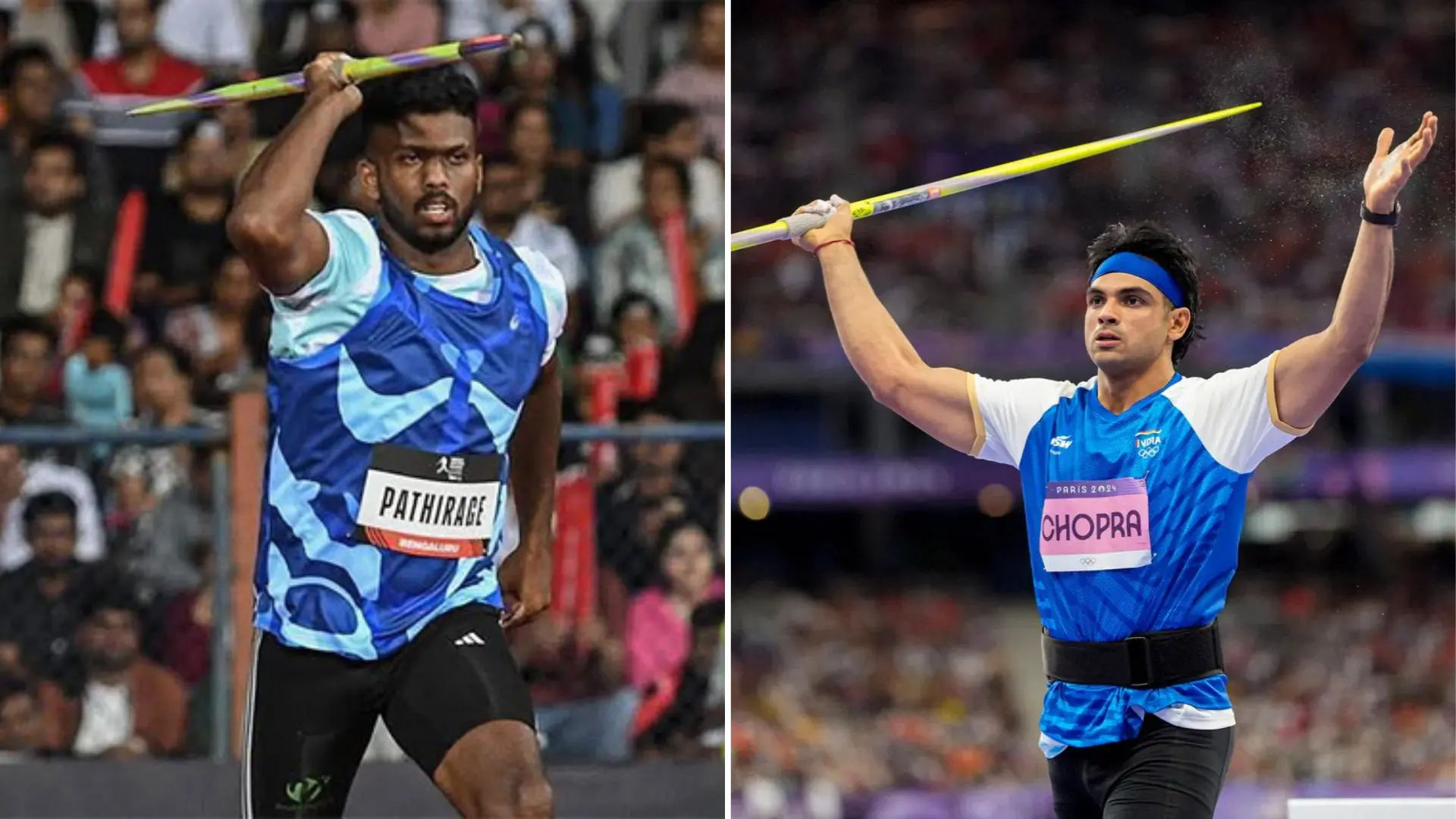
Following European Champion Julian Weber’s withdrawal, the javelin landscape for the Lausanne Diamond League 2026 (Athletissima) has shifted dramatically with the door now wide open for a new group of elite contenders to seize control on August 21.
While Weber’s historic 90.40m triumph in Birmingham would have made him the man to beat, his absence, alongside his replacement, Pan American silver medallist Marc Anthony Minichello stepping into the fray reshapes the psychological and tactical dynamics of the event.
How the Field Opens Up for Chopra and Peters
A Cleared Path for Neeraj Chopra: India’s star enters Lausanne looking to snap an international title drought stretching back to July 2025. With Weber sidelined, Chopra loses his most recent final-round nemesis (who famously edged him out at Doha), easing the path to the podium.
Momentum Shift for Anderson Peters: The two-time world champion now has a prime opening to dictate terms. Without Weber’s late-round heroics to worry about, Peters can focus entirely on chasing world leader Rumesh Pathirage.
The Pathirage Factor: Sri Lanka’s Pathirage arrives in Switzerland holding world-leading form (backed by his 89.75m gold-medal performance at the Commonwealth Games in Glasgow and a 92.67m throw in Rome). He remains the definitive favourite to set a fierce early tempo.
Star-Studded Lineup Still Packed with Danger
Despite Weber’s absence, the field at the Stade de la Pontaise remains profoundly competitive. Alongside Chopra, Peters, and Pathirage, the lineup features 2012 Olympic gold medallist and 2025 World Champion, Keshorn Walcott, Czech stalwart Jakub Vadlejch, and late addition Artur Felfner.
Lausanne’s famously fast runway has always favoured big distances. With crucial Diamond League qualification points on the line ahead of the final, expect a fierce tactical battle where Chopra and Peters have every opportunity to capitalize on the shifted power dynamics.
On pure form, Rumesh Pathirage is the man to beat. Coming off his monster 92.62m throw in Rome and his Commonwealth Games gold in Glasgow, he has been operating on a completely different level this season.
For Neeraj Chopra, everything hinges on how well he is managing his comeback from that lengthy injury lay-off. His silver-medal throw of 85.83m in Glasgow proved he is rounding into form, but matching Pathirage’s world-leading consistency will require him to find that extra gear right from his early attempts, especially on a fast runway like Lausanne’s.
With Julian Weber pulling out of the mix, the spotlight shines even brighter on whether Chopra can shake off his recent title drought and execute a peak comeback performance against the world’s best.
The World Athletics Continental Tour Silver Meet at the Kalinga Stadium in Bhubaneswar occupies a fascinating and strategic niche on the global track and field calendar. Far from being aimlessly “caught in the middle,” the meet serves a distinct purpose for both Indian and international athletics.
Caught in the Middle or Perfectly Positioned?
The Calendar Crunch: Coming on the heels of major international windows (like the Commonwealth Games and European season) while a Diamond League season is ongoing means top-tier European athletes heavily invested in the Diamond League race are difficult to lure away.
The Asian Context: However, rather than being an awkward distraction, the meet is strategically timed as a crucial precursor and benchmark for the Asian Games. For Indian athletes and others across Asia, it acts as a high-intensity tune-up event on home soil before heading into the final stretch of continental preparations.
Global Ranking Points: Because it is a Silver-level event (upgraded from Bronze), it offers lucrative world ranking points. For athletes trying to secure quota spots or improve seedings for upcoming global championships without burning out on the gruelling European circuit, it offers a vital window.
Star Power: Big Names Vs. Middling Competitors
A common debate for emerging athletics nations hosting high tier meets is whether to blow the budget on marquee global superstars or focus on a balanced field. Bhubaneswar has struck a pragmatic balance:
Quality Over Pure Hyper-Stardom: The event features nearly 40 athletes ranked inside the world’s top 50. This includes elite names like Zambia’s Muzala Samukonga (Paris Olympic bronze medallist and World No. 6 in the 400m) and Nigeria’s Chukwuebuka Enekwechi (Commonwealth champion and top 10 shot putter).
Why Middling Names Aren’t Enough: To hold a Silver-tier Continental Tour label, World Athletics mandates a specific threshold of global competitiveness. Relying only on domestic or “middling” athletes would strip the meet of its silver status, lowering the ranking points available.
The Sweet Spot: For India, bringing in a mix of proven global finalists alongside competitive international fields (with solid contingents from countries like South Africa, Brazil, and Sri Lanka) provides local athletes -nearly 90 of them – the exact kind of fierce, shoulder-to-shoulder competition they usually have to travel abroad to experience.
The Bigger Picture for Indian Athletics
Beyond the immediate calendar logistics, hosting a Silver-tier meet in Bhubaneswar is part of a much larger master plan. Odisha has established itself as India’s premier athletics hub, utilizing these events as stepping stones toward hosting major global fixtures – such as the upcoming World Athletics Indoor Championships and Asian Indoor Championships.
By bringing high-calibre international competition directly to Indian shores, it saves elite athletes expensive travel fatigue, exposes domestic fans to world-class sport (with free stadium entry), and builds organizational expertise for future global spectacles.
For two decades, Indian athletics had a quiet titan in the high jump pit. Sahana Kumari carved her name into national lore through an arduous journey that culminated in a historic qualification for the 2012 London Olympics and a national record of 1.92 meters, a benchmark that stood resilient for 14 years. Today, Sahana is no longer just a name in the record books; she is the master architect behind a seismic shift in Indian high jumping, coaching the nation’s brightest young talents to soar higher than ever before.
Sahana’s path to the upper echelons of global athletics was paved with immense isolation. Reflecting on her own formative years, she recalls a landscape devoid of specialized technical coaching or modern sports science support. When she touched down in London for the 2012 Olympics, battling both the brutal morning chill and the psychological toll of competing without a personal coach, she realized the stark gap in India’s sporting ecosystem.
Rather than letting those hardships fade, Sahana channelled them into her calling. “I struggled a lot when I was doing high jump and there was no coach for high jump, especially technically,” she shares. Earning her international diplomas and spending 20 years mastering the craft, she made a firm commitment: to ensure that the next generation of Indian athletes would never have to ask if there was a high jump coach available.
That commitment is already bearing historic fruit. Under her tutelage, young athletes from humble backgrounds are rewriting India’s track and field narrative.
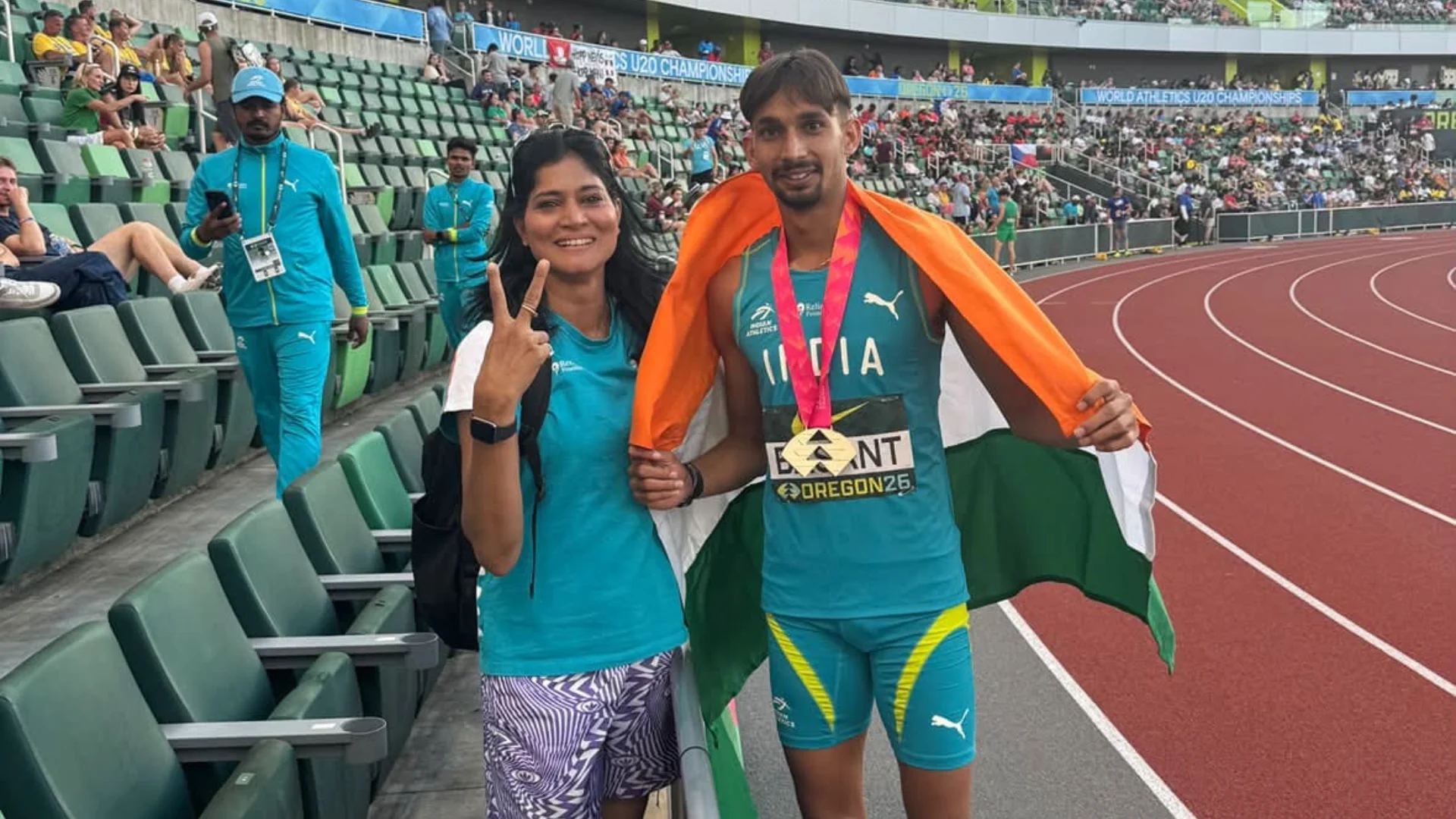
Take 19-year-old Basant Kumar Meghwal, a boy from a modest family in Rajasthan whose father worked as a driver and agricultural labourer. Through relentless dedication and strict training consistency under Sahana, Basant shocked the world by winning a silver medal at the World U-20 Championships in Eugene, clearing an impressive 2.21 meters. Sahana points to his discipline, listening skills, and ability to block out distractions as the traits that separate world-class contenders from the rest.
Then there is Pooja Singh, the young phenom who finally shattered Sahana’s 14-year-old national record by clearing 1.93 meters. Watching your own record fall can be bittersweet for any athlete, but for Sahana, it was a moment of pure, overwhelming validation. “When she made that 1.93, I was so happy, and I couldn’t stop my tears,” Sahana says. “It felt that someone broke my record, and high jump is improving in front of me and with my guidance.”
High jump is an unforgiving discipline. Unlike sports where raw power can mask minor errors, high jumping is a game of calculated inches. Sahana emphasizes that an athlete’s run-up consists of strictly calculated strides -usually eight steps where every single foot placement dictates whether the jumper successfully blocks and elevates or crashes into the bar.
When an athlete begins to falter under pressure, breathing heavily and losing rhythm on the runway, Sahana’s sideline intervention is rooted in psychological grounding. Drawing from her own Olympic experience, she mandates meditation and chanting, specifically techniques like Brahmari, to keep her pupils centred.
When a jumper misses consecutive attempts, her 30-second advice is straight out of sports psychology: she instructs them to trick their minds, visualize the towering bar lowered to eye-level, and treat it as a routine 2.10-meter jump. “Feel that this high jump bar is only 25, feel that it’s hardly 2.10,” she notes. “Then they come to know, okay, this is nothing. I can clear this easily.”
Sahana is also quick to dismiss common myths that plague Indian athletics, particularly the obsession with an athlete’s physical height. While critics often argued that Indian jumpers lacked the towering stature of their European counterparts, Sahana counters that mindset is everything. Citing successful Asian powerhouses in China, Japan, and Thailand who clear heights near the 2-meter mark despite comparable statures, she stresses that explosive speed, physical coordination, and mental hunger matter far more than inches on a measuring tape.
However, she remains candid about systemic hurdles. While infrastructure and sports science support from bodies like the Sports Authority of India (SAI) and the Athletics Federation of India (AFI) have vastly improved, Sahana advocates for deeper structural initiatives – such as dedicated 30-to-48-day national camps – to accurately scout grassroots talent and build seamless recovery and nutrition protocols for athletes transitioning into senior ranks.
Sahana Kumari’s transition from an isolated pioneer to a mentor represents the exact evolutionary leap Indian sports desperately needed. By combining technical precision with empathy, she has transformed the high jump pit from a lonely pit into a breeding ground for global champions. As Basant, Pooja, and the next wave of jumpers look toward future Asian Games and Olympic cycles, they do so with a coach who has walked the exact path before them – and is holding the door wide open for them to fly higher.
The second day of the 101st Punjab State Junior Athletics Championship 2026 produced a series of notable performances at Guru Nanak Stadium in Ludhiana on August 18, with athletes across age groups making their mark in track, field and race-walking events.
Ekamjot Singh of Sangrur emerged as one of the standout performers, winning the boys’ U-20 5km race walk in 22:45.60, comfortably inside the junior national qualifying mark of 26:00.00. Sumanpreet Kaur of Patiala also secured the girls’ U-20 5km race walk title in 25:23.61. In the U-18 boys’ race walk, Prabhjot Singh of Ropar topped the field in 21:47.66, also achieving the listed qualification standard.
The sprint events saw strong results from the younger athletes. Bikram Chaudhary of Ropar won the boys’ U-16 60m in 7.40 seconds, while Ishmeet Kaur of SAS Nagar took the girls’ U-16 60m title in 8.40 seconds.
In the field events, Manjot Singh won the boys’ U-20 hammer throw with 68.56m, while Gurnoor Kaur topped the girls’ U-20 hammer throw with 42.78m. Dishant Kumar won the boys’ U-20 800m in 1:56.60, and Harpreet Kaur claimed the girls’ U-20 800m in 2:17.73.
With another day of competition remaining, the championship continues to provide a platform for Punjab’s emerging athletics talent to compete for state honours and national qualification marks.
Here is the complete result : Punjab junior athletes

Maharashtra’s Ajay Khade produced a sensational performance to clinch the men’s 100m title at Indian Series-13, while Karnataka’s Prakruthi won the women’s 100m crown and Abhinaya Shetty claimed the women’s high jump title in Warangal.
Khade delivered the highlight of the sprint events, clocking a massive personal best of 10.44 seconds to take the men’s 100m title. His winning performance was the fastest among all eight heats, as he improved his previous lifetime best of 10.82s by a huge margin.
Harsh Raut, a member of India’s World Relay 2026 team, finished second in the men’s 100m final with an impressive timing of 10.45 seconds.
In the women’s 100m event, Karnataka’s Prakruthi secured the top spot with a timing of 11.74 seconds. Suba Dharsini recorded the second-fastest timing across the three finals, finishing with 11.80 seconds.
However, the women’s 100m event witnessed a relatively below-par performance, with only two athletes out of the 15 competitors across the three finals managing to dip under the 12-second mark.
Meanwhile, Abhinaya Shetty clinched the women’s high jump title with a season-best clearance of 1.78m. The performance came in her fourth competition of the season, adding another strong result to her ongoing campaign.
Here is the full result: India series 13 Result
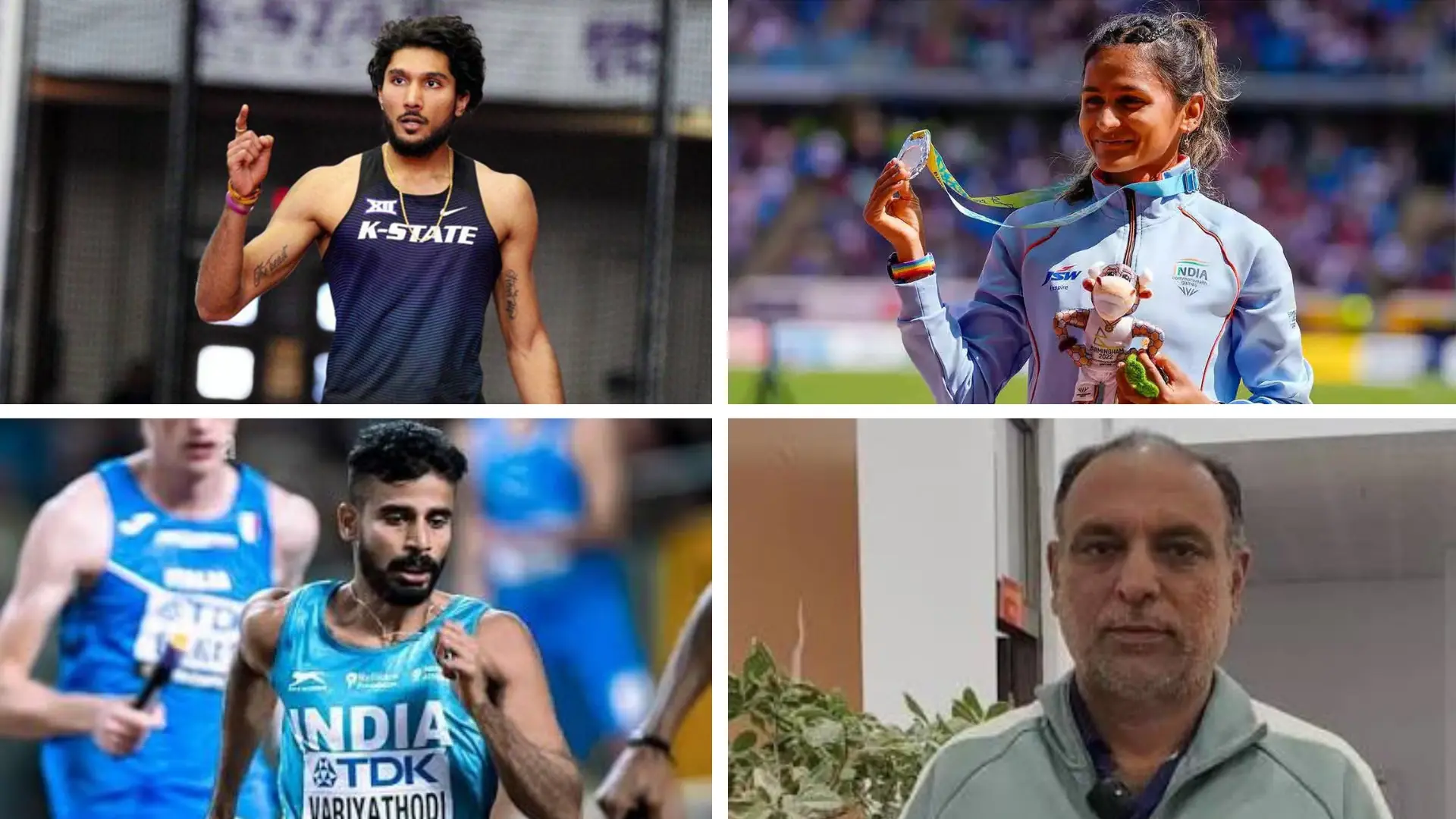
The Ministry of Youth Affairs & Sports on Monday announced the National Sports Awards 2025, recognising outstanding performances and contributions across various sporting disciplines.
The National Sports Awards are presented every year to honour sportspersons, coaches and organisations for excellence in sports and their contribution to the promotion of sporting culture in the country.
Based on the recommendations of the Selection Committee chaired by former Supreme Court Judge Justice (Retd.) Arun Kumar Mishra, the Government has decided to confer awards under various categories.
Arjuna Awards 2025
A total of 17 sportspersons have been selected for the Arjuna Award for outstanding performance in Sports and Games 2025. The award recognises athletes for consistent performances over the previous four years, along with qualities of leadership, sportsmanship and discipline.
The awardees are:
1. Tejaswin Shankar — Athletics
2. Muhammed Ajmal — Athletics
3. Priyanka Goswami — Athletics
4. Treesa Jolly — Badminton
5. Pullela Gayatri Gopichand — Badminton
6. Narender — Boxing
7. Vidit Santosh Gujarathi — Chess
8. Divya Jitendra Deshmukh — Chess
9. Dhanush Srikanth — Deaf Shooting
10. Lalremsiami — Hockey
11. Rajkumar Pal — Hockey
12. **Surjeet** — Kabaddi
13. **Pooja** — Kabaddi
14. Rudransh Khandelwal — Para Shooting
15. Ekta Bhyan — Para Athletics
16. Arvind Singh — Rowing
17. Akhil Sheoran — Shooting
Arjuna Award (Lifetime)
The Arjuna Award (Lifetime) is conferred to sportspersons who have made significant contributions through their performances and continued to promote sports even after retiring from active competition.
I Arumainayagam — Football has been selected for the Arjuna Award (Lifetime) 2025.
Dronacharya Award 2025
The Dronacharya Award honours coaches who have consistently delivered outstanding and meritorious work and helped sportspersons achieve excellence at international events.
Three coaches have been selected in the regular category:
* Parveer Singh — Athletics
* Chhote Lal Yadav — Boxing
* Neha Nandkumar Chavan — Shooting
The Lifetime category will honour:
* Dharmendra Singh Yadav — Boxing
* Virender Kumar — Wrestling
Rashtriya Khel Protsahan Puraskar 2025
The Army Paralympic Node, Pune has been selected for the Rashtriya Khel Protsahan Puraskar 2025.
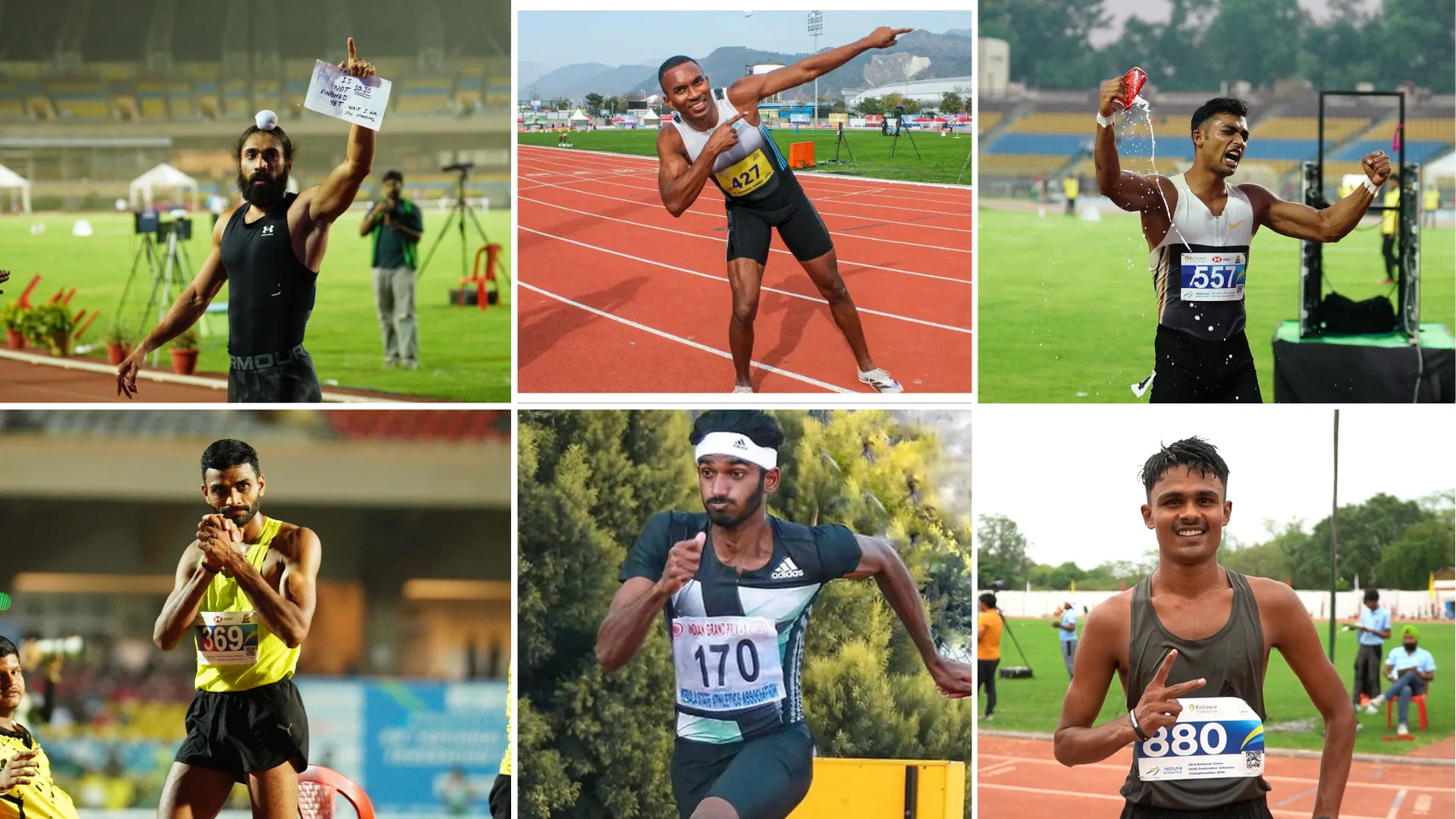
The stadium air is heavy with anticipation. While the Commonwealth Games recedes into the record books, Indian Track and Field looks ahead to the Asian Games while athletes are still trying to impress one and all in the various Series. This Indian Athletics Series 13 will take place at the JN Stadium, Hanamkonda, Warangal (Telangana) on August 18, 2026.
Men’s 100m Dash: All eyes lock onto the record board bearing Gurindervir Singh’s blistering 10.09s benchmark. Stepping onto the track are contenders like Andhra Pradesh’s Jammula Bhanu Srinivasa and Nikhil Katam, alongside Army speedsters Ankur and Dheeraj K Sreedar. But keep a close watch on Karnataka’s Manikanta H Hoblidhar, whose rapid acceleration has turned heads all season, and young Tamil Nadu flyer Nithiin Arunan.
The 200m Half-Lap War: Animesh Kujur’s national record of 20.32s looms large over a star-studded 200m field. Shaik Roshan of Andhra Pradesh and Army’s Shivam. and Abijith K. bring blistering turn speed off the bends, ready to duel with Karnataka’s Harshal Rao D and Maharashtra’s swift newcomer Abhijit Tidke.
Hurdles & Mastery: In the 110m hurdles, national record holder Tejas Ashok Shirse’s shadow hangs over veterans like Air Force’s Tarundeep Singh Bhatia and Army’s Sahil Kadyan. Meanwhile, the women’s sprint hurdles showcase pure technical artistry, featuring Railway veteran Kanimozhi C and Telangana’s dynamic Aerrolla Pranathi fighting for every hundredth of a second over the barriers.
The Crucible of Endurance: Middle & Long Distance
While sprinters live in seconds, middle- and long-distance runners live in fractions of pain, strategy, and unyielding lung capacity.
The 400m Quarter-Mile Beasts: The one-lap race is a symphony of agony. Olympians and veterans like Kerala’s legendary Muhammed Anas Yahiya and Navy’s Muhammed Ajmal V lead a formidable charge. They are hunted by fierce competitors like Army’s Baljeet. and rising star Lastly Suchiang of Meghalaya, who represents the bold new wave of northeastern distance running.
Tactical Chess in the 1500m: The metric mile is where races are won in the mind before the legs. A massive contingent from the Indian Army, anchored by Manpreet, Nitin and Pukeshwar Lal, controls the pace alongside Haryana’s Navdeep and Rahul, setting up a tactical masterclass against fierce regional rivals.
Gravity Defied: Jumps and Vaults
In the vertical and horizontal pits, milliseconds give way to inches, momentum, and flight.
High Jump Heights: Fresh off setting a towering national record of 2.31m, Sarvesh Kushare’s inspiration fuels the high jump pit. Air Force’s Aryan Arun Patil, Army’s Ajaj Raju Mulani, and Kerala’s Aromal T prepare to defy gravity, arching over the bar in graceful displays of explosive elasticity.
The Long & Triple Jump Pits: Jeswin Aldrin’s jaw-dropping 8.42m record sets the standard in the long jump, where Air Force’s Siddharth Mohan Naik and Army’s Rahul Yadav battle fierce state competitors like Tamil Nadu’s Seshank Vasu. In the triple jump, Army’s Yashdeep and JSW’s Sebastian V S eye the legendary mark of Praveen Chithravel.
Titans of the Circle: Throws
The Javelin Spear: India’s golden discipline continues to inspire awe. Following Neeraj Chopra’s legendary 90.23m benchmark, powerhouses like Police’s Rishabh Nehra, Army’s Ajay Kumar, and Haryana’s trio of Jaideep, Tushar, and Yashraj prepare to launch the spear into the stratosphere.
Shot Put Heavyweights: In the throwing circle, pure brute strength collides with technical mastery. Maharashtra’s Divya Jeethbhadur Sonar and Haryana’s Amit anchor a heavy-hitting field where every centimetre fights for the podium.
Here is the complete BIB List India Series 13
Bhubaneswar, August 17 — The vibrant city of Bhubaneswar is readying itself for an extraordinary showcase of speed, strength, and global sporting excellence as the Kalinga Stadium prepares to host the World Athletics Continental Tour Silver Meeting on August 22. Bringing together the finest talents from across the globe, this upgraded silver-tier event promises an unforgettable evening for track and field enthusiasts both in the stands and tuning in worldwide.
The prestigious one-day meet has attracted 188 competitors representing 28 nations, headlined by an exceptional contingent of 36 athletes ranked within the top 50 of the official World Athletics lists.
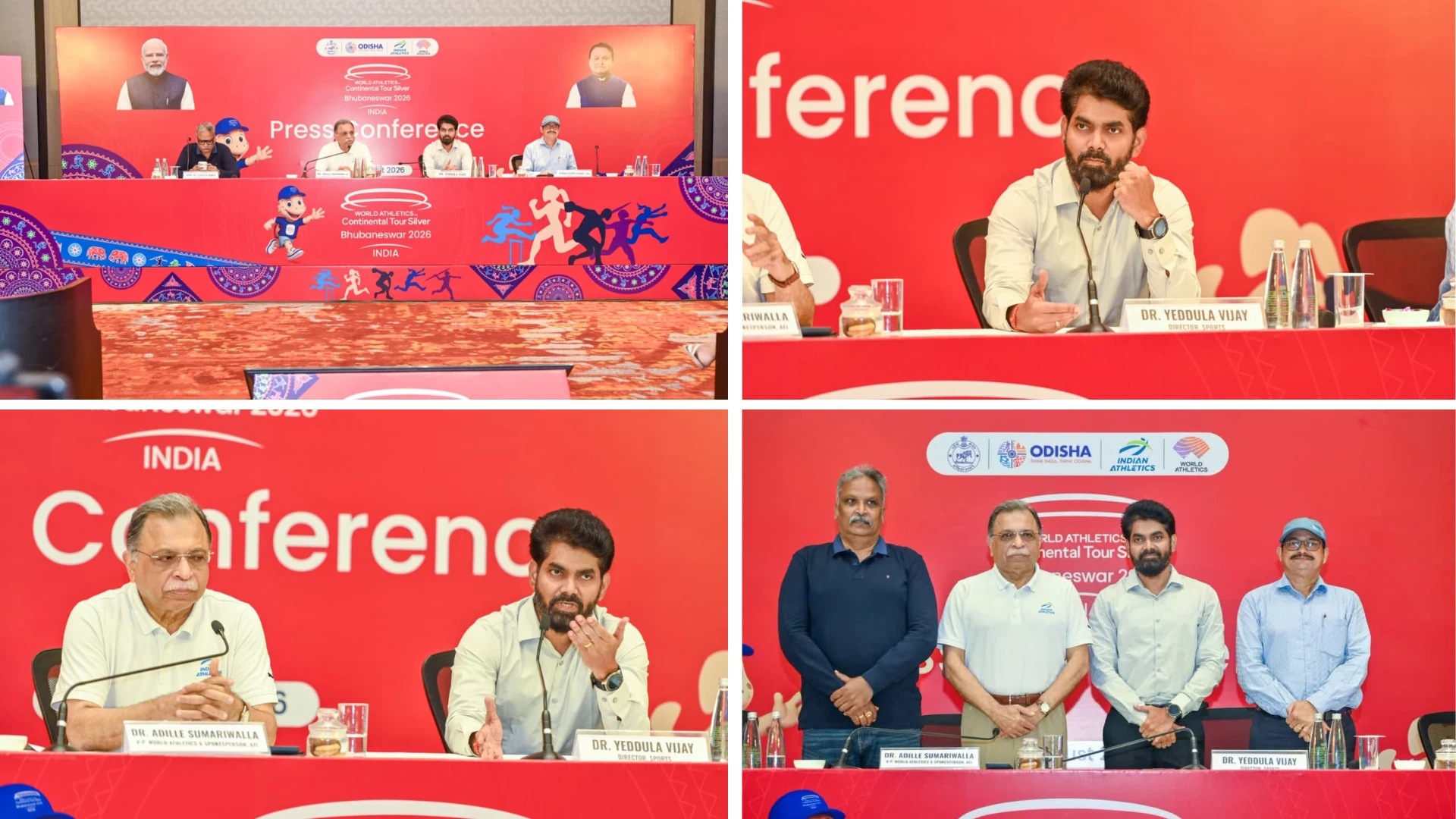
Athletics Federation of India spokesperson Dr. Adille J. Sumariwalla expressed immense excitement ahead of the event, noting that the presence of so many top competitors, including a couple in the top 10 of their respective events, will deliver high-quality competition for fans in the stadium and those watching the live streams.
Among the international stars descending upon Odisha, two standout competitors lead the charge with top 10 global rankings. Muzala Samukonga, the World No. 6 and Paris 2024 Olympic men’s 400m bronze medallist from Zambia, stands as the highest-ranked athlete in the competition, carrying an impressive 44.02-second run clocked this season. Nigeria’s Chukwuebuka Enekwechi, the World No. 10, Commonwealth Games men’s Shot Put champion, and Paris Olympic finalist, also brings world-class power to the throwing circle. Global representation is robust, featuring notable squads from Sri Lanka with 17 athletes, South Africa with 14, and Brazil with 11, contributing to a total field that includes 88 Indian competitors alongside international peers.
Leading the charge for the host nation is Murali Sreeshankar. The 27-year-old two-time Commonwealth Games silver medallist, currently ranked 15th globally in the men’s long jump, returns eagerly to the Kalinga Stadium runway, the very spot where he soared to a stellar season’s best leap of 8.38m during the AFI National Inter-State Athletics Championships on June 28. Other prominent Indian stars aiming to thrill the home crowd include men’s javelin thrower Rohit Yadav, two-time Asian Games men’s shotput champion Tajinderpal Singh Toor, and men’s 200m national record holder and local favourite Animesh Kujur. For these Indian competitors, the meeting serves as an invaluable competitive stepping stone in preparation for the upcoming Asian Games in Aichi-Nagoya next month.
Fans can expect fierce battles across several headline disciplines boasting deep international fields, particularly in the men’s 400m, shot put, and javelin throw, as well as the women’s 100m hurdles, discus throw, and javelin throw events.
Thanks to the steadfast partnership and backing of the Government of Odisha, the AFI has successfully elevated the tournament from a Bronze-level prize money event last year to a prestigious Continental Tour Silver Meeting. Dr. Sumariwalla expressed gratitude to the Odisha Government for its continued support of track and field sport, adding that they are hopeful Odisha will eventually host even a Gold Level Meeting.

The 101st Punjab State Junior Athletics Championship 2026 officially commenced with great energy and enthusiasm at the iconic Guru Nanak Stadium in Ludhiana. Running from August 16 to August 18, 2026, the prestigious three-day event brings together hundreds of elite young track and field athletes from across every district of Punjab, competing in the U-14, U-16, U-18, and U-20 (Boys & Girls) age groups.
Grand Inauguration & Key Dignitaries
The opening ceremony was inaugurated by the Senior Deputy Mayor of Ludhiana as the Chief Guest of Day 1, who officially declared the championship open. In his keynote address, he commended the athletes for their dedication and emphasized the vital role of sports in fostering youth development, discipline, and drug-free healthy living across the state.
The grand opening also witnessed the presence of notable sports icons and office-bearers of the Punjab Athletics Association (PAA):
- S. Sukhdev Singh Pannu – Dronacharya Awardee, Chief Coach, and PAA President
- Sh. Prem Singh ji – Honorary General Secretary, PAA
- Sh. Rampartap ji – Vice President, PAA & Senior Athletics Coach
- Sh. Satvir S. Atwal (PPS) – President, PAA & Senior District Athletics Officials
Organizers emphasized that this landmark 101st edition serves as the official selection platform for Punjab’s state athletics squad, with top performers earning spots in upcoming national competitions, including the 21st National Youth Athletics Championships (Sept 1–3, 2026), the North Zone Junior Athletics Championships (Sept 14–16, 2026), and the 41st National Junior Athletics Championships (Oct 23–27, 2026).
Key Results & Highlights from Day 1
Day 1 delivered high-octane action on the track and field, with several standout athletes meeting or exceeding national qualification marks:
Under-20 (U-20) Division
- GIRLS U-20 — 1500m Run: Diya Rana (Ropar) took gold with a time of 5:09.10, followed by Harbinder Kour (Barnala) and Mehakdeep Kaur (Ludhiana).
- BOYS U-20 — 1500m Run: Karanvir Singh (Amritsar) secured 1st place in 4:11.96, ahead of Sudhakar Singh (Ludhiana) and Davinder Singh (Jalandhar).
- GIRLS U-20 — 400m Run: Maya (Jalandhar) clinched gold with an impressive 56.81s (National Q: 58.50s), closely followed by Mehardeep Kaur (Patiala) at 57.77s, both securing national qualification.
- GIRLS U-20 — Shot Put: Amanat Kamboj (Fazilka) dominated the event with a throw of 12.69m (National Q: 11.00m), followed by Dikshita (Hoshiarpur) with 11.88m, both qualifying for nationals.
- GIRLS U-20 — High Jump: Shukriya (Muktsar) secured 1st place clearing 1.38m, followed by Mamta (Bathinda).
Under-18 (U-18) Division
- GIRLS U-18 — 400m Run: Sehnoor Bawa (Sangrur) put on a blistering display, winning gold in 54.53s (National Q: 1:03.00). Himanshi (Fazilka) and Tasneem Kaur Dhillon (Barnala) also secured national qualification spots.
- GIRLS U-18 — Shot Put: Jasmine Kaur (Ropar) threw an exceptional 15.46m (National Q: 11.50m) to take gold, followed by Gurkanwal Kaur (Patiala) and Jannat (Fazilka).
- GIRLS U-18 — Discus Throw: Komalpreet Kaur (Bathinda) captured 1st place with a stellar throw of 40.63m (National Q: 33.00m), closely trailed by Hushaindeep Kaur (40.39m) and Divjot Kaur (38.89m), both from Patiala.
- GIRLS U-18 — High Jump: Gagandeep Kaur (Bathinda) claimed gold clearing 1.48m (National Q: 1.45m), followed by Japjot Kaur (SBS Nagar) at 1.46m and Tamanna Devi (Muktsar) at 1.41m.

All lingering doubts regarding Armand “Mondo” Duplantis’s recent fitness and form were emphatically put to bed on Sunday at the 2026 European Athletics Championships in Birmingham. Despite an uncharacteristic loss in Stockholm in June and a groin twinge that forced his retirement in London in July, the Swedish superstar delivered a masterclass under the lights at the Alexander Stadium to secure his fourth successive European pole vault crown with a championship record clearance of 6.15m.
While Duplantis ultimately reigned supreme, most pole vaulters would feel that they are slowly inching up close to him. Emmanouil Karalis provided a genuine, high-stakes threat throughout the night, clearing 6.00m and narrowly missing what would have been a stunning clearance at 6.10m before having to settle for silver. Meanwhile, France’s Baptiste Thiery rounded out the podium with a bronze-winning vault of 5.85m.
Reflecting on the hard-fought victory, Armand Duplantis shared, “The lead-up has been very difficult and stressful… Being here healthy and winning gold is great. I think Emmanouil brings that out of me and brings the best out of the sport.”
Emmanouil Karalis echoed the competitive yet amicable spirit of the evening, noting, “I had fun out there. Hopefully, at the next competition, I can jump even higher… Mondo was saying to me when we finished that we need to go get a beer together.”
Bronze medallist Baptiste Thiery also looked toward the future, adding, “To share the podium with Duplantis and Karalis, that is an honour. But next time, I will jump higher to get closer to them.”