
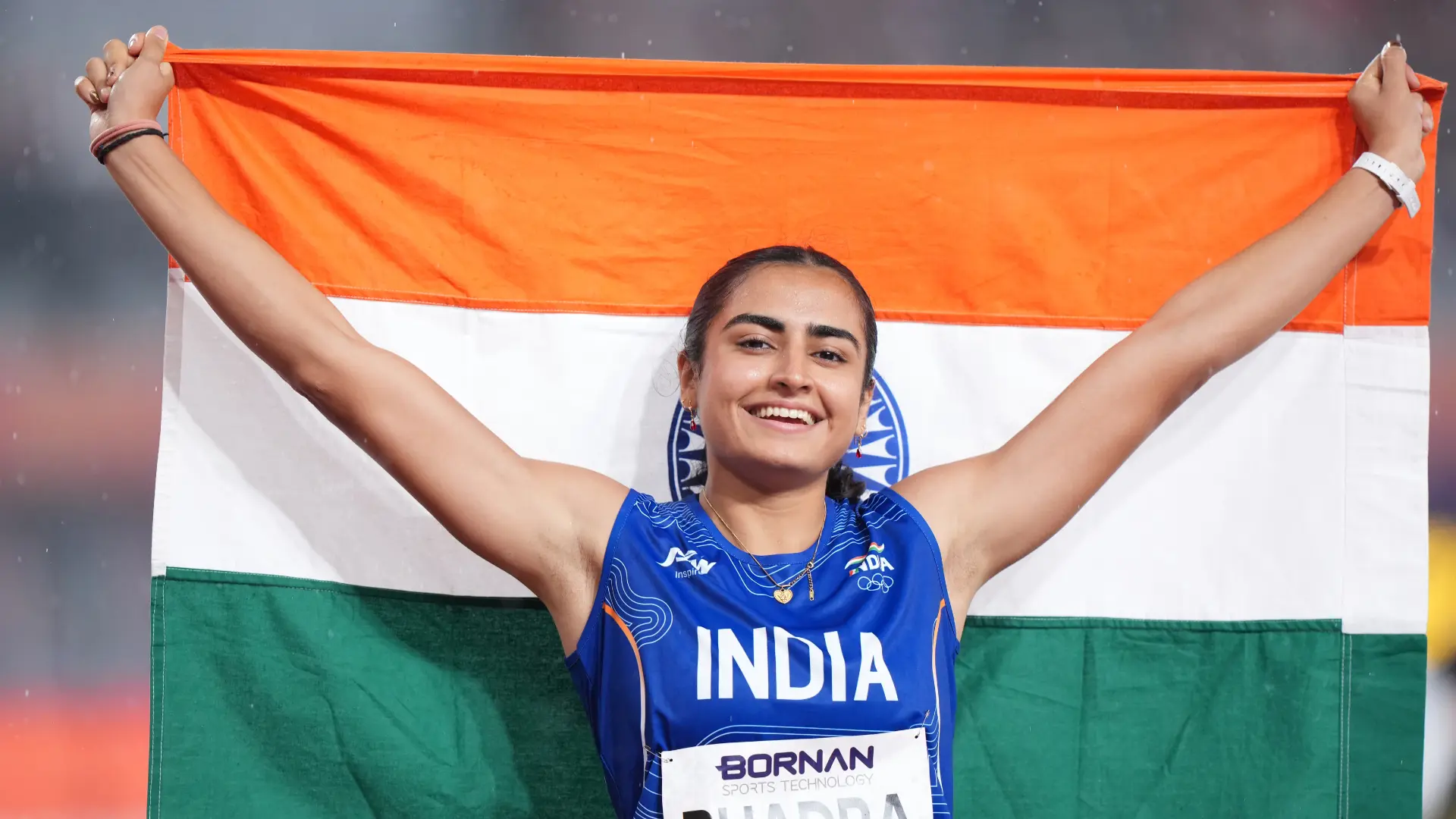
India’s sprint sensation Harita Bhadra won a bronze medal in the women’s 200m final at the 2026 Asian Games in Aichi-Nagoya.
Bhadra clocked 23.20 seconds in a dramatic race that went down to a photo finish. She secured third place by just 0.01 seconds, edging out Japan’s Abigeirufuka Ido.
Harita Bhadra Wins Bronze in Nail-Biting Photo Finish
Bhadra faced a strong international field in the women’s 200m final. She held her nerve in the closing stages to secure a place on the podium.
The Indian sprinter finished in 23.20 seconds, while Ido crossed the line in 23.21 seconds.
Singapore’s Shanti Pereira won gold with a season-best time of 22.78 seconds. China’s Chen Yujie claimed silver in 22.93 seconds.
The bronze medal marked a significant achievement for Bhadra in her maiden Asian Games appearance. Her podium finish also added to India’s athletics medal tally.
Harita Bhadra’s Breakthrough Season
Bhadra’s bronze medal capped a strong season on the track. She entered the Asian Games after delivering several impressive performances.
Earlier in the season, she won the women’s 60m national indoor title in 7.32 seconds.
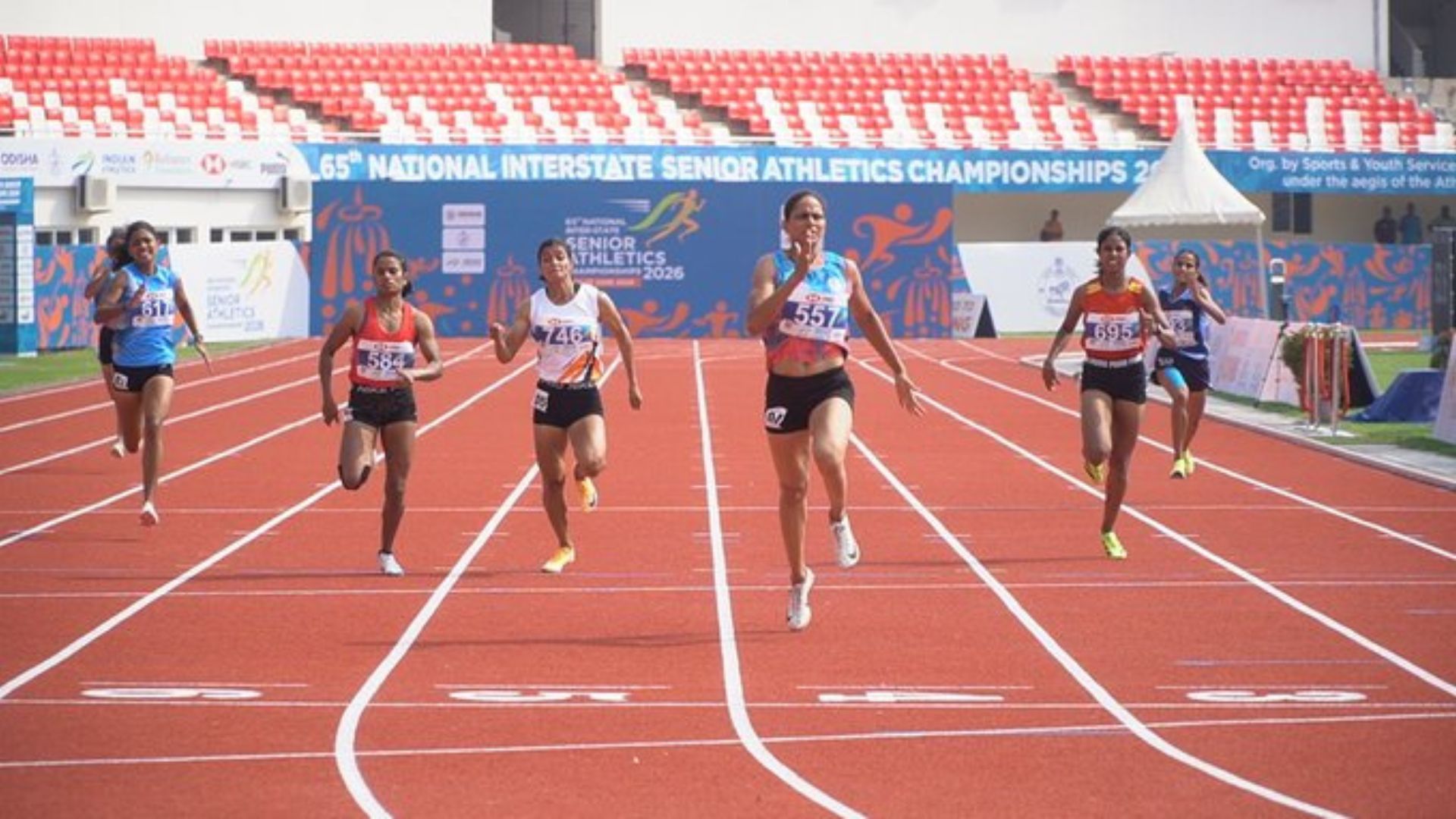
Her form continued at the National Inter-State Senior Athletics Championships in Bhubaneswar in June. There, she clocked a personal best of 23.14 seconds in the 200m.
The performance was also India’s fastest 200m time in three years. It helped her secure qualification for the Asian Games.
Bhadra also impressed in the 100m at the Indian Athletics Series final. She clocked 11.22 seconds, establishing herself among the fastest women in Indian athletics history.
Harita Bhadra Makes Her Mark on the Asian Stage
Bhadra has now translated her domestic performances into an international medal. Her bronze medal highlights her progress and potential in Indian sprinting.
With her 200m podium finish, she has established herself among Asia’s leading sprinters.
A Stunning Turnaround on the Big Stage
A High-Calibre Podium and Solid Team Effort
A Proud Moment for Indian Athletics
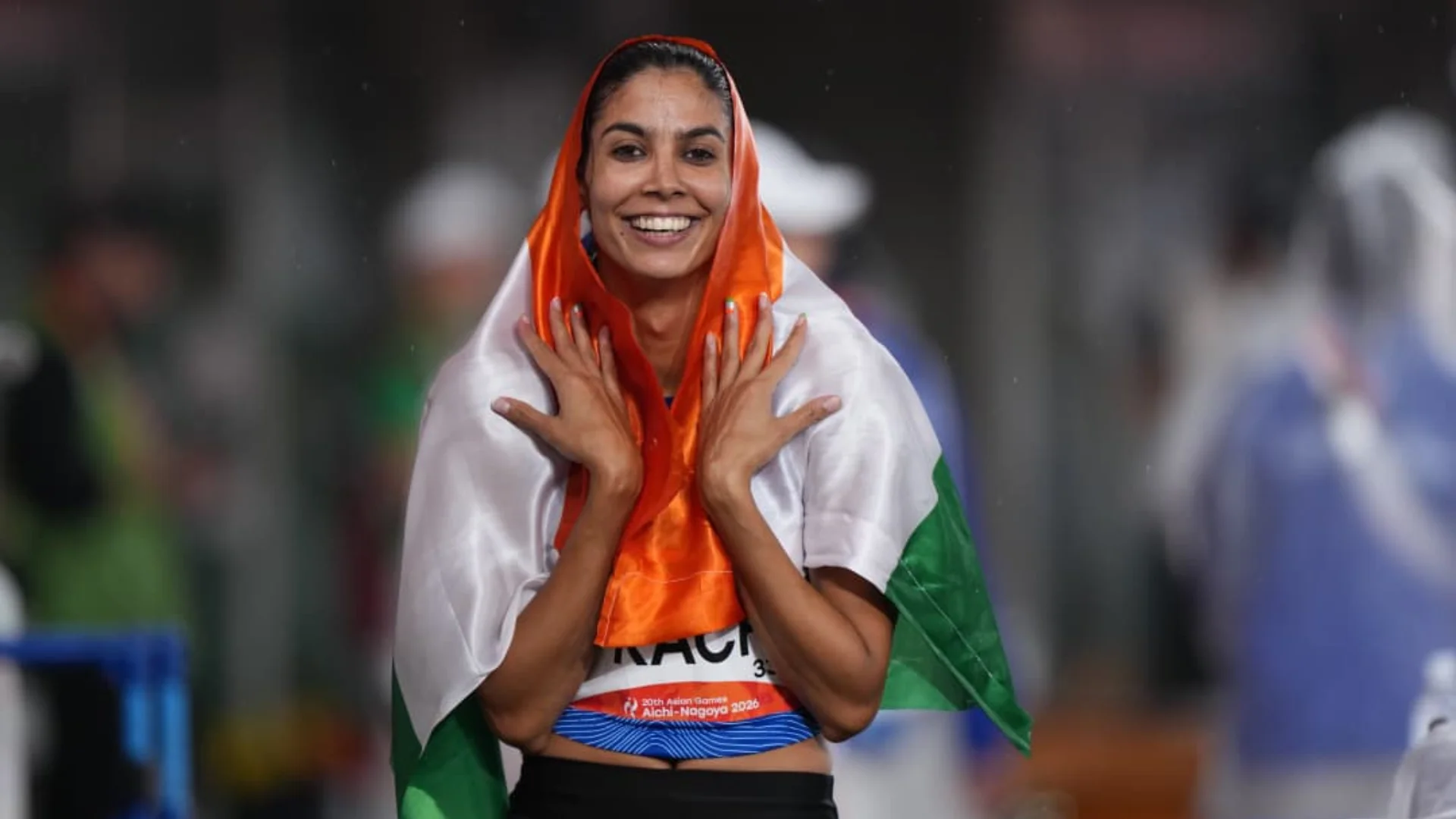
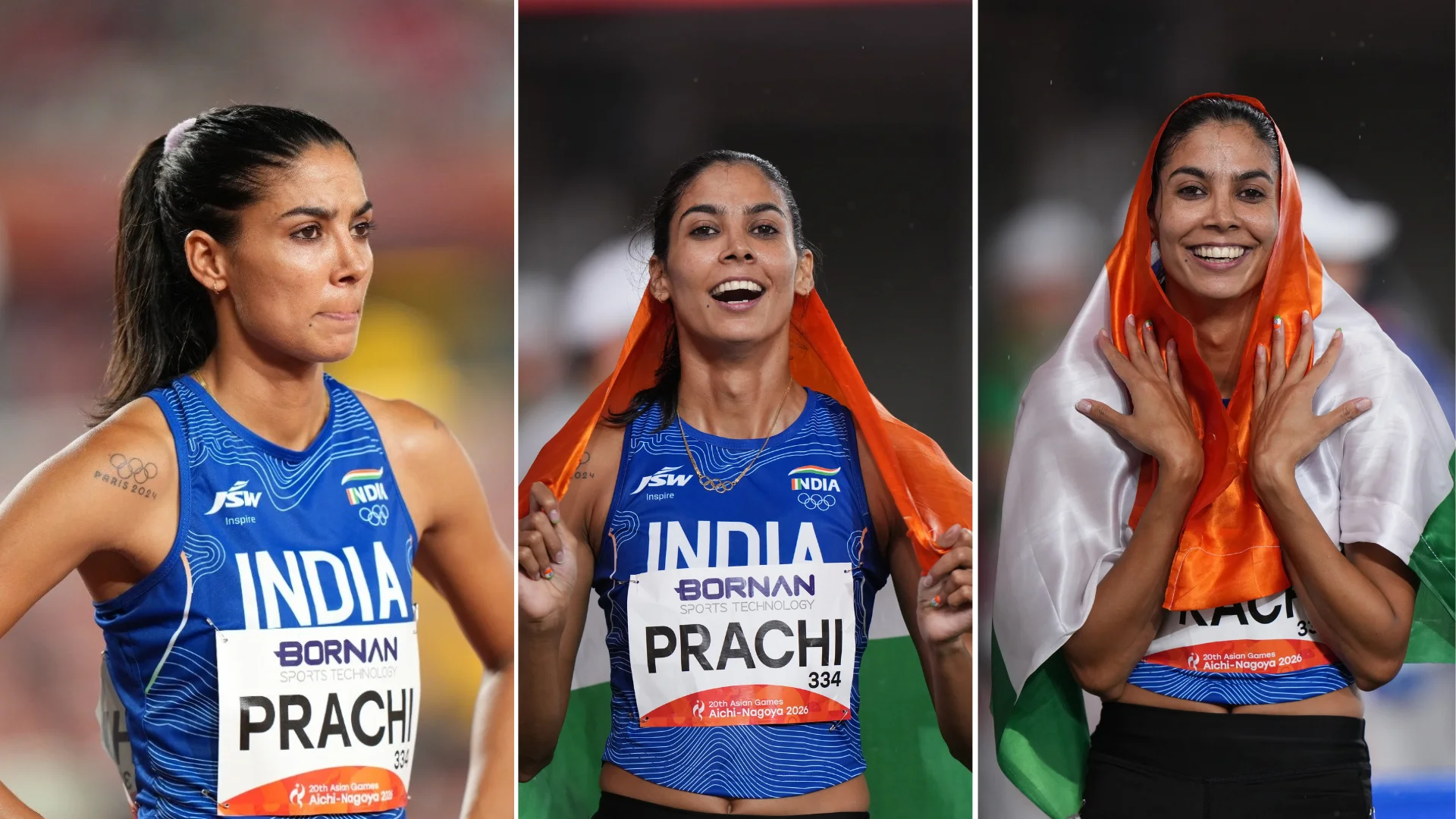
Aichi-Nagoya: India will have two representatives in the women’s 400m final at the Asian Games. Kiran Pahal and Prachi qualified after strong performances in their respective semifinals on Friday.
Pahal finished second in Heat 2 with a time of 53.44 seconds. Meanwhile, Prachi clocked 53.46 seconds to finish third in Heat 3.
Prachi secured her place in the final as one of the fastest non-automatic qualifiers. As a result, both Indians will compete in Saturday’s medal race.
Kiran Pahal Secures Automatic Qualification
Pahal’s individual 400m campaign follows an important contribution to India’s mixed 4x400m relay team.
She ran in the crucial qualifying heat that helped India secure a place in the mixed relay final. This added another demanding race to her Asian Games schedule.
The Haryana international has been one of India’s established 400m runners in recent seasons.
Earlier this week, she won the women’s 400m at the Indian Athletics Series meet in Surat. She clocked 53.49 seconds to claim the victory.
The 25-year-old had also recorded a season best of 52.89 seconds at the Ludhiana leg of the Indian Athletics Series.
Her personal best stands at 50.92 seconds. She also represented India at the 2024 Paris Olympic Games.
At the Asian Games, her 53.44-second performance secured automatic qualification from her semifinal. Consequently, she will now compete for a place on the podium.
Prachi Qualifies Through Fastest Non-Automatic Spots
Prachi took a different route into the final.
She clocked 53.46 seconds to finish third in Heat 3. Although she did not secure automatic qualification, her time was fast enough to earn one of the available non-automatic places.
Her performance means India will have two runners in Saturday’s final.
Both athletes will now have an opportunity to challenge the continent’s leading quarter-milers.
Kiran Pahal Brings Major Championship Experience
For Pahal, the final will come after an already busy Asian Games campaign.
Her schedule has included duties in the mixed 4x400m relay. She has also competed in the individual 400m.
Her experience at major championships, including the Paris Olympics, will be valuable as she returns to the track for the medal race.
Meanwhile, Prachi will also have an opportunity to compete for a medal after securing her place through her semifinal time.
Asian Games Women’s 400m Final: Date and Time
The women’s 400m final is scheduled for September 26 at 6:15 PM IST.
India’s two finalists now have one race remaining in their pursuit of an Asian Games medal.
-
Kiran Pahal: 53.44 seconds — Second in Heat 2.
-
Prachi: 53.46 seconds — Third in Heat 3, qualified as a non-automatic qualifier.
Both are through to the final. Now, the focus shifts to the Asian Games women’s 400m medal race.
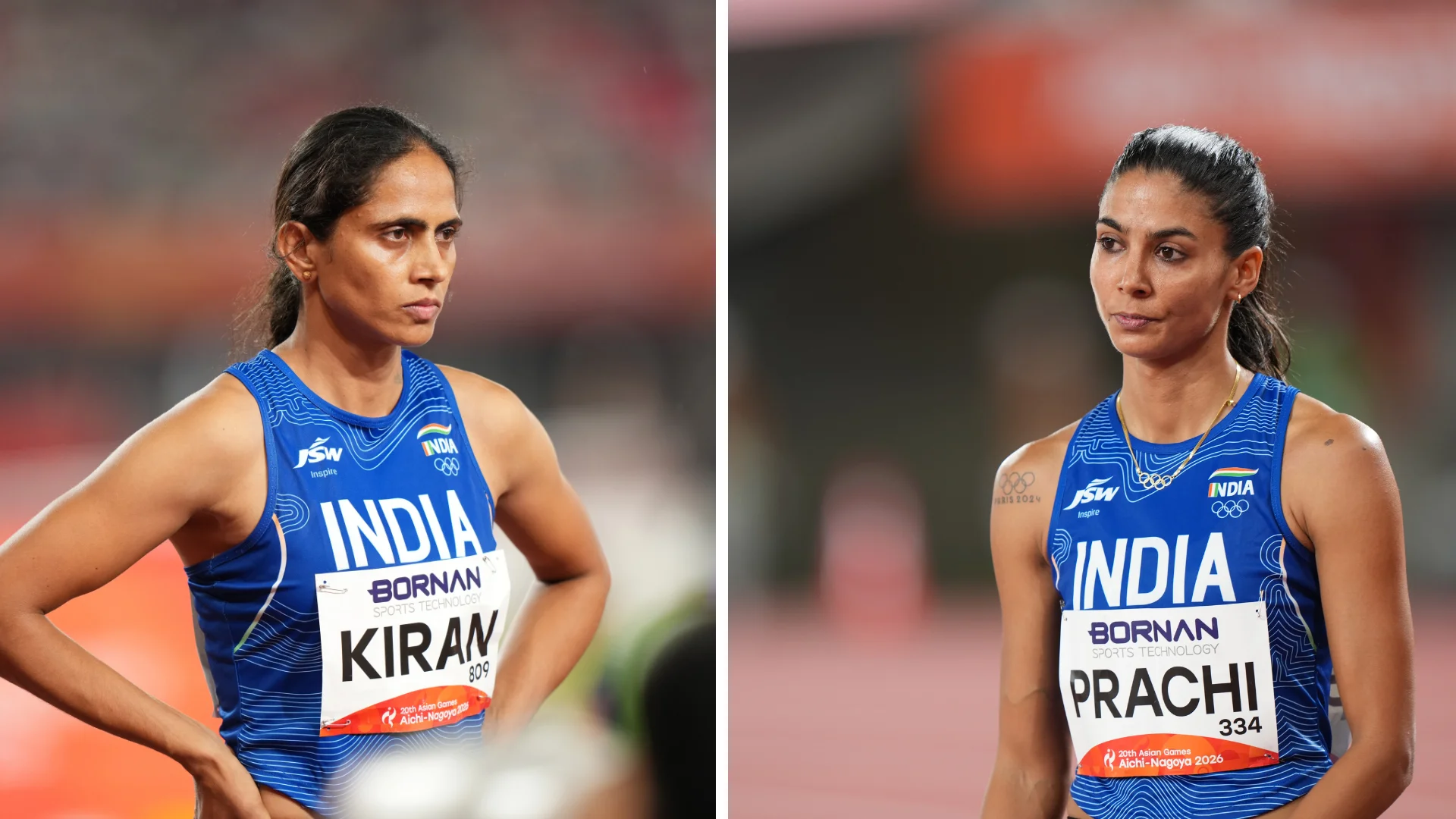
Maharashtra’s Aishwarya Mishra won the women’s 400m title at the Indian Series Final, clocking a season-best 52.51 seconds.
Aishwarya held her composure in a closely contested race to take the top spot. Prachi finished second in 52.75s, while Poovamma Raju took third in 52.76s.
Aishwarya Mishra Leads Women’s 400m
The top three finishers were:
| Position | Athlete | Time |
|---|---|---|
| 1 | Aishwarya Mishra (Maharashtra) | 52.51s |
| 2 | Prachi | 52.75s |
| 3 | Poovamma Raju | 52.76s |
The win gives Aishwarya a positive result in her season. Her 52.51s mark is her new season-best performance.

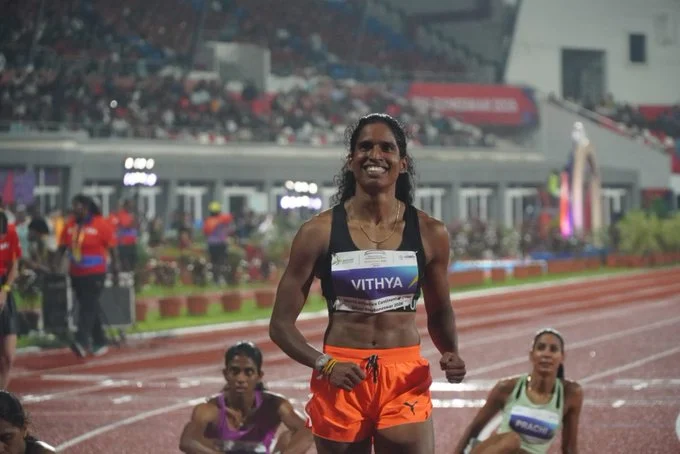
India’s Vithya Ramraj delivered a commanding performance in the women’s 400m final at the World Athletics Continental Tour Silver meet in Bhubaneswar, storming to victory in 51.96s.
Representing Tamil Nadu, Ramraj produced a strong run to comfortably top an all-Indian podium, finishing more than half a second ahead of Prachi of Uttar Pradesh, who claimed silver in 52.57s. Karnataka’s Poovamma Raju Machettira completed the podium with 52.78s.
Women’s 400m — Final
🥇 Vithya Ramraj 🇮🇳 — 51.96s
🥈 Prachi 🇮🇳 — 52.57s
🥉 Poovamma Raju Machettira 🇮🇳 — 52.78s
4️⃣ Kiran Pahal 🇮🇳 — 52.81s
5️⃣ Rashdeep Kaur 🇮🇳 — 53.48s
6️⃣ Lakshima Mendis 🇱🇰 — 54.07s
7️⃣ Ansa Babu 🇮🇳 — 54.27s
❌ Louise Evans 🇬🇧 — DNS
Ramraj’s victory highlighted the depth of India’s women’s 400m programme, with four Indian athletes finishing inside the top four. Kiran Pahal narrowly missed the podium, crossing the line just 0.03 seconds behind Machettira.
The race also saw Sri Lanka’s Lakshima Mendis finish sixth in 54.07s, while Great Britain’s Louise Evans did not start the final.
With Ramraj leading the way in 51.96s, the Bhubaneswar meet once again showcased the strength of India’s home contingent against international competition.
For Ramraj, the gold medal adds another strong performance to her season and underlines her position among India’s leading quarter-milers as the athletics season builds towards the major championships.
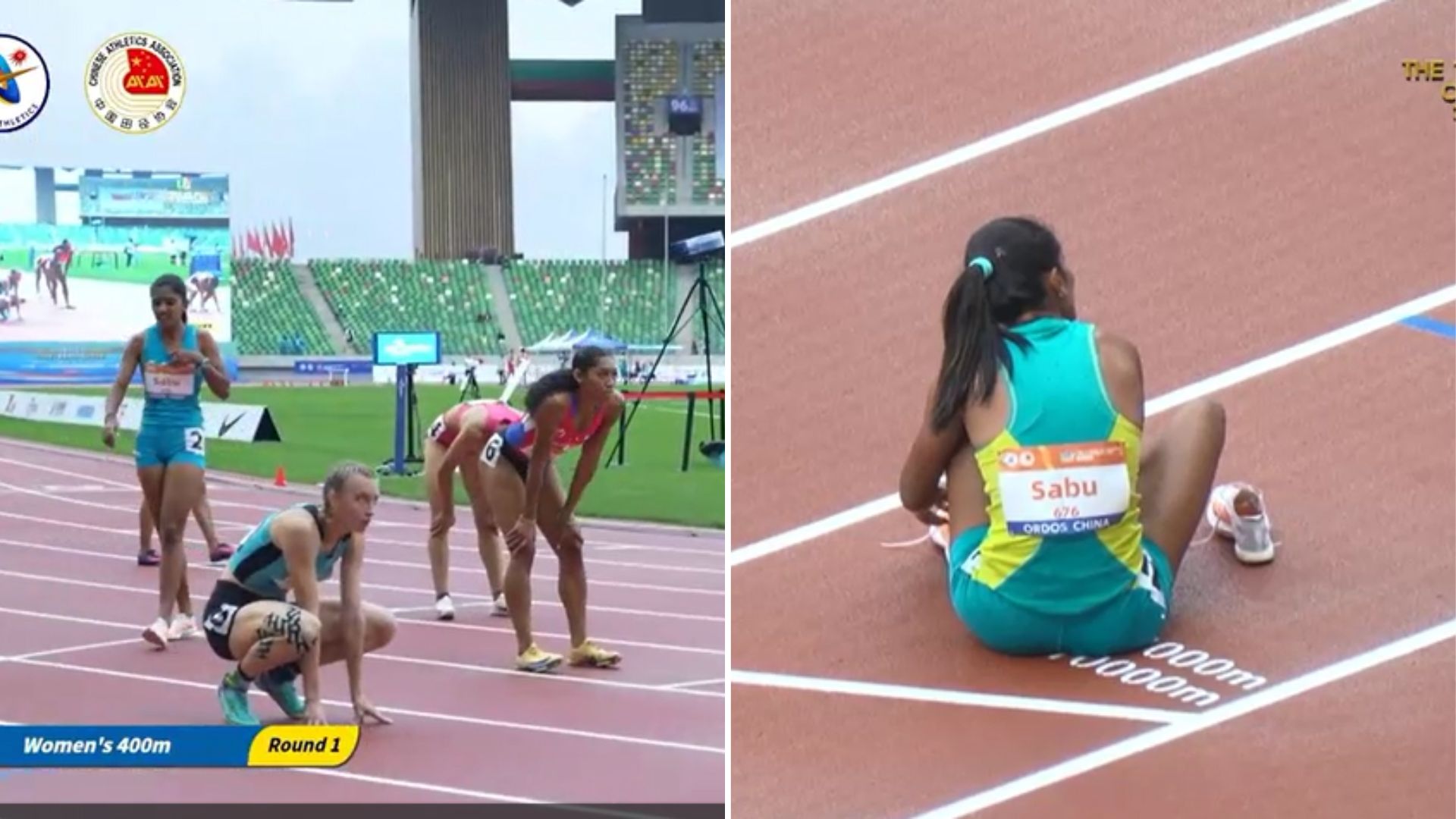
India’s Sandramol Sabu narrowly missed out on a place in the women’s 400m final at the Asian U23 Athletics Championships 2026, following the conclusion of the qualifying heats in Ordos, China.
Competing in Heat 1, Sandramol clocked 55.00s to finish sixth, falling short of the qualification criteria for the championship final. Despite a determined effort, her time was not enough to secure one of the available qualification spots in a highly competitive field.
The qualification format saw the top three finishers from each heat (Q) automatically advance to the final, with the next two fastest athletes (q) across both heats completing the eight-athlete lineup. Sandramol was unable to finish within the automatic qualification positions or secure one of the two fastest non-automatic qualifying spots, bringing India’s campaign in the women’s 400m to an end.
The fastest performance of the qualifying round came from Naomi Johnson of the Philippines, who impressed with a time of 52.10s across the two heats. Meanwhile, Sri Lanka’s Jithma Shenari Gamage claimed victory in Heat 2, clocking 53.94s to comfortably progress to the final.
Although Sandramol will not feature in the medal race, competing at the Asian U23 Championships provided another valuable opportunity to test herself against some of the continent’s leading young quarter-milers. The championships continue to serve as an important stepping stone for athletes aiming to transition successfully to the senior international level.
India will now turn its attention to the remaining track and field events, where several athletes remain in contention for medals. While the women’s 400m campaign concluded in the heats, the Indian contingent will be looking to build on its encouraging performances elsewhere at the inaugural Asian U23 Athletics Championships as the competition progresses in Ordos.
The women’s 400m final at the 65th National Inter-State Senior Athletics Championships 2026 produced one of the most remarkable races in recent domestic athletics history, with five athletes surpassing the Asian Games qualification standard in a single final.
Leading the field was Prachi, who claimed the national title with a superb run of 53.24s. She held off a strong challenge from an exceptionally competitive field to secure the gold medal and emerge as the fastest athlete in the race.
Olympian Kiran Pahal finished second in 53.45s, continuing her consistent performances on the national circuit. Close behind her was Devyaniba Zala, who clocked 53.46s to claim the bronze medal after another impressive run.
The depth of the race became even more evident as Neeru Pathak crossed the finish line in 53.47s, just one hundredth of a second behind the bronze medallist, while Rashdeep Kaur completed the top five with 53.61s. All five athletes comfortably finished inside the Asian Games qualification standard, making the final one of the highest-quality women’s 400m races witnessed at the Interstate Championships.
The extraordinary standard of competition highlighted the rapid progress being made in Indian women’s quarter-mile running. Having five athletes achieve the qualification benchmark in a single race reflects the growing depth in the event and provides a significant boost for Indian athletics ahead of major international competitions.
Although all five athletes have successfully achieved the qualification standard, their performances do not automatically guarantee selection for the Asian Games. The Athletics Federation of India (AFI) Selection Committee will make the final decision on the composition of the Indian team for the 2026 Asian Games.
The Interstate Championships have once again demonstrated their importance as the country’s premier domestic athletics competition, and the women’s 400m final will undoubtedly be remembered as one of the standout events of the meet. With five athletes producing qualification-standard performances in the same race, Indian women’s sprinting has showcased unprecedented depth and competitiveness.
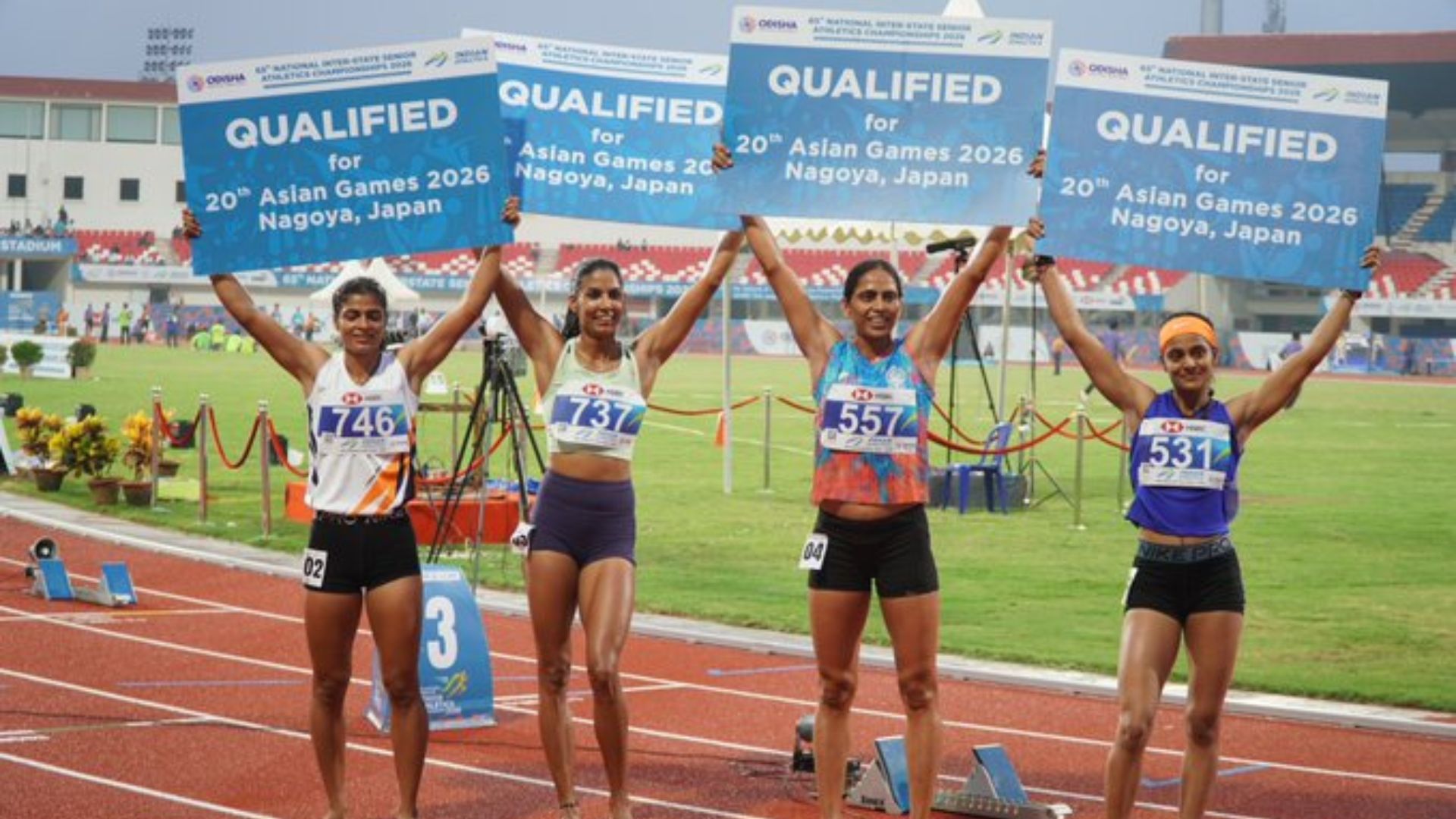
The women’s 400m final at the 65th National Inter-State Senior Athletics Championships 2026 lived up to expectations, producing one of the most competitive races of the meet as all three medal winners surpassed the Asian Games qualification standard of 53.72s.
Representing Uttar Pradesh, Prachi emerged victorious after a strong finish, stopping the clock at 53.24s to clinch the national title. Delivering a composed race from start to finish, she held off a determined challenge from an experienced field to secure the gold medal and achieve the Asian Games qualification standard.
Olympian Kiran Pahal claimed the silver medal with a time of 53.45s, once again demonstrating her consistency at the national level. The experienced quarter-miler remained in contention throughout the race and comfortably dipped below the qualification benchmark to strengthen her credentials ahead of future international competitions.
The battle for bronze was equally intense, with Devyaniba Zala crossing the finish line in 53.46s, just one hundredth of a second behind Kiran. Her performance not only earned her a place on the podium but also secured the Asian Games qualification standard, completing a remarkable sweep by the top three finishers.
The narrow margins between the medal winners highlighted the growing competitiveness of Indian women’s one-lap running. With only 0.22 seconds separating gold and bronze, the final showcased the depth and quality emerging in the event, providing a positive sign for Indian athletics.
Having all three podium finishers qualify for the Asian Games benchmark in the same race reflects the progress being made in the women’s 400m. The Interstate Championships once again proved to be an ideal platform for athletes to deliver qualification-standard performances under championship conditions.
Prachi’s national title, combined with the outstanding runs by Kiran Pahal and Devyaniba Zala, made the women’s 400m one of the standout events of the championships. Their performances underline India’s increasing strength in the event and offer encouraging prospects for the country’s quarter-milers on the international stage.
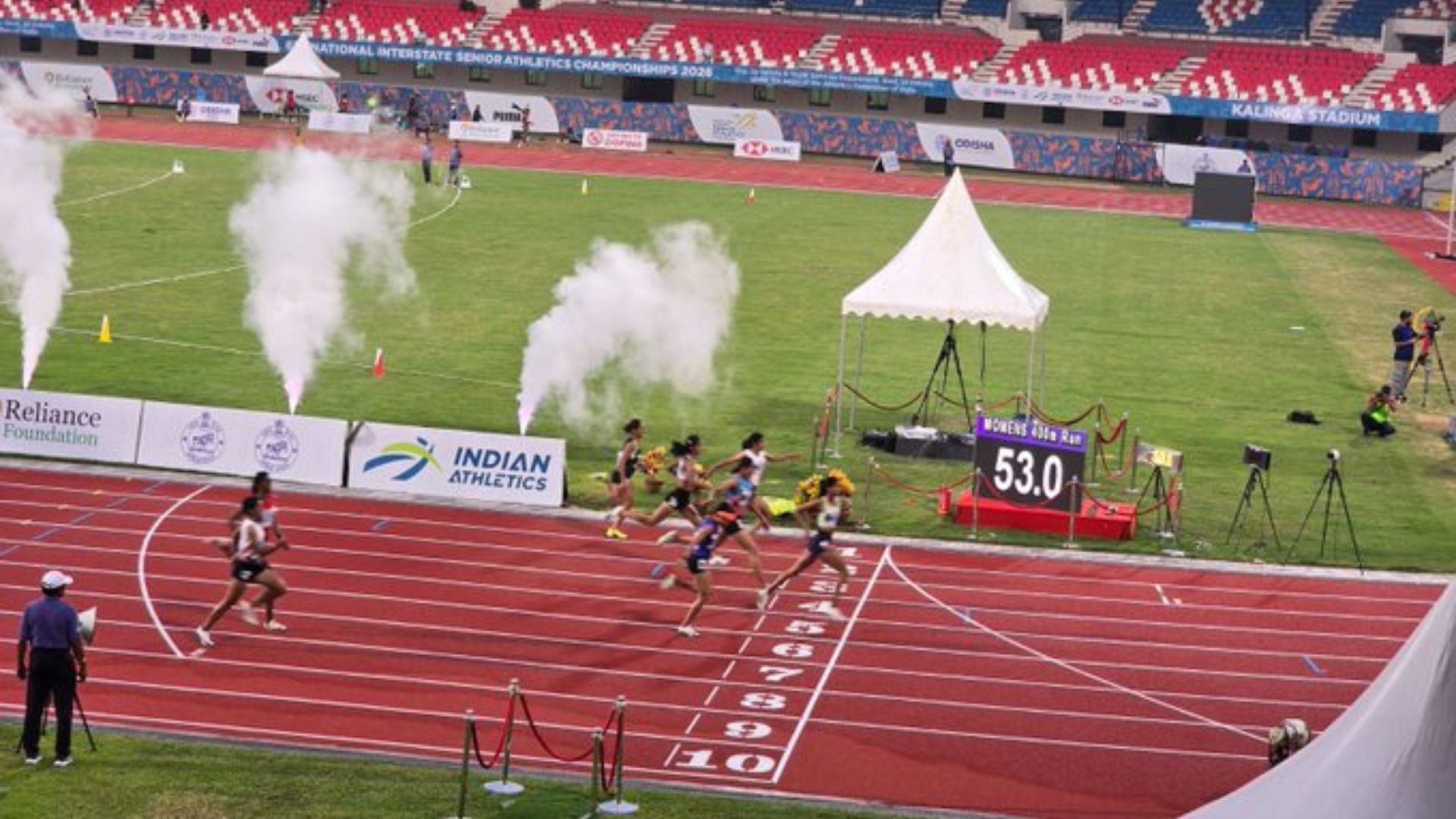
The women’s 400m produced one of the standout performances of the 65th National Inter-State Senior Athletics Championships, with four Indian quarter-milers breaching the Asian Games qualification standard during the heats in Bhubaneswar.
Veteran sprinter Poovamma Raju led the field, clocking 53.35 seconds, the fastest time across all the heats. Close behind were Kiran Pahal in 53.42s, Aishwarya Mishra in 53.61s, and Rashdeep Kaur in 53.69s, with all four athletes comfortably achieving the qualifying mark for the 2026 Asian Games.
Women’s 400m Heats
- Poovamma Raju – 53.35s (Fastest qualifier)
- Kiran Pahal – 53.42s
- Aishwarya Mishra – 53.61s
- Rashdeep Kaur – 53.69s
The performances underline the growing depth in Indian women’s one-lap sprinting, an event in which the country has traditionally enjoyed considerable success, particularly in relay competitions at the continental level.
Poovamma, one of India’s most experienced 400m runners, once again demonstrated her consistency by topping the qualifying charts. A multiple Asian Championships medallist and a key member of India’s relay squads over the past decade, she continues to remain competitive against a younger generation of athletes.
Kiran Pahal, meanwhile, has emerged as one of India’s leading quarter-milers in recent seasons, consistently producing performances at the international qualifying standard. Aishwarya Mishra and Rashdeep Kaur have also shown impressive progress, adding valuable depth to India’s pool of 400m runners ahead of a busy international calendar.
The timing of these performances is particularly significant. With the Asian Games and Commonwealth Games both scheduled later this year, India appears well placed not only in the individual event but also in the women’s 4x400m relay, traditionally one of the country’s strongest disciplines.
The four qualifiers will return to the track later today, when they go head-to-head in the women’s 400m semi-finals, scheduled for 6:30 pm IST.