
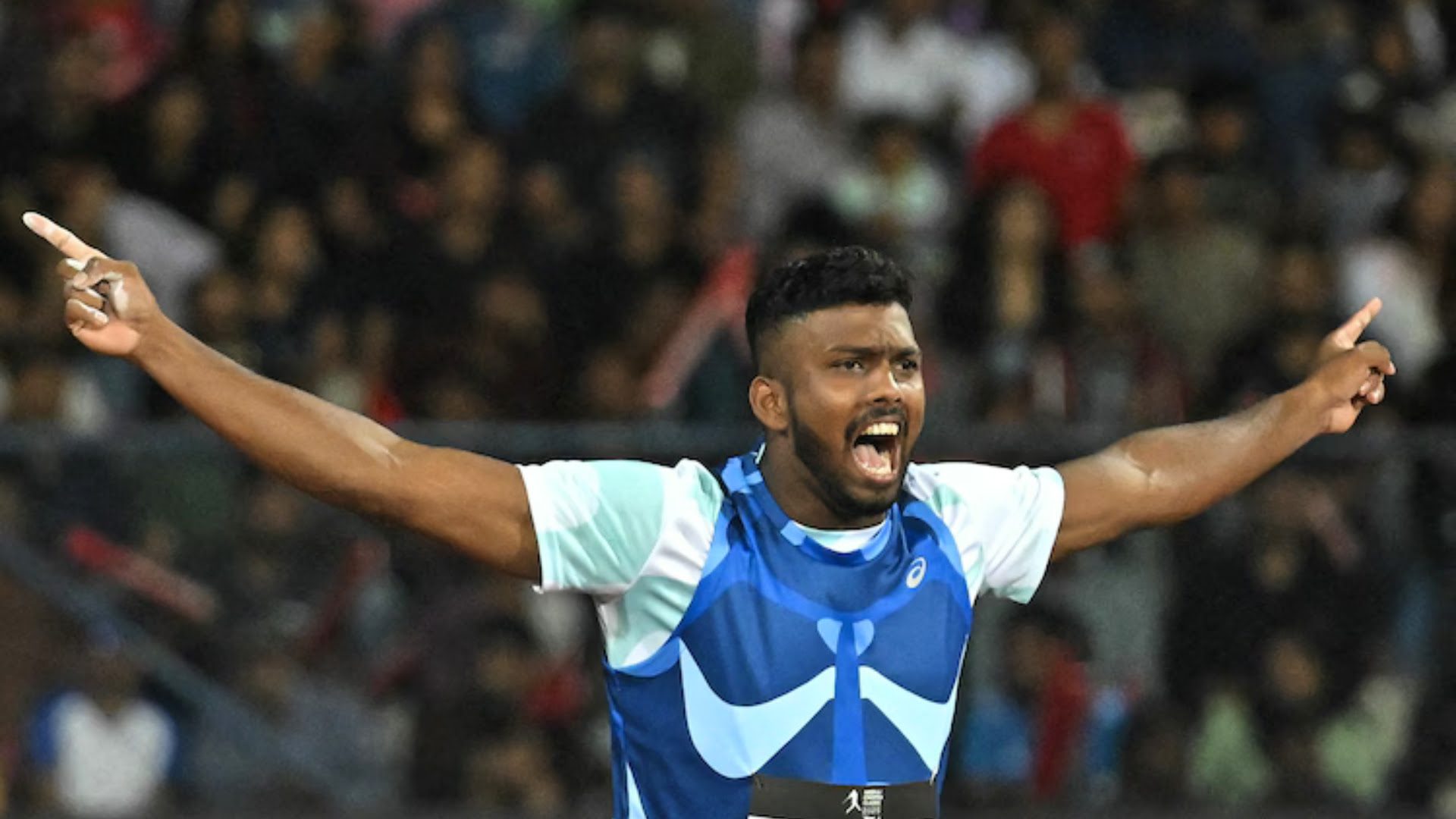
Rumesh Tharanga Pathirage continued his breakthrough season in style by winning the men’s javelin throw at the Ostrava Golden Spike meeting with a best effort of 86.57m. The Sri Lankan star produced the standout performance of the competition to finish ahead of a strong international field and further cement his place among Asia’s leading javelin throwers.
Pathirage’s victory comes just weeks after he stunned the athletics world with a massive 92.62m throw, a mark that not only established a new Sri Lankan national record but also elevated him to second on Asia’s all-time list. That sensational effort made him the world leader for 2026 and placed him among the top ten performers in javelin history.
In Ostrava, the Sri Lankan did not need to approach those extraordinary distances to secure victory. His throw of 86.57m was enough to comfortably hold off two-time world champion Anderson Peters of Grenada, who finished second with a best mark of 84.27m. Peters, one of the most accomplished javelin throwers of the modern era, remains a major contender on the global circuit, making Pathirage’s win all the more impressive.
South Africa’s Douw Smit completed the podium with a throw of 83.90m. Smit has enjoyed steady progress in recent seasons and once again demonstrated his consistency by surpassing the 83-metre mark against elite opposition.
For Pathirage, the victory represents another important milestone in what has rapidly become a career-defining year. The 22-year-old has transformed from a promising regional athlete into one of the world’s most talked-about javelin throwers. His combination of explosive power and improving technical consistency has made him a genuine medal contender at major championships.
Sri Lanka has rarely featured prominently in global throwing events, making Pathirage’s rise particularly significant. His performances have generated excitement not only within his home nation but across Asian athletics, where he has emerged as one of the continent’s brightest field-event talents.
With the season’s major championships approaching, Pathirage’s triumph in Ostrava provides further evidence that his record-breaking 92.62m throw was no one-off performance. If he can maintain this level of form, the Sri Lankan star could play a major role on the world stage and continue rewriting the record books for both his country and Asia.
By Sushant Singh
The Indian Athletics Series–9, which was announced as another opportunity for athletes to qualify for the Commonwealth Games 2026 and, in some events, the U20 World Athletics Championships 2026, concluded at the Guru Nanak Stadium in Ludhiana, Punjab.
It was already known to be a hectic, single-day event and was expected to attract heavy participation because of the qualification significance it carried. Athletes arrived prepared to deliver world-class performances, as that is what is expected of them to qualify for some of the world’s premier competitions. But the organisers appeared to fail to understand that significance or perhaps someone failed to convey the importance of the meet to them.
As per the schedule, the competition was expected to begin at 5:30 a.m. with the 10,000m race walk and end with the discus.
The mismanagement, however, had begun a day earlier.
Usually, athletes collect their bibs (chest numbers) a day before competition to avoid unnecessary hassle on the day of the event. This time, they were instructed to collect them on the morning of the competition itself. Even then, the process could have been smooth had it been properly managed. Instead, it became a nightmare, according to athletes who spoke to us.
A support staff member who travelled with some of the athletes said in a subdued voice, clearly disappointed:
“It was a mess. National record holders and elite athletes were made to wait for long hours just to collect their bibs. Rather than finding a solution as time passed, the bib distributors — some inexperienced volunteers — threw all the bibs onto the ground, and athletes had to search for their own in a mountain of bibs.”
He further added:
“It was a scene hard to watch. Once the numbers got mixed up, it became very difficult for athletes to find their own.”
He spoke with disappointment, thanking God he had not brought some more elite athletes who were initially supposed to compete.
An elite coach spoke candidly:
“For viewers, organisers or volunteers, it’s just a bib — a piece of paper with a number written on it, used to identify athletes. But for an athlete, it is a feeling of competition. It is his identity. A bib always holds a special place in an athlete’s heart.”
The bib does hold a special place. In recent years, it has become common to see athletes posing with their bibs after victories, often writing messages on them after winning medals or breaking national records. It may seem insignificant to outsiders, but for athletes, it represents belief before competition and memories after it.
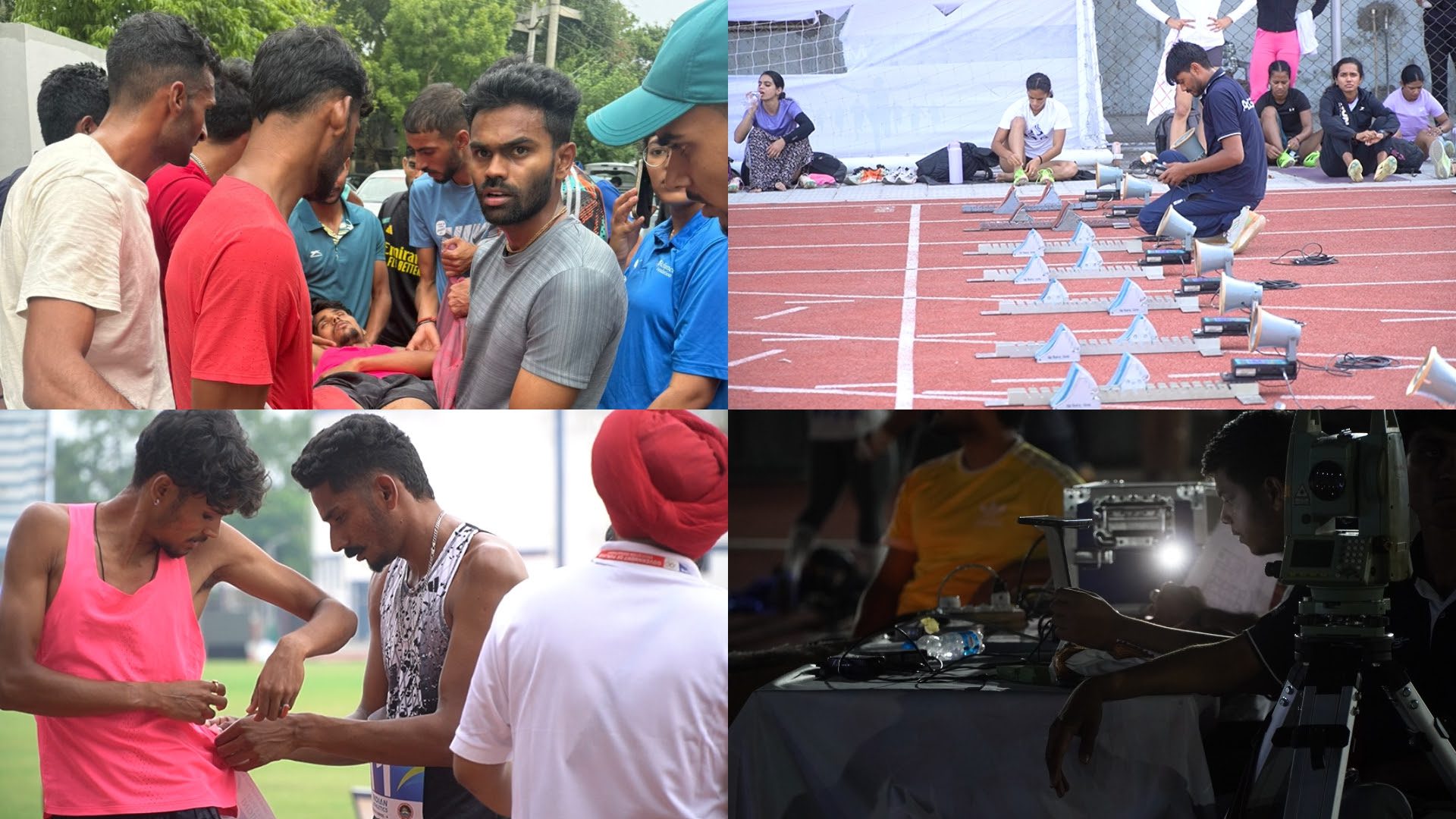
The chaos was evident even on the track. Our cameras captured an 800m athlete wearing two different bibs with similar numbers on the front and back.
The men’s 800m final began, and 2018 Asian U20 champion Anu R started strongly before collapsing in the final 100 metres. What came as a shock was that no immediate medical support arrived, as the medical team and ambulance were allegedly late. Athletes themselves rushed to help him after he collapsed on the track, reportedly suffering severe pain caused by a kidney stone. Later, fellow athletes carried him to the hospital.
A coach, who was watching the livestream from elsewhere, also called and said:
“Athletes travel to different states, paying hefty entry fees just to complete the federation’s mandatory competitions. If something had happened to him, who would be responsible? Everyone carries these worries in their hearts, but who do they talk to?”
Several athletes later came up and said, “These things should be reported. Whose fault is this? Athletes pay entry fees, but in return, they get nothing. Basic facilities like drinking water and clean toilets are sometimes missing from these national meets.”
AFI has already posted a circular on its website stating that if anything happens to athletes during competition, the federation is not responsible.
But the question remains: WHO IS RESPONSIBLE?
The 100m events, which featured more than ten finals and the highest participation numbers of the meet, were delayed due to technical faults not by a few minutes, but by nearly an hour.
Athletes who had already completed their warm-ups were left sitting beside the start line, continuing their exercises simply to keep their bodies warm ahead of the races they had travelled from across the country to compete in.
One athlete joked:
“Agar hum ek minute late ho jayein toh entry nahi milti. Yahan itna late ho raha hai inki wajah se, uska kuch nahi kar sakte.”
In the U20 men’s 3000m steeplechase, a qualifying event for the U20 World Championships, one athlete’s rhythm was broken when a women’s javelin thrower reportedly came into his path during the race.
One former athlete, whose younger brother was competing, messaged us:
“Sir, aap athlete ki awaaz ho. Sir, AFI athletes ke saath bahut galat kar rahi hai. Bas AFI ko paise se matlab hai, sir.”
Even the limited media personnel present at the stadium since morning had no charging ports available to them.
Then came one of the performances of the day.
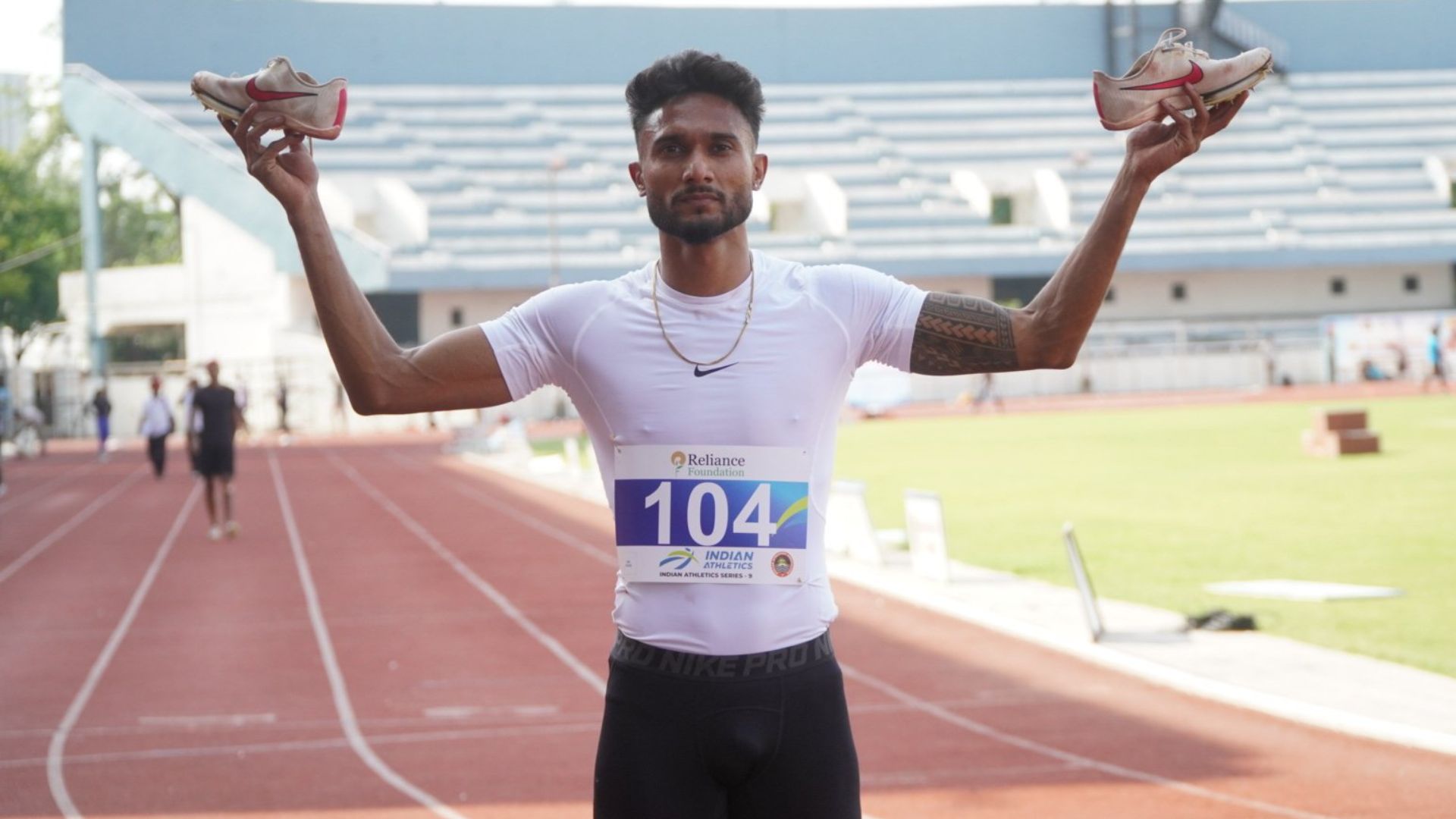
Tejas Shirse broke the national record, clocking an outstanding 13.27 seconds to breach the Commonwealth Games qualification mark. After the race, he called fellow athletes over. Joined by India’s leading hurdlers, including Krishik M and Madhvendra, they collectively raised concerns with technical officials about the conditions and urged for better organisation at national-level competitions.
They pointed out that no hurdles had been made available for warm-ups. When they moved to the main field to warm up, they were disturbed by trespassers, with no officials present to stop them.
Tejas said, “Sir, this is a Commonwealth Games 2026 qualifier. We have come to Punjab. It is a request to provide these facilities.”
The chaos did not end there.
The shot put and discus events, which were scheduled to begin around 7 p.m., continued without adequate floodlights. Discus throwers could not properly see where their implements were landing after release. Volunteers responsible for measurements raised concerns, saying they were unable to spot the discus in the darkness.
The situation escalated further when officials struggled to conduct measurements accurately. The discus competition was halted after three rounds, with the top eight finalists instructed to return the following day to complete the event.
Another group of discus throwers, who had already begun warming up for their competition, were later informed that their event too had been postponed until the next day.
The athletes from this second group approached us while leaving the premises, frustration evident, but hope still in their eyes. They questioned how they were expected to recover, sleep and return to perform at their best after already consuming caffeine and completing their carefully planned pre-competition warm-up routines.
As per AFI’s website, the federation has an Athletes’ Commission comprising nine members, including Avinash Sable, Neeraj Chopra, Anju Bobby George and Sunita Rani. But who is listening to and finding solutions for athletes who continue to suffer at national competitions?
Ludhiana was supposed to be a stage where athletes chased Commonwealth Games dreams and U20 World Championship berths.
Indian athletics often asks its athletes to perform like professionals on the international stage. The least they can expect in return is an environment that treats them like professionals at home.
If national qualification meets cannot guarantee basic dignity, safety and organisation, the question is no longer whether athletes are resilient enough to overcome adversity.
The question is: why are they still being asked to?
Indian Athletics Series 9 & 10, which served as the qualification competitions for the upcoming U20 World Athletics Championships 2026, were held ahead of the event scheduled from 5–9 August 2026 at Hayward Field, University of Oregon, in Eugene, Oregon, United States.
The national federation, AFI, had specifically mentioned the events that would serve as qualifiers through both competitions. Indian Series 9 was designated as the qualifying event for the 1500m, 3000m, 5000m, 3000m Steeplechase, Shot Put, Discus Throw, Hammer Throw, and Javelin Throw.
Meanwhile, Indian Series 10 served as the qualifier for the 100m, 200m, 400m, 800m, 110mH/100mH, 400mH, High Jump, Pole Vault, Long Jump, and Triple Jump.
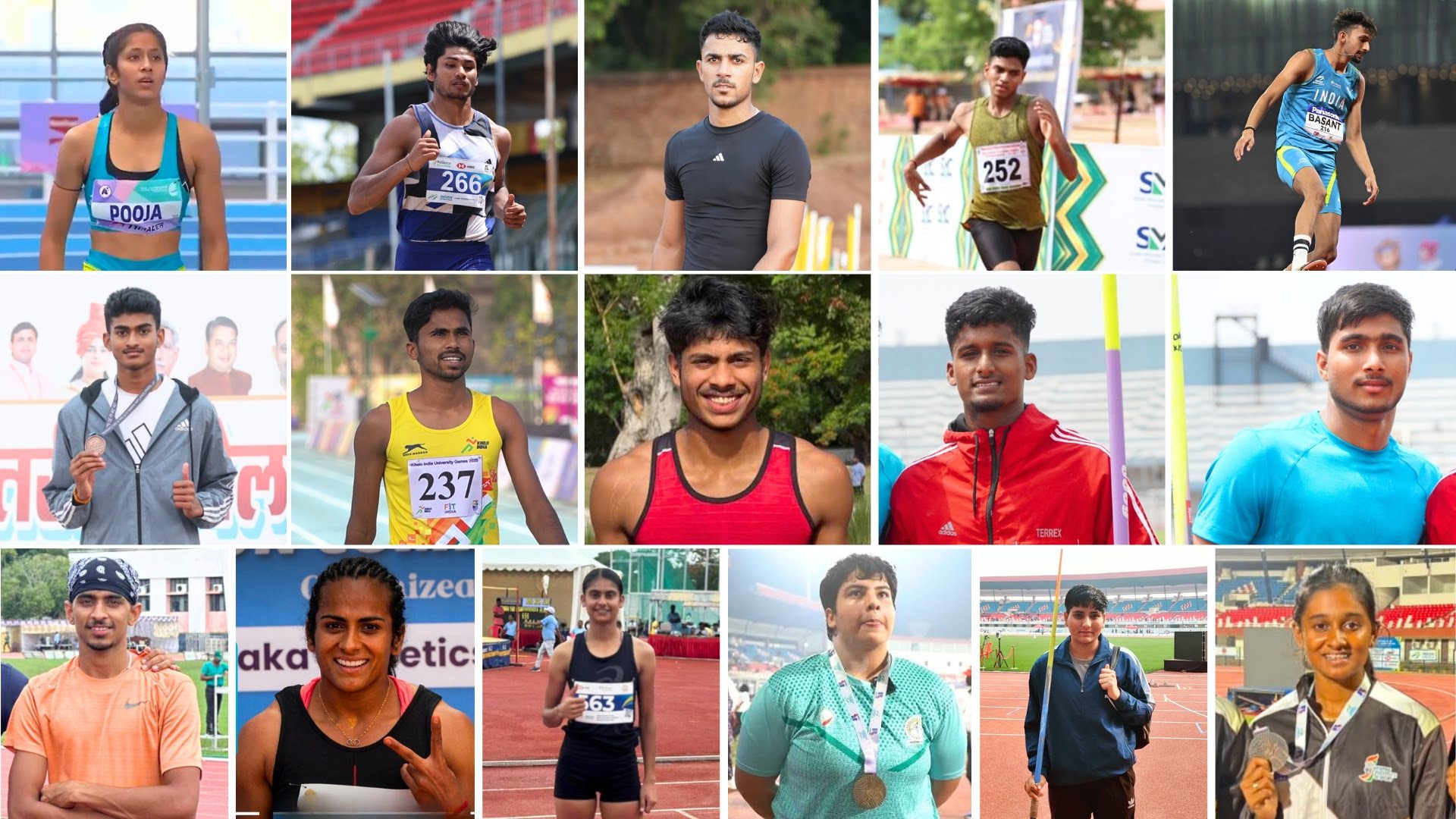
Including both competitions, a total of 20 athletes managed to achieve or better the qualification standards set by World Athletics and published on its official website.
World U20 Qualification Standards Achieved at Indian Series 9 & 10
Men
- Uwin Anand – 800m – 1:49.93 (PB)
- Mogali Venkatram Reddy – 800m – 1:48.77
- Basant – High Jump – 2.19m
- Ambriesh K. – High Jump – 2.12m (PB)
- Shahnavaz Khan – Long Jump – 8.17m
- Jithin Arjunan R.C. – Long Jump – 8.12m (PB)
- Sandeep Vinodkumar – 110m Hurdles – 13.63 (PB)
- Fasalul Haque – 110m Hurdles – 13.76
- Dharanidharan T. – Javelin Throw – 73.42m (PB)
- Ashish Yadav – Javelin Throw – 72.27m
- Nishchay – Discus Throw – 59.12m
- Amit – 400m Hurdles – 51.58s
- Sahil Raj – 400m Hurdles – 52.72s
- Ranjith Kumar S. – 400m – 47.26s
Women
- Pooja – High Jump – 1.81m
- Nipam – 100m – 11.75s
- Tanu Chaudhary – 400m Hurdles – 59.15s (PB)
- Poonam – Javelin Throw – 52.16m (PB)
- Thiya A.K. – 400m – 55.02s
- Anshu – Shot Put – 15.92m
It should be noted that this is not the final team, as the Athletics Federation of India (AFI) has revised the qualification standards published on its website.
Also, this list includes only the top two performers in each event. For example, in the men’s 110m hurdles and men’s javelin throw, multiple athletes achieved the qualification standards, but only the top two performers have been included here.
The final decision regarding team selection rests with the Athletics Federation of India (AFI).
India’s sprint scene witnessed another breakout performance as Harita Bhadra produced a sensational run to win the women’s 200m title at Indian Series–10, clocking a lifetime best of 23.58 seconds. The performance stands as the fastest time by an Indian woman in the 200m this season and currently ranks among the top 12 marks in Asia in 2026.
The 23-year-old sprinter delivered a composed yet explosive race to cap off what has already been a breakthrough year on the national circuit.
Harita’s latest performance is the continuation of a rapidly ascending trajectory across multiple sprint events this year. Earlier in the season, she captured the national indoor 60m title, where she also registered the second-fastest indoor 60m time ever by an Indian woman, underlining her growing reputation as one of India’s most promising short-distance sprinters.
She has also been part of a landmark moment for Indian relay sprinting, featuring in the mixed 4x100m relay team that broke the national record, a performance that also saw the squad outperform the senior national team—an indicator of the depth emerging in Indian sprinting.
Harita’s form has not been limited to the 200m. In her previous outing, she clocked a personal best of 11.55 seconds in the 100m, further highlighting her consistency across sprint distances and her improving speed endurance.
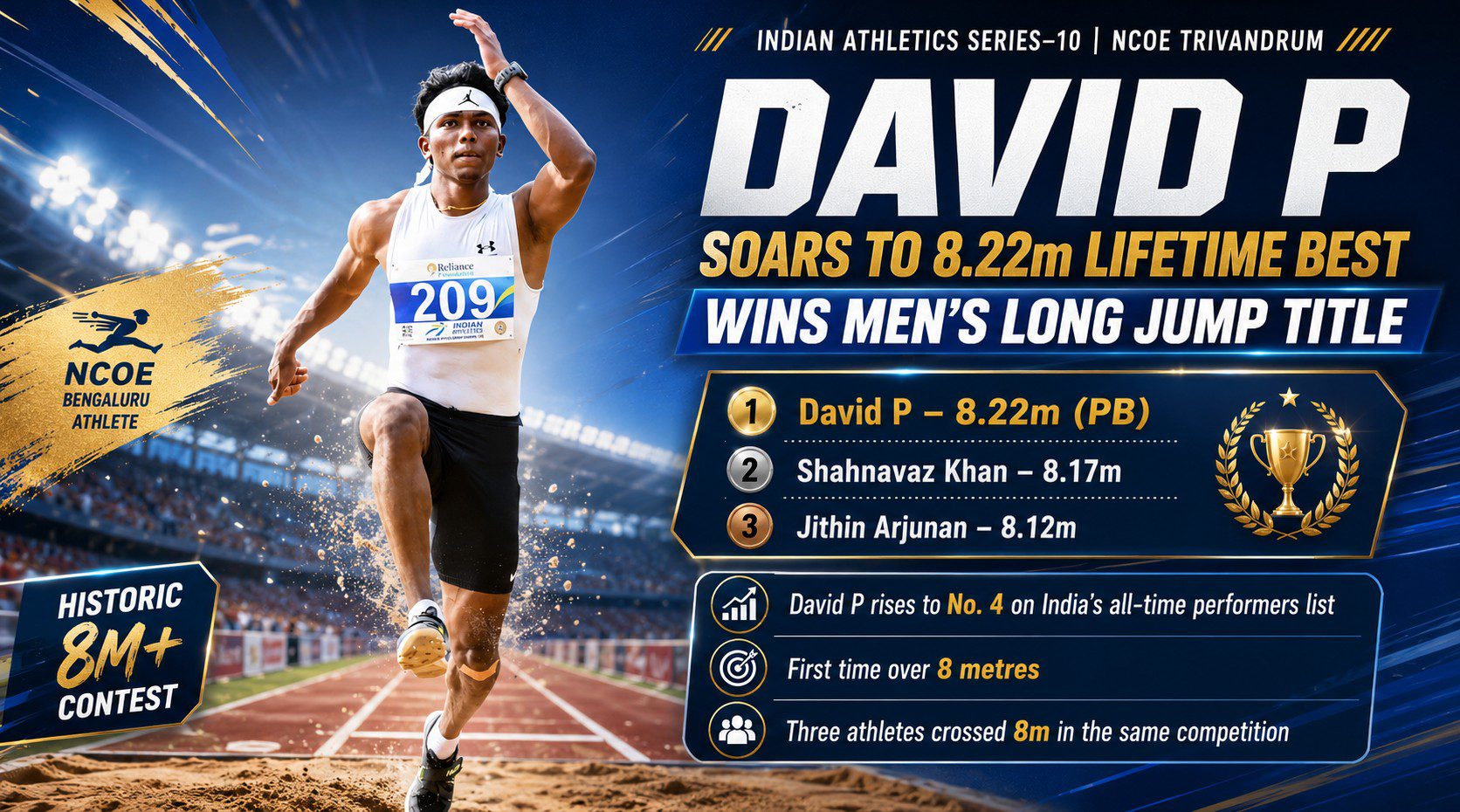
NCOE Bengaluru’s David P produced the performance of his career at the Indian Athletics Series–10 being held at NCOE Trivandrum, leaping a lifetime best of 8.22m to win the men’s long jump title.
The mark not only secured him top spot on the podium but also elevated him to fourth on India’s all-time performers list in the event.
Men’s Long Jump Results
🥇 David P – 8.22m (PB)
🥈 Shahnavaz Khan – 8.17m
🥉 Jithin Arjunan – 8.12m
David’s 8.22m represented the first time he had crossed the coveted eight-metre barrier in competition. The breakthrough performance came in a high-quality contest that turned into one of the standout field events of the meet.
The competition witnessed a rare achievement in Indian athletics, with three athletes surpassing the 8m mark in the same event. Shahnavaz produced an impressive 8.17m effort to finish second, while Jithin Arjunan claimed third place with 8.12m.
For Jithin, the performance was equally significant, as he too crossed eight metres for the first time in his career. As a result, two athletes achieved the milestone on the same day in one of the strongest men’s long jump competitions seen on the domestic circuit in recent years.
David’s 8.22m places him among the leading Indian long jumpers in history and adds his name to a small group of athletes who have gone beyond the eight-metre barrier.
A surprising sprint showdown unfolded at the Indian Athletics Series–10, where 400m specialists took centre stage in the men’s 200m final. Rajasthan’s Dharamveer Choudhary, better known for his performances in the one-lap event, stormed to victory with a massive lifetime best of 20.82 seconds.
The result marks one of the biggest breakthroughs of his sprinting career, as he outpaced a tightly packed field also dominated by athletes traditionally focused on the 400m.
Podium decided by narrow margins
The race produced a closely contested finish, with all three podium finishers separated by just over a tenth of a second:
🥇 Dharamveer Choudhary – 20.82s (Personal Best)
🥈 Vishal TK – 20.88s
🥉 Jay Kumar – 20.98s (First-ever sub-21 performance)
For Jay Kumar, the bronze medal run also marked a significant milestone, as he dipped under the 21-second barrier for the first time in his career.
400m athletes making their mark in the 200m
What stood out most from the final was the background of the podium finishers. All three athletes primarily compete in the 400m, yet delivered elite-level sprint speed over the shorter distance.
By Sundeep Misra
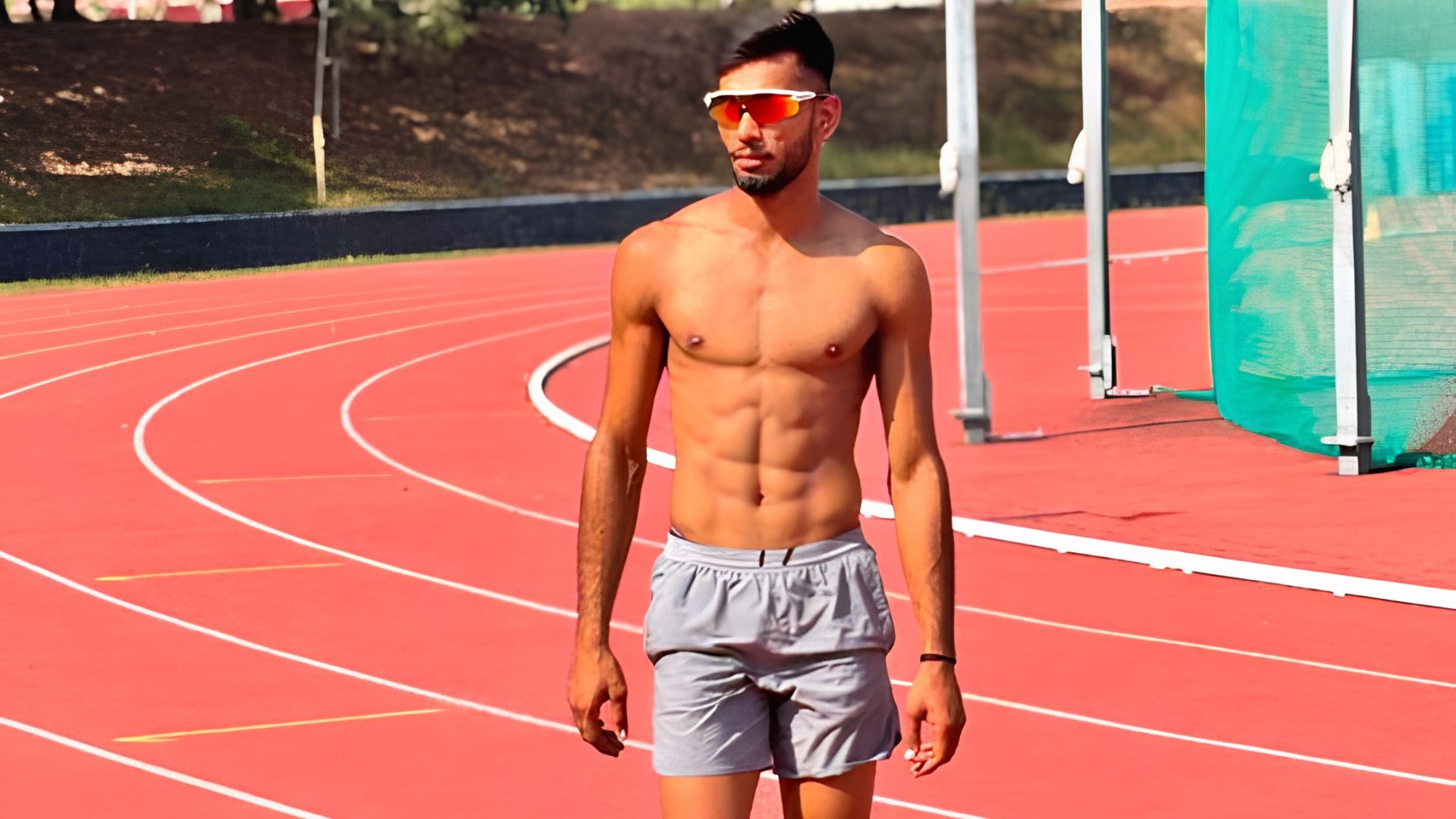
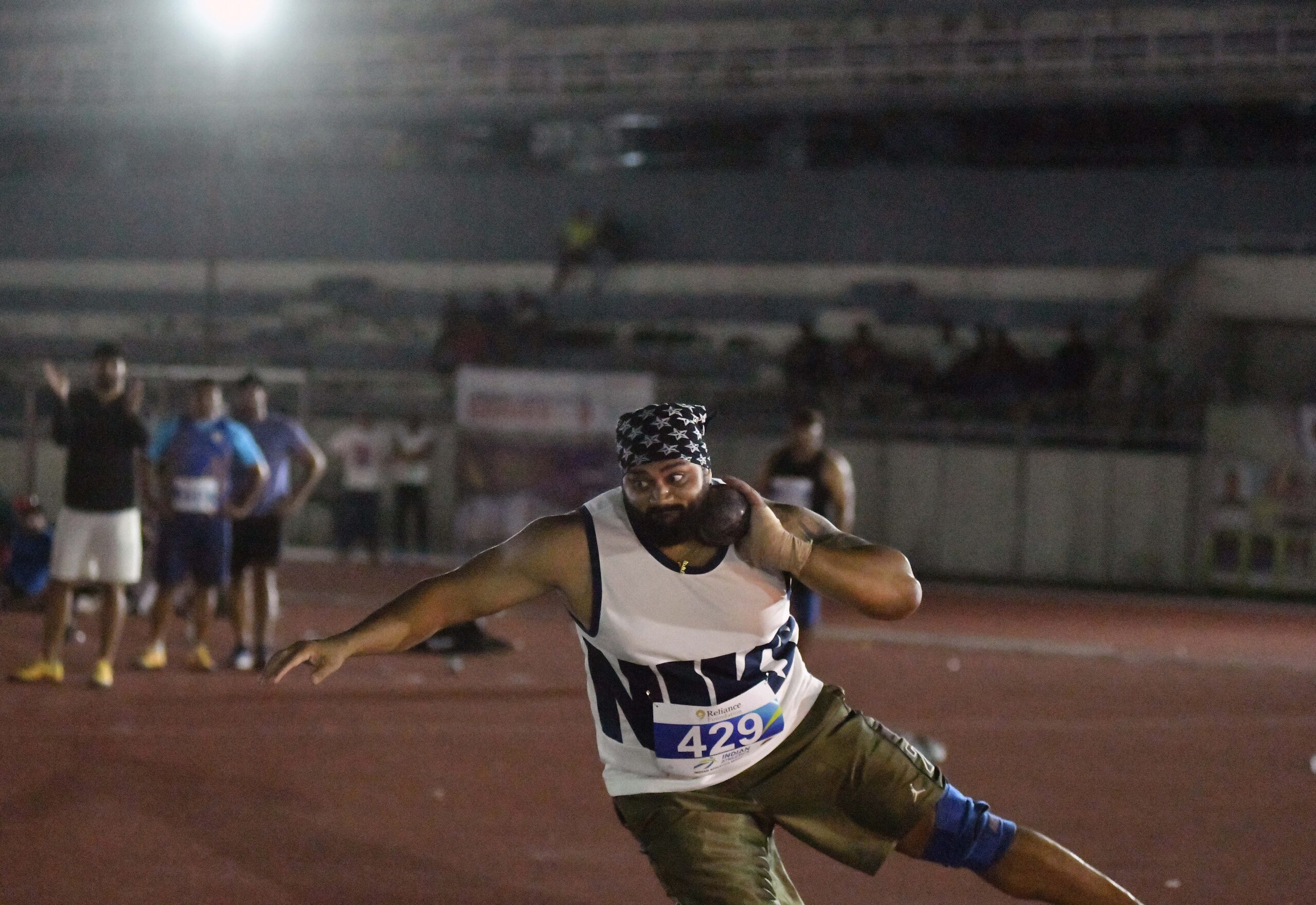
Twilight had slipped away. Amidst the shadows, Tajinderpal Singh Toor rubbed magnesium carbonate on his palms – big, wide, powerful hands that looked like Sal tree leaves.
Toor needed to qualify for the upcoming Commonwealth Games in Glasgow, and this was his final opportunity. His first throw of 19.98m served as a decent warmup. Then, as the light faded, his second attempt reached 20.29m. It was the spark he needed, though he still circled the throwing perimeter anxiously.
You see, Toor is a heavyweight of the sport. He set the National Record of 21.77m back in June 2023, but that elusive 22m barrier has been playing hard to get. Breaking it wouldn’t just make him the first Indian to cross the milestone; it would catapult him into the absolute elite tier of global shot put. Right now, the world standard sits a good meter away. To put that in perspective, the World Record stands at an astonishing 23.56m, set by America’s triple Olympic gold medallist Ryan Crouser.
Standing at 6’0”, Toor faces a massive physical disadvantage against the world’s giants. Ryan Crouser is 6’7”; Tom Walsh is 6’1”and Joe Kovacs is 6’0” but with a massive, intimidating bulk.
When you factor in wingspans, Toor has to work twice as hard. To compensate for his shorter stature, his release angle and height of release have to be absolutely flawless. A single degree of error can cost him half a meter. At a major international competition, that kind of deficit is simply too much to overcome.
Back at the Guru Nanak Stadium, the competition pressed on. Punjab’s Karamveer Singh managed a 19.21m on his second try, while Toor responded with a 20.18m on his third. The reigning Asian Games champion was slowly finding his rhythm, a relief after recently being pushed to second place at the National Federation Cup by Samardeep Singh Gill.
At 31, Toor is entering the twilight of an elite thrower’s career. While track athletes can still hunt for podiums past 34, shot put is uniquely unforgiving.
Toor’s rotational technique is flawless – a mesmerizing, fluid spin that transfers explosive power from his lower body straight into the iron ball. But that constant torque has exacted a heavy toll. Over the years, his throwing wrist and groin have repeatedly broken down, constantly forcing him back to square one.
Whenever Toor tries to push past the 21.50m mark, his circle management tends to collapse. To generate that world-class power, you have to ramp up the rotational speed, making it difficult to brake your momentum at the front edge of the circle. One tiny slip, and it’s a red flag.
The reality of the sport is stark. In Asia, Toor is undisputed royalty. But in the West, throwing 21m barely gets a nod. You only enter the conversation at 22m. Because Toor completely dominates the domestic and continental circuit, it has, one can argue, led to a tactical plateau. He simply hasn’t been pushed hard enough at home.
Yet, none of that mattered in the gloom of the stadium. Squinting through the darkness, relying purely on muscle memory, Toor stepped up for his sixth and final throw with his Commonwealth Games spot on the line.
He launched a massive heave: 20.72m.
With the qualification standard set at 20.36m, he had done it. He turned to the small, passionate pack of fans cheering in the stands, acknowledged them, and knelt on the turf in a quiet moment of gratitude.
“I came here thinking that I would do well,” Toor admitted while pausing for selfies with fans. “Right now, I haven’t completely freed my body; I’m still training under heavy load. The circle was also a little slippery, which spoiled a couple of my attempts. I was aiming for a 21-plus throw, but otherwise, it was fine.”
Characteristically, he stayed clear of any drama regarding the lack of floodlights for the throwing events. “For shot putters, the light was enough,” he smiled. “The arrangements were good. They actually moved us from the afternoon heat to a 7:30 PM evening slot, which helped.”
Now, his eyes are firmly fixed on Glasgow. “That is my target. I am praying that, God willing, there should be a new national and Asian record. The rest is in God’s hands. A person alone cannot do anything.”
Toor is undeniably India’s greatest-ever shot putter. But to transition from the king of Asia to a genuine global medal contender, Glasgow demands something bigger. The puzzle isn’t his raw strength, it’s staying injury-free and perfecting the physics of his release. Here’s hoping he finds that perfect spin and becomes the first Indian to clear 22m.
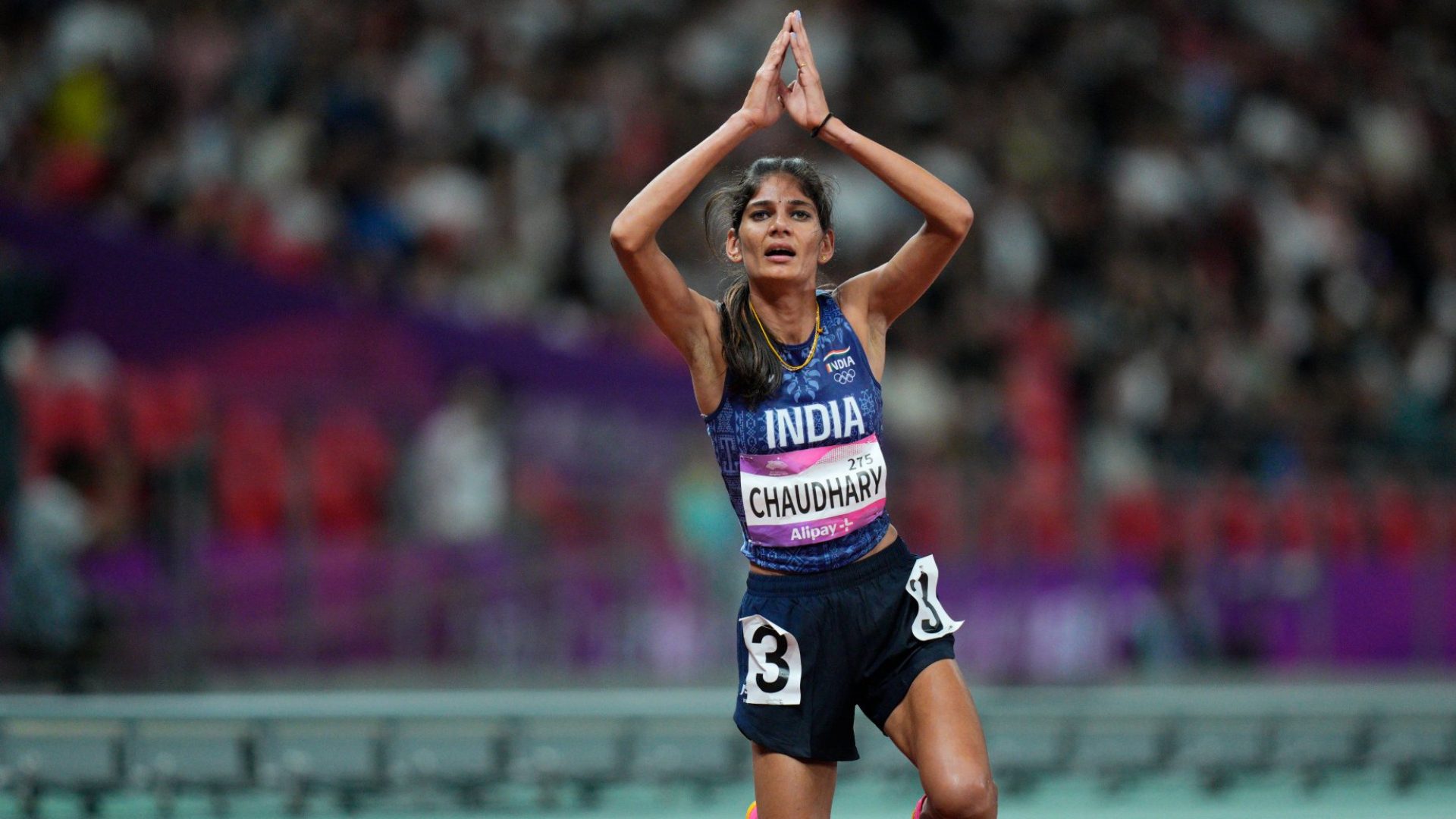
India’s distance running star Parul Chaudhary delivered a landmark performance on the international stage, finishing second in the women’s 5000m at the Meeting Nikaïa while rewriting the Indian national record with a sensational timing of 15:04.26.
The run marks one of the biggest breakthroughs in Indian middle and long-distance running in recent years, as Parul continues her steady rise on the global circuit.
New national record and major leap in performance
With her latest effort, Parul has:
Set a new Indian national record in the women’s 5000m
Clocked 15:04.26, improving her previous best of 15:10.35
Sliced nearly six seconds off her lifetime best, which she had set in 2023
Achieved the 3rd-fastest 5000m time in Asia this season.
What makes this performance significant
Breaking a national record in the 5000m by such a margin is a strong indicator of both endurance and tactical improvement. The near six-second improvement over her previous best reflects enhanced race execution, strength development, and sustained speed endurance—key markers in elite distance running.
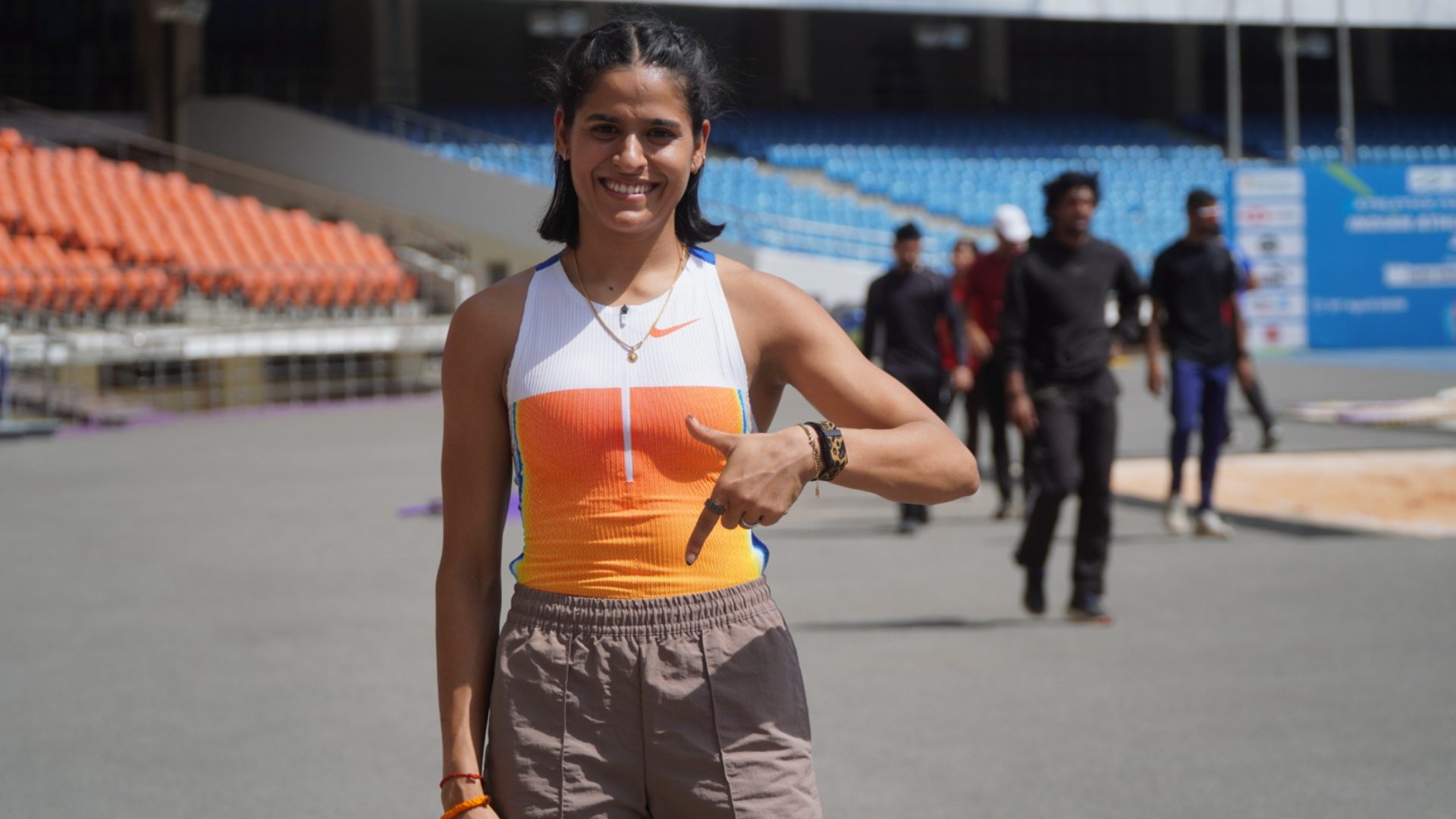
Shaili Singh won the women’s long jump title at Indian Athletics Series–9 held in Ludhiana, clearing a best of 6.42m.
She was the only athlete in the field to go beyond the 6-metre mark, finishing well ahead of the rest of the competition.
However, the performance was below the Commonwealth Games 2026 qualification standard, which she did not meet on this occasion.
Final standings:
Shaili Singh – 6.42m
Ankita Chaudhary – 5.54m
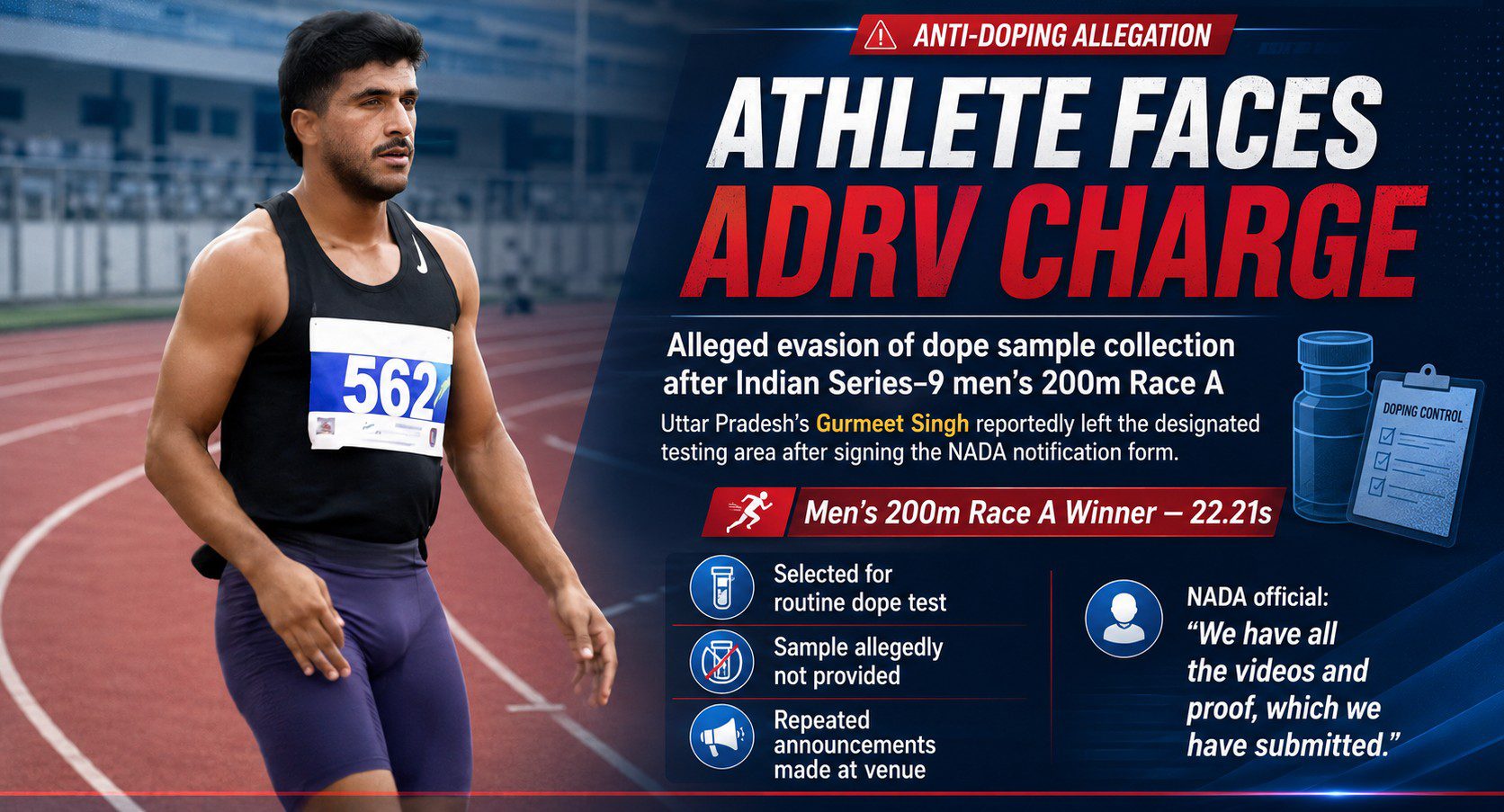
Punjab’s Harjit Singh emerged as the fastest man at the Indian Athletics Series–9 in Ludhiana, winning the men’s 100m title with a timing of 10.33 seconds.
The performance added another consistent result to what has been a solid sprint season for the 100m specialist.
Season form highlights
Harjit Singh has been in steady form across competitions this year, producing multiple competitive timings:
10.32s – Personal best (legal wind)
10.17s – Wind-assisted (+2.1 m/s)
10.33s – Winner, Indian Series–9
His 10.32s remains his official lifetime best, while the wind-assisted 10.17s run earlier in the season reflected his peak raw speed.
Across events, Harjit has shown consistency in the low-10.3 range, establishing himself as a regular contender in national sprint finals.
His performances have also come in a tightly contested domestic sprint landscape, where margins between podium finishers remain small.
Upcoming challenges
Harjit is expected to feature in upcoming competitions that could see him line up against some of India’s top sprinters, including former training partner and national record holder Gurindervir Singh, as well as Animesh Kujur, the national record holder in the 200m.