
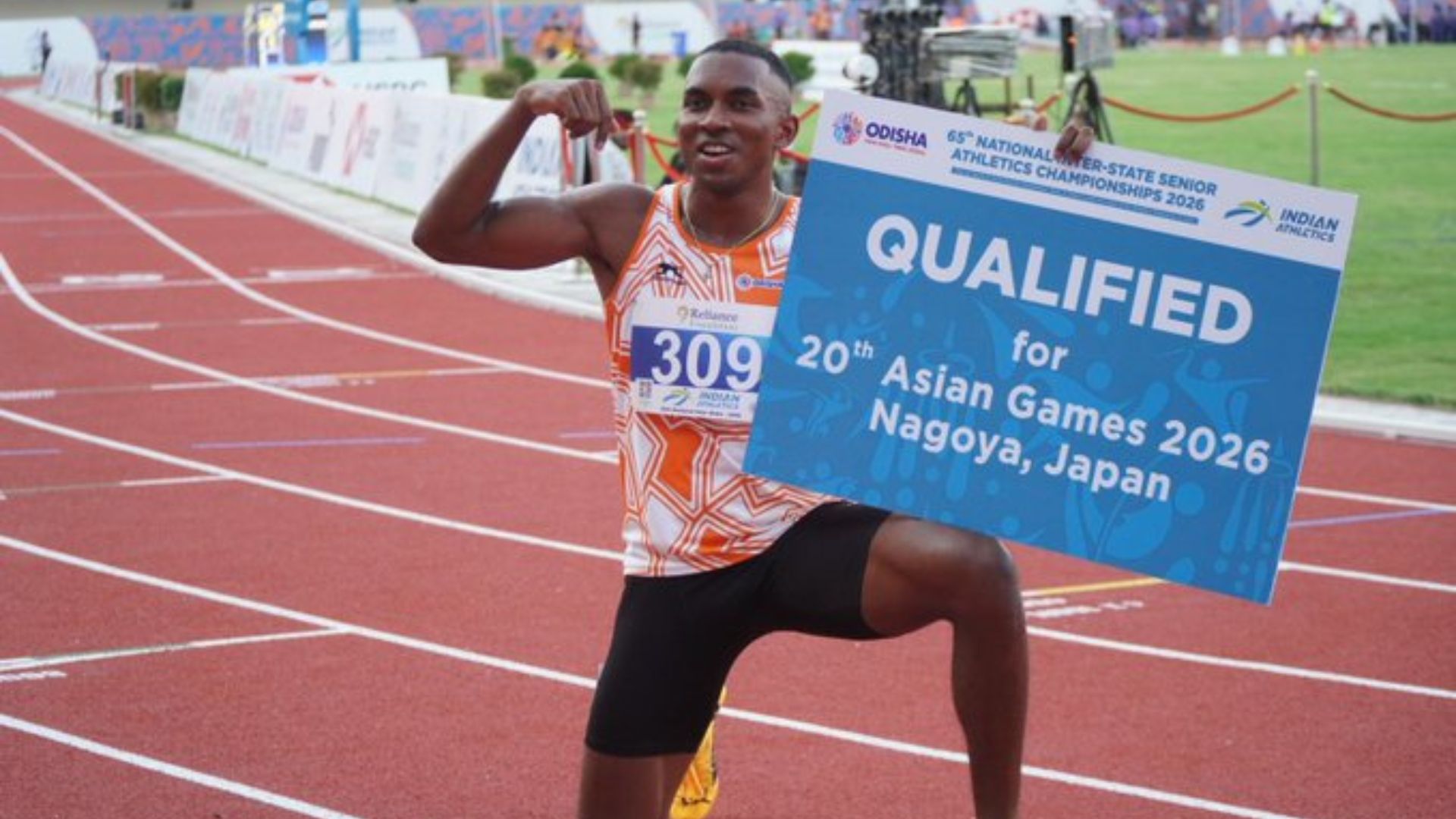
India’s sprint sensation Animesh Kujur comfortably booked his place for the Asian Games 2026 after clocking 20.87 seconds in the men’s 200m heats at the ongoing 65th Interstate Athletics Championships 2026.
The performance saw Kujur go under the Asian Games qualification standard with ease, continuing what has been a remarkable rise for one of India’s most exciting track athletes.
His qualification came as little surprise. Over the past two seasons, Kujur has established himself as India’s premier male sprinter, consistently rewriting national records and pushing Indian sprinting into uncharted territory.
Earlier this year, the Odisha athlete became the first Indian man in history to break the 20.50-second barrier in the 200m, setting a national record of 20.32 seconds. He also holds the national record in the 100m with a time of 10.18 seconds and has played a pivotal role in India’s relay successes on the international stage.
Given his pedigree and recent form, clearing the Asian Games qualification mark was always expected. Even in a controlled heat race, Kujur demonstrated his class, crossing the line in 20.87 seconds and safely securing qualification for the continental showpiece.
With the heats out of the way, attention now turns to the final, where the national record holder will look to add another title to his growing collection and further cement his status as the face of Indian sprinting.
*Result:*
* Animesh Kujur – 20.87s (Asian Games Qualification)
The qualification reinforces Kujur’s position as India’s leading sprint medal prospect heading into the 2026 Asian Games.
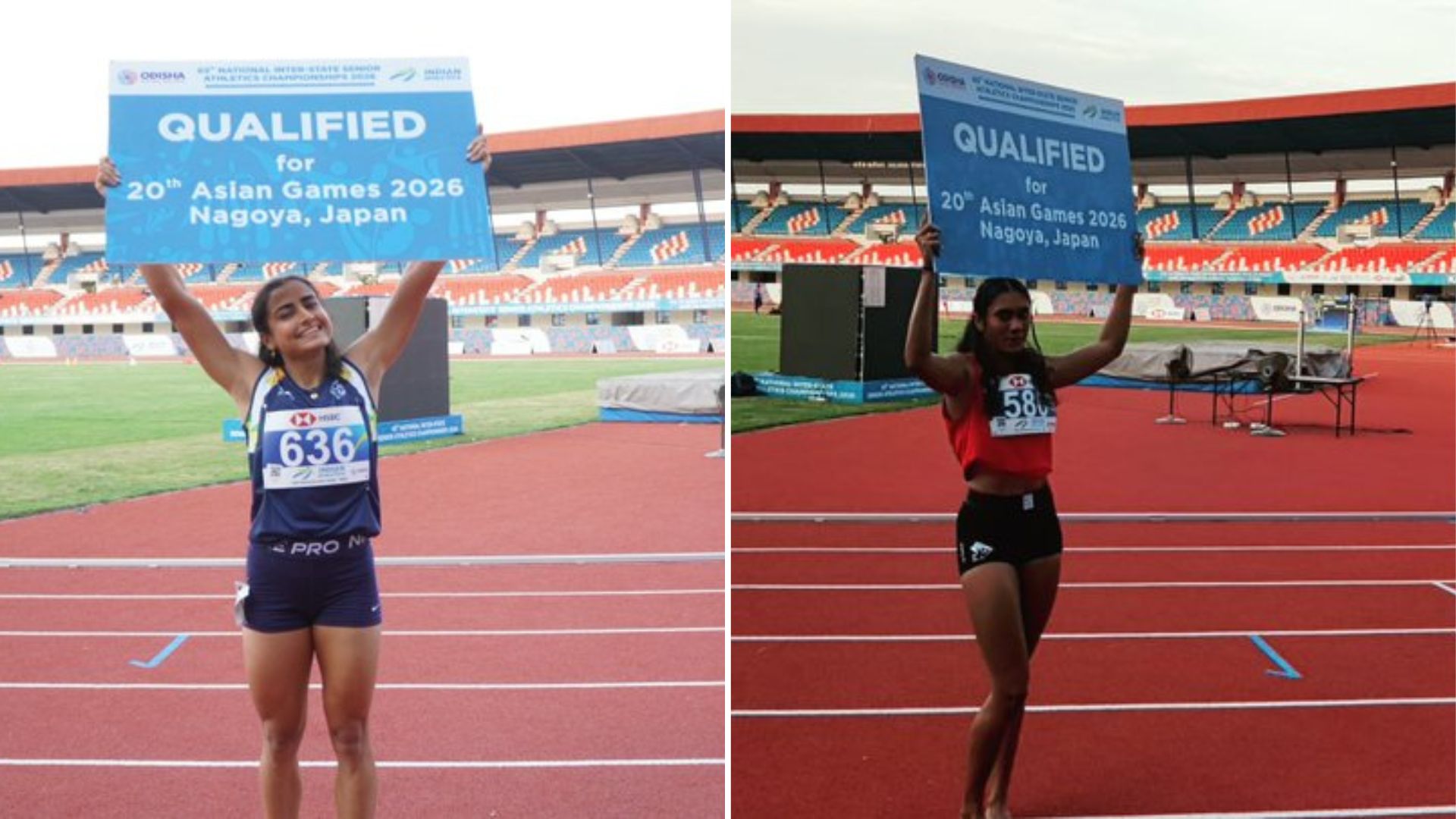
Indian sprinting received a major boost at the 65th Interstate Athletics Championships 2026 as both Harita Bhadra and Unnathi secured qualification for the Asian Games 2026 in the women’s 200m event during the heats.
Harita Bhadra produced a sensational performance, clocking 23.55 seconds to not only go under the Asian Games qualification standard of 23.70 seconds but also register a huge lifetime best. Her time currently stands as the fastest by an Indian woman this season in the 200m.
Joining her in achieving the qualification mark was Unnathi, who ran 23.65 seconds to finish comfortably inside the required standard. The performance also marked a new personal best for the young sprinter, improving her previous best by 0.01 seconds.
With both athletes breaching the qualification mark in the heats themselves, India now has two women who have met the Asian Games standard in the 200m, highlighting the growing depth in Indian women’s sprinting.
Results (Heats):
* Harita Bhadra – 23.55s (Lifetime Best, Season’s Best by an Indian, Asian Games Qualification)
* Unnathi – 23.65s (Personal Best, Asian Games Qualification)
The Asian Games qualification standard was set at 23.70 seconds, and both sprinters comfortably dipped below the mark to keep their Asian Games dreams firmly on track.
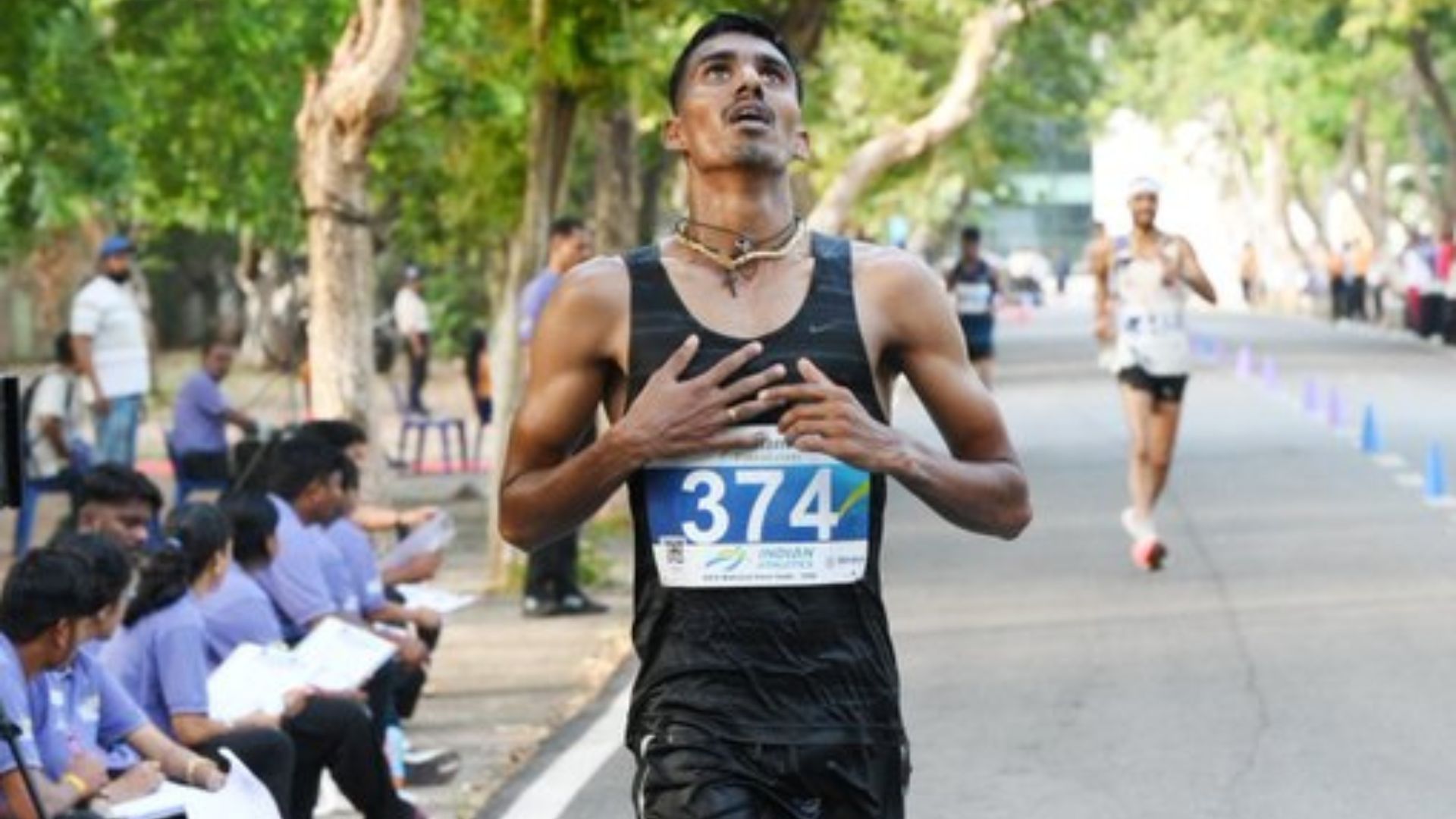
Asian Championships medallist Servin Sebastian emerged victorious in the men’s half marathon race walk at the 65th National Inter-State Senior Athletics Championships in Bhubaneswar, clocking 1:31:49 to secure the national title in challenging weather conditions.
Representing one of India’s brightest hopes in race walking, Servin held off a strong challenge from Sachin Bora, who finished second in 1:32:10, while Ningthoukhongja completed the podium with a time of 1:32:24.
Men’s Half Marathon Race Walk Results
 Servin Sebastian – 1:31:49
 Sachin Bora – 1:32:10
 Ningthoukhongja – 1:32:24
The race was conducted under demanding conditions, with humidity levels hovering around 92 percent and temperatures remaining high throughout the morning. Such conditions made it difficult for athletes to maintain pace, particularly in an endurance discipline as physically taxing as race walking.
While none of the athletes managed to achieve the Asian Games qualification standard, the quality of competition remained high, with the leading trio separated by less than a minute.
Servin’s victory further cements his status as one of the country’s leading race walkers. The Kerala athlete enjoyed a breakthrough season in 2025 when he won bronze at the Asian Race Walking Championships, becoming one of the few Indian men to secure a continental medal in the discipline. The performance established him as a serious contender for major international championships and strengthened India’s growing reputation in race walking.
Although the Asian Games qualification standard remained out of reach in Bhubaneswar, sources indicate that the top two finishers—Servin Sebastian and Sachin Bora—could still come under consideration for selection, given their credentials and previous performances.
However, qualification standards are only one part of the selection process. The final composition of the Indian team for the 2026 Asian Games will be decided by the Athletics Federation of India’s Selection Committee, which will assess performances across the qualification period before naming the squad.
By Sundeep Misra
It was one of those evenings, June 24th, that came full of surprises, records, underlined by courage, speed, strength, the very idea that to venture out, throwing a line deep into the beyond like a hopeful angler, would not only bring a catch but reward you for sheer persistence and grit.
Otherwise, how would Dev Meena vault 5.46m for a new national record? If you were standing by the pit, watching the fiberglass pole bend against the floodlit sky, you would mutter to yourself, “You don’t coach that final clearance. That is defying gravity.” For pole vaulters around the globe, it’s always about trusting the runway, the grip, and the thousands of hours you spent, watching your surroundings while falling down from across the bar.
How else would Jyothi Yarraji, coming back from the uncertainty of injury, dominate and qualify for the 100m hurdles, possibly finding a fierce new competitive spirit in fellow hurdler Nandhini? In reality, the track doesn’t care about your previous records or even your injuries. It demands rhythm. Stopping the clock at 12.99sec, picking up the Inter-State gold, pocketing the Asian Games spot, along with Nandhini, Yarraji, kept the dream going.
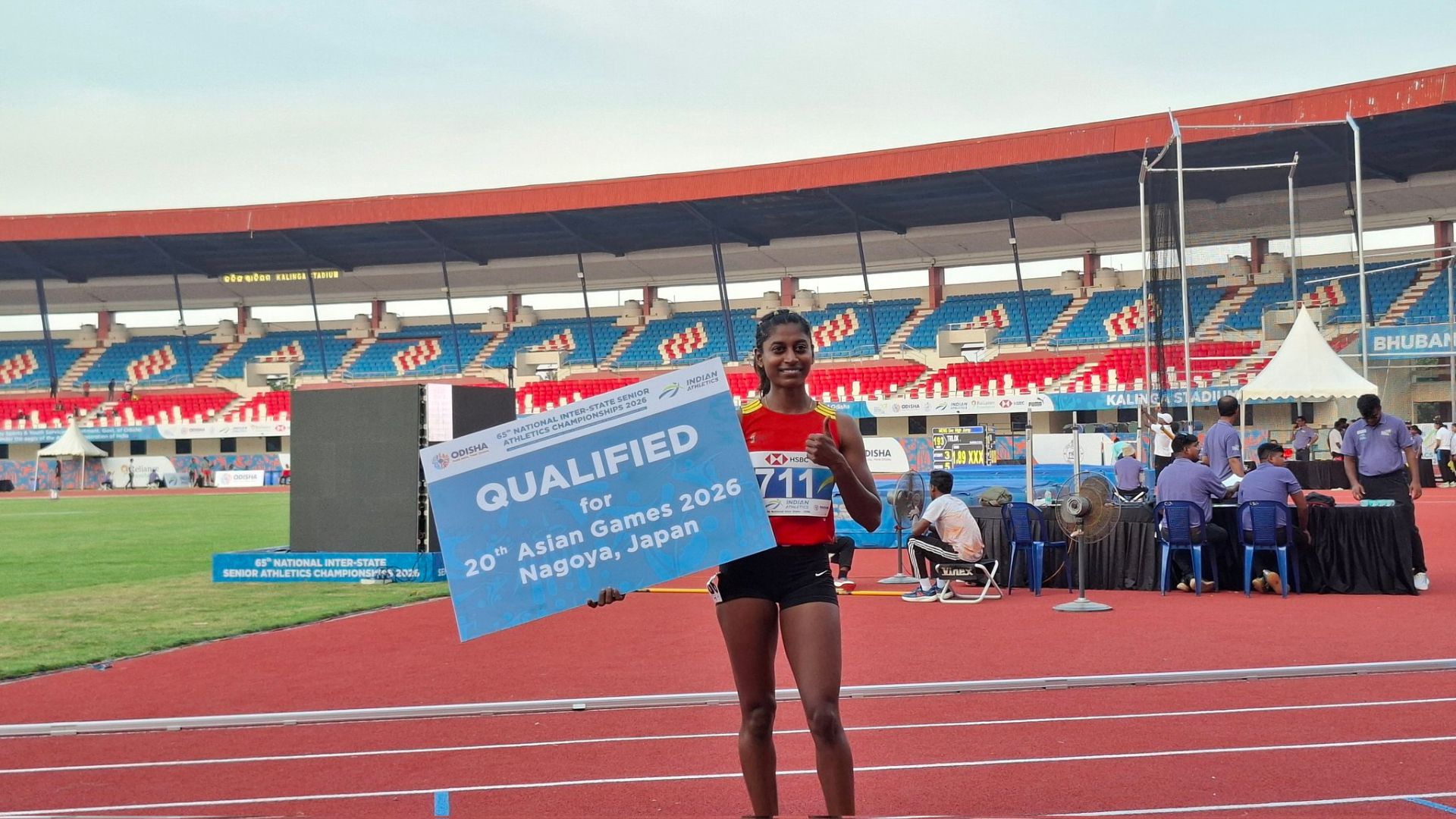
Then came the absolute stunner from the cage. An 18-year-old girl from Uttar Pradesh, Anushka Yadav, stepped onto the concrete ring and completely shattered the quiet of the nondescript hammer throw community with a massive national record of 67.02m, booking her flight to Nagoya. “They call us nondescript because no one sees us training in the dust of UP,” her father and coach Sushil Yadav remarked, his voice barely a murmur but thick with raw emotion. Anushka’s throw did more than create a record; when that iron sphere cut through the heavy, humid air, it carried with it the dream of every village academy in the country.
There is nothing quite like track and field with its battle with a clock, trying to hold the sprinting seconds, minutes, and hours in your grasp, the throw filling the humid air ensuring metres stretch themselves out. It is the triumph of not the athlete alone; it is the victory of a Ghanshyam Yadav, an Angel Garcia, of a Sushil Yadav, of a James Hillier – of countless such coaches under the radar or in the spotlight, weaving and creating dreams for their athletes.
In the bargain, they are inching a nation towards track and field domination, fulfilling a promise every country makes to itself: those rust-coloured tracks, white-lined, don’t just look good. They take you to lands beyond, creating self-belief, gifting you a world that only perseverance and a ton of grit could fetch.
In the humid air of Bhubaneswar, known in ancient times as Ekamra (Sacred Earth), when people then ran for fun, or just ran, it is these athletes in the world today, who instil hope in us. On a synthetic track, in a throwing circle, on a sand pit, the Inter-State is not simply just another athletic meet or an Asian Games trial, but a deeper search for identity, hope, and excellence.
It was an evening that gave wings to hope that India could dream and believe that Olympic success might be more than just the trajectory of a single javelin.
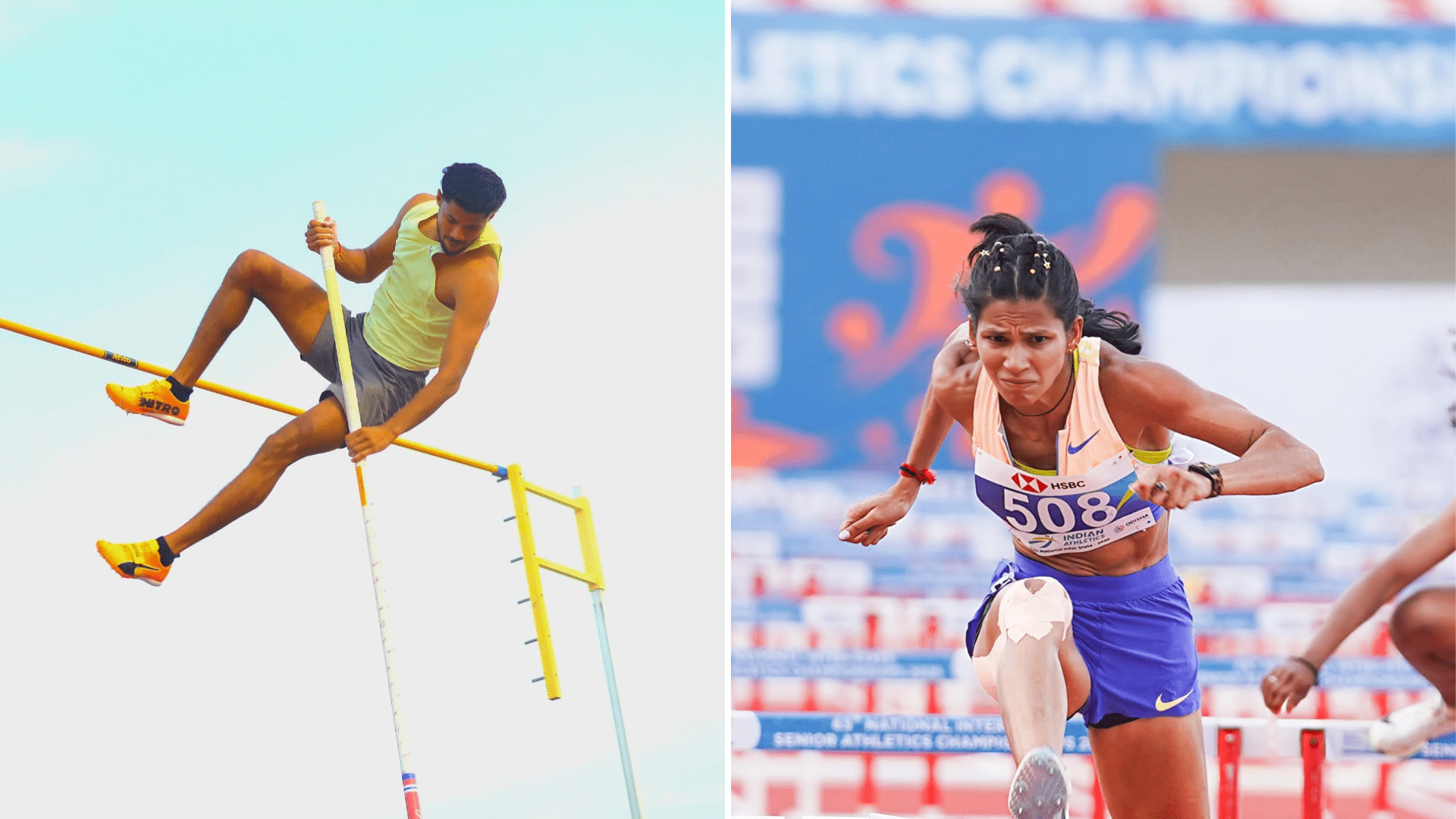
Indian hurdling star and national record holder Jyothi Yarraji marked a sensational return to competition by clinching the women’s 100m hurdles title at the 65th Interstate Athletics Championships 2026, clocking an impressive 12.99 seconds.
The performance carried extra significance as it was Jyothi’s first competition of the season following a lengthy rehabilitation period after suffering an ACL injury — one of the most challenging setbacks an athlete can face. Months of recovery, rehabilitation, and uncertainty culminated in a triumphant comeback on the national stage.
Earlier in the day, Jyothi had already shown signs that she was back to her best by comfortably breaching the Asian Games 2026 qualification standard in the heats. She then raised her level even further in the final, breaking the 13-second barrier and reminding everyone why she remains India’s undisputed hurdle queen.
Her victory was a testament not only to her speed and technique but also to the resilience and determination that carried her through the difficult months away from competition. Returning from an ACL injury is never easy, especially for a sprint hurdler whose event demands explosive power, speed, and precise movement over barriers.
The final saw a strong field of competitors, with Nandhini K finishing second in 13.22 seconds and Pragyan Prasanti taking third place in 13.48 seconds.
Women’s 100m Hurdles Final
🥇 Jyothi Yarraji – 12.99s
🥈 Nandhini K – 13.22s
🥉 Pragyan Prasanti – 13.48s
With the Asian Games qualification mark already secured and a sub-13-second performance in her season opener, Jyothi’s comeback could not have been scripted any better. As the road to the Asian Games gathers pace, India’s hurdle queen has sent a clear message — she is back, stronger than ever.
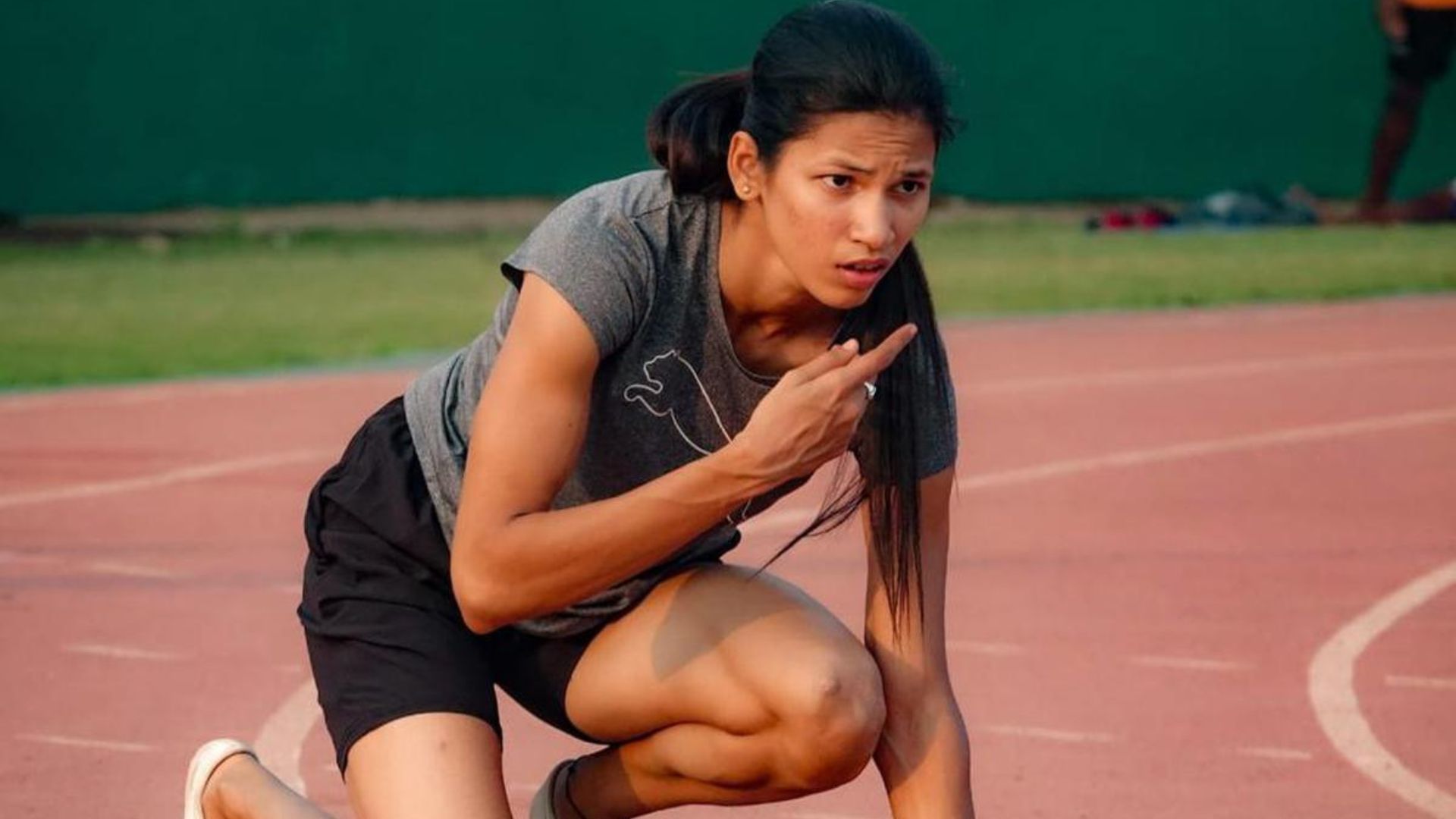
Indian hurdler Nandhini K joined compatriot Jyothi Yarraji in breaching the Asian Games qualification standard in the women’s 100m hurdles at the 65th National Inter-State Senior Athletics Championships, delivering a lifetime-best-equalling performance of 13.24 seconds in Heat 2.
With the Asian Games qualification mark set at 13.34 seconds, Nandhini comfortably punched her ticket to Nagoya, capping off a memorable day for Indian women’s hurdling.
Earlier in the day, Asian champion Jyothi Yarraji had clocked 13.14 seconds in Heat 1 to achieve the qualification standard in her first race back from injury. Nadhini’s performance ensured that both heats of the women’s 100m hurdles produced Asian Games qualifiers, underlining the growing depth in the event in India.
For Nandhini, the result was particularly significant as she matched the personal best of 13.24 seconds that she had set earlier in her career. Producing a performance of that quality at one of the most important domestic competitions of the season demonstrates both consistency and readiness as the race towards the 2026 Asian Games gathers momentum.
The women’s 100m hurdles has emerged as one of India’s strongest sprint events in recent years, led by Yarraji’s continental success and national record performances. Nandhini’s qualification now adds another serious contender to India’s ranks, giving the country multiple athletes capable of competing at the highest level in Asia.
The timing of the performance is also crucial. The National Inter-State Championships serve as the final domestic qualification opportunity for athletes targeting major international championships, including the Asian Games.
Indian hurdling star Jyothi Yarraji announced her return to the track in emphatic fashion, clocking 13.14 seconds in Heat 1 of the women’s 100m hurdles at the 65th National Inter-State Senior Athletics Championships to comfortably breach the Asian Games qualification standard of 13.34 seconds.
The performance was significant not just because it secured qualification for the 2026 Asian Games in Nagoya, but because it marked the comeback of one of India’s brightest athletics stars after a lengthy injury layoff.
Competing in her first race of the 2026 season, Yarraji looked sharp and composed as she cruised to the top spot in her heat, sending a strong message to her rivals ahead of the final.
The road back has been anything but easy.
In July last year, the reigning Asian champion suffered a freak knee injury during training, bringing her season to an abrupt halt and ruling her out of the World Athletics Championships in Tokyo. The injury eventually required surgery and sidelined her for the remainder of the 2025 season.
At the time, the setback was particularly cruel. Yarraji was coming off one of the best phases of her career, having successfully defended her Asian Championships title and established herself among the world’s leading hurdlers. The injury not only ended her hopes of competing at the World Championships but also interrupted the momentum she had built over several seasons.
After spending seven months away from competition, Yarraji returned to training only earlier this year, carefully rebuilding her strength and confidence under the guidance of her support team. Her coach James Hillier had repeatedly stressed that the Asian Games would be the primary target for her comeback season.
On Tuesday, she showed exactly why.
Running her first competitive race since the injury, the national record holder looked in complete control, clocking 13.14 seconds—well inside the Asian Games qualification mark and a highly encouraging start to a season that could culminate with another continental medal.
For Indian athletics, the result is a major boost. Yarraji remains the country’s premier hurdler, a two-time Asian champion and the national record holder in the event. More importantly, she is once again healthy, competing, and already meeting the standards required for India’s biggest targets of the year.
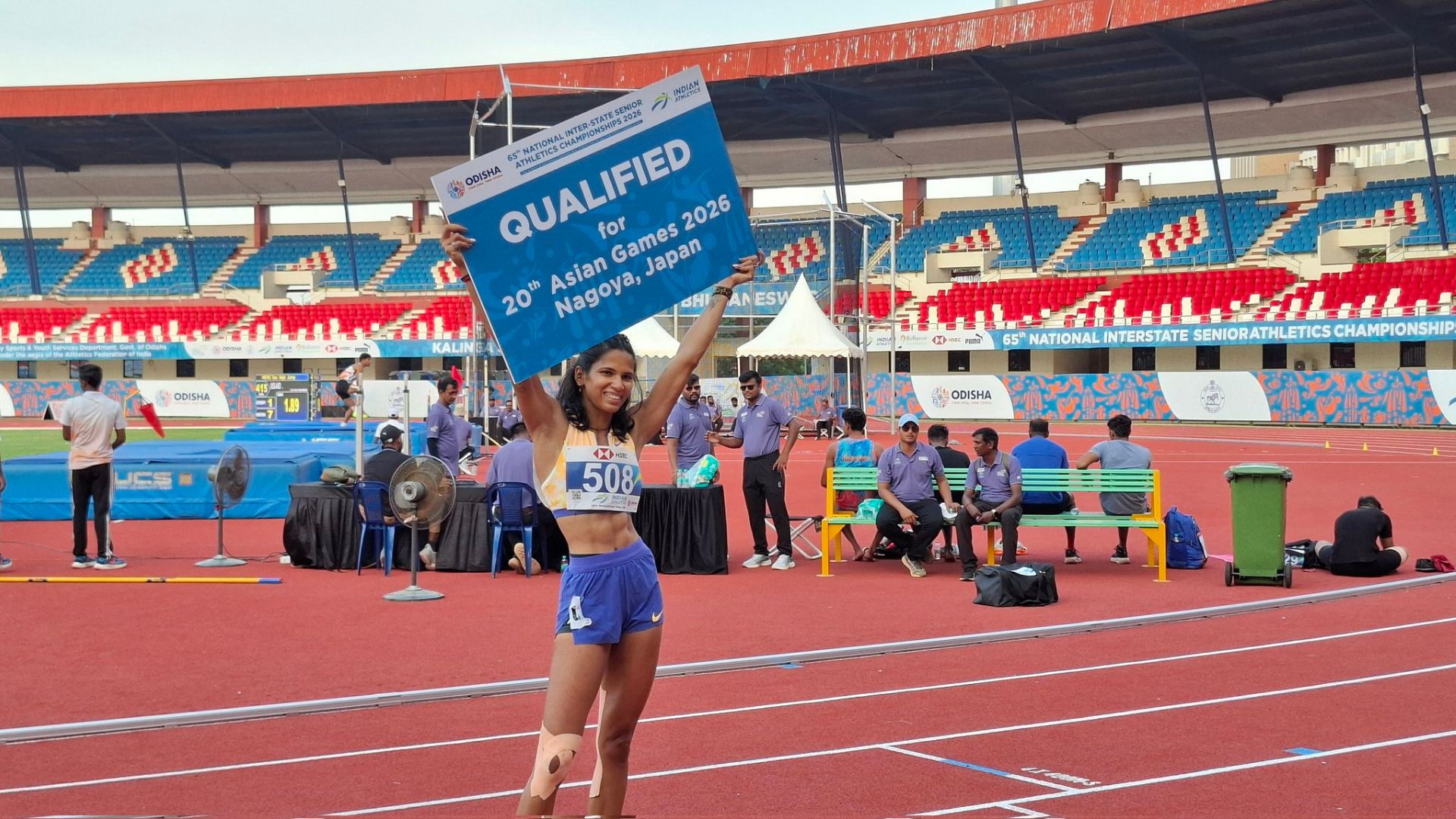
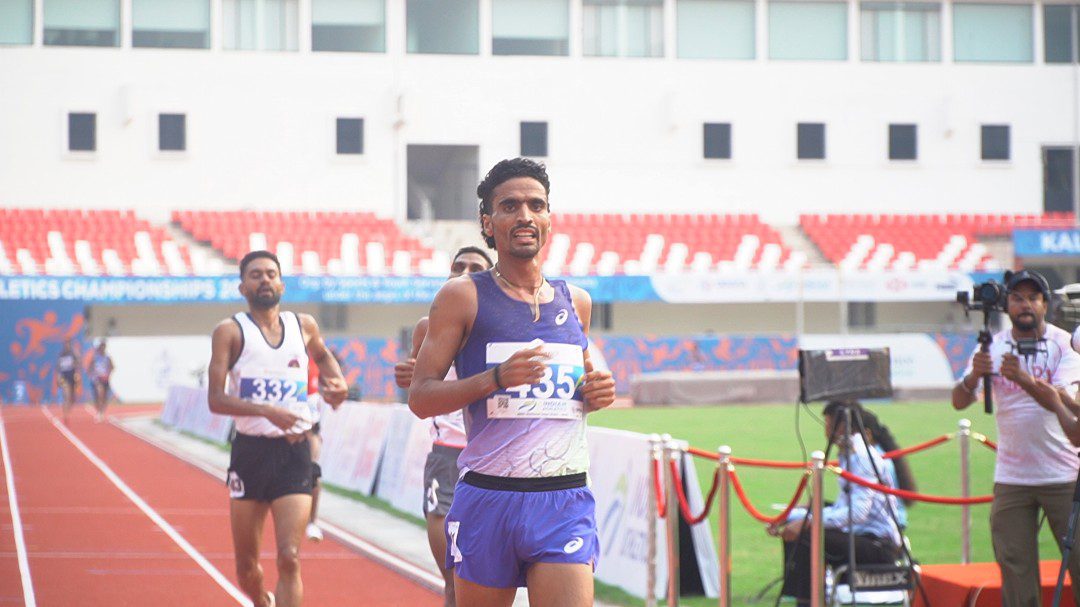
India’s premier long-distance runner Gulveer Singh may have missed the Asian Games qualification standard at the 65th Interstate Athletics Championships in Bhubaneswar, but his hopes of representing the country in Aichi-Nagoya 2026 are far from over.
The national record holder won the men’s 5000m title in 13:52.92, comfortably securing gold but falling short of the Athletics Federation of India’s prescribed qualification mark of 13:39.18.
The result came as one of the biggest surprises of the championships, given Gulveer’s outstanding form earlier this season. In February, he rewrote the Indian record books by clocking a stunning 13:03.93, a performance that currently stands as the second-fastest time by an Asian athlete this year and ranks among the world’s top 20 performances in 2026.
With such credentials, questions immediately emerged over whether the 26-year-old could still make the Indian squad despite not achieving the qualification standard at the designated selection event.
According to AFI officials, the final Asian Games team will be determined by the federation’s selection committee, meaning the qualification mark is not necessarily the only factor that will be considered.
That leaves the door open for Gulveer, whose performances throughout the season have established him as India’s leading 5000m runner and one of Asia’s strongest contenders in the event.
Speaking after the race, Gulveer pointed to the challenging conditions in Bhubaneswar as a major factor behind his failure to achieve the standard.
“The weather was quite warm and the track is still new,” he said, explaining that both factors made it difficult to chase a fast time.
While the missed mark is undoubtedly a setback, Gulveer’s season-best remains significantly faster than the qualification standard and strengthens his case ahead of the final selection meeting.
For now, the ball is firmly in the selectors’ court. Gulveer has not secured automatic qualification, but based on his performances this season, he remains one of the strongest candidates to wear Indian colours in the men’s 5000m at the Asian Games 2026.
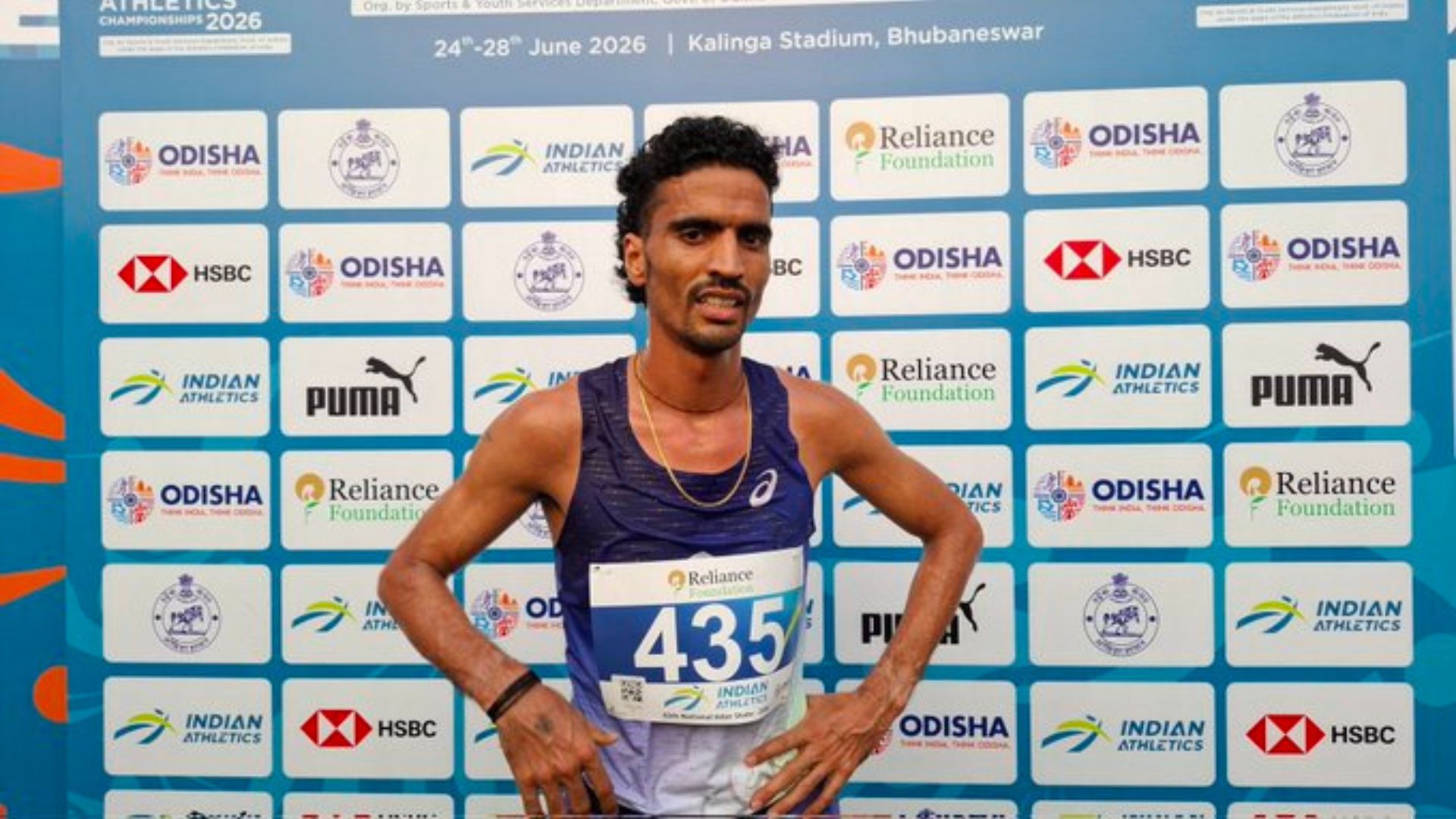
By Sundeep Misra
Whenever Gulveer Singh runs and if you are fortunate enough to see him, you know the feeling – he seems to hang somewhere between being good and great. He possesses that effortless smoothness unique to long-distance runners; a penchant for lapping until the final bell triggers an instinctive, competitive gear.
At 5:30 AM at The Kalinga, Gulveer is still fighting his own circadian rhythms, having returned from the US just a week ago. His winning time of 13:52.92 was slow by his standards – especially for an athlete holding an outdoor National Record of 13:03.93 and a blistering short-track indoor time of 12:59.77.
Yet, functionally, the job is done. After swapping leads with Abhishek Pal, Harmanjot Singh, and Shivaji Parashu Madap, Gulveer effortlessly shifted gears on the final lap, cantering away to gold and sealing his case for the Asian Games.
While the Athletics Federation of India (AFI) won’t officially announce the squad for the Aichi-Nagoya Games until after June 28th, Gulveer’s ticket is a formality. He comfortably shattered the AFI qualification benchmark of 13:39.18 earlier this season at the LA Track Festival, laying down a massive marker.
Next, he will test his closing speed in the 1500m, a tactical tune-up for Japan.
“It’s a new track; the grip doesn’t quite form yet,” Gulveer said after his win, explaining the unique surface at The Kalinga. “With continued workouts, the weight impact changes. Right now, it’s like rubber – it absorbs like a sponge, so there’s more bounce.”
As he prepares for Glasgow and Japan, the athletics world will be watching closely. It’s exactly that divide – between the good and the truly great – that Gulveer is running to bridge.
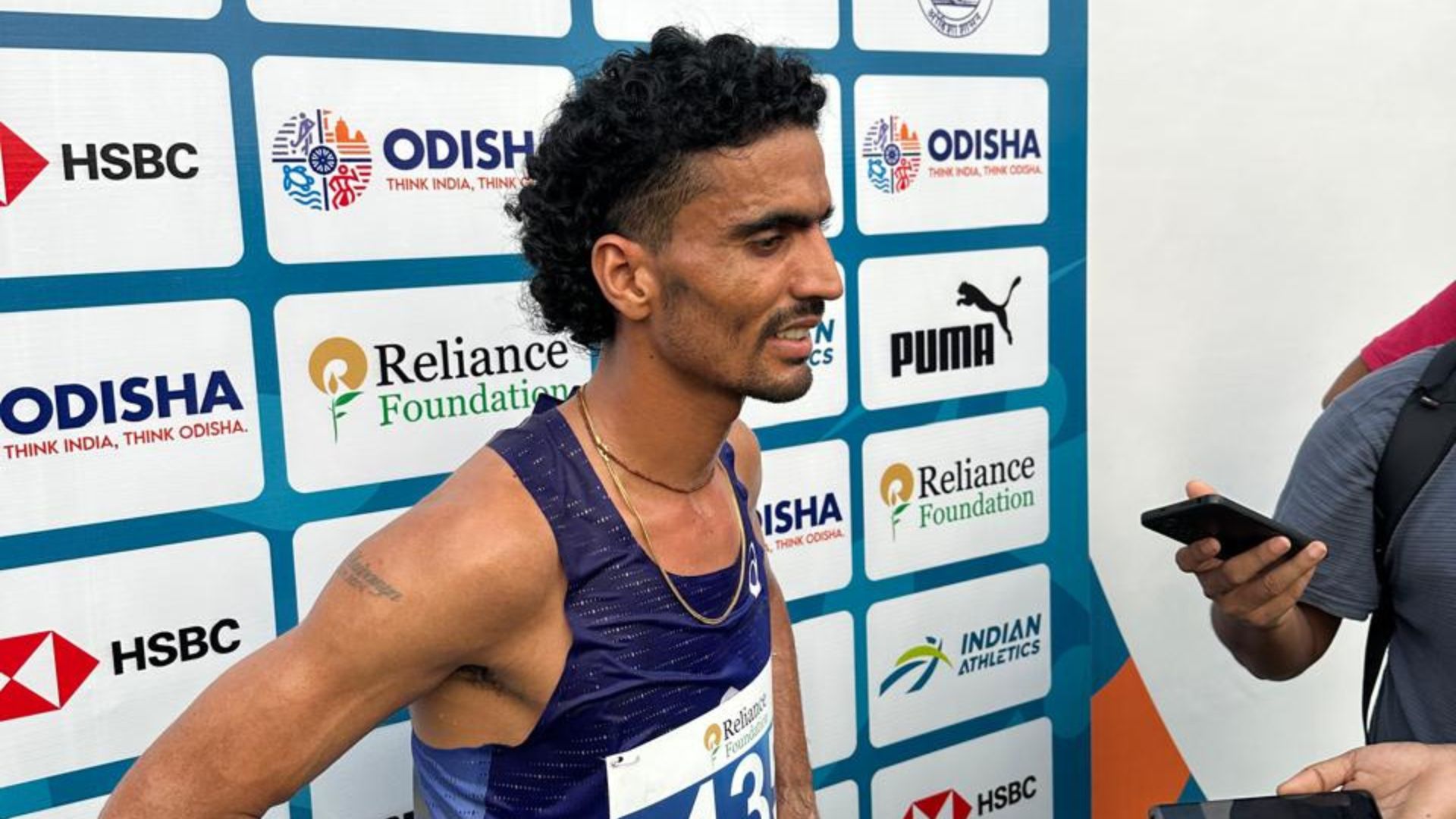
The first major surprise of the 65th National Inter-State Senior Athletics Championships came in the men’s 5000m, as India’s national record holder Gulveer Singh failed to secure the qualification standard for the 2026 Asian Games.
Gulveer, one of India’s most consistent distance runners in recent years, clocked 13:52.92 to win the event but fell well short of the Asian Games qualification mark of 13:39.18.
The result comes as a setback for the national record holder, who was widely expected to comfortably achieve the standard at the championships.
Speaking after the race, Gulveer pointed to the challenging conditions, saying that the weather was unusually warm and made it difficult to produce a faster time.
The silver medal was claimed by Abhishek Pal, who finished second in 13:54.18, while the rest of the field trailed behind in what turned out to be a tactical rather than a fast-paced race.
With the qualification window still open, Gulveer will have further opportunities to chase the Asian Games standard. However, his failure to achieve the mark at the Inter-State Championships marks the first significant upset of the meet and highlights the impact that weather and race conditions can have on distance running performances.
For now, one of India’s biggest medal hopes in long-distance running leaves the championships with the title, but without the Asian Games qualification he was targeting.