
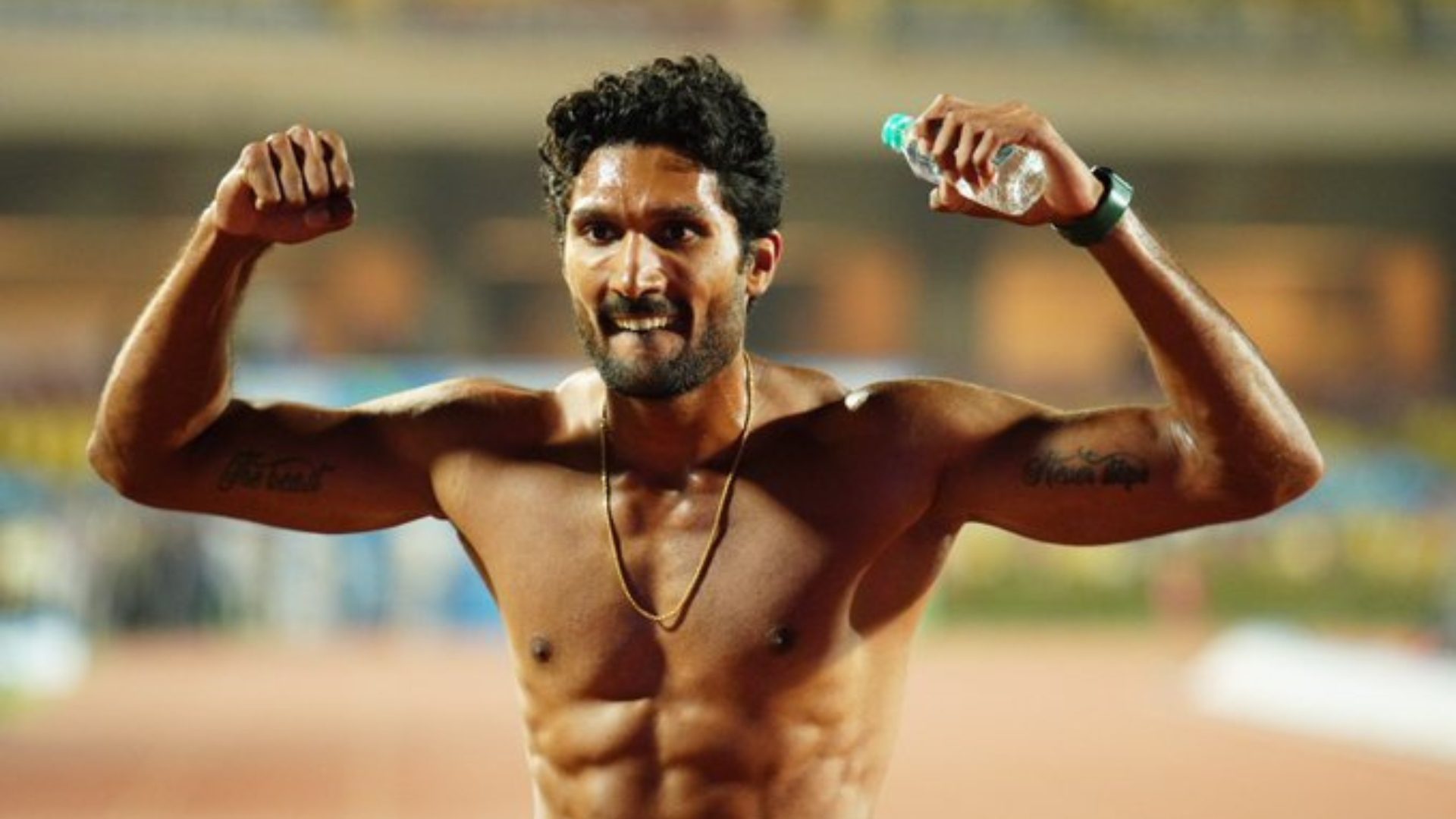
As the Commonwealth Games 2026 approach, Tejaswin Shankar has emerged as one of India’s brightest medal prospects in athletics. The versatile decathlete heads to Glasgow in outstanding form after rewriting the Indian national record with 8,057 points, becoming the first Indian ever to surpass the 8,000-point mark in the demanding ten-event discipline.
His performance has also placed him among the world’s leading decathletes this season. Among athletes from Commonwealth Games nations, only Canada’s Damian Warner (8,497 points) and Pierce LePage (8,117 points) have recorded higher scores, with Shankar sitting third on the season list ahead of Nigeria’s Jami Schlueter (8,024 points) and Great Britain’s Callum Newby (7,867 points).
Notably, although Canada occupies the top two positions in the rankings, only Damian Warner has been selected for Canada’s Commonwealth Games decathlon squad, making Shankar one of the leading contenders for a place on the podium.
With confidence, consistency, and history already on his side, Tejaswin Shankar will carry India’s hopes in one of athletics’ toughest events when the Commonwealth Games 2026 take place in Glasgow, Scotland, from 23 July to 2 August. A medal-winning performance would further cement his status as one of India’s finest all-round athletes.
In the last Edition Tejaswin won Bronze in Men’s High Jump.
By Sundeep Misra
A couple of black ravens flew over the Kalinga Stadium, perched on the scoreboard, and watched Rohit Yadav launch an 87.05m javelin throw into the night sky. It was the second-best throw in the global top list at the time. Cheering him on was a grand total of about 25 hostel kids. At this rate, the birds practically made up half the demographic.
Gazing across the arena during the National Inter-State Championships, a depressing numbers issue emerged: the judges, media, and officials easily outnumbered the people in the stands. National records were breaking like stones in a quarry. Jyothi Yarraji blazed down the hurdles, Anushka shattered the hammer throw record at 67.02m, and Sarvesh Kushare cleared 2.31m in the high jump. The applause? Mild, polite, and at times none. If a national record falls in an empty stadium, does it make a sound?
Right now, Indian track and field is experiencing an unprecedented competitive renaissance. Yet, our premier domestic meets feel less ‘premier’ and more like quiet corporate events. Political rallies can mobilize thousands of citizens with a few hours’ notice, but continental-class athletics meet can’t seem to beat a local grocery store opening.
The problem isn’t public apathy; it’s a design flaw. The system treats these meets strictly as selection trials. Fans aren’t just missing; they’re uninvited. The sentiment seems to be that the spectator is a beast who is simply not required.
Across the world, track meets are turned into lifestyle festivals. In Japan, domestic meets pull massive, vibrant crowds by integrating cheering squads, thumping school brass bands. In Taiwan, domestic opens double as weekend carnivals, bringing in food stalls and hosting youth clinics on the sidelines to ensure families treat athletics as a prime-time evening out.
Understandable that cultures are different. Yet, someone needs to try. Meanwhile, at our Inter-State meet, even the local media was conspicuous by its absence.
Fixing this isn’t rocket science, it’s basic event management. One needs to build a pipeline. Fill the stands by busing in local school kids, even from nearby towns, villages who might want a break from the usual cricket monoculture or just give them a big-city break. Set up a free selfie booth where fans can get a digital souvenir mailed to them. Let the athletes feel the emotional rush of a roaring crowd instead of the echo of their own winning scream.
The inevitable bureaucratic retort will be, “How much can we do?” But transforming these quiet trials into vibrant cultural events isn’t a favour to the athletes, it’s the bare minimum they deserve, in reality they are the ones propping up the system; because of them national anthems play. Not because of the suits or the host states. Until the system decides to prioritize the spectator, Indian athletics will keep breaking records in the dark, with only the ravens to bear witness.
By Sushant singh ~
India’s Sports Minister, Mansukh Mandaviya, has taken one of the biggest decisions in the country’s fight against doping. The Centre has proposed amendments to the National Anti-Doping Act, 2022, to criminalise organised doping-related activities.
The proposed amendments are expected to be introduced during the upcoming Monsoon Session of Parliament, with the Ministry of Youth Affairs & Sports (MYAS) placing the draft Bill in the public domain for public feedback.
The amendments seek to criminalise organised doping networks by targeting the trafficking, illegal supply, administration, and commercial distribution of prohibited performance-enhancing substances and methods.
When the proposal to criminalise organised doping first came into the picture, many athletes and coaches contacted NNIS Sports seeking clarity. The biggest question was whether athletes who test positive would face imprisonment.
The Ministry has now clarified that the proposed law is not aimed at athletes who merely test positive for a prohibited substance. Instead, it specifically targets those involved in organised doping operations.
The proposed offences include:
- Trafficking prohibited substances.
- Unauthorised sale and distribution of banned substances.
- Administering prohibited substances to athletes for doping.
- Supplying banned substances to minors.
- Organised criminal activities linked to doping.
- Selling prohibited substances without prescribed labelling.
- Advertisements or paid promotions encouraging the use of banned substances.
The government has made it clear that athletes will not be treated as criminals simply for committing an anti-doping rule violation. Unless an athlete is found to be involved in offences such as trafficking, organised supply, or other criminal activities, their cases will continue to be dealt with under the existing anti-doping framework.
The Ministry has also stated that the proposed amendments are in line with India’s commitments under the UNESCO International Convention Against Doping in Sport and are consistent with the approach endorsed by the World Anti-Doping Agency (WADA).
It is worth noting that after Parliament passed the National Anti-Doping Act in 2022, WADA raised concerns that certain provisions were not fully compliant with the World Anti-Doping Code. The objections primarily related to:
- Government control over disciplinary and appeal panels.
- Independence of anti-doping adjudication.
- Appointment mechanisms.
The new draft amendments are expected to address these concerns while also strengthening India’s legal framework against organised doping.
WHY DOES INDIA NEED TO CRIMINALISE ORGANISED DOPING?
India continues to face a serious doping challenge. The country topped the list of global doping offenders in the Athletics Integrity Unit’s (AIU) June 2026 report and has consistently ranked among the countries with the highest number of anti-doping rule violations in WADA statistics over the years.
During the recent WADA Summit held in Delhi, WADA President Witold Bańka said the global body is closely monitoring India’s anti-doping measures and resources. He also pledged a comprehensive and coordinated crackdown on the supply chain of banned substances.
Bańka also confirmed that WADA will collaborate with the Central Bureau of Investigation (CBI) as the Sports Ministry moves to criminalise doping suppliers.
It is also worth noting that the Athletics Integrity Unit (AIU) this year has placed India in Category A, indicating an “extremely high” risk of doping.
Another major concern has been the open sale and promotion of prohibited substances on several social media platforms in India. Many pages have openly advertised and sold banned performance-enhancing substances with little or no enforcement action. If the proposed amendments become law, such individuals and networks could face criminal prosecution.
The punishment for these offences will be determined under the provisions of the Bharatiya Nyaya Sanhita (BNS), depending on the nature and seriousness of the offence.
With India’s current global standing and the growing number of doping positives, these amendments could mark a significant shift from merely punishing athletes to dismantling the criminal networks that fuel doping in Indian sport.
The big question now is: Will criminalising organised doping finally help curb this menace and improve India’s image on the international sporting stage?
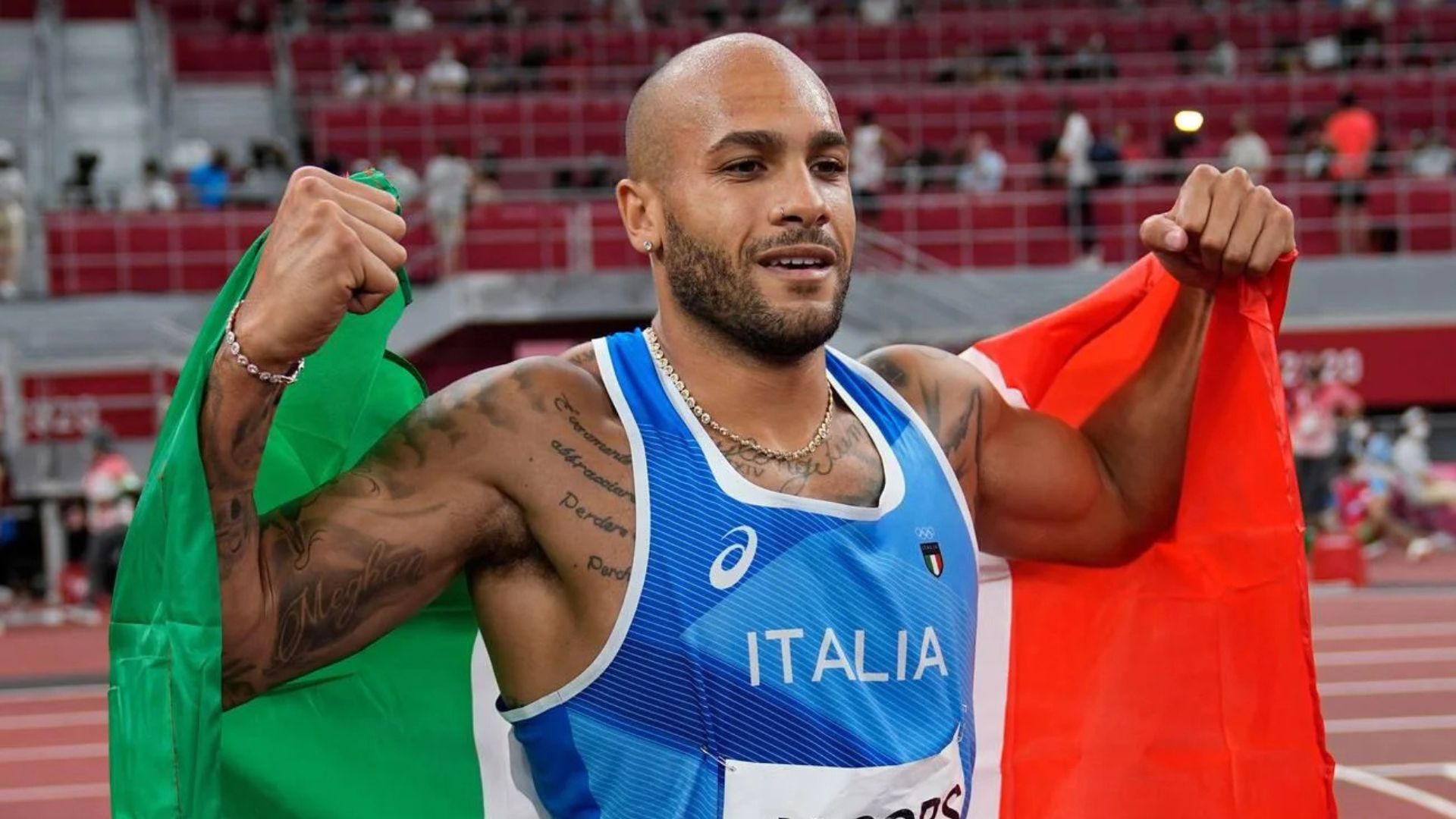
Lamont Marcell Jacobs delivered the most eye-catching sprint performance of the 2026 season so far, clocking 9.67 seconds to win the men’s 100m at the Austrian Open in Eisenstadt on Wednesday — a time that, wind assistance aside, puts his name in extraordinarily rare company.
The +4.1 m/s tailwind rules the performance out of the official record books. But it does nothing to diminish what the Olympic champion produced. Cast across the entire history of the 100 metres — wind-legal or wind-assisted — only Usain Bolt’s 9.58 and 9.63 sit above it. Everyone else is further back. Jacobs now occupies the space between Bolt and the rest of the world.
How the Race Unfolded
It was not a flawless performance from the Italian. His start was sluggish, and through the opening 30 metres he had rivals alongside him — Romell Glave of Great Britain and Wayde van Niekerk, the South African who still holds the 400m world record, both pushed Jacobs through the early phase of the race.
But Jacobs is a closer. His ability to generate top-end speed and sustain it through the final third of a 100m race is what separates him from almost everyone on the planet, and it showed. He picked off both rivals, hit the line around a metre clear, and clocked a time that had the Eisenstadt crowd buzzing.
Glave crossed second in 9.76, van Niekerk third in 9.83. Japan’s Yoshihide Kiryu ran 9.99 for fourth, Germany’s Owen Ansah 10.00 for fifth, and local athlete Markus Fuchs finished sixth in 10.09.
Jacobs had already looked sharp earlier in the evening, winning his heat in a wind-assisted 9.84. The final was not so much a surprise as a confirmation.
Race Results Table
|
Pos |
Athlete |
Time |
|
1 |
Marcell Jacobs |
9.67 (+4.1) |
|
2 |
Romell Glave |
9.76 |
|
3 |
Wayde Niekerk |
9.83 |
|
4 |
Yoshihide Kiryu |
9.99 |
|
5 |
Owen Ansah |
10.00 |
|
6 |
Markus Fuchs |
10.09 |
The Bigger Picture
The wind-assisted caveat is worth noting but not worth dwelling on. At 4.1 m/s, the conditions were well beyond legal limits — which is why the time carries an asterisk. But sprinters at elite level don’t manufacture 9.67s from nowhere. The fitness, the mechanics, and the speed are real, regardless of what the wind was doing.
What this performance signals is that Jacobs is building towards something significant. A legally timed race at a major championship, if his form holds, could produce a performance that does enter the record books.
At the finish line, Jacobs was visibly elated — celebrating with the crowd before making his way down the line to embrace each of his competitors. The Olympic champion at his best is as generous in victory as he is devastating in the race itself.
The sprint world has been put on notice.
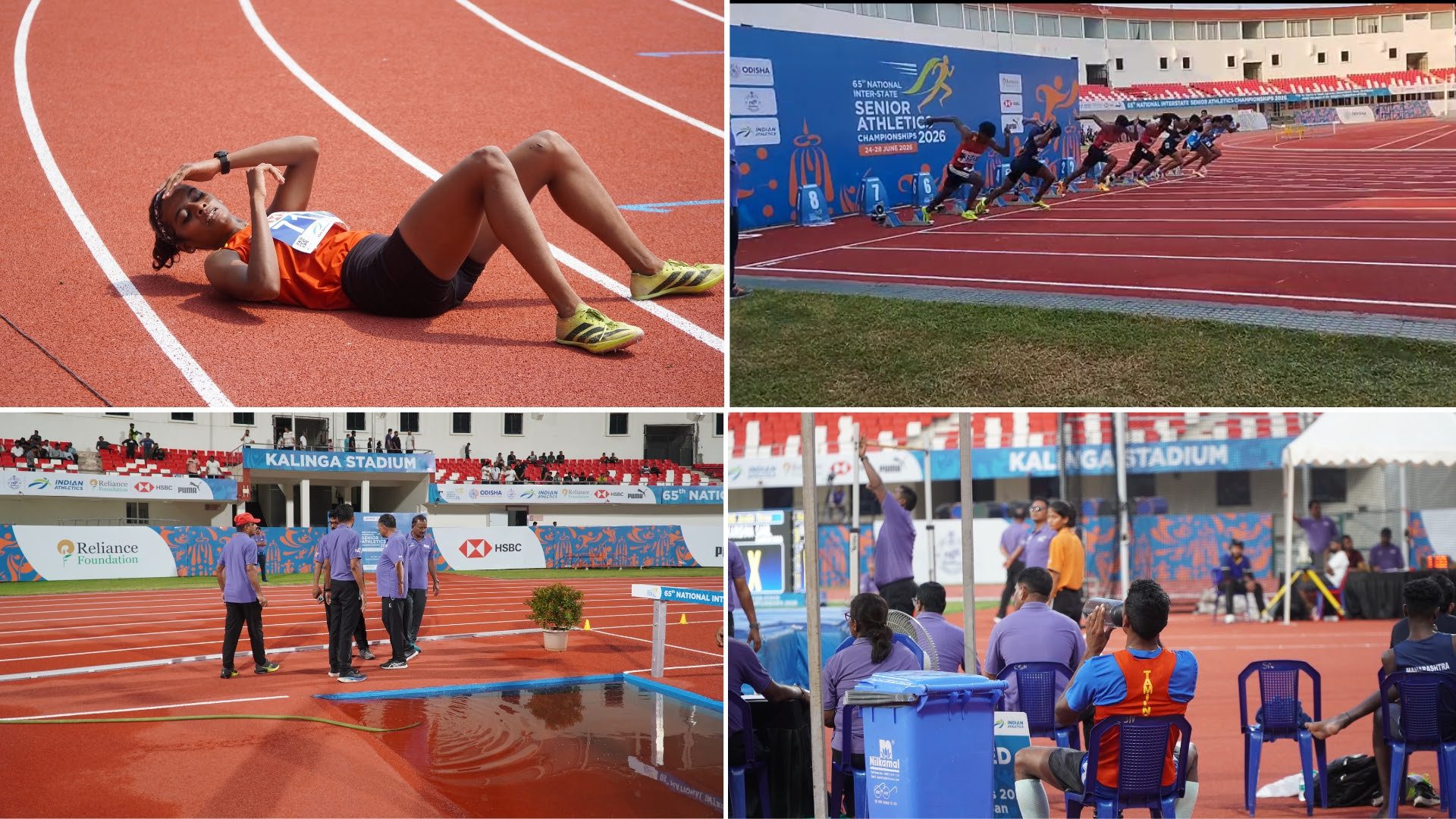
The 65th National Inter-State Senior Athletics Championships in Bhubaneswar delivered everything Indian athletics had hoped for—national records, personal bests and a flurry of Asian Games qualification marks.
But alongside the outstanding performances, a handful of avoidable technical lapses also drew attention at India’s premier domestic athletics meet.
With the Inter-State Championships serving as the final qualification event for the 2026 Asian Games, the competition carried enormous significance. While the overall organisation and infrastructure were widely appreciated, a few officiating errors impacted athletes and prompted questions about competition management.
Key Incidents
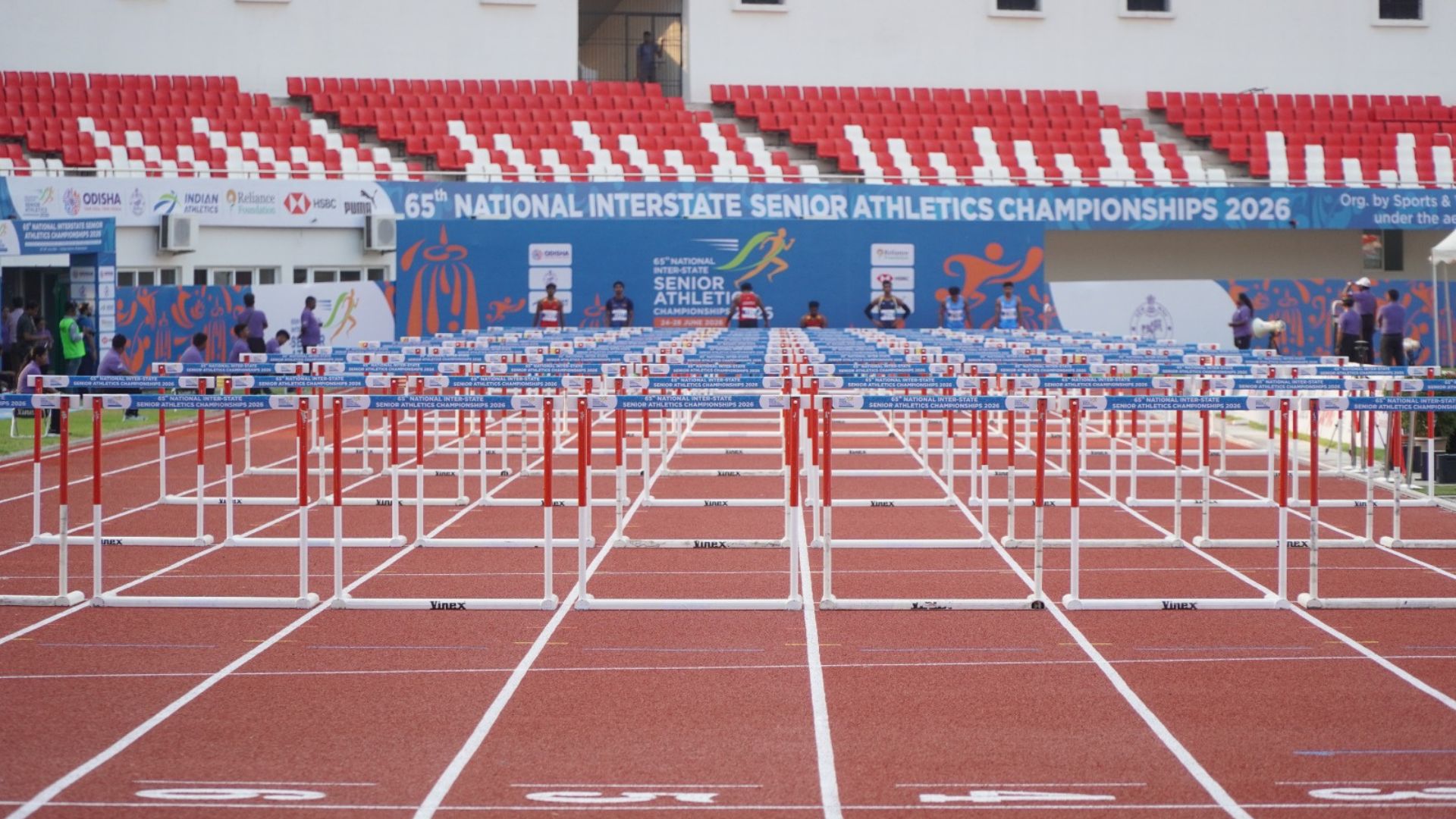
400m Hurdles: Tamil Nadu’s Harshita was forced to re-run her heat after officials failed to place one of the ten mandatory hurdles in her lane. Having initially qualified, she had to race alone the next morning and narrowly missed a place in the final.
100m Semifinals: Multiple technical faults delayed one of the men’s 100m semifinals. Athletes later said unstable starting blocks and loose sensors, reportedly affected by rain, disrupted their preparations and race rhythm.
Women’s Javelin: The silver and bronze medal positions sparked discussion after two athletes finished with identical best throws. Questions were raised over whether the World Athletics tie-break procedure had been correctly applied.
3000m Steeplechase: The final day’s steeplechase was delayed by around 30 minutes after the water jump had not been prepared before the scheduled start, disrupting athletes’ carefully planned warm-up routines.
None of these incidents overshadowed the exceptional quality of competition on display. However, at a championship that doubled as India’s final Asian Games selection event, they serve as a reminder that world-class athlete performances deserve equally high standards of technical officiating.
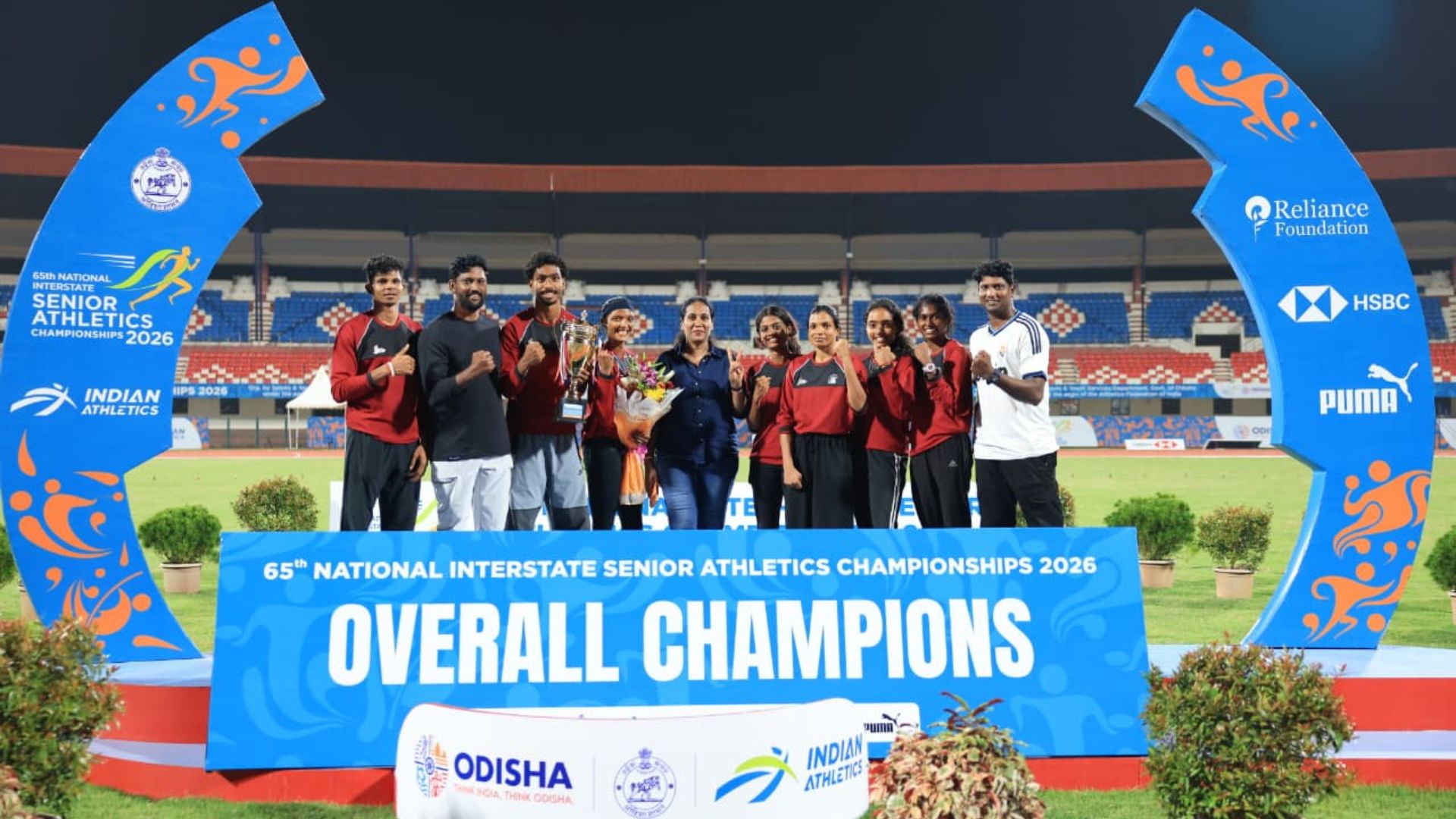
The 65th National Inter-State Senior Athletics Championships concluded in Bhubaneswar after five days of outstanding performances, national records, and a flood of Asian Games qualification marks. While individual brilliance grabbed the headlines, the medal table also offered an insight into which states continue to dominate Indian athletics.
Tamil Nadu finished on top after edging Uttar Pradesh on the basis of silver medals, with both states winning nine gold medals each. Haryana, long regarded as one of India’s athletics nurseries, completed the top three.
Tamil Nadu’s Remarkable Depth
Tamil Nadu once again underlined why it remains one of India’s strongest athletics states. The contingent was led by standout performers including Vishal TK, Praveen Chithravel, Vithya Ramraj, and the men’s 4×400m relay team, all of whom clinched gold medals. Hurdlers Nandhini K and Baranica Elangovan also continued the state’s rich tradition in the hurdles. The state has invested heavily in athletics over the past decade, and the results are increasingly evident across both track and field events.
Uttar Pradesh Close Behind
Just one silver medal separated Uttar Pradesh from the title. The state enjoyed another exceptional championship, led by Parul Chaudhary, Annu Rani, and middle-distance stars Yoonus Shah and Gulveer Singh, whose memorable 1500m duel was among the highlights of the meet. Uttar Pradesh continues to produce athletes across endurance, jumps, and throws.
Haryana Continues to Deliver
Few states contribute as consistently to Indian athletics as Haryana. Its five gold medals reflected strength across multiple disciplines, with athletes such as Pooja (high jump gold), Balkishan (3000m steeplechase gold), and a host of throwers and sprinters keeping Haryana firmly among India’s athletics elite. The state’s sporting ecosystem continues to produce athletes capable of competing on the international stage.
Kerala’s Middle-Distance Legacy
Kerala once again showcased its tradition of producing outstanding runners. National 800m record holder Mohammed Afsal, long jumper Murali Sreeshankar, and several relay prospects contributed to another strong finish as the state claimed fourth place.
Maharashtra’s Field Event Strength
Despite finishing fifth, Maharashtra produced some of the championships’ biggest moments. Sarvesh Kushare rewrote the national record books in the high jump with a stunning 2.31m, while the state also enjoyed success in throws and jumps, collecting eight bronze medals—the highest of any state.
Karnataka’s Consistency
Karnataka matched Haryana with 15 overall medals, finishing sixth only because of fewer gold medals. The state impressed through athletes like Unnathi Bollanda, Yashas Palaksha, Sindhushree G (who shattered the national record in the pole vault), and several emerging quarter-milers and jumpers, underlining its depth across sprint and hurdle events.
Hosts Odisha Shine
Hosts Odisha celebrated three gold medals and six overall podium finishes. Backed by world-class infrastructure at the Kalinga Stadium and the Odisha Reliance Foundation High Performance Centre, the state continues to establish itself as one of India’s emerging athletics hubs.
Punjab’s Throwing Tradition Continues
Punjab’s medal haul was spearheaded by Damneet Singh, who booked his Asian Games berth in the hammer throw with a throw of 69.72m, while the state continued its long-standing excellence in the throwing events.
A Championship to Remember
Beyond the medal table, the 65th Inter-State Championships will be remembered for the sheer quality of performances. National records by Sarvesh Kushare, Dev Meena, Sindhushree G, and Ancy Sojan, along with dozens of Asian Games qualification marks, made this one of the strongest editions of the championships in recent memory.
| Rank | State | Gold | Silver | Bronze | Total |
|---|---|---|---|---|---|
| 1 | Tamil Nadu | 9 | 9 | 2 | 20 |
| 2 | Uttar Pradesh | 9 | 8 | 3 | 20 |
| 3 | Haryana | 5 | 6 | 4 | 15 |
| 4 | Kerala | 4 | 4 | 3 | 11 |
| 5 | Maharashtra | 4 | 2 | 8 | 14 |
| 6 | Karnataka | 3 | 6 | 6 | 15 |
| 7 | Odisha | 3 | 1 | 2 | 6 |
| 8 | Punjab | 2 | 2 | 2 | 6 |
| 9 | Himachal Pradesh | 2 | 1 | 0 | 3 |
| 10 | Uttarakhand | 1 | 3 | 1 | 5 |
With the curtains coming down on the 65th National Inter-State Senior Athletics Championships, the Athletics Federation of India (AFI) now faces the task of selecting the country’s athletics squad for the 2026 Asian Games.
While the official team is yet to be announced, the Inter-State Championships were the final domestic qualification event, making performances in Bhubaneswar the biggest indicator of who is likely to wear the India jersey
From certain selections to fiercely contested events where multiple athletes achieved the qualification standard, here’s NNIS Sports’ predicted Indian athletics team for Nagoya 2026.
Men’s Events
200m
Animesh Kujur: The fastest man of the championships completed the sprint double, winning both the 100m and 200m. While he narrowly missed the qualifying mark in the shorter sprint, his 20.74s in the 200m comfortably sealed his place
400m
Vishal TK, Manu TS: No event had greater depth. Seven athletes achieved the qualification standard across the rounds, but Vishal TK (45.43s) and Manu TS (45.60s) were the two fastest in the final and are favourites for the individual event. More quarter-milers are expected to join the relay squad
800m
Mohammed Afsal, Krishan Kumar* – Afsal confirmed his place with another national title. The second berth remains the toughest call. Krishan Kumar and Mogali Venkatram both have strong cases, although Mogali’s likely participation at the World U20 Championships could tilt the balance in Krishan’s favour.
1500m
Yoonus Shah, Gulveer Singh: Both men went under the qualification mark while rewriting the meet record in one of the fastest 1500m races seen at the Inter-State Championships.
110m Hurdles
Expected: Tejas Shirse: A straightforward selection. The national record holder qualified comfortably before winning another national title.
400m Hurdles
Yashas Palaksha, Santhosh Kumar: One of the races of the championships. Both clocked an identical 49.14s while breaking the meet record and comfortably qualifying.
High Jump
Sarvesh Kushare, Aadarsh Ram: Kushare rewrote history with a new national record of 2.31m. Asian Indoor medallist Aadarsh Ram also cleared the qualification mark.
Pole Vault
Dev Meena: Another national record, another milestone. Dev Meena improved his own Indian record for the fifth time this season to virtually seal his berth.
Long Jump
Murali Sreeshankar, Shahnavaz Khan: Both comfortably cleared the qualifying standard to book what should be straightforward selections.
Triple Jump
Praveen Chithravel, Karthik Unnikrishnan: Despite six athletes achieving the AFI standard, the gold and silver medallists are expected to earn the individual berths.
Other Likely Men’s Selections
Shot Put: Karanveer Singh, Samardeep Gill
Hammer Throw: Damneet Singh, Praveen Kumar
Javelin Throw: Rohit Yadav (along with exempt athlete Neeraj Chopra)
Decathlon: Thowfeeq, Kushal Mohite
Women’s Events
200m: Harita Bhadra, Unnathi Bollanda
400m: Prachi, Kiran Pahal
800m: Gowthami, Pooja
100m Hurdles: Jyothi Yarraji, Nandhini K
400m Hurdles: Vithya Ramraj, Anu R
3000m Steeplechase: Ankita Dhyani
High Jump: Pooja, Supriya B
Pole Vault: Sindhushree G, Baranica Elangovan
Long Jump: Ancy Sojan, Shaili Singh
Triple Jump: Asha Illango
Shot Put: Manpreet Kaur, Krishna Jayashankar
Discus Throw: Seema, Sanya Yadav
Hammer Throw: Anushka Yadav
Heptathlon: Pooja
Exempt Athletes
Athletes who were granted exemption from competing at the Inter-State Championships—most notably Neeraj Chopra (Javelin) and Parul Chaudhary (3000m SC)—are also expected to be included in the final squad based on their international performances and qualification status.
It is also expected that some long-distance runners and race walkers who finished in the top two at the Interstate Championships but were unable to achieve the Asian Games qualification standards could still be considered for selection. The championships were held in extremely challenging weather conditions in Bhubaneswar, particularly for endurance events, and the selection committee may take those conditions into account while finalising the squad.
The Final Call
While many events produced clear winners, others—particularly the men’s 400m, 800m and relay pool—have left the selectors with difficult decisions.
The Inter-State Championships have done their job. The athletes have made their case.
Now all eyes turn to the AFI Selection Committee.
Who makes the final cut for Nagoya? We’ll know soon enough.
Disclaimer: This is NNIS Sports’ projected squad based on qualification standards, performances at the Inter-State Championships and existing selection criteria. The final Indian team will be announced by the Athletics Federation of India.
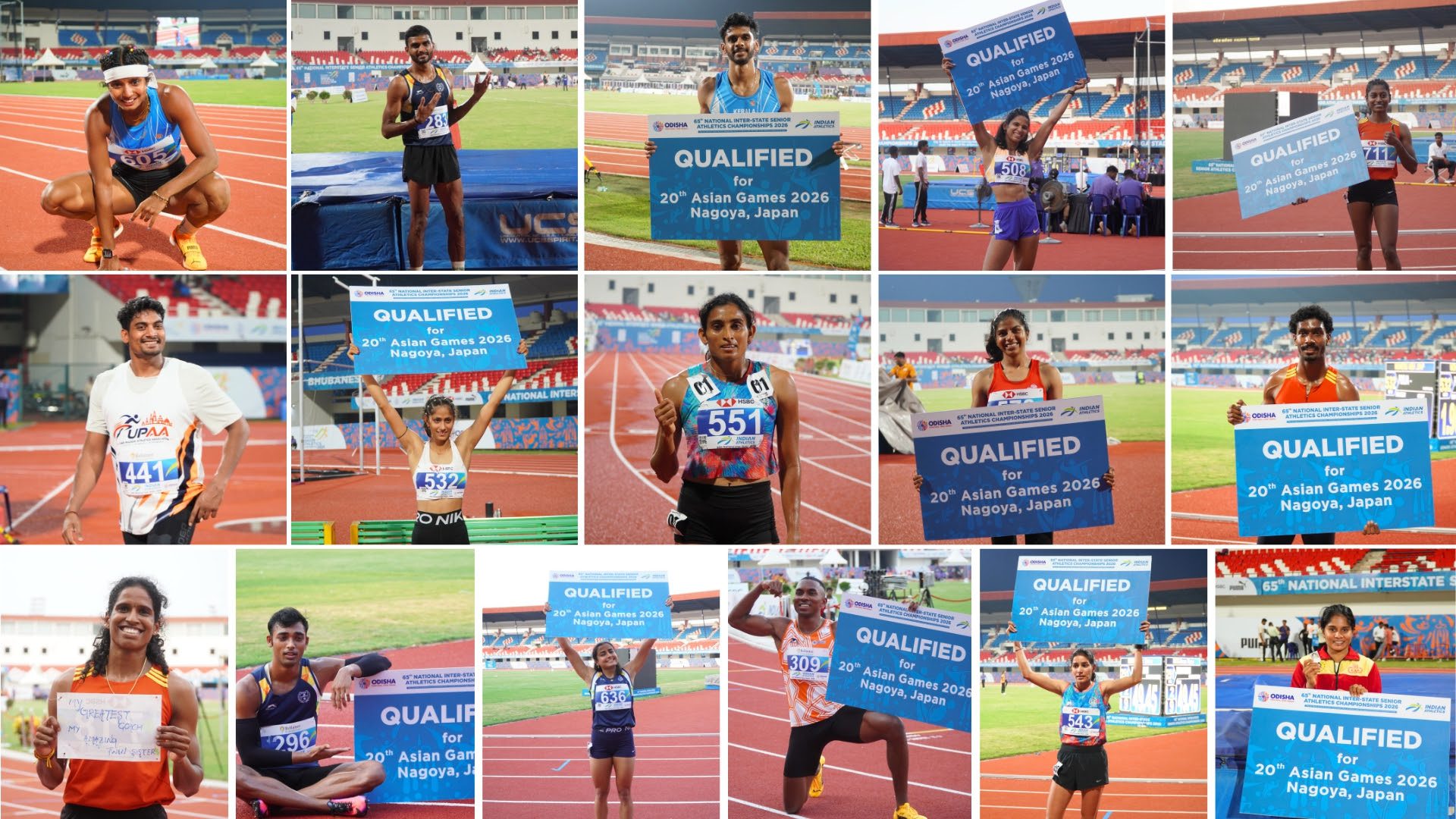
The Indian athletics team’s preparatory training camp in Spala, Poland, could face a delay after visa-related issues disrupted the travel plans of the national contingent ahead of the upcoming international season.
According to sources, only a section of the 68-athlete probable squad has received the necessary visas for travel to Poland. The remaining athletes are yet to obtain their travel documents and have reportedly been instructed to return to their respective training bases until further notice.
The development has created uncertainty over the commencement of the overseas training camp, which forms an important part of India’s preparations for upcoming international competitions. With the majority of the contingent still awaiting visa clearance, the team’s departure schedule is likely to be affected unless the issue is resolved promptly.
A national daily has reported that the matter has now reached the Ministry, with efforts underway to expedite the visa process and facilitate the athletes’ travel. Officials are reportedly working to resolve the issue at the earliest so that the contingent can proceed with its planned preparations without significant disruption.
At present, there has been no official confirmation regarding a revised departure date or the extent of the delay. The Athletics Federation of India (AFI) is expected to provide further clarity once the visa process is completed and travel arrangements are finalized.
The Spala training camp has been planned as a key phase of preparation for India’s leading athletes ahead of a busy international calendar. Any delay in its commencement could impact the team’s overseas training schedule, although authorities are understood to be making efforts to ensure the issue is resolved as quickly as possible.
For now, athletes not yet issued visas have returned to their respective training centres and are continuing their preparations while awaiting further instructions. More updates are expected as the situation develops.
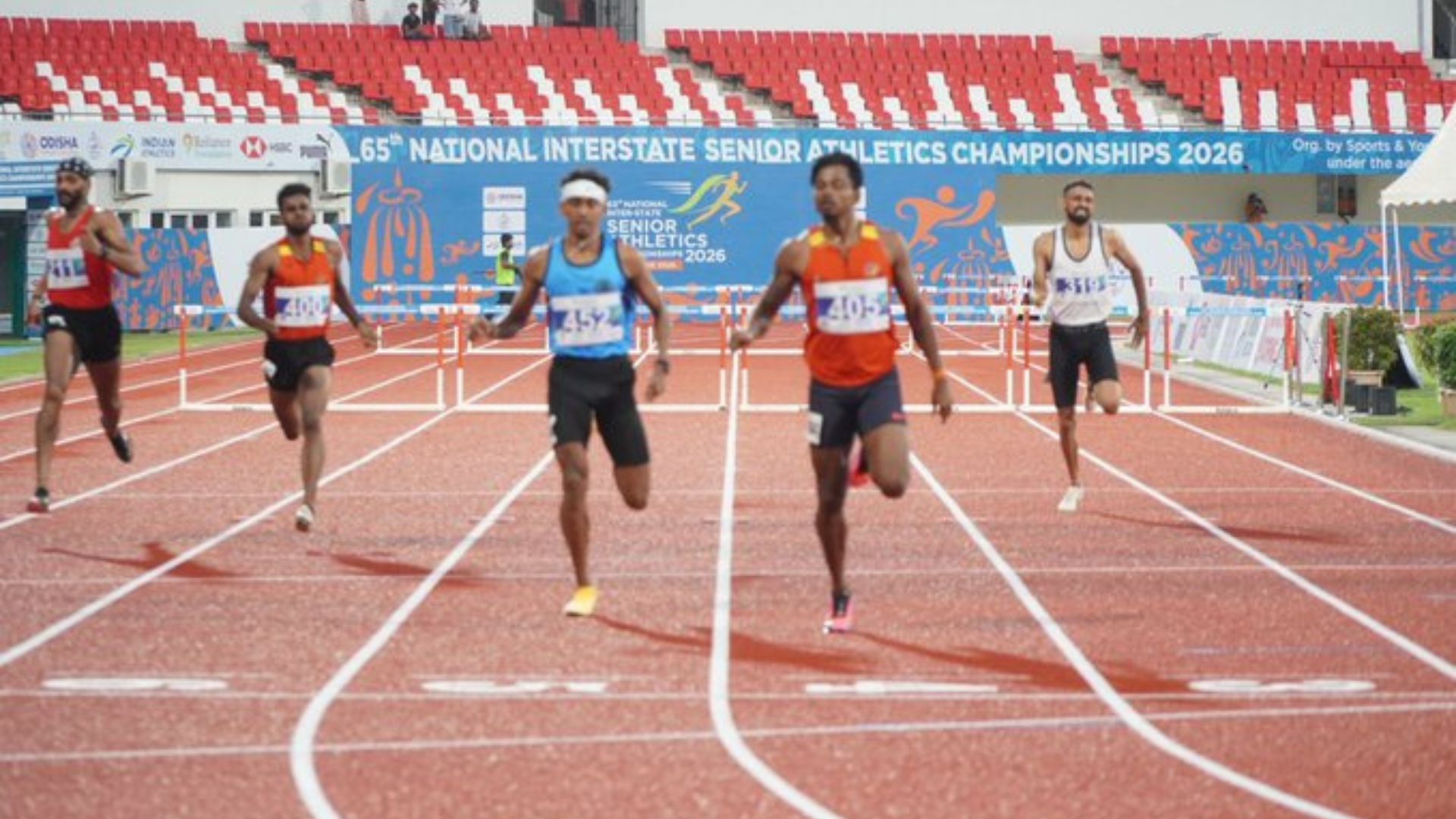
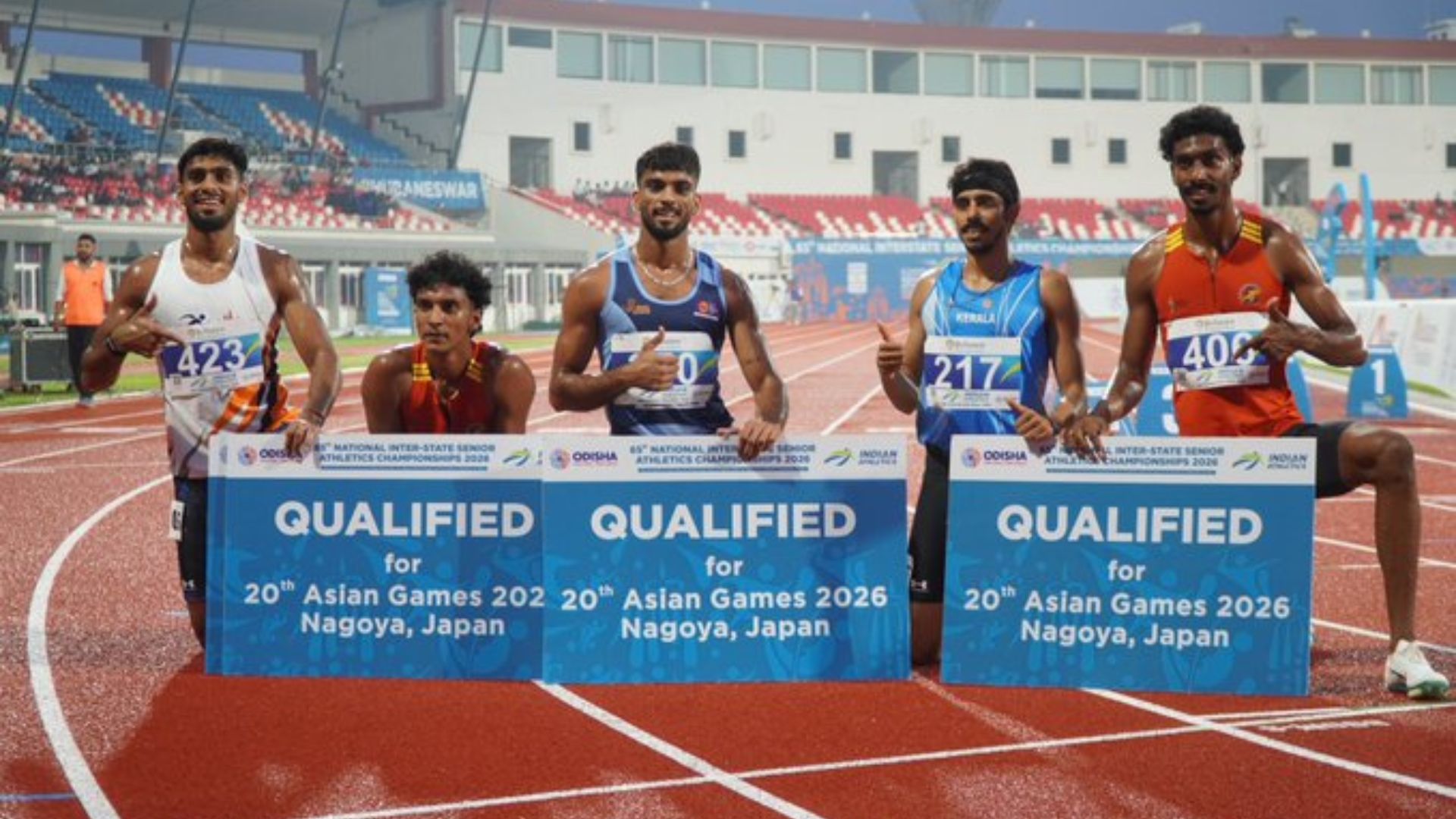
The men’s 400m final at the 65th National Inter-State Senior Athletics Championships 2026 delivered one of the finest one-lap races in Indian domestic athletics, with five athletes breaching the Asian Games qualification standard in a single race.
Representing Tamil Nadu, Vishal TK produced a brilliant performance to clinch the national title in 45.43s, leading a high-quality field and comfortably surpassing the Asian Games qualification mark. His victory capped off one of the most competitive 400m finals witnessed at the Interstate Championships in recent years.
Manu T S of Kerala secured the silver medal after clocking 45.60s, while Jay Kumar of Uttar Pradesh claimed bronze in 45.73s. Both athletes dipped well below the qualification standard, highlighting the exceptional depth in Indian men’s quarter-mile running.
The quality of the race extended beyond the podium. Dharmveer Choudhary of Rajasthan finished fourth in 45.90s, while Rajesh Ramesh of Tamil Nadu placed fifth with 45.91s. Both athletes also achieved the Asian Games qualification standard, making it a historic race in which all five leading finishers crossed the required benchmark.
The performances underline the remarkable progress Indian men’s 400m running has made in recent years. Having five athletes qualify in a single final reflects the increasing competitiveness of the event and provides a significant boost for Indian athletics ahead of major international competitions.
The Interstate Championships have once again proven to be the country’s premier stage for athletes to produce qualification-standard performances. The men’s 400m final, in particular, stood out for its quality, with every athlete in the top five delivering a time worthy of continental competition.
While all five athletes have successfully achieved the Asian Games qualification standard, qualification alone does not guarantee selection. The final Indian squad for the Asian Games 2026 will be determined by the Athletics Federation of India (AFI) Selection Committee, which will make the final selection based on its established criteria.
The race will be remembered as a landmark moment for Indian quarter-mile running, showcasing unprecedented depth and strengthening India’s prospects in the event on the international stage.