
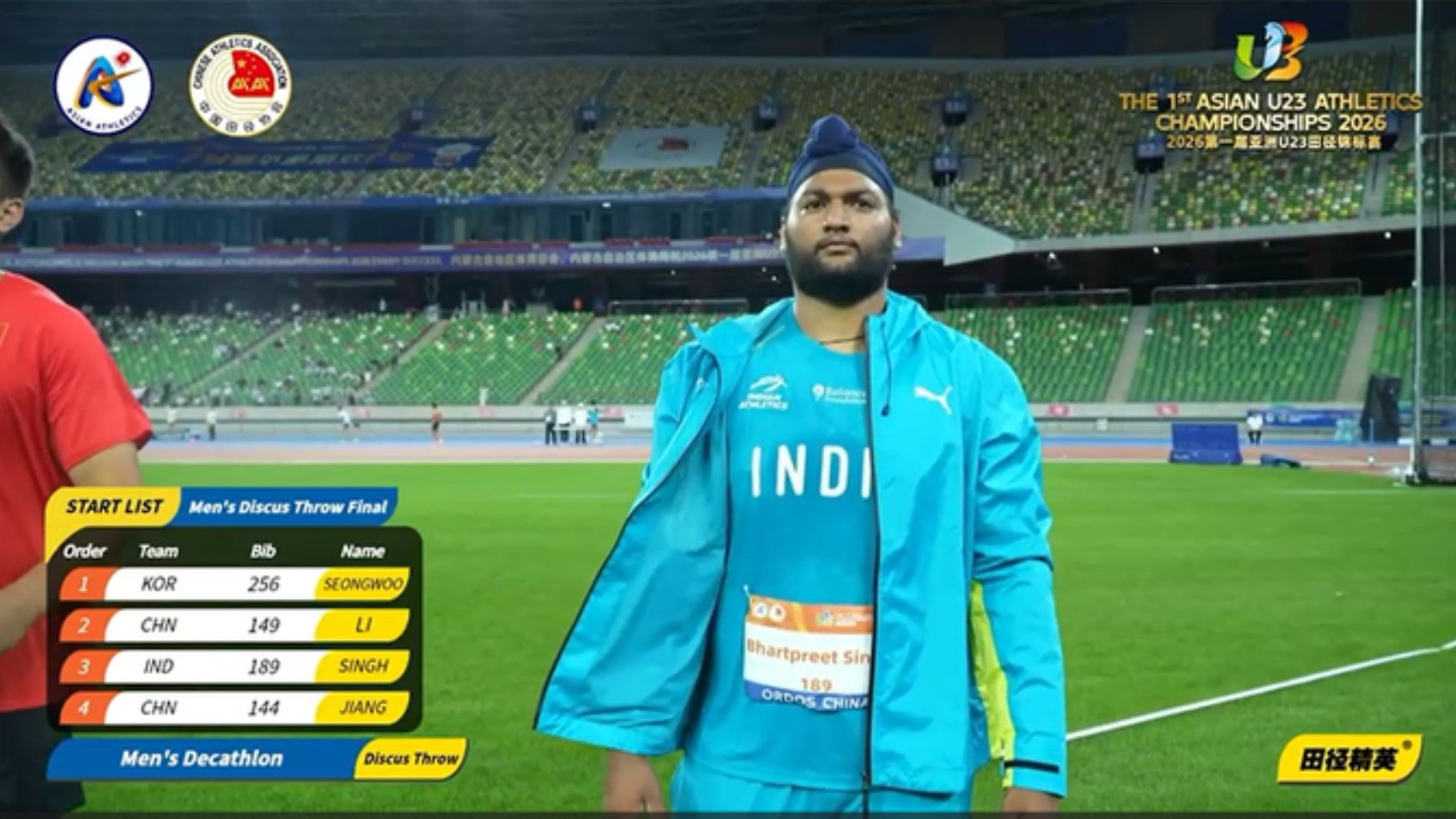
India added another medal to its tally at the inaugural Asian U23 Athletics Championships 2026 as Bhartpreet Singh claimed the bronze medal in the men’s discus throw in Ordos, China.
Bhartpreet produced a best effort of 52.91m, which came on his fifth attempt, to secure a place on the podium. After remaining in contention throughout the competition, the Indian thrower delivered his decisive throw at a crucial stage to finish third and earn another valuable medal for the Indian contingent.
The gold medal was won by China’s Zhixin Li, who dominated the event with a personal best throw of 60.79m. His compatriot Zehao Jiang claimed the silver medal with a best effort of 59.60m, giving the host nation a one-two finish in the competition.
Although Bhartpreet faced stiff competition from the Chinese throwers, he remained composed and capitalised on his fifth-round effort to secure the bronze medal. His performance ensured India continued its successful run at the championships, adding another podium finish to the country’s growing medal tally.
The Asian U23 Athletics Championships provide an important platform for emerging athletes to compete against the continent’s best and gain valuable international experience. Bhartpreet’s bronze-medal performance reflects the depth of India’s developing talent in the throwing events and highlights the country’s continued progress at the age-group level.
Winning a medal at the inaugural edition of the championships is a significant achievement for the young Indian thrower, who showcased resilience and consistency under pressure. His fifth-attempt throw proved decisive in securing a place on the podium and rewarding a composed performance throughout the competition.
With Bhartpreet Singh’s bronze medal, India continued its encouraging campaign in Ordos, building on earlier successes across track and field events. As the championships progress, the Indian contingent will aim to maintain this momentum and add more medals to its tally at the historic first edition of the Asian U23 Athletics Championships.
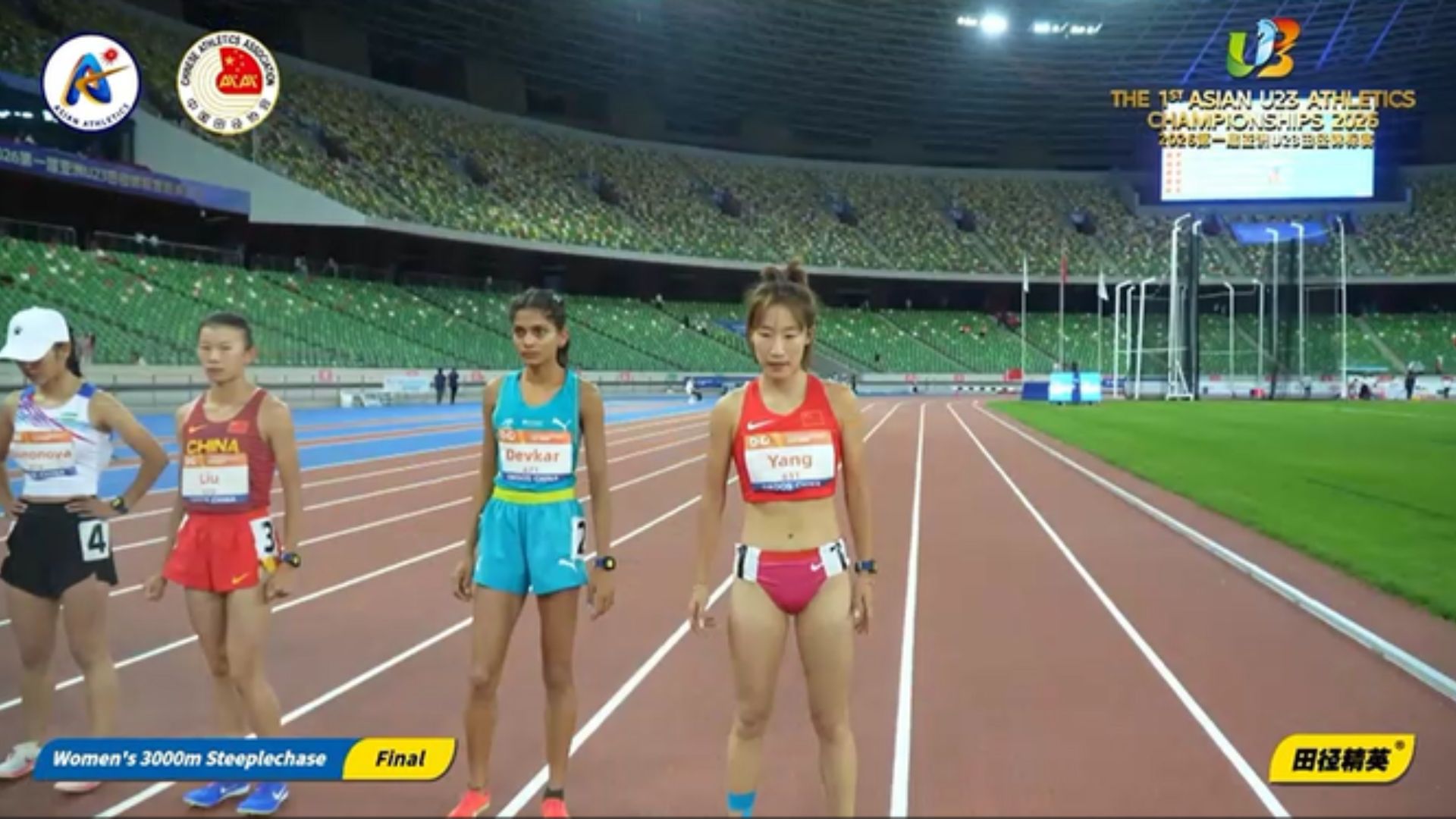
India continued its impressive start at the inaugural Asian U23 Athletics Championships 2026 with another podium finish, as Prachi Devkar secured the bronze medal in the women’s 3000m steeplechase in Ordos, China.
Prachi produced a determined performance to finish third in 10:32.69, adding another medal to India’s tally at the continental championships. Competing against a strong field, the Indian athlete maintained a consistent pace throughout the race and held her position to earn a place on the podium.
The gold medal was claimed by China’s Yiting Yang, who crossed the finish line in 10:14.68 to secure the title. Her compatriot Yuxin Liu finished second in 10:25.51, completing a one-two finish for the host nation, while Prachi followed closely behind to claim the bronze.
The medal is another significant achievement for the Indian contingent at the debut edition of the Asian U23 Athletics Championships. It also reflects India’s growing strength in middle- and long-distance events at the age-group level, with young athletes continuing to make their presence felt on the continental stage.
Prachi’s composed performance under championship conditions ensured that India remained among the medal winners early in the competition. Successfully negotiating the barriers and water jumps while maintaining her rhythm, she produced a well-executed race to secure a deserved podium finish.
The Asian U23 Athletics Championships serve as an important platform for emerging athletes to gain valuable international experience before progressing to the senior level. By winning the bronze medal, Prachi has added a notable achievement to her career while contributing to India’s encouraging campaign in Ordos.
With another medal added to the tally, the Indian team will look to carry this momentum into the remaining events of the championships. Prachi Devkar’s bronze-medal performance in the women’s 3000m steeplechase stands as another memorable moment for India at the inaugural edition of the Asian U23 Athletics Championships.
India made a promising start at the inaugural Asian U23 Athletics Championships 2026 by winning two medals in the men’s 5000m, opening its medal account at the continental event in Ordos, China.
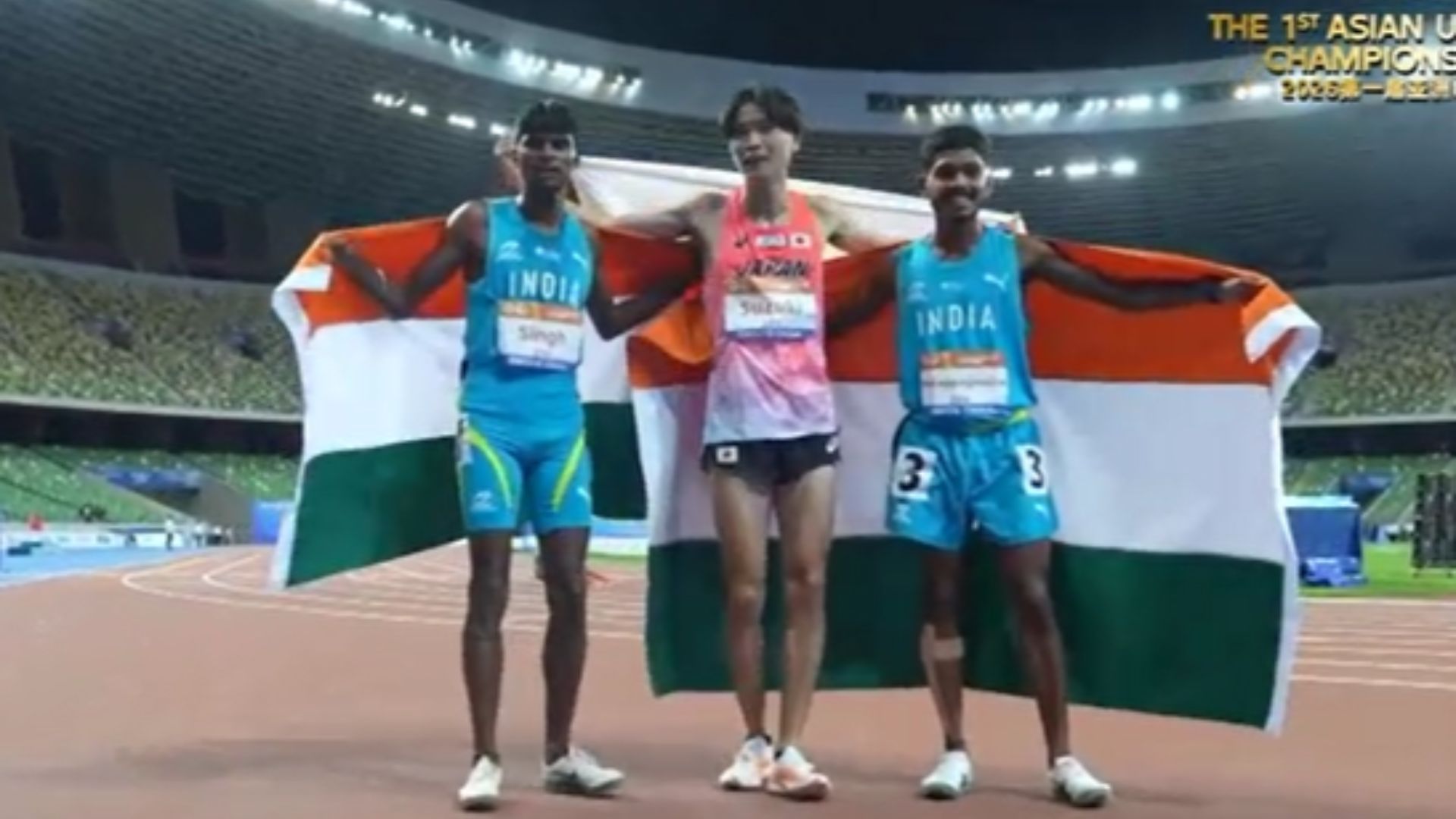
Leading the Indian challenge was Shivaji Parashuram, who produced a determined performance to claim the silver medal in a time of 14:08.19. Running confidently throughout the race, Shivaji stayed among the front-runners and finished strongly to secure India’s first medal of the championships.
Joining him on the podium was compatriot Vinod Singh, who earned the bronze medal after crossing the finish line in 14:23.67. His composed effort ensured a memorable double podium finish for India in the event, giving the country two medals in the opening stages of the competition.
The gold medal was won by Japan’s Rui Suzuki, who produced the fastest performance of the race, clocking 14:01.24 to take the title.
The silver and bronze medals hold added significance as they are India’s first-ever medals at the Asian U23 Athletics Championships, which is being held for the first time. The achievement marks a historic milestone for Indian athletics at the debut edition of the continental competition and provides an encouraging start to the campaign.
Distance running has consistently been one of India’s stronger disciplines at age-group competitions, and the performances of Shivaji Parashuram and Vinod Singh continued that tradition on the Asian stage. Their medals reflect the depth of India’s emerging talent and provide a positive foundation for the remainder of the championships.
With the medal account now open, the Indian contingent will look to build on this momentum in the events to come. The historic double podium finish in the men’s 5000m has given India an ideal start to the inaugural Asian U23 Athletics Championships and will serve as a confidence boost for the rest of the team as they continue their quest for more medals in Ordos.
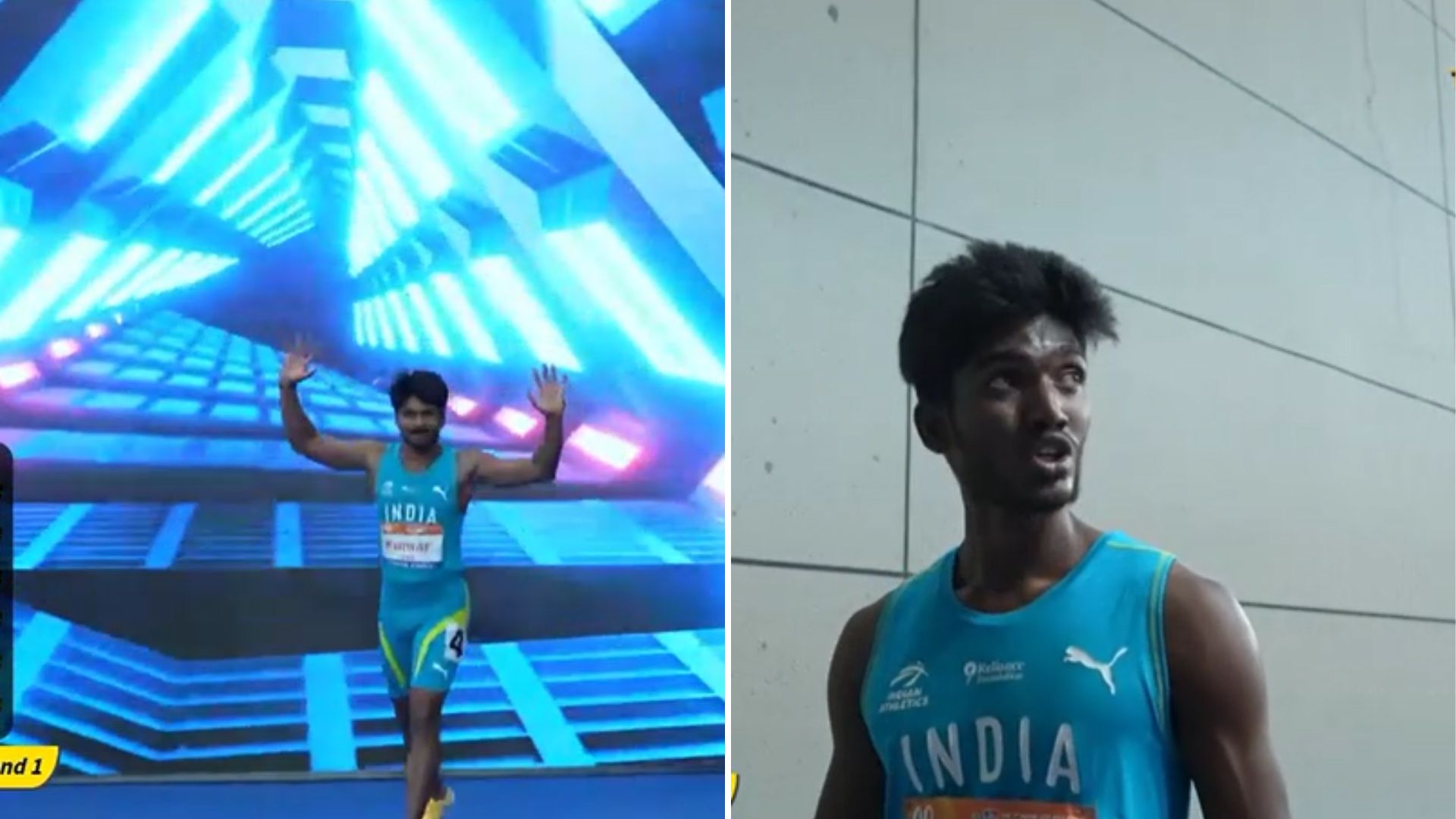
India’s challenge in the men’s 100m came to an end in the heats at the Asian U23 Athletics Championships 2026, with both Vibhaskar Kumar and Sam Vasanth missing out on qualification for the final.
Vibhaskar Kumar produced the better of the two Indian performances, clocking 10.50s to finish fourth in Heat 1. Despite a competitive run, his time was not enough to secure a place among the eight finalists.
In Heat 3, Sam Vasanth crossed the finish line in 10.66s, finishing sixth in his race. Like Vibhaskar, he was unable to advance to the medal round as the competition featured a strong field of sprinters from across Asia.
With both athletes falling short of the required qualification standard for the final, India will not have a representative in the men’s 100m title race at the championships.
The fastest performance of the opening round came from Malaysia’s Md. Fahimi, who impressed by clocking 10.15s across the three heats. His run established him as the quickest qualifier heading into the final and underlined the high standard of competition in the event.
Although the result marks a disappointing outcome for the Indian contingent in the men’s 100m, both athletes gained valuable experience competing against some of Asia’s leading young sprinters on the continental stage. The Asian U23 Athletics Championships continue to serve as an important platform for emerging athletes to test themselves against top regional competition and build experience for future senior international events.
Attention will now shift to the remaining events, where the Indian contingent will look to secure strong performances and challenge for podium finishes. While the men’s 100m campaign has concluded in the heats, India will be aiming for better results in the championships’ upcoming competitions.
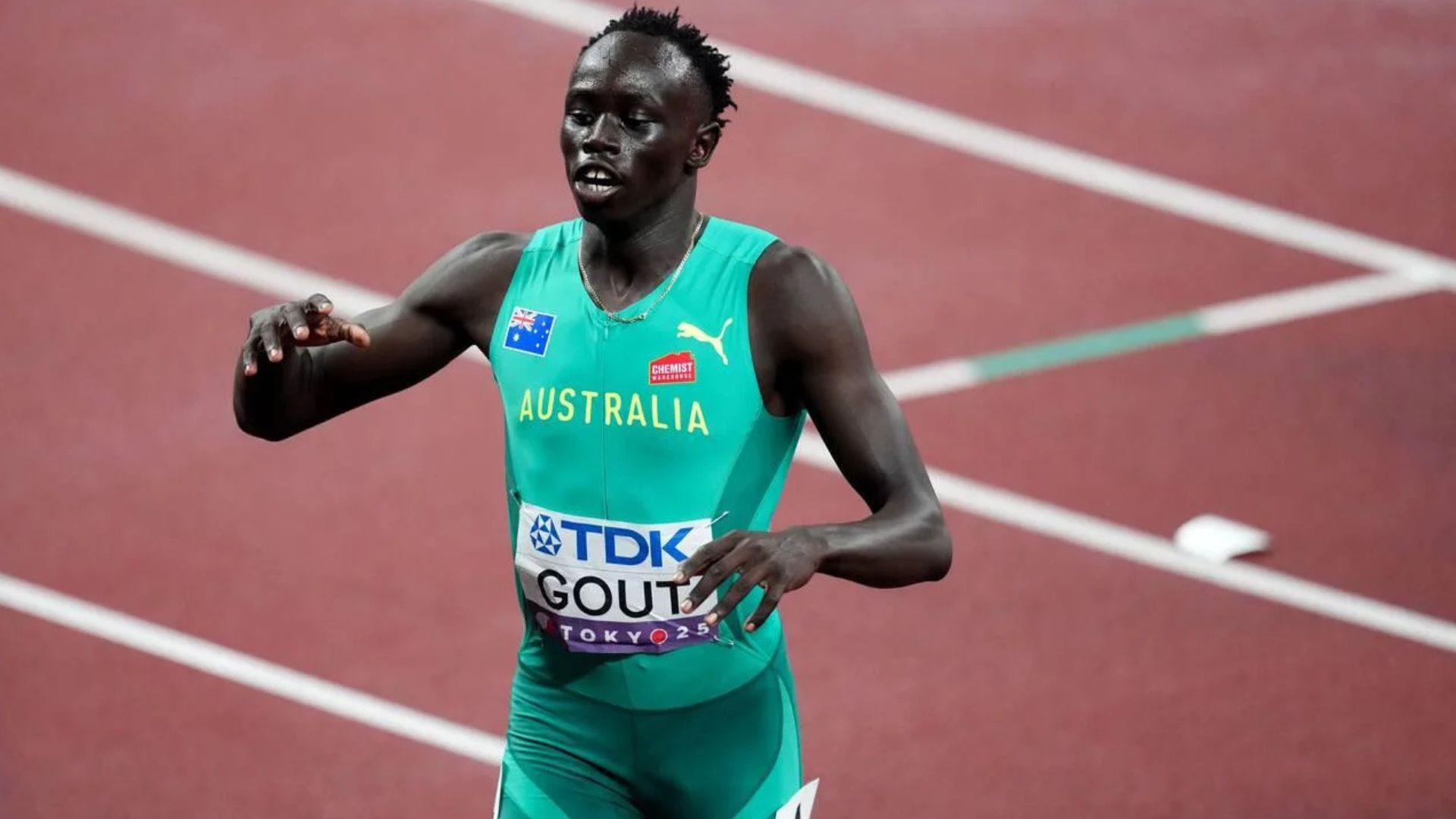
Australian sprint prodigy Gout Gout will miss next month’s World Athletics U20 Championships in Eugene after suffering a Grade 3 hamstring tear in training, bringing his breakthrough 2026 season to an abrupt end.
The 18-year-old confirmed that scans revealed significant tendon involvement in his left hamstring, ruling him out for the remainder of the year as he begins rehabilitation with an eye on a return in 2027.
The injury is a major setback for one of athletics’ fastest-rising stars. Earlier this year, Gout clocked 19.67 seconds to win the Australian title, breaking the World U20 record, the Oceanian record, and the long-standing Australian national record in the 200m. The performance placed him 16th on the all-time world list.
His rise has been equally impressive over 100m. In February, he equalled the fastest legal time ever run by an Australian on home soil with 10.00 seconds, setting a new Australian U20 record.
Gout arrived in 2026 as the overwhelming favourite for the World U20 200m title after claiming silver at the 2024 World U20 Championships in Lima. He had also opted to skip the Commonwealth Games to prioritise the junior global championships.
Despite the setback, Gout remains one of the brightest prospects in global sprinting. At just 18, he is already the World U20 200m record holder, an Australian champion and a World U20 silver medallist, with his focus now shifting entirely to recovery ahead of the 2027 season
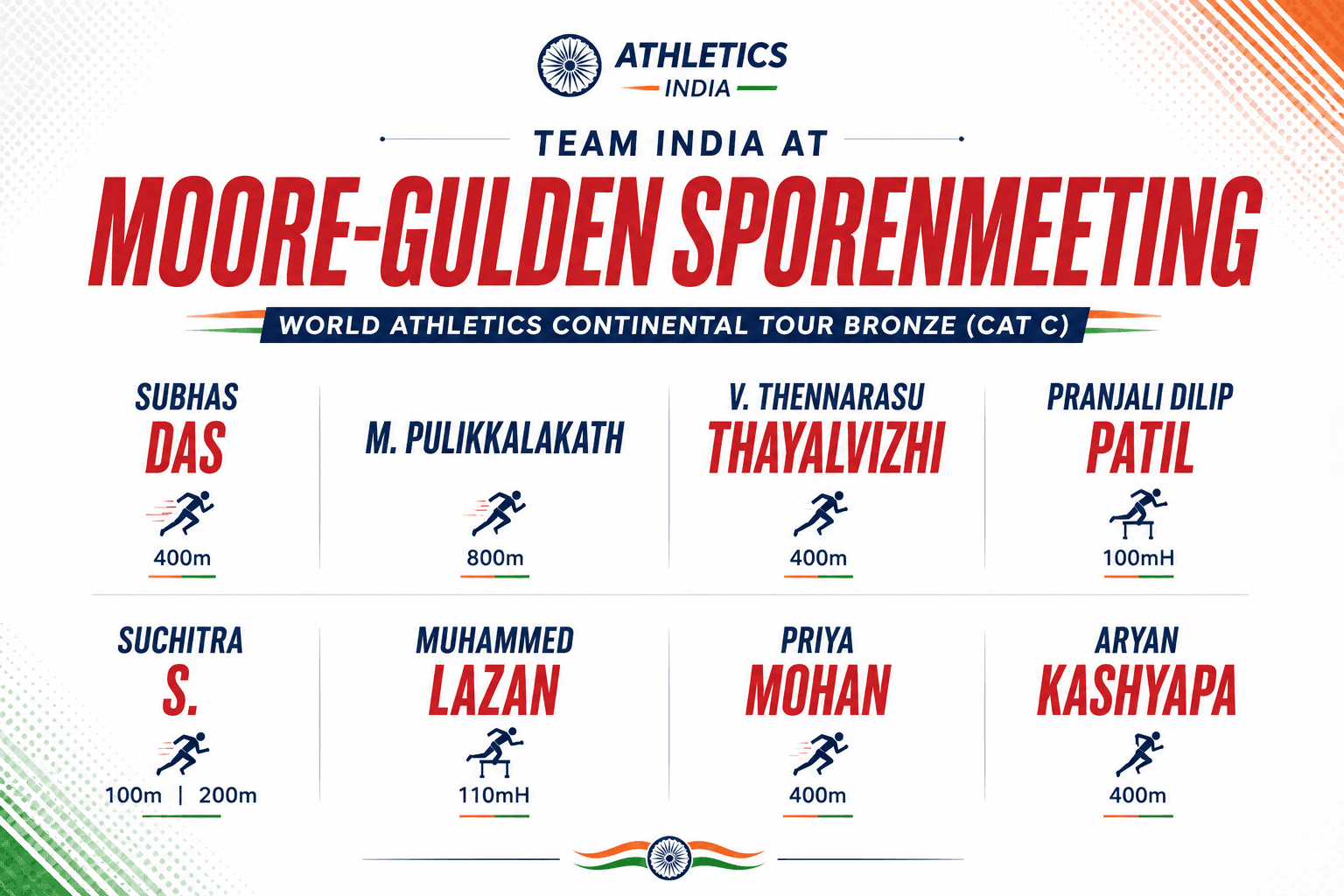
India’s contingent for the Moore-Guldensporenmeeting, a World Athletics Continental Tour Bronze (Category C) meet to be held in Kortrijk, Belgium on July 11, has grown to eight athletes after five more names were confirmed on the start lists.
Joining the three Indians who had already entered the meet are Priya Mohan (400m), Pranjali Dilip Patil (100m hurdles), Suchitra S. (100m & 200m), Muhammed Lazan (110m hurdles) and Aryan Kashyapa (400m).
The updated entry list also includes Subhas Das (400m), M. Pulikkalakath (800m) and V. Thennarasu Thayalvizhi (400m), taking India’s representation to eight athletes across sprint, hurdles and middle-distance events.
The World Athletics Continental Tour Bronze circuit provides valuable ranking points and international competition for athletes looking to improve their global standing and qualification prospects ahead of major championships.
With a mix of established senior athletes and emerging talent, the Belgium meet offers another opportunity for Indian athletes to test themselves against quality international fields during the European athletics season.
By Sushant Singh
The International Olympic Committee (IOC) has provisionally lifted the suspension of the Russian Olympic Committee (ROC), ending a sanction that had been in place since October 2023 after the ROC incorporated regional sports organisations from occupied Ukrainian territories into its membership.
The IOC has also withdrawn its recommendations restricting the participation of Russian athletes and teams in international competitions. As qualification for the LA 2028 Olympic Games begins, those guidelines are no longer applicable.
However, the IOC clarified that Russian athletes seeking to return to international competition must continue to meet strict anti-doping requirements, and the organisation will closely monitor compliance.
The IOC also confirmed that it will not stage events in Russia or invite Russian government or state officials to IOC events. A decision regarding the use of the Russian flag, anthem, and other national symbols at future Olympic Games will be taken at a later stage.
World Athletics Maintains Ban
Despite the IOC’s move, World Athletics has reaffirmed that its position remains unchanged. Russian and Belarusian athletes continue to be banned from all competitions organised under the World Athletics calendar, making them ineligible for the World Athletics Series, the Diamond League, and all other World Athletics events.
The differing positions mean that while the IOC has eased its restrictions ahead of the LA 2028 qualification period, Russian track and field athletes remain excluded from international athletics competitions until World Athletics decides otherwise.
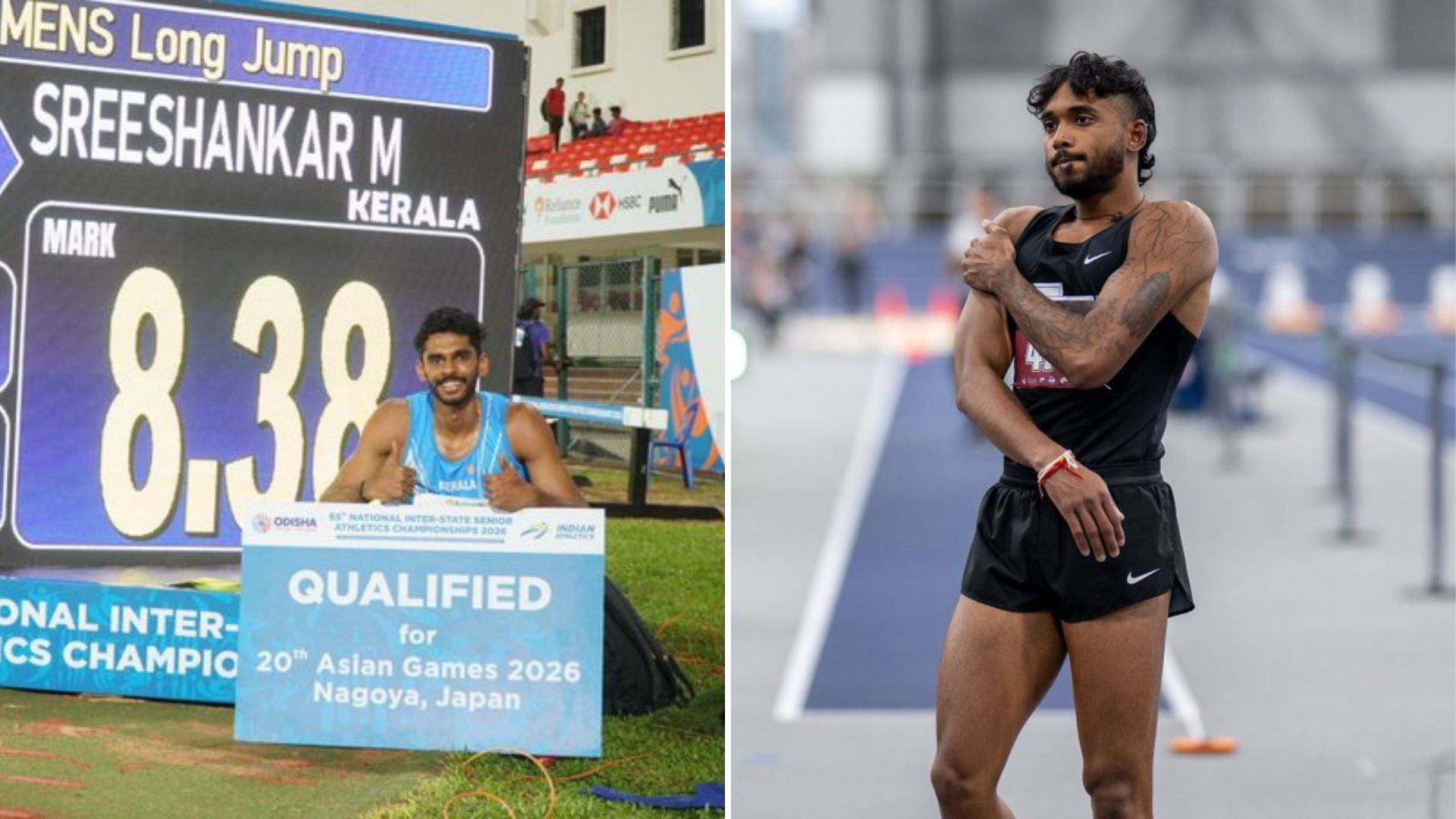
India will field a strong men’s long jump team at the Commonwealth Games 2026, with Murali Sreeshankar and Lokesh Sathyanathan carrying the nation’s medal hopes in one of the most competitive field events on the programme.
Sreeshankar enters the Games in outstanding form after producing a sensational 8.38m jump earlier this season. The effort currently stands as the best mark among all Commonwealth athletes in 2026, highlighting his status as one of the leading contenders for the gold medal. His performance also reaffirmed his return to top form ahead of the Games and demonstrated that he is once again capable of competing with the world’s best.
The Commonwealth season list places Tajay Gayle of Jamaica just behind Sreeshankar with 8.37m, while India’s Shahnavaz Khan occupies third place with an impressive 8.30m. However, among the athletes ahead on the rankings, only Gayle has been selected in Jamaica’s Commonwealth Games squad. Australia’s Liam Adcock, who has jumped 8.26m, has also secured selection for his national team.
India’s second representative, Lokesh Sathyanathan, enters the Games with a season’s best of 8.21m, which ranks him eighth among Commonwealth athletes this season. Importantly, among the athletes confirmed for Glasgow, Lokesh is the next-highest ranked competitor after Sreeshankar, giving India two genuine contenders capable of challenging for the podium.
The combination of Sreeshankar’s world-class consistency and Lokesh’s steady progression gives India one of its strongest long jump squads in recent Commonwealth Games history. Both athletes have demonstrated the ability to compete at a high level throughout the season and will be aiming to convert that form into success on the international stage.
With two in-form jumpers and both ranked among the leading Commonwealth performers of the season, India heads to Glasgow with realistic medal ambitions in the men’s long jump. If Sreeshankar and Lokesh reproduce their season’s best performances, Indian athletics could be celebrating another memorable outing in the sand pit.
For more visit Commonwealth Games 2026
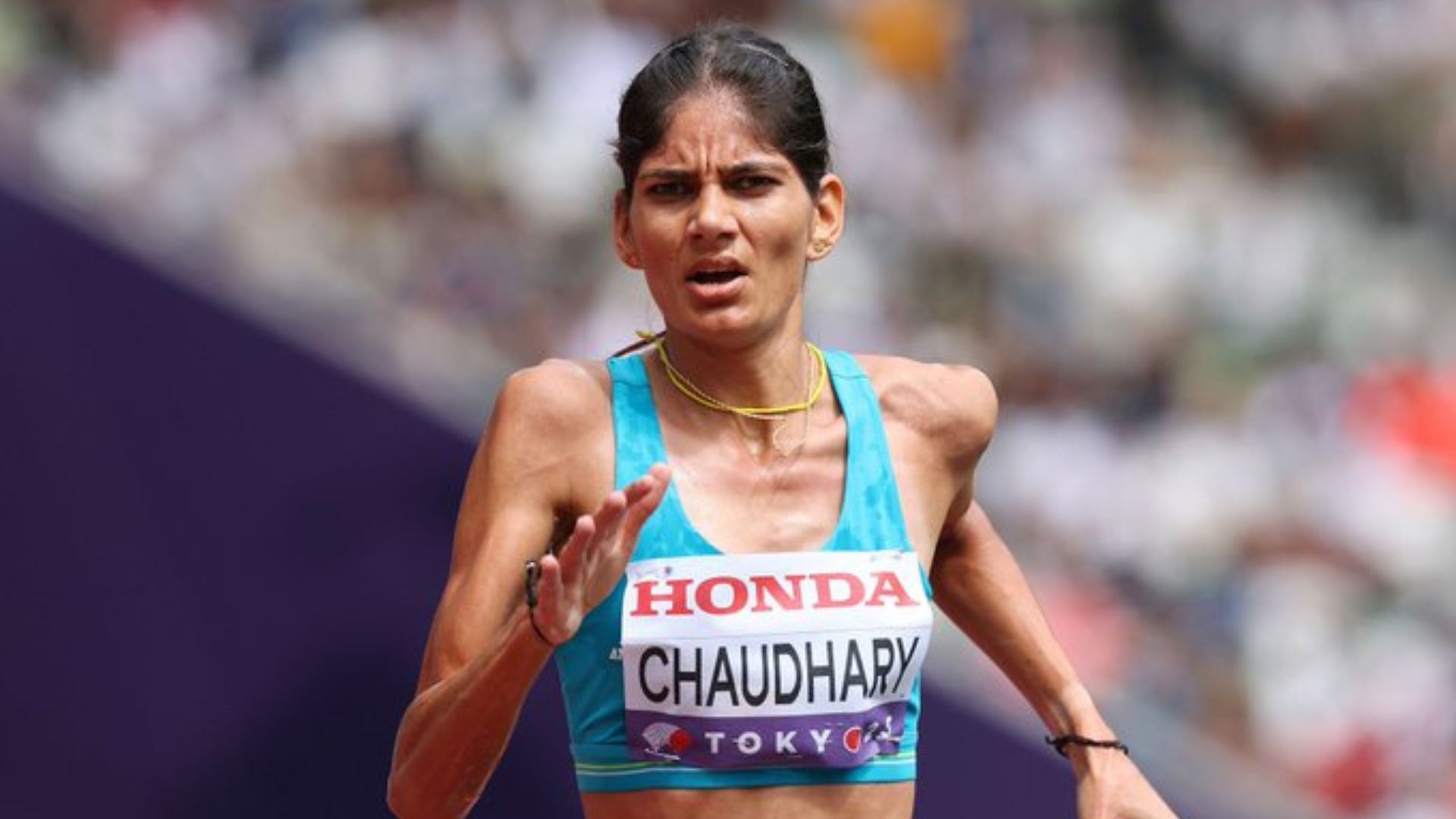
India’s national record holder in the women’s 3000m steeplechase, Parul Chaudhary, heads into the 2026 Commonwealth Games as one of the country’s strongest medal contenders after an impressive start to the season.
Parul has opened her 2026 campaign by clocking 9:12.84, finishing just 0.38 seconds outside her personal best and Indian national record of 9:12.46. The performance underlines her consistency at the highest level and suggests she is in excellent form ahead of the year’s major championships.
Her season-best currently ranks fourth among Commonwealth athletes in 2026, placing her firmly in contention in what promises to be one of the most competitive events at the Games.
The Commonwealth season list is led by Peruth Chemutai of Uganda, the Tokyo 2020 Olympic champion, who has recorded a world-class 8:51.06. Close behind is Faith Cherotich of Kenya, the reigning world champion, with 8:51.48. Great Britain’s Elise Thorner occupies third place with 9:07.39, while Parul’s 9:12.84 places her ahead of Kenya’s Doris Lemngole, who rounds out the top five with 9:18.66.
The presence of Olympic and world champions makes the women’s steeplechase one of the strongest events on the Commonwealth Games programme. However, Parul has consistently established herself among the leading athletes in Asia and continues to close the gap on the world’s best through her steady progression over recent seasons.
With her national record still fresh and her early-season performance already among the top marks in the Commonwealth this year, Parul enters the Games with genuine medal aspirations. If she can reproduce—or improve upon—her personal best on the biggest stage, she will be well placed to challenge the continent’s finest and add another major international achievement to her career.
As the countdown to the Commonwealth Games continues, Parul Chaudhary remains one of India’s most exciting athletes to watch in the pursuit of podium success.
By Sushant Singh
Another blow for Indian athletics as NNIS Sports has learned that India’s current fastest U20 women’s 100m sprinter, Nipam, has tested positive for a banned substance.
Nipam began her 2026 season by registering a lifetime best of 11.53s at the Junior Federation Cup 2026, shattering the Indian U20 women’s 100m national record. The meet also served as the qualifying event for the 2026 Asian U20 Athletics Championships.
She then went on to win two medals at the 2026 Asian U20 Athletics Championships, claiming bronze in the women’s 100m with 11.62s and silver in the women’s 4x100m relay as India clocked 45.05s.
However, her in-competition sample collected at the Junior Federation Cup later returned positive. According to sources, her out-of-competition sample collected during the Asian U20 preparatory camp at SAI, Bengaluru, also tested positive.
When NNIS Sports reached out to Nipam, she said:
“I changed my supplement, and I am sure it is because of that. I have submitted the supplement and all the relevant details to NADA’s office.”
She further added:
“They have asked for the GST bill and all the other documents, which I am arranging and will be submitting to NADA.”
As per NADA’s documents, Nipam was tested in competition on 24 April 2026 at the Junior Federation Cup in Tumakuru, Karnataka. Her sample was reported to contain Stanozolol metabolites: 3-hydroxy stanozolol, 16 beta-hydroxy stanozolol, Stanozolol-1N-glucuronide, and 17-epistanozolol-1N-glucuronide.
She was also tested out of competition on 12 May 2026 during the Asian U20 preparatory camp at SAI, Bengaluru. That sample reportedly contained Stanozolol metabolites: 16 beta-hydroxy stanozolol, Stanozolol-1N-glucuronide, and 17-epistanozolol-1N-glucuronide.
Both samples reportedly tested positive for Stanozolol, which is classified under S1.1 Anabolic Androgenic Steroids on WADA’s Prohibited List.
Nipam said she had purchased a supplement called Ecdysterone Gold from a shop near her home. The product is marketed as a sports nutrition supplement containing ecdysterone (20-hydroxyecdysone), a naturally occurring phytoecdysteroid found in plants such as spinach, quinoa, Rhaponticum carthamoides, and Cyanotis species. It is promoted as a “natural anabolic” supplement for muscle growth and strength.
Ecdysterone itself is not currently prohibited by WADA.
It is included in WADA’s 2026 Monitoring Program, meaning the agency is collecting data on its use and prevalence. Inclusion in the Monitoring Program does not mean the substance is prohibited.
Whether the supplement was contaminated or contained any prohibited substance will only become clear after laboratory testing of the supplement.