
The Athletics Federation of India (AFI) is expected to appoint a new chief coach following the conclusion of the 2026 Asian Games, marking the end of a significant chapter in Indian athletics.
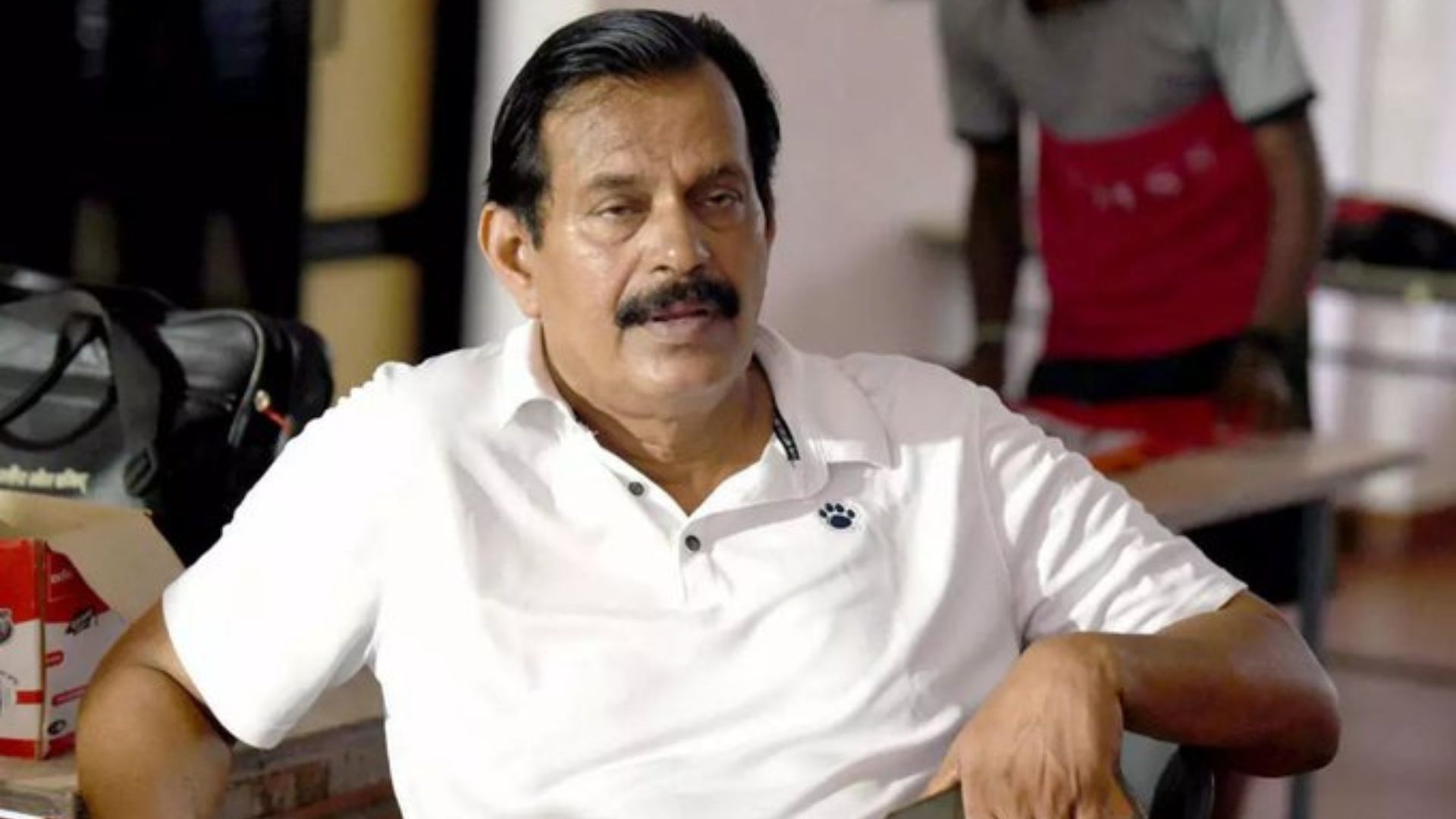
According to multiple sources, current chief coach Radhakrishnan Nair is expected to retire after the continental event. The 68-year-old has served as India’s chief athletics coach since 2020, overseeing the national team’s preparations and performances through several major international competitions during his tenure.
The proposed leadership change comes as Indian athletics continues to enjoy one of its most successful periods, with increasing depth across track and field events and a growing number of athletes achieving international standards. The appointment of a new chief coach will play an important role in guiding the next phase of the country’s high-performance programme.
Sources further indicate that the leading contender to succeed Nair is a throws coach who has worked closely with several of India’s elite throwers and has been part of the national coaching setup. His experience in developing top-level athletes has reportedly made him the frontrunner for the position.
However, no final decision has been taken, and the appointment is expected to be made only after the conclusion of the Asian Games. The AFI is understood to be following its internal process before officially announcing the next chief coach.
Radhakrishnan Nair’s tenure has coincided with a period of notable progress for Indian athletics, during which the national team has produced several strong performances at continental and global competitions. His expected retirement after the Asian Games would bring to a close six years in the role.
As preparations continue for the 2026 Asian Games, the immediate focus remains on the performance of the Indian contingent. Once the continental championships conclude, attention is expected to shift towards the transition in the national coaching structure, with the appointment of a new chief coach likely to shape the direction of Indian athletics in the years ahead.
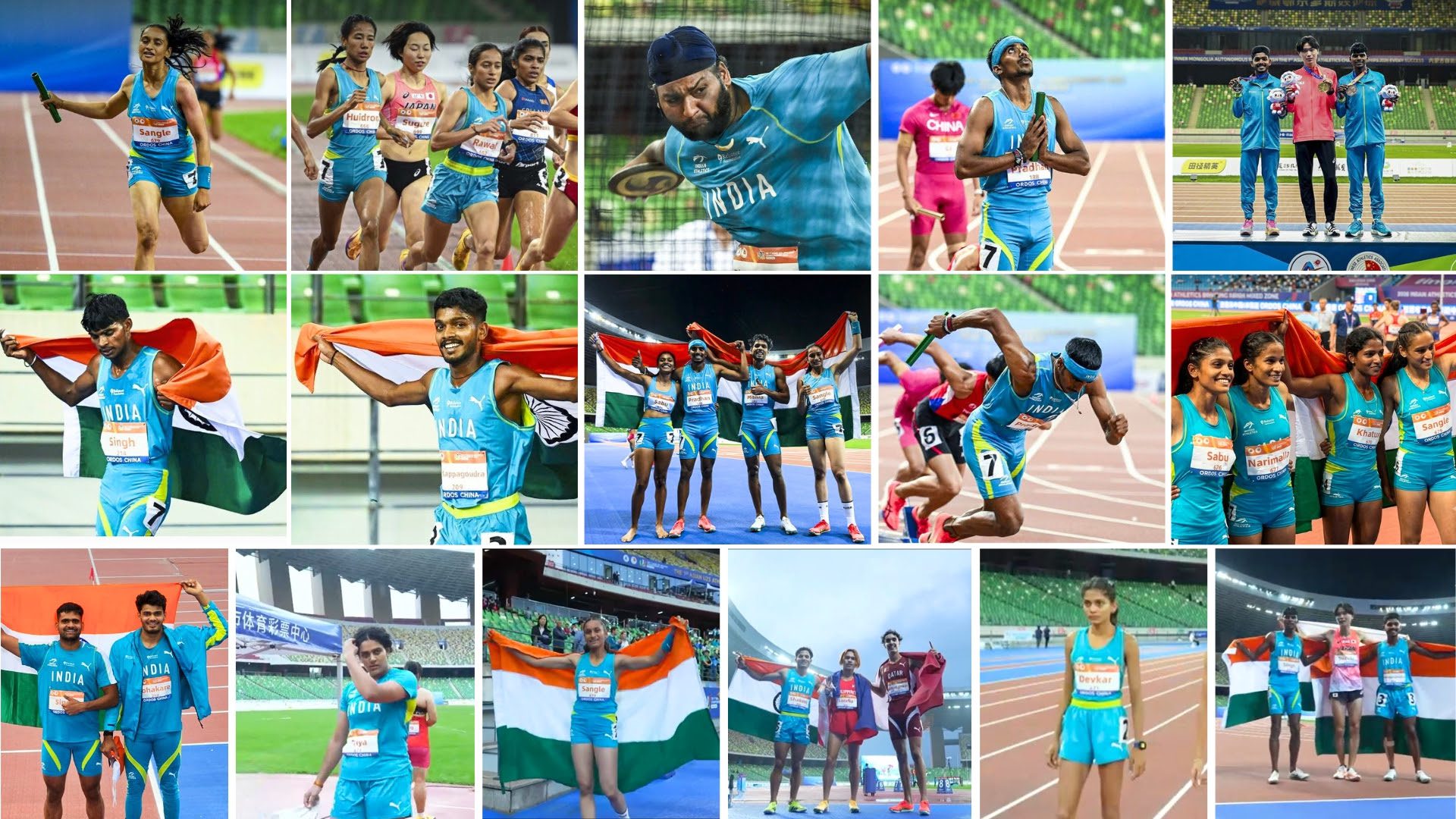
India’s U23 athletics squad delivered a commendable performance at the inaugural U23 Asian Athletics Championships 2026 in Ordos, China, finishing fourth in the final medal standings. Over the intensive four-day competition, the Indian contingent secured a total of 16 medals -comprising 3 Gold, 4 Silver, and 9 Bronze.
While the overall medal haul reflects India’s growing depth, the tournament also highlighted the competitive benchmark set by Asia’s leading athletic powerhouses.
Hosts China topped the table with an impressive 52 medals (23 Gold, 17 Silver, 12 Bronze), followed by Japan in second with 22 medals (7 Gold, 8 Silver, 7 Bronze).
Uzbekistan secured the third spot with 10 medals; though fewer in total number than India’s haul, their conversion rate yielded 5 Golds, underscoring the value of clinical, top-tier finishes in tournament formats.
India’s Medal Winners
Gold
- Anand Singh — Javelin (80.57m PB)
- Mixed 4x400m Relay — 3:18.64
- Women’s 4x400m Relay — 3:33.62
Silver
- Shivaji Madappagoudra — 5,000m & 10,000m
- Men’s 4x400m Relay — 3:04.24
- Women’s 4x100m Relay — 44.68
Bronze
- Vinod Singh — 5,000m (14:23.67)
- Shivam Lohakare — Javelin (77.70m)
- Bhartpreet Singh — Discus (52.91m)
- Priya — Discus (50.44m)
- Abhay Singh — 200m (20.96)
- Shakeel — 800m (1:48.78)
- Bhumeshwory Devi — 800m (2:10.20)
- Prachi Devkar — 3,000m Steeplechase (10:32.69)
- Shravani Sangle — 400m Hurdles (58.09)
Strategic Balancing in a Packed SeasonWhen analysing the results, the broader context of a highly crowded 2026 sports calendar must be considered. With both the Commonwealth Games and the Asian Games scheduled for later this year, several of India’s marquee U23 athletes – including Shaili Singh, Dev Meena, and Kuldeep Yadav – opted to bypass this event to prioritize their preparation for these major senior championships.
Consequently, the contingent in Ordos served as a vital platform for testing squad depth. It allowed emerging athletes to gain invaluable international exposure against elite continental competition.
As an inaugural event, this championship represents a learning curve for both athletic federations and competitors across Asia. Moving forward, the U23 Asian Athletics Championships are poised to become a vital developmental milestone, successfully bridging the gap between junior ranks and senior international success.
For India, a top four finish acts as both a promising baseline and a clear indicator of where refinements can turn podium finishes into future gold medals.
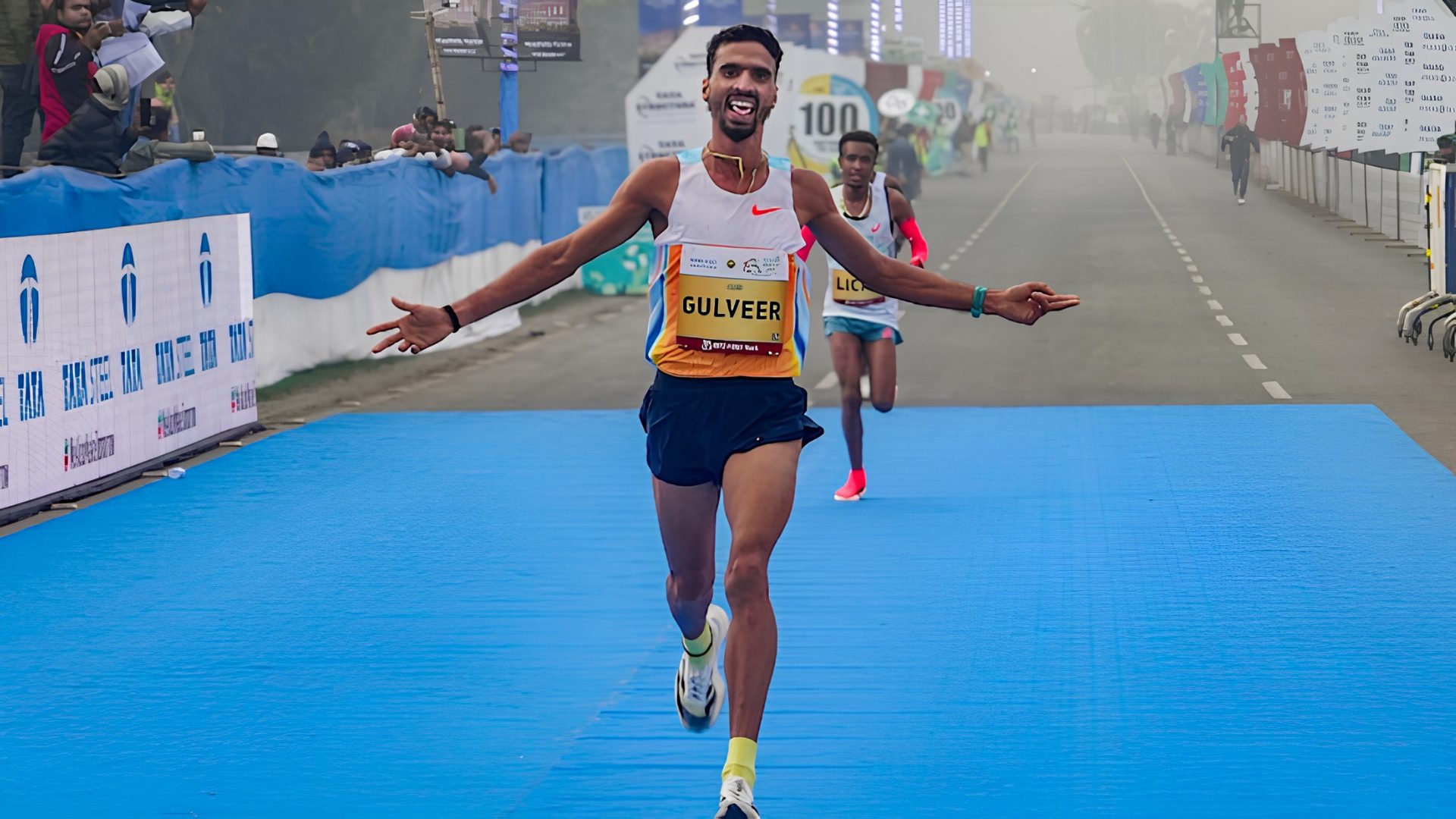
India’s Gulveer Singh will carry the nation’s hopes in the men’s 10,000m at the Commonwealth Games 2026, arriving in Glasgow after a sensational season that has established him among the leading contenders in the event.
Gulveer has enjoyed the finest season of his career, clocking an outstanding 27:24.18, a performance that currently ranks fifth among Commonwealth athletes this season. More importantly, among athletes officially selected for the Commonwealth Games, his mark is the third-fastest season’s best, making him one of the strongest medal prospects in the field.
The Commonwealth rankings are led by Australia’s Ky Robinson, who has produced a world-class 26:57.07 this season. Great Britain’s Scott Beattie follows with 27:23.20, just under a second quicker than Gulveer’s impressive performance. The Indian distance runner’s 27:24.18 places him firmly among the leading contenders heading into the Games.
The field also includes experienced East African athletes such as Edwin Kurgat of Kenya, whose season’s best stands at 28:29.05, while compatriot Ishmael Rokitto and Uganda’s Herbert Kibet are also part of their respective Commonwealth Games squads despite not having raced the 10,000m this season.
Gulveer’s remarkable progress in 2026 has transformed him into one of India’s premier distance runners. His ability to produce a world-class performance over 10,000m reflects the consistency and endurance required to compete against some of the strongest athletes in the Commonwealth.
With only two selected athletes entering the Games with faster season’s bests, Gulveer will travel to Glasgow with genuine expectations of challenging for a podium finish. His outstanding form, combined with the confidence gained from a breakthrough campaign, makes him one of India’s brightest medal hopes in distance running.
As the Commonwealth Games approach, Gulveer Singh stands poised to test himself against the very best in the field. If he can reproduce the form that saw him clock 27:24.18, the Indian star will have every opportunity to contend for a medal on one of athletics’ biggest stages.
For more visit Commonwealth Games 2026
India has featured in 18 editions of the Commonwealth Games, winning more than 500 medals across all sports.
India first participated in 1934, when the event was known as the British Empire Games. The country’s first-ever medal came through Rashid Anwar, who won bronze in the men’s 74kg freestyle wrestling event.
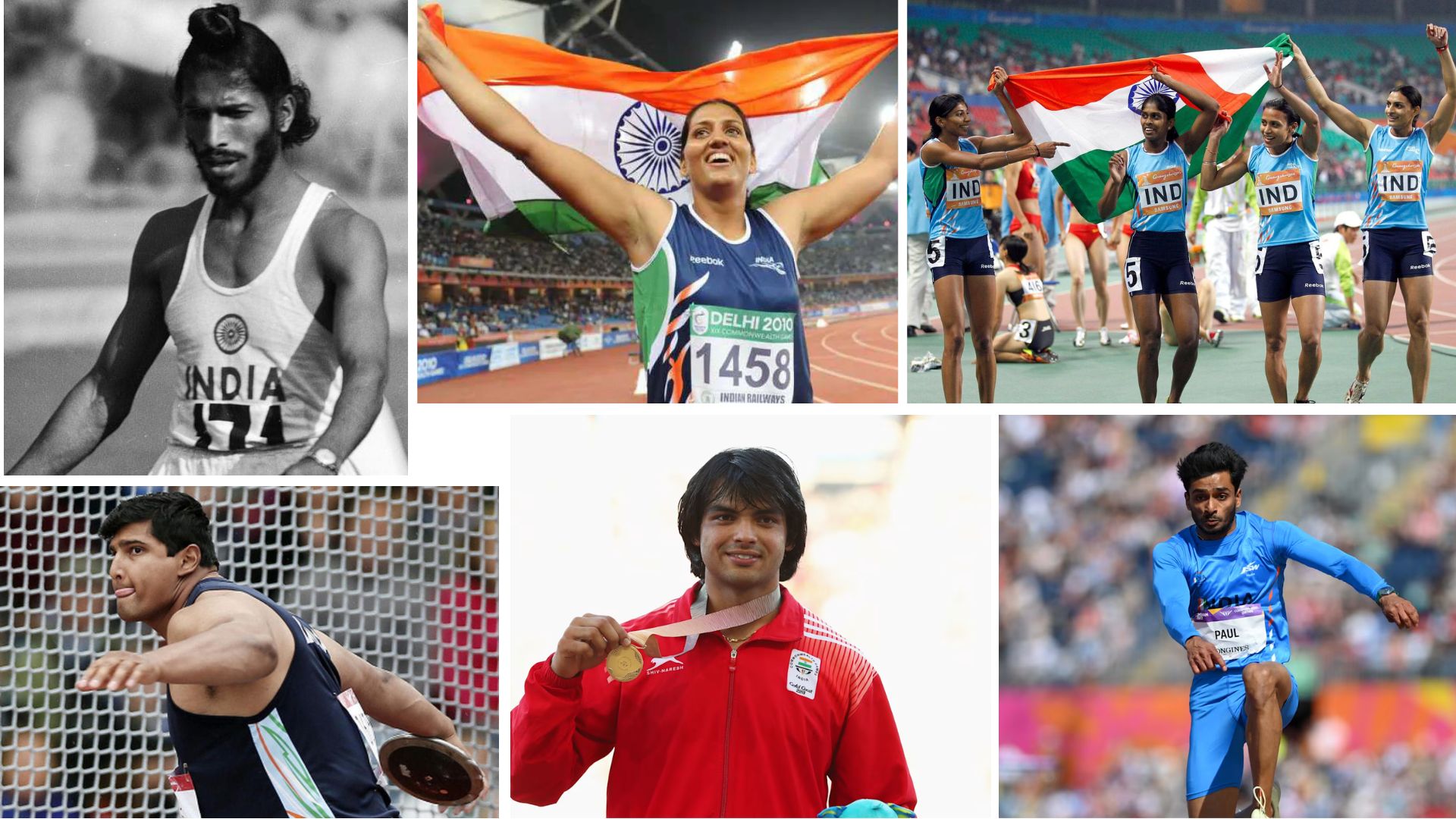
1) Milkha Singh: The first athletics gold came at the 1958 Commonwealth Games. India won two gold medals overall—Milkha Singh produced an iconic victory in the men’s 400m, while Lila Ram won gold in wrestling.
After Milkha’s triumph, India had to wait 52 years for its next Commonwealth Games athletics gold.
2) Krishna Poonia – 2010 Commonwealth Games (Discus Throw)
Competing in front of the home crowd at the Jawaharlal Nehru Stadium in New Delhi, Krishna Poonia won gold with a throw of 61.51m. It was India’s first athletics gold medal at the Commonwealth Games in 42 years. The achievement was made even more memorable as India completed a podium sweep in the women’s discus throw by winning gold, silver, and bronze.
3) India’s Women’s 4x400m Relay – 2010 Commonwealth Games
The quartet of Ashwini Akkunji, Sini Jose, Manjeet Kaur, and Mandeep Kaur won gold in front of the home crowd, clocking 3:27.77 to claim the Commonwealth title in New Delhi.
4) Vikas Gowda – 2014 Commonwealth Games (Discus Throw)
One of India’s greatest field athletes and the country’s most successful male discus thrower, Vikas Gowda won gold in the men’s discus throw with a mark of 63.64m. After settling for silver at the 2010 Commonwealth Games, he returned four years later to claim the title. With this victory, he became the first Indian man to win a Commonwealth Games athletics gold medal since Milkha Singh in 1958.
5) Neeraj Chopra – 2018 Commonwealth Games (Javelin Throw)
Neeraj Chopra created history at the 2018 Commonwealth Games in Gold Coast by becoming the first Indian to win the men’s javelin throw gold medal at the Games. He secured the title with a season-best throw of 86.47m. He is also set to represent India in the upcoming Commonwealth Games in the javelin throw.
6) Eldhose Paul – 2022 Commonwealth Games (Triple Jump)
At the 2022 Commonwealth Games in Birmingham, Kerala’s Eldhose Paul won gold in the men’s triple jump with a wind-assisted 17.03m. Fellow Indian Abdulla Aboobacker claimed silver with 17.02m, making it an Indian one-two finish. Eldhose’s winning margin was just one centimetre, making it one of the closest finishes in Commonwealth Games history for the event.
Comparison Table 1958 → 2010 → 2010 → 2014 → 2018 → 2022
| Year | Athlete/Team | Event | Performance | Venue |
|---|---|---|---|---|
| 1958 | Milkha Singh | 400m | Gold | Cardiff |
| 2010 | Krishna Poonia | Discus Throw | 61.51m | New Delhi |
| 2010 | India Women’s Relay | 4×400m | 3:27.77 | New Delhi |
| 2014 | Vikas Gowda | Discus Throw | 63.64m | Glasgow |
| 2018 | Neeraj Chopra | Javelin Throw | 86.47m | Gold Coast |
| 2022 | Eldhose Paul | Triple Jump | 17.03m | Birmingham |
For more visit Commonwealth Games 2026
India will field an exciting duo in the men’s 400m hurdles at the Commonwealth Games 2026, with Yashas Palaksha and T. Santhosh carrying the nation’s hopes in one of the most competitive track events in Glasgow.
Both athletes have enjoyed breakthrough seasons in 2026, producing career-best performances that have elevated them into the upper ranks of Commonwealth contenders. Yashas Palaksha has clocked a lifetime best of 49.00s, while T. Santhosh has followed closely with 49.06s. These performances rank as India’s second-fastest and third-fastest men’s 400m hurdles times of all time, underlining the rapid progress made by the pair.
Among athletes selected for the Commonwealth Games, Yashas is ranked 10th this season, while Santhosh occupies 12th position. The season rankings are headed by Assinie Wilson of Jamaica with 48.29s, followed by Kemorena Tisang of Botswana at 48.32s, Dennick Luke of Great Britain with 48.37s, and Australia’s Jake Minshull, who has recorded 48.53s. Great Britain’s Seamus Derbyshire (48.71s) and Kenya’s Kipkorir Rotich (48.99s) are also among the leading contenders heading into the Games.
Although the competition promises to be fierce, India’s representatives have shown consistent improvement throughout the season. Their ability to break the 49.10-second barrier reflects the growing standard of Indian men’s 400m hurdles and provides optimism ahead of the Commonwealth Games.
The inclusion of only athletes who have been officially selected by their respective countries offers a realistic picture of the field that will compete in Glasgow. Within that group, both Yashas and Santhosh have established themselves as capable finalists with the potential to challenge the leading athletes.
As they prepare for the biggest competition of their season, Yashas Palaksha and T. Santhosh will look to build on their breakthrough campaigns and translate their career-best performances into success on the Commonwealth stage.
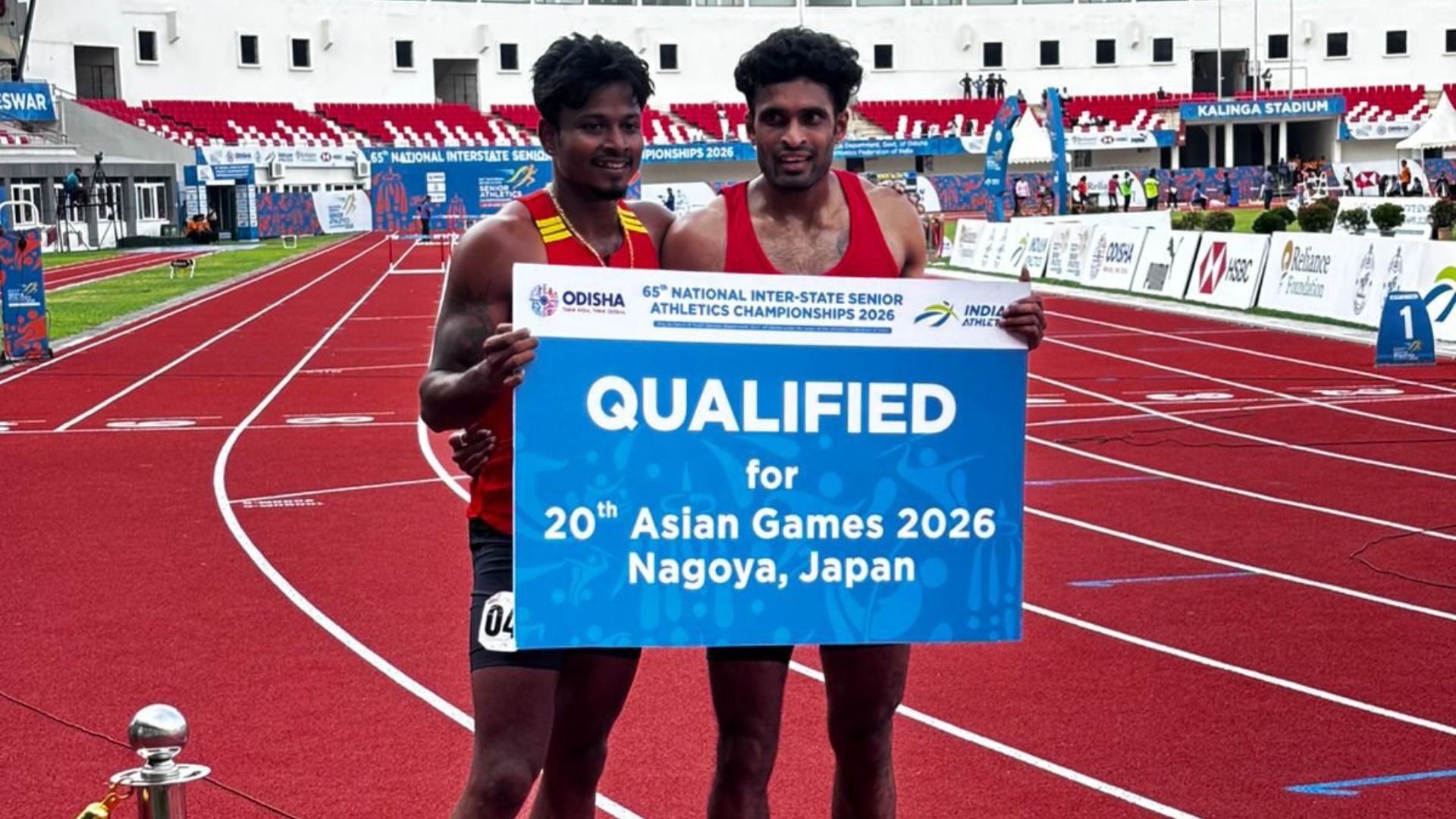
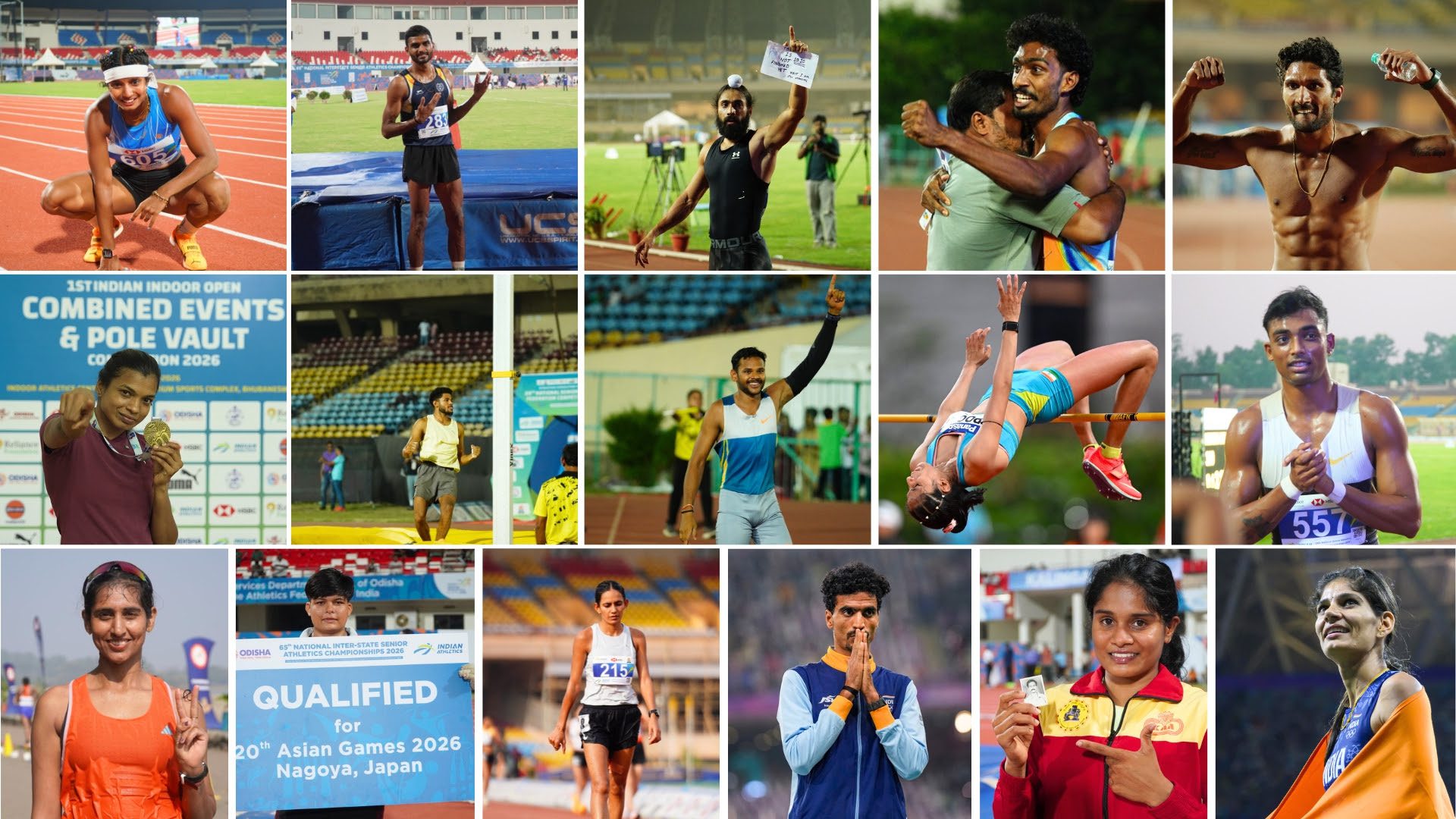
| The 2026 season is going as well as it possibly could for Indian athletics. Although the major international championships are yet to begin, the performances of Indian athletes at the domestic level have been sending a strong message on the global stage.
Indian athletics has witnessed a magnificent 26 national records this season, even though the year is only halfway through. Here is a detailed look at all the national records: 1) Ram Baboo (Marathon Race Walk) – Ram Baboo became India’s first national record holder in the marathon race walk event. The Asian Games medallist finished first with a time of 3:09:16 at the Indian Open Race Walking Competition in Chandigarh. 2) Manju Rani (Marathon Race Walk) – Asian Games medallist Manju Rani began her 2026 season on a brilliant note, winning gold and becoming India’s first national record holder in the women’s marathon race walk with a time of 3:33:24 at the Indian Open Race Walking Competition in Chandigarh. 3) Ravina (Half Marathon Race Walk) – Ravina became India’s first national record holder in the women’s half marathon race walk event. She won gold with a time of 1:39:14 at the Indian Open Race Walking Competition in Chandigarh. 4) Sahil (Half Marathon Race Walk) – Sahil became India’s first national record holder in the men’s half marathon race walk event. He won gold with a time of 1:25:48 at the Indian Open Race Walking Competition in Chandigarh. Gurindervir–Animesh: India’s 100m National Record rewritten three times this season 5) Gurindervir Singh clocked 10.17s in the semifinals at the Federation Cup. 6) Animesh Kujur bettered it with 10.15s in the semifinals. 7) Gurindervir Singh lowered it further to 10.09s in the final. Men’s Pole Vault National Record bettered four times this season 8) Kuldeep Kumar cleared 5.41m at the National Indoor Championships to set a new national record. 9) Dev Meena cleared 5.42m at the Federation Cup. 10) Kuldeep Kumar and Dev Meena both cleared 5.45m. 11) Dev Meena cleared 5.46m at the Interstate Championships, breaching the Asian Games qualification mark. Women’s Pole Vault National Record bettered three times this season 12) Baranica Elangovan shattered the national record by clearing 4.22m at the National Indoor Championships. 13) She improved it again to 4.23m at the Combined Events Indoor Championships. 14) Sindhushree G bettered it once again, clearing 4.25m at the Interstate Championships. 15) Parul Chaudhary (5000m) – Parul Chaudhary finished second in the women’s 5000m at the Meeting Nikaïa, clocking a sensational 15:04.26 to break the Indian national record. 16) Pooja (High Jump) – Pooja cleared 1.93m to break the Indian senior women’s high jump national record at the U20 Asian Athletics Championships 2026. 17) Tejas Shirse (110m Hurdles) – Tejas Ashok Shirse rewrote the Indian record books, clocking a sensational lifetime best of 13.27s in the men’s 110m hurdles at the Indian Athletics Series–9. 18) Gulveer Singh (5000m) – Gulveer Singh set a new Indian national record in the men’s 5000m outdoor event at the LA Track Fest with a time of 13:03.93. 19) Vishal TK (400m) – Vishal TK shattered his own national record, clocking a historic 44.98s to become the first Indian ever to run under 45 seconds in the men’s 400m. Mixed 4×100m Relay National Record broken twice this season 20) India’s 4×100m Mixed Relay Team B, comprising Lalu Bhoi, Unnathi Bolanda, Jayaram, and Harita Bhadra, stunned the senior team by breaking the national record with 42.30s. 21) India’s 4×100m Mixed Relay Team created history at the World Relays, clocking a stunning 41.35s to break the national record. Team: Animesh • Ragul • Nithya • Sneha 22) Anushka Yadav (Women’s Hammer Throw) – Eighteen-year-old sensation Anushka Yadav became India’s youngest senior national record holder after shattering the women’s hammer throw national record with a massive lifetime best of 67.02m. 23) Sarvesh Kushare (High Jump) – Sarvesh Kushare delivered the performance of his career, clearing a sensational 2.31m to set a new Indian national record in the men’s high jump. 24) Ancy Sojan (Long Jump) – Ancy Sojan finally achieved the moment she had been chasing for years, breaking one of India’s oldest national records with a lifetime best leap of 6.88m in the women’s long jump. 25) Tejaswin Shankar (Decathlon) – Tejaswin Shankar became the first Indian ever to cross 8,000 points in the decathlon. He finished the Federation Cup 2026 decathlon with a massive 8,057 points, becoming the first Indian in history to breach the 8,000-point mark. 26) Gurindervir Singh (60m) – Gurindervir Singh won gold in the men’s 60m at the National Indoor Championships 2026 by clocking 6.60s, breaking the previous national record of 6.67s set by V.K. Elakkiadasan in 2018. |
|
|
|
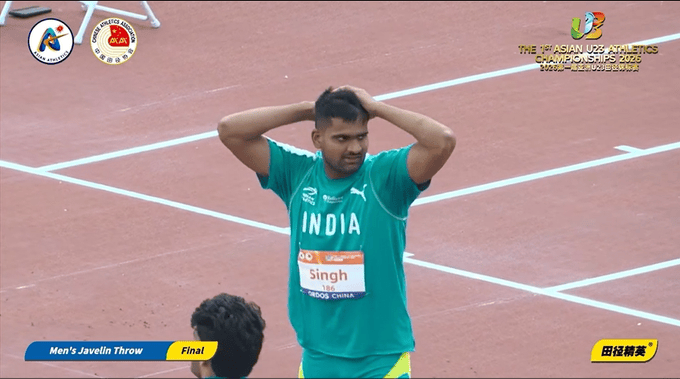
India’s Anand Singh delivered a sensational performance to claim the gold medal in the men’s javelin throw at the 2026 Asian U23 Athletics Championships, marking a memorable international debut.
The young Indian produced a lifetime-best throw of 80.57m, becoming the latest Indian javelin thrower to cross the prestigious 80-metre mark. His winning effort not only secured the Asian U23 title but also represented a remarkable improvement over his previous personal best of 77.68m.
Competing in his first-ever international event, Anand rose to the occasion with a championship-winning display, announcing himself as one of India’s most promising talents in the discipline. His breakthrough performance further strengthens India’s growing reputation in men’s javelin throw and adds another name to the country’s expanding list of elite 80m throwers.
With the Asian U23 crown and a historic first 80m throw, Anand Singh has taken a significant step forward in his athletics career, raising expectations for even bigger achievements on the international stage.
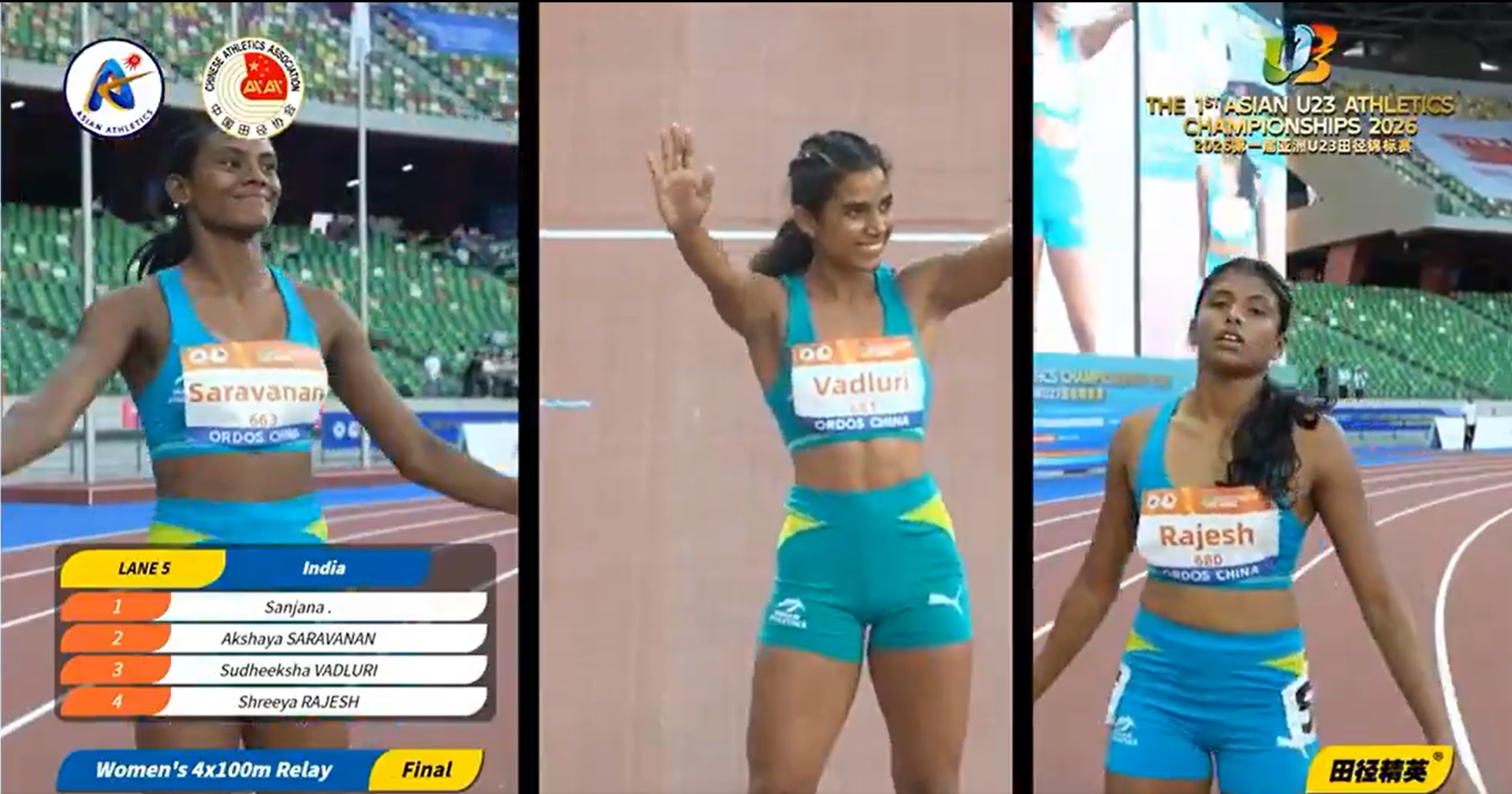
India’s women’s 4x100m relay team delivered an impressive performance to win the silver medal at the 2026 Asian U23 Athletics Championships, finishing with a time of 44.68 seconds.
The Indian quartet of Sanjana, Akshaya, Sudheeksha, and Shreeya Rajesh combined brilliantly to secure a place on the podium. China claimed the gold medal with a championship-winning time of 43.75 seconds, while Kazakhstan took bronze in 50.90 seconds.
The silver-medal finish adds another significant achievement to India’s campaign at the championships, highlighting the country’s growing strength in relay events and the promising talent emerging at the U23 level.
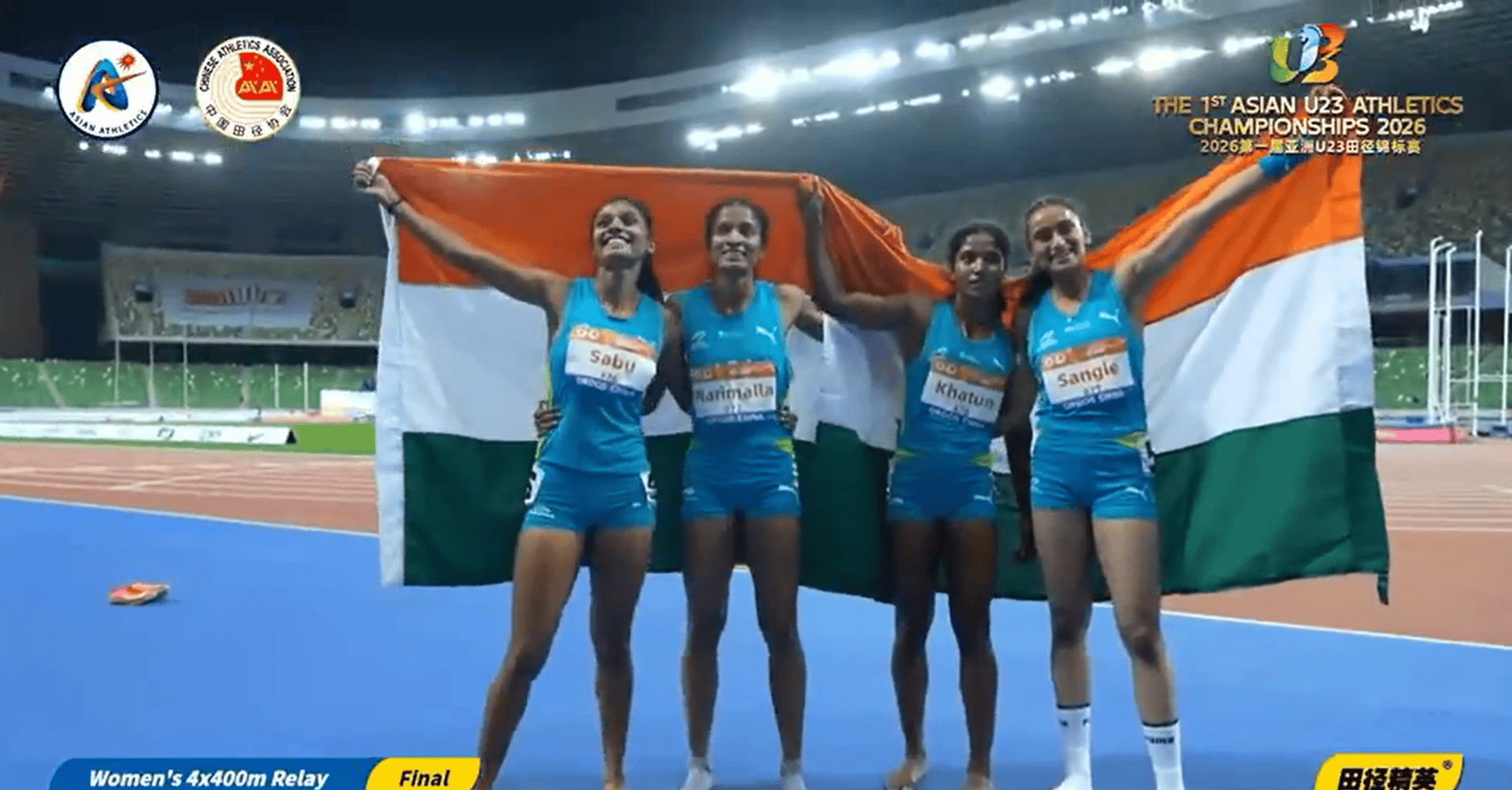
India’s women’s 4x400m relay team produced a commanding performance to win the gold medal at the 2026 Asian U23 Athletics Championships, clocking an impressive 3:33.62.
The Indian quartet of Shravani Sangle, Sandra Mol Sabu, Pravallika, and Nofisa combined brilliantly to finish ahead of China (3:35.14) and Kazakhstan (3:37.65), securing the continental U23 title.
Shravani Sangle provided India with a solid start before Sandra Mol Sabu delivered a decisive second leg, pulling clear of the Chinese runner over the final 100 metres to hand India a comfortable lead. Pravallika and Nofisa then ran composed final two legs, maintaining the advantage and ensuring India crossed the finish line first.
The winning time of 3:33.62 also underlined the team’s quality, finishing just 0.81 seconds behind the Indian senior team’s season-best mark of 3:32.81, highlighting the immense potential of the country’s next generation of quarter-milers.
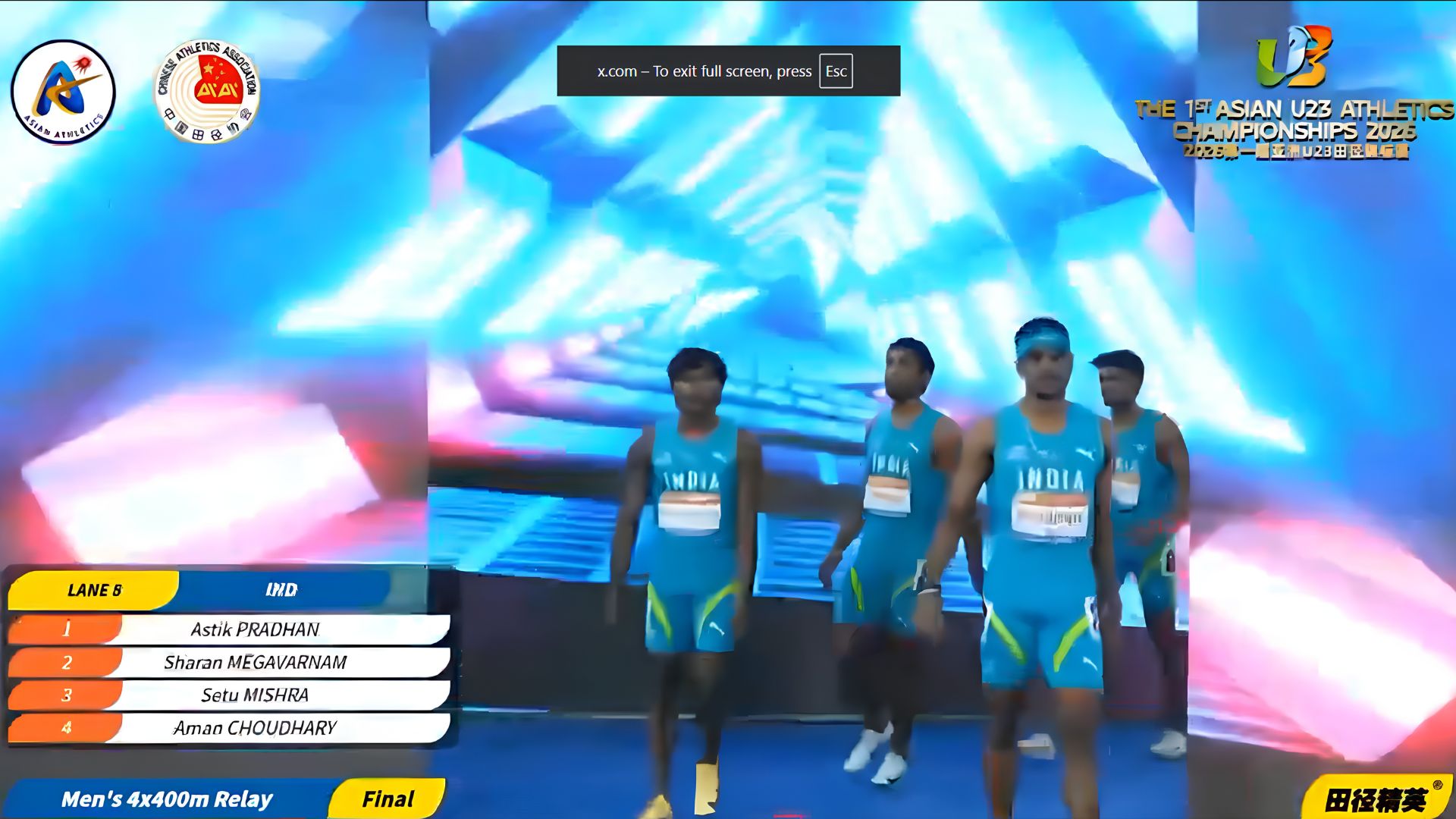
India’s men’s 4x400m relay team delivered a strong performance to secure the silver medal at the 2026 Asian U23 Athletics Championships, finishing in 3:04.24.
The Indian quartet of Astik Pradhan, Megavarnam Sharan, Setu Mishra, and Aman Choudhary fought hard throughout the race but finished behind China, which claimed the gold medal in 3:03.46. Qatar took the bronze medal with a time of 3:06.19.
Astik Pradhan provided India with an excellent start, handing over in the lead after a brilliant opening leg. Megavarnam Sharan maintained the advantage with another composed run before China moved ahead during Setu Mishra’s third leg. On the anchor leg, Aman Choudhary mounted a determined chase but was unable to bridge the gap, ensuring India finished with a well-earned silver medal.
The podium finish adds another medal to India’s impressive campaign at the Asian U23 Athletics Championships, reflecting the country’s growing depth in the 4x400m relay.