
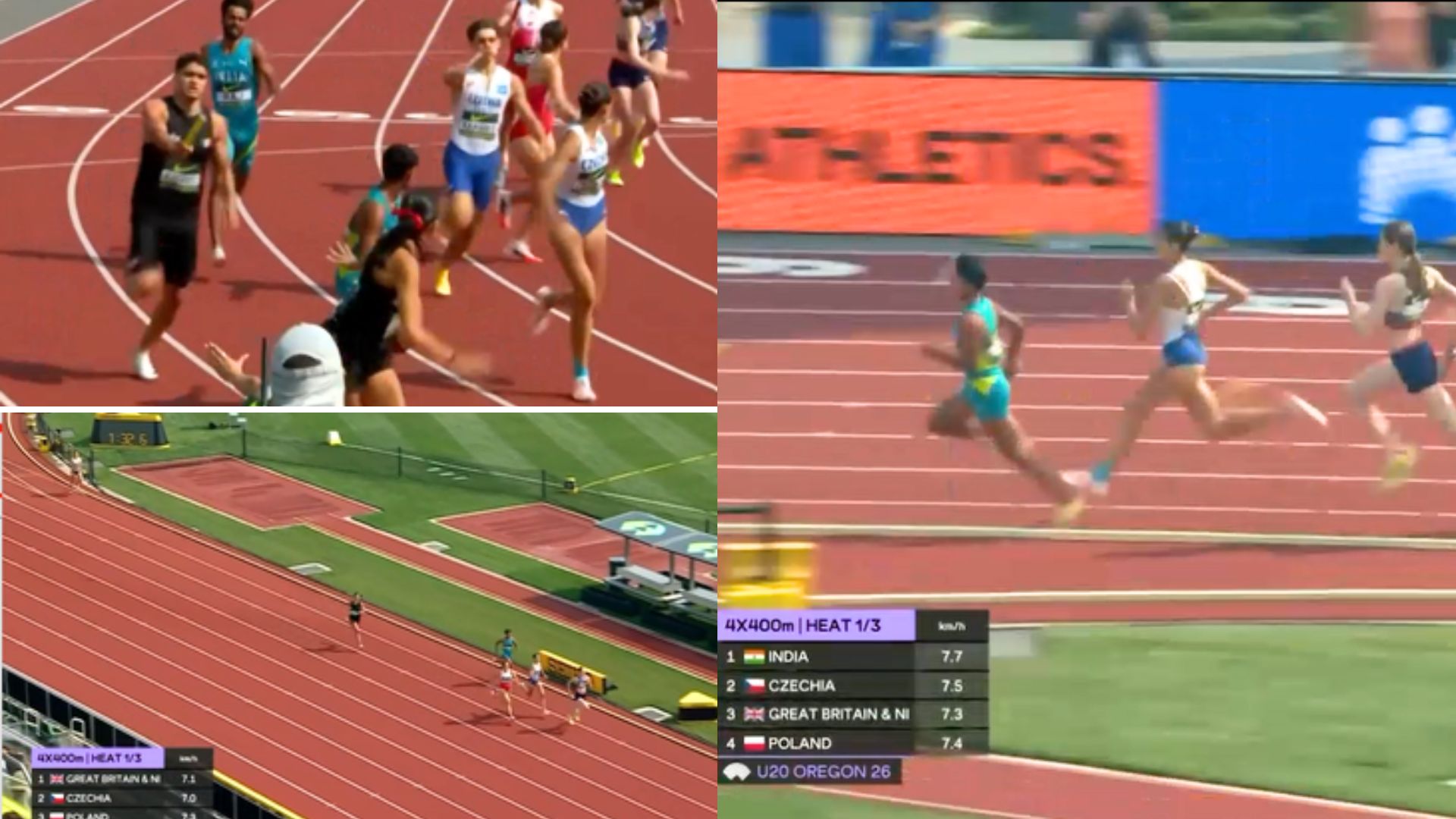
India’s 4×400m mixed relay team missed out on a place in the final at the World Athletics U20 Championships 2026 after finishing fourth in its heat with a time of 3:22.85.
One pattern stood out during India’s race.
The quartet of Piyush Raj, Tahura Khatun, Syed Sabeer, and Thiya Arumugam appeared to go out very aggressively over the first half of their respective laps before fading significantly in the closing stages.
The World Athletics speed graphic highlighted this clearly. Around the 170–180m mark, Tahura’s speed peaked at approximately 7.9 m/s, while several athletes from other teams appeared to distribute their effort more evenly. In the closing metres, her speed dropped to around 6.6 m/s, one of the biggest declines in the field.
Managing pace over a one-lap relay is crucial, and a more controlled opening could help the Indian quartet finish stronger in future races.
With the men’s and women’s 4×400m relays still to come, India will hope to learn from this performance and deliver improved race execution.
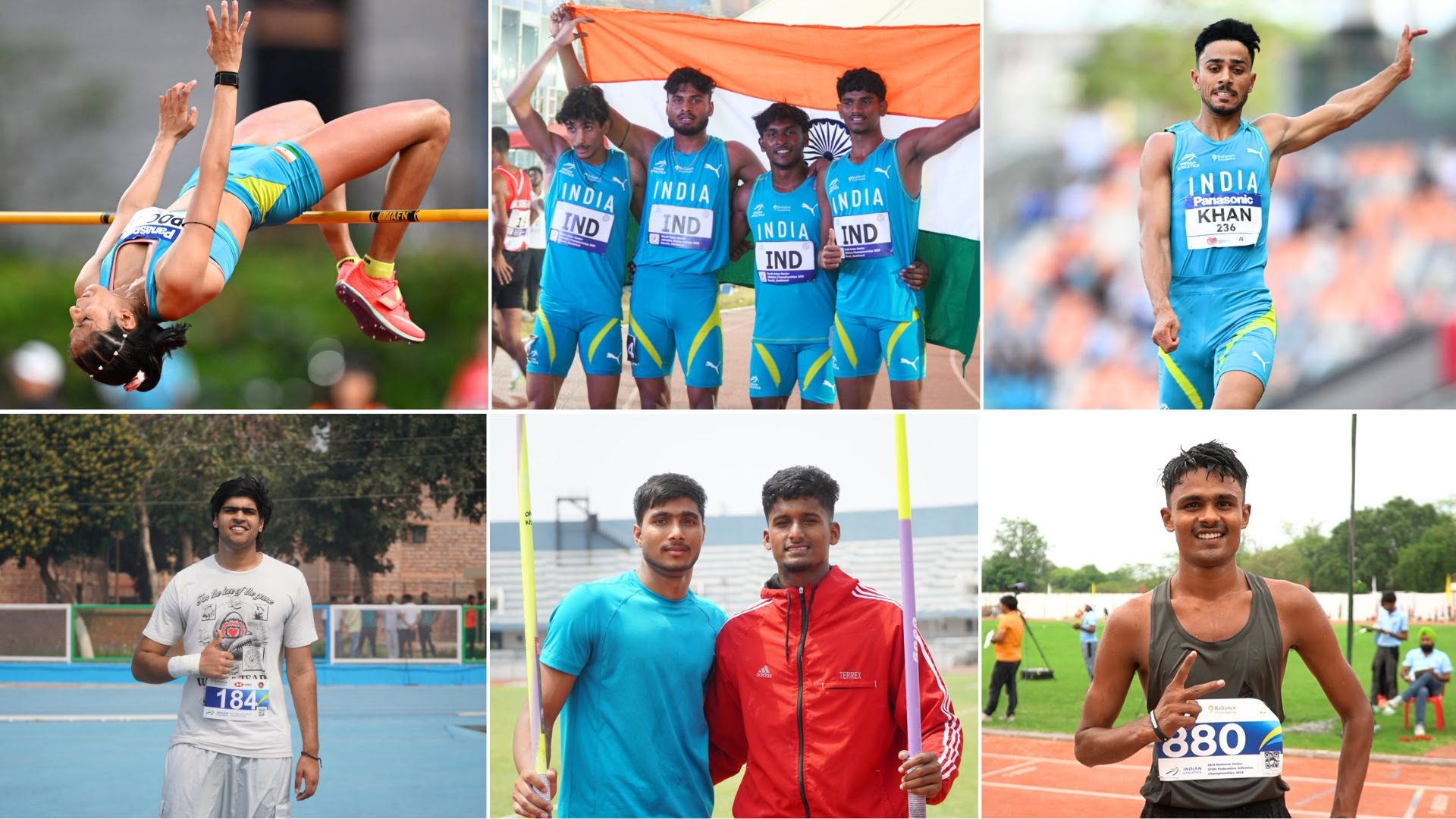
With the World Athletics U20 Championships 2026 set to take place in Eugene, Oregon (USA) from 5–9 August, India will field 36 athletes across sprints, middle-distance, jumps, throws and relays.
Based on the official season-best entry lists released by World Athletics, several Indian athletes head into the championships ranked among the leading contenders in their respective events, while others will look to make their mark on the global stage.
| Event-wise Indian Athletes & Entry Position
Men’s 400m 1) Mohammed Ashfaq – 20th (46.05s) – Ashfaq is one of the talents to look out for. Although his season best is some way off the medal contenders, the 19-year-old’s progression will be something to watch. He has clocked 46.05s in the 400m, which is an excellent time from an Indian perspective. If he can clock a sub-46s time, it will be a huge achievement to celebrate at the World Championships. 2) Piyush Raj – 27th (46.62s) – Piyush has been consistent throughout the season. He will be one to watch in the relay, and if he manages to clock a personal best of sub-46s, it will be a huge achievement for him. Top 3 to watch
Men’s 800m 1) Mogali Venkatram – 19th (1:47.46) – The 19-year-old enters the competition with a season best of 1:47.46. Mogali has been consistent and has also performed well among the seniors. He will be joined by another Indian athlete, Uwin Anand Ananthan, who has entered with a season best of 1:49.93, placing him 38th overall. Top 3 to watch
Men’s 400m Hurdles 1) Amit Kumar – 25th (51.19s) – The 19-year-old had a tough season as he narrowly missed a medal at the Asian U20 Championships, finishing fourth, where current world U20 leader Goto Taiju won gold. The Junior Federation Cup champion has been consistent throughout the season and will be looking to achieve at least a personal best here. Top 3 to watch
Men’s High Jump 1) Basant – around 11th (2.21m) – The Asian U20 champion registered his personal best this season. His mark currently places him eighth in the rankings. The 19-year-old has been consistent throughout the year and will be looking to make his World Championships debut memorable. He will be joined by another Indian athlete, K. Ambriesh, who has a season best of 2.12m. Top 3 to watch
Men’s Long Jump 1) Shahnavaz Khan – 1st Position (8.30m) 2) R.C. Jithin Arjunan – 2nd (8.12m) Shahnavaz and R.C. Jithin Arjunan enter the championships ranked first and second with personal bests of 8.30m and 8.12m, respectively, both achieved this season. They are among India’s strongest medal prospects and are expected to challenge for podium finishes on their World Championships debut. Men’s Triple Jump 1) P. Royshan (15.75m) and Dhanush Raj (15.60m) will represent India in the triple jump. As per the World Athletics event-wise entry list, they are placed 25th and 31st, respectively, based on their season bests. Both will be looking to improve their personal bests against world-class competition. Top 3 to watch Cuba’s Giann C. Baxter, who has entered with a season best of 16.80m, will start as the favourite. China’s Wang Zhuoyue and USA’s Miles Nesmith have entered with season bests of 16.42m and 16.32m, respectively, placing them second and third. Men’s Discus Throw 1) Nishchay – 60.10m – The Asian U20 champion will be an athlete to watch. He won the Asian U20 title with a lifetime best throw of 60.10m. Coming from Haryana, a state known for producing world-class athletes, Nishchay has been dubbed by many as the next “Neeraj Chopra” in domestic athletics. Men’s Javelin Throw 1) Ashish Yadav – 74.49m and T. Dharanidharan – 73.42m – An event in which India has become a powerhouse. Both Indians are in medal contention at this competition. A fun fact: this is the only event in which India holds the U20 world record. Men’s 5,000m Race Walk 1) Nitin Gupta – World Leader (18:54.37) – Nitin Gupta enters the competition with the second-fastest U20 time in history, achieved this season. He is also the only athlete in the field with a sub-19-minute performance and is one of India’s biggest medal hopes. Men’s 4×100m Relay – J Krishna, Aditya Pisal, Anshu Rajak, Neil Samraj and Rudra Shinde 1) India – 18th (40.11s) – India has entered the relay with a decent time but will certainly need to improve to make the final. A sub-40s performance would be a major bonus if the team manages to achieve it at the championships. Top relay contenders
Men’s 4×400m Relay – (Ranjith Kumar, Nakul Prabhu, Ashfaq, Piyush Raj and Sayed Sabeer) 1) India – 2nd (3:05.54s) – India has entered with a time of 3:05.54s, placing them second in the field. India has sent a strong team, with Ashfaq and Piyush among their most consistent runners. This is one event where India has a genuine chance of finishing on the podium. – Barbados leads the entry list with 3:05.49s, while Sri Lanka is third with 3:05.60s. Women’s 400m Hurdles 1) Tanu Chaudhary – 59.15s – Tanu, who missed the Asian U20 Championships, has qualified for the World Championships after clocking a lifetime best of 59.15s. Making the final and returning with another lifetime best would be a realistic target. Top 3
Women’s High Jump 1) Pooja – 2nd (1.93m) – A talent to watch and undoubtedly one of India’s strongest medal prospects. Pooja, the Asian U20 champion, senior Asian champion and senior Asian Indoor silver medallist, registered a lifetime best of 1.93m this season, shattering India’s national record. She is among India’s best hopes for a medal at the World Championships. Top 3
Women’s Discus Throw 1) Amanat Kamboj – Top 10 (52.27m) – The Asian U20 champion has entered the competition with a season best of 52.27m, which places her 23rd in the entry list. USA’s Jaslene Massey leads with 60.27m, while China’s Su Yixin and Cuba’s Neilyn de la C. Rodríguez are second and third with season bests of 59.44m and 58.45m, respectively. Women’s Javelin Throw 1) Poonam – 52.16m – Poonam will represent India in the javelin throw. She had a mediocre season but will be looking for a strong comeback, and what better stage than the World Championships? Women’s 4×100m (Aarti, G. Bhavana, Ananya Suresh, Kajal Hirabhai Vaja and Rujula Amol Bhonsle) 4×400m Relay – (Thiya Arumugam, Tahura Khatun, Bhoomika Nehate) Both Indian women’s relay teams have entered the championships ranked well in the field.
The 4×100m relay team will face tough competition from:
The 4×400m relay team will face strong competition from:
|
|
|
|
by Sundeep Misra
As the dust settled on Scotstoun Stadium at the Glasgow 2026 Commonwealth Games, India’s track and field contingent left an indelible mark on international athletics. Accumulating an impressive 16 medals -comprising 3 gold, 7 silver, and 6 bronze – the nation confirmed its expanding footprint across multiple disciplines, cementing its reputation as an emerging powerhouse on the global stage. While the numbers alone tell a story of sheer volume, the deeper narrative of Glasgow 2026 belongs to a paradigm shift in depth, tactical maturity, and, above all, the arrival of Indian distance running as a force to be reckoned with worldwide.
For years, India’s track and field success was compartmentalized, often relying on isolated bursts of brilliance in specific field events or throws. Glasgow shattered that ceiling. Though the team’s able-bodied athletes experienced a competitive squeeze that left them searching for that elusive top step on the podium – finishing with 5 silver and 5 bronze medals alongside 3 golds from a stellar para-athletics squad – the qualitative leap in performance was staggering. Compared to Birmingham 2022’s eight medals, India doubled its overall haul, proving that its athletes are no longer just competing; they are consistently contending across a broader spectrum of global disciplines.
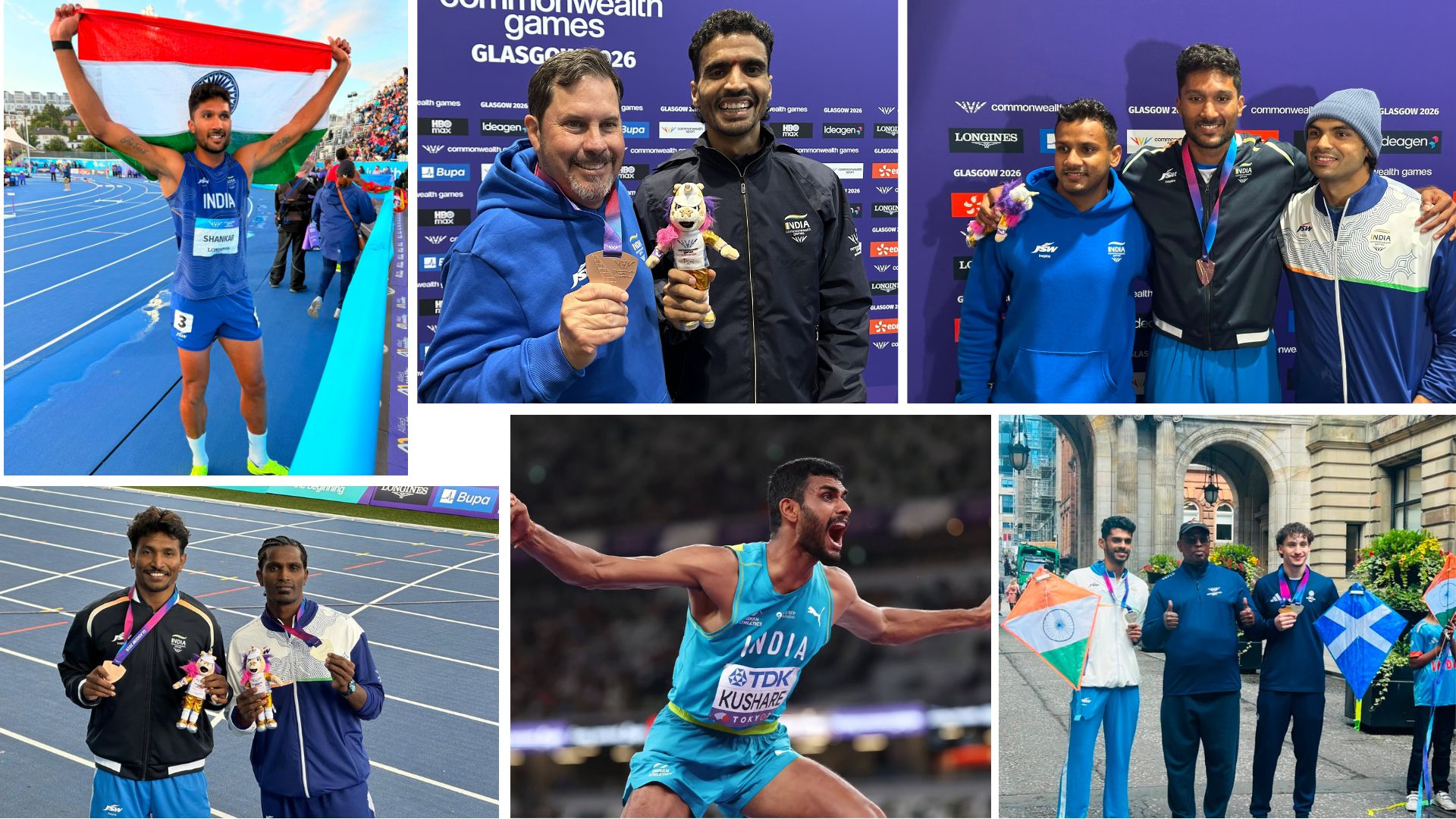
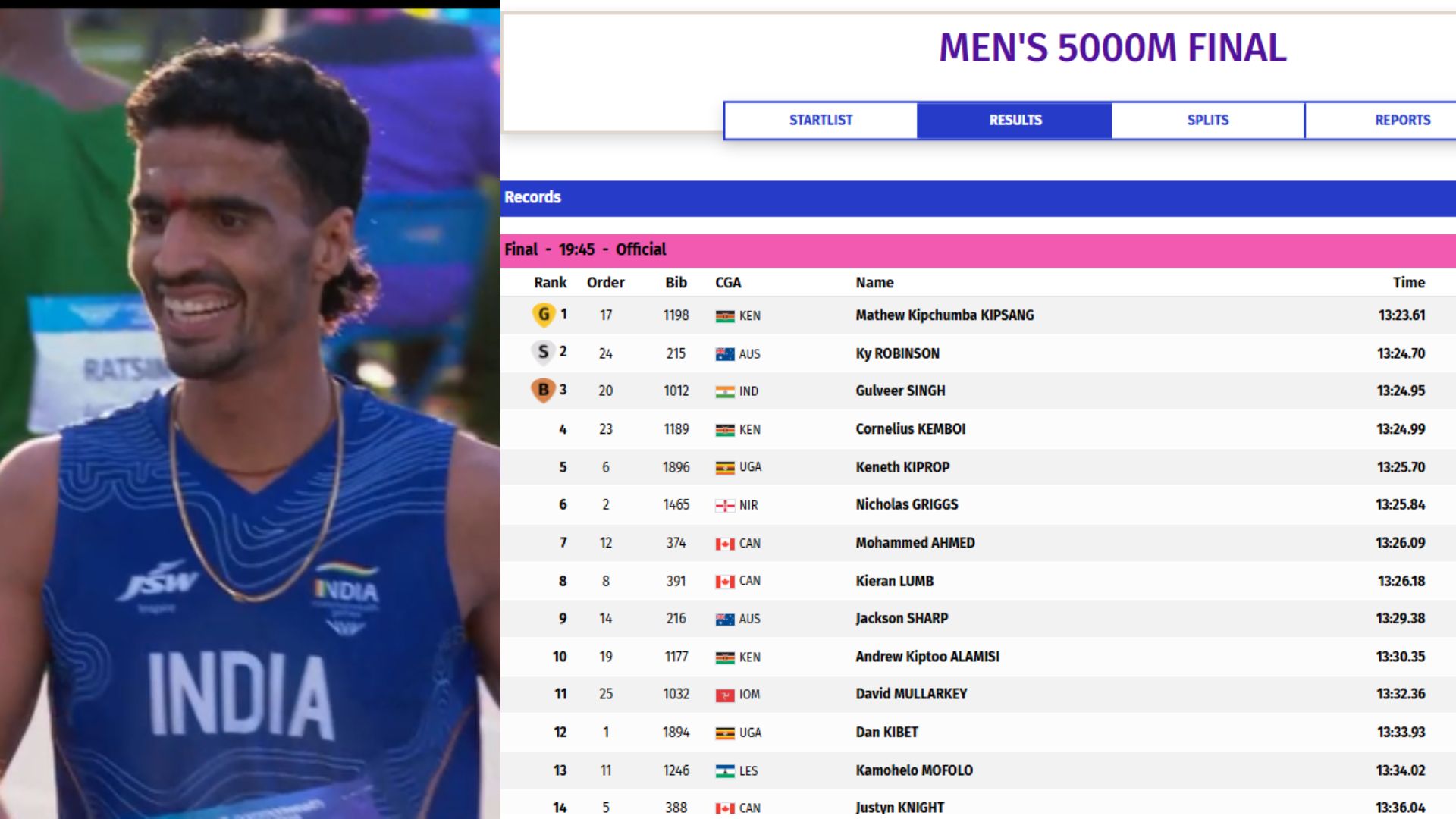
At the absolute heart of this transformation is Gulveer Singh, whose historic exploits have sent a resounding message across the international athletics community. Competing against elite world-class fields, the Army distance runner delivered what is arguably the most significant individual track performance in Indian history. In the men’s 10,000m final, Gulveer clocked a scintillating 27:49.78 to claim a historic silver, securing India’s first-ever CWG medal in the gruelling event. Not content with rewriting history once, he returned to the track for the men’s 5,000m final, executing a masterful tactical kick over the final 400m to secure bronze with a time of 13:24.95.
Gulveer’s double-medal breakthrough is more than just a personal triumph; it is a cultural and structural watershed. For too long, the global narrative has dismissed India’s capacity for elite endurance running on the world stage. By executing dual sub-28:00 (10,000m) and sub-13:30 (5,000m) efforts, Gulveer has forced the global running community to take notice. The world is finally watching India step out of its traditional comfort zones and stake a legitimate claim in distance running, signalling that the nation’s athletic ambitions extend far beyond the field and into the heart of the track.
Beyond the distance tracks, Glasgow showcased a masterclass in technical depth and multi-event versatility. India achieved rare double-podium finishes in premier field disciplines. In the men’s javelin throw, former Olympic champion Neeraj Chopra demonstrated elite resilience under challenging, cold Scottish evening conditions to secure silver with an 85.83m throw, while teammate Yashvir Singh captured bronze with a personal-best 85.41m. Similarly, the men’s triple jump saw Praveen Chithravel (16.58m) and Selva Prabhu Thirumaran (16.52m) lock down silver and bronze in a commanding display of horizontal jumping pedigree.
This versatility was further underlined by Murali Sreeshankar, who backed up his previous successes with an 8.09m silver in the men’s long jump, and Sarvesh Anil Kushare, who cleared 2.25m on his first attempt to claim silver in the high jump. Meanwhile, Tejaswin Shankar etched his name in the record books by capturing India’s first-ever CWG decathlon medal with a phenomenal 7,976-point haul – highlighted by a 7.82m personal best in the long jump and a 2.15m clearance in the high jump. Complementing these exploits, Seema Kaliramna added a bronze in the women’s discus throw (58.65m), while India’s para-athletics contingent lit up the stadium with gold-medal blitzes from Dilip Mahadu Gavit (Men’s 100m T47), Soman Rana (men’s Shot put F57), and Sharmila Dhankar (women’s shot put F57).
Yet, as the delegation returns home, a clear strategic challenge remains: the gold conversion challenge. While the total medal count doubled, the absence of an able-bodied individual gold highlights the razor-thin margins separating global podium consistency from ultimate supremacy. In events like the javelin, where external weather conditions and peak-release mechanics dictate the final centimetre, and across tactical track races, coaches and athletes recognize that closing the gap to first place is the final frontier.
Glasgow 2026 will ultimately be remembered as the turning point where Indian athletics proved its systemic depth. By expanding into multi-events, dominating technical jumps, and – most importantly – shattering historical glass ceilings on the distance track through trailblazers like Gulveer Singh, India has signalled a definitive shift. The global athletics hub is no longer a closed circle. With the world now taking notice of India’s growing prominence, the roadmap toward the upcoming Asian and World Championships is crystal clear: take the silver-standard consistency, refine the tactical edges, and turn global respect into golden dominance.
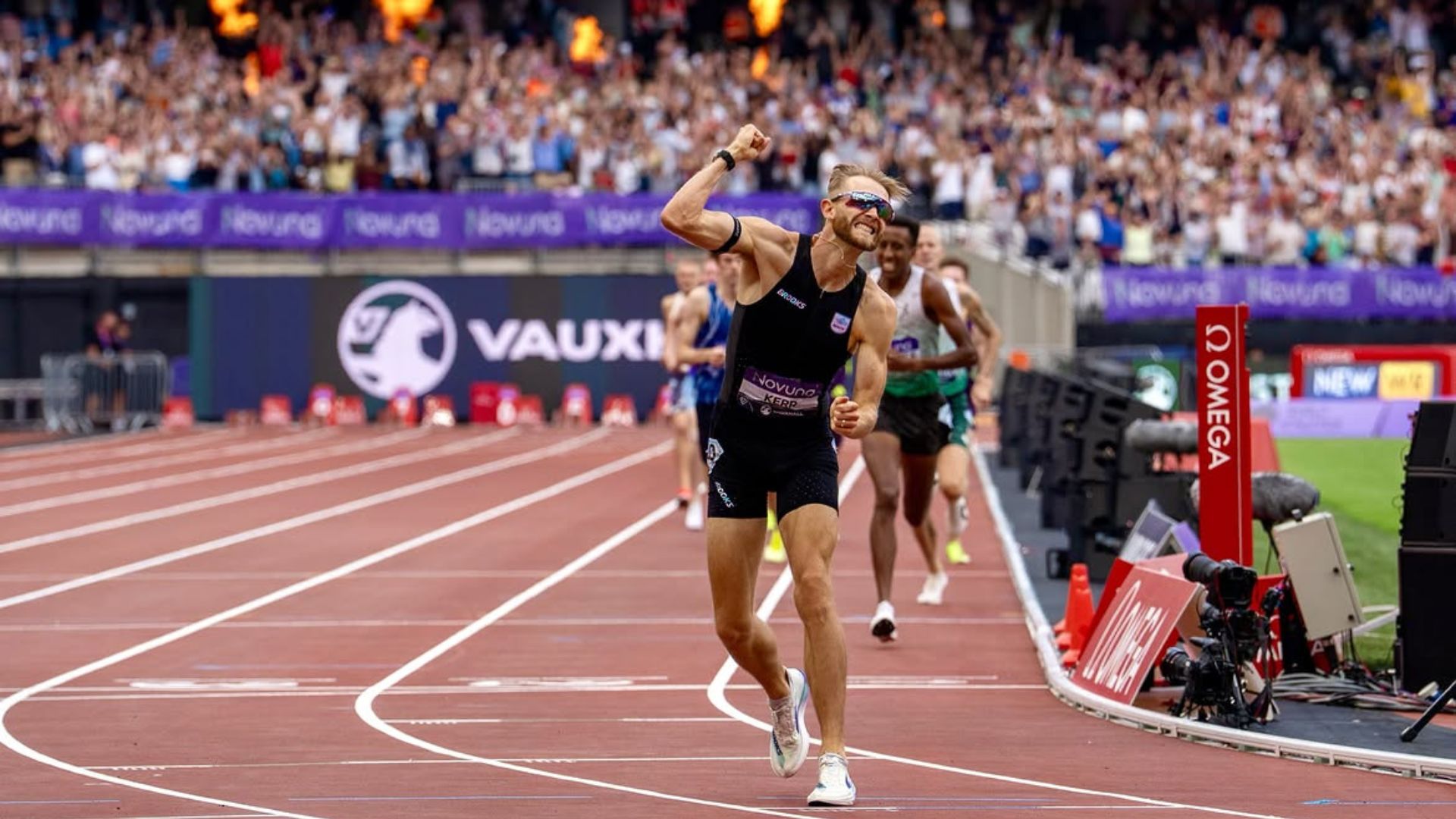
Scotland’s Josh Kerr capped one of the greatest two-week stretches in middle-distance running by winning the men’s mile title at the 2026 Commonwealth Games in Glasgow, delighting a home crowd at Scotstoun Stadium.
Just 14 days after rewriting history with a world-record mile of 3:42.66 at the London Diamond League, Kerr added Commonwealth gold with a tactically brilliant victory in 3:54.12. The race marked the return of the mile to the Commonwealth Games for the first time since 1966, making his triumph even more significant.
Unlike his record-breaking run in London, the Commonwealth final unfolded at a much slower pace. Kerr stayed patient through the early laps before unleashing his trademark acceleration with around 250 metres remaining. Once he hit the front, there was no catching him.
Australia’s Cameron Myers claimed the silver medal in 3:55.26, while Kenya’s former world champion Timothy Cheruiyot took bronze in 3:55.41. Fellow Scot Jake Wightman finished sixth after briefly featuring among the leading group.
The victory carried special meaning for Kerr, who grew up competing at Scotstoun Stadium and had spoken before the Games about fulfilling a childhood dream of winning a major title on home soil. After missing out on gold at the previous Commonwealth Games, the 28-year-old made amends in front of an ecstatic Scottish crowd.
Kerr’s latest success further cements his status as one of the world’s premier middle-distance runners. Already the 2023 world 1500m champion, he now adds a Commonwealth mile title to a remarkable season that has seen him break one of athletics’ oldest and most iconic world records.
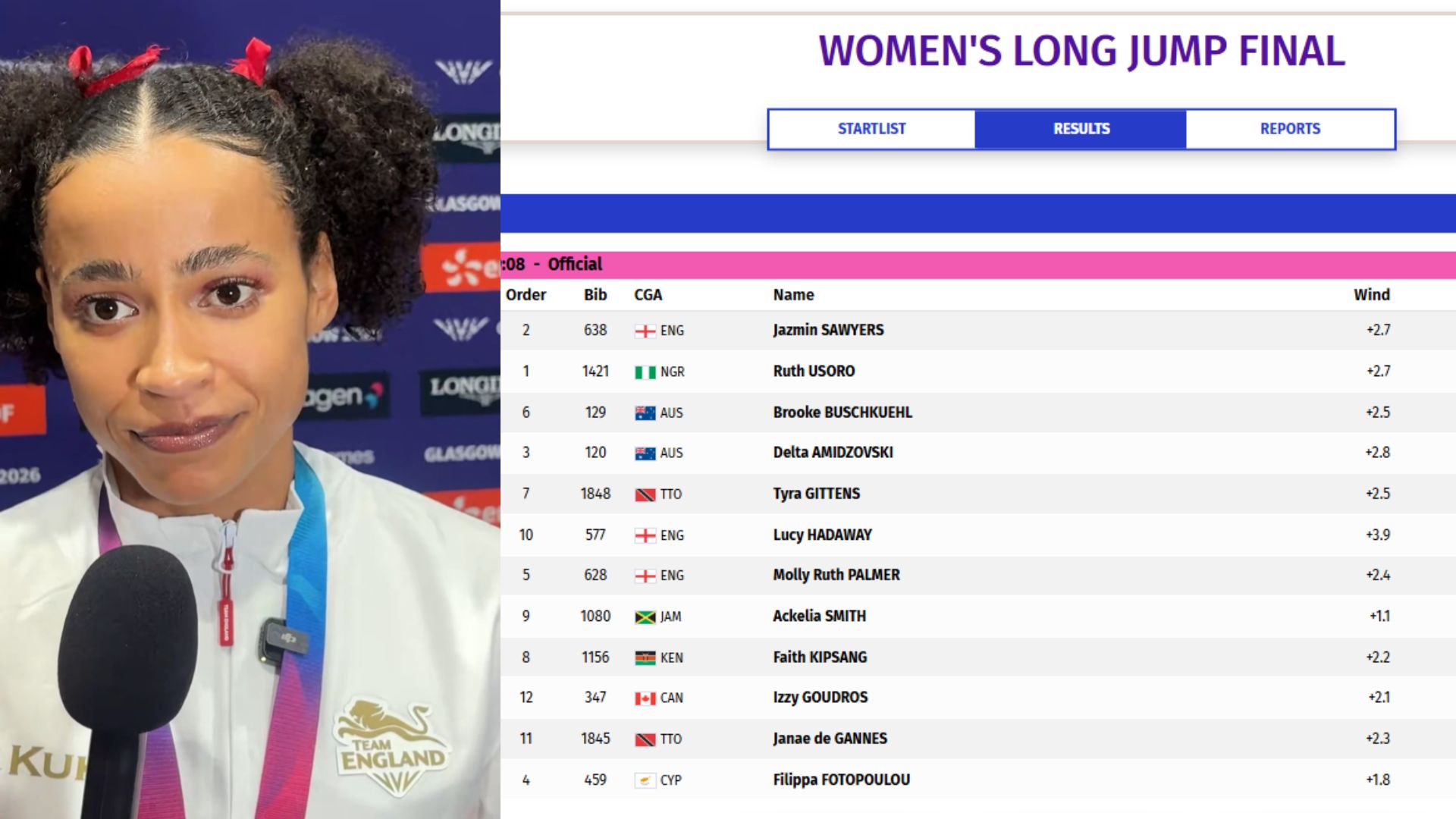
England’s Jazmin Sawyers finally completed her Glasgow redemption story, soaring to women’s long jump gold at the 2026 Commonwealth Games with a winning leap of 6.93m.
Twelve years after claiming silver as a teenager at the 2014 Commonwealth Games in the same city, Sawyers returned to Glasgow to upgrade that medal to gold in front of another passionate home crowd.
The victory marked one of the most emotional moments of the athletics programme, coming just over two years after an Achilles tendon rupture forced the British star to miss the Paris 2024 Olympic Games. Her comeback culminated in the biggest outdoor title of her career.
Sawyers took control of the competition with her 6.93m effort, a mark that none of her rivals could match. The performance capped a remarkable return to the top level after months of rehabilitation and uncertainty.
Speaking after the competition, Sawyers reflected on the significance of winning in Glasgow.
“It was the start of my career and one of the best moments of my entire career. But when you’ve done that, there’s only one thing to do, which is to upgrade.”
Already the 2023 European Indoor champion and British indoor record holder with a 7.00m jump, Sawyers has long been one of Britain’s premier horizontal jumpers. However, the Commonwealth title had remained elusive despite her success on the international stage.
Her triumph was also a major boost for Team England on the final day of athletics, contributing to a strong medal haul that included silver in the mixed 4x400m relay.
For Sawyers, though, this was a deeply personal victory. Returning to the city where she first announced herself to the athletics world and overcoming the disappointment of missing the Olympics made the gold medal even more special.
With a championship-winning jump of 6.93m, Jazmin Sawyers finally wrote the perfect ending to a journey that began in Glasgow 12 years ago.
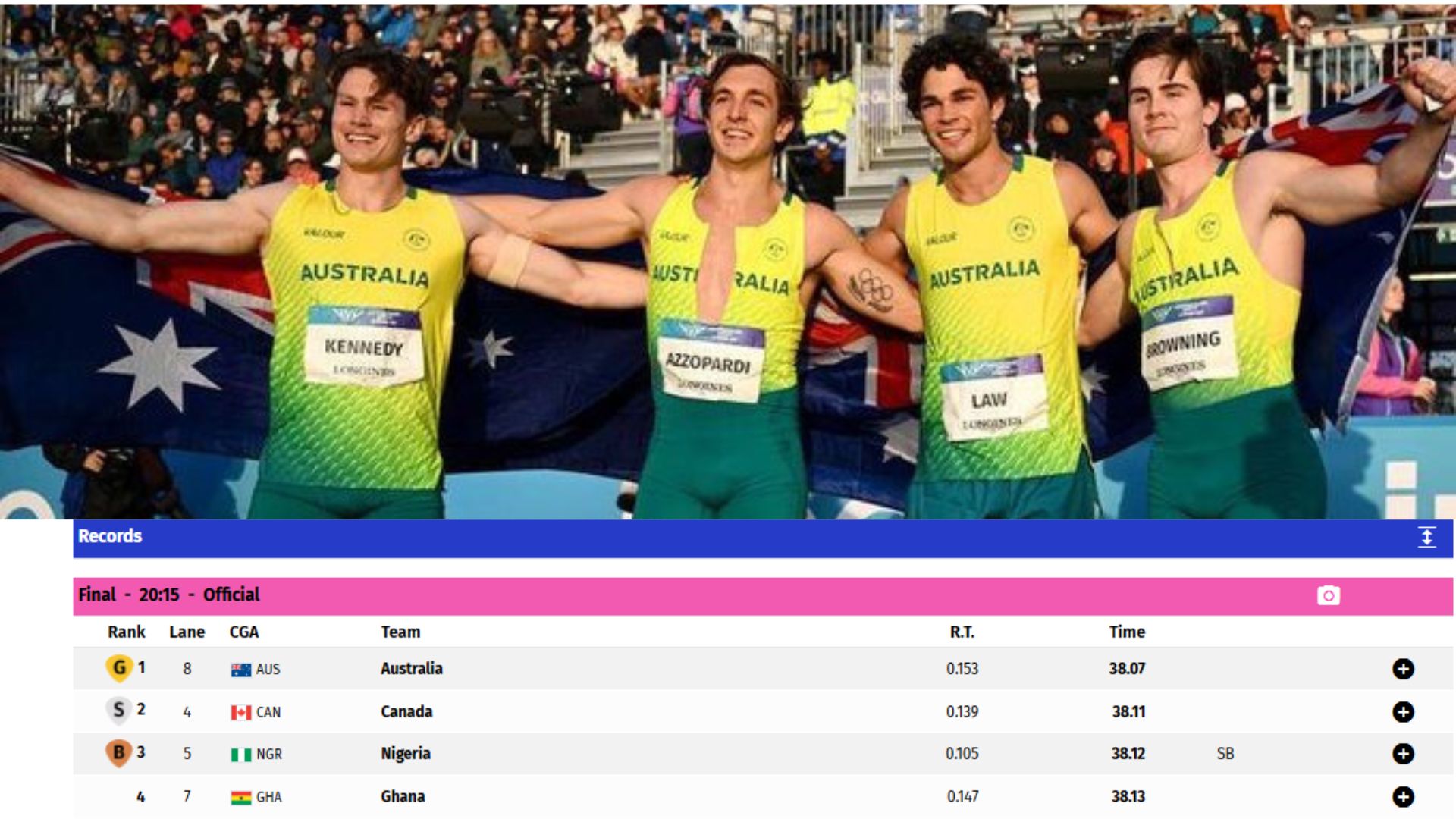
Australia claimed a historic gold medal in the men’s 4x100m relay at the 2026 Commonwealth Games in Glasgow, storming to victory in 38.07 seconds to end a 52-year wait for the title. The quartet of Lachlan Kennedy, Josh Azzopardi, Calab Law and Rowan Browning produced flawless baton exchanges to edge Olympic champions Canada in a thrilling finish.
The race was followed by dramatic scenes as Canada, who had initially finished second in 38.11 seconds, were disqualified for an alleged lane infringement. Nigeria were provisionally promoted to silver with 38.12 seconds, while Ghana moved up to bronze in 38.13 seconds.
However, after reviewing video evidence, Canada’s appeal was upheld and the disqualification was overturned. The reinstatement restored Canada to the silver medal position, with Nigeria taking bronze, while Ghana narrowly missed out on a place on the podium.
Final results:
Gold: Australia – 38.07s
Silver: Canada – 38.11s
Bronze: Nigeria – 38.12s
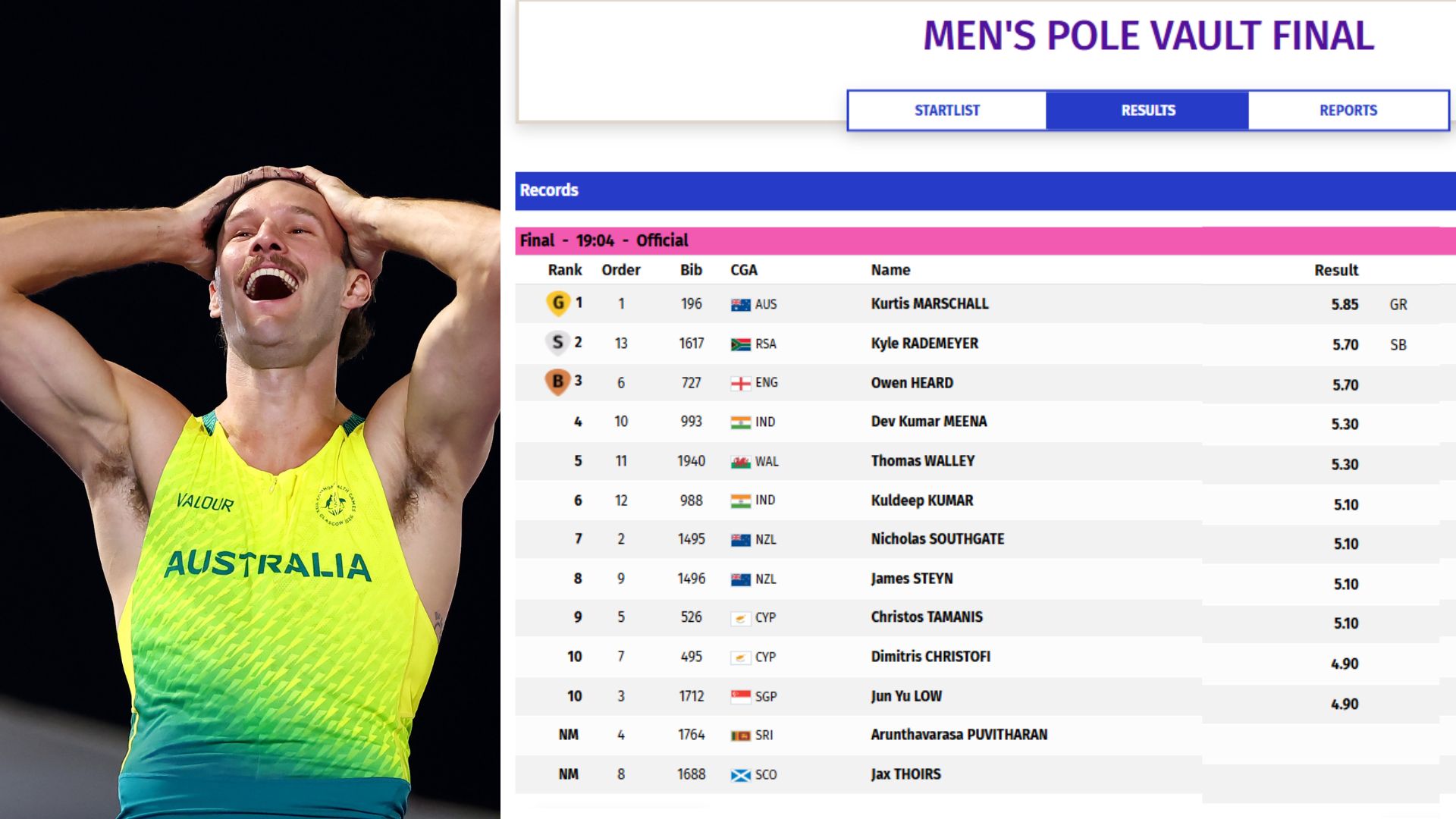
Australia’s Kurtis Marschall underlined his status as one of the world’s premier pole vaulters by winning the men’s pole vault title at the Commonwealth Games 2026 with a championship-record clearance of 5.85m.
The 28-year-old cleared the winning height to break the previous Commonwealth Games record and successfully defended the title he had won in Gold Coast 2018 and Birmingham 2022 becoming a three-time Commonwealth Games champion.
Marschall, already a two-time World Championships medallist, once again delivered on the big stage. His victory in Glasgow adds another major title to a career that has seen him consistently rank among the world’s elite. He won bronze at the 2022 World Athletics Championships in Eugene before improving to silver at the 2023 World Championships in Budapest, firmly establishing himself as one of the sport’s leading vaulters. He has also represented Australia at multiple Olympic Games and is the Australian national record holder with a best of 6.00m, making him one of the select few athletes to have cleared the six-metre barrier.
Silver went to Menno Vloon, who cleared 5.80m in an impressive competition, while England’s Owen Heard claimed bronze with 5.70m, just one centimetre shy of his personal best set earlier this year.
Heard’s medal marked the biggest international achievement of his career. The 24-year-old produced a composed series of jumps throughout the evening to secure a place on the podium in front of a lively Glasgow crowd.
The men’s pole vault brought the athletics programme to a fitting close, with Marschall’s championship-record performance providing a spectacular finale. His consistency over three successive Commonwealth Games and continued success on the world stage have cemented his place among Australia’s greatest field athletes
India’s Gulveer Singh continued his outstanding campaign at the Commonwealth Games 2026, clinching the bronze medal in the men’s 5,000m to add a second podium finish to his name after winning silver in the 10,000m earlier in the championships.
Gulveer produced a determined performance in a fiercely contested race, clocking 13:24.95s to finish third. The Indian distance runner displayed remarkable composure and tactical awareness before unleashing a sensational sprint over the final 50 metres, securing his place on the podium in dramatic fashion.
The race was decided by the narrowest of margins. Matthew Kipchumba of Kenya claimed the gold medal in 13:23.61, while Australia’s Ky Robinson took silver with 13:24.70. Gulveer crossed the finish line just 0.25 seconds behind the silver medallist, underlining the highly competitive nature of the final.
Medal Winners – Men’s 5,000m
- 🥇 Matthew Kipchumba (Kenya) – 13:23.61
- 🥈 Ky Robinson (Australia) – 13:24.70
- 🥉 Gulveer Singh (India) – 13:24.95
The bronze medal caps a memorable Commonwealth Games campaign for Gulveer, who has now reached the podium in both distance events he contested. Earlier in the championships, he secured the silver medal in the men’s 10,000m, showcasing his endurance and consistency over two demanding races.
Winning medals in both the 10,000m and 5,000m is a significant achievement at a major international championship, highlighting Gulveer’s versatility across long-distance events. His performances throughout the Games have established him as one of India’s leading distance runners and demonstrated his ability to compete against some of the strongest athletes in the Commonwealth.
With a silver in the 10,000m and a bronze in the 5,000m, Gulveer Singh concludes the Commonwealth Games 2026 with two medals, making him one of India’s standout performers in athletics at the championships.
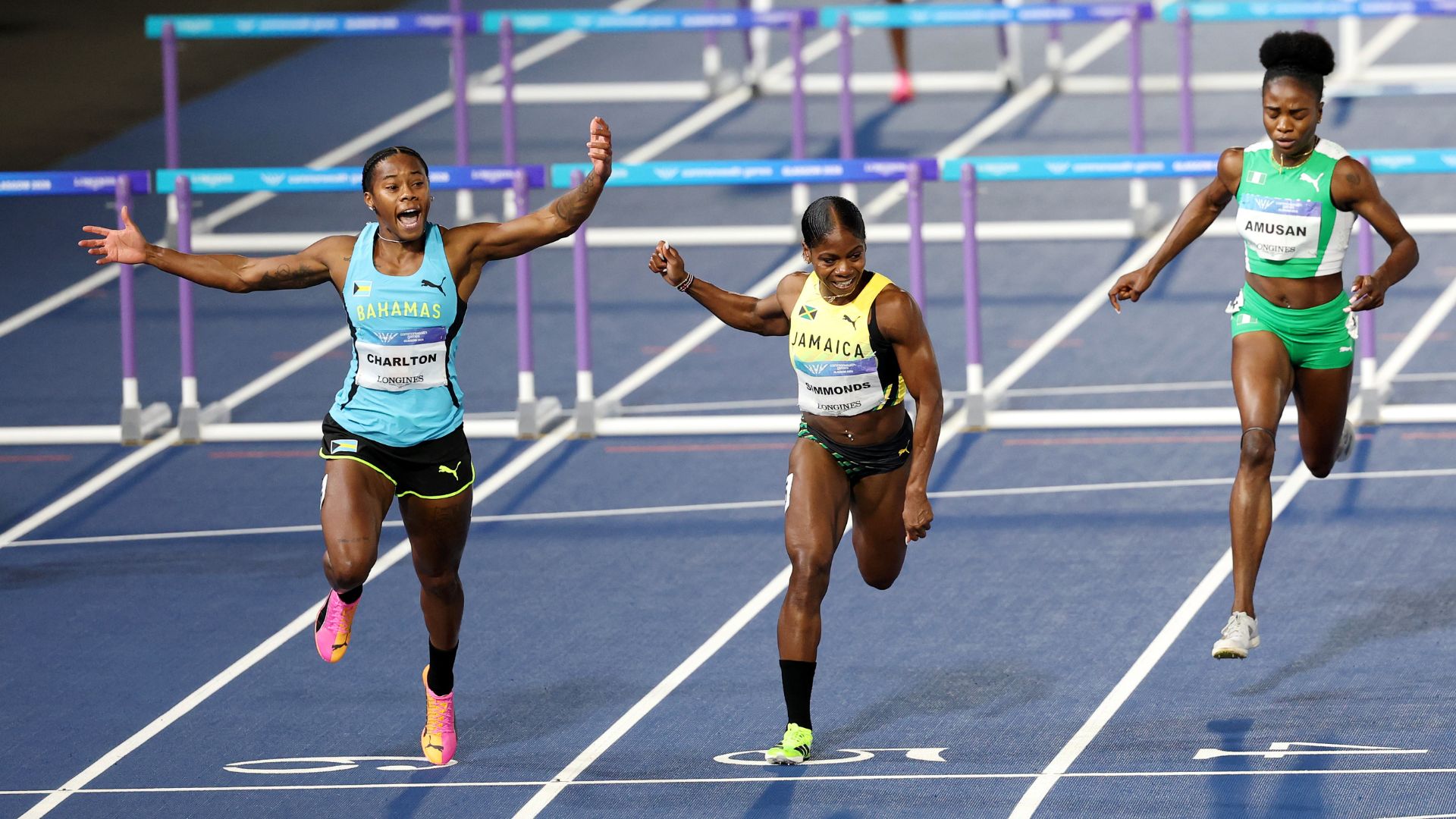
Nigeria’s Tobi Amusan has revealed that she competed in the women’s 100m hurdles final at the Commonwealth Games 2026 while carrying an injury, shedding light on the circumstances behind her unexpected bronze-medal finish.
The reigning African star admitted after the race that she was far from fully fit but chose to compete for her country despite the physical setback. Her determination earned her a place on the podium, adding another Commonwealth Games medal to an already glittering career.
Amusan entered Glasgow as one of the biggest names in world athletics and the favourite to defend her Commonwealth title.
Instead, the Nigerian had to settle for bronze after an injury limited her performance in the final. While disappointed not to retain her crown, Amusan revealed that simply making it to the finish line and winning a medal under the circumstances was an achievement in itself.
Despite the setback in Glasgow, Amusan remains one of the most accomplished sprint hurdlers in history.
She became the 2022 World Champion in the 100m hurdles in Eugene, where she also set the world record of 12.12 seconds in the semifinals—a mark that still stands.
The Nigerian has also been a dominant force in the Diamond League, becoming the first Nigerian athlete to win the overall Diamond League title in 2021 before defending it in subsequent seasons.
Long before Glasgow 2026, Amusan had established herself as one of the Commonwealth Games’ most successful hurdlers.
She won gold in the 100m hurdles at Gold Coast 2018, successfully defended her title at Birmingham 2022, and added a relay bronze in 2018.
Her bronze medal in Glasgow means she has now won three consecutive individual medals in the event at the Commonwealth Games, underlining her remarkable consistency at the championships.
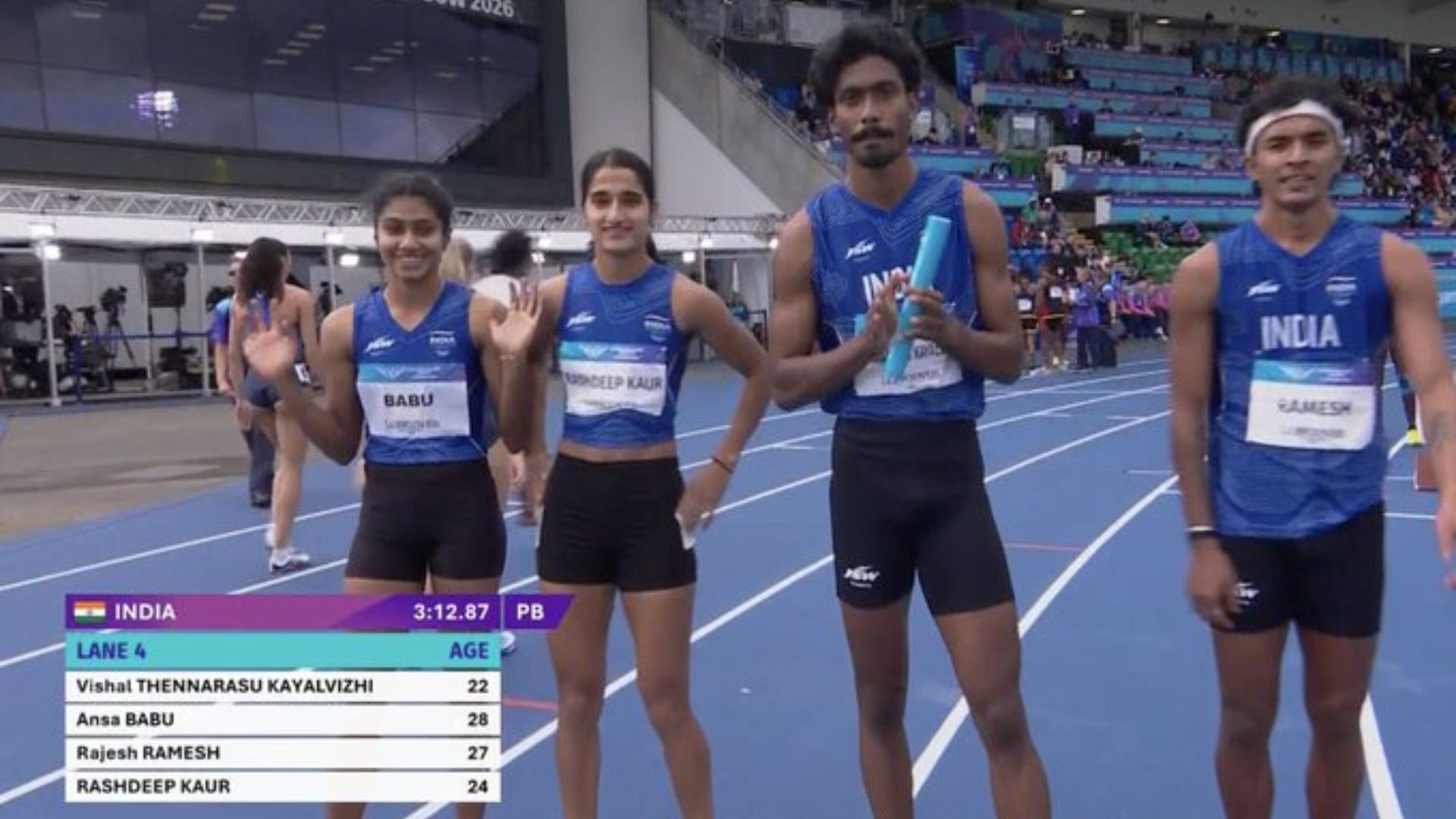
India booked its place in the 4×400m mixed relay final at the Commonwealth Games 2026, advancing as one of the fastest losers after clocking 3:20.98 in the heats.
The Indian quartet finished fourth in their heat, but their time was good enough to secure qualification as the seventh-fastest team overall, keeping their medal hopes alive heading into the final.
Strong Start from Vishal TK
India got off to an encouraging start through Vishal TK, who delivered a composed opening leg.
The national record holder produced a 46.10-second split, handing India an early advantage and placing the team in a strong position after the first exchange.
Momentum Slips Away
The race began to unravel on the second leg as Ansa Babu went out aggressively over the opening 200 metres but struggled to maintain the pace over the final stretch.
She clocked a 53.90-second split, allowing rival teams to move ahead and costing India the advantage built by Vishal.
The final two legs, run by Rajesh Ramesh and Rashdeep Kaur, were unable to recover the lost ground.
Rajesh returned a 47.00-second split, while Rashdeep clocked 53.98 seconds, as India crossed the finish line in fourth place.
Through to the Final
Despite missing out on an automatic qualifying position, India’s 3:20.98 was sufficient to progress on time, earning the team the seventh-fastest qualifying spot for the final.
The performance, however, highlighted areas that will need improvement if India is to challenge the stronger relay nations for a podium finish. While the men’s legs were competitive, the team lost valuable ground during the middle stages of the race.
India also has Neeru Pathak available as the reserve athlete for the mixed relay squad, giving the team management an additional selection option ahead of the final.
With qualification secured, the focus now shifts to producing a cleaner, more balanced performance when the medals are decided.