
Tanya Chaudhary produced the biggest throw of her career at the Indian Series Final, breaking the Indian women’s hammer throw national record with a sensational 68.35m.
The Uttar Pradesh thrower also comfortably cleared the Asian Games qualification standard of 61.72m with her lifetime-best effort.
Tanya Chaudhary Produces Record-Breaking Throw
Tanya’s performance is particularly significant after she narrowly missed the Asian Games qualification standard in her previous competition.
She fell just 2cm short of the mark last time. This time, she responded emphatically, clearing the standard and pushing the national record to a new level.
The previous national record belonged to Anushka Yadav, who threw a historic 67.02m at the National Inter-State Senior Athletics Championships in June.
Yadav broke the record twice during that competition. She first threw 65.64m before improving it to 67.02m.
Two Uttar Pradesh Athletes Rewrite the Record Book
The women’s hammer throw national record has now been bettered twice this season. Both record-breaking performances have come from athletes representing Uttar Pradesh.
First came 18-year-old Anushka Yadav, who emerged as one of the biggest revelations of the season.
Her 67.02m throw also made her the youngest Indian woman to hold the senior national record in the event.
Now, Tanya Chaudhary has taken the record even further with her 68.35m effort.
Tanya Makes a Major Leap
Tanya has been a consistent presence at the top level of Indian hammer throw.
Before this breakthrough, her personal best stood at 63.91m, recorded in August 2025.
Her latest throw represents a massive improvement on that previous best. It also puts her firmly in the spotlight ahead of the Asian Games 2026.
The record-breaking performance adds another layer to an extraordinary season for Indian women’s hammer throw. Two Uttar Pradesh athletes have repeatedly pushed the event to new heights.
First Anushka. Now Tanya. Uttar Pradesh is rewriting India’s hammer throw record book.

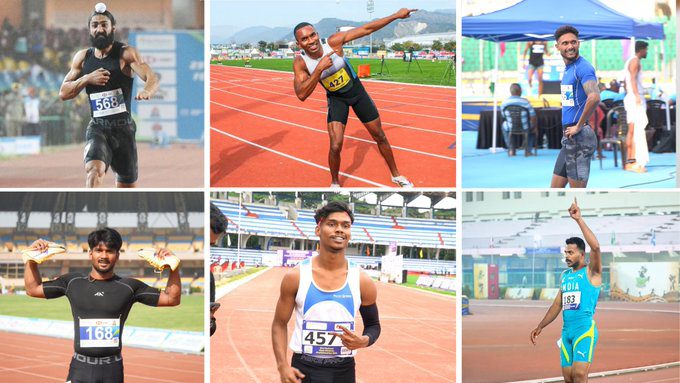
India’s 200m National Record holder Animesh Kujur continued his strong sprinting form by winning the men’s 100m title at the Indian Series Final in 10.21 seconds.
Kujur finished ahead of fellow Asian Games-bound sprinter Gurindervir Singh, who took second in 10.32s.
Kujur and Gurindervir Renew 100m Rivalry
The result adds another chapter to the growing rivalry between the two sprinters. They have repeatedly traded the national record over the past two seasons.
Kujur first emerged as a major 100m force last year. He clocked 10.18s in Vari, Greece, breaking Gurindervir’s then-national record of 10.20s.
The record battle intensified in 2026 at the National Senior Athletics Federation Competition in Ranchi.
Gurindervir first lowered Kujur’s record to 10.17s in the semifinals. Just minutes later, Kujur responded with 10.15s to reclaim the national record.
Gurindervir then produced the biggest sprint of his career in the final. His 10.09s made him the first Indian to break the 10.10-second barrier and put the national record back in his hands.
Gurindervir’s Rise in Indian Sprinting
Gurindervir’s rise had begun in 2025 at the Indian Grand Prix 1 in Bengaluru.
He clocked 10.20s, breaking the then-national record of 10.23s.
He had also run 10.32s to win the 100m at the 2024 Inter-State Athletics Championships.
With Kujur winning the Indian Series Final in 10.21s and Gurindervir finishing second in 10.32s, both sprinters continue to headline India’s men’s sprinting scene.
Asian Games 2026 Awaits
Both Animesh Kujur and Gurindervir Singh will represent India at the Asian Games 2026.
Their rivalry will provide one of the most intriguing storylines in Indian athletics at the Games.

Maharashtra’s Aishwarya Mishra won the women’s 400m title at the Indian Series Final, clocking a season-best 52.51 seconds.
Aishwarya held her composure in a closely contested race to take the top spot. Prachi finished second in 52.75s, while Poovamma Raju took third in 52.76s.
Aishwarya Mishra Leads Women’s 400m
The top three finishers were:
| Position | Athlete | Time |
|---|---|---|
| 1 | Aishwarya Mishra (Maharashtra) | 52.51s |
| 2 | Prachi | 52.75s |
| 3 | Poovamma Raju | 52.76s |
The win gives Aishwarya a positive result in her season. Her 52.51s mark is her new season-best performance.

Vishal T K won the men’s 400m title at the Indian Series Final with a strong 45.36-second performance.
The final produced a remarkable display of depth, with six of the eight finalists breaking 46 seconds.
Vishal T K Leads a Fast 400m Final
Vishal topped the field in 45.36s, narrowly finishing ahead of Jay Kumar, who clocked 45.50s. Manu T S took third in 45.68s.
The top six finishers were:
| Position | Athlete | Time |
|---|---|---|
| 1 | Vishal T K | 45.36s |
| 2 | Jay Kumar | 45.50s |
| 3 | Manu T S | 45.68s |
| 4 | Vikrant Panchal | 45.75s |
| 5 | Rajesh Ramesh | 45.80s |
| 6 | Dharamveer Choudhary | 45.83s |
The six sub-46 performances made the men’s 400m final one of the standout races of the Indian Series Final.
Vishal T K Sets Sights on Nagoya
For Vishal, the victory is another step toward bigger ambitions.
The 400m champion has set his sights on winning a medal and breaking the National Record at Nagoya. That gives him an even bigger target to chase in the upcoming competition.
With six athletes going under 46 seconds in the same final, Indian men’s 400m is entering an increasingly competitive phase.

Punjab’s district athletics programme will bring together athletes from U-14 to 70-plus, with events ranging from kids’ javelin to 10,000m race walking.
Athletics in Punjab is set to become more inclusive.
The district-level Khedan Watan Punjab Diyan 2026 competition will feature athletics across nine age groups.
The programme will cater to athletes from under-14 competitors to those aged 70 and above.
The athletics events will be held from September 20 to 30.
The programme includes track events, jumps, throws, hurdles and race walking for both men and women.
U-14 Athletes Begin with Basic Events
For U-14 athletes, the focus will be on shorter and development-focused events.
The programme includes the 60m and 600m, long jump, high jump, shot put and kids’ javelin.
U-17 Programme Expands
The U-17 category features a much wider range of events.
Athletes can compete in the 100m, 200m, 400m, 800m, 1500m and 3000m.
The field events include long jump, high jump, triple jump, shot put, discus, javelin and hammer throw.
The category also features hurdles and 3000m race walk.
U-21 Moves Towards Senior Athletics
The U-21 category moves firmly towards senior-style athletics.
The programme ranges from the 100m to 5000m.
It also includes 5000m race walk, jumps, throws and hurdles.
For athletes aged 21-30, the programme becomes even broader.
Men will have the 100m, 200m, 400m, 800m, 1500m and 5000m, along with the 10,000m race walk.
Women will have races up to the 5000m, along with the 5000m race walk.
Both categories will also feature jumps, throws and hurdles.
Veterans Get Their Own Competition
Athletics does not stop at 30.
The 31-40 category includes sprints, middle-distance races, 5000m race walk, jumps and throws.
The programme then moves into four veteran age groups.
Athletes aged 41-50, 51-60, 61-70 and 70-plus can compete in events including the 100m, 400m and 800m, long jump, shot put, javelin and discus.
The implements become lighter in the older categories.
That means a 70-plus athlete could line up for the 100m while an U-14 athlete prepares for the 60m.
Both can compete as part of the same district athletics programme.
Schools, Villages and Academies Can Participate
The competition is open to athletes from schools, villages, registered youth clubs, academies and cities.
Each athlete can compete in only one age group.
They can also enter a maximum of two athletics events.
Talent Identification Included
The programme also has a talent-identification component.
Results and lists of athletes finishing in the top positions in the U-14 and U-17 categories are to be prepared for talent identification.
For Punjab’s athletics ecosystem, the biggest feature may be the sheer breadth of the competition.
Nine age groups. Track, field and race walking. Children, senior athletes and veterans.
The district championships are set to create a competition where athletes across generations can take part in the same athletics programme.

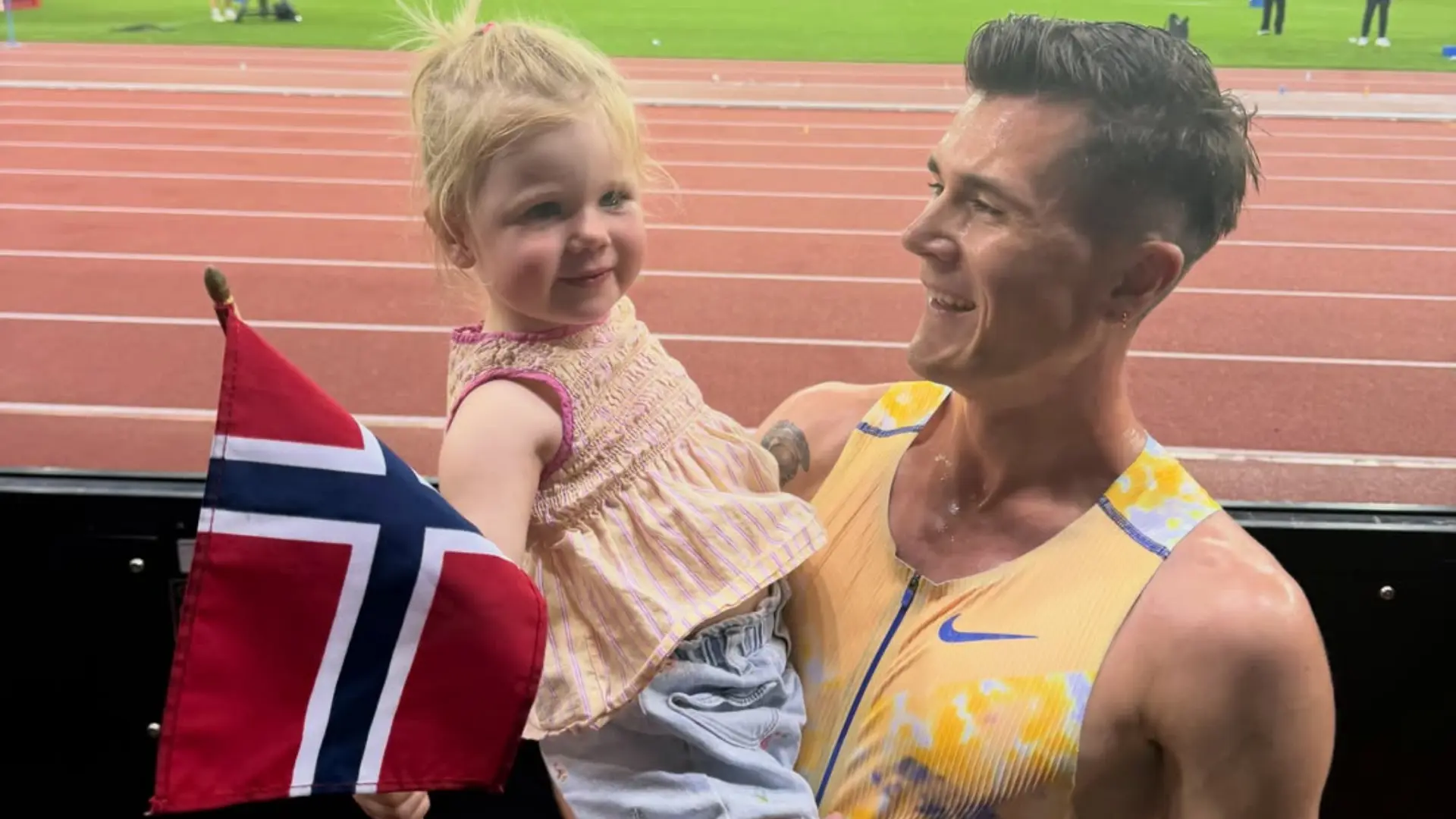
Jakob Ingebrigtsen did not hold back after finishing fourth in the 1500m at the Diamond League Final in Brussels.
The Olympic champion was furious with how the race unfolded. He accused his rivals of hiding behind the pacemaker and called them a “bunch of cowards” after Australia’s Cameron Myers won the title.
Ingebrigtsen is returning to competition after undergoing Achilles surgery in February.
He had controlled much of the race and appeared to be in contention for victory. However, the Norwegian faded in the final 30 metres as Myers produced a perfectly timed finishing burst.
Myers crossed the line in 3:30.14.
He edged Kenya’s Phanuel Kipkosgei Koech by 0.04 seconds.
American Ethan Strand finished third in 3:30.50, while Ingebrigtsen took fourth in 3:30.52.
For Ingebrigtsen, however, the result was less about the defeat.
It was more about how his opponents had raced.
“They want to run in a queue and hide themselves tonight,” he said after the race.
The Norwegian also criticised the pacemaking.
He said the pacer had pulled him away from the Wavelight and the pace he wanted to maintain.
Ingebrigtsen Questions Hocker’s Tactics
Ingebrigtsen was particularly unhappy with the tactics surrounding American Cole Hocker, who finished eighth.
According to Ingebrigtsen, Hocker’s team had engineered a change in the pacemaking arrangement.
A teammate became involved instead of the French pacer.
The Olympic champion suggested that the move allowed Hocker to sit back and avoid taking responsibility for the pace.
“He fooled all of us,” Ingebrigtsen said.
He argued that Hocker had effectively chosen to hide behind the other runners.
The frustration boiled over when Ingebrigtsen spoke to reporters after the race.
“I’m very disappointed in the race and the result, I’m racing against a bunch of cowards,” he said.
He did, however, make one exception.
“It’s only Cameron [Myers] that’s a good racer,” Ingebrigtsen said.
He also admitted that he had looked like a loser on the night.
Myers Focuses on Timing
While Ingebrigtsen focused on tactics, Myers concentrated on timing.
The 20-year-old Australian stayed patient and resisted the temptation to make an early move.
He waited until the final stretch before launching his attack.
“I contemplated making a move on the back straight but I didn’t really need to, so I just waited as long as possible,” Myers said after the race.
It was another major step in the rapid rise of the Australian.
Myers had already broken the national record earlier in the season.
Now, he has a Diamond League Final title to add to his résumé.
For Ingebrigtsen, Brussels was another test in his comeback from injury.
It was also another reminder that returning to his best will take time.
His explosive post-race comments ensured that the 1500m final became about much more than the result.
The race belonged to Myers.
The headlines, however, belonged to Ingebrigtsen.
The World Athletics Ultimate Championships in Budapest were expected to bring together many of the biggest names in global athletics.
Instead, the inaugural edition will be missing a remarkable number of stars.
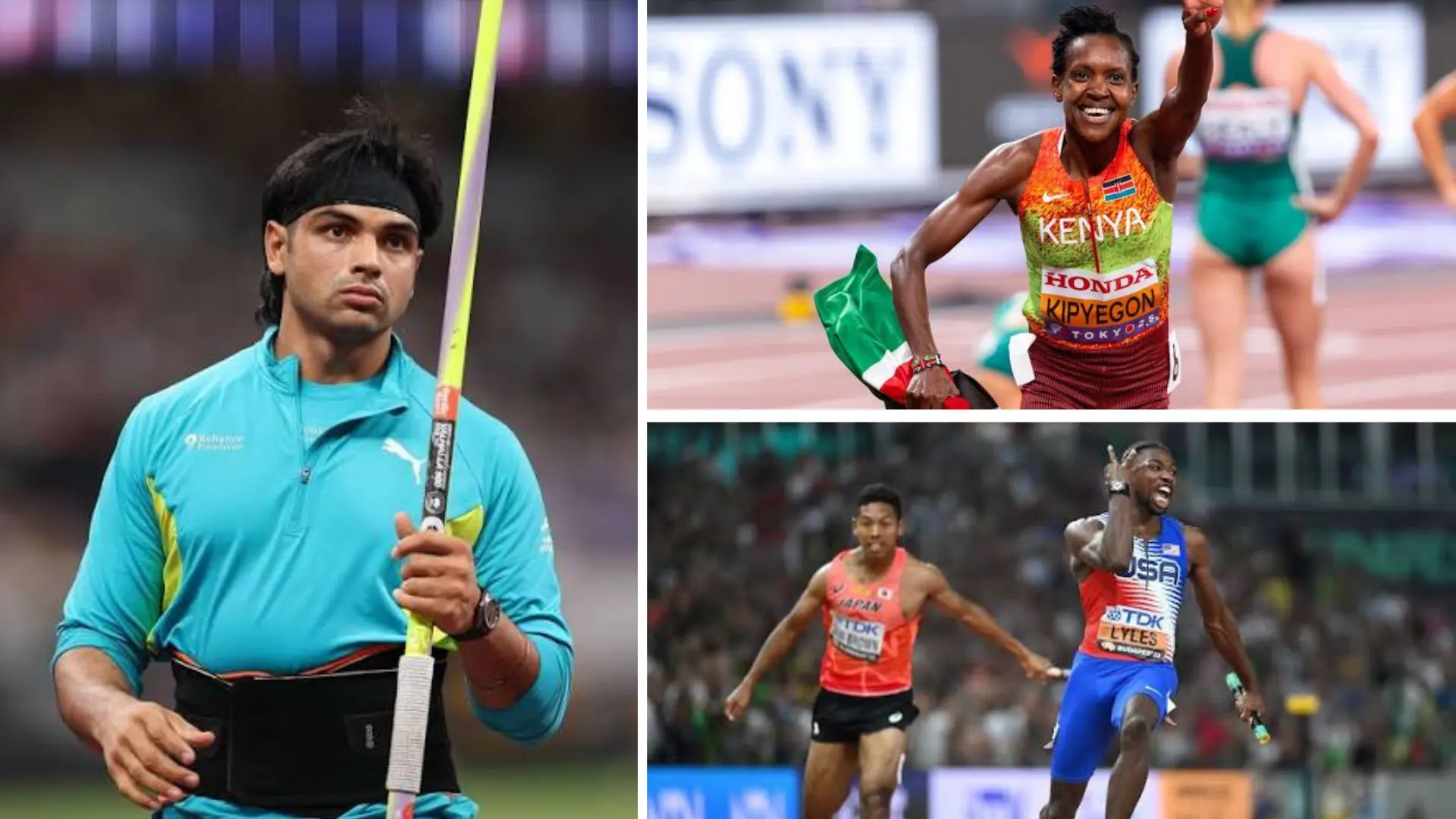
At the top of that list is India’s Neeraj Chopra.
Neeraj Chopra Among Major Absentees
Chopra will not compete in Budapest after ending his 2026 season early because of an ankle ligament injury.
His absence removes one of the biggest attractions in world athletics.
It also means India’s biggest track and field star will miss a championship designed to showcase the best of the best.
And Chopra is far from alone.
The list of high-profile absentees is extensive.
Kenyan distance-running superstar Faith Kipyegon will not compete in Budapest.
American sprint star Noah Lyles is also out.
The women’s 5000m will be without another Kenyan powerhouse, Beatrice Chebet, who is on a maternity break.
American hurdling great Sydney McLaughlin-Levrone is also away on maternity leave.
Jamaican sprint stars Shericka Jackson and Kishane Thompson will also miss the championships.
Nadia Battocletti of Italy will not compete for personal reasons.
Switzerland’s Ditaji Kambundji, Britain’s Dina Asher-Smith and Germany’s Malaika Mihambo are among the other notable absentees.
Field Events Also Lose Major Stars
The field events will also be missing some of their biggest names.
Venezuela’s Yulimar Rojas, one of the most dominant athletes in triple jump history, will not compete.
Neither will Italy’s Mattia Furlani, America’s Jordan Anthony and Cooper Lutkenhaus, or Kenya’s Ferdinand Omanyala.
There is another major reason behind the unusually long absentee list.
Some events are simply not part of the Ultimate Championships programme.
As a result, the leading athletes in the men’s and women’s 3000m steeplechase, men’s discus throw, women’s hammer throw and men’s triple jump will not have an opportunity to compete.
That means athletes such as Kenya’s Faith Cherotich and Winfred Yavi, America’s Chase Jackson and Camryn Rogers, and Portugal’s Pedro Pichardo will also be absent from the Budapest line-up.
Why Are So Many Stars Missing?
The reasons are varied.
Injuries have ruled out several major names.
Maternity breaks have taken others away from competition.
Personal reasons have kept some athletes out.
Then there is the unusual format of the Ultimate Championships, with a programme that does not include several traditional championship events.
The result is an event that may still have an impressive field.
However, it will inevitably feel the absence of a remarkable collection of global stars.
Chopra’s Absence a Major Blow for Indian Fans
For Indian fans, Neeraj Chopra’s absence will be particularly significant.
The javelin thrower had been expected to be one of the marquee names in Budapest after another high-profile season.
Instead, his 2026 campaign is over.
The Ultimate Championships will go ahead without the Olympic and world champion.
His absence is a reminder of just how difficult it is to assemble a truly complete field in athletics.
Even when the world’s biggest stars are invited, the calendar, injuries, personal circumstances, maternity breaks and event selection can dramatically change the line-up.
Budapest will still have champions, contenders and plenty of world-class athletics.
But it will also have a very long list of empty spaces where some of the biggest names in the sport would otherwise have been.
The Athletics Federation of India (AFI) has selected 77 athletes for the upcoming Asian Games 2026, making athletics the largest contingent among all sports in India’s Asian Games squad.
Several athletes who represented India at the previous edition in Hangzhou have been selected again. The group includes 15 medallists, who will look to add to their medal tally at the upcoming Games.
Here’s a look at the Hangzhou medallists selected again.
Tajinderpal Singh Toor
Tajinderpal Singh Toor won gold in the men’s shot put at the previous edition.
He produced a winning throw of 20.36m.
Toor will now aim to successfully defend his Asian Games title.
Avinash Sable
Avinash Sable won two medals in Hangzhou.
He claimed gold in the 3000m steeplechase with a time of 8:19.50.
He also won silver in the 5000m with a time of 13:21.09.
Parul Chaudhary
Parul Chaudhary also returned from Hangzhou with two medals.
She won gold in the 5000m and silver in the 3000m steeplechase.
Parul returns to the Asian Games aiming for another strong performance.
Annu Rani
Annu Rani won gold in the women’s javelin throw in Hangzhou.
She produced a season-best throw of 62.92m.
Rani will now look to defend her Asian Games title.
Murali Sreeshankar
Murali Sreeshankar won silver in the men’s long jump with an 8.19m effort.
He returns to the Asian Games after making a comeback from a career-threatening injury.
Rajesh Ramesh
Rajesh Ramesh won two medals in Hangzhou.
He claimed gold in the men’s 4x400m relay and silver in the mixed 4x400m relay.
Jyothi Yarraji
Jyothi Yarraji initially won bronze in the women’s 100m hurdles.
Her medal was later upgraded to silver following a protest.
Yarraji also returns after making a comeback from a career-threatening injury.
Ancy Sojan
Ancy Sojan won silver in the women’s long jump with a 6.63m effort.
She now heads to the Games as India’s national record holder.
Her season-best stands at 6.88m.
Vithya Ramraj
Vithya Ramraj won three medals in Hangzhou.
She claimed two silver medals in the women’s and mixed 4x400m relays.
She also won bronze in the 400m hurdles.
Ramraj equalled the national record in the hurdles with a time of 55.42s.
Mohammed Afsal
Mohammed Afsal won silver in the men’s 800m in Hangzhou.
He clocked 1:48.43.
Afsal now heads to the Games as India’s national record holder in the 800m.
He set the current mark with a time of 1:44.93 last season.
Tejaswin Shankar
Tejaswin Shankar won silver in the men’s decathlon.
He finished with 7,666 points.
Gulveer Singh
Gulveer Singh won bronze in the men’s 10,000m in Hangzhou.
He heads into this edition with improved personal bests and a double medal from the 2026 Commonwealth Games.
Gulveer will compete in the 1500m, 5000m and 10,000m.
He currently holds the Indian national records in all three events.
Praveen Chithravel
Praveen Chithravel won bronze in the men’s triple jump.
He produced an effort of 16.68m in Hangzhou.
Manju Rani
Manju Rani won bronze in the team race walk alongside Ram Baboo.
This time, she will represent India in the marathon race walk.
Rani holds the national record in the event.
Prachi Choudhary
Prachi Choudhary won silver as part of India’s women’s 4x400m relay team in Hangzhou.
This time, she has qualified for the individual 400m.
She has also been selected for the relay.
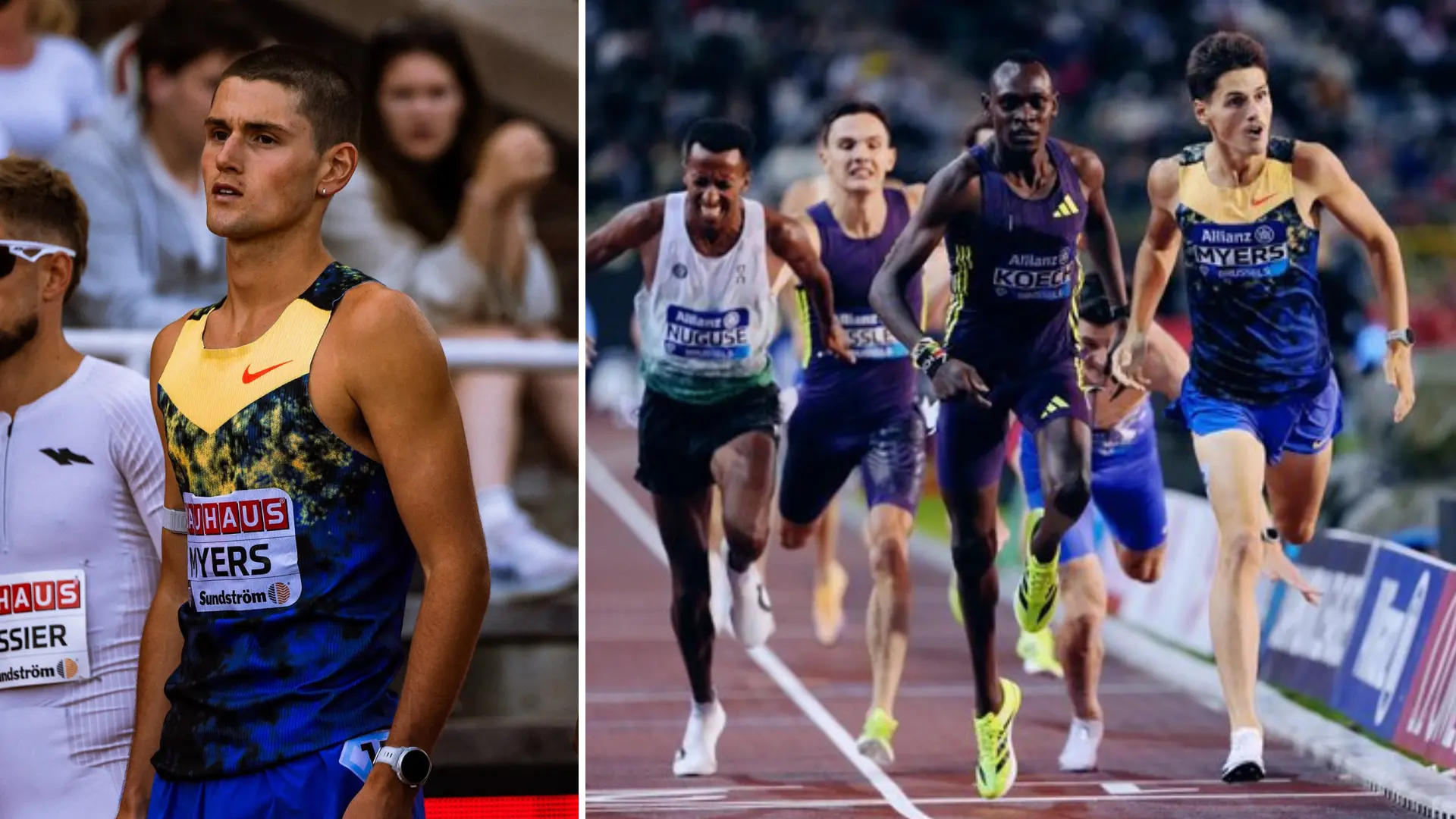
The 1500m final delivered a masterclass in tactical middle-distance running, with Australia’s Cameron Myers producing a brilliant performance.
The race featured tight battles, unexpected twists and a frantic finish.
Myers ran a sensational 3:30.14 to claim the Diamond League final crown.
The young Australian found himself temporarily boxed in behind a strong pack that included Jakob Ingebrigtsen and Phanuel Koech.
He remained composed under pressure.
Myers then squeezed through a tight gap on the home straight and unleashed his renowned finishing speed.
He edged Koech by just 0.04 seconds to take victory.
Ethan Strand finished strongly to secure third place.
Ingebrigtsen, who had led into the final lap, ultimately missed out on the top honours.
Myers, however, mastered the chaotic race to secure the biggest victory of his European summer campaign.
Myers Caps Stellar European Summer
The victory capped a stellar European summer for Myers.
Earlier in the season, the 20-year-old Australian lowered his personal best and national record to 3:28.00.
He achieved the mark while winning at the Paris Diamond League.
That performance established Myers as the world number one and a major threat in a fast-finishing field.
His ability to consistently match strides with global stars such as Olympic champions Cole Hocker and Jakob Ingebrigtsen highlights his maturity beyond his 20 years.
Road to Budapest
Myers will now turn his attention to Budapest and the upcoming World Athletics Ultimate Championships.
His current form, tactical awareness and finishing speed give him strong chances of challenging for a medal.
The start list features many of the world’s elite athletes.
However, Myers has already shown that he can handle heavy traffic and absorb the chaos of a championship race.
He also knows how to deliver when the pressure is at its highest.
If he can reproduce the fearless execution from his Diamond League triumph, Myers will enter Budapest as one of the athletes to watch.
The opening night of the Wanda Diamond League Final in Brussels delivered historic performances, fierce rivalries and dramatic finishes.
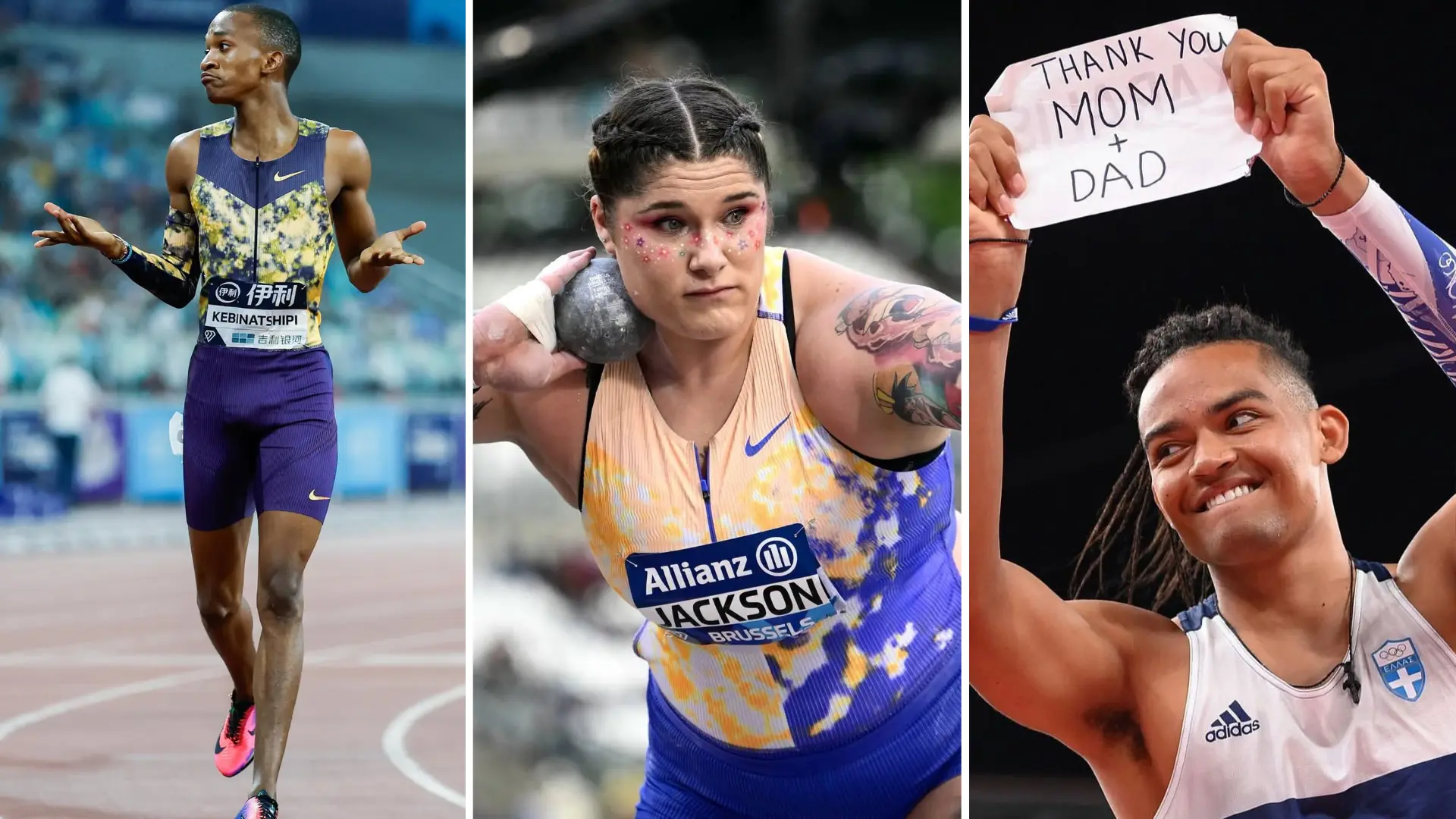
Collen Kebinatshipi, Chase Jackson and Emmanouil Karalis produced some of the biggest moments at the King Baudouin Stadium.
Kebinatshipi Breaks Diamond League Record Again
Botswana’s Collen Kebinatshipi ended the night in style.
The 22-year-old dominated the men’s 400m in 43.40 seconds.
The performance broke the Diamond League record for the third time this season.
Kebinatshipi also moved to joint fifth on the world all-time list.
Trinidad and Tobago’s Jereem Richards finished second with a national record of 43.68.
Chase Jackson Extends Area Record
American shot putter Chase Jackson also produced a record-breaking performance.
She extended her North American area record to 21.14m.
Jackson had joined the exclusive 21-metre club just days earlier in Berlin.
She dominated the competition in Brussels.
Canada’s Sarah Mitton finished second, half a metre behind Jackson.
Karalis Shines as Duplantis Withdraws
The pole vault produced another major highlight.
Mondo Duplantis withdrew as a precaution due to leg tightness.
That gave Emmanouil Karalis an opportunity to take centre stage.
Karalis cleared a meeting record of 6.12m on his third attempt.
He defeated Sondre Guttormsen and Kurtis Marschall to claim the title.
Julien Alfred Claims Third Consecutive Diamond League Title
The Brussels meeting also served as a crucial qualifier for the upcoming World Athletics Ultimate Championship in Budapest.
Julien Alfred continued her stellar form in the women’s 200m.
She won the race in 21.79 seconds.
The victory secured her third consecutive Diamond League title and her spot in the shorter distance at the upcoming championship.
Myers Wins 1500m Photo Finish
Australia’s Cameron Myers timed his finishing kick perfectly in a tightly contested 1500m.
He won in a photo-finish ahead of Phanuel Koech.
Distance star Jakob Ingebrigtsen faded to fifth after leading into the home straight.
In the 800m, Kenya’s Emmanuel Wanyonyi claimed his fourth consecutive Diamond League title.
He clocked 1:41.80 to finish nearly a second ahead of Djamel Sedjati.
Wanyonyi continues to edge closer to David Rudisha’s world record.
Tharp Wins After Tinch Falls
The 110m hurdles delivered one of the night’s most dramatic moments.
World champion Cordell Tinch clattered the final hurdle and fell while leading.
World record-holder Ja’Kobe Tharp took advantage to win in 13.03 seconds.
Jamal Britt finished second, while Trey Cunningham took third.
In the 100m, Oblique Seville claimed the title in 9.90 seconds.
He edged Emmanuel Eseme, while pre-race favourite Christian Coleman faded to sixth after a fast start.
Cherotich Sets Steeplechase Meeting Record
The women’s distance and hurdles events also produced strong performances.
Anna Cockrell held off a fierce challenge from Emma Zapletalová to win the 400m hurdles in 53.01 seconds.
In the 3000m steeplechase, Faith Cherotich pulled clear to set a meeting record of 8:51.61.
Freweyni Hailu led an Ethiopian one-two-three sweep in the 5000m.
She won the race in 14:35.20.
Gayle Beats Tentoglou in Long Jump
The field events produced several memorable matchups.
Tajay Gayle turned the tables on Miltiadis Tentoglou in the men’s long jump.
Gayle produced a winning 8.46m leap in the final round.
Mateusz Kołodziejski won the high jump after a competition decided on countback at 2.28m.
Saly Sarr claimed the triple jump with a 14.96m effort.
Ceh Defeats Alekna in Discus Battle
The discus competitions also delivered major performances.
Feng Bin threw 67.46m to edge Valarie Allman.
In the men’s competition, Kristjan Ceh set a meeting record of 71.29m.
He defeated world record-holder Mykolas Alekna in a world-class contest.