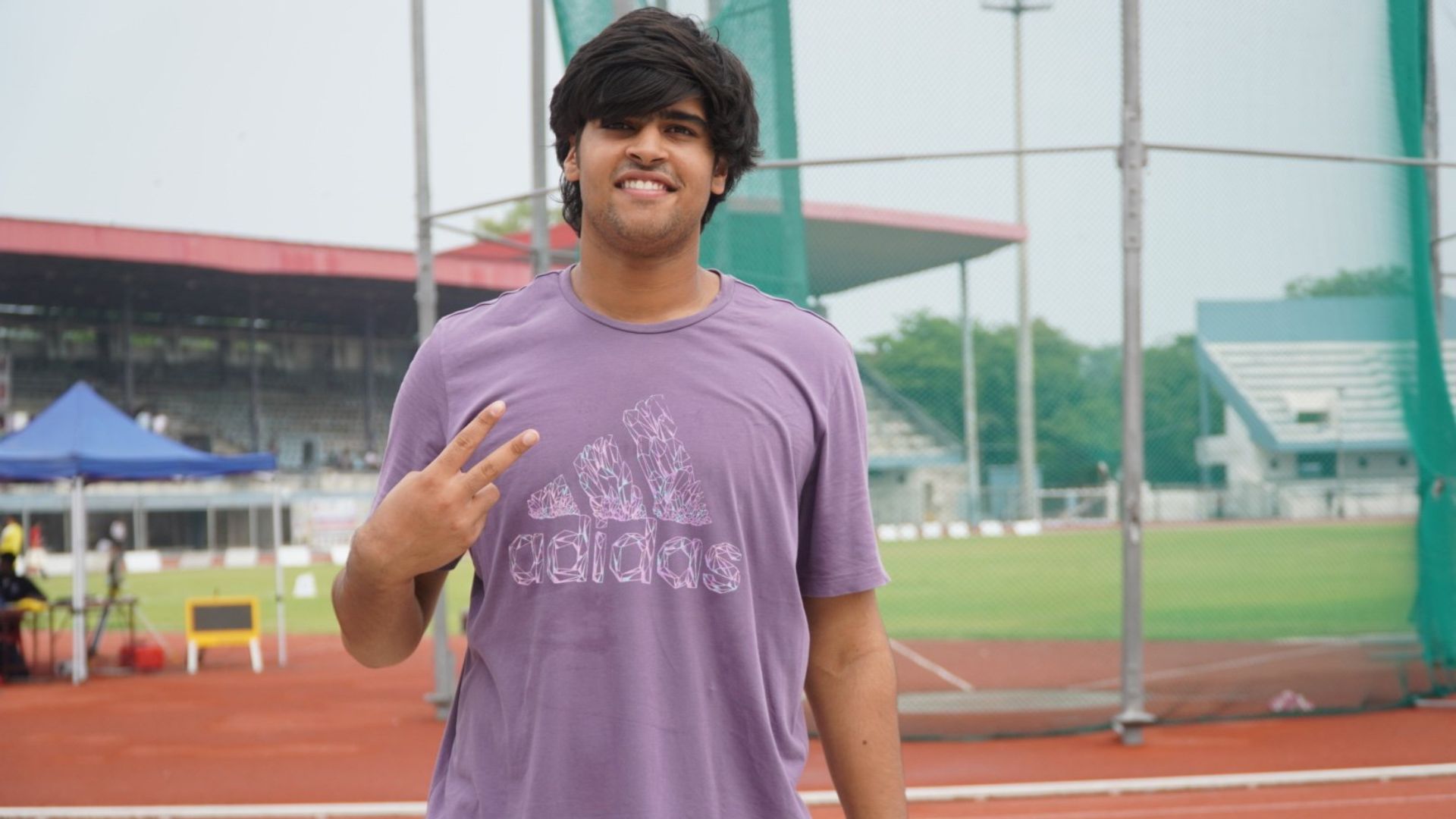

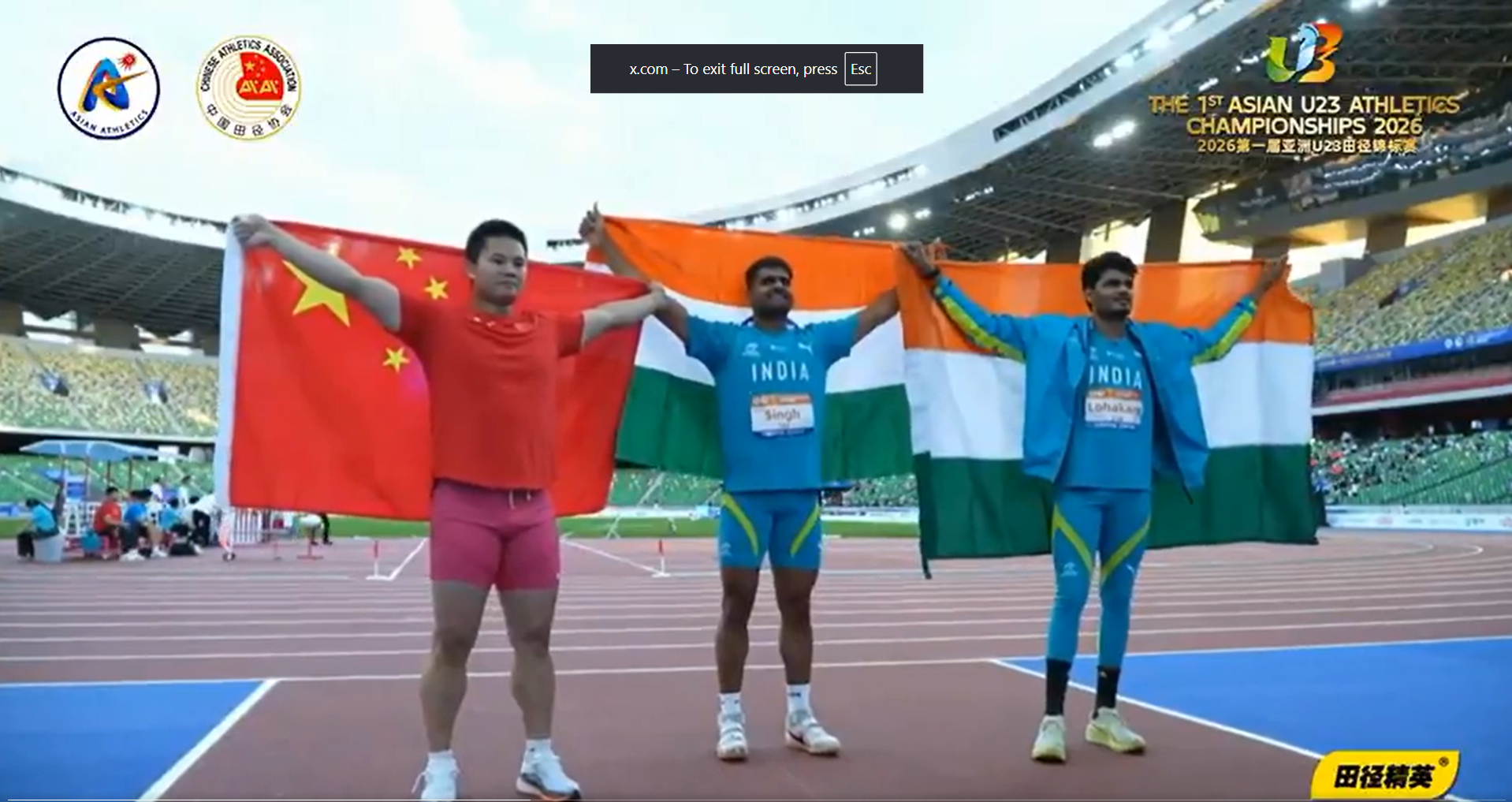
India celebrated a successful outing in the men’s javelin throw at the 2026 Asian U23 Athletics Championships, with Anand Singh winning the gold medal and Shivam securing bronze.
Anand Singh produced a stunning lifetime-best throw of 80.57m to claim the Asian U23 title, becoming India’s newest member of the prestigious 80m club. His championship-winning effort marked the first time he crossed the 80-metre barrier, improving significantly on his previous personal best.
China’s Wang Xiaobo finished second with a throw of 79.41m, while India’s Shivam claimed the bronze medal with 77.70m, completing a double podium finish for the country.
The gold and bronze medals underline India’s growing strength in men’s javelin throw, with Anand’s breakthrough performance emerging as one of the standout moments of the championships.
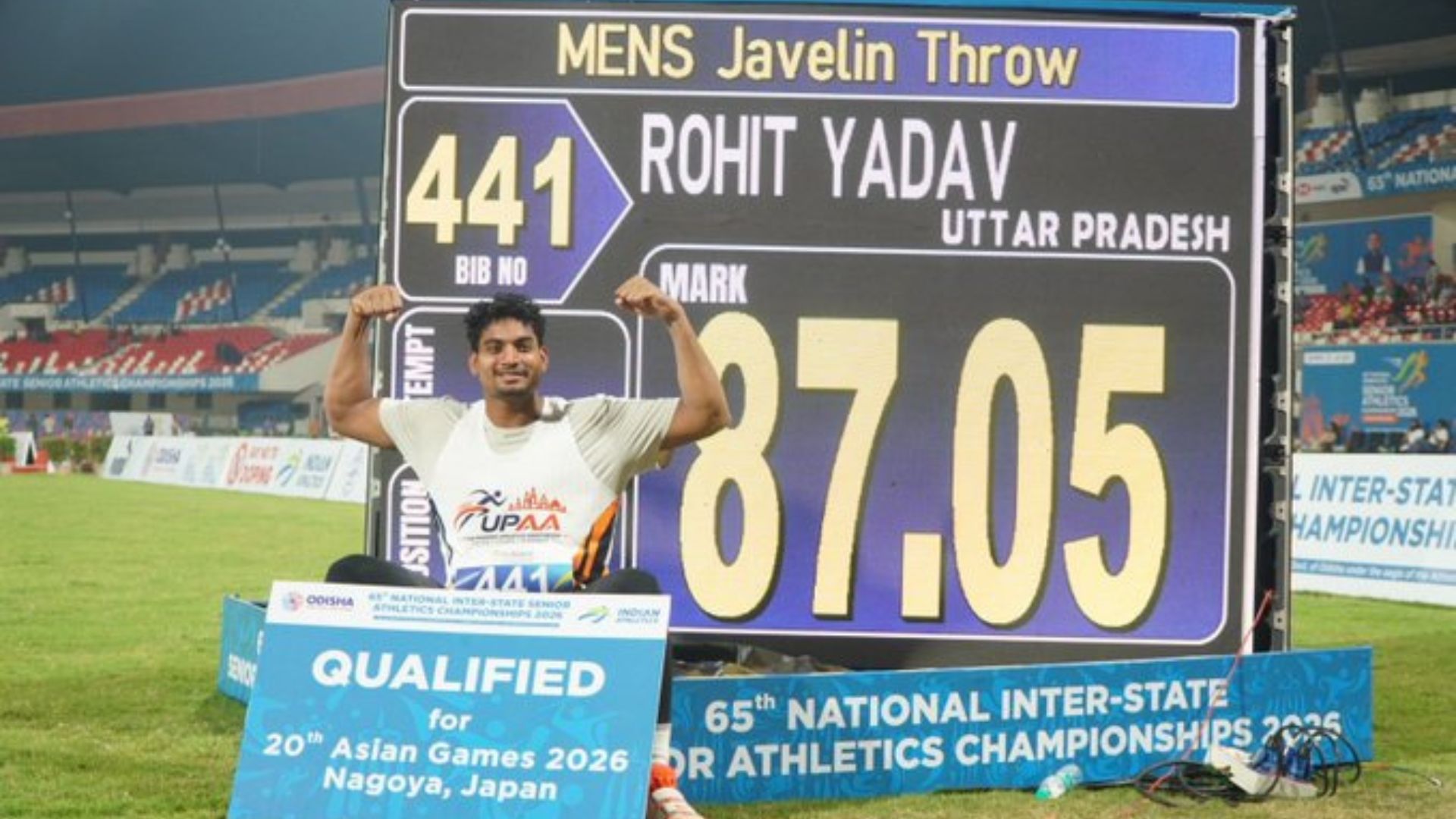
Rohit Yadav delivered the performance of his career at the 65th National Inter-State Senior Athletics Championships 2026, producing a sensational 87.05m throw to win the men’s javelin throw title and secure qualification for the upcoming Asian Games.
The massive effort marked a new lifetime best for Rohit and established a new meet record, making it one of the standout performances of the championships. Competing against the country’s top javelin throwers, he rose to the occasion with a throw that not only earned him the national title but also elevated him into the elite ranks of Indian athletics.
Rohit’s remarkable 87.05m effort now stands as the third-best throw in Indian history, underlining the significance of his achievement. The distance also places him at World No. 2 this season, highlighting the quality of the performance on the global stage and showcasing his potential ahead of major international competitions.
The victory represents a defining moment in Rohit’s career. Having consistently featured among India’s leading javelin throwers, he produced a breakthrough performance when it mattered most, surpassing his previous lifetime best by a significant margin. His ability to deliver under championship conditions reflects both his technical progress and competitive maturity.
The throw comfortably exceeded the Asian Games qualification standard, ensuring that Rohit has booked his place among India’s leading contenders for the continental event. His performance also reinforces the country’s continued strength in the men’s javelin throw, a discipline that has seen remarkable growth in recent years.
The Interstate Championships once again proved to be the perfect stage for athletes to achieve career milestones, and Rohit Yadav’s record-breaking effort was undoubtedly among the highlights of the meet. With a new meet record, a lifetime best, the third-best throw in Indian history, and the world’s second-best mark of the season, Rohit has firmly announced himself as one of the leading javelin throwers on the international circuit.
As the Asian Games approach, his outstanding performance provides another major boost for Indian athletics.
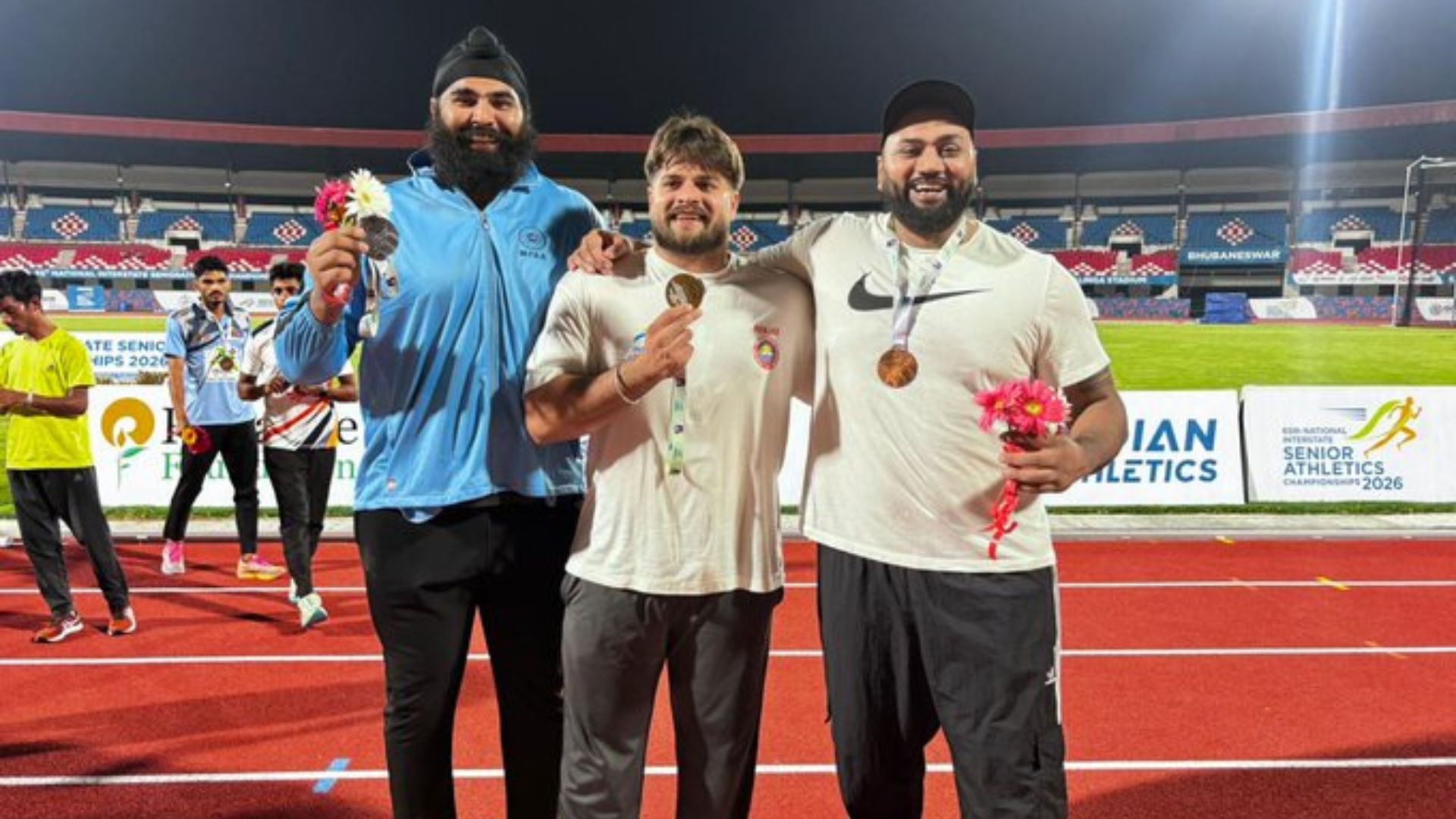
The men’s shot put competition at the 65th National Inter-State Senior Athletics Championships 2026 produced one of the standout field-event performances of the meet, with three athletes surpassing the Asian Games qualification standard in a highly competitive contest.
Leading the field was Karanveer Singh, who claimed the national title with a remarkable throw of 20.49m, registering a new lifetime best. The performance marked a significant milestone in his career, as he crossed the coveted 20-metre mark for the first time in more than four years. His breakthrough effort not only earned him the gold medal but also secured the Asian Games qualification standard.
Finishing close behind was Samardeep Gill, who delivered an impressive throw of 20.40m to take the silver medal. Consistent throughout the competition, Samardeep comfortably exceeded the qualification benchmark, further demonstrating the growing depth in Indian men’s shot put.
Completing the podium was experienced campaigner Tajinder Pal Singh Toor, who secured the bronze medal with a throw of 20.27m. The former national record holder once again showcased his ability to compete at the highest domestic level, joining Karanveer and Samardeep in breaching the Asian Games qualification mark.
The event highlighted the strength of Indian men’s shot put, with all three medal winners surpassing the required qualification standard in the same competition. Such performances underline the healthy competition within the discipline and reflect the steady progress being made by Indian throwers ahead of major international events.
Karanveer Singh’s lifetime best was undoubtedly the highlight of the competition, signaling a return to top form and rewarding years of perseverance. Meanwhile, the consistent performances of Samardeep Gill and Tajinder Pal Singh Toor ensured that the event remained one of the highest-quality field contests of the championships.
With three athletes achieving the qualification standard, the men’s shot put competition provided another encouraging boost for Indian athletics, reinforcing the country’s growing strength in the throwing events as preparations continue for the Asian Games.
The men’s hammer throw competition at the 65th National Inter-State Senior Athletics Championships 2026 witnessed a strong display from India’s leading throwers, with Damneet Singh and Praveen Kumar both surpassing the Asian Games qualification standard.
Damneet Singh led the way with an impressive throw of 69.72m, producing one of his best performances of the season. His effort comfortably cleared the qualification mark, reinforcing his position among India’s top hammer throw athletes and strengthening his case for selection to the upcoming Asian Games.
Close behind was Praveen Kumar, who also delivered an outstanding performance with a throw of 69.58m. His effort likewise exceeded the qualification standard, ensuring that two Indian athletes reached the required benchmark during the same competition.
The performances by Damneet and Praveen highlighted the growing competitiveness of the men’s hammer throw in India. With both athletes producing qualification-standard throws at the national championships, the event reflected the increasing depth in the discipline and the positive momentum Indian athletics continues to build ahead of major international competitions.
Domestic championships have consistently provided athletes with the opportunity to showcase their form under competitive conditions, and the Interstate Championships once again proved to be an important platform for securing qualification marks. Both throwers capitalised on the occasion, delivering performances that met the required standard when it mattered most.
For Damneet Singh, the 69.72m effort demonstrated his consistency and ability to perform on the national stage, while Praveen Kumar’s 69.58m throw underlined his readiness to challenge among the country’s best. Together, their qualification-standard performances provide encouraging signs for Indian athletics as preparations continue for the Asian Games.
With two athletes breaching the qualification mark in the same competition, the men’s hammer throw emerged as another event that showcased India’s improving standards in the field disciplines. Their performances add further optimism to the country’s growing strength in the throws as the international season approaches.
By Sundeep Misra
It remains one of the most striking paradoxes of modern Indian sporting culture: how an aerodynamic shaft of cased aluminium, weighing precisely 800 grams, shot into the air, in a complex alignment of biomechanical forces, becomes an object of national aspiration.
Yet, we shouldn’t mistake a national obsession, if it’s an obsession, for a mass phenomenon. One thing is sure – the javelin will never be a recreational pastime in India, just as it never became one in Jan Zelezny’s Czech Republic. In Prague or Ostrava, the collective obsession, pulse of the nation belongs to football; Czechoslovakia stops, breathes, and suffers along with the national team’s journeys, especially during the World Cup.
Similarly, the average American teenager, will never pick up a 7.26kg iron ball in their backyard or try and understand its rotational physics and the personalities of Ryan Crouser or Joe Kovacs. In the United States, American football and basketball dominate the grassroots. Yet, when Crouser steps into the circle on a global stage, Olympics or the World Championships, pride sweeps the country.
Leaving aside tennis to a large extent, a cultural movement in non-team sports will never have millions trying to replicate the act; most Olympic sport is stadium-bound, requiring technical expertise and hours of coach-managed sessions. You can’t just walk into a park and start throwing a discus, shotput, javelin or a hammer. Mass participation is never the key, it’s always projection.
It’s important to understand how different societies adopt their solitary icons. Consider Morocco, a nation intoxicated by football, where children grow up worshiping Achraf Hakimi. Yet, Soufiane El Bakkali and Hicham El Guerrouj and Saïd Aouita before him occupy a distinct but different sacred tier of iconography. Moroccan parents or even their sports administrators do not expect the youth to walk away from the football pitch for the lung-burners of the middle, long distance and the 3000m steeplechase. But Bakkali is revered, a massive figure in the Moroccan sports firmament as the man, athlete, warrior who dismantled East African distance running dominance on his own terms; that back-of-the-pack running, chewing up each athlete as he slices his way up to the front of the pack and top of the podium.
The same mechanism works in the global cycling landscape. In Slovenia, football and basketball pull the largest grassroots numbers. Yet, Tadej Pogačar’s historic, yellow-jersey-clad conquests across the alpine peaks of France have turned a gruelling, elite endurance sport into a cornerstone of Slovenian national and cultural identity. Not every Slovenian citizen needs to burst his arteries and climb the mountain passes to claim ownership of Pogačar’s triumph.
Closer home, in the sugarcane belts of western Uttar Pradesh, the suburbs of Meerut, households don’t send their daughters to run barefoot to master the steeplechase water jump. The technicalities of tracking Parul Chaudhary’s training splits are left to the purists. But when she snatched an Asian Games gold in the 5000m in Hangzhou and a silver in the 3000m steeplechase, the region celebrated, pride filling the bylanes of Meerut. Parul’s achievements will not trigger every girl to run on to the synthetic tracks, but it does alter the social imaginary of what a girl from Meerut can achieve.
Olympic sport, especially in India, relies on a rarefied tier of global success. An Olympic gold counts, a World Championship title cements it, and consistent podium finishes across the globe finally make an Indian feel proud that something apart from the swing of a willow bat is making international headlines.
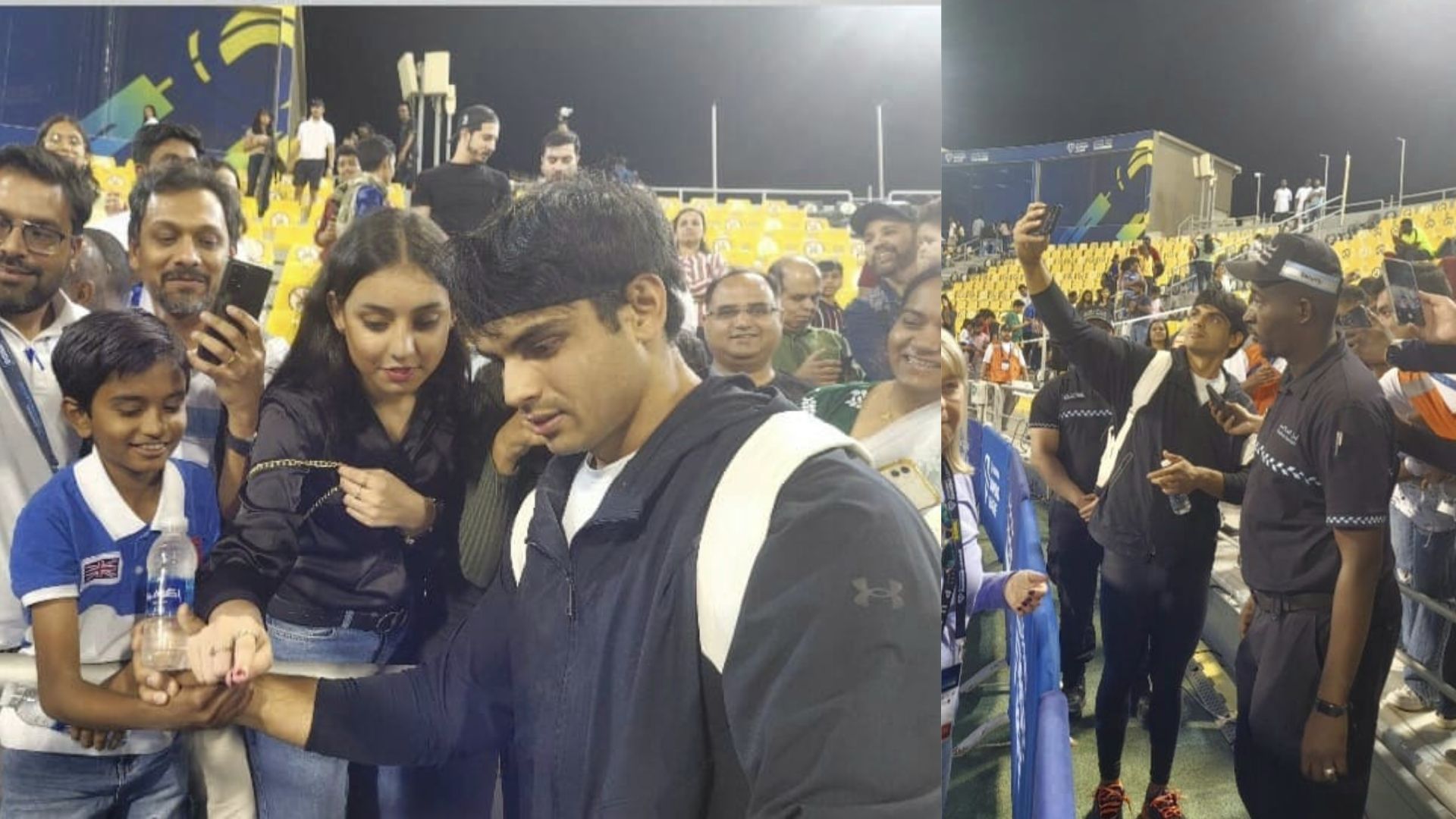
But what truly illustrates it is Neeraj Chopra’s subversion of the typical Indian sporting celebrity archetype. In a landscape where self-glorification is often treated as a sport in itself, be it the athlete, administrator or even the media, Chopra’s deliberate “invisibility”, his aversion to constant validation makes him a fascinating subject. His instinct to “slink back into the shadows” after a monumental effort creates a cultural scarcity. By refusing to feed the beast of public attention, he, knowingly or unknowingly heightens our hunger to watch him compete or understand him inside or outside of his athletic domain.
We don’t know what he will do now, following his fourth-place finish in his recent comeback and successfully securing his Commonwealth Games qualification. Having cleared the selection benchmark with a stable 85.69m throw, the pressure is off. The ‘predictable’ Chopra could easily retreat to his isolated European training base to protect his recovering back and fine-tune his rhythm away from the domestic circus.
Unless, of course, he decides to walk out onto the runway at the upcoming Inter-State Athletics Championships at the Kalinga Stadium in Bhubaneswar. Should he choose to compete at The Kalinga, it will transform a domestic selection trial into a jamboree.
The stadium will not fill up with people who want to pick up a javelin. It will fill up with people who are simply grateful that an athlete of his stature belongs to them. The aluminium spear will always be an elite, solitary, technical, intriguing piece of Olympic equipment. But the pride around it will be collective proving that the javelin outside of the stadium is now an unshakeable piece of our national conversation.
By Sushant Singh
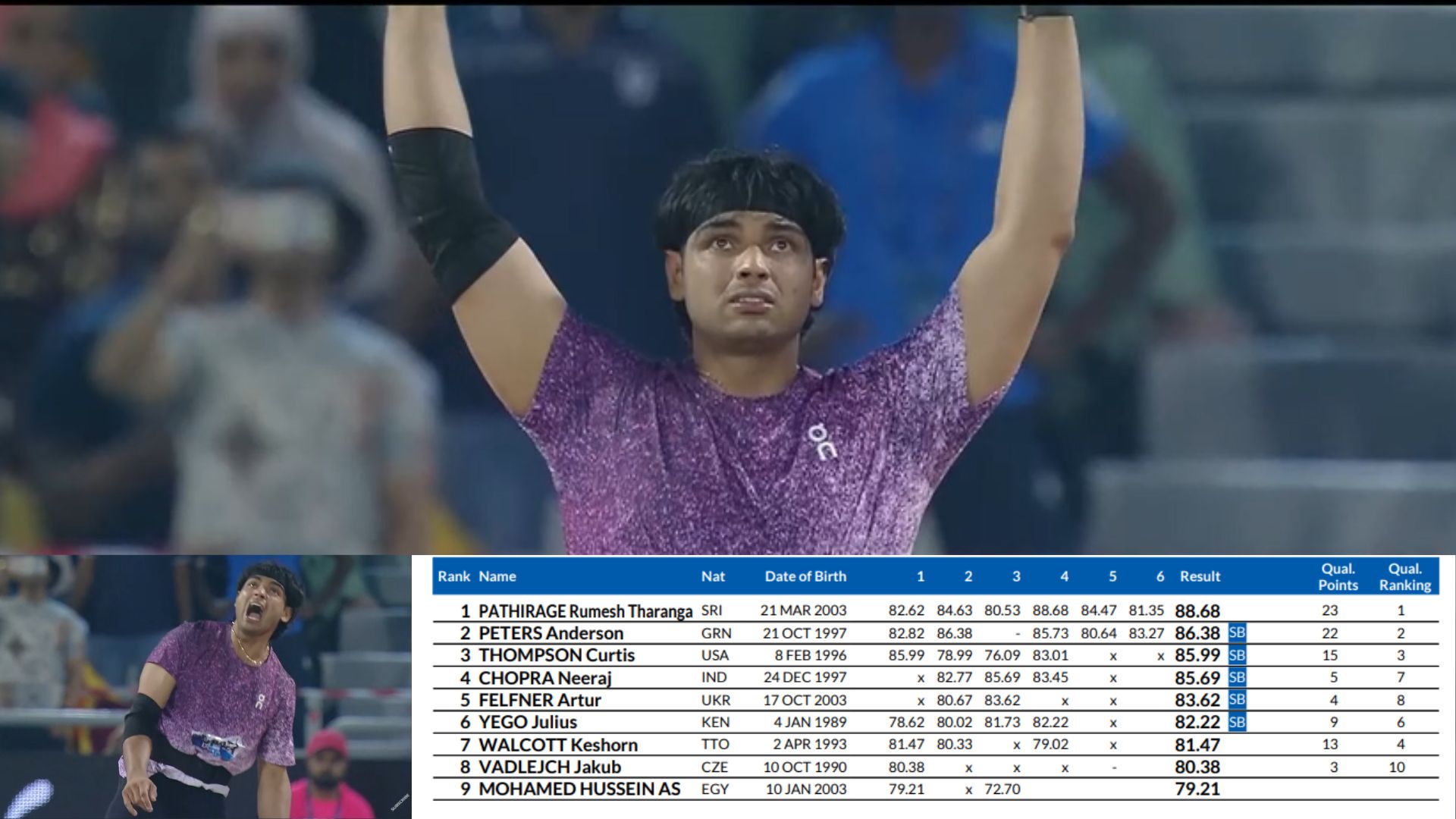
India’s golden boy Neeraj Chopra made a solid return to competition, opening his 2026 season with a best throw of 85.69m to finish fourth at the Doha Diamond League.
Competing for the first time in 274 days since the World Athletics Championships in Tokyo, Chopra showed encouraging signs despite facing a world-class field featuring several 90m throwers.
The Indian star began his campaign with a foul before quickly settling into rhythm. He breached the Commonwealth Games 2026 qualification standard of 82.61m with his second attempt of 82.77m and later improved to 85.69m in the third round, which currently stands as the best throw by an Indian javelin thrower this season.
His series: X, 82.77m, 85.69m, 83.45m, X
Chopra took only five attempts, as only the top three athletes after five rounds were awarded a sixth and final throw.
While Chopra narrowly missed the Top 3, the outing marked an important step in his comeback and provided valuable competition exposure ahead of a packed season that includes the Commonwealth Games and Asian Games.
Meanwhile, 23-year-old Sri Lankan sensation Rumesh Tharanga Pathirage continued his stunning 2026 season, defeating an elite javelin field to win the Doha Diamond League with a massive 88.68m throw, produced in the fourth round. Anderson Peters finished second with 86.38m, while Curtis Thompson took third place with 85.99m.
Olympic and World Champion Neeraj Chopra will finally make his comeback tomorrow at the Doha Diamond League 2026.
Speaking ahead of the Doha Diamond League at the pre-event press conference, Chopra opened up about his injury struggles, coaching transition, future plans, and expectations from a packed 2026 season that includes the Commonwealth Games and Asian Games.
The Indian javelin star said the decision to compete in Doha was made only after successfully completing his rehabilitation process. Chopra revealed that he had been dealing with injuries since before last year’s Tokyo World Championships and only resumed throwing around six weeks ago.
“I had some injury before Tokyo. We worked a lot on recovery. In an athlete’s life, when you try to save one injury, sometimes another problem appears. I had issues with my ankle and shoulder as well. We started throwing one-and-a-half months ago and decided to compete in Doha only after my final training session,” he said.
Doha holds special memories for Chopra, who crossed the coveted 90-metre mark for the first time at the venue last year. However, the 27-year-old believes that historic throw was not technically his best effort.
“Technically that throw was not that good. It was very fast from the arm, but if I had used my lower body better, maybe it could have gone two or three metres farther,” he explained.
Chopra also offered insight into his split with Jan Železný, under whom he achieved several milestones, including his first 90m throw. While expressing gratitude towards the three-time Olympic champion, Chopra said he felt the need to return to a more familiar training environment.
“Jan was a great athlete and a great coach. I’m happy that I broke 90 metres with him. But after Tokyo, I felt I needed to work more with my own ideas. Now I’m working with my first coach, Jaiveer Chaudhary. He has known me for 15-16 years and understands my journey from the beginning.”
The reigning world champion stressed that the current focus is not on major technical changes but rather on refining the style that originally made him successful. He is currently training under Jaiveer Chaudhary, his first coach and the first person who put a spear in his hand.
“I’m working on my natural technique. We are not doing anything very deep or complicated. We are focusing on what came naturally to me when I started throwing.”
Jaiveer himself is a former javelin thrower who competed alongside Neeraj and was his senior on the domestic circuit.
Looking ahead to the Commonwealth Games, Chopra predicted one of the strongest javelin competitions in recent history. With several Commonwealth athletes already throwing beyond 90 metres, he expects the event to rival even the biggest global championships.
Looking at the potential javelin field, the competition is shaping up to be one of the strongest ever:
Keshorn Walcott – 90.16m (PB)
Julius Yego – 92.72m
Rumesh Tharanga – 92.62m (WL)
Anderson Peters – 93.07m
Arshad Nadeem – 92.97m
Neeraj Chopra – 90.23m
Douw Smit – 84.57m
Keyshawn Strachan – 84.27m
Sumeda Ranasinghe – 85.78m
“Commonwealth will be not less than maybe the Olympics or World Championships. It will be a really tough competition,” Chopra said, referring to rivals such as Arshad Nadeem, Anderson Peters, Keshorn Walcott and Sri Lanka’s emerging star Rumesh Tharanga, who currently leads the world this season with a lifetime best throw of 92.62m.
The Indian ace also confirmed that the Asian Games remain firmly in his plans later this season.
Chopra was full of praise for Tharanga, who has emerged as one of the breakthrough performers in men’s javelin this year and holds the world-leading mark of 92.62m this season. He owns four of the world’s best throws in 2026:
92.62m (World Lead), 89.37m, 89.28m and 86.57m.
Even more impressively, five of the top 10 throws recorded worldwide in 2026 belong to Rumesh.
“He’s a really good guy and a good friend of mine. I’m very happy for him and for Sri Lanka. What he has achieved is amazing.”
Beyond competition, Chopra discussed the future of the Neeraj Chopra Classic, India’s first major athlete-led javelin event. Encouraged by a crowd of nearly 15,000 spectators at the inaugural edition, he hinted that future editions could expand beyond javelin.
“We didn’t expect so many people to come. In the future, maybe we can add more events. My team is working on different ideas, and we’ll announce them when everything is finalized.”
With a fresh coaching setup, renewed fitness, and major championships on the horizon, Chopra appears eager to begin a new chapter in his career while staying true to the fundamentals that made him one of the world’s greatest javelin throwers.
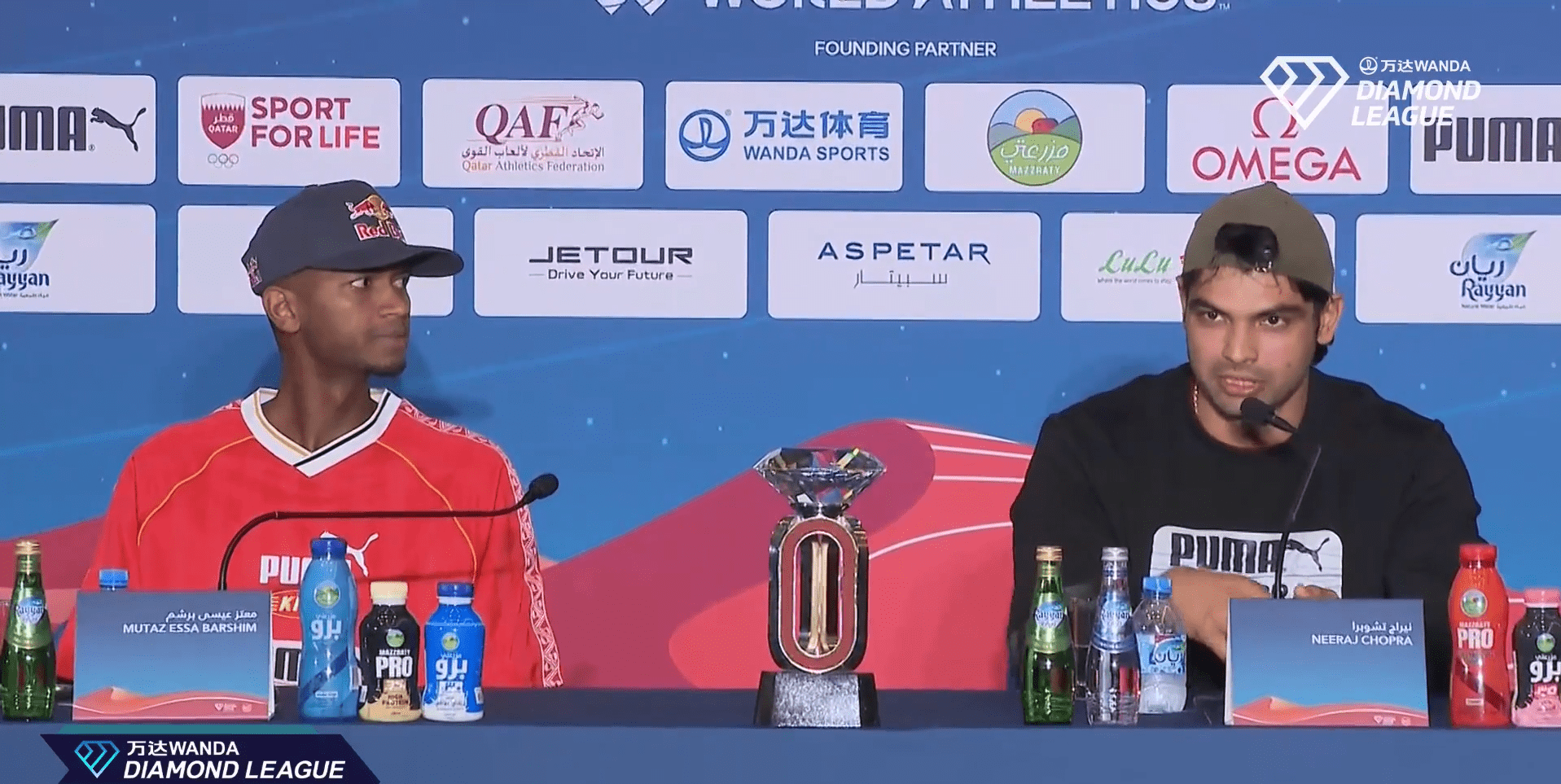
India’s only Olympics and World Champion Neeraj Chopra has finally made the comeback, he will be in action in Doha Diamond League on 19 – June 2026.
After his disappointing last season where he ended finishing 8th at the World Athletics Championships 2025 with a best effort of 84.03m. Later while talking to nnis Sports Neeraj reveal he had been struggling from Back Injury since a long time.
Last year the 2023 World champion saw almost everything, he breached the 90m mark for the 1st time in his life at the same venue from which he will be starting this season Doha, parted ways with long term coach Bartonietz Klaus, teamed up with World record holder Jan Železný under him he breached the 90m barrier.
But this season he has to show something more as before starting this season he has again did some major changes in his career, he parted ways with Jan Železný and has joined his 1st coach Jaiveer Chaudhary for the upcoming season has left with long partnership with JSW sports and launched his own Athletes Management company Vel Sports.
Although no one had any clue from when he will be starting his season, AFI former president and current spokesperson Adille Sumariwalla while announcing the India’s CWG squad included Neeraj in the squad with a term he will have to breach the qualification which is at 82.61m. Just days back his name appears on the Doha Diamond league Start list with a social story confirming hi participation in the event.
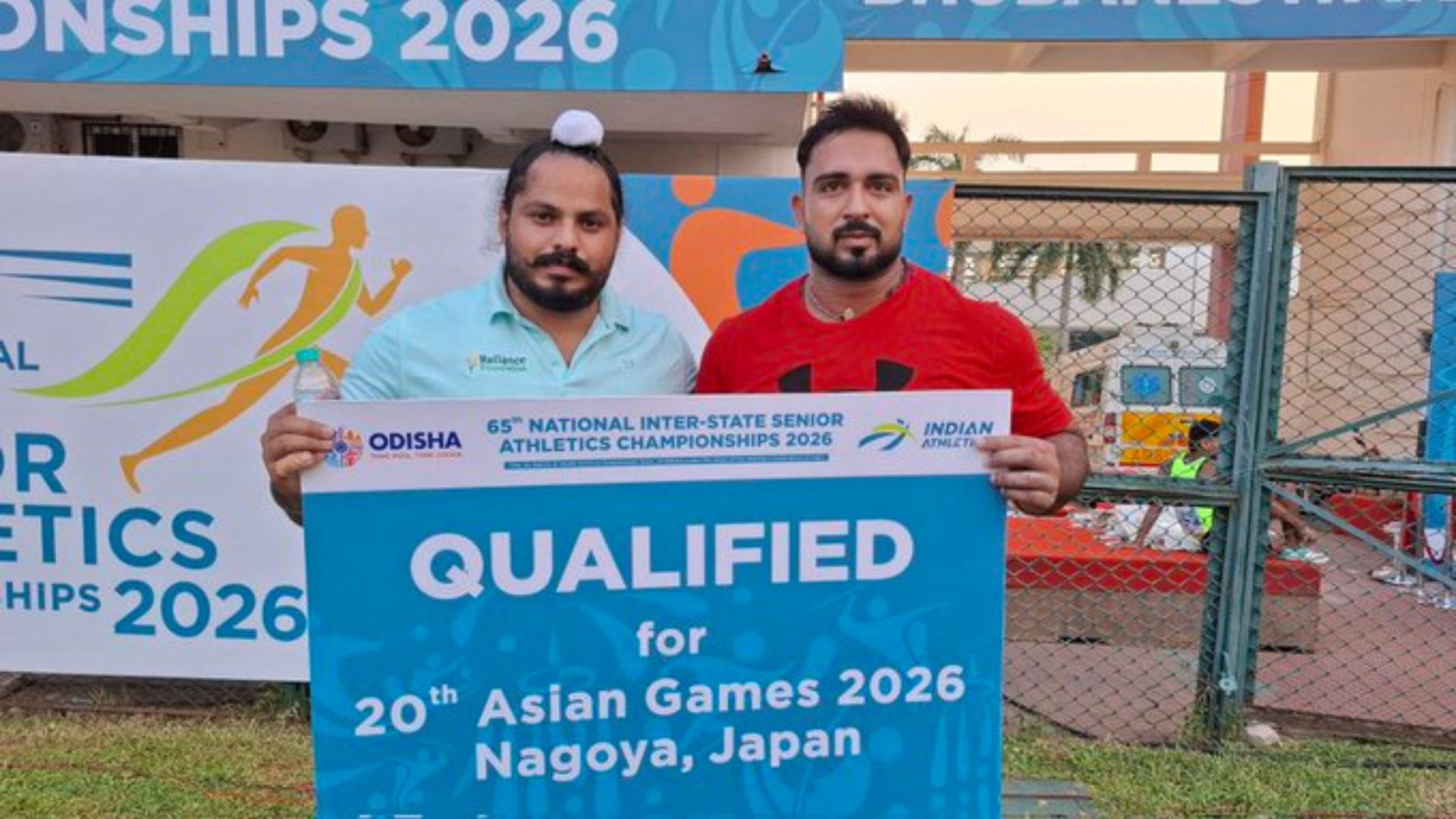
However, if Neeraj is unable to achieve the qualification standard in Doha, there is another route available. He could return to India and compete at the Inter-State Senior Athletics Championships, which will be held at the Kalinga Stadium in Bhubaneswar, Odisha, from June 24 to 28, 2026.
The World Athletics ‘Category B ‘national meet would provide Neeraj with a domestic platform to chase the qualification mark and secure his place at the Commonwealth Games. If he succeeds, India could potentially have three men’s javelin throwers at the Games, with Rohit Yadav and Yashvir already having surpassed the qualifying standard earlier this season.
But It will be a hard but best place to start his Season as Neeraj had in past registered his life’s bets throw at the venue:
2025: 90.23m (NR)
2024: 88.36m
2023: 88.67m
2018: 87.43m (NR)
The Venue is known to be the throwers Paradise, as it has produced the 3rd and 5th longest javelin throws of all time, and this years lineup is promising something big is coming this season to from the Qatar’s Capital.
This year Doha Diamond league Line-up along with their PB:
Neeraj Chopra – PB: 90.23m
Artur Felfner – PB: 84.32m
Ahmed Sameh – PB: 83.10m
Rumesh Tharanga – PB: 92.62m
Anderson Peters – PB: 93.07m
Curtis Thompson – PB: 87.76m
Jakub Vadlejch – PB: 90.88m
Keshorn Walcott – PB: 90.16m
Julius Yego – PB: 92.72m
Neeraj will have the challenge, although the Olympics Champion Arshad Nadeem is missing the meet, another 23 Year old South Asian Sri Lanka’s 23-year-old sensation, Rumesh Tharanga Pathiragae will be one to look out for, the current world leader with a massive throw of 92.62m along with some former rivals like Jakub Vadlejch, Anderson Peters etc
Although Doha’s Perfomance will be made the clear picture for Neeraj’s upcoming season whoch holds 2 Major evets like CWG 2026 and Asian Games 2026.
Till then, the Indian fans will be waiting with their fingers crossed for the Spear champion, the golden boy of India
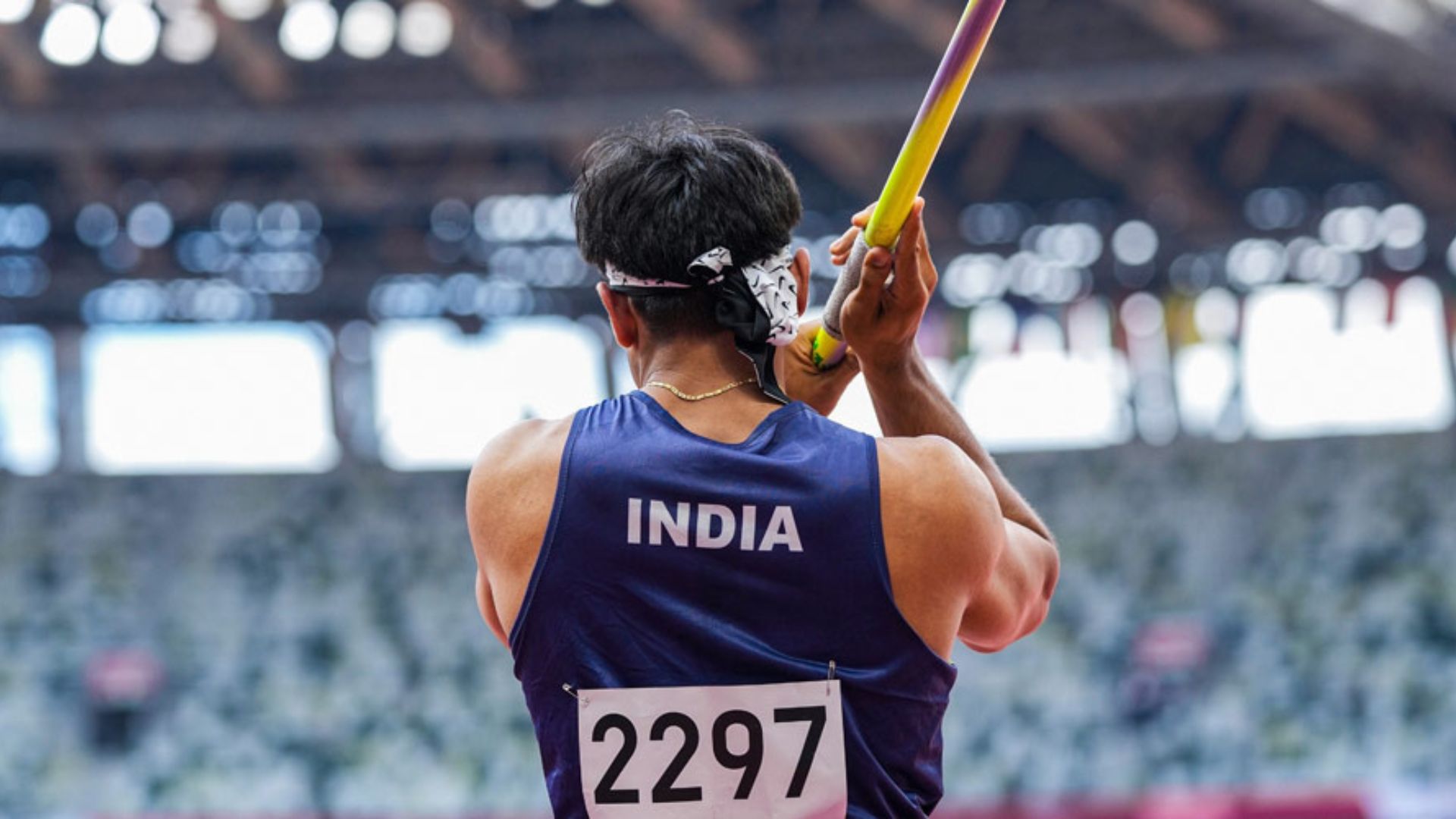
Rohit Yadav produced his finest performance in recent years at the Indian Athletics Series–9, launching the javelin 83.76m with his very first attempt to secure victory and achieve the qualification standard for the 2026 Commonwealth Games.
The throw marked a new lifetime best for the Indian javelin thrower and made him the first Indian male javelin athlete to breach the Commonwealth Games 2026 qualification standard, an important milestone as athletes begin securing places for Glasgow.
 Lifetime Best – 83.76m
CWG 2026 Qualification Standard Achieved
First Indian men’s javelin thrower to achieve the mark
The significance of the performance was evident from the outset. Rohit opened the competition with the winning throw and no athlete was able to better the mark, underlining both his consistency and ability to deliver under pressure.
For Rohit, the result represents an important step in a career that has shown immense promise but has also been disrupted by injury setbacks.
The Haryana thrower first emerged as one of India’s leading javelin prospects after winning the silver medal at the 2017 Asian Athletics Championships in Bhubaneswar. At the time, he was seen as one of the brightest young talents in Indian athletics and part of a new generation of throwers beginning to raise the standard of the event nationally.
He later represented India at major international competitions, including the 2018 Asian Games, where he finished fifth in a high-quality field.
However, a series of injuries interrupted his progress during crucial years of his career. While several of his contemporaries continued to improve, Rohit spent extended periods away from competition and struggled to rediscover the form that had made him one of the country’s top throwers.
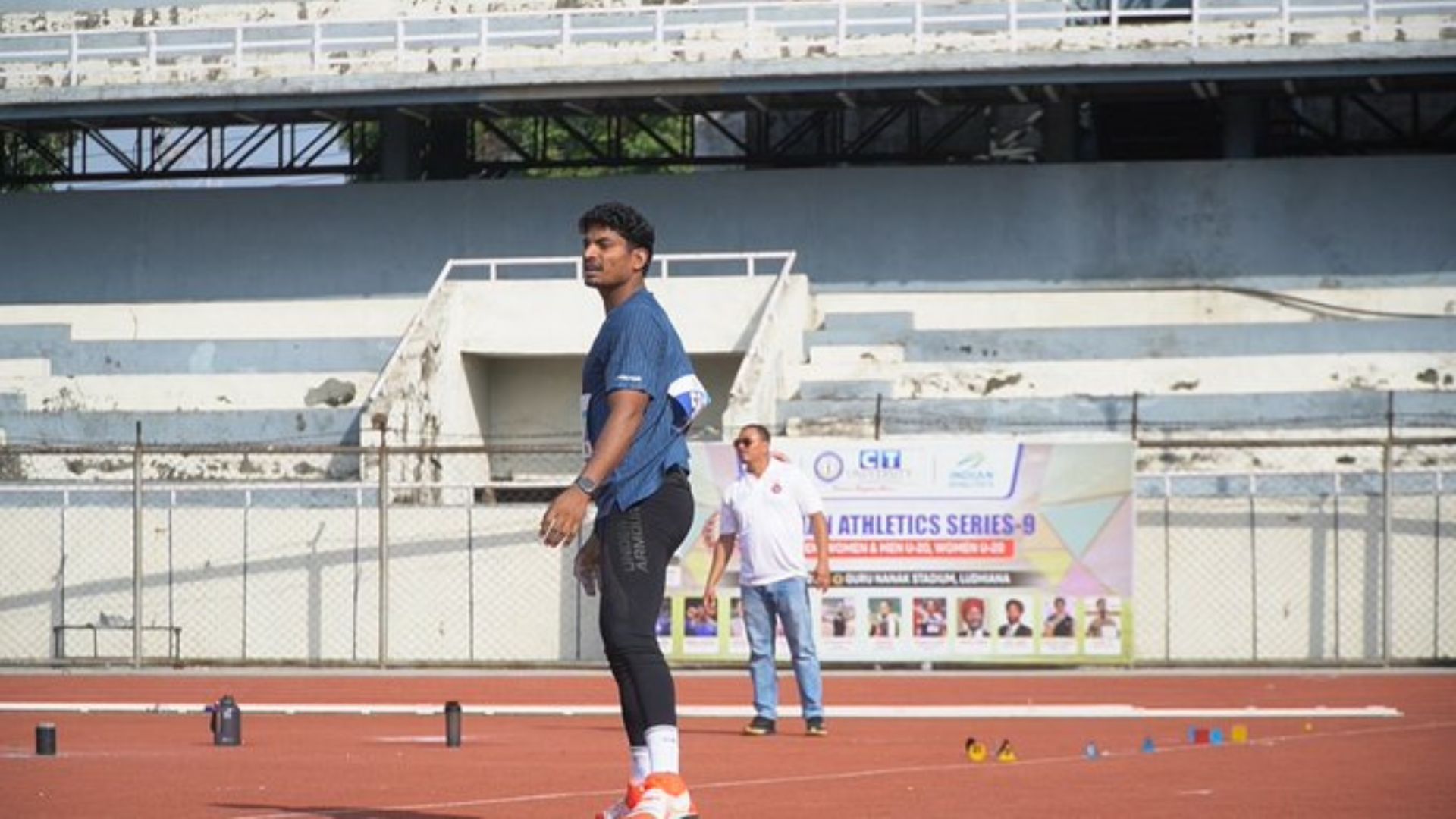
Haryana’s rising throwing talent Nishchay continued his impressive run of form by clinching the men’s U20 discus throw title at the Indian Series-9 held in Ludhiana while comfortably achieving the qualification standard for the 2026 World U20 Athletics Championships.
The youngster produced a best throw of 59.12m, securing victory and reinforcing his status as one of India’s most promising field event athletes.
Nishchay’s performance was built on remarkable consistency throughout the competition. His series read:
54.33m, 55.93m, 57.03m, X, 56.81m, 59.12m
The winning mark comfortably cleared the qualification requirement for the World U20 Championships, adding another milestone to what has already been a breakthrough season for the Haryana athlete.
Nishchay arrived at the competition carrying strong momentum after a sensational performance at the Asian U20 Athletics Championships, where he claimed the silver medal and announced himself on the continental stage.
During that competition, he shattered the Indian U20 National Record with a massive throw of 60.10m, becoming one of the few Indian junior discus throwers to breach the coveted 60-metre barrier.
At just U20 level, consistently producing throws close to 60 metres places him among the country’s most exciting young talents. More importantly, he has demonstrated the ability to deliver under pressure in major competitions, a trait that often separates promising juniors from future international performers.
With the qualification standard now secured, Nishchay can shift his focus towards preparing for the 2026 World U20 Championships.