
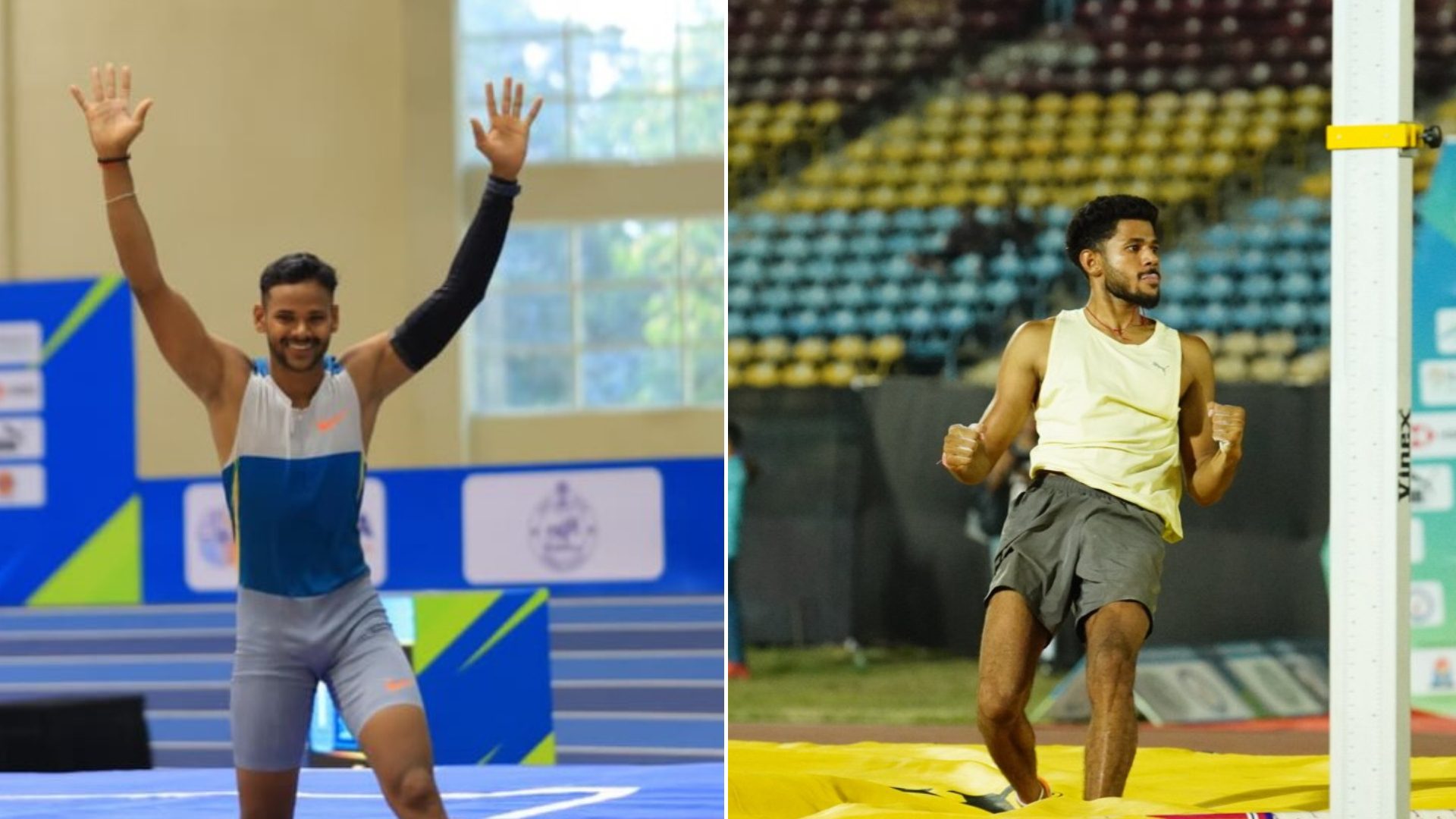
India will have two exciting young athletes in the men’s pole vault at the Commonwealth Games 2026, with Dev Kumar Meena and Kuldeep Kumar set to represent the country in an event that has witnessed remarkable progress for Indian athletics this season.
Both vaulters have enjoyed breakthrough campaigns in 2026, producing career-best performances that have elevated them among the leading Commonwealth competitors. Dev Kumar Meena enters the Games with a lifetime best of 5.46m, while Kuldeep Kumar has cleared 5.45m, placing them eighth and ninth, respectively, among athletes selected for the Commonwealth Games.
The season rankings among selected Commonwealth athletes are led by Australia’s Kurtis Marschall, who has produced a world-class clearance of 6.00m. Great Britain’s Owen Heard follows with 5.71m, while Kyle Rademeyer of South Africa occupies third with 5.60m. Dev and Kuldeep are the next two athletes on the list, highlighting India’s growing competitiveness in the discipline.
The rise of the Indian duo has been one of the standout stories of the domestic athletics season. Dev and Kuldeep have both achieved lifetime bests and consistently raised the standard of men’s pole vault in the country through a series of outstanding performances.
Their achievements extend beyond individual milestones. Together, Dev Kumar Meena and Kuldeep Kumar have broken the Indian men’s pole vault national record at least three times this season, reflecting the intense competition between the pair and the rapid development of the event in India. Their performances have helped redefine national standards and signalled a new era for Indian pole vaulting.
Although the Commonwealth field features established international competitors, Dev and Kuldeep have shown that they are capable of competing at a high level. Their consistent improvement throughout the season gives India genuine reason for optimism as they prepare for Glasgow.
With two in-form vaulters ranked among the Commonwealth’s leading selected athletes, India heads into the Games with growing confidence that Dev Kumar Meena and Kuldeep Kumar can continue their impressive rise on the international stage.
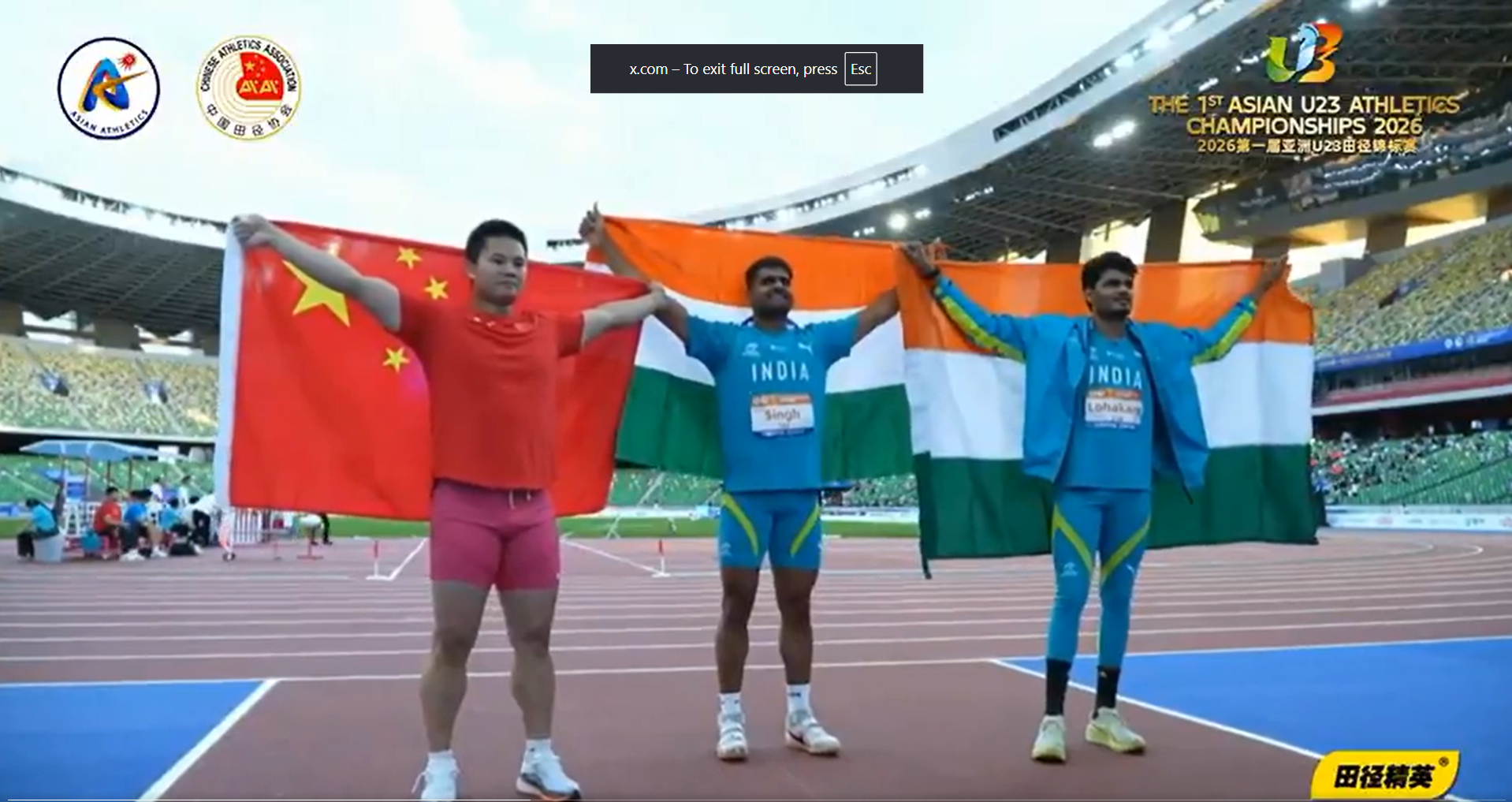
India celebrated a successful outing in the men’s javelin throw at the 2026 Asian U23 Athletics Championships, with Anand Singh winning the gold medal and Shivam securing bronze.
Anand Singh produced a stunning lifetime-best throw of 80.57m to claim the Asian U23 title, becoming India’s newest member of the prestigious 80m club. His championship-winning effort marked the first time he crossed the 80-metre barrier, improving significantly on his previous personal best.
China’s Wang Xiaobo finished second with a throw of 79.41m, while India’s Shivam claimed the bronze medal with 77.70m, completing a double podium finish for the country.
The gold and bronze medals underline India’s growing strength in men’s javelin throw, with Anand’s breakthrough performance emerging as one of the standout moments of the championships.
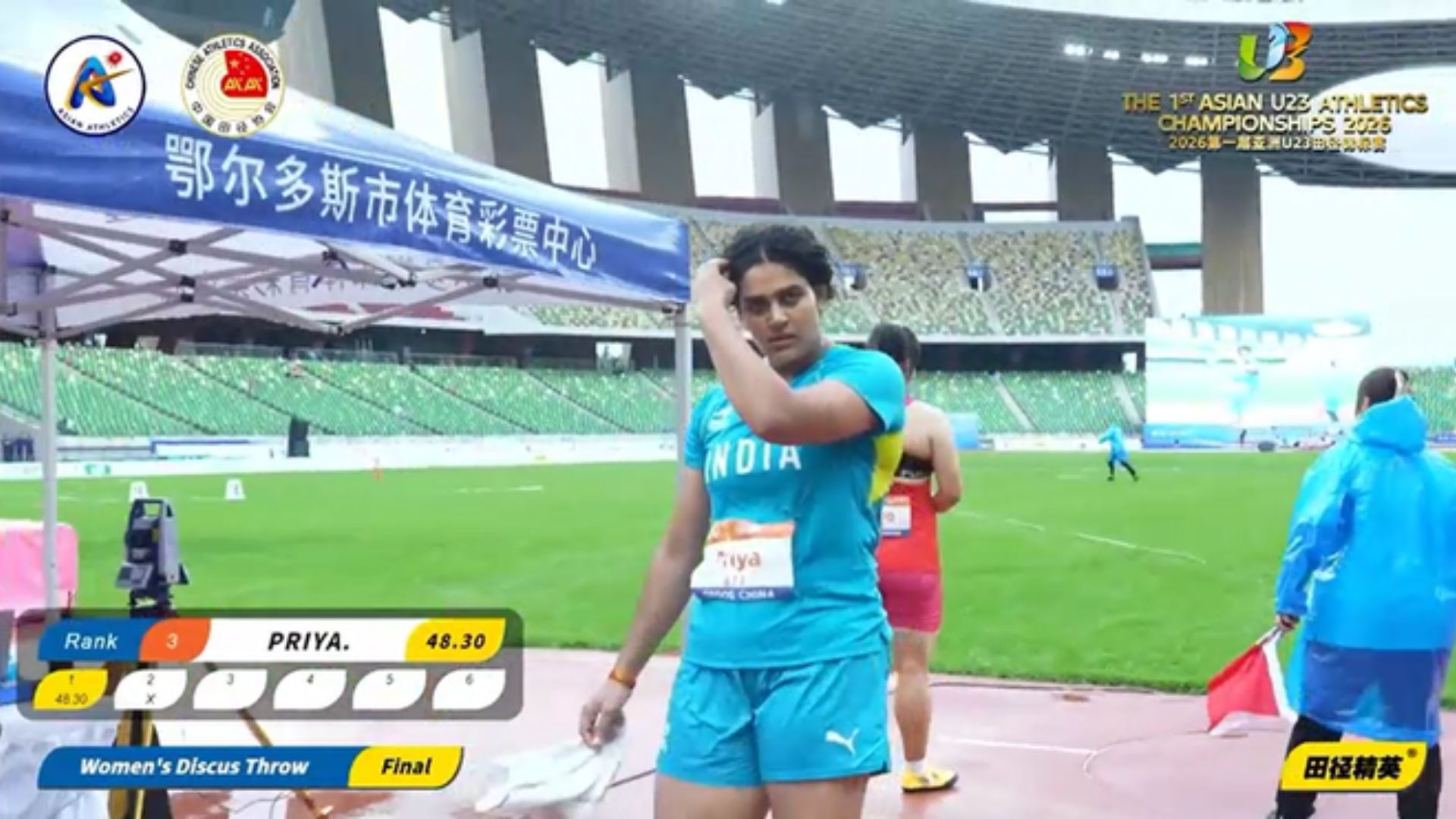
India continued its medal-winning campaign at the inaugural Asian U23 Athletics Championships 2026 as Priya Sheoran secured the bronze medal in the women’s discus throw in Ordos, China.
Priya produced a best effort of 50.44m to finish third in the competition, earning another podium finish for the Indian contingent. Competing against a strong field of Asia’s leading young throwers, she delivered a consistent series before her best throw secured the bronze medal.
The gold medal was claimed by China’s Zhichao Jiang, who dominated the competition with a winning throw of 58.63m. Her compatriot Jingru Huang took the silver medal after recording 55.33m, completing a one-two finish for the host nation.
Despite the strong challenge posed by the Chinese throwers, Priya held her own to secure a place on the podium and add another medal to India’s tally at the continental championships. Her bronze-medal performance reflects the growing strength of India’s emerging athletes in the throwing events and highlights the depth of talent coming through the national system.
The Asian U23 Athletics Championships serve as an important platform for young athletes to compete against the continent’s best while gaining valuable international experience ahead of senior-level competitions. Priya’s podium finish is another encouraging sign for Indian athletics, demonstrating the country’s continued progress across field events at the age-group level.
Winning a medal at the inaugural edition of the championships marks an important milestone in Priya’s career and provides valuable confidence for future international competitions. Her composed performance under championship conditions ensured India remained among the medal-winning nations as the competition progressed in Ordos.
With Priya Sheoran’s bronze medal, India further strengthened its medal tally at the historic first edition of the Asian U23 Athletics Championships. Her achievement adds to an impressive campaign by the Indian contingent and underlines the promising future of the country’s young field-event athletes on the continental stage.
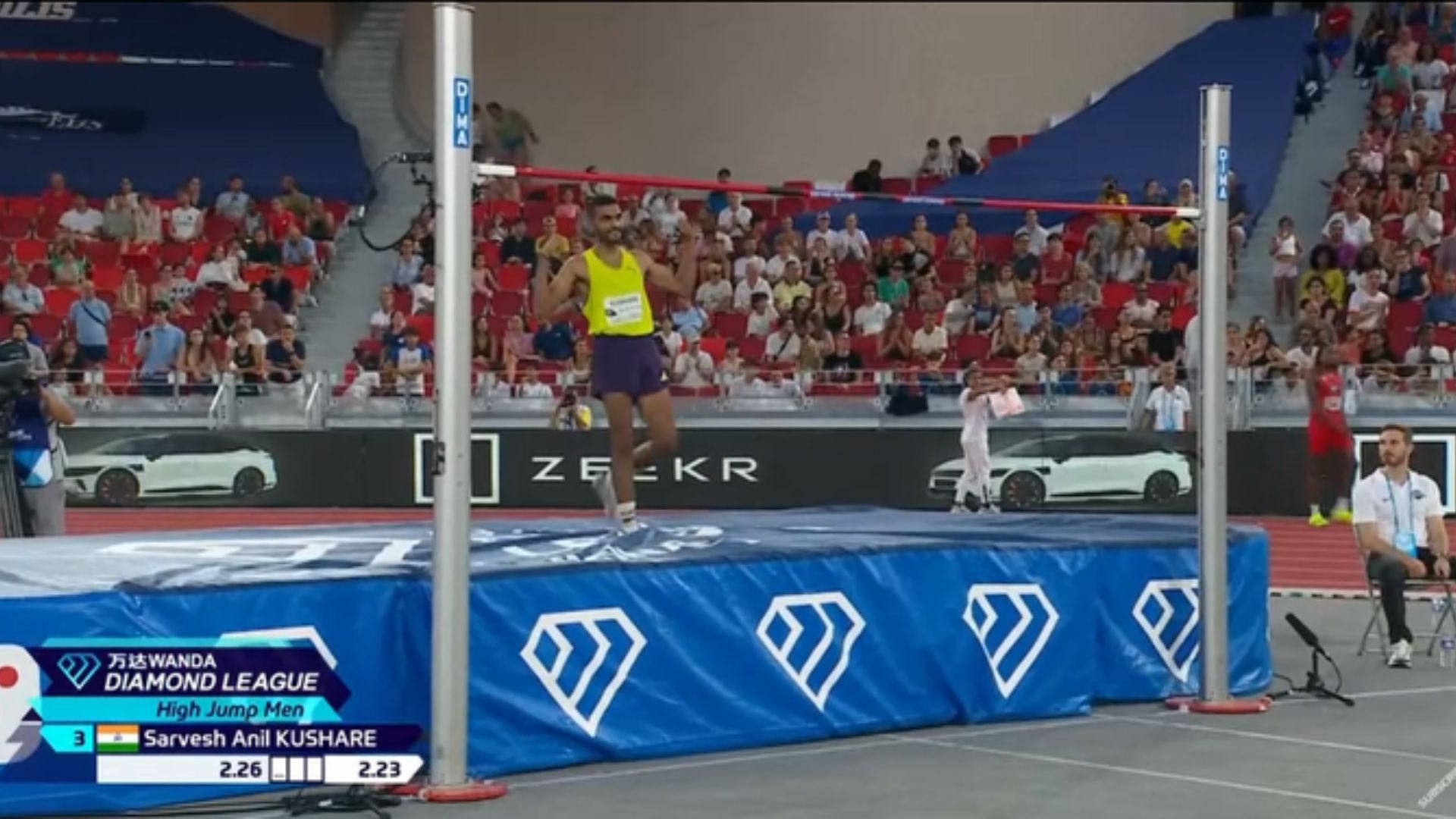
India’s national high jump record holder, Sarvesh Kushare, produced a memorable performance on his Diamond League debut, finishing third at the Monaco Diamond League 2026 with a best clearance of 2.26m.
Competing against some of the world’s finest high jumpers, Sarvesh delivered a flawless series through 2.12m, 2.16m, 2.20m, 2.23m, and 2.26m, clearing every height on his first attempt. At one stage of the competition, only Sarvesh and eventual champion Oleh Doroshchuk had maintained a perfect record through 2.26m.
Sarvesh then made three strong attempts at 2.28m but was unable to clear the height, bringing an end to an outstanding debut on the prestigious Diamond League circuit.
Ukraine’s Oleh Doroshchuk claimed the men’s high jump title with a clearance of 2.32m, while Great Britain’s Jack Kimani finished second with 2.30m. Sarvesh secured third place with 2.26m, marking one of the best international performances of his career.
Men’s High Jump Results – Monaco Diamond League 2026
1. Oleh Doroshchuk (Ukraine) – 2.32m
2. Jack Kimani (Great Britain) – 2.30m
3. Sarvesh Kushare (India) – 2.26m
Sarvesh entered the competition in outstanding form, having broken the Indian national high jump record with a clearance of 2.31m in his previous meet. He has already been selected to represent India at the 2026 Commonwealth Games and is also expected to feature at the 2026 Asian Games, with the athletics squad yet to be officially announced.
India’s Pooja will be one of the country’s brightest young medal hopes in the women’s high jump at the Commonwealth Games 2026, following a breakthrough season that has established her among the leading jumpers in the Commonwealth.
The 19-year-old has enjoyed a remarkable 2026 campaign, consistently raising the bar with a series of career-best performances. Her season-best clearance of 1.93m currently ranks seventh among Commonwealth athletes this year, placing her in contention in one of the strongest women’s high jump fields assembled for the Games.
Pooja’s rise has been one of the standout stories of Indian athletics this season. She registered two lifetime bests, broke the Indian U20 national record twice, and surpassed the senior national record mark with her clearance of 1.93m. The rapid progression has highlighted both her immense talent and her ability to perform under pressure against top-class competition.
The Commonwealth season rankings are headed by Australia’s Eleanor Patterson, who has cleared 2.00m, followed closely by compatriot Nicola Olyslagers at 1.99m. Nigeria’s Temitope Simbiat Adeshina occupies third with 1.97m, while Lamara Distin of Jamaica and Rose Yeboah of Ghana have both recorded 1.96m. Australia’s Izobelle Louison-Roe follows with 1.95m, before Pooja rounds out the top seven at 1.93m.
Although she will be competing against several world-class athletes, Pooja has shown throughout the season that she is capable of rising to the occasion. Her consistent improvement and fearless approach have made her one of India’s most exciting field-event prospects heading into Glasgow.
With a season-best that ranks among the Commonwealth’s elite and a breakthrough campaign already behind her, Pooja enters the Games with growing confidence. If she can reproduce her best form on the biggest stage, the young Indian high jumper has every opportunity to challenge for a place on the podium and continue her remarkable rise in international athletics.
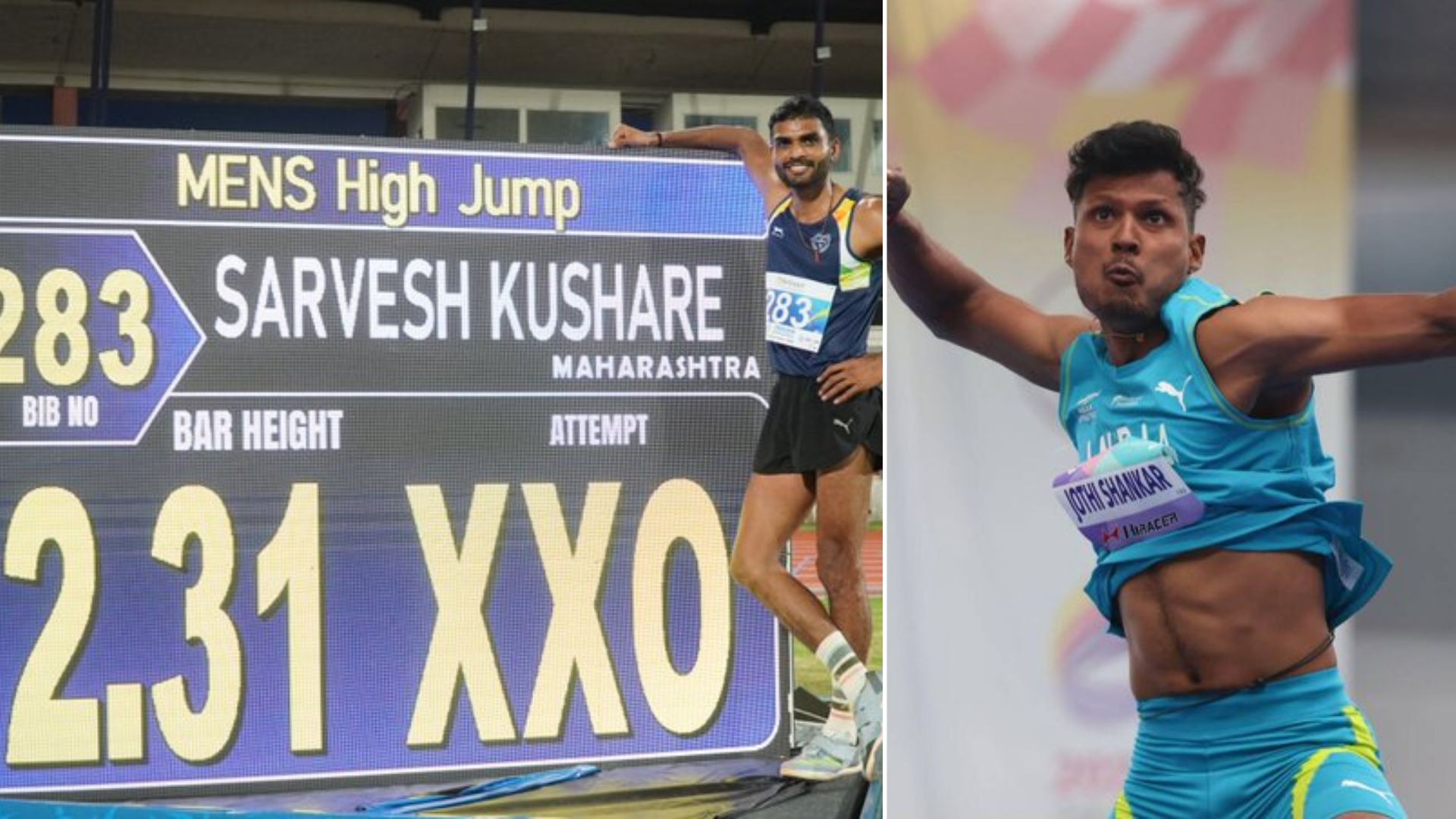
India heads into the Commonwealth Games 2026 with strong medal aspirations in the men’s high jump, where Sarvesh Kushare and Aadarsh Ram will represent the country in a highly competitive field.
Leading India’s challenge is Sarvesh Kushare, who has enjoyed an outstanding 2026 season. His season-best clearance of 2.31m places him joint-first among all Commonwealth athletes this year, alongside Australia’s Kimani Jack. The mark underlines Sarvesh’s consistency and positions him as one of the leading contenders for the podium in Glasgow.
Joining him is Aadarsh Ram, who has also impressed this season with a best clearance of 2.27m. His performance ranks sixth among Commonwealth athletes, putting him firmly in the mix in what promises to be one of the closest high jump competitions of the Games.
The season rankings reflect the depth of talent expected in Glasgow. Australia’s Kimani Jack shares the top spot with Sarvesh at 2.31m, while Jamaica’s Romaine Beckford has cleared 2.30m. Olympic champion Hamish Kerr of New Zealand and Australia’s Yual Reath have both recorded 2.28m, with Aadarsh completing the top six at 2.27m.
Notably, all six athletes on the season list have been selected by their respective countries for the Commonwealth Games, ensuring that the event will feature every leading performer from the 2026 season.
For India, the combination of Sarvesh’s joint-leading mark and Aadarsh’s consistent performances provides genuine optimism. Sarvesh enters the competition as one of the favourites after matching the best clearance among Commonwealth athletes this season, while Aadarsh has shown that he possesses the ability to challenge the strongest field of his career.
With two athletes ranked among the Commonwealth’s top six and both arriving in Glasgow in excellent form, India has every reason to believe it can contend for medals in the men’s high jump at the 2026 Commonwealth Games.
For more visit Commonwealth Games 2026
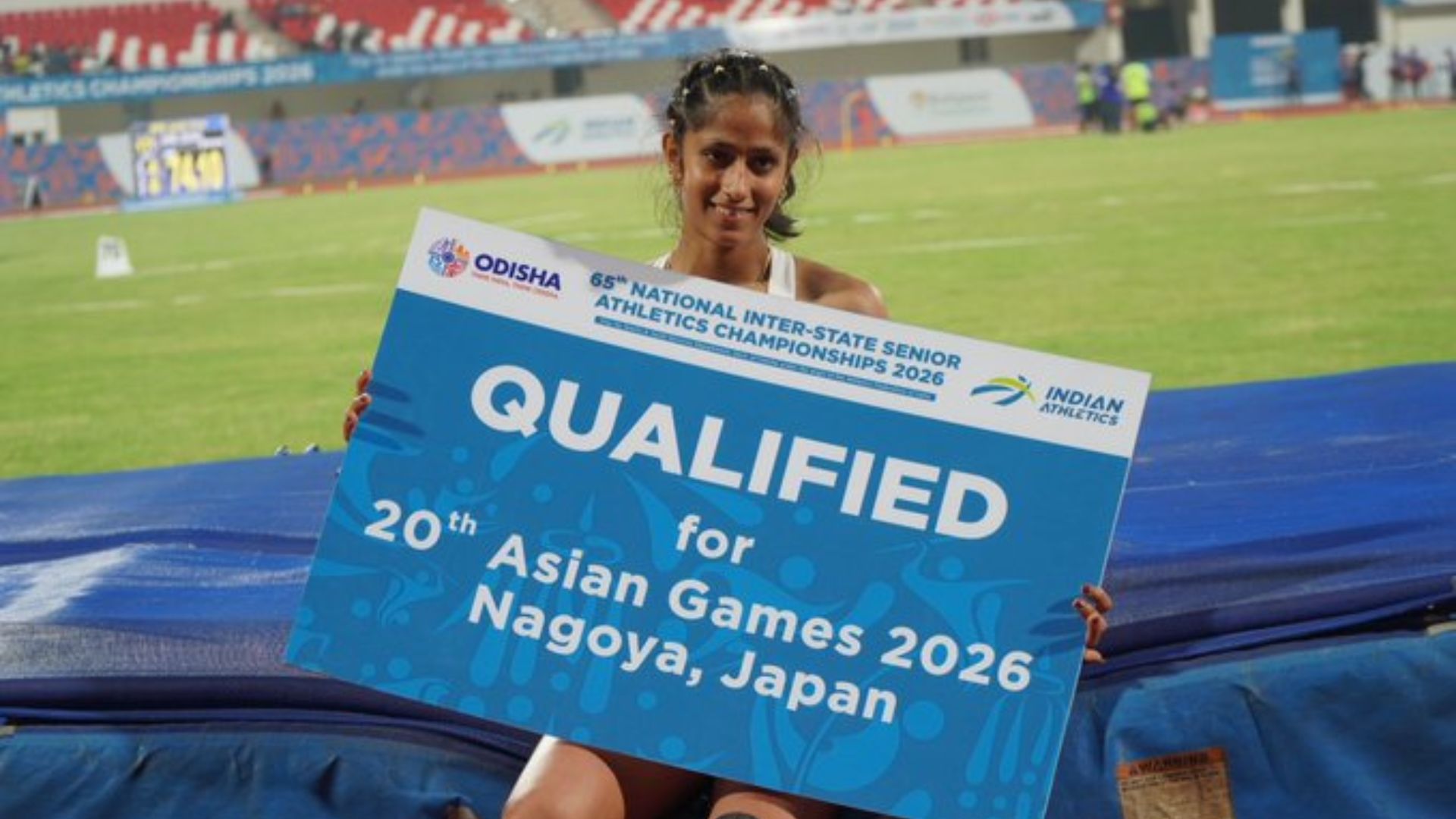
Asian champion Pooja continued her impressive run of form by winning the women’s high jump title at the 65th National Inter-State Senior Athletics Championships 2026, clearing 1.83m to secure the gold medal and achieve the Asian Games qualification standard.
Competing against the country’s top high jumpers, Pooja produced a composed and confident performance throughout the competition. Her successful clearance at 1.83m proved enough to clinch the Interstate title while also booking her place for the upcoming Asian Games.
Having secured victory and the qualification mark, Pooja raised the bar to 1.90m in pursuit of an even bigger achievement. The talented youngster made three determined attempts at the height but was unable to clear it on this occasion. Despite falling short of 1.90m, her performance at 1.83m stood out as another significant milestone in an already outstanding season.
The victory further strengthens Pooja’s growing reputation as one of India’s brightest young field-event athletes. Already an Asian champion, she has consistently demonstrated the ability to perform on major stages, and her latest success at the country’s premier domestic championships reinforces her status among the nation’s elite high jumpers.
The Interstate Championships have once again provided athletes with an opportunity to secure qualification standards ahead of major international events, and Pooja made the most of the occasion with a championship-winning display. Her consistency, technical execution, and composure under pressure were evident throughout the competition.
With the Asian Games qualification now secured, Pooja is set for an exciting international season. She is scheduled to represent India at the World U20 Championships, the Commonwealth Games 2026, and the Asian Games 2026, making this one of the busiest and most significant years of her young career.
Winning the Interstate title while qualifying for the Asian Games is another major achievement for Pooja, and her continued progress suggests she will be one of India’s key athletes to watch on the international stage in the months ahead.
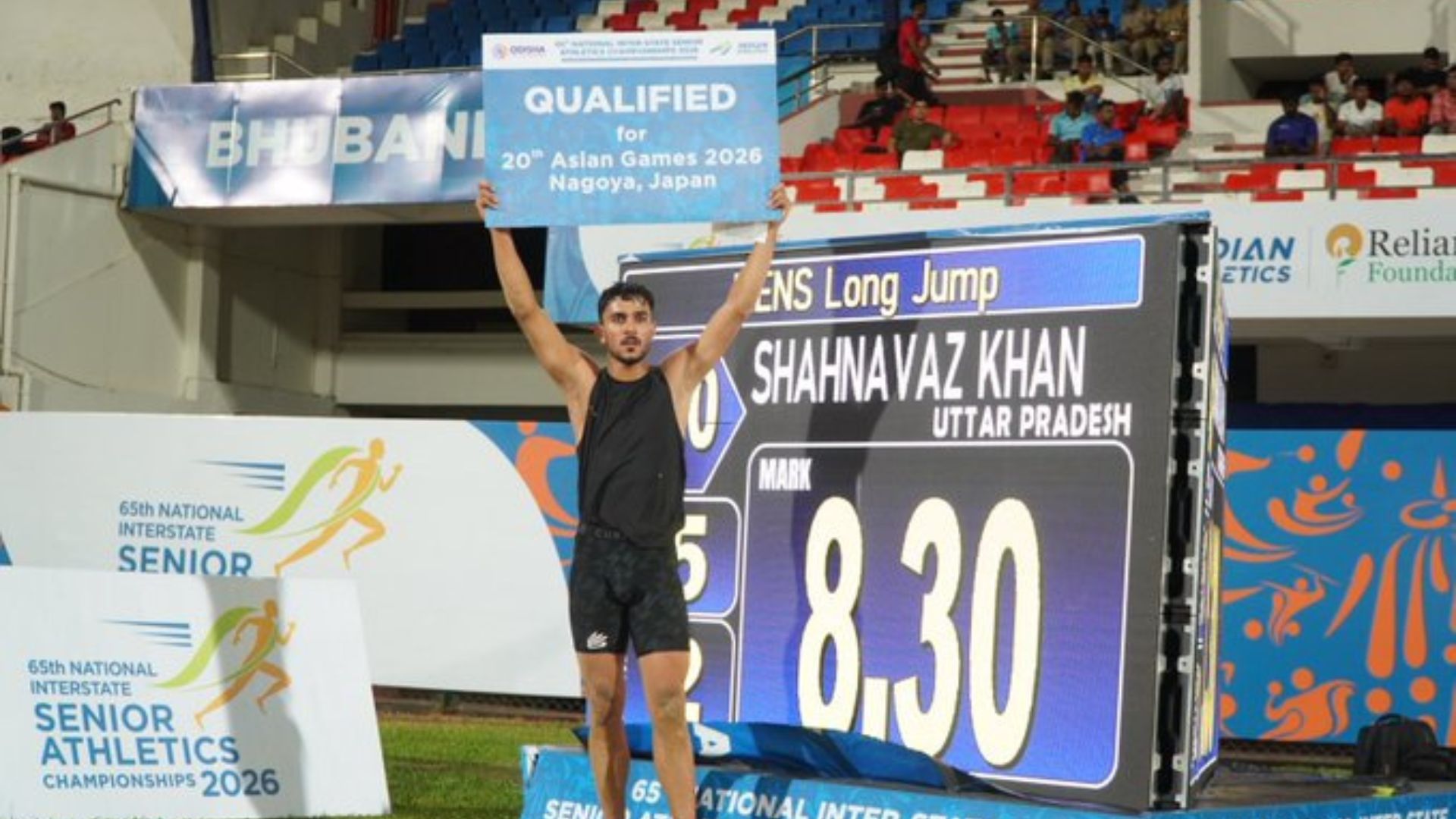
Eighteen-year-old Shahnavaz continued his remarkable rise in Indian athletics with a sensational performance at the 65th National Inter-State Senior Athletics Championships 2026, producing a lifetime-best jump of 8.30m to shatter the Indian U20 national record and secure qualification for the upcoming Asian Games.
Competing against some of the country’s finest long jumpers, the youngster delivered the performance of his career when it mattered most. His impressive leap not only earned him the Asian Games qualification standard but also established a new benchmark in Indian U20 athletics.
The 8.30m effort stands as India’s all-time best performance in the U20 category, underlining the extraordinary nature of his achievement. On the continental stage, the mark ranks as the second-best U20 performance in Asian history, while globally it is the seventh-best U20 mark of all time. These statistics place Shahnavaz among the most promising young long jumpers in the world.
The record-breaking jump also represented a new lifetime best, further highlighting the rapid progress the 18-year-old has made over the course of the season. Shahnavaz has been in exceptional form throughout the year, consistently improving his performances and registering multiple personal bests across competitions.
His latest achievement at the Interstate Championships confirms his emergence as one of India’s brightest young athletics prospects. Delivering such a high-quality performance on one of the country’s biggest domestic stages reflects both his talent and his ability to compete under pressure.
The Interstate Championships have produced several memorable performances this season, but Shahnavaz’s record-breaking leap stands among the most significant. By rewriting the Indian U20 record and comfortably surpassing the Asian Games qualification standard, he has announced himself as a serious contender for future international success.
With youth on his side and confidence soaring after this historic performance, Shahnavaz has taken a major step forward in his career. His outstanding 8.30m jump is not only a milestone for Indian athletics but also a glimpse of an exciting future for one of the nation’s most promising young stars.
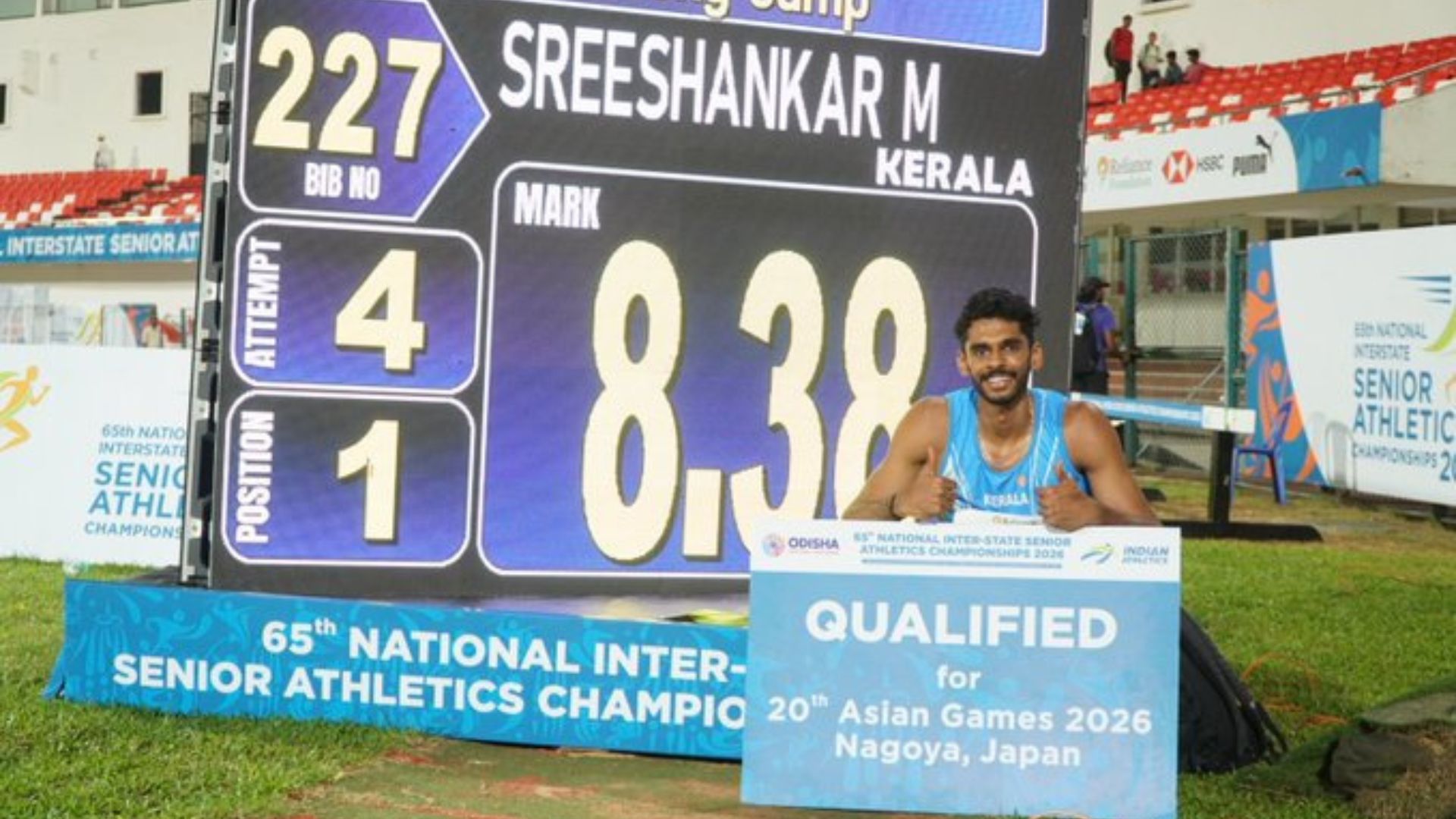
Murali Sreeshankar announced his return in spectacular fashion at the 65th National Inter-State Senior Athletics Championships 2026, producing a sensational 8.38m leap to win the men’s long jump title and secure qualification for the upcoming Asian Games.
Competing at one of India’s most important domestic meets, Sreeshankar delivered when it mattered most. His winning jump of 8.38m not only earned him the national title but also reaffirmed his place among the country’s greatest long jumpers. The effort stands as India’s third-best long jump of all time and ranks as the second-best jump of his career, highlighting the significance of his performance.
The mark also carries major international importance. Sreeshankar’s 8.38m leap is currently the best performance in Asia this season and the ninth-best mark in the world this season, placing him among the leading long jumpers on the global stage. Just as importantly, the jump comfortably surpassed the Asian Games qualification standard, ensuring his place among India’s top contenders for the continental event.
The performance marks a memorable comeback for the accomplished long jumper, who once again demonstrated his ability to deliver under pressure. Producing one of the finest jumps of his career at a crucial stage of the season reflects both his consistency and competitive temperament.
The Interstate Championships have witnessed several outstanding performances this year, but Sreeshankar’s 8.38m effort undoubtedly ranks among the highlights of the competition. Beyond securing the national title, the jump reinforces India’s growing stature in the horizontal jumps and provides a significant boost ahead of the Asian Games.
With the Asian Games approaching, Sreeshankar’s return to top form could not have come at a better time. By producing the best jump in Asia this season and one of the world’s leading performances, he has sent a clear message that he is once again ready to challenge at the highest level.
It was a comeback worthy of one of India’s finest long jumpers, and a performance that has reignited excitement ahead of the international season.
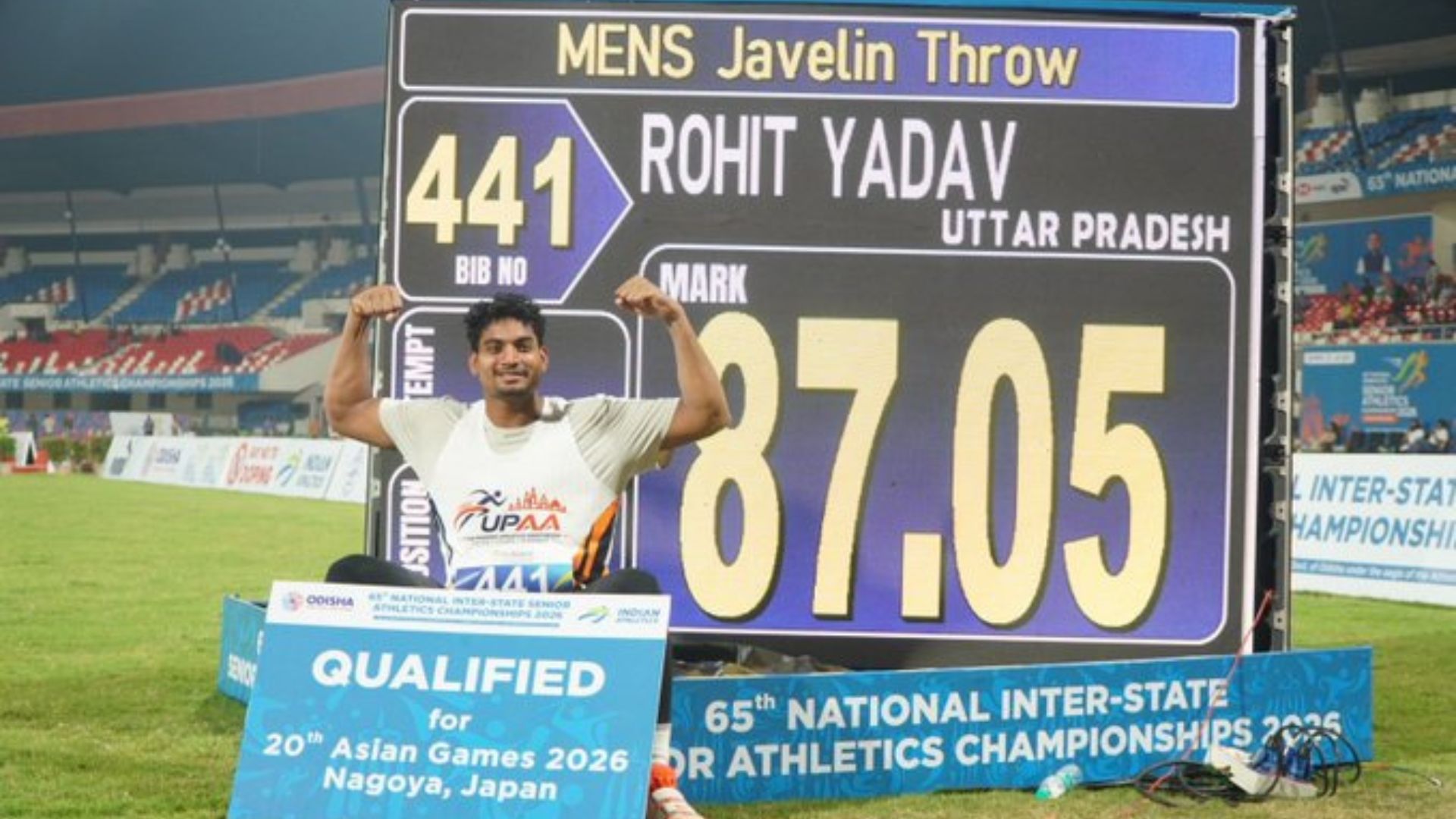
Rohit Yadav delivered the performance of his career at the 65th National Inter-State Senior Athletics Championships 2026, producing a sensational 87.05m throw to win the men’s javelin throw title and secure qualification for the upcoming Asian Games.
The massive effort marked a new lifetime best for Rohit and established a new meet record, making it one of the standout performances of the championships. Competing against the country’s top javelin throwers, he rose to the occasion with a throw that not only earned him the national title but also elevated him into the elite ranks of Indian athletics.
Rohit’s remarkable 87.05m effort now stands as the third-best throw in Indian history, underlining the significance of his achievement. The distance also places him at World No. 2 this season, highlighting the quality of the performance on the global stage and showcasing his potential ahead of major international competitions.
The victory represents a defining moment in Rohit’s career. Having consistently featured among India’s leading javelin throwers, he produced a breakthrough performance when it mattered most, surpassing his previous lifetime best by a significant margin. His ability to deliver under championship conditions reflects both his technical progress and competitive maturity.
The throw comfortably exceeded the Asian Games qualification standard, ensuring that Rohit has booked his place among India’s leading contenders for the continental event. His performance also reinforces the country’s continued strength in the men’s javelin throw, a discipline that has seen remarkable growth in recent years.
The Interstate Championships once again proved to be the perfect stage for athletes to achieve career milestones, and Rohit Yadav’s record-breaking effort was undoubtedly among the highlights of the meet. With a new meet record, a lifetime best, the third-best throw in Indian history, and the world’s second-best mark of the season, Rohit has firmly announced himself as one of the leading javelin throwers on the international circuit.
As the Asian Games approach, his outstanding performance provides another major boost for Indian athletics.