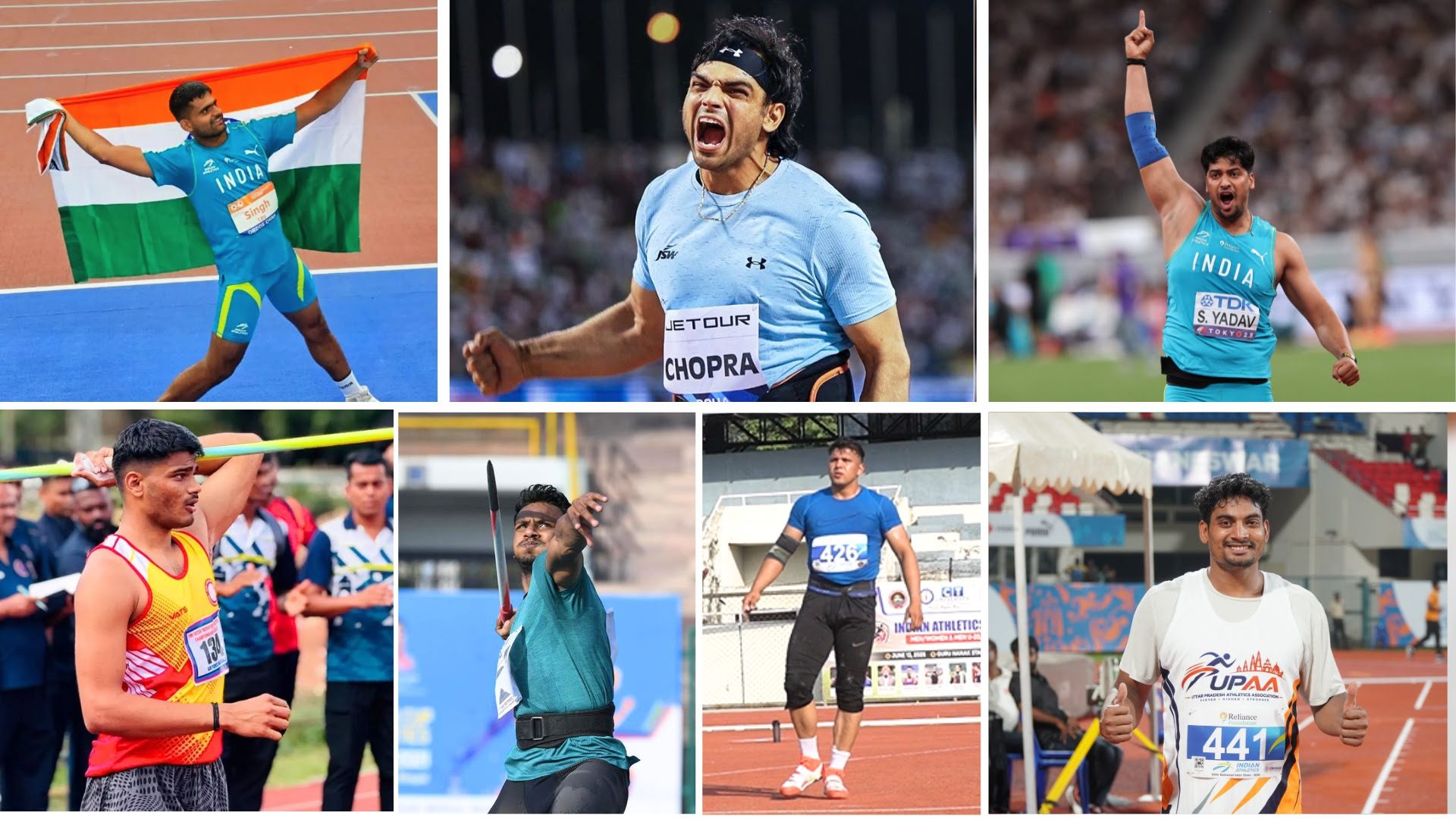

India’s Aadarsh Ram produced a creditable performance to finish fifth in the men’s high jump final at the Glasgow 2026 Commonwealth Games, clearing a best height of 2.15m.
Competing in his first Commonwealth Games final, the Indian high jumper made a confident start to the competition, clearing 2.10m at the first attempt before successfully negotiating 2.15m, again on his first try.
The bar was then raised to 2.20m, where Aadarsh fought hard but was unable to clear the height despite three determined attempts, bringing his campaign to an end.
His best clearance of 2.15m was enough to secure fifth place in a high-quality field that featured some of the Commonwealth’s top jumpers.
The performance capped an encouraging outing for the young Indian, who held his own on one of the biggest stages in the sport and gained valuable experience at the elite level.
India enjoyed a memorable evening in the men’s high jump, with Sarvesh Kushare claiming the silver medal after clearing 2.25m, while Aadarsh’s top-five finish underlined the growing depth in Indian high jumping.
Although he narrowly missed out on the podium, Aadarsh leaves Glasgow with a Commonwealth Games final appearance and another important step forward in his international career.
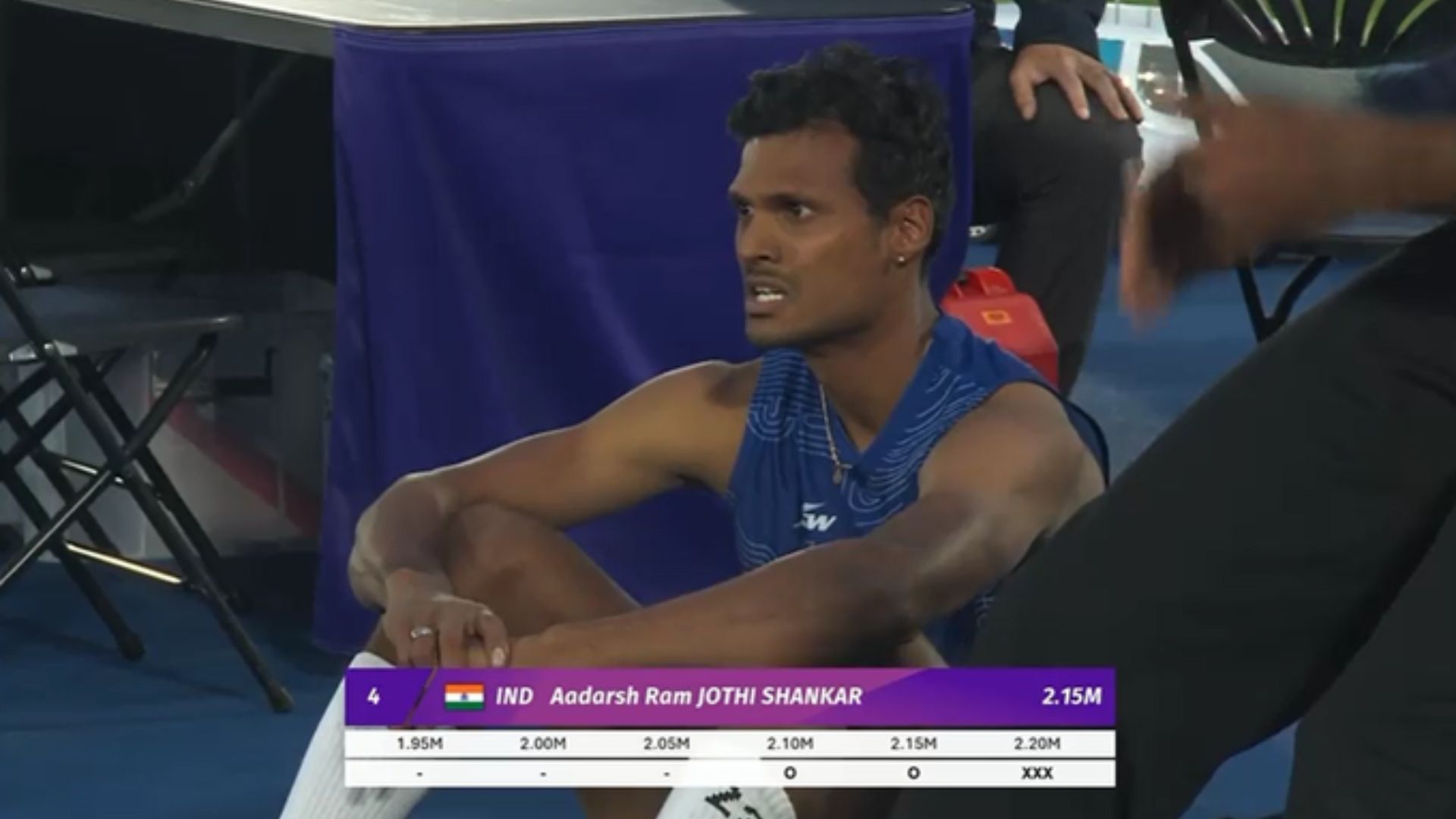
So close to gold. So proud in silver.
India’s Sarvesh Kushare produced the performance of his career to win the silver medal in the men’s high jump at the Glasgow 2026 Commonwealth Games, clearing 2.25m to stand on the Commonwealth podium for the first time.
In a gripping contest, Kushare matched Jamaica’s Romaine Beckford clearance for clearance, with both athletes successfully negotiating 2.25m. The gold medal, however, was decided not by height, but by the narrowest of margins—the countback rule.
Beckford cleared 2.25m on his first attempt, while Kushare needed all three attempts to get over the bar. With both athletes failing at the next height, that single difference proved decisive, handing the Jamaican the gold and leaving the Indian with silver.
Final Standings
 Romaine Beckford (Jamaica) – 2.25m
 Sarvesh Kushare (India) – 2.25m
 Kimani Jack (England) – 2.20m
For Kushare, though, this was a performance that announced India’s growing stature in the high jump. The national record holder refused to be overawed by the occasion, matching one of the world’s best jumpers and forcing the competition to be settled on countback.
The silver medal is richly deserved reward for years of perseverance and consistency. On a night when just one first-time clearance separated gold from silver, Sarvesh proved he belongs among the Commonwealth’s elite.
It may not have been the colour he dreamed of, but the way he fought for every centimetre made this one of India’s standout performances of the Games.
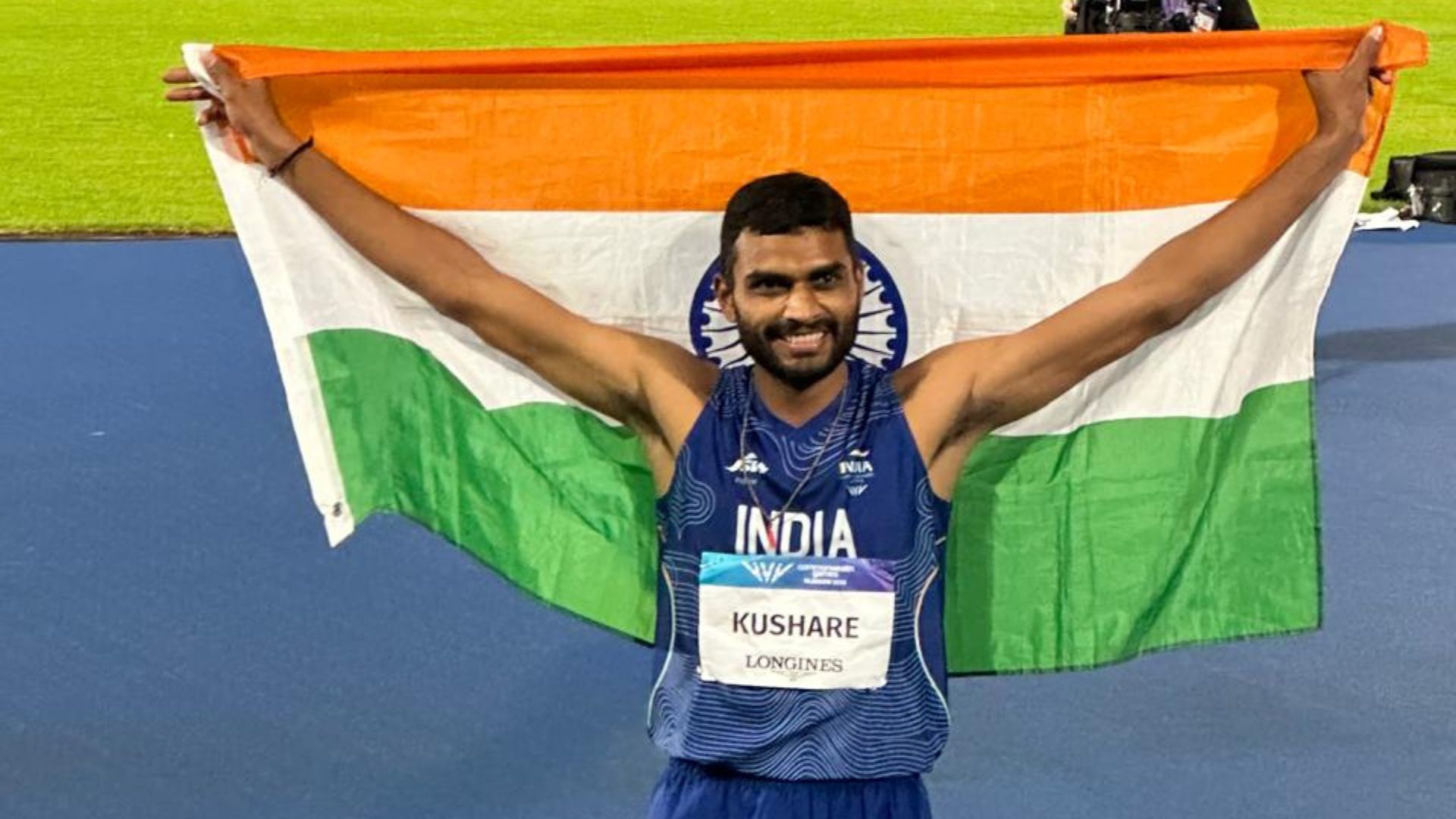
India’s national record holder Tejas Shirse finished eighth in the men’s 110m hurdles final at the Glasgow 2026 Commonwealth Games, clocking 15.39 seconds in a race that ended on a worrying note for the Indian hurdler.
Shirse appeared to be in visible discomfort after clearing the final hurdle and crossing the finish line. The exact nature of the issue was not immediately known, though the incident raised concerns after what had been an encouraging comeback season for the 22-year-old. The Indian athletics fraternity will be hoping the injury is not serious.
The Maharashtra hurdler had qualified for the final earlier in the day by finishing third in his heat with a time of 13.76 seconds, earning an automatic qualification berth.
His appearance in the Commonwealth Games final capped a remarkable return after a lengthy injury layoff. Earlier this season, Shirse announced his comeback in style by clocking 13.27 seconds, breaking the long-standing Indian national record in the men’s 110m hurdles and securing qualification for Glasgow.
That performance established him as India’s fastest-ever sprint hurdler and marked one of the standout moments of the domestic athletics season.
Although the Commonwealth Games final did not unfold as he would have hoped, merely returning from a prolonged injury absence to reach a major championship final represents a significant milestone in his journey.
With age on his side and the national record already in his possession, Shirse remains one of the brightest prospects in Indian athletics. Attention will now turn to his recovery, with hopes that the setback in Glasgow proves to be only a temporary interruption to an otherwise promising season.
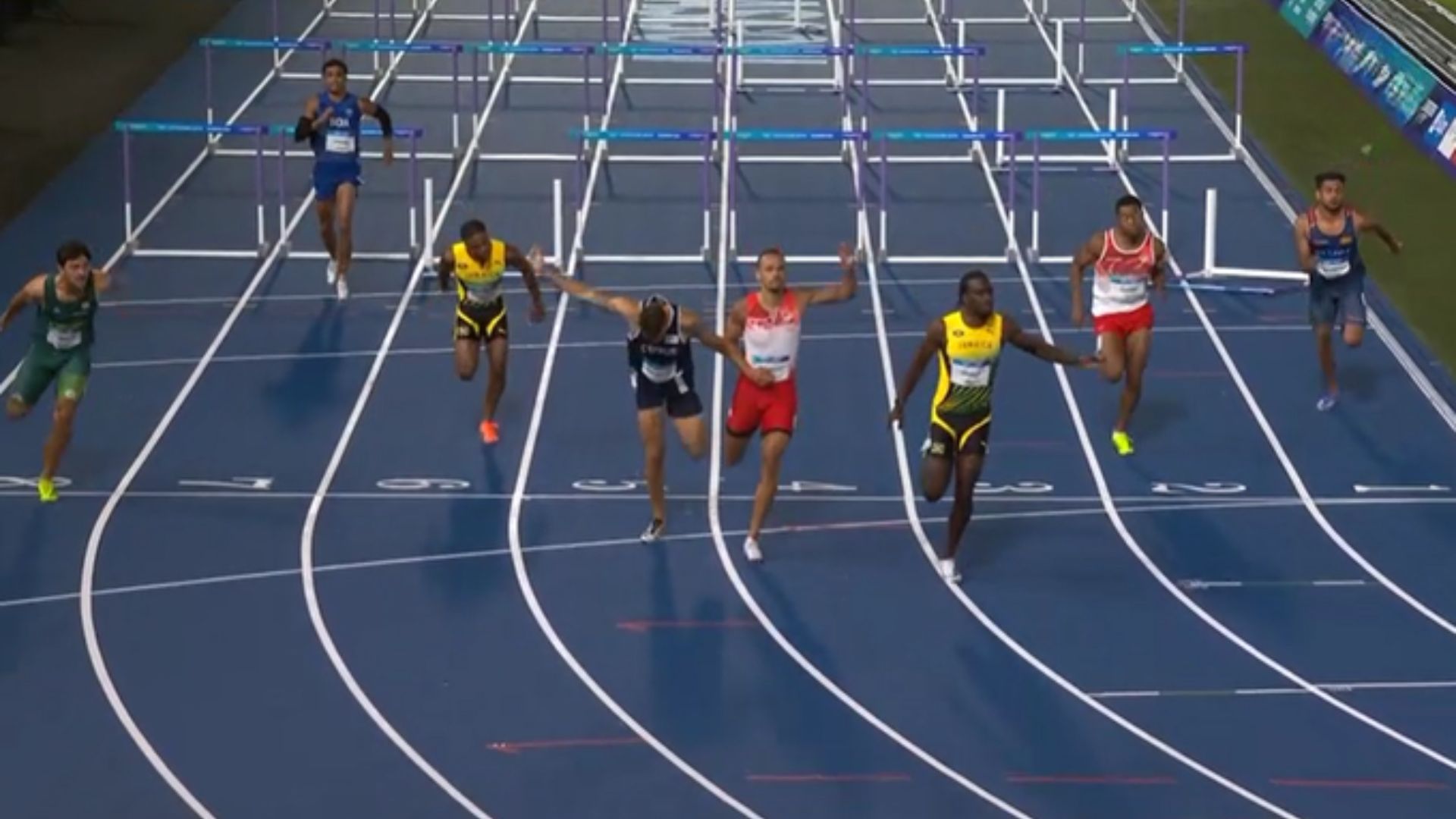
India’s Murali Sreeshankar continued his remarkable consistency in 2026 by qualifying for the men’s long jump final at the Glasgow Commonwealth Games, comfortably clearing the automatic qualification mark with his very first jump.
The defending Commonwealth Games silver medallist needed just one attempt, soaring to 8.01m in still conditions (0.0 m/s wind) to breach the 8.00m automatic qualification standard and secure his place in the medal round.
The effort saw Sreeshankar finish third overall in the qualification standings, reinforcing his status as one of the leading contenders for a podium finish.
The qualification performance is the latest in what has been an outstanding season for the Indian long jumper. Sreeshankar has crossed the eight-metre barrier in every competition he has contested this year, underlining both his consistency and world-class form.
His performances in 2026 include:
- 8.15m – Indian Athletics Series 1
- 8.12m – Simbine Classic
- 8.04m – Indian Athletics Series 6
- 8.08m – Federation Cup
- 8.38m – National Inter-State Championships
- 8.01m – Commonwealth Games Qualification
The highlight of his campaign remains the 8.38m leap at the National Inter-State Championships, one of the finest performances by an Indian long jumper and a statement ahead of the Commonwealth Games.
Having won silver at the Birmingham 2022 Commonwealth Games, Sreeshankar arrived in Glasgow as one of India’s strongest medal hopes in athletics. His composed qualification performance, achieved with minimal effort, suggests he has timed his preparations well for the final.
With qualification secured at the first opportunity, the focus now shifts to the medal round, where Sreeshankar will look to build on his exceptional season and improve upon the silver medal he claimed four years ago.
For more visit Commonwealth Games 2026
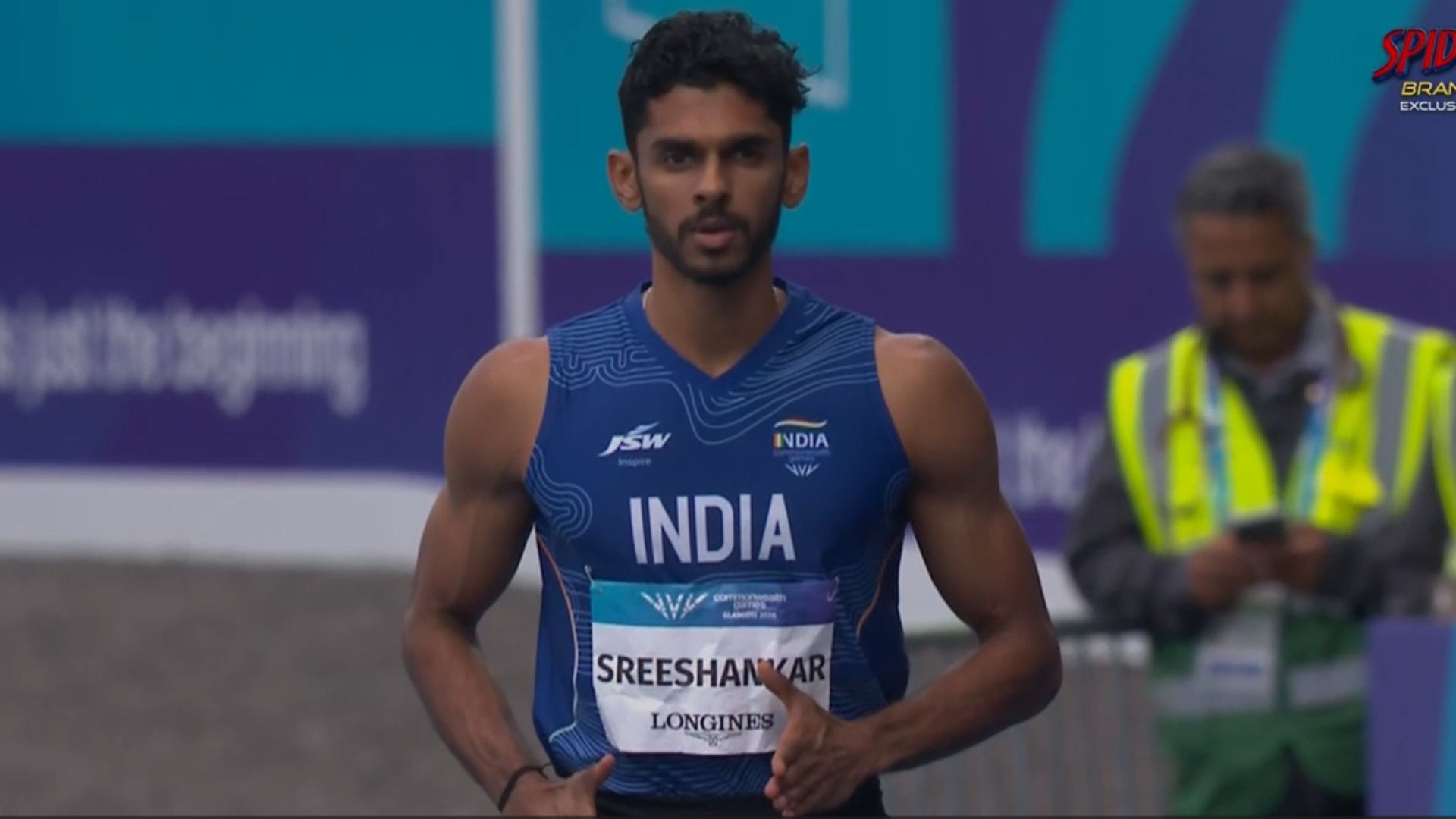
Indian athletics is officially entering its main character era. For the first time in history, two Indian athletes are pulling up to represent the country in the men’s pole vault at the Commonwealth Games. Dev Meena from Madhya Pradesh and Kuldeep Yadav from Uttar Pradesh have both secured their spots for CWG 2026, and honestly? They’re about to rewrite the history books.
What makes this lore even crazier is that they’re basically training twins. Both vaulters train under the same mastermind coach, Ghanshyam Yadav, at the state-sponsored DSWY academy at TT Nagar, Bhopal.
But let’s be real—their road to qualification was a whole survival arc. Until last year, India’s national record in men’s pole vault was capped at a modest 5.31m. Enter 20-year-old Dev Meena, who absolutely understood the assignment at the National Games 2025 by clearing 5.32m. He didn’t just break the record and call it a day, though. Dev went on an absolute rampage, breaking the national record five times in a row before flexing a 5.46m clearance—which is currently the top-tier flex for Indian athletics.
Meanwhile, Kuldeep Yadav’s arc was all about the ultimate comeback. He’d been fighting a long battle with injuries before linking up with Ghanshyam’s squad last year. The glow-up? Insane. Kuldeep came into 2026 with a former personal best of 5.15m, instantly upgraded to 5.25m, and then casually smashed the national record with a 5.41m vault. Not stopping there, he pushed it to 5.45m, easily surpassing the CWG qualification bar.
Unpacking the dynamic of his star pupils, Ghanshyam Yadav said, “They are both very good athletes, very hardworking, good training partners during practice, and great competitors against each other in competition.”
When asked how he keeps the peace between two elite athletes constantly trying to out-flex each other, Ghanshyam dropped his secret recipe with a smile: “I give them individual targets. I speak to both of them separately before competitions and tell each of them, ‘Today is your day. You have to break the national record.’ Neither athlete knows that I’ve given the same target to the other. If they ever find out, it might become a problem for me,” he said with a laugh.
Fun fact: Coach Ghanshyam is a former pole vaulter himself, so he knows the vibes inside out.
The duo will be jumping into action on July 30 for the men’s pole vault qualification round in Glasgow. If they clear the hype, they’ll be vaulting for actual CWG medals on August 1.
Dev and Kuldeep are bringing fresh personal bests of 5.46m and 5.45m to the table, but Glasgow is going to be a total boss fight. Looking at this season’s global stats, the Indian duo currently ranks fourth and fifth among qualified CWG athletes. Australia’s Kurtis Marschall is leading the pack with a massive 6.00m flex, followed by Great Britain’s Owen Heard (5.71m) and South Africa’s Kyle Rademeyer (5.60m).
Addressing the heavy competition, Ghanshyam isn’t sweating it: “Yes, the field is tough, but you have to understand that we are here to make a way, not follow one. Competing against stronger athletes will only make both of them better. They are regular 5.50m athletes, and I have full confidence they will give their best. I believe they are medal contenders, without a doubt.”
However, one major plot hole in India’s CWG setup is that no dedicated pole vault specialist or support staff was included in the official contingent traveling for the event.
Reacting to the gatekeeping, Ghanshyam said, “Yes, they haven’t included anyone specifically for pole vault. It will be tough because pole vault is a completely different event.”
He added, “I showed them the performances of the athletes they will be competing against, including the vaulter from Australia who has cleared 6.00m this season.”
Talking about the lack of high-level domestic meets to lock in practice, Ghanshyam noted, “Yes, they are struggling because there isn’t enough competition at the national level. After the Commonwealth Games and the Asian Games, our sole focus will shift towards the 2028 Olympics. I know the qualification mark of 5.83m is tough, but it’s not impossible. I’m planning to send both athletes to more competitions outside India. If they regularly compete against athletes clearing 5.70m or 5.80m, it will give them more confidence and will certainly help improve their performances.”
For more visit Commonwealth Games 2026
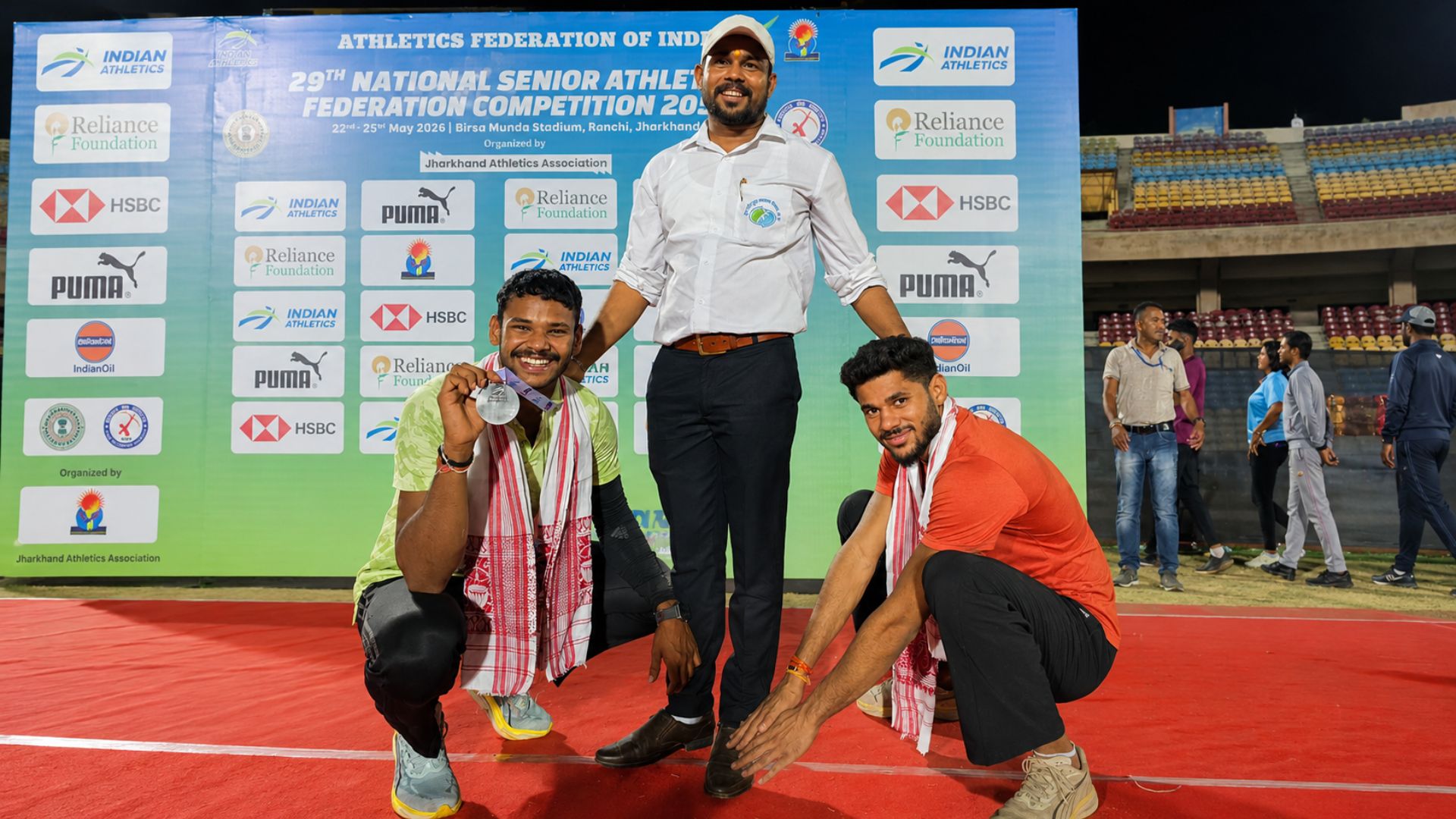
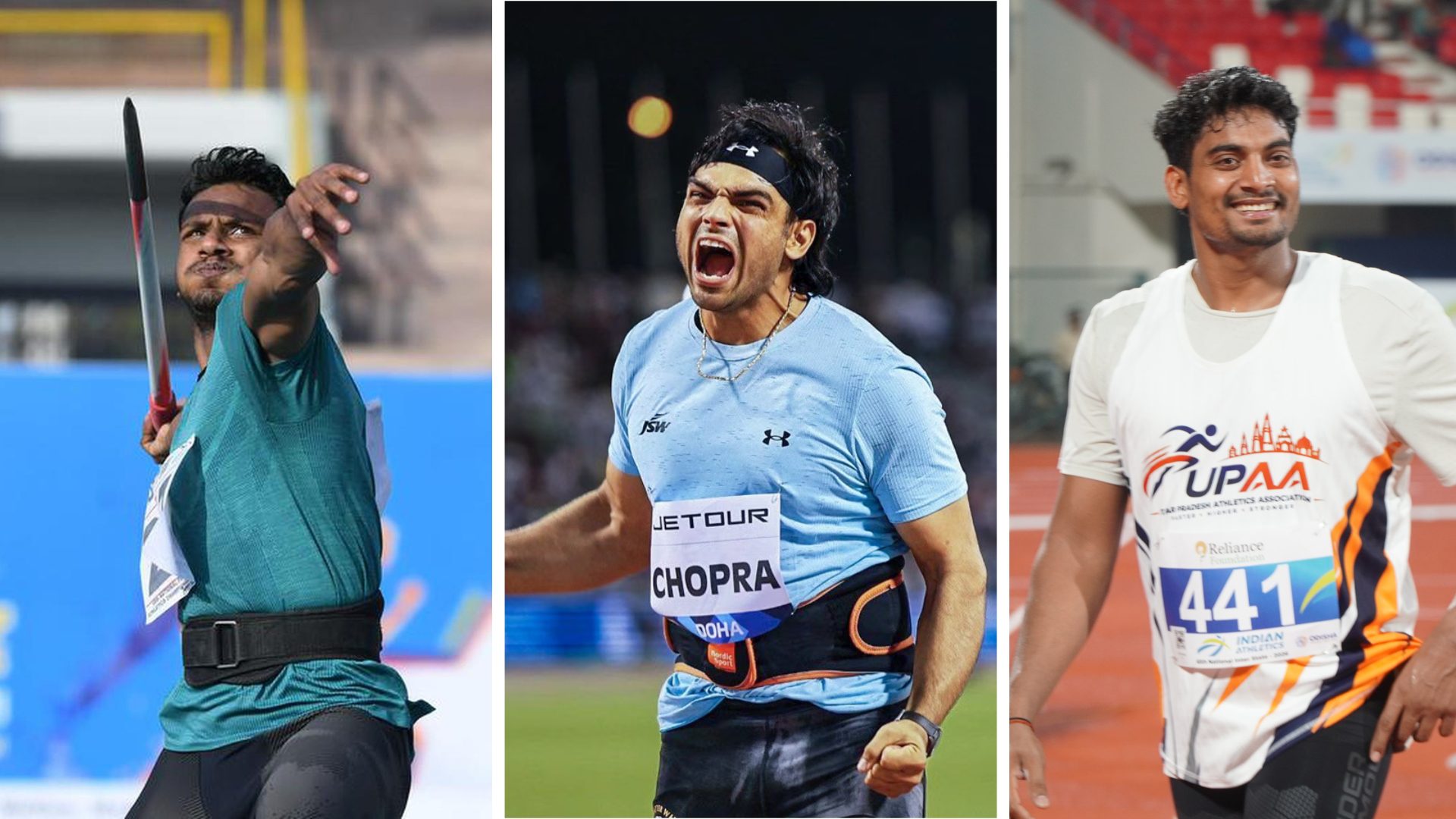
India will field one of the strongest men’s javelin throw squads at the Commonwealth Games 2026, with Neeraj Chopra, Rohit Yadav, and Yash Vir Singh set to represent the country in Glasgow. With three athletes ranked among the leading selected competitors this season, India enters the competition with genuine hopes of multiple medals.
Among athletes selected for the Commonwealth Games, Rumesh Pathirage of Sri Lanka tops the season list with an outstanding 92.62m. Close behind is Rohit Yadav, whose sensational 87.05m lifetime best ranks second among the selected athletes. His breakthrough throw has established him as one of the leading contenders heading into Glasgow.
Anderson Peters of Grenada occupies third with 86.38m, while Australia’s Cameron McEntyre has recorded 85.73m. Two-time Olympic medallist Neeraj Chopra enters the Games with a season-best of 85.69m, placing him fifth on the selected list. Douw Smit of South Africa (84.79m) and Chinecherem Nnamdi of Nigeria (84.68m) are also among the top contenders, while Yash Vir Singh rounds out the top eight with a personal best of 83.76m.
India’s trio combines proven championship experience with emerging talent. Neeraj Chopra remains the country’s most accomplished javelin thrower and will once again lead the Indian challenge. Alongside him, Rohit Yadav and Yash Vir Singh have enjoyed breakthrough campaigns, producing career-best throws of 87.05m and 83.76m, respectively, to establish themselves among the Commonwealth’s leading performers.
A notable feature of the 2026 season is India’s remarkable depth in the event. India is the only nation with three athletes ranked inside the top eight among the selected Commonwealth Games competitors, underlining the country’s growing strength in men’s javelin throw.
With an experienced champion in Neeraj Chopra and two rapidly improving throwers in Rohit Yadav and Yash Vir Singh, India travels to Glasgow with one of the strongest javelin squads in the competition. If the trio reproduces its season-best form, the country will be well placed to challenge for top honours in one of the marquee field events of the Commonwealth Games.
For more visit Commonwealth Games 2026
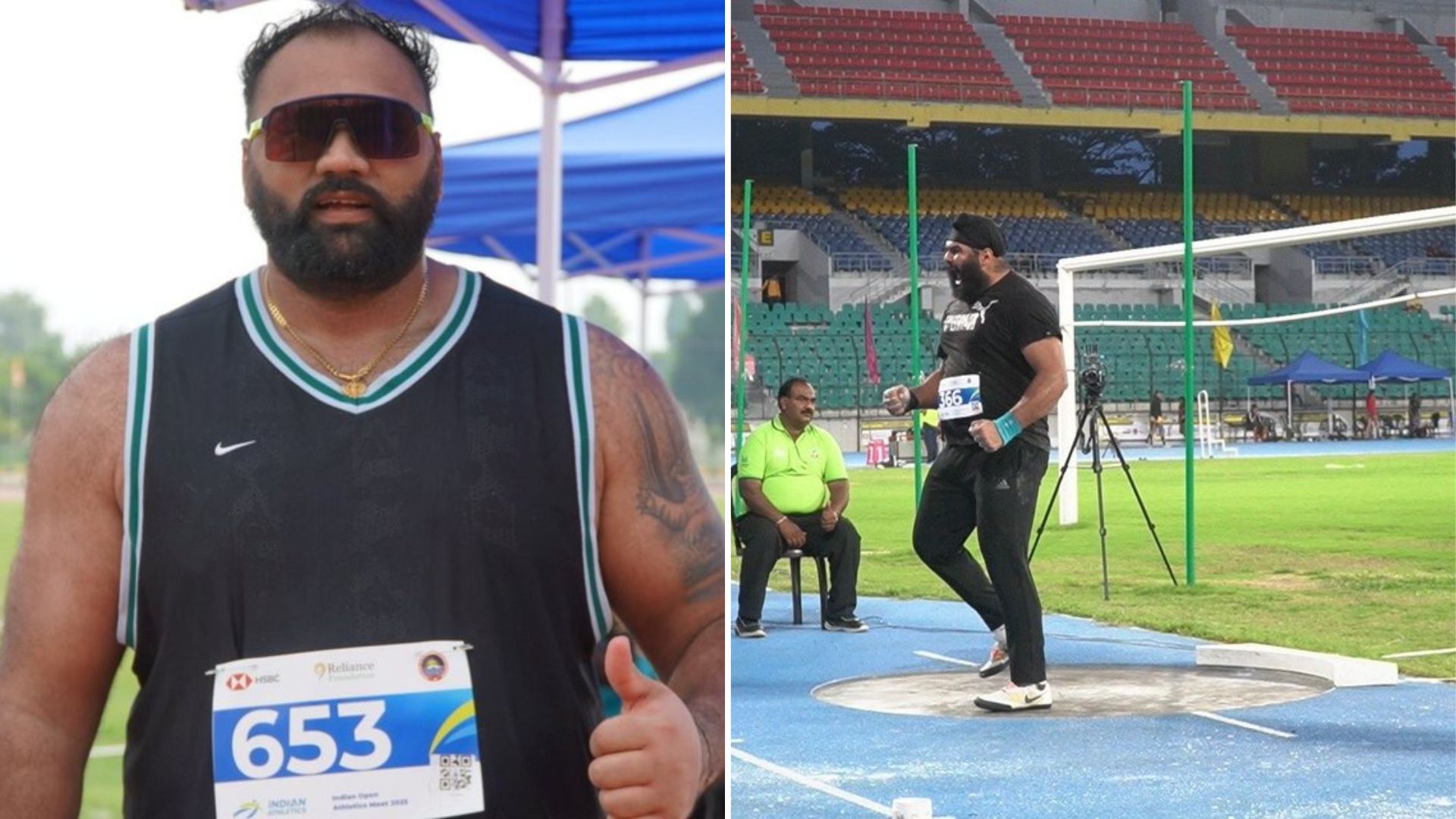
India will be represented by Tajinderpal Singh Toor and Samardeep Gill in the men’s shot put at the Commonwealth Games 2026, with both athletes heading to Glasgow after impressive seasons that have strengthened India’s prospects in the event.
Leading the Indian challenge is Tajinderpal Singh Toor, who has enjoyed a strong return to form in 2026. The experienced shot putter has recorded a season-best of 21.03m, ranking him sixth among athletes selected for the Commonwealth Games. More importantly, Toor has crossed the 21-metre mark for the first time in two years, signalling an encouraging comeback ahead of one of the biggest competitions of the season.
Joining him is Samardeep Gill, who has emerged as one of India’s most promising young throwers. Samardeep produced a lifetime best of 20.46m, becoming a 20-metre thrower for the first time in his career. His breakthrough performance places him 12th among the selected Commonwealth athletes, underlining the steady progress he has made this season.
The competition in Glasgow is expected to be of the highest standard. New Zealand’s Tom Walsh leads the selected field with a world-class 21.82m, followed closely by Chukwuebuka Enekwechi of Nigeria at 21.74m. New Zealand’s Nick Palmer (21.19m) and Great Britain’s Scott Lincoln (21.16m) also enter the Games in strong form, while South Africa’s Aiden Smith (20.89m) and New Zealand’s Jacko Gill (20.64m) are among the other leading contenders.
India’s two representatives arrive with contrasting but equally encouraging stories. Toor brings experience and proven pedigree after returning beyond 21 metres, while Samardeep represents the next generation of Indian shot putting following his breakthrough season.
With Toor rediscovering his best form and Samardeep making rapid strides, India has a balanced combination of experience and emerging talent. Both athletes will be aiming to produce their best performances in Glasgow as they challenge a world-class field and seek to bring another Commonwealth Games medal home for Indian athletics.
For more visit Commonwealth Games 2026
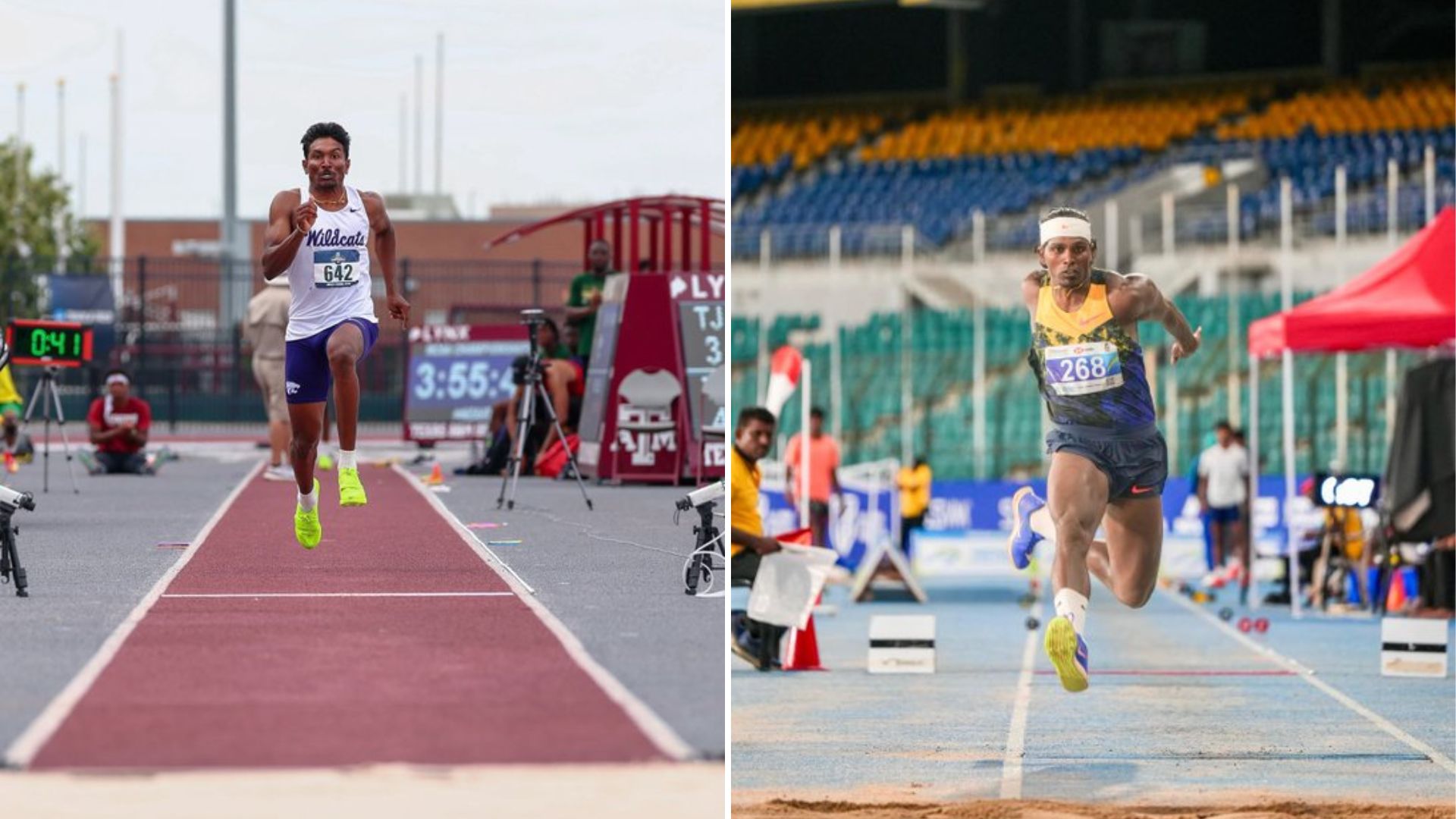
India will once again field a formidable pair in the men’s triple jump at the Commonwealth Games 2026, with Praveen Chithravel and Selva Prabhu carrying the nation’s hopes in an event where Indian athletes have enjoyed considerable success in recent years.
Both jumpers arrive in Glasgow in outstanding form after producing career-best performances during the 2026 season. Praveen Chithravel has recorded a season-best of 17.08m, while Selva Prabhu has followed closely with 17.05m. These marks rank them third and fourth, respectively, among athletes selected for the Commonwealth Games, placing both firmly in medal contention.
The season rankings among selected Commonwealth athletes are headed by Jordan Scott of Jamaica, who has produced an impressive 17.69m. Praveen occupies the third spot with 17.08m, narrowly ahead of Selva’s 17.05m. Kenya’s Kevin Kemboi follows with 16.84m, while Kelsey Daniel of Trinidad and Tobago rounds out the leading contenders with 16.68m.
India has fond memories of the men’s triple jump at the 2022 Commonwealth Games, where the country celebrated a historic gold and silver medal finish. Eldhose Paul claimed the title with a wind-assisted 17.03m, while Praveen Chithravel narrowly missed the podium after finishing fourth despite a spirited campaign.
Four years later, Praveen returns to the Commonwealth Games as a far more experienced athlete and one of the leading contenders for a medal. Alongside him, Selva Prabhu has enjoyed a breakthrough season that has elevated him into the top tier of Commonwealth jumpers, giving India two realistic podium prospects.
With the third and fourth-best season’s performances among the selected Commonwealth competitors, India heads to Glasgow with genuine optimism in the men’s triple jump. If Praveen and Selva reproduce their best form on the day, they have every opportunity to continue India’s proud tradition in the event and challenge for medals on the Commonwealth stage.
For more visit Commonwealth Games 2026
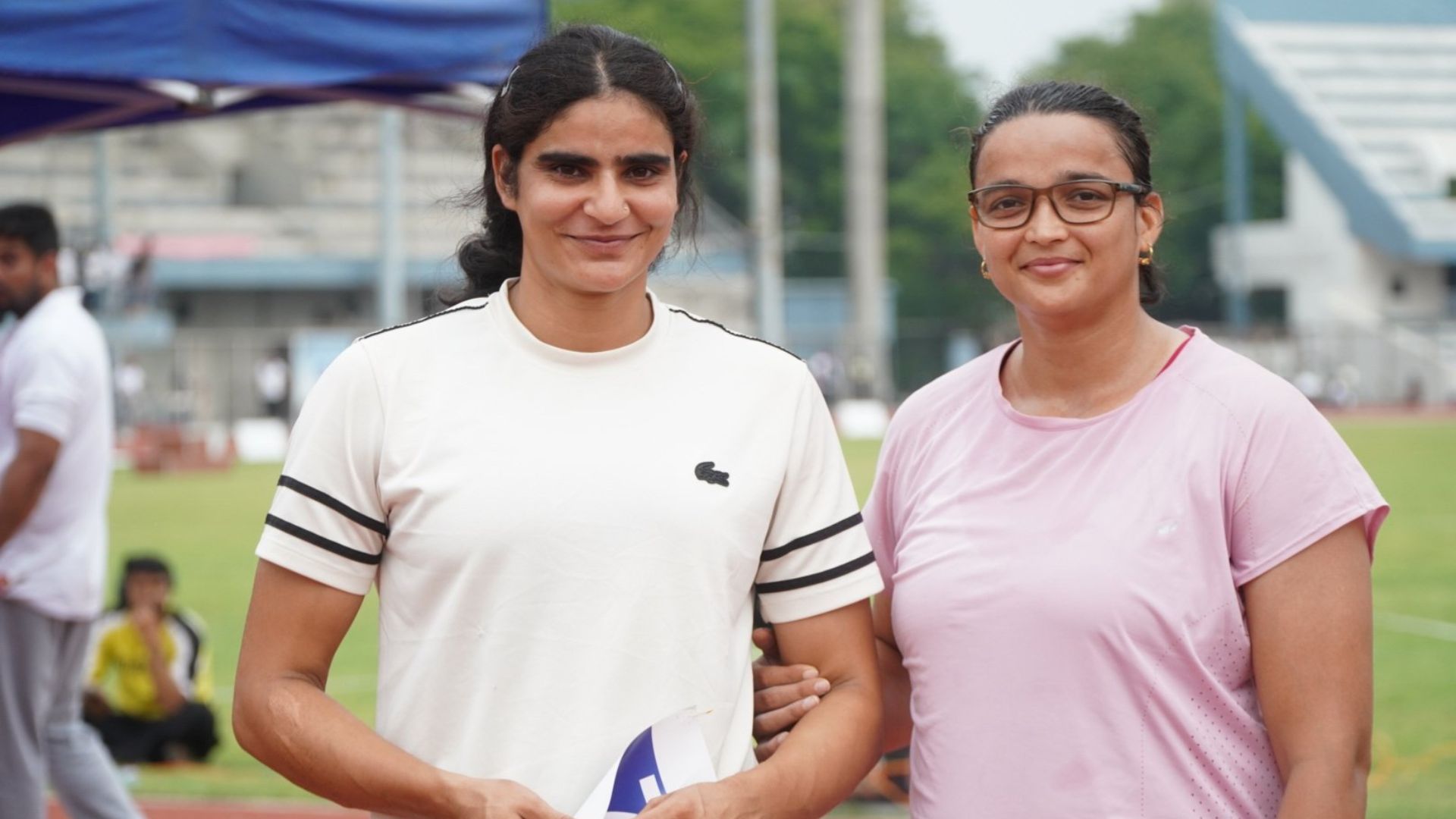
India will have a strong presence in the women’s discus throw at the Commonwealth Games 2026, with Seema and Nidhi Rani set to represent the country after outstanding breakthrough seasons that have placed them among the leading throwers in the Commonwealth.
Both athletes have achieved significant milestones in 2026. Seema enters the Games with a lifetime best of 59.73m, while Nidhi Rani has recorded a personal best of 58.82m. Their consistent performances throughout the season have earned them places in India’s Commonwealth Games squad and strengthened the country’s medal prospects in the event.
Among athletes selected for the Games, the season rankings are led by Samantha Hall of Jamaica, who has thrown 66.39m. Canada’s Julia Tunks occupies second with 63.58m, while Serena Brown of the Bahamas ranks third among selected athletes with 61.26m. Seema is positioned seventh overall on the Commonwealth season list with 59.73m, while Nidhi follows in ninth with 58.82m.
However, the rankings tell only part of the story. Since the list considers only athletes who have been selected by their respective Commonwealth Games squads, Seema and Nidhi effectively move into the group of the top five medal contenders after accounting for higher-ranked athletes who are not part of their national teams for Glasgow.
The progress shown by both Indian throwers has been one of the highlights of the domestic athletics season. Their personal-best performances reflect consistent improvement and growing confidence against high-quality competition, making them genuine contenders on the Commonwealth stage.
While the women’s discus throw features several accomplished international athletes, Seema and Nidhi have demonstrated that they can compete at a high level. With both arriving in Glasgow after career-best seasons, India has every reason to be optimistic about its chances in the event.
Armed with momentum, confidence, and personal-best form, Seema and Nidhi Rani will look to convert their impressive 2026 performances into success at the Commonwealth Games.
For more visit Commonwealth Games 2026
| India and javelin have been producing wonders for many years now. A boy from Panipat, Haryana, who clinched India’s first-ever Olympic track & field gold medal in javelin at the Tokyo Olympics, sparked something much bigger. It has taken time, but now the results are visible for everyone to see.
Javelin has unofficially become one of the favourite sports for many Indians—not only to watch but also to compete in. More athletes are choosing the event, as reflected by the growing participation at the national level and the high standard of performances, which at times rival the global level. For example, at the latest Indian National Championships, Uttar Pradesh’s Rohit Yadav was trailing until the final round before producing a lifetime best throw of 87.05m to clinch the title. That mark currently stands as the second-best throw in the world this season. In the same competition, three athletes crossed the 80m mark. Interestingly, a total of seven Indian athletes have crossed the 80m mark this season, with two of them achieving the feat for the first time in their careers.
These seven Indian athletes are the highest by any nation this season. Collectively, they have also produced 16 performances over 80m this season—the highest total by any country.
These figures are based on World Athletics statistics as of 13 July 2026. As per World Athletics, only the best throw from a single competition is counted as one performance. The United States ranks second with three throwers crossing 80m a combined 14 times this season:
Germany has three throwers who have crossed the 80m mark a combined five times this season:
India’s neighbour Sri Lanka has one thrower, Rumesh Pathirage, who has crossed 80m seven times this season. He also owns the world-leading mark of 92.62m. Among the top 10 throws in the world this season, India has two entries—Rohit Yadav’s 87.05m is ranked second, while Neeraj Chopra’s 85.69m is fifth. Apart from India, only the United States has two throwers in the world’s top 10 this season. |