
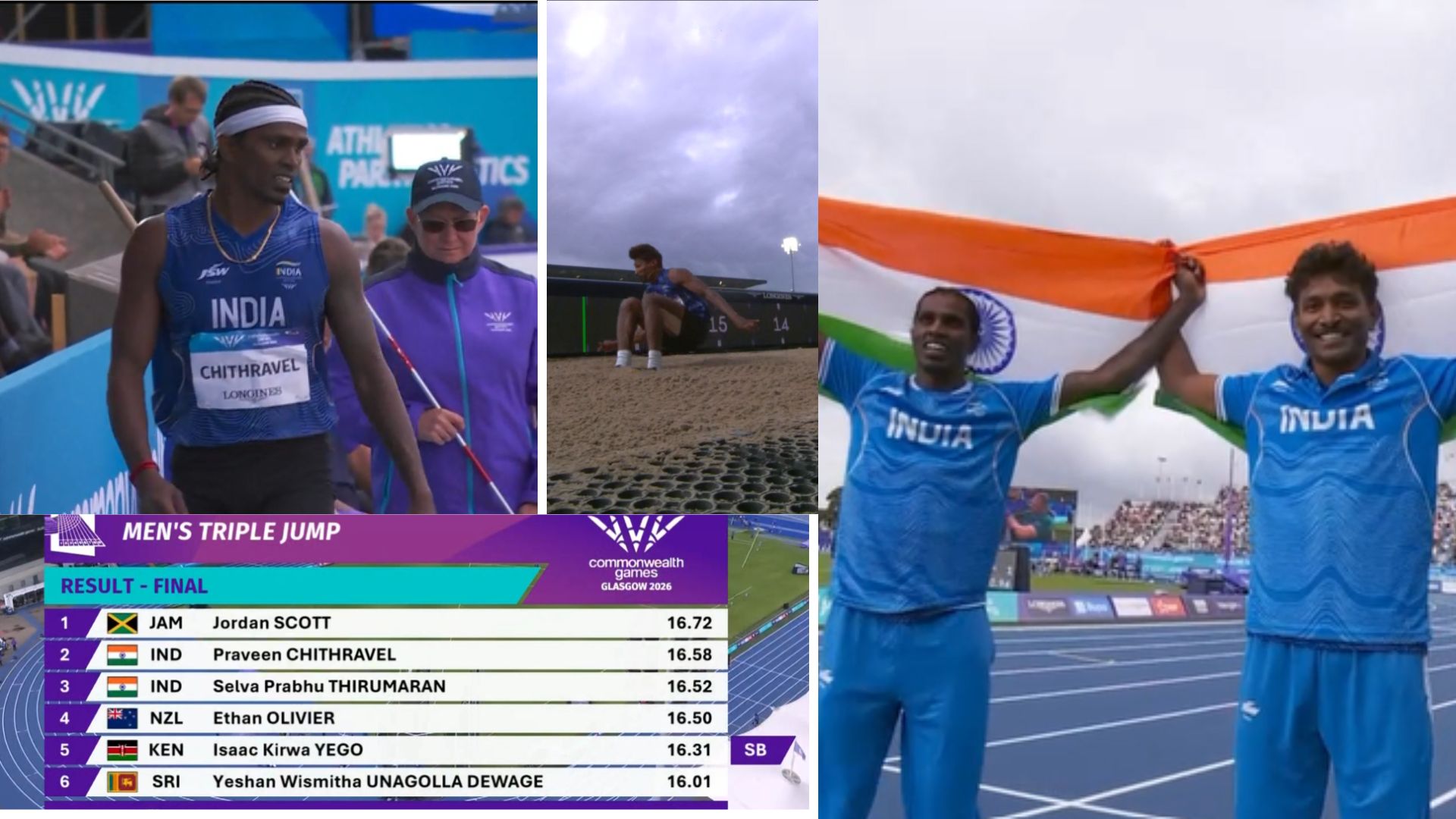
India celebrated another successful evening on the athletics track at the Commonwealth Games 2026 as Praveen Chithravel and Selva Prabhu Thirumaran secured the silver and bronze medals, respectively, in the men’s triple jump final.
Praveen produced his best jump of 16.58m, while Selva cleared 16.52m, as Jamaica’s Jordan Scott claimed the gold medal with a winning effort of 16.72m.
The double podium finish takes India’s athletics medal tally to nine at the Games and continues the country’s impressive record in the event. At the previous Commonwealth Games, Indian triple jumpers had also secured two medals, winning gold and silver.
The final was a closely contested affair with momentum swinging throughout the competition.
Selva made the early breakthrough, improving from 16.17m in the second round to move into third place and establish himself firmly in medal contention. After three rounds, he remained third with a best of 16.47m, while Praveen was fifth after managing 16.31m.
The competition turned dramatically in the fourth round when Praveen, the Indian national record holder, unleashed a superb 16.58m effort to surge into the lead. At the same time, Selva appeared to have produced a massive jump of his own, only for it to be ruled a foul by the narrowest of margins—just 1 centimetre.
Both Indians responded strongly in the fifth round. Praveen backed up his leading mark with a 16.40m jump, while Selva produced a brilliant 16.52m to climb back into the medal positions.
However, Jordan Scott delivered when it mattered most, recording 16.72m to move ahead of Praveen and seal the Commonwealth title. Praveen settled for silver, with Selva completing the podium by taking bronze.
The result underlines India’s growing strength in the men’s triple jump, with two athletes once again standing on the Commonwealth Games podium and continuing the nation’s rich recent tradition in the event.
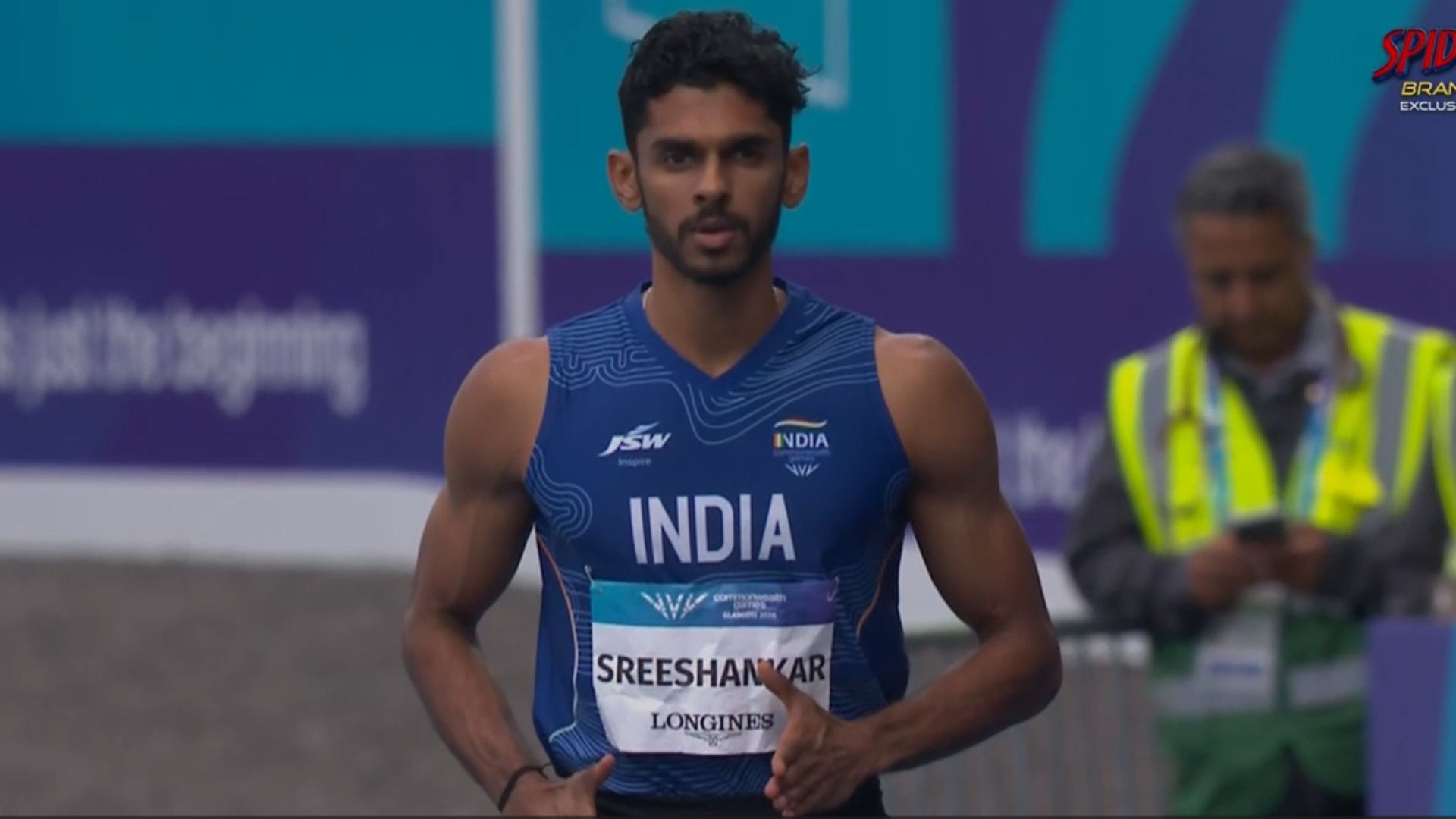
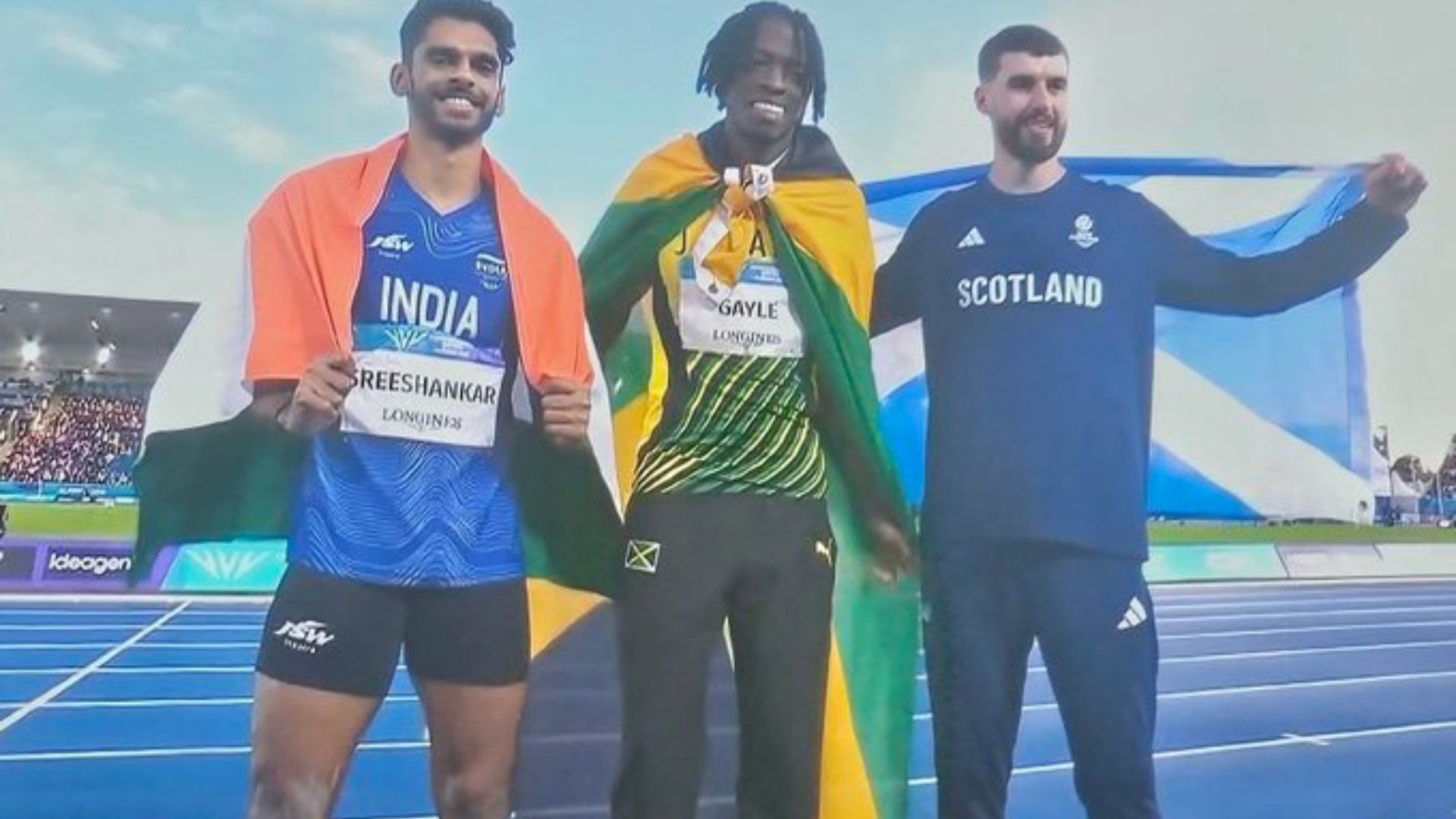
In a gripping showcase of grit, technique, and resilience at the 2026 Commonwealth Games in Glasgow, India’s star long jumper Murali Sreeshankar secured a historic silver medal with a best leap of 8.09 metres. The achievement marks his second consecutive CWG silver following his podium finish at Birmingham 2022, officially cementing him as the first Indian athlete in history to capture two Commonwealth Games medals in the men’s long jump.
The victory carried profound personal weight for the 27-year-old. Just over two years prior, a severe patellar tendon rupture in early 2024 required major surgery, tragically ruling Sreeshankar out of the Paris Olympics and casting doubts over his athletic future. His performance in Glasgow served as an undeniable, triumphant declaration of his return to world-class form.
From the opening round, the men’s final was an intense, high-calibre duel among top international talent. Sreeshankar set a strong foundation on his first approach with a clean 8.03m jump, immediately placing himself among the early frontrunners. On his second attempt, the Indian star found perfect acceleration on the runway, hitting the board cleanly to propel himself to 8.09m and take temporary control of the gold medal position.
The contest swung sharply in the fourth round. Jamaica’s former world champion, Tajay Gayle, unleashed a massive 8.15m attempt to snatch the lead. Sreeshankar pushed hard to respond, putting everything into his remaining attempts. Though two red flags for marginal board oversteps curtailed his momentum, his second-round mark of 8.09m held strong against the rest of the field. Local Scottish favourite Stephen Mackenzie clinched bronze with an 8.08m leap, falling just a single centimetre short of Sreeshankar’s mark. Meanwhile, India’s Lokesh Satyanathan put in a commendable performance to finish fifth overall with a jump of 7.97m.
Sreeshankar’s back-to-back CWG silver medals underscore a remarkable era of consistency for Indian track and field on the global stage. Battling back from career-threatening adversity to deliver an 8m plus effort under high-stakes pressure reinforces Sreeshankar’s standing among India’s elite track and field athletes.
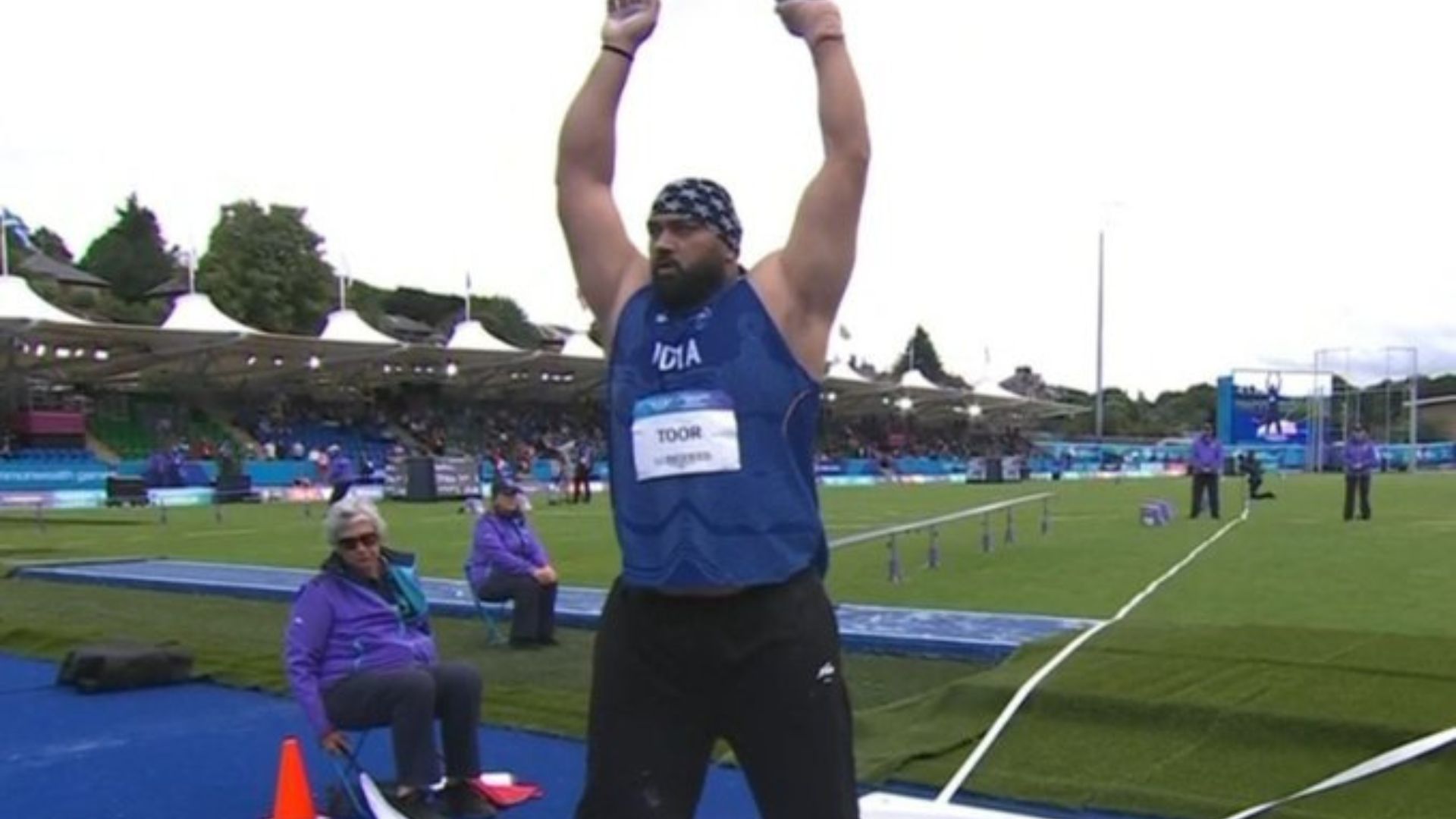
India will be represented by two athletes in the men’s shot put final at the Commonwealth Games 2026 after both Tajinderpal Singh Toor and Samardeep Gill successfully secured qualification in Glasgow.
While Toor comfortably achieved the automatic qualifying standard, Samardeep advanced on the basis of his overall ranking after a strong performance across the two qualification groups.
Toor Clears Automatic Mark
Former Commonwealth champion Tajinderpal Singh Toor booked his place in the final with a throw of 20.14m, surpassing the automatic qualification standard of 20.00m on his second attempt.
The effort saw him finish second overall in the qualification round and ensured a stress-free passage to the medal contest.
Only four athletes managed to achieve the automatic qualifying distance, highlighting the quality required to secure direct qualification.
Samardeep Advances on Ranking
Competing in the other qualification group, Samardeep Gill registered a best throw of 19.95m, narrowly missing the automatic mark by just five centimetres.
However, the throw proved more than enough to earn him a place in the final. Samardeep finished fifth overall across both qualification groups, advancing as one of the next best performers after the automatic qualifiers.
With only four athletes clearing 20.00m, the remaining places in the 12-man final were filled based on the best distances achieved by the rest of the field, allowing Samardeep to progress comfortably.
Qualification Format
The qualification standard for the men’s shot put was set at 20.00m.
Athletes who achieved the automatic mark (Q) advanced directly to the final, while the remaining places in the 12-athlete final were awarded to the next best performers (q) across both qualification groups.
With both Toor and Samardeep advancing, India will have two opportunities to challenge for a podium finish in the final.
Toor brings a wealth of international experience and has consistently been one of Asia’s leading shot putters, while Samardeep arrives in the final after demonstrating impressive consistency to secure qualification despite narrowly missing the automatic standard.
The presence of two Indian finalists strengthens the country’s medal prospects as the men’s shot put final promises to be one of the standout field events of the Commonwealth Games athletics programme.
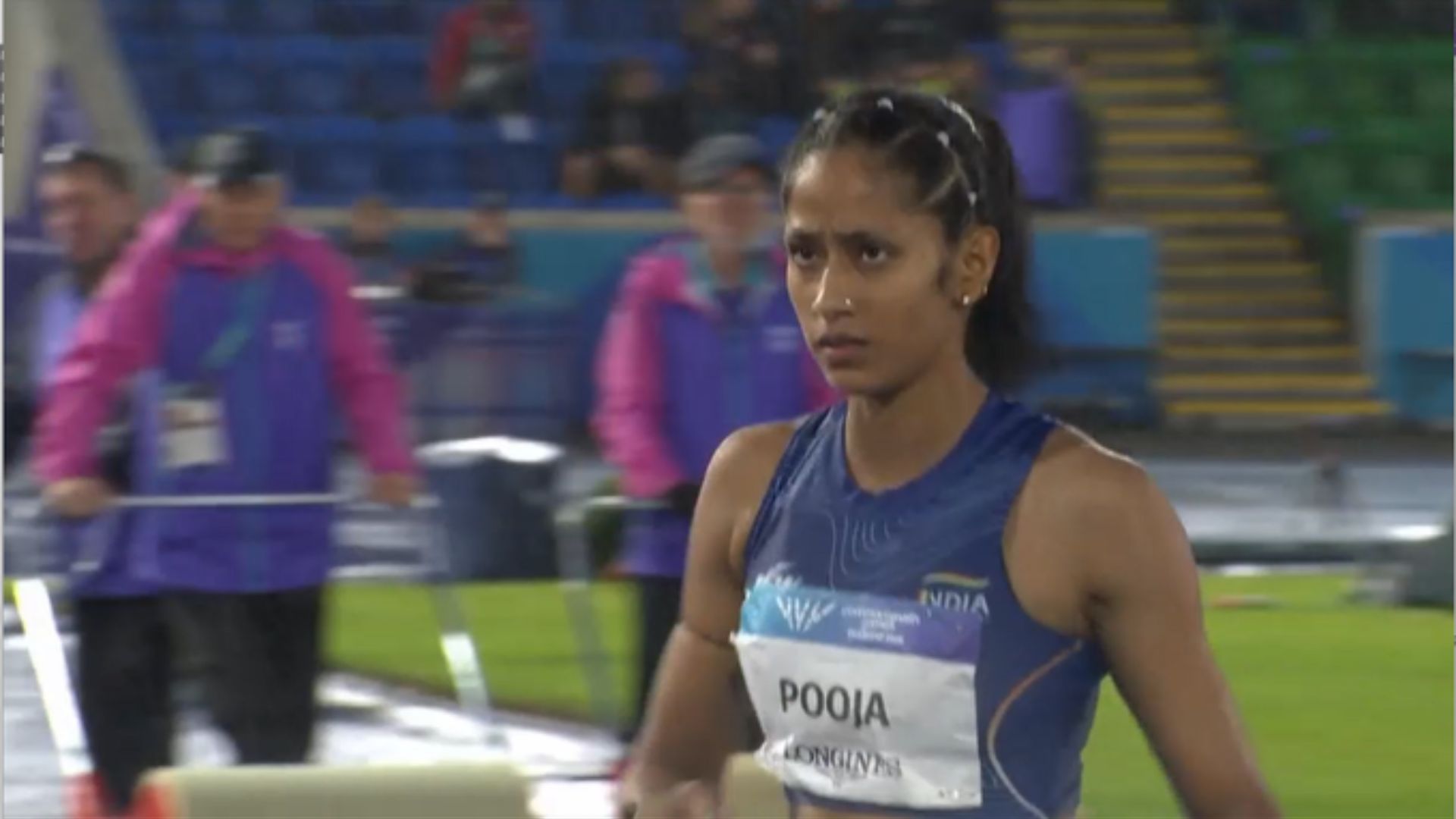
India’s Pooja saw her campaign in the women’s high jump final at the Commonwealth Games 2026 come to an end after failing to clear 1.82m in difficult weather conditions in Glasgow.
Competing in persistent rain, strong winds and chilly temperatures, the 19-year-old produced a determined display to negotiate the opening heights. She cleared 1.72m comfortably before going over 1.77m on her second attempt, keeping herself in contention despite the challenging conditions.
However, 1.82m proved elusive, ending her competition on a night when the weather tested every athlete in the field.
The progression of heights in the final was:
1.72m, 1.77m, 1.82m, 1.87m, 1.90m, 1.93m, 1.96m, 1.99m and 2.02m.
The wet and windy conditions made the competition particularly demanding. Between attempts, Pooja could be seen immediately putting on her cap and warm clothing to prevent her muscles from cooling down before her next jump.
She was assisted throughout the competition by Yoandri Betanzos, the World Championships triple jump silver medallist and JSW’s foreign jumps expert, who worked closely with her during the final.
At just 19 years old, Pooja was the youngest competitor in the women’s high jump final, gaining valuable experience on one of the biggest stages in international athletics.
She arrived in Glasgow after a breakthrough season in which she rewrote the Indian record books, clearing 1.93m to set a new national record and establish herself among Asia’s leading high jumpers.
Her achievements over the past year include:
- Asian Champion (Senior)
- Asian U20 Champion
- Asian Indoor Championships silver medallist
The consistent performances have underlined her reputation as one of India’s brightest young athletics talents.
Eugene Next
There is little time to reflect on her Commonwealth Games outing.
Pooja will now travel directly to Eugene, USA, where she will represent India at the World Athletics U20 Championships 2026. After a remarkable season highlighted by her national record of 1.93m, she will look to carry that form onto the global junior stage.
Although the Glasgow final did not produce the result she had hoped for, the experience of competing against senior international opposition in difficult conditions adds another important chapter to the development of one of India’s most promising field athletes.
By Sundeep Misra
At 2.25 metres, two jumps binned, it seemed curtains for Sarvesh Kushare. Up to that point, every mark had been cleared in a single, fluid rush of air. Then came the third attempt. Kushare sailed, the bar trembled on its pegs, and the few diehard Indian fans suffocated on their own breath. Then, a collective exhale – the bar held. The bar moved to 2.28m.
Three men remained: a Brit, a Jamaican, and an Indian. Decades ago, long before the Commonwealth found its modern sporting identity, the podium hierarchy would have been pre-written. Not this time. England’s Kimani Jack faded after two misses, settling for bronze. Jamaica’s Romaine Beckford and Kushare both hit a wall at 2.28m, failing to clear.
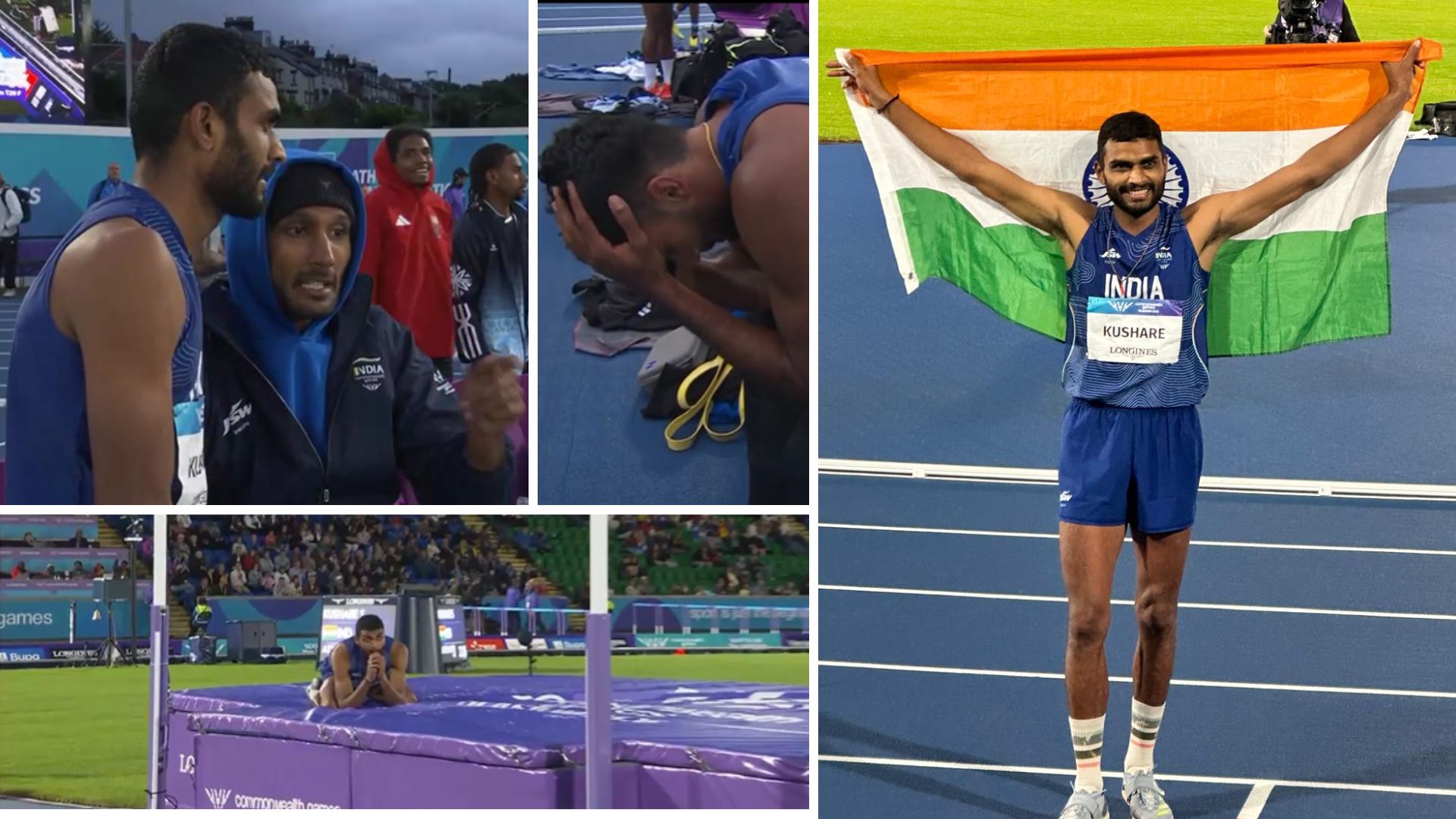
Sarvesh had the final jump of the competition, but the gold slipped through his fingers. It came down to the painful arithmetic of countback: Beckford had cleared 2.25m on his first try, Sarvesh on his third. That single aberration, call it an error, cost him the top step. Silver, though, was a triumph and the story behind it ran deeper than the result sheet. Earlier in the evening, Tejaswin Shankar (TJ) had withdrawn from the event leaving open the tantalizing question of what a fully fit TJ might have achieved alongside him. But instead of retreating to the warm-up track or the quiet of the athlete’s lounge, TJ stayed.
He sat on the athlete’s bench at the edge of the apron, refusing to leave Kushare’s side. Between every run-up, as the stadium light flickered and the cold evening breeze swirled across the pit, the two exchanged tips. TJ wasn’t just offering empty encouragement; the former national record holder was watching and dissecting the jumps. Stride adjustments, angle of Sarvesh’s plant foot would have been scanned and corrections made. High jump is a solitary discipline; one athlete, a crossbar, and the sky.
TJ and Sarvesh made it a team event. Silver was secured not just on pure adrenaline but on a shared brotherhood forged under the floodlights.
For more visit Commonwealth Games 2026
There are medals that are won on the field. And then there are moments that remind us why sport means so much beyond the podium.
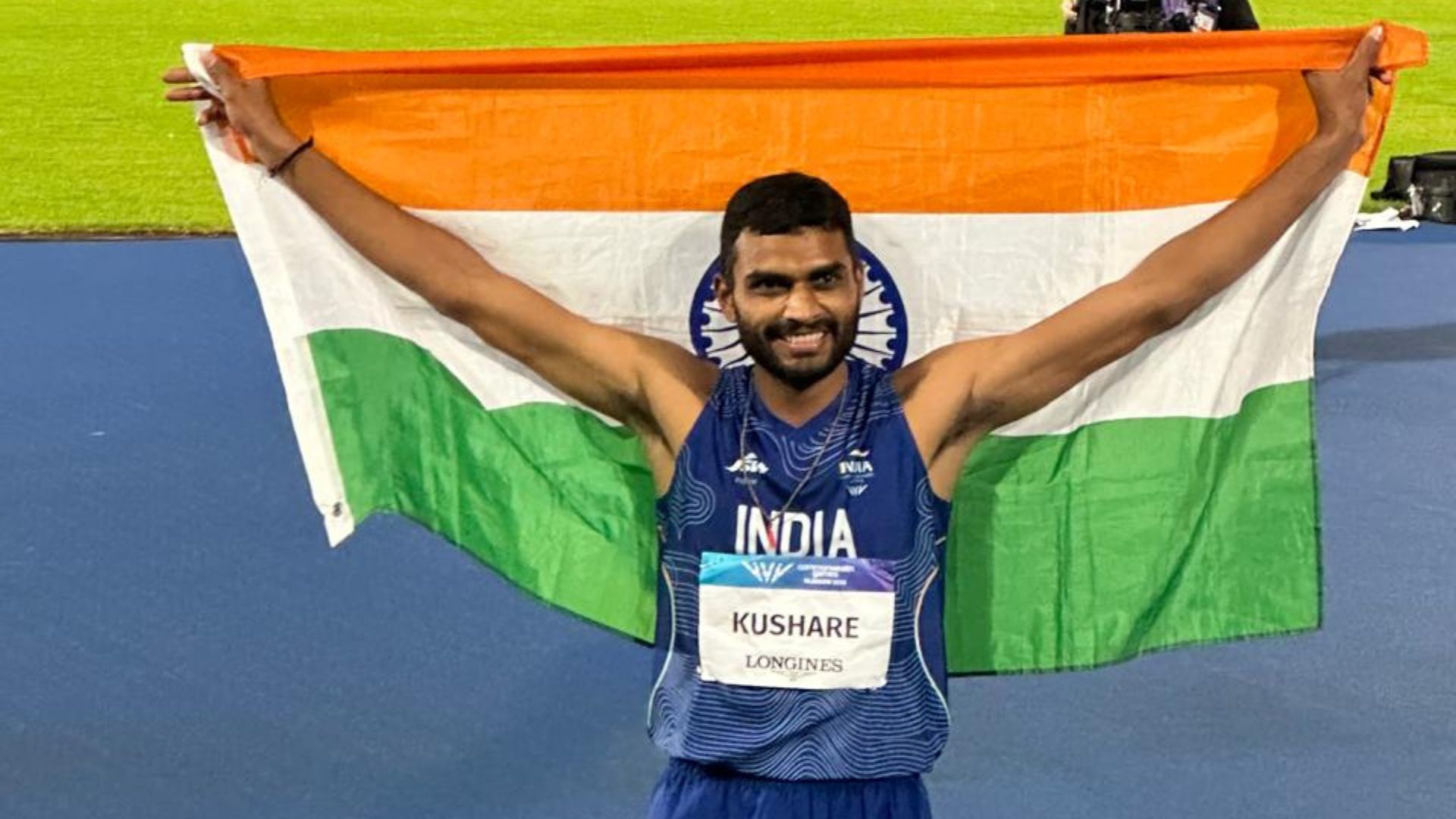
Moments after winning India’s silver medal in the men’s high jump at the Glasgow 2026 Commonwealth Games, Sarvesh Kushare wasn’t talking about his career-best performance or how narrowly he had missed out on gold.
Instead, he spoke about a teammate.
“Tejaswin supported me a lot today.”
Kushare had just cleared 2.25m, matching Jamaica’s Romaine Beckford, only to lose the gold on countback after requiring three attempts at the height. It was the finest Commonwealth Games performance of his career.
Yet his first instinct was to thank Tejaswin Shankar.
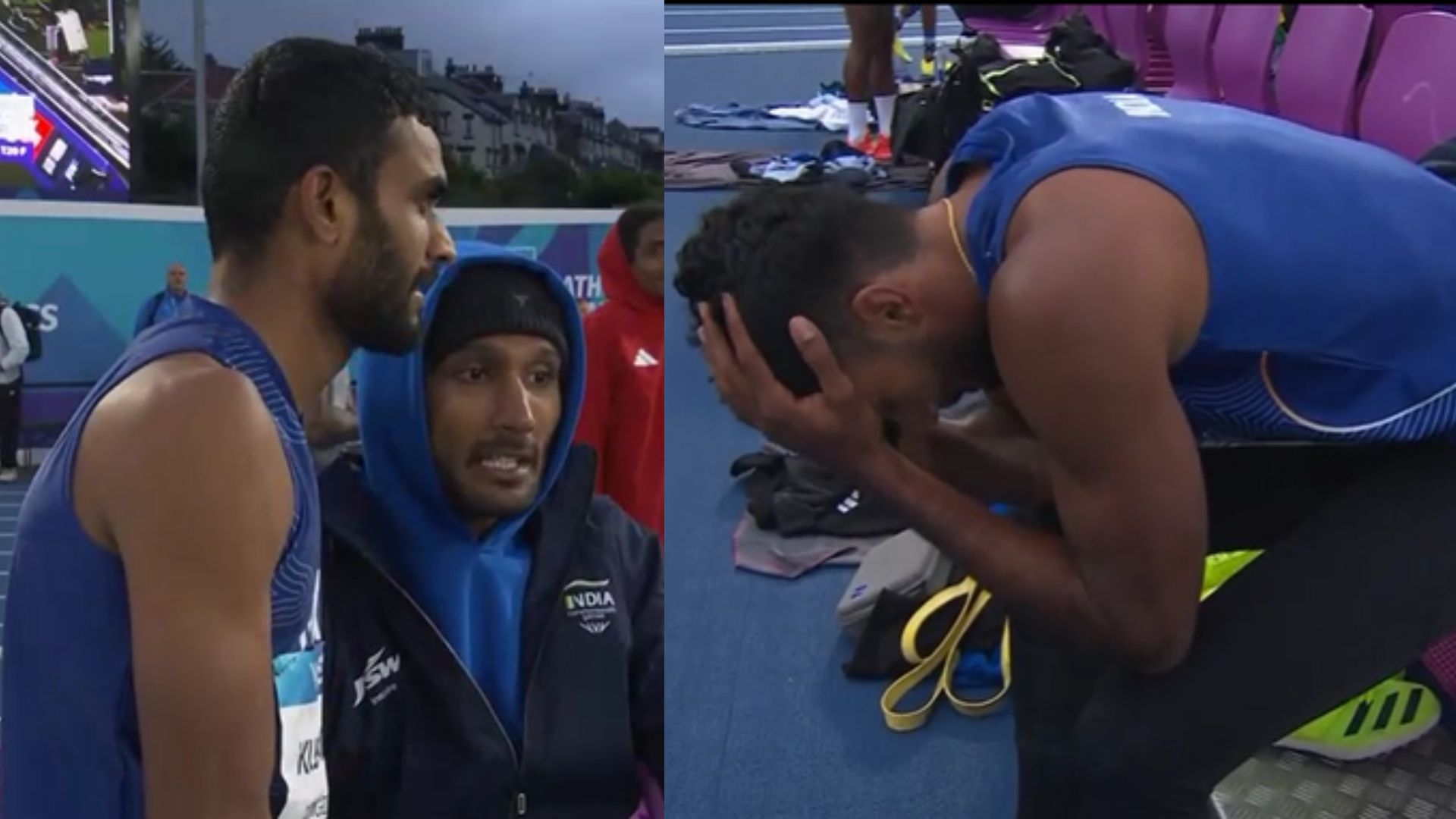
Earlier in the evening, Shankar’s own campaign had ended in heartbreak.
The defending Commonwealth bronze medallist was unable to clear his opening height of 2.05m and withdrew from the competition. It was a painful exit for one of India’s most accomplished high jumpers, who later admitted the disappointment still hurt.
“It’s one of those things that really stings.”
The emotion was evident as he spoke to the media. Few understand better than elite athletes how years of preparation can unravel in a matter of minutes.
But rather than retreat after his own disappointment, Shankar chose to stay.
He remained by the high jump pit for the rest of the competition, cheering every successful attempt by his Indian teammates. Every clearance by Sarvesh Kushare and Aadarsh Ram was met with encouragement from a teammate who, despite seeing his own medal hopes disappear, never stopped believing in theirs.
That support did not go unnoticed.
When Sarvesh stood on the podium with a Commonwealth silver medal around his neck, he made sure the world knew who had helped him get there.
It was a reminder that athletics is often portrayed as an individual sport, but behind every athlete is a network of coaches, family and teammates who celebrate every success and shoulder every disappointment together.
Shankar’s Commonwealth Games journey is not over. He is set to return to competition when the decathlon begins on 30 July, carrying with him not just the disappointment of the high jump, but also the admiration of teammates who witnessed his character in defeat.
For Sarvesh, the silver medal will always be remembered as the night he came within a countback of Commonwealth gold.
For many watching, it will also be remembered as the night one Indian athlete’s heartbreak became another Indian athlete’s strength.
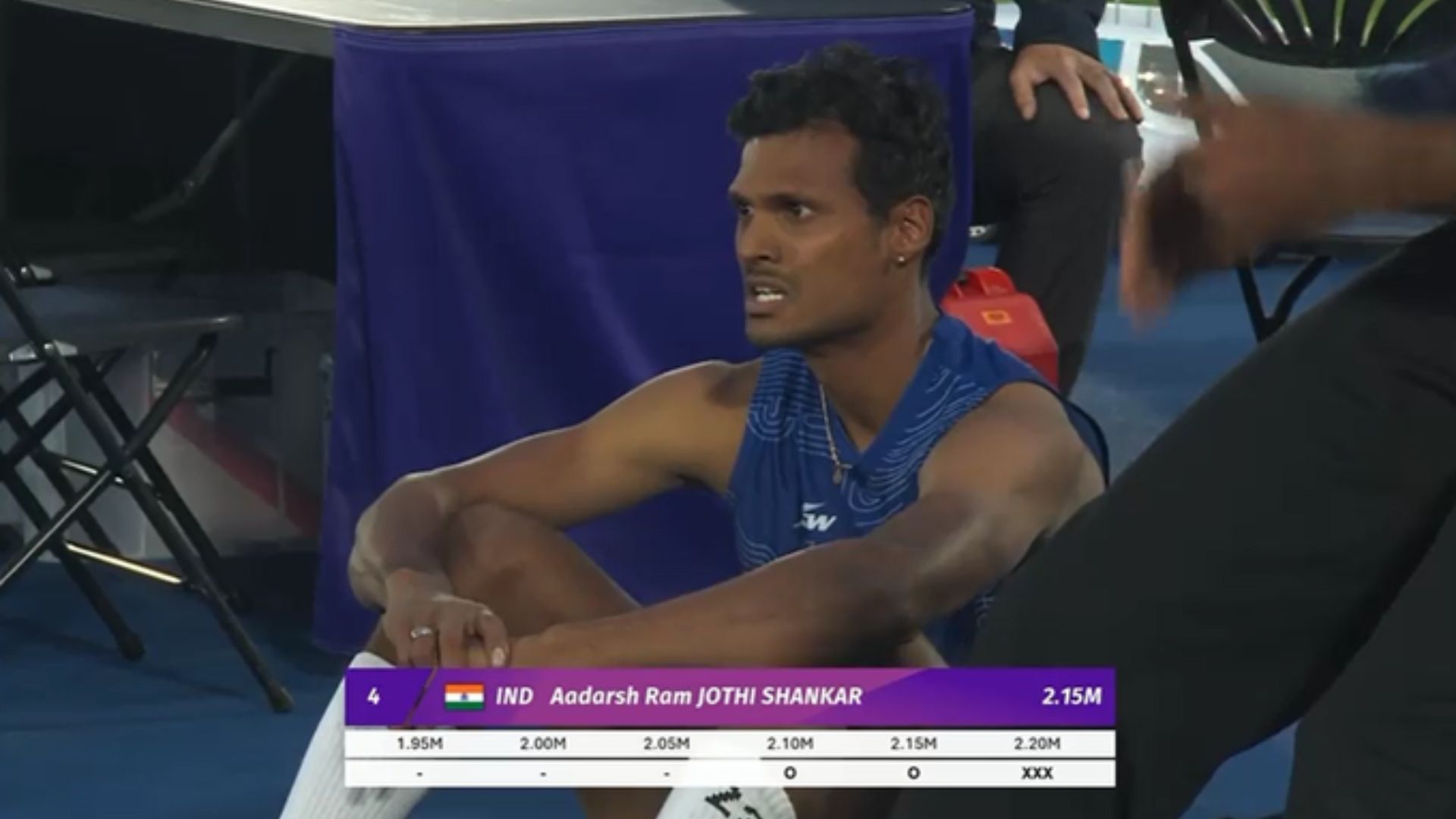
India’s Aadarsh Ram produced a creditable performance to finish fifth in the men’s high jump final at the Glasgow 2026 Commonwealth Games, clearing a best height of 2.15m.
Competing in his first Commonwealth Games final, the Indian high jumper made a confident start to the competition, clearing 2.10m at the first attempt before successfully negotiating 2.15m, again on his first try.
The bar was then raised to 2.20m, where Aadarsh fought hard but was unable to clear the height despite three determined attempts, bringing his campaign to an end.
His best clearance of 2.15m was enough to secure fifth place in a high-quality field that featured some of the Commonwealth’s top jumpers.
The performance capped an encouraging outing for the young Indian, who held his own on one of the biggest stages in the sport and gained valuable experience at the elite level.
India enjoyed a memorable evening in the men’s high jump, with Sarvesh Kushare claiming the silver medal after clearing 2.25m, while Aadarsh’s top-five finish underlined the growing depth in Indian high jumping.
Although he narrowly missed out on the podium, Aadarsh leaves Glasgow with a Commonwealth Games final appearance and another important step forward in his international career.
So close to gold. So proud in silver.
India’s Sarvesh Kushare produced the performance of his career to win the silver medal in the men’s high jump at the Glasgow 2026 Commonwealth Games, clearing 2.25m to stand on the Commonwealth podium for the first time.
In a gripping contest, Kushare matched Jamaica’s Romaine Beckford clearance for clearance, with both athletes successfully negotiating 2.25m. The gold medal, however, was decided not by height, but by the narrowest of margins—the countback rule.
Beckford cleared 2.25m on his first attempt, while Kushare needed all three attempts to get over the bar. With both athletes failing at the next height, that single difference proved decisive, handing the Jamaican the gold and leaving the Indian with silver.
Final Standings
 Romaine Beckford (Jamaica) – 2.25m
 Sarvesh Kushare (India) – 2.25m
 Kimani Jack (England) – 2.20m
For Kushare, though, this was a performance that announced India’s growing stature in the high jump. The national record holder refused to be overawed by the occasion, matching one of the world’s best jumpers and forcing the competition to be settled on countback.
The silver medal is richly deserved reward for years of perseverance and consistency. On a night when just one first-time clearance separated gold from silver, Sarvesh proved he belongs among the Commonwealth’s elite.
It may not have been the colour he dreamed of, but the way he fought for every centimetre made this one of India’s standout performances of the Games.
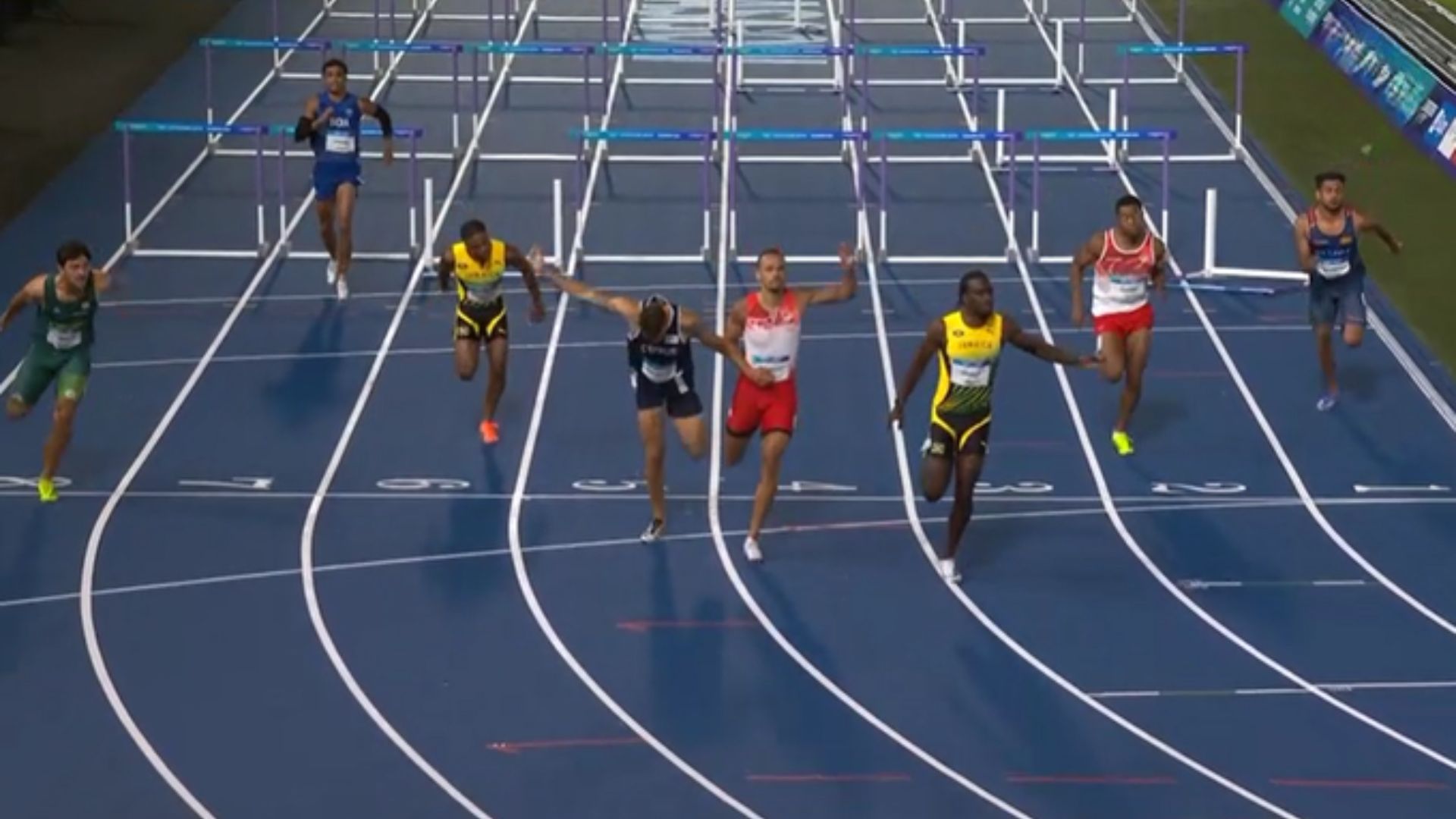
India’s national record holder Tejas Shirse finished eighth in the men’s 110m hurdles final at the Glasgow 2026 Commonwealth Games, clocking 15.39 seconds in a race that ended on a worrying note for the Indian hurdler.
Shirse appeared to be in visible discomfort after clearing the final hurdle and crossing the finish line. The exact nature of the issue was not immediately known, though the incident raised concerns after what had been an encouraging comeback season for the 22-year-old. The Indian athletics fraternity will be hoping the injury is not serious.
The Maharashtra hurdler had qualified for the final earlier in the day by finishing third in his heat with a time of 13.76 seconds, earning an automatic qualification berth.
His appearance in the Commonwealth Games final capped a remarkable return after a lengthy injury layoff. Earlier this season, Shirse announced his comeback in style by clocking 13.27 seconds, breaking the long-standing Indian national record in the men’s 110m hurdles and securing qualification for Glasgow.
That performance established him as India’s fastest-ever sprint hurdler and marked one of the standout moments of the domestic athletics season.
Although the Commonwealth Games final did not unfold as he would have hoped, merely returning from a prolonged injury absence to reach a major championship final represents a significant milestone in his journey.
With age on his side and the national record already in his possession, Shirse remains one of the brightest prospects in Indian athletics. Attention will now turn to his recovery, with hopes that the setback in Glasgow proves to be only a temporary interruption to an otherwise promising season.
India’s Murali Sreeshankar continued his remarkable consistency in 2026 by qualifying for the men’s long jump final at the Glasgow Commonwealth Games, comfortably clearing the automatic qualification mark with his very first jump.
The defending Commonwealth Games silver medallist needed just one attempt, soaring to 8.01m in still conditions (0.0 m/s wind) to breach the 8.00m automatic qualification standard and secure his place in the medal round.
The effort saw Sreeshankar finish third overall in the qualification standings, reinforcing his status as one of the leading contenders for a podium finish.
The qualification performance is the latest in what has been an outstanding season for the Indian long jumper. Sreeshankar has crossed the eight-metre barrier in every competition he has contested this year, underlining both his consistency and world-class form.
His performances in 2026 include:
- 8.15m – Indian Athletics Series 1
- 8.12m – Simbine Classic
- 8.04m – Indian Athletics Series 6
- 8.08m – Federation Cup
- 8.38m – National Inter-State Championships
- 8.01m – Commonwealth Games Qualification
The highlight of his campaign remains the 8.38m leap at the National Inter-State Championships, one of the finest performances by an Indian long jumper and a statement ahead of the Commonwealth Games.
Having won silver at the Birmingham 2022 Commonwealth Games, Sreeshankar arrived in Glasgow as one of India’s strongest medal hopes in athletics. His composed qualification performance, achieved with minimal effort, suggests he has timed his preparations well for the final.
With qualification secured at the first opportunity, the focus now shifts to the medal round, where Sreeshankar will look to build on his exceptional season and improve upon the silver medal he claimed four years ago.
For more visit Commonwealth Games 2026