





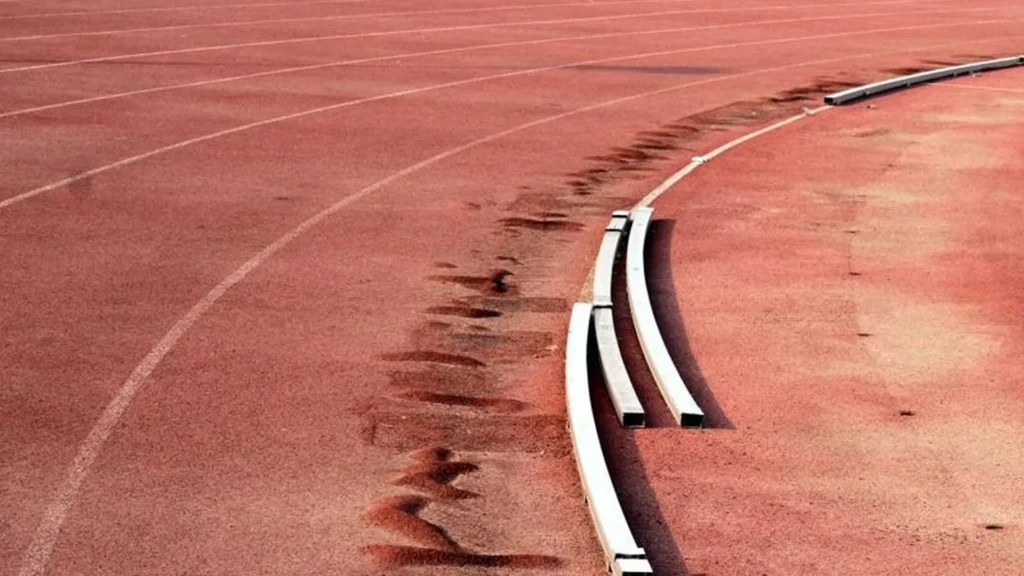
The Sports and Field Builders Association has challenged the eligibility conditions introduced by the Athletics Federation of India (AFI) for empanelling agencies to construct World Athletics-approved tracks. The legal dispute comes months after Adille Sumariwalla raised concerns about the quality of synthetic athletics tracks across India.
The construction and certification of athletics tracks in India have become the subject of a legal dispute.
The Sports and Field Builders Association has approached the Delhi High Court, challenging certain conditions in AFI’s notice dated August 31, 2026, inviting applications from agencies for empanelment to construct and lay synthetic athletics tracks.
The association has argued that some of the conditions go beyond AFI’s authority and could prevent certain agencies, including its member companies, from participating in the empanelment process.
The case, titled Sports and Field Builders Association vs Athletics Federation of India & Ors, was heard by Justice Amit Mahajan on September 30, 2026.
The Delhi High Court issued notice to the respondents, asking them to file their replies, if any, within four weeks. The matter was listed for the next hearing on November 20, 2026.
However, the court has not yet ruled on the validity of AFI’s conditions. The September 30 order records the petitioner’s objections but does not specify every individual clause being challenged.
What are the conditions introduced by AFI?
On August 31, 2026, AFI issued a notice inviting applications from agencies involved in the construction, installation and maintenance of synthetic athletics tracks.
The federation introduced a two-category system for empanelling agencies: Category A and Category B.
The objective is to create a list of qualified agencies that meet specified financial, technical and experience-related requirements before undertaking track construction projects.
Some of the major conditions include:
1. Financial eligibility
- Category A agencies must have a minimum average annual construction turnover of ₹20 crore over the last five financial years.
- Category B agencies must have a minimum average annual construction turnover of ₹7.5 crore over the same period.
2. Previous experience
- Category A agencies must have independently completed at least five synthetic athletics tracks in India during the previous five years, including the complete sub-base, lane marking and World Athletics certification. They must also have experience in constructing at least one World Athletics Class 1-certified track.
- Category B agencies must have independently completed at least three synthetic athletics tracks during the previous five years, with each track covering a minimum area of 3,000 square metres.
Both categories must also demonstrate experience in track refurbishment, resurfacing and maintenance.
3. Technical qualifications
Agencies must use synthetic surface products holding a valid World Athletics Product Certificate and have the necessary manufacturer authorisation.
They must also have trained technical staff, including an in-house designer or architect, a professional surveyor and a certified line marker, along with the required machinery and equipment.
4. Application and certification fees
The notice introduced a non-refundable application fee of ₹5 lakh for Category A agencies and ₹2 lakh for Category B agencies.
AFI also specified a fee of ₹4 lakh for a provisional certificate for each newly laid synthetic surface. Expenses for expert visits, surveying and testing are payable separately by the contractor.
5. Mandatory inspections and testing
AFI has proposed a monitoring process at different stages of construction.
The track layout must be approved by AFI before construction begins. Inspections will take place during the preparation of the base and after completion of the synthetic surface.
Measurements will be carried out by an AFI-certified surveyor, while testing and product identification will be conducted through a World Athletics-accredited laboratory.
The notice also states that AFI will not conduct its competitions on tracks that have not received AFI certification.
Why has AFI introduced these conditions?
The new framework follows serious concerns raised by Adille Sumariwalla, former AFI President and current Vice-President of World Athletics, about the quality of synthetic athletics tracks in India.
On April 18, 2026, Sumariwalla claimed that more than 90 per cent of the country’s synthetic tracks were substandard in terms of materials, construction, thickness, measurements and lane markings.
He said World Athletics had raised concerns about the quality of tracks being certified in India. He also revealed that during a meeting in Tokyo, alongside the 2025 World Athletics Championships, the international governing body had shared data with AFI officials that was particularly concerning.
Sumariwalla pointed out that some tracks were being constructed using inferior materials, including tyre rubber instead of proper polyurethane-based synthetic surfaces.
According to him, poor construction methods and unsuitable materials could affect both athletes’ performances and the lifespan of a track.
He explained that a track designed to last around 10 years could deteriorate within just two years if the materials and construction methods were not up to the required standards.
Importantly, he clarified that existing World Athletics-certified tracks would not automatically lose their certification because of these quality concerns. He also said that athletes’ existing performances would not be annulled simply because a track had quality issues.
AFI decides to take responsibility for track quality
Following these concerns, AFI discussed synthetic track certification during its Annual General Meeting held in Kohima, Nagaland, on April 14 and 15, 2026.
The federation approved a proposal to introduce certification for newly laid synthetic surfaces in India and prepare a list of approved vendors with prior experience.
Sumariwalla explained that AFI had stayed away from the track construction and certification process for a long time. However, following discussions with World Athletics, the federation decided to become more actively involved in monitoring the quality of newly constructed tracks.
AFI also conducted a technical course with foreign experts to educate Indian officials about the correct methods of laying, measuring and testing synthetic athletics tracks.
The objective was to ensure that the right materials were used, construction followed international specifications and tracks could meet the required standards.
What is the difference between World Athletics Class 1 and Class 2 certification?
World Athletics has a certification system for athletics facilities to ensure that tracks meet international technical requirements.
However, Class 1 and Class 2 certifications have different testing requirements.
Class 1 certification
This is a full facility certification covering all technical requirements. It requires accurate track measurements and an on-site synthetic surface test conducted by a World Athletics-accredited laboratory.
Class 2 certification
This is issued to facilities that have a valid World Athletics-certified synthetic surface product and meet the required measurement standards, but have not undergone the same on-site surface testing required for Class 1 certification.
It is important to understand that approval of a synthetic surface product and certification of a complete athletics facility are not the same thing. A certified product alone does not automatically mean that the entire track has received a World Athletics facility certificate.
AFI’s new framework aims to introduce greater monitoring of the construction process before a completed facility is submitted for the relevant World Athletics certification.
What does the dispute mean for Indian athletics?
The dispute is about more than the selection of construction companies. It concerns the future of athletics infrastructure in India.
On one side, AFI wants to ensure that newly constructed tracks use the correct materials, follow international technical standards and provide athletes with suitable facilities for training and competition.
On the other side, the builders’ association has raised questions about the eligibility conditions and whether some of these requirements could prevent its members from participating in the process.
The financial turnover requirements, previous project experience, application fees and certification procedures are important parts of this debate.
AFI’s notice also makes it clear that empanelment only means an agency is included in a list of qualified builders. It does not guarantee that the agency will receive a construction contract.
Ultimately, two important questions are at the centre of this dispute: how can India ensure better-quality athletics tracks, and how should the process of selecting agencies be structured?
With the matter listed before the Delhi High Court for November 20, 2026, the proceedings could have implications for how athletics track construction and certification are managed in the country.
For Indian athletes, the larger objective remains access to properly constructed, durable and internationally compliant athletics facilities.