





By Sundeep Misra
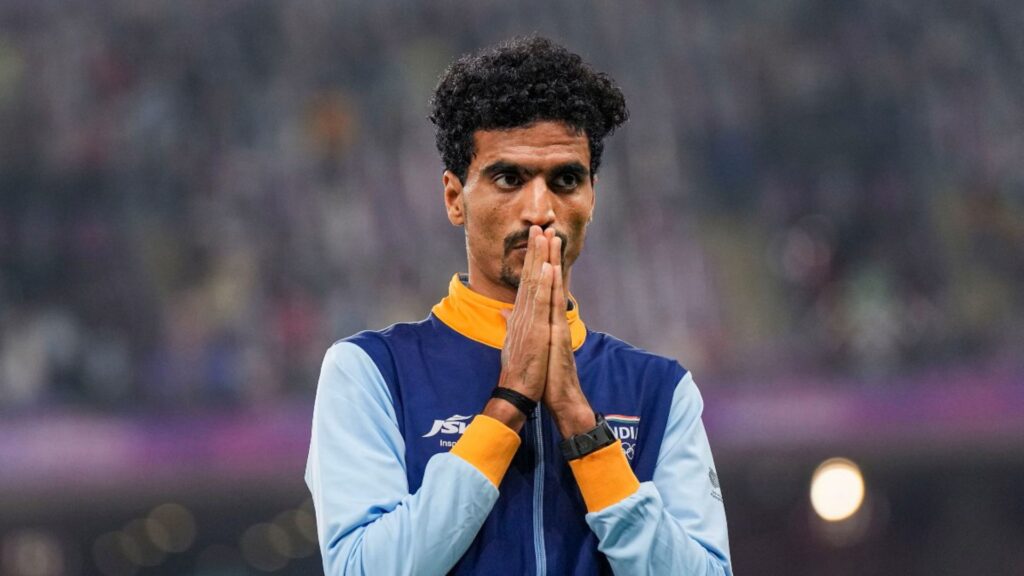
Gulveer Singh is a mix of potential and talent wrapped up in a nation’s expectation. Expectation itself is a common theme borne across life, extending far beyond sport or, in the Indian athletic context, to Gulveer alone. Virtually everything is an extension of everyone’s expectation, it’s only the quotient that alters, less or more. In Gulveer’s case, it is always on the higher side. Especially if you look at the last two seasons.
To expect Gulveer to produce something extraordinary in Glasgow is to ask him to conquer territory where no Indian has ever set foot, the podium in the 5,000m and 10,000m. It defies logic at times as to why we have been unable to produce quality long-distance runners consistently every decade; we have always thrown up a few, but those few have been sporadic.
Glasgow is a beast that Gulveer will not only have to mount but also control and steer his way. In an event that, after the Anglo-Saxons, has been heavily dominated by East Africans – specifically Ugandan and Kenyan runners – for Gulveer to move past them and hit the podium will require not just extraordinary ability, but a different form of resilience: the grit to stay in the lead pack consistently.
The tactical awareness required at the Commonwealth Games operates on another level. Opponents force you into thinking differently than whatever pre-race tactics you might have prepared. Gulveer’s sub-13 national record of 12:59.77 in the 5k puts him firmly in the elite lead pack. His 10,000m national record of 27:00.22 borders on world-class but converting that into a medal requires a lethal final 400-meter kick.
Kenenisa Bekele, who won three golds and a silver across the 5k and 10k at the 2004 and 2008 Olympic Games, once noted: “At 400 meters to go, pure instinct takes over. The pace goes from a tempo rhythm to an all-out sprint. It is very hard, but when you are at the front, you just drive yourself.”
The evolution in Gulveer’s running style, transitioning to a more open-chested posture and shifting from a regional star to a global threat, has been masterminded by his coach, Scott Simmons. Training under Simmons in Colorado Springs involves a high-mileage, scientifically backed regimen. The fruits of that labour were visible early this year when Gulveer clocked a blistering sub-60 minute at the NYC Half Marathon.
Former 10,000m national record holder, Beijing Olympian, and Gulveer’s former coach, Surendra Singh, believes Glasgow offers a genuine shot at a podium finish. “At the CWG level, everybody has trained to come there looking for a medal,” he says. “Gulveer is in the top six, so it’s mental strength that will stand out. In the last 200 meters, if four to six runners are in a pack with Gulveer among them, it becomes a case of calmness over anxiety. And I do believe that he has trained for it.”
On the track in such high-stakes situations, success hinges on moulding that final kick, whether it comes in a fast-paced time trial or a slow, tactical affair. Many coaches call it the default macro-move: a card up your sleeve pulled out only when the tactical match is done and you need that extra gear to clear the decks. In international meets, including the Olympics and World Championships, the best runners always anticipate what the top guys will do rather than merely responding to it.
In India and elsewhere, the words ‘potential’ and ‘talent’ are sexy. For years, you can carry them in your backpack without creating a ripple on the world stage, the one stage that really matters. For decades, even now, national records are celebrated as the pinnacle of achievement. In reality, a national record is only a marker; it just means you stand out among a local bunch. Potential and talent do not automatically yield a podium. There are hundreds of microscopic wires that must intertwine perfectly to create an Olympic, World Championship, or CWG medallist. Ask Avinash Sable, 3000m steeplechase bronze medallist at the last CWG!
A striking blueprint of this was seen at the 2025 Tokyo World Championships. It is often the lone wolf that dismantles the pack. What France’s Jimmy Gressier and Sweden’s Andreas Almgren achieved in that agonizingly slow Tokyo 10,000m final is something Gulveer has already witnessed from the outside. The script is ready for him.
Surrounded by Olympic champions and the royalty of East African distance running, Gressier and Almgren shocked the field. With an open-mouthed look of disbelief at the finish line, the Frenchman took gold, while Almgren secured a historic bronze for Sweden.
The lessons for Gulveer are deeply embedded in that Tokyo race. It is easy to simplify it and say that Gressier merely sat back in the belly of the pack for a majority of the race while the favourites carried the burden of dictating the flock. But the real lesson was the total absence of panic from Almgren and Gressier, even when the pace dropped to a crawl. Yes, things could have gone differently, but they didn’t. Instead of letting anxiety take over, Gressier waited for the absolute final centimetres of the race to explode from sixth place to first, capitalizing brilliantly on the front-runners’ hesitation. When they moved, they broke the psychological grip of the lead pack. As Gressier later proclaimed: “Today, I beat East Africa… The field is levelling.”
When Gulveer stands on the starting line at the Commonwealth Games, he will likely be the lone blue jersey in a sea of red, black, and green. It will feel intensely lonely. The heart will thud. The roar of the stadium will envelope him just before the sudden, heavy hush.
But he can take heart from Tokyo: in the longer distances, the landscape is shifting. His sub-13 in the 5,000m and his 59-minute half-marathon strength mean he has no reason to fear a fast race or a slow one.
Gulveer needs to embrace the isolation; most distance runners eventually get used to it. The great ones see being a lone outsider not as a disadvantage, but as a form of supreme tactical freedom. Let the big guns dictate the pace and fight it out in the initial laps. When the group finally starts to splinter, and the mind takes over the race from the legs, Gulveer needs to be hanging right in there ready to become the one element they never saw coming.