




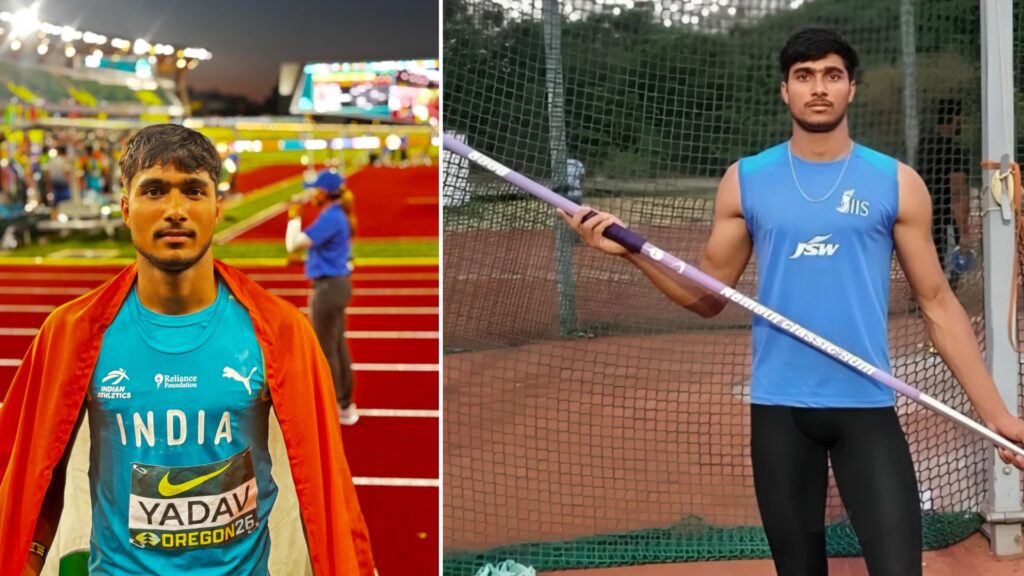
It is no surprise that the global dynamics of the javelin are undergoing a fundamental transformation. For decades, the event operated in the exclusive domain of Europe, but that geopolitical map in track and field is rapidly shifting. Led by a rising surge across Asia and Africa—evidenced by South Africa’s Jan-Hendrik Heymans taking gold and India’s Ashish Yadav securing silver in Eugene, Oregon—the event is democratizing. India is no longer an isolated anomaly riding solely on Neeraj Chopra’s individual genius; it is quietly establishing an enduring footprint on the global stage.
At 19 years old, Yadav’s podium finish at the World U20 Athletics Championships with a 74.09m effort marks a decisive moment for Indian athletics. Coming a decade after Chopra’s historic gold in 2016, Yadav became only the second Indian thrower to win a world junior javelin medal. What makes the achievement stand out is not merely the silverware, but what it signals about India’s maturing talent pipeline. The ability to identify raw athletic potential in non-traditional belts and convert it into world-class performance points to a structural shift in how the nation approaches Olympic discipline development.
Yadav’s journey is typical of India’s rural sports landscape. Coming from Mawaiya village in Mirzapur, Uttar Pradesh, sporting glory was the last thing on his mind—economic survival took priority. He assisted his father in milking cows and delivering milk to nearby households. His early training was rudimentary; the simple flight of wooden spears was what initially excited him.
Like any athlete’s turning point, Yadav’s came when his training environment changed: first at the Inspire Institute of Sport and later at the IIS-SAI centre in Hisar under coach Arvind Kumar. Within 15 months, sports nutrition, biomechanical monitoring, and targeted physical conditioning moulded a different athlete. He added bulk to his lean frame and increased his throw by almost 15 to 20 meters, pushing his distances close to 80m.
The path was far from easy. Yadav suffered a Posterolateral Corner (PLC) knee injury. Yet, despite that setback and the intense pressure of competing in his first global championship, he managed a 74.09m throw—speaking volumes of his resilience and hunger to win.
“I thought if I could do well in the sport, I could get a job,” Yadav revealed in an interview with Sportstar, reflecting the pragmatic mindset that initially drove his athletic pursuit.
Even as India consolidates its reputation as a formidable javelin nation, young throwers face the daunting shadow of Chopra’s achievements. Yadav is quick to distance himself from premature comparisons, recognizing the vast ground he still needs to cover.
“Neeraj bhai is an inspiration for taking up the javelin… I still have a lot more to do, so I don’t want to be compared to Neeraj bhai,” Yadav told The Indian Express following his medal-winning throw. “This medal is a good start for me because it proved that I can compete at the highest level and finish on the podium.”
As javelin dominance disperses beyond traditional strongholds, India’s ability to consistently place athletes on junior world podiums confirms that its grassroots system is finally matching its international ambitions. Yadav’s world junior silver demonstrates that India’s presence at the top of field athletics is evolving from a single superstar narrative into a sustained, long-term pipeline.