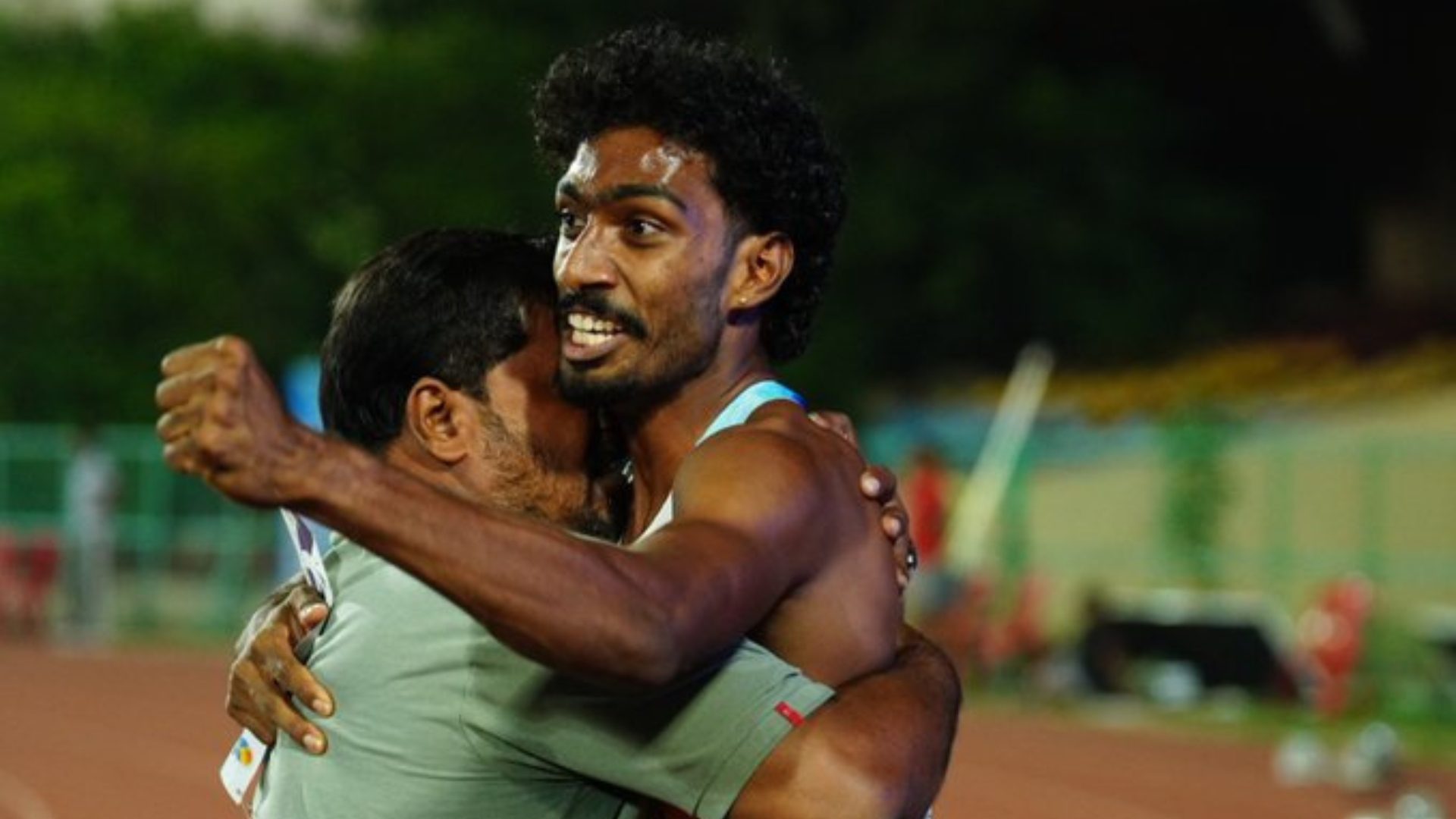

The men’s 400m final at the 65th National Inter-State Senior Athletics Championships 2026 produced one of the most exciting races of the competition, with all three medal winners surpassing the Asian Games qualification standard of 45.97s in a display of exceptional depth in Indian quarter-mile running.
Representing Tamil Nadu, Vishal TK stormed to the national title with a superb run of 45.43s, producing one of the finest performances of his career. Maintaining his rhythm through the final bend and finishing strongly in the home straight, Vishal secured the gold medal while comfortably achieving the Asian Games qualification standard.
Kerala’s Manu TS claimed the silver medal after clocking 45.60s, remaining within striking distance of the winner throughout the race. His impressive performance also placed him well inside the qualification benchmark, reinforcing his credentials as one of India’s leading 400m runners.
The bronze medal went to Jay Kumar of Uttar Pradesh, who crossed the finish line in 45.73s. Despite finishing third, Jay also comfortably dipped below the qualification standard, completing a remarkable sweep by the podium finishers.
The final was a testament to the growing strength of Indian men’s one-lap running. With all three medalists running under 45.97 seconds, the event highlighted the depth that has developed in the discipline and reflected the high level of competition within the domestic circuit.
The close contest among the leading athletes ensured an exciting finish, with each of the medal winners producing qualification-standard performances under championship conditions. Such results provide a major boost for Indian athletics as preparations continue for the Asian Games.
The Interstate Championships have once again demonstrated their importance as a platform for athletes to achieve qualification standards and compete against the nation’s best. Vishal TK’s title-winning performance, combined with outstanding runs from Manu TS and Jay Kumar, made the men’s 400m final one of the highlights of the championships and reinforced India’s growing reputation as a producer of world-class quarter-milers.
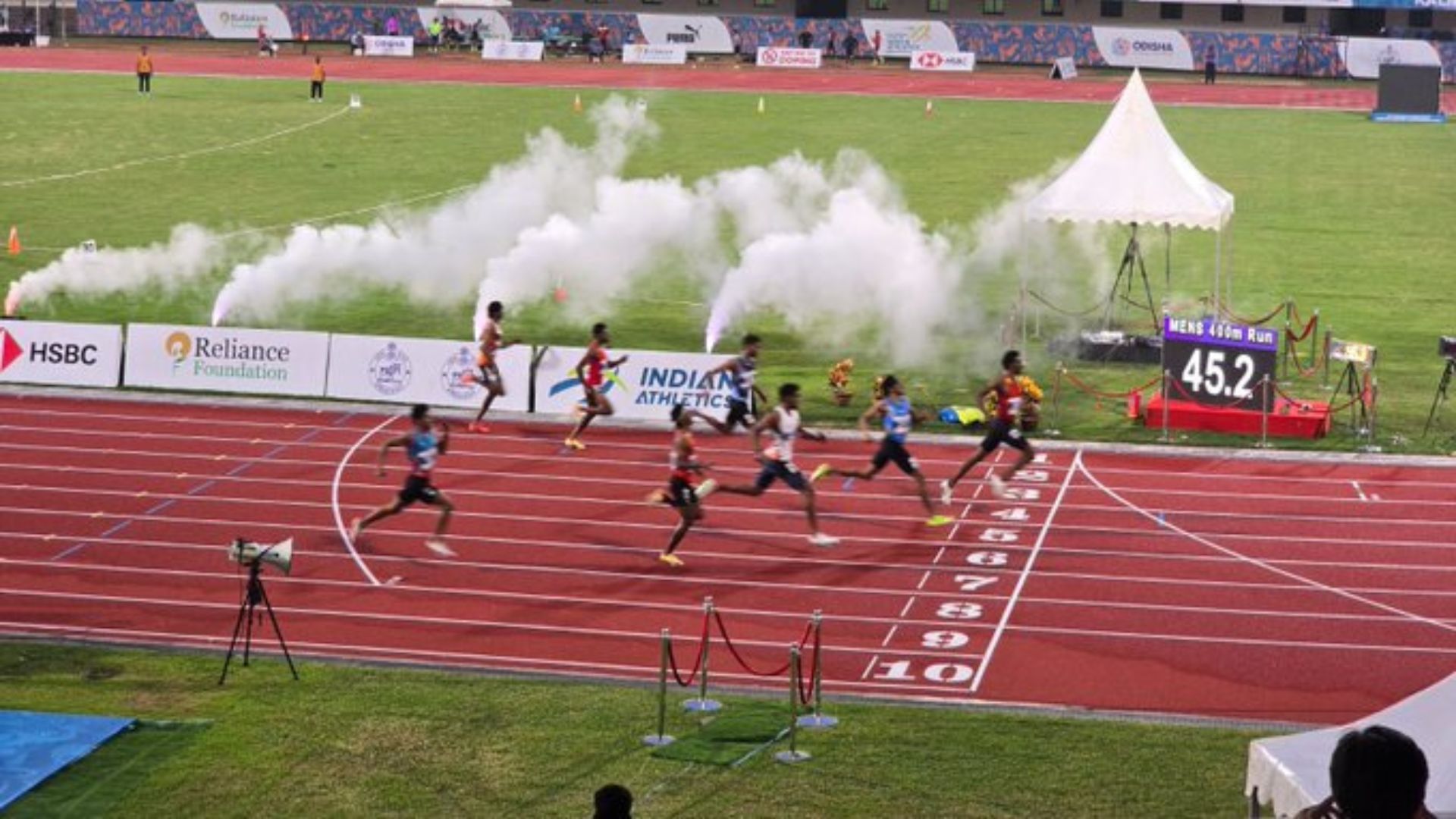
Animesh Kujur clinched the men’s 100m title at the 65th National Inter-State Athletics Championships, clocking 10.28 seconds to finish ahead of Maharashtra’s Pranav Gurav, who took silver in 10.39 seconds. While the victory added another national title to Kujur’s growing collection, the final proved to be a disappointing outing for India’s leading sprinters.
Both Kujur and Gurav finished well outside the Asian Games qualification standard of 10.16 seconds, with neither athlete able to produce the kind of times that have recently raised expectations for Indian men’s sprinting.
The result was particularly underwhelming given the extraordinary performances witnessed at the Federation Cup just weeks ago. There, Gurindervir Singh became the first Indian man to break the 10.10-second barrier, setting a sensational national record of 10.09 seconds. The competition also saw the national record rewritten multiple times as Gurindervir and Kujur pushed each other to historic performances, with Kujur himself clocking 10.15 seconds before Gurindervir lowered the mark even further.
Those performances signalled a new era for Indian sprinting and suggested that consistently fast times were becoming the norm. Against that backdrop, the Inter-State final failed to live up to expectations.
Kujur remains one of India’s finest sprinters and has enjoyed a breakthrough season, establishing himself among the country’s fastest ever athletes and emerging as a genuine contender on the Asian stage. However, his winning time of 10.28 seconds was well below the level he has shown himself capable of producing.
With the Asian Games qualification mark still out of reach in this race, India’s top sprinters will now be hoping to rediscover their record-breaking form in the competitions ahead.
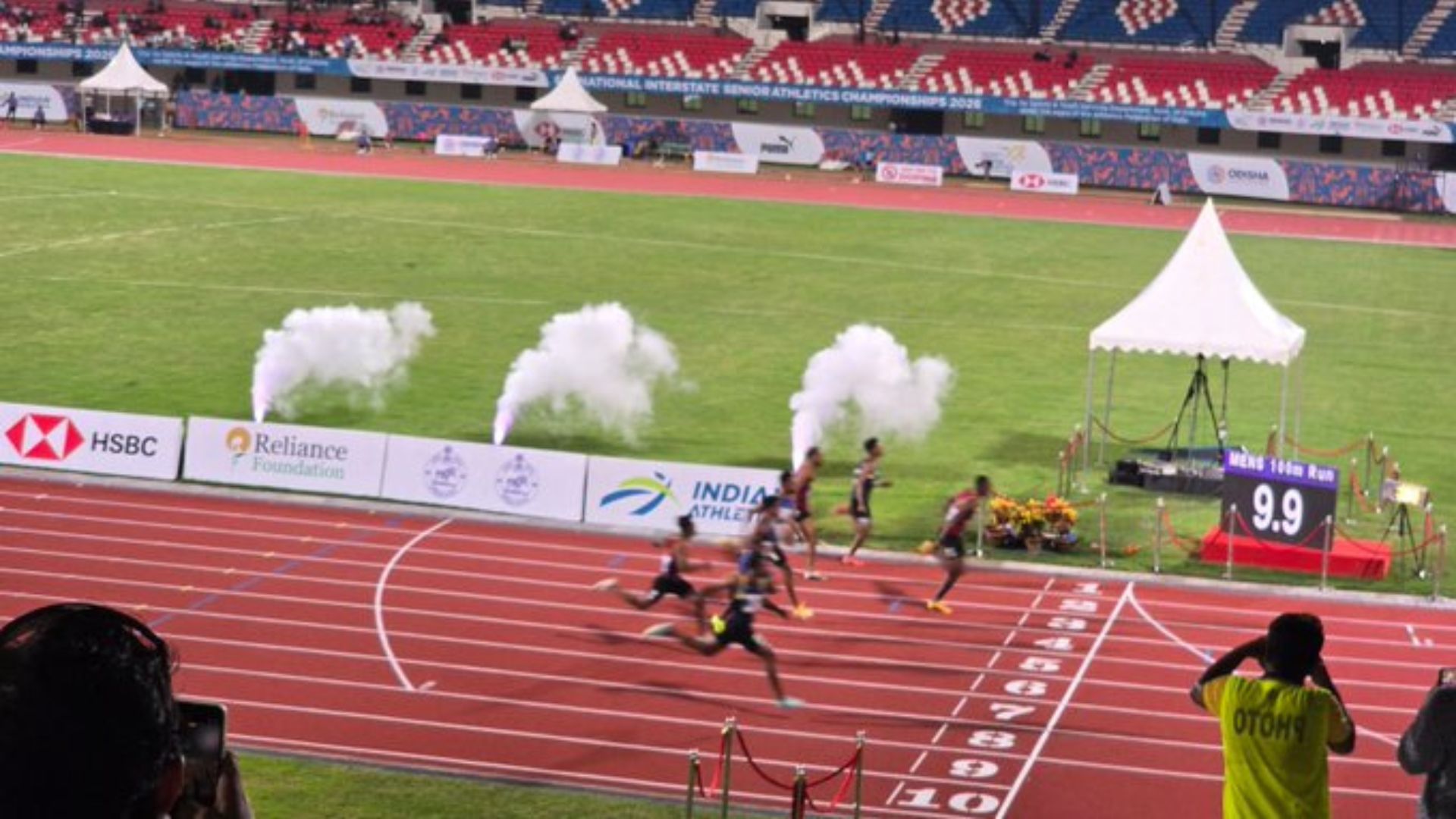
India’s sprint sensation Animesh Kujur comfortably booked his place for the Asian Games 2026 after clocking 20.87 seconds in the men’s 200m heats at the ongoing 65th Interstate Athletics Championships 2026.
The performance saw Kujur go under the Asian Games qualification standard with ease, continuing what has been a remarkable rise for one of India’s most exciting track athletes.
His qualification came as little surprise. Over the past two seasons, Kujur has established himself as India’s premier male sprinter, consistently rewriting national records and pushing Indian sprinting into uncharted territory.
Earlier this year, the Odisha athlete became the first Indian man in history to break the 20.50-second barrier in the 200m, setting a national record of 20.32 seconds. He also holds the national record in the 100m with a time of 10.18 seconds and has played a pivotal role in India’s relay successes on the international stage.
Given his pedigree and recent form, clearing the Asian Games qualification mark was always expected. Even in a controlled heat race, Kujur demonstrated his class, crossing the line in 20.87 seconds and safely securing qualification for the continental showpiece.
With the heats out of the way, attention now turns to the final, where the national record holder will look to add another title to his growing collection and further cement his status as the face of Indian sprinting.
*Result:*
* Animesh Kujur – 20.87s (Asian Games Qualification)
The qualification reinforces Kujur’s position as India’s leading sprint medal prospect heading into the 2026 Asian Games.
Bureau Report
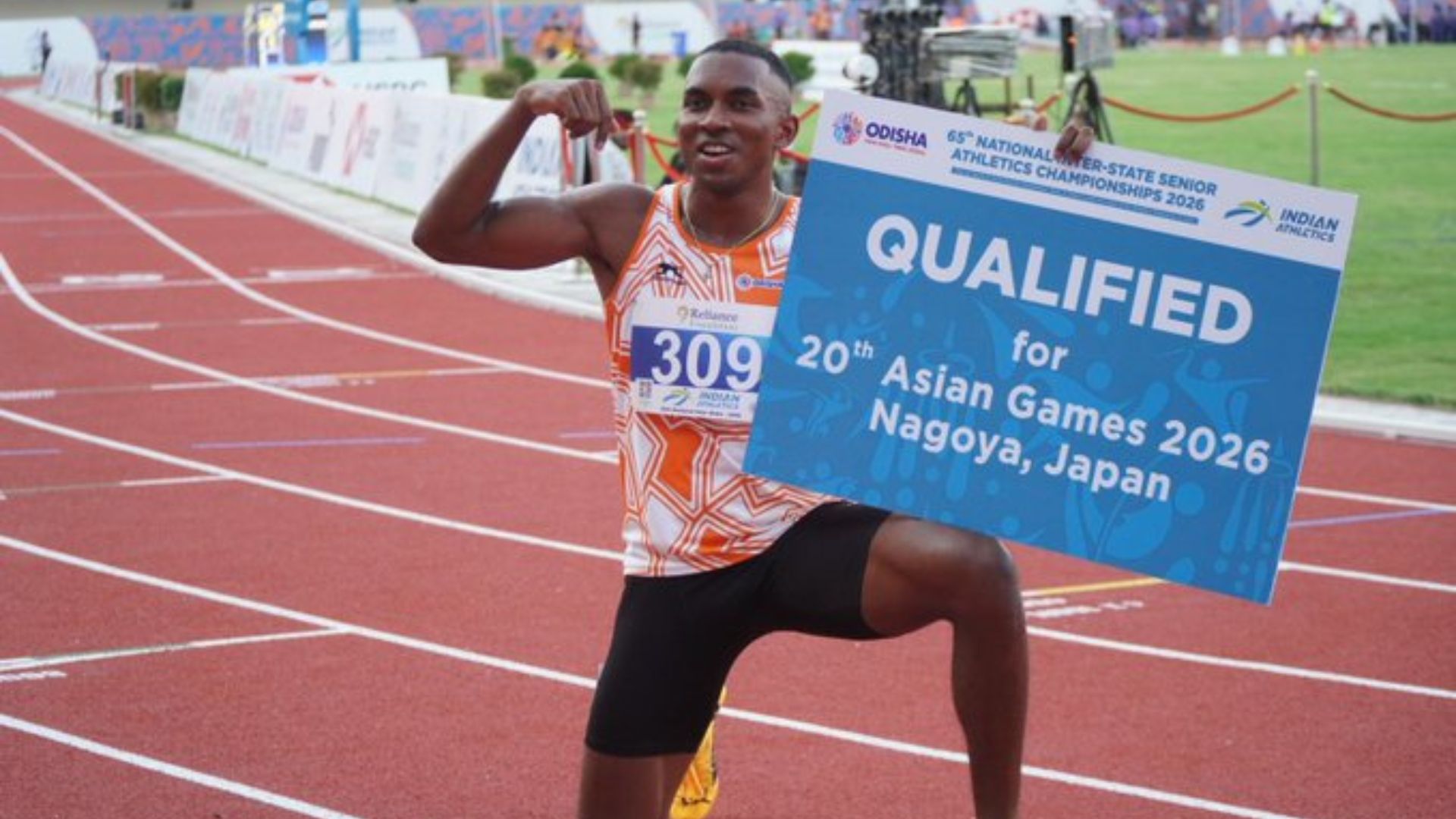
Indian sprint sensation and national record holder Gurindervir Singh is set to miss the upcoming Interstate Athletics Championships 2026, a competition that also serves as a key qualification event for the 2026 Asian Games.
The 25-year-old’s name is notably absent from the Athletics Federation of India’s (AFI) bib list released ahead of the championships, ruling him out of the country’s most important domestic athletics meet of the season.
Gurindervir has been enjoying a breakthrough year. Earlier this season, he etched his name into the history books by clocking a stunning 10.09 seconds in the men’s 100m, becoming the first Indian athlete ever to break the 10.10-second barrier. The performance also saw him rewrite the national record and cement his status as India’s fastest man.
Despite missing the Interstate Championships, Gurindervir has already secured qualification for the Commonwealth Games 2026 and has been included in India’s squad for Glasgow. His absence from the Asian Games qualification meet, however, will come as a disappointment for Indian athletics fans who were hoping to see the national record holder in action.
While he may not feature in the individual 100m at the Interstates, there remains hope that Gurindervir will be part of India’s men’s 4x100m relay plans later in the season.
The Indian relay team will be targeting the Asian Games qualification standard of 38.81 seconds, a mark that appears well within reach based on recent performances. Last season, the Indian quartet clocked faster than the qualification standard in all three of their major outings, emerging as one of Asia’s most promising sprint relay teams.
Gurindervir, alongside fellow sprint star Animesh Kujur, played a crucial role in those performances, providing India with explosive starts and strong relay legs against quality international competition.
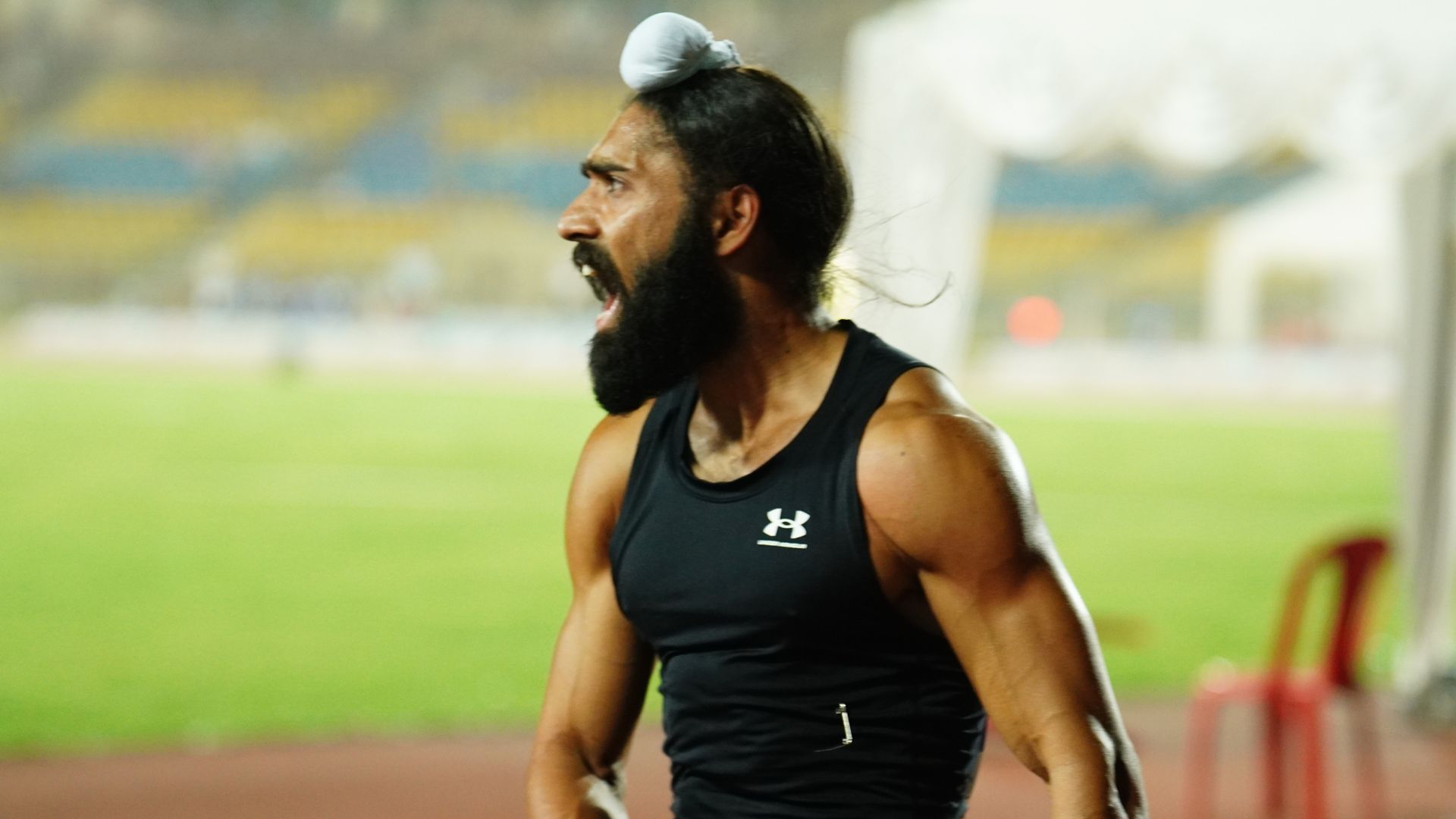
Punjab sprinter Harjit Singh continued his impressive form this season, storming to victory in the men’s 100m at the ongoing Indian Athletics Series–8 with a blistering time of 10.17 seconds.
The race was run with a tailwind of +2.1 m/s, just above the legal limit of +2.0 m/s for record eligibility. While the mark will not be considered for record purposes, it nevertheless underlines the exceptional form that Harjit has displayed in recent weeks.
The performance comes just days after the Punjab athlete clocked 10.21 seconds at the Punjab State Athletics Championships, further establishing himself as one of the country’s most promising sprinters.
Harjit’s rise is also closely linked to one of Indian sprinting’s biggest success stories. The Punjab sprinter was a former training partner of India’s fastest man, Gurindervir Singh, with both athletes training under coach Happy Singh during their developmental years.
Coach Happy Singh played a significant role in shaping Gurindervir’s early sprinting career, and Harjit’s recent performances are a testament to the strong sprinting culture that has emerged from the training group.
With back-to-back fast times and growing confidence on the track, Harjit Singh is rapidly establishing himself as a sprinter to watch. If he can reproduce similar performances under legal wind conditions, he could soon find himself among the fastest Indian athletes in the country this season.
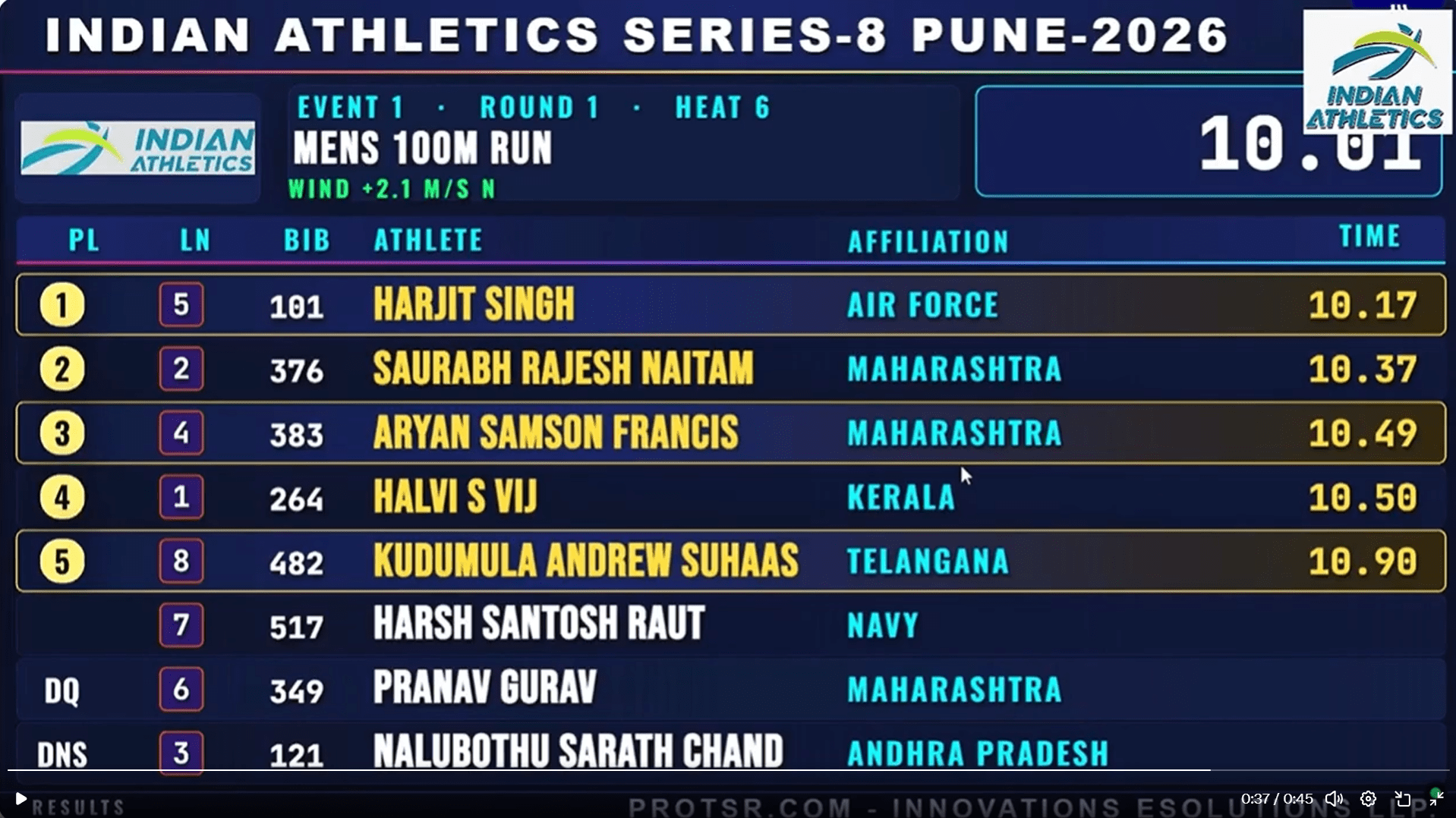
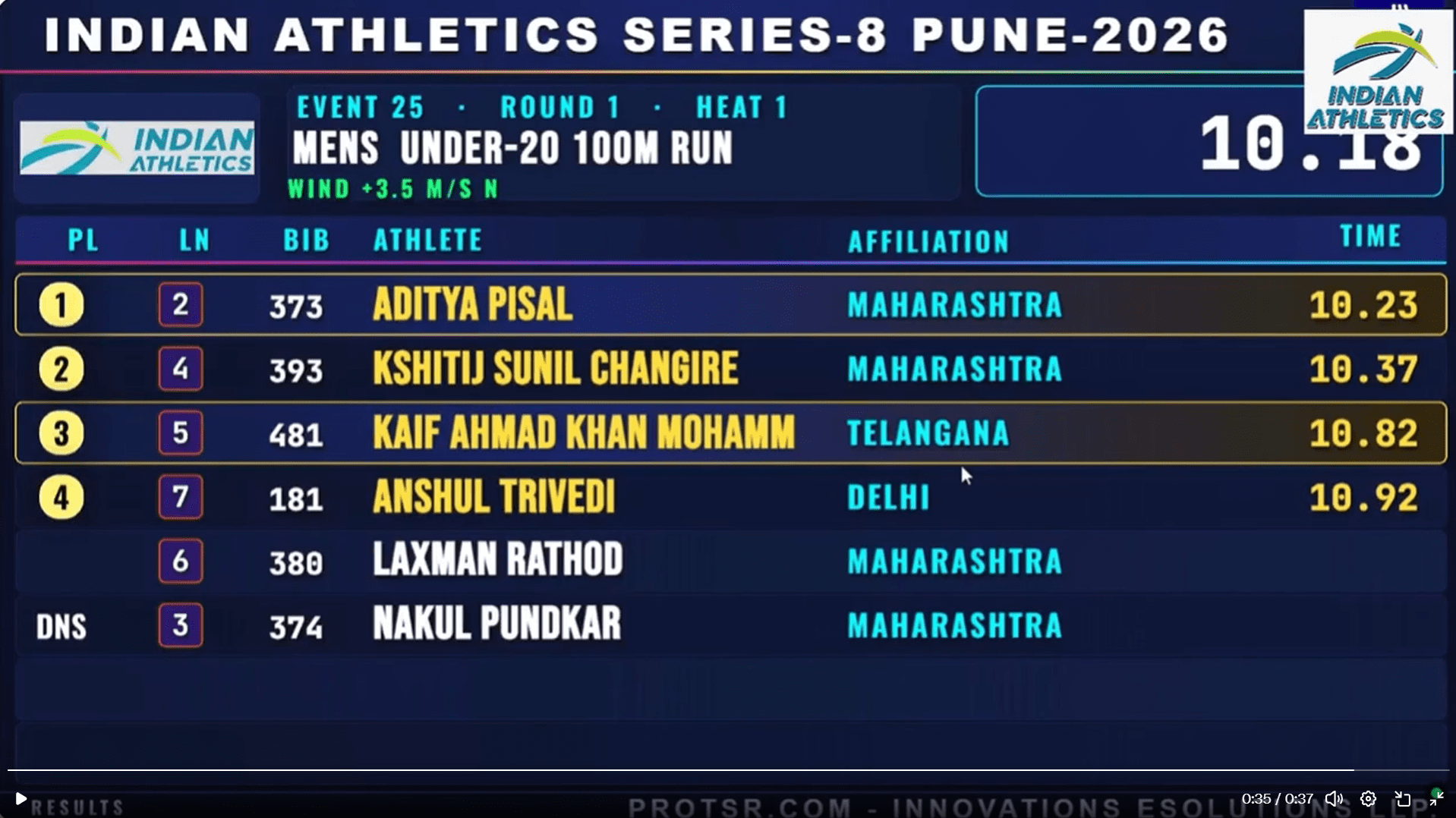
Seventeen-year-old Aditya Pisal of Maharashtra delivered a stunning performance at the ongoing Indian Athletics Series–8, sprinting to victory in the men’s U20 100m final with a remarkable time of 10.23 seconds.
Pisal’s clocking was significantly faster than the current Indian U20 national record of 10.35 seconds, held by Indian sprint star Gurindervir Singh. However, the performance will not be recognized as a national record due to excessive wind assistance.
The race was run with a tailwind of +3.5 m/s, well above the maximum allowable limit of +2.0 m/s for record purposes under World Athletics regulations. While the timing showcases Pisal’s exceptional speed and potential, it cannot be entered into the record books.
Despite the wind-aided conditions, the performance serves as a strong statement from one of India’s most promising young sprinters. Running 10.23s at just 17 years of age highlights Pisal’s growing stature in Indian athletics and underlines his potential to challenge national benchmarks in legal conditions in the future.
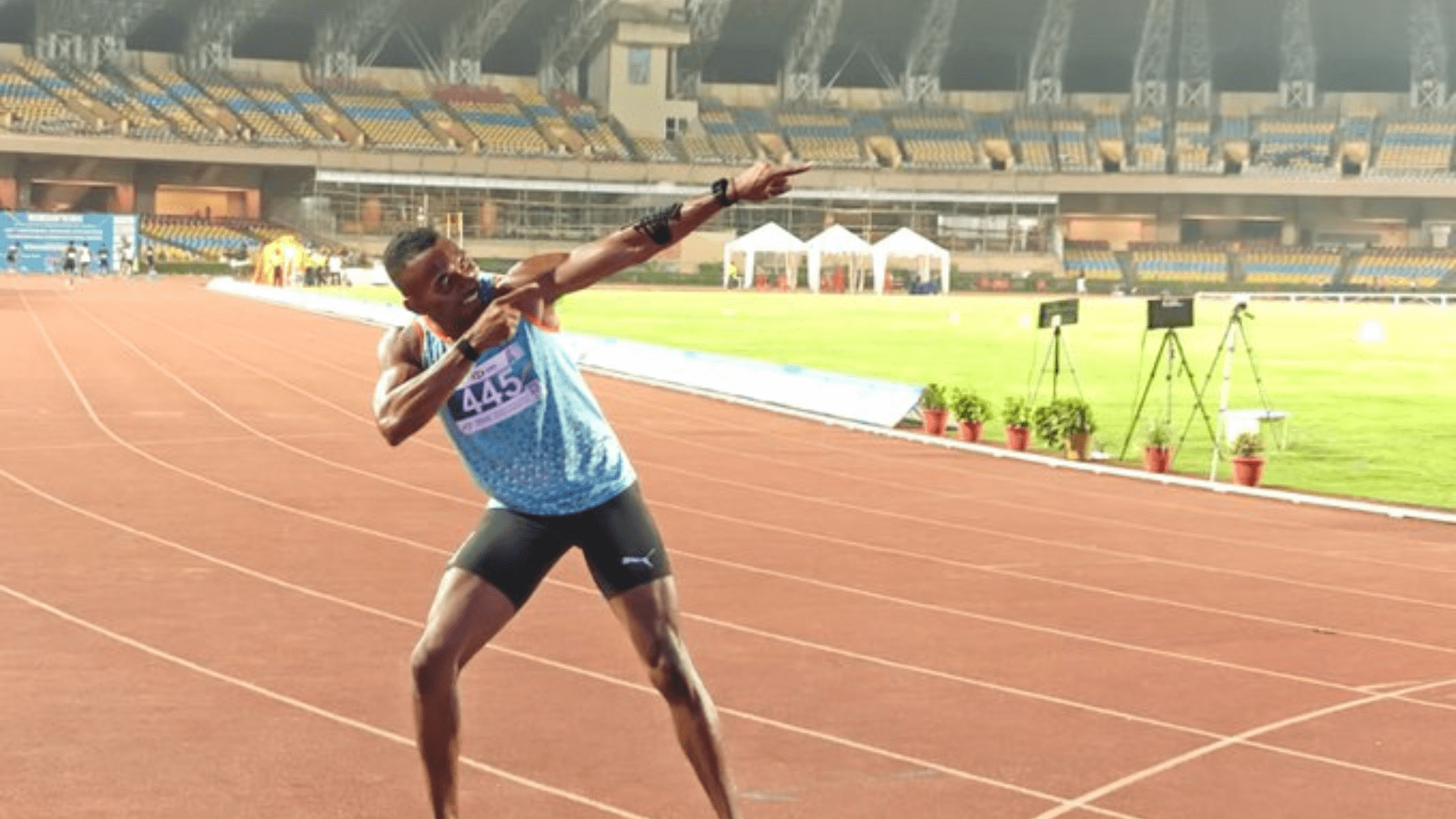
India’s national record holder Animesh Kujur continued his impressive run of form by claiming the silver medal in the men’s 200m at the New Taipei City Athletics Open 2026, clocking a strong 20.47 seconds.
The race was headlined by Thailand’s sprint sensation Puripol Boonson, who produced a sensational performance to win gold in 20.03 seconds. Boonson not only shattered the championship record but also recorded a lifetime best, moving up to become the third-fastest Asian man in history over the 200m distance.
Interestingly, Animesh and Boonson did not compete in the same final, with the two athletes racing in separate sections of the event. While Kujur’s 20.47s was enough to secure silver overall, the absence of direct competition against one of Asia’s fastest sprinters may have deprived him of an opportunity to push for an even quicker time.
The result nevertheless marks another encouraging outing for Kujur, who has emerged as one of India’s brightest sprinting talents in recent years. The Odisha sprinter has consistently lowered national benchmarks and continues to establish himself among Asia’s elite short-distance runners.
With Boonson delivering a historic performance and Kujur showing strong form, the competition offered a glimpse of the rising standards in Asian sprinting. Had the pair lined up in the same race, it could have produced one of the most exciting sprint contests of the season—and perhaps even given Kujur a chance to improve further on his own national record.
India’s quarter-miler Vishal TK shattered his own national record, clocking a historic 44.98s to become the first Indian ever to go sub-45 seconds in the men’s 400m.
With that run, the Tamil Nadu athlete did not merely break a record — he crossed a barrier Indian athletics had chased for generations.
For nearly 90 years, Indian quarter-milers have slowly pushed the national standard downward, one athlete at a time. From the era when breaking 50 seconds itself was considered extraordinary, Indian athletics has now finally entered the elite sub-45 club.
The journey began as far back as 1936, when GP Bhalla ran 50.0 seconds over 440 yards — roughly equivalent to 49.7 seconds for 400m. Two years later, F Gantzer lowered it further to 49.8 seconds.
Then came gradual progress through the decades.
Ivan Jacob clocked 49.6 seconds in 1954 before Joginder Singh dramatically cut the record to 48.0 seconds in 1955, signalling India’s growing sprint potential on the international stage.
But the true revolution arrived with one man.
Milkha Singh’s iconic 45.73s in 1960 transformed Indian athletics forever. The “Flying Sikh” carried Indian sprinting into world-class territory and his national record became one of the most celebrated marks in Indian sporting history.
For decades afterward, nobody could truly move beyond Milkha’s shadow.
It took 40 years before Paramjeet Singh lowered the mark to 45.56s in 2000. Then KM Binu clocked 45.48s in 2004, followed by Olympian Arokia Rajiv’s 45.47s in 2016.
Mohammed Anas Yahiya pushed it even lower with 45.21s in 2019.
And now comes Vishal TK.
At just 21 years of age, the Tamil Nadu sprinter has become the athlete who finally carried India beyond the mythical sub-45 barrier.
What makes the achievement even more remarkable is how rapidly Vishal’s career has evolved.
Until March 2024, Vishal primarily focused on sprint hurdles. But over the last year, he shifted his attention to the 400m — a decision that has completely transformed his career.
Speaking earlier this year, Vishal admitted the transition was not initially easy.
“There were good and bad days,” he had said after narrowly missing qualification for the World Relays during the Indian Open Relay competition in Chandigarh. “Personally, I made a slight technical error and had a lot of energy left after the race. The coach pointed out that I needed to push more as I did not feel tired after the race.”
The breakthrough came quickly afterward.
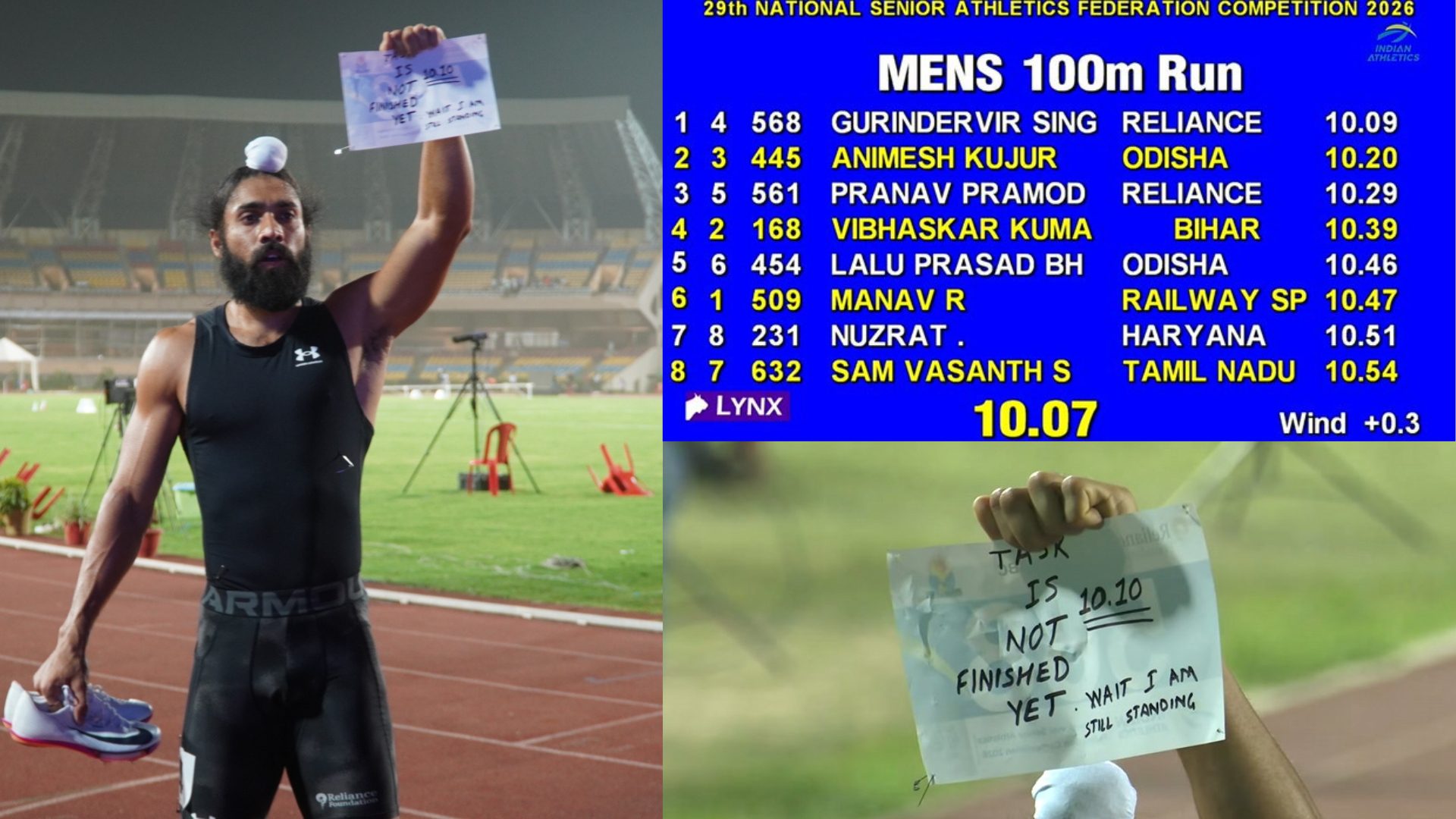
Indian sprinting’s extraordinary week at the Federation Cup 2026 produced another historic chapter as Gurindervir Singh once again lowered the men’s 100m national record, storming to a sensational 10.09s in the final to confirm himself as the fastest man India has ever produced.
Incredibly, it was the second straight day on which Gurindervir rewrote the national record.
Just 24 hours earlier, the Punjab sprinter had clocked 10.17s in the semifinals to briefly take the national mark from Animesh Kujur. Minutes later, Kujur had responded immediately with a 10.15s run of his own, reclaiming the record and setting up one of the most anticipated sprint finals Indian athletics had seen in years.
The final delivered.
Under the lights in Ranchi, the rivalry between India’s two fastest men reached another level. Gurindervir exploded out of the blocks and held his form brilliantly through the finish, stopping the clock at a stunning 10.09s to reclaim the national record yet again.
The timing also comfortably secured qualification for the Commonwealth Games and pushed Indian sprinting into territory once considered unimaginable.
Animesh Kujur finished second in 10.20s, while Pranav Gurav took third in 10.29s in what became one of the fastest domestic 100m races in Indian history.
But the evening belonged to Gurindervir.
The celebrations after the finish reflected both relief and history. Having lost the national record almost instantly after setting it in the semifinals, Gurindervir returned 24 hours later to produce an even bigger statement.
The Federation Cup in Ranchi may now be remembered as the meet where Indian sprinting truly entered a new era.
For years, Indian athletics searched for men capable of consistently threatening the 10.20 barrier. Now, within the span of two days, the national record has fallen repeatedly — ending at 10.09s.
And perhaps the biggest takeaway is this: the rivalry between Gurindervir Singh and Animesh Kujur may only just be beginning.
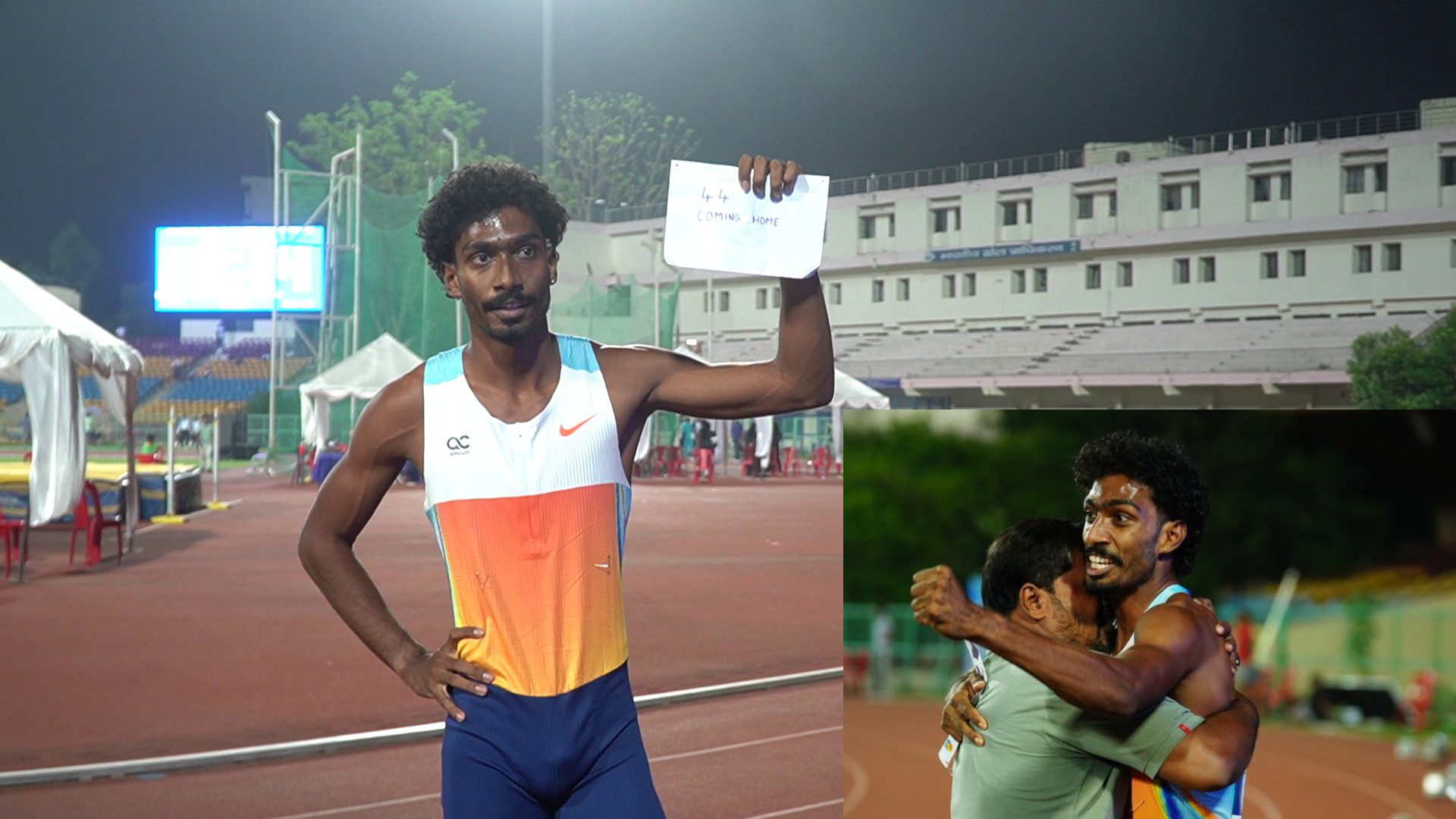
Indian athletics witnessed another historic moment at the Federation Cup 2026 in Ranchi as Kerala’s Vishal TK shattered his own national record to become the first Indian ever to run below the 45-second barrier in the men’s 400m.
Vishal clocked a sensational 44.98s, rewriting Indian quarter-mile history and underlining the remarkable rise currently taking place in the country’s sprint programme.
The performance came barely a day after he had already hinted at something special by winning his semifinal in 45.27s — a timing that had broken the long-standing Federation Cup meet record of 45.47s set by Olympian Arokia Rajiv back in 2016.
But the final produced something even bigger.
Running with supreme control through the opening half before unleashing a powerful finish down the home straight, Vishal stopped the clock at 44.98s and crossed into territory no Indian male quarter-miler had reached before.
The run also reinforced the growing depth and confidence now visible in Indian sprinting. Over the last 48 hours alone, the Federation Cup has witnessed national records tumble in both the men’s 100m and 400m events, signalling what could be the beginning of a transformative era for Indian track athletics.
For Vishal personally, the achievement carries additional significance because questions had surrounded his form heading into the competition. The national record holder had raced sparingly earlier in the season and had only one previous 400m outing in 2026, clocking 45.44s at the Indian Athletics Series-3 in New Delhi.
That performance suggested promise.
Ranchi confirmed something much larger.
The sub-45 barrier has long been viewed as one of the defining milestones in elite men’s 400m running globally. While India has produced strong quarter-milers over the years, no athlete had previously managed to break through that psychological and performance ceiling.
Until now.
With Commonwealth Games qualification and major international competitions approaching, Vishal’s timing now places him firmly among the most exciting athletes in Indian athletics today.