
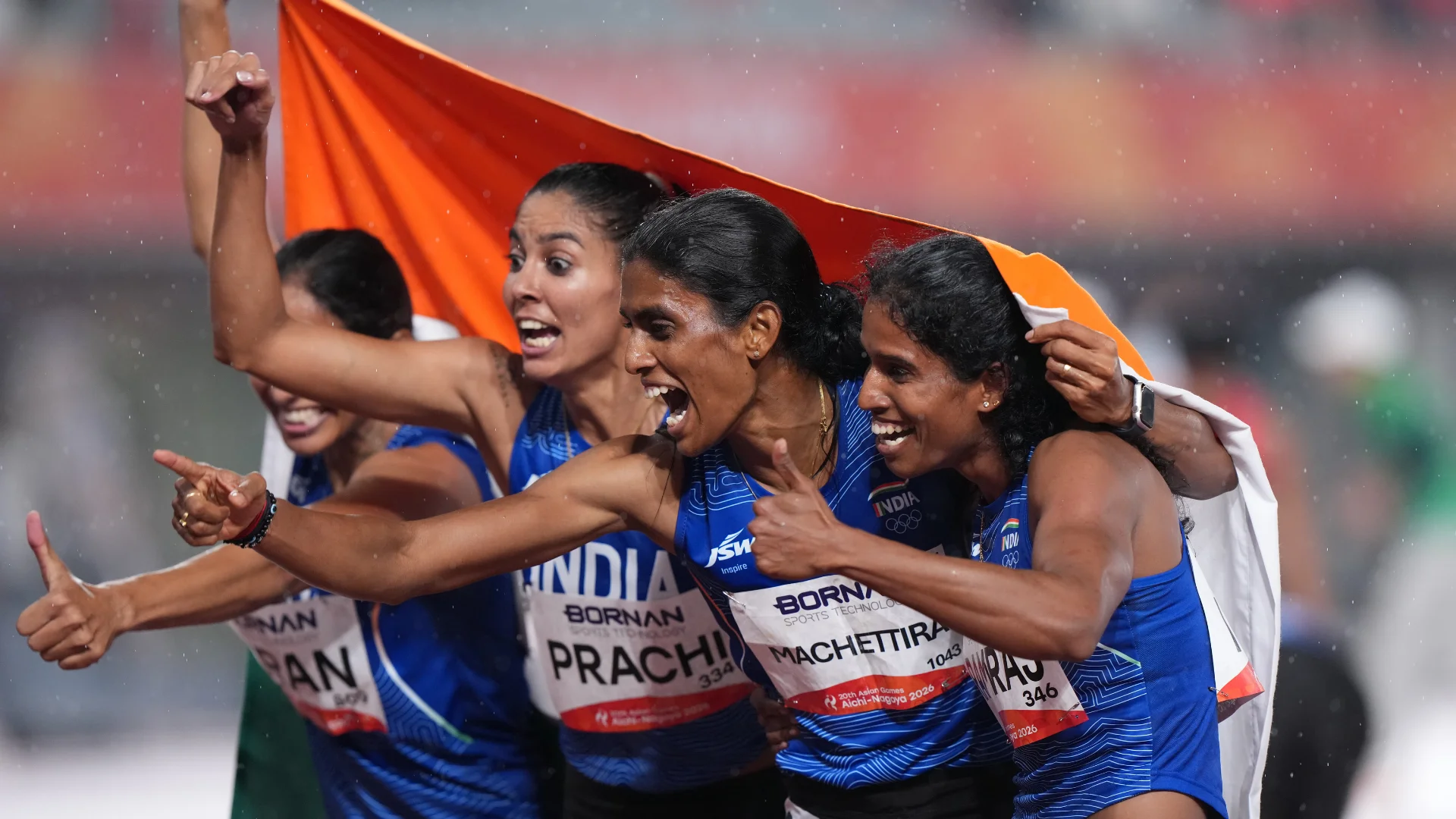
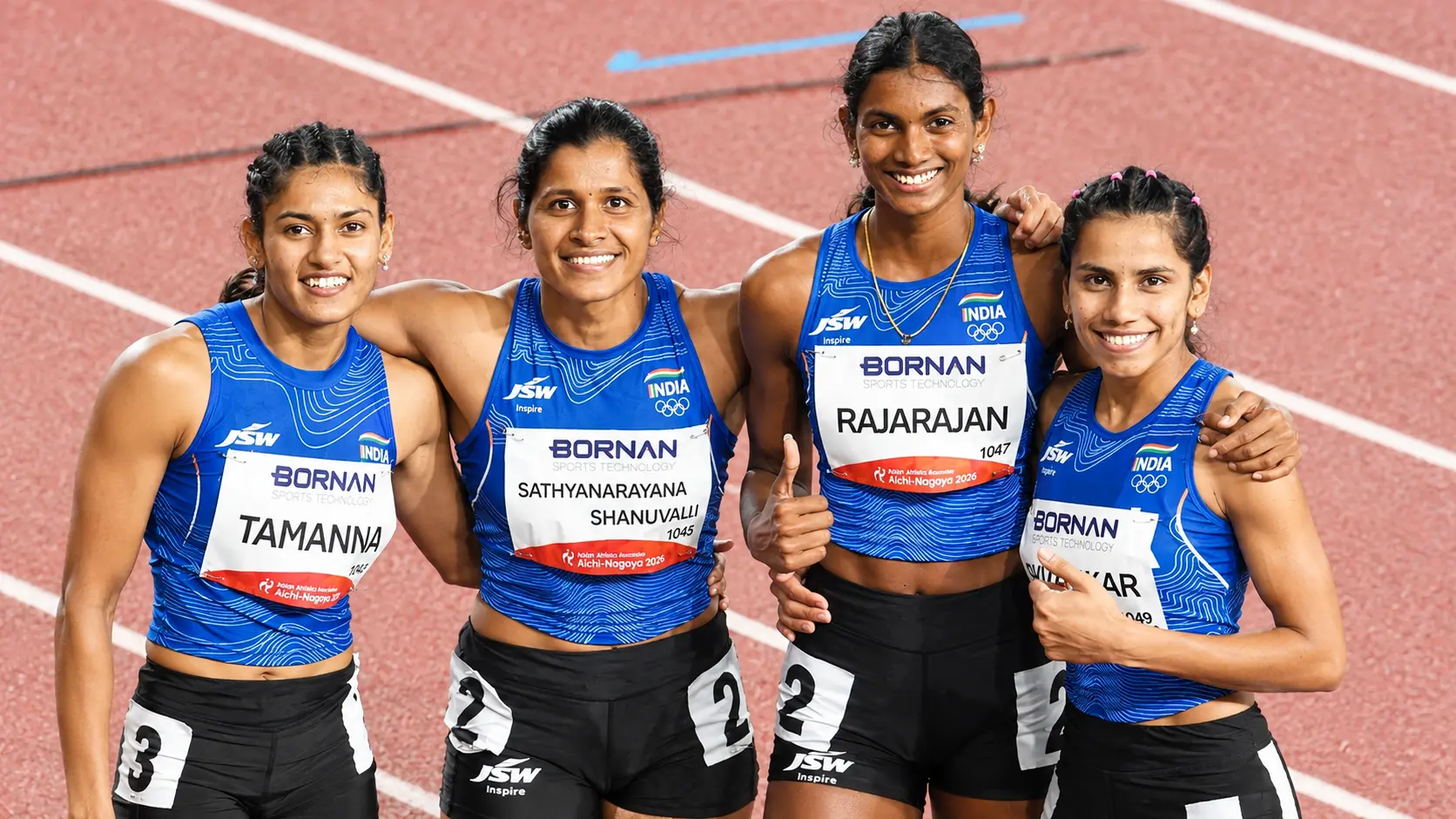
India narrowly missed a podium finish in the women’s 4x100m relay at the Asian Games 2026 in Nagoya, finishing fourth in a Season’s Best (SB) time of 43.57 seconds.
The Indian quartet of Abinaya Rajarajan, Sneha Shanuvali Sathyanarayana, Sudeshna Hanmant Shivankar and Tamanna delivered a strong performance in the final.
They improved on their heat-winning time of 43.65 seconds. However, India finished just 0.05 seconds behind Japan, which secured the bronze medal.
China won gold in 42.96 seconds, while Thailand claimed silver in 43.51 seconds. Japan finished third in 43.52 seconds, followed by India in 43.57 seconds.
India Misses Bronze by Just 0.05 Seconds
The final was decided by extremely narrow margins.
Just 0.09 seconds separated the teams finishing second through fifth, with every hundredth of a second proving crucial over the 400-metre race.
India remained in contention for a medal before crossing the finish line in fourth place.
Women’s 4x100m Relay Final Results
|
Position |
Country |
Time |
|---|---|---|
|
Gold |
China |
42.96s |
|
Silver |
Thailand |
43.51s |
|
Bronze |
Japan |
43.52s |
|
4th |
India |
43.57s (SB) |
Abinaya Rajarajan Leads India’s Sprint Relay Campaign
Abinaya Rajarajan was part of the Indian quartet that made a strong impression in the qualifying round.
India won its heat in 43.65 seconds, securing a place in the final.
Rajarajan has been an important part of India’s sprint relay setup. She had also featured in the mixed 4x100m relay earlier in the competition.
Her experience across both relay formats made her an important member of the Indian team.
Sneha Shanuvali Sathyanarayana Contributes to India’s Season’s Best
Sneha Shanuvali Sathyanarayana was another key member of India’s sprint group in Nagoya.
She was part of the quartet that produced the team’s Season’s Best in the final.
Relay success depends on individual speed and the execution of baton exchanges. India remained competitive throughout the race and stayed within striking distance of the medal positions.
Sudeshna Hanmant Shivankar Adds Experience
Sudeshna Hanmant Shivankar brought further experience to the Indian lineup.
She has been part of India’s sprint relay programme and featured in the quartet that improved its time from the heats.
With the final decided by such narrow margins, every phase of the race was crucial, from the starts and baton exchanges to the final straight.
Tamanna Completes the Indian Quartet
Tamanna completed the Indian quartet and was responsible for the final leg of the relay.
India crossed the finish line in 43.57 seconds, improving on its heat-winning performance.
The improvement showed that the team raised its performance in the final, although the time was not enough to secure a medal.
India Finishes Just Outside the Podium
India’s fourth-place finish came just five hundredths of a second behind Japan.
China’s winning time of 42.96 seconds was comfortably ahead of the rest of the field. However, the battle for the remaining medals was extremely close.
The Indian quartet improved from 43.65 seconds in the heats to 43.57 seconds in the final, producing its fastest performance of the season.
Although the medal remained out of reach, the team finished its Asian Games campaign with a Season’s Best and a competitive performance.
Abinaya Rajarajan, Sneha Shanuvali Sathyanarayana, Sudeshna Hanmant Shivankar and Tamanna finished fourth in 43.57 seconds, just 0.05 seconds away from the podium.
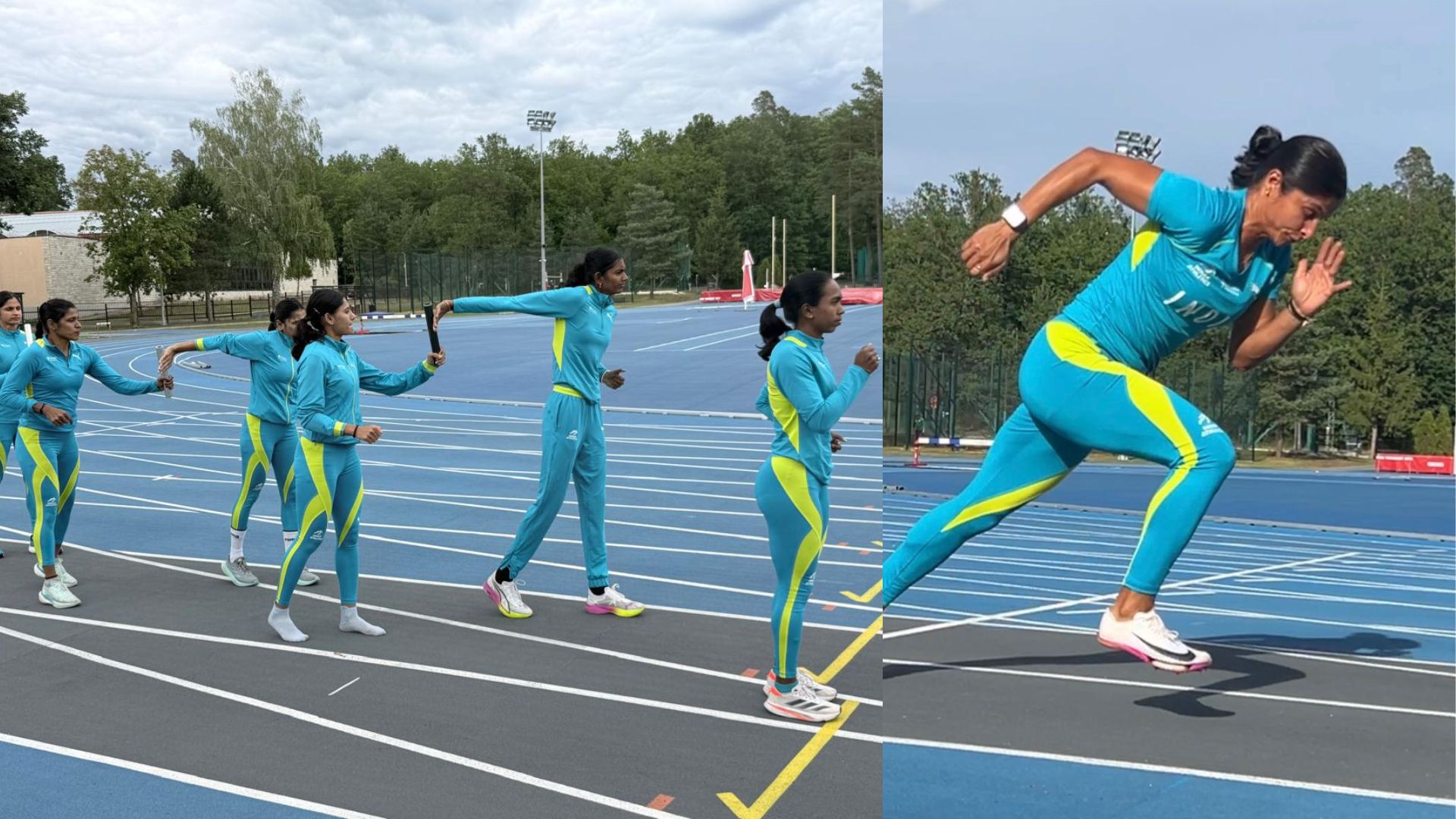
India’s women’s 4x100m relay team has begun preparations at the renowned Olympic Preparation Centre in Spała, Poland, as part of the Athletics Federation of India (AFI)-organised and Sports Authority of India (SAI)-supported overseas training camp ahead of the Asian Games 2026.
The training camp is designed to provide India’s top relay athletes with world-class facilities and an ideal environment as they fine-tune their preparations for one of the biggest competitions of the year.
The squad training in Spała comprises Nithya Gandhe, S.S. Sneha, Srabani Nanda, Tamanna, Sudheshna, and Abinaya. The athletes are working under the guidance of Seenivasan, who serves as the Women’s Relay Coach, with a strong emphasis on baton exchanges, speed endurance, race execution, and overall relay coordination.
The Indian women’s sprint relay team heads into the camp after an outstanding season on the international circuit. Earlier this year, the quartet delivered a memorable performance to win the gold medal at the Asian Relay Championships, clocking an impressive 43.85s. The victory reaffirmed India’s growing strength in the sprint relay and established the team as one of the leading contenders in Asia.
The overseas training camp in Spała is expected to play a crucial role in helping the athletes build on that success. The facility has long been a preferred destination for elite athletes from around the world, offering high-quality infrastructure and a focused training environment ahead of major championships.
With the Asian Games 2026 approaching, the Indian women’s relay squad will be aiming to carry its excellent form into the continental competition. Backed by a successful season and comprehensive preparations in Poland, the team will look to further improve its performances and strengthen its position among Asia’s leading sprint relay nations.
India’s women’s 4x100m relay team enters the final phase of preparation with confidence, momentum, and the ambition to build on its Asian Relay Championships triumph when it takes to the track at the Asian Games.
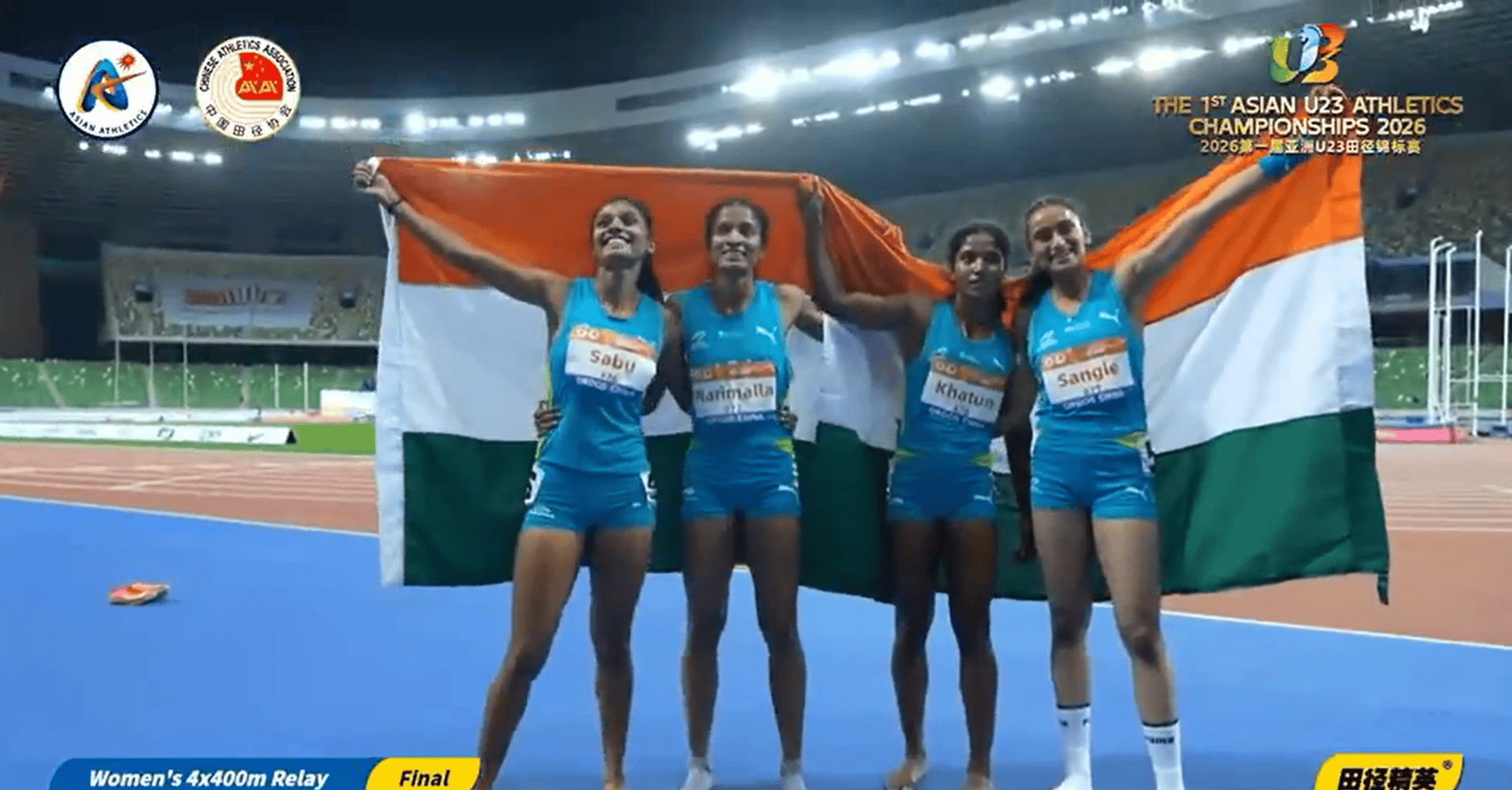
India’s women’s 4x400m relay team produced a commanding performance to win the gold medal at the 2026 Asian U23 Athletics Championships, clocking an impressive 3:33.62.
The Indian quartet of Shravani Sangle, Sandra Mol Sabu, Pravallika, and Nofisa combined brilliantly to finish ahead of China (3:35.14) and Kazakhstan (3:37.65), securing the continental U23 title.
Shravani Sangle provided India with a solid start before Sandra Mol Sabu delivered a decisive second leg, pulling clear of the Chinese runner over the final 100 metres to hand India a comfortable lead. Pravallika and Nofisa then ran composed final two legs, maintaining the advantage and ensuring India crossed the finish line first.
The winning time of 3:33.62 also underlined the team’s quality, finishing just 0.81 seconds behind the Indian senior team’s season-best mark of 3:32.81, highlighting the immense potential of the country’s next generation of quarter-milers.
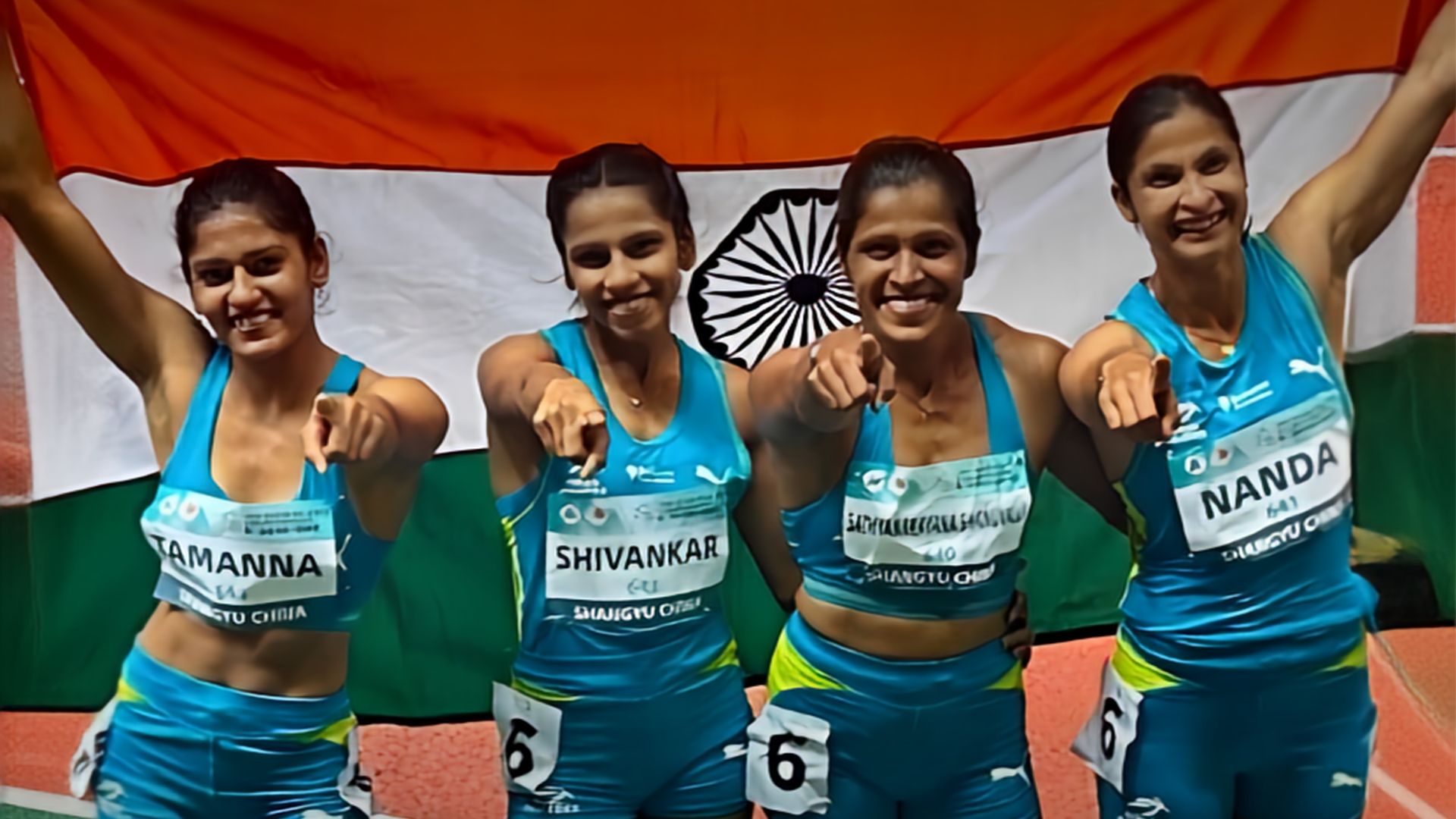
India’s women’s 4x100m relay team produced a superb performance to clinch the gold medal at the Asian Relays 2026, continuing the country’s strong tradition in sprint relays on the continental stage.
The quartet of Srabani Nanda, Sneha S S, Sudheshna Shivankar and Tamanna combined brilliantly to clock a season-best 43.85 seconds, finishing ahead of a strong field to secure the top spot on the podium.
The victory was made even more impressive by the fact that the Indian team ran faster than it did while winning silver at the previous edition of the Asian Relays. Last year, the Indian quartet had finished second with a time of 43.86 seconds, making this year’s gold-medal-winning performance marginally quicker.
China finished second to claim the silver medal in 44.09 seconds, while Thailand took bronze after clocking 44.11 seconds in a closely contested race.
The result is a significant boost for Indian women’s sprinting and highlights the growing depth in the country’s relay programme. The team’s ability to deliver a season-best performance on a major international stage reflects both strong individual form and effective baton exchanges, often the decisive factor in relay racing.
For Srabani Nanda, Sneha S S, Sudheshna Shivankar and Tamanna, the gold medal represents a major achievement and provides valuable momentum ahead of the busy international season, which includes key qualification events and major championships.
By finishing ahead of both China and Thailand, India not only secured the gold medal but also sent out a strong statement about its ambitions in women’s sprint relays on the continental stage.
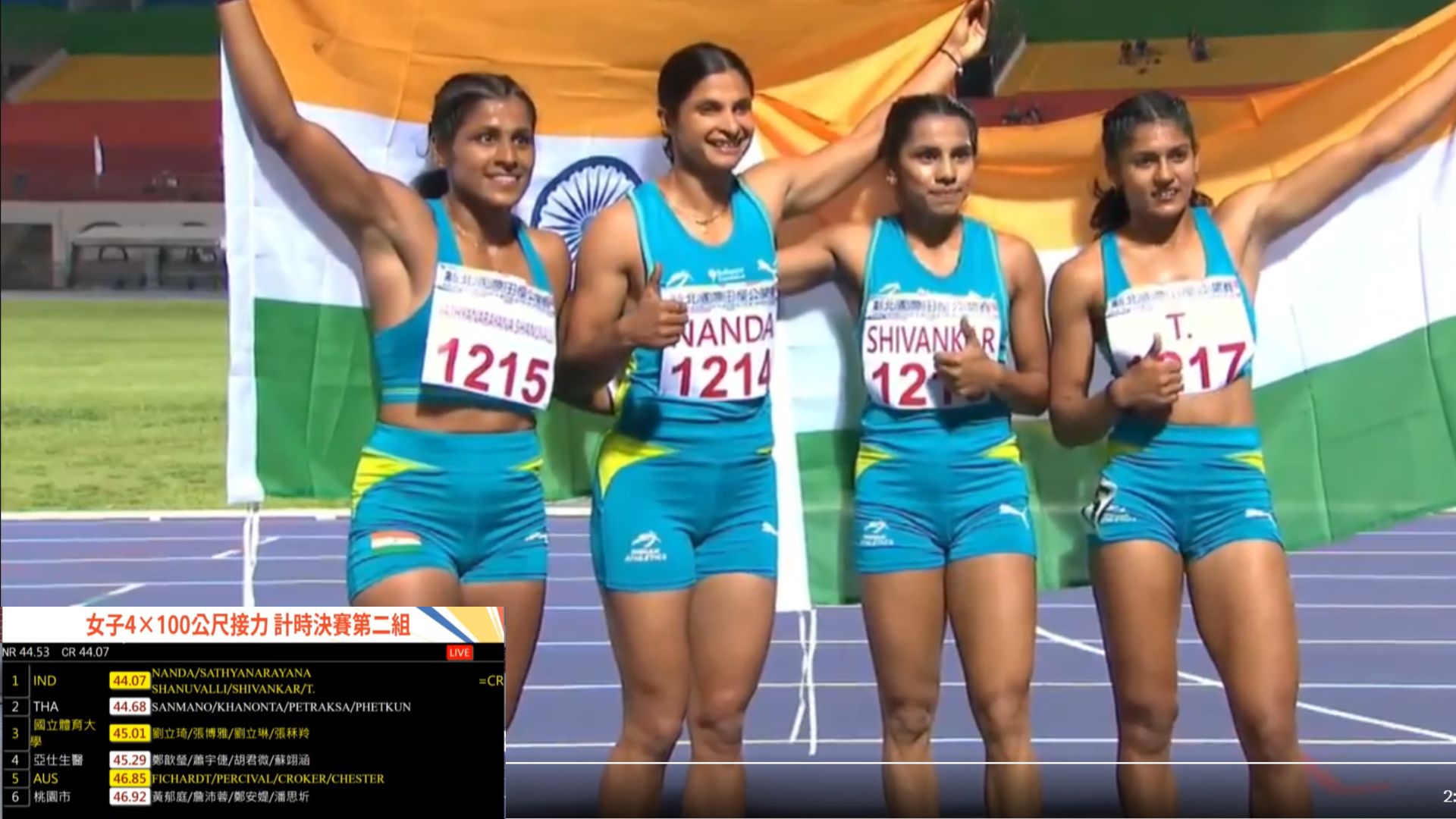
India’s women’s 4x100m relay team delivered another commanding performance on the international stage, clinching gold at the New Taipei City Athletics Open 2026 while equalling the Championship Record of 44.07 seconds.
The quartet of Srabani, Sneha, Sudheshna and Tamanna combined brilliantly to dominate the race from start to finish. Srabani gave India a solid start on the opening leg before Sneha maintained the momentum through the second exchange. Sudheshna then produced a blistering third leg to extend India’s advantage, setting the stage for Tamanna to bring the baton home with a strong anchor leg.
The winning time of 44.07 seconds carried a special significance. Not only did it secure another gold medal for India, but it also matched the Championship Record set by the Indian team at the same competition last year.
Remarkably, India had won gold at the 2025 edition of the New Taipei City Athletics Open in exactly the same time — 44.07 seconds — making this year’s triumph a near-perfect repeat of their success from twelve months ago.
While the result underlined India’s superiority at the meet, the team has already shown that there is even more speed in reserve. Their best performance over the past two years came at the Asian Athletics Championships in 2025, where the quartet clocked an impressive 43.86 seconds, becoming one of the few Asian teams capable of regularly breaking the 44-second barrier.
That benchmark will be firmly in their sights as preparations continue for the Asian Games. In sprint relays, consistency is often as important as outright speed, and India’s women have steadily established themselves as one of the continent’s most reliable relay units.
The performance in New Taipei City offered further evidence of that growing stability. Clean baton exchanges, strong individual legs and a winning mentality helped India comfortably secure another international title while matching the meet record they already owned.
With the Asian Games on the horizon, India’s women’s sprint relay team will be aiming to convert this consistency into even faster times. If they can produce a few more sub-44-second performances in the coming months, they could emerge as genuine medal contenders against Asia’s strongest sprint relay nations.
For now, however, the team can celebrate another gold medal, another Championship Record, and another reminder that Indian women’s sprinting continues to move in the right direction.
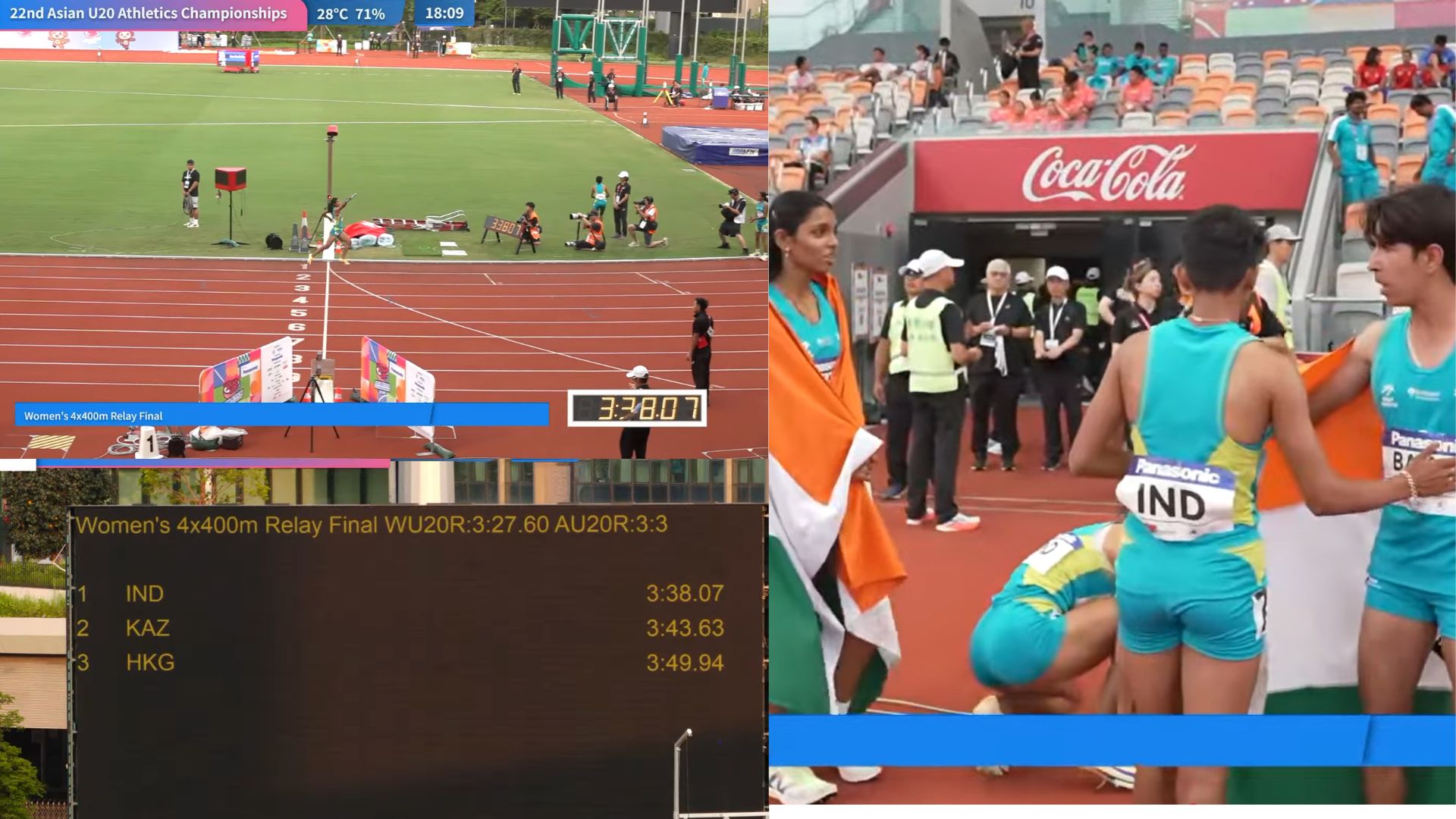
India’s U20 women’s 4x400m relay team delivered a commanding performance to win the gold medal at the U20 Asian Athletics Championships 2026 in Hong Kong, capping off a memorable campaign with a new championship record.
The Indian quartet stormed to victory in a time of 3:38.07, breaking the previous meet record and underlining the country’s growing strength in the one-lap relay event. The performance was one of the standout moments of the championships and added another gold medal to India’s impressive tally in Hong Kong.
From the opening leg, the Indian team established itself among the frontrunners and maintained a strong rhythm throughout the race. Smooth baton exchanges and consistent splits ensured that India remained in control as the race progressed. By the final leg, the team had created a decisive advantage over its rivals, allowing the anchor runner to bring home the gold in record-breaking fashion.
The winning time of 3:38.07 not only secured the top spot on the podium but also erased the previous championship mark, highlighting the exceptional quality of the performance. The result further reinforces India’s reputation as one of Asia’s strongest relay nations at the junior level.
The gold medal was particularly significant given the depth of competition at the championships, with several Asian nations fielding strong relay squads. India’s ability to dominate the race and set a new meet record showcased both the talent and preparation of the young team.
The victory also reflects the steady progress of women’s sprinting and relay events in India. In recent years, Indian relay teams have enjoyed increasing success at continental and global competitions, and the latest triumph suggests that another promising generation is emerging through the junior ranks.
The gold-medal-winning performance played a key role in India’s successful overall campaign at the U20 Asian Athletics Championships, where the country finished second on the medal table with 19 medals.