
The 24th National Junior Athletics Federation Competition is set to be held from April 24 to 26, 2026, at the Mahatma Gandhi (MG) Stadium in Tumkur, Karnataka, with around 40 events lined up across men’s and women’s categories.
A 3-day event packed with action:
Day 1: Early finals – 5000m, Pole Vault, Discus, 100m finals, etc.
Day 2: Bulk of finals – field events, middle distance, hurdles
Day 3: Remaining finals – 800m, 200m, steeplechase, relays
What makes this event even more special is that it will also serve as a qualification meet for the 22nd Asian U20 Athletics Championships and, more importantly, the 2026 World Athletics U20 Championships, scheduled to take place in Eugene, Oregon, USA, from 5–9 August 2026.
In past editions, India has produced some of the best results at the U20 Worlds:
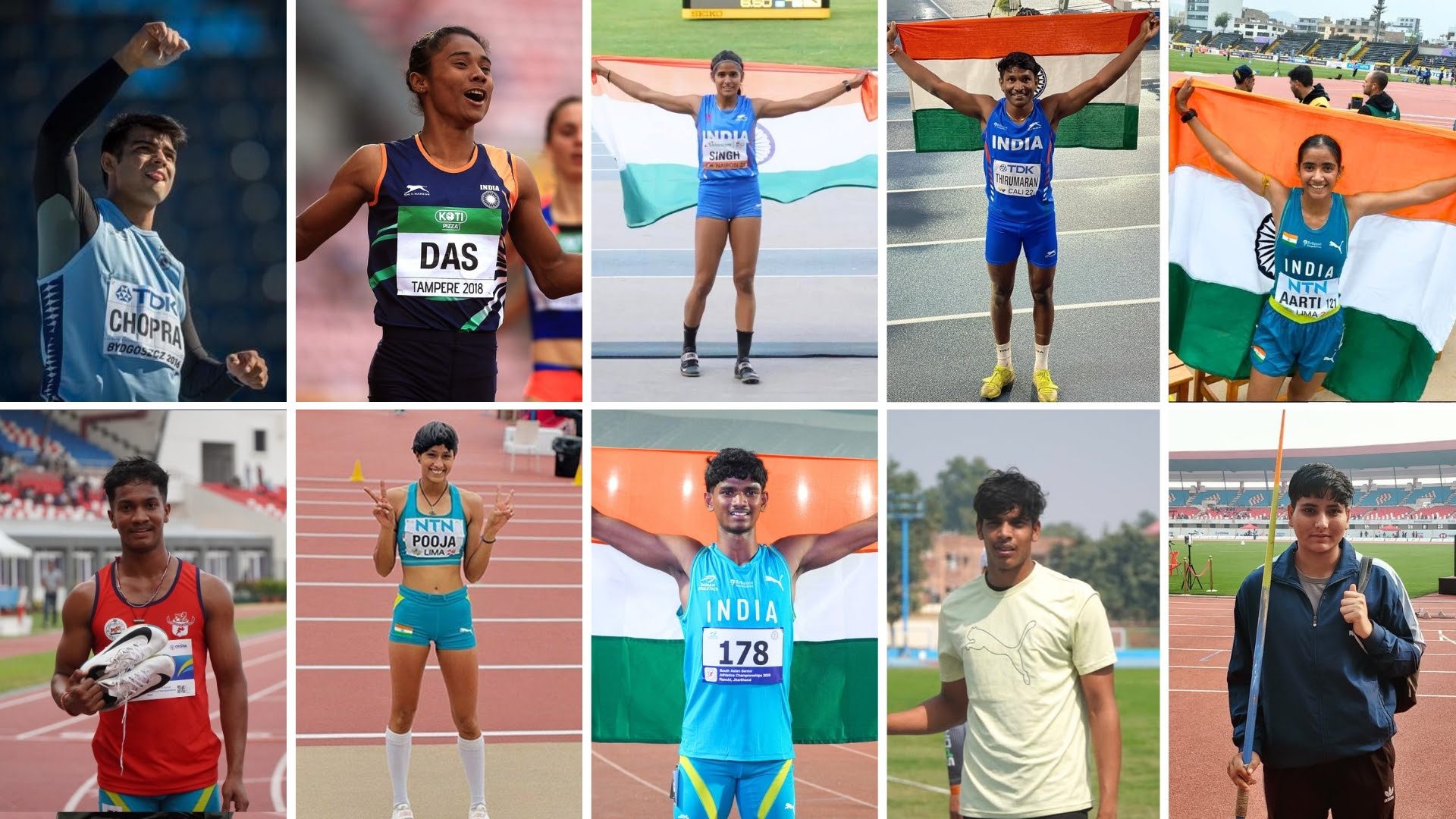
- Neeraj Chopra — 2016 (Javelin Throw):
In 2016, India’s wonder boy stepped onto Poland’s Zawisza Stadium with a spear in his right hand and made history. He won gold with a U20 world record throw of 86.48m, securing India’s first-ever U20 gold in javelin. This remains one of the greatest junior performances globally. - Hima Das — 2018 (400m):
In 2018, Hima Das created one of the most iconic moments in Indian sporting history, becoming the first Indian woman to win a track gold at a global event, clocking 51.46s. - Shaili Singh — 2021 (Long Jump):
Currently India’s all-time second-best jumper (6.76m), she won silver with a jump of 6.59m. It was a special moment for the girl from Jhansi, supported by her mother and trained at the Anju Bobby George Academy, breaking barriers along the way. - Selva Prabhu — 2022 (Triple Jump):
India’s U20 national record holder won silver at the 2022 U20 World Championships with a jump of 16.15m, which was his lifetime best at the time. - Aarti — 2024 (Racewalking):
Although the last edition did not go as planned for India, only one athlete reached the podium. Aarti delivered a standout performance, winning bronze and breaking India’s U20 national record in race walking with a time of 44:39.39.
This year promises to be just as exciting, with several athletes preparing to perform on the biggest U20 stage:
- Pratik Maharana (Sprints):
A young sprinter from Odisha, a region known for producing some of India’s fastest athletes. The state has seen names like Amiya Mallick (10.26s) and Dutee Chand (11.17s). Pratik, trained by coach Siba Mishra, has already breached the World Championships qualification mark by clocking 21.24s to win gold at the Junior Nationals. However, he will need to repeat that performance here to confirm his ticket to Eugene. - Mohammed Ashfaq (400m):
Kerala’s rising talent is one to watch. The 18-year-old impressed at the Senior South Asian Athletics Championships, winning silver in the 400m with a lifetime best of 46.56s. Competing against experienced athletes like Sri Lanka’s Kalinga Kumarage (46.21s), Ashfaq also secured three medals overall – gold in the mixed 4x400m and silvers in the individual 400m and men’s 4x400m. - Pooja Singh (High Jump): Pooja has been steadily raising the bar, literally. The 18-year-old recently cleared a lifetime best of 1.90m at the Indian Series–3. She had already made the final at the last U20 Worlds, where she broke the U20 national record with 1.83m. This time, she heads in as a Senior Asian outdoor champion and indoor silver medallist.
Along with these names, several others will be worth watching:
- Rishabh Giri (Men’s Javelin), Poonam (Women’s events), Sai Kiran (Shot Put), Parth Singh and Aarti (100m), along with others.
The entry list for the World Athletics Relays Gaborone 2026 is now out. The event will take place on May 2 and 3 in Botswana. This is the eighth edition of the competition and it will bring together top relay teams from around the world.
A total of 723 athletes from 40 countries will take part. Teams will not only fight for medals, but also try to qualify for the World Athletics Championships 2027 in Beijing and the World Athletics Ultimate Championship later this year.
Many strong teams are coming. All six winners from the 2025 World Relays will return to defend their titles. Also, four of the five gold medal teams from the 2025 World Championships and three Olympic gold-winning relay teams from 2024 are in the list.
The host country Botswana will look to perform well in front of their home fans. Their men’s relay teams are led by top global champions. The United States, known for its strong relay history, has also named a powerful squad.
Jamaica, another sprint giant, will have a strong team too, with world 100m champion Oblique Seville expected to run in the men’s 4x100m.
Canada has entered its Olympic gold medal-winning men’s 4x100m team. South Africa will also be confident, as their winning 4x400m team from last year is back.
Spain, Italy, Germany, the Netherlands, Belgium and Poland have all named experienced and strong relay squads.
India will also be part of this big event. Six Indian relay teams had qualified, but only five will compete, as the women’s 4x400m team will not travel.
In the men’s 4x400m, India has a strong group. The team includes Rajesh Ramesh, Manu TS, Amoj Jacob, Dharamveer Choudhary, Theerthesh Shetty, Vishal TK and Nihal Joel.
The men’s 4x100m team includes Pranav Gurav, Gurindervir Singh, Animesh Kujur, Ragul Kumar, Harsh Raut and Tamilarasu.
India will also compete in the mixed 4x400m with Rashdeep Kaur, Kumari Saloni and Ansa Babu.
In the women’s 4x100m, the team includes Nithya Gandhe, Sneha S.S, Tamanna, Sudeshna Shivankar and Srabani Nanda.
For the mixed 4x100m, India has named Animesh Kujur, Tamilarasu, Gurindervir Singh, Srabani Nanda, Sudeshna Shivankar and Tamanna.
With strong global teams and high stakes, the World Relays 2026 will be an important event for India and others as they prepare for bigger championships ahead.
Indians at Boston Marathon 2026 showcased a powerful story of endurance across generations.
From young runners to veterans in their 70s, India’s presence at Boston was not just about participation—it was about inspiration.
At the Boston Marathon 2026, India’s participation stood out not just in numbers, but in diversity of age and spirit.
A total of 131 Indian runners took to the iconic course, representing a wide spectrum—from young athletes to seasoned marathoners well into their 70s.
Among the most inspiring participants:
- Kumar Rao (77) – Defying age with remarkable endurance
- Nagabhushana Rao Chalamalasetti (74) – Continuing a lifelong passion for running
- Sparsh Bansal (25) – Representing the new generation of Indian runners
These runners symbolize how marathons bring together different generations under one shared goal.
- Rising interest in long-distance running
- More amateur runners qualifying for global events
- Strong representation across age groups
The 2026 Boston Marathon reflects this growing culture.

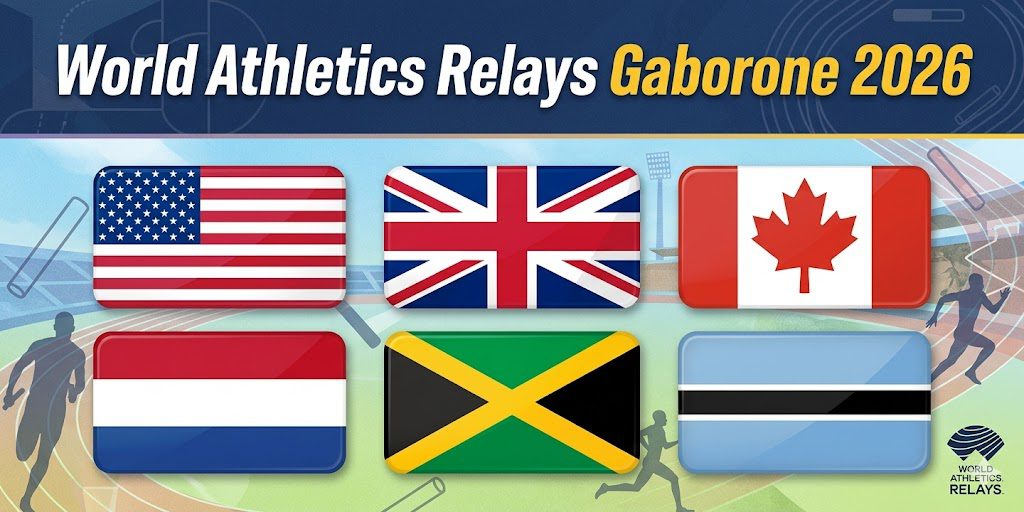
John Korir delivered a commanding performance at the Boston Marathon, clinching back-to-back titles and cementing his place among the sport’s all-time greats. The Kenyan star crossed the finish line in a stunning 2:01:52, the fastest winning time in Boston history, and a mark that now places him fifth on the all-time marathon list.
Korir’s victory was built on patience and precision. Staying within the lead pack through the early stages, he made his decisive move after the 30km mark, breaking clear with a sustained surge that left the field trailing. His ability to maintain a relentless pace over Boston’s challenging course — known for its undulating terrain and tactical demands — underlined both his strength and race intelligence.
This win also marks Korir’s third Abbott World Marathon Majors title, further enhancing his growing legacy on the global stage. Beyond the prestige, the victory comes with a significant financial reward, reportedly among the highest in the race’s history.
Boston, often seen as a test of grit rather than pure speed, witnessed a rare combination of both. Korir didn’t just win — he dominated, delivering a performance that will be remembered as one of the finest ever on this iconic course.
With consecutive Boston titles and a place among the fastest marathoners in history, Korir has firmly established himself as one of the defining distance runners of his generation.
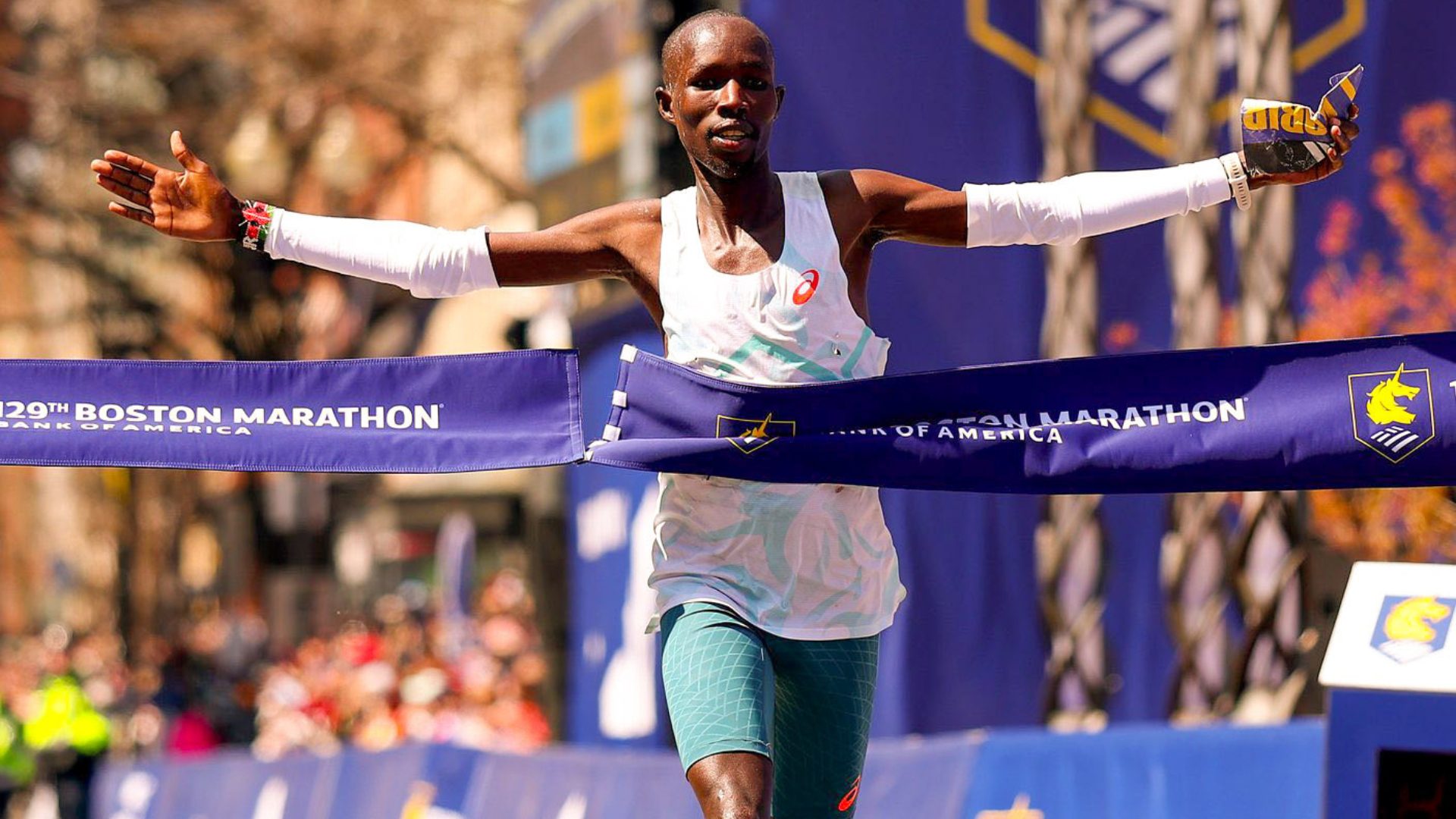
World Relays 2026 teams to watch are in focus as the global event heads to Gaborone, Botswana for the first time.
With qualification spots and global rankings at stake, the competition promises high-intensity relay battles among the world’s best.
As the World Athletics Relays heads to Botswana for the first time, the spotlight is firmly on the world’s fastest relay squads. With qualification spots for global championships on the line, here are six teams shaping the narrative.
1. USA – The Benchmark
The United States remain the gold standard in relay running. With unmatched depth in both sprint and quarter-mile events, they are favourites across the 4x100m and 4x400m. The only question is execution — baton exchanges have historically been their weak link.
2. Jamaica – Sprint Royalty
Jamaica’s legacy in sprint relays is unmatched. Even in transition phases, their 4x100m teams are always contenders. Expect explosive speed, especially in the women’s events, where Jamaica continues to produce world-class talent.
3. Great Britain – Relay Specialists
Few teams execute relays as consistently as Great Britain. Their strength lies in precision and teamwork, often outperforming faster individual squads. They remain serious contenders in both men’s and women’s 4x100m and 4x400m events.
4. Botswana – Home Advantage
Botswana enter with momentum and belief. Backed by a passionate home crowd, their 4x400m squads — particularly the men — have shown they can challenge the best. Hosting their first global relay event adds another layer of motivation.
5. Netherlands – The Mixed Relay Powerhouse
The Netherlands have emerged as a dominant force in mixed relays, particularly the 4x400m. Their ability to combine strong men’s and women’s legs makes them one of the most balanced teams in the competition.
6. Canada – The Dark Horse
Canada’s sprint programme has grown steadily, producing consistent relay teams capable of podium finishes. With athletes experienced on the global stage, they remain a serious threat, especially in the men’s 4x100m.
Sharon Lokedi delivered one of the finest marathon performances in history to win the Boston Marathon for the second consecutive year, clocking 2:18:51 in a race defined by control and a devastating finish.
For much of the race, Lokedi stayed patient within a lead pack, conserving energy on Boston’s demanding course. The decisive move came after mile 21, when she surged with a blistering pace that broke the field. She followed that with back-to-back crushing miles — including splits of 4:41 and 4:35 — opening a gap that no one could close. )
What followed was extraordinary even by elite standards. Over the final 10 kilometres, Lokedi shifted into another gear, covering 35k to 40k in 14:48 and running her final full mile in 4:53 — closing speeds rarely seen in women’s marathoning.
Behind her, Kenya completed the podium tally with Loice Chemnung (2:19:35) and Mary Ngugi-Cooper (2:20:07) following.
Lokedi’s average pace of 5:18 per mile across 42.2 km underlines the consistency of her run, but it was the final six miles that elevated this performance into the realm of the all-time greats.
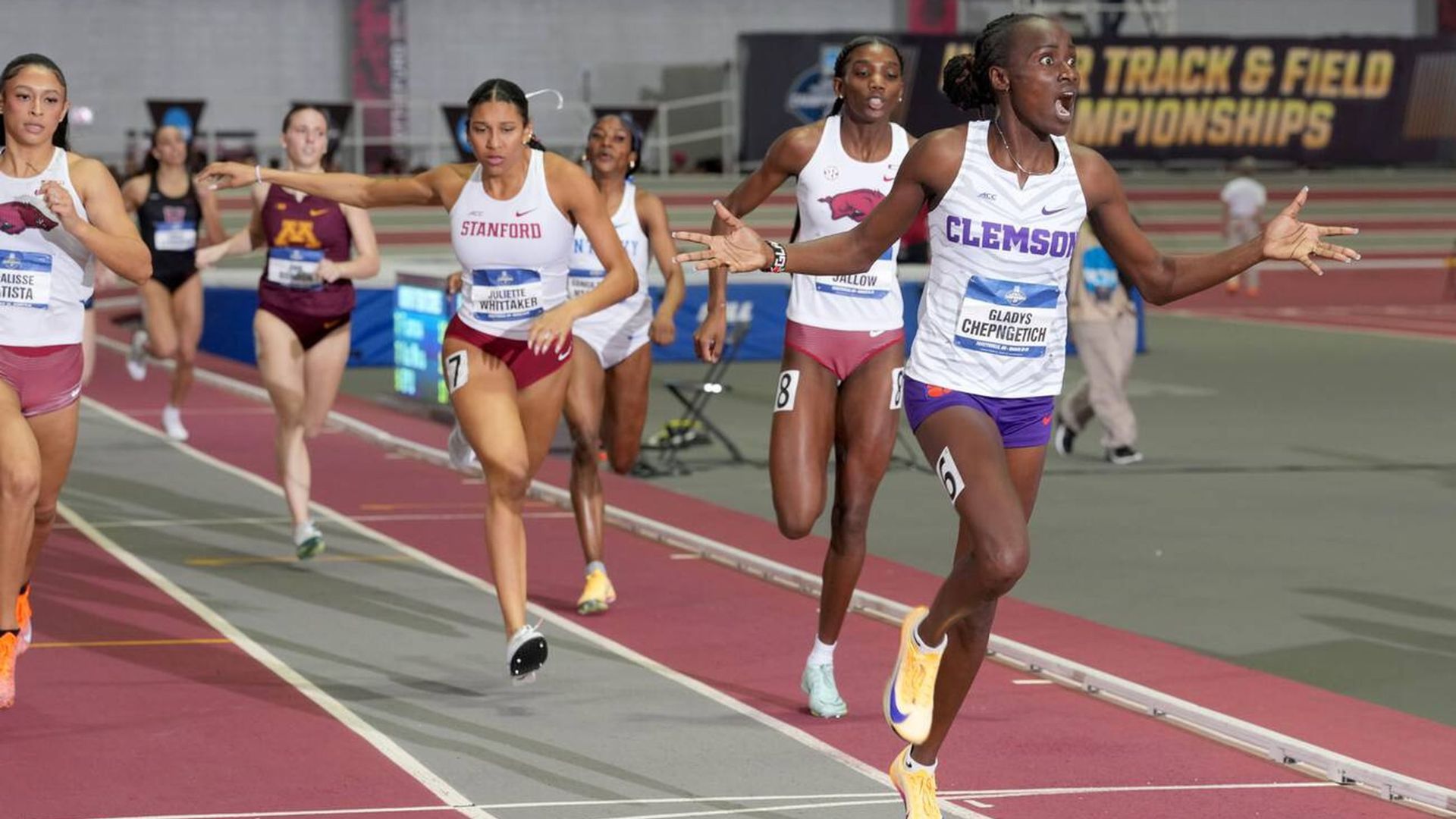
The NCAA women’s 800m is already rewriting expectations — and the season has barely begun.
Over the weekend, four athletes broke the two-minute barrier, a benchmark that usually only falls during peak championship form. Leading the charge was Sanu Jallow-Lockhart, who ran 1:59.70, the second-fastest time in the NCAA this season and the quickest outdoor opener of her career.
She is joined by three other standout performers: Gladys Chepngetich (2:00.01 indoors this year, with sub-2 credentials), Analisse Batista (2:00.57), and Juliette Whittaker (2:00.68), all of whom sit among the top performers in collegiate rankings this season.
What makes this surge remarkable is its timing. In 2025, only eight women broke two minutes across the entire NCAA season — and most did so in May or later, when athletes traditionally peak.
This year, the barrier is already under threat in April.
The depth is just as striking. Already, 28 women have dipped under 2:03, suggesting a field that is not just fast at the top, but increasingly competitive across the board.
If this trajectory continues, the NCAA could be on the brink of an unprecedented season — where sub-2-minute performances are no longer rare, but expected.
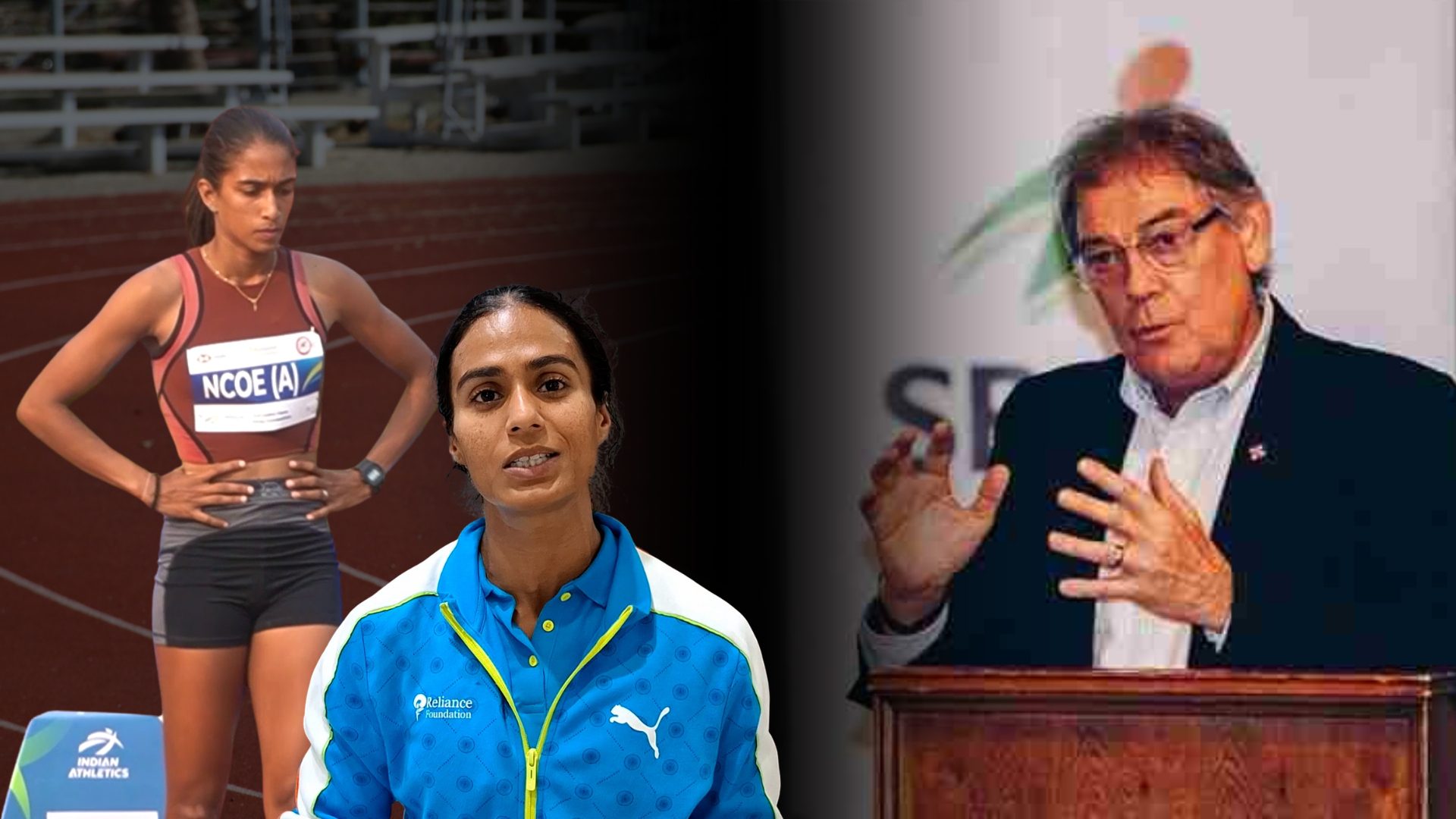
India’s athletics system has come under sharp global scrutiny after the Athletics Integrity Unit (AIU) officially categorised the country as a ‘Category A’ nation — the highest doping risk bracket under World Athletics Rule 15.
This move means stricter anti-doping rules, increased testing, and tighter monitoring for Indian athletes moving forward — a significant escalation in oversight.
The AIU’s decision is rooted in consistent data. India has been among the top two nations globally for Anti-Doping Rule Violations (ADRVs) over the past four years:
2022: 48 cases (2nd highest)
2023: 63 cases (2nd highest)
2024: 71 cases (highest globally)
2025: Already 30 cases so far
AIU Chair David Howman did not hold back, stating that India’s doping risk has remained “extremely high for a long time” and that the domestic anti-doping programme is not proportionate to the scale of the problem.
While the Athletics Federation of India (AFI) has pushed for reforms, the AIU believes progress has been insufficient. Now, under Category A, India will face mandatory minimum testing requirements for national athletes and closer international supervision.
Last year, the Athletics Integrity Unit took action against many Indian athletes, including two prominent names — Twinkle Chaudhary (800m) and Sneha Kolleri (400m). Both cases raised concerns about domestic testing. Twinkle was tested multiple times before competing at the Asian Athletics Championships but returned a positive result in an AIU test at the competition. Similarly, Sneha, a national camper, was tested multiple times before representing India at the World Relays, yet tested positive there for Stanozolol. A major shock came when one of her earlier samples, initially negative, returned positive upon AIU re-testing — raising serious questions about the credibility of India’s National Anti-Doping Agency globally.
The contrast is stark — while India has been placed in the highest-risk category, countries like Bahrain are being downgraded due to successful reforms and improved testing systems, highlighting what structured anti-doping governance can achieve.
This is not just a classification — it’s a warning signal for Indian athletics. The focus now shifts to whether India can implement real reforms quickly enough to restore credibility on the global stage.
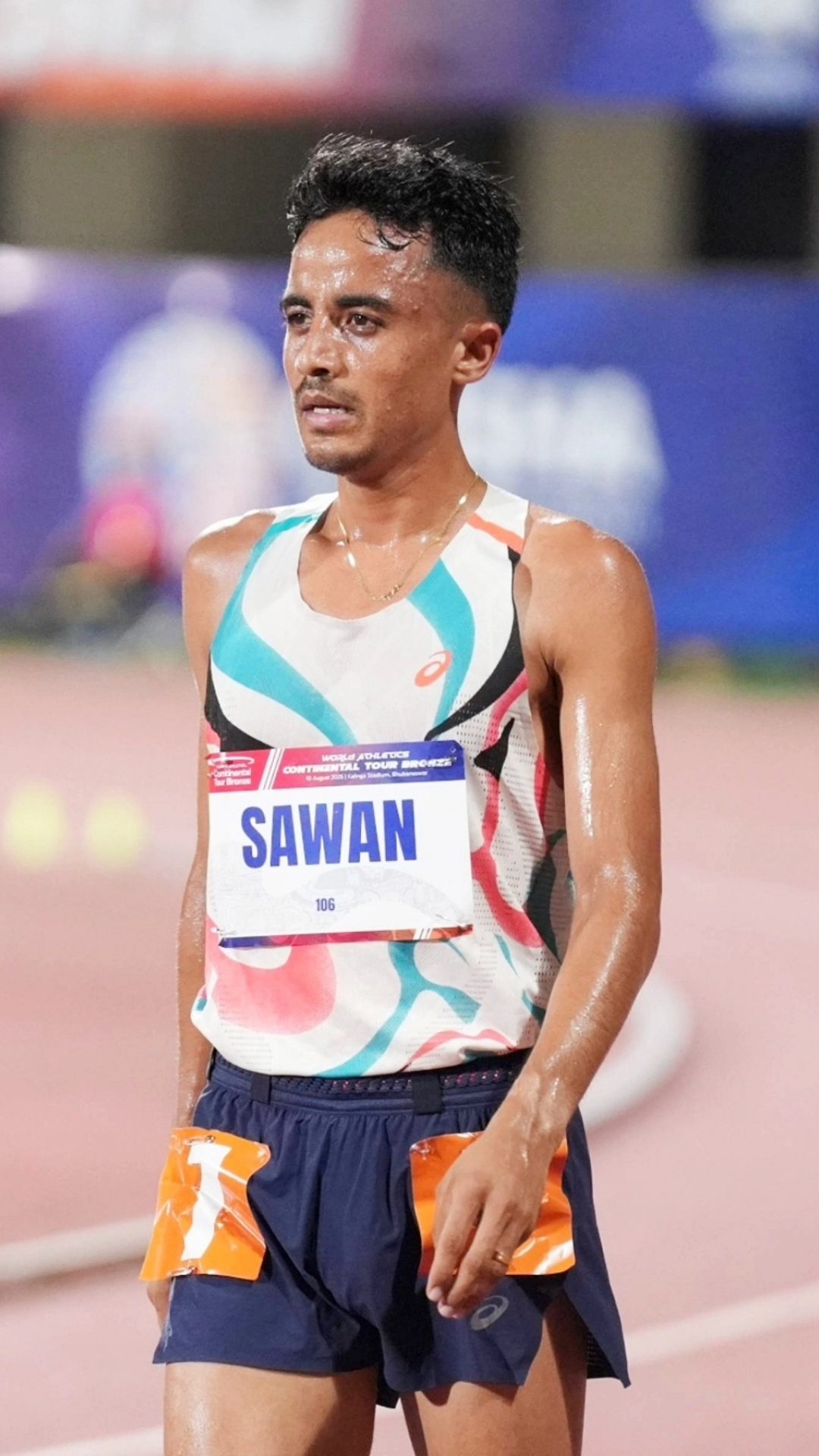
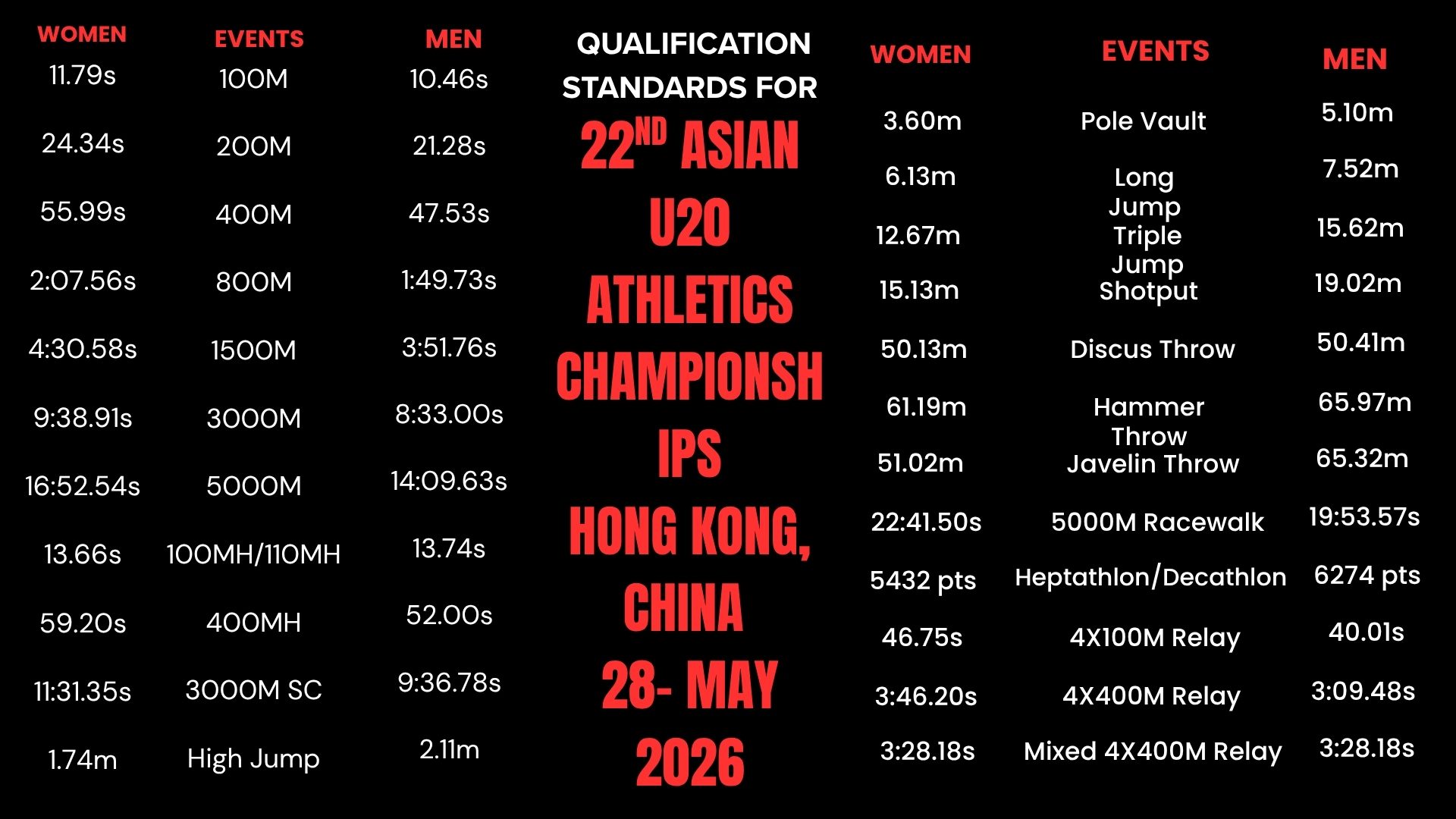
Asian U20 Athletics 2026 qualification standards have been officially announced, bringing clarity for India’s young track and field athletes.
The selection will be based on performances at the upcoming Junior Federation Cup, making it a crucial event in the calendar.
AFI Announces Qualification Standards
The Athletics Federation of India has released the official qualification standards for the Asian U20 Athletics Championships 2026.
This announcement gives athletes a clear benchmark to aim for as they prepare for the upcoming season.
The Asian U20 Athletics Championships is a major continental competition for athletes under 20.
- Features top junior athletes from across Asia
- Acts as a stepping stone to senior-level competition
- Helps identify future international stars
For Indian athletes, performing here can open doors to global success.
The applications were from various countries, including Kenya, Jamaica, Nigeria and Russia. Among them were high-profile names such as marathon star Brigid Kosgei and Nigerian sprinter Favour Ofili. World Athletics said approving these transfers would “compromise” the integrity of its eligibility rules.
According to the panel, the applications were part of a government-backed strategy by Türkiye to attract established international athletes through lucrative contracts, with the aim of strengthening its medal prospects at future events, including the 2028 Olympics.
Rules around nationality transfers were tightened in 2019 to ensure athletes have a genuine link to the country they represent and to prevent what officials have described as the commercialisation of national allegiance.
While the athletes cannot represent Türkiye in international competitions, they remain eligible to compete in club events and road races.