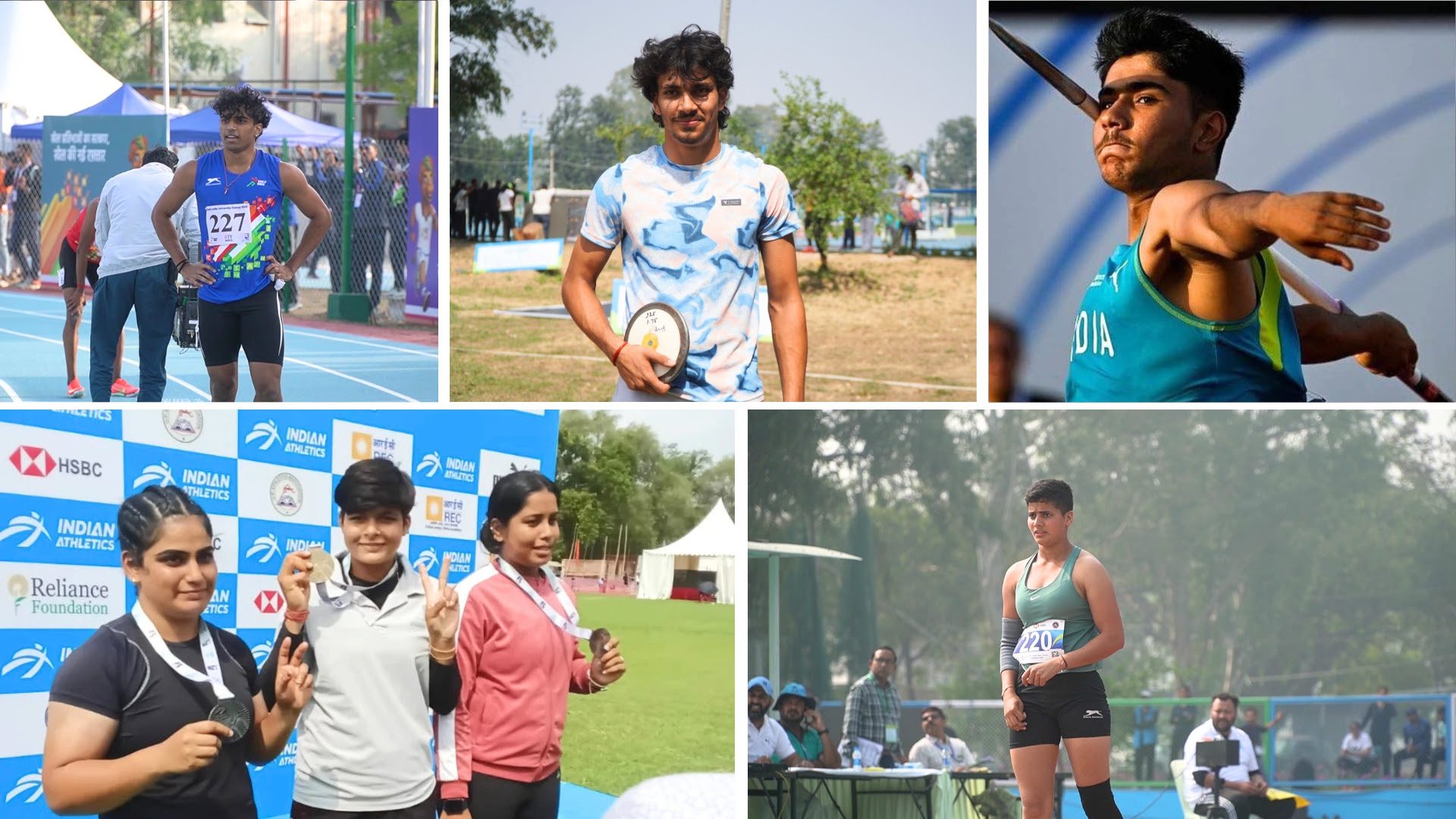

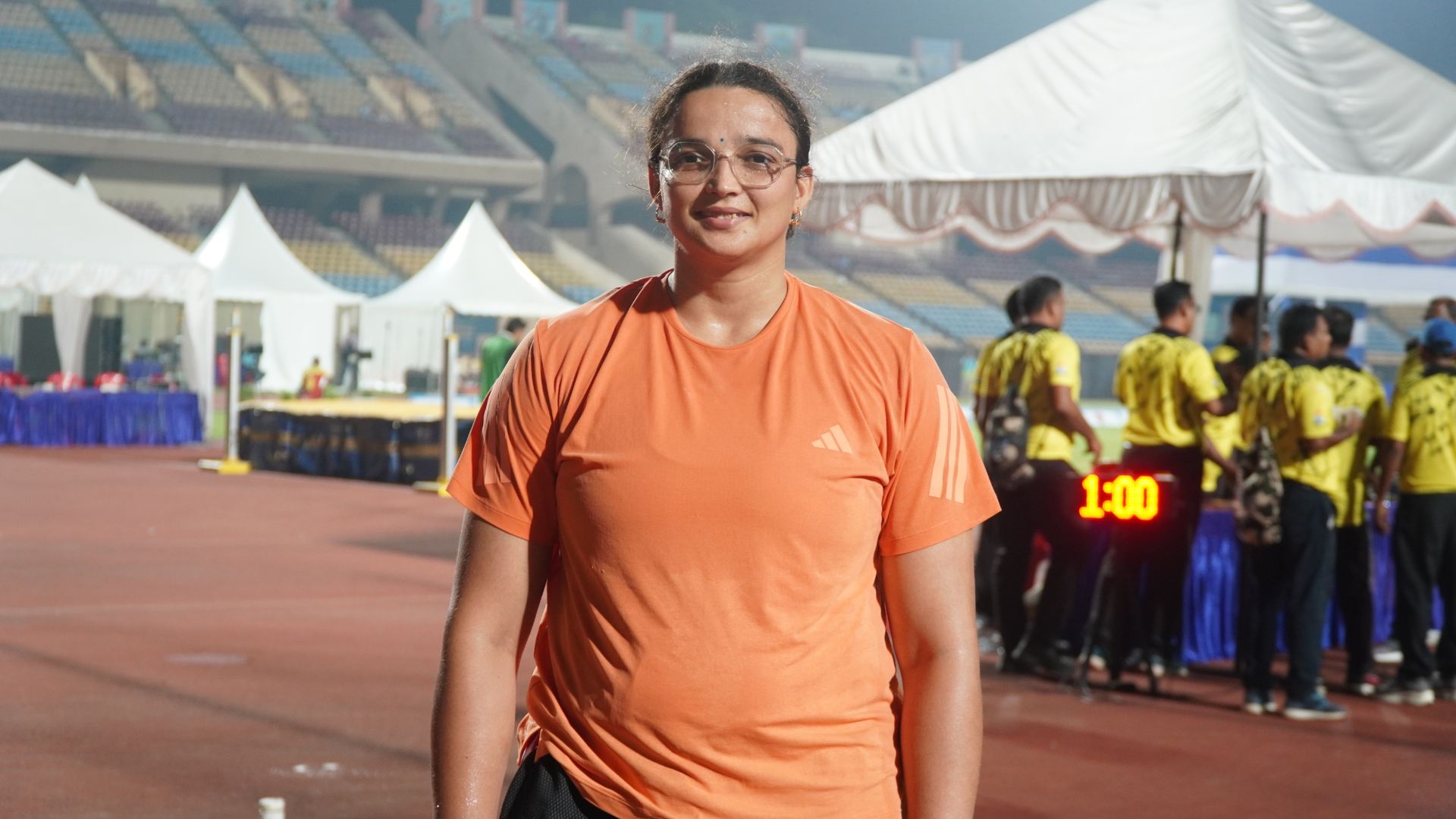
The JSW discus thrower clinched gold at Federation Cup 2026 with a 57.29m throw, comfortably breaching the Commonwealth Games qualification standard. It may not even have been her biggest throw this season — she had already registered a lifetime best of 59.55m earlier this year.
What makes the achievement even more inspiring is the journey behind it.
The Haryana athlete returned to elite competition after injury setbacks, the pandemic and motherhood, balancing training alongside raising her young son and pursuing a PhD.
At 27, Seema is steadily emerging as one of India’s most consistent discus throwers on the domestic circuit.
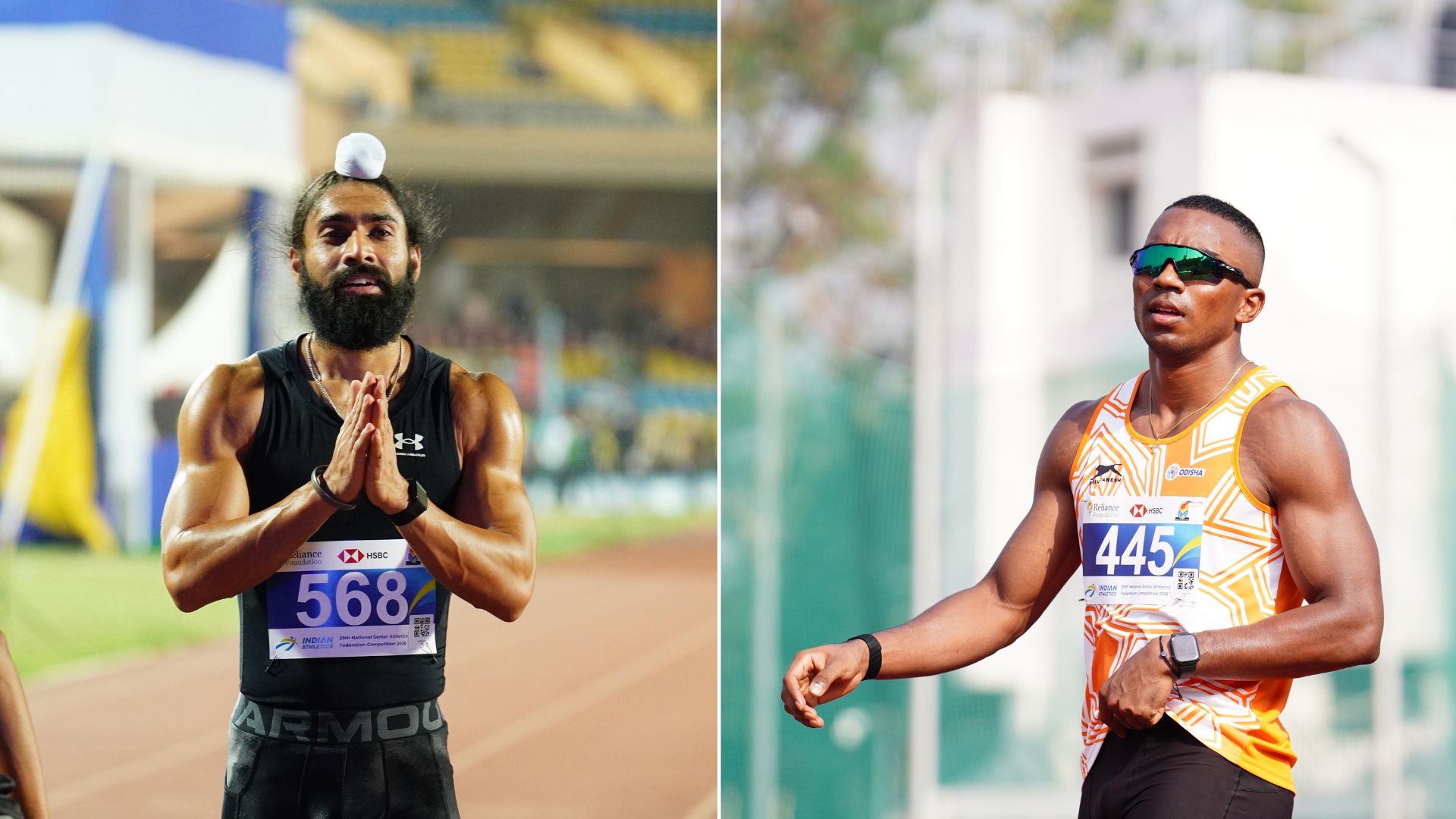
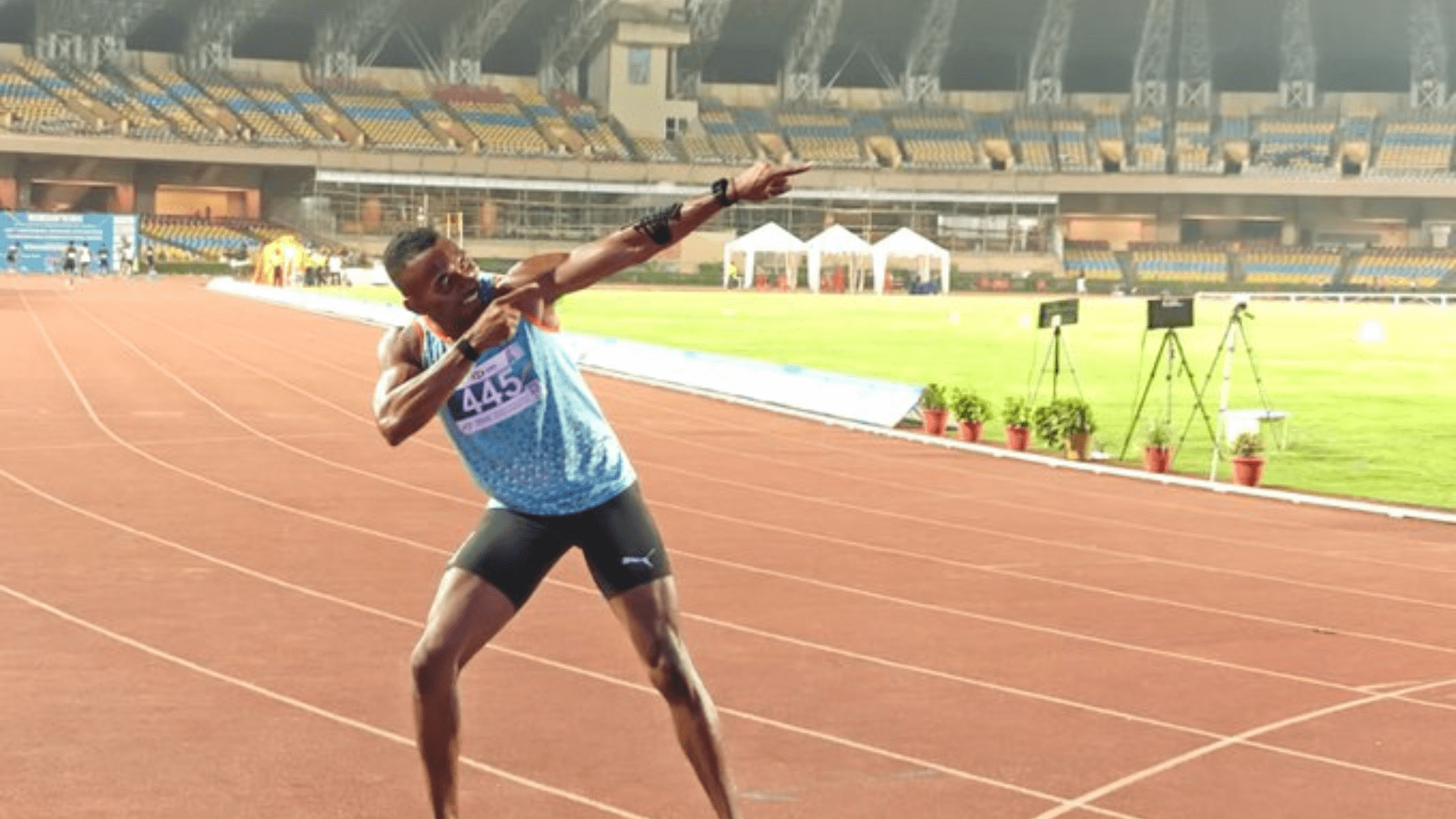
Within the space of a few minutes at the Federation Cup 2026, the men’s 100m national record was broken twice.
First, Gurindervir Singh exploded to 10.17s in the semifinal, taking the national record from Animesh Kujur and briefly becoming India’s fastest man ever.
Then came the response.
In the very next semifinal, Animesh stormed back with an astonishing 10.15s, reclaiming the record almost instantly and pushing Indian sprinting into another dimension.
And the scary part?
This was only the semifinals.
Today, India’s two fastest men line up together again in the final. One more race. One more showdown. And perhaps… another national record waiting to fall.
Birsa Munda Stadium, Ranchi | Federation Cup 2026 | May 22, 2026
Indian athletics has seen landmark moments before. But what unfolded in the men’s 100 metres at Federation Cup 2026 on Thursday evening may never be seen again.
In the space of a few extraordinary minutes, the Indian national record in the men’s 100 metres was broken twice — by two different athletes — in consecutive heats. The Birsa Munda Stadium crowd had barely finished processing one piece of history before another rendered it obsolete.
Gurindervir Makes History — Briefly
First came Gurindervir Singh. Exploding out of the blocks and burning down the track, he crossed the line in a stunning 10.17 seconds — a new Indian national record. For that brief, electric moment, Gurindervir Singh was the fastest Indian man in history. The stadium erupted. A record that sprinters chase for careers had just fallen, right here in Ranchi.
He had done it. India had a new 100m national record holder.
Then the next heat began.
Animesh Kujur: The Record-Breaker’s Record-Breaker
Animesh Kujur took to the track moments later — and proceeded to make Gurindervir’s historic run feel like a warm-up act. Animesh tore through the finish line in 10.15 seconds, slicing two hundredths of a second off the brand new national record and claiming it for himself before the ink had even dried.
Two heats. Two national records. One of the most astonishing sequences in the history of Indian sprinting.
The Shortest-Lived National Record?
Gurindervir Singh’s tenure as India’s fastest man ever must rank among the briefest in the history of national athletics records anywhere in the world. He had the record for as long as it took Animesh Kujur to run 100 metres. In most circumstances, breaking a national record is a career-defining moment — something an athlete carries proudly for years. Gurindervir will carry the knowledge that he broke it, even if the record itself was gone almost before he could celebrate.
It is simultaneously one of the cruelest and most magnificent things that athletics can produce.
What This Means for Indian Sprinting
Step back from the drama for a moment and the magnitude of what happened becomes even clearer. Two Indian athletes ran sub-10.20 in the same session, at a domestic championship, on the same evening. That is not a fluke. That is a generation of sprinters arriving simultaneously — athletes who have been training at a different level and are now delivering on the biggest stages.
Indian sprinting has long been viewed as a developing frontier. On Thursday evening in Ranchi, it stopped developing and simply arrived.
A Night Nobody Will Forget
Gurindervir Singh ran 10.17 seconds and broke the national record. Animesh Kujur ran 10.15 seconds and took it away. Both men made history on the same night, at the same stadium, in front of the same crowd.
In a sport measured in hundredths of a second, this was a story measured in moments — and it will be told for a very long time.
Federation Cup 2026 runs from May 22–25 at Birsa Munda Stadium, Ranchi.
Birsa Munda Stadium, Ranchi | Federation Cup 2026 | May 22, 2026
Rajasthan’s Dharamveer Chaudhary announced himself as the man to beat in the men’s 400 metres at Federation Cup 2026, clocking the fastest time across all heats with a sharp 46.31 seconds to set up a mouth-watering evening of semifinals.
Dharamveer Sets the Tone
In a field packed with quality, Dharamveer was the standout performer of the heats, his 46.31s putting clear daylight between himself and the rest of the pack. It was a composed, controlled run — the kind that suggests there is more in the tank when it truly matters. Going quickest in the heats is one thing; converting that into a final berth and a podium finish is another challenge entirely, and the semifinals at 19:30 IST will be the next test of his credentials.
The Heat Standings
The heats produced a closely contested set of timings, with several athletes separated by fractions of a second and all of them within half a second of each other — a sign of just how competitive the Indian 400m landscape has become.
Himanshu was second quickest, clocking 46.43s, just 0.12 seconds behind Dharamveer. Rajesh Ramesh was breathing down his neck at 46.44s, making it effectively a three-way battle at the top. Manu TS (46.62s), Vikrant Panchal (46.66s), and Vishal TK (46.78s) round out the notable performers, all of whom will be eager to move through to the final and push their times down come the business end of the competition.
The margins are razor-thin. On any given day, any one of these six athletes could run a personal best and reorder the entire hierarchy.
Semifinals at 19:30 IST
With three semifinals scheduled for this evening at 19:30 IST, the field will be whittled down as athletes battle for their place in the final. The semifinal format adds another layer of tactical intrigue — conserving energy while still running fast enough to qualify demands a different kind of intelligence from a flat-out heat performance.
Dharamveer will carry the advantage of momentum and confidence, but he will know that his rivals are close. Himanshu and Rajesh Ramesh in particular will be looking to reverse the heat result when the lanes are drawn again this evening.
A Sprint Event Worth Watching
The men’s 400 metres has long been one of Indian athletics’ most fiercely contested disciplines, and this year’s Federation Cup edition is shaping up to be no different. With the field this tight and the semifinals just hours away, the race for the final — and ultimately the Federation Cup title — is wide open.
Keep your eyes on Lane whatever Dharamveer draws. He’s already the fastest man here. Now he needs to prove he’s the best.
Men’s 400m Semifinals — Today, 19:30 IST | Birsa Munda Stadium, Ranchi Federation Cup 2026 runs from May 22–25.

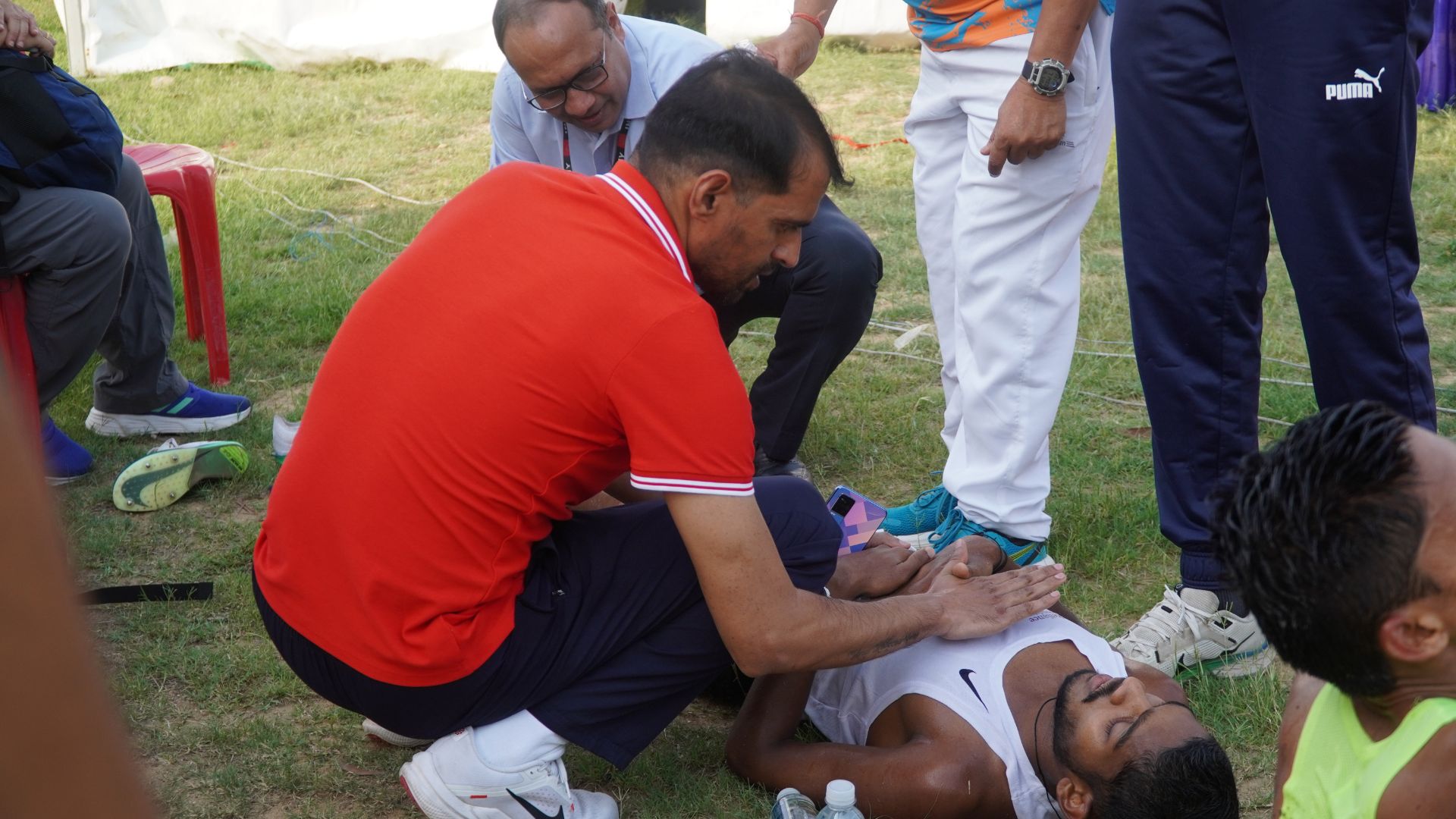
A concerning moment unfolded at the Federation Cup Athletics Championships in Ranchi after distance runner Shivaji Maddapa collapsed following the men’s 10,000m race, reportedly due to severe dehydration.
Shivaji, who had initially crossed the finish line in second place, required immediate medical attention on the track itself. Army coach Sub Younus Khan and psychologist Col Arvind Jha rushed in quickly to assist the athlete before further support arrived.
Fortunately, timely intervention helped stabilise the runner at the venue.
The incident also led to a dramatic twist in the race results. Despite finishing second, Shivaji was later disqualified after officials noted that he had stepped outside the race lane during the final lap. Reports suggested the athlete may have become disoriented because of dehydration towards the closing stages of the race.
The episode once again highlighted the physical demands of long-distance racing, particularly in difficult weather conditions and high-intensity domestic competitions.
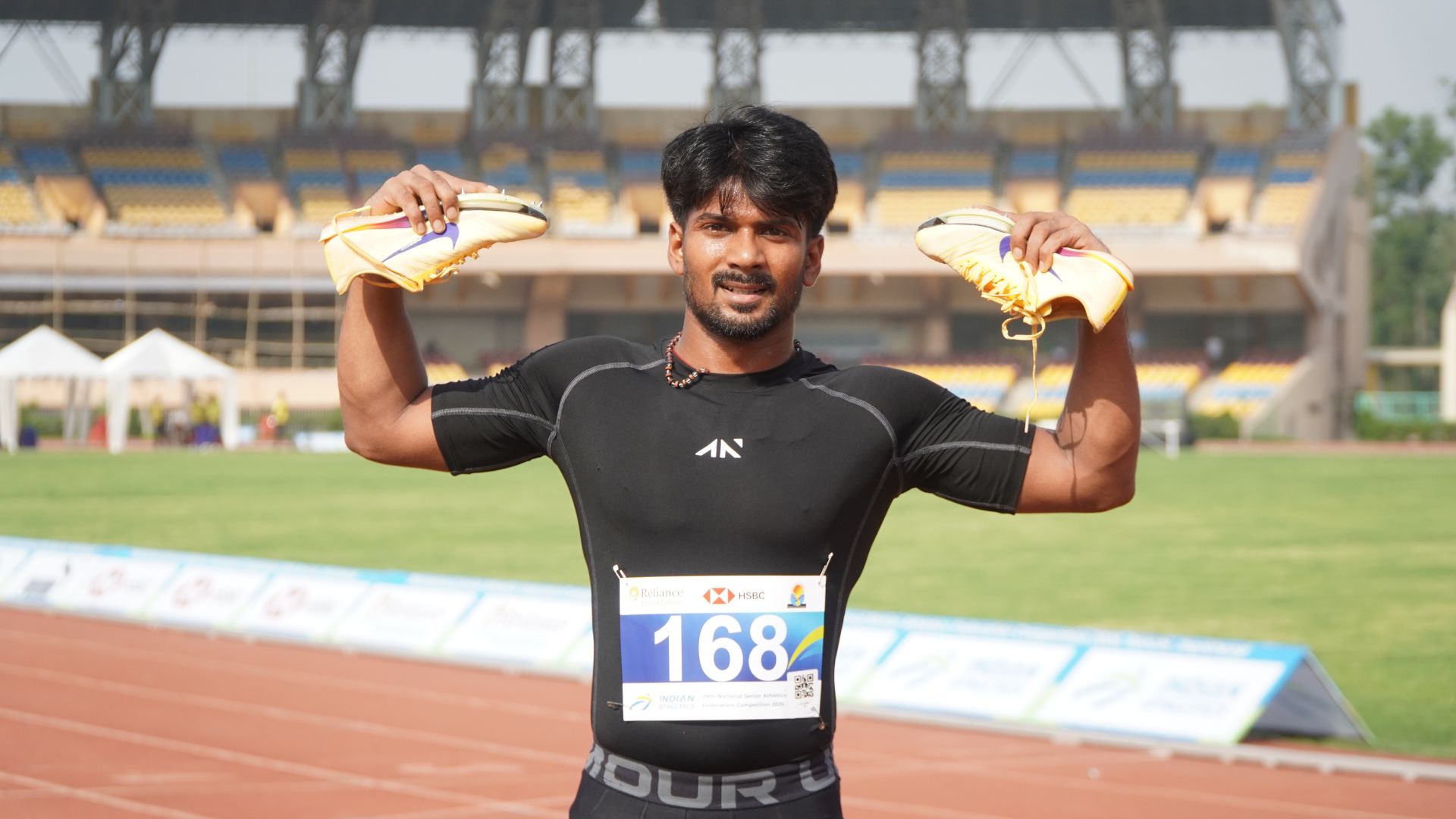
Bihar’s Vibhaskar Kumar emerged as one of the standout performers in the men’s 100m heats at the Federation Cup Athletics Championships in Ranchi, clocking a sharp personal best of 10.36s to finish fastest overall ahead of national record holder Animesh Kujur.
Animesh, one of India’s leading sprinters, clocked 10.40s in the heats as both athletes comfortably progressed to the next round.
What made Vibhaskar’s performance particularly impressive was the speed of his recent improvement. The 22-year-old had recorded a personal best of 10.57s as recently as April 4 in Bengaluru, while his best timing last year stood at 10.63s. His 10.36s run in Ranchi marks a significant leap forward in a short period.
The performance has also drawn attention because Bihar has not traditionally been known as a major sprinting hub in Indian athletics. Vibhaskar’s emergence therefore adds an interesting new name to India’s growing sprint scene at a time when the country is searching for greater depth in short-distance events.
With Indian sprinting witnessing rapid progress in recent seasons, performances like Vibhaskar’s will be closely watched heading into the final and the remainder of the season.
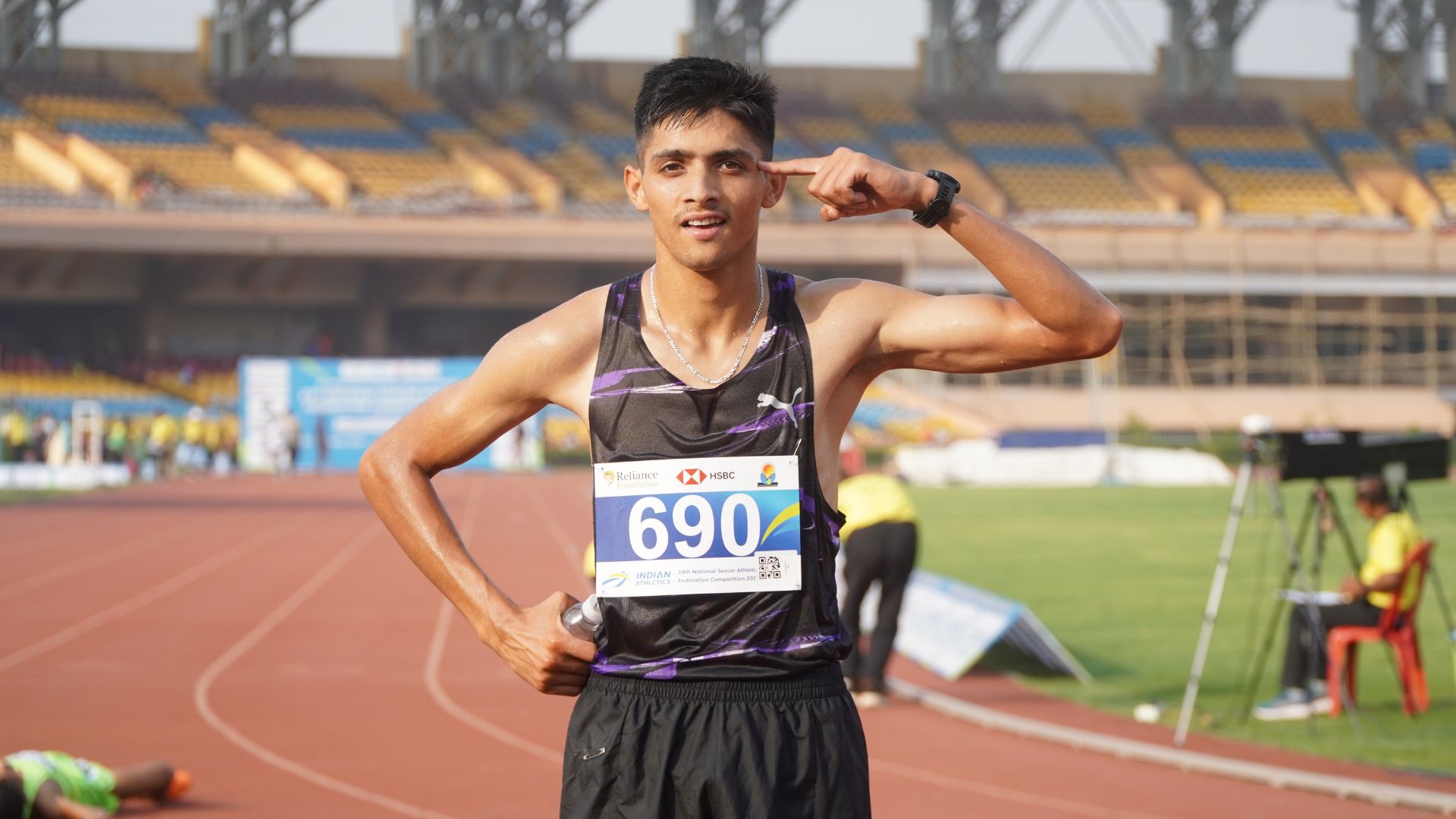
Uttarakhand’s Deepak Bhatt produced the standout performance in the men’s 10,000m at the Federation Cup Athletics Championships in Ranchi, winning gold with a lifetime best timing of 29:42.93s.
In a race that turned tactical through the middle stages before quickening in the final laps, Deepak held his composure well to pull away from the field and secure the national title. The performance marked a significant personal milestone for the distance runner, who dipped below the 30-minute mark for the first time in his career.
Shailesh Khushwaha finished second in 29:57.56s, also going under the 30-minute barrier, while Prashant Chaudhary took bronze in 30:36.97s.
While the race produced strong domestic performances, the timings also underlined the gap Indian men’s distance running still faces at the international level. None of the athletes were able to meet the Commonwealth Games 2026 qualification standard of 27:39.03.
The Federation Cup remains one of India’s key domestic meets, often serving as an important selection event ahead of major international competitions. With Indian athletics increasingly focusing on global qualification standards, performances at events like these are being viewed not just through medal outcomes but also through the lens of international competitiveness.
For Deepak, however, the evening belonged to personal progress. Winning a national-level title while setting a lifetime best will provide an important confidence boost as the season moves towards tougher international benchmarks and qualification races later in the year.
Spanish middle and long-distance runner Patricia Álvarez Pérez has been handed a two-year ban by the World Athletics Disciplinary Tribunal after testing positive for the prohibited substance Furosemide during a World Athletics Label Road Race in Spain.
The case stemmed from an in-competition doping control conducted on March 29, 2025, at the Azkoitia-Azpeitia Diego García Memorial Half Marathon, where Álvarez finished third. Analysis of her urine sample by a WADA-accredited laboratory in Barcelona detected Furosemide, a diuretic and masking agent banned at all times under the World Anti-Doping Agency’s prohibited list.
According to the tribunal decision released by the Athletics Integrity Unit (AIU), Álvarez accepted the presence of the substance and argued that the ingestion had been accidental. She claimed she mistakenly consumed her grandfather’s Furosemide tablet believing it to be Ibuprofen while dealing with pain linked to chronic tendinopathy in her left foot ahead of the race.
The athlete submitted photographs of medication, prescription records and documents showing that her grandparents lived with her. She maintained throughout the proceedings that the violation was unintentional and requested that the tribunal consider reducing the sanction on the grounds of “No Significant Fault or Negligence.”
However, sole arbitrator Eduardo Amorim ruled that while the source of the prohibited substance had been established, the athlete had failed to demonstrate an acceptable standard of care expected from an athlete subject to anti-doping regulations.
The ruling noted that Álvarez stored her medication alongside family prescriptions, packed medication for travel without properly checking labels, and consumed the tablet in poor lighting conditions without verifying the blister pack. The tribunal stated that these actions created a “clear and foreseeable risk” for an athlete liable to doping control.
Álvarez also argued that she should be treated as a recreational athlete because her primary profession was that of a physical therapist rather than a full-time sportsperson. The tribunal rejected that argument, saying anti-doping responsibilities apply equally to all athletes competing under World Athletics regulations regardless of whether sport is their primary source of income.
As a result, the tribunal imposed the standard two-year period of ineligibility applicable to non-intentional violations involving specified substances where no reduction is warranted. The ban is effective from July 14, 2025, the date of her provisional suspension, and all her results from the March 2025 race onwards stand disqualified.
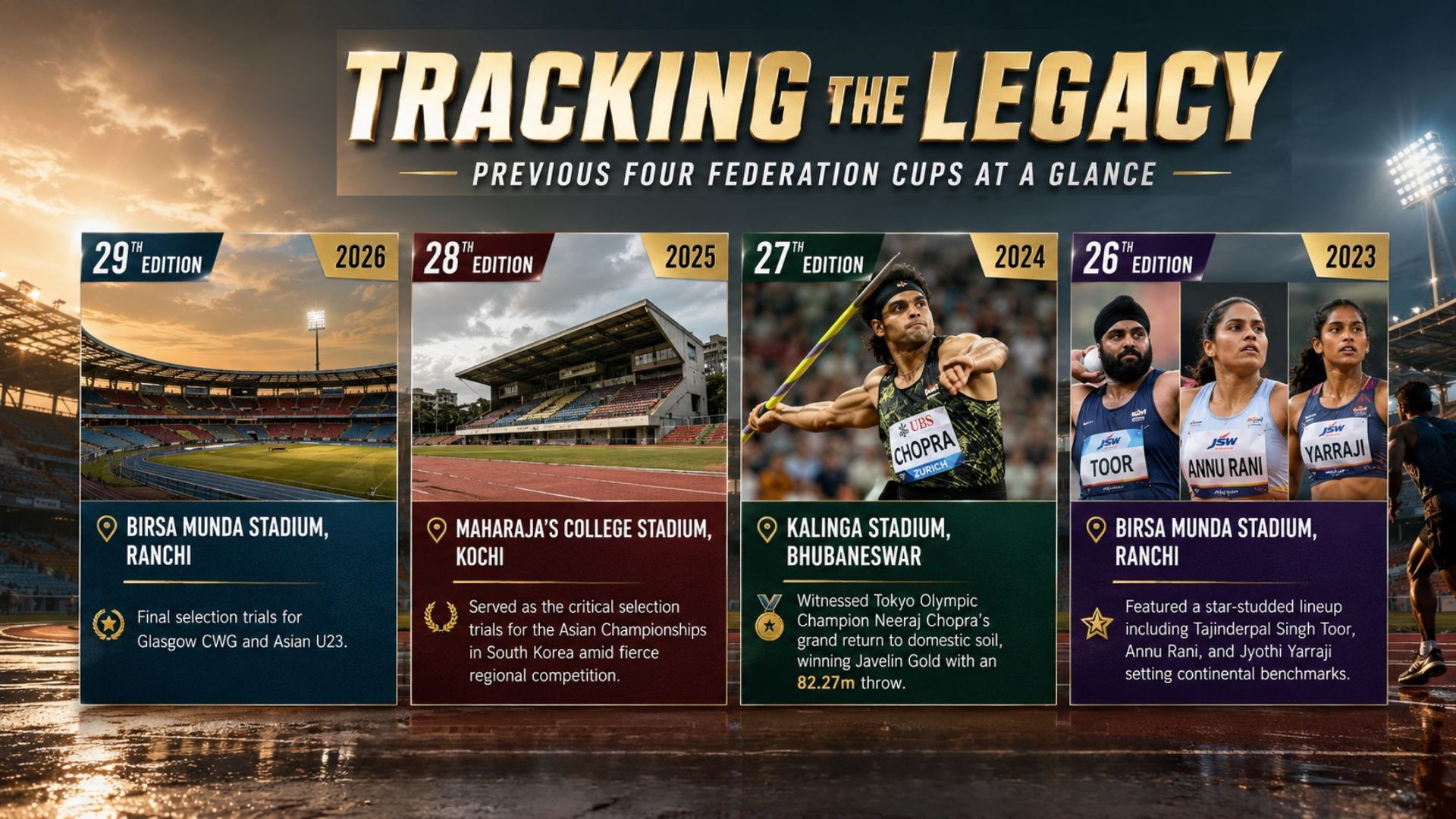
The National Federation Senior Athletics Competition, popularly called the Federation Cup, stands
firmly as one of the premier annual domestic athletics competitions in India. Organized by the
Athletics Federation of India (AFI), this elite event is the ultimate proving ground where grassroots
talent meets Olympic excellence.
But why does the Federation Cup hold such immense prestige in Indian track and field? The answer
lies in its role as the definitive gateway to the global stage.
The High Stakes of the 29th Federation Cup in Ranchi.
Scheduled to be held from May 22 to 25, 2026, at the Birsa Munda Athletics Stadium in Ranchi, the
29th edition of the Federation Cup carries unprecedented career-defining stakes.
1. Launchpad for the Asian U23 Athletics Championships
The Ranchi meet will officially serve as the crucial selection trial for the upcoming inaugural edition
of the Asian U23 Athletics Championships. According to the national federation and Asian Athletics
Association guidelines, athletes between the age of 20 to 22 years as on December 31, 2026, are
eligible for selection. Spotting a ticket here means traveling to Ordos, China, where the continental
meet will be hosted from July 9 to 12, 2026.
2. The Final Gateway to the Glasgow Commonwealth Games
For senior athletes, Ranchi represents a high-pressure, logistical reality. The event is the
absolute last domestic track and field meet for athletes to achieve qualification standards and book
their tickets for the highly anticipated Glasgow Commonwealth.
For sports fans, coaches, and scouts looking for the next generation of Indian sports icons, all eyes
are on the track at Ranchi. The Federation Cup is not just another domestic tournament—it is where
India’s international athletic dreams take flight.
|