
World Athletics has officially unveiled the qualification system for the 2027 World Championships in Beijing — and the message is loud and clear: qualifying is about to become much harder.
The governing body is continuing with its hybrid qualification model, where athletes can enter either through direct qualifying standards or via world rankings. But this time, rankings will matter more than ever before.
World Athletics says it wants roughly 40% of athletes to qualify through entry standards and 60% through rankings. That is a major shift from previous championships, where standards carried more weight.
For Indian athletes, this changes the entire approach to season planning.
The qualifying windows are already open for some events. Marathon qualification began in November 2025, while the 10,000m and race walks opened in February 2026. Most other events will have qualification periods running from August 2026 to August 2027.
But the real talking point is the standards themselves.
Several marks have become brutally difficult. The men’s 800m standard is now 1:43.00, while the men’s 1500m has been pushed to 3:30.00. Even the men’s 100m now effectively requires athletes to break the 10-second barrier.
The implication is obvious: World Athletics does not expect most athletes to qualify directly anymore.
Instead, the rankings system will decide the majority of places.
That means athletes will need to compete regularly at high-category international meets such as Diamond League events and Continental Tour competitions. Rankings are calculated using both performance marks and the quality of competition.
There is another major twist.
From now on, qualifying marks will only count if achieved at Category C meets or above. That effectively excludes many lower-level competitions and local meets from direct qualification consideration.
For Indian athletes, this could become a serious challenge.
Access to high-category international meets is often expensive and politically complicated. Entry into elite competitions frequently depends on agents, sponsorship relationships, and global rankings themselves. Athletes from stronger systems naturally gain an advantage.
Distance runners and throwers may feel the impact the most.
World Athletics has also cracked down on certain “favourable conditions” performances. Marks achieved at famous facilities such as Throw Town Ramona in discus or on Boston University’s indoor track will no longer count as qualifying standards, though they will still help rankings.
There are also wild-card routes available.
Defending world champions, winners of the new World Ultimate Championships, Diamond League champions, and certain tour winners can qualify automatically.
For Indian athletics, the system creates both opportunity and pressure.
Athletes like Gulveer Singh, Vishal TK, Gurindervir Singh, and Tejaswin Shankar are already competing at levels where rankings can become realistic qualification routes. But for emerging athletes without international exposure, the pathway now looks significantly tougher.
The days of producing one brilliant performance at a domestic meet and punching a World Championships ticket may slowly disappear.
Consistency, international competition, rankings management, and access to elite races may now matter as much as raw talent itself.
World Athletics has officially unveiled the qualification system for the 2027 World Championships in Beijing — and the message is loud and clear: qualifying is about to become much harder.
The governing body is continuing with its hybrid qualification model, where athletes can enter either through direct qualifying standards or via world rankings. But this time, rankings will matter more than ever before.
World Athletics says it wants roughly 40% of athletes to qualify through entry standards and 60% through rankings. That is a major shift from previous championships, where standards carried more weight.
For Indian athletes, this changes the entire approach to season planning.
The qualifying windows are already open for some events. Marathon qualification began in November 2025, while the 10,000m and race walks opened in February 2026. Most other events will have qualification periods running from August 2026 to August 2027.
But the real talking point is the standards themselves.
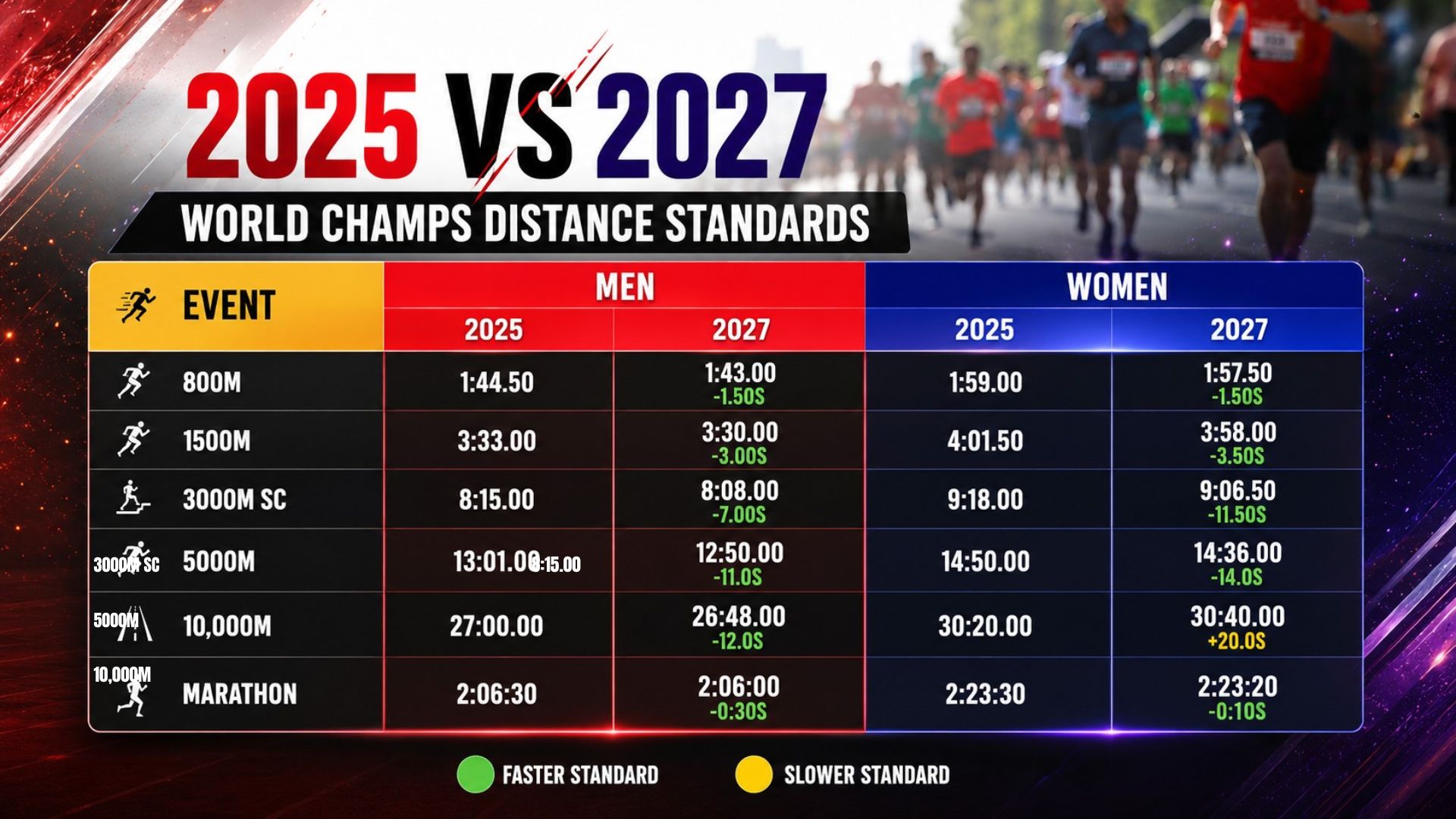
Several marks have become brutally difficult. The men’s 800m standard is now 1:43.00, while the men’s 1500m has been pushed to 3:30.00. Even the men’s 100m now effectively requires athletes to break the 10-second barrier.
The implication is obvious: World Athletics does not expect most athletes to qualify directly anymore.
Instead, the rankings system will decide the majority of places.
That means athletes will need to compete regularly at high-category international meets such as Diamond League events and Continental Tour competitions. Rankings are calculated using both performance marks and the quality of competition.
There is another major twist.
From now on, qualifying marks will only count if achieved at Category C meets or above. That effectively excludes many lower-level competitions and local meets from direct qualification consideration.
For Indian athletes, this could become a serious challenge.
Access to high-category international meets is often expensive and politically complicated. Entry into elite competitions frequently depends on agents, sponsorship relationships, and global rankings themselves. Athletes from stronger systems naturally gain an advantage.
Distance runners and throwers may feel the impact the most.
World Athletics has also cracked down on certain “favourable conditions” performances. Marks achieved at famous facilities such as Throw Town Ramona in discus or on Boston University’s indoor track will no longer count as qualifying standards, though they will still help rankings.
There are also wild-card routes available.
Defending world champions, winners of the new World Ultimate Championships, Diamond League champions, and certain tour winners can qualify automatically.
For Indian athletics, the system creates both opportunity and pressure.
Athletes like Gulveer Singh, Vishal TK, Gurindervir Singh, and Tejaswin Shankar are already competing at levels where rankings can become realistic qualification routes. But for emerging athletes without international exposure, the pathway now looks significantly tougher.
The days of producing one brilliant performance at a domestic meet and punching a World Championships ticket may slowly disappear.
Consistency, international competition, rankings management, and access to elite races may now matter as much as raw talent itself.
By :- Sundeep Misra
First, let’s get one thing out of the way: James Hillier is an extremely good coach. Now that the mandatory genuflection is done, we need to talk about his recent online session with “hand-picked” journalists.
Mr. Hillier saw fit to drop a slice of classic, defensive sarcasm, complaining that a few reporters “just try to find the negative in everything because they want a few clicks.”
It begs the question: Is he entirely above criticism? Did he secretly coach a golden generation to Olympic glory in some other part of the world, earning lifetime immunity from accountability? Or has the classic Indian sporting trait of zero introspection finally rubbed off on him?
More importantly, does he seriously believe that Indian track and field is a goldmine for “clicks”? Let’s be real. If a journalist wanted cheap traffic, they’d write a breathless 100-word aggregate piece about Virat Kohli’s haircut or Rohit Sharma’s expressions. Covering athletics isn’t a get-rich-quick scheme. The reporters on this beat put far more on the line than the AFI or you, Mr. Hillier. You know why? We don’t get paid by the AFI or Reliance. We know exactly what dedicating our lives to the raw, unglamorous reality of track and field actually costs.
Let’s look at history. At the 2012 London Olympics, UK Athletics chief Charles van Commenee resigned after British athletes won six medals. Why? Because he had publicly promised eight. He held himself to his own standard and walked. Meanwhile, in our ecosystem, the baton gets dropped (thrice), performances plateau (relay), and the blame is neatly deflected away from the coaching staff. Was it lack of exposure? Lack of preparation? Who knows. But the goalposts just get pushed comfortably forward to the next Asian Games or Olympic cycle.
Taxpayers’ money funds national teams and national systems. Is anyone ever held accountable? Historically, NSFs act like they are completely untouchable.
This isn’t about “negativity.” It’s about the soul of the sport. Watching wonderfully talented sprinters like Gurindervir Singh and Animesh Kujur suffer when their performances drop is genuinely heartbreaking. They are the ones who bear the brunt when the system falters. The rest of the noise? I couldn’t care a fig. Clicks or no clicks; the athletes deserve a system that takes a hard look in the mirror instead of blaming the people holding the notebooks.
Watch the video here! youtube

nnis Sports broke the news that Pooja, Shahnavaz Khan, along with 23 athletes, were sent back from the airport due to delays in the visa process for the Indian team travelling to Hong Kong, China, for the U20 Asian Athletics Championships 2026, scheduled from 28th to 31st May 2026.
India was set to send a 64-member contingent for the championships, out of which 41 members successfully received their Pre-Arrival Registration Slips, while the remaining 23 members had their applications marked “unsuccessful” and were sent back to the Bengaluru camp from the airport.
nnis Sports reached out to AFI spokesperson Adille Sumariwala for comments on the matter. Replying to a WhatsApp message around 16:50 IST, he said:
“All athletes are cleared, they are on the flight. For some reason, Hong Kong did not issue visas. We took up the matter with the LOC and, with their help, got visas for all.”
He further added:
“Your statement is absolutely incorrect as usual; no one went to the airport and went back to camp. Sorry to disappoint you.”
However, many athletes among the 23 members who were allegedly sent back to camp from Airport reached out to us, confirming they had indeed returned from the airport to the Bengaluru camp. One athlete, who did not wish to be named, said:
“Humlog ko bola gaya SAI centre jane ke liye. Humlog raat ko 3 baje se pahuche, wo bhi khud se cab book karke. Disrespect kiya gaya sab ka. Ek bus bhi arrange nahin ki un logon ne.”
Another athlete said:
“Bhaiya, hua toh hai, par event humara late hai, koi dikkat nahi hai. Mil jayega visa.”
When asked whether they were left alone during the process, the athlete clarified that a bus was eventually arranged for their return.
But the bigger question remains: why is India’s national federation always late in handling visa applications?
When we further confirmed whether the athletes had eventually received their visas today, we found that all athletes had indeed received them today eveing. However, only four out of the 23 athletes were scheduled to fly out tonight.
Those athletes are:
• Jashanpreet Singh (400m Hurdles)
• Piyush Raj (400m)
• Tahura Khatun (400m)
• Vikas (3000m Steeplechase)
They are expected to board a flight around 10 PM IST, with the journey taking a minimum of 5 hours and 30 minutes. Meanwhile, Tahura and Piyush are scheduled to compete in the women’s and men’s 400m heats at 7:45 AM IST and 8:10 AM IST respectively.
All 23 athletes have now received their visas, but several of them are still awaiting confirmation of their flight details.
This is not the first time Indian athletes have faced such issues. India’s race walking team, which was set to represent the country at the Race Walking Team Championships earlier this year, reportedly faced similar visa delays from the Brazilian embassy due to incomplete documentation submitted by the federation.
The major question remains: why are preparations for international tournaments not completed well in advance? Why can’t all visa formalities and documentation be completed at least a month before the event? Why is there always a last-minute scramble?
The team was officially selected by AFI on 13th May. If that was the case, then why was the visa process delayed?
Management, visa offices, and federations may eventually correct their mistakes. But what about an athlete who reaches barely an hour before the first international competition of their life, an event they trained years for, simply because someone failed to attach the right documents?

Yashas Palaksha becomes India’s all-time 2nd fastest in men’s 400m hurdles!
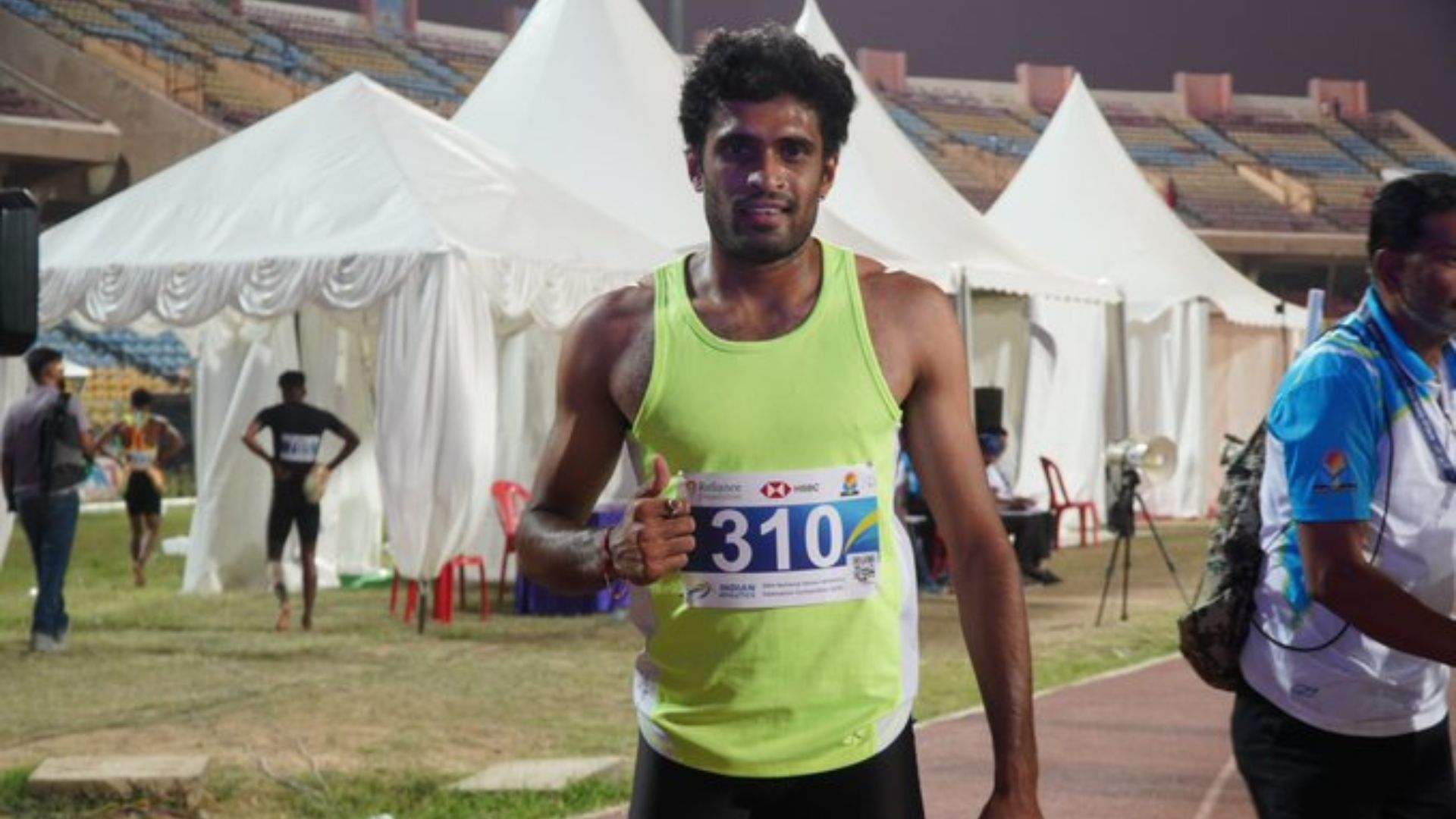
Karnataka’s Yashas Palaksha breached the Commonwealth Games 2026 qualification standard, clocking a stunning 49.00s at Federation Cup 2026.
With this performance he became India’s all-time 2nd fastest 400m hurdler Santhosh, who finished 2nd, also produced a massive run of 49.06s — now India’s 3rd fastest ever.
Till now, only one Indian had ever gone sub-49 seconds in men’s 400m hurdles:
National record holder Dharun Ayyasamy – 48.80s
Birsa Munda Stadium, Ranchi | Federation Cup 2026 | May 25, 2026
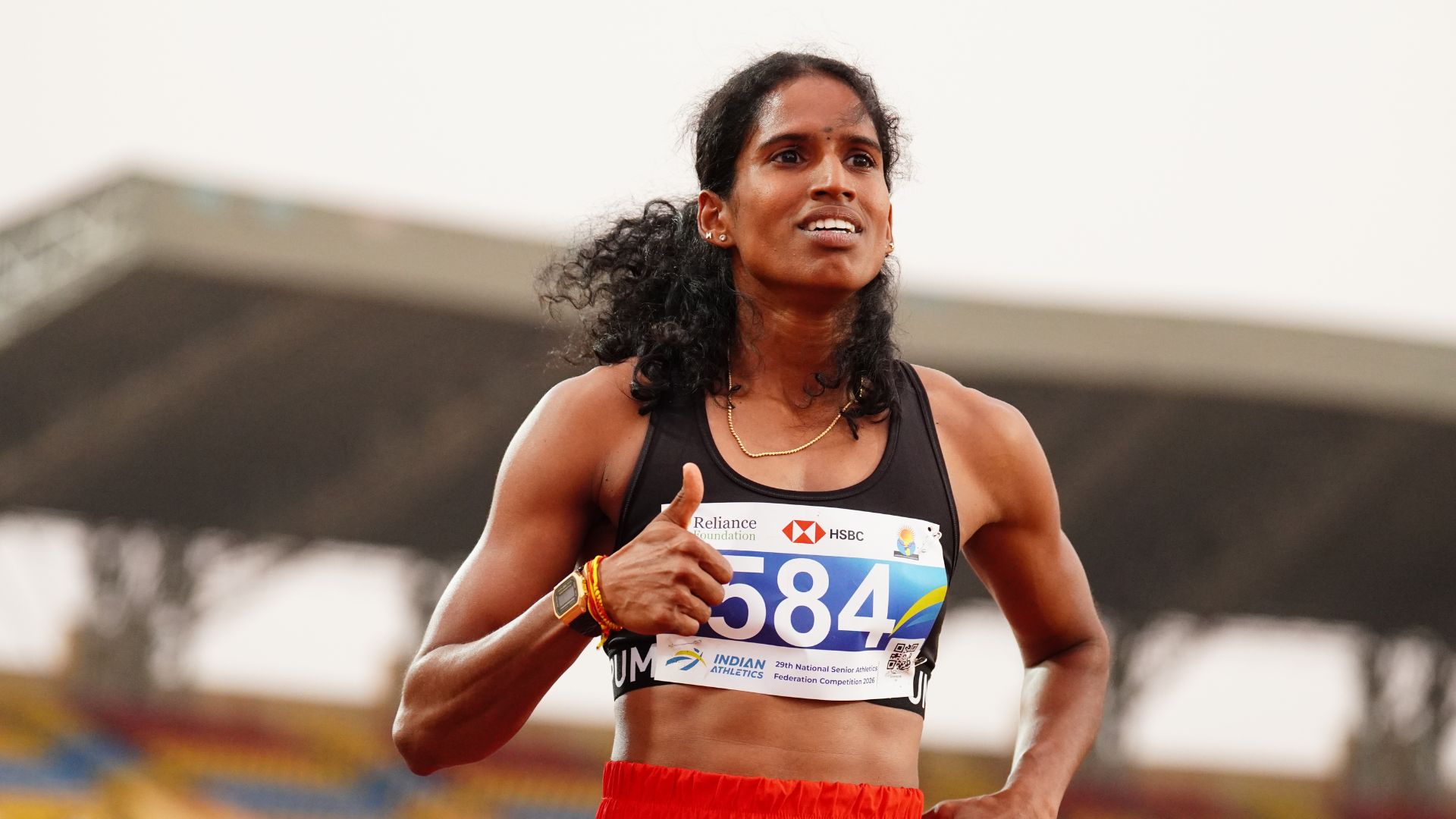
In a Federation Cup that has already produced back-to-back sprinting national records, historic pole vault battles, and a triple jumper revealing his CWG motivation on his phone screen, Vithya Ramraj has saved one of the championship’s finest individual performances for the closing stages.
The Tamil Nadu star claimed double gold in the women’s 400m and 400m hurdles at Federation Cup 2026 — and did so with times that place her among the fastest women in Asia this season.
The Numbers That Matter
Vithya clocked 52.22 seconds in the 400m flat and 56.61 seconds in the 400m hurdles. Both marks make her India’s fastest woman over those distances in 2026. But the significance stretches well beyond the domestic picture.
Her 52.22s in the 400m ranks third in Asia this season. Her 56.61s in the 400m hurdles ranks fourth in Asia this season. These are not just Indian-leading times — they are continental-level performances. At a domestic championship, without the pressure and competition of an international meet to pull her along, Vithya has put herself firmly in Asia’s elite conversation in not one but two events.
Doubling in the 400m and 400m hurdles at any level demands exceptional physical conditioning and mental endurance. To do it while producing Asia-ranking times is something else entirely.
Asian Games on the Horizon
The timing of these performances is no coincidence. With the 2026 Asian Games approaching, Vithya has sent a message to her continental rivals that she is ready and in the form of her career. Third and fourth in Asia this season, at Federation Cup, with months of international competition still ahead — the trajectory is pointing sharply upward.
If she can find even marginal improvement on these marks as the season builds toward the Asian Games, Vithya Ramraj will be a genuine medal contender on the biggest stage in Asian athletics.
The CWG Hurdle: An Impossible Standard
The one bittersweet note in an otherwise brilliant evening is the Commonwealth Games 2026 qualification mark in the 400m hurdles — set at a staggering 54.67 seconds. That is a time faster than India’s current national record in the event. In other words, no Indian woman, on her absolute best day in history, has ever run fast enough to meet that qualification standard.
Vithya’s 56.61s is an excellent time — fourth in Asia this season — but the CWG mark is simply beyond the current ceiling of Indian women’s 400m hurdles. It is a standard set so high that it effectively closes the door before any athlete can even knock on it. That is a conversation the athletics federation and Games organisers may need to have, because performances like Vithya’s deserve a pathway to the Commonwealth stage.
A Champion on Both Counts
What Vithya Ramraj achieved in Ranchi is worth stepping back to fully appreciate. Two events. Two gold medals. Two Asian-ranking performances. All at the same championship, within the same few days, on the same track.
Federation Cup 2026 has produced a remarkable cast of performers. But for sheer versatility, consistency, and the scale of what her times mean on the continental stage, Vithya Ramraj’s double gold stands as one of the championship’s defining stories.
The Asian Games await. She is ready.
Birsa Munda Stadium, Ranchi | Federation Cup 2026 | May 24, 2026
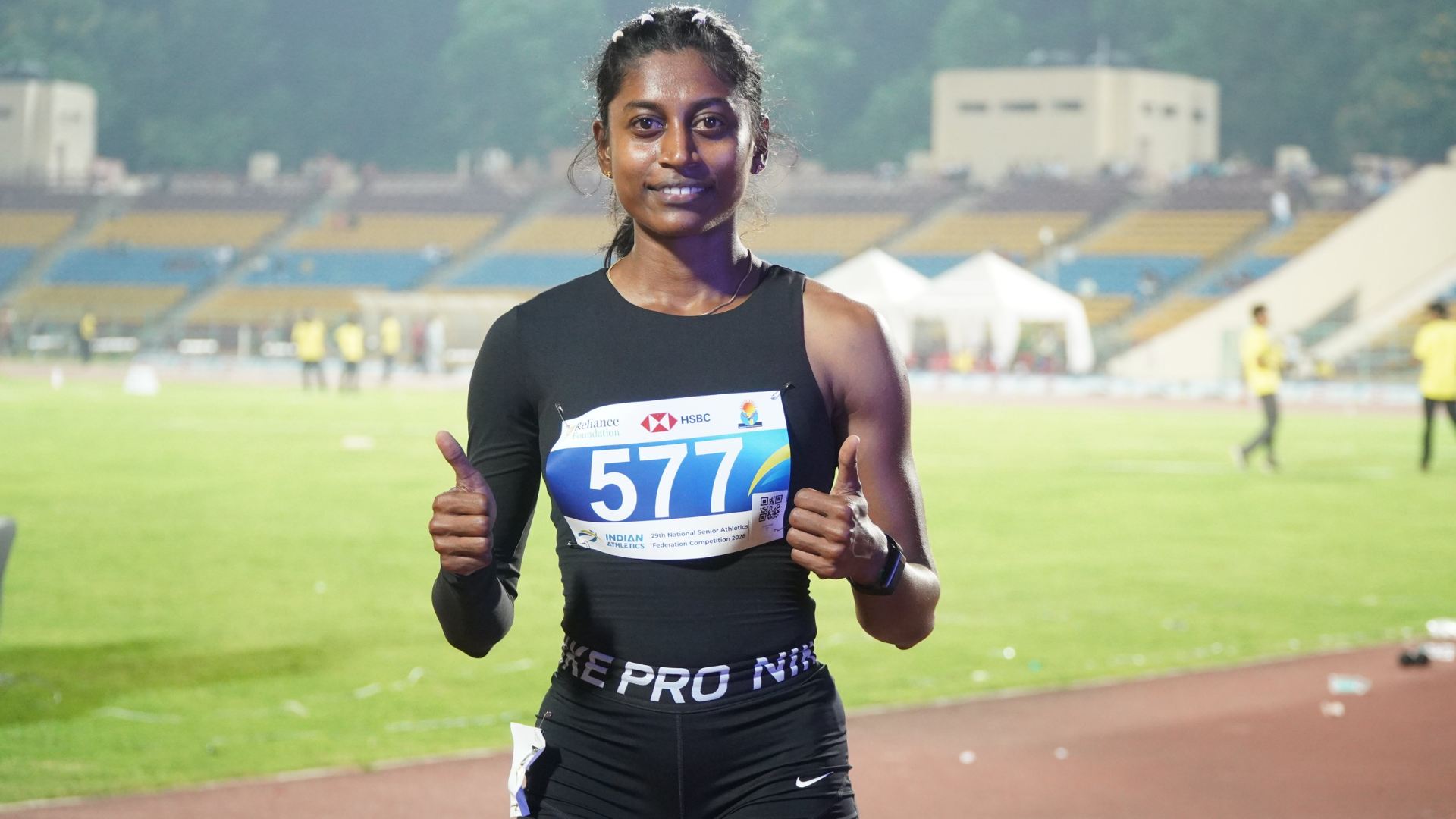
Tamil Nadu’s Nandhini K arrived at Federation Cup 2026 as an athlete in form. She left it as a national champion — and the woman who upstaged one of South Asia’s finest hurdlers in the process.
Running the race of her life, Nandhini crossed the line in 13.24 seconds — a lifetime best that sliced 0.21s off her previous personal record in a single, defining run. In a sprint hurdles event where margins are measured in hundredths, a 0.21s improvement is not incremental progress. It is a leap.
Standing in her way was no ordinary rival. Pragyan Prashanti Sahu, the reigning SAAF champion, is the benchmark of women’s hurdles in South Asian athletics. Pragyan ran 13.33s — a time that, on most days, would be more than enough to win a national title. On this evening in Ranchi, it earned her silver.
The race for gold was settled. The race for bronze was not.
Anjali C and Shreeya Rajesh pushed each other to the line in one of the most breathtaking finishes of the entire Federation Cup. When the photo finish equipment delivered its verdict, the margin between them was 0.007 seconds — a gap so small it exists beyond the limit of human perception. One bronze medal. Two athletes who deserved it equally. The numbers gave it to one of them by the width of a heartbeat.
For Nandhini, however, the evening belonged entirely to her. A lifetime best. A national title. A statement result against the reigning SAAF champion. Federation Cup 2026 will be remembered as the day Tamil Nadu’s finest hurdler announced herself on the biggest domestic stage in Indian athletics.
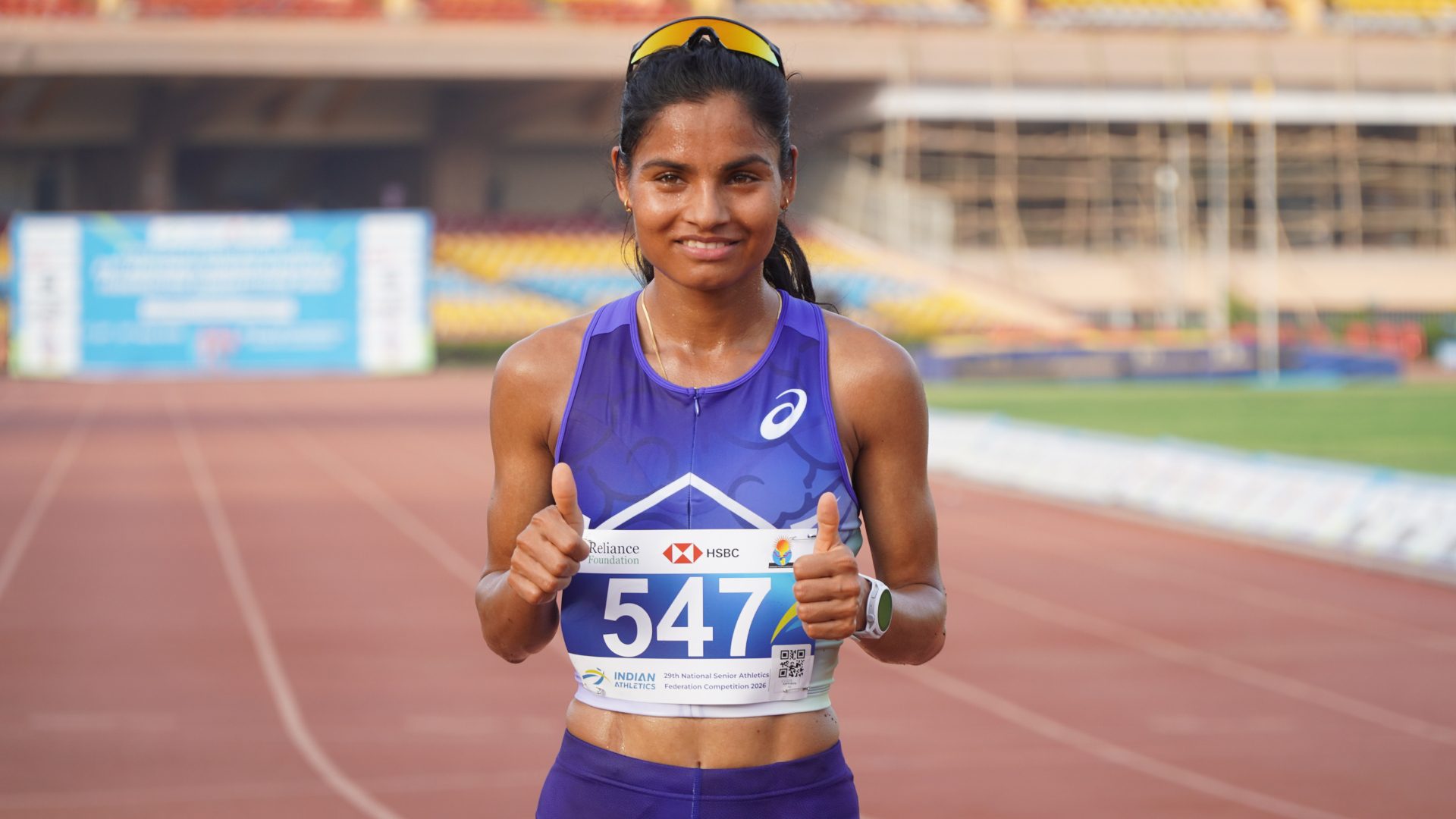
India’s leading long-distance runner Seema clinched the women’s 5000m title at the ongoing Federation Cup 2026 with a timing of 16:04.83s in a tactical final.
Representing Reliance, Seema controlled the race well and produced a strong finish to secure the gold medal ahead of Maharashtra’s Ravina, who clocked 16:46.21s for silver. IOCL athlete Sonam Parmar claimed bronze with a time of 16:48.11s.
Despite winning comfortably, the race remained much slower than Seema’s personal best of 15:16.20, which she registered earlier this season. After the event, Seema said the hot weather conditions and lack of strong competition affected the overall pace of the race.
The 25-year-old has emerged as one of India’s top distance runners in recent years. Originally from Himachal Pradesh, Seema has represented India at several major international competitions and won a historic silver medal in the women’s 5000m at the 2025 World University Games in Germany.
Seema also holds impressive credentials on the national circuit, including multiple national titles in the 5000m and 10,000m events. Earlier this year, she recorded a lifetime best of 15:16.20 in the women’s 5000m and a 10,000m personal best of 32:02.43, further cementing her status among Asia’s top distance runners.
With the Asian Games cycle approaching, Seema’s consistent performances continue to strengthen India’s hopes in women’s long-distance running.
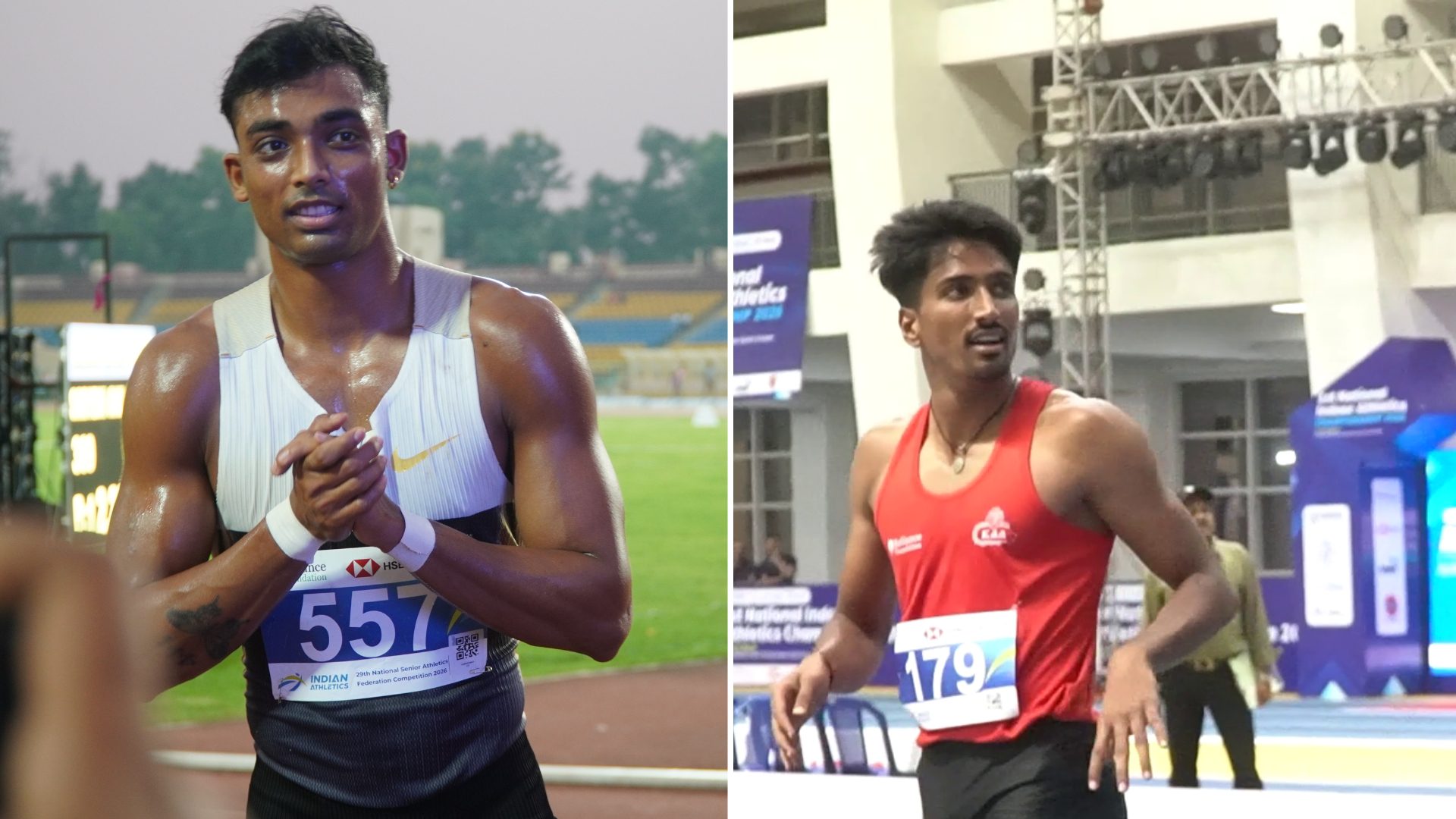
Tejas Ashok Shirse and Krishik M both clocked faster timings than the previous Federation Cup meet record in the men’s 110m hurdles final.
Tejas Shirse – 13.50s
Krishik M – 13.52s
This is now the second consecutive competition where the two finished extremely close.
At Indian Series-6, they were separated by just 0.01s.
It was also a breakthrough day for Muhammed Lazan, who registered back-to-back personal bests in both the heats and final.
He finished 3rd with 13.83s — going sub-14 seconds for the first time in his career.
Just days after suffering heartbreak in the men’s 10,000m event, Maharashtra’s Shivaji M produced a strong comeback performance to win the men’s 5000m title at the ongoing Federation Cup 2026.
The 22-year-old clocked 14:14.43s to secure gold in a tightly contested final, edging past Vinod Singh (14:15.50s) and Deepak Bhatt (14:17.18s), who finished second and third respectively.
Shivaji’s victory carried extra significance considering what transpired earlier in the competition. On Day 1 of the Federation Cup, he had crossed the finish line first in the men’s 10,000m race, only to be disqualified later for lane infringement. The dramatic turn of events denied him what would have been one of the biggest wins of his career.
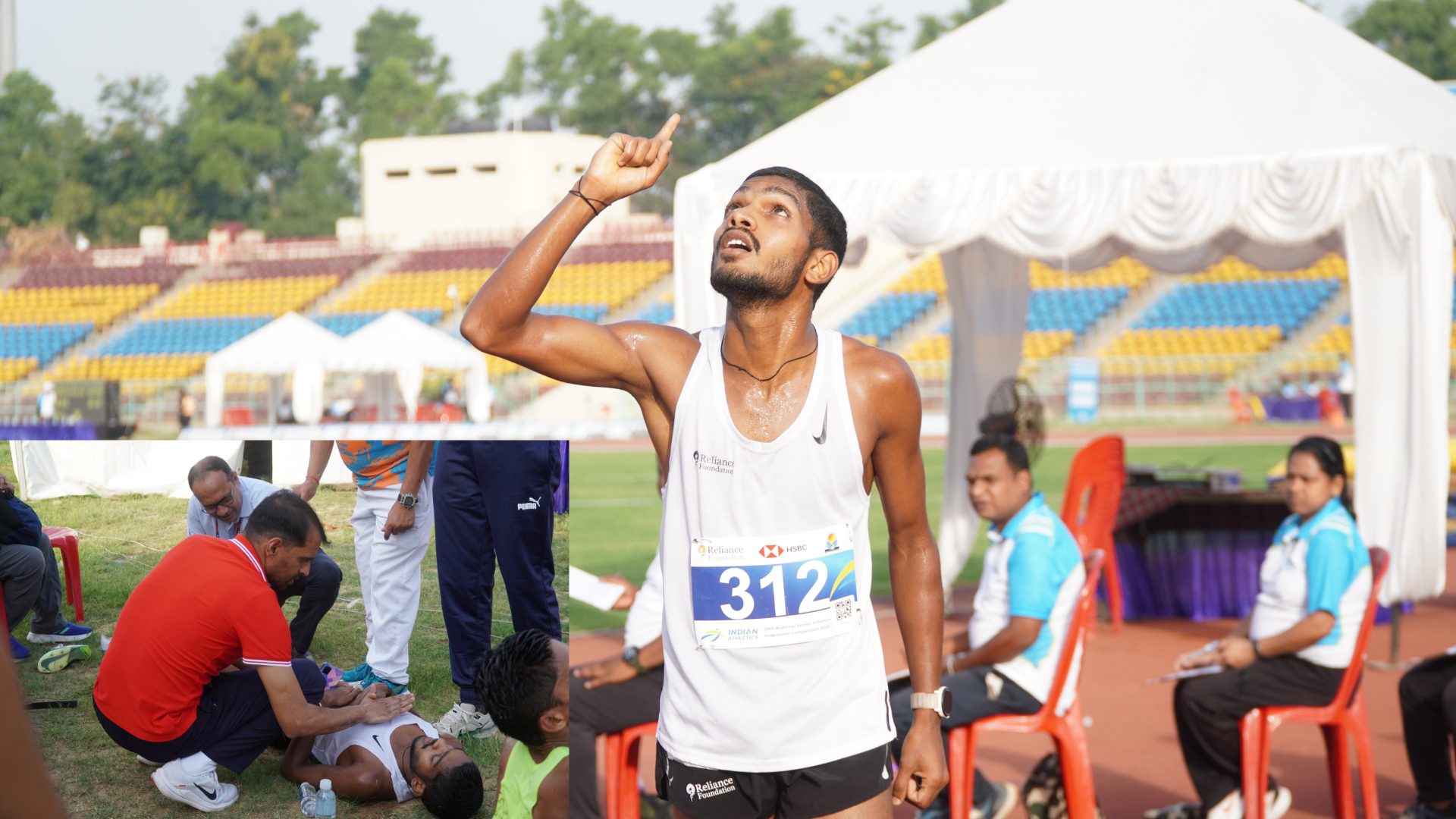
The disappointment did not end there. Following the exhausting 10,000m race, Shivaji also suffered severe dehydration and collapsed near the finish area, requiring immediate assistance from officials and support staff present at the venue. Despite the physical and emotional setback, the young distance runner returned to the track with remarkable resilience.
In the 5000m final, Shivaji looked composed throughout the race and timed his surge perfectly in the closing stages to pull away from the field. His winning time, although outside the demanding Commonwealth Games qualification standard of 13:19.64s, was enough to comfortably breach the qualification mark for the upcoming U23 Asian Athletics Championships.
The performance once again highlighted Shivaji’s potential as one of India’s promising long-distance runners. Bouncing back from a disqualification and physical exhaustion within the same competition is never easy, especially at a high-pressure national meet featuring some of the country’s best athletes.
For Shivaji, the Federation Cup may have begun with frustration and heartbreak, but it ended with redemption — and a gold medal that showcased both his endurance and mental strength.