
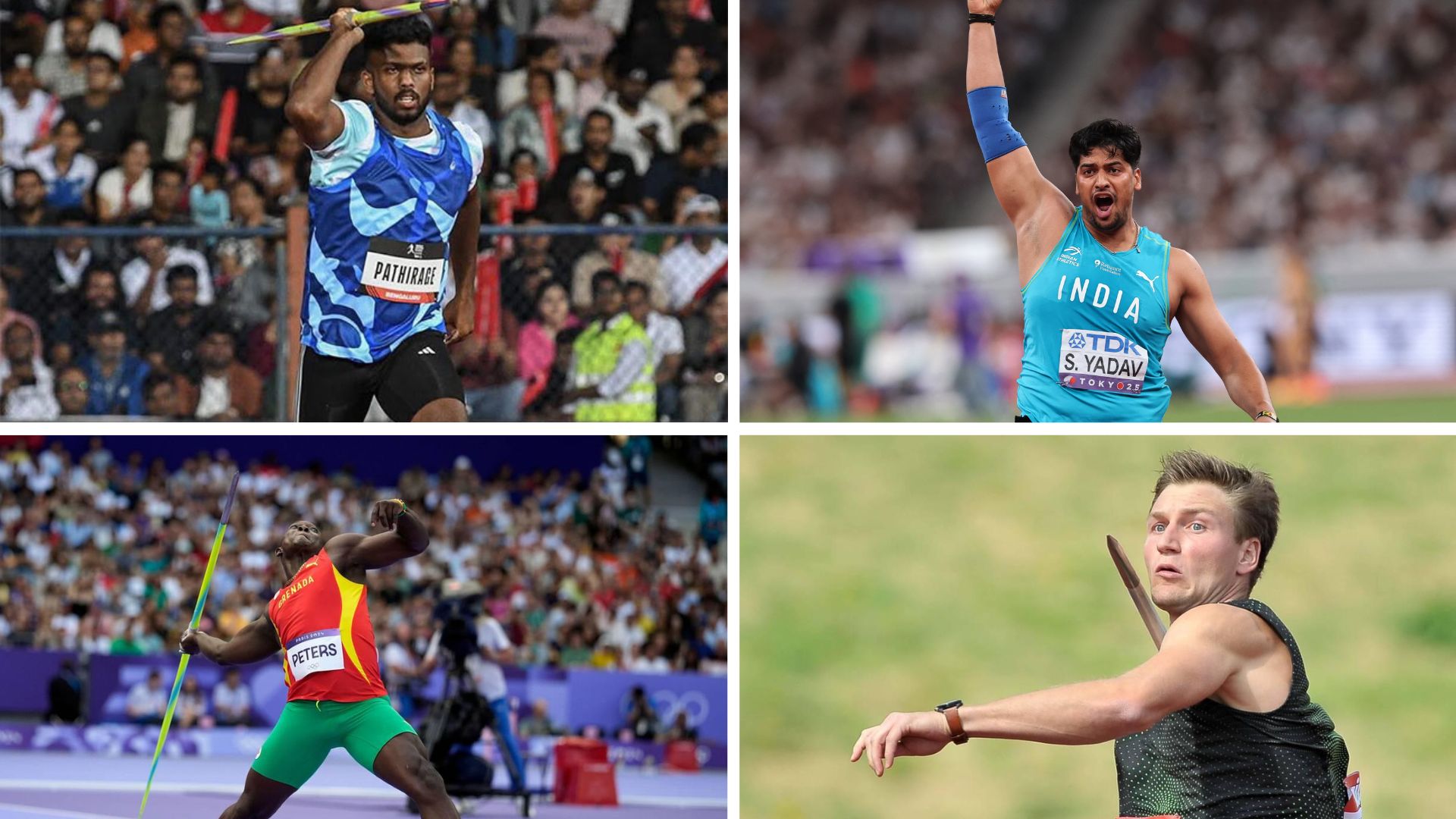
The men’s javelin throw at the Rome Diamond League brings together Olympic medallists, world champions, former Diamond League winners and emerging talents from across the globe. With multiple athletes in the field capable of throwing beyond 85 metres, fans can expect a high-quality contest featuring some of the biggest names in the event. Here’s a closer look at the athletes competing in Rome.
1. Rumesh Tharanga (Sri Lanka)
Rumesh Tharanga has emerged as one of Sri Lanka’s leading field event athletes and continues to raise the profile of javelin throwing in the country. The Sri Lankan has steadily improved over recent seasons, producing several national-level performances that have earned him opportunities on the international circuit. Known for his strong run-up and aggressive throwing style, Tharanga represents a growing generation of South Asian field athletes aiming to challenge the sport’s traditional powerhouses. Competing in Rome offers valuable exposure and an opportunity to test himself against Olympic champions, world medallists and some of the finest throwers in the world.
2. Sachin Yadav (India)
Sachin Yadav has rapidly become one of India’s most promising javelin throwers. The young athlete announced himself with a series of impressive performances on the domestic circuit and has continued to improve against international competition. Standing out for his physical strength and technically sound throwing action, Yadav is widely regarded as one of the country’s leading prospects behind Olympic champion Neeraj Chopra. Rome represents one of the biggest stages of his career so far. A strong performance against a world-class field would further underline India’s growing depth in the men’s javelin and boost Yadav’s confidence heading into future championships.
3. Anderson Peters (Grenada)
Anderson Peters remains one of the biggest names in global javelin throwing. The Grenadian is a two-time world champion and one of only a handful of athletes in history to throw beyond 90 metres multiple times. Renowned for his explosive power and consistency, Peters has spent several years competing at the highest level of the sport. His ability to deliver massive throws under pressure makes him a favourite whenever he enters a competition. Rome provides another opportunity for the former world champion to remind the athletics world why he remains one of the most feared competitors in men’s javelin.
4. Thomas Röhler (Germany)
Thomas Röhler is one of the most accomplished javelin throwers of the modern era. The German star won Olympic gold at Rio 2016 and owns a personal best of 93.90m, one of the longest throws ever recorded. Throughout his career, Röhler has been admired for his technical precision and ability to peak for major championships. Injuries have presented challenges in recent years, but his experience and pedigree remain unmatched. Every appearance by the Olympic champion generates excitement among athletics fans, and Rome offers another chance for him to demonstrate the quality that made him one of the event’s all-time greats.
5. Keshorn Walcott (Trinidad and Tobago)
Keshorn Walcott made history when he became Olympic champion at London 2012, delivering one of the most memorable performances in javelin history. The Trinidad and Tobago athlete remains one of the sport’s most respected figures and continues to compete against younger rivals more than a decade after his Olympic triumph. Walcott’s longevity is a testament to his dedication and technical excellence. Even after years on the international circuit, he remains capable of producing big throws on important occasions. Rome gives fans another opportunity to watch one of the event’s most iconic athletes in action.
6. Curtis Thompson (United States)
Curtis Thompson has become the leading figure in American men’s javelin throwing. The US record holder has consistently pushed the boundaries of the event in a country where javelin traditionally receives less attention than track disciplines. Thompson’s powerful technique and competitive mindset have helped him establish himself as a regular contender on the international circuit. His performances in recent years have demonstrated that he can challenge many of the world’s top throwers. A strong outing in Rome would further strengthen his position among the leading athletes heading into the remainder of the season.
7. Jakub Vadlejch (Czech Republic)
Jakub Vadlejch is one of the most consistent javelin throwers of his generation. The Czech athlete has won Olympic and World Championship medals and has spent years competing at the highest level. Known for his calm demeanour and ability to produce big throws when it matters most, Vadlejch is a proven championship performer. His technical efficiency and reliability have made him a fixture among the world’s elite. Rome presents another opportunity for the Czech star to add to his impressive record and challenge for victory against a field packed with accomplished competitors.
8. Dawid Wegner (Poland)
Dawid Wegner represents the next generation of Polish javelin talent. The young thrower has steadily climbed the European rankings through a combination of strong performances and continued technical development. While still building experience at the highest level, Wegner has shown glimpses of significant potential and has begun competing more regularly against elite opposition. Events like the Rome Diamond League are invaluable for his progression, providing the chance to learn from some of the sport’s most accomplished athletes while testing his abilities in a world-class environment.
9. Julius Yego (Kenya)
Julius Yego’s story remains one of the most inspiring in athletics. Nicknamed the “YouTube Man” after teaching himself the event through online videos, Yego went on to become world champion and an Olympic silver medallist. The Kenyan transformed perceptions of African participation in throwing events and inspired a generation of athletes across the continent. Even years after his biggest successes, Yego continues to compete with passion and determination. His presence in Rome adds a unique dimension to the field and provides fans with the opportunity to watch one of athletics’ most remarkable success stories.
10. Giovanni Frattini (Italy)
Giovanni Frattini will carry home hopes into the competition as Italy’s representative in the field. The young Italian thrower continues to gain valuable experience against international opposition and has shown encouraging progress in recent seasons. Competing at the Stadio Olimpico in front of a supportive crowd will provide additional motivation as he takes on some of the biggest names in world javelin. While facing Olympic champions and world medallists is a significant challenge, the experience gained in Rome could prove crucial in Frattini’s continued development as an international-level athlete.
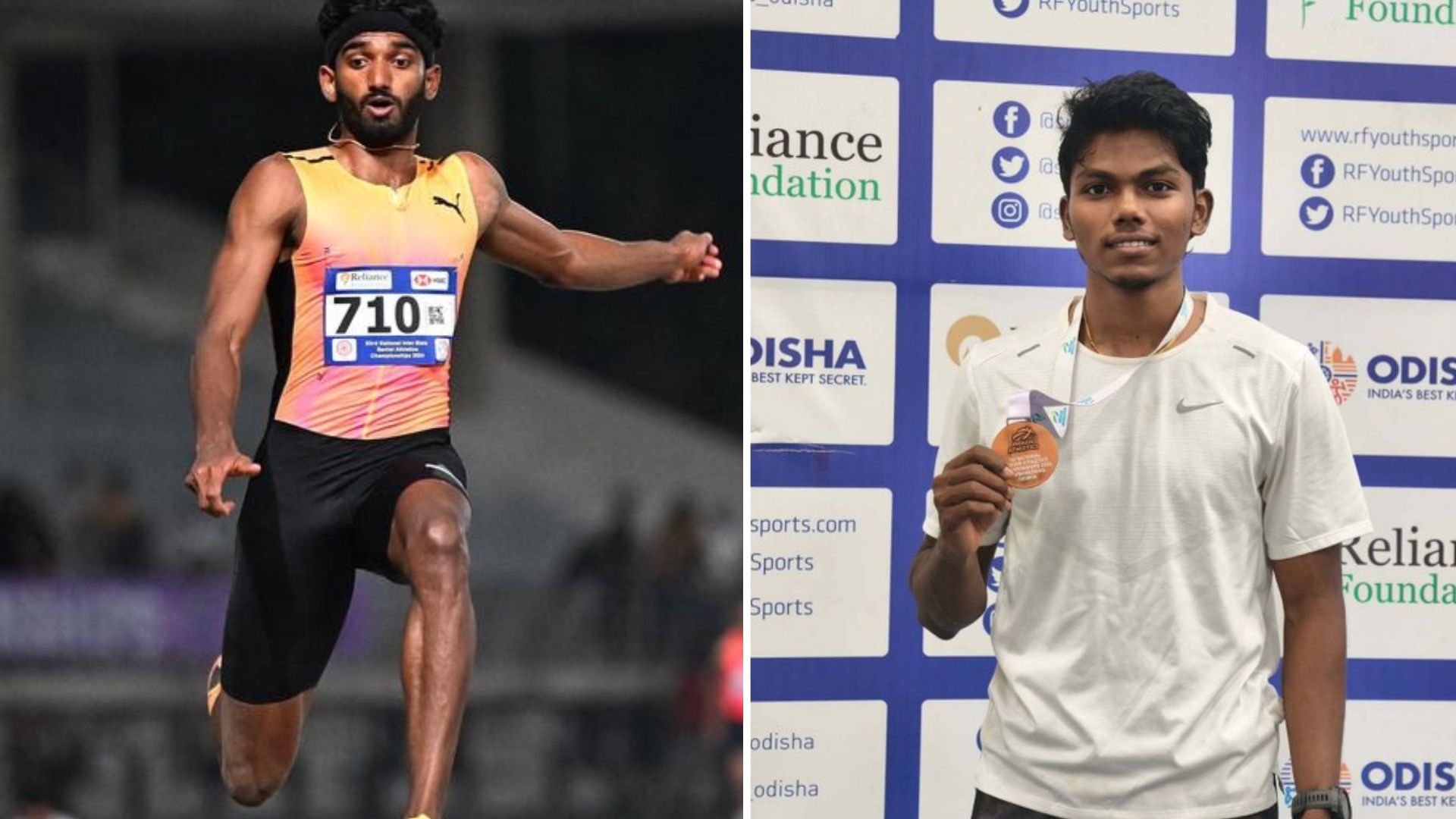
Indian long jump received a timely boost ahead of the upcoming competition season as national record holder Jeswin Aldrin and Federation Cup champion David P both cleared the coveted 8-metre mark at the Tamil Nadu State Trials.
Jeswin produced a best jump of 8.03m to secure the men’s long jump title, while David finished a close second with 8.02m. Although the performances will not count as official marks, they serve as an encouraging sign for two of India’s leading horizontal jumpers.
For Jeswin, the result is particularly significant. The 23-year-old has endured a difficult period over the past two years, battling injuries that disrupted his momentum after his breakthrough 2023 season. He underwent knee surgery and spent much of 2024 and early 2025 working his way back to full fitness.
His jump of 8.03m marks the first time he has crossed the 8-metre barrier in competition since his peak form, providing a major confidence boost as he looks to return to the international stage.
Jeswin remains India’s national record holder with a leap of 8.42m, achieved at the Indian Open Jumps Competition in Bellary in 2023. That mark not only broke the long-standing national record but also briefly placed him among the world’s leading long jumpers that season. He went on to represent India at both the World Championships and the Paris Olympics, though injuries prevented him from reproducing his best form on the global stage.
Meanwhile, David P continued his impressive rise. The Federation Cup 2025 champion demonstrated remarkable consistency, registering 8.02m in his third attempt before backing it up with another 8.00m jump in the sixth and final round.
The fact that two Indian jumpers exceeded 8 metres on the same day highlights the growing depth in the men’s long jump event. While the marks will not be officially recognized, they indicate that both athletes are moving in the right direction ahead of the national season and international qualification events.
With Jeswin rediscovering his rhythm and David continuing to build momentum, Indian athletics could have multiple contenders capable of challenging the 8-metre barrier consistently in the months ahead.
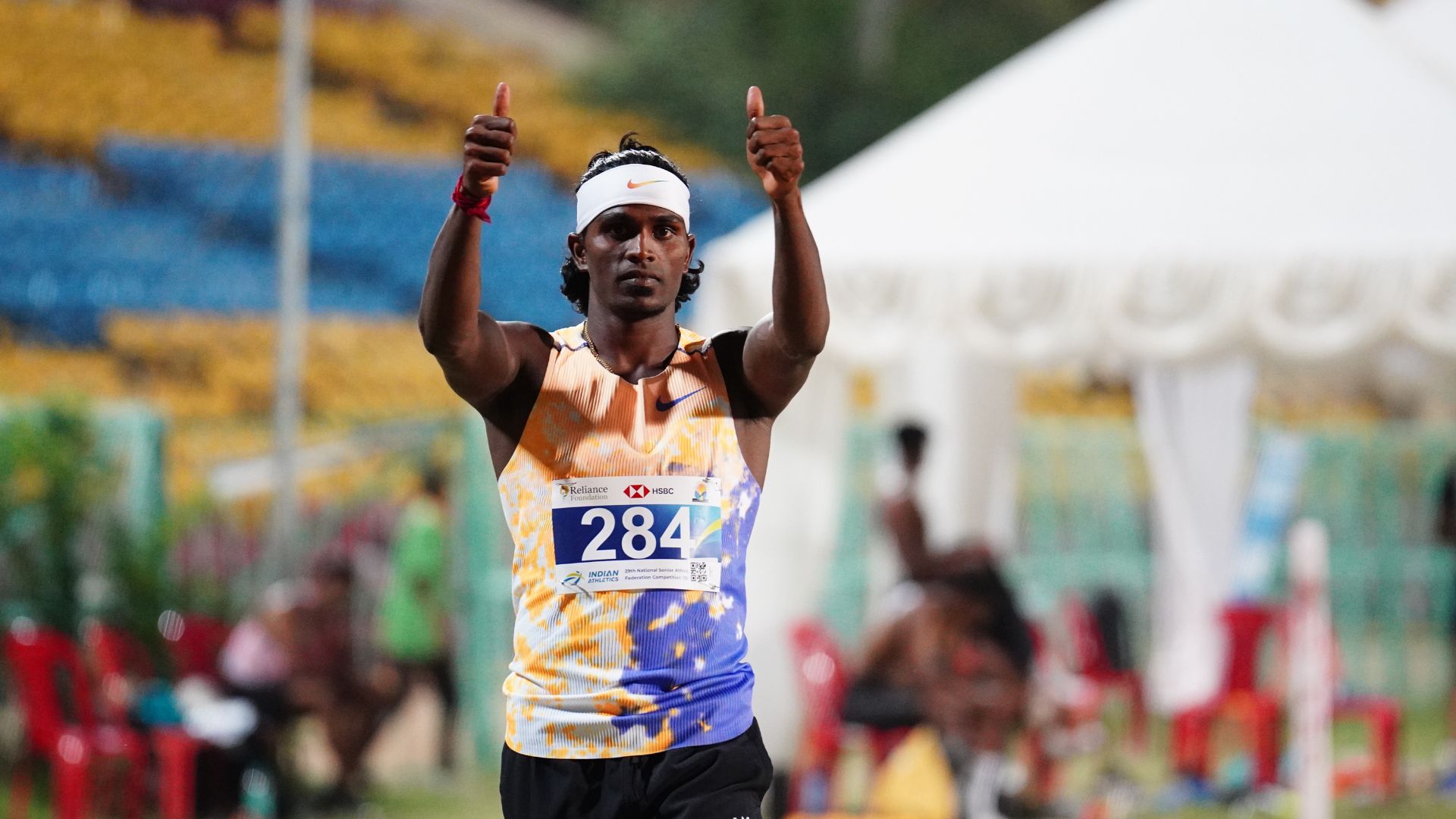
Birsa Munda Stadium, Ranchi | Federation Cup 2026 | May 25, 2026
He didn’t need to say a word. The phone wallpaper said it all.
After landing a season-best jump of 17.08m to comfortably clear the Commonwealth Games 2026 qualification standard at Federation Cup 2026, Praveen Chithravel held up his phone to the cameras — and on the screen was a Commonwealth Games medal. A quiet, powerful declaration of intent from India’s finest triple jumper. He knows what he wants. He knows what he missed. And he is coming back for it.
The Jump That Booked the Ticket
Praveen’s 17.08m was not the national record-challenging performance that his ability promises on his best day — his personal best of 17.37m remains the gold standard of Indian triple jump. But it was precisely what the moment required. Controlled, technically sound, and comfortably beyond the CWG qualification mark of 16.89m, the jump confirmed Praveen’s place at the Commonwealth Games and signalled that the peak of his 2026 season is still ahead of him.
That is perhaps the most reassuring aspect of this performance. Praveen jumped 17.08m without being at his absolute best — and he knows it. With the Commonwealth Games on the horizon and the international season ramping up, there is a bigger jump waiting somewhere in that runway approach.
The Wallpaper That Tells the Story
The moment after the jump was as telling as the jump itself. Praveen revealing his phone wallpaper — a Commonwealth Games medal — was a reminder of what happened in the last edition of the Games, where he finished fourth, agonisingly off the podium. In sport, fourth place is the loneliest position there is: close enough to touch the medals, far enough to watch them handed to someone else.
That near-miss has clearly not left him. If anything, it has sharpened his focus and fuelled what promises to be a season built around one defining goal — returning to the Commonwealth Games and finishing the job.
Peaking at the Right Time
Speaking to nnis Sports after his qualification jump, Praveen was measured and clear-eyed about his plans. The strategy for 2026 is deliberate — peak at the right time and deliver strong performances outside India. It is the approach of a mature athlete who understands that domestic championships serve a purpose, but that the real test lies on the international stage.
In that context, 17.08m at Federation Cup is exactly the right kind of performance — enough to qualify, enough to confirm form, but not enough to suggest he has left his best jump on a domestic runway.
What Comes Next
Praveen Chithravel has his Commonwealth Games qualification. He has his motivation framed on his phone screen. And he has a national record of 17.37m that demonstrates the distance he is capable of when everything clicks.
The last time he was at the Commonwealth Games, fourth place was the result. This time, he has made clear that a different outcome is the only acceptable one.
The medal on the wallpaper is not just a memory. It is a target.
Birsa Munda Stadium, Ranchi | Day 4 | May 25, 2026 | 18:00 IST
Kerala has long been the heartland of Indian triple jump, and on the final day of Federation Cup 2026, three of the discipline’s finest will go head to head in what promises to be one of the most technically brilliant and fiercely competitive events of the entire championship. The Men’s Triple Jump Final gets underway at 18:00 IST, and with the Commonwealth Games qualification mark dividing this field right down the middle, the stakes are as high as they come.
Praveen Chithravel: The National Record Holder
There is only one place to start. Praveen Chithravel is India’s finest triple jumper and the current national record holder, having soared to an extraordinary 17.37m — a mark that places him among the elite in Asian triple jump. His 2026 season best of 16.95m already clears the Commonwealth Games qualification standard, and he arrives in Ranchi as the clear favourite.
But Praveen is more than a name on paper. He is an athlete who has competed and performed at the international level with distinction, and a Federation Cup final on home soil will bring out the best in him. If his run-up is on and the board is kind, a big jump — perhaps even a challenge to his own national record — is not beyond the realms of possibility.
Abdulla Aboobacker: The Eternal Rival
Standing across the sandpit, as he always seems to, is Abdulla Aboobacker. With a personal best of 17.19m and a season best of 16.83m, Abdulla has spent his career as Praveen’s closest competitor — and the rivalry between them has pushed both athletes to heights Indian triple jump had rarely seen before.
His season best of 16.83m leaves him agonisingly six centimetres short of the CWG qualification mark of 16.89m, which means this final carries particular urgency for Abdulla. He needs not just a good jump, but a great one. History suggests he is more than capable of delivering exactly that when the pressure is highest.
Karthik Unnikrishnan: The Sleeping Giant
The most fascinating profile in this field belongs to Karthik Unnikrishnan. His personal best of 17.10m — the third-highest in Indian triple jump history — confirms that he belongs in the conversation with Praveen and Abdulla at their very best. Yet his 2026 season best of 16.09m suggests he is still some way from that peak form.
The gap between 16.09m and 17.10m is enormous in triple jump terms, and Karthik will need to find nearly a full metre of improvement on his season best to threaten the top two. But personal bests exist because athletes have reached them before, and on the right day, with the right adrenaline, Karthik is capable of a jump that reshuffles everything. He is the wildcard this final cannot afford to ignore.
The Rest of the Field
Gailey Venister has impressed this season with a personal best of 16.48m, a mark that signals real capability even if it falls short of the CWG standard. Mohammed Muhassin checks in with a season and personal best of 16.25m. Both will be competing for a Federation Cup podium and using this final as a springboard for the season ahead.
Commonwealth Games: A Line Drawn in the Sand
The CWG 2026 qualification mark of 16.89m creates a natural fault line in this field. Praveen has already cleared it. Abdulla sits just below it. Everyone else has significant ground to cover. That dynamic shapes the entire contest — Praveen can jump to win, while Abdulla must jump to qualify and win simultaneously.
It is the kind of pressure that either produces a lifetime best or forces an error. For an athlete of Abdulla’s experience and quality, the smart money is on the former.
A Fitting Finale
As Federation Cup 2026 draws to a close in Ranchi, the Men’s Triple Jump Final offers a fitting climax — a technical, dramatic, deeply competitive event featuring athletes with the pedigree to produce something genuinely historic. Praveen Chithravel’s national record of 17.37m has stood as the gold standard of Indian triple jump. Could it come under threat on the final day of the championship?
Three hops, three steps, three jumps. One winner.
Birsa Munda Stadium, Ranchi | Day 3 | May 24, 2026 | 17:00 IST
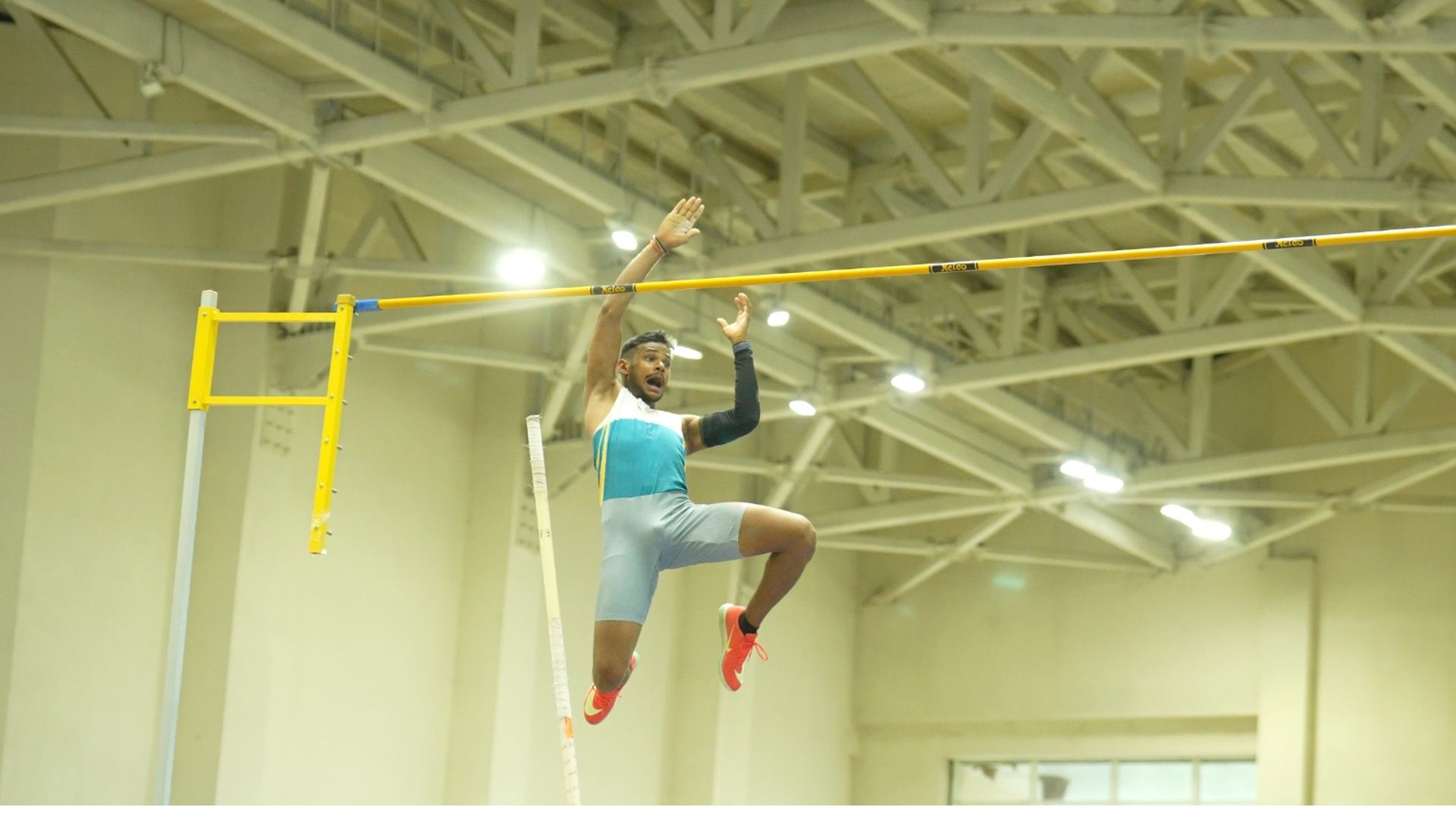
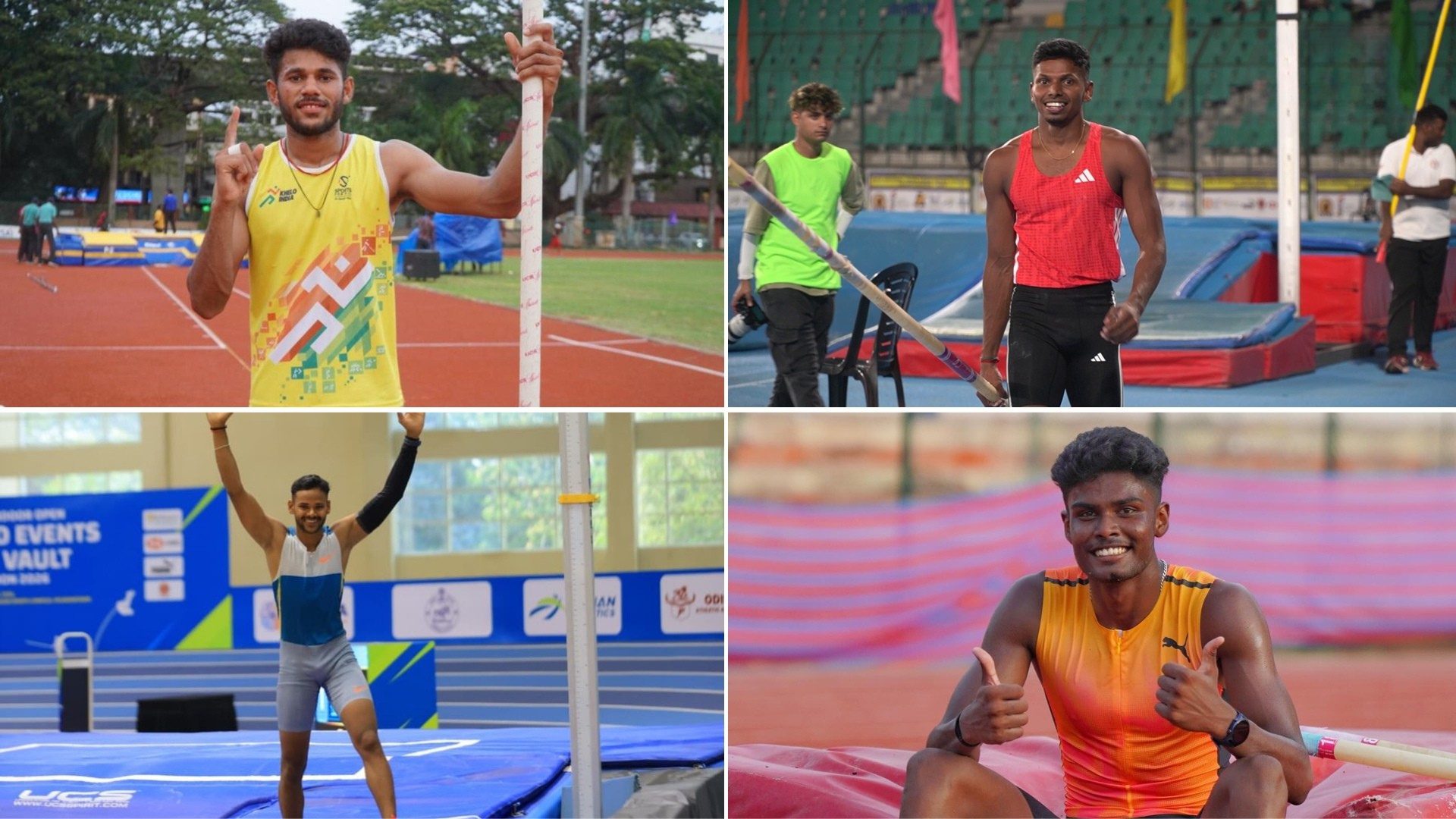
There is a stat about the Men’s Pole Vault Final at Federation Cup 2026 that deserves to be read twice: all four athletes competing this evening have already set personal bests this season. Not one of them. Not two. All four.
That is not a coincidence. That is a generation of Indian pole vaulters arriving together — and at 17:00 IST in Ranchi, they will go head to head in what promises to be one of the most fiercely contested vertical events in recent Indian athletics history.
The Top Four — All Flying in 2026
Kuldeep Yadav leads the field on paper with a season best of 5.41m, a mark that not only clears the Commonwealth Games qualification standard but places him firmly in the conversation as one of India’s finest pole vaulters. He enters the final as the man to beat, carrying the momentum of a personal best already banked this year.
Just one centimetre behind him is Dev Meena at 5.40m — a gap so small it is essentially meaningless in competition. Meena has been equally impressive this season and will not concede anything to Kuldeep without a fight. When the bar climbs to its upper heights, expect these two to be the last men standing.
Reegan Ganesh has cleared 5.35m this season — again, a personal best — and sits only six centimetres off the top. In pole vault, where athletes can clear or fail heights by fractions, that is absolutely nothing. Ganesh is a genuine podium contender and, on the right day, a title contender too.
The fourth name, Kavin Raja, has registered a season best of 5.12m. While he enters as the underdog against the top three, his personal best this season tells the same story as his rivals — he is jumping better than he ever has. Don’t rule him out for a performance that surprises everyone.
A Season of Personal Bests — What Does It Mean?
The fact that every single athlete in this final has already surpassed their previous career best in 2026 is remarkable context for what we might witness this evening. These are not athletes finding form slowly — they are already beyond where they have ever been. Federation Cup arrives at the peak of their seasons, not the beginning.
In a technical event like pole vault, personal bests signal more than fitness. They signal that an athlete’s technique, run-up, and bar clearance rhythm are all clicking at the same time. All four athletes are in that place simultaneously. The result is a final where the bar is likely to climb higher than any previous edition of this event.
Commonwealth Games in the Crosshairs
The CWG 2026 qualification mark of 5.25m is a realistic target for the top three athletes in this field — all of whom have already cleared it this season. Kuldeep, Meena, and Ganesh will not just be competing for the Federation Cup title this evening; they will be eyeing a confirmed berth at the Commonwealth Games.
For Kavin Raja, 5.25m represents a significant but not impossible step up from his 5.12m season best. A competition of this magnitude, against rivals of this quality, can unlock heights that time trials simply cannot.
One Bar, No Margin for Error
Pole vault rewards the brave and punishes the hesitant. With the margins between Kuldeep Yadav and Dev Meena at a single centimetre, this final could come down to a countback, a final attempt, or a single moment of magic under the Ranchi sky.
Four athletes. Four personal bests. One title.
The bar goes up at 17:00 IST. Let’s see who clears it last.
Federation Cup 2026 runs from May 22–25 at Birsa Munda Stadium, Ranchi.
Birsa Munda Stadium, Ranchi | Day 3 | May 24, 2026 | 18:00 IST
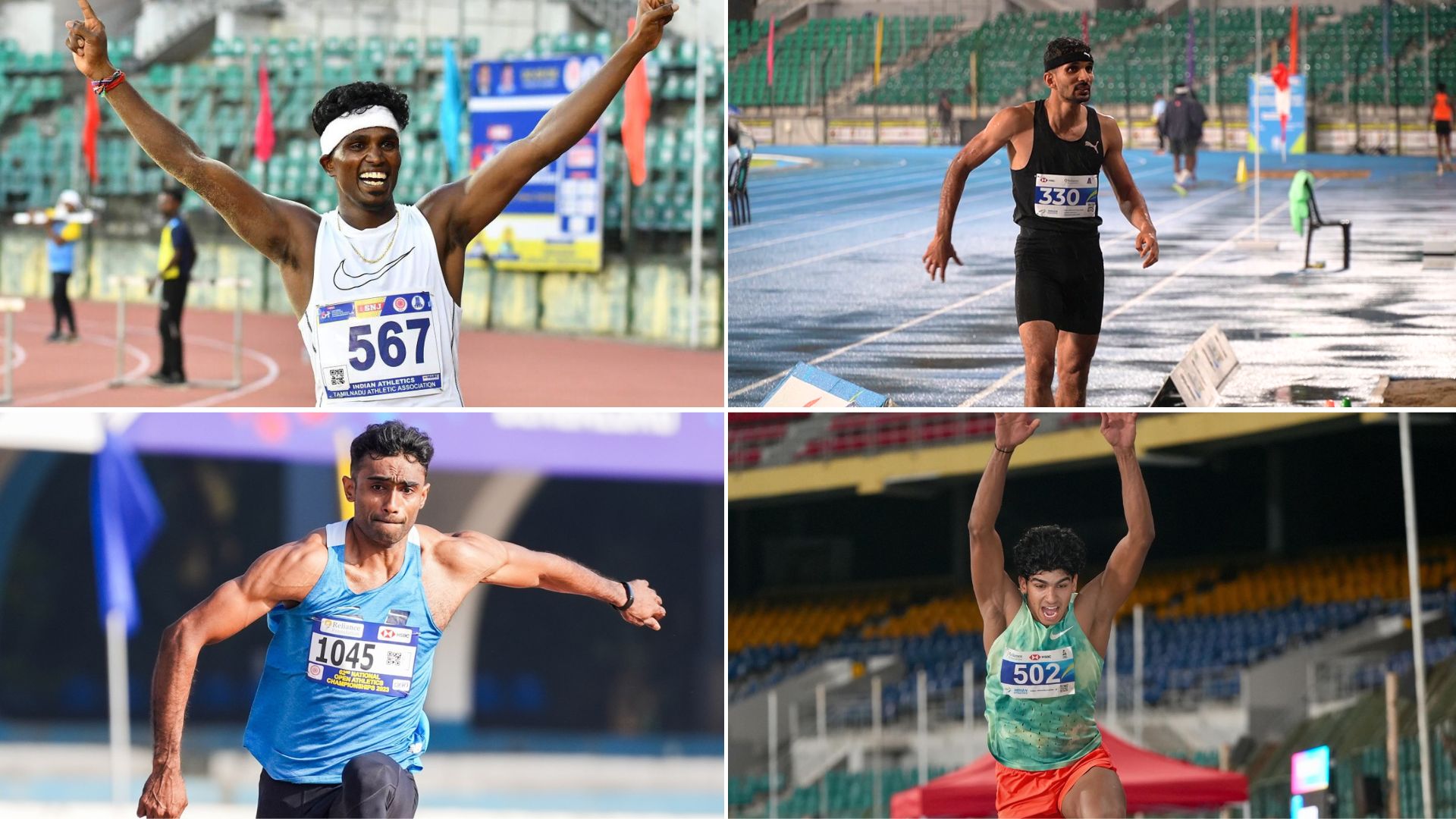
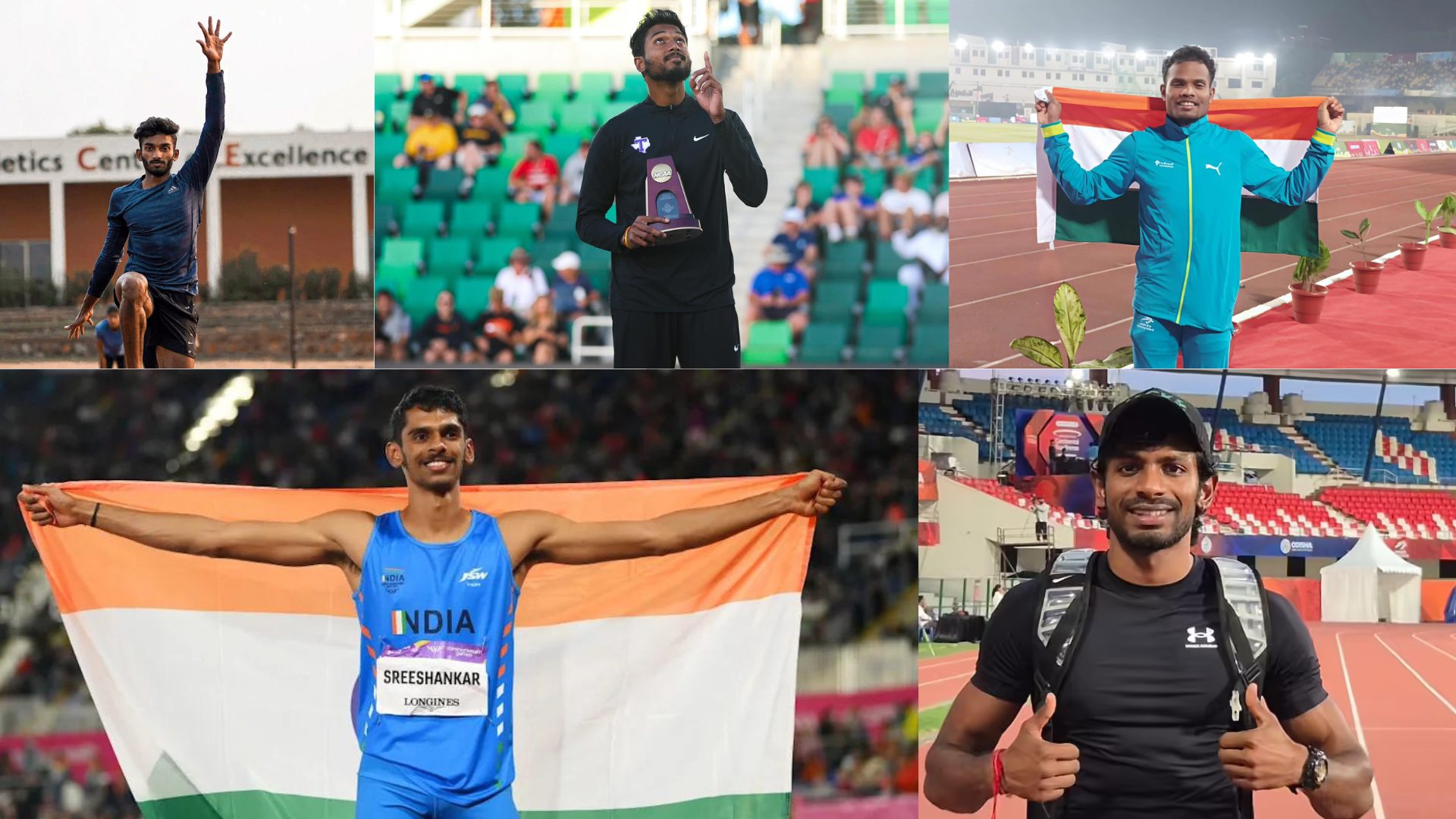
If Day 1 belonged to the sprinters and hammer throwers, Day 3 of Federation Cup 2026 has a event of its own lined up at 18:00 IST — the Men’s Long Jump Final. With three athletes capable of jumping beyond 8.40 metres, a Commonwealth Games qualification mark that is genuinely within reach, and a field that spans generations of Indian long jump excellence, this promises to be the standout field event of the entire championship.
The Big Three
At the top of the billing sit three athletes who have each touched or surpassed 8.41 metres — a number that places them among the finest long jumpers India has ever produced.
Murali Sreeshankar needs no introduction. The Kerala jumper and national record holder carries a personal best of 8.41m and a season best of 8.15m into Ranchi. Few athletes in Indian athletics history have combined the technical precision and explosive power that Sreeshankar brings to the runway. He arrives as the most decorated name in this field and the benchmark against which everyone else is measured.
Jeswin Aldrin is, in many ways, the most intriguing entry of all. The Tamil Nadu jumper opened his 2026 season with a stunning 8.41m — matching Sreeshankar’s personal best in what was just a season opener. That kind of form in the very first competition of the year signals that Aldrin is not just in form, he is primed. If he has found consistency to go with that distance, he could be the most dangerous athlete on the runway this evening.
Then there is S Lokesh, who holds the best season best in this field at 8.21m — a mark that already clears the Commonwealth Games qualification standard with room to spare. Lokesh has been quietly building a formidable 2026 campaign, and a national championship final is exactly the stage where he will want to deliver his biggest jump yet.
Commonwealth Games: The Real Prize
The CWG 2026 qualification mark of 8.05m is, unlike the women’s long jump standard, a genuinely realistic target for multiple athletes in this field. Sreeshankar, Lokesh, and Aldrin have all already cleared it this season. But David P (PB: 7.94m), Sunny Kumar (PB: 7.90m), Md. Atta Sazid (PB: 7.86m), and Sarun Payasingh (PB: 7.80m) will be fiercely motivated to use this final as their qualification bid — knowing that a personal best could punch their ticket to the Commonwealth Games.
For that group in particular, tonight is not just about winning a medal. It is about a leap that changes everything.
A Generational Showdown
What makes this final so compelling is the generational dynamic at play. Sreeshankar represents the established elite — a man who has competed and medalled at the highest international levels. Aldrin and Lokesh are the rising tide, younger, hungry, and increasingly capable of matching or surpassing him. The rest of the field adds unpredictability that no preview can fully account for.
Long jump finals have a way of producing the unexpected. A perfect stride pattern, a clean takeoff, an extra centimetre of hang time — and the leaderboard reshuffles entirely.
One Runway, Three Title Contenders
Sreeshankar, Aldrin, Lokesh. Any one of them can win this. All three of them want to. And somewhere in the mix, a lesser-fancied athlete may find the jump of his life.
The runway at Birsa Munda Stadium is ready. The sandpit awaits. At 18:00 IST, India’s finest long jumpers take flight.
Federation Cup 2026 runs from May 22–25 at Birsa Munda Stadium, Ranchi.
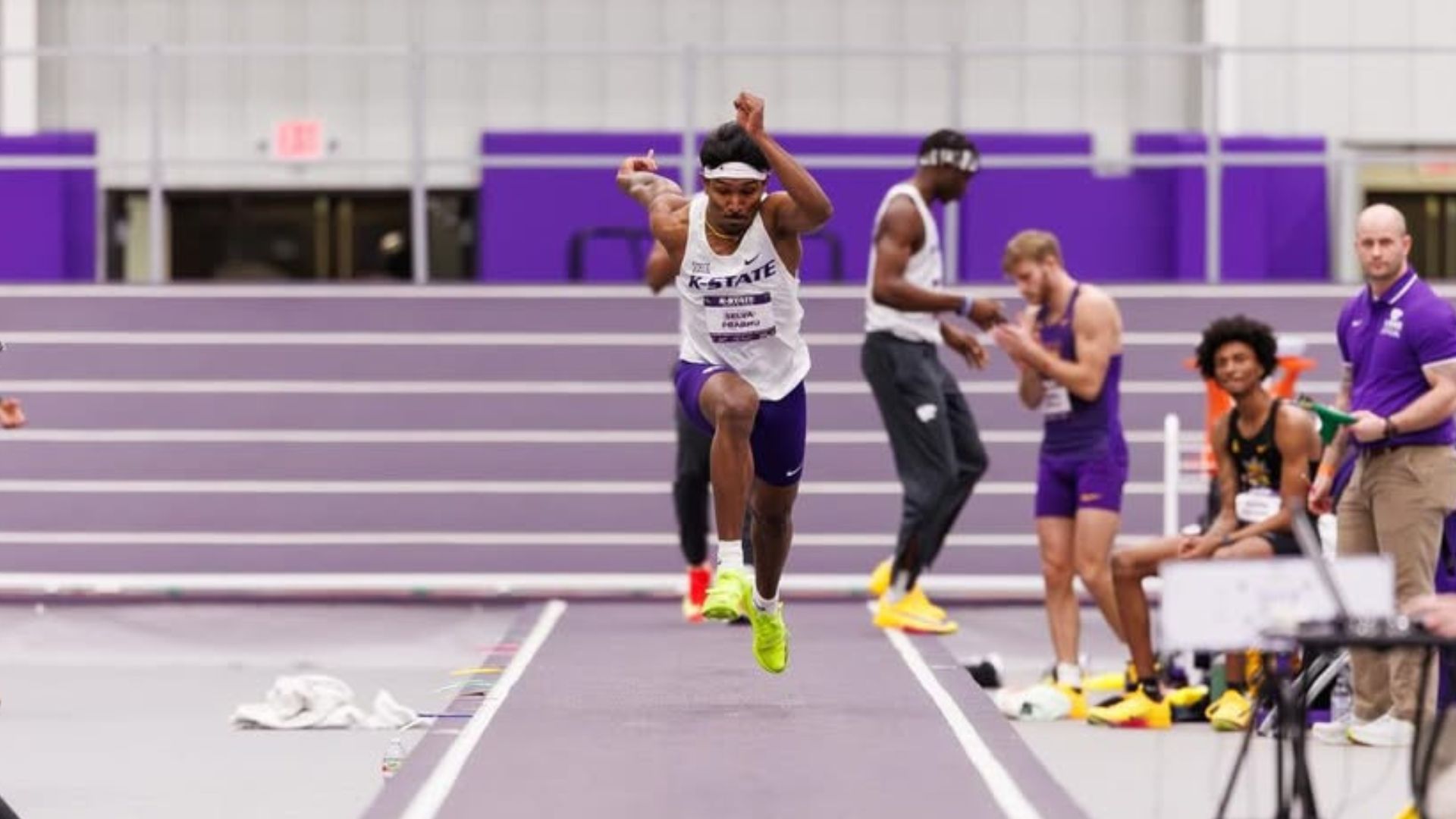
Indian triple jumper Selva Prabhu continued his remarkable 2026 season by winning gold in the men’s triple jump at the Big 12 Outdoor Track and Field Championships in the United States.
Representing Kansas State University, the 21-year-old produced a huge wind-aided jump of 17.19m (+4.6 m/s) to clinch the conference title against a strong collegiate field.
Although the mark will not count for record purposes due to the excessive tailwind, it once again highlighted the rapid rise of one of India’s most exciting young field event athletes.
Selva, who holds India’s U20 national record in triple jump, has been enjoying a breakthrough season on the American collegiate circuit. Earlier this year, he registered a lifetime best of 17.05m — the first legal 17m-plus jump of his career — while winning silver at the NCAA Indoor Championships, widely regarded as one of the toughest collegiate track and field competitions in the world.
The jump placed him among the leading Indian triple jumpers of his generation and strengthened his growing reputation internationally.
Apart from his success in triple jump, Selva has also shown improvement in the long jump this season, raising his personal best to 7.35m and underlining his all-round athletic ability.
The Big 12 Championships feature several of the strongest NCAA athletics programmes in the United States and regularly serve as a pathway for athletes progressing to global competition. For Selva, performing consistently at that level is another encouraging sign ahead of a crucial phase in Indian athletics.
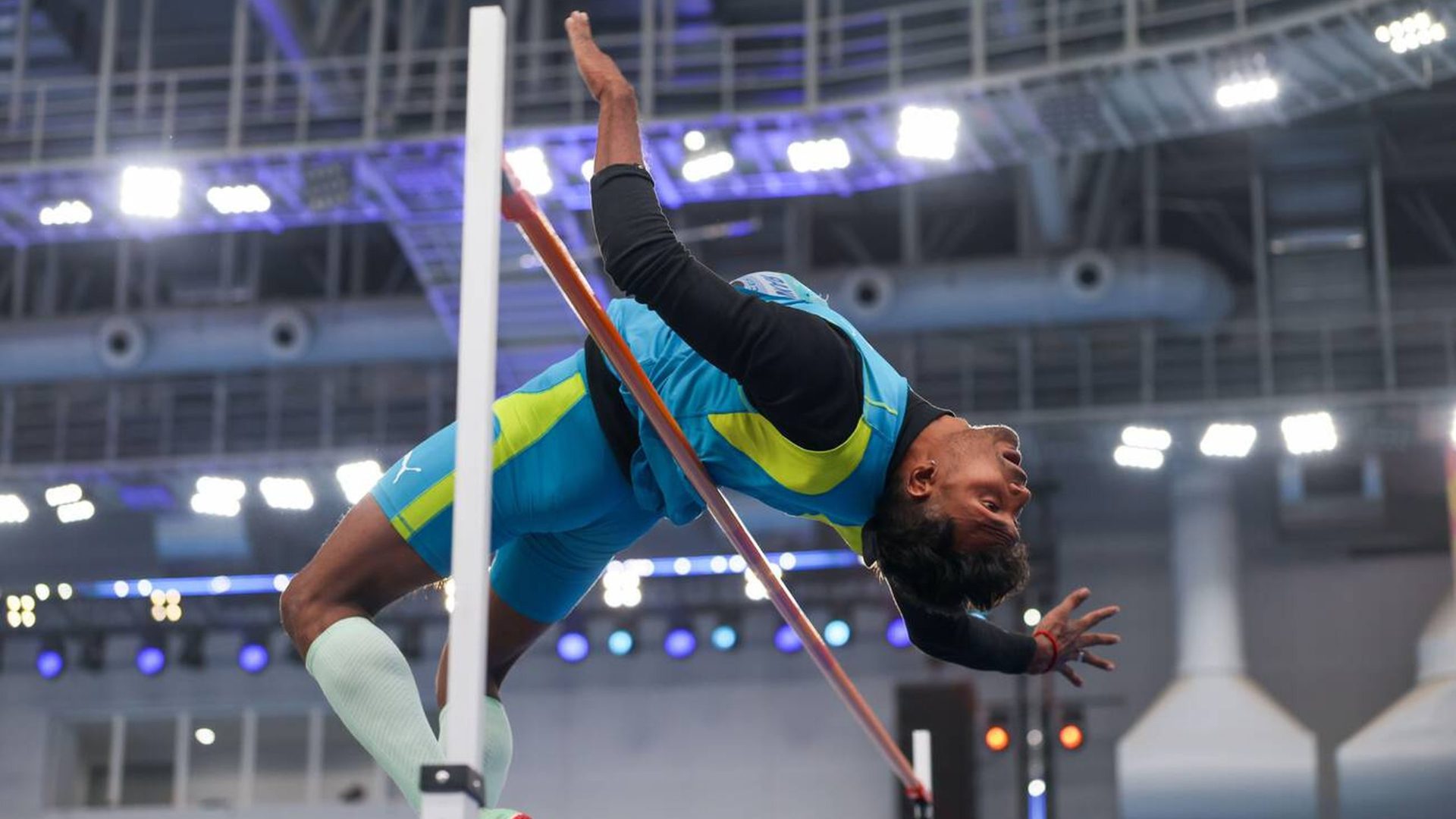
There is a recurring nightmare in Indian sports that has nothing to do with podium finishes or doping scandals. It is the logistical humiliation of the journey home.
For the second time in recent history, a national-level pole vaulter has been forced to reach out to nnissports as a last resort, pleading for the dignity that their medals should have already bought them. In January 2026, it was Dev Meena and Kuldeep Kumar who faced a similar ordeal. Today, the victim is Kavin Raja, the 2026 U20 Federation Cup champion and the freshly minted gold medalist at the Indoor Nationals in Bhubaneswar.
The image is as jarring as it is shameful: A young man, having just conquered the vault in the U20 category, finds himself stranded for over 12 hours at Rajahmundry railway station. He isn’t alone; he is accompanied by fellow athletes and his primary tool of the trade—his poles.
The Ordeal at Rajahmundry
Pole vaulting is a sport of precision and expensive equipment. Yet, Kavin Raja was forced to navigate an overcrowded train where there was literally no space to breathe, let alone store 15-foot fiberglass poles. With no other option, the athletes tied the poles safely to the outside of the train window.
While the train was in motion, the situation turned from difficult to dangerous. Reports suggest that railway staff, who initially raised no concerns, later cut the ropes securing the equipment while the train was moving. It took an emergency chain pull by a fellow athlete to prevent the destruction of the gear—and a potential disaster on the tracks.
Critics and bureaucrats will undoubtedly hide behind the “Railways Manual,” arguing about luggage dimensions and safety protocols. They will say that poles are “oversized items” and that athletes should follow the bureaucratic labyrinth of freight booking.
But this raises a much larger, more haunting question: How do we actually treat our athletes?
We are a nation that erupts in collective euphoria when an athlete stands on a podium. We tweet our pride and drape them in garlands upon their return. But the reality between the “Gold” and the “Gala” is a grim one. Imagine the scenario: an athlete wins a national championship, represents the future of Indian track and field, and is then expected to be packed like sardines in a general compartment, guarding their life’s work against a system that treats them as a nuisance.
A Systemic Failure
If a musician travels with a cello or a photographer with a tripod, the world understands. Yet, our elite vaulters—the few who can actually clear five meters—are left to negotiate with unsympathetic station masters.
We cannot demand Olympic medals on one hand while allowing our champions to be stranded on railway platforms with their equipment tied to windows like an afterthought.
Kavin Raja’s story has been heard several times over. It is a story of a gold medalist treated like a trespasser. Until we fix the journey, we have no right to celebrate the destination.
If you have been in a similar situation or have more information on Kavin’s current status, DM us or write to us. This needs to change.
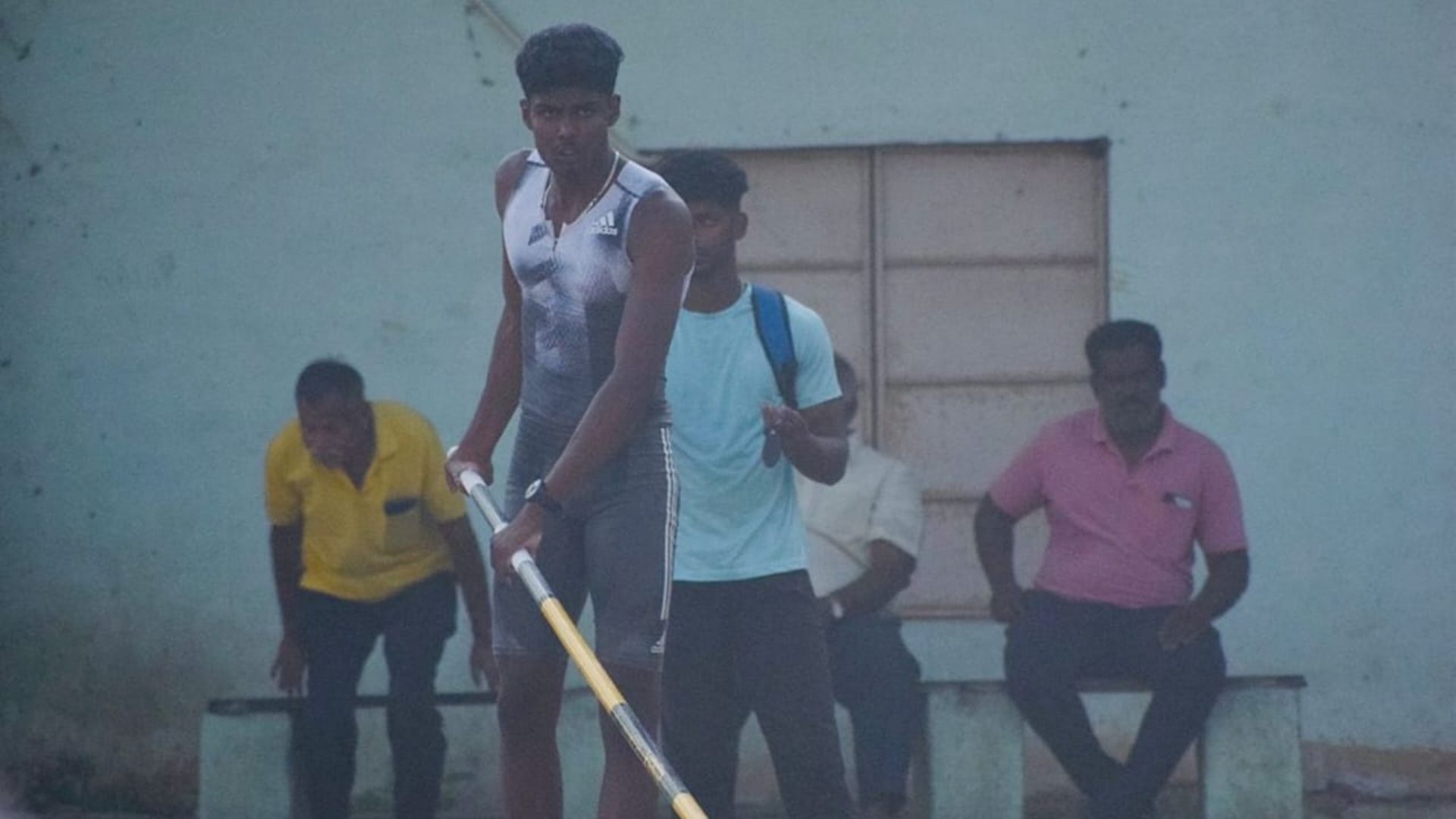
India has found a new star in pole vault, and his name is Kuldeep Kumar. In a memorable performance, Kuldeep created history by setting a new national record of 5.41m, going past the previous mark of 5.40m held by Dev Meena.
The big moment came at the Indian Indoor Open Combined Events and Pole Vault competition in Bhubaneswar. Kuldeep first cleared 5.35m, showing strong form. Then came the record-breaking jump 5.41m, a height that now stands as the best ever by an Indian.
He also tried 5.46m, which is just above the Asian Games 2026 qualification mark of 5.45m, but missed it narrowly. Still, this performance showed that he is very close to even bigger heights.
Kuldeep’s progress this season has been steady and impressive.
5.25m at Indian Open Jumps
5.25m at Indian Open Athletics Series
5.41m at Indian Indoor Open Combined Events and Pole Vault competition
This was also his third contest this year with Dev Meena. In Bengaluru, both cleared 5.25m but Meena won on countback. In Jaipur, Kuldeep returned the favour and won on countback. Now, in this third meeting, Kuldeep clearly came out on top with a national record.
Behind him, Reegan Ganesh finished second with 5.25m, while Dev Meena took third place with 5.20m.
After his historic jump, Kuldeep spoke with confidence and calmness “I’m feeling good. It was just luck that Dev couldn’t do it today. It feels great to break the national record. We are confident of doing even better in the coming championships.” He told NNIS Sports..
He also explained how things changed during the competition. “At 5.35m, I changed the pole and started doing better. I cleared 5.41m and just missed 5.46m.”
What makes this story even better is the bond between the two top vaulters. Kuldeep said, “Dev and I train together under the same coach. Training together really helps. Sometimes, Meena even clears 5.50m in training. Together, we will take Indian pole vault to greater heights.”
With this performance, Kuldeep Kumar has not only broken a record but also given Indian athletics a new hope. The way he is improving, crossing 5.45m and beyond now looks just a matter of time.