





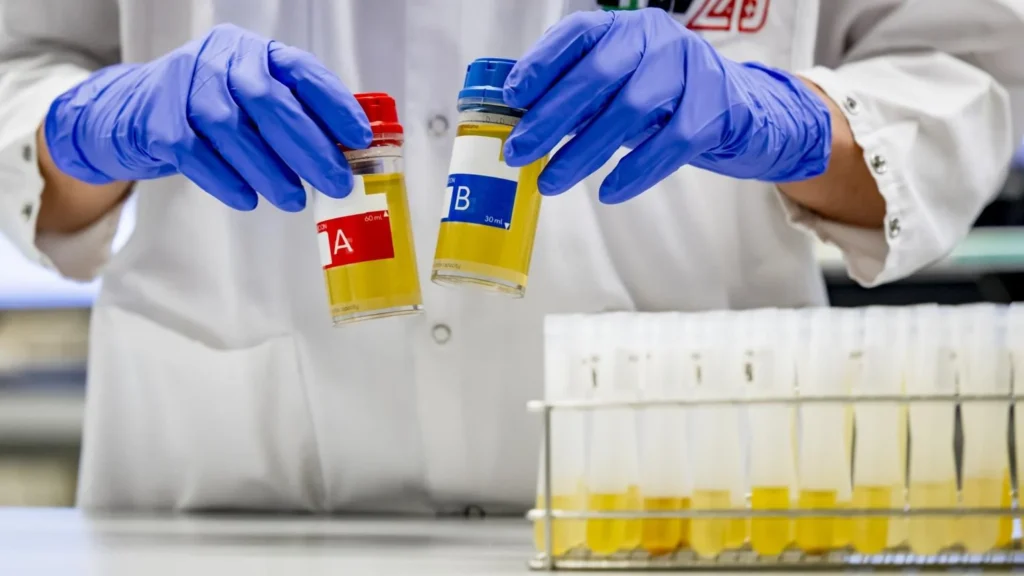
The World Anti-Doping Agency’s 2027 Prohibited List introduces several changes and clarifications concerning peptides, hormone and metabolic modulators, cannabinoids, glucocorticoids and beta-blockers. The updated rules will come into effect on January 1, 2027.
The World Anti-Doping Agency (WADA) has approved its 2027 Prohibited List, which outlines the substances and methods that athletes are not permitted to use in sport. The List was approved by WADA’s Executive Committee during its meeting on September 10, 2026, and published on September 21, 2026.
The annual update is an important part of the global anti-doping framework. It helps athletes, coaches, medical personnel and sporting organisations understand which substances and methods are prohibited, whether during training, outside competition or specifically during competitions.
While several changes have been made for 2027, many of them are clarifications and additions of examples to existing prohibited categories rather than entirely new bans.
Understanding the WADA Prohibited List
Before looking at the changes, it is important to understand how WADA classifies prohibited substances.
The 2027 List divides prohibited substances and methods into three broad categories:
1. Substances and Methods Prohibited at All Times (In- and Out-of-Competition)
These substances and methods are prohibited throughout the year, including during training and recovery periods.
They include:
- S0 – Non-approved substances: Drugs and substances that do not have regulatory approval for human therapeutic use.
- S1 – Anabolic agents: Anabolic steroids and other substances that can promote muscle growth and increase physical strength.
- S2 – Peptide hormones, growth factors and related substances: Includes EPO, growth hormones and substances that influence the production of hormones and blood cells.
- S3 – Beta-2 agonists: A category that includes certain medicines used to treat asthma and other respiratory conditions.
- S4 – Hormone and metabolic modulators: Substances that influence hormone activity and the body’s metabolism.
- S5 – Diuretics and masking agents: Substances that increase urine production or can interfere with the detection of other prohibited substances.
The List also prohibits three categories of methods:
- M1 – Manipulation of blood and blood components: Includes blood doping and artificial methods of increasing oxygen delivery.
- M2 – Chemical and physical manipulation: Includes tampering with doping samples and certain intravenous infusions.
- M3 – Gene and cell doping: Includes the use of gene-editing, gene-transfer and cell-based technologies to enhance sporting performance.
2. Substances and Methods Prohibited In-Competition
These substances are prohibited during the competition period.
The categories include:
- S6 – Stimulants: Substances that stimulate the central nervous system.
- S7 – Narcotics: Certain pain-relieving substances.
- S8 – Cannabinoids: THC and other cannabinoids that mimic its effects.
- S9 – Glucocorticoids: Certain anti-inflammatory medicines when administered through prohibited routes.
WADA generally defines the In-Competition period as beginning at 11:59 p.m. on the day before an athlete’s scheduled competition and continuing until the end of the competition and the sample collection process. Different periods may apply when approved by WADA for a particular sport.
3. Substances Prohibited in Particular Sports
P1 – Beta-blockers: These medicines are prohibited in specific sports where they can provide an advantage, particularly by reducing heart rate and controlling physical symptoms such as tremors.
They are prohibited in sports including archery, automobile, billiards, darts, golf, mini-golf, shooting and underwater sports, subject to the specific competition and out-of-competition rules.
What Has Changed in the 2027 Prohibited List?
WADA has introduced modifications and clarifications across several sections.
1. Non-Approved Substances: Greater Clarity on Peptides
One of the important clarifications concerns peptides that have not been approved for human therapeutic use.
WADA explains that many peptides that are not approved by regulatory authorities for human use fulfil the criteria for inclusion in the Prohibited List.
Such substances may fall under the S0 category (Non-approved substances) or other categories, including S2 and S4.
The 2027 List now specifically mentions peptides as examples under S0.
This is important because a substance does not necessarily have to be individually named in the List to be prohibited. If it falls within an existing prohibited category, it can still be covered by the anti-doping rules.
WADA has also warned that some of these non-approved substances may pose health risks.
2. Hormone and Metabolic Modulators: New Examples Added
Several changes have been made to Section S4, which covers hormone and metabolic modulators.
The title of Section S4.2 has been expanded to include a broader description of anti-estrogenic substances, including Selective Estrogen Receptor Modulators (SERMs) and Selective Estrogen Receptor Degraders (SERDs).
These substances influence the activity of estrogen receptors and are used in certain medical treatments.
Imlunestrant has been added as an example under this category.
WADA has also added further examples under the metabolic modulators section:
- Seladelpar: Added as an example of a PPAR-delta agonist.
- SLU-PP-332 and SLU-PP-915: Added as examples of metabolic modulators that act particularly on oxidative metabolism.
These changes help identify substances that fall under the existing prohibition on hormone and metabolic modulators.
3. Eplerenone and Finerenone Added Under Diuretics
Section S5 covers diuretics and masking agents, which are prohibited both in and out of competition.
For 2027, WADA has added two additional examples:
- Eplerenone
- Finerenone
Diuretics are medicines that increase the production of urine. They can potentially be misused to manipulate body weight or interfere with the detection of other substances.
The addition of these two medicines provides further clarity about the substances covered under this category.
4. Changes to the Cannabinoids Category
One of the notable updates concerns Section S8, which covers cannabinoids.
WADA has revised the wording to reflect scientific knowledge about the effects of different cannabinoids, particularly their similarity to delta-9-tetrahydrocannabinol (Δ9-THC).
Under the 2027 List, the prohibition focuses on THC and semi-synthetic or synthetic cannabinoids that mimic the effects of Δ9-THC.
Examples include:
- Δ9-THC, commonly found in cannabis.
- Δ8-THC and Δ10-THC.
- Hexahydrocannabinols (HHC).
- Synthetic cannabinoids such as AB-FUBINACA and 5F-ADB.
What About CBD?
Cannabidiol (CBD) is not a prohibited substance under WADA rules.
However, CBD products extracted from cannabis plants may contain varying concentrations of THC, which remains prohibited in competition.
Athletes should therefore be careful when using such products because the presence of THC may create an anti-doping problem.
5. Vaginal Administration of Glucocorticoids Now Permitted
Another important change has been introduced under Section S9, which covers glucocorticoids.
These medicines are commonly used to treat inflammation and various medical conditions.
Previously, WADA prohibited certain routes of administration during competition, including injectable, oral and rectal routes.
For 2027, vaginal administration has been explicitly added to the list of permitted routes.
This means that vaginal administration of glucocorticoids is not prohibited when used within the manufacturer’s licensed doses and therapeutic indications.
Other permitted routes include inhaled and certain topical applications, such as dermal, intranasal, ophthalmological, otic and perianal administration, subject to the same conditions.
Important: Injectable, oral (including buccal, gingival and sublingual) and rectal administration of glucocorticoids remain prohibited In-Competition.
6. Changes to Beta-Blockers in Particular Sports
WADA has also updated Section P1, which covers beta-blockers.
These substances are prohibited in sports where reducing heart rate, controlling tremors or improving steadiness may provide a competitive advantage.
The relevant sports include:
- Archery
- Automobile
- Billiards
- Darts
- Golf
- Mini-golf
- Shooting
- Underwater sports
One clarification concerns billiards. WADA has removed the reference to “all disciplines” from the World Confederation of Billiards Sports (WCBS) entry to align its wording with other international federations.
Beta-blockers are prohibited In-Competition in the listed sports. They are also prohibited Out-of-Competition in archery, shooting and the specified underwater sports disciplines, as marked in the List.
7. Clarification Concerning Substances of Abuse
WADA has also updated the wording in the introductory section concerning Substances of Abuse.
These substances include:
- Cocaine
- Diamorphine (heroin)
- MDMA (ecstasy)
- Tetrahydrocannabinol (THC)
The revised wording clarifies that the presence of metabolites of these substances should also be considered in the results management process when relevant.
In simple terms, anti-doping authorities may need to consider not only the substance itself but also its breakdown products when assessing a case.
WADA’s 2027 Monitoring Program: What Is Being Tracked?
Alongside the Prohibited List, WADA has also released its 2027 Monitoring Program.
There is an important difference between the two.
A prohibited substance is banned under anti-doping rules, whereas a monitored substance is being observed by WADA to identify possible patterns of misuse in sport.
Being included in the Monitoring Program does not, by itself, mean that a substance is prohibited.
The 2027 Monitoring Program covers the following:
1. Anabolic Agents
- Ecdysterone – In- and Out-of-Competition.
2. Peptide Hormones and Related Substances
- Gonadotrophin-releasing hormone (GnRH) analogues in females under 18 years of age only – In- and Out-of-Competition.
3. Hypoxen
- Polyhydroxyphenylene thiosulfonate sodium – In- and Out-of-Competition.
4. Stimulants
The following are monitored In-Competition only:
- Bupropion
- Caffeine
- Nicotine
- Phenylephrine
- Phenylpropanolamine
- Pipradrol
- Synephrine
5. Narcotics
The following are monitored In-Competition only:
- Dihydrocodeine
- Tapentadol
6. GLP-1 Agonists
The following substances are monitored both In- and Out-of-Competition:
- Semaglutide
- Tirzepatide
GLP-1 agonists are increasingly used in medical treatment, and WADA continues to monitor their use and potential effects in sport. Their inclusion in the Monitoring Program does not mean that they are currently prohibited solely under this programme.
It is also important to check whether a substance is independently covered by another section of the Prohibited List. For example, certain GnRH analogues are already prohibited under S2 in males, while their use in females under 18 is included in the Monitoring Program.
Substances Removed from the Monitoring Program
WADA has also removed several substances from its Monitoring Program after collecting sufficient information.
These include:
- Codeine
- Dermorphin and its analogues
- Hydrocodone
- Fentanyl and tramadol for Out-of-Competition monitoring.
However, this does not mean that every substance removed from the Monitoring Program has become permitted in all circumstances.
For example, fentanyl and tramadol remain listed as prohibited narcotics In-Competition under Section S7.
What Should Athletes and Coaches Do?
The annual update is particularly important for athletes who regularly use medication for injuries, illnesses or other medical conditions.
Some prohibited substances are also present in medicines prescribed for legitimate health reasons. These include certain medicines used to treat asthma, hormonal conditions, heart problems and inflammation.
Athletes should therefore:
- Check the anti-doping status of every medication before using it.
- Consult their team doctor or relevant anti-doping organisation when uncertain about a substance or its method of administration.
- Pay attention to the route and dosage of prescribed medication, particularly for glucocorticoids.
- Check supplements carefully, as products may contain ingredients that are prohibited under WADA rules.
- Apply for a Therapeutic Use Exemption (TUE) when medically necessary treatment requires the use of a prohibited substance or method and the relevant criteria are met.
It is also worth remembering that WADA’s classification of a substance as a “Specified Substance” does not mean that it is less dangerous or less important than a non-Specified Substance. This distinction relates to how an anti-doping case is assessed under the World Anti-Doping Code.
The Bottom Line
The 2027 WADA Prohibited List brings several important clarifications for athletes and their support teams. From the treatment of non-approved peptides and the revised scope of cannabinoids to the permitted vaginal administration of glucocorticoids, the changes highlight the importance of understanding the updated anti-doping rules.
While some additions simply provide clearer examples of substances already covered by existing prohibitions, others clarify the circumstances in which particular substances and routes of administration are permitted.
The 2027 Prohibited List will officially come into force on January 1, 2027. Athletes, coaches, doctors and sports federations should familiarise themselves with the updated rules well before the new season begins.