





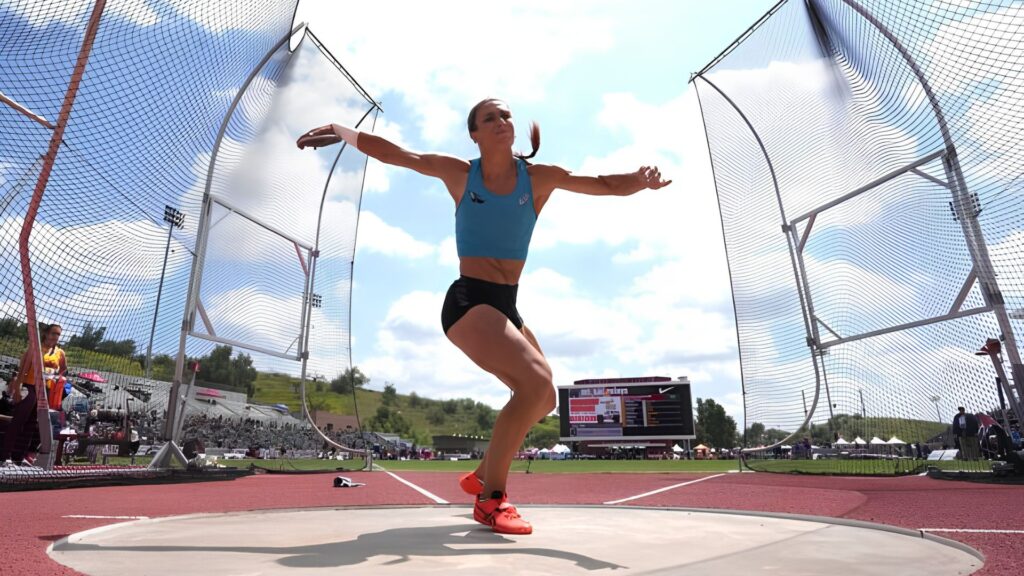
World Athletics may have quietly delivered one of the most consequential rule changes for field events in recent years.
Buried inside the newly released qualification system for the 2027 World Championships in Beijing was a sentence that immediately caught the attention of throwers and coaches around the world:
“Discus Throw performances for Entry Standards must be achieved within the confines of a traditional athletics facility unless otherwise approved at least one month in advance by World Athletics Competition Unit. But will be accepted for World Rankings.”
At first glance, it looks technical.
In reality, it appears to be a direct response to the growing influence of Ramona, Oklahoma — the now-famous throwing venue that has produced a staggering number of massive discus marks over the last three years.
Ramona has become almost mythical in throwing circles because of its unique wind conditions and open geography. Athletes from around the world have flocked there chasing huge distances and qualification standards.
Now, World Athletics seems determined to put limits on that phenomenon.
The biggest issue is ambiguity.
What exactly qualifies as a “traditional athletics facility”?
Does it mean a standard 400m track stadium with the discus sector located inside the arena? Or can standalone throwing venues still count? And what does “within the confines” even mean in practical terms?
The wording raises several uncomfortable questions.
Could world-class throws achieved at specialist throwing venues suddenly become invalid for direct qualification purposes? Would athletes now need World Athletics approval months in advance just to ensure performances count toward automatic qualification?
At the moment, nobody outside World Athletics seems entirely sure.
The move also reflects a broader philosophical shift happening within global athletics.
World Athletics has already made it clear that the future qualification system will rely much more heavily on world rankings rather than direct entry standards. The target model for Beijing 2027 is expected to see roughly 40% of athletes qualify through standards and 60% through rankings.
In other words, the governing body increasingly wants athletes competing consistently at recognised high-level competitions instead of chasing one-off qualification marks in unusually favourable conditions.
For discus throwers, Ramona had become the perfect example of the opposite approach.
Athletes could arrive at a venue known for giant throws, produce a career-best performance aided by ideal conditions, secure qualification, and bypass the rankings grind altogether.
World Athletics now appears uncomfortable with that reality.
Interestingly, throwers are not the only athletes being affected.
Distance runners have also taken a hit.
The new rules reportedly reduce the value of certain indoor performances for qualification purposes, particularly marks achieved at ultra-fast indoor tracks such as Boston University — often described as the “Ramona of distance running.”
The message from World Athletics is becoming increasingly obvious: qualification should reflect season-long consistency and competition quality, not isolated performances in highly specialised environments.
Whether that improves fairness or simply creates more bureaucracy is another debate entirely.
For athletes from smaller federations, the change may prove especially difficult. Access to recognised high-category meets is already uneven, expensive, and often dependent on invitations, sponsorship, and federation support.
Now, even finding the right venue may become part of the qualification battle.
And until World Athletics properly explains what a “traditional athletics facility” actually means, confusion is likely to continue dominating conversations in the throwing community.