





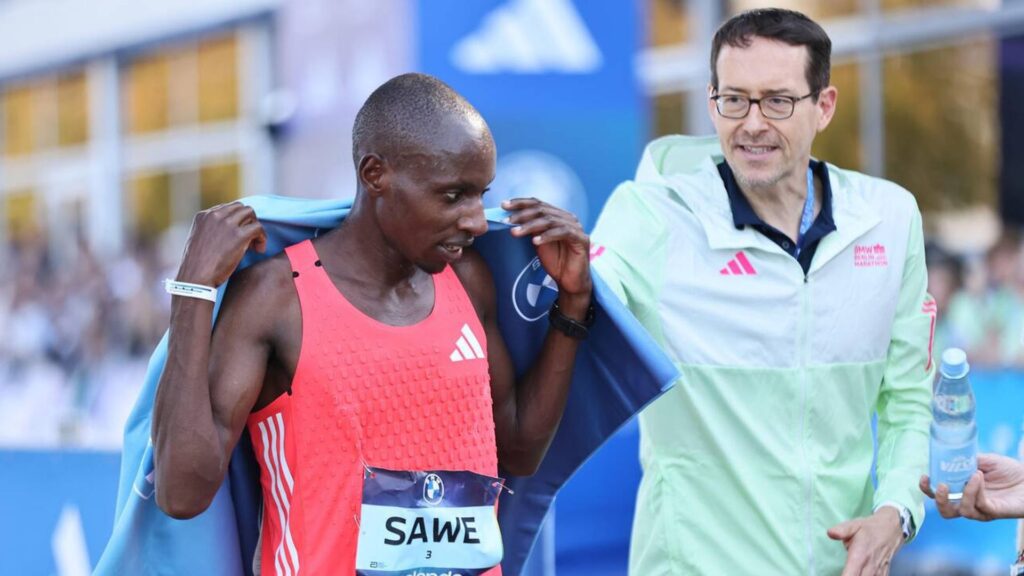
When Sabastian Sawe crossed the finish line at the London Marathon i 1:59:30, he didn’t just break a barrier—he arrived as one of the most compelling stories in distance running.
Sawe’s journey begins in Kenya’s Rift Valley, near Eldoret, a region synonymous with endurance champions. Growing up in a rural setting, running was less a sport and more a way of life. Like many in the area, he covered long distances daily—often on foot—building the aerobic base that would later define his career.
But unlike many Kenyan stars, Sawe was not an early prodigy. He did not come through the junior circuit with major titles or global attention. His rise has been notably late and methodical. It was only in his early twenties that he began to take running seriously, gradually transitioning from local competitions to the international stage.
A key turning point came when he joined a structured training setup under Italian coach Claudio Berardelli. There, Sawe’s raw endurance was refined into elite performance. Training volumes reportedly pushed beyond 200 kilometres a week, with a focus on controlled pacing and strong finishes—hallmarks of his racing style today.
Before stepping into the marathon, Sawe built his reputation on the road racing circuit, particularly over the half marathon. His breakthrough performances in Europe signalled that he was more than just another Kenyan runner—he was an athlete with unusual efficiency and race awareness.
What sets Sawe apart is his racing intelligence. At the London Marathon, he executed a near-perfect strategy, running a disciplined first half before accelerating decisively in the latter stages. That ability to negative split—running the second half faster than the first—is rare at such speeds and reflects years of careful preparation.
There are also small but telling details about his routine. Reports note his simple pre-race diet—often bread and honey—reflecting a no-frills approach that prioritises consistency over complexity. His training environment remains grounded, with a focus on repetition and discipline rather than spectacle.
Sawe’s 1:59:30 did not come out of nowhere. It was the culmination of steady progress, built race by race, season by season. And while the headline will always be the sub-two-hour marathon, the story behind it is one of patience and structure.