





By Sundeep Misra
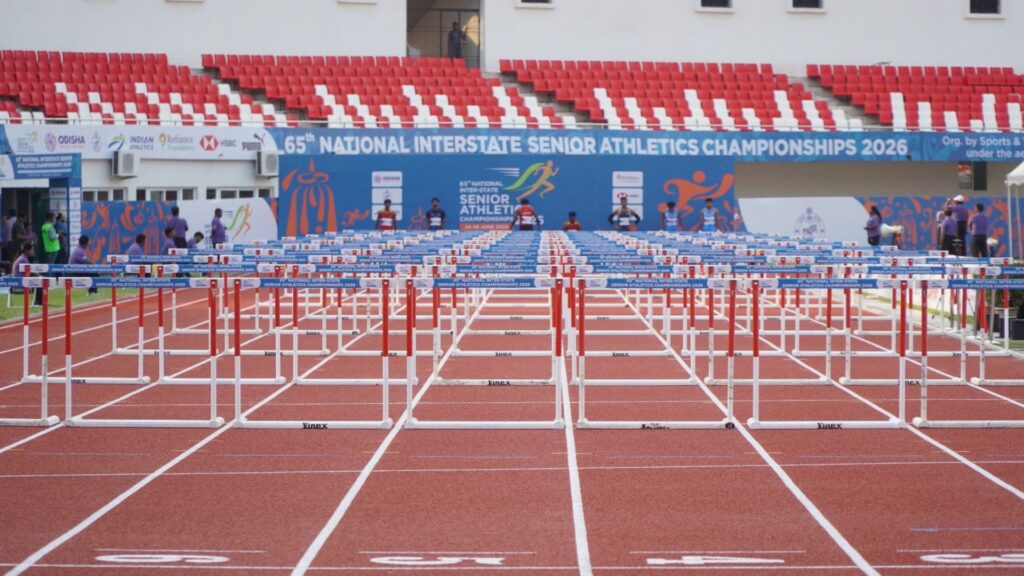
A couple of black ravens flew over the Kalinga Stadium, perched on the scoreboard, and watched Rohit Yadav launch an 87.05m javelin throw into the night sky. It was the second-best throw in the global top list at the time. Cheering him on was a grand total of about 25 hostel kids. At this rate, the birds practically made up half the demographic.
Gazing across the arena during the National Inter-State Championships, a depressing numbers issue emerged: the judges, media, and officials easily outnumbered the people in the stands. National records were breaking like stones in a quarry. Jyothi Yarraji blazed down the hurdles, Anushka shattered the hammer throw record at 67.02m, and Sarvesh Kushare cleared 2.31m in the high jump. The applause? Mild, polite, and at times none. If a national record falls in an empty stadium, does it make a sound?
Right now, Indian track and field is experiencing an unprecedented competitive renaissance. Yet, our premier domestic meets feel less ‘premier’ and more like quiet corporate events. Political rallies can mobilize thousands of citizens with a few hours’ notice, but continental-class athletics meet can’t seem to beat a local grocery store opening.
The problem isn’t public apathy; it’s a design flaw. The system treats these meets strictly as selection trials. Fans aren’t just missing; they’re uninvited. The sentiment seems to be that the spectator is a beast who is simply not required.
Across the world, track meets are turned into lifestyle festivals. In Japan, domestic meets pull massive, vibrant crowds by integrating cheering squads, thumping school brass bands. In Taiwan, domestic opens double as weekend carnivals, bringing in food stalls and hosting youth clinics on the sidelines to ensure families treat athletics as a prime-time evening out.
Understandable that cultures are different. Yet, someone needs to try. Meanwhile, at our Inter-State meet, even the local media was conspicuous by its absence.
Fixing this isn’t rocket science, it’s basic event management. One needs to build a pipeline. Fill the stands by busing in local school kids, even from nearby towns, villages who might want a break from the usual cricket monoculture or just give them a big-city break. Set up a free selfie booth where fans can get a digital souvenir mailed to them. Let the athletes feel the emotional rush of a roaring crowd instead of the echo of their own winning scream.
The inevitable bureaucratic retort will be, “How much can we do?” But transforming these quiet trials into vibrant cultural events isn’t a favour to the athletes, it’s the bare minimum they deserve, in reality they are the ones propping up the system; because of them national anthems play. Not because of the suits or the host states. Until the system decides to prioritize the spectator, Indian athletics will keep breaking records in the dark, with only the ravens to bear witness.