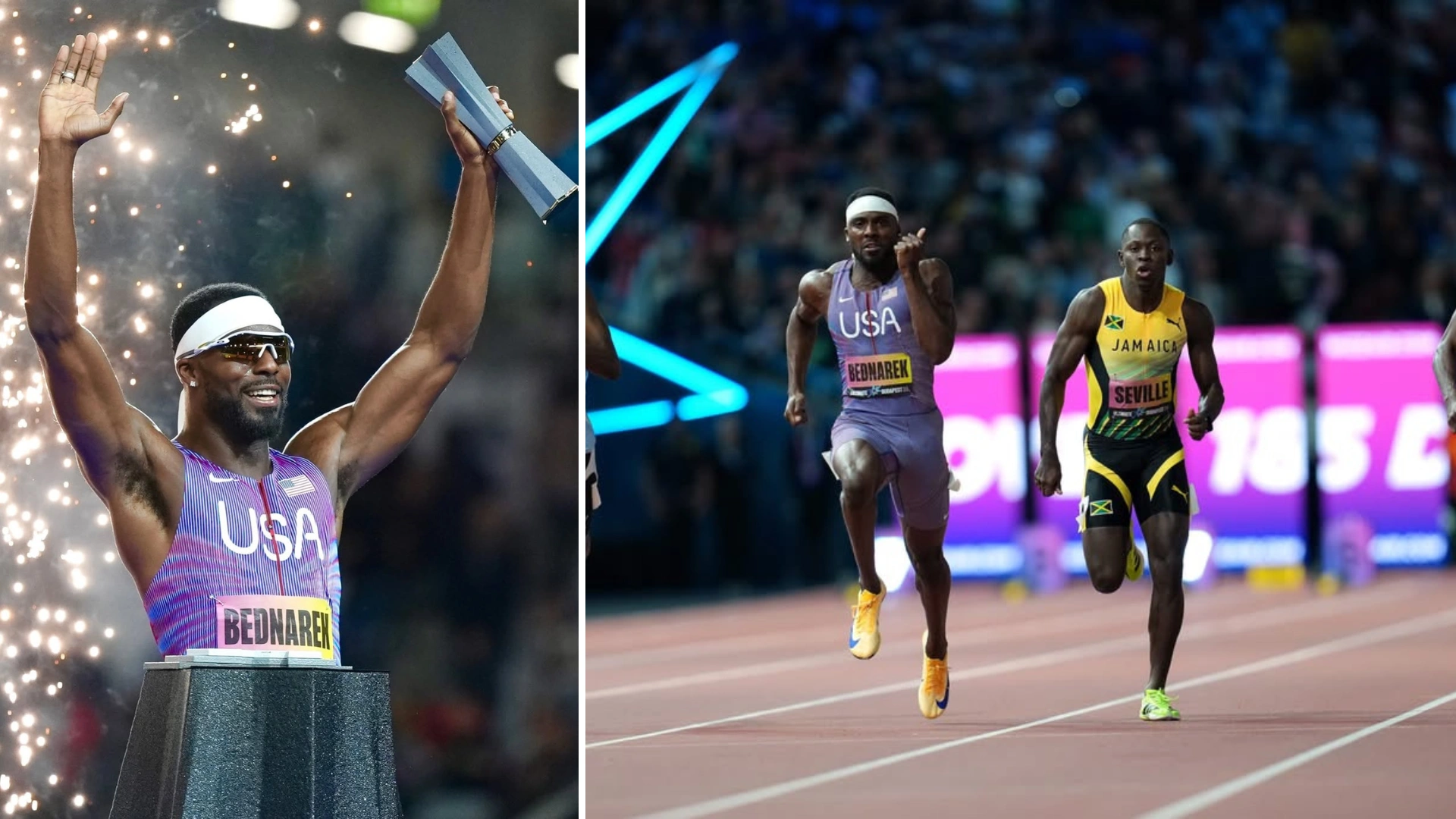
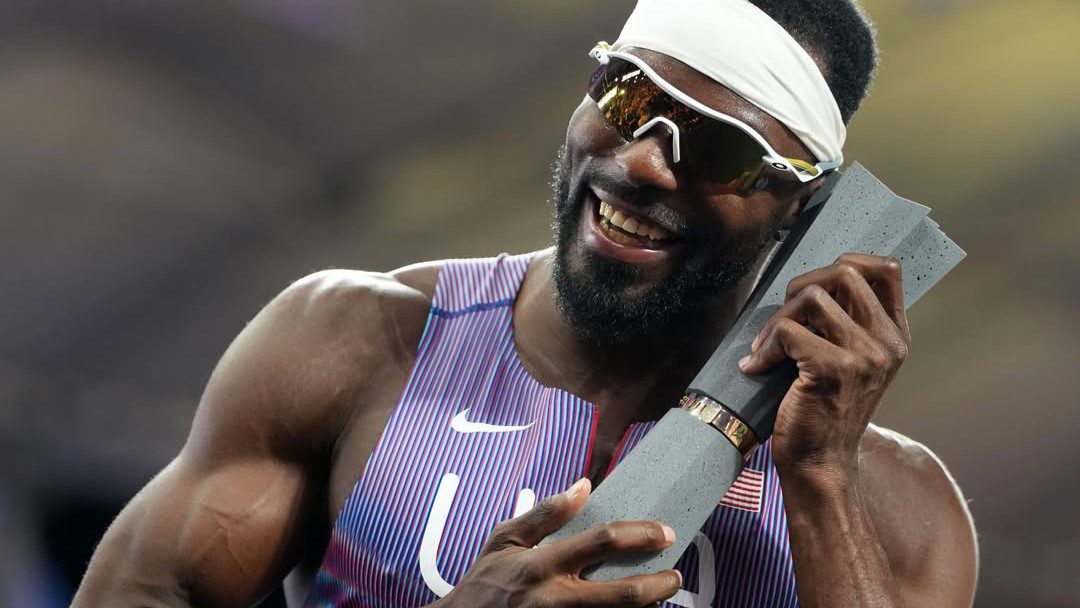
For years, Kenny Bednarek bore the familiar and frustrating label of athletics’ nearly man, collecting four global silver medals while watching others step onto the highest tier of the podium. That narrative was emphatically rewritten in Budapest. Just twenty-four hours after capturing the 100m title at the World Athletics Ultimate Championship Budapest 26, the 27-year-old American completed a sensational sprint double on Sunday, claiming the 200m crown in a world-leading and personal best time of 19.52.
With this explosive performance, Bednarek sent an unmistakable message to the sprinting world: he has officially hit his ultimate groove.
Showing zero fatigue from a gruelling four-race campaign that included two rounds of the 100m and a 200m semifinal earlier in the day, Bednarek seized control of the final by the halfway mark. He powered away from a stellar field, leaving Botswana’s Olympic champion Letsile Tebogo to chase him across the finish line in a season’s best 19.76. US compatriot Courtney Lindsey rounded out the podium, clocking 19.79 for third in a race where the top five competitors all dipped comfortably under the 20-second barrier.
The triumph was especially sweet for Bednarek, who previously settled for silver behind Tebogo at the Paris Olympics, as well as at the 2021 Olympic final and the 2022 and 2025 World Championships. Having finally broken through for his first individual global title in the 100m on Saturday, he wasted no time adding the 200m gold to his resume. The victory also elevated him to seventh on the world all-time list in the event.
Reflecting on his dominant weekend and a payday that included US$150,000 for each of his two victories, Bednarek radiated satisfaction.
“Oh my God, it has been a crazy few days,” Bednarek said. “I am just happy to be here and performance-wise I give myself an A+ because of the couple of things I have been working on, I put them together today and earlier in the week.”
Beyond the times on the track, the American embraced the innovative atmosphere of the Budapest event, showcasing a vibrant personality that fans rarely see.
“This whole event has been very nice. On the red carpet I managed to show a bit of my personality, which is different as I’m usually a quieter type of person,” he added. “This was the year where I focused on making progress. I need to look back at what I did overall, but I believe I did well. Coming home with two wins in Budapest is amazing.”
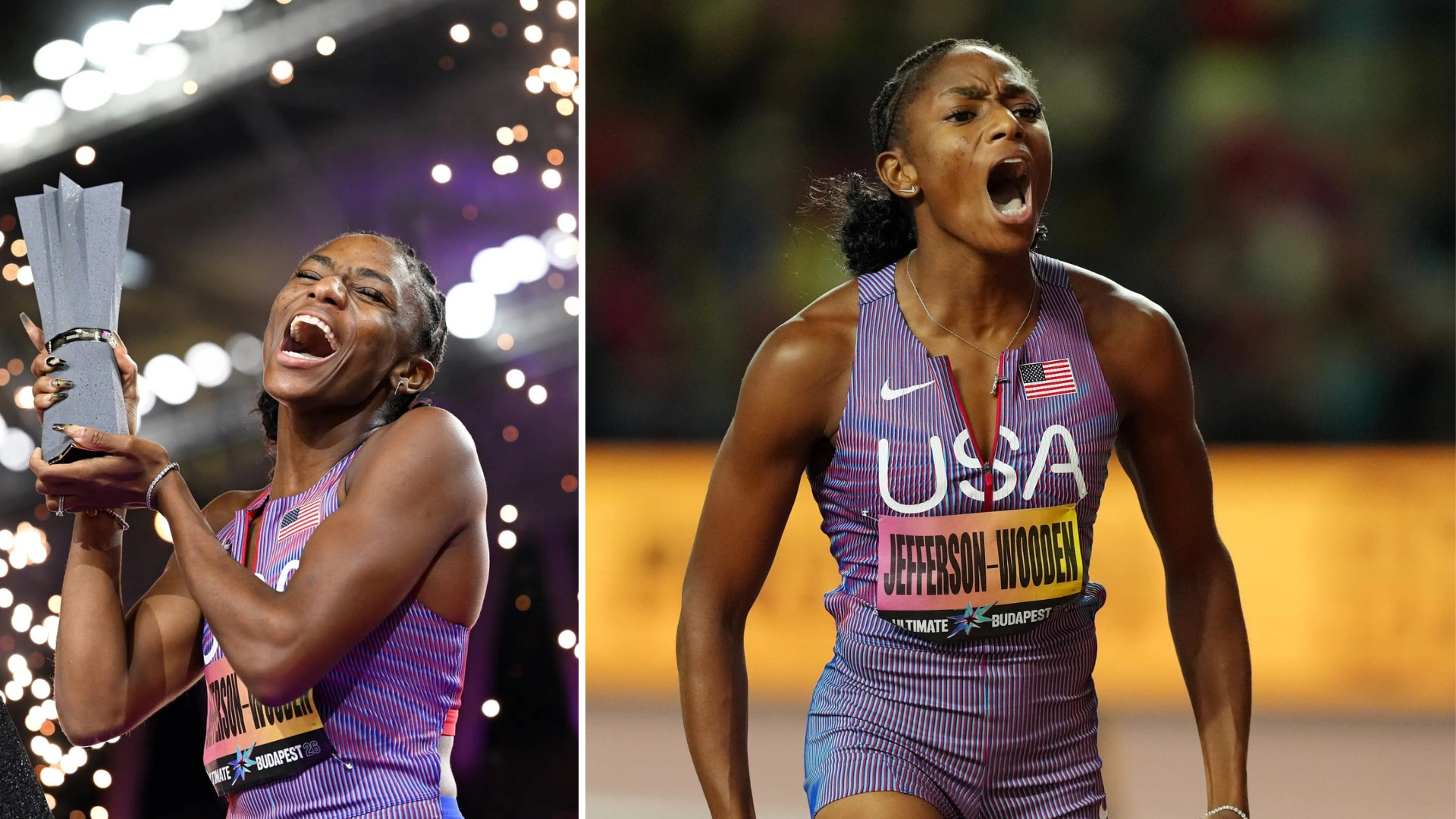
Melissa Jefferson-Wooden has firmly seized the throne of global sprinting, with the American star emerging as a major force through to the Los Angeles 2028 Olympics.
The world champion ignited the track at the World Athletics Ultimate Championship Budapest 26, storming to a sensational 21.47-second victory in the 200m. The performance ranks as the third-fastest time in history and secured her Ultimate sprint double.
Just 24 hours after blazing to a world-leading 10.62 in the 100m, Jefferson-Wooden returned to the track and delivered another statement performance.
Jefferson-Wooden Takes Control
The 200m showdown had been building since Thursday’s lane draft.
Jefferson-Wooden strategically chose to line up next to Olympic champion Gabby Thomas in the semifinals. Thomas won that preliminary heat in 21.88, with Jefferson-Wooden second in 22.15.
However, it soon became clear that the 100m champion had been pacing herself for the ultimate prize.
When the gun fired for the final, Jefferson-Wooden exploded from the blocks. She quickly erased the stagger on Thomas and established a comfortable lead by halfway.
Thomas was expected to mount a late charge. Instead, Jefferson-Wooden continued to pull away with every stride.
She crossed the line in an astonishing 21.47.
Thomas finished second in 21.77, while fellow American Kayla White completed a clean sweep of the podium in 21.93.
European champion Amy Hunt finished fourth in a season’s best 22.10.
Jefferson-Wooden Stunned by 21.47
Even Jefferson-Wooden was surprised by the speed she produced.
“I did not see 21.47 coming tonight!” said a stunned Jefferson-Wooden. “I told myself that I need to be smart in the semi-final and save some energy. I never thought that people like Usain Bolt would watch my races and even have great reactions to my performances. He said to me earlier this week how proud he is of me for making it seem so easy.”
She also credited her support system for helping her produce the milestone performance.
“I told my husband that whatever happens tonight, it will happen because of him. That’s what the scream was for when I crossed the finish line. I was thinking I could run this fast in maybe two years but not tonight. I really have no words.”
Thomas Praises the Ultimate Format
Despite missing out on gold, Thomas remained positive about the high-calibre race and the competition’s innovative format.
“It was a very competitive race,” Thomas said. “To be disappointed with a second-place finish on the global stage shows how far I have come. I liked this Ultimate from the beginning; the lane draft was a lot of fun. I think in the future whoever is ranked first should either get to pick what order they are in and I also think that first place in the semi-finals should get to pick the lane draw in the final.”
Jefferson-Wooden now leaves Budapest with both sprint titles and a powerful statement ahead of the road to Los Angeles 2028.

The most electrifying rivalry in global athletics has pushed middle-distance racing into a thrilling new era. Audrey Werro, Keely Hodgkinson and Femke Broeders-Bol are not just competing against each other. They are pushing the limits of the sport.
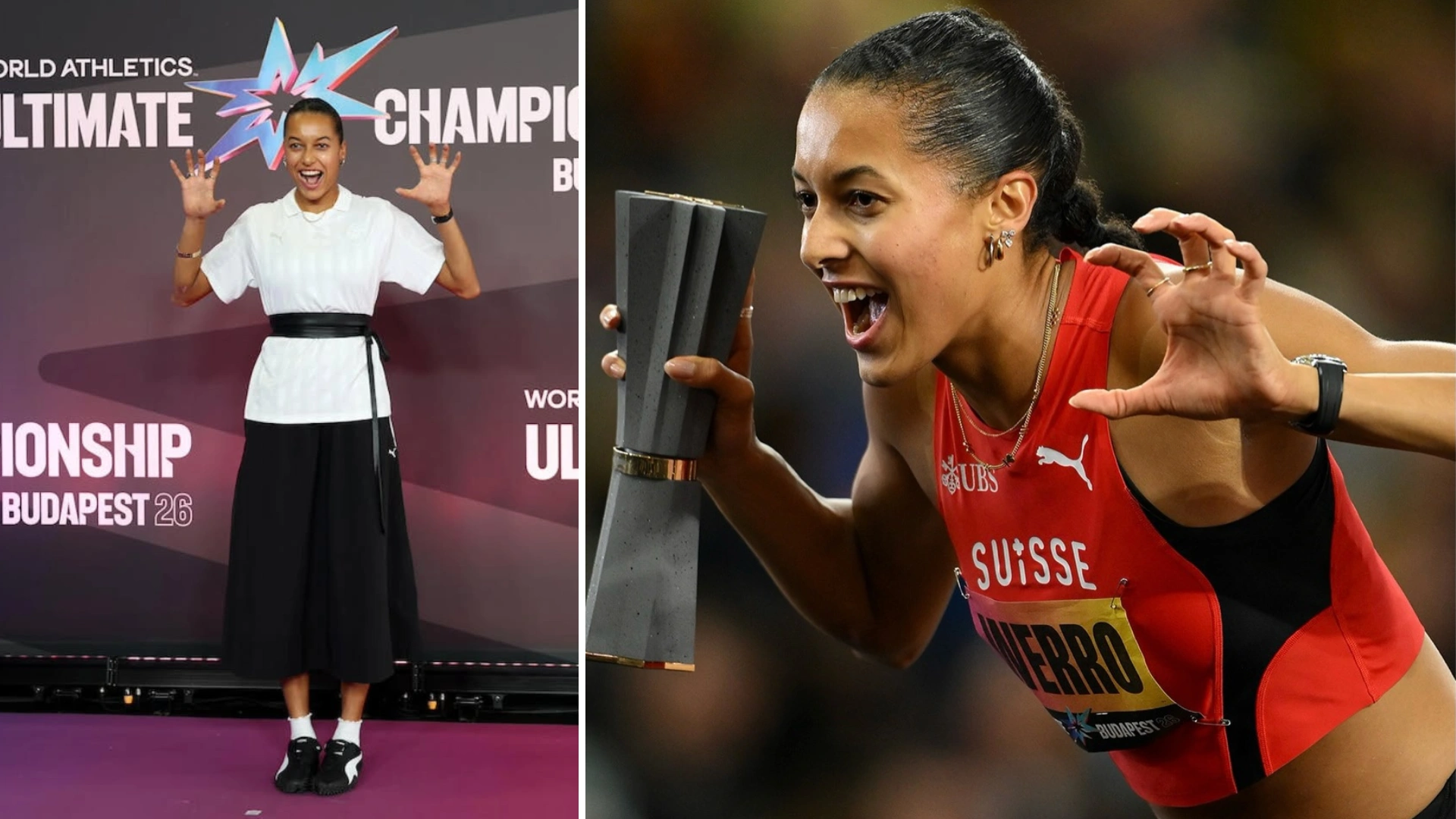
That rivalry reached another peak at the World Athletics Ultimate Championship Budapest 26, where Werro strengthened her status as the world’s leading 800m runner.
Werro Takes Control of the 800m
Hodgkinson had dominated the discipline at the start of the year. She stormed to a world indoor record of 1:54.87 before winning the world indoor title in a championship record 1:55.30.
The outdoor season, however, belonged to Werro.
After winning at the Diamond League meeting in Rabat, the Swiss star built an unbeaten run outdoors. She repeatedly finished ahead of both Hodgkinson and Femke Broeders-Bol, the celebrated two-time world 400m hurdles champion who recently moved into the 800m.
Werro’s blistering sub-1:54 performances in Stockholm, Paris and Zurich also sparked world record speculation.
Her personal best of 1:53.70 is just 0.42 seconds outside the long-standing world record. She also owns three of the five fastest times in history.
Werro Wins the Budapest Battle
Budapest offered a different challenge. The focus was on winning the crown rather than chasing the clock.
Werro entered as the favourite, while Broeders-Bol had narrowed the gap in their recent tactical battles. Hodgkinson also remained a major threat, having handed Werro her last defeat.
Werro took control immediately and dictated the pace.
She led through the opening lap in 57.83, with Broeders-Bol close behind. Hodgkinson stayed just a stride back.
With 200 metres remaining, the field began to compress. Werro then found another gear and surged into the home straight.
Hodgkinson, who had wisely skipped the Diamond League Final as a precautionary measure, responded strongly. She passed Broeders-Bol in the closing metres.
However, neither challenger could catch Werro.
The Swiss star crossed the line in 1:55.88. Hodgkinson finished second in 1:56.26, while Broeders-Bol took third in 1:56.74.
The podium mirrored the exact 1-2-3 finish from the European Championships.
Werro Reflects on Unbeaten Outdoor Season
Werro was delighted with another victory and the results of her hard work.
“I’m so happy with the race,” Werro reflected. “I think I have won every race I’ve had this year during the outdoor season. It is really crazy but, at the same time, it is something I have worked for and now I am getting the result.”
Hodgkinson also took positives from her runner-up finish.
“I’m actually quite proud with how this race turned out. I wanted to win and it ended up pretty close. These are some amazing women, and we all push each other.”
Broeders-Bol also reflected on a memorable transition year.
“My season is done and now I can say that I really love this event. I’ve loved all of this year even more than I expected. This third place means a lot.”
With all three stars continuing to push each other, the women’s 800m appears set for an even more compelling future.
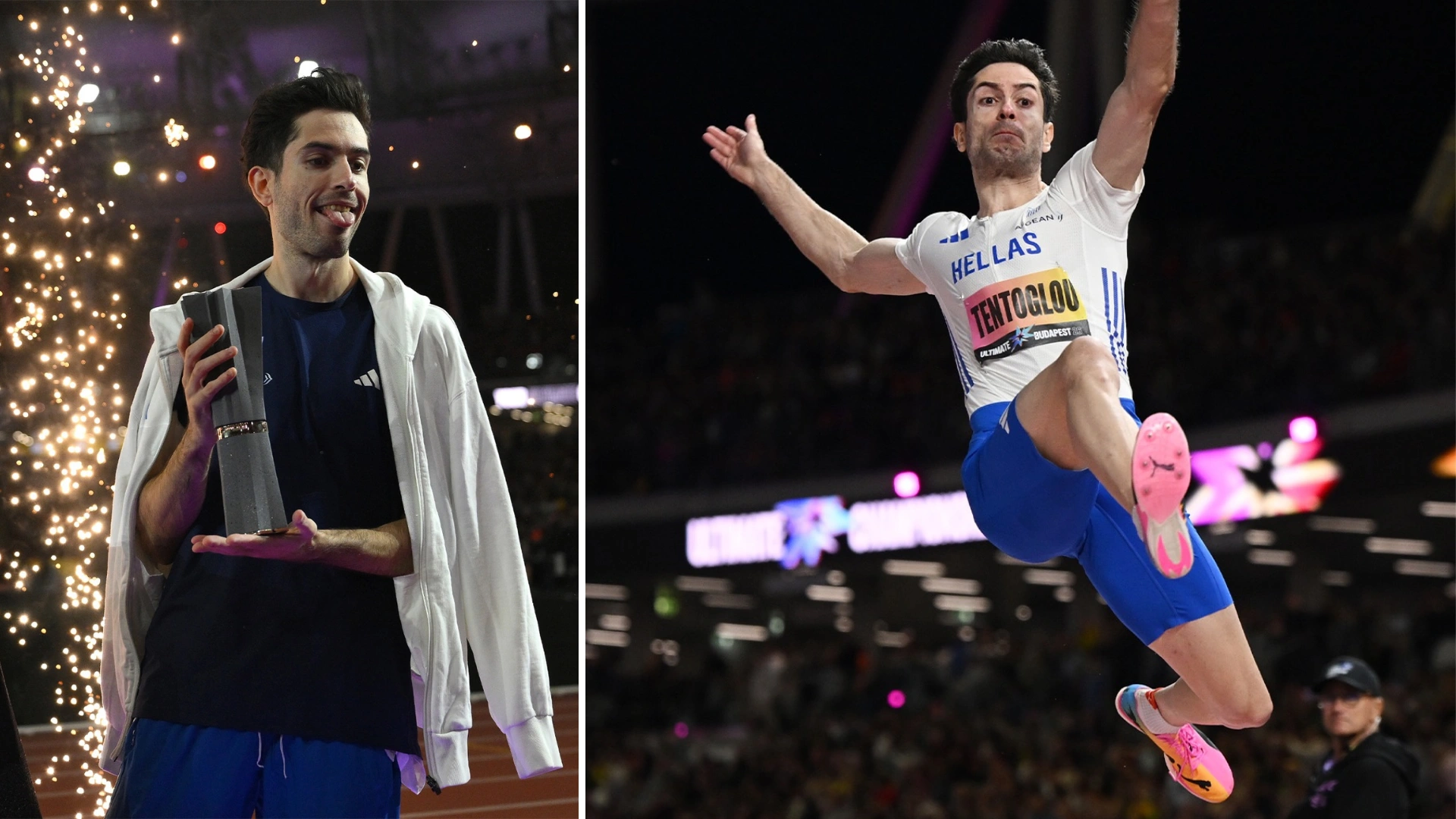
Miltiadis Tentoglou has added the inaugural World Athletics Ultimate Championship crown in Budapest to his remarkable collection. The Greek long-jump star claimed one of the few major titles missing from his resume.
For one of athletics’ most consistent competitors, the victory capped one of the finest seasons of his career.
Despite missing the Diamond League title in Brussels just a week earlier, Tentoglou bounced back immediately. He opened with an 8.16m jump before producing the winning mark of 8.35m in the second round.
Tentoglou Holds Off Saraboyukov
The competition went down to the wire, as it often does when Tentoglou takes to the runway.
European indoor champion Bozhidar Saraboyukov pushed him all the way. The Bulgarian produced an 8.34m final-round effort that briefly threatened to snatch the gold.
However, Saraboyukov had to settle for silver after falling just 1cm short of Tentoglou.
World indoor heptathlon champion Simon Ehammer finished third with 8.07m. Meanwhile, Brussels victor Tajay Gayle placed fifth with 7.90m.
Another Global Title for Tentoglou
The Budapest triumph adds another major honour to an already glittering resume.
Tentoglou now has two Olympic gold medals, a 2023 world title, two world indoor crowns, four European outdoor titles and three European indoor titles.
Yet his drive to jump farther remains as strong as ever.
“I always say that jumping far is more important to me than winning, but tonight I was happy to add another global title to my collection,” Tentoglou reflected. “I was hoping to jump farther tonight, but I’m happy that I still had my best season ever; I had so many jumps over 8.40m and 8.50m, and I improved my PB to 8.66m.”
With a historic season now complete, Tentoglou’s pursuit of bigger distances continues. For athletics’ ultimate competitor, there appears to be little sign of that hunger fading.
Midway through the race, Melissa Jefferson-Wooden upped the ante. She surged ahead to power past Olympic champion Julien Alfred in a high-stakes showdown that lived up to the hype.
The American sprinter scorched the track in 10.62 seconds to win the inaugural World Athletics Ultimate Championship 100m title.
Her winning time was the joint seventh-fastest 100m in history, leaving the rest of the elite field trailing in her wake.
Jefferson-Wooden Pulls Away From Alfred
Alfred secured the runner-up spot in 10.74, while 2023 world champion Sha’Carri Richardson took third in 10.76.
Jamaica’s Jonielle Smith and Tina Clayton finished fourth and fifth respectively. Both crossed the line in 10.94.
Jefferson-Wooden’s victory came after an electric semifinal round.
Both she and Alfred clocked 10.73 seconds, setting up their highly anticipated head-to-head battle in the final.
World-Leading 10.62 in Budapest
Jefferson-Wooden’s winning time is the fastest in the world this year.
It also came remarkably close to her personal best of 10.61, set during her triple-gold campaign at last year’s World Championships in Tokyo.
The American missed that mark by just 0.01 seconds.
After crossing the line, Jefferson-Wooden could barely hide her emotion.
“This feels amazing. I crossed the line with a smile on my face because only I know all the things I have done to get to this moment,” Jefferson-Wooden said.
She added:
“When I got into the blocks today, I just told myself that this is my moment.”
Jefferson-Wooden Eyes Sprint Double
The 25-year-old will now turn her attention to Sunday’s 200m as she targets a sprint double.
For Jefferson-Wooden, winning both titles would represent another significant achievement.
“If I could win the double, it would just add to who I actually am,” she said.
The American also made clear that she is ready to embrace new challenges.
“I am down to do things that haven’t been done before, I am down for innovation and for challenging myself.”
Just when everybody thought Kenny would always be the silver medallist, he became Kenny the King.
In one of the most relaxed races of his career, the American sprinter delivered when it mattered most. Bednarek defeated the world champion to win the men’s 100m title at the World Athletics Ultimate Championship Budapest 26 on Saturday.
He clocked 9.85 seconds to become the Ultimate Championship’s fastest man.
Bednarek Masters the Art of Relaxation
Bednarek showcased one of the biggest keys to sprinting: staying relaxed while increasing speed.
Watching the American master that art was none other than Usain Bolt. Olympic champion Noah Lyles also enjoyed Bednarek’s victory.
“Everything is a little bit more exciting than at the World Championships, but also this event brought a bit more pressure on me as there is a lot on the line,” Bednarek said after the race.
Jamaica’s world champion Oblique Seville entered the final as the slight favourite after winning his semifinal in 9.90.
Bednarek had won his semifinal in 9.94.
Seville Leads, But Bednarek Finishes Strong
Seville made the stronger start in the final and moved past early leader Christian Coleman midway through the race.
Then Bednarek began to close the gap.
The American’s trademark 200m strength became decisive in the second half. He moved alongside Seville before powering ahead towards the finish.
As Seville approached the line, his technique began to falter as he pushed for the finish.
Bednarek, by contrast, remained completely composed.
He even raised his arm in celebration as he crossed the line.
Seville finished second in 9.90.
“I wanted to run faster, but Kenny got the best out of this race,” Seville admitted.
Baker Takes Third in Tight Finish
Behind the leading pair, the battle for third went down to the wire.
USA’s Ronnie Baker secured bronze in 9.93.
Nigeria’s Kayinsola Akayi finished just 0.004 seconds behind him.
Christian Coleman took fifth in 9.94.
Bednarek Finally Becomes the Champion
For years, Bednarek has collected major silver medals.
He finished runner-up in two Olympic 200m finals and two world 200m finals.
In Budapest, however, he finally moved to the top of a global podium as an individual champion.
And he is not finished yet.
Bednarek will return on Sunday with the chance to complete a double title in the 200m.
“I will get my sleep in and go back to work tomorrow,” Bednarek said. “I want to win a double title and make people happy.”
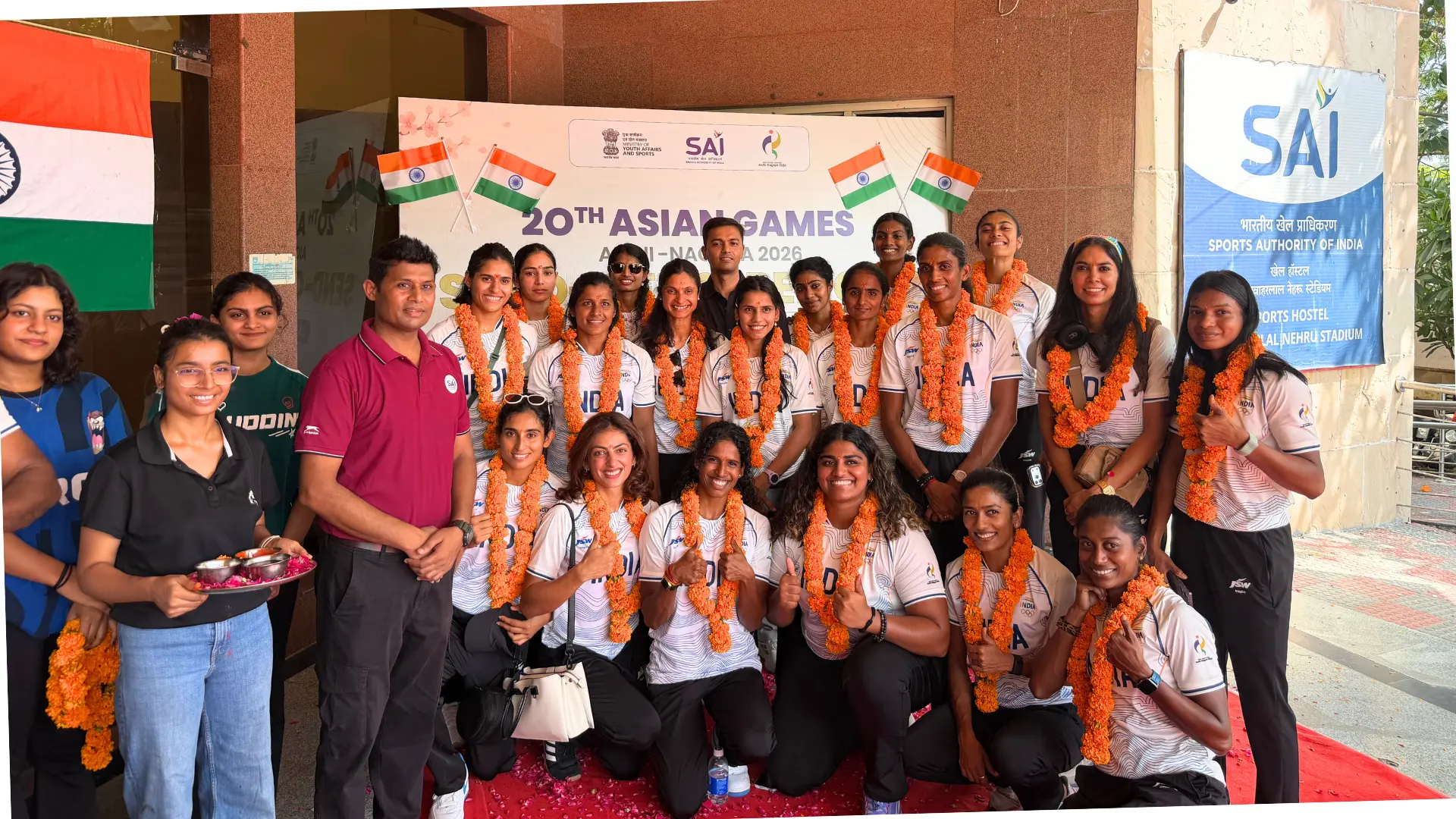
India’s athletics contingent for the Asian Games 2026 has undergone another round of changes just hours before the team is set to leave for Japan.
The Athletics Federation of India initially finalised a 79-member squad. The contingent has now been reduced to 74 athletes following withdrawals, injuries, fitness concerns and selection decisions.
The latest changes see Annu Rani, Shahnavaz Khan and Nithya Gandhe out of the squad, while Jyothi Yarraji, Praveen Chithravel and Sarvesh Kushare have been cleared to represent India.
Annu Rani Misses Out on Asian Games Defence
India’s women’s javelin throw national record holder Annu Rani has been left out after failing to achieve the qualifying standard of 57.62m.
Annu was initially included in the squad on the condition that she would breach the qualifying mark before the Asian Games.
However, after competing at the Continental Tour and Indian Series Final, her best throw stood at 57.50m.
That left her 12cm short of the required mark.
As a result, the reigning Asian Games champion will not defend her title in Japan.
Shahnavaz Khan Dropped After Injury
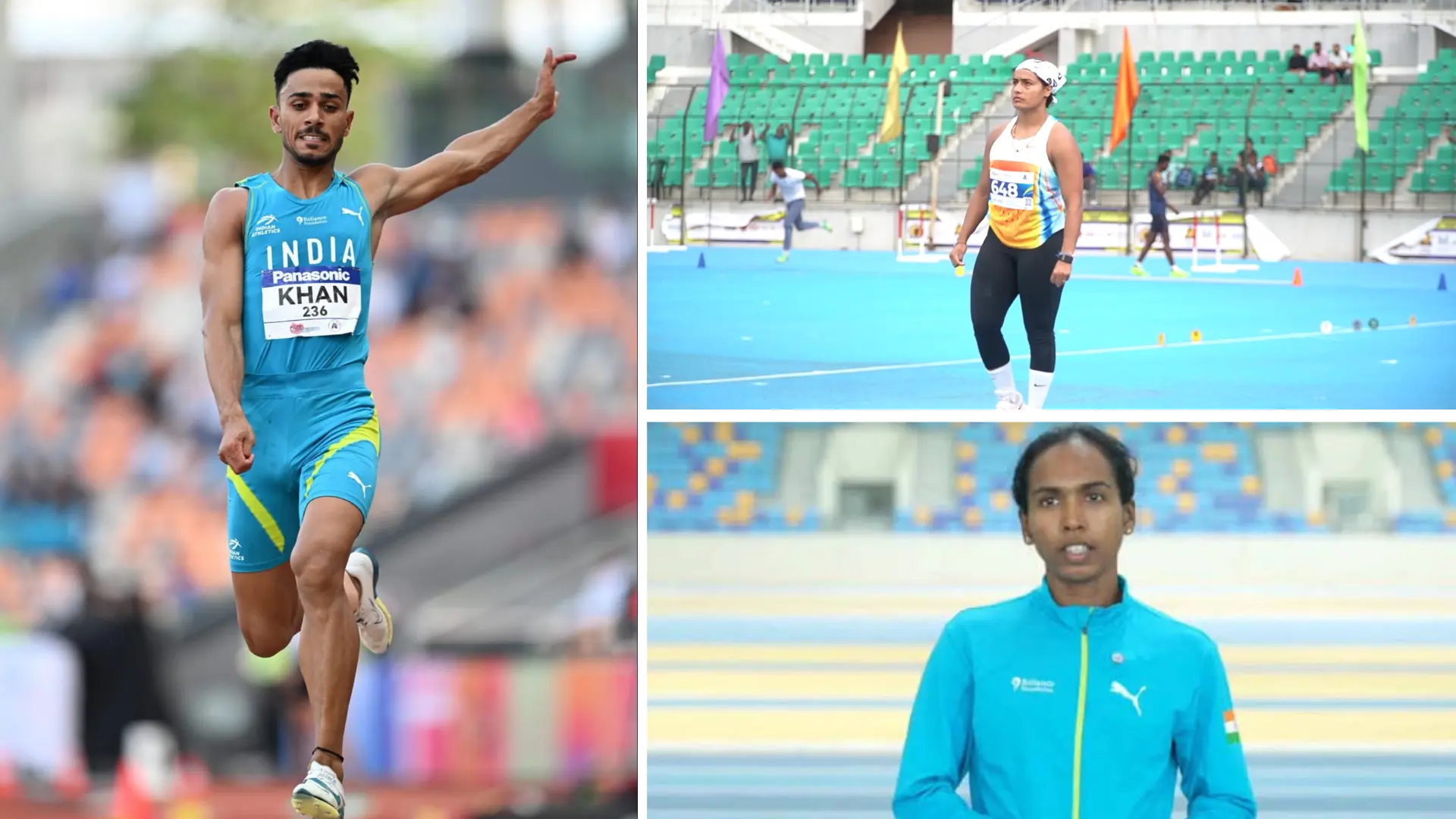
Another major omission is 18-year-old long jumper Shahnavaz Khan.
Shahnavaz had cleared the qualification mark at the Inter-State Championships with a personal best of 8.30m.
He later suffered an injury while competing at the World U20 Championships in Eugene, where he won a bronze medal.
The teenager returned at the Indian Series Final but could manage only 7.43m, finishing sixth.
The federation has now dropped him from the Asian Games squad.
This means Murali Sreeshankar will be India’s sole representative in the men’s long jump.
Nithya Gandhe Out of 4x100m Relay Squad
The women’s 4x100m relay squad has also undergone a change, with Nithya Gandhe dropped from the team.
Nithya finished ninth in the women’s 100m at the Indian Series Final in 11.93 seconds.
However, sources indicate that she had been returning from chickenpox. She contracted the illness during the preparatory camp in the Czech Republic.
She was unable to regain her form in time.
Harita and Unnathi, who are both part of India’s individual 200m squad and performed well in the 100m, are now set to be part of the mixed 4x100m relay combination.
Jyothi, Sarvesh and Praveen Cleared
Three athletes who missed the Indian Series Final have now been cleared to compete.
Jyothi Yarraji, who has reportedly been managing an injury picked up during training, has received clearance.
The injury is understood to not be serious. Jyothi has been undergoing rehabilitation while adjusting her training towards more endurance-based work.
Sarvesh Kushare, who had been dealing with niggles, has also been cleared.
Praveen Chithravel has been cleared as well.
The decisions follow the AFI’s directive asking Asian Games-bound athletes to appear at the Indian Series Final. Athletes who did not compete were asked to provide fitness certificates.
Asian Games Selection Process Remains in Flux
The latest changes come after an already turbulent selection process.
The athletics team was originally expected to be announced immediately after the Inter-State Championships in June.
Instead, the final squad was officially announced only on 3 September, just 10 days before the team’s departure.
Even after the official announcement, the squad continued to change.
India’s two-time Asian Games javelin champion Neeraj Chopra opted out because of an ankle injury. He was replaced by CWG 2026 bronze medallist Yashvir Singh.
Earlier, Tejas Shirse, India’s 110m hurdles national record holder, was ruled out after suffering two stress fractures in his left foot.
Abhishek Pal was also left out following an adverse analytical finding involving clomiphene.
India’s Athletics Contingent Now Has 74 Athletes
Following the latest changes, India’s athletics contingent for the Asian Games now stands at 74 athletes — 33 men and 41 women.
After weeks of changes, injuries and selection decisions, this is the team that will travel to Japan.
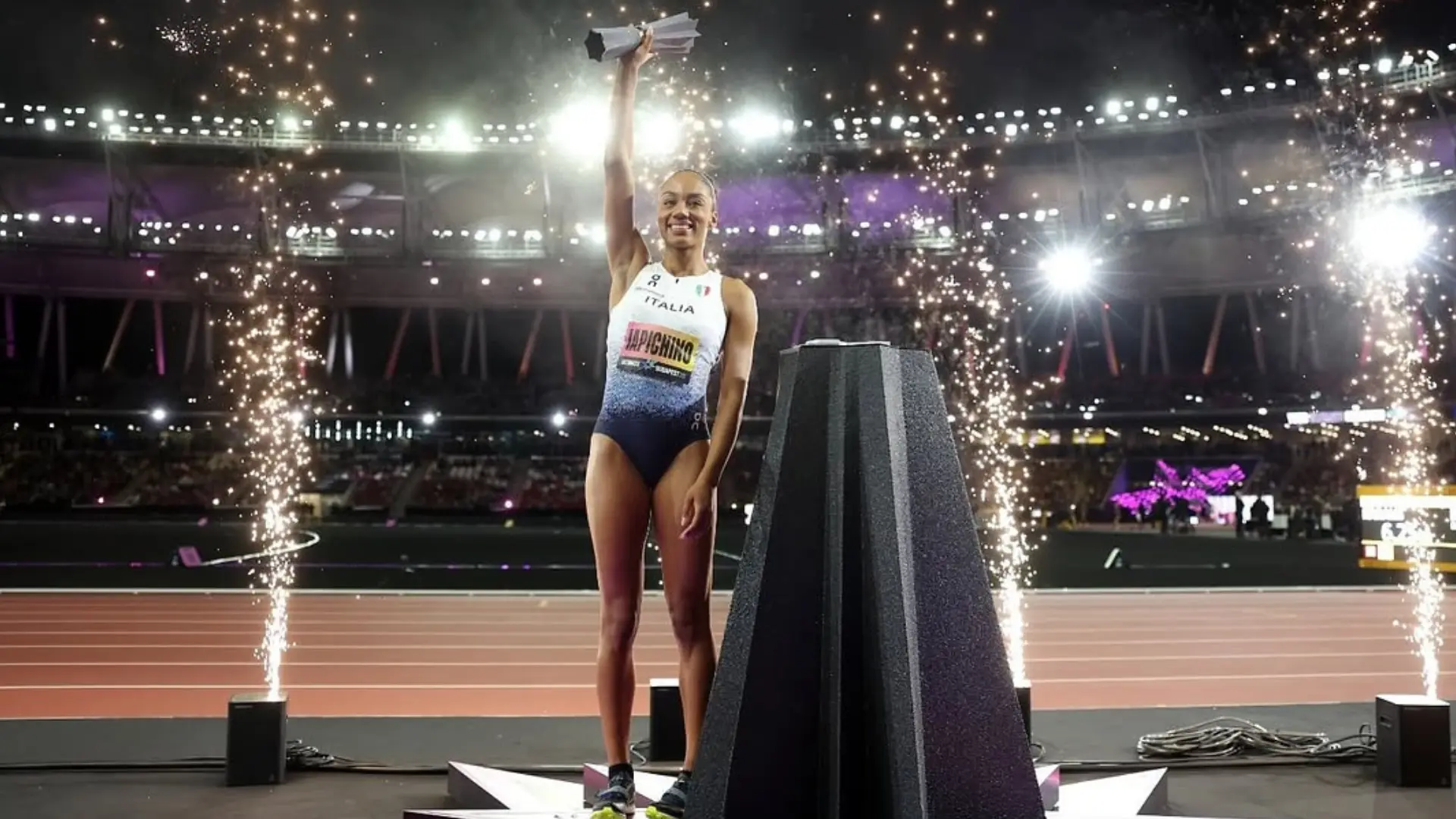
Reliability has become Larissa Iapichino’s calling card. In Budapest, that consistency finally delivered the biggest payday and trophy of her career.
The Italian long jumper produced a composed performance to win the World Athletics Ultimate Championship crown and claim the $150,000 prize.
In a sport often defined by volatility, Iapichino has built her reputation by producing solid marks when others struggle. On Friday night in Budapest, that quality proved decisive.
Iapichino Takes Control From the Start
The competition began with a major absence.
Reigning world champion Tara Davis-Woodhall was sidelined following a recent car accident. Her absence removed the biggest benchmark from the field and opened the door for the other contenders.
The revised, high-jeopardy format then quickly reduced the field.
USA’s Diamond League champion Monae’ Nichols was one of those affected. She recorded 6.39m and 6.33m, finishing seventh and missing the chance to take a third attempt.
Iapichino, meanwhile, immediately established herself as the athlete to beat.
Her opening jump measured 6.90m (0.6m/s). No other athlete could match it for the rest of the competition.
She followed with 6.76m before fouling her final two attempts. Her opening effort, however, had already done the damage.
Sawyers and Jones Complete the Podium
Britain’s Jazmin Sawyers fought her way into second place with a 6.78m jump in the final round.
USA’s Alyssa Jones finished third with 6.77m.
Jones’ jump was particularly notable. Her physical distance from toe to landing was greater than Iapichino’s winning jump. However, she left 14.1cm on the board, which ultimately made the difference.
France’s Hilary Kpatcha completed the top four with 6.73m.
Iapichino Adds Another Major Title
Despite the absence of Davis-Woodhall, the athletes were captivated by the Budapest setting.
The striking pink sand and electric crowd created a memorable atmosphere for the competition.
For Iapichino, the victory added another prestigious title to an impressive stretch of form. It also came after her European title in Birmingham last month.
The result further strengthened a season built on consistency and composure under pressure.
The competitive edge may have been reduced without the reigning world champion in the pit. But Iapichino delivered when it mattered.
Her 6.90m opening jump stood untouched, securing the Italian the Ultimate Championship crown and the biggest prize of her career.
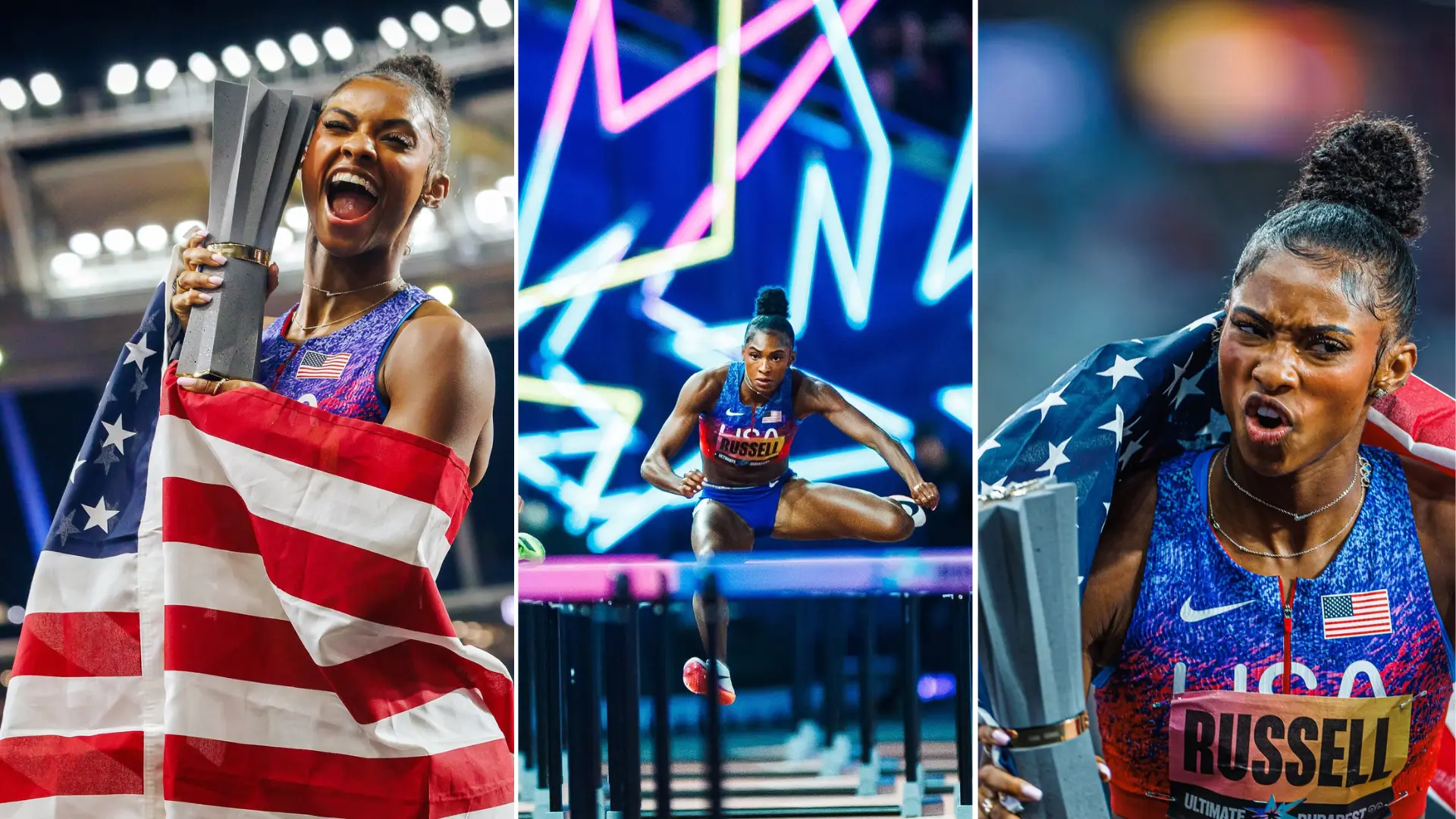
The track in Budapest finally belongs to Masai Russell.
Three years after leaving the Hungarian capital in devastation, unable to finish her semifinal at the 2023 World Championships, the American hurdler returned to claim her Ultimate crown.
Russell won the 100m hurdles in 12.22 seconds on Friday. The victory capped a sensational undefeated 14-win season and added another major achievement to her growing legacy.
Russell Delivers as the Favourite
Russell entered the inaugural World Athletics Ultimate Championship as the clear favourite.
Just weeks earlier, at the end of August in Zurich, she had shattered the world record with a stunning 12.09 seconds.
But the world record did not change her approach in Budapest.
Russell knew another race still had to be won.
“When I broke the world record, I said the job wasn’t done because I knew we still had last week and then this week to handle and tackle, regardless of that world record,” she said.
She also explained the unique mindset required for the hurdles.
“The world record is just something to say, but it does not do anything for you in the heat of another race, so I am glad I was able to come out here and get the job done.”
Russell added:
“When you have 10 barriers to get over, it is just a different mentality. Once I get to the line, I am like: ‘I can breathe now.’”
Russell Overcomes Early Pressure
The path to gold was far from straightforward.
World indoor record-holder Devynne Charlton exploded out of the blocks and immediately put pressure on the field.
Russell struggled slightly through the middle section of the race. For a moment, her rivals sensed that an upset could be possible.
Then the champion responded.
Charlton clipped the seventh hurdle and lost momentum. Russell took advantage and produced a powerful finish.
She cleared the final three barriers with flawless technique before pulling away from the field.
Russell crossed the line in 12.22 seconds.
Nigeria’s former world record-holder Tobi Amusan took silver in 12.34, while European champion Nadine Visser won bronze in 12.39.
Charlton finished fourth.
Russell’s Ninth Sub-12.30 Run
The victory was another reminder of Russell’s extraordinary consistency.
Her 12.22 performance marked her ninth race under 12.30 seconds this season.
It was also the joint-seventh fastest time of her career, a level that only five other women in history have surpassed.
Narrow Margins Define the Hurdles
The earlier rounds showed just how deep the women’s 100m hurdles field was.
Jamaica’s Danielle Williams, who famously won the world title in Budapest in 2023, missed the final after finishing fifth in her race in 12.72.
Rayniah Jones suffered an even narrower heartbreak.
She missed the final qualification spot by just five-thousandths of a second after she and Megan Simmonds both clocked 12.54.
“A Way to Rewrite the Story Here”
For Russell, the victory meant far more than another title or pay cheque.
It allowed her to rewrite a painful chapter from three years earlier.
“Coming back here after hitting the hurdle in 2023 and now being the Ultimate champion is a way to rewrite the story here,” Russell said.
She reflected on how much had changed since that difficult night.
“I left here very sad three years ago. It was my first World Championships and now to be a record-holder and Olympic champion, with all of these records and accolades, and to do it at the Ultimate Championship on the same track, it just shows all the work.”
Russell also offered a powerful perspective on her journey.
“When failure occurs, it is not really a failure, it is just a setback that sets you up to win.”
From the heartbreak of 2023 to an undefeated, record-breaking season, Masai Russell has rewritten her Budapest story.
This time, she left the track as the Ultimate champion.