
There was no suspense. Just a statement.
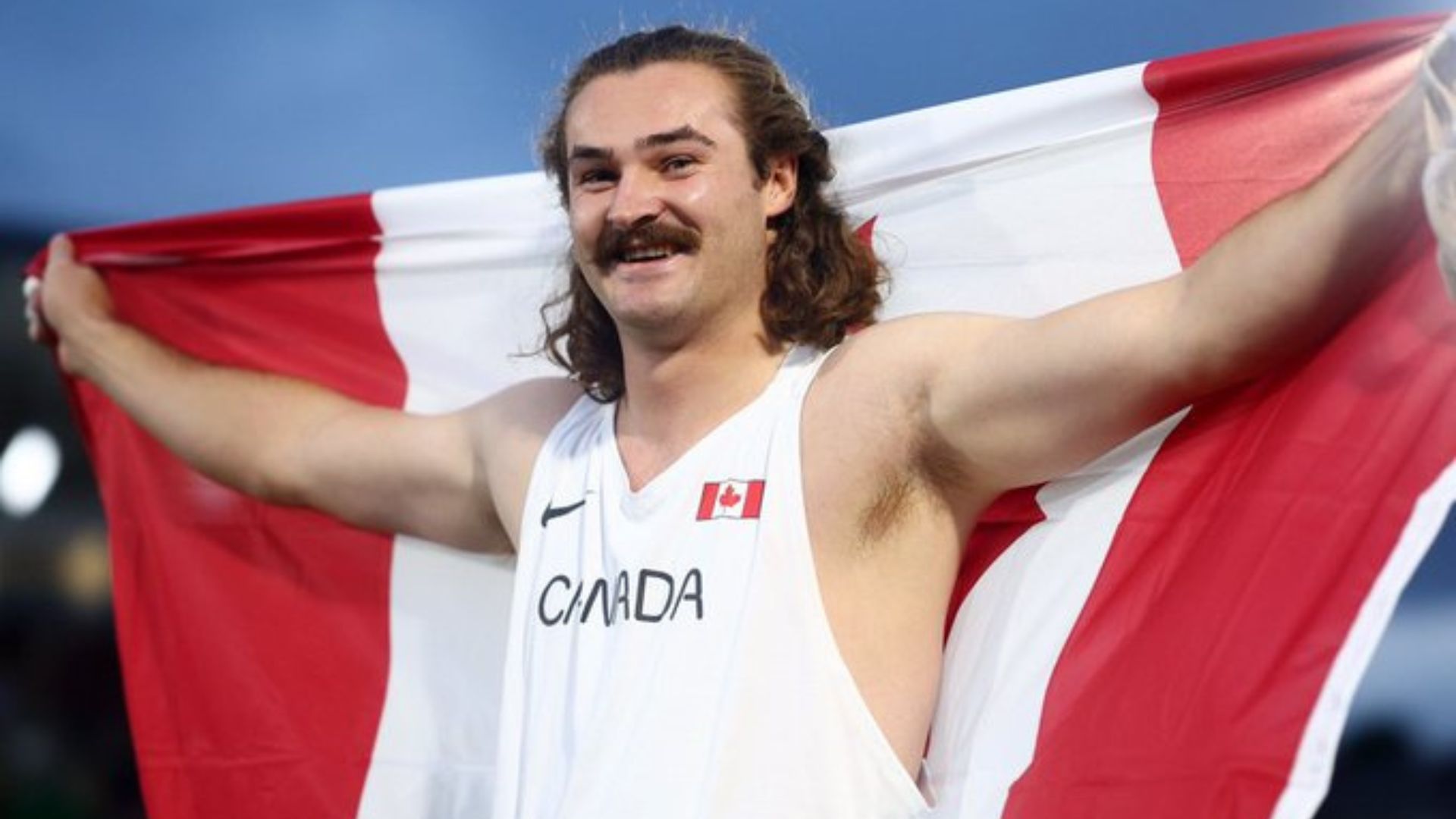
Canada’s Ethan Katzberg needed only one throw to settle the men’s hammer throw competition at the Glasgow 2026 Commonwealth Games, launching the hammer 80.97m on his opening attempt to shatter the Commonwealth Games record and secure the gold medal.
Not a single athlete came within four metres of the towering Canadian.
Final Standings
 Ethan Katzberg (Canada) – 80.97m (Games Record)
- Iosif Kesidis (Cyprus) – 76.97m
- Rowan Hamilton (Canada) – 75.36m
The winning margin of 4.00 metres underlined Katzberg’s supremacy in an event he has come to dominate over the past three years.
A Champion in His Prime
At just 24, Katzberg has rapidly established himself as the world’s premier hammer thrower.
His breakthrough came in 2023, when he stunned the field to win the World Athletics Championships in Budapest with a throw of 81.25m, becoming Canada’s first-ever men’s world champion in the hammer throw.
He backed that up in 2024 by capturing the Olympic gold medal, confirming that his world title was no one-off performance but the beginning of a new era in the event.
Now, with Commonwealth gold added to his collection, Katzberg has completed the sport’s major championship treble:
- Olympic Champion
- World Champion
- Commonwealth Champion
 Olympic Champion
The Glasgow victory also adds another milestone to his growing résumé, as his 80.97m opener erased the previous Commonwealth Games record and effectively ended the contest before it had truly begun.
A New Standard
What makes Katzberg particularly formidable is his ability to produce world-class performances immediately. While many throwers build through a competition, the Canadian often delivers his biggest mark early, forcing the rest of the field to chase.
That was exactly how the final unfolded in Glasgow. His opening throw proved untouchable, while the battle behind him was for silver and bronze.
With the World Championships and the Los Angeles 2028 Olympics on the horizon, Katzberg has firmly established himself as the athlete to beat. Still in the early years of his career, he appears poised to dominate the men’s hammer throw for years to come.
For everyone else in Glasgow, the competition began with hope.
For Ethan Katzberg, it ended with one throw.
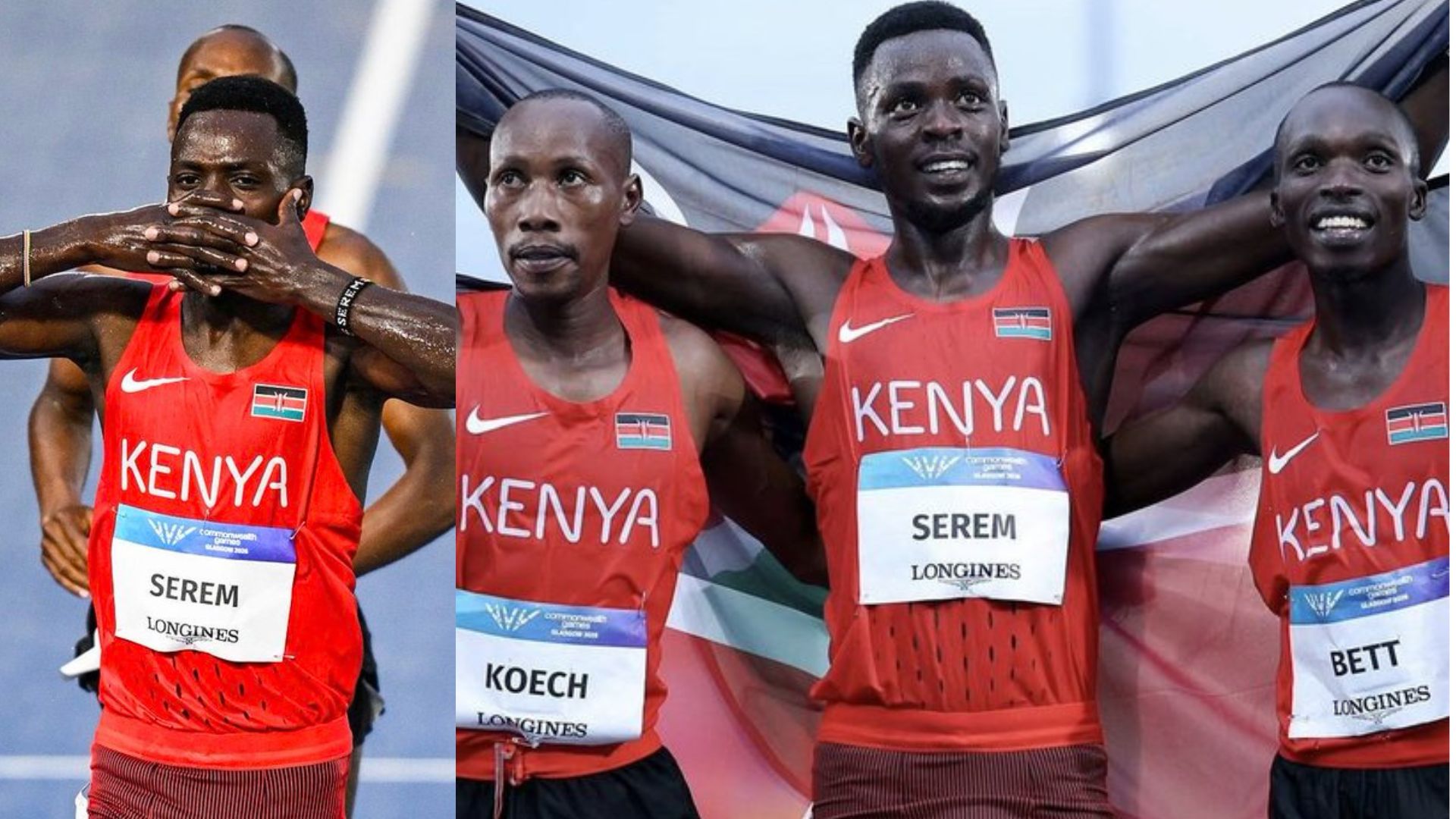
The image that will travel around the world is Edmund Serem standing on the track wearing Viktor Gyökeres’ now-iconic mask celebration.
But by the time he pulled it on, the race had already been won—not just by him, but by an entire nation.
Because Kenya didn’t just win the men’s 3000m steeplechase at the Glasgow 2026 Commonwealth Games.
They owned it.
 Edmund Serem – 8:18.23
 Simon Kiprop Koech – 8:18.59
 Leonard Kipkemoi Bett – 8:21.63
A clean sweep.
Three Kenyans.
Three medals.
One event they’ve turned into their own personal playground.
If you were scrolling through social media, you might joke that they drank some kind of special potion before the race.
The truth is far less mysterious—and far more impressive.
That “potion” is four decades of relentless excellence.
With the Glasgow sweep, Kenya extended its unbeaten run in the Commonwealth Games men’s steeplechase to 10 consecutive editions, stretching all the way back to 1986. Generation after generation, names have changed, but the script has remained remarkably familiar: when the gun goes off in the steeplechase, Kenya takes control.
For Serem, the victory carried extra significance. The reigning World Under-20 champion was making his Commonwealth Games debut, and could hardly have asked for a better introduction.
“This is my first Commonwealth Games, and we swept the podium,” he said after the race.
There was never a dramatic last-lap upset or a surprise challenger breaking the Kenyan stranglehold. Instead, Glasgow witnessed another chapter in one of athletics’ greatest dynasties.
For countries chasing Kenya’s standard—including India, where the steeplechase continues to produce promising talent—the race offered an important reminder.
Dominance isn’t built in one season.
It isn’t created by one exceptional athlete.
It is built over decades through systems, coaching, competition and a culture where every generation pushes the next.
The Gyökeres mask may have been the celebration everyone remembers.
But the real story was written long before Serem crossed the finish line. It was written over 40 years of Kenyan excellence in one of track and field’s toughest events.
India began its athletics campaign at the Glasgow 2026 Commonwealth Games with a mixed bag of results in the morning session, as three athletes booked places in their respective finals, while the country’s biggest sprint hope suffered an unexpected early exit.
The standout performance came from Murali Sreeshankar, who comfortably progressed to the men’s long jump final with a leap of 8.01m. The Commonwealth silver medallist crossed the automatic qualification mark and finished third overall in the qualifying round, underlining his credentials as one of the favourites for a medal.
Joining him in the final will be compatriot Lokesh Sathyanathan, who also produced a composed performance. His best effort of 7.77m earned him seventh place overall, comfortably inside the top 12 qualifiers for the final. India will now have two representatives in the medal round of the men’s long jump.
There was more good news on the track as Tejas Ashok Shirse advanced to the men’s 110m hurdles final. Shirse clocked 13.76 seconds to finish third in his heat, securing an automatic qualification spot. The Indian had entered the competition with the fastest season’s best in his heat and successfully negotiated the opening round despite running slower than his season’s best of 13.27 seconds.
The 110m hurdles final is scheduled for 2:15 AM IST.
The biggest disappointment of the session came in the men’s 100 metres, where national record holder Gurindervir Singh failed to progress beyond the opening round.
Competing in Heat 4, Gurindervir clocked 10.39 seconds to finish second behind Jamaica’s Rohan Watson. However, with only the 17 fastest athletes across all 11 heats advancing to the semifinals, the Indian ended up 28th overall, bringing his campaign to an abrupt end.
Having recently set the national record of 10.09 seconds, Gurindervir was expected to comfortably reach the next round, making his early elimination one of the biggest surprises of the opening session.
With three finalists already confirmed, India will now look to convert qualification into medals as the athletics competition gathers pace in Glasgow.
For more visit Commonwealth Games 2026
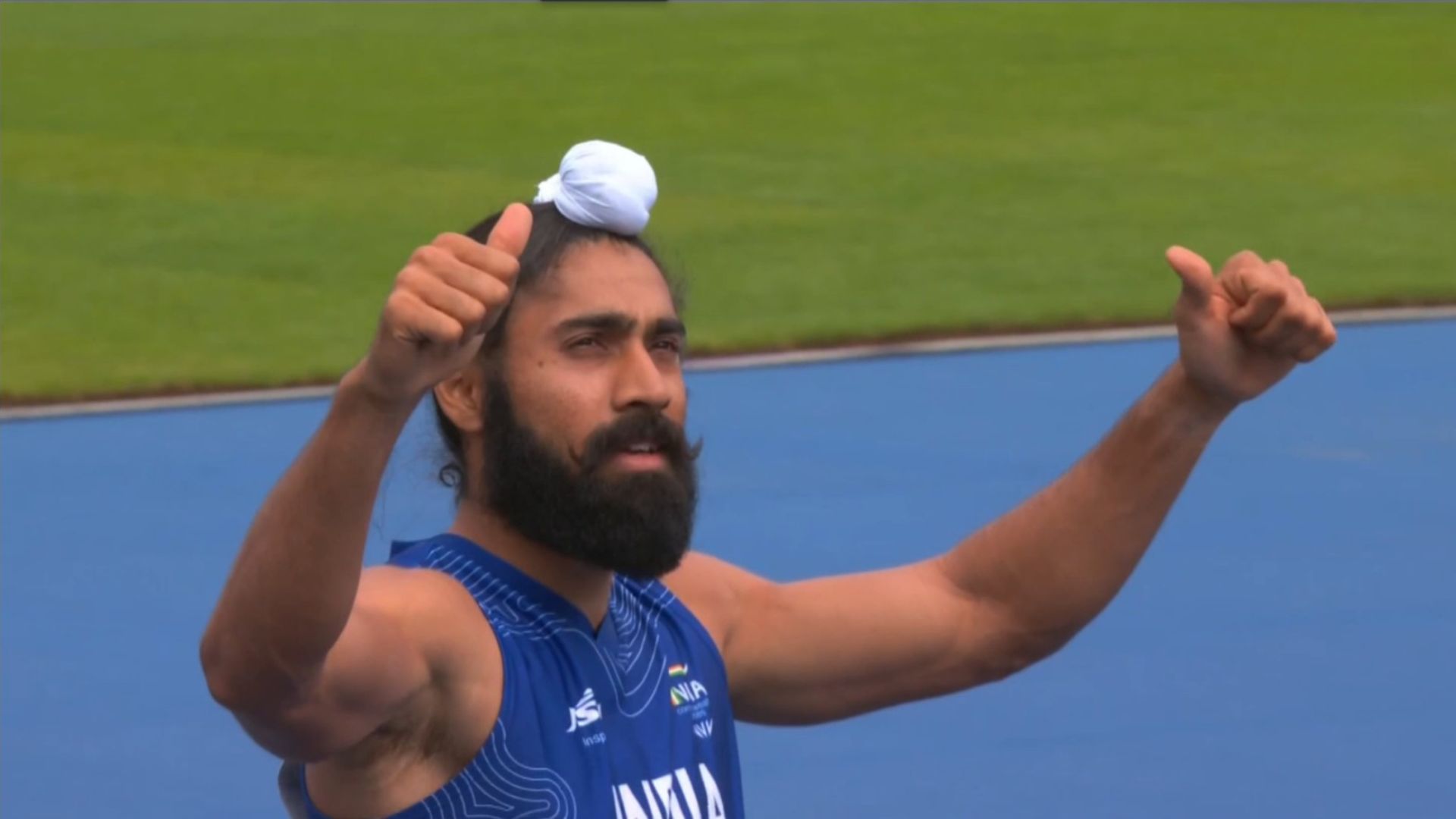
India’s hopes of a deep run in the men’s 100 metres at the Glasgow 2026 Commonwealth Games came to a disappointing end on the very first day after national record holder Gurindervir Singh failed to qualify for the semifinals—not because he lacked the speed, but because of a costly lapse in race execution.
Competing in Heat 4, Gurindervir finished second behind Jamaica’s Rohan Watson, who won the race in 10.13 seconds. The Indian crossed the line in 10.39 seconds, a performance that ultimately left him around 20th overall, with only the 17 fastest athletes across the 11 heats progressing to the semifinals.
The final qualifying spot went to Kuron Griffith of Barbados, who advanced with 10.24 seconds, leaving Gurindervir 0.15 seconds outside the cutoff.
The margin, however, tells only part of the story.
Having run strongly through the first two-thirds of the race, Gurindervir appeared to believe qualification was assured. In the closing metres, he visibly eased off his effort before the finish line and was even seen giving a thumbs-up towards his support staff before crossing the tape.
That premature celebration proved decisive.
In sprinting, athletes are taught to run through the finish line, not to it. Every hundredth of a second can determine qualification, especially in championship formats where athletes from different heats advance on time. By easing up over the final 20 metres, Gurindervir surrendered valuable time that could have comfortably secured his passage into the next round.
The result was particularly painful given his pedigree. Just weeks ago, the Punjab sprinter had rewritten the Indian record with a blistering 10.09 seconds, establishing himself as the fastest Indian in history. On paper, he possessed more than enough speed to qualify safely.
Instead, a race that appeared comfortably under control turned into one of the most frustrating exits of India’s athletics campaign.
Rather than being beaten by faster opponents, Gurindervir’s Commonwealth Games ended because of a misjudgment at the finish—a rare but costly lesson in championship sprinting, where athletes race the clock as much as those in the lanes beside them.
For more visit Commonwealth Games 2026
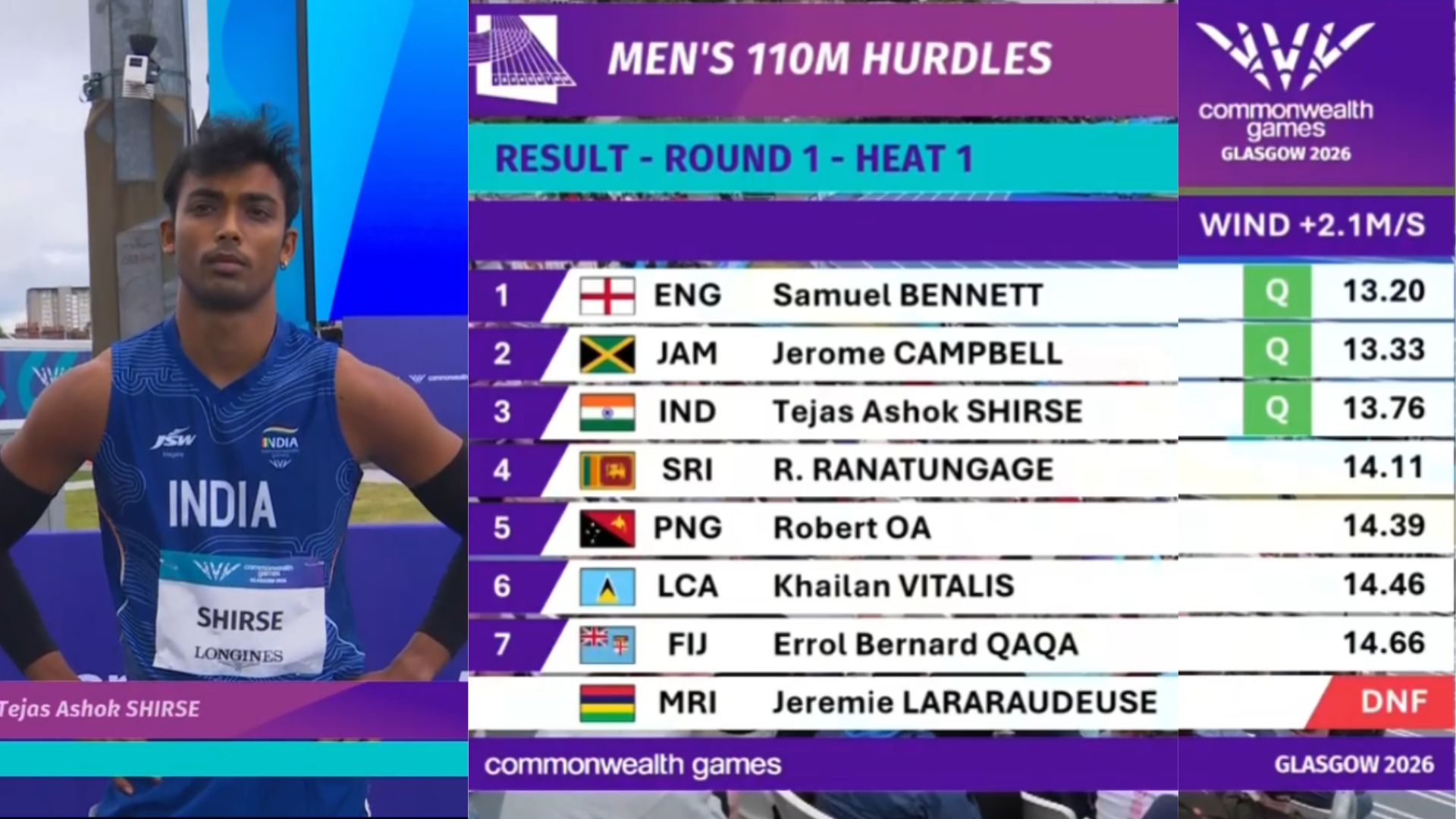
Indian hurdler Tejas Ashok Shirse booked his place in the men’s 110m hurdles final at the Glasgow 2026 Commonwealth Games, finishing third in Heat 1 with a time of 13.76 seconds.
Shirse came into the competition as one of the favourites in his heat, having entered the Games with a season’s best and personal best of 13.27 seconds, the fastest mark among all eight athletes in his race.
Drawn in Lane 7, the Indian lined up against a competitive field featuring Jeremie Lararaudeuse of Mauritius (SB 13.43/PB 13.31), Jerome Campbell of Jamaica (SB 13.33/PB 13.23), Samuel Bennett of England (SB/PB 13.41), Roshan Dhammika Ranatunge of Sri Lanka (13.73), Khalilan Vitalis of Saint Lucia (13.59), Robert Oa of Papua New Guinea (14.40) and Errol Bernard Qaqa of Fiji (PB 14.79).
Under the qualification rules, the top three finishers from each of the two heats earned automatic qualification for the final, with the next two fastest athletes overall also advancing on time. Shirse ensured there was no need to rely on the time qualifiers, securing one of the three automatic qualifying spots by finishing third.
Although well outside his season’s best of 13.27 seconds, the primary objective was qualification, and the Indian hurdler successfully progressed to the medal race.
Shirse will now look to improve on his semifinal performance and challenge for a podium finish when the Commonwealth Games men’s 110m hurdles final takes place later in Glasgow.
For more visit Commonwealth Games 2026
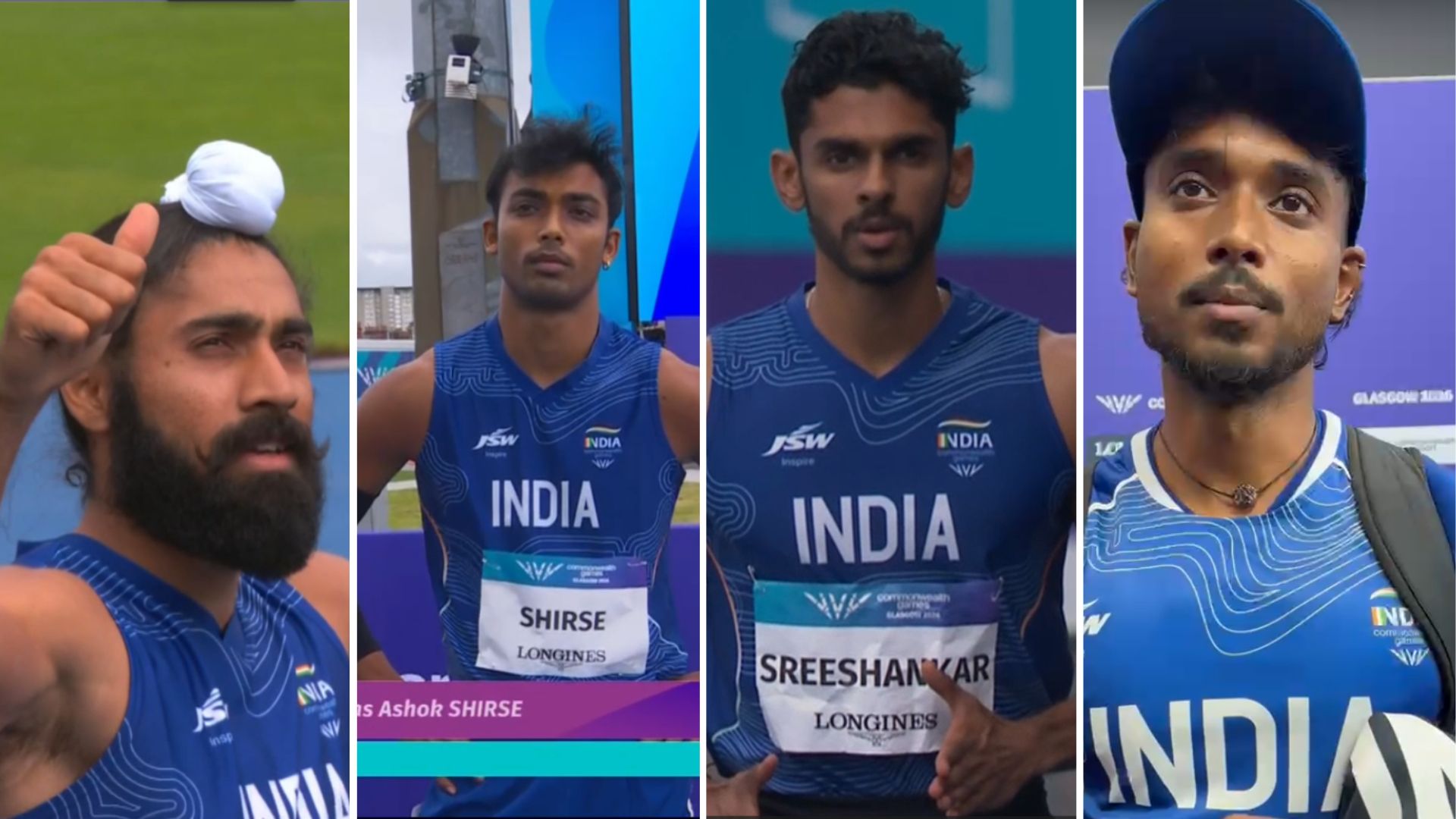
India’s athletics campaign at the Commonwealth Games 2026 gets underway on 27 July, with a 32-member squad set to begin its quest for medals in Glasgow. Athletics also boasts the largest contingent among all Indian sporting disciplines at the Games, reflecting the country’s growing strength across track and field.
A total of seven Indian athletes will be in action on the opening day, competing across four events in both the morning and evening sessions.
The day’s action begins with Gurindervir Singh, who will compete in Round 1 of the men’s 100m. The Indian sprinter will aim to progress through the heats and keep his hopes of advancing alive.
India’s challenge in the men’s long jump will feature two medal hopefuls. Murali Sreeshankar, one of the leading contenders in the event, will compete in Qualification Group A, while Lokesh Sathyanathan will take to the runway in Qualification Group B. Both athletes will be looking to secure their places in the final with strong qualifying performances.
In the men’s 110m hurdles, Tejas Ashok Shirse will begin his campaign in the opening round. A successful run in the heats would see him return later in the championships for the final, subject to qualification.
The evening session will feature India’s strongest medal prospects of the day in the men’s high jump final. Sarvesh Anil Kushare, Aadarsh Ram J, and Tejaswin Shankar will represent India in what promises to be one of the most competitive field events of the opening day. With three athletes in the final, India will be aiming to make a strong start to its medal campaign.
Should he progress from the heats, Tejas Ashok Shirse will also return for the men’s 110m hurdles final, scheduled later in the night.
With a packed opening-day schedule and several leading contenders in action, India’s athletics campaign promises an exciting start. Fans can look forward to an action-filled day as the country’s athletes begin their pursuit of success at the Commonwealth Games 2026.
For more visit Commonwealth Games 2026

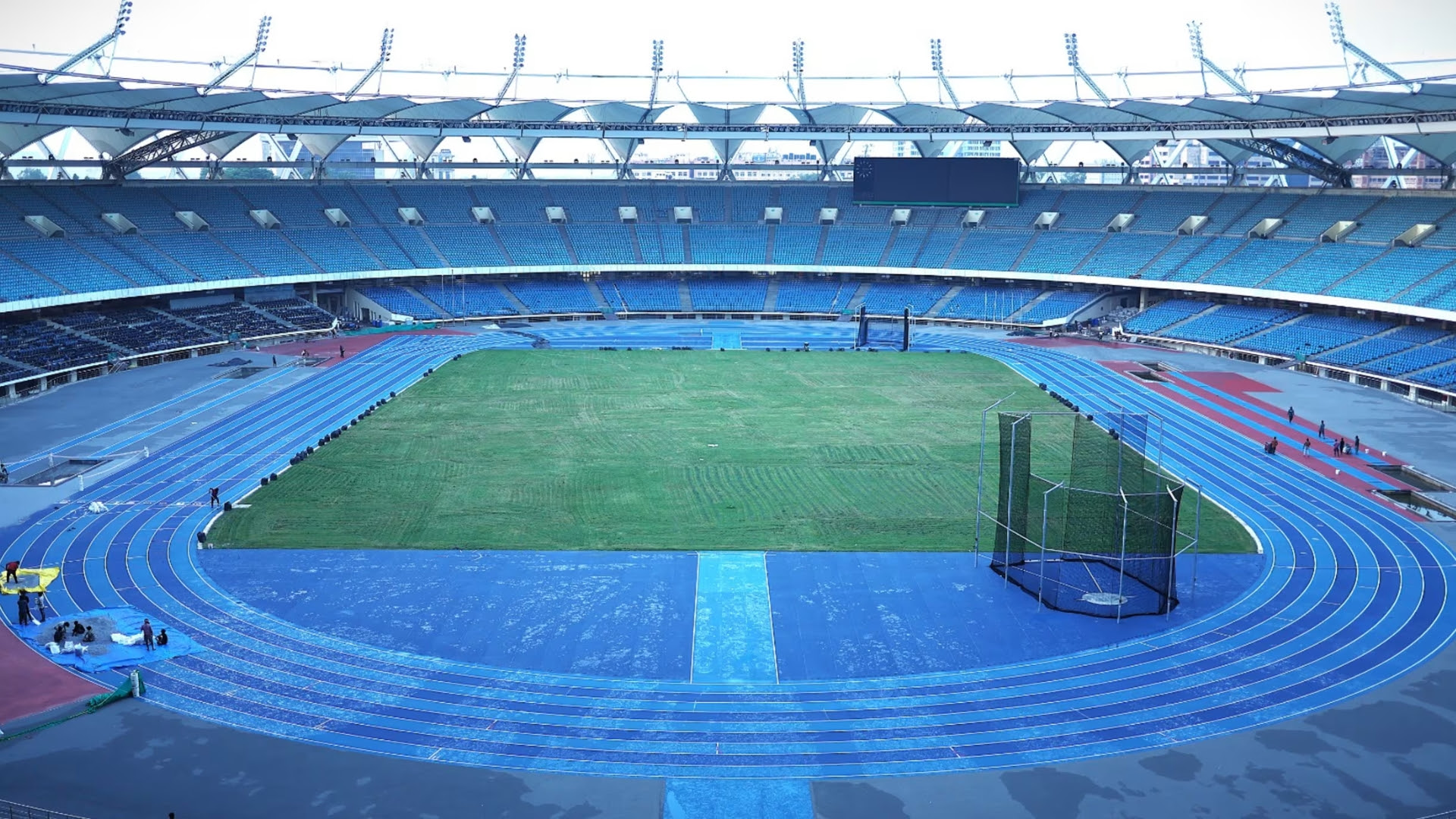
For the first time in many years, Indian athletes competing on the domestic circuit will have a significant financial incentive to compete for. In a move that could reshape the country’s athletics ecosystem, the Athletics Federation of India (AFI) has decided to introduce prize money for the winners of the inaugural Indian Athletics Series Final, scheduled for September 10 at the Jawaharlal Nehru Stadium in New Delhi.
The decision marks one of the most significant changes to India’s domestic athletics calendar in recent years. While the amounts may be modest by international standards, rewarding athletes for performances at the national level is an important step towards making domestic competition more meaningful and professionally rewarding.
The Indian Athletics Series Final will be an invitational meet. Only athletes who qualify through the national ranking list—based on their performances during the 2026 season up to the Inter-State Championships—will be eligible to compete. All events will be conducted as direct finals, with no heats or qualifying rounds.
Prize money will be awarded to the top six finishers in every event:
1st: ₹1,00,000
2nd: ₹50,000
3rd: ₹25,000
4th: ₹20,000
5th: ₹15,000
6th: ₹10,000
The Indian Athletics Series was introduced this year as a revamped version of the Indian Grand Prix. Unlike its predecessor, the new circuit has been designed around regional competitions, allowing athletes to compete more frequently without travelling extensively across the country.
Although the AFI is yet to make an official announcement regarding the Indian Athletics Series Final, NNIS Sports has learned from multiple sources that the meet will feature 30 events—15 for men and 15 for women.
The events are:
100m, 200m, 400m, 800m, 1500m, 3000m Steeplechase, 110m Hurdles, 400m Hurdles, High Jump, Pole Vault, Long Jump, Triple Jump, Shot Put, Hammer Throw and Javelin Throw.
Eight athletes have qualified in each event, while the 1500m and 3000m Steeplechase will each feature 12 athletes. Four reserve athletes have also been selected for every event except the 1500m, which has two reserves, taking the total number of selected athletes—including reserves—to 372.
If a qualified athlete declines participation, the highest-ranked reserve will receive the invitation, subject to confirmation.
The decision also revives a practice that has largely disappeared from Indian domestic athletics.
During the 1990s, sponsor-backed National Circuit Meets regularly offered cash rewards. In 2009, the Athletics Federation of India announced prize money of around ₹15,000 for winners of the Indian Grand Prix meets held in Kochi, Coimbatore and Chennai.
Leading athletics nations have long recognised the importance of rewarding domestic excellence. Countries such as the United States, Great Britain, Japan and Kenya offer prize money at several national competitions. At the 2026 USATF Indoor Championships, for example, the top five finishers received:
1st: $6,000
2nd: $4,000
3rd: $2,500
4th: $1,500
5th: $1,000
While the financial rewards introduced by the AFI are modest compared with established athletics nations, the significance lies in the message. For perhaps the first time in over a decade, India’s domestic athletics circuit is once again recognising performance with meaningful financial rewards.
Here is the list of Athletes selected for Indian Series Final:
The Athletics Federation of India, backed by private money and actual long-term planning, finally woke up. Foreign coaches were hired, not as tourists, but as planners, architects. Sports science, biomechanics, and video analysis replaced outdated guesswork. Kids were running and being engineered to win.
Then came Neeraj Chopra. When that farm boy from Khandra threw his javelin into the Tokyo sky and pulled down Olympic Gold, he didn’t just win a contest, he stirred a nation, demolishing a psychological complex.
Neeraj proved that an Indian could take on the world’s best in a technical field event and dominate them. He made throwing a spear cool. Overnight, India didn’t just get obsessed with javelin, but it started watching speed, release angles, and runway velocity.
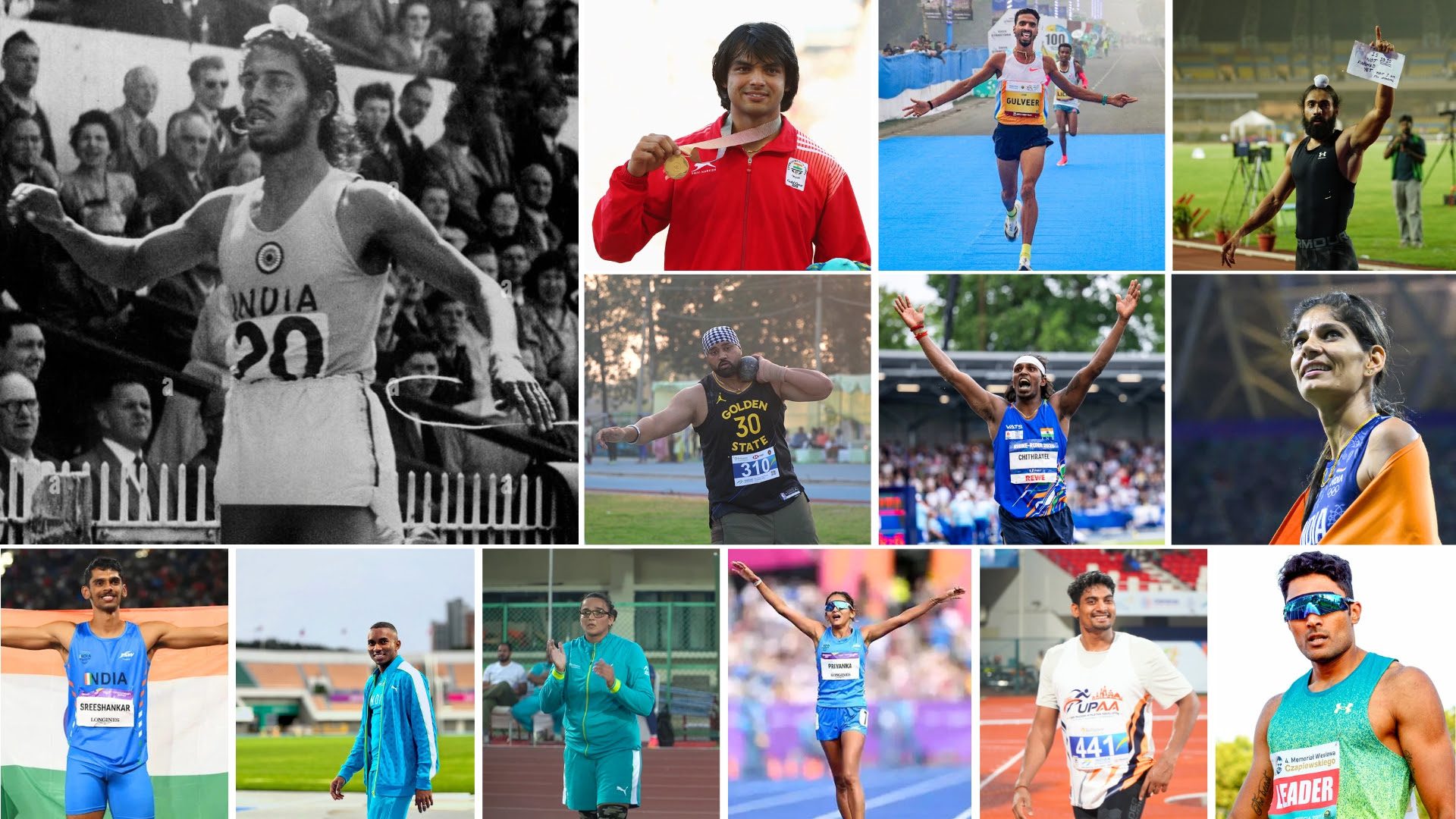
In Glasgow, India isn’t relying on a lone star to carry the flag. This squad has muscle across the board.
On a damp, overcast summer afternoon in 1958, deep inside Wales at the Cardiff Arms Park, Milkha Singh slowly crouched into his blocks. He wore a threadbare white vest, the tricolour hand-stitched over his chest.
When the gun went off, Milkha’s first step in so many ways defined India’s place in the world. It wasn’t just a simple one-lap race; Milkha ran for a young, wounded nation trying to find its place in the world. After 46.6sec, he crossed the line a hair’s breadth ahead of South Africa’s Malcolm Spence.
In that frantic, finish-line blur, India had its first Commonwealth Games athletics gold.
For nearly half a century, that solitary medal stood like a lighthouse. It was a glorious triumph, yes, but it constantly also reminded us of our sporting barrenness. For decades, Indian track and field remained a tragic romance -a series of heart-wrenching, heroic failures against overwhelming odds. We had got used to moral victories and fourth-place finishes.
Fast forward sixty-eight years. The circus moves back to Scotland for the 2026 Glasgow Commonwealth Games. But the story has changed.
The days of sending a handful of hopefuls armed with little more than jugaad, desi ghee, and blind faith are dead. India hasn’t just arrived in Glasgow; it walks through the front door with a confident 32-member athletics squad, filling every single slot in its quota across 18 events.
This isn’t just a story about collecting hardware. It’s the story of how an entire nation stopped praying for miracles and started owning excellence.
To truly understand what is happening today, you have to remember where we came from. For generations, Indian athletics was a heartbreak industry.
Milkha’s agonizing fourth-place finish at the 1960 Rome Olympics set a cruel, invisible ceiling. Twenty-four years later, PT Usha lost an Olympic bronze in Los Angeles by one-hundredth of a second, a fraction of a second that for years was a raw wound, a national trauma.
Every now and then, a titan would emerge: Gurbachan Singh Randhawa, Sriram Singh, TC Yohannan. They were kings in Asia, but unable to crack the podium open.
We lived in the shadow of ‘what if.’ We had world-class talent, but we were stuck in a bullock-cart system. Every medal was a triumph of sheer personal stubbornness.
Our athletes trained on mud tracks, ate haphazard diets, and used antiquated equipment. Field events like the javelin, triple jump, and shot put were treated like novelty acts. We were spectators masquerading as participants.
Then the tide turned. Not by accident but because of two shifts that happened.
What was once our weakest link is now our weapon. In the Men’s javelin, Neeraj Chopra leads a pack that includes Rohit Yadav and Yash Vir Singh. Having three guys from the same country consistently throwing past the 80-meter mark isn’t luck; it’s an assembly line. In shot put, veteran Tajinderpal Singh Toor provides the raw power and big-game experience.
If you told someone twenty years ago that India would be throwing down sub-10.20s times in short sprints, they would have laughed you out of the stadium. Today, sprinters like Gurindervir Singh and Animesh Kujur are running with explosive, world-class mechanics. More than hope, there is a genuine belief.
In the distance events, Indian runners aren’t playing it safe anymore.
Gulveer Singh is taking on the gruelling 5,000m–10,000m double.
Parul Chaudhary is tackling both the 5,000m and 3,000m steeplechase.
Avinash Sable, the man who broke Kenya’s decades-long iron grip on the steeplechase in Birmingham, returns with more tactical acumen.
Praveen Chithravel and Selva Prabhu lead the triple jump campaign after India had taken the top two spots at Birmingham 2022. Young vaulters like Dev Meena are clearing heights and, with a bit of experience, are expected to soar higher. Meanwhile, the 4x400m relay teams are no longer just happy to make the final; they want the podium.
Perhaps the most beautiful part of this shift is where these athletes are coming from.
There was a time when you could guess an athlete’s discipline by their address: Haryana gave us wrestlers, Punjab gave us throwers, Kerala gave us jumpers and middle-distance queens.
Look at the Glasgow roster now. It is a decentralized, sprawling map of India. Kids from the dustbowls of Uttar Pradesh, the coastal tracks of Odisha, Tamil Nadu, Karnataka, and Rajasthan are standing side by side with the boys from Punjab and Haryana.
Scouting networks and modern academies have reached the deepest corners of the country. If you have talent, ability, speed and fire, the system will find you.
When Milkha Singh won in 1958, India celebrated a miracle. It was a beautiful, lonely moment that stood like a time-capsule for half a century.
In Glasgow, if an Indian stands on top of the podium, no one will call it a miracle. It will be the start of business hour.
From a solitary runner in Wales to a 32-strong army in Scotland, Indian athletics has finally grown up. The romance of the near misses is over. India wants to begin its quest for the medals.
The Athletics Federation of India (AFI) has announced a 36-member squad for the World Athletics U20 Championships 2026, scheduled to be held in Eugene, USA, from 5–9 August.
The Indian contingent comprises 23 men and 13 women, who will compete across 18 events at the prestigious global junior championships. The squad features several of the country’s most promising young athletes, many of whom have enjoyed breakthrough performances during the 2026 season and will now have the opportunity to test themselves against the world’s best U20 talent.
The men’s team includes competitors in a wide range of track and field events, including the 400m, 800m, 5000m, high jump, long jump, triple jump, discus throw, javelin throw, and relay events. Several athletes have earned selection following impressive performances on the domestic circuit, while India’s relay squads will also be aiming to make a strong impression on the international stage.
The women’s squad will compete in events including the 400m, high jump, shot put, discus throw, javelin throw, along with the 4×100m relay and mixed 4×400m relay. The team blends established junior performers with emerging talents who have progressed steadily through the national age-group system.
The World Athletics U20 Championships are regarded as one of the most important competitions in global junior athletics, providing young athletes with the opportunity to gain valuable international experience and compete against the best emerging talent from around the world. Many of today’s senior world and Olympic champions began their international careers at this championship.
India has consistently produced promising performances at the U20 level in recent years, and the 2026 squad will be looking to continue that progress in Eugene. With representation across a broad range of disciplines and several athletes arriving in strong form, the Indian contingent will aim to deliver competitive performances and showcase the country’s growing depth in junior athletics on the world stage.
The championships will take place from 5 to 9 August 2026, with India’s 36-member team set to compete for national pride against the world’s finest young athletes.

India will be represented by 125 athletes at the 2026 Commonwealth Games in Glasgow, which begin on July 23. The squad includes 77 men and 48 women competing across 13 sports disciplines, including para sports.
Athletics has the largest representation with 32 athletes (22 men and 10 women), followed by boxing (14), judo (14), and weightlifting (12).
At the 2022 Commonwealth Games in Birmingham, India sent 210 athletes and won 61 medals. However, that edition also featured sports such as cricket, badminton, hockey, squash, table tennis, and wrestling, which together contributed 30 medals to India’s tally.
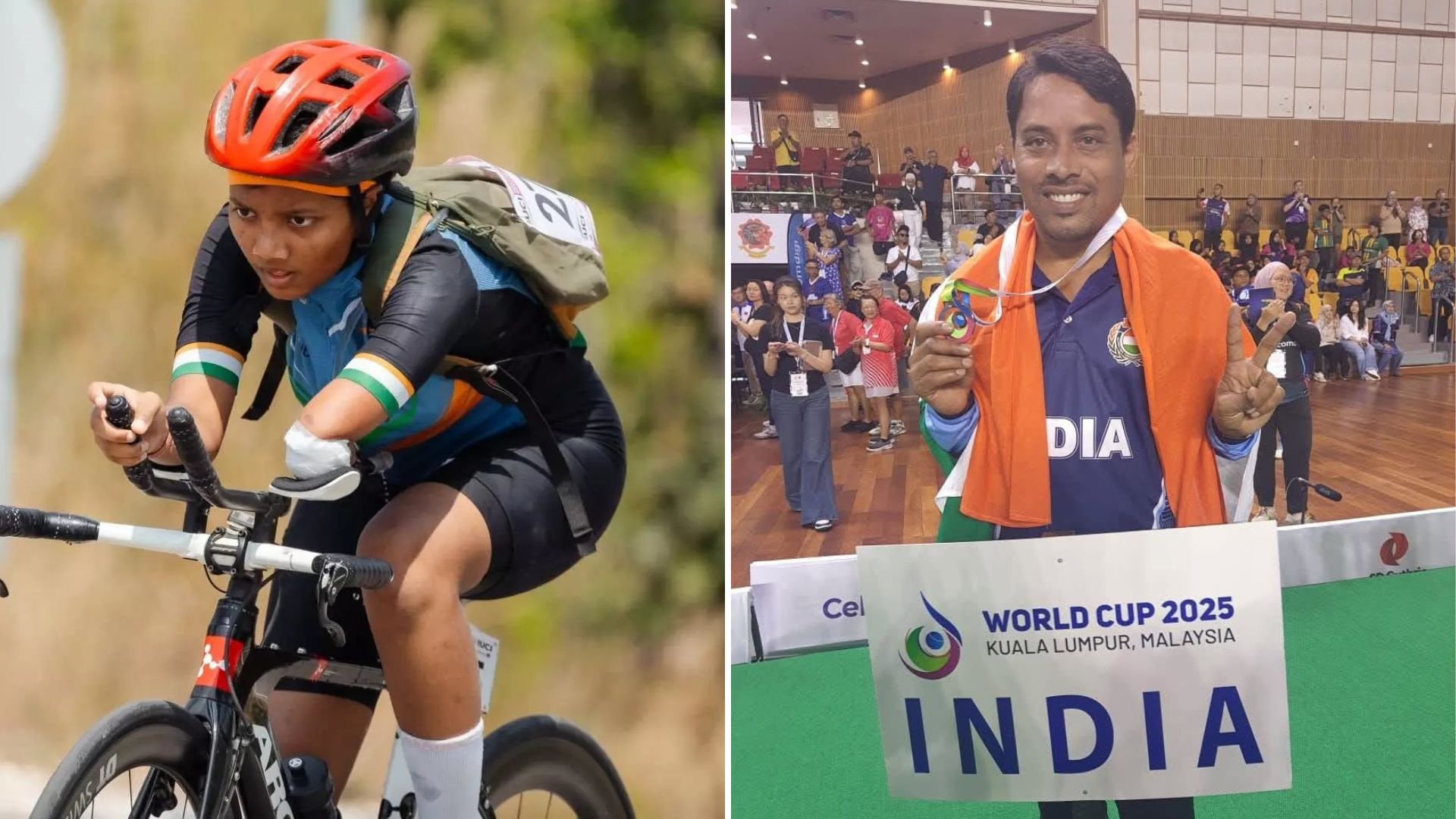
Among the 125-member contingent, Dinesh Kumar Singh, at 49 years of age, will be the oldest Indian athlete at the Games. He will compete in the men’s lawn bowls pairs event. At the other end of the spectrum, Lisha Das, aged just 16, will be the youngest member of the Indian contingent.
Dinesh Kumar Singh is one of India’s most accomplished lawn bowlers and a pioneer in the sport’s rise in the country. Hailing from Ranchi, Jharkhand, he has been at the forefront of Indian lawn bowls for more than a decade.
Dinesh achieved the biggest milestone of his career at the 2022 Commonwealth Games in Birmingham. Teaming up with Sunil Bahadur, Navneet Singh, and Chandan Kumar Singh in the men’s fours event, India reached the final before settling for the silver medal after losing to Northern Ireland.
Lisha Das became Assam’s first para-cyclist to qualify for the Commonwealth Games. A Class 11 student at Jawahar Navodaya Vidyalaya, Biswanath, Lisha is the daughter of Nirmal Das and Rukmini Bhumij Das of Tezpur, Assam.
She won the gold medal at the 2025 National Para Road Cycling Championship. She followed it up with two gold medals at the Lanna Cup, a bronze medal at the Korat Cup, and an impressive haul of two silver and three bronze medals at the 2026 Asian Para Track Championships.