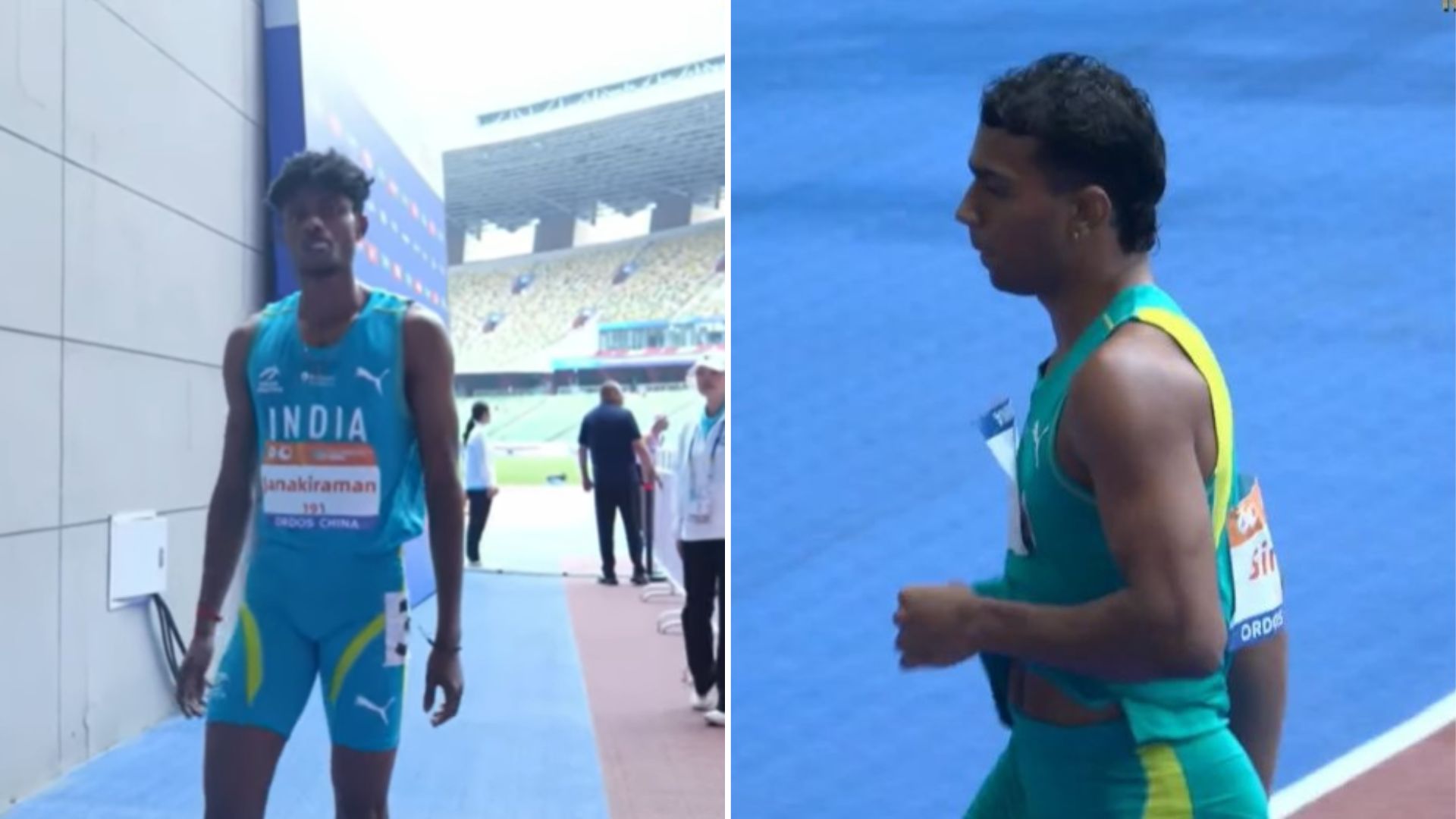

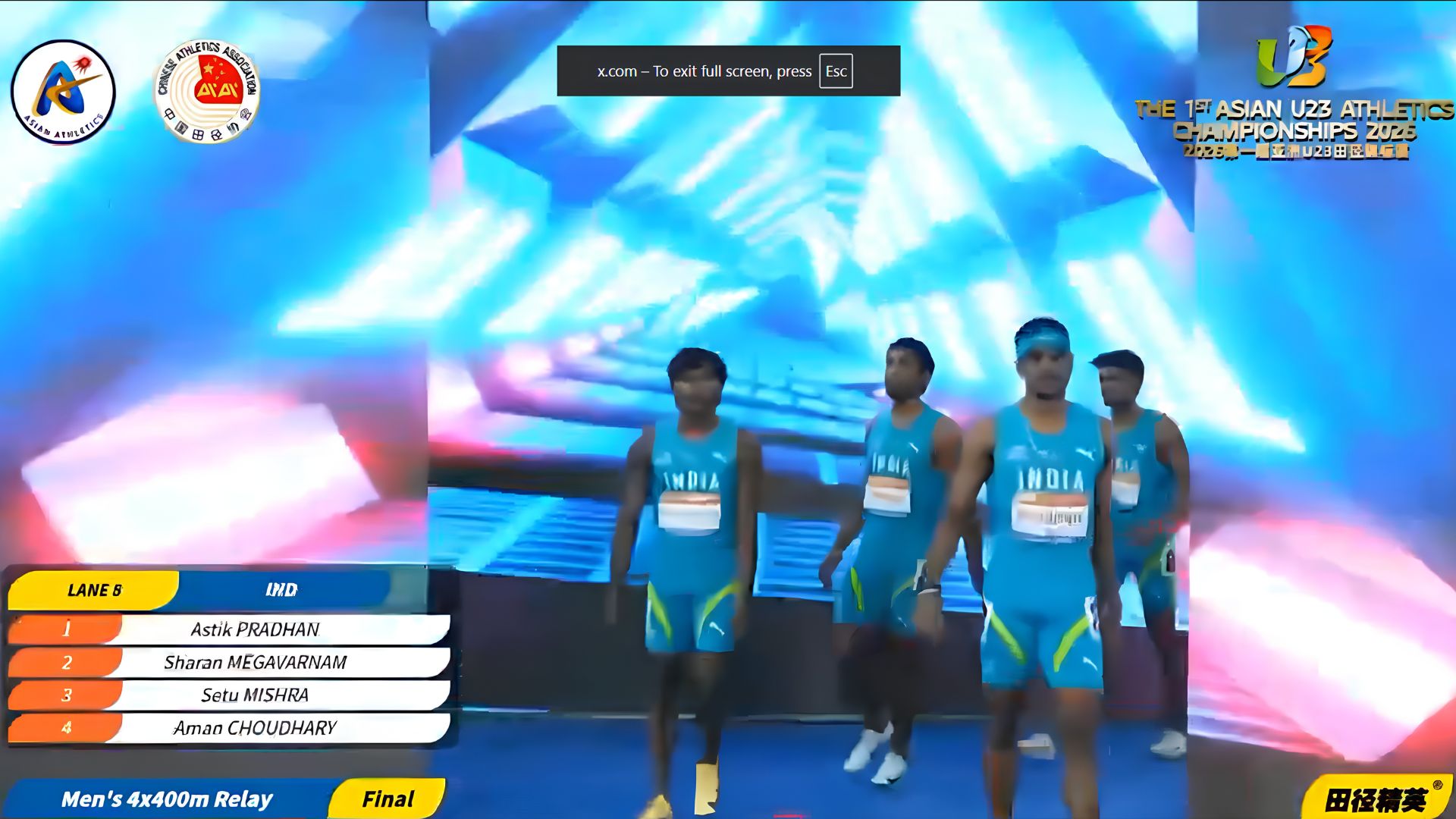
India’s men’s 4x400m relay team delivered a strong performance to secure the silver medal at the 2026 Asian U23 Athletics Championships, finishing in 3:04.24.
The Indian quartet of Astik Pradhan, Megavarnam Sharan, Setu Mishra, and Aman Choudhary fought hard throughout the race but finished behind China, which claimed the gold medal in 3:03.46. Qatar took the bronze medal with a time of 3:06.19.
Astik Pradhan provided India with an excellent start, handing over in the lead after a brilliant opening leg. Megavarnam Sharan maintained the advantage with another composed run before China moved ahead during Setu Mishra’s third leg. On the anchor leg, Aman Choudhary mounted a determined chase but was unable to bridge the gap, ensuring India finished with a well-earned silver medal.
The podium finish adds another medal to India’s impressive campaign at the Asian U23 Athletics Championships, reflecting the country’s growing depth in the 4x400m relay.
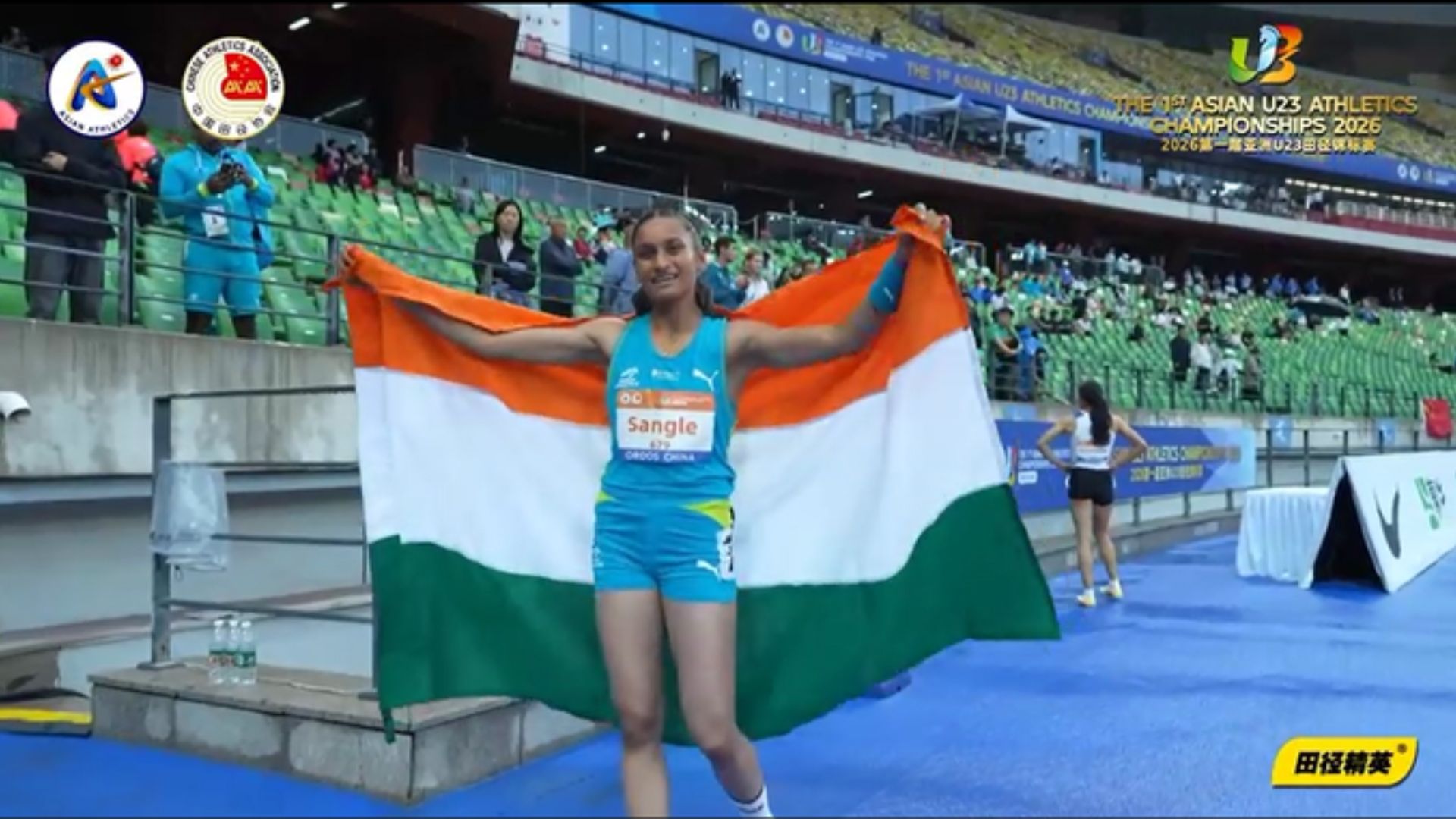
India’s Shravani Sangle continued her impressive run at the inaugural Asian U23 Athletics Championships 2026, winning the bronze medal in the women’s 400m hurdles in Ordos, China with a lifetime best of 58.09s.
The 20-year-old produced an excellent race to finish third, lowering her personal best in the process and adding another medal to India’s growing tally at the continental championships. Competing against a strong field of Asia’s leading U23 hurdlers, Shravani maintained her rhythm throughout the race before finishing strongly to secure a well-deserved place on the podium.
The bronze medal capped a memorable campaign for the young Indian athlete, who had already played a pivotal role in India’s triumph in the Mixed 4x400m Relay earlier in the championships. Running the anchor leg, Shravani delivered a sensational performance, overtaking the Chinese runner in the closing stages to seal the gold medal for India in dramatic fashion.
With her latest success in the individual event, Shravani concludes the championships with an impressive two-medal haul—a gold medal in the Mixed 4x400m Relay and a bronze medal in the women’s 400m hurdles.
Her lifetime-best performance of 58.09s also highlights the steady progress she has made this season. Producing a personal best in a championship final reflects both her composure under pressure and her continued development as one of India’s promising young quarter-milers and hurdlers.
The Asian U23 Athletics Championships have provided an ideal platform for emerging athletes to showcase their talent, and Shravani made full use of the opportunity with outstanding performances in both relay and individual competition.
Ending the championships with two medals and a new personal best, Shravani Sangle has firmly established herself as one of India’s standout performers in Ordos. Her performances not only contributed significantly to India’s medal tally but also underline her potential as she looks ahead to future senior international competitions.
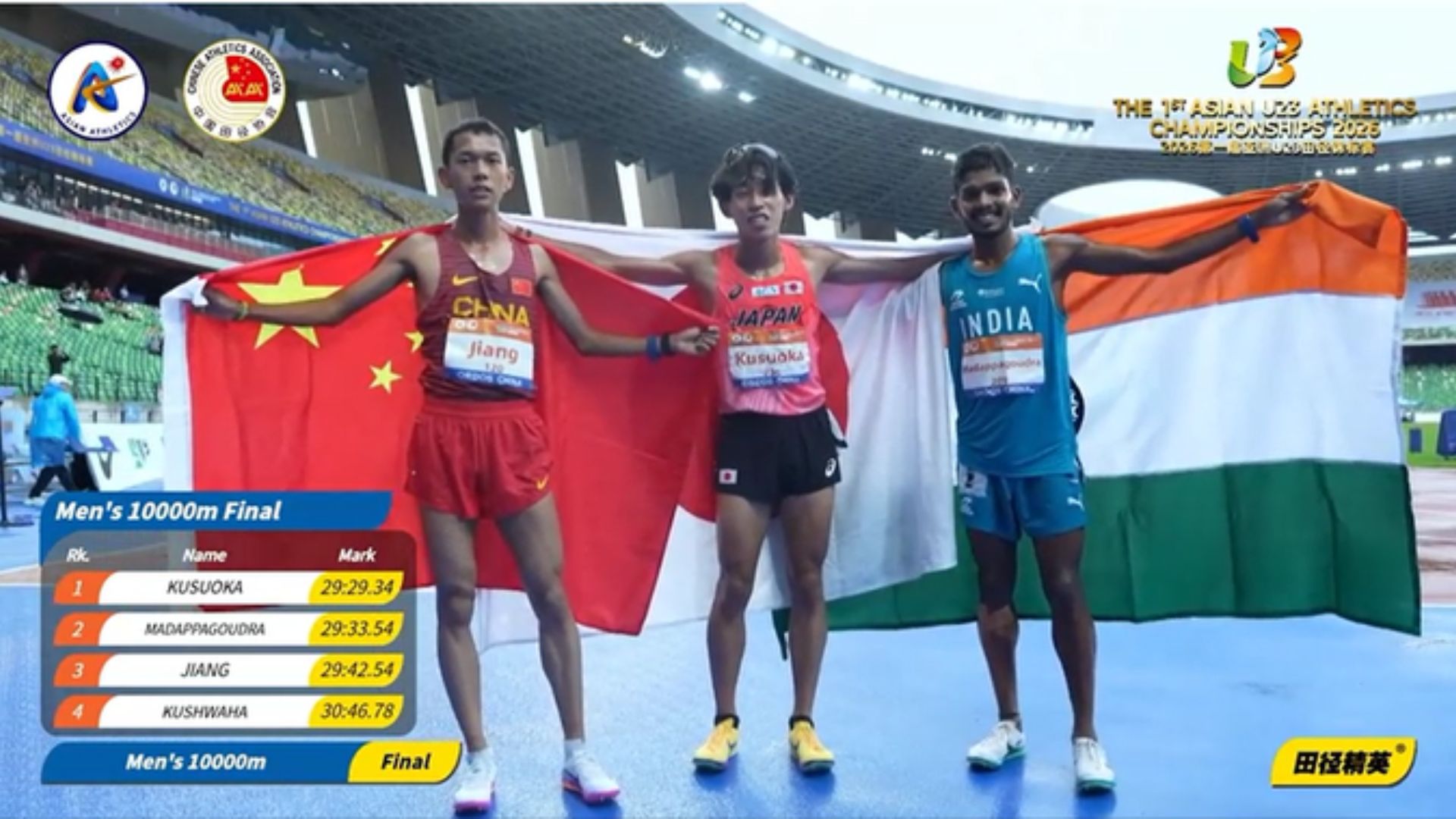
India’s Shivaji Parashuram continued his outstanding campaign at the inaugural Asian U23 Athletics Championships 2026 by winning the silver medal in the men’s 10,000m in Ordos, China, securing his second silver medal of the championships.
Shivaji produced a determined performance over the 25-lap race, clocking a lifetime best of 29:33.54s to finish second. The Indian distance runner remained among the leading pack throughout the race and finished strongly to achieve a new personal best while adding another medal to India’s tally.
The gold medal was claimed by Japan’s Yoshihiro Kusuoki, who crossed the finish line in 29:29.34s after edging out Shivaji in a closely contested race. China’s Jinzhi Jiang secured the bronze medal with a time of 29:42.54s, completing the podium.
The silver medal adds to an already memorable championship for Shivaji, who had earlier finished runner-up in the men’s 5000m on the opening day. By claiming silver medals in both distance events, he has emerged as one of India’s standout performers at the inaugural edition of the championships.
His latest performance was made even more impressive by the fact that he achieved a new lifetime best, reflecting his excellent form and continued progression at the continental level. Producing a personal best in a championship final underlines his ability to perform under pressure against Asia’s leading U23 distance runners.
The Asian U23 Athletics Championships have provided an important platform for emerging athletes to showcase their talent, and Shivaji has made the most of the opportunity with two exceptional performances. His consistency across both the 5,000m and 10,000m demonstrates his endurance and competitiveness over multiple distances.
With two silver medals now to his name, Shivaji Parashuram has established himself as one of India’s brightest young distance-running prospects. His impressive campaign in Ordos has not only strengthened India’s medal tally but also highlighted the country’s growing depth in long-distance athletics at the U23 level.
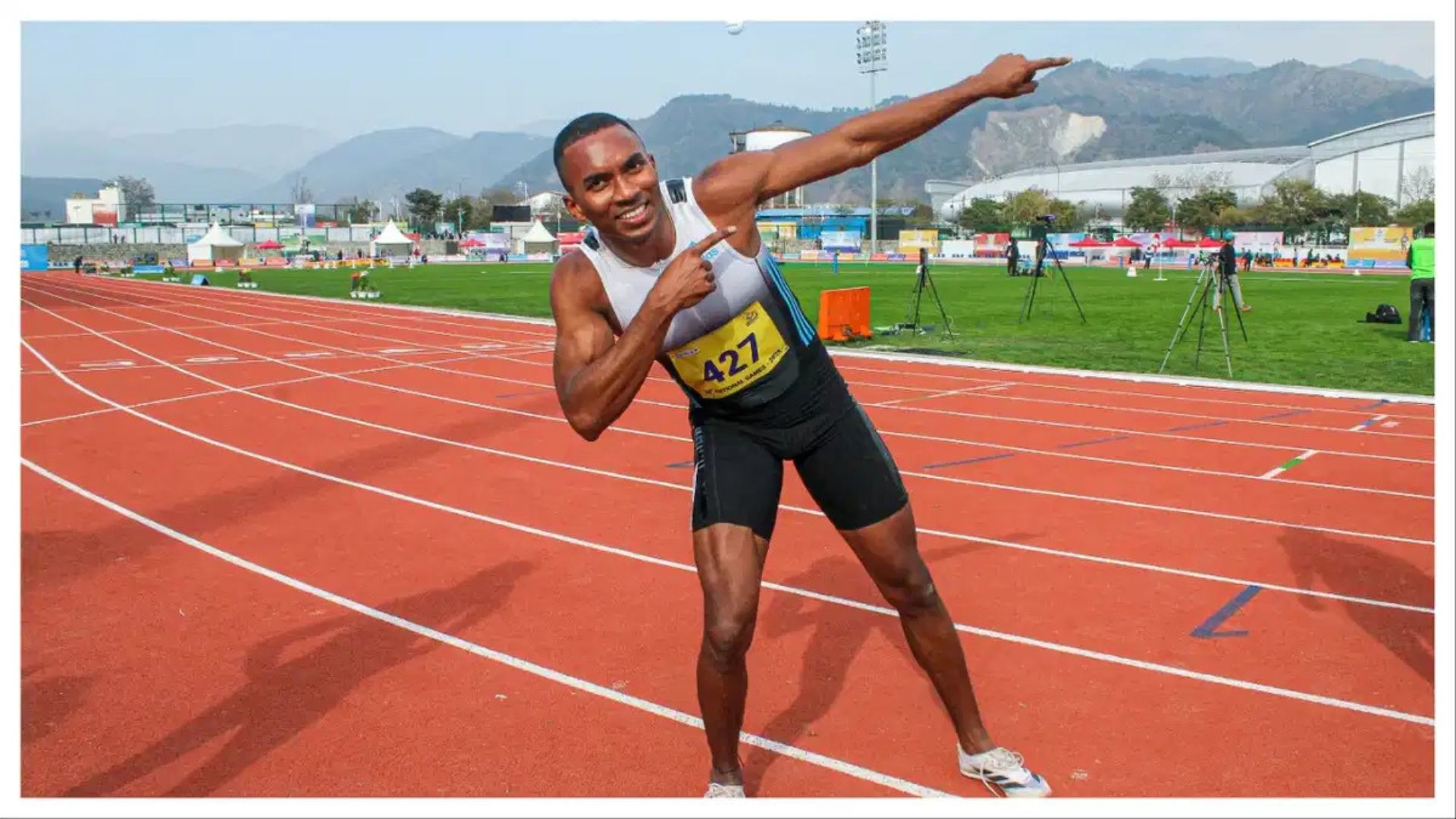
India’s 200m national record holder, Animesh Kujur, continued his remarkable rise in sprinting by producing a sensational lifetime best of 10.14 seconds in the men’s 100m final at the PUMA Fast Arms Fast Legs 2026, finishing second in the race.
Animesh had already impressed by clocking 10.19 seconds in the heats before improving to a blistering 10.14 seconds in the final.
The performance is now the fastest 100m ever recorded by an Indian outside the country.
It also strengthens his position as the second-fastest Indian in history over the distance, behind only Gurindervir Singh’s national-leading mark of 10.09 seconds.
Animesh had already become India’s second-fastest man over 100m earlier this season with a time of 10.15 seconds. He has now bettered that mark to 10.14 seconds, with both performances coming in the 2026 season.
The new personal best further underlines Animesh’s consistency at the highest level. He now owns three of the five fastest 100m performances ever recorded by an Indian, cementing his status as one of the country’s premier sprinters.
India’s All-Time Fastest Men’s 100m Performances
1. Gurindervir Singh – 10.09s
2. Animesh Kujur – 10.14s
3. Animesh Kujur – 10.15s
4. Gurindervir Singh – 10.17s
5. Animesh Kujur – 10.18s
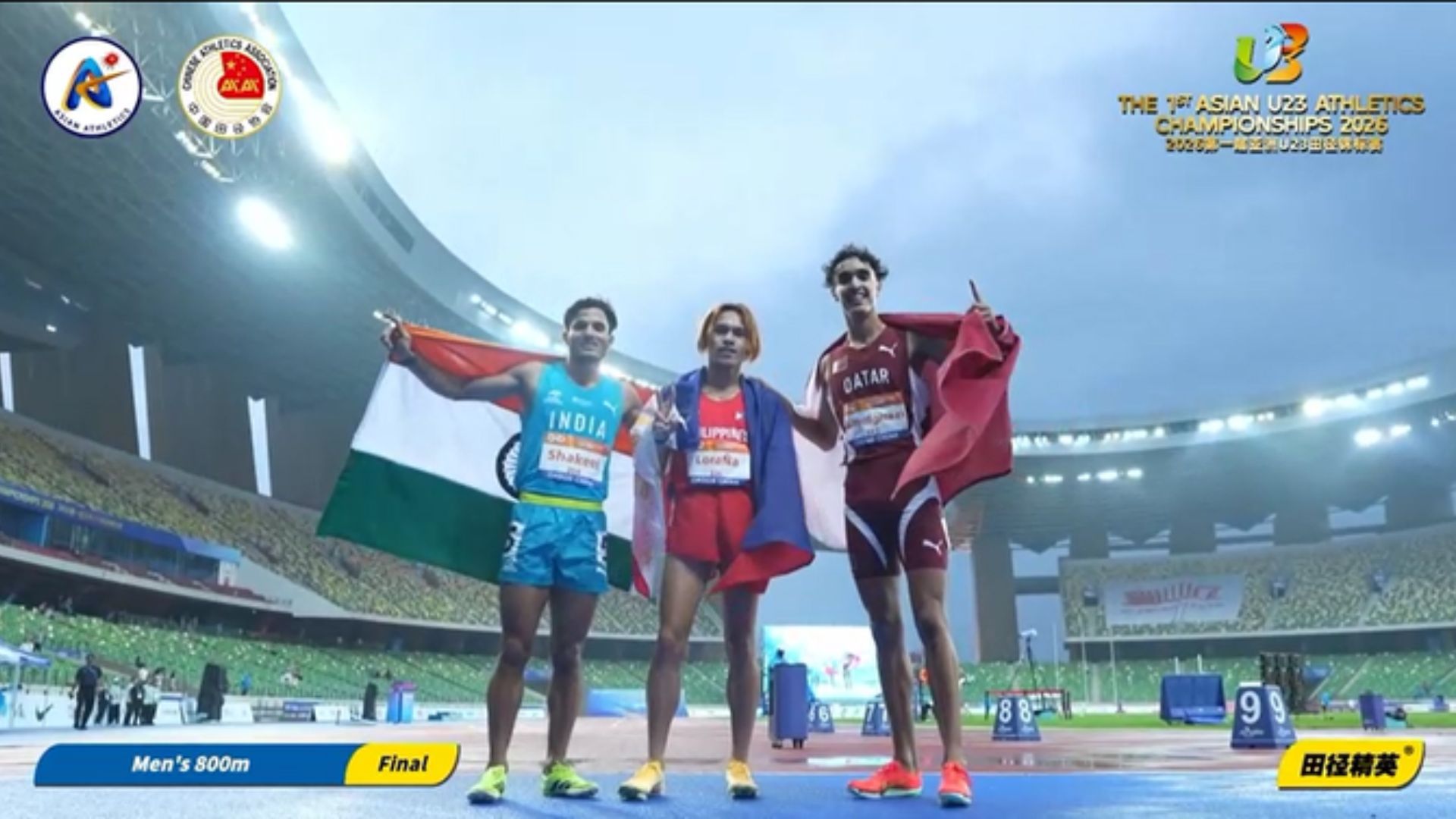
India added another medal to its tally at the inaugural Asian U23 Athletics Championships 2026 as Shakeel secured the bronze medal in the men’s 800m in Ordos, China.
Shakeel produced a strong performance in the two-lap final, clocking 1:48.78 to finish third and earn a place on the podium. Running in a competitive field, the Indian middle-distance runner maintained his composure throughout the race before holding off the chasing pack to claim the bronze medal.
The gold medal was won by Qatar’s Hatim Aitoulghazi, who crossed the finish line in 1:47.05. Hussein Loraña of the Philippines claimed the silver medal with a personal best of 1:47.65, while Shakeel completed the podium with his time of 1:48.78.
India came close to securing a second medal in the event as Vinod Kumar also delivered an impressive performance, finishing fourth in 1:49.10. Although he narrowly missed out on a podium finish, his effort contributed to a strong overall showing by the Indian contingent in the men’s 800m.
The bronze medal continues India’s encouraging campaign at the inaugural edition of the Asian U23 Athletics Championships, with the country’s young athletes consistently challenging for podium finishes across both track and field events. Shakeel’s performance further highlights the strength of India’s emerging middle-distance runners at the continental level.
The Asian U23 Championships serve as a key platform for developing athletes to gain valuable international experience before progressing to senior competition. By securing a bronze medal against some of Asia’s finest U23 runners, Shakeel has added an important achievement to his career while contributing to India’s growing medal tally in Ordos.
With another podium finish secured, the Indian team will look to carry this momentum into the remaining events of the championships. Shakeel’s bronze medal, coupled with Vinod Kumar’s fourth-place finish, reflects the promising future of Indian middle-distance running and provides another positive result for the national contingent at the historic first edition of the Asian U23 Athletics Championships.
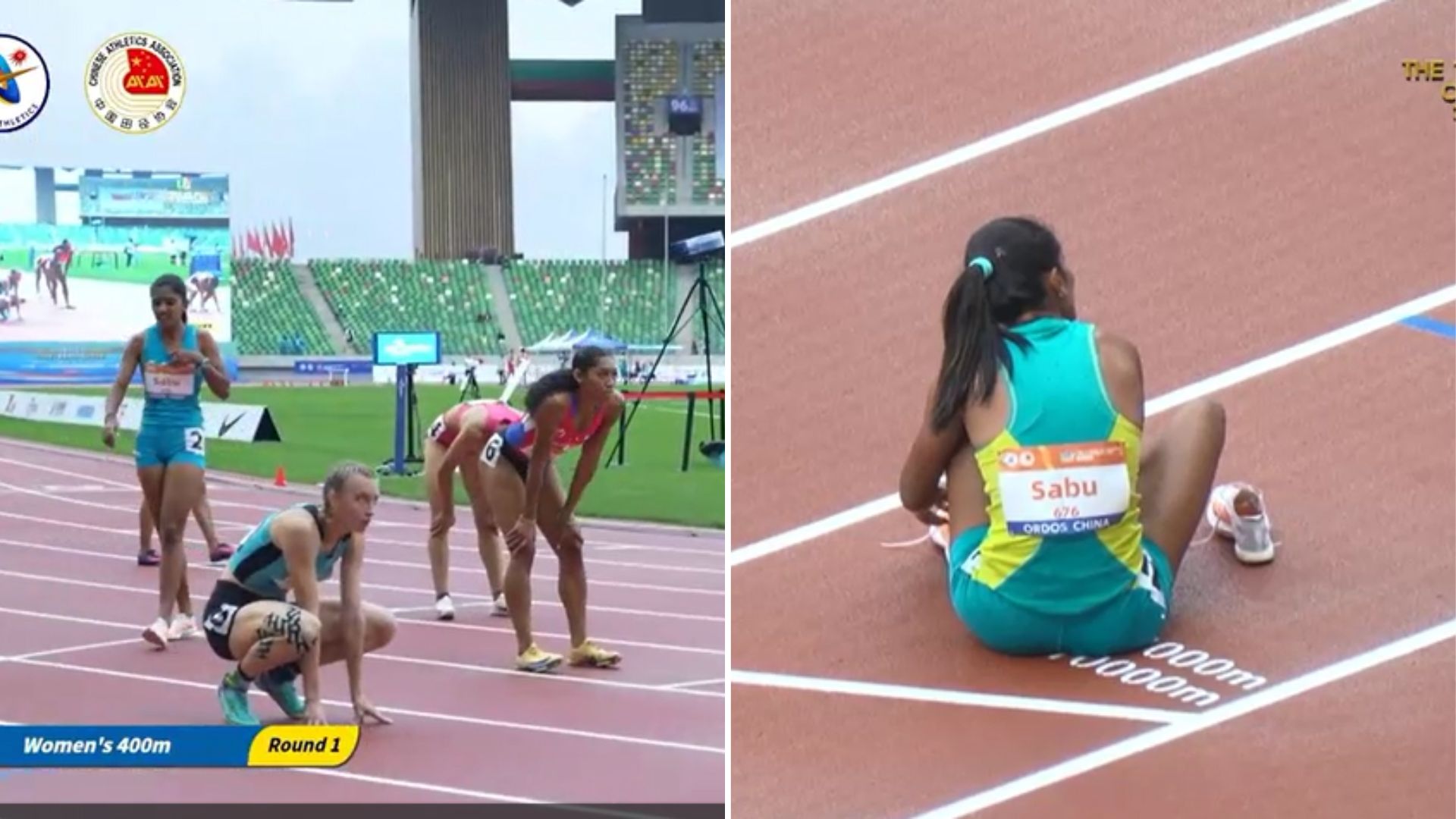
India’s Sandramol Sabu narrowly missed out on a place in the women’s 400m final at the Asian U23 Athletics Championships 2026, following the conclusion of the qualifying heats in Ordos, China.
Competing in Heat 1, Sandramol clocked 55.00s to finish sixth, falling short of the qualification criteria for the championship final. Despite a determined effort, her time was not enough to secure one of the available qualification spots in a highly competitive field.
The qualification format saw the top three finishers from each heat (Q) automatically advance to the final, with the next two fastest athletes (q) across both heats completing the eight-athlete lineup. Sandramol was unable to finish within the automatic qualification positions or secure one of the two fastest non-automatic qualifying spots, bringing India’s campaign in the women’s 400m to an end.
The fastest performance of the qualifying round came from Naomi Johnson of the Philippines, who impressed with a time of 52.10s across the two heats. Meanwhile, Sri Lanka’s Jithma Shenari Gamage claimed victory in Heat 2, clocking 53.94s to comfortably progress to the final.
Although Sandramol will not feature in the medal race, competing at the Asian U23 Championships provided another valuable opportunity to test herself against some of the continent’s leading young quarter-milers. The championships continue to serve as an important stepping stone for athletes aiming to transition successfully to the senior international level.
India will now turn its attention to the remaining track and field events, where several athletes remain in contention for medals. While the women’s 400m campaign concluded in the heats, the Indian contingent will be looking to build on its encouraging performances elsewhere at the inaugural Asian U23 Athletics Championships as the competition progresses in Ordos.
India will have two representatives in the men’s 400m final at the Asian U23 Athletics Championships 2026, with Setu Mishra and Astik Pradhan successfully progressing through the heats in Ordos, China.
Astik Pradhan delivered one of the standout performances of the qualifying round, producing a composed run to win Heat 2 in 46.51s. The Indian quarter-miler controlled the race well and finished strongly to secure automatic qualification for the final, reinforcing his credentials as one of the contenders for a podium finish.
In Heat 1, Setu Mishra also earned his place in the final after clocking 47.28s to finish fourth. His performance was sufficient to book a spot in the championship race, ensuring India will have a strong presence in the event with two athletes competing for medals.
The successful qualification of both runners is an encouraging result for the Indian contingent, reflecting the depth of the country’s emerging talent in the men’s 400m. The event has traditionally been one of India’s stronger disciplines, and the performances of Setu and Astik continue that trend at the continental U23 level.
Astik’s heat-winning run will provide him with confidence heading into the final, while Setu will look to build on his qualifying performance as both athletes prepare for the decisive race. With two Indians lining up in the final, the country will have multiple opportunities to challenge for a place on the podium.
The men’s 400m final is scheduled to be held tomorrow at 6:35 PM IST, where Setu Mishra and Astik Pradhan will take on Asia’s leading young quarter-milers in pursuit of championship honours.
With both athletes progressing successfully through the heats, India has strengthened its prospects in one of the premier track events at the inaugural Asian U23 Athletics Championships, and all eyes will now be on the final as the duo aims to convert qualification into medals.
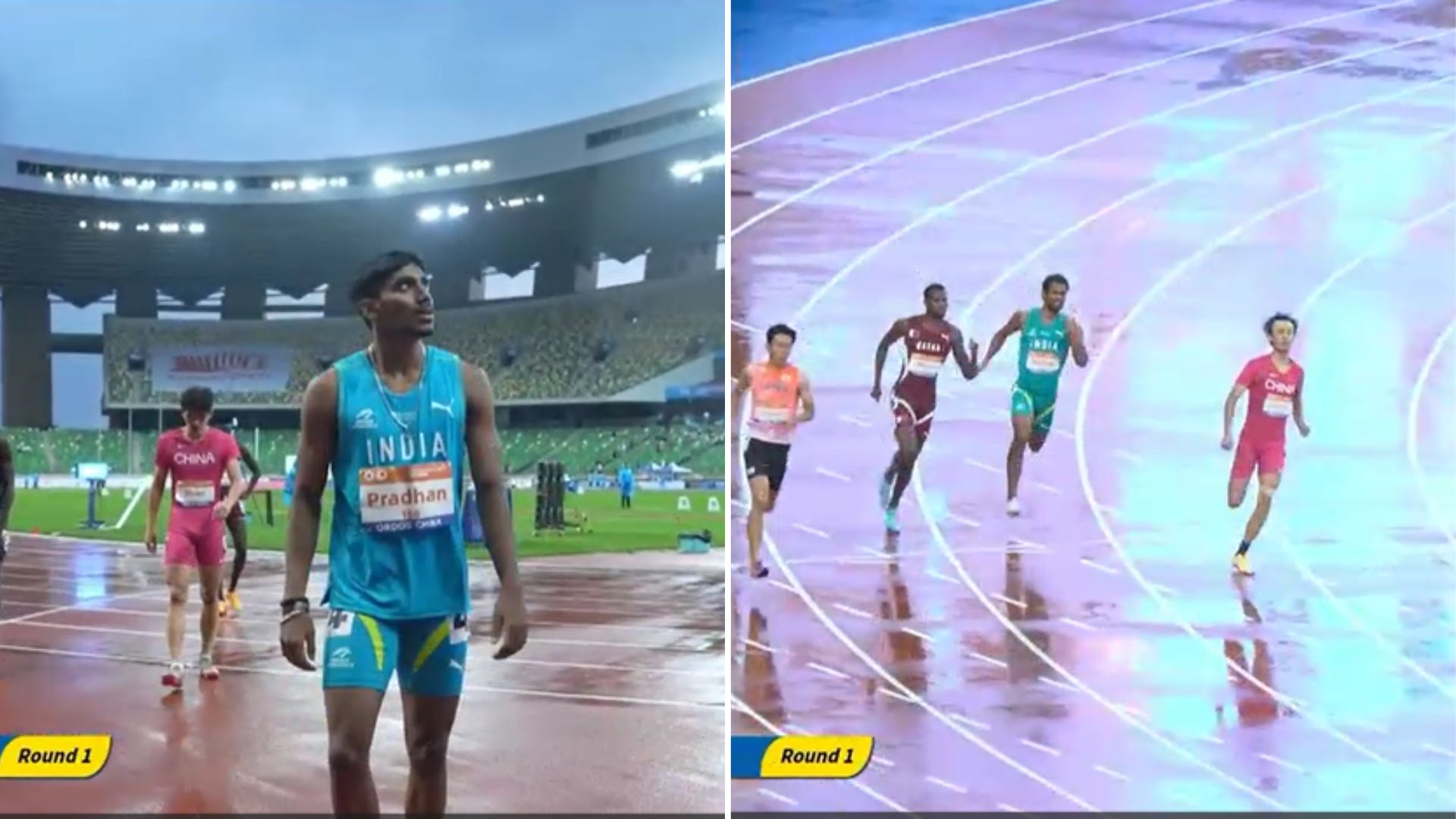
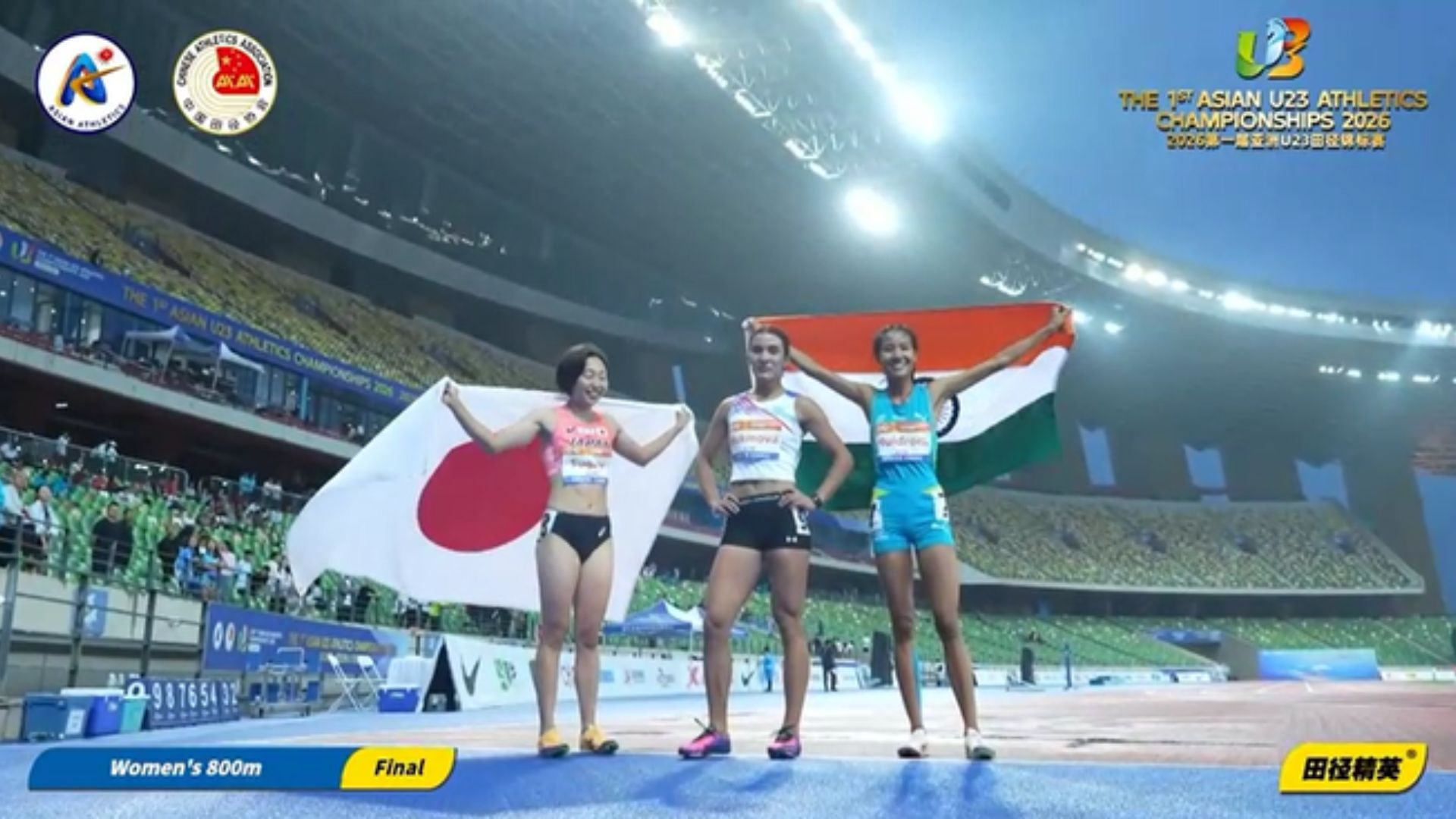
India continued its medal-winning run at the inaugural Asian U23 Athletics Championships 2026 as Bhumeshwory Devi claimed the bronze medal in the women’s 800m in Ordos, China.
Representing India in one of the championships’ most competitive middle-distance events, the athlete from Manipur clocked 2:10.20s to finish third and secure a place on the podium. Bhumeshwory maintained a strong rhythm throughout the two-lap race and produced a determined finish to earn another medal for the Indian contingent.
The gold medal was won by Uzbekistan’s Jonbibi Hukmova, who crossed the finish line in 2:08.41s. Kurumi Sugure of Japan claimed the silver medal with a time of 2:09.42s, while Bhumeshwory completed the podium with her bronze-medal performance.
The result adds another significant achievement to Bhumeshwory’s steadily progressing career. She emerged as the 2025 Interstate champion in the women’s 800m and has continued to establish herself among India’s promising middle-distance runners.
Bhumeshwory currently trains at the National Centre of Excellence (NCOE), Bengaluru, under IndianOil’s Project Shakti, a programme she joined in 2024. The structured training environment has played an important role in her development, and her podium finish at the continental championships reflects the progress she has made over the past two seasons.
The Asian U23 Athletics Championships provide an important stepping stone for emerging athletes aiming to transition successfully to senior international competition. By securing a bronze medal, Bhumeshwory has not only added to India’s medal tally but has also gained valuable experience competing against some of Asia’s best young middle-distance runners.
With another podium finish in Ordos, India continued its encouraging campaign at the inaugural edition of the championships. Bhumeshwory Devi’s bronze medal in the women’s 800m stands as another rewarding achievement for Indian athletics and highlights the growing strength of the country’s emerging talent in middle-distance running.
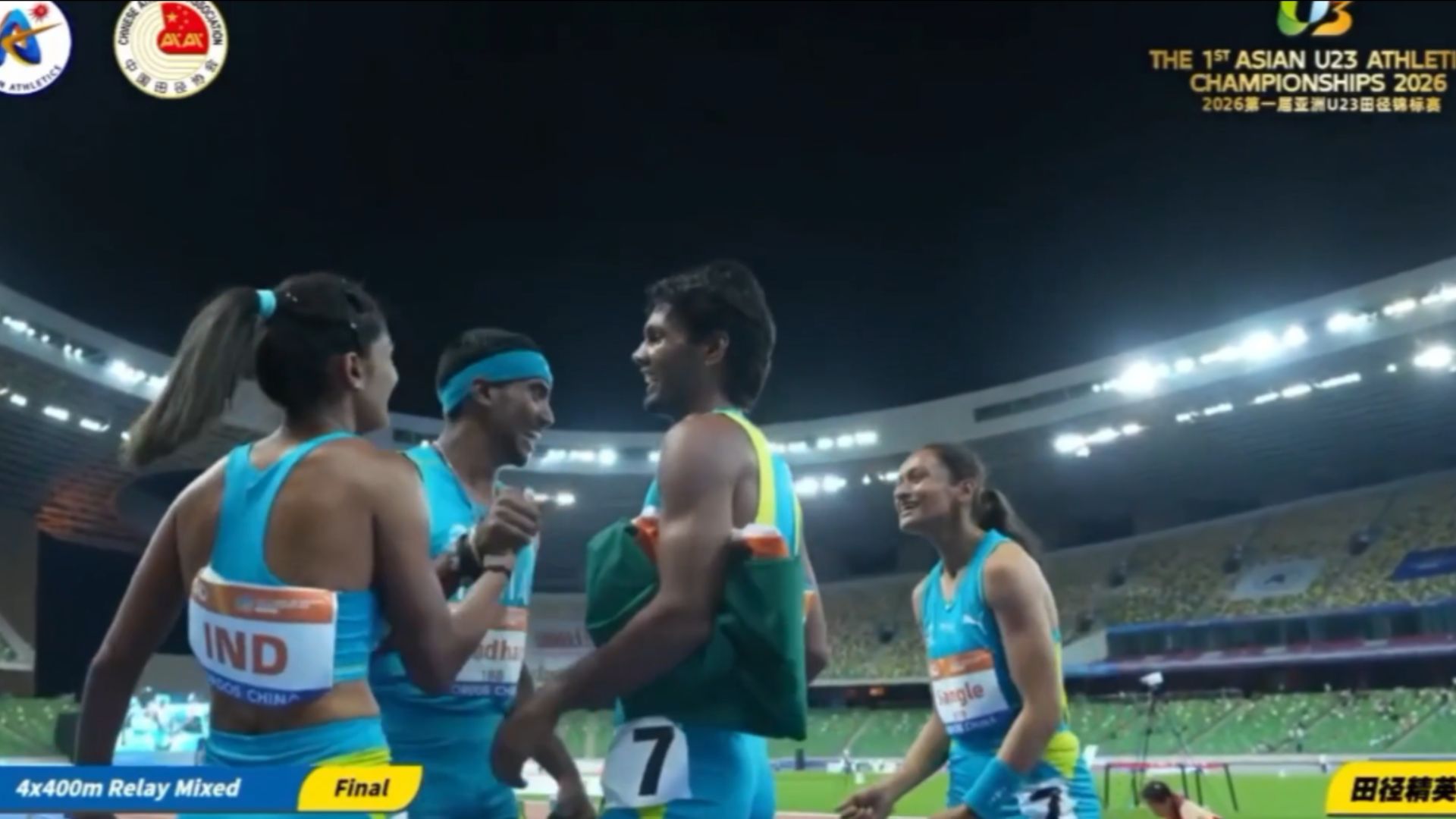
India celebrated a landmark moment at the inaugural Asian U23 Athletics Championships in Ordos, China, as the Mixed 4x400m Relay team won the country’s first-ever gold medal at the competition with a thrilling victory over hosts China.
The Indian quartet of Astik Pradhan, Sandramol Sabu, Setu Mishra, and Shravani Sachin Sangle clocked 3:18.64 to finish atop the podium. China settled for silver in 3:18.74, while the Philippines claimed the bronze medal with 3:25.28.
Each member of the Indian team played a crucial role in the historic triumph, but it was anchor Shravani Sachin Sangle who produced the defining moment of the race. Displaying remarkable speed and composure, she overtook China’s Yingying Huang in the closing stages to secure a dramatic victory for India.
The gold medal marks India’s first title at the debut edition of the Asian U23 Athletics Championships and highlights the country’s growing strength in relay events. The memorable win adds another chapter to an impressive campaign for the young Indian contingent in Ordos.
India will have two representatives in the men’s 200m final at the inaugural Asian U23 Athletics Championships after Abhay Singh and Gokul Pandiyan successfully progressed through their respective heats in Ordos, China.
Abhay Singh produced an impressive run to finish second in Heat 2, clocking 21.11 seconds to qualify automatically for the final. Gokul Pandiyan also secured his place in the medal race, finishing third in Heat 1 with a time of 21.51 seconds.
China’s Youwen Huang emerged as the fastest qualifier after recording 20.84 seconds, while Japan’s Kota Uematsu posted the second-fastest time of 20.98 seconds. They were the only two athletes to break the 21-second barrier during the heats.
With two sprinters in the final, India will look to challenge for a podium finish when the men’s 200m final gets underway at 6:35 PM IST.