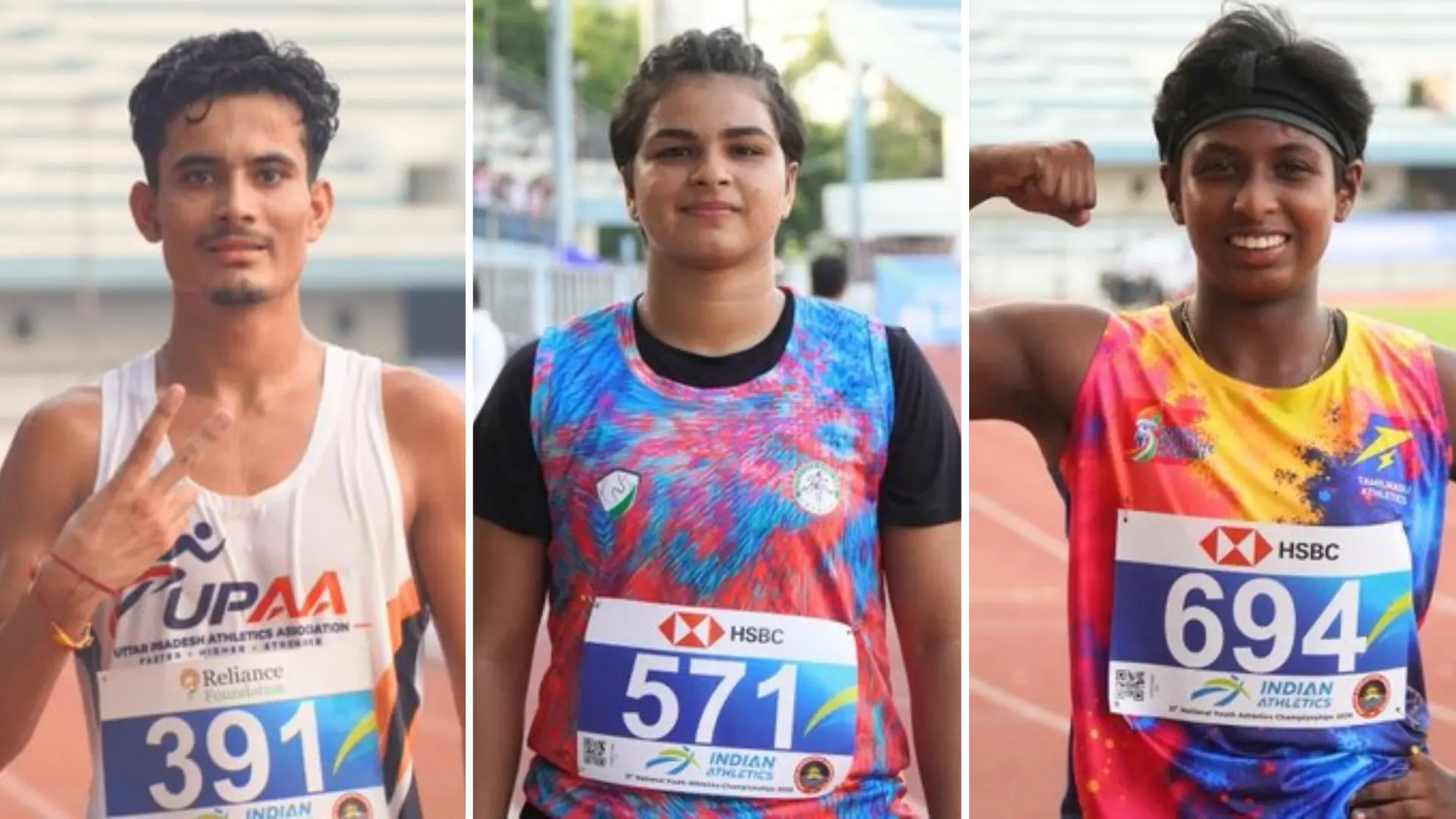

The 21st National Youth Athletics Championships 2026 in Ludhiana produced another set of impressive performances.
Prem Raj, Meet Singh Gill, Kinjalben Bhema and Anjali claimed gold in the long jump and shot put events.
Prem Raj Shatters Long Jump Meet Record
Bihar’s Prem Raj delivered the standout performance in the men’s long jump.
He won gold with a lifetime best of 7.58m.
His series read 7.21m, 7.38m, 7.31m, 7.44m, 7.58m and X.
His fifth-round effort broke the meet record previously held by Murali Sreeshankar.
The performance also marked a major improvement from his previous personal best of 7.11m.
West Bengal’s Sanoyaj Mondal finished second with 7.23m.
Uttar Pradesh’s Sukhvir Singh claimed bronze with 7.10m.
The Athletics Federation of India confirmed Prem’s 7.58m as a meet record.
Meet Singh Gill Wins Shot Put Thriller
The men’s shot put final went down to the final attempt.
Meet Singh Gill produced a lifetime best of 19.80m with his sixth throw.
The effort secured gold after Haryana’s Nitesh Kumar had led until the final round.
Nitesh finished with silver at 19.71m.
His Haryana teammate Ravi took bronze with 18.58m.
Kinjalben Bhema Takes Long Jump Gold
In the women’s long jump, Gujarat’s Kinjalben Bhema secured gold.
She produced a personal best of 5.82m.
Tamil Nadu’s Mirunisha Kumar finished second with 5.69m.
Telangana’s Madakam Srividya claimed bronze at 5.57m.
Anjali Leads Women’s Shot Put
Haryana’s Anjali won the women’s shot put with a throw of 16.02m.
Punjab’s Jasmine Kaur took silver with 15.62m.
Rajasthan’s Drona Choudhary finished third with 15.40m.
The official results also confirm the same podium.
The performances underline the depth of talent emerging at the Youth Nationals.
Several young athletes combined medal-winning performances with personal and meet records in Ludhiana.
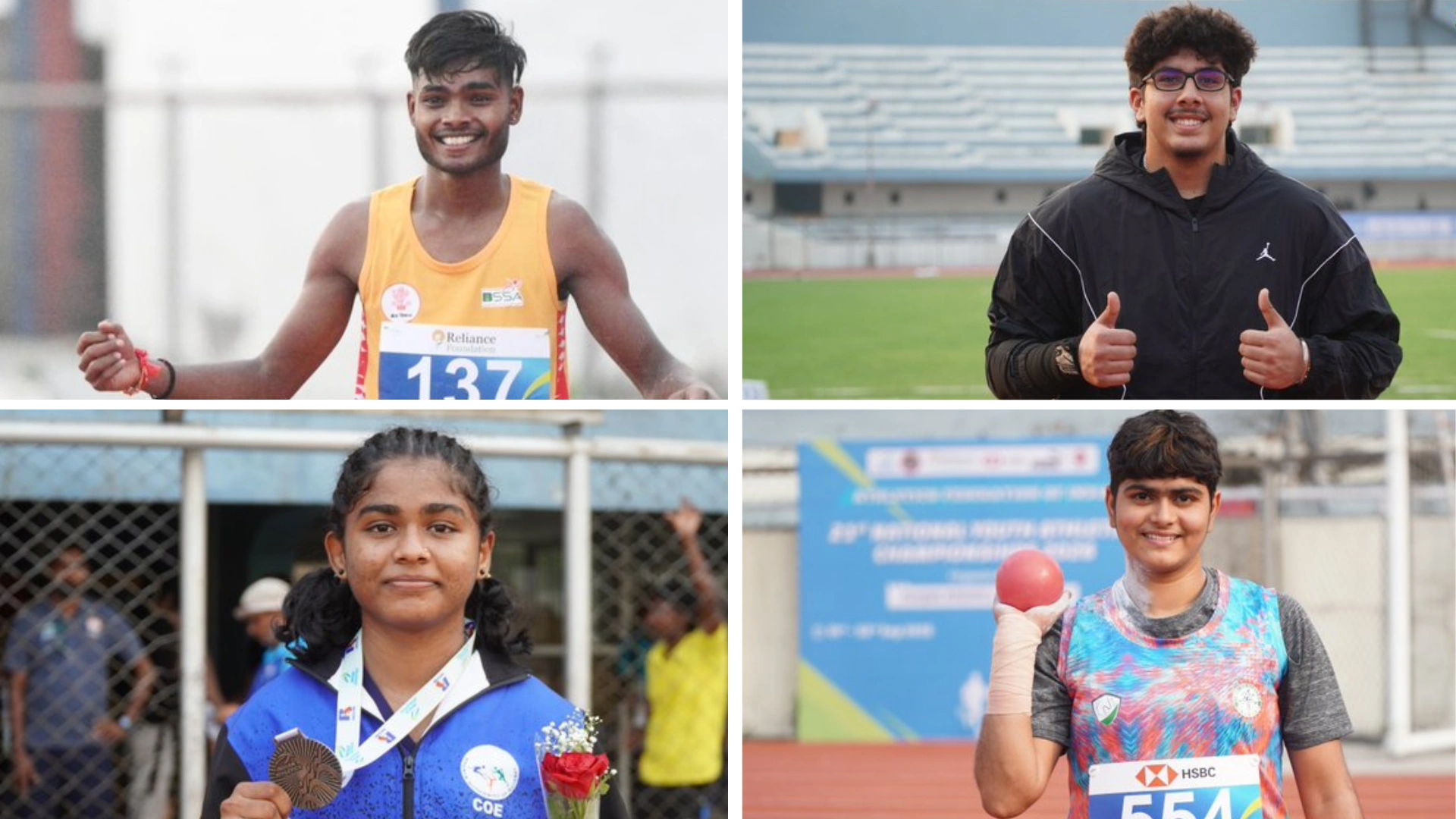
The Athletics Federation of India (AFI) has announced a 77-member athletics squad for the 2026 Asian Games in Aichi-Nagoya, Japan. The contingent features 34 men and 43 women, combining experienced international athletes with emerging talent.
Parul Chaudhary Leads Women’s Contingent
The women’s team will be led by Asian Games champion Parul Chaudhary, who is set to compete in the 1500m, 5000m and 3000m steeplechase.
Jyothi Yarraji will compete in the 100m hurdles, while veteran javelin thrower Annu Rani will also target a strong performance.
India also has significant depth in the field events.
Shaili Singh and Ancy Sojan Edappilly will compete in the long jump. The squad also includes a strong group of athletes for the 4x100m and 4x400m relays.
Avinash Sable and Gulveer Singh Lead Men’s Team
The men’s squad combines sprinting talent with strong endurance options.
Avinash Sable will compete in the 3000m steeplechase, while Gulveer Singh faces a demanding schedule across the 1500m, 5000m and 10000m.
In the field events, Tajinderpal Singh Toor will lead India’s shot put challenge. Praveen Chithravel will compete in the triple jump.
The team also features Tejaswin Shankar, who will compete in the decathlon.
Strong Support Behind India’s Asian Games Campaign
The contingent is supported by major partnerships with Reliance Foundation, HSBC, Puma and Indian Oil Corporation.
Following a historic medal haul at the previous edition, India will enter Aichi-Nagoya with high expectations.
The 77-member squad will aim to strengthen India’s position as a leading force in Asian athletics.
India Athletics Squad for Asian Games 2026
Men
| Athlete | Event(s) |
|---|---|
| Gurindervir Singh | 100m, mixed 4x100m relay |
| Animesh Kujur | 100m, 200m, mixed 4x100m relay |
| Rajesh Ramesh | 400m, 4x400m relay |
| Vishal Thennarasu Kayalvizhi | 400m, 4x400m relay |
| Krishan Kumar | 800m |
| Mohammed Afsal Pulikkalakath | 800m |
| Yoonus Shah | 1500m |
| Gulveer Singh | 1500m, 5000m, 10000m |
| Sawan Barwal | Marathon |
| Kartik Karkera | Marathon |
| Yashas Palaksha | 400m hurdles |
| Santhosh Kumar Tamilarasan | 400m hurdles |
| Avinash Sable | 3000m steeplechase |
| Pranav Pramod Gurav | Mixed 4x100m relay |
| Mohammed Ashfaq | 4x400m relay |
| Dharmveer Choudhary | 4x400m relay |
| Jay Kumar | 4x400m relay, mixed 4x400m relay |
| Manu Thekkinalil Saji | 4x400m relay, mixed 4x400m relay |
| Aadarsh Ram Jothi Shankar | High jump |
| Sarvesh Kushare | High jump |
| Kuldeep Kumar | Pole vault |
| Dev Meena | Pole vault |
| Murali Sreeshankar | Long jump |
| Shahnavaz Khan | Long jump |
| Praveen Chithravel | Triple jump |
| Karthik Unnikrishnan | Triple jump |
| Karanveer Singh | Shot put |
| Tajinderpal Singh Toor | Shot put |
| Damneet Singh | Hammer throw |
| Praveen Kumar | Hammer throw |
| Rohit Yadav | Javelin throw |
| Yash Vir Singh | Javelin throw |
| Thowfeeq Noushad | Decathlon |
| Tejaswin Shankar | Decathlon |
Women
| Athlete | Event(s) |
|---|---|
| Harita Bhadra | 200m, mixed 4x100m relay |
| Prachi Choudhary | 400m, 4x400m relay |
| Kiran Pahal | 400m, 4x400m relay |
| Gowthami Jayaraman | 800m |
| Pooja | 800m, 1500m |
| Parul Chaudhary | 1500m, 5000m, 3000m steeplechase |
| Seema | 5000m, 10000m |
| Priyanka Goswami | Marathon race walk |
| Manju Rani | Marathon race walk |
| Jyothi Yarraji | 100m hurdles |
| Nandhini Kongan | 100m hurdles |
| Unnathi Aiyappa Bolland | 200m, mixed 4x100m relay |
| Anu Raghavan | 400m hurdles |
| Vithya Ramraj | 400m hurdles, 4x400m relay |
| Ankita Dhyani | 3000m steeplechase |
| Tamanna | 4x100m relay, mixed 4x100m relay |
| Nithya Gandhe | 4x100m relay |
| Srabani Nanda | 4x100m relay |
| Abinaya Rajarajan | 4x100m relay |
| Sneha Sathyanarayana | 4x100m relay, mixed 4x100m relay |
| Sudeshna Shivankar | 4x100m relay |
| Rashdeep Kaur | 4x400m relay, mixed 4x400m relay |
| Ansa Babu | 4x400m relay, mixed 4x400m relay |
| Machettira Raju Poovamma | 4x400m relay |
| Kumari Saloni | 4x400m relay |
| Neeru Pathak | 4x400m relay |
| Pooja Singh | High jump |
| Supriya Sindigere Basavaraju | High jump |
| Baranica Elangovan | Pole vault |
| Sindhushree G | Pole vault |
| Shaili Singh | Long jump |
| Ancy Sojan Edappilly | Long jump |
| Niharika Vashisht | Triple jump |
| Asha Ilango | Triple jump |
| Manpreet Kaur | Shot put |
| Krishna Jayasankar Menon | Shot put |
| Seema Kaliramna | Discus throw |
| Sanya Yadav | Discus throw |
| Tanya Chaudhary | Hammer throw |
| Anushka Yadav | Hammer throw |
| Annu Rani | Javelin throw |
| Pooja | Heptathlon |
| Anamika Kozhinjaparambil Aneesh | Heptathlon |

The 21st National Youth Athletics Championships 2026 in Ludhiana produced another action-packed day.
Record-breaking performances once again took centre stage.
Maharashtra’s Bhoomika Nehate and Yash Mulik, Karnataka’s Nupura Hola and Madhya Pradesh’s Krishan Chandra made headlines.
Bhoomika Nehate Breaks 200m Meet Record
Maharashtra’s Bhoomika Nehate continued her impressive season in the women’s 200m.
She clocked 23.92 seconds to shatter the Youth Nationals meet record.
The performance marked another step forward for the youngster.
Nehate also went under 24 seconds for the first time in her career.
She has already established herself as one of India’s promising young sprinters.
Nehate was part of India’s women’s 4x400m relay team at the recently concluded World Athletics U20 Championships.
She has also been on the radar for major junior competitions.
Yash Mulik Sets U-18 National Record
Maharashtra’s Yash Mulik produced one of the biggest performances of the championships.
He competed in the boys’ 110m hurdles.
The 17-year-old clocked a stunning 13.40 seconds.
The performance set a new U-18 National Record.
Mulik lowered the previous mark of 13.47s, held by Kiran K.
He also bettered Kiran K.’s meet record of 13.52s.
The result completed a remarkable progression for Mulik.
He had already produced a lifetime best of 13.75s in the semifinals.
Nupura Hola Stuns Shourya
Karnataka’s Nupura Hola delivered a dramatic victory in the women’s 100m hurdles.
She won the title with a lifetime best of 13.78 seconds.
Hola also broke the meet record.
She went under 14 seconds for the first time in her career.
The victory came after Shourya Ambure broke the 14-year-old meet record in the heats.
However, Shourya’s title challenge ended in the final.
She fell at the second-last hurdle.
Krishan Chandra Breaks Javelin Meet Record
Madhya Pradesh’s Krishan Chandra added another record to the championships.
He competed in the boys’ javelin throw.
Chandra registered a lifetime best of 79.92m.
The throw also broke the Youth Nationals meet record.
Multiple national and meet records have now fallen in Ludhiana.
The championships continue to highlight the depth of India’s next generation of athletics talent.
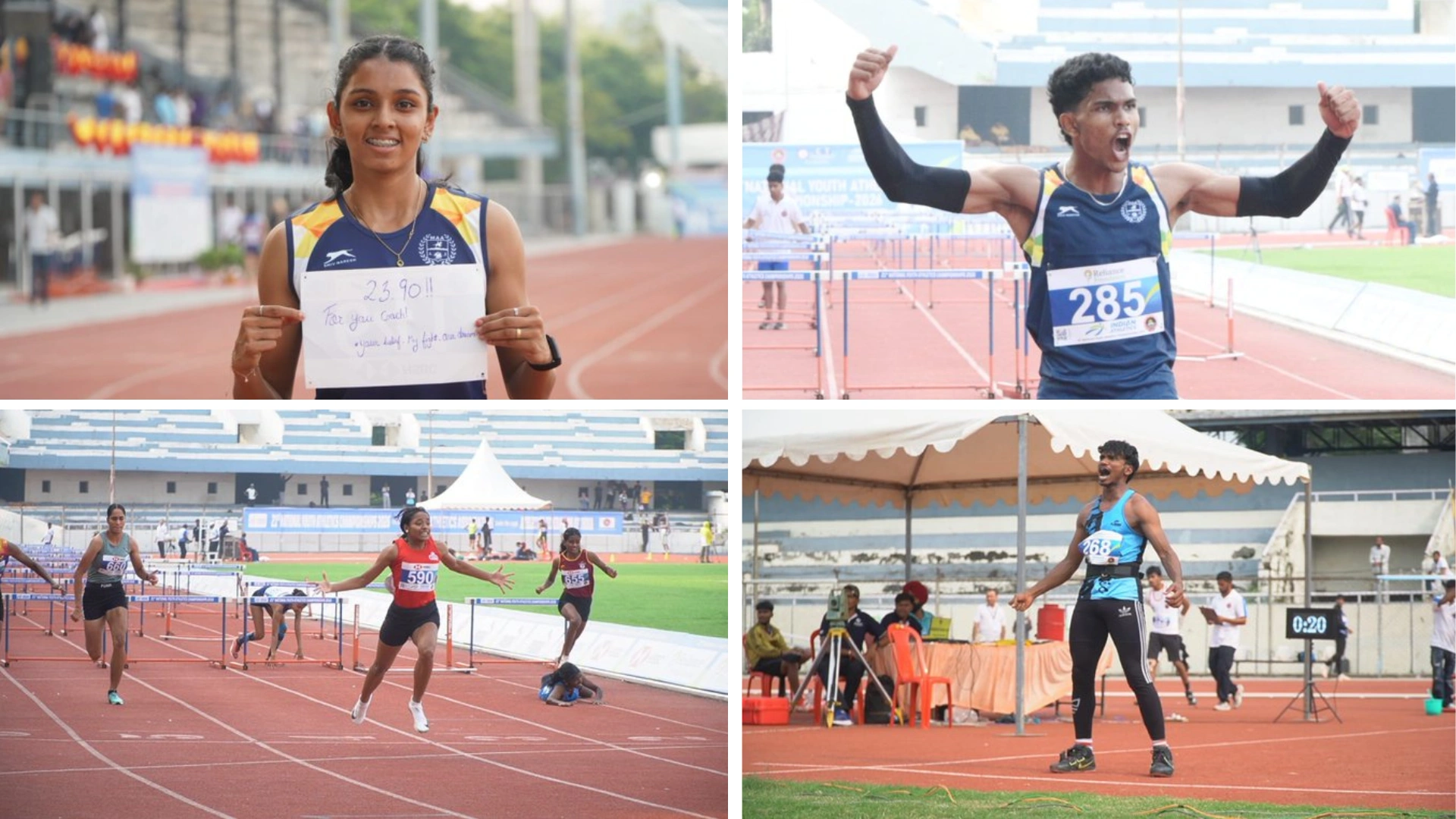
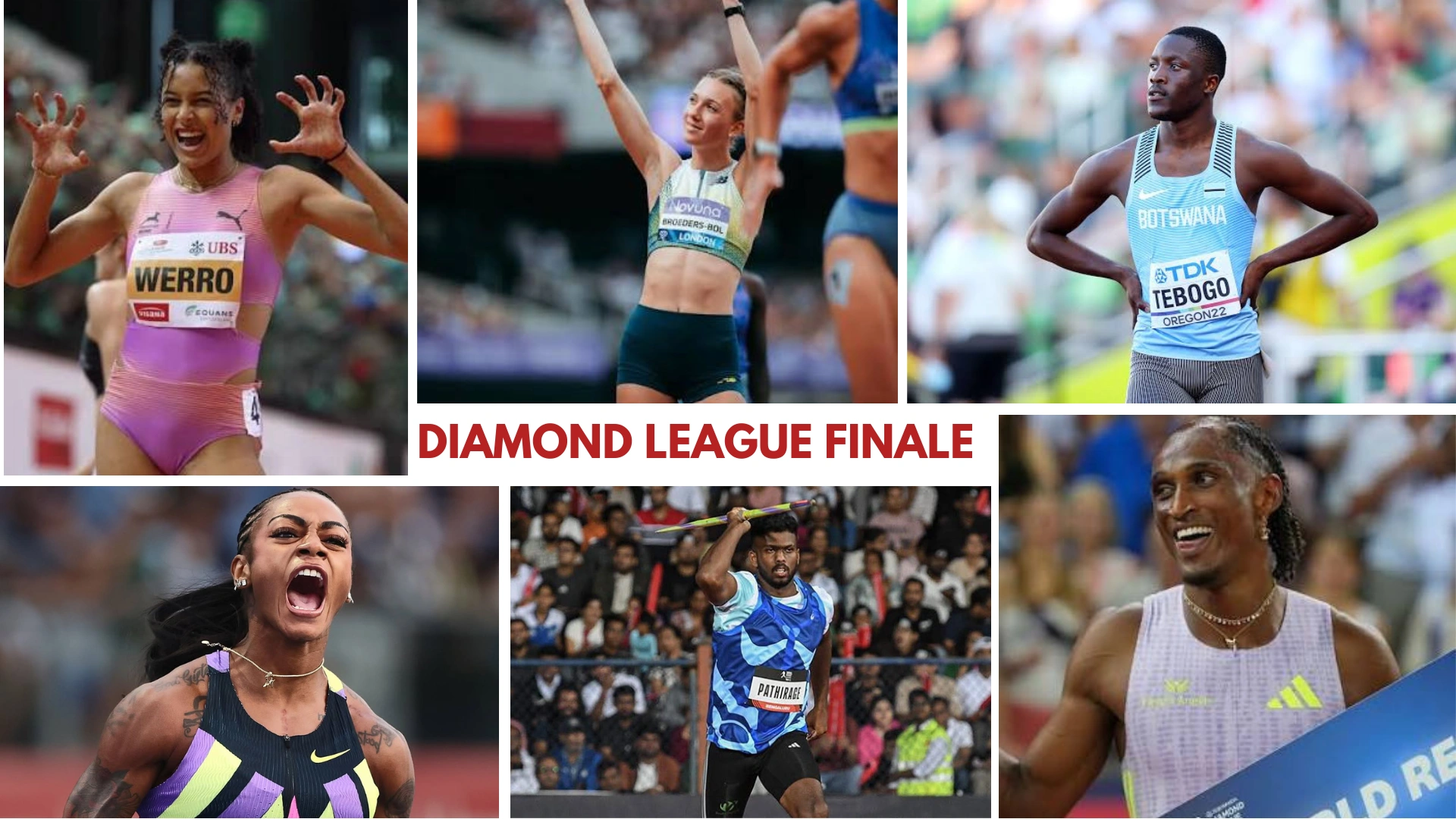
The 2026 Wanda Diamond League season reaches its finale at the Allianz Memorial Van Damme in Brussels.
The event brings together world champions, record-breakers and rising stars for a high-stakes finale.
Among the headline acts are middle-distance stars Audrey Werro and Femke Broeders-Bol.
Imperious 400m hurdler Alison dos Santos also arrives after a breathtaking world-record performance.
Werro and Bol Set for 800m Showdown
The women’s 800m has delivered some of the most exciting races of the season.
The Brussels showdown promises more drama as world leader Audrey Werro renews her rivalry with Femke Broeders-Bol.
The pair will battle over two tactical laps of the track.
Werro has dominated the form guide this season.
She leads the charge among elite contenders chasing Jarmila Kratochvílová’s 43-year-old world record.
The Swiss star has come agonisingly close to the mark.
She finished within 0.42 seconds of the historic record.
Diamond League winners also have automatic qualification for the US$10 million Ultimate Championship.
That adds another layer of intrigue to the tactical battle between Werro and Bol.
Dos Santos Arrives After World Record
Alison dos Santos returns to the spotlight after a jaw-dropping outing in Zurich.
Just days ago, the Brazilian star shattered the 400m hurdles world record with a sensational 45.80.
Dos Santos now looks virtually untouchable.
He also reflected on his previous dip below the barrier standard, which famously yielded an Olympic bronze in Tokyo.
The Brazilian cut a remarkably serene figure as a class apart in Switzerland.
His closest challenger on season times is Matheus Lima.
Lima sits nearly one-and-a-half seconds adrift.
Dos Santos is therefore heavily favoured to cap his stellar campaign with another statement victory.
Tebogo and Richardson Headline Sprints
The sprint and middle-distance programmes offer equally compelling subplots.
Botswana’s Letsile Tebogo anchors a blistering 200m field.
He will test his speed against US star Kenny Bednarek, the world-ranking leader.
In the women’s 100m, Sha’Carri Richardson brings her season-fastest 10.77 to a stacked line-up.
The field also features European champion Amy Hunt, along with Jamaica’s Tina Clayton and Jonielle Smith.
Over 3000m, Morocco’s Soufiane El Bakkali targets Lamecha Girma’s steeplechase world record.
The race features eight of the world’s top ten athletes.
High Jump and Javelin Add More Drama
The women’s high jump also promises a major showdown.
World champion Nicola Olyslagers will face Australian compatriot Eleanor Patterson and Olympic gold medallist Yaroslava Mahuchikh.
All three have recently cleared the formidable two-metre barrier.
In the men’s javelin, Commonwealth champion Rumesh Tharanga Pathirage looks to extend his remarkable run of form.
His recent performances include a massive 92.62m throw in Rome.
However, Anderson Peters and world champion Keshorn Walcott will provide stiff resistance.
As another pulsating Diamond League chapter reaches its conclusion at the King Baudouin Stadium, athletes will leave everything on the track.
They will chase history, glory and the ultimate postseason reward.
The 21st National Youth Athletics Championships 2026 continued to produce strong performances from India’s emerging athletes.
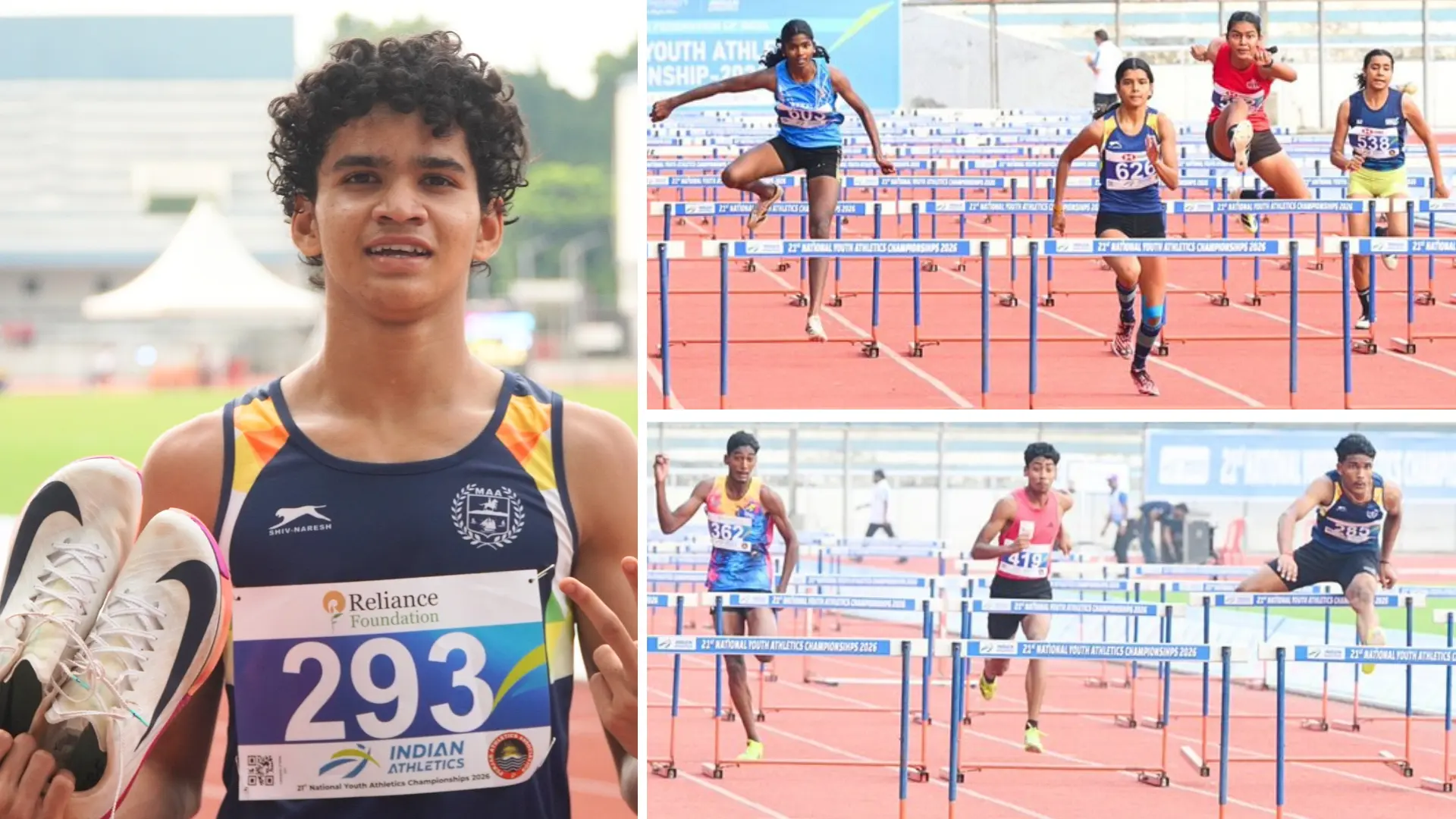
Maharashtra’s Manav Shinde, Shourya Ambure and Yash Mulik made their mark in the sprint and hurdles events.
Manav Shinde Produces Consecutive 200m PBs
Maharashtra’s Manav Shinde continued his impressive run at the Youth Nationals.
He clocked another personal best of 21.82 seconds in the men’s 200m semifinals.
Shinde had already set a PB of 21.92s in the heats on the previous day.
His latest performance made him the fastest athlete across all three semifinals.
He was also the only runner to break the 22-second barrier.
It has been a remarkable two days for the youngster.
Shinde has now recorded three personal bests.
One came in the 400m, while two came consecutively in the 200m.
He has also won silver in the 400m.
Shinde will now line up in the 200m final.
The final is scheduled for 5:25 PM IST.
He will have another chance to lower his best.
Shourya Ambure Breaks 14-Year-Old Meet Record
Maharashtra’s Shourya Ambure also grabbed attention in the women’s U-18 100m hurdles.
The 17-year-old clocked 14.01 seconds in the heats.
She became the fastest athlete across all three heats.
Ambure also broke a 14-year-old meet record in the process.
She enters the final with a lifetime best of 13.86s.
The U-18 National Record of 13.70s will now be in her sights.
The final is scheduled for 4:45 PM IST.
Yash Mulik Sets Lifetime Best
In the boys’ 110m hurdles, Maharashtra’s Yash Mulik produced a lifetime best of 13.75s.
He clocked the time in the semifinals.
His mark was the fastest across both semifinals.
The result puts the 17-year-old among the favourites for the final.
Mulik will face strong competition from Uttar Pradesh’s Anshu Yadav and Tamil Nadu’s Kirpal.
The three will battle for the youth national title.
The performances underline the growing depth of Maharashtra’s young sprint and hurdles talent at the championships.
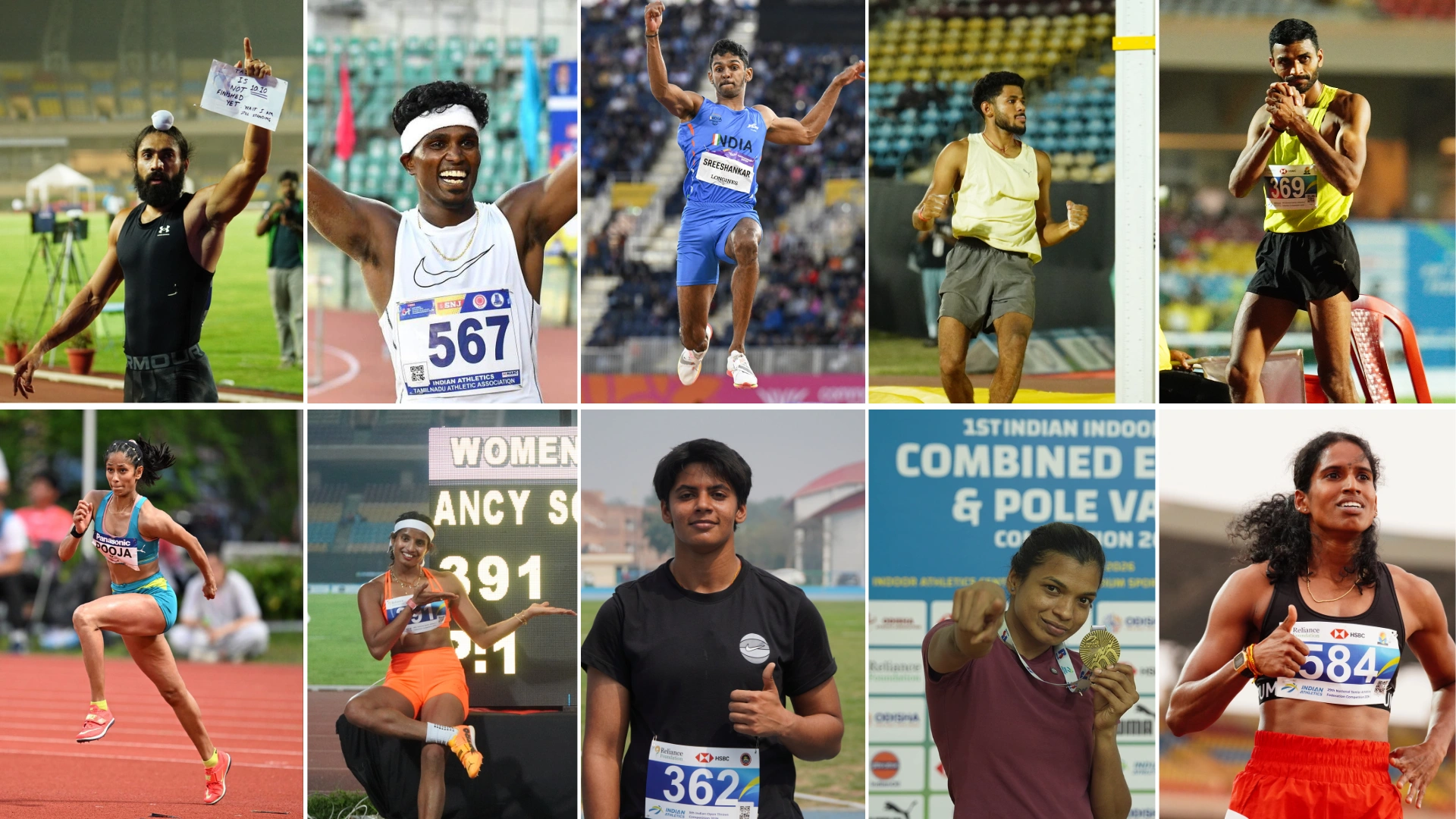
India has finalised its 79-member athletics squad for the upcoming Asian Games 2026, scheduled to be held from September 19 to October 4 across Aichi-Nagoya, Japan.
Athletics will have the largest contingent among all sports in India’s Asian Games delegation.
However, there are likely to be some changes to the squad in the coming days. Neeraj Chopra, whose name remains on the men’s javelin throw squad, has already been ruled out of the Asian Games. Yashvir is expected to replace him, with final confirmation likely to come later this week.
Another major development concerns long-distance runner Abhishek Pal, who has been issued a notice by the National Anti-Doping Agency (NADA) for an alleged Anti-Doping Rule Violation (ADRV). Pal has requested an early hearing from NADA, and his participation in the Asian Games could depend on the outcome of the proceedings.
The 4x400m relay teams also remain subject to change. Several athletes have been included as potential reserves, with the final relay combinations expected to be announced after September 10, following the Indian Series final at the Jawaharlal Nehru Stadium in New Delhi. Performances at the event are expected to play a role in determining the final teams.
India’s 79-member athletics squad
| No. | Athlete | Event |
| 1 | Karanveer Singh | Men’s Shot Put |
| 2 | Damneet Singh | Men’s Hammer Throw |
| 3 | Gurindervir Singh | Men’s 100m |
| 4 | Sreeshankar | Men’s Long Jump |
| 5 | Mohammed Ashfaq | Men’s 4x400m Relay |
| 6 | Sawan Barwal | Men’s Marathon |
| 7 | Praveen Chithravel | Men’s Triple Jump |
| 8 | Neeraj Chopra | Men’s Javelin Throw |
| 9 | Dharmveer Choudhary | Men’s 4x400m Relay |
| 10 | Aadarsh Ram | Men’s High Jump |
| 11 | Kartik Jayraj Karkera | Men’s Marathon |
| 12 | Shahnawaz Khan | Men’s Long Jump |
| 13 | Animesh Kujur | Men’s 100m, 200m; Mixed 4x100m Relay |
| 14 | Kuldeep Kumar | Men’s Pole Vault |
| 15 | Krishan Kumar | Men’s 800m |
| 16 | Jay Kumar | Men’s 4x400m Relay; Mixed 4x400m Relay |
| 17 | Sarvesh Anil Kushare | Men’s High Jump |
| 18 | Dev Kumar Meena | Men’s Pole Vault |
| 19 | Thowfeeq Noushad | Men’s Decathlon |
| 20 | Abhishek Pal | Men’s 5000m, 10,000m |
| 21 | Yashas Palaksha | Men’s 400m Hurdles |
| 22 | Mohammed Afsal Pulikkalakkath | Men’s 800m |
| 23 | Rajesh Ramesh | Men’s 400m; Men’s 4x400m Relay |
| 24 | Avinash Mukund Sable | Men’s 3000m Steeplechase |
| 25 | Yoonus Shah | Men’s 1500m |
| 26 | Tejaswin Shankar | Men’s Decathlon |
| 27 | Tejas Ashok Shirse | Men’s 110m Hurdles |
| 28 | Gulveer Singh | Men’s 1500m, 5000m, 10,000m |
| 29 | Santosh Kumar Tamilarasan | Men’s 400m Hurdles |
| 30 | Manu TS | Men’s 4x400m Relay; Mixed 4x400m Relay |
| 31 | Vishal TK | Men’s 400m; Men’s 4x400m Relay |
| 32 | Tajinderpal Singh Toor | Men’s Shot Put |
| 33 | Karthik Unnikrishnan | Men’s Triple Jump |
| 34 | Rohit Yadav | Men’s Javelin Throw |
| 35 | Pranav Pramod Gurav | Mixed 4x100m Relay |
| 36 | Prachi | Women’s 400m |
| 37 | Tamanna | Women’s 4x100m Relay; Mixed 4x100m Relay |
| 38 | Seema | Women’s 5000m, 10,000m |
| 39 | Rashdeep Kaur | Women’s 4x400m Relay; Mixed 4x400m Relay |
| 40 | Priyanka | Women’s Marathon Race Walk |
| 41 | Ankita | Women’s 3000m Steeplechase |
| 42 | Annu Rani | Women’s Javelin Throw |
| 43 | Seema | Women’s Discus Throw |
| 44 | Pooja | Women’s Heptathlon |
| 45 | Pooja | Women’s High Jump |
| 46 | Manpreet Kaur | Women’s Shot Put |
| 47 | Pooja | Women’s 800m, 1500m |
| 48 | Ansa Babu | Women’s 4x400m Relay; Mixed 4x400m Relay |
| 49 | Supriya B | Women’s High Jump |
| 50 | Unnathi Aiyappa | Women’s 200m |
| 51 | Tanya Chaudhary | Women’s Hammer Throw |
| 52 | Parul Chaudhary | Women’s 1500m, 5000m; 3000m Steeplechase |
| 53 | Baranica Elangovan | Women’s Pole Vault |
| 54 | Nithya Gandhe | Women’s 4x100m Relay |
| 55 | Gowthami Jayaraman | Women’s 800m |
| 56 | Krishna Jayasankar Menon | Women’s Shot Put |
| 57 | Nandhini Kongan | Women’s 100m Hurdles |
| 58 | Anamika K Aneesh | Women’s Heptathlon |
| 59 | Poovamma Raju | Women’s 4x400m Relay |
| 60 | Kumari Saloni | Women’s 4x400m Relay |
| 61 | Srabani Nanda | Women’s 4x100m Relay |
| 62 | Neeru Pathak | Women’s 4x400m Relay |
| 63 | Anu Raghavan | Women’s 400m Hurdles |
| 64 | Abinaya Rajarajan | Women’s 4x100m Relay |
| 65 | Vithya Ramraj | Women’s 400m Hurdles |
| 66 | Manju Rani | Women’s Marathon Race Walk |
| 67 | Sneha SS | Women’s 4x100m Relay; Mixed 4x100m Relay |
| 68 | Sudeshna Shivankar | Women’s 4x100m Relay |
| 69 | Shaili Singh | Women’s Long Jump |
| 70 | Ancy Sojan | Women’s Long Jump |
| 71 | Niharika Vashisht | Women’s Triple Jump |
| 72 | Anushka Yadav | Women’s Hammer Throw |
| 73 | Jyothi Yarraji | Women’s 100m Hurdles |
| 74 | Praveen Kumar | Men’s Hammer Throw |
| 75 | Harita Bhadra | Women’s 200m |
| 76 | Kiran Pahal | Women’s 400m |
| 77 | Asha Ilango | Women’s Triple Jump |
| 78 | Sindhushree G | Women’s Pole Vault |
| 79 | Sanya Yadav | Women’s Discus Throw |
The 21st National Youth Athletics Championships 2026 in Ludhiana produced several impressive performances.
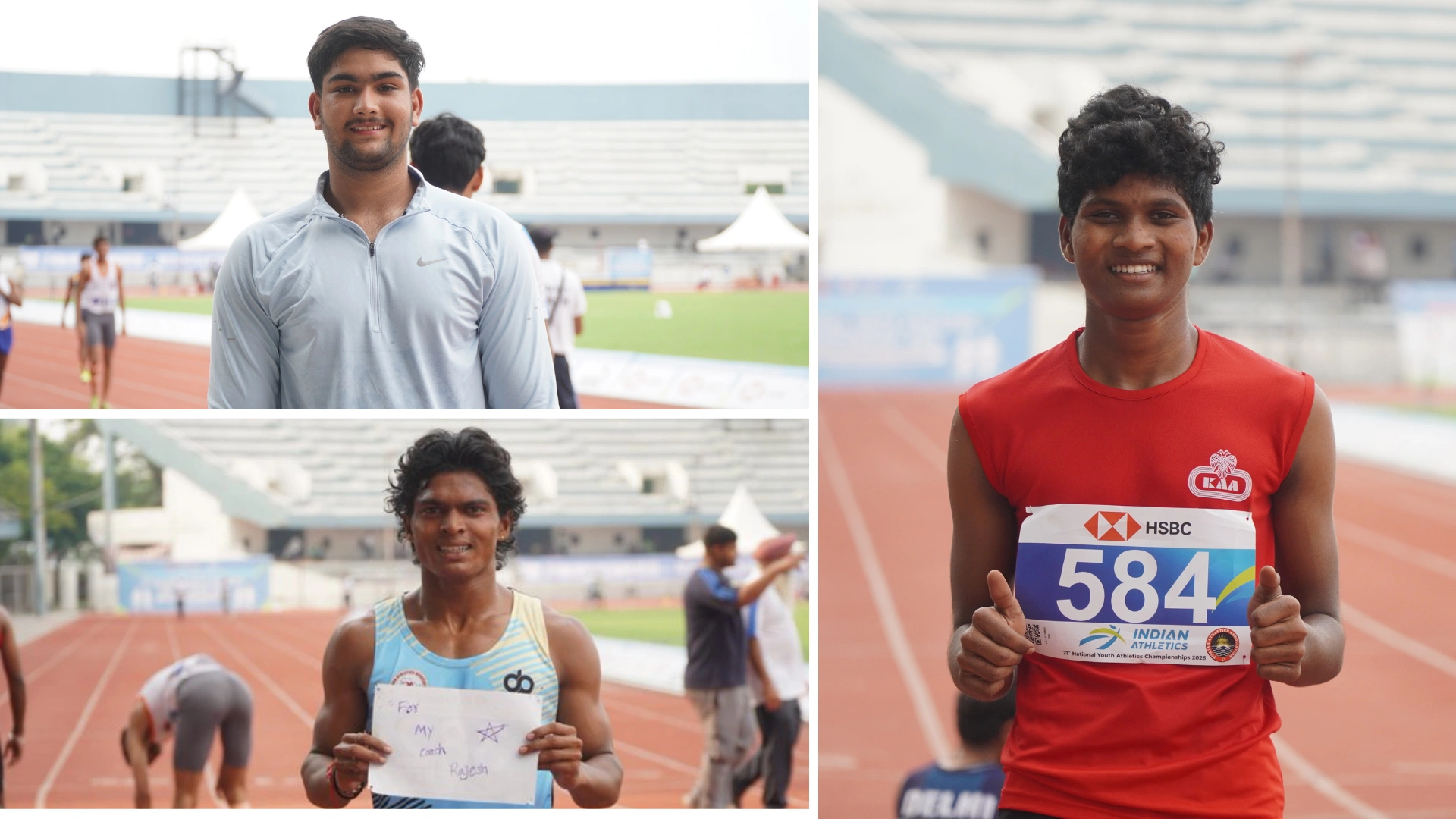
Karnataka’s Nagini, Haryana’s Dheeraj Sahu and Telangana’s Lodenge Ramu claimed titles in closely contested finals.
The championships are being held at Guru Nanak Stadium from September 1 to 3.
Nagini Wins Thrilling 1000m Final
Karnataka’s Nagini clinched the women’s 1000m title after a tight battle at the finish line.
She clocked 2:54.25 to take gold.
Nagini finished just 0.15 seconds ahead of Haryana’s Hunny Malik.
Malik crossed the line in 2:54.40.
Rajasthan’s Deepika completed the podium in 2:54.82.
All three medalists finished within 0.57 seconds of each other.
Dheeraj Sahu Produces Lifetime Best
Haryana’s Dheeraj Sahu delivered one of the standout field-event performances.
He won the men’s discus throw with a lifetime best of 55.85m.
The 16-year-old improved his previous personal best by more than two metres.
Sahu trains at SAI Sonipat.
He produced the winning mark to finish ahead of Haryana teammate Yash, who threw 54.82m.
Swapnil claimed bronze with 54.47m.
The top four athletes all surpassed the 54m mark.
That result highlighted the depth of competition in the event.
The AFI lists the men’s U18 discus automatic qualification standard at 50.50m.
The leading athletes therefore comfortably cleared the benchmark.
Lodenge Ramu Claims 400m Gold with PB
Telangana’s Lodenge Ramu added another strong performance to his Youth Nationals campaign.
He won the men’s 400m title in a lifetime best of 47.21 seconds.
Ramu improved on his previous best to take gold.
Maharashtra’s Manas Shinde finished second in 47.92s.
Kerala’s Ebin KJ secured bronze in 48.05s.
Ramu had already emerged as the fastest athlete across the 400m heats on the opening day.
He clocked 48.19s in the heats.
Nagini, Dheeraj and Ramu delivered three strong title-winning performances.
Their results underlined the emerging talent on display at the Youth Nationals.
Indian athletics saw several promising performances at Indian Athletics Series-15 in Meerut and the 21st National Youth Athletics Championships 2026 in Ludhiana.
Established hurdlers, emerging sprinters and race walkers all made their mark at the two competitions.
Anjali C Delivers in 100m Hurdles
Anjali C continued her consistent run in the women’s 100m hurdles at Indian Athletics Series-15.
She won the event in 13.36 seconds in Meerut.
The performance was particularly encouraging. She finished just 0.01 seconds outside her personal best.
Her latest run adds to a series of strong performances.
It also underlines her status as one of India’s most consistent hurdlers heading into an important season.
With major international competitions ahead, Anjali will look to turn her consistency into further improvements on the clock.
T. Mrithika Emerges as a Sprinter to Watch
At the 21st National Youth Athletics Championships 2026 in Ludhiana, Tamil Nadu’s T. Mrithika delivered a standout performance.
She won the women’s 100m title with a lifetime best of 11.76 seconds.
Mrithika was the only athlete in the final to dip below the 12-second mark.
The performance adds another encouraging chapter to the youngster’s development.
It also puts her firmly among India’s emerging sprint prospects.
Her victory helped Tamil Nadu complete a clean sweep of the youth 100m titles.
Neil Samraj won the men’s event in a record-breaking 10.46 seconds.
Prachi Bishnoi Wins Thrilling Race Walk Finish
The women’s race walk final in Ludhiana produced a dramatic finish.
Haryana’s Prachi Bishnoi held her nerve over the final 20 metres to claim gold.
Prachi stopped the clock at 14:01.53.
She edged Madhya Pradesh’s Ranjana Yadav, who finished in 14:01.79.
The difference was just 0.26 seconds.
That made it one of the closest finishes of the championships.
Together, the performances of Anjali, Mrithika and Prachi highlight the depth of talent emerging across Indian athletics.
Young athletes continue to make their mark on the national stage.
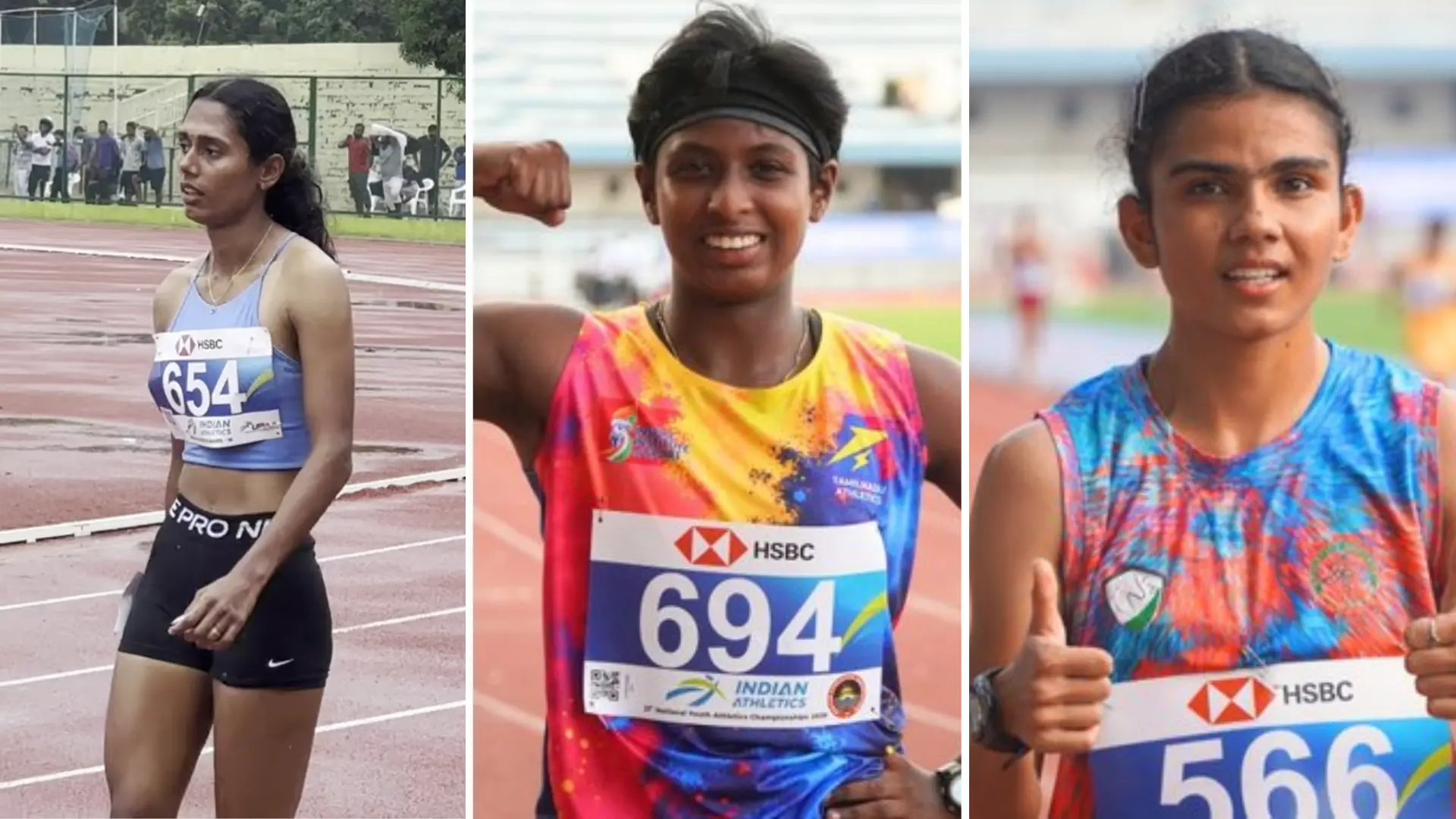
Anushka Yadav continued her impressive rise in Indian athletics at Indian Athletics Series-15 in Meerut.
The 18-year-old Uttar Pradesh thrower won the women’s hammer throw title with a best effort of 64.92m.
Yadav competed for the first time since her record-breaking performance at the Inter-State Athletics Championships.
There, she produced a stunning 67.02m to set a new Indian national record.
Yadav could not replicate that distance in Meerut.
However, her 64.92m throw was enough to secure another title.
The mark also ranks as the second-best throw of her career.
It underlines her growing consistency at the highest level.
Her record-breaking 67.02m effort also secured her qualification for the Asian Games 2026.
The teenager is expected to represent India at the Games.
Harita Bhadra Leads Women’s 200m
In the women’s 200m, Harita Bhadra topped the field.
She clocked 23.36s to claim the title.
Priya Habbathanahally Moha finished second in 24.78s.
Sneh completed the podium with 25.35s.
The complete results were:
🥇 Harita Bhadra 🇮🇳 — 23.36s
🥈 Priya Habbathanahally Moha 🇮🇳 — 24.78s
🥉 Sneh 🇮🇳 — 25.35s
4️⃣ Durga Sen 🇮🇳 — 25.77s
5️⃣ Nishita Neeraj 🇮🇳 — 25.99s
6️⃣ Kumari Dipti 🇮🇳 — 28.00s
The race was run with a -0.8m/s wind.
Yadav continues to build momentum in the hammer throw.
Bhadra, meanwhile, led the 200m field.
Indian Athletics Series-15 once again provided an important platform for India’s emerging and established athletes.
The competition gave them an opportunity to test themselves against each other.
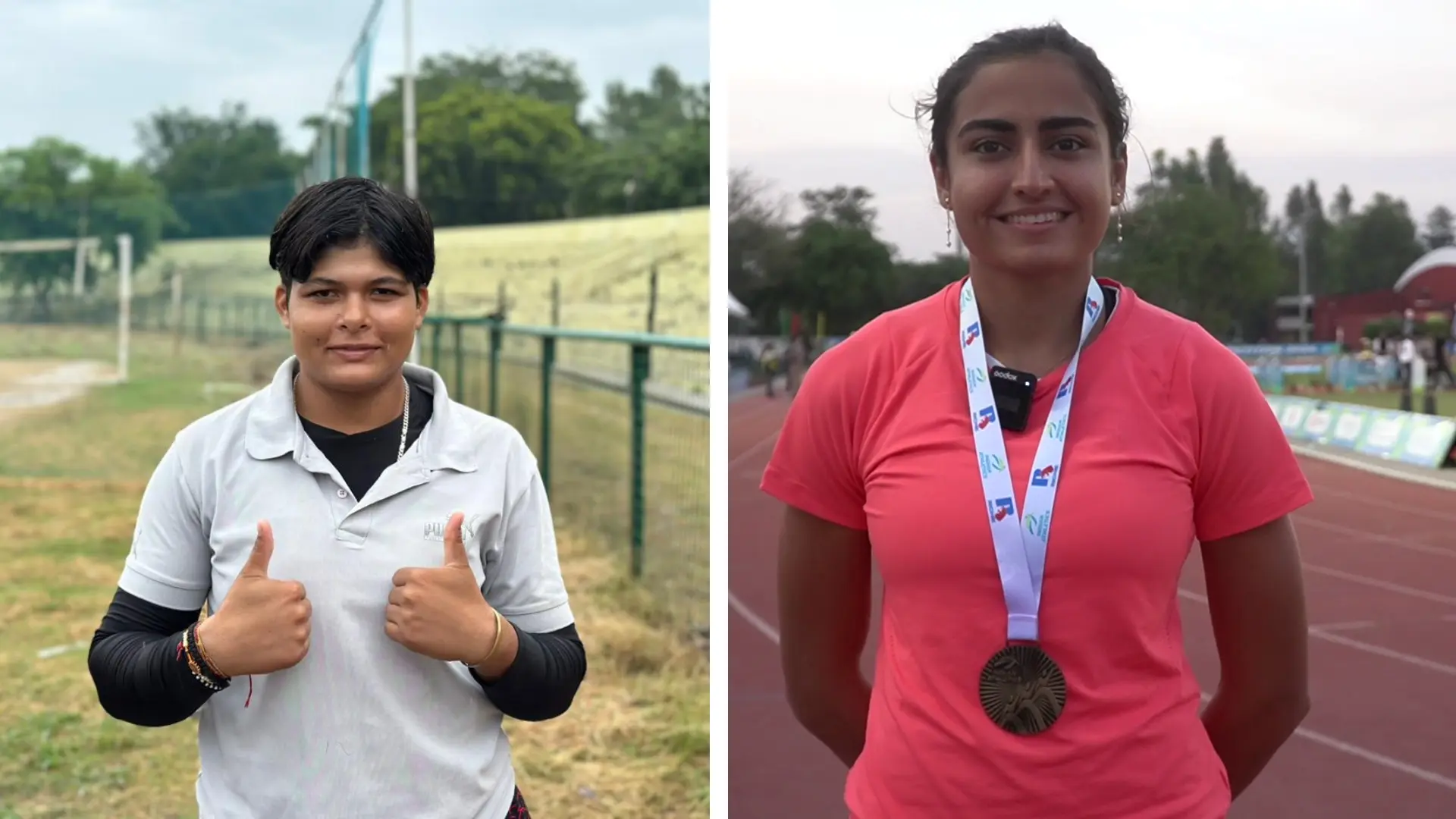
The 21st National Youth Athletics Championships 2026 in Ludhiana produced several impressive performances.
India’s young athletics stars continued to make their mark across track and field events.
Vishnu Claims Men’s 5000m Racewalk Gold
Uttar Pradesh’s Vishnu won the men’s 5000m racewalk.
He clocked 21:02.81 to secure the gold medal.
Odisha’s Ayushman finished second in 21:17.88.
Delhi’s Aditya completed the podium with 21:35.16.
Men’s 5000m Racewalk Podium:
- 🥇 Vishnu (Uttar Pradesh) – 21:02.81
- 🥈 Ayushman (Odisha) – 21:17.88
- 🥉 Aditya (Delhi) – 21:35.16
Oshin Takes Women’s Discus Throw Title
Haryana’s Oshin won the women’s discus throw title.
She produced a winning throw of 45.98m.
Uttar Pradesh’s Dimpy Saini finished second with 43.22m.
Haryana’s Mansi Dangi secured bronze with 43.09m.
The 17-year-old Oshin trains under Virender Dabas at the Jio Institute.
She has also previously trained under Asian Games medallist Seema Antil Punia.
These experiences add an interesting dimension to her development as a young thrower.
T. Mrithika Crowned Fastest Youth Girl
Tamil Nadu enjoyed another memorable moment through T. Mrithika.
She won the women’s 100m title with a personal best of 11.76s.
Mrithika was the only athlete in the final to break the 12-second barrier.
The performance underlined her dominance in the youth sprint.
Her victory also completed a remarkable 100m sprint double for Tamil Nadu.
Earlier, Neil Samraj won the men’s 100m gold in a stunning 10.46s.
He broke India’s U18 national record for the second time on the same day.
With Samraj and Mrithika both taking gold, Tamil Nadu swept the youth 100m titles in Ludhiana.
It marked a standout day for the state’s sprinting programme.