
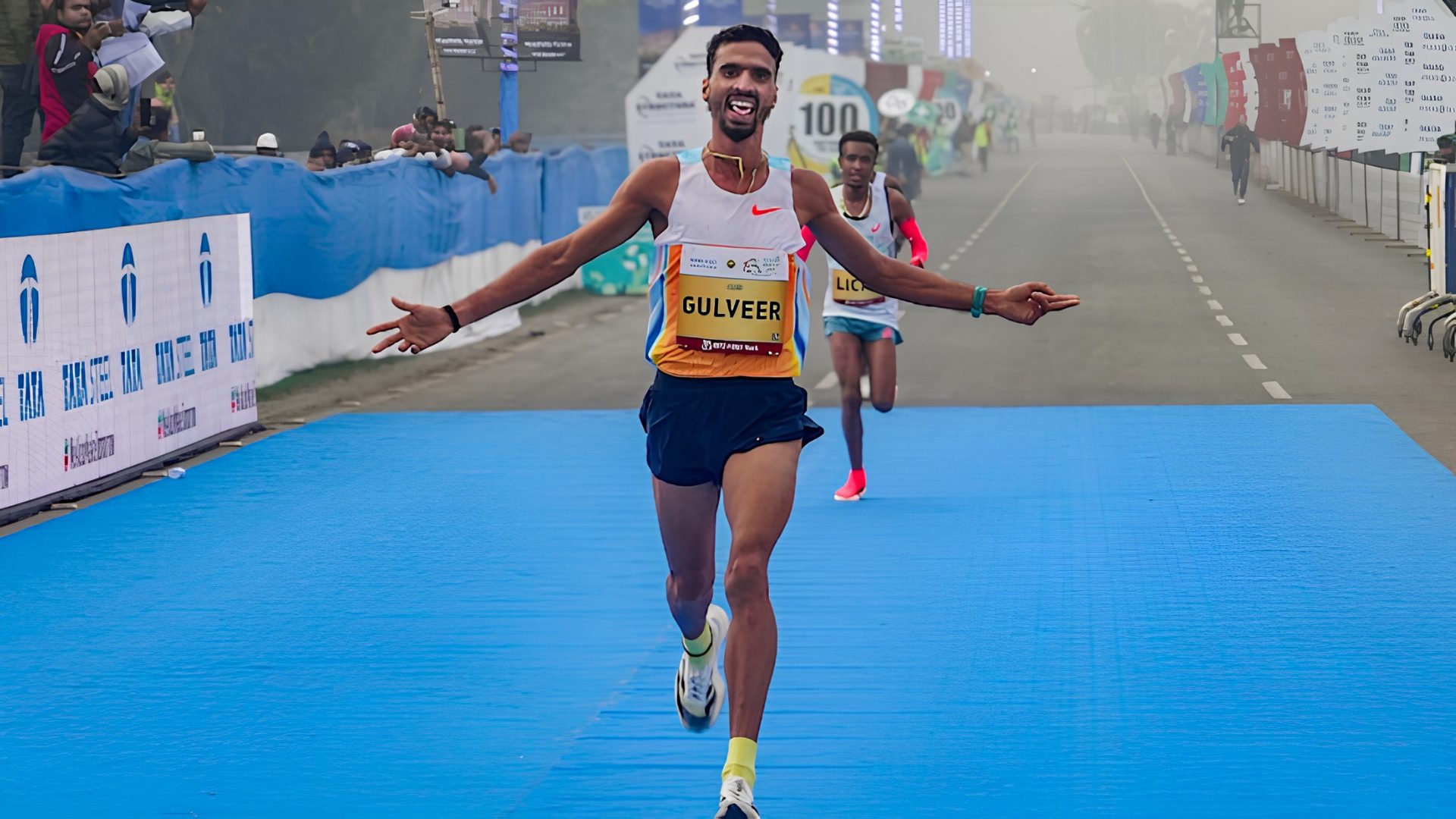
Indian long-distance running star Gulveer Singh continued his extraordinary rise on the international circuit with another elite performance at the LA Track Fest in Los Angeles, clocking 13:03.93 in the men’s 5000m to finish second in a stacked World Athletics Continental Tour Silver meet.
The timing was the second-fastest run of Gulveer’s career and his quickest ever outdoors over the distance.
In a race packed with international talent, Gulveer was beaten only by Eritrea’s Habtom Samuel, who produced a world-leading 12:57.23 and broke the collegiate record in the process. Gulveer crossed the line 6.7 seconds later but comfortably ahead of several accomplished professional runners in what turned into another statement performance from the Indian star.
What makes the run even more remarkable is that Gulveer is no longer merely breaking Indian records — he is now consistently competing at a genuinely high global standard.
The Army athlete from Uttar Pradesh has transformed Indian distance running over the last two seasons. Earlier this year, he became the first Indian ever to break the 13-minute barrier in the 5000m, clocking a stunning 12:59.77 indoors.
He also holds national records in the 3000m, 5000m and 10,000m, including a superb 27:00.22 over 10,000m that made him one of the fastest Asians in history.
The 27-year-old has rapidly evolved from a strong Asian-level athlete into one capable of holding his own in elite international fields. Gulveer is already a double Asian champion, having won both the 5000m and 10,000m titles at the 2025 Asian Athletics Championships, while also owning an Asian Games bronze medal in the 10,000m.
Perhaps the biggest sign of his development is consistency. Fast times are no longer isolated performances. Whether on the roads, indoors, or on the track outdoors, Gulveer now looks increasingly comfortable running at a pace that once seemed completely out of reach for Indian distance runners.
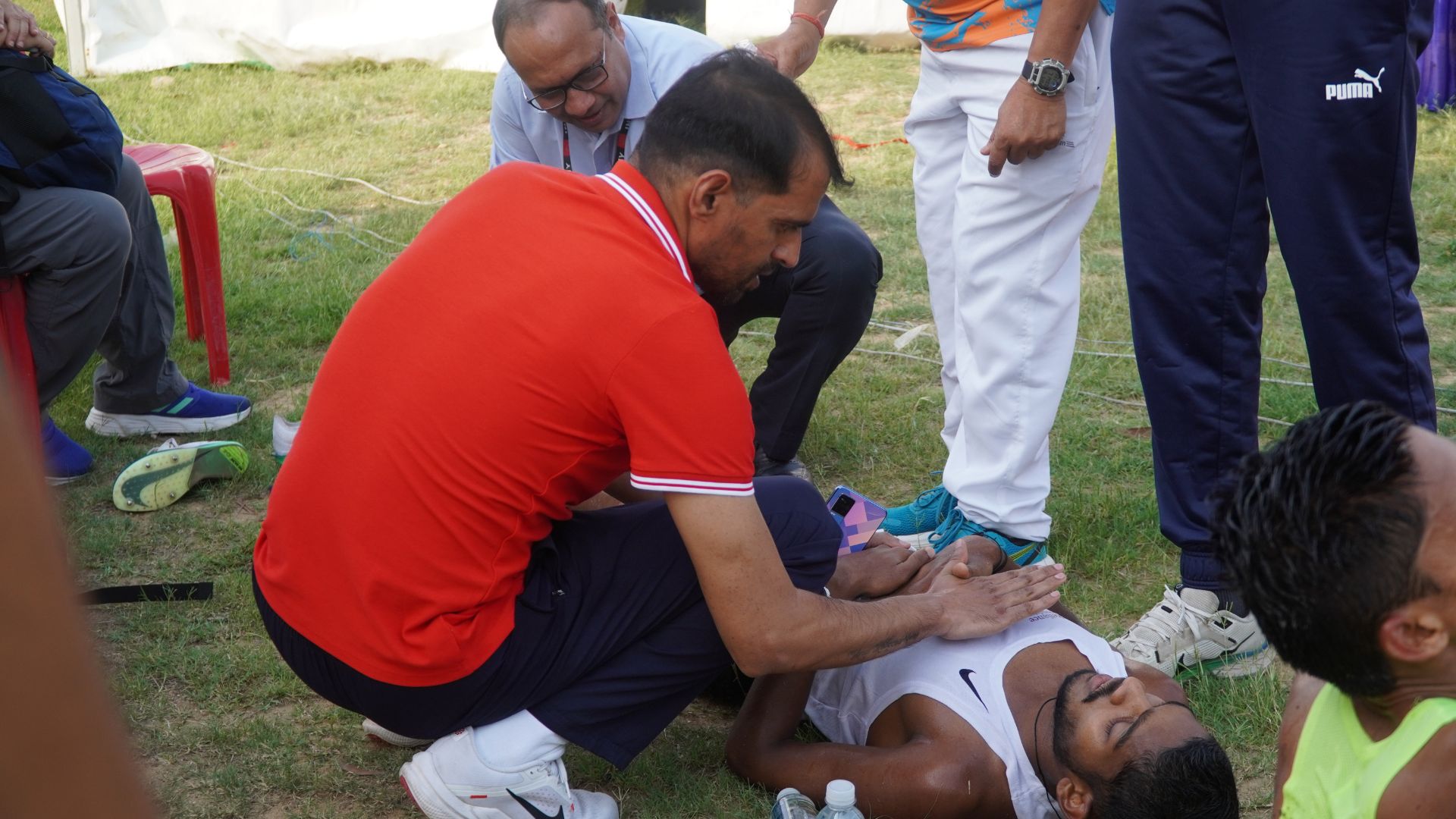
A concerning moment unfolded at the Federation Cup Athletics Championships in Ranchi after distance runner Shivaji Maddapa collapsed following the men’s 10,000m race, reportedly due to severe dehydration.
Shivaji, who had initially crossed the finish line in second place, required immediate medical attention on the track itself. Army coach Sub Younus Khan and psychologist Col Arvind Jha rushed in quickly to assist the athlete before further support arrived.
Fortunately, timely intervention helped stabilise the runner at the venue.
The incident also led to a dramatic twist in the race results. Despite finishing second, Shivaji was later disqualified after officials noted that he had stepped outside the race lane during the final lap. Reports suggested the athlete may have become disoriented because of dehydration towards the closing stages of the race.
The episode once again highlighted the physical demands of long-distance racing, particularly in difficult weather conditions and high-intensity domestic competitions.
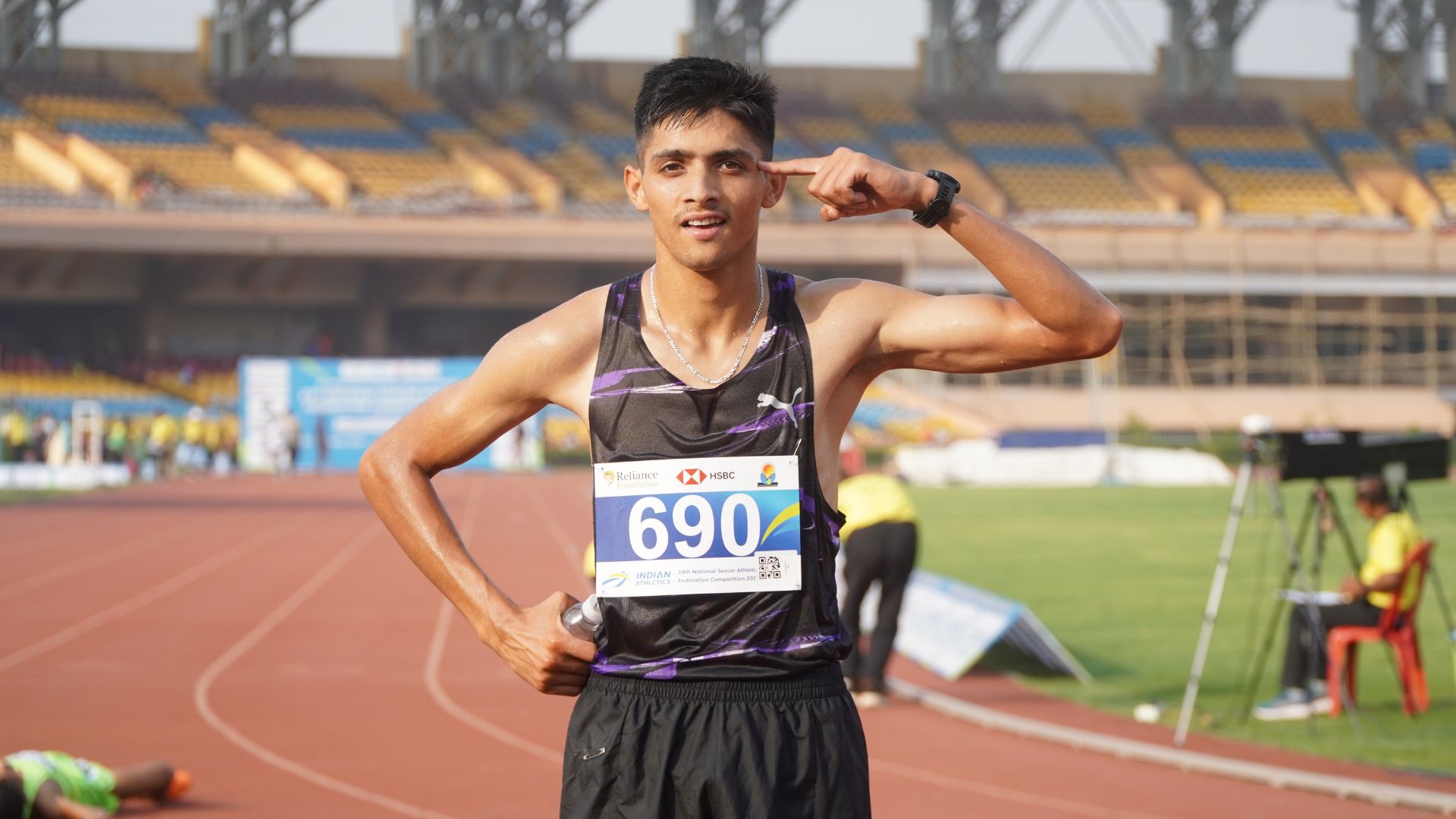
Uttarakhand’s Deepak Bhatt produced the standout performance in the men’s 10,000m at the Federation Cup Athletics Championships in Ranchi, winning gold with a lifetime best timing of 29:42.93s.
In a race that turned tactical through the middle stages before quickening in the final laps, Deepak held his composure well to pull away from the field and secure the national title. The performance marked a significant personal milestone for the distance runner, who dipped below the 30-minute mark for the first time in his career.
Shailesh Khushwaha finished second in 29:57.56s, also going under the 30-minute barrier, while Prashant Chaudhary took bronze in 30:36.97s.
While the race produced strong domestic performances, the timings also underlined the gap Indian men’s distance running still faces at the international level. None of the athletes were able to meet the Commonwealth Games 2026 qualification standard of 27:39.03.
The Federation Cup remains one of India’s key domestic meets, often serving as an important selection event ahead of major international competitions. With Indian athletics increasingly focusing on global qualification standards, performances at events like these are being viewed not just through medal outcomes but also through the lens of international competitiveness.
For Deepak, however, the evening belonged to personal progress. Winning a national-level title while setting a lifetime best will provide an important confidence boost as the season moves towards tougher international benchmarks and qualification races later in the year.
Sunday was one of those rare days when Indian sport seemed to move in fast-forward. Ayush Shetty clinched a historic silver at the Asian Championships, becoming only the second Indian after Dinesh Khanna to reach such heights. At the same time, Sawan Barwal rewrote history by breaking a 48-year-old national record in the marathon.
Yet, in the middle of all this noise, one performance quietly slipped under the radar and perhaps, it shouldn’t have.
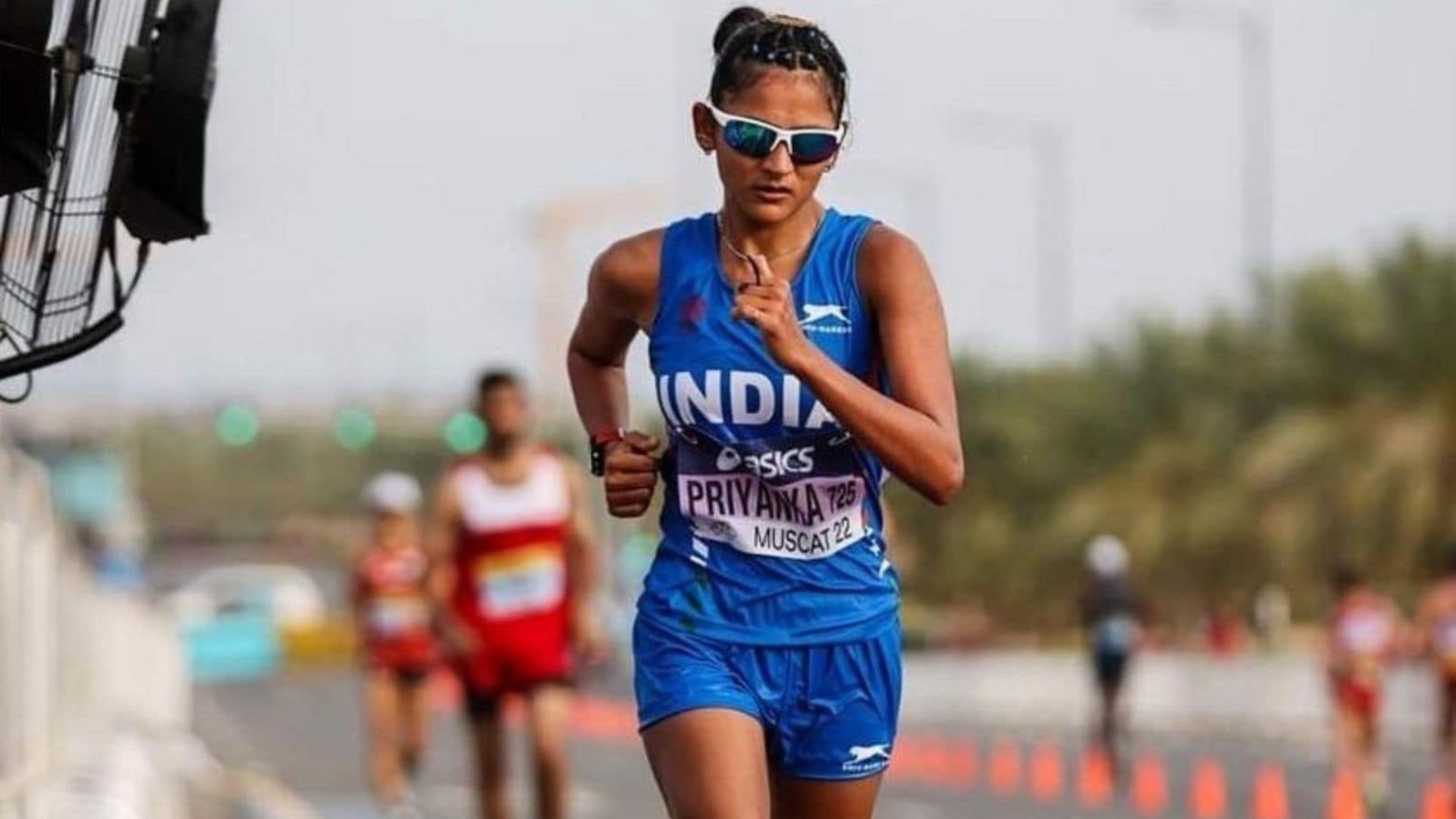
Priyanka Goswami finished 10th at the World Race Walking Team Championships 2026 in Brasília. On paper, it may not scream headlines. But in context, it might just be the most significant performance by an Indian athlete that day.
Priyanka clocked 3:43:01 in the women’s marathon race walk, in a field stacked with Olympic medallists and world-class athletes. Ecuador’s Paula Torres won gold with a stunning 3:24:37, the second-fastest time ever.
But Priyanka’s race was never about the podium. It was about endurance, adaptation, and mindset.
Speaking exclusively to NNIS Sports, she said, “The timing was good because the altitude here is 1200m. Sometimes, we need to step out of our comfort zone.”
That “comfort zone” included a 38-hour journey from India to Brazil, minimal acclimatisation, and the challenge of a new race format. Yet, she delivered.
Priyanka has a decorated resume silvers at the Commonwealth Games, Asian Championships, and bronze at the World University Games. But even she believes this performance stands above them.
“You were competing among the best walkers in the world and finished 10th. This is the biggest achievement of your life,” her coach Ronald Weigel told her, a sentiment she agrees with.
And rightly so. Unlike continental events, this was a truly global field. Every athlete on that start line was elite. Finishing in the top 10 here is not just a result, it’s validation.
The event itself marked a shift. The traditional 20km and 35km races were replaced by half marathon and marathon distances.
“It makes a big difference,” Priyanka explained. “For women, 42 km can feel almost like 50 km… the challenge between 30–35 km is much tougher. The mind has to be very strong.”
That mental strength was evident, not just during the race, but in how she handled recent setbacks.
After being beaten at the National Championships, social media noise crept in “Everyone was commenting… that affected me a bit,” she admitted.
But her coach’s response was simple and sharp “No one looks at Nationals. Win a medal at the Asian Games, that’s what matters.”
India finished fifth in the team standings a strong collective effort. Not a single athlete was disqualified. Historically, India has only two medals at this championship. This performance signals progress, even if it doesn’t come with a medal yet.
And Priyanka stands at the centre of that evolution. Her focus is clear, the Asian Games.
“My main aim is to win a medal at the Asian Games,” she said. “I have already achieved the Commonwealth Games qualification, now I need to focus on strong performances.”
There is no noise in that statement. Just clarity. In a day dominated by medals and records, Priyanka Goswami delivered something quieter, but arguably deeper, a performance of resilience, maturity, and global competitiveness.
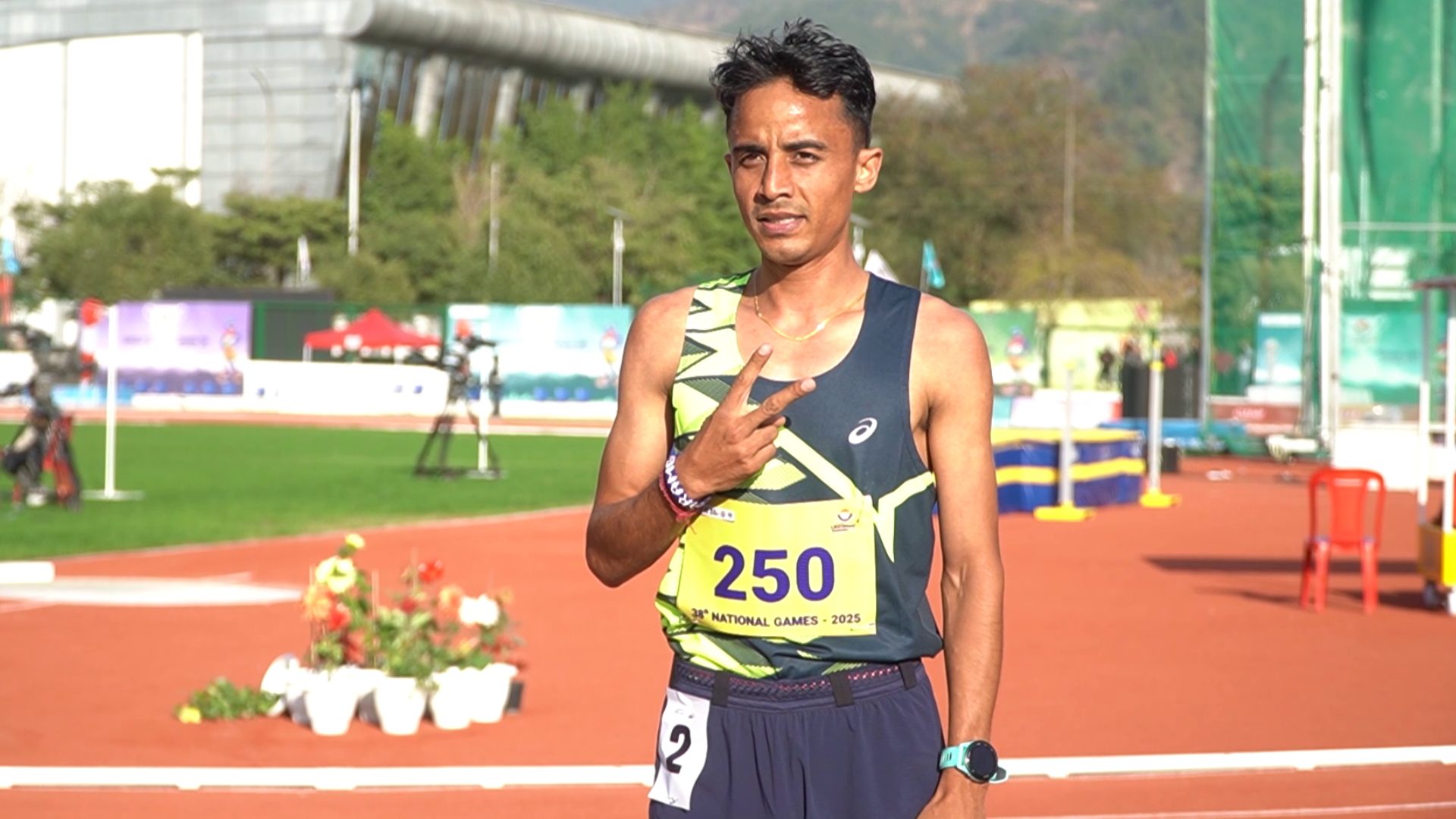
For 48 years, one number refused to move.
2:12:00 — set by Shivnath Singh in 1978.
It survived generations. Attempts came and went. Nothing changed.
Until Rotterdam.
Sawan Barwal, running his first-ever marathon, crossed the line in 2:11:58—breaking the record by 0.42 seconds. The smallest margin. The biggest shift.
But this wasn’t a perfect race. It was anything but.
For most of the run, Barwal was on pace for something faster. Then came the final two kilometres—cold wind, heavy legs, and a moment that nearly ended it.
“I poured water on my head, which caused a slight blackout… we can call those last 2 kilometers bad luck,” he told NNIS Sports.
He didn’t just slow. He faltered. He had to hold himself together to finish.
And still—he broke the record.
“I came here fully determined to break the national record. I was targeting around 2:08 to 2:10,” he told NNIS Sports.
This wasn’t supposed to happen on a debut. Not after just five months of moving up from the track.
But Barwal didn’t run a perfect race.
He ran a historic one.
History has been rewritten in Indian athletics as Sawan Barwal delivered a landmark performance on the global stage.
Competing at the NN Marathon Rotterdam, Barwal clocked an outstanding 2:11:58 in the marathon, finishing 20th overall and etching his name into the record books.
With this run, he broke one of the most iconic records in Indian athletics history — the long-standing mark of Shivnath Singh, who had clocked 2:12:00 way back in 1978 in Jalandhar.
The significance of this achievement goes far beyond the timing. Shivnath Singh’s record had stood unchallenged for an astonishing 47 years, 10 months, and 15 days, making it the oldest national record in Indian athletics.
Barwal’s performance not only ends a historic drought but also signals a new era for Indian distance running, proving that Indian marathoners are ready to compete at a higher global level.
This is more than just a record — it’s a defining moment for the sport in India.
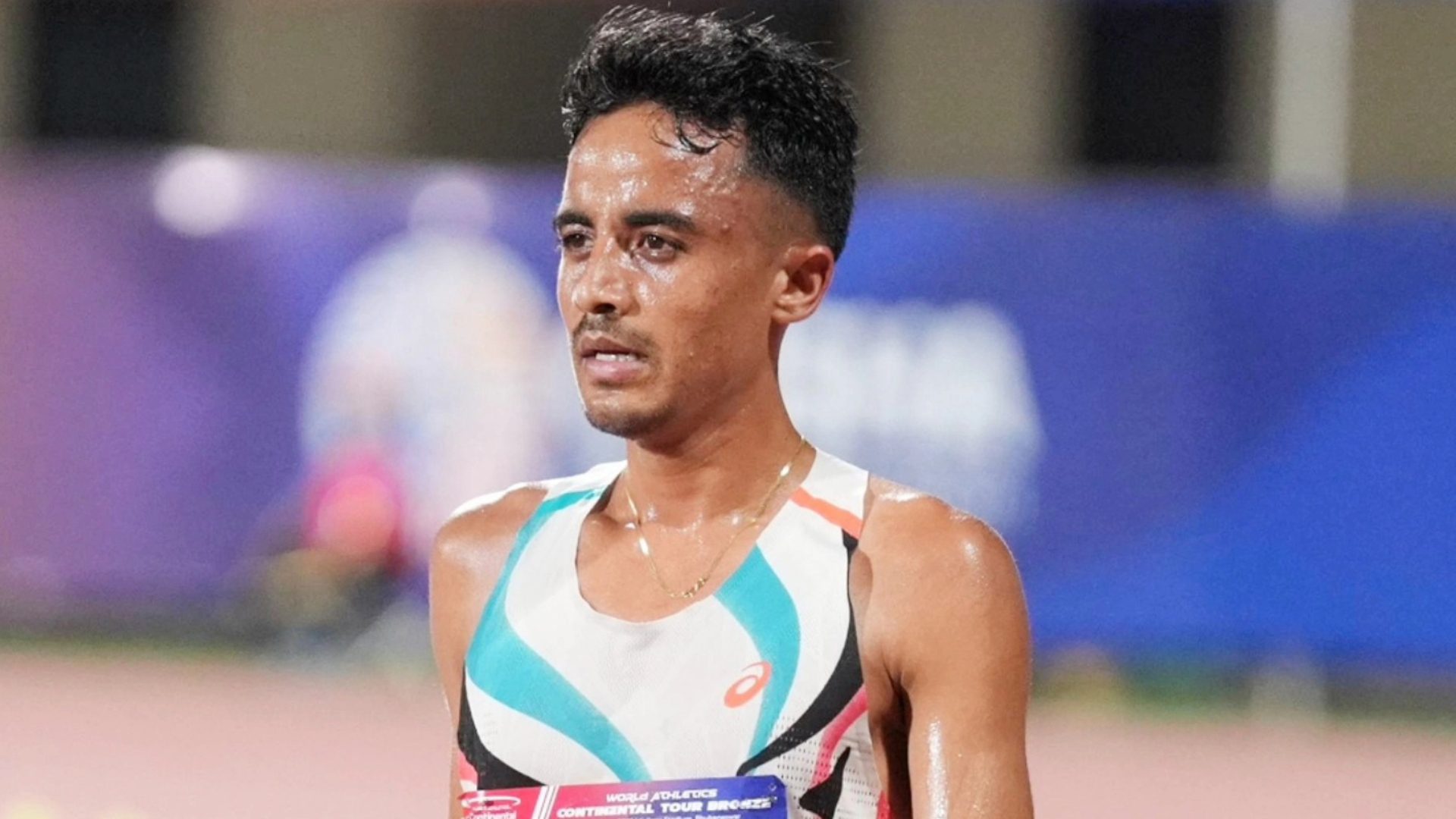
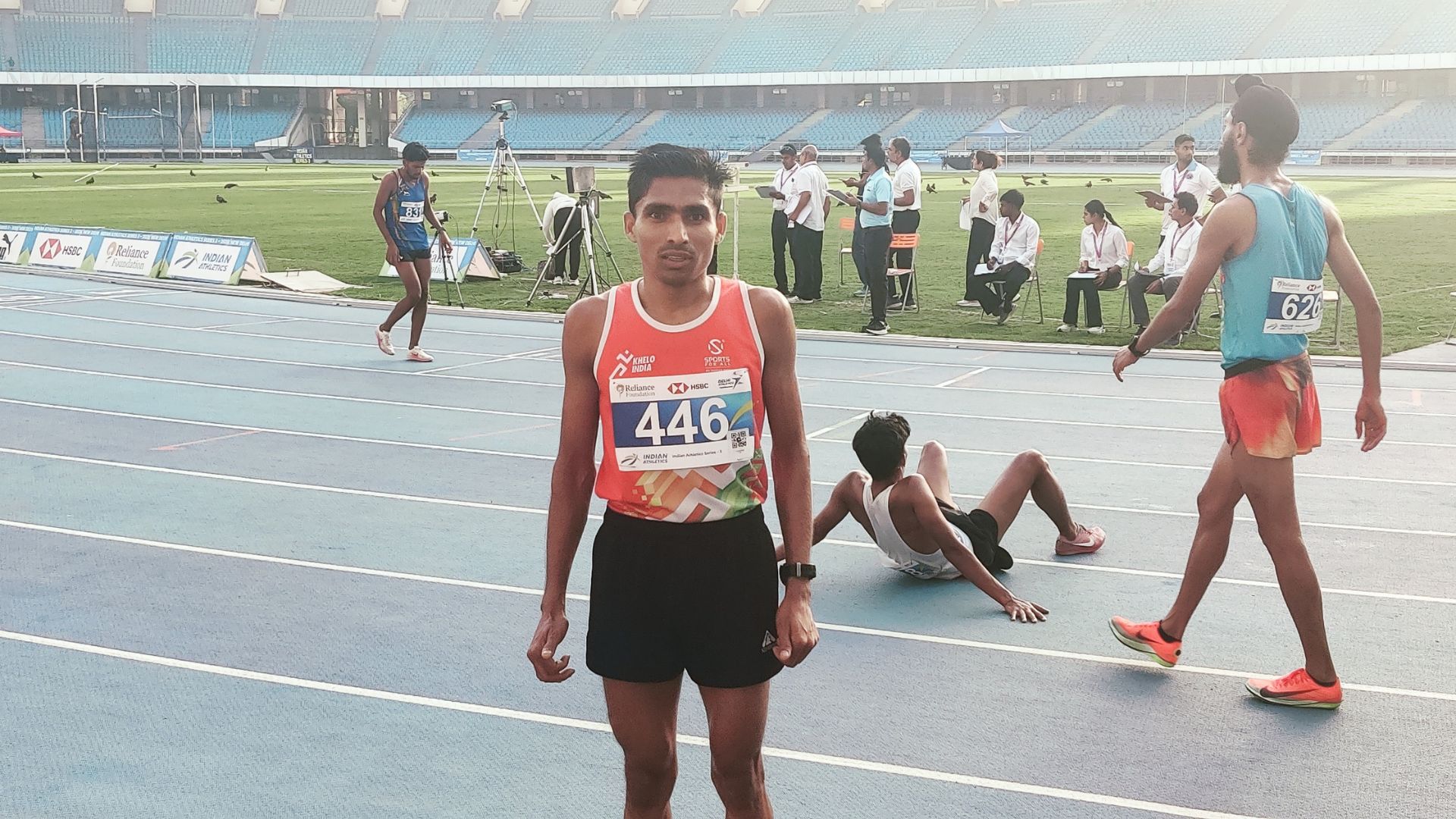
Shailesh Kushwaha delivered a personal best performance to win the men’s 10,000m at the Indian Athletics Series in New Delhi.
He clocked 30:01.08 in his first race over the distance since 2024, timing his effort well to take control in the closing stages.
Kartik Karkera finished second in 30:08.09.
Primarily a marathon runner, this race was part of his off-season training block.
Vinod Singh secured third place in 30:09.62, as the race saw a closely packed finish among the top three.