
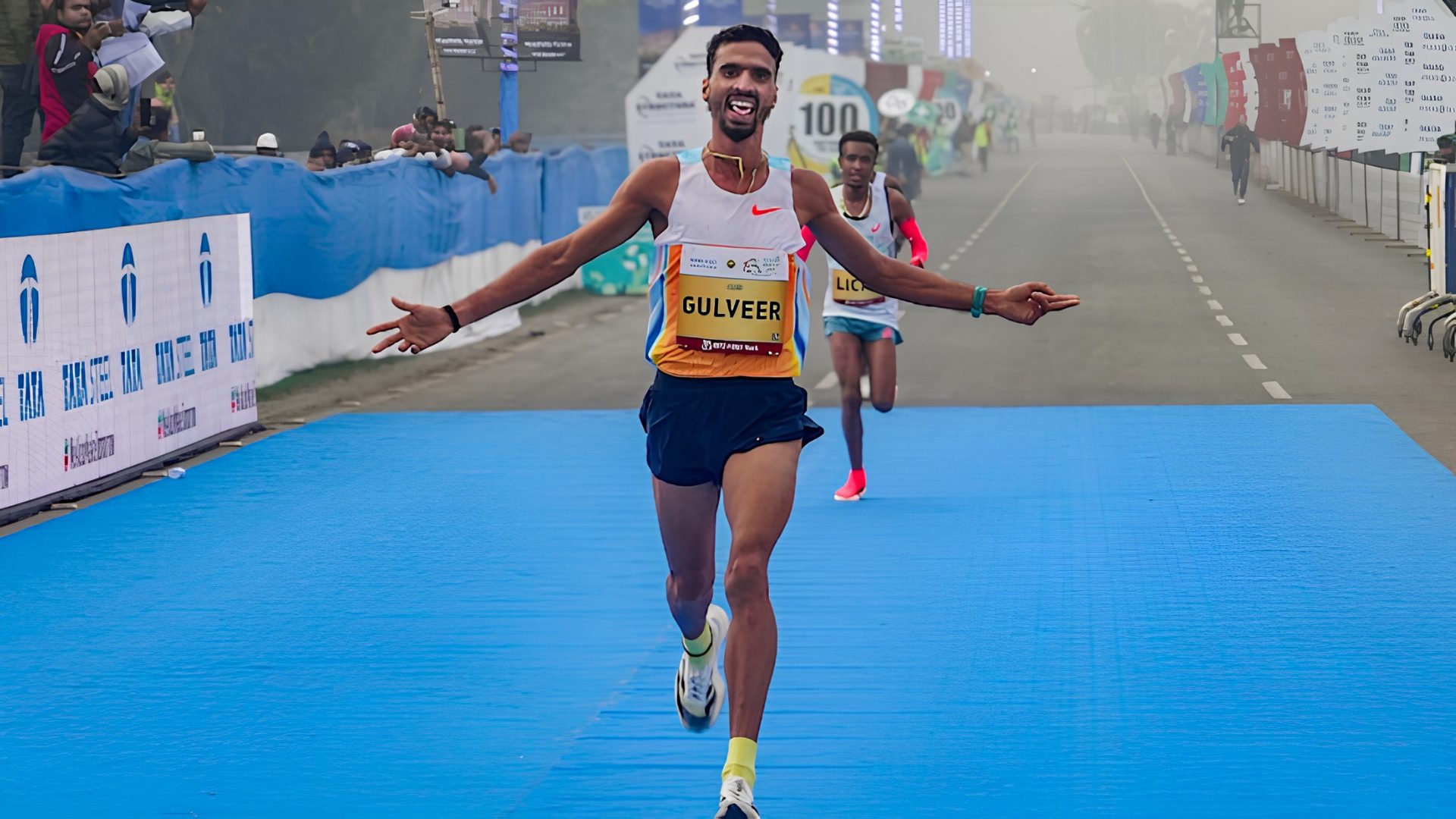
India’s Gulveer Singh will carry the nation’s hopes in the men’s 10,000m at the Commonwealth Games 2026, arriving in Glasgow after a sensational season that has established him among the leading contenders in the event.
Gulveer has enjoyed the finest season of his career, clocking an outstanding 27:24.18, a performance that currently ranks fifth among Commonwealth athletes this season. More importantly, among athletes officially selected for the Commonwealth Games, his mark is the third-fastest season’s best, making him one of the strongest medal prospects in the field.
The Commonwealth rankings are led by Australia’s Ky Robinson, who has produced a world-class 26:57.07 this season. Great Britain’s Scott Beattie follows with 27:23.20, just under a second quicker than Gulveer’s impressive performance. The Indian distance runner’s 27:24.18 places him firmly among the leading contenders heading into the Games.
The field also includes experienced East African athletes such as Edwin Kurgat of Kenya, whose season’s best stands at 28:29.05, while compatriot Ishmael Rokitto and Uganda’s Herbert Kibet are also part of their respective Commonwealth Games squads despite not having raced the 10,000m this season.
Gulveer’s remarkable progress in 2026 has transformed him into one of India’s premier distance runners. His ability to produce a world-class performance over 10,000m reflects the consistency and endurance required to compete against some of the strongest athletes in the Commonwealth.
With only two selected athletes entering the Games with faster season’s bests, Gulveer will travel to Glasgow with genuine expectations of challenging for a podium finish. His outstanding form, combined with the confidence gained from a breakthrough campaign, makes him one of India’s brightest medal hopes in distance running.
As the Commonwealth Games approach, Gulveer Singh stands poised to test himself against the very best in the field. If he can reproduce the form that saw him clock 27:24.18, the Indian star will have every opportunity to contend for a medal on one of athletics’ biggest stages.
For more visit Commonwealth Games 2026
India’s Shivaji Parashuram continued his outstanding campaign at the inaugural Asian U23 Athletics Championships 2026 by winning the silver medal in the men’s 10,000m in Ordos, China, securing his second silver medal of the championships.
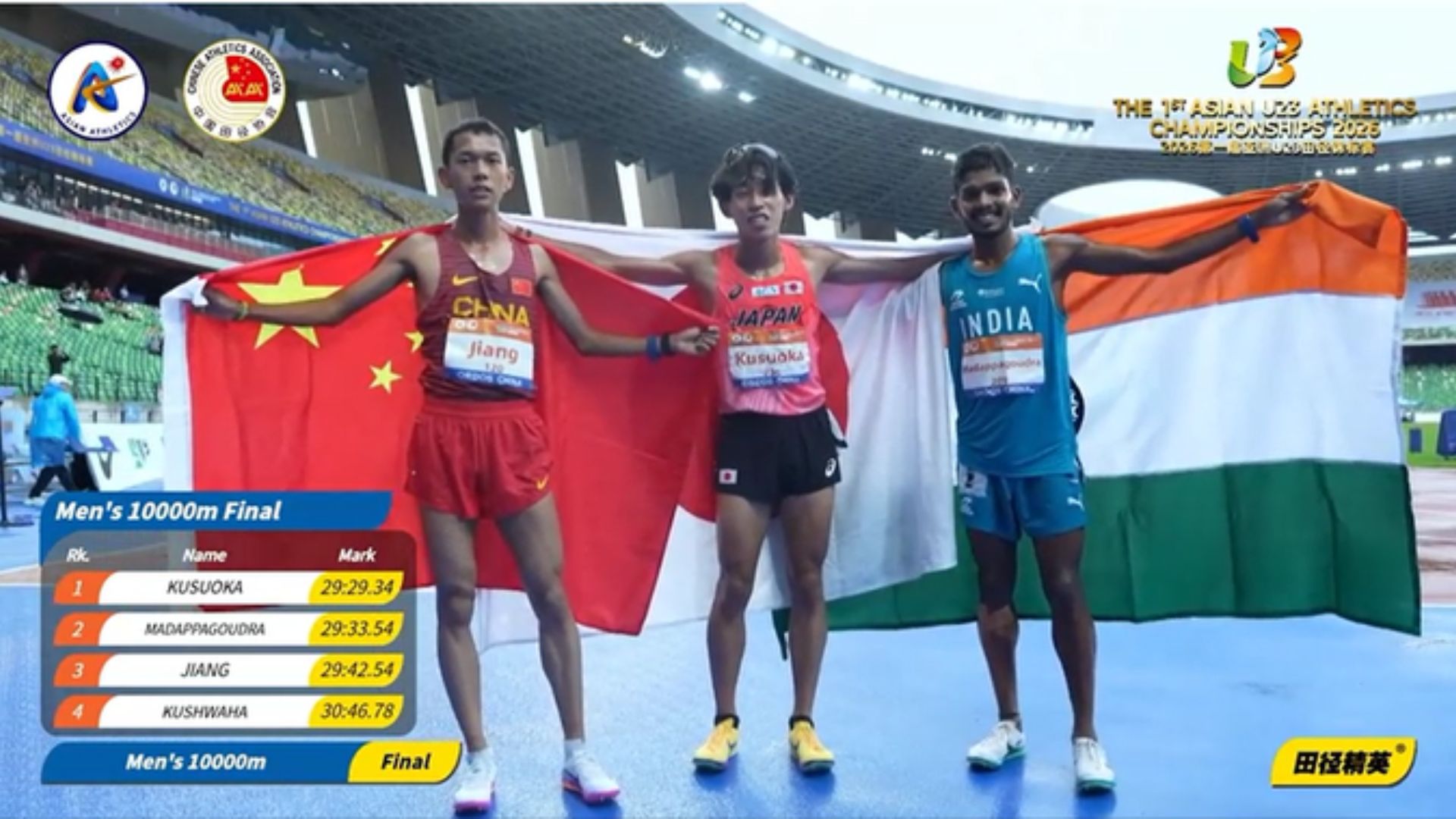
Shivaji produced a determined performance over the 25-lap race, clocking a lifetime best of 29:33.54s to finish second. The Indian distance runner remained among the leading pack throughout the race and finished strongly to achieve a new personal best while adding another medal to India’s tally.
The gold medal was claimed by Japan’s Yoshihiro Kusuoki, who crossed the finish line in 29:29.34s after edging out Shivaji in a closely contested race. China’s Jinzhi Jiang secured the bronze medal with a time of 29:42.54s, completing the podium.
The silver medal adds to an already memorable championship for Shivaji, who had earlier finished runner-up in the men’s 5000m on the opening day. By claiming silver medals in both distance events, he has emerged as one of India’s standout performers at the inaugural edition of the championships.
His latest performance was made even more impressive by the fact that he achieved a new lifetime best, reflecting his excellent form and continued progression at the continental level. Producing a personal best in a championship final underlines his ability to perform under pressure against Asia’s leading U23 distance runners.
The Asian U23 Athletics Championships have provided an important platform for emerging athletes to showcase their talent, and Shivaji has made the most of the opportunity with two exceptional performances. His consistency across both the 5,000m and 10,000m demonstrates his endurance and competitiveness over multiple distances.
With two silver medals now to his name, Shivaji Parashuram has established himself as one of India’s brightest young distance-running prospects. His impressive campaign in Ordos has not only strengthened India’s medal tally but also highlighted the country’s growing depth in long-distance athletics at the U23 level.
India made a promising start at the inaugural Asian U23 Athletics Championships 2026 by winning two medals in the men’s 5000m, opening its medal account at the continental event in Ordos, China.
Leading the Indian challenge was Shivaji Parashuram, who produced a determined performance to claim the silver medal in a time of 14:08.19. Running confidently throughout the race, Shivaji stayed among the front-runners and finished strongly to secure India’s first medal of the championships.
Joining him on the podium was compatriot Vinod Singh, who earned the bronze medal after crossing the finish line in 14:23.67. His composed effort ensured a memorable double podium finish for India in the event, giving the country two medals in the opening stages of the competition.
The gold medal was won by Japan’s Rui Suzuki, who produced the fastest performance of the race, clocking 14:01.24 to take the title.
The silver and bronze medals hold added significance as they are India’s first-ever medals at the Asian U23 Athletics Championships, which is being held for the first time. The achievement marks a historic milestone for Indian athletics at the debut edition of the continental competition and provides an encouraging start to the campaign.
Distance running has consistently been one of India’s stronger disciplines at age-group competitions, and the performances of Shivaji Parashuram and Vinod Singh continued that tradition on the Asian stage. Their medals reflect the depth of India’s emerging talent and provide a positive foundation for the remainder of the championships.
With the medal account now open, the Indian contingent will look to build on this momentum in the events to come. The historic double podium finish in the men’s 5000m has given India an ideal start to the inaugural Asian U23 Athletics Championships and will serve as a confidence boost for the rest of the team as they continue their quest for more medals in Ordos.
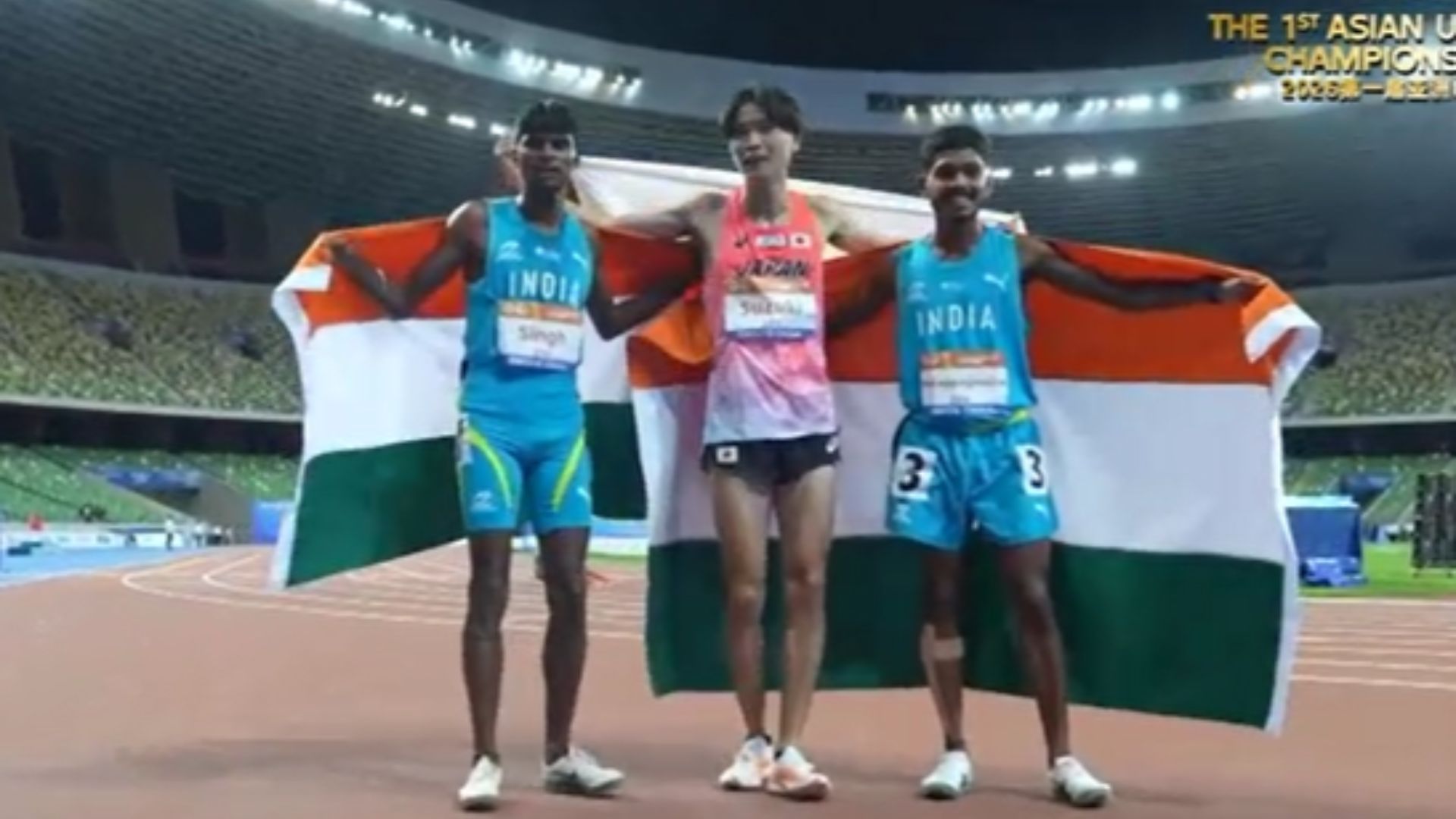
Asian Championships medallist Servin Sebastian emerged victorious in the men’s half marathon race walk at the 65th National Inter-State Senior Athletics Championships in Bhubaneswar, clocking 1:31:49 to secure the national title in challenging weather conditions.
Representing one of India’s brightest hopes in race walking, Servin held off a strong challenge from Sachin Bora, who finished second in 1:32:10, while Ningthoukhongja completed the podium with a time of 1:32:24.
Men’s Half Marathon Race Walk Results
 Servin Sebastian – 1:31:49
 Sachin Bora – 1:32:10
 Ningthoukhongja – 1:32:24
The race was conducted under demanding conditions, with humidity levels hovering around 92 percent and temperatures remaining high throughout the morning. Such conditions made it difficult for athletes to maintain pace, particularly in an endurance discipline as physically taxing as race walking.
While none of the athletes managed to achieve the Asian Games qualification standard, the quality of competition remained high, with the leading trio separated by less than a minute.
Servin’s victory further cements his status as one of the country’s leading race walkers. The Kerala athlete enjoyed a breakthrough season in 2025 when he won bronze at the Asian Race Walking Championships, becoming one of the few Indian men to secure a continental medal in the discipline. The performance established him as a serious contender for major international championships and strengthened India’s growing reputation in race walking.
Although the Asian Games qualification standard remained out of reach in Bhubaneswar, sources indicate that the top two finishers—Servin Sebastian and Sachin Bora—could still come under consideration for selection, given their credentials and previous performances.
However, qualification standards are only one part of the selection process. The final composition of the Indian team for the 2026 Asian Games will be decided by the Athletics Federation of India’s Selection Committee, which will assess performances across the qualification period before naming the squad.
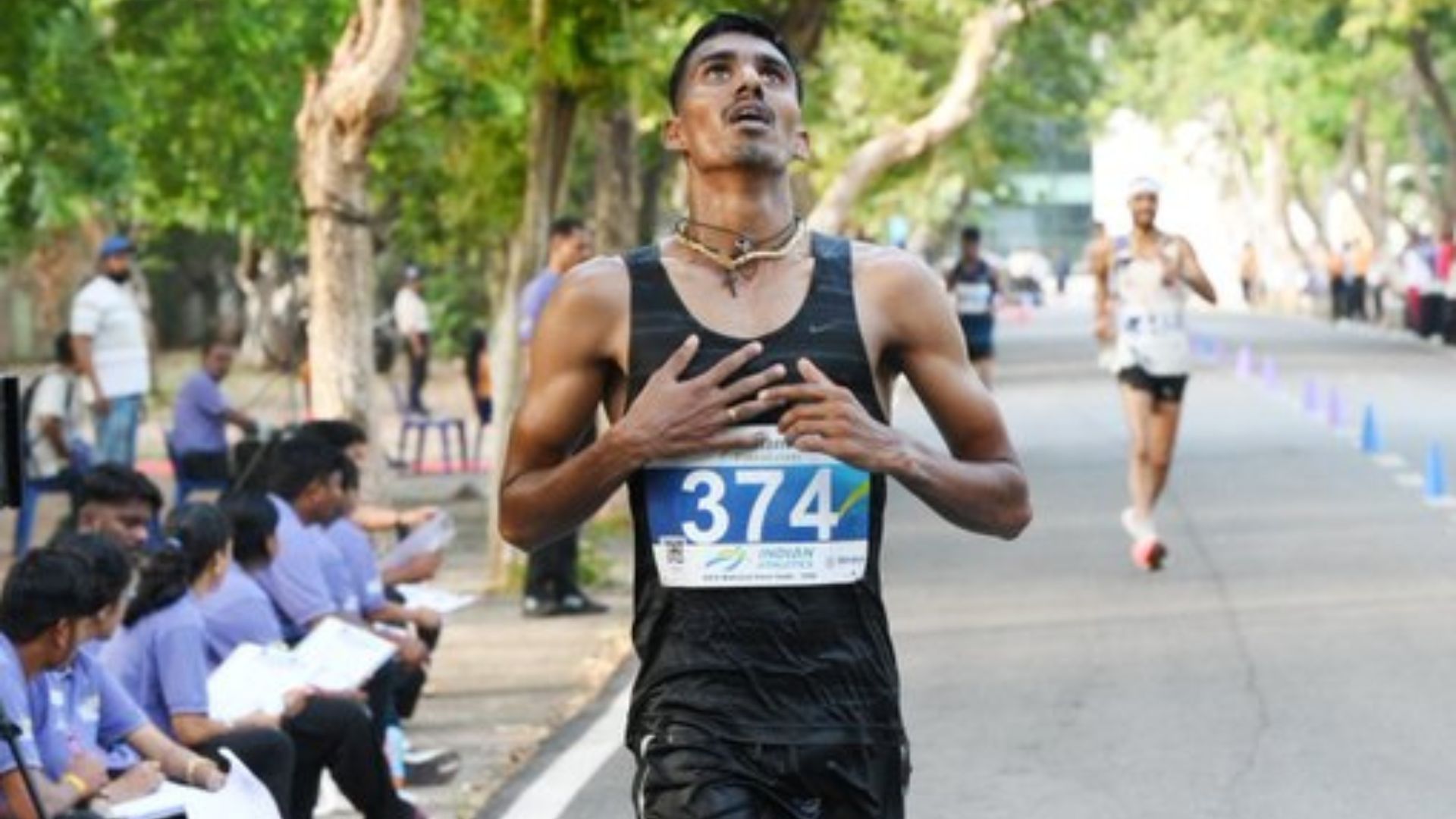
India’s premier long-distance runner Gulveer Singh may have missed the Asian Games qualification standard at the 65th Interstate Athletics Championships in Bhubaneswar, but his hopes of representing the country in Aichi-Nagoya 2026 are far from over.
The national record holder won the men’s 5000m title in 13:52.92, comfortably securing gold but falling short of the Athletics Federation of India’s prescribed qualification mark of 13:39.18.
The result came as one of the biggest surprises of the championships, given Gulveer’s outstanding form earlier this season. In February, he rewrote the Indian record books by clocking a stunning 13:03.93, a performance that currently stands as the second-fastest time by an Asian athlete this year and ranks among the world’s top 20 performances in 2026.
With such credentials, questions immediately emerged over whether the 26-year-old could still make the Indian squad despite not achieving the qualification standard at the designated selection event.
According to AFI officials, the final Asian Games team will be determined by the federation’s selection committee, meaning the qualification mark is not necessarily the only factor that will be considered.
That leaves the door open for Gulveer, whose performances throughout the season have established him as India’s leading 5000m runner and one of Asia’s strongest contenders in the event.
Speaking after the race, Gulveer pointed to the challenging conditions in Bhubaneswar as a major factor behind his failure to achieve the standard.
“The weather was quite warm and the track is still new,” he said, explaining that both factors made it difficult to chase a fast time.
While the missed mark is undoubtedly a setback, Gulveer’s season-best remains significantly faster than the qualification standard and strengthens his case ahead of the final selection meeting.
For now, the ball is firmly in the selectors’ court. Gulveer has not secured automatic qualification, but based on his performances this season, he remains one of the strongest candidates to wear Indian colours in the men’s 5000m at the Asian Games 2026.
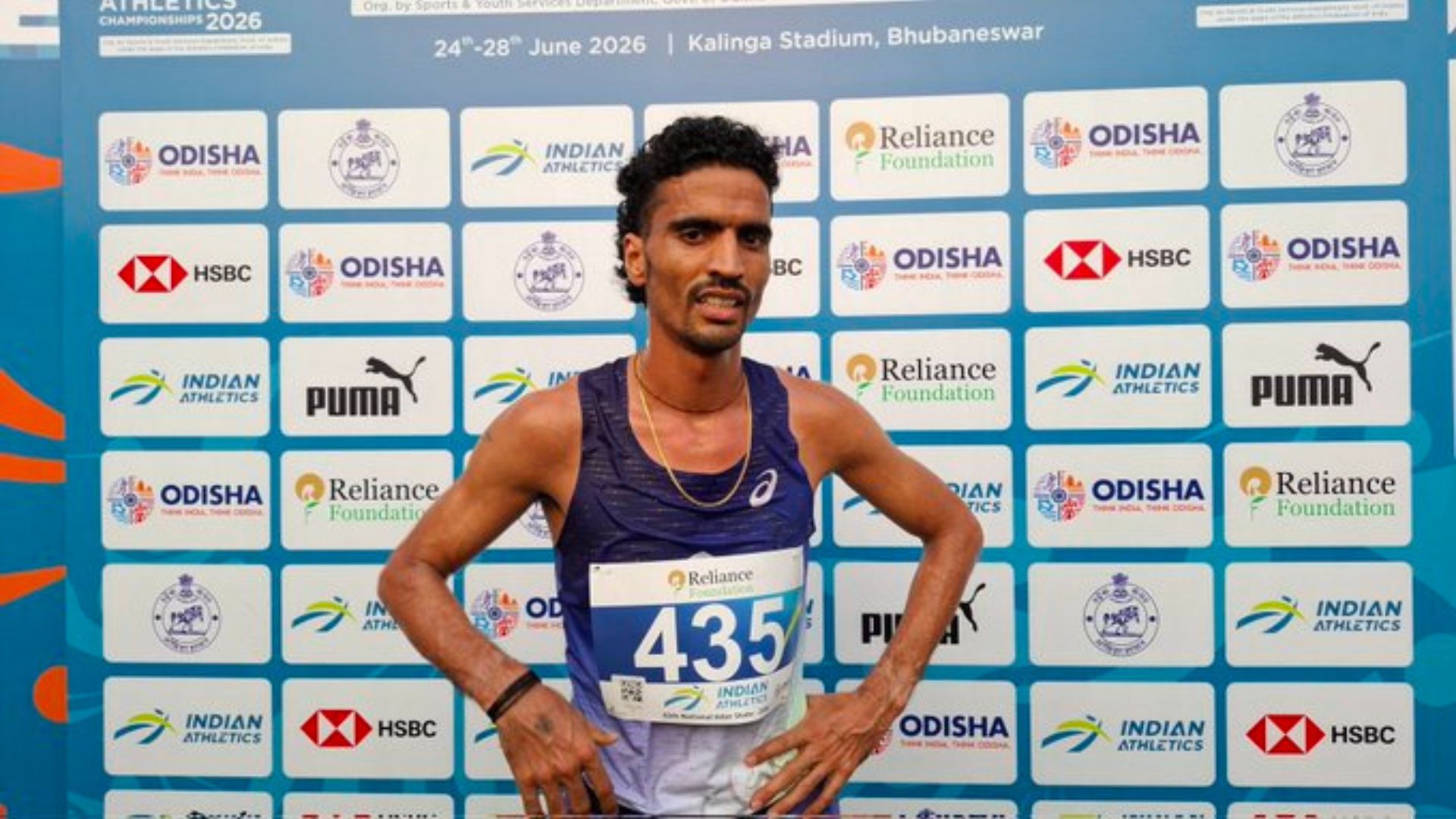
By Sundeep Misra
Whenever Gulveer Singh runs and if you are fortunate enough to see him, you know the feeling – he seems to hang somewhere between being good and great. He possesses that effortless smoothness unique to long-distance runners; a penchant for lapping until the final bell triggers an instinctive, competitive gear.
At 5:30 AM at The Kalinga, Gulveer is still fighting his own circadian rhythms, having returned from the US just a week ago. His winning time of 13:52.92 was slow by his standards – especially for an athlete holding an outdoor National Record of 13:03.93 and a blistering short-track indoor time of 12:59.77.
Yet, functionally, the job is done. After swapping leads with Abhishek Pal, Harmanjot Singh, and Shivaji Parashu Madap, Gulveer effortlessly shifted gears on the final lap, cantering away to gold and sealing his case for the Asian Games.
While the Athletics Federation of India (AFI) won’t officially announce the squad for the Aichi-Nagoya Games until after June 28th, Gulveer’s ticket is a formality. He comfortably shattered the AFI qualification benchmark of 13:39.18 earlier this season at the LA Track Festival, laying down a massive marker.
Next, he will test his closing speed in the 1500m, a tactical tune-up for Japan.
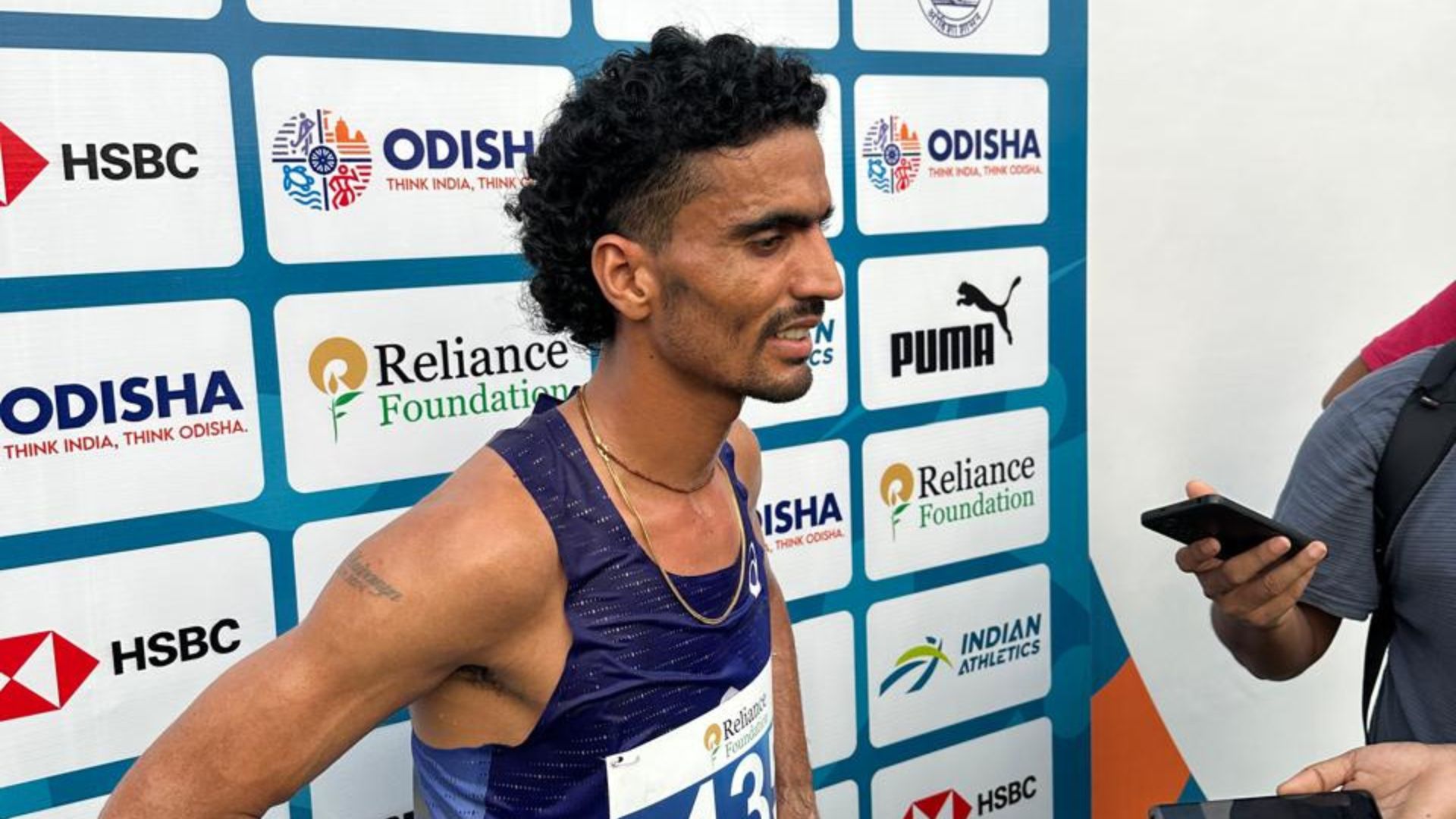
“It’s a new track; the grip doesn’t quite form yet,” Gulveer said after his win, explaining the unique surface at The Kalinga. “With continued workouts, the weight impact changes. Right now, it’s like rubber – it absorbs like a sponge, so there’s more bounce.”
As he prepares for Glasgow and Japan, the athletics world will be watching closely. It’s exactly that divide – between the good and the truly great – that Gulveer is running to bridge.
One of India’s most accomplished middle-distance runners, Harmilan Bains, made her long-awaited return to competition after nearly two years, finishing third in the women’s 10,000m at the Indian Athletics Series–8.
The 2023 Asian Games silver medallist in both the 800m and 1500m clocked 36:35.45 in her comeback race, marking her first competitive appearance since her impressive medal-winning campaign in Hangzhou.
The race was won by Ravina in 36:34.55, while Sanjivani secured second place in 36:35.33. Harmilan finished just fractions of a second behind the leading pair in a closely contested race.
The result is particularly significant because it suggests a possible shift in focus for the former Indian 1500m national record holder. Having built her reputation as one of India’s leading middle-distance athletes, Harmilan’s decision to return in the 10,000m could indicate plans to transition towards longer distances in the lead-up to major international competitions.
With the next Asian Games on the horizon, the women’s 10,000m presents an intriguing opportunity. The qualification standard for the event stands at 33:50.00, meaning Harmilan will need to substantially lower her time over the coming months if she intends to secure a place in the Indian team.
While the clock may not yet reflect her peak form, the most important takeaway from the race is that one of India’s biggest athletics stars is back on the track.
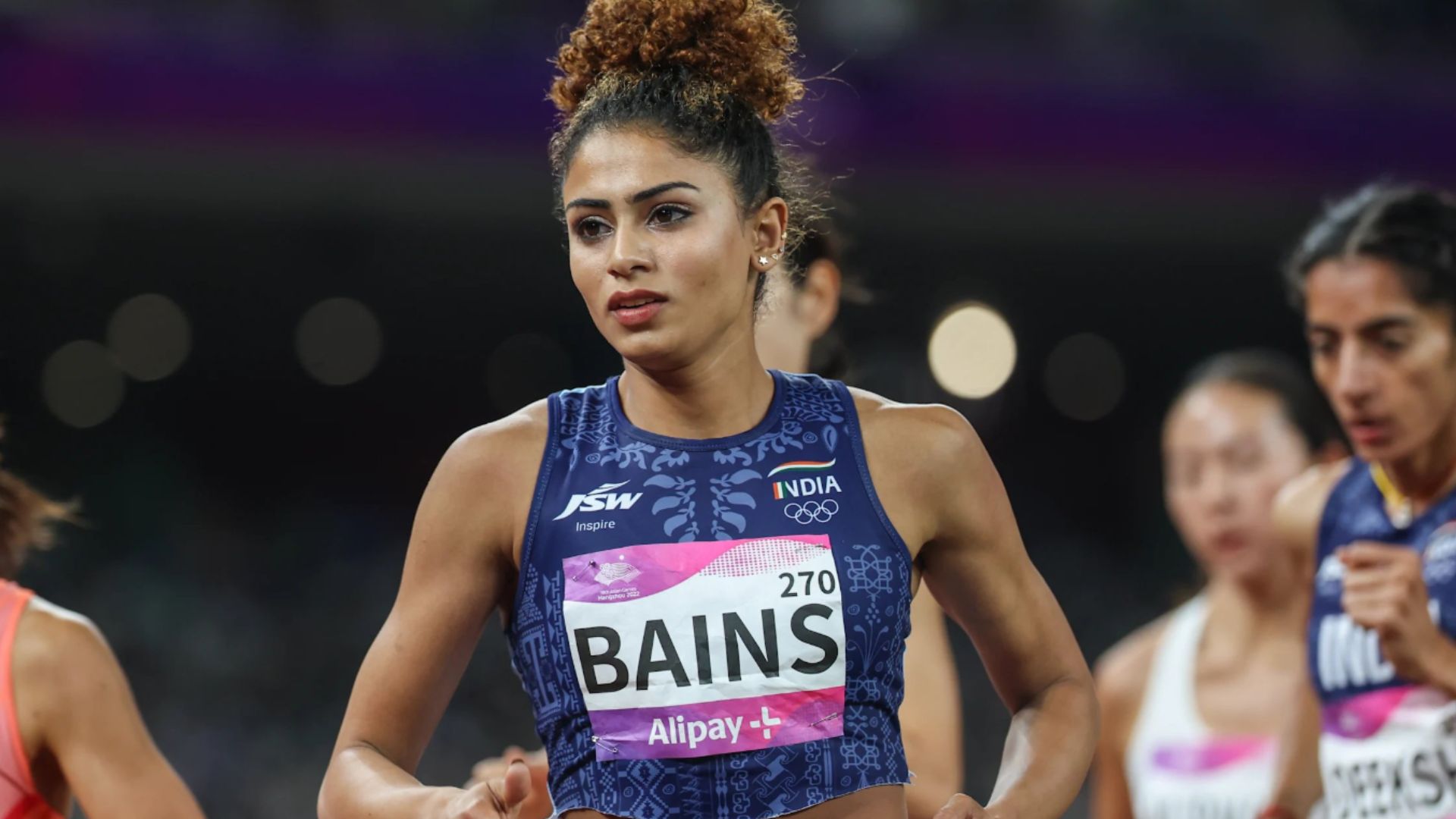
India’s leading long-distance runner Seema clinched the women’s 5000m title at the ongoing Federation Cup 2026 with a timing of 16:04.83s in a tactical final.
Representing Reliance, Seema controlled the race well and produced a strong finish to secure the gold medal ahead of Maharashtra’s Ravina, who clocked 16:46.21s for silver. IOCL athlete Sonam Parmar claimed bronze with a time of 16:48.11s.
Despite winning comfortably, the race remained much slower than Seema’s personal best of 15:16.20, which she registered earlier this season. After the event, Seema said the hot weather conditions and lack of strong competition affected the overall pace of the race.
The 25-year-old has emerged as one of India’s top distance runners in recent years. Originally from Himachal Pradesh, Seema has represented India at several major international competitions and won a historic silver medal in the women’s 5000m at the 2025 World University Games in Germany.
Seema also holds impressive credentials on the national circuit, including multiple national titles in the 5000m and 10,000m events. Earlier this year, she recorded a lifetime best of 15:16.20 in the women’s 5000m and a 10,000m personal best of 32:02.43, further cementing her status among Asia’s top distance runners.
With the Asian Games cycle approaching, Seema’s consistent performances continue to strengthen India’s hopes in women’s long-distance running.
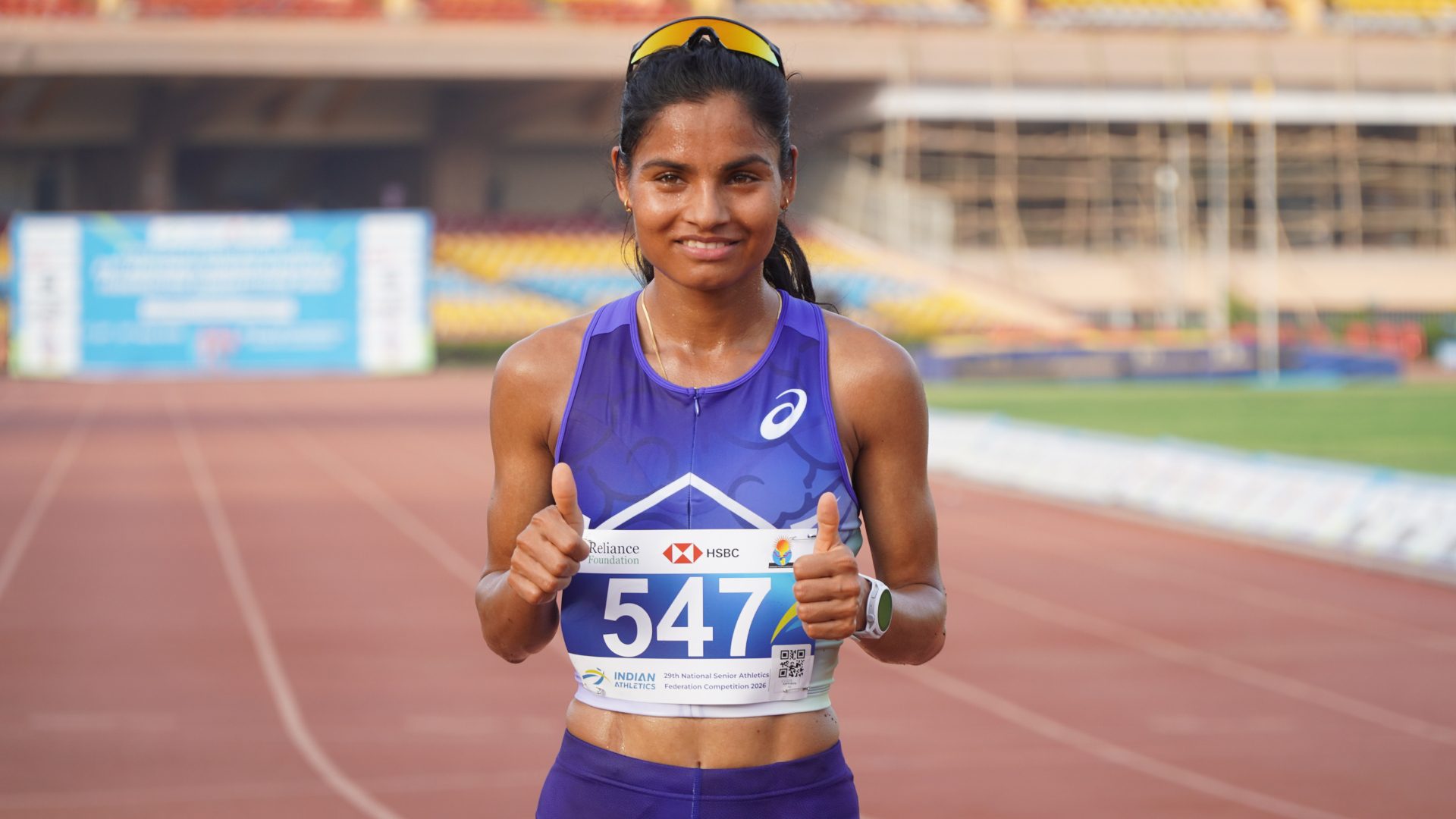
Just days after suffering heartbreak in the men’s 10,000m event, Maharashtra’s Shivaji M produced a strong comeback performance to win the men’s 5000m title at the ongoing Federation Cup 2026.
The 22-year-old clocked 14:14.43s to secure gold in a tightly contested final, edging past Vinod Singh (14:15.50s) and Deepak Bhatt (14:17.18s), who finished second and third respectively.
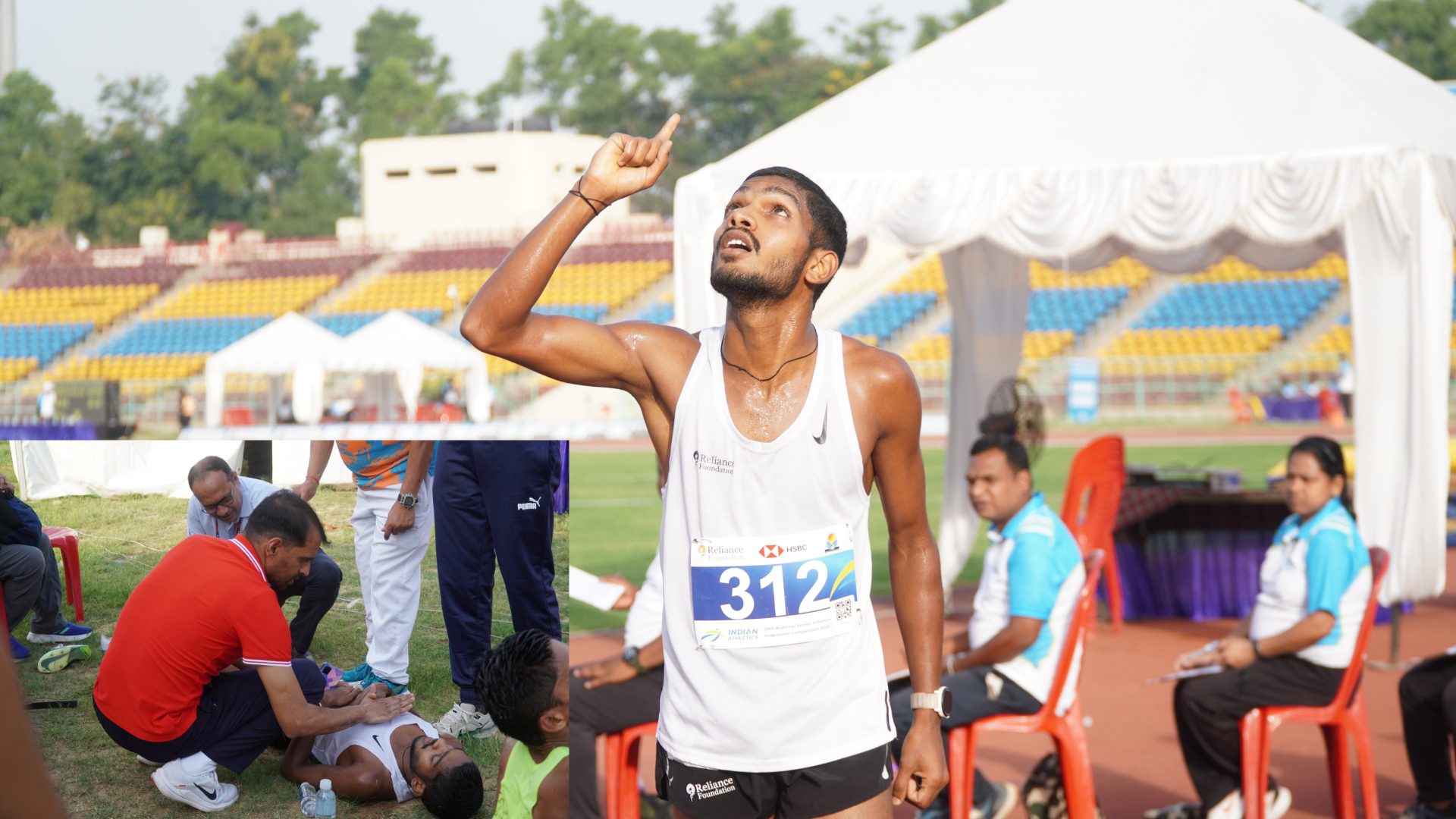
Shivaji’s victory carried extra significance considering what transpired earlier in the competition. On Day 1 of the Federation Cup, he had crossed the finish line first in the men’s 10,000m race, only to be disqualified later for lane infringement. The dramatic turn of events denied him what would have been one of the biggest wins of his career.
The disappointment did not end there. Following the exhausting 10,000m race, Shivaji also suffered severe dehydration and collapsed near the finish area, requiring immediate assistance from officials and support staff present at the venue. Despite the physical and emotional setback, the young distance runner returned to the track with remarkable resilience.
In the 5000m final, Shivaji looked composed throughout the race and timed his surge perfectly in the closing stages to pull away from the field. His winning time, although outside the demanding Commonwealth Games qualification standard of 13:19.64s, was enough to comfortably breach the qualification mark for the upcoming U23 Asian Athletics Championships.
The performance once again highlighted Shivaji’s potential as one of India’s promising long-distance runners. Bouncing back from a disqualification and physical exhaustion within the same competition is never easy, especially at a high-pressure national meet featuring some of the country’s best athletes.
For Shivaji, the Federation Cup may have begun with frustration and heartbreak, but it ended with redemption — and a gold medal that showcased both his endurance and mental strength.
Haryana’s Ravina Gayakwad produced one of the standout endurance performances of the Federation Cup 2026 in Ranchi, clinching gold in the women’s 10,000m race walk while also breaching the qualification standard for the Commonwealth Games.
Ravina clocked a lifetime best of 44:29.66 to take the title and comfortably go under the qualification mark of 44:44.58, strengthening her case for selection ahead of next year’s Commonwealth Games.
The performance marked a significant breakthrough for the Haryana athlete, who showed excellent control through the latter stages of the race to produce the fastest timing of her career at one of India’s most important domestic meets.
Behind her, Uttarakhand’s Soniya finished second, while Maharashtra’s Aarti Pawara secured third place after another competitive race among India’s leading walkers.
However, much of the attention after the event also centred around national record holder Priyanka Goswami, who finished fourth in 45:57.21 — outside the qualification mark on this occasion.
Despite that result, Priyanka’s Commonwealth Games hopes remain very much alive. Just last week, the Olympian had clocked an impressive 43:49 at the Offene BBM Straßengehen event in Berlin, comfortably achieving the required qualification standard overseas.
That now leaves selectors with an important decision to make.
While Ravina has strengthened her credentials dramatically with a qualification performance at the Federation Cup itself, Priyanka still owns the stronger overall timing this season and remains India’s most accomplished race walker internationally.
The final call will now rest with the Selection Committee, which must decide whether Priyanka’s earlier qualifying mark in Berlin will be sufficient for selection despite her fourth-place finish in Ranchi.
The situation once again highlights the increasingly competitive depth emerging in Indian race walking, particularly among women athletes, where domestic qualification battles are becoming nearly as intense as international competition itself.