
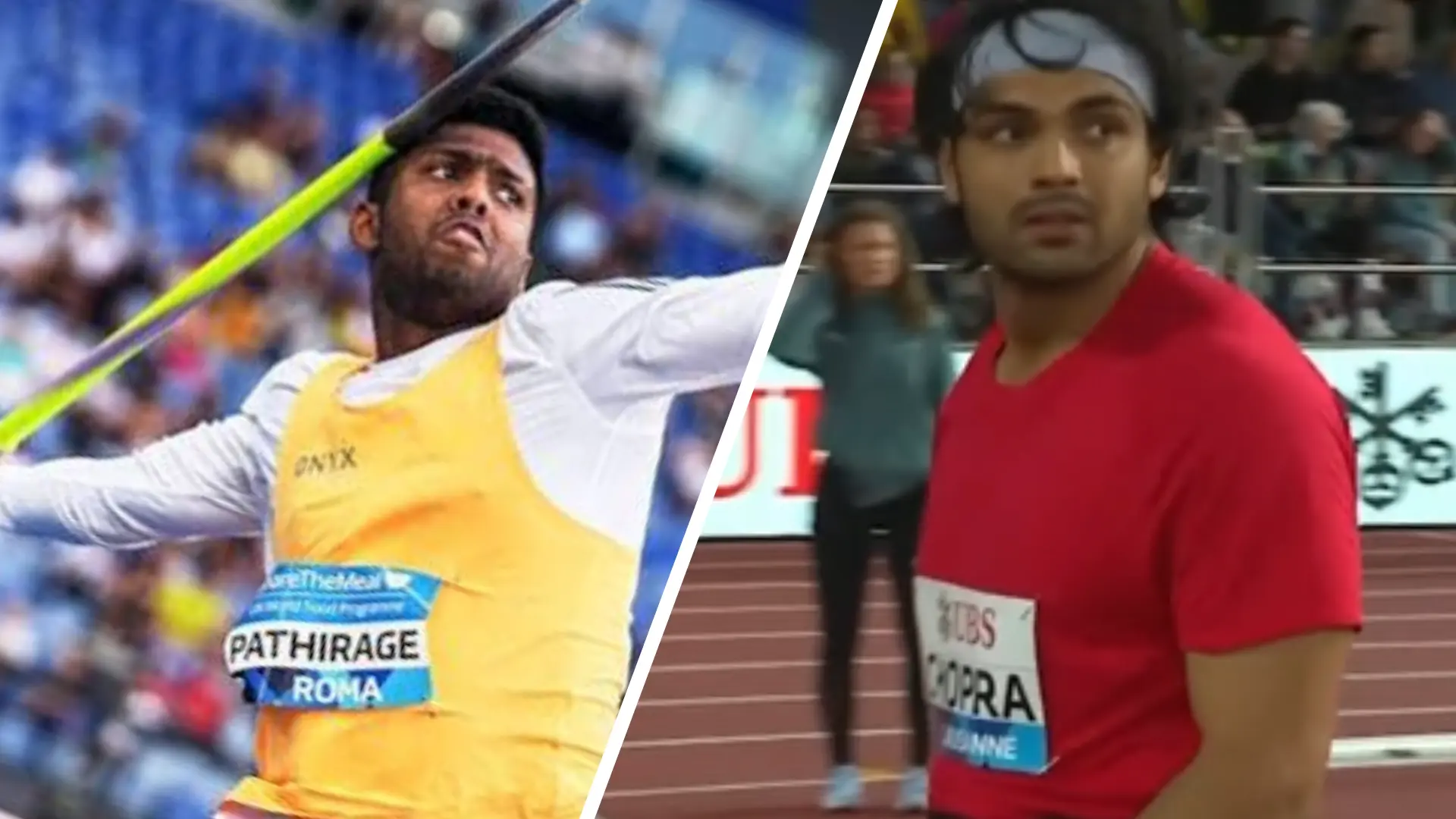
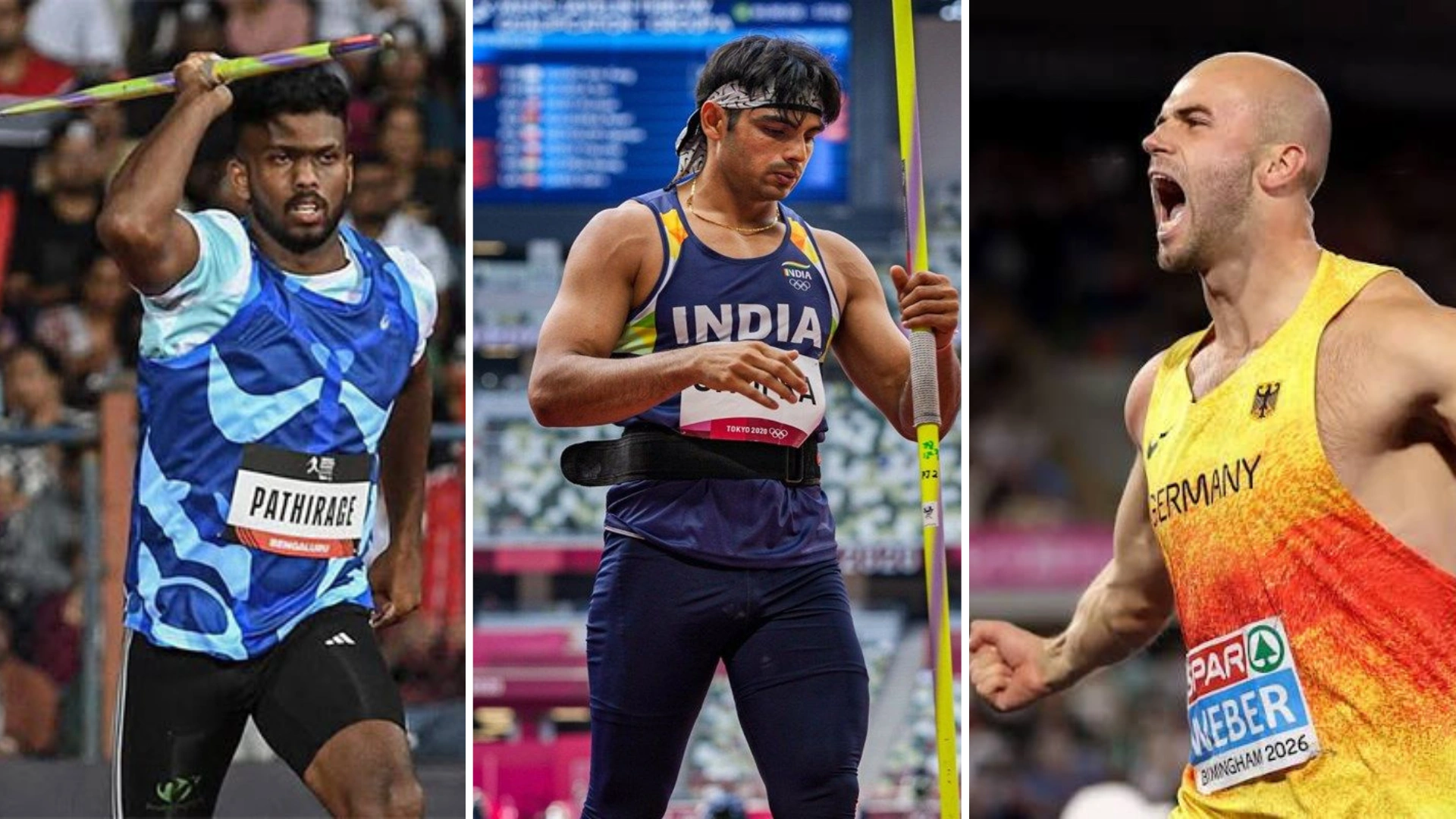
German javelin star Julian Weber enters the spotlight following his impressive performance after crossing the 90-meter barrier at the European Championships, setting the stage for an explosive showdown at the Lausanne Diamond League 2026. Taking centre stage alongside him on August 21 will be former Olympic and world champion Neeraj Chopra, with organisers confirming what is shaping up to be one of the most competitive fields in recent memory.
For Chopra, Athletissima marks his fourth appearance in Lausanne, a venue where he boasts a stellar history. The 28-year-old Indian athlete famously won the event in 2022 with a throw of 89.08m and successfully defended his crown in 2023 with 87.66m, before clinching a runner-up finish in 2024 with 89.49m. Returning this season following a lengthy injury lay-off, Chopra heads to Switzerland after securing a Commonwealth Games silver medal in Glasgow with a season-best throw of 85.83m. There, he finished just behind newly crowned Commonwealth Games champion and world leader Rumesh Pathirage, who claimed gold with an 89.75m throw.
Pathirage now leads a formidable entry list that also features two-time world champion Anderson Peters, Olympic gold medallist Keshorn Walcott, Jakub Vadlejch, Julian Weber, Curtis Thompson, and Simon Wieland. This star-studded lineup gives Chopra another golden opportunity to end an international title drought that has persisted since his victory at the NC Classic in July 2025.
As for how the night will pan out, the stage is set for a historic battle. Looking back at past editions, Lausanne has consistently served as a breeding ground for big distances, and Chopra’s own track record proves the venue brings out peak performances. With athletes like Weber riding high on momentum and Pathirage holding world-leading form, the elusive 90-meter barrier is well within reach on Lausanne’s fast runway. While the looming shadow of Budapest usually demands tactical pacing, the elite field is unlikely to hold back with Diamond League points, peak momentum, and heavy psychological advantages on the line. Expect Pathirage to set a ferocious early pace, while a progressively sharper Chopra and a surging Weber push right to the final round in a thrilling contest for the crown.
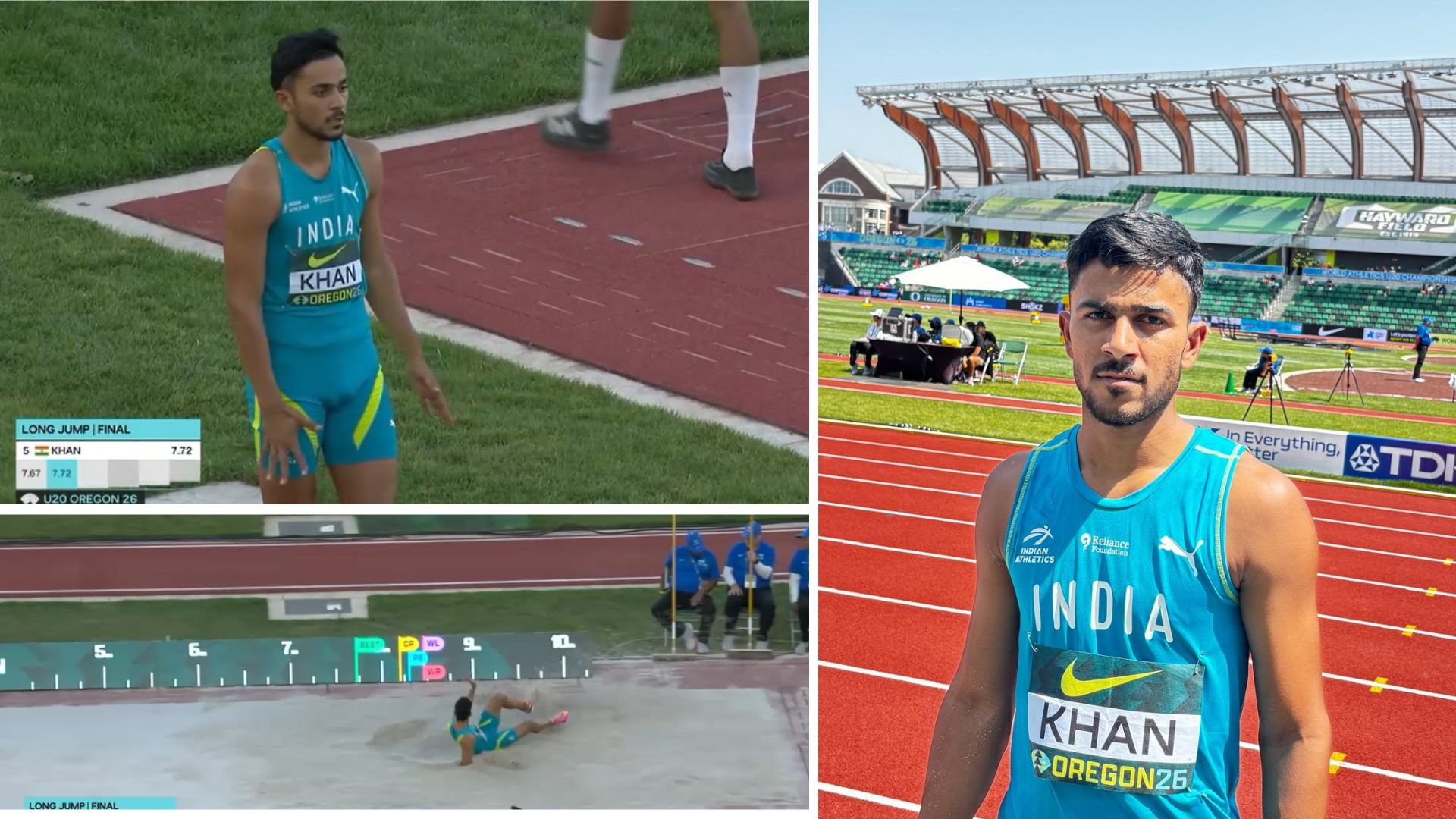
On the face of it, a bronze medal is merely a step on the podium. But intrinsically, Shahnavaz Khan’s recent podium finish at the World Athletics U20 Championships in Eugene, USA, is a powerful catalyst designed to jump-start the next generation of Indian long jumpers. In a sport where the country has traditionally excelled on the continent and made waves at the Commonwealth Games, anchored memorably by Murali Sreeshankar’s consecutive CWG silver medals, Khan’s feat represents a watershed moment.
While many believe Khan could have easily clinched gold had he matched his personal best, high-pressure global meets are notorious for breaking down athletes. Surviving the intensity and securing a medal at this elite world stage is Khan’s single greatest achievement.
The 18-year-old from Madhaipur village in Pratapgarh district, Uttar Pradesh, became the first Indian male long jumper to win a medal at the World Athletics U20 Championships, soaring to 7.84m. While the distance was well shy of his personal best of 8.30m recorded earlier this year, physical setbacks played spoiler.
“Normally, more the pressure, the better I do in a competition. But in Eugene, after the third jump, I started getting cramps. Then I couldn’t do it. It was cramp on muscles. This is the first time happening. I don’t understand anything,” Shahnavaz told PTI. “There was a little pain in the heel, so both the heel (pain) and cramp.”
Looking past the minor hiccup, he confirmed he will feature in the upcoming invitational Indian Athletics Final Series on September 10 in New Delhi, ahead of the Aichi-Nagoya Asian Games. “My aim is to better my PB of 8.30m and win a medal,” he stated to PTI regarding his targets in Japan.
History shows that the path from junior world podiums to senior Olympic and World Championship success is a proven breeding ground for global athletics legends. International icons like Cuba’s Iván Pedroso, who won world junior gold in 1990 before claiming Olympic gold and four world titles and South Africa’s Luvo Manyonga, who transitioned from a 2009 World Junior silver to Olympic silver and world gold, underline how foundational these junior events are.
On the home front, Khan’s journey mirrors the surging depth of Indian long jumping, transforming from isolated excellence into a sustained pipeline. Mentored by senior trailblazer Murali Sreeshankar, who shares training spaces with him, Khan joins an elite domestic vanguard alongside national record holder Jeswin Aldrin (8.42m) and women’s junior trailblazer Shaili Singh. Sitting comfortably third in the all-time Indian senior list with his 8.30m personal best and having already breached the Asian Games qualification mark, Khan’s journey from Pratapgarh to world junior history proves that India’s long jump revolution is a sustained movement.
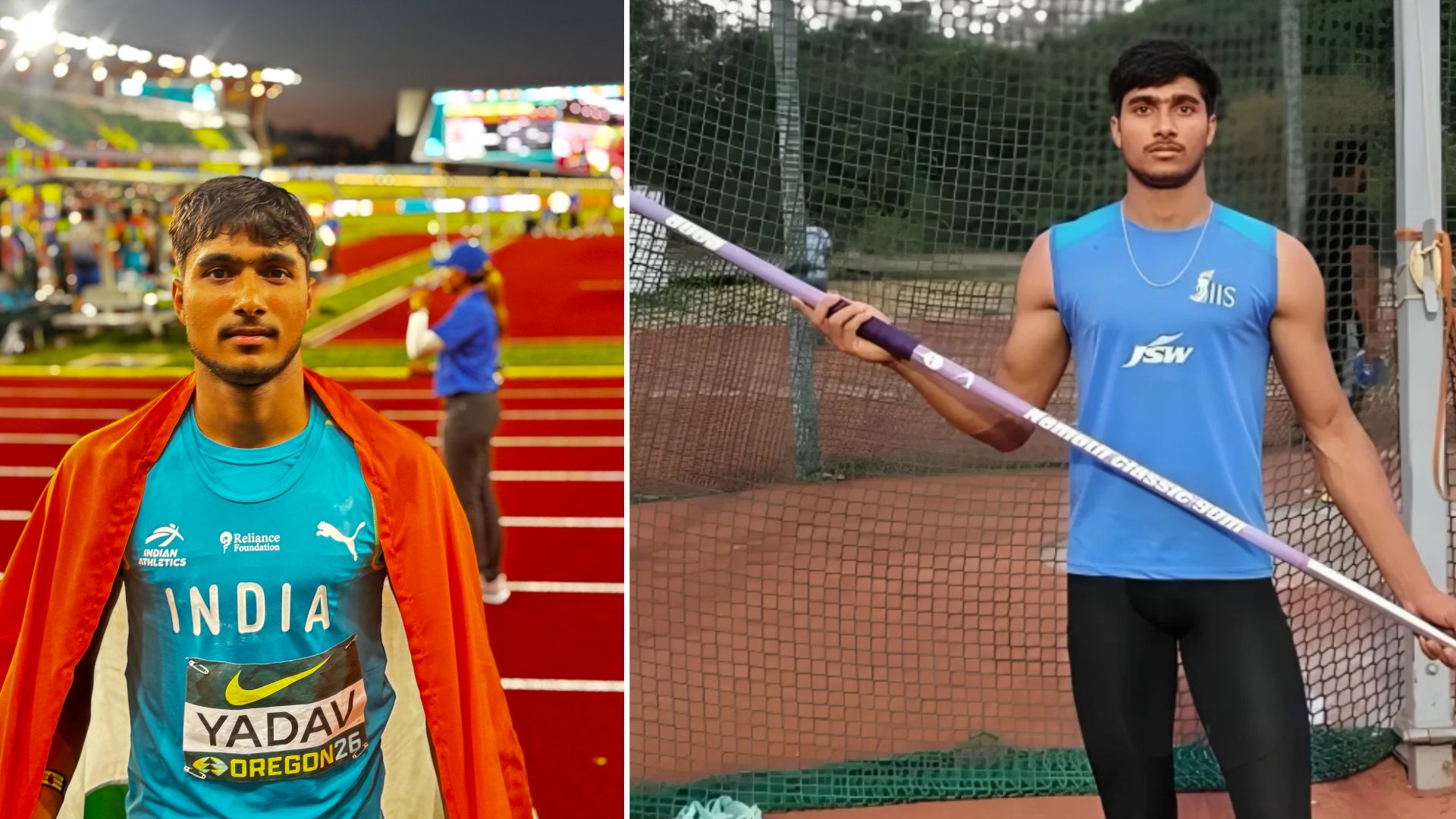
It is no surprise that the global dynamics of the javelin are undergoing a fundamental transformation. For decades, the event operated in the exclusive domain of Europe, but that geopolitical map in track and field is rapidly shifting. Led by a rising surge across Asia and Africa—evidenced by South Africa’s Jan-Hendrik Heymans taking gold and India’s Ashish Yadav securing silver in Eugene, Oregon—the event is democratizing. India is no longer an isolated anomaly riding solely on Neeraj Chopra’s individual genius; it is quietly establishing an enduring footprint on the global stage.
At 19 years old, Yadav’s podium finish at the World U20 Athletics Championships with a 74.09m effort marks a decisive moment for Indian athletics. Coming a decade after Chopra’s historic gold in 2016, Yadav became only the second Indian thrower to win a world junior javelin medal. What makes the achievement stand out is not merely the silverware, but what it signals about India’s maturing talent pipeline. The ability to identify raw athletic potential in non-traditional belts and convert it into world-class performance points to a structural shift in how the nation approaches Olympic discipline development.
Yadav’s journey is typical of India’s rural sports landscape. Coming from Mawaiya village in Mirzapur, Uttar Pradesh, sporting glory was the last thing on his mind—economic survival took priority. He assisted his father in milking cows and delivering milk to nearby households. His early training was rudimentary; the simple flight of wooden spears was what initially excited him.
Like any athlete’s turning point, Yadav’s came when his training environment changed: first at the Inspire Institute of Sport and later at the IIS-SAI centre in Hisar under coach Arvind Kumar. Within 15 months, sports nutrition, biomechanical monitoring, and targeted physical conditioning moulded a different athlete. He added bulk to his lean frame and increased his throw by almost 15 to 20 meters, pushing his distances close to 80m.
The path was far from easy. Yadav suffered a Posterolateral Corner (PLC) knee injury. Yet, despite that setback and the intense pressure of competing in his first global championship, he managed a 74.09m throw—speaking volumes of his resilience and hunger to win.
“I thought if I could do well in the sport, I could get a job,” Yadav revealed in an interview with Sportstar, reflecting the pragmatic mindset that initially drove his athletic pursuit.
Even as India consolidates its reputation as a formidable javelin nation, young throwers face the daunting shadow of Chopra’s achievements. Yadav is quick to distance himself from premature comparisons, recognizing the vast ground he still needs to cover.
“Neeraj bhai is an inspiration for taking up the javelin… I still have a lot more to do, so I don’t want to be compared to Neeraj bhai,” Yadav told The Indian Express following his medal-winning throw. “This medal is a good start for me because it proved that I can compete at the highest level and finish on the podium.”
As javelin dominance disperses beyond traditional strongholds, India’s ability to consistently place athletes on junior world podiums confirms that its grassroots system is finally matching its international ambitions. Yadav’s world junior silver demonstrates that India’s presence at the top of field athletics is evolving from a single superstar narrative into a sustained, long-term pipeline.
By Sushant Singh
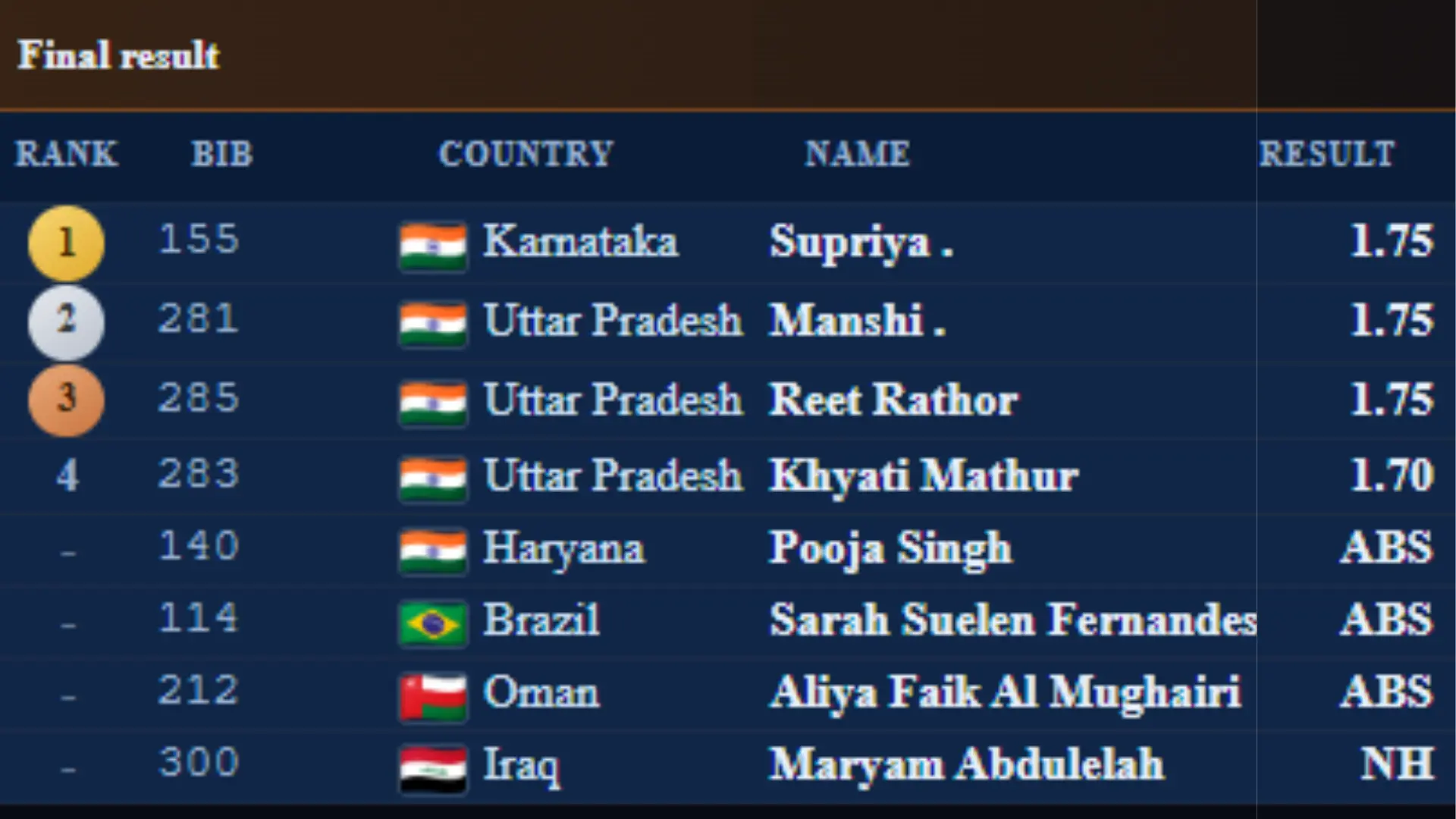
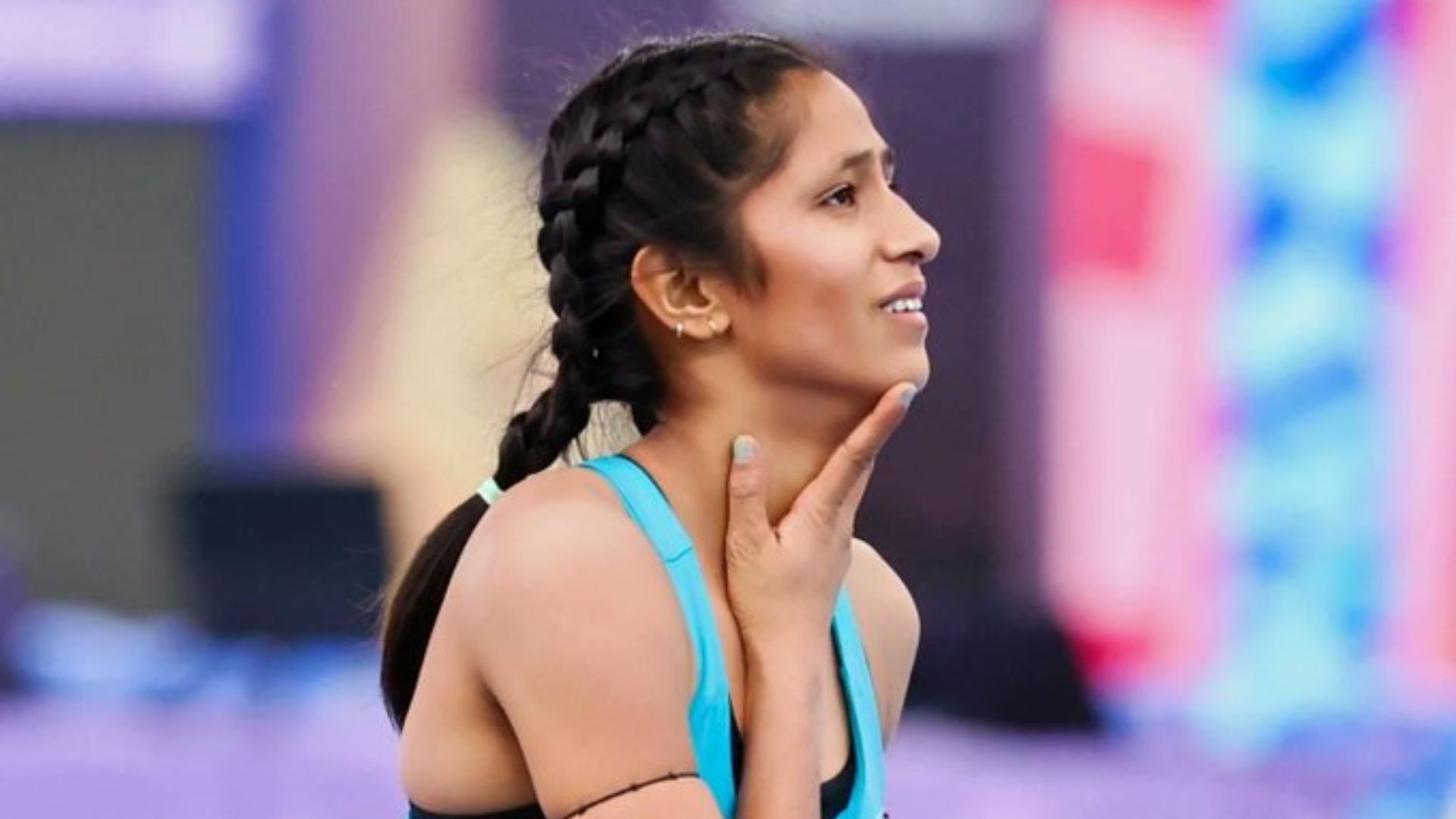
Many sports fans were disappointed after India’s senior women’s high jump national record holder and teen sensation Pooja finished 7th in the women’s high jump final at the World Athletics U20 Championships 2026.
Pooja successfully cleared 1.75m, 1.80m, and 1.84m during the final. The 19-year-old was unable to clear 1.87m and ended her campaign with a best clearance of 1.84m.
But why did India’s Pooja, one of the country’s biggest medal hopes, fail to deliver on the world’s biggest stage?
To understand that, we first have to understand why she was considered one of India’s strongest medal hopes at the World U20 Championships.
Pooja has been one of India’s most consistent athletes over the years. Since 2022, when her personal best was 1.71m, she has improved it to 1.93m.
Since 2023, she has competed in 29 high jump competitions and has cleared 1.80m or higher around 21 times. During this period, she continuously improved her personal bests to 1.82m, 1.85m, 1.89m, and finally 1.93m.
What is even more interesting is that she has often produced her personal best performances at the biggest competitions of her career.
– 1.82m — her first-ever clearance above 1.80m, achieved while winning silver at the Asian U20 Championships, which was the biggest competition of her life at that time.
– 1.83m — at the 2024 World Athletics U20 Championships.
– 1.85m — at the 2024 Junior Nationals in the heptathlon, an event she was competing in for the first time in her life.
The biggest performance of her career came at the Asian Athletics Championships 2025, where she was the youngest member of the Indian contingent yet stunned everyone by winning gold and becoming Asian champion with a clearance of 1.89m.
Later, at the Asian U20 Championships, she cleared 1.93m, shattering the Indian national record and becoming the first Indian woman ever to clear that height.
During the 2024 South Asian Games, in an interview with NNIS Sports, Pooja and her former coach Balwan Parta said:
“She is a big-game player. She never posts her PBs during practice, but always does it in competition.”
So what really happened at the biggest competition of her life, the World Athletics U20 Championships 2026?
Pooja had been saying since the beginning of this year that World U20 was her top priority for the season, and she had been training specifically for it.
She started the season early, competing at the Asian Indoor Championships, where she won silver with 1.87m — then the second-best clearance of her career, achieved in her first competition of the season.
Just one competition later, she improved her personal best to 1.90m. Then, at the Asian U20 Championships at Indira Gandhi Stadium on 29 May 2026, she again produced a major performance. Interestingly, almost exactly a year earlier, on 30 May 2025, she had cleared 1.89m to become Asian champion.
The peaking of the body in athletics, especially in jumps, works very differently. Coaches and support staff often have to plan the entire competition calendar before the season even begins — deciding which competitions to target, which to skip, and when the athlete should reach peak condition.
This year has been challenging for many athletes, not just Pooja, with the Asian Games and Commonwealth Games falling in the same year. For Pooja, the challenge was even greater, as she had to manage three major competitions, including the World U20 Championships.
Pooja had not originally included the Commonwealth Games 2026 in her competition calendar, but after achieving the qualification standard, she competed in Glasgow and finished 8th. Less than nine days later, she was competing again at the World U20 Championships.
Another interesting point is that the top five athletes in the world U20 season rankings before the championship were:
- Izobelle Louison-Roe
- Pooja
- Lilianna Bátori
- Ella Mikkola
- Aitana Alonso
Remarkably, four of those five athletes finished in the top four at the World Championships, taking gold, silver, bronze, and fourth place. Only Pooja finished outside the top five.
NNIS Sports has also learned that a few days before leaving for the Commonwealth Games, Pooja spent some time in Delhi for visa appointments. She had been planning to join an international training camp in Poland, but due to visa delays she remained in Delhi for several days and even trained at the Jawaharlal Nehru Stadium instead of staying at her regular training base, the Anju Bobby George Academy in Bengaluru.
She later returned to Bengaluru after continued visa delays and eventually planned to travel directly to Glasgow for the Commonwealth Games. This may have affected her preparation
Although she is only 19 years old, expectations around her have risen because she has performed at such a high level and made people believe that she could be India’s next big thing in the jumps.
This disappointing campaign will surely give her valuable experience. The expectation now is that she will learn from this setback and bounce back strongly, with the Asian Games 2026 likely to be her next major target, where she is expected to represent India in the women’s high jump.
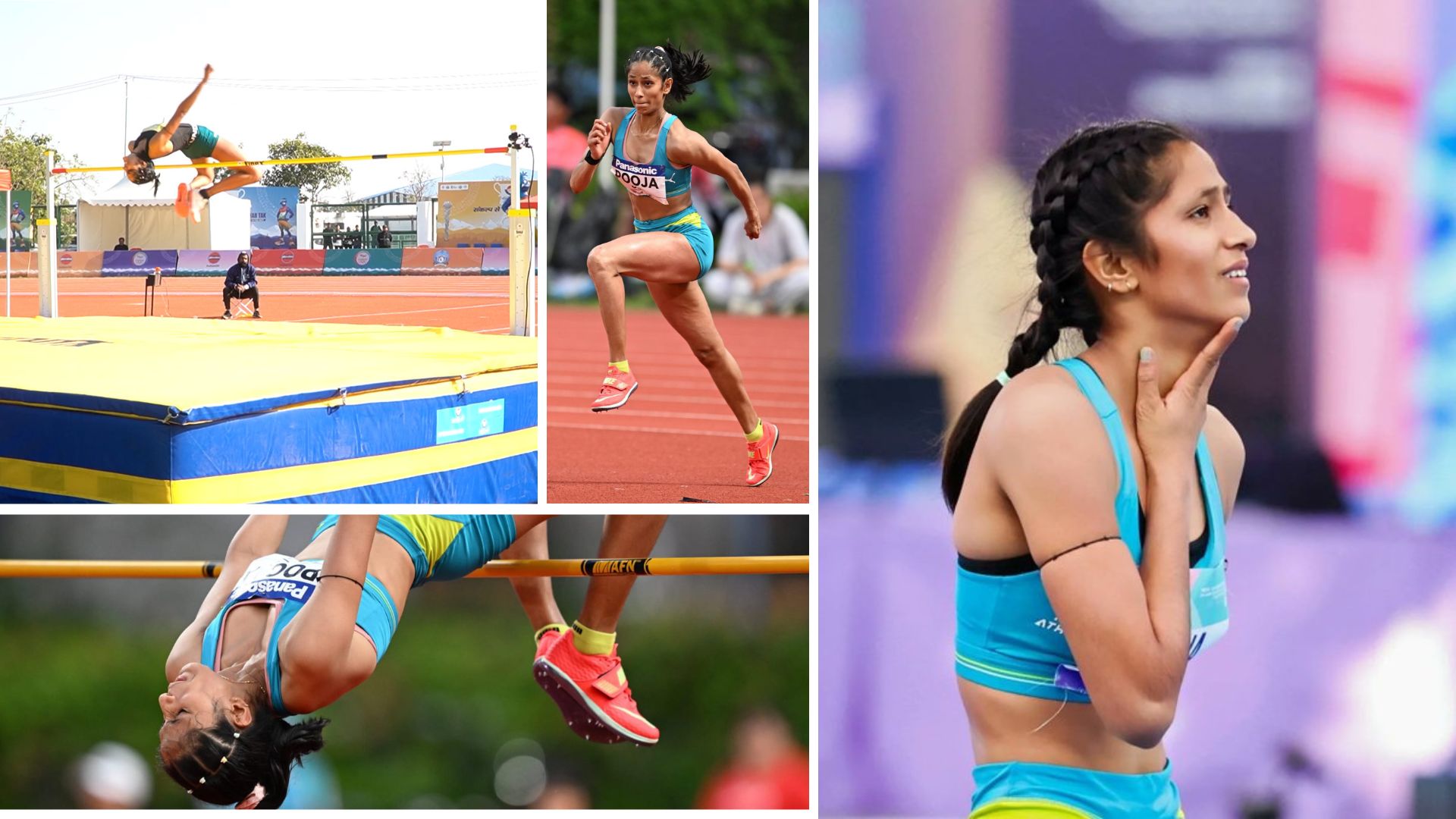
India’s Pooja finished seventh in the women’s high jump final at the World Athletics U20 Championships 2026, bringing her campaign to an end after a best clearance of 1.84m.
The 19-year-old entered the competition as one of India’s biggest medal hopes and produced a composed performance through the early stages of the final. She successfully cleared 1.75m, followed by 1.80m and 1.84m, progressing through each height before facing the next challenge at 1.87m.
However, Pooja was unable to clear 1.87m, ending her competition with a best mark of 1.84m and securing seventh place overall.
Pooja’s Final Series
- 1.75m – Cleared
- 1.80m – Cleared
- 1.84m – Cleared
- 1.87m – Unsuccessful
The result comes after a breakthrough season for the young Indian high jumper. Pooja has established herself as one of the country’s leading emerging athletes in the event, producing significant performances at both domestic and international competitions.
While she was unable to challenge for the podium in Eugene, reaching the World U20 final itself provided Pooja with valuable experience at a major global championship. The final brought together the leading junior high jumpers from around the world, providing a demanding test for the 19-year-old.
Her clearance of 1.84m was enough to place her seventh in the final standings. Although the outcome fell short of the medal that India would have hoped for from one of its leading medal prospects, Pooja now has the experience of competing in a global championship final to build on in the next stage of her career.
With her World U20 campaign now complete, Pooja will look to carry the lessons from Eugene into future international competitions as she continues her development among India’s promising young athletics talents.
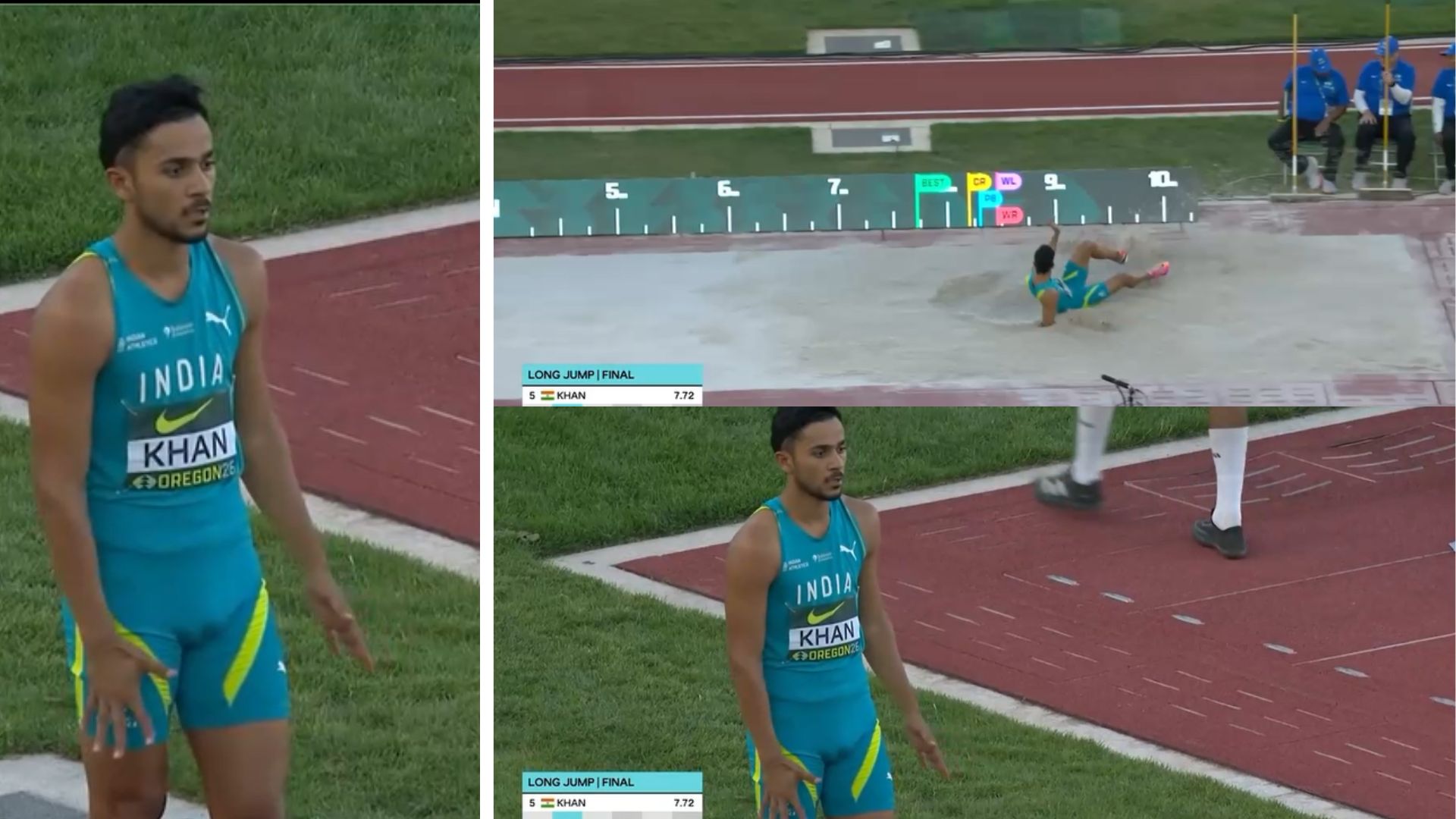
Shahnavaz Khan has soared to a brilliant bronze medal for India in the men’s long jump at the World Athletics U20 Championships 2026, delivering another big moment for the country’s rising athletics stars.
The Indian jumper produced a superb 7.84m on his third attempt to secure the podium, saving his biggest leap for when it mattered most.
Shahnavaz opened with 7.67m before improving to 7.72m in his second attempt. He then unleashed his best effort of 7.84m in the third round. His remaining jumps measured 7.52m, 7.83m and 5.37m.
It was a fiercely competitive final, with the gold and silver medals decided by just 1cm. Yet the biggest mark of the contest was that not a single athlete managed to breach the eight-metre barrier.
Italy’s Daniele Inzoli won gold with 7.97m, while Australia’s Mason McGroder took silver with 7.96m. Shahnavaz’s 7.84m earned him a well-deserved bronze.
The medal is India’s third at these championships and the second of the day.
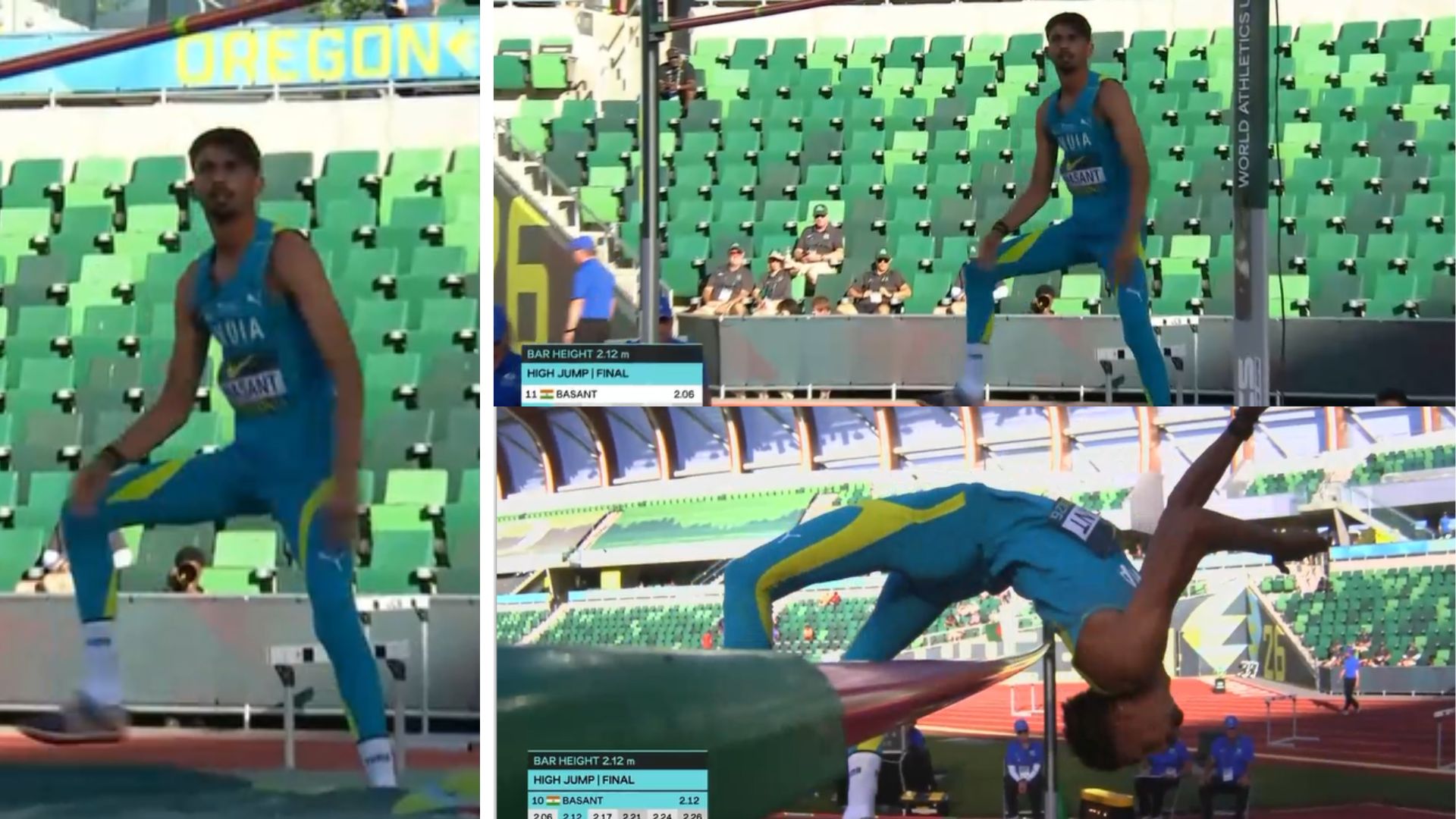
Earlier, Basant delivered a sensational silver in the men’s high jump, matching his lifetime best of 2.21m.
Two medals in a day. Three medals at the championships.
And another young Indian jumper making his mark on the world stage.
Basant delivered a breakthrough performance on the world junior stage, winning silver in the men’s high jump at the World Athletics U20 Championships and matching his lifetime best of 2.21m.
The young Indian high jumper showed composure under pressure throughout the competition, clearing 2.06m on his first attempt, 2.12m on his second and 2.17m on his first before producing his best when it mattered most — clearing 2.21m on his second attempt.
The clearance equalled Basant’s lifetime best and secured India its second medal of the championships.
It was an exceptionally tight contest at the top. Algeria’s Younes Ayachi, Basant and USA’s Otis Poole all cleared 2.21m, meaning the medals had to be decided on countback.
Ayachi took gold, Basant claimed silver and Poole finished with bronze, with the order determined by the number of attempts taken at the earlier heights.
Basant’s progression:
2.06m – first attempt
2.12m – second attempt
2.17m – first attempt
2.21m – second attempt
For Basant, the silver is a major moment on the international stage and a strong statement of his potential in Indian high jump.