
The South Zone athletics 2026 results have a clear headline: Tamil Nadu won the overall title at the 37th South Zone Junior Athletics Championships in Puducherry, while Karnataka finished second. More than 1,500 athletes from seven states and union territories competed over three days at the Indira Gandhi Sports Complex.
However, the Athletics Federation of India (AFI) has not yet published the complete result sheets for this meet. This page therefore lists every result that published reports have confirmed so far, along with the source for each one. We will also add the full event-wise results here as soon as the official sheets are out.
South Zone Junior Athletics Championships 2026 at a glance
- Dates: 16 to 18 September 2026
- Venue: Indira Gandhi Sports Complex, Uppalam, Puducherry
- Overall champions: Tamil Nadu
- Runners-up: Karnataka
- Teams: Andhra Pradesh, Karnataka, Kerala, Lakshadweep, Puducherry, Tamil Nadu and Telangana
- Age groups: Under 14, Under 16, Under 18 and Under 20
- Meet records confirmed so far: four
Jump to: Overall title Meet records Medal winners Teams and age groups What comes next Official results
South Zone athletics 2026 results: Tamil Nadu take the overall title
Tamil Nadu finished first in the overall standings, and Karnataka took second place. Dinamalar reported the result after the closing ceremony in Puducherry. However, the points table is not public yet, so the final scores of the seven teams are still unknown.
Karnataka’s challenge also came with records. For example, athletes from Alva’s in Moodbidri won 26 medals and set five meet records, according to Udayavani.
Meet records at the South Zone athletics 2026 championships
Four meet records are confirmed so far. Above all, two of them had stood for more than 20 years.
| Event | Athlete | Team | New record | Old record |
|---|---|---|---|---|
| U20 women’s heptathlon | Tholem Sriteja | Telangana | 4,965 points | 4,817 points (1994) |
| U20 men’s hammer throw | Salim | Karnataka | 64.09m | 62.44m (2003) |
| U20 women’s 3000m steeplechase | K. Swapna | Telangana | 11:25.39 | Not reported |
| U18 women’s javelin throw | J.V. Joshna | Tamil Nadu | Not reported | Stood for four years |
Tholem Sriteja breaks a 32-year-old heptathlon record
Tholem Sriteja of Telangana scored 4,965 points in the U20 women’s heptathlon. As a result, she broke the record of 4,817 points that Sumavathi of Karnataka had set in 1994. Sriteja is 19 and comes from Bhadrachalam. She also won the heptathlon gold at the 2025 National Junior Championships, according to Telangana Today.
Salim throws 64.09m in the hammer
Salim, from Chikkamagaluru in Karnataka, won the U20 men’s hammer throw with 64.09m. That throw beat a South Zone record of 62.44m, which had stood since 2003.
Records for K. Swapna and J.V. Joshna
In addition, K. Swapna of Telangana set a meet record of 11:25.39 in the women’s 3000m steeplechase. J.V. Joshna of Tamil Nadu also won the U18 women’s javelin throw. In doing so, she broke a record that had stood for four years.
South Zone athletics 2026 results: confirmed medal winners
The table below lists every medal that published reports have confirmed. However, it is not the full result list, because AFI has not released the official sheets yet.
| Athlete | Event | Medal | Mark | Age group | Team or institution |
|---|---|---|---|---|---|
| Tholem Sriteja | Heptathlon | GOLD | 4,965 pts (record) | U20 women | Telangana |
| Salim | Hammer throw | GOLD | 64.09m (record) | U20 men | Karnataka |
| K. Swapna | 3000m steeplechase | GOLD | 11:25.39 (record) | U20 women | Telangana |
| J.V. Joshna | Javelin throw | GOLD | Record; mark not reported | U18 women | Tamil Nadu |
| Nallavelli Anandi | 400m | GOLD | 56.42 | U18 women | Telangana |
| Nallavelli Anandi | 200m | BRONZE | 25.66 | U18 women | Telangana |
| Anandi (relay team) | Medley relay | BRONZE | – | U18 women | Telangana |
| Santhosh Krishnan | 80m hurdles | GOLD | 10.50 | U16 boys | Tamil Nadu |
| Sai Aditya | 600m | GOLD | 1:24 | U16 boys | Telangana |
| Sai Aditya (relay team) | Medley relay | GOLD | – | U16 boys | Telangana |
| Uday Kiran | Long jump | GOLD | 6.86m | Not reported | Telangana |
| Sushant Reddy | 3000m steeplechase | BRONZE | – | U20 men | Telangana |
| Manoj | 5000m | BRONZE | – | U20 men | Telangana |
| Sakshi Christina Karkada (relay team) | Medley relay | GOLD | – | U18 women | Karnataka |
| Sakshi Christina Karkada | 100m hurdles | BRONZE | – | U18 women | Karnataka |
| Amirtha J | 3000m | GOLD | – | U20 women | PSGR Krishnammal College, Coimbatore |
| Brinda A | High jump | GOLD | – | U20 women | PSGR Krishnammal College, Coimbatore |
| Brinda A (relay team) | 4x100m relay | GOLD | – | U20 women | PSGR Krishnammal College, Coimbatore |
| Yuvan Sharavan | 400m | GOLD | – | U20 men | PSG College of Arts & Science, Coimbatore |
| Yuvan Sharavan | 400m hurdles | SILVER | – | U20 men | PSG College of Arts & Science, Coimbatore |
| Yuvan Sharavan (relay team) | 4x400m relay | SILVER | – | U20 men | PSG College of Arts & Science, Coimbatore |
How to read this table. Where a report did not give the age group, we have taken it from the official programme. For example, the 600m is only run in the Under 16 group, and the 400m hurdles only in the Under 20 group. A dash means the report did not give a time or distance.
Tamil Nadu
Santhosh Krishnan won the U16 boys’ 80m hurdles in 10.50 seconds. He trains at the SDAT sports hostel in Madurai. In addition, three athletes from Coimbatore colleges won gold. Brinda A won the high jump and the 4x100m relay, while Amirtha J won the U20 women’s 3000m. Yuvan Sharavan also won the 400m, and then took silver in the 400m hurdles and the 4x400m relay.
Telangana
Telangana athletes feature heavily in the confirmed results. Nallavelli Anandi won the U18 women’s 400m in 56.42 seconds, and then added bronze in the 200m in 25.66. Similarly, Uday Kiran won the long jump with 6.86m, while Sai Aditya won the 600m and a medley relay gold.
Karnataka
Sakshi Christina Karkada of Mangaluru won gold in the U18 medley relay as well as bronze in the U18 100m hurdles. She now plans to compete at the junior nationals in Chennai, according to Daijiworld.
Who competed: teams, age groups and rules
Seven teams make up the South Zone: Andhra Pradesh, Karnataka, Kerala, Lakshadweep, Puducherry, Tamil Nadu and Telangana. Each of them could enter two athletes per event in each age group. In addition, an athlete could take part in two individual events.
| Age group | Born between |
|---|---|
| Under 14 | 19 September 2012 and 18 September 2014 |
| Under 16 | 19 September 2010 and 18 September 2012 |
| Under 18 | 19 September 2008 and 18 September 2010 |
| Under 20 | 19 September 2006 and 18 September 2008 |
The programme covered track events, field events, combined events and relays, so every age group had its own set of events. You can still see the timetable on the AFI page for the meet.
What comes next after the South Zone athletics 2026 meet
The junior season now moves to the 41st National Junior Athletics Championships. Chennai will host that meet at the JN Stadium from 23 to 27 October 2026. Online entries close on 9 October, and every athlete needs the AFI entry standard for the event. Therefore, athletes and coaches should check their South Zone marks against the entry standards in the AFI circular before the deadline.
Meanwhile, senior athletes are in action this week at the National Open Athletics Championships 2026 in New Delhi.
Official South Zone athletics 2026 result sheets: current status
As of 5 October 2026, the AFI results archive has the North Zone Junior results. However, it does not yet have the South, East or West Zone results. Until AFI publishes them, these links are the most useful:
Last year: South Zone 2025 in Guntur
Guntur hosted the 36th edition from 23 to 25 September 2025. Neil Samraj of Tamil Nadu won the U18 100m there in 10.86 seconds. Since then, he has broken the U18 100m national record twice in one day. Similarly, Mohammed Ashfaq of Kerala won the U20 400m in 47.31 seconds.
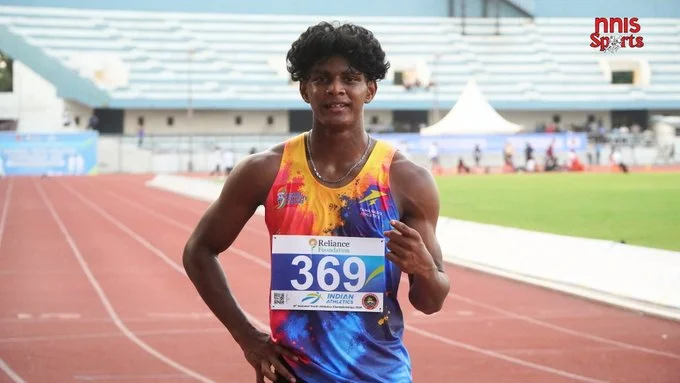
That is why the South Zone meet matters. It is often the first place where the next national record holder wins a title.
The 65th National Open Athletics Championships 2026 will take place from 8 to 11 October at the Jawaharlal Nehru Stadium in New Delhi. Over four days, India’s senior athletes will contest 48 finals, from the men’s pole vault on Thursday afternoon to the men’s 4x400m relay on Sunday night.
This page has the full day-wise schedule with timings in IST, as well as the time of every final, the entry standards and the rules for athletes. We will also add results here after each session, so athletes, coaches and families can follow the whole meet in one place.
National Open Athletics Championships 2026 at a glance
- Dates: Thursday 8 October to Sunday 11 October 2026
- Venue: Jawaharlal Nehru Stadium, New Delhi
- Organiser: Athletics Federation of India (AFI)
- Finals: 48 in total, with 21 men’s and 21 women’s individual events as well as six relays
- Sessions: mornings from 7:30 am, with the race walks before 6:00 am; evenings start between 4:00 pm and 5:20 pm and end by about 8:00 pm
- Official schedule: download the schedule PDF
Jump to: Final timings Day 1 Day 2 Day 3 Day 4 Results Entry standards
National Open Athletics Championships 2026 schedule: how the four days break down
The programme builds towards the weekend. Thursday has seven finals, Friday has 14 and Saturday has 11, while Sunday closes the meet with 16. Each day runs in two sessions: a short morning session for the combined events and race walks, and then a long evening session under lights for the track and field finals.
Finals per day

When is each final? Timings for every event
If you are following one athlete or one event, this is the table you need. All timings are in IST and come from the official schedule (version 1.0, dated 30 September 2026).
Track finals
| Event | Men’s final | Women’s final |
|---|---|---|
| 100m | Fri 9 Oct, 6:30 pm | Thu 8 Oct, 6:30 pm |
| 200m | Sun 11 Oct, 6:10 pm | Sun 11 Oct, 6:00 pm |
| 400m | Fri 9 Oct, 6:10 pm | Fri 9 Oct, 6:00 pm |
| 800m | Sun 11 Oct, 6:30 pm | Sun 11 Oct, 6:20 pm |
| 1500m | Fri 9 Oct, 7:35 pm | Fri 9 Oct, 7:25 pm |
| 5000m | Sat 10 Oct, 7:40 pm | Thu 8 Oct, 7:45 pm |
| 10,000m | Thu 8 Oct, 8:05 pm | Sat 10 Oct, 7:00 pm |
| 110m / 100m hurdles | Fri 9 Oct, 6:50 pm | Fri 9 Oct, 7:10 pm |
| 400m hurdles | Sun 11 Oct, 5:30 pm | Sun 11 Oct, 5:45 pm |
| 3000m steeplechase | Sun 11 Oct, 7:00 pm | Sun 11 Oct, 7:20 pm |
Field events, race walks, relays and combined events
| Event | Men’s final | Women’s final |
|---|---|---|
| High jump | Sat 10 Oct, 5:20 pm | Sun 11 Oct, 5:50 pm |
| Pole vault | Thu 8 Oct, 4:25 pm | Sat 10 Oct, 4:40 pm |
| Long jump | Sun 11 Oct, 6:35 pm | Sat 10 Oct, 6:40 pm |
| Triple jump | Fri 9 Oct, 6:30 pm | Thu 8 Oct, 7:10 pm |
| Shot put | Sat 10 Oct, 4:45 pm | Fri 9 Oct, 6:20 pm |
| Discus throw | Fri 9 Oct, 6:40 pm | Thu 8 Oct, 6:40 pm |
| Hammer throw | Thu 8 Oct, 4:45 pm | Sat 10 Oct, 5:00 pm |
| Javelin throw | Sun 11 Oct, 5:20 pm | Sat 10 Oct, 6:15 pm |
| Half marathon race walk | Fri 9 Oct, 5:45 am | Fri 9 Oct, 5:47 am |
| Marathon race walk | Sun 11 Oct, 5:40 am | Sun 11 Oct, 5:42 am |
| 4x100m relay | Sat 10 Oct, 6:45 pm | Sat 10 Oct, 6:35 pm |
| 4x400m relay | Sun 11 Oct, 7:50 pm | Sun 11 Oct, 7:40 pm |
| Decathlon / Heptathlon | Ends Fri 9 Oct, 7:45 pm (1500m) | Ends Sun 11 Oct, 6:40 pm (800m) |
In addition, the two mixed relays are on separate nights: the 4x100m mixed relay final is on Fri 9 Oct, 8:00 pm and the 4x400m mixed relay final is on Sat 10 Oct, 8:00 pm.
National Open Athletics Championships 2026: full day-wise schedule
Rows marked FINAL decide medals. Everything else is either a heat, a qualification round or a combined-event discipline.
Day 1: Thursday 8 October 2026 (7 finals)
The meet opens with the decathlon 100m at 7:30 am. After that, the men’s pole vault decides the first medals from 4:25 pm. In addition, the women’s 100m has its heats and its final on the same evening.
| Time (IST) | Event | Category | Round |
|---|---|---|---|
| 7:30 am | 100m | Men | Decathlon |
| 8:15 am | Long jump | Men | Decathlon |
| 8:30 am | Discus throw | Men | Qualification, Group A |
| 9:30 am | Shot put | Men | Decathlon |
| 9:40 am | Discus throw | Men | Qualification, Group B |
| 4:00 pm | 400m | Women | Round 1 |
| 4:25 pm | Pole vault | Men | FINAL |
| 4:30 pm | 400m | Men | Round 1 |
| 4:40 pm | High jump | Men | Decathlon |
| 4:45 pm | Hammer throw | Men | FINAL |
| 5:00 pm | 100m | Men | Round 1 |
| 5:30 pm | 100m | Women | Round 1 |
| 6:10 pm | 100m | Men | Semi-final |
| 6:30 pm | 100m | Women | FINAL |
| 6:40 pm | Discus throw | Women | FINAL |
| 6:50 pm | 400m | Men | Decathlon |
| 7:10 pm | Triple jump | Women | FINAL |
| 7:10 pm | 400m | Women | Semi-final |
| 7:25 pm | 400m | Men | Semi-final |
| 7:45 pm | 5000m | Women | FINAL |
| 8:05 pm | 10,000m | Men | FINAL |
Day 2: Friday 9 October 2026 (14 finals)
The half marathon race walks start before sunrise. The evening has both 400m finals, the men’s 100m final and the last event of the decathlon.
| Time (IST) | Event | Category | Round |
|---|---|---|---|
| 5:45 am | Half marathon race walk | Men | FINAL |
| 5:47 am | Half marathon race walk | Women | FINAL |
| 7:30 am | 110m hurdles | Men | Decathlon |
| 8:10 am | Discus throw | Men | Decathlon |
| 9:40 am | Pole vault | Men | Decathlon |
| 5:00 pm | Javelin throw | Men | Decathlon |
| 5:30 pm | 100m hurdles | Women | Round 1 |
| 6:00 pm | 400m | Women | FINAL |
| 6:10 pm | 400m | Men | FINAL |
| 6:20 pm | Shot put | Women | FINAL |
| 6:30 pm | Triple jump | Men | FINAL |
| 6:30 pm | 100m | Men | FINAL |
| 6:40 pm | Discus throw | Men | FINAL |
| 6:50 pm | 110m hurdles | Men | FINAL |
| 7:10 pm | 100m hurdles | Women | FINAL |
| 7:25 pm | 1500m | Women | FINAL |
| 7:35 pm | 1500m | Men | FINAL |
| 7:45 pm | 1500m | Men | FINAL Decathlon (final event) |
| 8:00 pm | 4x100m mixed relay | Mixed | FINAL |

Day 3: Saturday 10 October 2026 (11 finals)
The heptathlon begins in the morning. The evening has both 4x100m relays, the women’s 10,000m and the men’s 5000m, and ends with the 4x400m mixed relay.
| Time (IST) | Event | Category | Round |
|---|---|---|---|
| 7:30 am | 100m hurdles | Women | Heptathlon |
| 8:15 am | High jump | Women | Heptathlon |
| 4:30 pm | 400m hurdles | Men | Round 1 |
| 4:40 pm | Pole vault | Women | FINAL |
| 4:45 pm | Shot put | Men | FINAL |
| 4:50 pm | 400m hurdles | Women | Round 1 |
| 5:00 pm | Hammer throw | Women | FINAL |
| 5:15 pm | 200m | Women | Round 1 |
| 5:20 pm | High jump | Men | FINAL |
| 5:30 pm | 200m | Men | Round 1 |
| 6:00 pm | 200m | Women | Heptathlon |
| 6:15 pm | Shot put | Women | Heptathlon |
| 6:15 pm | Javelin throw | Women | FINAL |
| 6:20 pm | 800m | Men | Round 1 |
| 6:35 pm | 4x100m relay | Women | FINAL |
| 6:40 pm | Long jump | Women | FINAL |
| 6:45 pm | 4x100m relay | Men | FINAL |
| 7:00 pm | 10,000m | Women | FINAL |
| 7:40 pm | 5000m | Men | FINAL |
| 8:00 pm | 4x400m mixed relay | Mixed | FINAL |
Day 4: Sunday 11 October 2026 (16 finals)
The final day is the biggest: 16 finals, including the 200m, 800m, 400m hurdles, both steeplechases, the men’s javelin and the 4x400m relays.
| Time (IST) | Event | Category | Round |
|---|---|---|---|
| 5:40 am | Marathon race walk | Men | FINAL |
| 5:42 am | Marathon race walk | Women | FINAL |
| 8:30 am | Long jump | Women | Heptathlon |
| 9:45 am | Javelin throw | Women | Heptathlon |
| 5:20 pm | Javelin throw | Men | FINAL |
| 5:30 pm | 400m hurdles | Men | FINAL |
| 5:45 pm | 400m hurdles | Women | FINAL |
| 5:50 pm | High jump | Women | FINAL |
| 6:00 pm | 200m | Women | FINAL |
| 6:10 pm | 200m | Men | FINAL |
| 6:20 pm | 800m | Women | FINAL |
| 6:30 pm | 800m | Men | FINAL |
| 6:35 pm | Long jump | Men | FINAL |
| 6:40 pm | 800m | Women | FINAL Heptathlon (final event) |
| 7:00 pm | 3000m steeplechase | Men | FINAL |
| 7:20 pm | 3000m steeplechase | Women | FINAL |
| 7:40 pm | 4x400m relay | Women | FINAL |
| 7:50 pm | 4x400m relay | Men | FINAL |
Three points are worth noting from the schedule. To begin with, the schedule lists the men’s 110m hurdles and the women’s 800m as straight finals, with no heats. Similarly, the 200m has only one round before the final. Finally, the men’s discus is the only field event with a qualification round, held in two groups on Thursday morning with a qualifying mark of 58.50m.
The schedule is version 1.0. AFI can revise timings once it confirms the final entries, so check the latest version before you travel to the stadium.
National Open Athletics Championships 2026 results
Competition starts on Thursday 8 October. After that, we will add the results of every final to this section after each session, together with the official result sheets. Until then, results from every other AFI meet this season are on our Indian athletics results page.
Decathlon and heptathlon schedule
The men’s decathlon is on Thursday and Friday. It starts with the 100m at 7:30 am on 8 October and then finishes with the 1500m at 7:45 pm on 9 October. Similarly, the women’s heptathlon is on Saturday and Sunday. It starts with the 100m hurdles at 7:30 am on 10 October and then finishes with the 800m at 6:40 pm on 11 October.
Who can compete at the National Open
Entries come from state and union territory athletics associations as well as from recognised sports boards and institutions. According to the AFI circular, an athlete must have achieved the entry standard and must also meet one of two conditions:
Eligibility conditions
- Took part in the 65th National Inter-State Senior Athletics Championships this year, or
- Took part in at least four competitions organised directly by AFI in 2026
| Rule | What the circular says |
|---|---|
| Athletes per event | Maximum three per state or board |
| Events per athlete | Two individual events and two relays |
| Relay teams | One team per state or board in each relay, up to six athletes named |
| Relay eligibility | Every relay runner must have the individual entry standard |
| Entry window | 7 to 28 September 2026, online only (now closed) |
| Entry fee | ₹1,000 per event per athlete; ₹1,000 per relay team |
National Open 2026 entry standards
Athletes needed these marks in order to enter. They are also a useful benchmark for younger athletes who want to know what national senior level looks like.
| Event | Men | Women |
|---|---|---|
| 100m | 10.75 | 12.10 |
| 200m | 21.75 | 24.50 |
| 400m | 48.00 | 57.50 |
| 800m | 1:52.50 | 2:11.00 |
| 1500m | 3:52.00 | 4:32.00 |
| 5000m | 14:30.00 | 17:20.00 |
| 10,000m | 30:30.00 | 38:30.00 |
| 110m / 100m hurdles | 14.30 | 15.00 |
| 400m hurdles | 53.00 | 1:02.00 |
| 3000m steeplechase | 9:10.00 | 11:00.00 |
| High jump | 2.05m | 1.65m |
| Pole vault | 4.50m | 3.00m |
| Long jump | 7.35m | 5.90m |
| Triple jump | 15.40m | 12.50m |
| Shot put | 16.50m | 13.00m |
| Discus throw | 52.00m | 45.00m |
| Javelin throw | 70.00m | 42.00m |
| Hammer throw | 60.00m | 52.00m |
| Half marathon race walk | 1:33:00 | 1:50:00 |
| Marathon race walk | 3:21:00 | 4:20:00 |
| Decathlon / Heptathlon | 6200 points | 4500 points |
| 4x100m relay (each runner, 100m) | 10.90 | 12.40 |
| 4x400m relay (each runner, 400m) | 49.00 | 1:00.00 |
Starting heights in the jumps
| Event | Starting height | How the bar goes up |
|---|---|---|
| Men’s high jump | 1.95m | 5cm steps to 2.10m, 3cm steps to 2.22m, then 2cm |
| Women’s high jump | 1.55m | 5cm steps to 1.70m, 3cm steps to 1.82m, then 2cm |
| Men’s pole vault | 4.30m | 20cm steps to 4.70m, 10cm steps to 5.10m, then 5cm |
| Women’s pole vault | 2.80m | 20cm steps to 3.60m, 10cm steps to 4.00m, then 5cm |
What athletes and families should know before travelling
Checklist from the AFI circular
- Carry your AFI UID card. You must show it in the call room whenever AFI or NADA officials ask for it.
- Arrange your own stay. AFI and the organisers do not provide boarding, lodging or local transport, so teams must plan these themselves.
- Dope testing will take place. The National Anti-Doping Agency collects the samples, and AFI also enforces a no-needle policy at the venue.
- Certificates are online. However, participation certificates go only to athletes who achieve the entry standard at the meet. In addition, AFI issues merit certificates only after it receives the dope test results.
The stadium also has its own stop on the Delhi Metro. Jawaharlal Nehru Stadium station is on the Violet Line.

Why this National Open matters
The meet comes four days after the close of the Asian Games in Nagoya, where India won 24 athletics medals. On AFI’s 2026 calendar it is the last national championship for senior athletes, which makes it the final chance of the season to win a national title or improve a ranking mark.
It has also been a record-heavy year. Our count had 26 national records by mid-July, and more have fallen since. For athletes who missed selection for Nagoya, four days in Delhi are therefore an opportunity to end the season with a statement.
Last year: Ranchi 2025
Ranchi hosted the 64th National Open from 27 to 30 September 2025. Manikanta Hoblidhar won the men’s 100m, Rajesh Ramesh won the 400m, Samardeep Singh Gill beat Tajinderpal Singh Toor in the shot put, and Rishabh Nehra won the javelin with a throw beyond 80m.
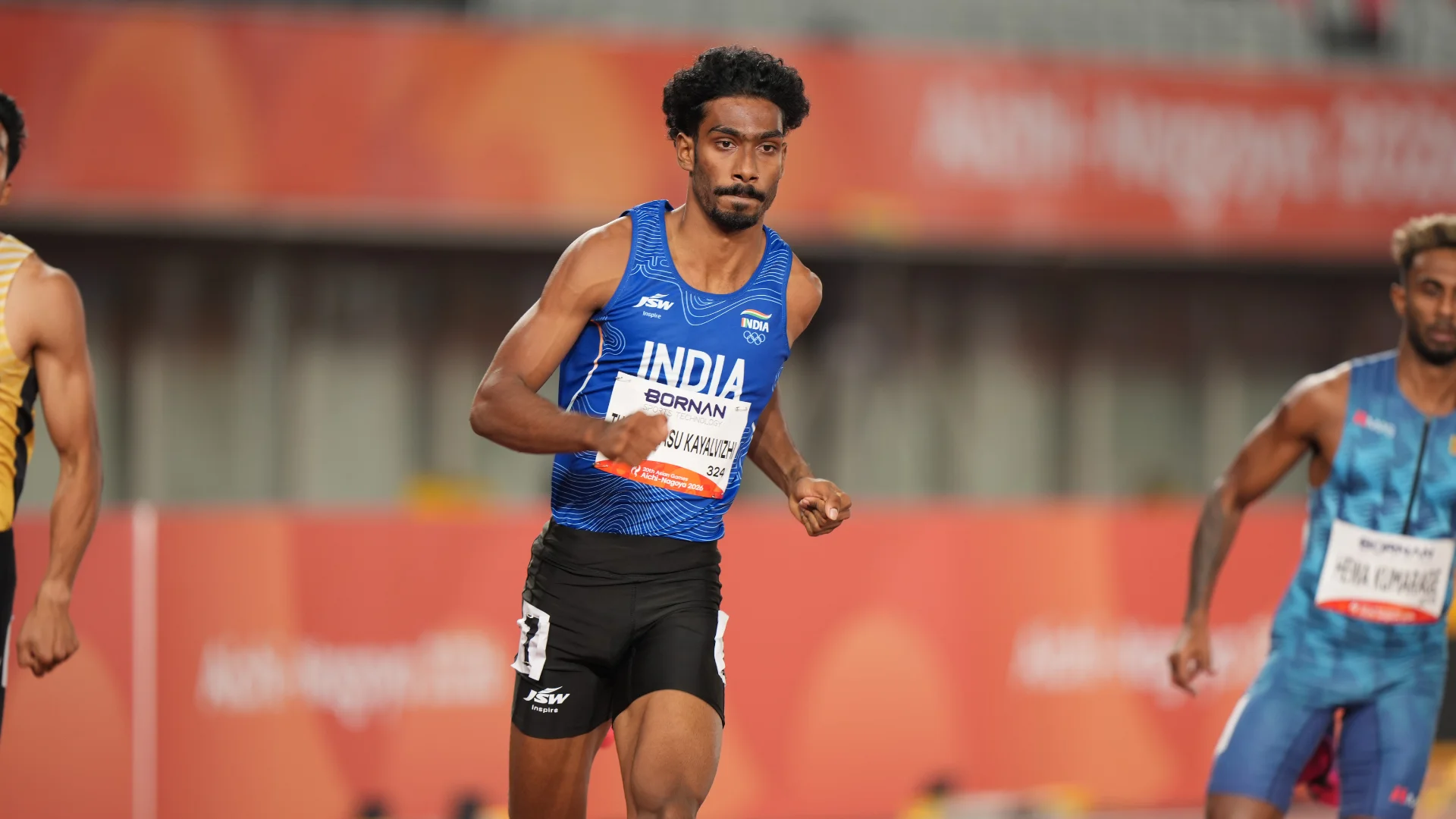
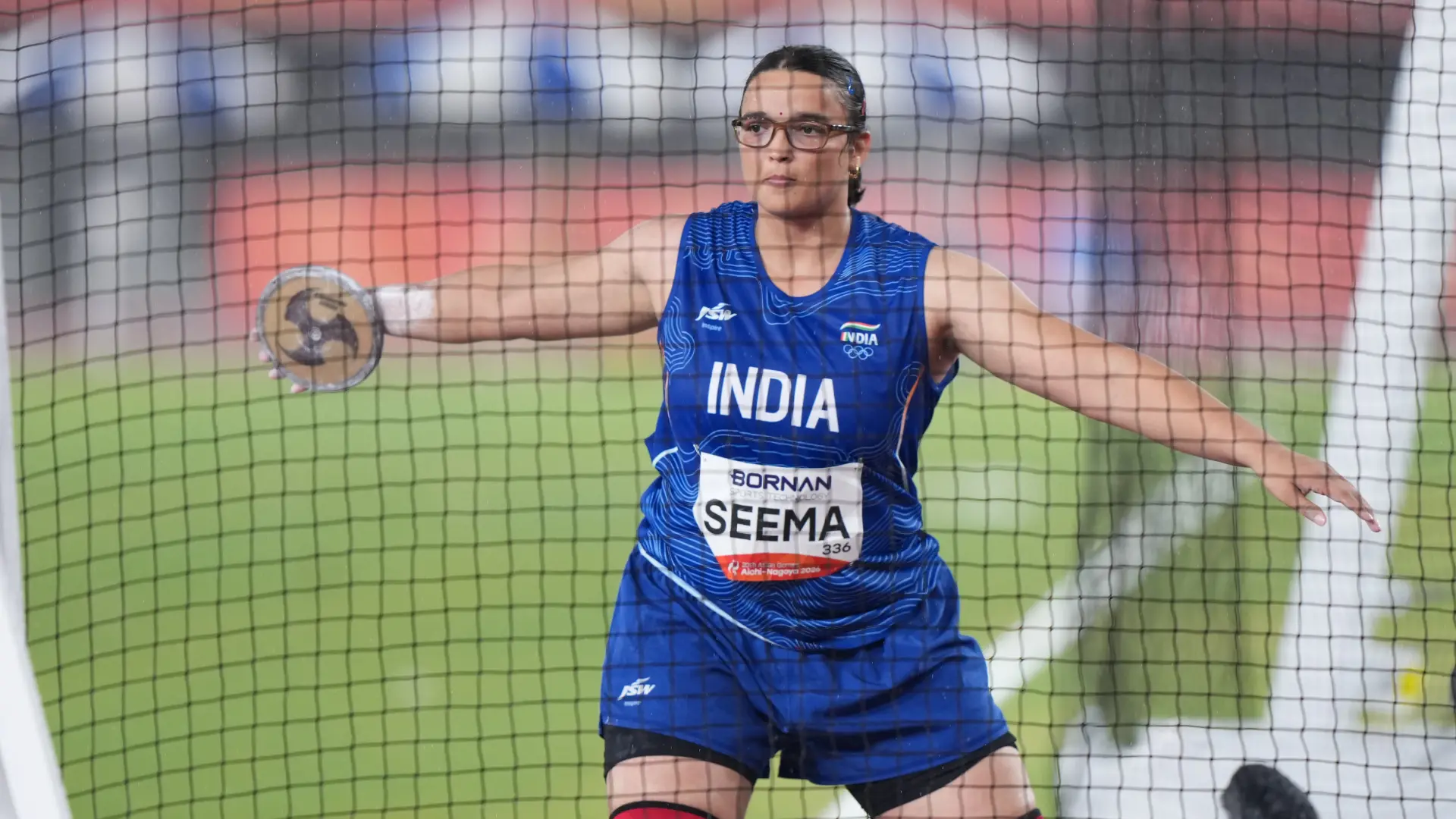
India’s Tanya Chaudhary finished fourth in the women’s hammer throw final at the Asian Games 2026 in Nagoya, setting a new personal best of 65.35m with her final attempt.
Her teammate Anushka Yadav also delivered a strong performance, finishing fifth with a best throw of 64.56m.
The results placed two Indian athletes inside the top five in a competitive continental final.
Tanya Chaudhary Sets Personal Best With Final Throw
Tanya saved her best performance for the final round of the competition.
On her sixth and last attempt, she produced a throw of 65.35m, setting a new personal best.
The effort secured her fourth place and highlighted her ability to deliver under pressure.
Her final-round improvement brought her close to the medal positions, although she ultimately finished outside the podium.
Anushka Yadav Finishes Fifth
India’s Anushka Yadav also produced a consistent performance in the women’s hammer throw final.
She recorded a best mark of 64.56m, securing fifth place.
Her result ensured that India had two athletes among the top five finishers in the event.
Zhang Jiale Wins Gold With Asian Record
China’s Zhang Jiale won the gold medal with an outstanding throw of 78.27m, setting a new Asian record.
Her compatriot Zhao Jie claimed silver with 74.83m, while Joy Iris McArthur secured bronze with 68.42m.
Women’s Hammer Throw Final Results
|
Position |
Athlete |
Country |
Distance |
|---|---|---|---|
|
Gold |
Zhang Jiale |
China |
78.27m (AR) |
|
Silver |
Zhao Jie |
China |
74.83m |
|
Bronze |
Joy Iris McArthur |
— |
68.42m |
|
4th |
Tanya Chaudhary |
India |
65.35m (PB) |
|
5th |
Anushka Yadav |
India |
64.56m |
India Places Two Athletes in the Top Five
Tanya Chaudhary’s personal best and Anushka Yadav’s fifth-place finish marked a strong showing for India in the women’s hammer throw.
Although neither athlete reached the podium, both finished among the top five in a highly competitive field.
Tanya finished fourth with a personal best of 65.35m, while Anushka placed fifth with 64.56m at the Asian Games 2026.
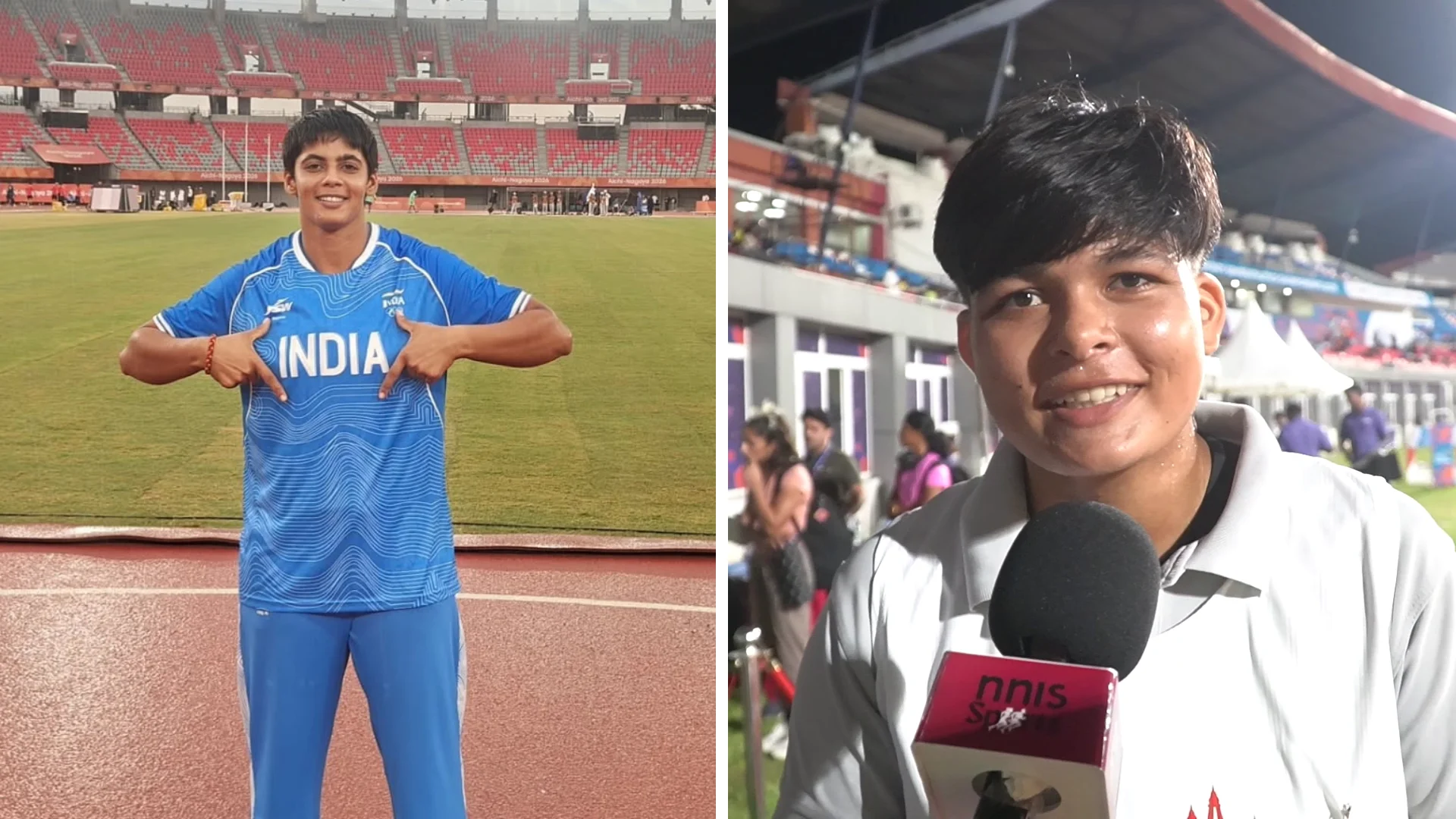
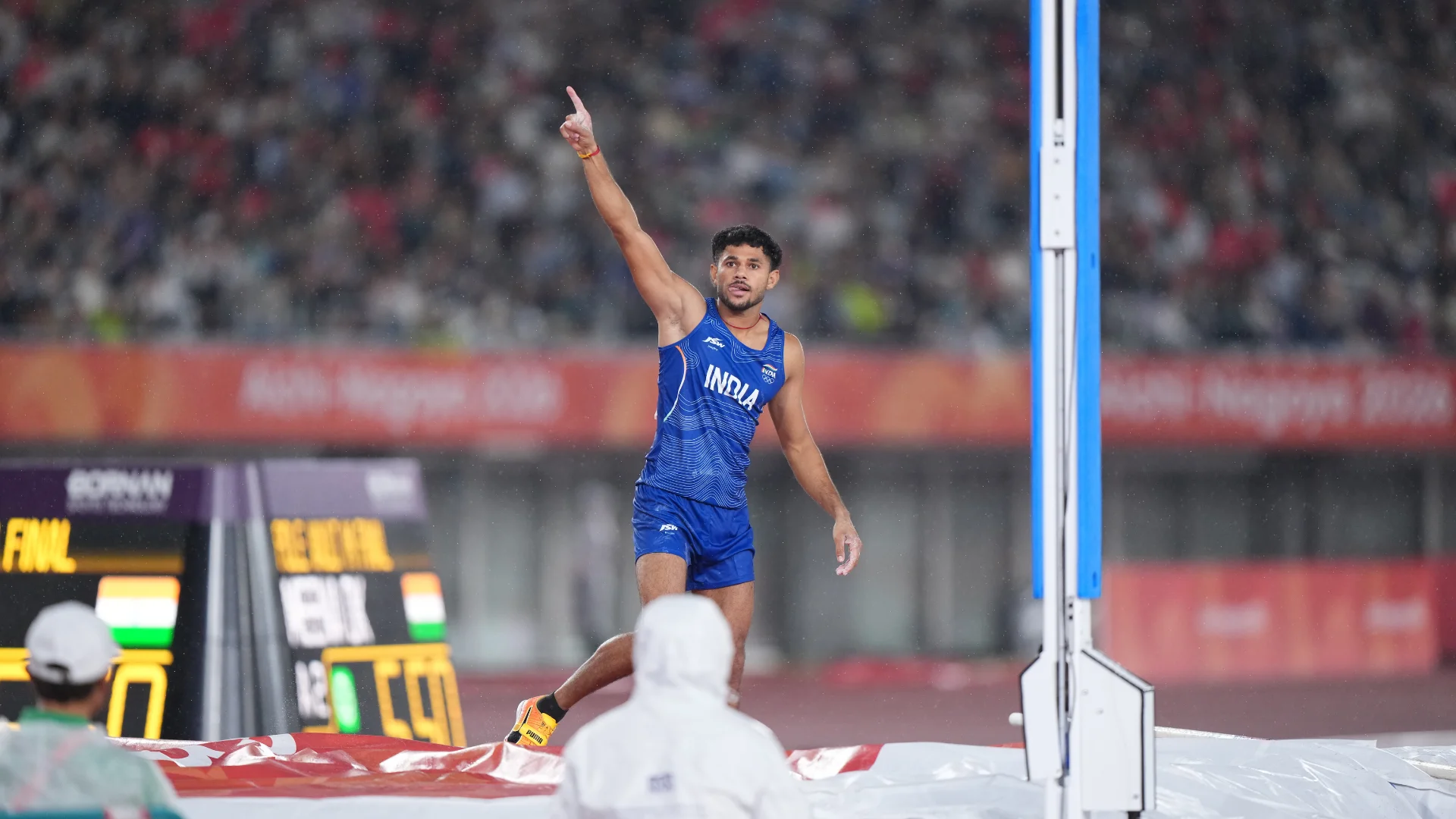
India’s Dev Kumar Meena set a new national record of 5.50m in the men’s pole vault final at the Asian Games 2026 in Nagoya. However, his performance was not enough to secure a medal, as he finished seventh in a highly competitive field.
Dev produced one of the standout individual performances of the event. His clearance of 5.50m was the highest ever achieved by an Indian pole vaulter at an Asian Games.
Despite the national record, India’s pole vault campaign ended without a medal.
Dev Kumar Meena Sets National Record of 5.50m
Dev began his competition by passing 5.05m before clearing 5.20m on his second attempt.
He then cleared 5.35m on his first attempt, putting himself in a strong position to challenge higher heights.
The Indian successfully cleared 5.50m on his second attempt, setting a new national record.
The clearance improved his previous personal best and national record of 5.46m by four centimetres.
It was a significant milestone for the young vaulter and another sign of his progress in the event.
Dev Misses Out at 5.60m
After clearing 5.50m, Dev attempted to go higher.
However, he was unable to clear 5.60m after three attempts, bringing his competition to an end.
His final clearance of 5.50m secured seventh place in the men’s final.
Although the national record marked a major personal achievement, it did not translate into an Asian Games medal.
Kuldeep Kumar Also Misses the Podium
India had two athletes competing in the men’s pole vault final, with Kuldeep Kumar joining Dev in the competition.
Kuldeep could not secure a podium finish either, leaving India without a medal despite having two representatives in the final.
The result highlighted the high standard of competition in Nagoya. Dev’s 5.50m clearance was a significant performance, but the medal battle required even higher clearances.
National Record but No Asian Games Medal
For India, the headline from the men’s pole vault final was a national record without a medal.
Dev’s clearance of 5.50m showed that he continues to push the boundaries of Indian pole vaulting.
However, the result also highlighted the challenge of converting record-breaking performances into podium finishes at major championships.
India had two athletes in the final, and Dev established a new national record. Yet the medal remained out of reach.
Dev Kumar Meena leaves Nagoya with a national record of 5.50m and a seventh-place finish in the men’s pole vault final.