
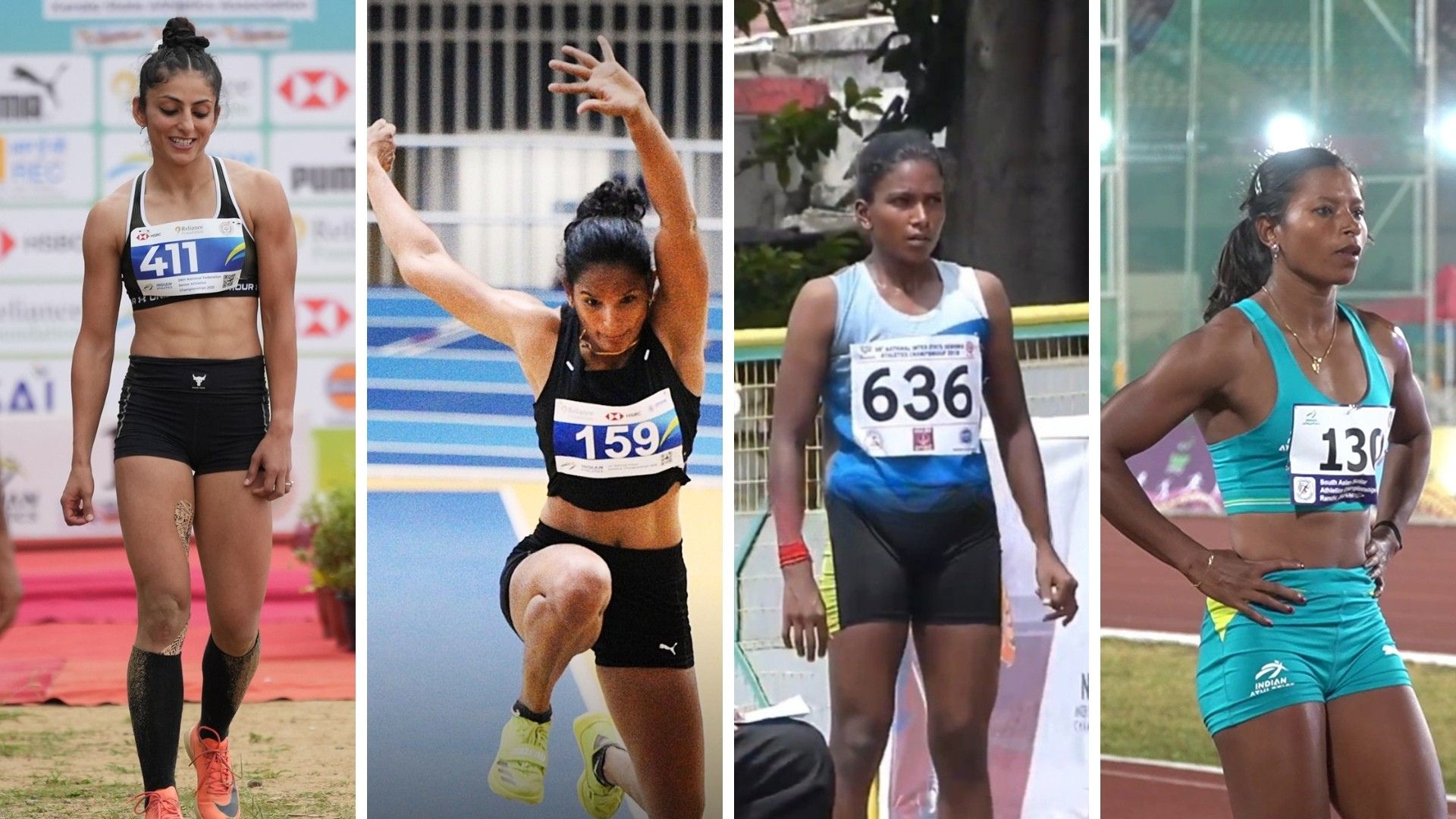
Women’s Triple Jump – 17:55 IST India’s elite women’s triple jumpers will go head-to-head today at the ongoing Interstate Athletics Championships 2026.
 Niharika Vashist: Fed Cup champion 2026
• Has produced Country’s best jump this season, 13.64m (PB).
• Moved to No. 5 on India’s all-time list.
 Asha Ilango: Opened her season with a PB of 13.52m.
• Jumped 13.67m at the Tamil Nadu State Championships (unofficial).
• Registered 13.57m to win Indian Series–8 in her last competition.
 Bhairabi Roy: • Won silver at the Fed Cup with a personal best of 13.28m.
 Mallala Anusha: • India’s Indoor Champion.
• Fed Cup bronze medallist with a season best of 13.28m.
The Asian Games qualification standard stands at 13.34m. Asha Ilango and Niharika Vashist have already breached the mark this season. However, they will need to achieve it again here to secure qualification.
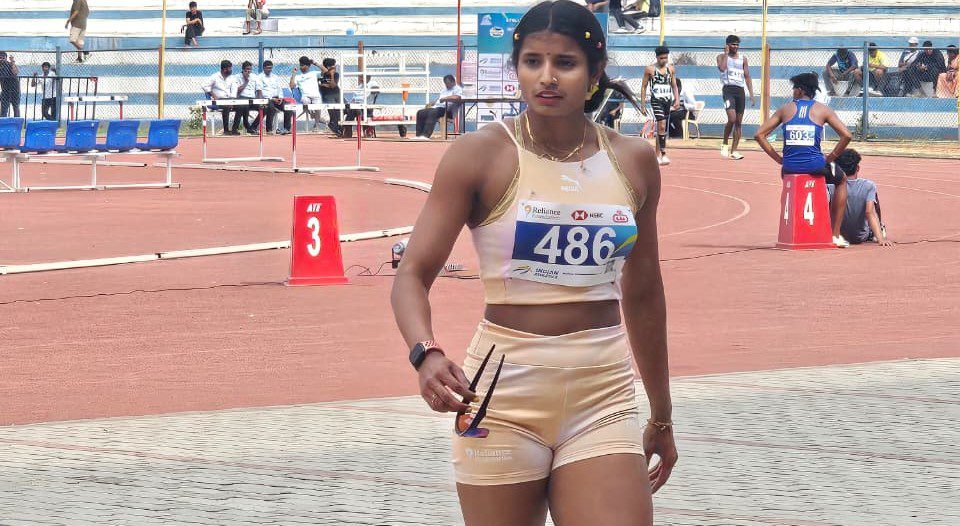
Asian Games silver medallist Ancy Sojan will miss the Indian Athletics Series–9, which is set to serve as the final selection meet for the 2026 Commonwealth Games.
The 25-Year-old showed sensational form at the Federation Cup winning gold, shattering the meet record registering her lifetime best jump of 6.75m which is India’s all-time 3rd best distance achieved by Indian Women After National record distance if 6.84m by Anju Bobby George 2004, 6.76m by Shaili Singh in 2023.
At fed cup Ancy missed the Commonwealth Games qualification of 6.84m by just 9cm, after AFI announced that Indian Series-9 will also be act as the final selection competition a hope raised maybe she can achieved the mark here but the Asian games silver medallist has decided to instead skip the event which means skipping the CWG 2026.
Replying to nnis’s message Ancy confirms she will be skipping the Indian Series – 9 and will be preparing for the Interstate which will be the Final selection trials for Asian games.
BUT WHY SKIPPING TH CWG 2026!!
To qualify for the Commonwealth Games 2026, Ancy will have to jump 6.84 m (NR) for which she will need to peak again, having already peaked her performance at the Fed Cup with a jump of 6.75 m. Peaking again just to qualify could will affect her performance at the Interstate and can affect her preparation for the Asian Games.
At Commonwealth game last edition Nigeria’s Ese Brume clinched gold in Women’s Long jump with the best leap of 7m, while Australia’s Brooke Buschkuehl and Ghana’s Deborah Acquah take Silver and Bronze with 6.95m and 6.94m respectively.
While at Asian games last edition:
Shiqi Xiong – 6.73m, Ancy Sojan – 6.63m and Nga Yan “Tiffany” Yue with 6.50m, all 3 registered the lifetime best mark.
Looking at Ancy’s current form she can surely upgrade her last edition Silver to gold, peaking 4 times in 4 months can be really tough and increase the risk of injury.
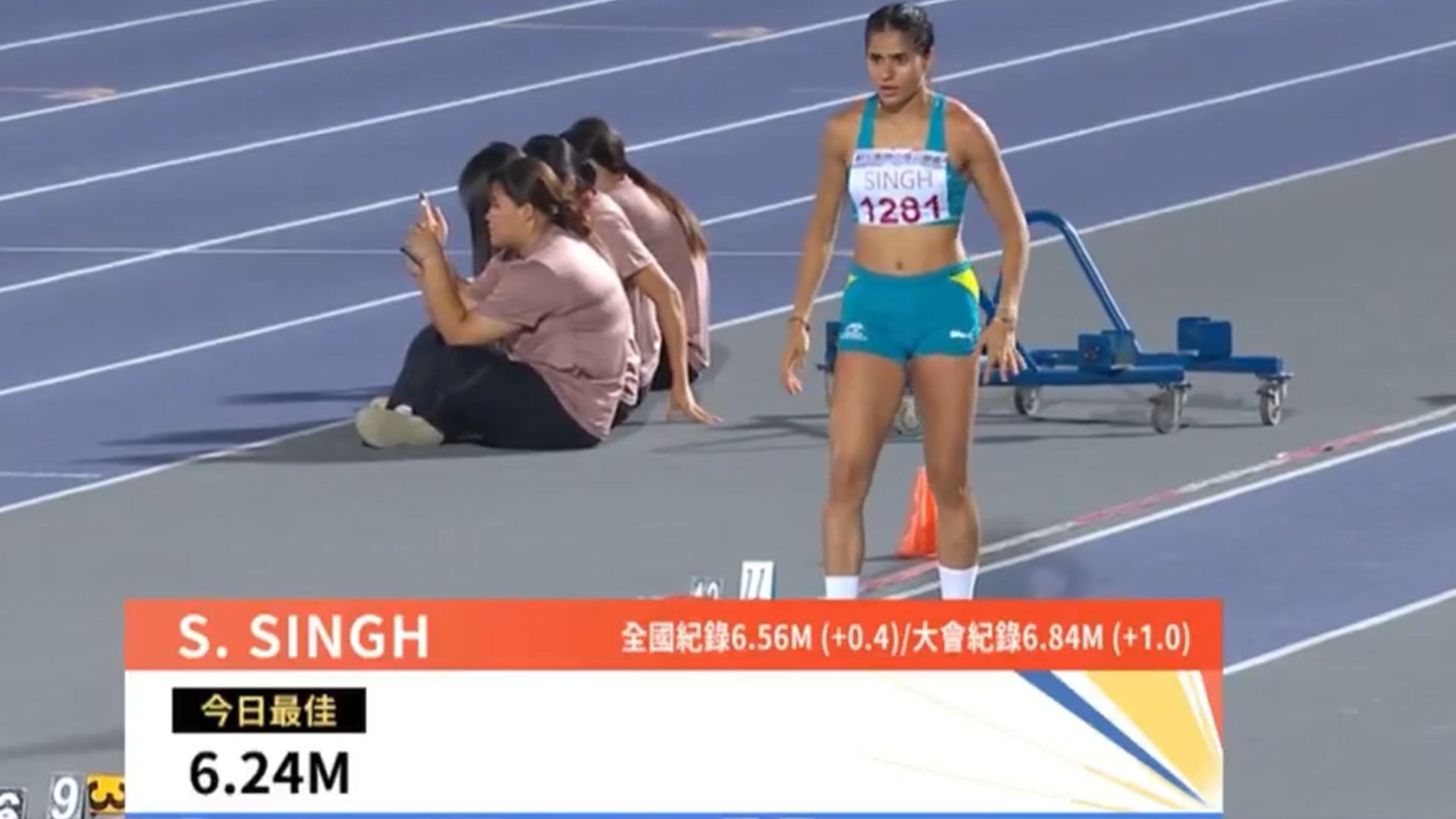
Indian long jumper Shaili Singh added another international medal to her growing collection, clinching gold in the women’s long jump at the New Taipei City Athletics Open 2026 with a best effort of 6.24m.
The 21-year-old emerged victorious despite not producing her best form of the season. Shaili’s winning mark came in the second round, and none of her competitors were able to surpass it as she secured the top spot on the podium.
Her series read: 6.03m, 6.24m, 6.23m, X, X, 6.10m, highlighting a consistent competition despite a couple of fouls in the latter stages.
While the gold medal will be a welcome boost, Shaili has already demonstrated significantly better form this season. Just weeks ago at the Federation Cup 2026, she claimed silver with a season’s best jump of 6.58m, a mark that placed her among the leading long jumpers in Asia this year.
Her personal best of 6.76m, achieved in 2023, remains one of the best performances by an Indian woman in recent years and underlines the potential many believe she is yet to fully realize.
Shaili first shot to prominence as a teenager when she won silver at the World U20 Athletics Championships in Nairobi in 2021. Coached by legendary long jumper and Olympic medalist Anju Bobby George, she quickly emerged as one of India’s brightest field-event prospects. Her silver medal in Nairobi came behind Serbia’s Adriana Vilagoš and marked one of the finest performances by an Indian jumper at a global age-group championship.
Over the past few seasons, Shaili has established herself as one of India’s leading long jumpers, regularly competing alongside national record holder Ancy Sojan and helping raise the standard of women’s horizontal jumps in the country.
The victory in New Taipei City may not have featured the distances Shaili is capable of producing, but it demonstrated another important quality—the ability to win even when not at her very best. Championship competitions often demand consistency rather than personal bests, and the Indian jumper delivered exactly that.
With the Asian Games cycle gathering momentum, Shaili will be encouraged by the fact that she remains capable of challenging for medals while operating below her peak level. The next objective will be to rediscover the form that saw her jump 6.58m earlier this season and move closer to her personal best of 6.76m.
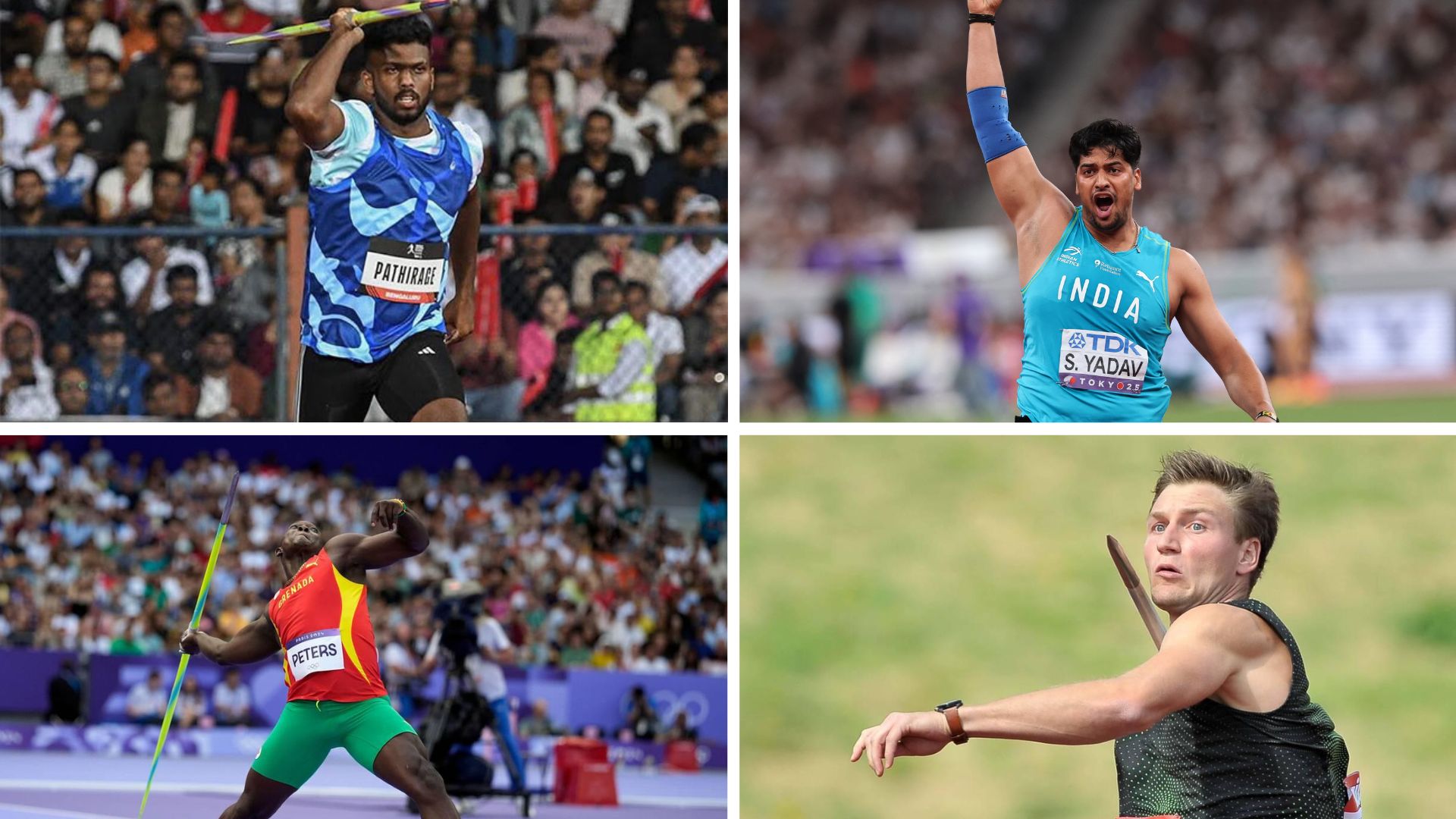
The men’s javelin throw at the Rome Diamond League brings together Olympic medallists, world champions, former Diamond League winners and emerging talents from across the globe. With multiple athletes in the field capable of throwing beyond 85 metres, fans can expect a high-quality contest featuring some of the biggest names in the event. Here’s a closer look at the athletes competing in Rome.
1. Rumesh Tharanga (Sri Lanka)
Rumesh Tharanga has emerged as one of Sri Lanka’s leading field event athletes and continues to raise the profile of javelin throwing in the country. The Sri Lankan has steadily improved over recent seasons, producing several national-level performances that have earned him opportunities on the international circuit. Known for his strong run-up and aggressive throwing style, Tharanga represents a growing generation of South Asian field athletes aiming to challenge the sport’s traditional powerhouses. Competing in Rome offers valuable exposure and an opportunity to test himself against Olympic champions, world medallists and some of the finest throwers in the world.
2. Sachin Yadav (India)
Sachin Yadav has rapidly become one of India’s most promising javelin throwers. The young athlete announced himself with a series of impressive performances on the domestic circuit and has continued to improve against international competition. Standing out for his physical strength and technically sound throwing action, Yadav is widely regarded as one of the country’s leading prospects behind Olympic champion Neeraj Chopra. Rome represents one of the biggest stages of his career so far. A strong performance against a world-class field would further underline India’s growing depth in the men’s javelin and boost Yadav’s confidence heading into future championships.
3. Anderson Peters (Grenada)
Anderson Peters remains one of the biggest names in global javelin throwing. The Grenadian is a two-time world champion and one of only a handful of athletes in history to throw beyond 90 metres multiple times. Renowned for his explosive power and consistency, Peters has spent several years competing at the highest level of the sport. His ability to deliver massive throws under pressure makes him a favourite whenever he enters a competition. Rome provides another opportunity for the former world champion to remind the athletics world why he remains one of the most feared competitors in men’s javelin.
4. Thomas Röhler (Germany)
Thomas Röhler is one of the most accomplished javelin throwers of the modern era. The German star won Olympic gold at Rio 2016 and owns a personal best of 93.90m, one of the longest throws ever recorded. Throughout his career, Röhler has been admired for his technical precision and ability to peak for major championships. Injuries have presented challenges in recent years, but his experience and pedigree remain unmatched. Every appearance by the Olympic champion generates excitement among athletics fans, and Rome offers another chance for him to demonstrate the quality that made him one of the event’s all-time greats.
5. Keshorn Walcott (Trinidad and Tobago)
Keshorn Walcott made history when he became Olympic champion at London 2012, delivering one of the most memorable performances in javelin history. The Trinidad and Tobago athlete remains one of the sport’s most respected figures and continues to compete against younger rivals more than a decade after his Olympic triumph. Walcott’s longevity is a testament to his dedication and technical excellence. Even after years on the international circuit, he remains capable of producing big throws on important occasions. Rome gives fans another opportunity to watch one of the event’s most iconic athletes in action.
6. Curtis Thompson (United States)
Curtis Thompson has become the leading figure in American men’s javelin throwing. The US record holder has consistently pushed the boundaries of the event in a country where javelin traditionally receives less attention than track disciplines. Thompson’s powerful technique and competitive mindset have helped him establish himself as a regular contender on the international circuit. His performances in recent years have demonstrated that he can challenge many of the world’s top throwers. A strong outing in Rome would further strengthen his position among the leading athletes heading into the remainder of the season.
7. Jakub Vadlejch (Czech Republic)
Jakub Vadlejch is one of the most consistent javelin throwers of his generation. The Czech athlete has won Olympic and World Championship medals and has spent years competing at the highest level. Known for his calm demeanour and ability to produce big throws when it matters most, Vadlejch is a proven championship performer. His technical efficiency and reliability have made him a fixture among the world’s elite. Rome presents another opportunity for the Czech star to add to his impressive record and challenge for victory against a field packed with accomplished competitors.
8. Dawid Wegner (Poland)
Dawid Wegner represents the next generation of Polish javelin talent. The young thrower has steadily climbed the European rankings through a combination of strong performances and continued technical development. While still building experience at the highest level, Wegner has shown glimpses of significant potential and has begun competing more regularly against elite opposition. Events like the Rome Diamond League are invaluable for his progression, providing the chance to learn from some of the sport’s most accomplished athletes while testing his abilities in a world-class environment.
9. Julius Yego (Kenya)
Julius Yego’s story remains one of the most inspiring in athletics. Nicknamed the “YouTube Man” after teaching himself the event through online videos, Yego went on to become world champion and an Olympic silver medallist. The Kenyan transformed perceptions of African participation in throwing events and inspired a generation of athletes across the continent. Even years after his biggest successes, Yego continues to compete with passion and determination. His presence in Rome adds a unique dimension to the field and provides fans with the opportunity to watch one of athletics’ most remarkable success stories.
10. Giovanni Frattini (Italy)
Giovanni Frattini will carry home hopes into the competition as Italy’s representative in the field. The young Italian thrower continues to gain valuable experience against international opposition and has shown encouraging progress in recent seasons. Competing at the Stadio Olimpico in front of a supportive crowd will provide additional motivation as he takes on some of the biggest names in world javelin. While facing Olympic champions and world medallists is a significant challenge, the experience gained in Rome could prove crucial in Frattini’s continued development as an international-level athlete.
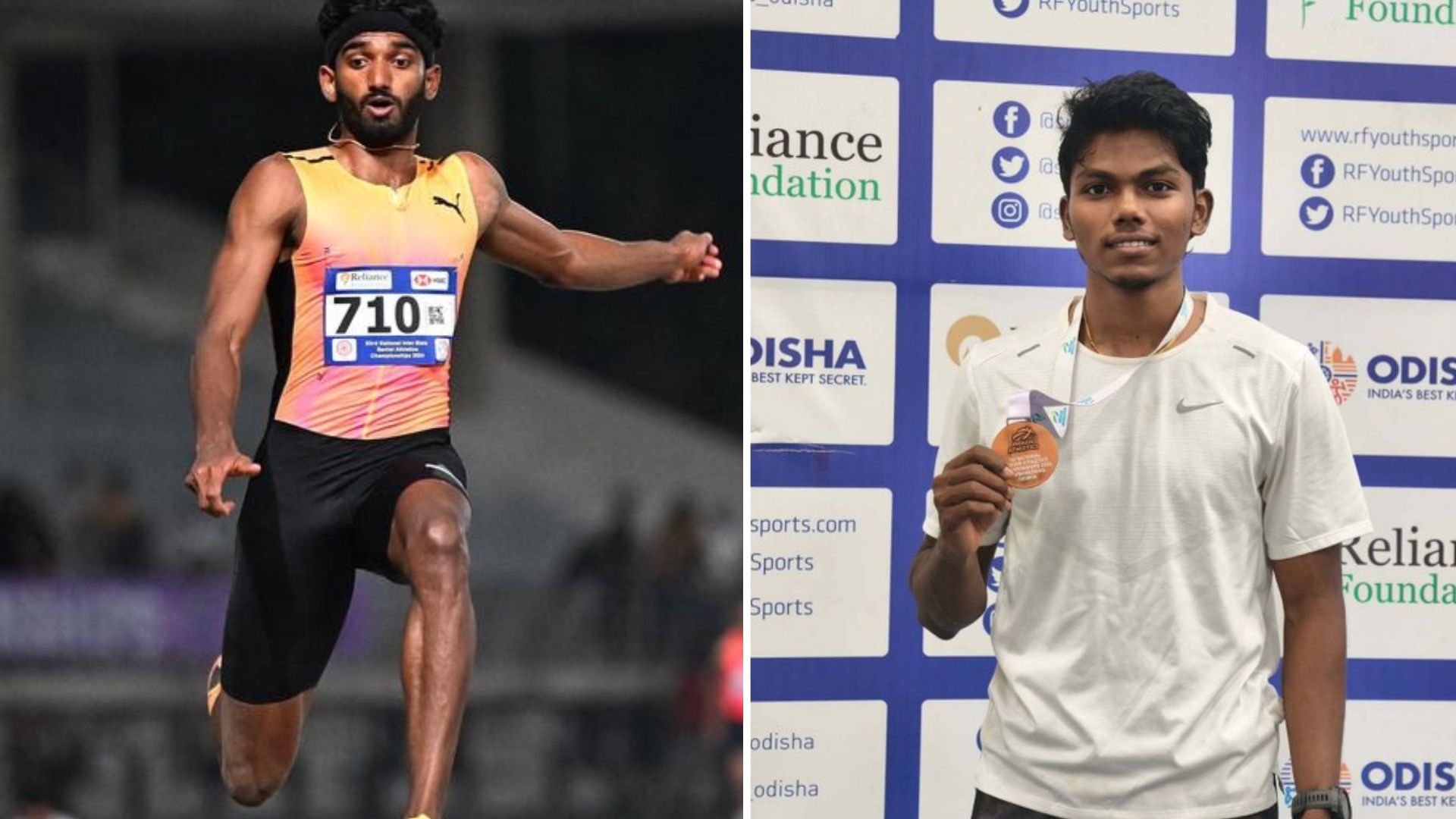
Indian long jump received a timely boost ahead of the upcoming competition season as national record holder Jeswin Aldrin and Federation Cup champion David P both cleared the coveted 8-metre mark at the Tamil Nadu State Trials.
Jeswin produced a best jump of 8.03m to secure the men’s long jump title, while David finished a close second with 8.02m. Although the performances will not count as official marks, they serve as an encouraging sign for two of India’s leading horizontal jumpers.
For Jeswin, the result is particularly significant. The 23-year-old has endured a difficult period over the past two years, battling injuries that disrupted his momentum after his breakthrough 2023 season. He underwent knee surgery and spent much of 2024 and early 2025 working his way back to full fitness.
His jump of 8.03m marks the first time he has crossed the 8-metre barrier in competition since his peak form, providing a major confidence boost as he looks to return to the international stage.
Jeswin remains India’s national record holder with a leap of 8.42m, achieved at the Indian Open Jumps Competition in Bellary in 2023. That mark not only broke the long-standing national record but also briefly placed him among the world’s leading long jumpers that season. He went on to represent India at both the World Championships and the Paris Olympics, though injuries prevented him from reproducing his best form on the global stage.
Meanwhile, David P continued his impressive rise. The Federation Cup 2025 champion demonstrated remarkable consistency, registering 8.02m in his third attempt before backing it up with another 8.00m jump in the sixth and final round.
The fact that two Indian jumpers exceeded 8 metres on the same day highlights the growing depth in the men’s long jump event. While the marks will not be officially recognized, they indicate that both athletes are moving in the right direction ahead of the national season and international qualification events.
With Jeswin rediscovering his rhythm and David continuing to build momentum, Indian athletics could have multiple contenders capable of challenging the 8-metre barrier consistently in the months ahead.
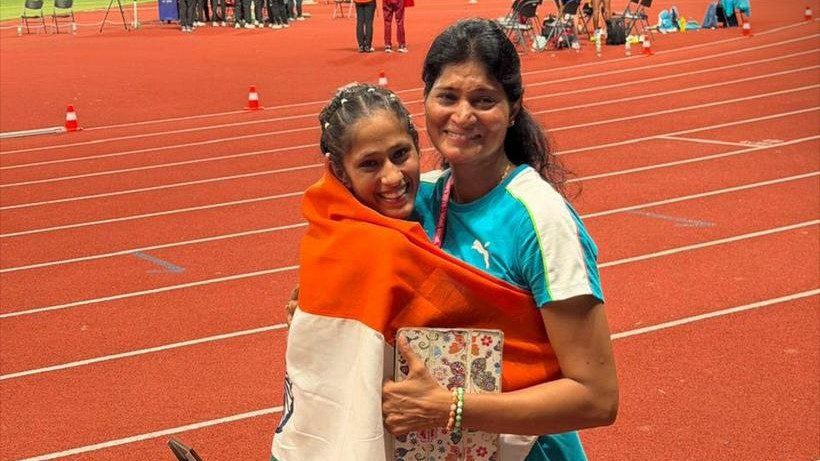
U20 Asian Athletics Championships 2026 | Hong Kong, China
In 2012, Sahana Kumari cleared 1.92 metres and set an Indian national record that nobody could touch for fourteen years.
Yesterday, the athlete who broke it was five years old when it was set.
And Sahana was standing right there when it happened — not as a competitor watching her record fall, but as a coach, having helped prepare the very athlete who surpassed her.
Indian athletics has produced remarkable stories this season. None of them come close to this one.
A Record Built to Last — and Someone to Break It
National records in field events are not meant to fall easily. Sahana Kumari’s 1.92m stood for over a decade, surviving a generation of Indian high jumpers who came, improved, and still couldn’t reach it. It was the kind of mark that began to feel permanent — a ceiling that defined the limits of what Indian women’s high jump could achieve.
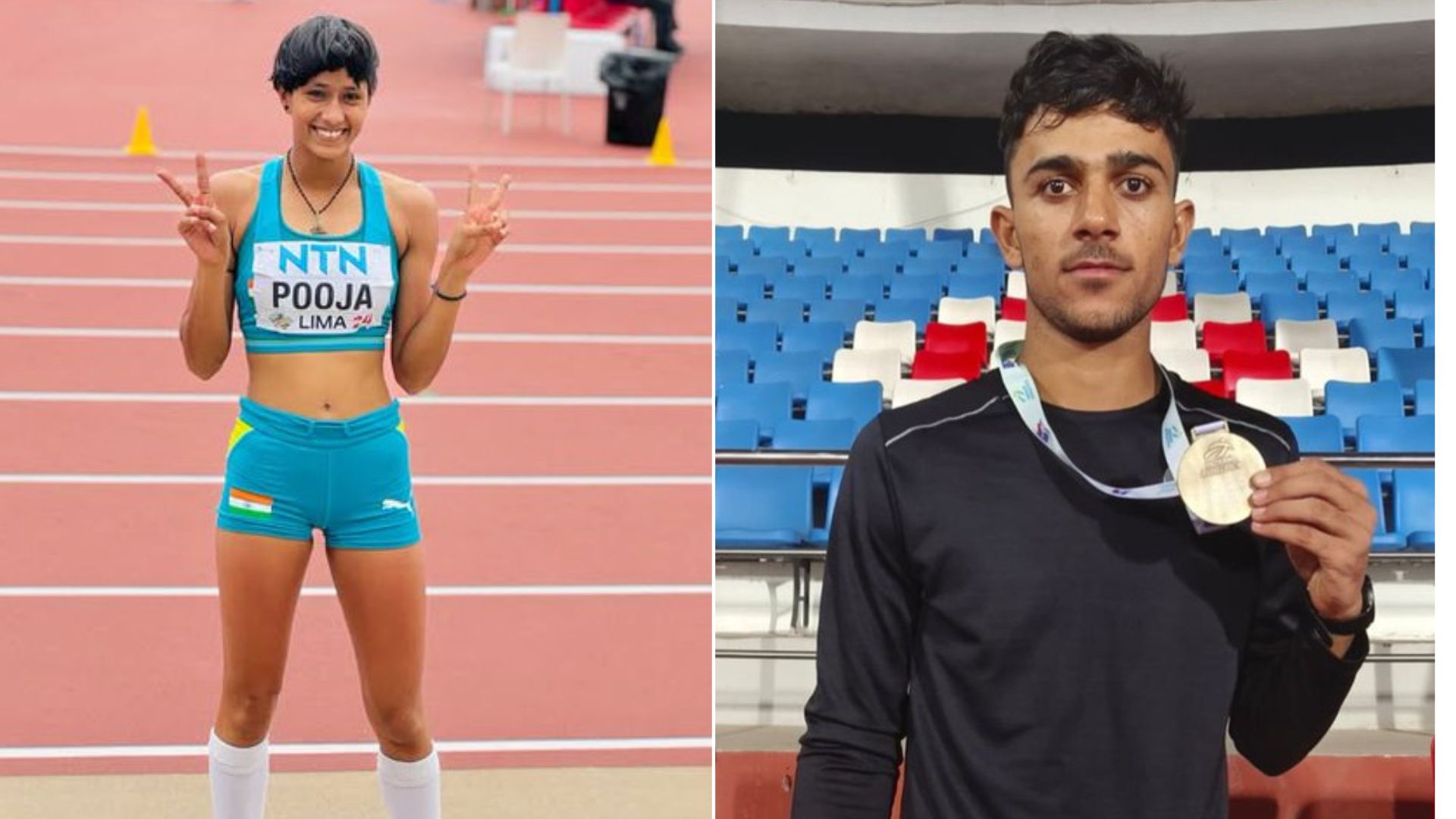
Then came Pooja. Born in an era when Sahana’s record was already years old, she grew up in Indian athletics with that 1.92m as the mountain at the top of every training plan. She cleared 1.91m first — breaking her own U20 national record and moving to India’s all-time No. 2. Then, on her very next attempt, she cleared 1.93m and the fourteen-year record was gone.
The Coach Who Handed Over the Crown
What transforms this from a great sporting story into something truly rare is Sahana’s role in it. She travelled to Hong Kong as part of India’s coaching staff — present not to compete, but to guide. To support. To share everything she learned from a career that produced that very record with the athlete now standing on the runway beneath it.
When the bar was set at 1.93m and Pooja cleared it, Sahana was among the first people she looked to. The picture from Hong Kong captures it perfectly — the former record holder standing beside the new one, wearing a smile as wide as Pooja’s own. There is no trace of the bittersweet. Only pride.
That is not something that can be manufactured or scripted. It is the authentic expression of someone who understands that sport is not about preserving your place in history — it is about making the history worth preserving.
Five Years Old When the Record Was Set
The number that reframes everything: Pooja was five years old in 2012 when Sahana cleared 1.92m. She did not watch that jump as a rival or a peer. She was a child. She grew up with Sahana’s record as simply the way things were — the high watermark of Indian women’s high jump, a number that seemed impossibly large.
Now she has surpassed it. And the woman who set it coached her to do so.
Fourteen years. Two generations. One bar. One perfect moment in Hong Kong.
What Sport Is For
Athletics is often told as a story of individual achievement — a single athlete, a single moment, a single mark in the record books. But the greatest stories are the ones where the thread runs between people, across time, connecting those who came before with those who come next.
Sahana Kumari built something in 2012. She did not abandon it when she moved into coaching. She carried it with her, and eventually handed it to a 19-year-old in Hong Kong who was ready to take it somewhere new.
The record is Pooja’s now. The legacy belongs to both of them.
The U20 Asian Athletics Championships 2026 are being held in Hong Kong, China.
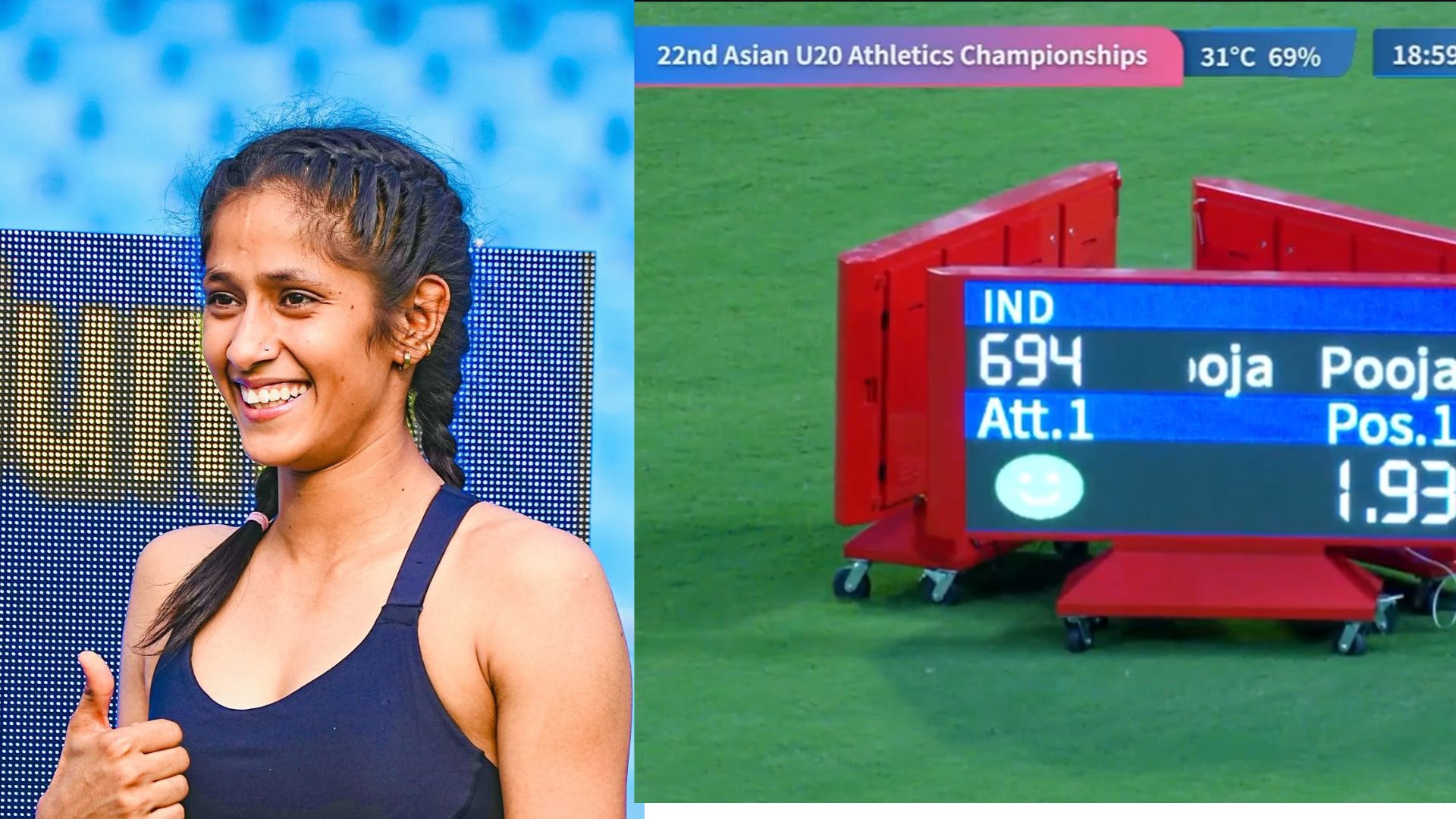
U20 Asian Athletics Championships 2026 | Hong Kong, China
Days ago, she was sent back from an airport.
Today, she soared higher than any Indian woman in history.
In one of the most extraordinary and emotionally charged performances Indian athletics has ever produced, Pooja has shattered the Senior Women’s High Jump National Record at the U20 Asian Athletics Championships 2026 — clearing 1.93m to etch her name permanently into the history of Indian sport.
Let that sink in. A junior athlete, at a junior championship, has just set the all-time Indian women’s high jump record.
Two Records. Two Attempts. One Evening.
The sequence of what unfolded in Hong Kong is almost too dramatic to believe.
First, Pooja cleared 1.91m — improving her own U20 National Record and moving to India’s all-time No. 2 in the event. It was already a landmark performance, the kind that would have been the headline of any other athlete’s career.
Then she stepped back onto the runway and went again.
1.93m. Clean. Cleared. The bar stayed on its pegs. India had a new Senior Women’s High Jump National Record — one that had stood since Sahana Kumari’s 1.92m in 2012, a mark that endured for over a decade. Pooja didn’t just reach it. She went beyond it.
In the space of two consecutive attempts, she broke the U20 national record, claimed the all-time No. 2 position, then immediately rendered that ranking obsolete by breaking the senior national record.
The Record in Context
Sahana Kumari’s 1.92m had stood for more than thirteen years. National records in field events, especially those set at elite international meets, have a way of lasting. They demand not just talent but the perfect convergence of form, conditions, competition, and courage.
Pooja produced all four in Hong Kong. At a junior championships. As a U20 athlete. The youngest holder of India’s all-time women’s high jump record.
Her 1.93m also cleared the Commonwealth Games 2026 qualification mark of 1.92m — meaning that alongside the history, she has booked her place at the Commonwealth Games in the most emphatic fashion imaginable.
The Airport That Almost Stopped History
The context of this performance makes it all the more staggering. Just days ago, Pooja was among the 23 members of India’s contingent whose visa applications were marked “Unsuccessful” — and who were turned back from the airport on the eve of the championships. The reigning Asian High Jump champion faced the very real possibility of missing the competition entirely through an administrative failure entirely outside her control.
She got through. She got to Hong Kong. And then she cleared every bar that was put in front of her.
Whatever frustration, anxiety, or disruption that visa ordeal caused, Pooja channelled none of it into hesitation. She channelled all of it into the runway.
India’s New High Jump Queen
Pooja entered this championships as the reigning Asian High Jump champion. She leaves it as the greatest female high jumper in Indian history — the first to clear 1.93m, the current national record holder at both U20 and senior level, a Commonwealth Games qualifier, and the athlete who proved that a bureaucratic nightmare at an airport was nothing more than a minor inconvenience on the way to something historic.
India’s women’s high jump national record stood for thirteen years. It fell tonight.
It fell to a junior.
The U20 Asian Athletics Championships 2026 are being held in Hong Kong, China.
Hong Kong, China | U20 Asian Athletics Championships 2026
In a deeply troubling development on the eve of one of Asia’s most prestigious junior athletics championships, 23 members of India’s contingent for the U20 Asian Athletics Championships in Hong Kong have been sent back from the airport after their visa applications were marked “Unsuccessful.” Among those affected are two of India’s most decorated and high-profile junior athletes — reigning Asian High Jump champion Pooja and U20 World No. 2 long jumper Shahnavaz Khan.
The championships begin tomorrow.
What Happened
India had assembled a formidable 64-member contingent for the U20 Asian Athletics Championships. Of those, 41 members successfully received their Pre-Arrival Registration Slips and are cleared to travel. However, the remaining 23 members found their applications marked “Unsuccessful” during the visa process — and were turned back from the airport before they could board their flights to Hong Kong.
The timing could not be more damaging. Athletes who have spent months preparing for these championships, peaking their training and sharpening their form, now face an agonising wait while the issue is resolved — if it can be resolved in time.
The Athletes Most Affected
The two names that stand out most painfully are Pooja, the reigning Asian High Jump champion who was expected to defend her title, and Shahnavaz Khan, currently ranked World No. 2 in the U20 long jump this season. For Pooja, this is a defence of a continental title. For Shahnavaz, it is a chance to convert one of the world’s best junior marks into championship gold. Both athletes now face the real possibility of missing the competition entirely through no fault of their own.
Their preparation, their form, their ambitions — all of it hostage to administrative paperwork.
A Partial Reprieve for Day 1 Athletes
There is some relief for a small number of affected athletes. Three competitors due to compete on Day 1 of the championships — Jashanpreet Singh (400m Hurdles), Piyush Raj (400m), and Tahura Khatun (400m) — have received their visas today and are scheduled to travel at 7:45 AM and 8:00 AM. They will arrive in time to compete, provided no further complications arise.
But for the other 20 athletes still without clearance, the race against time is far more uncertain.
A Crisis That Should Not Have Happened
The U20 Asian Athletics Championships is not a last-minute invitation. The fixture has been on the international calendar for months. Visa applications, pre-arrival registrations, and travel logistics for a 64-member team require coordination that should have begun long in advance. That 23 athletes found themselves at an airport with nowhere to go — some of them title contenders and world-ranked juniors — raises serious questions about the preparation and oversight of India’s travel arrangements for this trip.
Athletics Federation of India and relevant officials will face tough scrutiny over how a contingent of this size arrived at departure gates without confirmed entry clearance for more than a third of its members.
What Comes Next
The priority now is clear: every effort must be made to resolve the visa situation for the remaining 23 athletes as quickly as possible. Every day of delay is a day of preparation, acclimatisation, and mental readiness lost. For athletes like Pooja and Shahnavaz, competing at the very peak of the junior global rankings, missing these championships would be a significant blow to their season and their international development.
The championships begin tomorrow. The clock is ticking.
The U20 Asian Athletics Championships are being held in Hong Kong, China.
Birsa Munda Stadium, Ranchi | Federation Cup 2026 | May 25, 2026
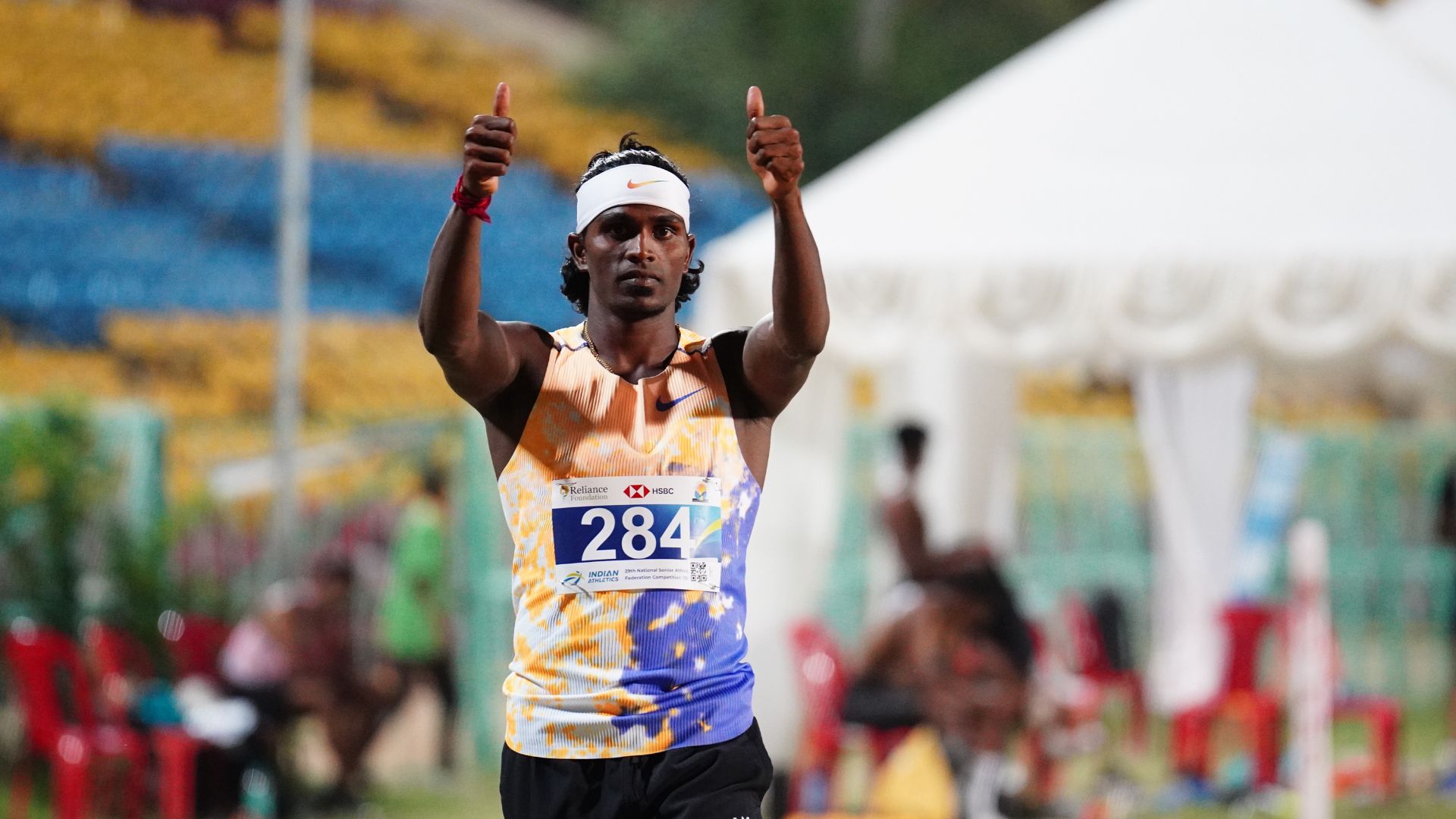
He didn’t need to say a word. The phone wallpaper said it all.
After landing a season-best jump of 17.08m to comfortably clear the Commonwealth Games 2026 qualification standard at Federation Cup 2026, Praveen Chithravel held up his phone to the cameras — and on the screen was a Commonwealth Games medal. A quiet, powerful declaration of intent from India’s finest triple jumper. He knows what he wants. He knows what he missed. And he is coming back for it.
The Jump That Booked the Ticket
Praveen’s 17.08m was not the national record-challenging performance that his ability promises on his best day — his personal best of 17.37m remains the gold standard of Indian triple jump. But it was precisely what the moment required. Controlled, technically sound, and comfortably beyond the CWG qualification mark of 16.89m, the jump confirmed Praveen’s place at the Commonwealth Games and signalled that the peak of his 2026 season is still ahead of him.
That is perhaps the most reassuring aspect of this performance. Praveen jumped 17.08m without being at his absolute best — and he knows it. With the Commonwealth Games on the horizon and the international season ramping up, there is a bigger jump waiting somewhere in that runway approach.
The Wallpaper That Tells the Story
The moment after the jump was as telling as the jump itself. Praveen revealing his phone wallpaper — a Commonwealth Games medal — was a reminder of what happened in the last edition of the Games, where he finished fourth, agonisingly off the podium. In sport, fourth place is the loneliest position there is: close enough to touch the medals, far enough to watch them handed to someone else.
That near-miss has clearly not left him. If anything, it has sharpened his focus and fuelled what promises to be a season built around one defining goal — returning to the Commonwealth Games and finishing the job.
Peaking at the Right Time
Speaking to nnis Sports after his qualification jump, Praveen was measured and clear-eyed about his plans. The strategy for 2026 is deliberate — peak at the right time and deliver strong performances outside India. It is the approach of a mature athlete who understands that domestic championships serve a purpose, but that the real test lies on the international stage.
In that context, 17.08m at Federation Cup is exactly the right kind of performance — enough to qualify, enough to confirm form, but not enough to suggest he has left his best jump on a domestic runway.
What Comes Next
Praveen Chithravel has his Commonwealth Games qualification. He has his motivation framed on his phone screen. And he has a national record of 17.37m that demonstrates the distance he is capable of when everything clicks.
The last time he was at the Commonwealth Games, fourth place was the result. This time, he has made clear that a different outcome is the only acceptable one.
The medal on the wallpaper is not just a memory. It is a target.
Birsa Munda Stadium, Ranchi | Day 4 | May 25, 2026 | 18:00 IST
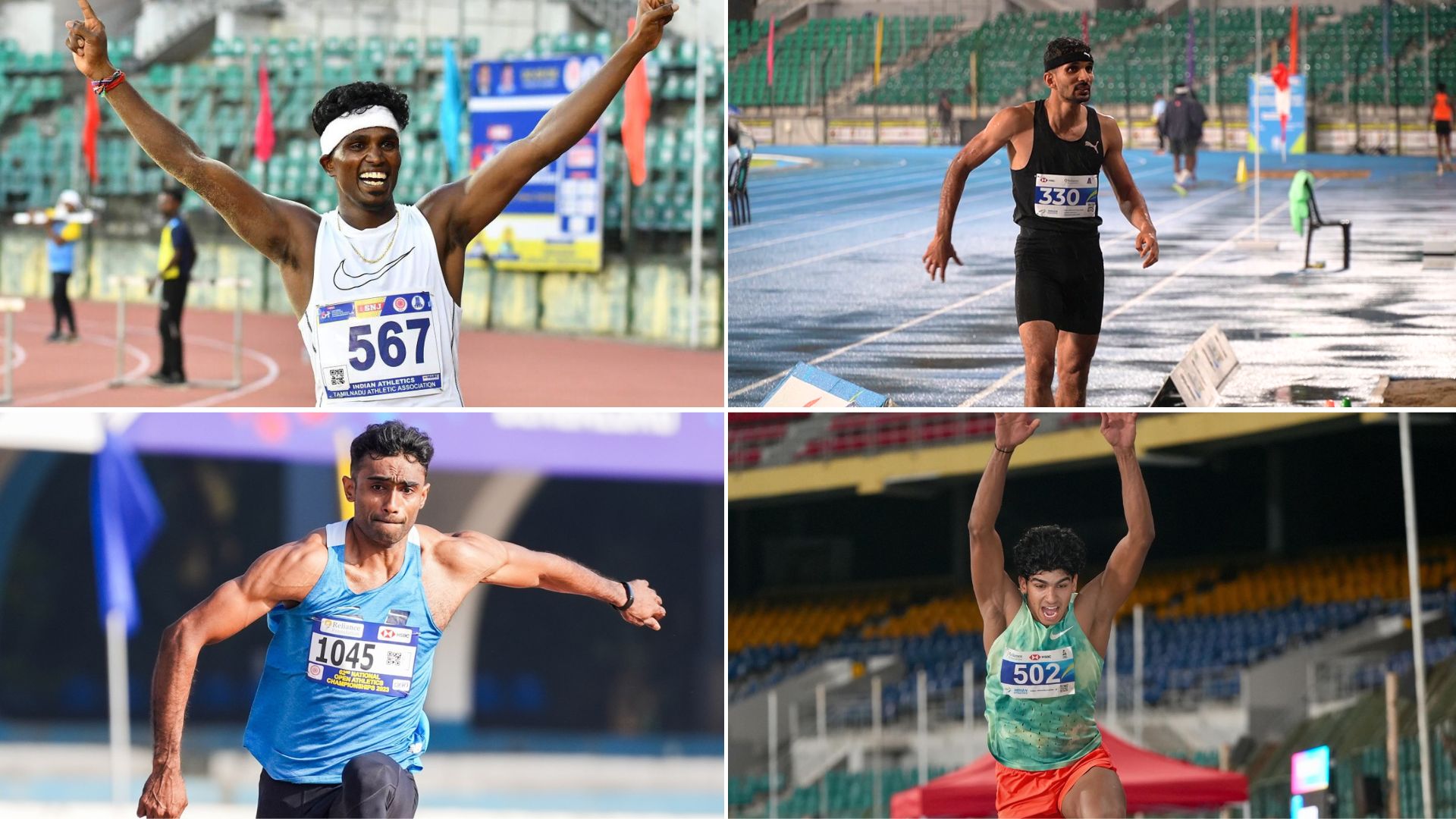
Kerala has long been the heartland of Indian triple jump, and on the final day of Federation Cup 2026, three of the discipline’s finest will go head to head in what promises to be one of the most technically brilliant and fiercely competitive events of the entire championship. The Men’s Triple Jump Final gets underway at 18:00 IST, and with the Commonwealth Games qualification mark dividing this field right down the middle, the stakes are as high as they come.
Praveen Chithravel: The National Record Holder
There is only one place to start. Praveen Chithravel is India’s finest triple jumper and the current national record holder, having soared to an extraordinary 17.37m — a mark that places him among the elite in Asian triple jump. His 2026 season best of 16.95m already clears the Commonwealth Games qualification standard, and he arrives in Ranchi as the clear favourite.
But Praveen is more than a name on paper. He is an athlete who has competed and performed at the international level with distinction, and a Federation Cup final on home soil will bring out the best in him. If his run-up is on and the board is kind, a big jump — perhaps even a challenge to his own national record — is not beyond the realms of possibility.
Abdulla Aboobacker: The Eternal Rival
Standing across the sandpit, as he always seems to, is Abdulla Aboobacker. With a personal best of 17.19m and a season best of 16.83m, Abdulla has spent his career as Praveen’s closest competitor — and the rivalry between them has pushed both athletes to heights Indian triple jump had rarely seen before.
His season best of 16.83m leaves him agonisingly six centimetres short of the CWG qualification mark of 16.89m, which means this final carries particular urgency for Abdulla. He needs not just a good jump, but a great one. History suggests he is more than capable of delivering exactly that when the pressure is highest.
Karthik Unnikrishnan: The Sleeping Giant
The most fascinating profile in this field belongs to Karthik Unnikrishnan. His personal best of 17.10m — the third-highest in Indian triple jump history — confirms that he belongs in the conversation with Praveen and Abdulla at their very best. Yet his 2026 season best of 16.09m suggests he is still some way from that peak form.
The gap between 16.09m and 17.10m is enormous in triple jump terms, and Karthik will need to find nearly a full metre of improvement on his season best to threaten the top two. But personal bests exist because athletes have reached them before, and on the right day, with the right adrenaline, Karthik is capable of a jump that reshuffles everything. He is the wildcard this final cannot afford to ignore.
The Rest of the Field
Gailey Venister has impressed this season with a personal best of 16.48m, a mark that signals real capability even if it falls short of the CWG standard. Mohammed Muhassin checks in with a season and personal best of 16.25m. Both will be competing for a Federation Cup podium and using this final as a springboard for the season ahead.
Commonwealth Games: A Line Drawn in the Sand
The CWG 2026 qualification mark of 16.89m creates a natural fault line in this field. Praveen has already cleared it. Abdulla sits just below it. Everyone else has significant ground to cover. That dynamic shapes the entire contest — Praveen can jump to win, while Abdulla must jump to qualify and win simultaneously.
It is the kind of pressure that either produces a lifetime best or forces an error. For an athlete of Abdulla’s experience and quality, the smart money is on the former.
A Fitting Finale
As Federation Cup 2026 draws to a close in Ranchi, the Men’s Triple Jump Final offers a fitting climax — a technical, dramatic, deeply competitive event featuring athletes with the pedigree to produce something genuinely historic. Praveen Chithravel’s national record of 17.37m has stood as the gold standard of Indian triple jump. Could it come under threat on the final day of the championship?
Three hops, three steps, three jumps. One winner.