





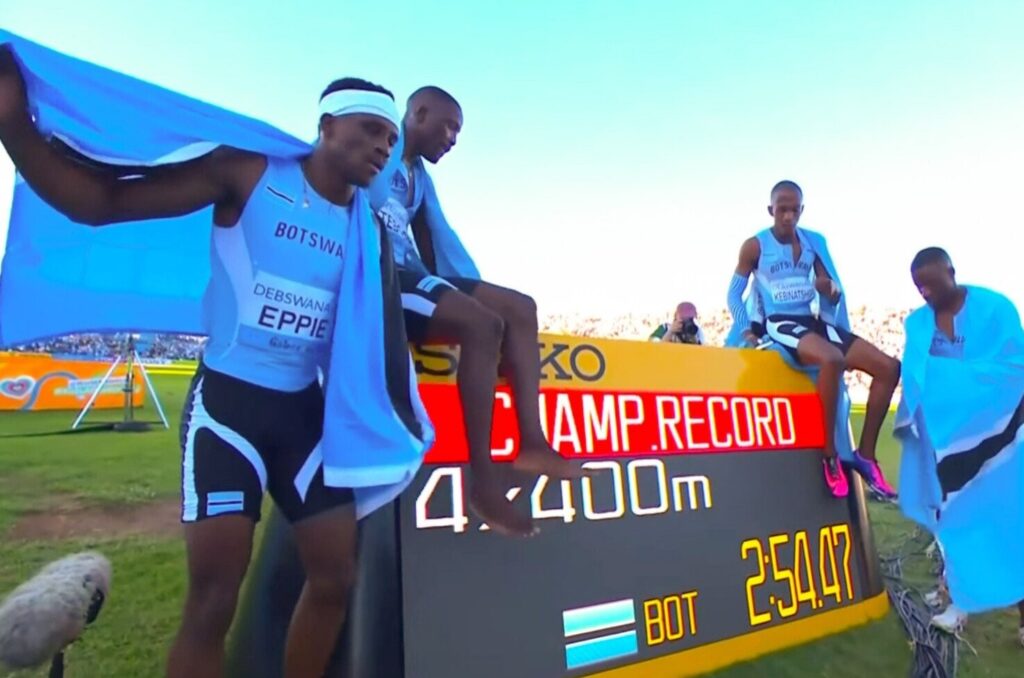
The air in Gaborone wasn’t just warm this weekend; it was electric. Under the roar of a home crowd that refused to stay seated, Botswana’s men’s 4x400m relay team didn’t just win gold at the World Athletics Relays—they rewrote the stratosphere of track.
Clocking a blistering 2:54.47, the quartet secured the third-fastest time in human history, shattering their own national record and sending a definitive message to the rest of the world: the throne of the quarter-mile relay is no longer a localized affair.
A Masterclass in Velocity
The performance was a symphony of elite sprinting. From the crack of the starter’s pistol, the intent was clear. While the United States has historically dominated this event, Botswana’s rise has been a steady, calculated climb. The splits told the story of four men operating at the absolute limit of aerobic and anaerobic capacity.
The anchor leg was particularly poetic. Fuelled by the rhythmic chanting of thousands of local fans, the final runner crossed the line not just as a champion, but as a pioneer. Only two times in history—both belonging to American squads—stand faster than the mark set on that Gaborone track.
The Home Ground Advantage
Winning on the world stage is a feat; doing it at home while breaking records is the stuff of legend. For Botswana, this victory transcends the medal podium. It validates the country’s significant investment in athletics and highlights a golden generation of 400m specialists who have transitioned from promising talents to global icons.
The All-Time Leaderboard
To put 2:54.47 into perspective, here is where Botswana now sits in the pantheon of the 4x400m:
| Rank | Country | Time | Venue/Year |
| 1 | USA | 2:54.20 | Uniondale, 1998 |
| 2 | USA | 2:54.29 | Stuttgart, 1993 |
| 3 | Botswana | 2:54.47 | Gaborone, 2026 |
Looking Toward the Horizon
With this performance, Botswana enters the upcoming Olympic cycle not as underdogs, but as the team to beat. They have proven they can handle the pressure of the clock and the weight of expectation. For the rest of the world, the gap has closed. The 2:54 barrier, once thought to be an exclusive American playground, is now under siege by the pride of Africa.