





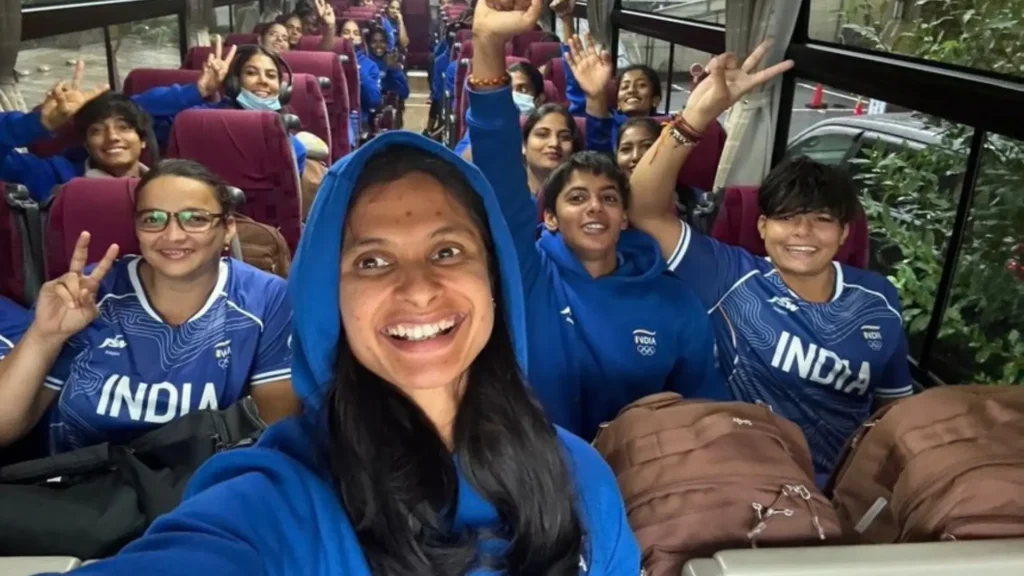
By Sambit Pradhan
When the Indian contingent touched down in Japan, the objective was straightforward: build upon the record-breaking medal tally from the 2022 Hangzhou Asian Games. Instead, the opening act of the Aichi-Nagoya Games forced world-class athletes to navigate a chaotic maze of missing hotel rooms, clerical blunders, and grueling transportation delays—long before stepping into the field of play.
While competition officially commenced on September 19, India’s logistical breakdown started days prior. What should have been invisible operational support collapsed into a series of public, high-friction disruptions.
The Housing Breakdown: Diaspora Backup Plans and Midnight Scrambles
The fundamental structural flaw stems from the organizers’ decision to forgo a centralized Athletes’ Village, scattering delegations across local hotels, container-style modular housing, and cruise ships. For Team India, the decentralized model unraveled immediately.
Chef de Mission Sahdev Yadav confirmed that roughly 30 to 35 Indian athletes were left stranded after their names mysteriously vanished from official accommodation manifests, despite Indian officials maintaining that all bookings strictly matched paid invoices.
The situation escalated so rapidly that the Ministry of Youth Affairs and Sports was forced to deploy a multi-tiered emergency plan. Beyond securing emergency commercial hotel rooms, Indian embassy officials contacted nearly 2,000 local Indian families in Nagoya, establishing a contingency residential network outside the official Asian Games apparatus.
The administrative incompetence extended into basic registration and room assignments:
-
Vanishing Credentials: Female rowers Poonam, Aleena Anto, and Anshika Bharati arrived with valid accreditation, yet were erased from the host registration system.
-
Administrative Co-ed Assignment: In a startling oversight, gymnast Pranati Nayak—India’s sole gymnastics entry—and her coach Ashok Mishra were assigned to the same room aboard the Costa Serena cruise ship.
-
The Missing Letter: Separate accommodations for Mishra were eventually negotiated at 1:30 a.m., only for hotel staff to deny him access for another 45 minutes because a single letter was missing from his name in the system. He finally gained access to his room after 2:00 a.m.
-
Restricted Access: Pistol shooting head coach Samaresh Jung was issued accreditation that inexplicably barred him from entering the primary competition arena and field of play.
Transportation Gridlock and Two-Hour Commutes
For the shooting contingent, logistical failures began the moment they landed at 9:00 p.m. on September 15. After completing customs processing, athletes endured a four-hour wait for transport, reaching their hotel at 3:30 a.m. Due to fragmented rooming assignments, shooters carried heavy equipment between properties, completing check-in around 5:30 a.m.
The following morning, scheduled 7:00 a.m. training shuttles failed to materialize. Athletes waited three and a half hours for a secondary bus, arriving at the Aichi Prefectural General Shooting Gallery in Toyota City at 12:30 p.m.
The commute itself presents an ongoing tactical hurdle. Located 50 to 60 kilometers (30 to 37 miles) from athlete housing, the journey to the range takes up to two hours each way over winding roads. Athletes have resorted to using neck pillows to alleviate spinal stiffness and avoiding personal screens to combat motion sickness.
Despite the physical toll, the shooting squad delivered under pressure, securing two silver medals on opening day, led by Elavenil Valarivan’s individual silver in the 10m air rifle.
In a separate incident, double-badminton star Satwiksairaj Rankireddy confirmed that the badminton team was stranded for nearly six hours waiting for a single shuttle bus from Ecclesion Hall to their lodging.
Ceremonial Gaffes
The administrative breakdown reached its peak ahead of the opening ceremony. Shot putter Tajinderpal Singh Toor, named co-flagbearer alongside Manu Bhaker, was forced to withdraw from the parade after his official ceremonial attire failed to arrive in Japan on time.
The delays caused the entire athletics contingent—who had been training in Japan since September 13—to skip the ceremony entirely. The Indian Olympic Association (IOA) cited “technical issues” for the shipment failure.
The Cost of Adaptation
The narrative defining India’s early presence in Nagoya is not one of total athletic failure, but of unforced administrative burden. Rowers waited for beds, shooters waited for buses, badminton players sat stranded for six hours, and a national coach was locked out of his room over a typo.
An athlete’s environment in the days preceding high-level competition demands strict recovery protocols, precise nutrition, and predictable scheduling. In Nagoya, Indian competitors have been forced to expend valuable physical and mental energy solving basic logistical puzzles.
Medals may mask the dysfunction on the podium, but they do not absolve the organizational apparatus. Athletes are paid to perform on the field; they should not have to survive the logistics to get there.