





The London Marathon has delivered unforgettable moments over the years. But nothing comes close to what unfolded in 2026.
For decades, the two-hour marathon stood as the ultimate barrier in athletics — chased, debated, but never officially broken. On April 26, that barrier didn’t just fall. It was obliterated.
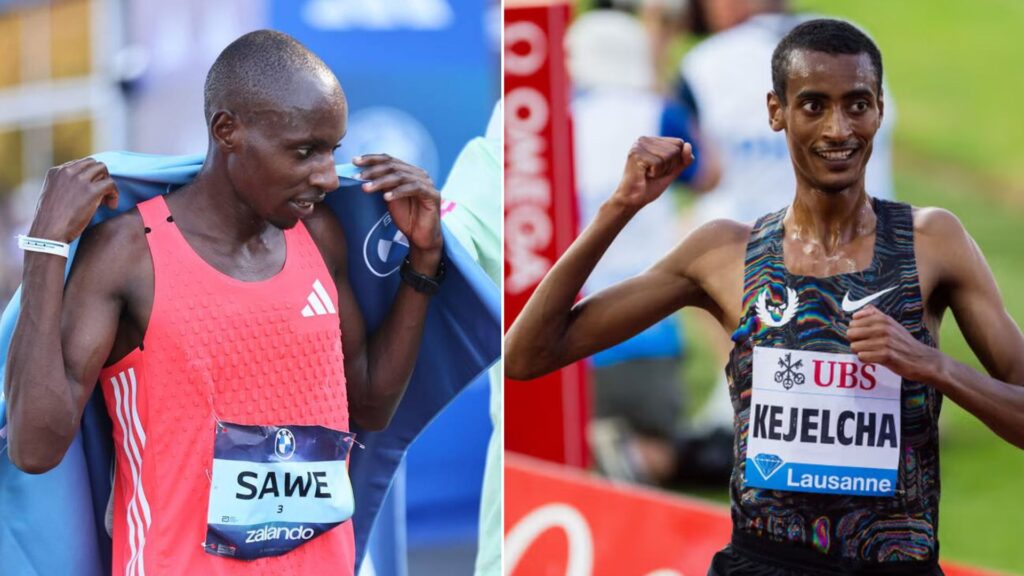
Kenya’s Sabastian Sawe etched his name into history, clocking an astonishing 1:59:30 to become the first athlete to run a sub-two-hour marathon in official race conditions. It was a run of precision, power, and perfect pacing — one that redefined what was thought humanly possible.
But the story didn’t end there.
Ethiopia’s Yomif Kejelcha, making his marathon debut, followed closely behind in 1:59:41. In one race, the unthinkable had happened twice.
Uganda’s Jacob Kiplimo completed a historic podium, finishing third in 2:00:28 — a time that, until now, would have comfortably been a world record.
To put that into perspective, all three athletes ran faster than the previous world record of 2:00:35, set by Kelvin Kiptum in 2023. Never before had a marathon seen such depth at the very top.
The conditions in London were near-perfect — cool temperatures, minimal wind, and a field primed for fast running. But even then, what transpired went beyond favourable weather. This was the culmination of years of evolution in training methods, race strategy, nutrition, and shoe technology.
The two-hour mark has long been more than just a number. It represented the limits of endurance — a psychological and physiological ceiling. While Eliud Kipchoge famously broke it in 2019 under controlled, non-record conditions, doing so in an open, competitive race remained elusive.
Until now.
Sawe’s run will be remembered as a turning point — not just for the time, but for what it signals. The marathon has entered a new era, where sub-two is no longer a distant dream but an achievable benchmark.
And perhaps that is the most remarkable takeaway from London 2026.