





The Indian Athletics Series was introduced to give athletes more opportunities to compete. But with compulsory participation requirements, a packed domestic calendar, and another competition just 13 days before the Asian Games athletics events, questions are being raised about whether the system helped athletes or added unnecessary pressure.
At present, the calendar seems designed more to fill competition slots than to develop athletes. The federation’s focus on showcasing a packed schedule risks overlooking whether elite athletes can handle the workload and recover properly.
It’s without doubt that Indian athletics is going through a period of growth. Athletes are setting more national records, competition standards are improving, and India’s pool of internationally competitive talent is expanding.
To strengthen the domestic competition structure, the Athletics Federation of India (AFI) introduced an expanded calendar for 2026. The federation expanded its competition calendar from 32 to over 40 events and introduced the 16-leg Indian Athletics Series, bringing one-day competitions to different parts of the country.
The idea was simple: give more athletes opportunities to compete, reduce their travel expenses through regional competitions, and create a stronger domestic athletics structure.
On paper, it looked like a positive move. However, as the season progressed, another question emerged:
Are Indian athletes getting more opportunities to compete, or are they being made to compete more often than their preparation actually requires?
The Indian Athletics Series was designed to provide more competition opportunities, particularly for athletes who do not regularly get a chance to participate in major national events. However, AFI also introduced minimum participation requirements for entry into important national championships.
Under the revised 2026 guidelines, an athlete needed to participate in at least two AFI-organised competitions to be eligible for the National Senior Athletics Federation Competition. For the National Inter-State Senior Athletics Championships, the requirement increased to at least three AFI competitions, along with a state meet if organised by the state association.
For the National Open Athletics Championships, athletes needed to participate in at least four AFI-organised competitions, subject to the federation’s specified conditions. AFI also announced compulsory participation in state athletics championships.
There was a limited exemption provision for outstanding athletes who had performed well in 2025 and were recovering from injury or had recovered from injury under AFI supervision. The intention behind these rules may have been to ensure regular competition and a more active domestic circuit. But the bigger concern is the pressure such requirements can create.
Not every athlete needs the same number of competitions. Sprinters, long-distance runners, javelin throwers, and high jumpers all require different training methods, recovery periods, and competition strategies. Some athletes need more competitions to build rhythm and consistency, while others perform better with longer training blocks and fewer competitive events.
When participation becomes a condition for entry into national championships, athletes can find themselves competing to fulfil eligibility requirements rather than because the competition fits their training plan.
The question is whether participation numbers should become more important than an athlete’s preparation. The 2026 domestic season was particularly important because India had two major international assignments: the Commonwealth Games and the Asian Games.
The Indian Athletics Series began in April and continued through September. Several competitions were scheduled in quick succession,
particularly during April and June. The 65th National Inter-State Senior Athletics Championships, held in Bhubaneswar from June 24 to 28, served as the final selection trials for the Asian Games.
This meant athletes had to prepare for selection, deliver strong performances at the national championships, and then manage their training for the continental competition. The problem with such a packed schedule is not simply the number of competitions. It is how those competitions affect an athlete’s preparation.
A personal best in May or June does not guarantee a personal best in September. In fact, producing the best performance too early can sometimes create another challenge. After a major performance, an athlete may need time to recover physically and mentally before rebuilding towards the next target.
One of the most questionable scheduling decisions came towards the end of the season. The Indian Athletics Final Series was initially scheduled for September 12 but was subsequently brought forward to September 10 in New Delhi. The competition was invitation-only, with athletes selected according to their event rankings. However, with the federation requiring athletes to submit their final fitness assessments, many athletes pushed themselves to peak for the competition so that they would not miss their flight to Nagoya.
“Yes, the Indian Series Final did disrupt the preparation of many athletes. Just 10 days before the Asian Games, their focus shifted to the Indian Series Final, for which they peaked. This did affect their performances at the Asian Games, especially those of the middle-distance runners,” a coach said on condition of anonymity.
The timing deserves serious attention. Would a focused training block, proper recovery and a carefully managed tapering off have served them better?
That is a question AFI needs to answer.
India finished the athletics competition at the 2026 Asian Games with 24 medals — one gold, nine silver and 14 bronze. At the previous edition in Hangzhou in 2023, India had won 29 athletics medals, including six gold, 14 silver and nine bronze. The difference is significant. India won five fewer medals overall and five fewer gold medals in Nagoya.
What if India had won 6 gold medals in 2026?
The 2026 athletics medal table was led by China (17 golds), Japan (10) and Bahrain (9). Thailand and Uzbekistan followed with 3 golds each.
Assuming India had won 6 golds instead of 1, while retaining its 9 silver and 14 bronze medals:
India would have moved from sixth to fourth in the athletics medal table. 2 Positions Higher.
By no means, the Indian Athletics Series should be considered a drawback. It addressed a genuine gap in Indian athletics: the lack of regular competition opportunities for developing athletes and the cutting down of travel.
But its structure and compulsory participation requirements need a serious review. The next season should be about smarter competition planning, better recovery, and peaking at the right time — not simply adding more dates to the calendar. More is not always better.
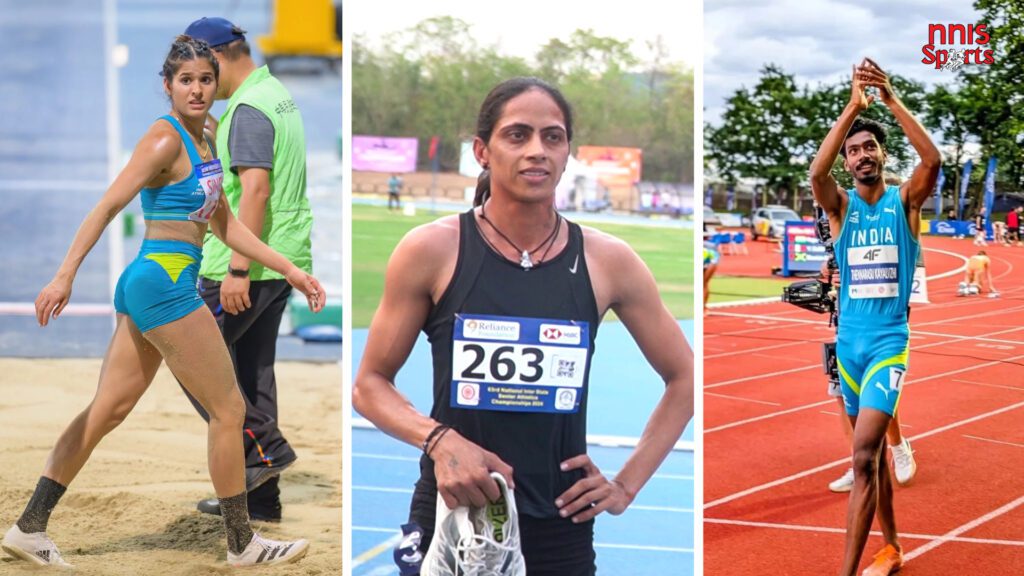
Some of the best examples are Shaili Singh and Ancy. Shaili registered her second-best jump of the season at 6.65m in the Indian Series Final, just short of her season-best 6.67m. However, at the Asian Games, she managed only 6.42m and finished fourth, narrowly missing the podium in the final round of jumps. China’s Tan Mengyi clinched bronze with 6.46m, while the gold medal was won with a jump of 6.55m.
Another example is Ancy, who won silver at the Asian Games with a jump of 6.53m. However, she produced a much better effort of 6.76m at the Indian Series Final. With both Ancy and Shaili competing against each other at the Indian Series Final, neither wanted to leave anything behind just before the Asian Games.
Kiran Pahal is another example. She finished fifth in the 400m at the Asian Games with a time of 53.41 seconds. However, at the Indian Series Final, she clocked a faster 53.12 seconds. Interestingly, the bronze medal at the Asian Games was won with a time of 53.21 seconds, meaning Pahal’s Indian Series Final performance would have been enough to secure a podium finish.
Another example is Vishal TK, who clocked 44.98 seconds early in the season but finished fifth at the Asian Games. Vishal competed in a total of 12 individual 400m races during the season, while Joshua Atkinson, who won gold in the 400m at the Asian Games, competed in just six individual races.
Vishal achieved his season best in May. Although he continued competing at the National Inter-State Championships, Commonwealth Games and Asian Games, he was unable to better that timing.
Joshua, meanwhile, delivered his best performance in the Asian Games final, clocking 44.90 seconds to set a new national record and claim gold. His previous best was 45.13 seconds, recorded in December 2025.
Interestingly, Joshua also travelled to India for the Continental Tour Silver meet in Bhubaneswar, where Vishal did not start (DNS).