




India’s athletics team finished the 2026 Asian Games with 24 medals: one gold, nine silver, and 14 bronze. The total fell from 29 medals, including six golds, at the previous edition. India’s earlier performance was its best athletics haul since the inaugural Games in 1951, when Indian athletes won 34 medals. This time, the team also recorded five national records, 11 personal bests, and three season bests.
However, several concerns emerged well before the competition ended. Coaching decisions, relay performances, and athlete management raised questions about India’s preparation. Here are four areas that may need attention before the next season.
1. Jerry Lee Holness: Reviewing the Women’s 400m Coaching Setup
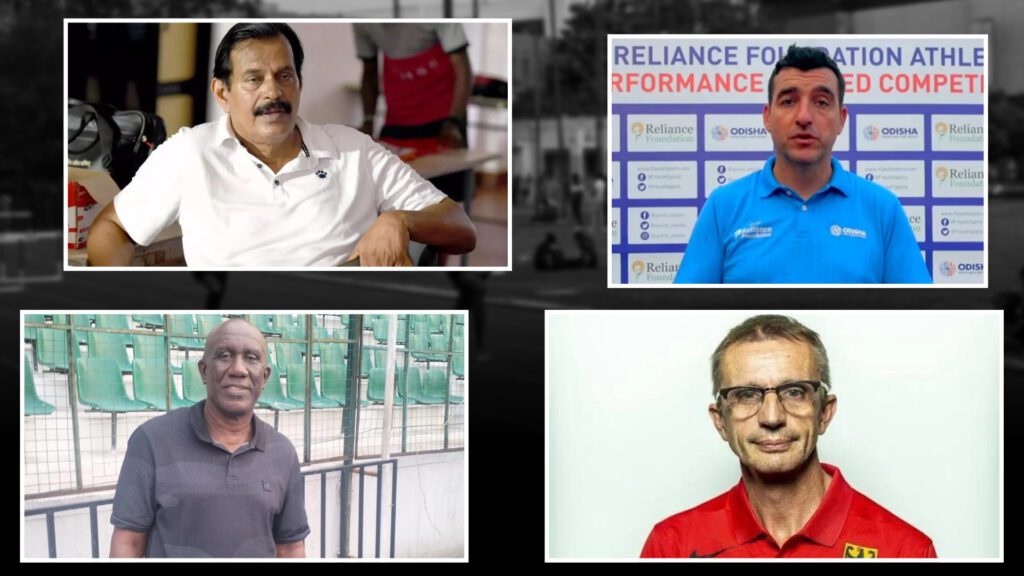
The Athletics Federation of India (AFI) appointed Jamaica’s Jerry Lee Holness as the dedicated women’s 400m coach at the NCOE camp in Trivandrum. His responsibilities included the women’s 400m and 4x400m relay squads.
Holness arrived with high expectations. He had previously mentored Olympic and world champions Elaine Thompson-Herah and Nesta Carter. However, after almost two seasons, his results with India’s women’s 400m group remain a concern.
By comparison, Jamaican coach Jason Dawson has earned credit for India’s progress in the 400m. His work includes Vishal TK’s national record of 44.98 seconds.
India’s women won the country’s only athletics gold at the Asian Games in the 4x400m relay. However, the athletes’ training arrangements raise questions about the camp’s contribution. Kiran Pahal, Vithya Ramraj, and Prachi trained mostly outside the camp. They joined it after the Inter-State Championships, the qualifying event for the 2026 Asian Games. This arrangement technically met AFI’s campers-only policy.
What the Women’s 400m Results Reveal
Individual performances also highlight the issue. Vithya Ramraj, a 400m hurdler who trains outside the camp under Nehpal Singh Rathore, recorded the fastest Indian women’s 400m time of the season at 51.96 seconds. Aishwarya Mishra ranked second at 52.51 seconds. She also trained outside the camp.
Last season’s rankings showed a similar pattern. Aishwarya topped the list with 51.12 seconds. Among the top four athletes, only Rupal, who finished second at 52.41 seconds, trained at a camp. She worked under Dawson rather than Holness.
Therefore, AFI faces an important decision. Will it retain Holness or consider a coaching change before the 2028 Olympics? The Asian Relay Championships and the 2027 World Championships will provide important opportunities to assess progress.
2. Radhakrishnan Nair: Choosing India’s Next Chief Athletics Coach
NNIS Sports reported on 17 July 2026 that India’s chief athletics coach, Radhakrishnan Nair, was expected to retire. AFI has since posted the vacancy on its website and invited applications for the position.
Sources indicate that a throws coach with experience working alongside several of India’s elite throwers may be a frontrunner. However, the federation has not made a final decision.
We contacted coaches and athletes to understand their expectations for the next chief coach. Their responses highlighted three priorities: stronger support for Indian coaches, better communication, and greater transparency.
What Athletes and Coaches Want
One coach, who requested anonymity, said, “Focus more on Indian coaches and don’t be entirely dependent on foreign coaches.”
A member of the support staff also called for better communication with athletes. They said, “Communication with athletes should be smoother and more respectful. There have been instances of male athletes being spoken to using inappropriate language.”
Meanwhile, another athlete stressed the need for transparent team selection.
“Team selection should be explained by the chief coach at a press conference after each selection meeting. This would ensure transparency and help people understand AFI’s thinking,” the athlete said.
These concerns point to the need for clear communication and accountability. The next chief coach will need to build trust with athletes and support staff while improving India’s competitive performance.
3. India’s 4x100m Relay Coaches: Addressing Performance and Injuries
After India won silver in the women’s 4x100m relay at the 2025 Asian Athletics Championships, AFI announced that it would prioritise both 4x100m relay teams for the Asian Games.
The federation appointed James Hillier, athletics director at Reliance, as the men’s national coach. It also appointed Seenivasan Ramaiah to lead the women’s team. AFI announced the probable athletes almost a year in advance and organised two preparatory camps. The women trained at NCOE Trivandrum, while the men trained at Reliance’s Jio Institute in Mumbai.
Women’s Progress and Men’s Relay Setbacks
The women’s team qualified for the Asian Games final and finished fourth in 43.57 seconds. However, the men’s team endured a difficult season.
First, the men were disqualified at the season-opening Open Relays on 28 March 2026. As a result, they missed qualification for the Asian Relay Championships. They then suffered another disqualification at the World Relays because of a failed baton exchange.
Injuries created further problems. Most members of the men’s squad sustained injuries while training at the Jio Institute under Hillier. Consequently, India missed the men’s 4x100m relay event at the Asian Games.
These setbacks highlight the importance of relay coordination, injury management, and consistent preparation. AFI will need to review its training methods and athlete fitness plans before the next major competitions.
4. Ronald Weigel: Assessing India’s Racewalking Programme
AFI appointed Germany’s Ronald Weigel as India’s foreign racewalking expert in 2025. However, almost two seasons later, the programme has yet to demonstrate clear improvements in major international competitions.
AFI required athletes who had trained independently or with private and government organisations to join the camp under Weigel. Nevertheless, only a few athletes, including Priyanka Goswami and Sandeep Kumar, trained under him. India’s performances at the World Race Walking Championships also fell short of expectations.
India’s Results at the World Race Walking Championships
The following results show how Indian racewalkers performed in the marathon and half-marathon events.
Marathon Race Walk — Men
- Ram Baboo — 17th (3:13:55)
- Sandeep Kumar — 20th (3:15:41)
Marathon Race Walk — Women
- Priyanka Goswami — 10th (3:43:01)
- Payal — 28th (3:59:50)
- Manju Rani — 31st (4:05:22)
Half-Marathon Race Walk — Men
- Servin Sebasthiyan — 19th (1:30:28)
- Akshdeep Singh — 50th (1:38:19)
- Hardeep — 57th (1:42:28)
- Sahil — 59th (1:43:11)
Half-Marathon Race Walk — Women
- Ravina — 39th (1:45:44)
- Munita Prajapati — 43rd (1:47:15)
- Mansi Negi — 52nd (1:54:12)
Racewalking Concerns at the 2026 Asian Games
India’s racewalkers struggled again at the 2026 Asian Games. Across the four marathon and half-marathon race walk events, India fielded athletes only in the women’s marathon race walk. Priyanka Goswami and Manju Rani represented the country.
Priyanka received four red cards after approximately 9km and was disqualified. Two cards cited loss of contact, while the other two cited knee flexion. Meanwhile, Manju Rani finished last in 3:40:17. Her time was nearly seven minutes slower than her personal best of 3:33:24.
When NNIS Sports approached Weigel for an interview at the venue, he declined. He explained that he could not speak to the media without AFI’s permission.
These results raise questions about the effectiveness of the current racewalking programme. AFI may need to assess coaching methods, athlete preparation, and the support available to racewalkers before the next international season.
What Needs to Change Before the Next Athletics Season?
India’s 2026 Asian Games campaign delivered 24 medals, national records, and individual improvements. However, the results also exposed concerns about coaching effectiveness, relay preparation, athlete communication, and racewalking performance.
AFI now faces important decisions about its coaching structure and training programmes. Better support for Indian coaches, transparent selection processes, improved injury management, and stronger event-specific preparation could help athletes progress.
With the 2027 World Championships and the road to the 2028 Olympics ahead, the next season will offer an important opportunity to evaluate these changes and strengthen India’s athletics programme.